Look closely, wait: Seeing Further by Esther Kinsky

Early in her latest novel, Seeing Further, German writer Esther Kinsky sets out the parameters for the narrative ahead, for the story she intends to tell, the theme she wishes to explore:

There are two aspects of seeing: what you see and how you see it. This investigation into seeing further will involve only the question how. It pertains to the place that the viewer takes. It concerns point of view and remove from things and images, from the action, proximity and distance, vastness.

She, or rather her narrator, goes on to discuss this aspect of seeing, especially in relation to the cinema, but also with respect to other means of framing what we can view—windows, binoculars, open vistas—but it is the shared experience of the cinema that holds special attraction for her. This fondness began in childhood and has accompanied her throughout her various travels and relocations over the years, even as she acknowledges that it is competing with the convenience and privacy of smaller personal screens. But, of course, this is Esther Kinsky, and if the cinema is a space ideal for an examination of the how of seeing, her strong sense of place, sensitivity to natural or manmade landscapes, and generous appreciation of unique individuals also allow for perceptive descriptions of what her protagonist sees around her and the people she meets.

The narrator is living in Budapest when she comes across an abandoned cinema that seems to present her with an irresistible opportunity in a village in the open flatlands of southeastern Hungary known as the Alföld.  She had set out on a weekend adventure with the intention of taking photographs, but found herself confronted with a landscape that defied the camera’s frame. A vastness that presented a certain unphotogenic emptiness. She finds a place to spend the night while a storm rages outside. The next morning, uncertain where she is, she to explore the small town in which she has awoken. It is a Sunday:

A few cyclists, most of them women, rolled quietly past and then turned around to face me and stared, which nevertheless did not upset their equilibrium; unperturbed they proceeded onwards, skilfully balancing on their shoulders or the handlebars of their bicycles their hoes, rakes and spades. I felt foreign under their gaze, cut free from all contexts of familiarity and belonging. A strange sensation, yet it pleased me.

In this strange community she is aware of a sense of having seen similar scenes before. A sort of memory or images called from the past—perhaps somewhere in the Po Basin area of Italy, perhaps in a book or a film. And then she finds the old cinema building. A relic of a time gone by, now standing forgotten: “A splendid cinema in a no-man’s land of possibilities.”

Back in Budapest, a city with a wealth of cinemas, she becomes absorbed in thoughts of the magic of film, and before long she is back in what she refers to as the mozi village, mozi being the Hungarian word for cinema. She walks back and forth in front of the abandoned building until someone inevitably stops and asks if she needs help. She tells him she would like to see the cinema and he asks if she wants to buy it. With little hesitation she responds that, yes, perhaps she would like to buy it.

This is, then, the story of one woman’s dream of reopening a cinema and rekindling an interest in the forgotten joy of gathering together to share the experience of watching a film, engaging the act of seeing further. Jószi, the cinema’s former projectionist turned bicycle mechanic gets caught up in her enthusiasm and becomes her accomplice. She devotes herself to getting the building cleaned, repaired, painted and ready for its revival. Parts are sourced for the projectors. It’s a slow process, one that involves her eventual relocation from Budapest to the village. An interlude tracing the life of the mozi village’s original projectionist and the founder of the larger, now disused cinema, serves as a history of film in the region, from the early days of silent films as a travelling attraction carried from village to village and projected in tents, to the introduction of talkies, the impact of the Great Depression, and the eventual expansion of cinemas from the cities into smaller towns where they became vital venues for community entertainment. But times have changed. And so have people.

There were no spectacles to help me decipher it all, but I could see, observe, look closely, wait. Wait and see. Yet I still had faint doubts about whether this cinema would ever again be a space where one could sit, look closely, see, wait and see, in order to learn something about what once took place here between the screen and the gaze. The consensus today was that everyone came from far away, from a world unaccustomed to the cinema gaze, all of them projectionists at their own private screens, who chose the cinema as an exception, who were accustomed to seeing in their own private space, alone or with a few trusted fellow viewers. The cinema was always a place to which you brought your own solitude, but it used to be that you did so knowing you would take your place among other solitary people; you travelled to the cinema, hungry for film, and left sated, brushing against the outside world along the way.

Slow moving and inevitably Sebaldian, with many original black white photographs, this is a work that combines the narrator’s love of the cinema and appreciation of the possibilities that watching a film with others on a large screen offers, with a fictionalized account of the birth, death and attempted resurrection of a small town cinema. Kinsky’s work is often called autofiction and although there is always a strong sense of place, landscape, and experience running through her narratives, it is not wise to conflate the author with her narrators. The setting of this work, the endless plains of eastern Hungary is familiar. Her more conventional first novel Summer Resort is set there, so Kinsky is no doubt drawing on a real-life sojourn in this region, perhaps in the mid-2000s, and an actual cinema project of some sort (as the photographs attest), but as ever, very little of the narrator’s (and by extension the author’s) personal background or history is revealed beyond a few childhood reflections. Why is she in Hungary? What does she do for a living? Kinsky’s narrators tend to shadow her own life, but clear boundaries are invariably retained. Autofiction, on the other hand, tends to be a much more self-focused, sometimes even self-obsessed medium. It is Kinsky’s ability to focus on her attention on familiar emotions—leaving, grief, loss, nostalgia—within a richly detailed landscape while maintaining a measured invisibility that makes her narrators and her novels so intriguing.

Seeing Further by Esther Kinsky is translated by Caroline Schmidt and published by New York Review Books in North America and Fitzcarraldo in the UK.

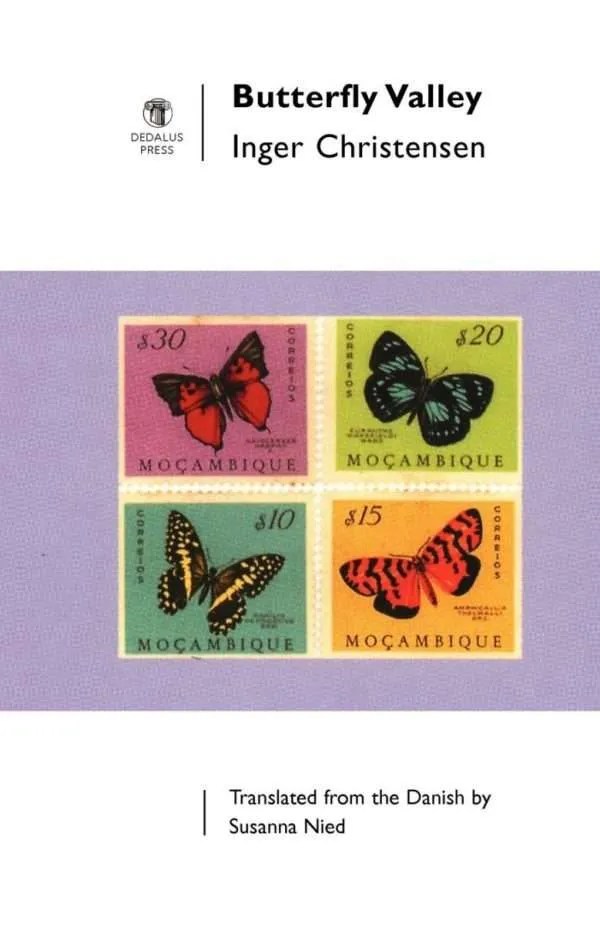
“somewhere I am suddenly born”: alphabet by Inger Christensen

I write like the wind
that writes with clouds’
tranquil script

or quickly across the sky
in vanishing strokes
as if with swallows

I write like wind
that writes in water
with stylized monotony

or roll with heavy
alphabet of waves
their threads of foam

(from “alphabets exist”)

In her essay “It’s All Words” (included in the collection The Condition of Secrecy), Danish poet Inger Christensen offers a very simple, yet possibly unexpected, statement about the nature of poetry:

But poems aren’t made out of experiences, or out of thoughts, ideas, or musings about anything. Poems are made out of words.

It’s through our listening to the words, to their rhythms and timbres, the entirety of their music, that the meanings in them can be set free.

This particular essay happens to be about her stunning work, alphabet, a book-length sequence of poems in which each piece builds on, remixes, revisits, and expands upon what has come before. It is project that began as process of collecting words and, as she was foraging through the dictionary, she happened upon what would become her form: the Fibonacci sequence.

The concept was introduced to the western world by the medieval Italian mathematician Leonardo of Pisa (later referred to as Fibonacci by 19th century scientists) in his Book of the Abacus in 1202, although the calculation originated with Indian poetics and mathematics as far back as 200 BC. This sequence in which each successive number is the sum of the two preceding it (0,1,1, 2, 3, 5, 8,13, 21, 44, 65, etc) describes an exponentially increasing mathematical pattern that often occurs in nature as in the spiral growth seen in certain plants.

By combining this formula, or “wordless universal poem of numbers,” with the human-made alphabet, Christensen conceived of a structure (or implied form) for an unfinished sequence of poems. A framework upon which she could weave “a kind of spell”:

A prayer that apricots, doves, melons, and so on could continue to exist in the world. And at the same time, a prayer that atom bombs, hydrogen bombs, dioxin, and so on could disappear.

And herein lies the special charm of alphabet. Fourteen chapters, running from [a] to [n], each containing a single poem or series of poems that total a corresponding number of lines from 1 to 740.

The first poem simply reads: “apricot trees exist, apricot trees exist,” the second: “bracken exists; and blackberries, blackberries; / bromine exists; and hydrogen, hydrogen” and so the essential pattern is set, introducing the existential aspect of the everyday matter around us—that which is good and beautiful, that which is toxic, and an element that can either be vital to life or destructive. As the poems become longer and more complex, these early images reappear and the alphabetic aspects are more or less evident. As each chapter expands there is, as in life, an increasing and startling diversity and variety to be found.

life, the air we inhale exists
a lightness in it all, a likeness in it all,
an equation, an open and transferable expression
in it all, and as tree after tree foams up in
early summer, a passion, a passion in it all,
as if in the air’s play with elm keys falling
like mama there existed a simply sketched design,
simple as happiness having plenty of food
and unhappiness none, simple as longing
having plenty of options and suffering none,
simple as the holy lotus is simple
because it is edible, a design as simple as laughter
sketching your face in the air

(“life”)

Christensen is a poet who delights in form, but prefers to set her own rules. Each poem has its own structure, but the use of repetition and recurring motifs contributes to the overall hymn-like quality of this work. She celebrates the beauty of everyday moments, delights in magic of the natural world and, as in her essays, shows an acute concern for the legacy of the atomic bomb and the nuclear fears of the Cold War (this book was first published in Danish in 1981). Her vision moves back and forth between these poles of existence threading words into verse.

Translator Susanna Nied had translated several of Christensen’s volumes of poetry before alphabet was even written (including her masterpiece It), so when this book was published in Danish, the poet sent her a copy. In an interview in Circumference, she describes how she sat down to read it as soon as it arrived. She read straight through and began to translate almost immediately without telling Christensen.

I did eventually show that preliminary alphabet translation to Inger, who pronounced it flot (high praise) and went over it with me, asking excellent questions, musing and reminiscing about how she had written the poems. We had a long tussle over whether the key verb should be “exist/exists” or “is there/are there.” Inger ultimately won, thank goodness, though it took me several months to capitulate. As we worked together during the six weeks I spent in Copenhagen, I recognized the content of alphabet in Inger’s daily life and in her memories. I recognized its cadences and phrases in her speech. Again, invaluable.

She goes on to describe working on the translation for years and, even once it was published she was still thinking of ways it could be improved. Nonetheless, the long working relationship between poet and translator is reflected in the care with which Nied realized the many intertwined and contrasting elements in this unique and engaging work.

I would like to imagine that this is an experimental poem (or sequence of poems) that is not only original, but accessible to those who might fear poetry. Meaning can be found, or revealed to a reader, in a very natural and yet personal manner. Sometimes the defining letter has a major role, other times less so. Her poems take off and move in unexpected directions before returning to call up familiar images in new ways. It’s a truly wonderful work and a fantastic, award-winning translation.

alphabet by Inger Christensen is translated from the Danish by Susanna Nied and published by New Directions.

I accept. I accept it all: Return to My Native Land by Aimé Césaire

At the end of the small hours delicately sprouting handles for the market: the West Indies, hungry, hail-marked with smallpox, blown to bits by alcohol, the West Indies shipwrecked in the mud of this bay, wickedly shipwrecked in the dust of this town.

At the end of the small hours: the last, deceiving sorry scab on the wound of the waters; the martyrs who refuse to bear witness, the fading flowers of blood scattered on the futile wind like the screeches of chattering parrots; an old life’s ingratiating smile, lips apart in deserted anguish, an old wretchedness decomposing in silence beneath the sun; an old silence broken by tepid pustules, the dreadful zero of our reason for living.

The image of his hometown that opens Martinician poet, playwright and politician Aimé Césaire’s Return to My Native Land, is brutal and unforgiving, a bleak portrait of destruction, despair, and disease. With its uncompromising vocabulary, relentless energy, and pointed repetition, a pulsating beat soon settles into the language. It will carry the reader—or listener, for these words beg to be heard—through to the end of this powerful and inspiring epic. Explored through the lens of surrealist poetry, this intensely personal journey to self-affirmation and biting deconstruction of the colonial condition became a rallying cry for the African diaspora. It is also one of the best known French poems of the twentieth century.

Césaire was born in 1913 in the town of Basse-Pointe, Martinique, the second eldest of six children. Although his family were of modest means, they moved to the capital, Fort-de-France, so he might be able to have a good education. It was a wise investment, as Aimé received a scholarship to the Lycée Louis le Grand in Paris. But the move to Europe was a sobering one as the young man came face to face with the fact that although he was a French citizen, the colour of his skin openly set him apart. It would serve as the beginning of an understanding of himself in relation to an African heritage and a legacy of slavery and colonial domination. With fellow students, Léopold Senghor from Senegal and Léon Damas from Guyana, he contributed to the development of the concept of “Negritude” or black consciousness, a revolt against colonial values that not only formed the foundation of an intellectual movement but shapes his celebrated poem.

Return to My Native Land (Cahier d’un retour au pays natal) first appeared in print in 1939, the year Césaire left France and moved back to Martinique with his wife and first child. Over the years it would undergo several revisions before the definitive French language version was published in 1956. The English edition reviewed here is a recent (2024) rerelease of the 1969 translation by John Berger and Anna Bostock, edited and introduced Jamaican writer and scholar Jason Allen-Paisant. In his introduction, Allen-Paisant writes of his personal history and connection to this work, noting that his appreciation grew slowly, ultimately bridging the seventy-seven years age difference between himself and Césaire:

In time, I became aware that this poem inspired movements of liberation and cultural assertion across Africa and its diaspora. But above all, Césaire’s poem was about my body. It was a sound in which my body was at home. This enchanting sonic power (its rhythms suggestive of the drum, of chanting, of ceremony) is hard to strip away. Still today, even now that I understand the meaning of nearly all its words, I connect with this poem through its sound.

Although Césaire found his poetic expression through surrealism, there is a broad narrative arc to Return to My Native Land. The early section speaks of the poverty and decay of his hometown, recalls childhood memories, and acknowledges the pull of Europe as means of escape. Leaving home is seen as the only way one can find oneself. It is to become part of a long history of dislocation:

To leave.
As there are hyena-men and panther-men,
so I shall be a Jew man
a Kaffir man
a Hindu-from-Calcutta-man
a man from Harlem-who-hasn’t-got-the-vote

Famine man, curse man, torture man, you may seize him any moment, beat him, kill him – yes, perfectly fine to kill him – accounting no one, having to offer an excuse to no one

The wandering man, homeless, trying to find a place and meaning , grows increasingly angry and bitter in a world in which his people are either hated, seen as wretched beasts, or loved as novelty and entertainment. At times the anger takes on a wider, universal tone:

Words? We are handling
quarters of the world, we are marrying
delirious continents, we are breaking down
steaming doors,
words, ah yes, words! but
words of fresh blood, words which are
tidal waves and erysipelas
malarias and lavas and bush-fires,
and burning flesh
and burning cities . . .

Know this well:
I never play except at the millennium
I never play except at the Great Fear

Accommodate yourself to me. I won’t
accommodate myself to you!

As much as this is a work that seems to sing off the page, it can be harsh and demanding. The language can be quite brutal and disarming, the images, often dark and visceral, as the poet confronts his own feelings of disgust, guilt, shame, and anger in his response to the world around him and the history that shaped it. But gradually he begins to find a strength and direction in himself and a vision of future he wants to see for his people. Self-acceptance does not lead to weakness but to defiance:

Make me rebellious against all vanity but docile
          to its genius
like the fist of our extended arm!
Make me the steward of its blood
make me the trustee of its rancour
make me a man of ending
make me a man of beginning
make me a man of harvesting
but also make me a man of sowing

The man who rises as the poem nears its close is one who accepts his biology but refuses to be defined by it. He is called and calls his people to rediscover and reclaim their humanity after centuries of dehumanization and trauma through a reimagined return to their African roots. That is the native land to which he has, in spirit, returned. In body, however, he will remain in the land of his birth and continue to explore these themes through his writing and plays, and put his passions into practice in political life. Aimé Césaire died in 2008 at the age of ninety-two, but Return to My Native Land, remains a critical call to action and profound anti-colonial statement that is now, eighty-five years after its first appearance and almost seventy years after the release of the definitive French edition, more important than ever.

Return to My Native Land by Aimé Césaire is translated from the French by John Berger and Anna Bostock, with an introduction by Jason Allen-Paisant, and published by Penguin Books.

The invisible man’s story: Children of the Ghetto II: Star of the Sea by Elias Khoury

The first volume of Elias Khoury’s Children of the Ghetto trilogy, My Name is Adam, presents itself as a collection of writings by a Palestinian falafel maker living in exile in New York City. Never intended for publication, they include an aborted attempt to write a novel about a seventh-century Yemini poet and the unedited attempt by the author, Adam Dannoun, to understand himself by writing his own story. After a lifetime of trying to leave history, his own and his people’s, behind, two events—the screening of a film based on Khoury’s famous novel Gate of the Sun, and a conversation with a man he has not seen since he was seven years old—motivate this decision to finally commit an account of his life to paper. He will then set the stage for his own death. Elias Khoury supposedly comes into possession of Adam’s notebooks after he has died and, following some consideration, decides to publish them as they are, unedited. The result is an often troubled and circular narrative beginning in New York and making its way back in time in an effort to reconstitute what he knows of his earliest years, during and in the immediate aftermath of the Nakba. Born in Lydda in 1948 he wants to piece together as much as he can about the horrific events of the massacre in the city, the containment of the Arab residents in what the Israeli soldiers labelled a “ghetto,” and the harsh conditions he and his mother endured.

The double-authorship of the first volume—Khoury as the custodian of Adam’s writing—is assumed to be understood, but not mentioned, in Star of the Sea. Rather, the entire tone and approach of the work shifts as Adam steps back from his own story to adopt a distanced perspective: Point of Entry: the Third Person, or the Absent Conscience. That the narrator and author of the novel (and he does call it a novel at this point) is also the protagonist is not a secret, but as he makes clear in the opening passages, it does raise certain challenges:

The question keeping the writer of these stories awake at night is the following: how can the absentee write? Can they tell their own story using “I,” thereby writing as though remembering? Or should they employ the third person to write in their place?

Pronouns in Arabic are extraordinarily supple, unmatched in any other language. The written letters that take a person’s place are called “consciences”, but since the conscience is also an invisible  moral compass, how can a novelist write using the conscience of one who is absent? And finally, what does its corollary—that the conscience must be absent in order for a person to tell their story really mean?

So, although Adam’s account now takes a more straightforward and generally chronological quality, the multi-layered reflective and metafictional elements of the first volume persist, now that the present self (the writer) has separated himself from his past invisible, absent self and reluctant hero of his story.

Although he made passing references to his adolescent and young adult years in the first part of his grand life writing exercise, the primary focus of My Name is Adam was on a period of his life  history of which he had either no direct memories or only a child’s recollections. Now, Adam is on much firmer ground, memory-wise, and in a position to try to face his conflicted emotions about the choices he faced as he navigated life in a country to which he could never fully belong. This is, then, a story of one man’s relationship to his own identity and his desire to live without any history or nostalgia. Even if it means living a lie.

This second volume begins in 1963, with fifteen year-old Adam’s decision to leave home. He had moved to Haifa with his mother, Manal, following her marriage to Abdallah al-Ashal, and, after years of watching his relentless abuse drive her further into a lifeless shell, he knew it was time to get away. Manal seemed to know too and, on the night Adam left, she quietly saw him off, handing him his father’s will before he disappeared into the stormy night. He was now on his own.

With a short detour, Adam makes his way to the garage of mechanic named Gabriel, a Polish Jew who had picked him up one night when he was hitchhiking. Struck by the boy’s fair hair and skin, Gabriel saw in Adam the image of his deceased younger brother. He had promised that he could help him out, thinking of possibly teaching him his trade. But Adam was determined to continue his schooling. So the mechanic not only offered him a place to stay in return for odd jobs in the shop, but also helped him get into a Jewish school. His old life now behind him, this period marked the beginning of Adam’s new story. He changed his name from Dannoun to Danon, and with it he assumed a new identity. He looked the part, spoke Hebrew well, and his existing ghetto origin was malleable:

If the heroes of novels could break through the fourth wall (page) and speak without an intermediary, then Adam could very well have told his story not as the invisible man, but a man formed from his imagination. And indeed he had imagined an entire personality that both matched his true nature and was completely different. From the moment he left his mother’s house on the night of the rain, Adam realized that he could represent himself however he wanted by using certain true events to create a compelling background.

This new story follows the reinvented Adam through his first teenage love—unfortunately for him, it is with Gabriel’s daughter Rivka, a situation not destined to end well—into his university years and beyond. Although he enjoys new freedoms with his assumed Israeli identity, he cannot escape his official Arab designation so he often straddles the Jewish and Palestinian communities, spending his days in one and working and living in another. Along the way he meets an assortment of interesting individuals who will influence his life in varying ways, but the central focus of this second volume of Children of the Ghetto lies with the ghetto he where allows others to believe his origins actually lie—in Warsaw.

As a student of Hebrew Literature, Adam develops a close friendship with his German-born professor Jacob Ebenheiner, a relationship based on shared intellectual curiosities and interests. Jacob does not pry into Adam’s life, and the latter offers no details. But a class trip to Warsaw at the end of the first term will ultimately lead to a betrayal of his secret. The visit to Poland has huge impact on the eighteen year-old Palestinian-in-disguise—walking through the streets of the Warsaw Ghetto and listening, through a translator, to the stories of the guide and survivors. But it is an evening spent in the company of Marek Edelmann, one of the leaders of the Warsaw Ghetto Uprising and life-long anti-Zionist who remained in Poland and became a famed cardiologist, that unsettles him most. Adam is not only left questioning who he is and where he belongs, but it brings to light the extent of the gap that exists between himself and his defiantly proud Israeli teacher.

Throughout this book, Adam relies on a degree of invisibility afforded by his appearance to continue to live a lie into his adult professional life, but in his personal life the balance is more difficult, and not all ghosts can be left in the past, no matter how much he may want them to be. For many years he will keep to himself as much as possible, the personification of the “present absentee.” That is, until he meets Dalia, the young woman who turns his world upside down when he is in his mid-forties, the woman who finally makes him believe in love. But we know, for he has often told us, that it will not last.

Although familiarity with the first volume is assumed, Star of the Sea is building on a much wider story with a fresh angle on questions about what it means to write about one’s own life, about truth, and about what one can really tell. Given his reluctance to talk about his past, Adam does not detail his early experiences, nor does he explain things we as readers know about his true origins, facts that he himself was unaware of until much later in life. Here is focused on telling this aspect of his story in a specific manner. Yet, by the time the novel ends he has glossed over much of what will be the most significant romantic relationship of his life, so one can only assume that Dalia will take centre stage in volume three. But where will Adam be standing as he tells this part of his story? The final part of the trilogy only came out in Arabic in 2023, so it seems that Anglophone readers will have to wait for a translation to find out.

Children of the Ghetto: Star of the Sea by Elias Khoury is translated from the Arabic by Humphrey Davies and published by Archipelago Books.

To go where the language goes: Ten Thousand Miles of Clouds and Moons – New Chinese Writing, edited by Zuo Fei, Xiao Yue Shan and Simon Shieh

Grey cloud grasping light,
unrolling the softness of another world
towards the wobbling plane wing; its folds ripple,
someone has scattered seeds in each furrow.

Who’s thinking, underneath the clouds,
how hard it is to restore the life of a flower,
when rain never coincides with favorable winds.

But we have a shred of light.
Today, passing through a mid-gate
as if remembering.

(from “Introspection on a Cloud” by Du Lulu, translated by Dave Haysom)

What exactly does it mean to enter into another world, to open oneself to a landscape at once familiar and strange? That is, one might suggest, one of the functions of literature. But if the map that grants access to that other world with its many artistic and cultural riches is in another language, translation is the key. For the editors of Ten Thousand Miles of Clouds and Moons, a collaboration between Beijing-based Spittoon Literary Magazine, a dual-language journal of contemporary Chinese literature, and Honford Star, the guiding inspiration for this first anthology project is, in keeping with that of the magazine, to seek out and bring into English translation, some of the most original, exquisite, and daring voices—new and established—contributing to the present literary landscape in China.

The introduction lays out the vision that guided their selection of pieces

The work had to be excellent; the writer had to have a point of view that is under-explored in the Anglosphere; there had to be a balance of genders; and the language had to be so special that it has the potential to torture translators. This final aspect came only from our love for the Chinese language—which, like all languages, has a singular soul, a force drawn from its age and its malleability throughout time. The more a writer is able to tap into that soul, the more difficult the piece would inevitably be to translate.

Thus sixteen contributors—eight writers of fiction, six poets, and two essayists—were paired with eighteen translators, to offer readers a journey that covers a wide literary terrain. You will find yourself in a world with a long rich cultural history and traditions, and you will find stories that depict a modern society that Western, English language readers will instantly recognize, with influences drawn from an international well of literary sources. You will find work that pays homage to the China’s past and tales that turn on distinctly futuristic, apocalyptic visions. And surreal, experimental tones alongside traditional Chinese poetic form.

The opening story in the compilation sets the mood perfectly. A piece of dystopian science fiction that  revolves around the fate of the 18th century work considered the greatest of all Chinese novels, “Mass in Dream of the Red Chamber” by Chen Chuncheng (translated by Xiao Yue Shan) is set in the far future—the 4800s—at a time when this great work of literature is not only lost, but any effort to retrieve its contents or storyline are strictly forbidden. There is, at this time, a belief that the text was completed at the peak of the universe’s development, and that all had begun to decline and dissipate since that time. The narrative follows the recorded account of a prisoner, a man born in 1982, who fell into a deep coma for several thousand years, only to miraculously awake and find himself as a specimen in a museum exhibit. He becomes a kind of missing link to the lost masterpiece for a clandestine organization desperate to recreate, as much as possible, the original; its preservation being essential to the continued existence of the universe itself. But that also makes him, and those who come to hear him access his memories of the text, the target of murderous government forces. It is a wonderful meeting of the glory of past achievements and the horrors of a post-apocalyptic totalitarian future, connected with an out-of-time protagonist’s personal recollections of life in the 1990s and 2000s.

The settings of the tales that follow vary, from a contemporary urban environment where bored youth hang out and make trouble, to the account of family history, to a mystical encounter on a mountainside. The energy shifts from story to story, often turning to the unexpected, cracking the fragile veneer of reality. Particularly delightful is the excerpt from Lu Yuan’s novella The Large Moon and Other Affairs (translated by Ana Padilla Fornieles), a piece of weird fiction that reflects, perhaps, in its magical strangeness, the influence of Bruno Schulz whose work the author has translated. As the moon, being pulled toward the earth, grows larger and larger in the sky, the eccentric Mr. Lu struggles with insomnia and troubled dreams. One night, having taken a concoction to aid his sleep, he finds himself carried off on a nocturnal adventure through the skies:

Mr. Lu rose from the valley of dreams and rowed out the window, picturing himself an unthinking mycoplankton or a sea cow, heading back to the Amazon River Delta. Riding upon the clouds and the wind with neither a northeastern wife nor a Vietnamese mistress at his side, the invoices seeking his death yet to arrive, and the murderous plots working their shapeless, invisible night shifts had been temporarily put on hold. There were no cold, mechanical alarms, no greasy company breakfasts, and definitely no covetous relatives, neighbours, acquaintances, or colleagues. The naked Mr. Lu, wearing only a heavy pair of  plastic slippers, flew over the sparse suburban streetlights, bounding towards the corridors of stars spiraling in a snail-shell pattern along the horizon’s towers. A thin sheet of air gently caressed his bulging beer belly, and the city was as far away as a firefly, succumbing to the hallucinatory bird’s eye view of inebriated men.

The two nonfiction pieces add a welcome new dimension to the collection. Hei Tao’s “Three Essays” (translated by Simon Shieh and Irene Chen) paint delicate portraits of southern China, and a lifestyle that is gradually disappearing, while Mao Jian’s “No One Sees the Grasses Growing” is a relatable, and humorous, memoir of her years as a student at East China Normal University in Shanghai in the 1980s and 90s. She recalls a time when students paid less attention to their studies than might have been wise. They were young and in love with a certain literary coolness. Her first degree was in Foreign Languages, but she found it hard to resist the allure of another course of study:

The truth is, in the eighties, it was impossible to resist the passions of the Chinese Department. The notice boards were plastered with adverts promoting literary lectures, and all sorts of clubs and societies adopted the grandiose affectations of belles-lettres, prancing about the center of campus. If someone were to ask you about going corporate after graduation, you’d have to self-reflect on the unrefined impression you must have been giving off. Those years were the golden age of Casanovas, who made names for themselves by proclaiming their undying love for poetry, and any girl who could be moved by Rilke would inevitably enter into a spontaneous fling with one of these campus poets.

It was an era of living away from home, first trips to KFC, young love, and inspiring and unconventional professors. But looking back decades later, now a professor herself at the same institution, she realizes that that time is past, in so many different ways.

Spread out among the prose pieces, are the contributions of the poets, three poems each. This arrangement works very well, offering a change of pace and granting each poet the space to have their unique voice heard. As with the fiction and nonfiction, there is both variety and, of course, precise, evocative imagery that is at once modern, yet with an echo of the long-standing traditions of Chinese verse.

Anthologies can be uneven projects, but this selection of new Chinese writing is strong, varied, and continually fresh and surprising from beginning to end. The contributors range in age, with the youngest in his mid-twenties, the oldest in his mid-sixties. Their work is consistently fresh and vibrant, and the translators all appear to have produced results that feel effortless. It should also be noted that this volume is beautifully presented, with a simple, yet elegant design. This is an endlessly engaging collection for anyone with an interest in contemporary Chinese literature, especially if you are seeking work that challenges expectations.

Ten Thousand Miles of Clouds and Moons: New Chinese Writing is edited by Zuo Fei, Xiao Yue Shan and Simon Shieh, and published by Spittoon Literary Magazine in collaboration with Honford Star

“and every day / you elucidate a knot”: Of Desire and Decarceration by Charline Lambert

When a poet’s work first appears in translation, it is rarely more than a single volume or an edited selection. Even then, it can take decades for a prominent foreign language poet to be finally be translated and published in English. But for young Belgian-Francophone poet Charline Lambert (b. 1989), the situation is quite different—her first four books of poetry (originally published between 2016 and 2020) have recently been released in one single, dual-language volume titled Of Desire and Decarceration. As her translator, John Taylor, explains in his Introduction (an earlier version can be found online here):

The motivation for bringing forth this substantial corpus is that the four books respond to each other, grow out of each other. They are like stages—beginning with the evocations of bewitchment, temptation, restraint, and detention besetting Ulysses, Circe, and Penelope in the poet’s first book, Hemp and Ivy—of an ongoing quest to grasp the mysteries of desire and gain insight into its innermost relationship, not only with the body, but also with language.

Her work is vibrant, ecstatic, alive—rich with imagery drawn from mythology, philosophy, nature, science and physiology. As someone very familiar with Taylor as a translator and a poet, I can see why he was so immediately captivated by her emotionally and linguistically inventive poetry which he has brought into English with such care and attention.

To read Lambert’s first four books—each an extended sequence of verse and poetic prose pieces—in sequence is to experience the poet’s deepening exploration into questions of identity, where an embodied self-expression is examined at the minute, physiological level in concert with an expansive metaphysical self-realization within an external world of earth, wind and water. Although subject, voice, and form shift as one moves from volume to volume, her writing is typically spare, and the same essential human forces—desire, solitude, spirit, joy—are present, even if they may be the source (or the outcome) of struggle and pain, while her occasional use of uncommon, even esoteric, words reflects the limits and the potential of language to capture complex states of being—in the body, the mind, and the world. There is a tension in the interplay of all these elements that courses through her work, finding new expression with each successive book.

Her first book, Hemp and Ivy (Chanvre et Lierre), as noted above, reimagines Ulysses’ encounter with Circe and brings Penelope in to the drama. All three characters struggle with desire and temptation in their own ways. For Ulysses, bound to his mast, his desire and the lengths he must go to avoid a tragic fate is depicted with vivid intensity:

    A desire swarms, coming from even farther
than the esophagus, a desire rounder than the
navel, more burning than the urethra. A resonant
canalizing desire, which widens the dikes of the
arteries and erodes the epidermis. It will later
become a song, if it is not hemp.

.     Circe’s fate is a patient fate.

*

   Naked ivy on the mast, a column of climbing
vertebrae.
   In volutes of breath and nervous arabesques,
he hoists himself into the sky.
.    He unfurls his great back muscles of wing or
verve.

From this mythologically themed excursion, Lambert’s work turns towards a more abstracted poetic examination of the themes and questions that inspire her. Her second book, Dialyzing (Sous Dialyses) turns on her idiosyncratic approach to language. As Taylor indicates: “Lambert’s writing, which often appeals to scientific and medical terminology, also sets into motion a poetic and self-analyzing process of ‘dialysis.’” Akin to the medical functions and procedures associated with the term, her subject here is removing an element from her body—physical, emotional, or mental—examining, processing, purifying it through the act of writing and returning it to the embodied form in which she exists. “She is ‘dialyzing’,” hence the title as Taylor has chosen for his translation. This sequence of poems also begins to hint at the struggle to break down the boundaries between the body and the self, a theme that will be explored more directly in her next book.

Lambert’s poetry is perhaps at its most explicitly scientific here, witnessed in the incorporation of unexpected  natural and physiological terminology in striking ways as her subject explores the intricacies of her own desires in a manner that blurs or escapes the limitations of the physical form and merges with a natural environment:

.    At the edge of a cliff, potent dialysis, she
fights over the infinite with the ocean. But they
breathe at the same gill.

.    Their breath escapes, enters through a crack,
dashes to lose itself in the volutes of her pleura-
colored dress.

There is a breathless intensity to her verse that is especially evident in this sequence as her subject repeatedly loses, dissembles, and reconstructs herself in a windy, watery, earthy space:

    She unstitches each vertebra from her
spine, carries out the denuding of her neck, her
windpipe, her thighbone.
    Erects them into a new nudity of columns.
.     Anchors it in soil, and watches herself grow.

But in the end, she is enveloped once more.

With her third book, Decarceration (Désincarceration), Lambert seeks to redefine identity and existence beyond the prison of embodied existence. The idea of breaking free from an incarcerated state of being (incarnation) is openly explored now in succinct, precise verse, addressed to “You”—a movement, at least in the progressive reading experience, closer to the speaker’s own self. The fleshy matter of the body has a limit that can seem impossible to override, so the first step is to free the language you employ to define your being:

You are a countable solitude.

You are a light shattered
into beams.

You are
A barely recognized fire.

*

You want to decarcerate the language from you,
decar–

cerate these words from your plexus
and every day
you elucidate a knot.

The struggle to emerge is a tension between solitude and longing as a path to both self-identification and transcendence. It is critical to be free to form and shape yourself before being named, defined by a  body and a pronoun.

Before evaluating
the situation,

draw up an inhuman
report

*

Re-forming oneself as meander, winding
into the maze before
the accident,

before having to be called
something.

This poetic invocation is open and affirming, and can be understood in more than one sense. In his introduction, Taylor speaks of the many challenges he encountered in his attempt to preserve or replicate the distinct word choices, puns, and double entendres that Lambert revels in. I would suggest that, as a primarily but not entirely unilingual Anglophone reader, one’s appreciation of her poetry is not dimmed for the inevitable loss of some of the allusions and word play. As for her fondness for unfamiliar words and scientific terms, many are essentially the same in both the French and English versions, and my dictionary did see considerable use, something which only served to enhance my reading experience (and vocabulary).

Finally, with A Salvo (Une salve), Lambert’s fourth—and in this context, final—volume, her poetic quest reaches a certain degree of resolution, and an understanding of Taylor’s impulse to translate and present these works together as one becomes clear. Again the voice shifts, as the poet’s speaker adopts an imperative tone, addressing the sensual and physical experience in relation to a natural and cosmic reality. An intense, incantatory rhythm propels this relatively short sequence, with its recurring double-stranded refrain “Inhabit the night / Enter the sea.” This is established in the opening pages as a rejection of the soul crushing cage of darkness:

Never again sight, its eyes aborting the horizon,
   that rude roughness in the psalms of the hand
.    from which the song of the clouds is removed.

And an invitation to a kind of whole body rebirth in the water:

Washing oneself–while seeking a flesh in which
  to be, a skin to embody oneself in. A swim.
.   A lapse of time. A parturient’s dawn. Then,
  nothing will better express thickness than
  fraying and fleetingness.

The strength of A Salvo lies, not only in its sustained energy—as befits its title—and in Lambert’s own maturity as a poet, but, in the deep satisfaction that arises from reading it as the culmination of the existential quest that unites her first four books of poetry. What a joy it is to have them together in one volume.

Inhabit the night—and these crystals of being,
.   emaciated out of deterioration, become meteors.
Enter the sea—and what you have already
.   experienced, decimated into a thousand
.   scintillations, becomes a sparkling splinter.

Of Desire and Decarceration by Charline Lambert is translated from the French by John Taylor and published by Diálogos.


An inexhaustible landscape of words: The Condition of Secrecy by Inger Christensen

Writing poems is just as much a mysterious miracle. Not that there’s anything mystical or ceremonial about it. Or anything religious. It’s a neutral miracle, so to speak, granted in advance, because in the process of writing we need to use language in its whole, indissoluble connection with reality. It’s that connection with reality that’s a mysterious miracle. And that’s what poetry has to enter into.

It is clear from the essays collected in The Condition of Secrecy, that Danish poet, novelist, and essayist Inger Christensen (1935–2009) was not only in love with words, but that she understood language—and the way we seek to give meaning to the world—as part of the dynamic process of nature. For those who are already familiar with the experimental writer’s poetry and fiction, this collection offers insight into her view of the world, which was heavily influenced by a lifelong interest in science, mathematics, and linguistic theory, and the questions she was inclined to ask about her own engagement with language. For those who are new to her work, myself included, her philosophical musings and poetic investigations are no less interesting, and may well serve as an invitation to explore her work further—and fortunately there is a good selection currently available in English translation with more forthcoming this year.

What is most immediate in this compilation of essays, originally published across four decades, from the 1960s through the 1990s, and arranged intentionally rather than chronologically, is the sheer force of Christensen’s intellectual curiosity. At its most basic, it is a book about writing and meaning, but a book by an original inventive poet trained in German, mathematics, and medicine, who read six modern and two ancient languages. And, as a child of the Second World War, social and political concerns are never far from her mind. The Cold War and the fear of nuclear annihilation casts a clear shadow on a number of pieces. So, although this volume only numbers 138 pages, Christensen encourages her reader’s close engagement with ideas as she herself works her way through her own questions about the world and the way we find meaning in it through language.

Words are, of course, essential and she has a wonderful way of employing them. Her opening sentences are often quite special. “Interplay,” an essay about coming to understand time and one’s place in history as a child in Denmark at the end of World War II, begins:

When I was nine years old, the world, too, was nine years old. At least, there was no difference between us, no opposition, no distance. We just tumbled around from sunrise to sunset, body and earth as alike as two pennies.

Another piece, one of several more explicitly about words, meaning, and form, especially in the art of poetry, “Silk, the Universe, Language, the Heart,” opens:

Silk is a noun. All nouns are very lonely. They’re like crystals, each enclosing its own little piece of our knowledge about the world.

This playful essay, in conversation with the Ars Poetica or Wen Fu of Chinese poet Lu Chi (261–303 AD), examines the personalities of nouns, adjectives, adverbs, and verbs, along with the ever important prepositions that hold them in relation to one another.

Another essay that explores the interconnectedness of words, meaning, and writing poems, “It’s All Words,” moves from an analysis of what it means to say: “The word creates what it names” with all its Biblical overtones, through an existential (and anthropological) notion of naming the world into existence, to try to answer the question of why poetry is not a common practice when it requires no special tools beyond a paper and pen.

As it is right now, when the world has existed for so long, words come from everywhere, and they’re never there for the first time. Not only that. Although there may not be an infinite number of them, nor an infinite number of combinations, nevertheless there is an inexhaustible landscape of words, there are more than any one individual could manage to travel through. This is where it ends and where it begins, if a person is going to write poems: in the imagined concept of this mysterious landscape. For poems are created exclusively from words.

What makes this piece especially intriguing is that it leads into a discussion of the creation of one Christensen’s most inventive book-length poems, Alphabet. She began collecting words and then, in her gathering, she happened to come across Fibonacci numbers, a formula of increasing numbers that describe a pattern present in the growth principles of many plants. By employing this structure, she had a framework upon which her poem could eventually grow and bloom.

Most of the essays in this volume are short, some are only a few pages long, but midway through, the longest piece, coming in just shy of 30 pages, marks a turn of focus to more philosophical and political themes—not without abandoning talk of writing poetry and fiction, mind you. “The Regulating Effect of Chance” is an extended discussion of the role that chance plays in the world—fundamental, as she sees it, in accord with Jacques Monod’s Chance & Necessity—and in our experience of the world, our tendency to assign a notion of fate or destiny, and our understanding of art, creativity, imagination and much more. The later essays turn their attention to subjects such as the nature of truth, the depiction of night and, in a futuristic and somewhat fatalistic effort, “Snow,” the idea of the inevitability of nuclear winter.

This collection is one that I have owned for a number of years, without any previous experience of Christensen’s poetry or prose. Several times I pulled it from the shelf, but it did not seem that the time was right. Now I am especially keen to read her poetry. There are four volumes available in English, all translated, like The Condition of Secrecy, by Susanna Nied who enjoyed a close collaborative relationship with Christensen when working on her poetry. So, all things in good time; the words will be waiting.

The Condition of Secrecy: Selected Essays by Inger Christensen is translated from the Danish by Susanna Nied and published by New Directions.

“Most of the things you ‘recognise’ you’ve never seen before” Sojourn by Amit Chaudhuri

From the opening passages of Amit Chaudhuri’s quiet, lugubrious novella Sojourn, one can already sense that his unnamed narrator, an Indian writer on a four month visiting professorship in Berlin, is slightly out of sync with the world around him, but it’s not clear if it’s simply the strangeness of his environment or some unease he carries with him. It’s not even his first visit to the city, but little seems familiar. He constantly requires directions and gets lost easily. There is, however, a subtle tension running through this lowkey narrative that gradually builds into something more disorienting in this portrait of a man’s shifting relationship to time and place as he enters mid-life.

The year is 2004, fifteen years after the fall of the Wall, but its shadow persists; former demarcation lines and vast areas not yet cleansed of their link to a dark past remain. Residents are inclined to point them out to visitors as if sharing the city’s history with a certain wistfulness, while the narrator tends to react to these spaces as if they hold a connection to an interruption of time in a city that now, after reunification, is still finding its footing.

At his first official function, just days after arriving, our protagonist meets Farqul, the self-styled Bangladeshi poet who appoints himself as his guide and guardian during the early weeks of his stay. Their conversations are peppered with snatches of Bangla. A journalist with Deutsche Welle, Farqul is an elusive yet ubiquitous figure—or perhaps, furtive, as the narrator speculates on their first encounter—who is a well-known exile and appears to be well-liked among members of Berlin’s immigrant community. He had emigrated to Germany in 1977, two years after being kicked out of Bangladesh for writing a blasphemous poem. Prior to leaving India he had spent a rather fractious interlude among the literati in Calcutta where he met and was apparently aided in his move to Berlin by none other than Gunther Grass. (The narrator simply conveys this information without question.) He is a generous, if eccentric, host. He not only shows the narrator around, but helps him get outfitted for the coming cold weather.

Farqul – in the excitement of being in your company – was a man who liked to share. He gave you food; he stood next to you in solidarity when you tried on jackets; he would have shared cigarettes and his flat if I’d been a smoker or needed a room; he might offer his woman. He didn’t create a boundary round himself, saying, ‘This is mine; not yours.’ As long as he was with you he was in a state of transport.

Yet when Farqul suddenly disappears without notice, the narrator flounders a little. Most of the acquaintances he makes through the university remain casual, but he does have the hint of an affair with a German woman who unexpectedly reaches out to him after having attended his inaugural lecture. She tells him she loves India (“I’m wary of Europeans who ‘love’ India – an old neurosis”) and their liaison, for what it’s worth, develops rather uncertainly. The narrator is often uneasy; he seems to be unwilling to exercise any agency. Rather, he tends to drift without commitment. As a result, those who come into his life with whom he may have grounds for connection—social, academic, romantic—have to be persistent if any kind of relationship is going to develop.

He also, for some reason, maintains a distance from the German language. His housekeeper speaks no English and the simple German phrases she uses with him he claims to understand only through her accompanying gestures. He seems content to exist in the city without being able to interpret the conversations around him—to revel in the meaning conveyed by the music of the language rather than its vocabulary or grammar:

They go on about the rebarbative sound German makes, but individual words and names have greater beauty – more history – than English can carry. I entered Hackescher Markt in my mind’s eye five or ten minutes before reaching there. ‘Friedrichstrasse’ had come up in a dream recently, as a port of arrival. Kristallnacht was transparent, broken. I woke up to words and didn’t bother with the language.

Certainly his sojourn in the city is necessarily brief, but his passivity is notable, as is his unwillingness to acknowledge how unmoored he is. That is, until he begins to become disoriented and experience blackouts. The narrative becomes more fragmented as he  loses himself navigating an unfolding layout of streets and network of train stations:

The trains emanate sorrow. Not like humans. The humans, in fact, are distracted and impatient. The trains aren’t alive in the way we understand the word. But they feel.

Domination of steel: steel smoke, steel sky.

This book has an intentionally unfinished feel owing to the fact that the narrator’s own mental state seems to be unravelling as his time in the city nears an end. We learn little about his earlier life because he admittedly feels disconnected from it himself, making for a mysterious, yet beautifully written tale of one man’s estranged sojourn in Berlin.

Sojourn by Amit Chaudhuri is published by New York Review Books.

Looking back at a year of reading: 2024 edition

Each year when I review the list of books that I have read, I face the same challenge deciding what to include and what to leave out of a final accounting. As usual there are the books that I know, even as I am reading them, will be among my favourites for the year. Just as I know the ones I don’t like, the ones I won’t even mention or take the time to review. Basically, everything else that I have reviewed, was a good book.

This year, my count far exceeds a respectable “top ten” or “baker’s dozen” and there are some striking factors at play. One is that the ongoing  violence in Gaza has heightened my focus on Palestinian and Arabic language literature—long an area of interest and concern. Five of the Palestinian themed books I read made my year end list. As well, I have paired several titles, typically by the same author or otherwise connected, because the reading of one inspired and was enhanced by the reading of the other (not to mention that such pairings allow me to expand my list). Finally, as reflected by my top books, I read and loved more longer works of fiction this year than usual (for me). No 1000 page tomes yet, but perhaps I’m overcoming some of my long book anxiety.

And so on to the books.

Poetry:
I read far more poetry than I review, but this year I wanted to call attention to four titles.

Strangers in Light Coatsevokes by Palestinian poet Ghassan Zaqtan (Arabic, translated by Robin Moger/Seagull Books) is, perhaps, a darker than his earlier collections. Comprised as it is, of poems from recent releases, it actively portrays a world shaped by the reality of decades of occupation and war.

My Rivers by Faruk Šehić (Bosnian, translated by S.D. Curtis/Istros Books) is a collection particularly powerful for its depiction of a legacy of wars in Bosnia/Herzegovina including the genocide in Srebrenica. His speakers carry the burden of history.

Walking the Earth by Tunisian-French poet Amina Saïd (French, translated by Peter Thompson/Contra Mundum) is such a haunting work of primal beauty that I can’t understand why more of her poetry has not been published in English. Perhaps that will change.

Nostalgia Doesn’t Flow Away Like Rainwater by Irma Pineda is one of a number of small Latin American poetry collection from poets and communities that have not been published in English before. This book, a trilingual collection in Didxazá (Isthmus Zapotec) and Spanish with English translations by Wendy Call (Deep Vellum & Phoneme Media) was particularly special.


Nonfiction:
This year, my favourites include a mix of memoir and essay and a couple of works that defy simple classification.

The Blue Light / Among the Almond Trees by Palestinian writer Hussein Barghouthi (Arabic, translated by Fady Joudah and Ibrahim Muhawi respectively/Seagull). Blue Light chronicles Barghouthi’s years in Seattle as a grad student and the eccentric circles he travelled in, whereas Among the Almond Trees is a much more sombre work written when he knew he was dying of cancer. The two books complement each other beautifully.

French intellectual, critic, ethnographer and autobiographical essayist Michel Leiris is a writer who means so much to me that the occasion of the release of Frail Riffs (Yale University), the fourth and final volume of his Rules of the Game in Richard Sieburth‘s translation, was not only an excuse to pitch a review but an invitation to revisit the earlier volumes. Definitely a highlight.

I Saw Ramallah by Mourid Barghouti (Palestinian/Arabic, translated by Ahdaf Soueif/Anchor Books) is a moving memoir detailing the author’s return to his homeland after thirty years of exile. Reading it reminded me that I had a copy of Scepters by his wife, Egyptian novelist Radwa Ashour (Arabic, translated by Barbara Romaine/Interlink Books). This ambitious work blends fiction, history, memoir, and metafiction and I absolutely loved it, but my decision to include it here, like this, rests on the memoir element which complements her husband’s in its account of the many years he was exiled from Egypt—a double exile for him—especially the years in which she travelled back and forth with their young son to visit him while he was living in Hungary.

Candidate for the book with the best title, perhaps ever, Dostoyevsky Reads Hegel in Siberia and Bursts into Tears by Hungarian scholar  László Földényi (translated by Ottilie Mulzet/Yale University) was an endlessly fascinating collection of essays exploring the relationship between darkness and light (and similar dichotomies) through the ideas of a variety of writers, thinkers and artists.


Fiction:
As usual, fiction comprised the largest component of my reading and, as I’ve said, I read more relatively longer works than in the past. Normally I have a special fondness for the very spare novella and, of course, my list would not be complete without a few shorter works, including one more pair.

The Wounded Age and Eastern Tales  / Noone by Turkish writer Ferit Edgü—translated by Aron Aji (NYRB Classics) and Fulya Peker Cotra Mundum) respectively—who is sadly one of the writers we lost this year. His work, which draws on the time he spent teaching in the impoverished southeastern region of Turkey in lieu of military service, is filled with great compassion for the people of this troubled area. But his prose is stripped clean, bare, and remarkably powerful.

Recital of the Dark Verses by Luis Felipe Fabre (Mexico/Spanish, translated by Heather Cleary/Deep Vellum) is an award wining translation that seems to have garnered less attention than it deserves. This comic Golden Age road trip follows the misadventures of the body of John of the Cross on its clandestine voyage to Seville. Brilliant.

Celebration by Damir Karakaš (Croatian, translated by Ellen Elias-Bursać/ Two Lines Press) is an exceptionally spare, unsentimental novella about the historical forces that pulled the residents of Lika in central Croatia into World War II.

Spent Light by Lara Pawson (CB Editions) is a book I’d been anticipating since reading her This Is the Place to Be. Strange, at times disturbing, often hilarious and always thoughtful, this is one of those books that (thankfully) defies description.

If Celebration is historical fiction at its most spare, Winterberg’s Last Journey by Czech writer Jaroslav Rudiš (German, translated by Kris Best/Jantar Publishing) is the exact opposite. Ambitious, eccentric, and filled with detail, it follows a 99 year-old man and his male nurse as they travel the railways with the aid of 1913 railway guide. What could possibly go wrong?

Children of the Ghetto I: My Name is Adam by Lebanese author Elias Khoury who also died this year (translated by Humphrey Davies/Archipelago Books) is the final Palestinian themed work on my list. This is a challenging and rewarding novel about a man born in the ghetto of Lydda during the Nakba that examines complex questions of identity.

Star 111 by Lutz Seiler (German, translated by Tess Lewis/NYRB Imprints)is the autobiographically inspired story of a young East German would-be poet’s experiences among an eccentric group of idealists in Berlin in the immediate aftermath of the fall of the Wall. I was familiar with Seiler’s poetry before reading this, but I liked this novel so much that it lead me to follow up with his essays and the work of other poets important to him—the best kind of expanding reading experience.

Mauro Javier Cárdenas’ third novel American Abductions (Dalkey Archive) imagines the latest iteration of his hero Antonio in a future in which Latin American migrants are systematically sought out, separated from the children and deported. With a stream of single sentence chapters, he creates a tale that is both fun and uncomfortably too close for comfort. Quite an achievement!

Last but not least, my two favourite books this year are Hungarian:

In The End by Attila Bartis (translated by Judith Sollosy/Archipelago Books), a fifty-two year old photographer looks back on his life—his successes and his failures. He reflects on his relationship with his mother, his move to Budapest with his father in the early 1960s following her death, life under Communism and the secrets held by those around him, and the role the camera played in his life. Presented in short chapters, like photographs in prose each with its “punctum,” the 600+ pages of this book just fly by.

Like Attila Bartis, Andrea Tompa also comes from the ethnically Hungarian community of Romania’s Transylvania region and now lives in Budapest. Her novel Home (translated by Jozefina Komporaly/Istros Books) follows a woman travelling to a school reunion, but it is much more. It is a novel about language, about what it means to belong, to have a home and a mother tongue. It’s probably not surprising that my two favourite novels involve protagonists in mid-life, looking at where they are and how they got there. As to why they’re both Hungarian—I suppose I’ll have to read more Hungarian literature in the new year to answer that.

So that is my 2024 wrap up. I’d like to think 2025 will be better than I fear it will, but at least I know there are countless good books to look forward to.

Happy New Year!

‘I thought femininity was something that could be learned’: Antiboy by Valentijn Hoogenkamp

The unique challenge that arises when one attempts to write about what it feels like when the experience of gender fails to conform with cultural and societal expectations is rooted in the problem of a lack of consensus about terminology. Whether language and meaning are defined by individuals with lived experience or those looking in from the outside, there is no one way to talk about gender identity. There are the absolutists who see male and female / woman and man as fixed black and white entities among both those who identify as transgender and those who deny our existence. And then there are those accept and relate to the notion of a spectrum or continuum in lived expression (reflecting but not necessarily mirroring the intricacies of genetic variation). But transpeople are, first and foremost, people, and our understanding of ourselves not only evolves and changes over time, it is typically measured against those we encounter in the world. And often that can involve many years of wondering where to find our own selves reflected. Just like other people who, for some reason or another, feel a persistent sense that they do not belong.

Antiboy, by Dutch poet and writer Valentijn Hoogenkamp, is an attempt to articulate the strangeness, the sorrow, and the satisfaction that can accompany the quest for a more natural way of being. This very spare memoir, translated in crisp, poetic prose by Michele Hutchison, chronicles the author’s lifelong inability to find himself within the female body and life into which he was born. When a genetic mutation for a rare form of cancer (one that will claim his mother’s life) necessitates that he undergo a bilateral mastectomy, he finds an unexpected opportunity to explore his identity. Much to the consternation of others, he rejects breast implants and opts for a flat chest:

‘When I got the diagnosis, I pictured my funeral and that nobody there would really know me because I’ve never spoken up. And, in the conversations I had at the hospital, they kept telling me what most women would do in my situation,’ I say. ‘I kept wanting to look over my shoulder and see if that woman was standing behind me.’

‘Because you don’t feel like a woman?’

‘I thought femininity was something that could be learned.’

This is a searching text. Unsentimental and questioning, not stubborn and defensive like some other memoirs that venture into this territory. Hoogenkamp speaks not so much of a boy inside, but an absence where a girl or woman should be. An emptiness. The surgery presents the means to open himself to physical transformation—breasts being such fundamental indication of womanhood—but his decision to forgo implants is not random, there is precedent reaching back much further. He describes the childhood of a social outcast. Set aside. “No one to walk hand in hand to the gym with, to go around to the classes with on my birthday.” Girls playing together in the schoolyard seem strangely alien.

I can do this. I have the same arms and legs as them, I am approximately the same size. I can be one of them.

It should be easy. Natural. But it is not.

Sexuality is another avenue for exploration. Sexuality and gender can easily be conflated, both can be subject to labelling by others or rejection of an individual’s right to define themselves. Hoogenkamp has boyfriends and a female friend she has sex with—a female friend who will, in time, transition to male and provide a little guidance along the way. But his intimate partners prove less flexible than he would hope once he comes out as non-binary. And he allows himself to be used:

My sexual orientation was being wanted. I was sick to death of feeling unwanted.

Although Hoogenkamp finds a space to exist between genders (but adopting male pronouns), there is so much in this short book that resonated deeply with my own experiences growing up without any context for my sense of otherness, my attempts to understand myself through questions of sexuality, and my ultimate decision to transition more than twenty years ago. There are many ways of feeling and talking about a gender anxiety or disconnect, just as there are many ways of trying to describe how one knows that their sex and gender are aligned. At one point Hoogenkamp puts that question to a number of non-trans-identified men and women and finds many hard pressed to articulate an answer. But at a time when differences in gender identity are increasingly being denied or weaponized, it is more important than ever to listen to the varied personal experiences of transgender people.

Antiboy by Valentijn Hoogenkamp is translated from the Dutch by Michele Hutchison and published by Seagull Books as part of their Pride List.