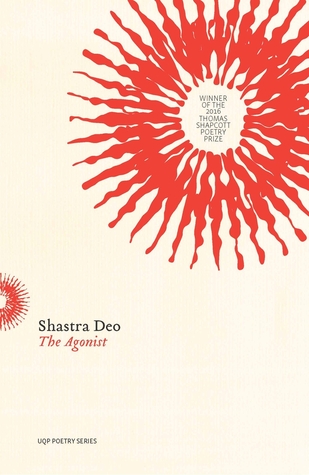
The beauty of bloody fists and broken bones: The Agonist by Shastra Deo

Once again, my attention turns to a work of contemporary Australian poetry, and this time it’s a remarkably gritty, often grisly, exploration beyond the raw edges of physical and emotional endurance. Embodiment. Disembodiment. Lyrical evisceration.

Evoking characters and imagery drawn from diverse, seemingly unlikely sources—anatomy textbooks, World War I poetry, a scout manual, boxing, entomology, ichthyology, divination, tarot cards—Shastra Deo’s debut collection, The Agonist, is an impressive, unforgettable experience. Like a sucker punch to the gut.

But in the best way possible.

Agonist: (n) one that is engaged in a struggle

The narrators that move through these poems—the voices Deo borrows or inhabits—cover terrain familiar to poetry. They speak to pain, love, loss, damage, healing. But they engage with the world at a visceral, cellular level. Their words work their way into and through the hollows of memory, exploring what slips though the passages of the brain, examining what the muscles retain and imagining the intersection between reading the past and foretelling the future.

So what does that entail? The Agonist is divided into three sections, each of which opens with an illustration from Gray’s Anatomy. Many of the poems in the first section deal with relationships, familial or romantic, employing surreal thaumaturgic, and anatomical imagery.

“Arrhythmia,” for example, details the painful, desperate emotions of the partner not ready to accept that a love affair is coming to an end:

             You count the notches of his spine.
His eyelashes flutter and he sighs, his breath
so warm that for a moment you can
pretend you aren’t cold. You want
to crack him open and hold
his heart in your hands, sink your fingers
into the thin membrane of his lungs.
You want to pull back his skin
and curl up inside his ribcage.
You want to know what he is inside.
Find the symptom, the sickness,
the anomaly that let him love you.
You want to be warm again.

Deo is adept at creating a surprising, brutal beauty in her romantic imagery. We see it again with “Cutman,” a graphic, meaty piece that opens the second section of the collection. Here the connection between a boxer and the attendant who cleans and cares for his wounds between rounds is reimagined in intensely intimate context:

He comes home each night with his hands soaked red,
and when he smiles it’s sharp and jagged and his teeth
quake in his wet mouth. You card your cold fingers
through his hair and lead him to bed, wait
for the weight of his arms around your neck, warm
and drowsy, the familiar shape of his bones and tendons
cradling the base of your skull…

In this part, Deo calls on themes drawn from war and boxing to engage in dialogue with other poets and experiment with poetic form. Included are three centos formed from the Index of Titles and First Lines in The Penguin Book of First World War Poetry. Moving into the final section, inspiration is found in, among other things, a Boy Scout manual from 1914 and a deck of Tarot cards. Consider “XIII—Death”:

. . . I live in the present tense,
tensed and present at the wheel
of a car wreck. My name is re-
membered. I apologise too often
for my lack of biography. He
does not yet know what divinity
he belongs to, but he knows I was
not born for this. He takes the
sheets off the mirrors. He escapes
our mythology.

In my experience of this work, which is of course, all I can honestly speak to, The Agonist is a collection in which the sound of the words and the impact of images are central, the point from which a narrative emerges and takes form. These are not autobiographical poems, for the most part. Nor do they read like “stories” so much as they remind me of paintings or photographs out of which vignettes have been abstracted with vivid, scalpel-sculpted, incantatory language.

Reading this book has left me with the sense of having spent time in a gallery. Attending a deliriously disturbing exhibit.

Shastra Deo was born in Fiji and raised in Melbourne. She presently lives in Brisbane where she is pursuing a PhD in Creative Writing. The Agonist is published by University of Queensland Press and, as ever, the indefatigable Tony Messenger has a review and interview with Shastra on his website.

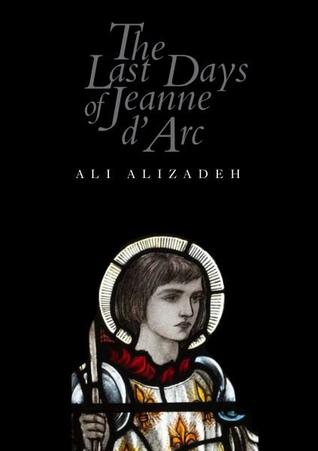
A delicate madness: The Last Days of Jeanne d’Arc by Ali Alizadeh

Jeanne d’Arc has been the subject of countless historical, literary and dramatic accounts, and it is likely that, at least in the western world, everyone has some image they associate most readily with the famed young woman who donned men’s clothing and led the army of France to a series of decisive victories against the English during the Middle Ages. The rough outline of her story is so ubiquitous in our culture that it is likely difficult to recall one’s first encounter. But I certainly remember my most intense moment of identification with the Maid. It was late May, just over twenty years ago. I was, at the time, at the height of an episode of psychotic mania that would lead to a bipolar diagnosis and, ultimately, to an understanding of the deep gender discomfort I had felt for as long as I could remember. At the time however, I was a mess. Female-born and married with two children, my ex and I had endured a few years of destructive soul searching on my part. My madness, complete with visions, was just one more thing we tried to survive in the desperate hope that it would all pass. In my experience I’d seen drag queens and butch lesbians but no one I identified with. Until May 30, when I suddenly realized—and to this day I don’t remember how or why I knew it—that it was the feast day of Joan of Arc. In this convergence I saw a message. I saw myself. In the state I was in, the timing was fortuitous and seemingly miraculous. In the end, the ultimate moment of self-understanding was still a number of months ahead, but I will ever think of Jeanne’s appearance on my journey toward belated manhood with a mixture of embarrassment and wonder.

When I first heard of the premise around which The Last Days of Jeanne d’Arc , the recent novel from Australian author, Ali Alizadeh is constructed, I was skeptical. It triggered my frustration that, looking back in history, cross-dressing women are typically conflated with lesbians or “straight” transmale identities, in these days of heightened trans awareness. However, it’s not always accurate, historically or today. But that is another matter. My initial negative reaction quickly turned to curiosity the more I heard about the unusual, innovative approach taken in this account of a life that has been celebrated, and excoriated, in so many well-known renditions over the past six centuries.

For Alizadeh, who was born in Iran and emigrated to Australia in his teens, the fascination with Jeanne d’Arc is long standing. It goes back to his childhood years.  His enigmatic heroine was the subject of an epic poem he wrote for his PhD and it is this background—a comprehensive understanding of the historical material combined with the spare elegiac prose of a poet—that allows him to create a curious, sensitive, and deeply human portrait of a complex historical figure.

The Last Days of Jeanne d’Arc, as the title implies, is structured around the final days of Jeanne’s life. After months of brutal interrogation, she has renounced her Voices and her actions by signing a letter of abjuration. She has saved herself from a charge of heresy, torture and execution, but now she is imprisoned in a cold, damp cell beneath the Treasury Tower of Rouen Castle. Forced to remove her male attire and put on a white gown, she feels vulnerable and alone. However, it seems that there is something more weighing on her, a sense that her passion runs deeper than a divinely inspired drive to serve her King and country—something much too fragile and painful to remember.

As Jeanne’s story is fleshed out, the narrative will return repeatedly to this dim prison, and each time we will know her a little better. But, Alizadeh, a skillful storyteller, takes his time, inviting the reader to remain open to possibility. Effectively employing an inventive style that weaves together a chorus of voices and shifting perspectives, The Last Days avoids falling into the morass of detail that can drag down more conventional historical novels. Narrated primarily in the present tense, from a third person perspective, the historical context and military conflicts are presented in a spare, dated, often time-stamped, documentary style echoing nonfiction prose poetry. It is blunt and remarkably effective:

1413

In England, Henry V succeeds his father, the Lancastrian usurper of the English throne. Twenty-seven years old, a grotesquely scarred face. An extremely devout Christian, not at all the fun-loving, riotous youth of Shakespeare’s future play. Severe and frankly soulless. Muscular. Possibly a psychopath, probably a war criminal. Is never seen to smile. Must prove himself to the English nobility as their ruler, as a real, mighty man. Or else his dynasty may be toppled just like the dynasty his father toppled. Is keenly aware of the turmoils in France. Decides that the time has come to renew the claim to the throne of France…

Once Jeanne enters history and, in her first battles proves her value, the narrator gradually moves closer into her thoughts, letting the account slip back in time again, to meet our heroine as she hits adolescence. It is at this time that young Jeannette, as she is still called, has her first visionary encounters. It is also the when she begins to sense that the affection she has for her childhood girlfriend is of a somewhat different order. Before long she finds herself distanced from the other youth of her village. She is excessively pious and decidedly indifferent to the idea of dancing with boys, marrying and having babies—something her peers are well on their way toward achieving by their early teens. There is a soul wrenching loneliness in being set apart like this, by desire and, if her beloved Saint Catherine of Alexandria is to be believed, by divine destiny.

As the narrative turns to follow Jeanne’s life more directly, her Voices are allowed to speak, set apart in italics and indentation, appearing to float in the text. Jeanne’s own voice also enters, slipping in periodically either to comment on or clarify the account, or to address another, a “you” who remains, for a time, unnamed as in this passage, just prior to her first encounter with her Voices, where perspective and tense shifts several times:

She has never been caught in such a terrible storm and there is so much pain in her skinny body. I struggled to stand back up. The whole world flared up in the lashes of blinding lightning. The rain immersed my being. She is kneeling, paralysed by the mud. My tears merged with the rainfall. (Did I tell you, my love, how exactly it happened?) The thunder strikes harder and the rain is now a flood and it is in this cascade—why do historians insist it was a sunny day?—amid the fruits and plants being washed away by the storm that Jeanette clenches her fists. It is then that she howls back at the unforgiving sky. She rips off her scarf.

O God O angels O Saint Catherine.

Are you there?

Are you there?

 Allowing room for Jeanne’s voice to reflect back on her experience deepens the intimacy of the present tense narrative. This polyphonic quality will become more pronounced as other emphatic voices interrupt with curses and threats as the story progresses toward its inevitable and unfortunate end.

The portrait of Jeanne d’Arc that emerges over the course of this novel is one of a mix of vulnerability and determination. We see a young woman torn between her convictions and her doubts, conflicted by her desires, and isolated from others by gender, lack of education, and the unconventional role she plays. She is never entirely free from concern about the reality of her Voices and her own sanity, especially when her entreaties meet silence. And, while she becomes hardened to the violence and gore of the battlefield, she grows increasingly distracted by her love for another woman and all of the complex emotions that such a forbidden affection arouses. What comes across is a certain naivety. She is, after all, young (only nineteen at her death) and has, in a sense, been protected from the kind of demands of life that would have hardened and matured her peers who married early. So although she becomes an experienced soldier and commander of men, her romantic love affair has an idealized, almost adolescent intensity that betrays her youth.

Alizadeh does not offer this speculative image of Jeanne d’Arc as a lesbian woman lightly. He knows the relevant documentary material exceptionally well and is aware not only of the limitations but of the spaces where possibility resides. His narrator respects his heroine, balances the historical account with the personal, and situates his chronicle to the contemporary reader. His Jeanne is a medieval heroine for a modern imagination, his novel is an absorbing, lightly experimental, and human re-imagining of the life and death of a young woman who has never ceased to be the source of inspiration and intrigue.

As I can attest.

The Last Days of Jeanne d’Arc by Ali Alizadeh is published by Giramondo.

With a multitude of voices: Star Struck by David McCooey

There is a line from Rilke’s The Notebooks of Malte Laurids Brigge that has haunted me since I first encountered it about a month ago. Quoted at the opening of Franz Fühmann’s At the Burning Abyss it reads: “For poems are not feelings, as people think (you have feelings early enough)—they are experiences.”

A simple statement, but one that instantly made sense. Poems are experiences. Rilke goes on to insist that everything the poet observes, everyone he or she encounters becomes part of the potential material for a poem. I have read a few highly praised poetry collections recently, typically by popular younger poets, that seemed to be exploiting emotional intensity without sufficient substance. By the end of a short book I tend to feel a little bludgeoned by the sameness and relentlessness of the imagery. I find myself wondering what the same poet might be like with just a little more life to draw from. Experience.

And so to my first review of the year, which happens to be the last book I finished in 2017. It is a collection of contemporary poetry and, once again, it’s Australian. David McCooey’s Star Struck is another book that came to my attention through a review and interview on Tony Messenger’s website. What initially drew my attention was a very immediate and personal connection. I was intrigued by the fact that one of the sections was inspired by his own encounter with a life-threatening medical event. Like McCooey, I have spent time on the cardiac ward and, whether the circumstances differ or not, there is nothing quite like heart trauma to upset your fragile equilibrium. To this date, I have not been able to write about my own experience, much of which is forever lost to my memory. And so I was curious to see where he would take his own explorations. Of course, I also found much more.

Star Struck is a lyrical collection, rich with musical and literary references, that relies on a wide range of voices and characters. Two poems, both titled “This Voice,” frame the work, reflecting the ambiguity and universality of speakers to be found within:

It goes without saying
that it sounds like your voice.
But is it yours? And if
not yours, then whose?

In his interview with Tony Messenger, McCooey admits that the second person “voice” here is intended “to be alienating, and to undermine simple ideas of my poems simply expressing ‘my voice’.” This is an awareness that continues, in varying forms throughout the main body of the text. Divided into four sections, the first part, “Documents,” traces his hospital adventure, from presentation at Accident and Emergency through surgery to rehabilitation. The experience is recounted with a level restraint that is mediated by the use of the second-person perspective. Addressing himself at a distance has several advantages—it allows the poet to ensure that it is not entirely about himself, accommodates exploration of some of the oddity of the hospital environment, and, as I read it, captures the strange surreality of the patient experience itself, the temporary suspension of control required:

There had been an earlier
waking,
in the ICU,

a time you have
deeply forgotten,
when you had the worst

of it—the pain, the detubation,
the harrowing scenes
of your return to life…

– from “Intensive Care (ii)”

Literary references appear throughout this work, his cardiac patient turns to Calvino, Muriel Spark and Tomas Tranströmer, while Georges Perec-style constraints shape a simple domestic scene; but since McCooey is also a musician, it is no surprise that he delights in incorporating characters and themes drawn from popular music into the eighteen dramatic monologues that comprise the third section of Star Struck, “Pastorals.” Here he takes on the voices of artists like Joni Mitchell and James Morrison, imagines scenes involving rock stars, music fans, and even peers out of the eyes of a caged primate watching a curious tailless creature  in a poem with the Peter Gabriel-inspired title “Shock the Monkey.” There is a restrained  confidence in these resulting mini-portraits that shift effortlessly between male and female speakers, taking their cues from music, musicians, movies, along with classic poetic sources, to give voice to those moments in life marked by association with an artist or piece of pop culture.

Poems as experience.

What marks the reading of this collection for me, moving in and out of it for several weeks as I have, is the way that the simplest observations can be spun into narratives that hint at a larger story. This is not say that there are not pieces that take on grander themes—“Election,” for example takes direct aim at the detention centre on Manus Island—but it is in the ordinary that we see ourselves. However, being drawn to this book for its hospital poetics, if you will, the poems that struck closest to home for me were those that revolved around the experience of illness and recovery. The final poem (before the closing version of “This Voice”) is one of my highlights. The narrator of “La Notte: A Tale of the Uncanny” is a widowed sixty-two-year-old who is recovering from a recent illness and surgery. It is a extended meditation on aging, loneliness, and the strangeness of post-illness existence, every other stanza an aside in parentheses:

I put off the performance of dinner, deciding
instead to have a lie down. Perhaps I had, after all,
overdone things a little by going out that afternoon.

(Time takes on a different quality when one lives alone;
the hours I sometimes longed for thirty years ago
can now feel like a ghostly presence in the house.)

I went to the bedroom, which used to be my son’s,
about to lie down, when something caught my eye.
The small glass owl on the windowsill had been moved.

(I do not say ‘had moved’, since such objects can’t move
by themselves. This goes without saying, I know, but I
want to make it clear this is not a supernatural story.)

Sometimes serious, sometimes satirical, Star Struck offers much to enjoy. Unsentimental, but attentive to the nuances of character, McCooey highlights the passions, regrets, and familiar associations that bind us in this accomplished collection.

Star Struck by David McCooey is published by UWAP, the poetry series of UWA Publishing of the University of Western Australia.

One last glance back at 2017, as 2018 dawns

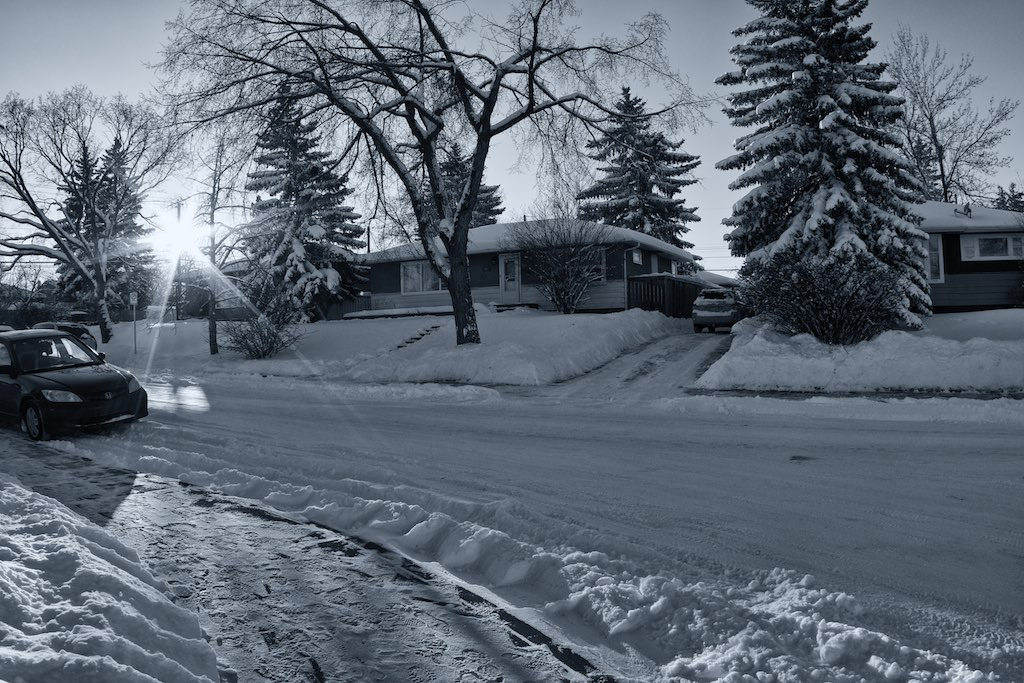
A little more than a week ago I marked the solstice on a rather positive note after another difficult year. The holiday season has been, however, more painful than I had anticipated. The weather has been brutal—as I type this, the temperature is in the low minus twenties, think -28 or -29C with a wind chill factor approaching -37C, and we’ve received about 30cm of snow or more—which has contributed to a marked degree of cabin fever. But what has weighed on me most heavily is a peculiar loneliness, a very personal emptiness, and a measure of anxiety about some of the changes I thought I was looking forward to, like selling my house and moving into an apartment. I’m feeling a little conflicted now, oddly because if my son manages to stay sober, I think less of escaping a bad situation and think more about the advantages of having someone else around, at least until he is well stabilized and ready to move on. (Okay, there’s also the fact that he saved my life a few years ago…)

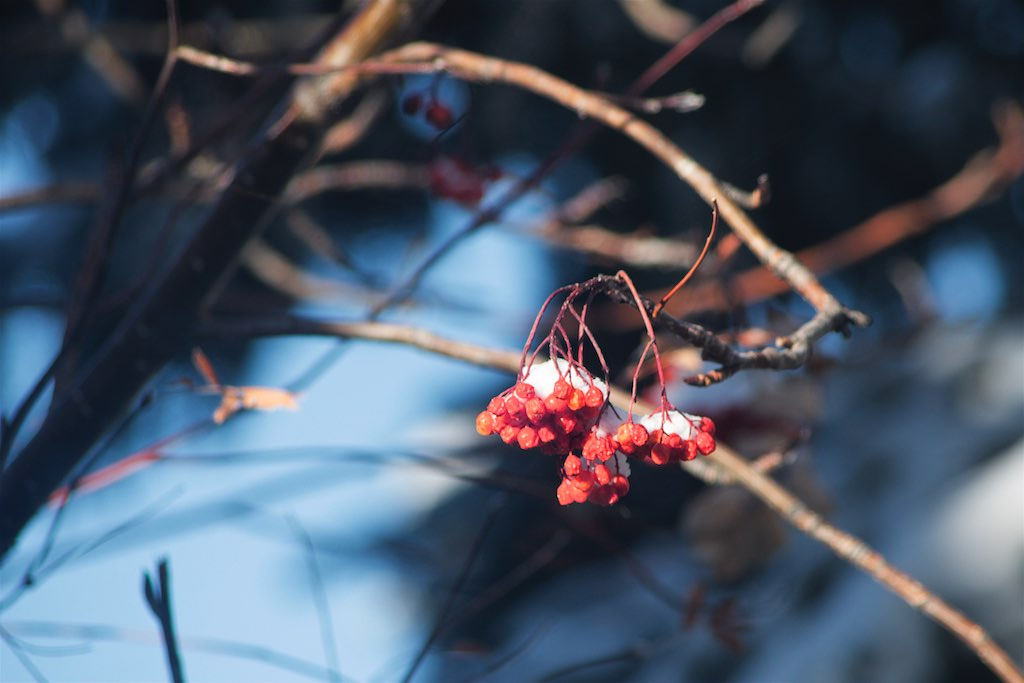
Taken this afternoon. Does it look cold? Copyright Joseph Schreiber, 2017

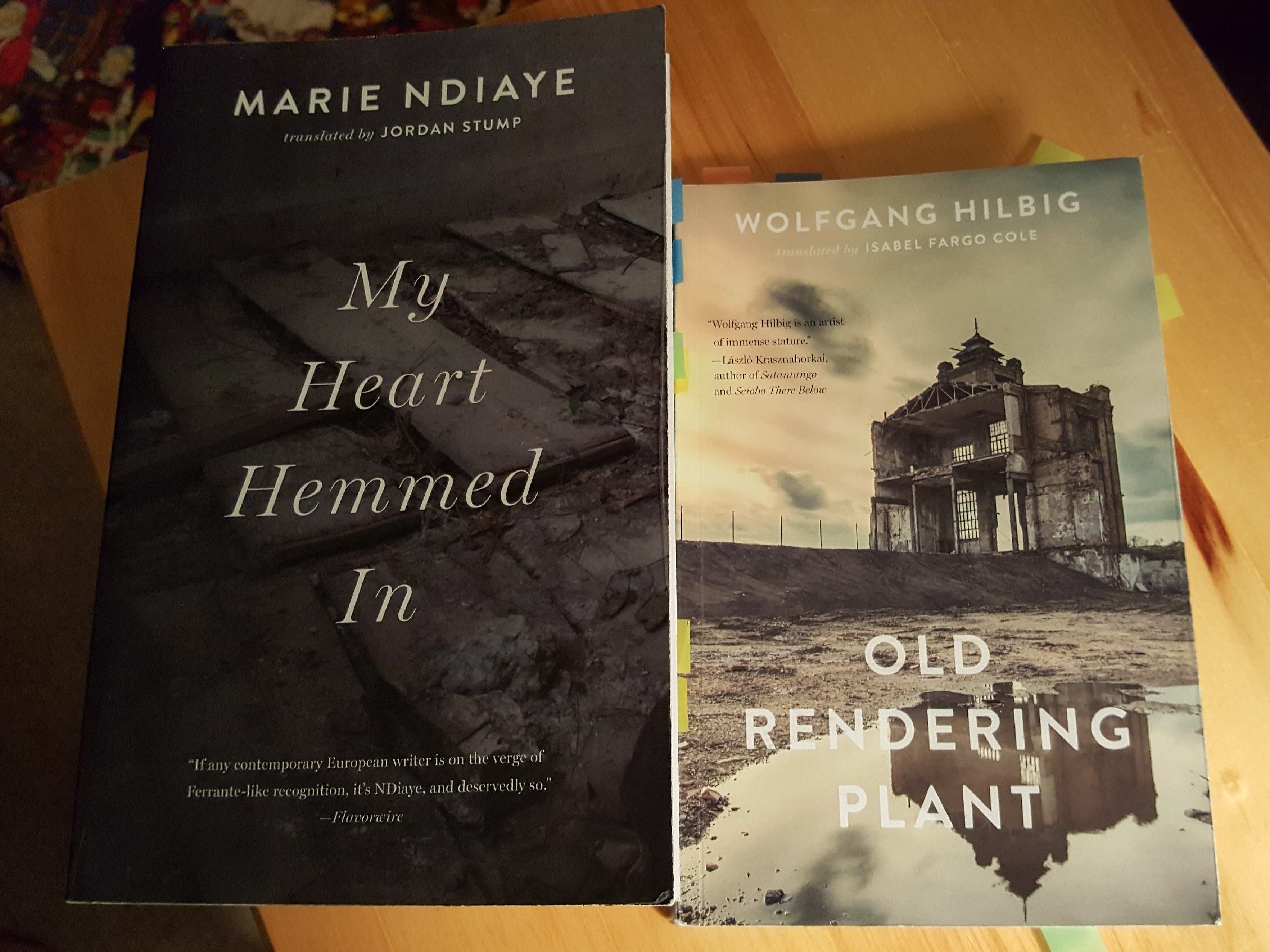
However, now that the end of 2017 is upon us, I can distract myself for a moment by looking back over my year in blogging. Although I started this blog in mid-2014, I did not begin to seriously write about books, or venture into the realm of mini personal essays until the end of that year. In the three years since, my blog has grown steadily and, I hope, developed a bit of a reputation for being unclassifiable. This year I noticed a marked increase in traffic from Canada and Australia, a result, I suspect, of my increased engagement with readers and writers from both countries. Still the largest number of viewers came from the US and the UK, followed by Canada, Australia, South Africa, and India. My most popular review written this year was, by a wide margin, of Welcome to Our Hillbrow by Phaswane Mpe. Mine must be one of the only reviews of this book online; it was even cited in an extensive overview of post-colonial African literature—the only blog review cited in the entire article. This book is a classic of early post-Apartheid South African black literature and I can’t understand why it hasn’t attracted more attention—clearly it was being studied extensively this year judging by the traffic generated. The second highest number of views for a 2017 review was for The Major Refutation by Pierre Senges (tr. Jacob Siefring), the third, My Heart Hemmed In by Marie N’Diaye (tr. Jordan Stump) and the fourth for Fleur Jaeggy’s Sweet Days of Discipline (tr. Tim Parks). The 50/50 split between new releases and older titles in this selection highlights one of the advantages of blogging—not being bound to focusing exclusively on recent releases as is so often the tendency in other literary venues you can read and write about whatever books catch your fancy. Or not. This year I read much more than I reviewed here or elsewhere.

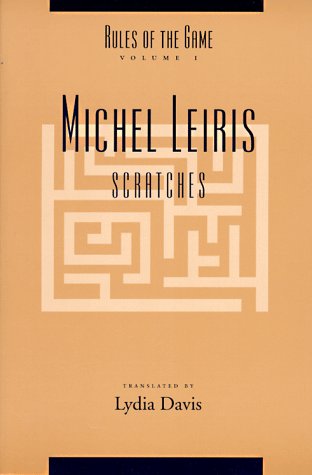
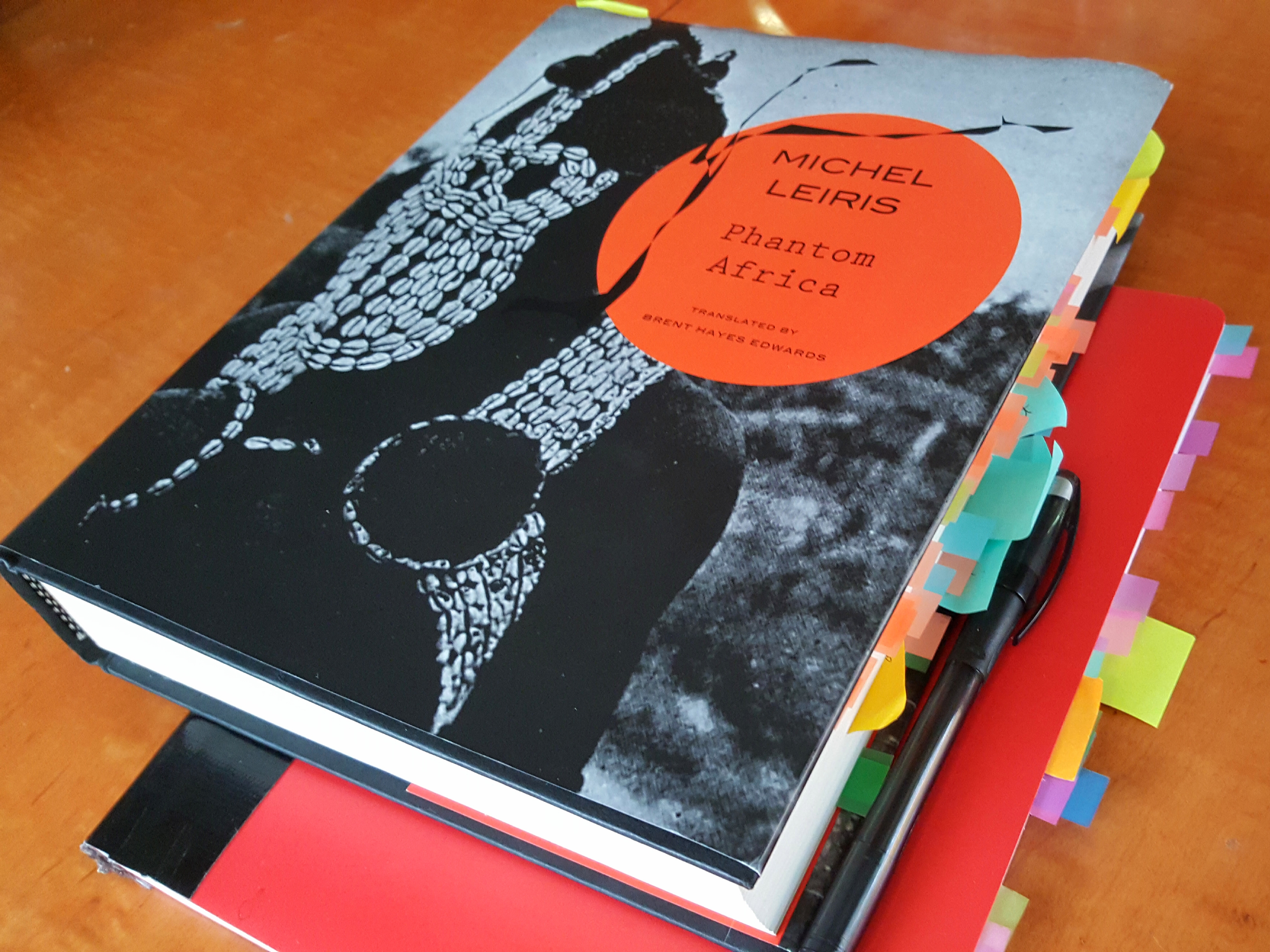
My own occasional reflective posts, which always make me feel mildly self-conscious, tend to be very well received, generating more hits than the majority of my reviews. Considering that the reviews typically take me much longer to write, it never ceases to surprise me that people actually want to read my idle ramblings… something to hold on to as I start to finally (yes, finally) tackle my memoir project in the year ahead. I’ve been piddling around on this front, to be honest. But it’s so terrifying to put one’s own life on the page. However, I trust I’m not the only personal essayist to struggle with this conflict. As I’ve mentioned several times in recent months, the work of French poet, essayist and ethnologist Michel Leiris has occupied much of my attention this past year (with much to keep me going in 2018). I had expected I would write some kind of a “review” of Scratches, the first part of his four-part autobiographical project Rules of the Game, yet I can’t quite imagine how to write about this book. It has become embedded in my consciousness, and interwoven with my reading of his dream diary, Nights as Days and Days as Nights, and his massive travel journal, Phantom Africa.

Long before Knausgaard starting dissecting the minutiae of his experience, Leiris was reflecting, musing, analyzing, and agonizing over the stuff of his life and, more accurately, his emotional and intellectual engagement with the world as mediated by language and memory. Scratches begins with his earliest recognition that language held magic and secrets that he could unlock as he came to understand the meanings of words. Throughout the book his discourses, which range widely from childhood amusements to recent events and back again, hinge on the associations he has for certain words or phrases. (Lydia Davis’ remarkable translation seamlessly weaves the French words into the text so that the layers of sound and meaning ring through.) It can be quite wonderful to get swept up in his winding and circuitous streams of thought. However, what I love about Leiris is his idiosyncratic emotional volubility. He easily swings from being proud and confident, to wallowing in despair and self-doubt. If the contemporary “journey of self-discovery” model of the memoir enforces the notion that life has a narrative arc that leads to growth and improvement, Leiris is not the model. In fact, much of the time he simply seems to be travelling in wide sweeping circles without getting anywhere at all. Nor is he wretched enough to stand as a forerunner to the popular misery memoir. But he doesn’t hesitate to indulge in a little morbid excavation of his weaknesses and failures when his mood plummets. I well imagine this annoys some readers, but as someone who has struggled at length with mood regulation, I adore the honesty and the way he somehow manages to drag himself out to firmer ground. Toward the end of Scratches he very nearly gives up his entire autobiographic endeavour worrying that he has reduced himself to “a sort of aged child, a prisoner of a bygone period and henceforth shut off from all action—even thought—involving the future.” In his anxieties, I see reflected my own insecurities about committing to a long term project. He justifies his decision to break off work on his book saying:

Since the literary work to which I am devoting myself with such difficulty seems less and less uplifting and no longer necessary (since it gives me nothing beyond what I put into it myself more or less deliberately), it would be better to abandon it and wait for a more favourable time. And right now the most serious hope I have for recovery is to let everything lie dormant until the anecdotal illness ailing me… and my brain cleansed by this period of repose, I can shed my old skin. To come into a new skin after a long period of obliteration in blankness, like a drum one has beaten too persistently and which, even though its body may still seem in pretty good shape, absolutely must have its vibrating skin replaced by a fresh one.

Of course, he not only recovers his enthusiasm but will go on to produce three more volumes after this.

So, looking ahead to 2018, I have a small selection of books that I am especially keen to read, but I know better than to make any public lists. I do want to continue a steady diet of poetry, learning how to read it more deeply, and write some of my own. But writing and photography have to take centre stage. Most immediately, I am heading to India in February to spend a couple of weeks in Kolkata where I hope to be able to find some distance from home, a wealth of inspiration and a little quiet time to write.

Copyright Joseph Schreiber, 2017

Happy New Year to all. Here in my hometown, and in many cities across Canada it is so cold that outdoor celebrations have been cancelled. But if the meteorologists are right, we should start to climb out of the deep freeze tomorrow as 2018 rolls in.

Crazy in love with words: Attrib. by Eley Williams

Many year-end lists, especially those with an eye to the world of indie publishing, have been abuzz with praise for the linguistic gymnastics of Eley Williams and her debut collection Attrib. and Other Stories. And rightly so. Even those readers who might be strangers to experimental fiction have found themselves captivated by the slippery, dazzling wordplay on display. This book—which I read with this month’s Guardian Reading Group, a forum I’ve scarce had time for in recent years but where I probably first learned to analyze, articulate and defend my response to literary works—is certainly a highly entertaining, intelligent, tightly crafted foray into a slightly surreal space where words have a weight and reality that seems to hang in the air, creating the ground for an unusual assortment of narratives.

However, as one might expect, some stories are more effective than others, and though each reader is likely to measure impact differently, I couldn’t help feeling that the whole was somewhat more than the sum of its parts. This is a book well worth experiencing, but one might wonder where Williams could take this type of wordplay from here. Could it be expanded to novel length or does she have her sights on other literary visions? Fortunately, as Reading Group participants, we were able to pose our questions to her yesterday, and rather than rehash that discussion here, I would suggest anyone interested in getting a sense of the exuberance and energy that virtually bounces off the pages of Attrib., to have a glance at the webchat —the same spirit and charm comes through in her responses.

The stories that comprise Attrib. find their origins in the simplest ideas. In the most basic pieces, dictionary definitions and wordplay spark clever scenarios; in the more substantial offerings, her protagonists have odd occupations, want to express how they feel but lose themselves in microscopic self-inspection, or are beset by strange psychological afflictions. Somehow Williams manages to have fun and touch at real anxieties and emotions at the same time, even in the most curious tales.

Her gift for juggling words is evident from the opening entry, “The Alphabet,” artfully subtitled: “(or Love Letters or Writing Love Letters, Before I Forget How To Use Them or These Miserable Loops Look So Much Better On Paper Than In Practice)”. Here the narrator is dealing with a progressive form of aphasia, trying to hang on to her ability to use language as it erodes and, along with it, her relationship:

The plot, yes—the condition of its being lost. I have a great deal of nostalgia for having the plot and a full vocabulary. Both have been lost gradually along with the—what is it—marbles. My marbles, specifically. We have come to specific marbles. I have lost it, I have lost my marbles and I have lost the plot—the Holy Trinity of losing I have lost my faith in—wham bam thank you m’—ma—mate. Maybe the plot was connected with my marbles in some way. Maybe one plays marbles on a plot, plot being synonymous with pitch or field or court. I lost them all long ago is what’s important. Two weeks ago. You took my marbles and it with you and I appear to have mislaid the plot.

In my years working in brain injury, I encountered many people dealing with varying degrees of aphasia, and this bittersweet story captures beautifully, the spirit of losing one’s facility with language.

The title story, “Attrib.”, which, according to her Guardian Q&A was completed just before the manuscript of this collection was submitted, is a stand out—the magic of inspiration under pressure, perhaps? The narrator who has a hypersensitivity for sound, is Foley artist working to create incidental sounds for a soundtrack to accompany a gallery exhibition on Michelangelo which will feature reproductions of his major works. How exactly do you capture just the right sound to signify the Creation of Eve anyway? The theological and practical considerations that arise make for a most amusing dilemma.

While Williams shows herself capable of spinning the simplest idea into delightful yarn, one of my favourite pieces, “Bulk,” demonstrates her ability to orchestrate an eccentric cast to create a story with surprising depth of character. The narrator is a natural history museum employee who joins a collection of onlookers gathered around the carcass of a dead whale washed up on the shore. The protagonist, ostensibly the professional in the situation betrays a lack of confidence and unwillingness to take control that seems, more than anything, to reflect the smallness of humanity against the mass of the proud creature who has met such an unfortunate, undignified end:

‘I will touch it!’ declared the young woman suddenly with a renewed vigour and she slipped from her partner’s arm and ran in an arc out towards the head of the whale, picking out a route over the rocks with shoeless feet. There was an ungainliness about her small size next to the great bulk of the whale. There was an unbalance to the scene on the shoreline generally, as if a note was being sung off-key, or somewhere a pair of parentheses had been left unclosed.

Finally, the majority of the stories are first person narratives and in most cases, the gender of the narrator and, if relevant, the love interest is left unspecified. As a differently gendered reader I tend to be both gender sensitive and gender ambivalent. I like the openness that this approach allows in the reading, and I often prefer it to the awkwardness that sometimes comes through in cross-gendered narratives (authors writing from the opposite gender perspective), but whereas one can develop the personality of the narrator in a short space, the “you” addressed in the more romantically themed pieces can reduce the potential emotional depth of the situations. It is even more challenging when this kind of approach is extended over a longer format. This was the nature of the question I posed to Eley Williams in the chat (you can see it under my uncreative user name “jmschrei”). She responded that she left gender unspecified when she did not think it was crucial to the story but admitted:

I didn’t find writing ‘genderlessness’ a constraint, not wittingly anyway: I think for a reader confused acts of heroism don’t require specific or non-specific awareness of genitals.

Nice answer. I wish real life was more like that.

Attrib. and Other Storiesby Eley Williams is published by Influx Press.

“I’ve been left all alone”: Hair Everywhere by Tea Tulić

On the day Grandma did not die, Mum had an unusual headache. Her eye began to run away to the left. My brother took her to Emergency. He came back without her.

The terminal illness of a loved one has centred many moving novels and memoirs, but there is something about Hair Everywhere, the debut novel of Croatian writer  Tea Tulić, that sets it apart. The construction is deceptively simple. Almost too simple at first blush. But what unfolds in a flow of very short chapters—some only a few lines, most less than a page—is a sad, gently surreal, fragmentary novel that follows the narrator’s awkward transition from adolescence to womanhood as her mother slowly dies of cancer. Reading like a series of micro fictions, each chapter tells a complete story or, rather, captures a complete memory and, although there is an overall arc to the narrative that evolves, the progression is not entirely linear. It is, in fact, at times rather scattered, mirroring the conflicted emotions of the narrator, and the uncanny suspension of reality that surrounds her family during this time of prolonged stress.

Mum
(Wants to Come Home Again)

When Mum is lying in bed with no make-up on, then she becomes fractious. When she talks to me, I stare at the tip of her tongue. It’s white. I tell her to write everything down on paper. Then she writes how she needs painkillers, which nurses are rude, or what she has eaten that day. When she asks me, writing on the paper, if she will be going home for the weekend, I am both happy and unhappy. But that decision is not mine to make, it is up to the white coats of Olympus who shake the neck of my faith.

They are still saving money on the lighting in the corridors.

The narrative voice is naked, spare, and unflinching. Deaths—accidental, random, and natural—are regularly recounted. Strangers, relatives, and an assortment of pets meet unfortunate ends. The dispassionate accounting feels like an attempt to diffuse the narrator’s anxiety about her mother’s health. There is also a matter-of-fact recording of bodily functions that speaks to the messiness of both adolescence and illness. Having found herself thrust into a caregiving role when she is still in need of support and guidance herself, the narrator seems to be trying to strike a balance between her childhood memories and the mature responsibilities she has been forced to take on. She visits her mother at the hospital daily and supports her when she is occasionally allowed to leave, comforts her through the chemotherapy and resulting hair loss. But back at home she has a younger sister and an ailing grandmother to look after. And although the male characters, her father and brother, tend to appear as peripheral presences, they are not absent. Rather, their silent pain weighs heavily on the household. Her father in particular, is out of work, and crushed with grief and financial fatigue. His daughter is well aware of this.

If this sounds like a dreary and morose read, fear not. There is a melancholy beauty to the prose, allusions echo throughout the course of the fragmented narrative and a measure of controlled sarcasm or mild black humour lightens the tone. This is an essential quality of the narrator’s effort to cope. However, nothing can hide the very real emotional and physical toll of the balancing act she is forced to play between her mother, grandmother, and younger sister. On the cusp of womanhood, she is almost suspended in a grey space where her past and future prospects, hopes and dreams, are bound by the obligations she has to the family members who depend on her. But she does not talk about that directly, what she alludes to is the snake in her stomach. Fear and anxiety are literally eating away at her.

While I watch her lying in bed, I can feel the umbilical cord between us. Something I have tried to cut a thousand times already. And now I hold onto that invisible cord as though I were hanging from a bridge.

Woven into the fabric of the story are continual appeals to the indifferent doctors and nurses, to the church, and to local superstitions, folk healers, and herbal medicines. The family fears that they cannot afford to fight the illness adequately, but the cancer is relentless and, as the narrator reminds her brother at one point, even rich celebrities have lost the battle. As her mother’s prognosis worsens, the grandmother, weakened and ill, but hanging on, grows increasingly bitter as she questions the God who refuses to take her after her husband and other children are all gone and now this last surviving daughter is dying. She seems destined to be “left alone” once more.

In the end, there are no miracle cures, no last minute reprieves. And for those left behind, life goes on, ever haunted by memories. What remains is this unusual and affecting novel of illness, loss and grief.

Tea Tulić was born in 1978 in Rijeka, Croatia. Hair Everywhere was originally published as Kosa posvuda in 2011 and has since been translated and published in Macedonia, Serbia and Italy. The English translation by Coral Petkovich was published by Istros Books in 2017. Further excerpts from the book can be found at B O D Y.

Another winter solstice: A dark year ends brightly

2017 has been a difficult year for many, personally and globally. It has become my custom to stop on this day—the shortest of the year, 7 hours, 54 minutes to be exact—and tally an account of sorts for the year just passed. That typically also includes some variation on a “books of the year” theme. This time I will refrain from the attempt to gather a formal list, but will work in some of my literary highlights.

My year began on a very low note.  2016 had been a year marked by significant creative achievement tempered by great personal loss. With the advent of the new year, I was awash in a mix of complicated emotions. Toward the end of February, probate was finally granted on my father’s will and I received the first part of my inheritance. This relieved the serious financial concerns that had been haunting me for months, but paradoxically, I felt worse than ever. As a wave of loneliness, threatened to completely overwhelm me, I sat down and composed a short blog post that, much to my surprise, garnered more views on the first day than any post I’ve ever made. Clearly I was not alone in my loneliness.

I don’t think I can say that post changed my life, but it represents the beginning of an awareness of the extent of the very real community that can develop online. Most tangibly it led to an invitation from fellow blogger Tony Messenger to take part in the annual extreme walk for charity he organizes in central Australia. And of course, because nothing is as perfect as we would like, I picked up an extreme cold somewhere between Calgary and Alice Springs, so I didn’t walk very much (or very fast), but to have almost two weeks out in the heart of the desert was an experience I’ll never forget. And the beginning of a deeper level of grieving for my parents. At the moment, much of the journey is, like so many of my photo files, unprocessed.

These things take time.

And, having travelled halfway around the globe, I had to at least stop into Melbourne and Sydney and catch up with some Twitter and online friends along the way. Every encounter was wonderful, and contributed to shrinking a large, lonely world a little, even if just for a few hours.

Brighton Beach, Melbourne
Glebe, Sydney
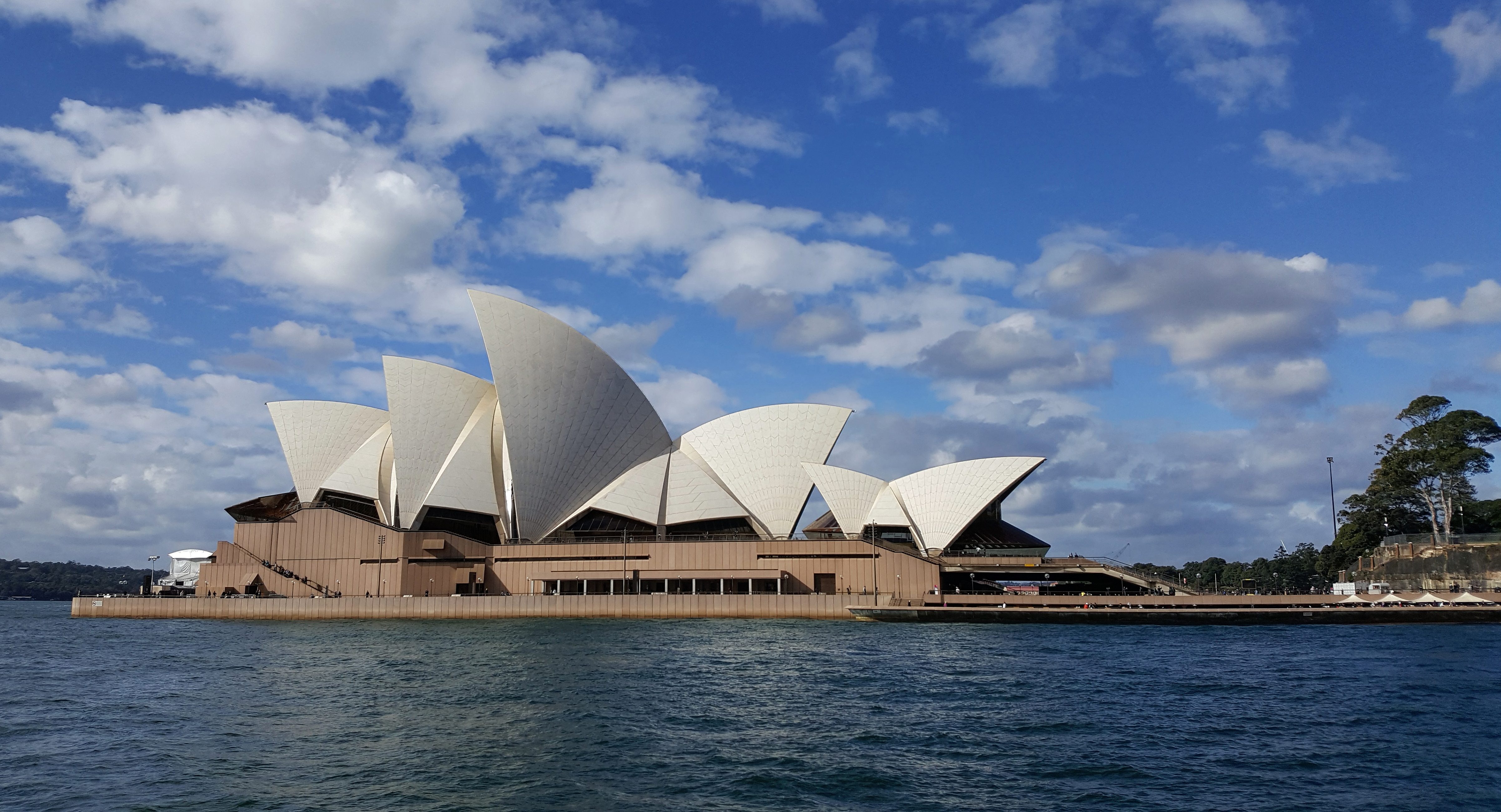
Sydney icon

Over the course of the summer, my brothers and I managed to get our parents’ home fixed up and ready to go on the market. They lived on an acreage outside a small village in a region of the province where the real estate market had been dormant for over a year due to the depressed oil industry. However, things were just starting to turn when we listed the house in late July. Within a week we accepted an offer. Now there are still some estate matters to clear up (and lots more stuff to dispose of), but with a measure of closure we can all start to move forward.

My highlight of the autumn was my city’s annual reader’s festival, Wordfest. I volunteered as a driver for the first time and had a blast. One has an opportunity to engage with authors in a completely different way when driving them around town. And this year’s event featured a strong line-up of Indigenous writers and an excellent poetry cabaret. But by far, my singular thrill was an opportunity to witness the phenomenal M. NourbeSe Philip performing from her experimental epic Zong! I had several opportunities to speak to her privately, and she was generous, supportive, and enthusiastic about my own writing project.

However, when I think back over 2017, I feel like I have been less productive as a writer. I would like to think that the work has been germinating… In truth, 2016 saw the publication of a couple of pieces that had been fermenting for a few years. This year it has been harder to find the focus, but I feel that shifting. I also limited critical writing off my blog, again an energy and concentration issue, but I am very pleased with the reviews I did publish. I’ve also been editing more, an invisible but very highly rewarding activity. And I’m excited to see where my new role with 3:AM Magazine will take me in the year ahead.

And so, at last, to the year in reading. I read many great books—and acquired many more that I’ve not yet gotten to—but here are some of the highlights:

This year I read, for the first time, several writers I have been meaning to get to for a while—Fleur Jaeggy, Ingeborg Bachmann, and Gerald Murnane—and I was in no instance disappointed.

I collected and read an embarrassing amount of poetry. These are a few of the collections I’ve been spending time with:

And somehow I’ve ended up with a healthy selection of contemporary Australian poets (with a few more still on the way):

Meanwhile, a couple of Canadian Indigenous writers really caught me off guard and I have since gathered earlier works by each to catch up on:

As a memoirist (or memoirish writer), I paid special attention to a variety of excellent (and different) memoirs:

And although I can say with confidence that almost every book I read this year was published by an independent publisher, I took special pleasure in supporting some very small indie outfits:

I also like to think that reading should be both intelligent and fun,so with that in mind, these are a few books that really surprised and delighted me:

And finally, I loved every single book released by Two Lines Press in 2017, including two of my absolute favourites novels of the year:

Last, but not least, 2017 is the year I became rather obsessed with French author Michel Leiris. I read the first part of his autobiography, Scratches, which I will write about soon, and purchased the next two parts (the last part has not yet been translated), along with his essays, fiction and correspondences. But, by far, the most demanding and rewarding reading experience I had all year was his monumental journal Phantom Africa. (With the exception of most of the poetry, I wrote about every book pictured here on my blog or for other online magazines. Links can be found on my Review Index 2017 page.)

Now, as the year is coming to a close, I am, of course, still reading. I’m also writing, and looking forward to an upcoming trip to India where I hope to be able get even more writing done. But the true reason this winter solstice is brighter than those of the past few years is that, as of tomorrow, my son who is just about to turn twenty-eight, will have been sober for two weeks. After eight years of heavy drinking and all of the discord, danger, and stress that loving an alcoholic entails this is something I feared I’d never see. I don’t know why he suddenly stopped. I have not asked. I am simply being supportive and hoping that this is the beginning of a new future for him.

So, at least for the moment, it’s all good. I hope everyone else finds a little goodness in the days ahead.

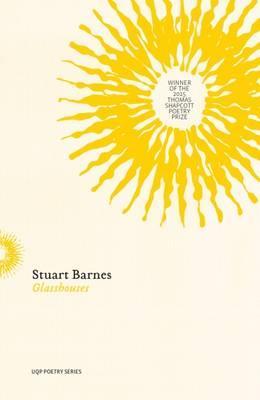
Idly tossing stones: Glasshouses by Stuart Barnes

Although I’ve never been a stranger to poetry, I have read (and acquired) more this year than ever before. I have even, cautiously, attempted to write about some of the shorter collections that have resonated with me most strongly. However, whereas the more I read, the easier it is to articulate why some books—even a couple of those by the celebrated young poetic stars of the day—fail to win me over, I am often at a loss to write with confidence about the collections that draw me in, hold my attention, and continue to call me back.

If there’s a moment when the proverb that likens offering unjustified criticism to throwing stones seems especially apt, I can’t think of a better one than this: my attempt to gather my thoughts about Glasshouses by Australian poet, Stuart Barnes. And yes, I know I am twisting the intent of the original wisdom, but I am slowly learning enough about poetry to be increasingly aware of what I don’t know.

I read this book through, listening to the rhythms, enjoying the wealth of rural and natural imagery, the sensitivity to the nuances of familial and intimate relationships, and the recognizable cultural references. And then I hit the detailed Notes at the end of the book and discovered what a cento is (a patchwork of lines taken from the work of other poets), and learned that some of the poems sample or rework other texts, or incorporate very specific structures and form. Tony Messenger’s interview with Barnes further confirmed my suspicion that I was missing entire levels of structural significance and poetic discipline; an awareness that is at once exciting and intimidating.

If one stops at superficial impact is that enough? What does it mean to enjoy a poem? If a line that catches me short in a cento actually originates from another work, who owns the power? The poet who crystalized the image, or the poet who re-envisions it, a jewel among other salvaged (and fully credited) jewels? Or—and I should hope this is correct—both but in different ways?

At the same time, returning to the closing poem in the collection, “Double Acrostic,” one of my favourites, after taking a moment to refresh my memory (again) about what an acrostic poem is (words or names are spelled out through the first—and if double, last—letters of each line), I found it thrilling to re-experience the poem on two levels, appreciating the beauty and the precision of the language anew.

For the novice poetry critic like myself, Glasshouses is a luminous example of what can be done within an array of poetic forms. Barnes openly takes rhythm and inspiration from his mentors, his favourite music, and from the application of specific limits. As he admits in the interview linked above:

I adore writing in form, be it fixed or one I’ve altered or one I’ve conceived; when writing in form I feel as if I’m at my most creative; I feel liberated, not constrained.

But, of course, the true test is, do his poems work for the casual reader? I would be inclined to think that form, if it is effective, should function beneath the surface—neither obvious nor necessary for the enjoyment of the piece. After all is there only one way to understand a poem? Poetry is, ideally, not written from the top down. A poem is not an intentional exercise to illustrate the universal by forcing specific images and allusions; the poet enters the process of writing to see where it takes him or her, and the reader has to feel comfortable to do the same.

Or perhaps I am tossing stones after all.

And so, to the reading. Glasshouses is a collection that feels intensely intimate and personal, in the sense that Barnes seems to be engaging directly with his reader, sharing his love of the poets who have guided him, directly or through his careful reading, drawing inspiration from his family and from his own experience as a gay man, and openly riffing on the influence of music and pop culture. The wide range of voices that emerge, together with the variety afforded by his delight in structure and form, allows for a reading experience that never falls into tired and predictable patterns. There are misted melancholic pieces, and poems that explode in loud, energetic bursts. In short, this collection is so much fun to read that I can easily imagine myself returning to its pages again and again.

Yet, within the limitations of this brief review/reflection, it’s impossible to offer more than a glance at a poem or two. Many cannot be reproduced because they are printed in landscape format, are shaped, or employ unusual fonts for emphasis and impact. Otherwise, it is difficult to zero in on any one representative example. For me, at this point in my life, I found the translucent beauty of a series of in memoriam poems to be especially powerful—“eggshells” and “colour wheel” in particular. The latter (i.m. Mervyn Barnes) begins:

The American-
barn-red-off-centre
timber shed

trumpeting
through blood &
bone the glasshouse’s
yellow stars

the front yard’s statue-
sque rooster
screaming blue
murder till blue

in the face
Bay of Fires’
orange lichen,
zinc-creamed lips…

However, since I began with an allusion to a proverb, it seems fitting to close with a taste of “Proverbs”—a playful literary take on proverbial witticisms:

A fish always stinks from the elegy down.
Hell hath no fury like a metaphor scorned.
The senryū does not change its spots.
You can’t get blood out of a trope.

Love of the couplet’s the root of all evil.
Procrastination’s the thief of metre.
Nothing is certain but stress and narrative.
The darkest stanza’s before the dawn.

Ah, yes, but fortunately I have a copy of Glasshouses to wake up to.

Glasshouses by Stuart Barnes is published by University of Queensland Press.

To sing the song unsung: A personal answer to Singed by Daniela Cascella

The voice soundless and then, records unheard, song unsung, voice also unsung
dipped enshrouded ensheathed enlandscaped tongueless tongueless tied no story no record.

Daniela Cascella is a literary ecstatic. She engages with the word—written, spoken, sung, depicted—at an essential point of being, at that place where the spirit, soul, or daimon resides.

She listens into the silences, to the whispers and echoes, to the frayed edges of meaning. As a native Italian who writes in English, she attends to the spaces between languages, bending and folding her adopted tongue to affect fractured layers of intent. To open yourself to reading her is to be challenged to read and write with a new sensitivity to sound, voice and significance.

If I sound like an enthusiast, I am. Daniela (if this was a review rather than an answer I would refer to her by her last name—I will honour her instead, as Brazil honours Clarice) has been a vital friend and mentor over the past year and half since I first came to know her. As an essayist, my primary goal is to reach toward an articulation of the ineffable, to give voice to an existence, not between languages, but between gendered experience in a way that gets closer to an expression of being as I understand it than the common dialogue surrounding trans identity allows. I have no idea if that is an attainable goal, but Daniela’s essays and meditations thrill, inspire and ignite me.

Inspire and ignite me.

Ignite.

Her latest book, Singed, takes its title from permutations of sing: sing, singed, sung. It opens with the account of a fire. A few months ago the room at the top of our house caught fire. A large number of books and cds were lost to the flames. I first read of these burned books from a PDF of the text. I responded with horror; I felt wrenched with every title. Returning to this accounting on the printed page a few weeks later, I sensed an exaltation, a calling forth, a rising to a challenge, a refrain to be reclaimed amidst the losses. And that is what Singed is. As Daniela sifts through the ashes and embers, sings through the ashes and embers, she calls forward precious voices—Clarice Lispector, Teresa of Ávila, Laura (Riding) Jackson, Elfriede Jelinek, Marlene van Niekerk, Isak Dinesen, Fleur Jaeggy, Ingeborg Bachmann and more—chanelling their words and their attempts to speak to otherness. Hers is a reading as inhabiting the spaces between words.  The observations she makes and questions she asks, hang in the air, inviting her reader to ponder the unspeakable and challenge the constraints placed on how we’ve been taught to read and to write.

Woven through her literary explorations, are reflections on music and art. These excursions help frame, and reframe, a multi-dimensional engagement with the written word. Hearing, seeing, and speaking are essential activities, as are silence, emptiness, and unfinished forms. A sigh, for example, Clarice’s in particular, which Cascella (at this moment, this feels like a review) first encounters listening to Lispector’s last recorded interview, inspires an intuitive and rhythmic engagement with the works of other writers, a series of echo and dub sessions on the page. The experience of reading and writing a review of Marlene van Niekerk’s The Swan Whisperer, a short tale in which a young student loses himself in his endeavour to transcribe the language of swans, leaves her spellbound, speechless and wordless, unable to write for months. Of that interlude she says:

Today I know that the silence I experienced was a deep working of the stuff that makes writing be. It was the encounter with the substance that eludes you and that causes such physical turmoil when you grasp it in other words, in words you read in a poem or hear in a song, and you recognize their subject as yours.

And the connections she draws when writing across languages are illuminating, especially for those of us who are unilingual. In an essay about Fleur Jaeggy’s as yet untranslated novel, Le statue d’acqua, Cascella writes:

Where did the spirit of the world hide that night its reservoir of dreamers?

The porous blank portions between the words in The Water Statues soak up Jaeggy’s discomfortable writing. They enfold the space of space, or as Gass wrote of Rilke’s Innerweltraum, the space made by Being’s breathing… Not just the space we call consciousness, but the space where we retire in order to avoid a feeling… These spaces are always palpable as though space were smoke, or the mountains of the heart where the last of the hamlet of feeling may be discerned. The blank spaces host echoes, speech where speech ends, the voices of ancestors. Jaeggy herself has acknowledged, in discussing herself hearing writing in between German and Italian, that German is the language of her dreams…

Voices and echoes, and echoes of voices.

Repetition of a refrain.

Call and answer.

If reading Daniela Cascella’s work—including her earlier books, En Abîme and F.M.R.L.— has nurtured in me an alertness to sound in language and imagery, and an awareness of voice, more explicitly a desire to voice what is known without words, Daniela, as a friend and fellow writer, has personally encouraged me to incorporate more photographs (or a photographic sensibility?) into the presentation of my writing—a process I am still just beginning to explore.

But take this image:
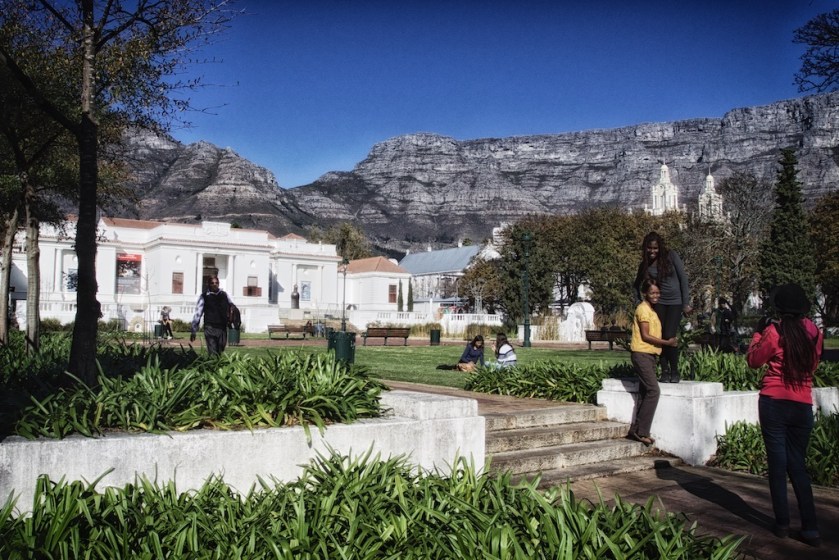
July, 2015, mid-winter in Cape Town. This is the Company’s Garden, with the iconic façade of Table Mountain looming in the background. On that white columned building in the distance, if you could see it, is a poster advertising William Kentridge’s multi-media installation, The Refusal of Time. That is the South African National Gallery and this is my last full day in the city. I made my way through the gallery in near isolation and as I passed into the room containing the Kentridge exhibit, the recorded rhythms of metronomes and bellows were triggered and seemed, in the moment, to be contained within this dark space where I experienced the entire presentation alone, surrounded by noise and images, free to wander and absorb the full sensory explosion unhindered. Later, as I explored the rest of the gallery, I realized that the sounds and rhythms of the exhibit resounded and echoed through the entire building, enhancing my sensory appreciation of every photograph, painting and artwork I saw. I cannot think back on that visit to the gallery without hearing and feeling, the steady cadence, the heartbeat, of The Refusal of Time.

But that’s not all, and this where I answer Daniela Cascella and Singed. When we first connected, we shared our mutual appreciation of Marlene van Niekerk—The Swan Whisperer and her monumental novel, Agaat. It is a trace of the latter work I carried with me during my stay in Cape Town. Every time I came into the bowl from my B&B in Sea Point and saw Table Mountain stretching out before me, I could not help but hear the awed voice of the young Agaat after a trip to the cape with her mistress: “I saw Table Mountain.”

I saw Table Mountain.

 That young girl’s voice echoed in my head. Agaat’s voice became my voice. The voice of a past part of myself.

I saw Table Mountain.

 That afternoon, I sat in the café in the Garden, with Kentridge’s metronomes and Agaat’s wonder punctuating every breath, and started to write. I was, I believed, at the beginning of a process of writing my way back through the year that had just passed, from the breaking point of a serious manic episode to the renewal of a sense of self identity and an clear understanding of the unfinished business of being differently gendered in the world. A neat, circular journey  that would, in the writing, lead to healing.

As if.

Life (and death) still held lessons I could not, in that moment, anticipate.

Today, the pen still hesitates on the page. Small forays have been made, but I am only beginning to learn to listen to the voices I am trying to transcribe, the voices of the selves I am and used to be—girl, woman, man.

Somewhere, in the distance, I am calling back the beat of the metronome and a child’s voice: I saw Table Mountain. That child is me. In Cape Town I believed I could rewind time, solstice to solstice, one year back to the day I left my job,  and move on from there.

No.

I need to go back farther. Back into my past and listen for that child’s voice, the child who had a feeling, but no words to express it. To gather what one can know in absence of language, to salvage words from the margins of memories. Attend to that distant silence.

So much has passed in the two and a half years since I took this photograph. I almost died, then both of my parents faded rapidly and were suddenly gone, and the friend who drew me to South Africa committed suicide.

Just when I thought I was ready to write, my life caught fire and burned for over a year. Now it is time to sift through the ashes and embers, re-enter the remembering, and embrace the discomfortable, pen to paper.
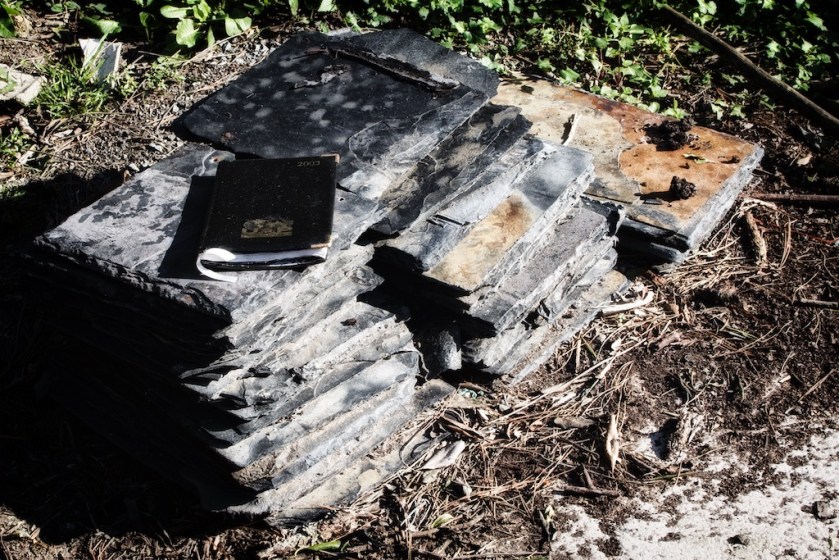
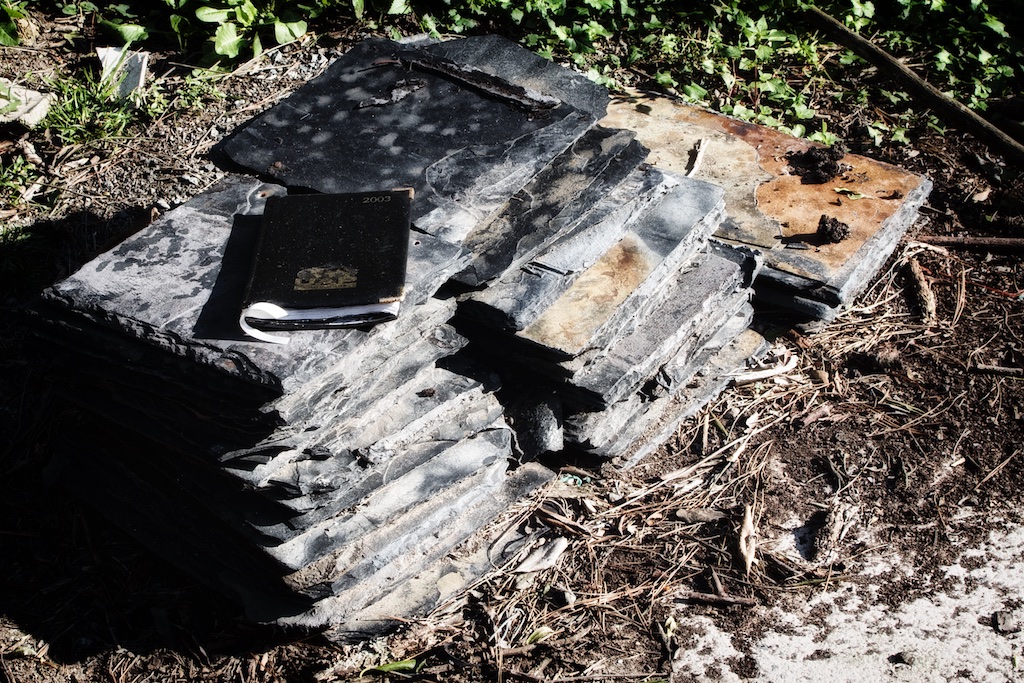
Singed by Daniela Cascella is published by Equus Press.
The seduction of ideological extremes: The Jew Car by Franz Fühmann

For months The Jew Car, Franz Fühmann’s autobiographical story cycle, sat on my shelf unread. I had bought it in anticipation of the recent release, in translation, of his last major work, At the Burning Abyss: Experiencing the Georg Trakl Poem. However, for some reason, I could not bring myself to read it. I have never been especially attracted to World War II literature, and with the current resurgence of neo-Nazi sentiments and far-right movements in North America and Europe, I was uncertain if I wanted to venture into a series of stories in which an East German writer traces a path from his enthusiastic adoption of fascist rhetoric as a youth, on through his experiences as a German soldier during the war, to his eventual rejection of Nazi ideology and acceptance of socialism in a Soviet POW camp. I wondered if I had the heart for it, and yet the translator of both volumes, Isabel Fargo Cole, advised me that Fühmann’s personal reflections in At the Burning Abyss would have greater impact and resonance with the background afforded by The Jew Car.

Born in 1922, Fühmann grew up in the predominantly German Sudetenland region of Czechoslovakia, the son of an apothecary who encouraged the development of a strong German nationalism. From the age of ten to fourteen, he attended a Jesuit boarding school in Kalksburg but found the atmosphere stifling. In 1936, he transferred to a school in Reichenberg, where he lived on his own for the first time and became involved in the Sudeten Fascist movement. After the annexation of Sudetenland in 1938, he joined the SA. 1941, he was assigned to the signal corps serving in various locations in the Ukraine before being moved to Greece as Germany’s fortunes declined. He was captured by Soviet forces in 1945. During his years spent as a POW, he would embrace socialism and upon his release in 1949, he finally found himself on German soil for the first time, settling in the GDR where he would spend the rest of his life.

Originally published in 1962, the stories in The Jew Car, which is subtitled Fourteen Days from Two Decades, follow the trajectory of Fühmann’s life between the ages of seven and twenty-seven. Presented with dramatic colour, they offer an attempt to explore the progression of his ideological development during this period. Through an engaging, often ironic voice and well-framed narratives, we watch Fühmann’s fictional alter-ego confront the psychological seduction of the persistent propaganda machine and engage in the mental gymnastics required to continually readjust to accommodate or explain away any evidence that failed to fit with what he has been led to believe.

The title story opens the collection. Set in 1929, the seven year-old narrator is caught up in a wave of rumours sweeping through his grade school. The children listen with a mixture of rapture and fear, to breathless tales of a four Jews in a yellow car who are said to have been travelling through the surrounding countryside, snatching and murdering innocent young girls. When our hero happens to spy a brown car carrying three people one afternoon, it becomes, in his imagination, vividly transformed into the feared mysterious vehicle exactly as described. At school the next day, he is the centre of attention, holding his classmates in thrall until the one person he dearly wishes to impress the most, the girl “with the short, fair hair” neatly puts him in his place. Yet rather than causing him to question his hasty assumptions about the car he actually saw, his humiliation is turned into an increased, abstracted hatred of Jews.

And so the process begins.

Fühmann manages to capture the mixture of naïve enthusiasm, patriotic fervour, and boredom that he and his friends regularly encounter as the tides of history are building around them. He is young, the air is charged with excitement mingled with fear of the dreaded Commune and the anticipation of liberation. At times his young narrator is surprised to catch the worried looks on the faces of his parents and other adults. His faith in the Führer is unshakable and he believes that the German Reich will not abandon the Sudeten German population to murderous cutthroats. This conviction is well captured in the story “The Defense of the Reichenberg Gymnasium.” (September, 1938) Although no violence has yet occurred in his corner of the region at this point, when an alarm summons him and his comrades from the Gymnastic Society to defend the Reichenberg gymnasium from imminent attack, he is ready and eager:

I was excited: I’d never been in a battle like this; the occasional school scuffles didn’t count, the scouting games and the stupid provocations of the police in which I and all the others indulged; now it would turn serious, a real battle with real weapons, and I felt my heart beating, and wondered suddenly how it feels when a knife slips between the ribs. My steps faltered; I didn’t think about the knife, I saw it, and as I passed Ferdl, a sausage vendor who stood not far from the gymnasium, I even thought of stealing off down an alley, but then I scolded myself and walked quickly into the building.

But, as uneventful hours begin to stretch well past lunch time, boredom and hunger start to set in. Ultimately it is decided to send forth a series of provisioning parties to remedy the situation. Young Fühmann is assigned to the third group:

It was a puerile game we were playing, childish antics, and yet murderous, and the awful thing was that we felt neither the puerility no the murderousness. We were in action, under orders, advancing through enemy territory, and so, the five-man shopping commando in the middle and the three-man protective flanks to the left and right, we casually strolled up the street, turned off without incident, made our way back down the parallel street through the tide of workers, Germans and Czechs coming from the morning shift, cut through the arcade, side by side, and at discreet intervals each bought twenty pairs of sausages with rolls and beer.

Fühmann is a gifted storyteller whose poetic prose and ironic tone are pitch perfect, especially in the earlier stories. He creates a portrait of his younger self that is not sentimental or idealized. His moments of empathy for individuals otherwise thought to be inferior are quickly reframed with racist convictions. He does not speak too much about his involvement in direct anti-Semitic actions (though he will in later works). What comes through most strikingly in The Jew Car is the sense of rational isolation that surrounds the individual. Information is strictly mediated, so that otherwise intelligent individuals lose any frame of reference or develop extreme responses to the continual routine of work and deprivation. His steadfast devotion to the military structure will start to weaken as he discovers poetry, although his first published efforts during the war are very much on message. Fühmann will not become a dissident poet until much later, long after the war is over.

The tone of the later stories is soberer, more contained. The narrator describes his conversion to Socialism in terms that border on the religious. He talks about having “scales fall from his eyes” during his training, describes reading Marx, encountered before but now understood in a new light. But he never provides detailed justification—he believes with conviction and is not ready to be swayed. The final tale which describes his arrival in East Germany after his release from imprisonment to join his mother and sister who have been relocated there, is forced and marked by Soviet style melodrama.

In his afterword to the 1979 reissue of The Jew Car, which aimed to address some of the editorial changes made to the original publication, Fühmann noted a shift in tone that impacted the overall flow of the collection:

Probably even while writing I began to sense the inconsistency in this work, expression of a fractured mindset, a switch from self-irony to affirmative pathos that had to lead to a decline in literary quality such as that between the first and last story…

However, although they are autobiographical in nature, these stories are essentially fictionalized—this is not an essay or memoir. That lends the collection a particular power and energy. Yet, there is a clear sense that the ending is idealized and incomplete, as indeed it is. As Isabel Cole’s Afterword goes on to explain, Fühmann’s infatuation with the socialist vision of the GDR will fade as he chafes against the rigid restrictions imposed on individual and creative expression. He will, nonetheless, remain in East Germany for the rest of his life. In 1982, two years before his death, he will publish an in-depth exploration of his personal evolution through his discovery of and affection for the poetry of Georg Trakl. To that work, At the Burning Abyss, my attention can now turn…

The Jew Car by Franz Fühmann is translated by Isabel Fargo Cole and published by Seagull Books.

This review, together with my review of Malina by Ingeborg Bachmann represents my contribution to this year’s German Literature Month. Also related: See my recent interview with translator Isabel Cole, primarily regarding Wolfgang Hilbig, but also touching on Fühmann, which was published at 3:AM Magazine this past month.