“It has been wonderful to know you”: My Tender Matador by Pedro Lemebel

September, 1986—spring in Santiago and rumours that the Dictator’s days are numbered are stirring the spirits of the determined, young idealistic members of the resistance. It has been another year of blackouts, street violence and police brutality. The setting is a lower-class neighbourhood where years of unemployment have taken a toll, buildings stand in disrepair, and a certain aging princess has found a castle to call her own:

. . . the scrawny house on the corner, three stories high with a staircase like a backbone leading to the room on the rooftop. From there could be seen the city in the shadows crowned with a turbid veil of dust. It was no bigger than a dovecote with three walls and a railing that was just wide enough for the Queen of the Corner—her hands moving as if playing on a marimba—to hang the sheets, tablecloths, and underpants out to dry.

Her dilapidated dwelling is decorated in style. Boxes festooned with fabrics, ribbons and dramatic imagination stand in for the finest furniture. Our heroine, a balding, drag-queen in her forties bearing the ravages of a rough life, is at last settled. As she embroiders linens for wealthy clients, and sings along with her favourite golden oldies on the radio, she dreams of Carlos, the handsome young student she met at the local store. He had approached her to ask if he could store some boxes of books in her home. She was not the silly old fool she allowed him to think she was, but—those eyes, that virile voice—how could she say “no”? Hopelessly smitten, she swoons like a schoolgirl, and soon more boxes arrive. Before long she agrees to allow a small army of students slip up the stairway to “study” in her rooftop room.

After all, what could possibly go wrong?

Thus begins My Tender Matador by late Chilean writer, Pedro Lemebel (1952-2015). With a queerly delightful energy, this is a love story that moves quickly and takes no prisoners. The Queen offers an unlikely refuge and serves as a convenient decoy for Carlos and his fellow Marxists. Caught up in a flutter of fluctuating emotions, especially when a string of days without a word from Carlos send her swinging between anger and anxiety, she berates herself for her infatuation. Her trannie sisters tease her wildly, but express their concerns, while Carlos himself is caught off guard by his own conflicted emotions. Something in the uninhibited joy and performative enthusiasms the Queen reveals moves him like no woman ever has. As her sensitivity to the political realities of the present are heightened, he is sent into revisiting a boyhood sexual initiation.

And yet, can anything come of this flirtatious friendship?

Running as counterpoint to the Queen’s story, is a second narrative stream featuring General Pinochet presented as a hen-pecked, weary, and paranoid old man. His wife’s constant nattering runs him down:

Oh, it’s just not fair; look at all these wrinkles I’m getting on my forehead, Augusto. Look, I have almost as many as you do, and I’m much younger than you are. It must be these difficult times we are living in, all the frights and frustrations I experience at your side. No other woman would have tolerated her husband being treated by the international press as a tyrant, a dictator, a murderer. And even though it is all lies, even though all Chileans know you saved our nation, don’t tell me it hasn’t been embarrassing. Yes, as I said, it’s a nightmare to think that all those penniless Communists who consider themselves writers blow their noses at you.

His only retreat is to sink back into dreams, seeking the comfort of his childhood toys. But even his dreams betray him, shifting into nightmares. What emerges is a portrait of a vain, paranoid, brittle, and homophobic man slowly losing his hold on power.

My Tender Matador is at once highly entertaining and politically astute satire. Lemebel weaves narrative with unmarked dialogue into seamless paragraphs that facilitate playful banter, emotional discharge, and the escalation of tension:

As she rushed down the stairs trying to straighten out her few remaining clumps of hair, she knew she wouldn’t say anything to him; she wouldn’t even bring it up. Anyway, Carlos was so careless she could forgive him for anything, as long as she could see him again in the doorway, like sun rushing out from behind the clouds, to offer explanations…. The young man as beautiful as an emerald was asking for her smile. How about a cigarette? he asked with his strawberry mouth, conquering her again with those puppy-dog eyes. What, did you think I was angry? But we had such a good time. Did you enjoy it? Anyway, the next time I go away, it might be forever. Carlos lowered his voice and looked at the mysterious boxes, and a curtain of emptiness unfurled over the moment. Then something pounded its way into her sissy-boy soul. Something Carlos was telling her contained a shard of truth. A fear, a foreboding, something intangible that darkened his pretty boy smile.

The flowery imagery and campy energy is infectious. The outrageous queerness that the Queen performs with her fellow transvestites is crude, and in today’s gay community which often endeavours to downplay and reject obvious femme presentations, there is a brash coarseness that rarely extends into contemporary gay-themed literary fiction. But the Queen of the Corner is not a caricature. She is drawn from the heart. A cross-dresser himself, Lemebel knows her intimately, and her story offers a romantic comedy into which he can throw his passions and concerns and allow them to play out on the page. In his obituary for The New Yorker, author Garth Greenwall portrays Lemebel as:

…a writer who called himself a “queen” (una loca) and “a poor old faggot” (un marica pobre y viejo), and whose style and obsessions were forged on the social margins and in political opposition. Lemebel defined himself against establishments of all kinds: against Pinochet’s military dictatorship, but also against the Marxist resistance that condemned homosexuality as a bourgeois vice; against the neoliberal consensus behind Chile’s “economic miracle,” but also against the L.G.B.T. activists who Lemebel believed were making commodities of queer suffering and queer lives.

Look closely, and one can see all of these undercurrents coursing through the repartee, antics and drama of My Tender Matador.

But it is the simple human need to love and be desired that gives it its soul.

Translated by Katherine Silver, My Tender Matador is, to date, the only one of Lemebel’s novels to have been translated into English.
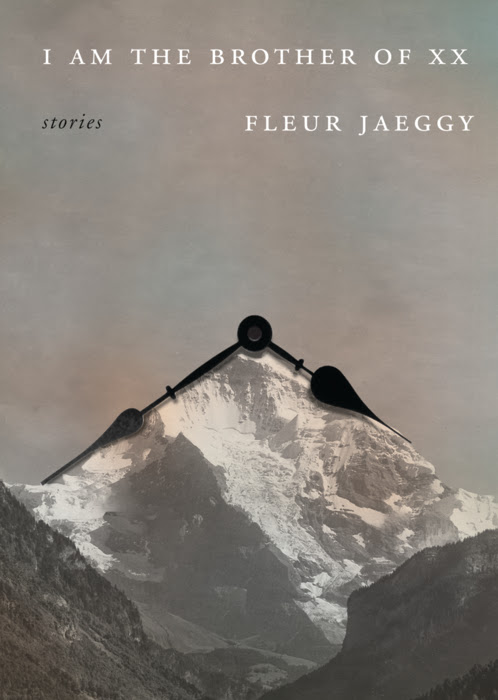
Fans of Fleur Jaeggy rejoice: A link to my review of I Am the Brother of XX and These Possible Lives at Numéro Cinq

Any one who has fallen under the spell of the shimmering spare prose of Swiss-born Italian writer Fleur Jaeggy is well aware of her uncanny ability to evoke subtle shades of darkness and weave tales that linger in the imagination. However, for English speaking readers it has been a long wait for new work to emerge in translation. Fourteen years to be precise. That patience is finally rewarded, as this month sees the highly anticipated release of not one, but two recent collections: I Am the Brother of XX, a compilation of short stories, and These Possible Lives, a set of three hyper-condensed biographical essays.

These works, not surprisingly, reflect a more personal, reflective quality than her earlier fiction, directly featuring, at times, other writers with whom she became friends over the years. Familiar themes are also revisited, lines between light and dark are blurred. Her prose is, as ever, sharp, essential, charged with spine-tingling beauty. And applied to biographical subjects—De Quincey, Keats and Marcel Schwob—it is quite wonderful indeed.

I invite you to read my full review of these new releases at Numéro Cinq. Here is a taste. Please link through at the end to read the rest. A second link leads to an excerpt:

Sacred Inertia | Review of I Am the Brother of XX & These Possible Lives by Fleur Jaeggy — Joseph Schreiber

One might argue that Fleur Jaeggy does not write so much as channel language, allowing her words to form imaginary spaces that exist on an altered plane of experience. To read her is to inhabit, for a moment, that space—one that exists in the shadows, one that contains, to borrow an expression from one of her earlier stories, a certain “sacred inertia.” You can almost feel it. There is an unmistakable current of brisk, melancholic foreboding that courses beneath the surface of her prose. The chill can make you shudder, the stark beauty of her terse sentences catch your breath. Atmospheric. Disconcerting. And strangely alluring. It is a rare author who manages to sustain an emotionally intense voice that is at once distinct, abstracted, and tightly restrained. However, anyone who has fallen under the spell of Jaeggy’s fiction will know its undefinable appeal.

Of Italian-speaking Swiss heritage, Jaeggy was born in Zurich in 1940. Raised and educated in Switzerland, she moved to Rome when her studies were complete. There she met Thomas Bernhard and Ingeborg Bachmann. The latter would become an especially close friend. In 1968, she relocated to Milan to work with the famed publishing house, Adelphi Edizioni. She married writer and publisher Roberto Calasso, and established a reputation as a novelist and translator over the following years. But it was her masterful fourth novel, I beati anni del castigo (1989), translated as Sweet Days of Discipline (Tim Parks, 1991), that introduced her to an English speaking audience. Exquisitely spare, this subtly disturbing tale of obsession set in a boarding school in the Swiss Alps, examines themes that continue to resurface in her work: familial dysfunction, emotional detachment, and a preternatural obsession with sadness or, as her narrator so poignantly puts it, the “pleasure of disappointment.”

Continue reading here:

Read the story “The Black Lace Veil” here:

Pride goes before a fall: My Heart Hemmed In by Marie Ndiaye

I once had a job that entailed, as part of my regular duties, selecting an inspirational quote from a directory and changing a roadside sign, usually standing in the dark, in the beam of the headlights of my car, sliding the plastic letters onto a ridged board. The motley selection of letters on hand limited the choice of sayings, but one of my favourites was:

A person who is all wrapped up in themselves makes a very small package.

As I spent the last day or so in the head of Nadia, the narrator of My Heart Hemmed In by French author Marie NDiaye, that line kept coming back to me. Poor Nadia. So self-centred that she truly can’t see beyond the narrow reality she has constructed around herself.

And the reckoning will be harsh. We sense that from the opening pages.

Originally published in 2007, now released from Two Lines Press in a translation by Jordan Stump, My Heart Hemmed In is an exquisite exercise in narrative restraint. The tension is immediate and sustained. Nadia and her husband Ange are middle-aged school teachers in Bordeaux. Theirs is a life of smug, self-righteous isolation. They delight in their moral superiority, their cultured good taste and ostentatious frugality; they appreciate quality and reject base, popular forms of entertainment, including television. They select their few friends carefully, while judging anyone who offends their delicate sensibilities to be beneath contempt.

Their marriage is a perfect union of souls.

But something is threatening that bliss, something dark and insidious. The couple, afraid to acknowledge it, share the sensation that they have become the object of a simmering hostility in their community. Once admired, they cannot imagine what they could have done to warrant this growing contempt. And then, one day, a mysterious open wound appears on Ange’s stomach. He refuses treatment and retreats to his room. As an aura of disease and decay spreads from his bedside, threatening to overwhelm the entire apartment, Nadia fights to save him amid the waves of concern, fear, and disgust that appear to be driving a wedge between them. Aggravating the divide is the presence of a disheveled and despised angel of mercy—their downstairs neighbour, a certain Monsieur Noget. Once the object of their mutual scorn, he now arrives daily, bearing gourmet delights, insisting it his “honour” to help care for Ange and tend to the couple’s needs. Nadia is torn between her distrust of this stranger—whom everyone else seems to insist is a famous author—and the irresistible temptations of the glorious, fat-laden meals he prepares daily.

Nadia’s neatly defined world rapidly begins to shift around her. The very fabric of reality seems altered, threatening her rational self-control, but she is determined to push her anxieties aside. Ignoring the warnings of others, she attempts to return to work after Ange’s strange injury only to discover, with horror, that she too has been victimized. She arrives home in a state of shock:

My knees buckle. I collapse in the doorway. I must lie prostrate like that for some time half conscious (because I can hear all sorts of sounds from the kitchen or bedroom, the scuff of slippered feet, the whistle of a tea kettle, the clink of silverware), unable to move or speak but somehow resigned, blithely or indifferently accepting my powerlessness, as in a dream. How tedious, I think calmly, unsure what my mind means by that complaint. My weight is resting on my right hip, and it’s very painful. I desperately want to stand up, but my will seems to have parted ways with my mind, which is serenely registering the various sounds coming to it from the building or the apartment as my soul bleeds and moans.

Over the weeks that follow, Noget continues his patient vigil. He forces his luxurious fat-laden food on both husband and wife, but while Ange continues to waste away, Nadia rapidly expands beyond the capacity of her clothing. Eventually, her efforts to save her husband—and salvage her own dignity—drive her to attempt to reconnect with her estranged son. This will bring her into contact with her ex-husband and the vestiges of a life she was once desperate to escape. Was she so unhappy? she wonders, quickly burying such thoughts as soon as they arise.

As her distress at the disorienting disruption to her previously ordered existence mounts, Nadia finds little sympathy. Rather, she is confronted regularly, and from a variety of sources, with the insinuation that she is the source of Ange’s trials. She does not want to hear that. Her pride is virtually indissoluble. She clings to it as if it is the only quality that gives her being—her tortured soul—substance. Even as her surroundings seem to conspire against her, her defiance grows with her confusion and paranoia. She will not question her sanity. Nor does she accept any responsibility. After all, she insists, she has done nothing wrong, nothing to deserve this bizarre, brutal turn of events. She is determined to hold, in Ange, a mirror of her own soul. She cannot bear the possibility that it could be her own arrogance and stubborn self-regard that corrupted him.

However, an italicized internal monologue woven into Nadia’s measured narrative account, betrays a deeper train of thought—her bitter self-justification, her growing doubts and fears, her moments of despair, her desperate entreaties to herself: “My stolid heart, my weakening, stolid heart, keep on bravely beating in your prison of fat.” It runs at odds with what she will admit into her formal account. It is where we begin to see the fissures in her psyche that are spreading and threatening to fracture any equilibrium she is able to hold on to:

No, I’m not out of my mind. Why should I be so convinced that everything I see has some direct connection to me? I can’t rid myself of the feeling the whole city is spying on me.  And my heart is cornered, surrounded by the baying pack, and it’s hammering on the wall of my chest, wishing it could break out of its cramped cage, my poor aging heart, my poor trembling heart. I was born right here in Bordeaux, in Les Aubiers neighbourhood; I’ve spent my whole life in this city, and I love it with a fraternal tenderness, like a human soul mate. But now I find Bordeaux slipping away from me, enigmatically shunning my friendship, its streets seemingly changing their look and direction (is it only the fog? I ask myself), its citizens grown hostile over the past few months (and I’d gotten used to that and it had, over time, become bearable), seeming no longer to hate me exactly, but to be stalking me.

Nadia is a complex, troubled protagonist. She cannot fathom what it is that others see in her face, but knows she is somehow marked. It is not easy to feel sorry for her. She demonstrates a disturbing inability to distinguish between what is legally right and what is morally decent, refusing to acknowledge the extent of the heartlessness she has shown to others. And she is so completely self-absorbed, so willfully disconnected from ordinary human engagement, that the cost of the isolation she once craved comes as a cruel shock. “The trouble with you,” her ex-husband advises her, “is that you only know what you want to know.”

Half-heartedly hoping to save Ange, and weighed down by the sense that her beloved Bordeaux, now contorted and encased in terminal fog, has rejected her, Nadia sets off to visit her adult son, now a married doctor living far away. She hopes she will be able to regain some stability, but the surreal, grotesque occurrences follow her. Haunted by losses and regrets, Nadia becomes increasingly unhinged and fragile as her sense of herself, and her place in the world, slowly unravels.

NDiaye is a master of narratives that mix the magical with the real, but she leaves the line between her fantastical landscape and her narrator’s paranoia and neuroses fluid. The result is a tightly paced, psychologically claustrophobic allegorical tale, rich with elements of gothic horror. With My Heart Hemmed In, one is invited to read and through the observations and interpretations of a myopic, damaged, and yet fundamentally recognizable narrator. She is at once frustrating and tragic. There is, after all, a little Nadia in all of us.

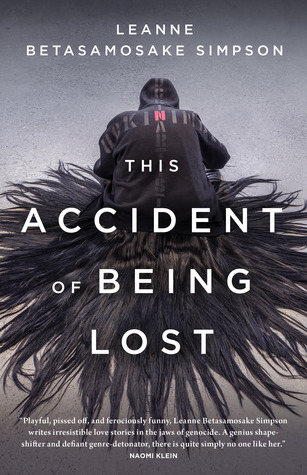
Listening to Indigenous Voices (part 2), Canada: This Accident of Being Lost by Leanne Betasamosake Simpson

Okay, so maybe I was looking the other way and missed the sheer force of poetic nature that is Leanne Betasamosake Simpson, but after reading her latest collection of stories and songs, This Accident of Being Lost, I can only sit here and think: Where have I been? To balance my review of the Australian anthology, This country anytime anywhere, I was hungry for something vital and exciting from my own country—not that I didn’t think I wouldn’t find it from an Indigenous writer here, but I didn’t know where to look. I wanted something different than the fine, but more conventional narrative novels I’ve read in the past. I wanted something passionate, something that would challenge, discomfit.

And here it is.

Simpson is an acclaimed writer, musician, academic, and activist of Michi Saagiig Nishnaabeg ancestry. She draws on the storytelling traditions of her people, merging them with elements of contemporary realism, speculative fiction, and spoken-word poetry. In turns introspective and political, her work is raw and uncompromising—shifting shape and stretching time—to bring the harsh realities of decolonization into focus through poems and stories that are vibrant, unexpected, and sometimes brutally funny.

Simpson’s writing erupts with an immediacy and intimacy that catches the reader off guard. The world she opens up is one where the uneasy ground between a self-centred, ego-driven contemporary culture, one with roots deep in the motivation and mentality of the colonial mindset that helped shape North American culture, meets an Indigenous worldview that values the dynamic interrelationships between family, community, ancestors, nature and the environment. This is the tension at the heart of the decolonial process. It is, at many levels, still a matter of paying lip-service, at best, to the legacy of the injustices endured by our Indigenous peoples. I may like to imagine myself “concerned” and “compassionate,” but reconciliation is meaningless unless otherwise unheard voices are truly heard.

This collection of short, often fragmented pieces does not endeavour to soft-peddle a message for easy consumption. Honest, frequently conflicted emotions—anger and bitterness, confusion and self-doubt, sadness and injury—come through; as does a deeply abiding respect and concern for the environment. As a storyteller and poet, Simpson’s power lies in the lyrical beauty of her language, and the vulnerability and sarcastic humour of her narrators. This is work that is at once engaging, entertaining, and thought-provoking.

An underlying theme in This Accident of Being Lost, is the reality of being an Indigenous woman today and the disorientation that can create. The protagonists are searching for connection, to others and to their heritage. The poetic pieces tend to feel more political in tone, either as direct protest songs, or in a more plaintive evocation of loss and pain such as “travel to me now” which begins:

the wind has worn my edges
the cold pricked away brittle skin
bones lying here in front of you
lost before they can begin

there’s red on the ice of the lake
there’s bruises that never heal
there’s past collapsing on present
she took things i didn’t know you could steal

As much as I enjoyed the poetry in this collection, it was the prose pieces, at least on this first reading, that made me fall in love (yes, love), with Simpson’s writing. She weaves a selection of original, often fragmentary, stories, that drop the reader into the imaginations, concerns, and anxieties of her narrators in a way that is abrupt and intimate.

We see attempts to reclaim Indigenous cultural practices in altered spaces. Stories delivered with pointed sarcasm. In “Plight,” a group of women engage in the guerilla-styled tapping of maple syrup from the trees in a Toronto park (albeit marking the trees before the leaves fall in the autumn to be certain they have the right ones), while in “Circles Upon Circles,” a family tries to revive the practice of harvesting wild rice from a lake now bordered with summer cottages. In both cases, white residents have to be appeased: “Listen to their paternalistic bullshit and feedback…. Let them bask in the plight of the Native people so they can feel self-righteous.” It is an emotionally exhausting process.

There are also a number of pieces that play with the way modern technology impacts communication. Online obsessions mediate relationships built around social media—intensifying insecurities and fragilities when texts don’t arrive, chat messages are ignored, and “real life” encounters are anticipated. But that is not where electronic interaction ends. The spirit world is also online. In the wonderful story “Big Water,” the narrator is engaged in text communication with Niibish, the surprisingly security-concerned spirit of Lake Ontario (Chi’Niibish to the Nishnaabeg people) as the lake waters rise, threatening the city of Toronto with extensive flooding. The lake is sending a message: “We’re in a mid-life crisis, out of shape and overcompensating because it’s too late to change any of that. Beaver’s doing push-ups on the soggy grass. Bear’s doing power squats and bragging about his seven-minute workout app and the option of having a hippie with a whistle to call out the next exercise.” It’s very funny, and yet it’s not. The message is serious.

Some of the narrators are delightfully sharp-witted, navigating settings—a firearms class or a daughter’s dance course—where they manage to hold their own. But it is in the more open, fluid pieces that explore the strained, breath- and bone-deep emotion of the search for connectedness with lovers, with the land, and even within the vagaries of modern society, that Simpson’s work speaks to me and to the “otherness” I struggle with. Her prose is exquisite, she handles longing and sadness so beautifully. In “Brown Against Blue,” a woman is heading out on a hunting trip with a man she loves, in the way that love is complicated and fragile. She doesn’t want to ruin the experience but fears she will. Her partner asks why things can’t just be “good” and she tells herself that one reason is because she is always “straddling the eroding edge of pathos.” But that’s not quite right:

I never teeter on the edge of things. I live there. I cheat on myself with Sad and she never abandons me. In a way that will sound awful to you, but not to me, she is the only one that loves me in the way I need to be loved. My constant lover, Sad, as muted, dysmorphic entrapment.

Another answer is that he lives in his own muted, dysmorphic entrapment that is slightly different than mine.

Songs and stories together, there are thirty pieces in this slim collection. They invite, and reward, re-reading. Leanne Betasamosake Simpson began collecting traditional narratives and essays in her earlier publications, before releasing her first collection of fiction, Islands of Decolonial Love, in 2013. That was where I had originally wanted to start, but I could not find it locally. I now want to explore her earlier writing, her music, and see what other writers and artists this leads me to.

This Accident of Being Lost is published by House of Anansi Press.

A methodical madness: Colonel Lágrimas by Carlos Fonseca

On a cold winter day, in a remote location high in the Pyrenees, an old man is bent over his desk intent on completing an ambitious, eccentric project. Time is against him. He is an enigma—reclusive and unknowable. And the goal of Carlos Fonseca (Suarez)’s infectious debut novel, Colonel Lágrimas, is to attempt to unravel and piece together the true identity of this strange man and the circumstances that led him to this place. But it’s no ordinary investigation and the colonel at the centre of attention is a military man only in his own imagination. He is, or rather was, a brilliant mathematician, a cryptic solver of abstract puzzles, who at the height of his fame, suddenly retreated from academia, embarking on a strange journey toward isolation and obscurity.

Our guide in this inquiry is a playful voyeur who follows the aged recluse through the course of a single day, spinning a fragmented, nonlinear narrative of anecdotes, historical asides, interruptions, and discursions. At times we are invited to observe our subject as if through a lens, sometimes zooming in to a level of pixelated hyper-reality. At other times we watch as an invisible (or unnoticed) presence, slipping into the frame to rustle around in his photographs and letters when the colonel is asleep or otherwise occupied. As readers we are complicit. Curiosity is mixed with a sense that we are invading the secret world of a man lost to the caprices of a second, doomed childhood:

Where is the border of the private? Where is the sentry to tell us when we should stop, draw a line, move no closer, and have a little respect? We imagine that at some point, when we’re getting too close, we’ll no longer see him and only the pixels of the background will be left, atmosphere with no storyline.

The pleasure of the intruder.

Much more than an exercise in intellectual and linguistic experimentation, the hero of Colonel Lágrimas is loosely based on the strange life of Alexander Grothendieck, the enigmatic German-born mathematician who played a major role in the development of modern algebraic geometry before suddenly abandoning his career in mid-stride, ultimately spending his later years in seclusion. Fonseca, who was born in Costa Rica and raised in Puerto Rico, grants his colonel a Mexican birth, a Russian Jewish mother given to painting the same volcano day after day, and anarchist father who fatally throws his lot in with the Spanish Republicans. There are crossovers and echoes with Grothendieck’s life which held its own share of mystery. But here we have a character on whom the spotlight can be dialed in much closer, even if we can never get inside his head, so to speak. In an interview published in Numéro Cinq, Fonseca describes his novel as the product of an intersection of his obsessions with the elusive German mathematician, with archives and archival novels, and with Chuck Close’s large portraits often composed of “pixels” created out of mini-paintings. Stylistically he says he sees his writing as, in some sense, a product of his origins, that is, as “the strange offspring of the Puerto Rican baroque writing, on the one hand, and Costa Rican minimalism and experimentation, on the other.”

Thus, by playing the voyeuristic detective narrator’s close observations of the colonel’s daily routine and his current effort to record the lives of three imagined alchemical divas against a collection of historical anecdotes we begin to build an image of an old man racing against time to contain an essence of a history he is trying to forget. Woven into the narrative are descriptions of faded photographs, aphorisms from his father’s notebook, and postcards from a long correspondence with Maximiliano, a Mexican who gets inextricably bound in his former hero’s eccentric archival efforts. Themes repeat, patterns form. And binding it all is the regular appearance of a doodled spiral of barbed wire and a complex algebraic equation that are assumed to be connected. Gradually, layer by layer, a picture starts to take shape.  The fragments are the pixels needed to construct a fuller portrait of the life of our solitary subject.

His is a life that crosses many of the major events of the twentieth century—the Spanish Civil War, the Second World War, Vietnam—albeit a step out of time or logic, forever anachronistic. We learn that our “young colonel” rejected his past and began a lifelong pattern of slipping behind masks at an early age. He headed off, on his own, to occupied Paris, when he was ten. Within a few years he had adopted the role of an orphan. Later, having earned respect as a mathematical genius, he suddenly tosses it all to teach math in Vietnam during the war. At present, on the day we spend watching him in his absent-minded pursuits, he is engaged in writing the “autobiographies of other people,” his trio of historical divas. Or are they a means of assuaging a guilt that has driven his odd behaviour? That is not an easy question to answer.

There are two ways of approaching the colonel. You can see him from a distance, his romantic profile like a tired genius who finally surrendered to the madness of endless projects. Easy to see him in this genius-like aspect, prisoner of dementia, a captive of the memory of his traumatic childhood. More difficult though to approach him to the point of belief, to where we believe in his projects. To see him up close in his more criminal profile: no longer a genius, no longer mad, but rather a man who waited, patiently, until the day came that would strip him of his talent so he could sit down to write what he always wanted.

As a portrait of our stateless colonel is fleshed out in what is more a process of questioning, refining, and focusing possibilities—attempting to solve an individual life as an algebraic equation—it is impossible not to feel pity for this man who struggles with writer’s block, has an unknown audience waiting outside his bathroom door as he sings in the bath, is observed as he dresses up in his finest regalia, and critiqued as he performs a drunken oratory in what he can only assume is the guarded privacy of his own home. Examined as a collection of data, analyzed and psychoanalyzed in his waning days, he will not be allowed to slip quietly into obscurity.

And whether that would secretly please him or not, we will never know.

Colonel Lágrimas is translated from the Spanish by Megan McDowell and published by Restless Books.

Immigrant tales with a difference: Tumbleweed by Josip Novakovich—My Rusty Toque review

On Canada Day it seems appropriate to call attention to a collection of stories by a Croatian born writer who immigrated, first to the US where he lived and taught for many years before moving to Montreal in 2009. He decided to settle here, and is now a Canadian citizen. Josip Novakovich is a master of the short story and his tales tend to stretch across borders, typically either stepping back into, or at least glancing at, his Balkan homeland. Yet in his latest collection, Tumbleweed, the majority of the stories are set in North America, in cities and rural locations where his migrant narrators are struggling to set down roots and build lives for themselves, often in the company of some unforgettable non-human characters. It’s a great introduction to an author with a respected international reputation who deserves to be better known here in his adopted home.

My review of Tumbleweed can be found in the latest issue of The Rusty Toque.

Consumed by the landscape: The Plains by Gerald Murnane

There is a certain futility in setting out to write a review of Gerald Murnane’s classic novel, The Plains. Like the world in which it is set, it eludes concise description, or, rather, any attempt to contain it fails to capture its rare and strange beauty.  An otherness is apparent from the earliest pages. The narrator’s account of his arrival in the vast, open lands of the central region of Australia is measured, performative. He is a filmmaker who originally traveled to the plains to gather research for a project titled The Interior. Looking back, twenty years on, he recalls his first evening in the town he has chosen as a base:

Late that night I stood at a third-storey window of the largest hotel in the town. I looked past the regular pattern of streetlights towards the dark country beyond. A breeze came in warm gusts from the north. I leaned into the surges of air that rose up from the nearest miles of grassland. I composed my face to register a variety of powerful emotions. And I whispered words that might have serve a character in a film at the moment when he realised he had found where he belonged.

He has come prepared with a stack of folders bulging with notes relating to the script he is working on, confident that “no one has seen the view of the plains that I am soon to disclose.”

The landscape—definitive and incomprehensible—shapes the singular society that has evolved there. But this is an allegorical, alternative Australia. Wealth is tied to the ownership of land, longstanding and rooted in the history of exploration. But it is maintained through a currency of ideas. Every “cultivated plainsman” has an ever expanding library to accommodate the growing disciplines of thought and speculation that occupy this idiosyncratically intellectual world.

Our protagonist takes time to listen to other plainsmen and build an understanding of the history, trends, and competing concepts of the plains and their relation to the coastal areas (or “Outer Australia”) that have come and gone. It is a complex mythology. His goal is to secure the patronage of a landowner who will support his work on his film project. He succeeds, or so it seems, but the cost, if in fact that is how he ultimately would see it, is extracted gradually and steadily over time.

The prose is intoxicating. Words seem to emerge out of the shimmering stillness. The narrator’s simple account carries a sense of foreboding that continually builds and dissipates. He describes a society obsessed with its own arcane introspection, so inward looking that the direct light is a distraction, where experience of the world is mediated, filtered, and reduced to minute, intricate exploration of the smallest details isolated and abstracted from the whole. Relation to the land is one of primacy of the ideal over the real. The landscape of the plains defines the thinking, aesthetics, and values of the inhabitants—shapes their arts and sciences—but the plainsmen themselves rarely travel and never speak of life as a journey. They are, rather, more concerned with time and memory disassociated from physical experience:

Of course, the literature of the plains abounds in accounts of childhood. Whole volumes have expounded in profuse detail the topography of countries or continents as they were descried under faltering sunlight in the only hour when they were said to exist—some fortunate interval between almost identical days before they were engulfed by events too trivial even to be remembered. And one of the disciplines that most nearly resembles what is called philosophy in far parts of Australia is known to have originated in the comparative study of scenes recalled by one observer alone and accounts of those same scenes by the same observer after he had acquired the skill to attempt a fitting description of them.

Murnane is a difficult, but compulsively readable, writer. He falls quite comfortably into the company of Kafka, Calvino, and Borges, but with his own distinctive (and essentially Australian) quality. He is also slyly funny. At one point, after his would-be filmmaker has been on the plains for over a decade, still no further advanced on his plans for his project but continuing to fill file after file with notes and research, there is the intimation of a potential attraction between him and his patron’s wife. The latter comes to the library to read, day after day, sitting near the shelves where the philosophical tomes dealing the question of Time are kept. As an energy seems to develop between them, unspoken in this silent space, the narrator contemplates the possible ways he might let his feelings be known—write a book she might read, write a book and catalogue but not shelve it, and so on. In the meantime, more texts about Time continue to arrive, filling up the space between them. Ultimately, his intentions proceed no further:

I may take pleasure occasionally in the sight of her so close to the crowded shelves that the pallor of her face is momentarily tinted by a fair multiple glow from the more hectic of the jacketed volumes around her. But I myself prefer not to be seen in the places given over to Time, no matter how nearly I might seem to approach the plainsman’s view of all that might have happened to me. I have a fear, perhaps unreasonable, of finding myself beguiled by images of what almost came to pass. Unlike a true plainsman, I do not care to inspect to closely those other lives lived by men who might have been myself.

If you have lived in the plains, as I have, this novel will have a special resonance. You will recognize the ineffable qualities of space and light (although for those of us in the northern hemisphere, there are southern peculiarities—warm winds don’t come from the north here). What it means is another matter. It is a tribute to the book’s shifting opaque character, that you sense you cannot quite observe it in the right light. But this is an intelligent, provocative, fascinating work. For an Australian reader there are likely themes others might not notice and yet it does not matter. This is a book that has to be experienced to be appreciated and, I would argue, best met without preconceptions.

Nothing will quite prepare you anyway.

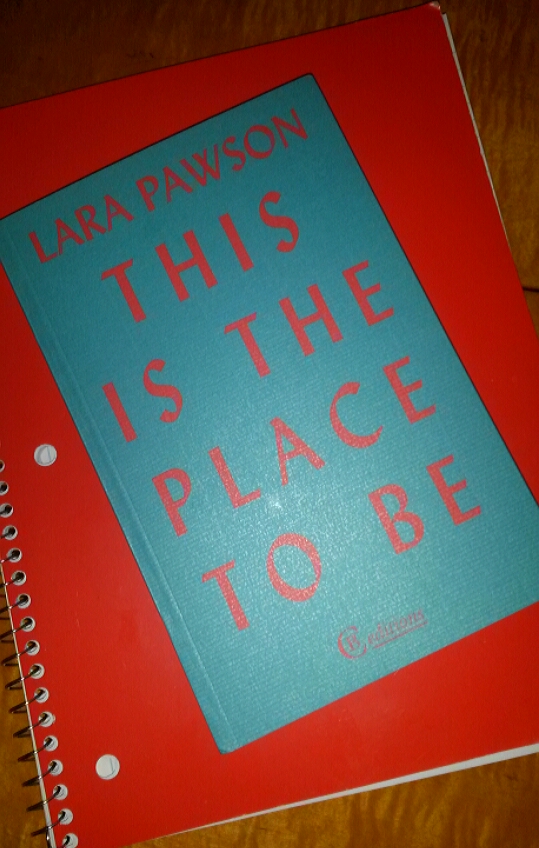
War and remembrance: This Is the Place to Be by Lara Pawson

The key thread running through Lara Pawson’s fragmented, fresh, and frightening memoir, This Is the Place to Be, is an honest account of her years working as a journalist for the BBC in Africa between 1996 and 2007. However, it is much more than that. The epigraph is an extended quote from James Baldwin about androgyny and identity, about the way we are not male or female, black or white, but rather one within the other. Her opening admission (and this book is essentially a series of admissions that unfold, fold, and circle back on themselves) takes off from this observation, reading:

When I was about seven the owner of a watch and clock shop mistook me for a boy. Twenty-four years later, a Nigerian man, following my radio reports from Angola, mistook me for a Nigerian. Omolara was what he called me.

Identity and identification. The personal and the political. These are the forces that push this honest, sometimes conflicted, often unsettling account forward.

The book had its genesis as a piece composed for a sound installation called ‘After A War.’ Pawson’s contribution, Non-Correspondence, was presented as a 22,000-word looping monologue inspired by her experiences as a witness to war in Angola and the Ivory Coast—experiences that she found could not be isolated from other aspects of her life. A series of conversations and encounters over the following year or two led to the expansion of the original work into a book, an intensely personal collection of reflections, insecurities, emotions, and memories. The format is non-linear and, in keeping with the development of the project, it retains the feeling of an extended conversation to which we, as readers, are invited.

Second guessing her confessions and questioning the reliability of her memory heightens the immediacy and conversational feel. There is a sense of self-consciousness that lingers behind the intimate revelations, and a willingness to acknowledge a mixture of emotions as she recounts her experiences at home and abroad, in youth and in the present day. Life is messy. She is not afraid to admit this.

The corruption, devastation, and futility of war form the central focus of this book, but what Pawson manages to bring to light through her accounts and anecdotes is the complexity of sentiments that arise when one is close to the action in the dangerous, yet privileged, position of a correspondent. There is a curious exhilaration, and an attachment to the people. However, she is still an observer, there with a job to do, and home is, ultimately, elsewhere. She will admit that she was, for a time, infatuated with the idea of settling in Luanda taking on the life of a revolutionary , recalling fondly the first time she was called camarada. But, in the end, she must leave. She was disillusioned with mainstream media and the sense that she was contributing to the exploitation of the pain of others. And worried about becoming inured to it:

Another reason I left Angola was because I was afraid that I was becoming too thick-skinned. I didn’t want stop being shocked by what I saw and by what was happening. I was also feeling increasingly unhinged.

Letting go is not easy. Returning to life in London is not smooth. In many respects, This Is the Place to Be is a love song to Angola. She confides that there are times when she wishes she was still in Luanda: “Moments when I still get desperate pangs for the place.” Her affection for the country is palpable, its lasting impact at times unexpected. She tells us:

When I came back to the UK, I started reading books by Samuel Beckett. I had read bits of his work before, in my early twenties because I ought to, but it was only after experiencing real conflict that I got any kind of handle on the man. The way I see it, Angola taught me Beckett.

Against and woven into her experience in war zones are memories of childhood and youth, reflections on race and class, and anecdotes about her marriage and her social idiosyncrasies. The insecurity of identity—being mistaken for a boy, for a transwoman, for Jamie Lee Curtis—is another recurring theme. (Here her observations were of particular interest to me, given the themes that drive my own memoirish experiments.) Although it may sound that all this would make for a disjointed read, the result is quite the opposite. There is an ebb and flow between ideas that link this series of admissions. By allowing the fragments to flow in a manner that retains a natural and organic quality, the tangential transitions in time and place occur in much the same way they do when we are engaged in conversation with one another.

The fragmentary memoir seems to be an increasingly popular means of telling stories from life. However, it only works when it is not forced or contrived. Pawson leaves room for humility, for guilt, for insecurity. This keeps her book real. As the end nears, the intensity builds. We trust her. We are invested. And she leaves us where her heart lies. In Angola.

This Is the Place to Be is published by CB Editions.

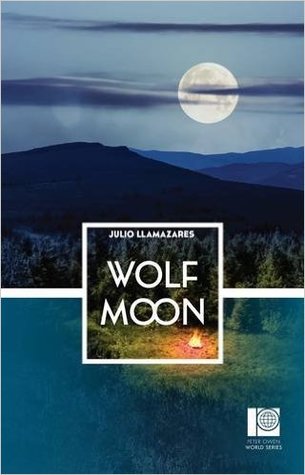
By the “sun of the dead”: Wolf Moon by Julio Llamazares

The moon has not come out tonight either. The night is like a cold black stain on the outline of the beech groves, which climb up the mountain and into the fog like ghostly armies of ice. It smells of rosemary and shredded ferns.

Our boots slosh through the mud searching for the elusive surface of the ground with each step. Our sub-machine-guns shine in the darkness like iron moons.

We carry on climbing towards the Amarza Pass, towards the roof of the world and solitude.

Set in the Cantabrian Mountains of northern Spain in the years following the collapse of the Republican front in Austrias in 1937, through the end of the Spanish Civil War and beyond, the above passage from the early pages of Julio Llamazares’ novel Wolf Moon could stand as a refrain that will echo down through the pages that follow. Inspired, the author tells us, by his childhood hero, Casmiro Férnandez Arias, one of the countless resistance fighters who led his brothers and comrades to seek refuge in the wilderness where they would be relentlessly pursued to their deaths or driven into exile, the result is a skilful blend of thrilling adventure, harsh natural beauty, and heartbreaking loss. An epic tale rendered with power and lyric intensity.

Wolf Moon is part of the Spanish Season of the World Series published by Peter Owen in association with Istros Books. It is in keeping with the high quality established with the debut Slovenian Season issued last fall. Born in Léon Province in 1955, Llamazares studied law but soon left for a career in journalism and literature. He released several volumes of poetry before turning to fiction. His poetic sensibility is especially evident in the present work, his first novel, originally published in 1985.

The desperate circumstances of the four Republicans at the heart of this story is immediately evident from the opening passages. The leader, Ramiro, is hiding in a ruined hut with his brother Juan, a fellow villager, Gildo, and the narrator. They are on their way over a mountain pass hoping to reach a region closer to home. But remaining hidden is critical. They must restrict their travel to the hours after nightfall and they must be on a constant alert for Franco’s Guardia Civil. “Daylight, we are told, “is not good for dead men.” Containment, darkness, and the tedium of waiting are recurring themes as they seek concealment, first in an abandoned mine, and eventually in a camouflaged cave where they will remain for years:

Since we got here I’ve scarcely felt the terrible moaning of the beast in the depths of my stomach, which bayed despairingly so many times in the final months of the war. It was even worse during the five days when we did not eat at all as we fled across the mountains, in the rain, from a more physical beast, more human and bloodthirsty, which pursued us implacably. It is as if the dampness and cold of the cave have penetrated my bones and my soul, imprisoning me here, lying beside the fire day and night with no interest in eating and talking or even peering through the mouth of the cave to look at the hard, overcast sky.

The narrative has a distinctive lyrical quality. This is most apparent in the strong presence of the natural elements. The landscape, weather, flora and fauna are continually evoked. Nature can be seen as a critical protagonist throughout—an aid, a threat, and a constant force to be reckoned with. As an account of years of seclusion in a wild environment this enhances the reader’s sense of connection with the characters and their plight. Wisely, Llamazares has chosen to make his narrator, Ángel, a school teacher. The tension, the emotion, and the striking bucolic imagery all work well through his voice, in tune with his sensitive, poetic personality. Otherwise, the language might risk feeling a little forced or melodramatic.

Over time, the fugitives engage in cautious contact with their home villages and families, but always at great risk to all involved. Tragic losses do occur, and the little band shrinks and becomes more isolated as the guardias continue their pursuit unabated, even after the war ends. The fugitives, the “men from the hills,” have taken on the status of mythic legend over time, fueling the official pressure to drive them out. In the end, those who survive will be those who manage to make it into France where the Spanish resistance will continue into the 1960s. What Wolf Moon captures so effectively is the alternating claustrophobia and physical exposure of life in hiding and on the run. It is a tribute to the incredible endurance of the young men who sacrificed the best years of their lives deep in the mountains—hungry, injured, and clinging like ghosts to the shadows—and the price paid by their families and the rural communities who likewise lived under continual fear and threat during this time.

It is, like many a great epic, a powerful testament to the futility and human cost of war.

Wolf Moon is translated by Simon Deefholts and Kathryn Phillip-Miles.

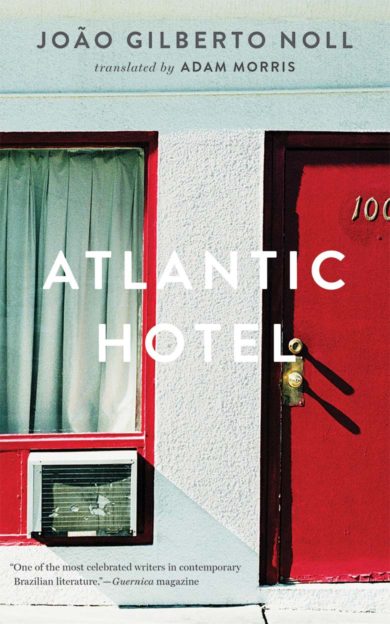
Somewhat overdue: A link to my review of João Gilberto Noll’s Atlantic Hotel at Numéro Cinq

Just before I left for Australia, my review of Atlantic Hotel by João Gilberto Noll went live at Numéro Cinq. I typically link back to my blog but didn’t have time—so I’m making amends now. Last year when Adam Morris’ translation Noll’s Quiet Creature on the Corner was released, it triggered great debate. I’ve only been home for a little more than a day and have barely wrestled my email inbox into some semblance of order, so I don’t know how this title was received.

Quiet Creature was an odd beast that I warmed to slowly. Atlantic Hotel thrilled me from beginning to end. It undoes all the clichés of noir fiction and film, and spins an odd existential little tale that will baffle and frustrate those who expect their literature to follow some degree of narrative logic. Which is exactly why I loved it so and was haunted throughout the reading by the very recent loss of the Brazilian novelist who created it.

So, better late than never, here is a taste of my review. Please link through at the end to read the rest. A second link leads to an excerpt:

Unbearable Transience of Being | Review of Atlantic Hotel by João Gilberto Noll — Joseph Schreiber

Just last year, an enthusiastic English language audience was introduced to the work of the eminent and enigmatic Brazilian writer, João Gilberto Noll, through the publication of Adam Morris’ sensitive translation of Quiet Creature on the Corner (Two Lines Press). On March 29th of this year, less than two months before the scheduled follow up release of Atlantic Hotel, his most highly regarded and controversial novel, Noll died at his home in Porto Alegre. He was seventy years old. While his passing was met with an outpouring of tributes and grief in his home country, to those of us who have been eagerly awaiting an opportunity to his sample more of his work, the confluence of these two events is certainly bittersweet.

For all the acclaim he earned in his lifetime—notably Noll was awarded Brazil’s prestigious Jabuti Prize five times—he was an unassuming literary hero. In his obituary for Words Without Borders, translator Adam Morris wrote:

What was so special about João Gilberto Noll was that he wrote for himself. This might seem like a simplistic criterion for heroism. And what I mean by it is simple, something better expressed by his agent, Valéria Martins, who was quoted in the Folha de São Paulo: “Era um cara que vivia para a literatura.” He was a man who lived for literature. Particularly in his later years, Noll lived a solitary lifestyle that allowed him to devote as much of his time as possible to his craft.

Continue reading here:

Read an excerpt here: