The fiction of remembering, the realities of forgetting: New Finnish Grammar by Diego Marani

Copyright JM Schreiber, 2014

The damaged hero of Italian author Diego Marani’s first novel New Finnish Grammar, which was originally published in 2000, but only released in English in 2011 (translated by Judith Landry), is a mystery to himself and to those who find him. World War II is raging, when a badly beaten man is found on a dock in Trieste with no clue to his identification beyond a Finnish name sown into the collar of the naval jacket he wears. When emerges from a coma with, what would presumably be a severe traumatic brain injury, he has no memory and no ability to use language. He does know who he is or where he comes from but, by coincidence, the doctor who attends to him is a Finnish-German who has never overcome his own longing for his homeland. He becomes convinced that the best medicine for his amnesiac patient is to send him to Finland so that he can connect with what is assumed to be his land and language, and in doing so, retrieve the past that has escaped him.

maraniAs much as I wanted to love this book, this is where I started to have problems. Firstly, the storytelling approach is awkward. It is the doctor who takes on the task of
curating a selection of notebooks, journal entries and letters belonging to “Sampo”, our erstwhile Finnish patient, to both honour him and make amends. He frames and fills in the tale with his own reflections, corrections and assumptions. Somehow, we are asked to believe that a man with a brain injury severe enough to trigger such a complete loss of memory and language could manage to develop sufficient facility in a notoriously complex language to be able to report his earliest memories post injury, or even find his way around a strange city. Yes, his mastery of the language is never comfortable, he relies on his notebook and endless practice, and he is emotionally lost and eventually unable to find a grounding or the past he seeks. Meanwhile, the language and mythology of Finland were clearly chosen by the Italian linguist author as a template for the exploration of memory and identity, but I could just not suspend disbelief long enough to fully surrender myself to the story.

This is not to imply that there are not breathtaking moments in this novel. There is a heartbreaking sadness and loneliness that haunts our dislocated hero. As war closes in around him, he is the walking wounded, an invisible casualty in a place to which he so desperately wants to belong. But my practical side, the side that spent the last decade working with real survivors of traumatic and acquired brain injury, could not let go of the idea that the main character’s overall functionality did not mesh with his complete loss of identity and language. The assumption is that his memory loss is psychological in nature and that the return of language will release it. In reality though, his injuries would indicate traumatic causes and with such severe long term memory loss some elements would still typically remain intact, while short term memory would be greatly impacted hindering his ability to learn new things easily. A complicated “new” language? I find that especially hard to accept.

I suppose I will have to admit that I am not the ideal reader for this book. I don’t regret reading it and I am sure that there are moments that will continue to linger. Memory is one of the most fertile landscapes for a writer to explore. Even without the added impact of illness or injury, memory is a fleeting, nebulous and fundamentally subjective phenomenon. However, I opened New Finnish Grammar with too much experience with brain injury to fully appreciate the work. And, for that matter, I could not help but wonder how a reader with too much native experience with Finnish language and mythology would respond. Perhaps with an equivalent amount of skepticism.

I don’t know.

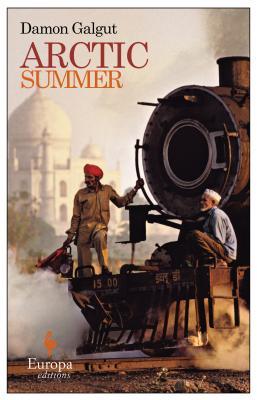
A love song for the loveless: Reflections on unrequited love – Arctic Summer by Damon Galgut

Copyright JM Schreiber, 2012

Valentines Day. It has been many years since I have had a true object of romantic affection. This annual occasion tends to come and go without my notice. Even my children are too old to warrant the heart shaped candies and chocolates I used to purchase. And yet I have to stop and wonder why I do not feel the absence.

I am not sure it is coincidental, but romance does not seem to figure highly in the work I tend to read. Lost love, dysfunctional relationships, misplaced attempts to find affection, yes; but it tends to be the underlying elements of discord that create dramatic tension and literary interest for me. Tolstoy’s unhappy families and all that. So in thinking about today’s exaltation of romantic love I decided to turn to a book I read last year but did not review, a novel that holds, at its heart, the account of a deeply felt but unrequited love: Damon Galgut’s Arctic Summer.

In this fictionalized biography of EM Forster, Galgut re-imagines the eleven years of frustrated creative blockage that spanned the time between Forster’s initial conception of his “Indian novel” and the final product, A Passage to India. Along the way we meet Syed Ross Masood, the Indian man with whom Forster will fall passionately in love – a love that will shape, define and haunt his romantic sensibilities – but which will remain one that the heterosexual Masood is unable to return in anything but platonic terms. During the World War I years in Alexandria, Forster finally loses his own virginity at the age of 37 but his meagre intimate relations will remain a sorry, even pathetic, attempt to achieve the emotional and physical comfort he longs to find in another man’s arms. Sexually repressed and closeted until his death, he is, nonetheless, able to channel his affections and experiences in India into one of the finest English novels of the early 20th century. It would be the last work of fiction Forster would produce though he would live and continue to write and engage actively in the literary world for another 45 years.

arctic summerIn my first encounter with Arctic Summer last fall my reactions were mixed. I was a great fan of Galgut’s more typical pared down, ambiguous and haunting novels and I was immediately struck by the more claustrophobic atmosphere he had created to evoke the sensibility of the world in which Forster lived and wrote. At times I felt it weighing on me as a reader. Having the good fortune to hear Damon speak in person and meet him when he passed through my home town with our writer’s festival while I was in the midst of my reading, I was aware that he had found the process of writing a historical novel rewarding but not one he would be anxious to repeat. That awareness may have been a factor but I suspect there was also something more at play. After all, as readers, we enter into any work with our own issues, histories and expectations.

At the timel I was still struggling to break down the barriers that I had constructed over the preceding decade or so to keep those around me from getting close. By that point I was painfully aware that I had re-closeted myself in the world to avoid emotional risk and vulnerability. At one point, despairing of ever experiencing desire in the way he longs, Galgut’s Forster reflects:

“His own sterility was apparent to him and would soon, he felt sure, be visible to others. Curiously, he didn’t feel depressed at the prospect. He was almost intrigued by the idea of giving in to his oddness, turning into one of those remote, ineffectual creatures so warped by their solitude that they became distasteful to normal people.”

I was struck by that passage, I remember where I was when I read it and the page number in my paperback American edition is burned into my memory. Although I had been, oddly enough, a single male parent for years, through my determined unwillingness to express romantic interest or engagement with anyone, female or male, I had stubbornly sought to neuter myself in the world. Unpeeling those layers of defense and reclaiming an identity, especially one that falls outside the default mainstream, is not easy. Forster’s dilemma was hitting too close to home.

As I have since learned to re-embrace my identity and sexuality, I did briefly imagine that I was ready to open myself again to the possibility of falling in love. The result was in influx of a emptiness and longing. I began to feel the absence and did not like the void. So I have decided to turn my focus to building an emotional support network based on common interest and experience. It is, I realize, a much better place to start. If, somewhere along the way, the potential for romance arises I would not necessarily reject it, but it cannot be the grounds for meaning and value in my life.

Now, four months after I first finished Arctic Summer, I have occasioned to revisit A Passage to India, and have found myself dipping back in and out of Galgut’s novel simply to savour the restrained beauty and sensitive recreation of the writer’s inner personal and creative journey against the lush landscape of India. The work has simmered in my consciousness and increased in the power that it holds for me as a reader. I cannot help but wonder what might have happened if Forster’s love for Masood had been reciprocated. I am not sure he would have ever been able to even crack open the closet doors and I suspect that he might have ended up even more deeply torn between his homosexuality and his attachment to his mother. For better or worse he was able to channel his energy into writing, friendship and a long life.

Well lived? For his sake I hope so.

Gendering my bookshelves

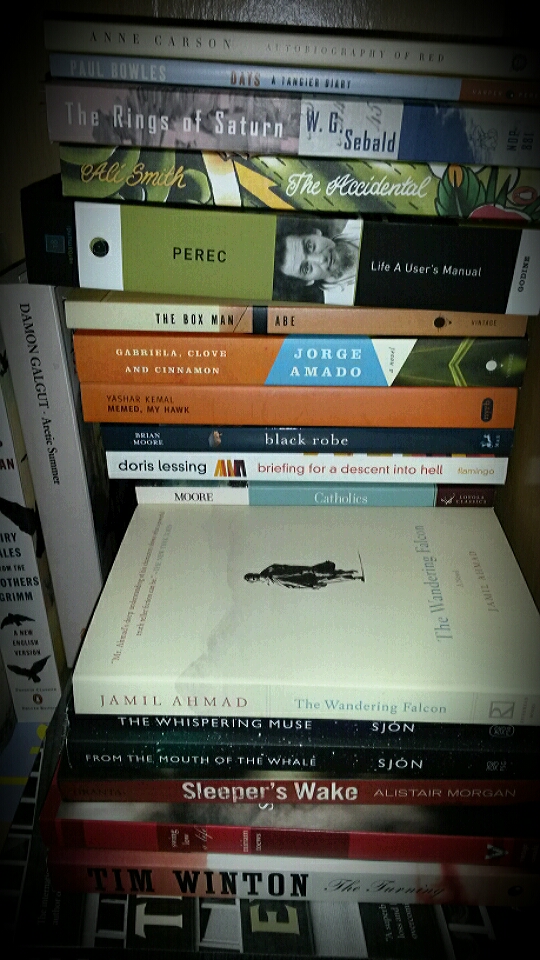
A conversation on another bookish refuge of mine about the gender of the authors we tend to read has been both informative and unnerving. It has had me standing before the random selection of bookcases in my house taking stock of the novels lining the shelves. I have conducted no scientific calculation but I would hazard to guess that over 90% of the fiction collected, read and to be read, has been written by male authors. And that is without even digging up my electronic files.

Random pile, one of many, mostly unread.

I console myself by calling to mind a number of women peopling my hypothetical list of intentional reads for the upcoming year. But I know myself. I am idiosyncratic and tangential in my reading proclivities. I find myself unable to create a stack or list of titles and systematically make my way through from top to bottom. And although I do not intend it, novels by women are frequently pushed down the line by something else that comes into view.

Perhaps there is a question of subject and style. I am presently reading with a strong critical intention to exploring a way of telling a story that I have to tell and, for better or worse, the authors who are coming to my attention tend to be men. That may be accidental rather than intentional on my part. But my bookshelves hold a record running back over decades and the gender imbalance is consistent (and, by the way, not reflected in my non-fiction collection which tends to have a much more equal divide).

Now I could launch a defense for this heavily weighted scale. I suspect I do know some of the reasons why I am drawn to certain tales told from a male perspective, reasons rooted in my own differently gendered history, but at the end of the day I am only accountable to myself for that reality. I do not believe that I eschew female novelists on the basis of gender alone, but there are certainly stories and themes that do not draw me in. And I do not feel obligated to read women writers to understand women better, I spent the better part of four decades trying to jam my own square self into that round hole and accept that there are things I am not programmed to learn. I have female friends. I have a beautiful daughter. And it is not like I never read or fall in love with books by female authors. I am open to the opportunity to explore more. But setting a quota is disingenuous.

And feeling guilty wastes precious time that could be spent reading.

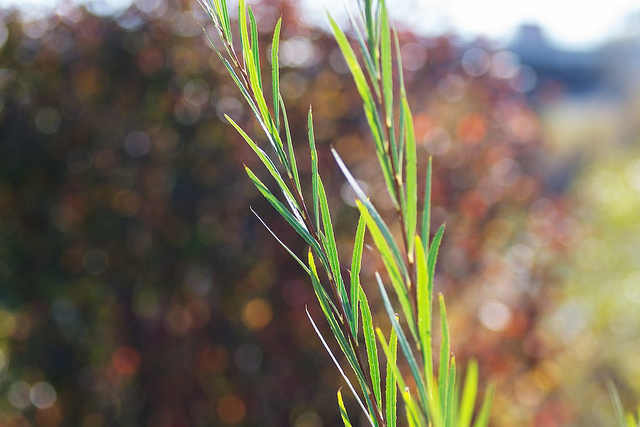
Hard to remember when the world had colour

- Copyright JM Schreiber, 2012
– Copyright JM Schreiber, 2012

Granted midwinter in my part of the world is not the best place to find colour in nature. Branches are bare, grass is bunched and brown, snow is patchy and grey. But when I look back over the past year I can see how difficult it has been for me to register any enthusiasm to take my camera out. I walk a lot but I seem to want to stay in my head, maintain a fast pace, measure the rhythm of my boots against the ground. I circle the neighbourhood, walk with purpose on errands, but avoid the pathways and parks I have documented season after season these past few years.

Photography was a diversion, a relaxation and an isolated activity against a busy life at work and home. I would wander forest trails, across grassland parks or along the edges of rivers and lakes, framing and reframing the view and listening to recorded podcasts – discussions about books, philosophy, current events. It was a meandering, escapist pursuit. If I look back I have to wonder what I was escaping and where I had lost the capacity to dream.

Madness, mental illness if you prefer that term, brings back the capacity to dream because all the parameters are changed. For me it has brought words to the foreground but pushed the pictures to the background. Walking has become a means to expel restless energy, drive out the demons of anxiety and despair that keep reaching in. If I want to drown out the city noises I listen to music, the words in my head are my own.

Without being able to return to work at this time, I do feel a certain loneliness. But when I reflect on the years I devoted to a job that I believed validated and defined me, I realize that I was never more isolated than when I was working. Invisibility and an unwillingness to call attention to myself was not a measure of my successful transition. It was denial. To hide the fact that my past contained realities inconsistent with the man everyone knew, I believed I could not afford to allow anyone to get close. I captured colour in the outside world but painted myself with the blandest palatte possible.

A manic episode and all of the reckless behaviour and poor judgment it entails has left me with a professional legacy that I may never be able to salvage. I don’t even know if I want it back. Reclaiming my identity, being comfortable with my own history of sex and gender is a work in progress but I have to trust that it might lead me to a better more authentic place. It might even bring some colour back into my life.

Imagine: A church for those who don’t trust church

“Imagine”

Imagine there’s no heaven
It’s easy if you try
No hell below us
Above us only sky
Imagine all the people
Living for today…

Imagine there’s no countries
It isn’t hard to do
Nothing to kill or die for
And no religion too
Imagine all the people
Living life in peace…

You may say I’m a dreamer
But I’m not the only one
I hope someday you’ll join us
And the world will be as one

Imagine no possessions
I wonder if you can
No need for greed or hunger
A brotherhood of man
Imagine all the people
Sharing all the world…

Copyright JJM Schreiber, 2011
Copyright JM Schreiber, 2011

Church music? Apparently and rightly so. Last week I emerged from the church I have been attending, despairing that a deep ambivalence about my own ability to connect with faith may stand in the way of my search for community. This morning I remembered why, if there is a church that I can connect with, the one I have been attending may be as close as I can get. John Lennon’s Imagine, performed by a soloist set the framework for the reflections of the pastor.

Imagine? Yes, imagine hearing a pastor admit that in the 25 years since his ordination in the United Church of Canada, he never thought he would be looking at the works of Richard Dawkins and Sam Harris and think, maybe they have a point there. One does not have to look far to see how religion is perpetuating hatred, within families and communities, between ethic groups and countries. And it is not a new phenomenon. Is the problem religion? An atheist does not hesitate to answer, but what causes a pastor to ponder? And what does that mean for churches like Calgary’s Hillhurst United? My own anxieties about faith aside, it is a church that practices what it preaches: welcome and advocacy for the poor, the disadvantaged and the marginalized; outreach and full acceptance of everyone regardless of age, ability, sexuality or gender identity. Yet the pastor, John Pentland, is accustomed to meeting newcomers who share that they have no problem telling someone that they are gay, but don’t want anyone to know they go to church.

Is religion always at odds with all that could be positive and affirming about faith?

I am not sure yet. But I did spend Saturday at the church helping set up for a performance by Australian-Canadian queer trans artist, Sunny Drake. In the evening as the church hosted homeless families in the gymnasium, the pews of the Sanctuary were filled with a diverse audience treated to an outrageously funny performance about the trials and tribulations of a gay transgendered man trying to quit his addiction to romance. Honest in language and content that one would not generally not expect to find in a church, but together with the panel discussion that followed, this partnership with the city’s only queer theatre, Third Street Theatre, offers a vital opportunity to improve communication and understanding within and beyond the LGBTQ community. And yet another indication that at this church Affirming means much more than hanging a rainbow flag in the corner.

As someone who often feels as alienated within the LGBTQ community as within a larger community of faith, this weekend was an important indication of just what a church that seeks to embrace rather than exclude, can be.

Dreams and determination: A Man of Good Hope by Jonny Steinberg

It is, of course, a harsh coincidence, perhaps no more than that, but the first two murders of the year in my city took the lives of two young members of our 5,000 strong Somali community. The first of the two unrelated incidents occurred just ten blocks from my home in the early hours of New Year’s Day, the second the following day. To many here in Canada, Somalis, if they are thought of at all, are conflated with pirates.

I have watched with dismay, the rise of racism and xenophobia that has accompanied the increased visible ethnic diversity that has spread across the country, changing the face of a city that was, when I was young, predominately white. My city that is only 130 years old, most of us have come from elsewhere recently or within a few short generations. And those who were here before, our First Nations, still have to struggle to call attention to their circumstances. But we are lucky, this is a land of peace, a land of promise.

GoodhopeAgainst this context, a review in The Observer drew my attention to A Man of Good Hope, a new book by South African writer Jonny Steinberg. In my work I encountered and supported many young men from the troubled Horn of Africa, but the depth and complexity of the political and human realities that have been endured by many of the refugees who ultimately make their way to our shores are far beyond my imagining from my safe space. However, I was not quite prepared for just how difficult that journey can be.

The life of Asad Abdullahi, the young Somali man at the heart of this biography, is changed forever when his mother is shot by militiamen in Mogadishu when he is 8 years old. As he flees with relatives he begins a long, at times circular, journey of hopes and repeatedly dashed dreams. Lacking formal education he is gifted with determination, a proud sense of identity, an unflagging work ethic and an ability to assess any situation to determine where a living can be made. But at every turn there are losses, challenges and continued threats to life and limb that mount and threaten to drag him down. He is forced to grow up fast. Eventually he makes his way to South Africa seeking the wealth and security he hears fellow Somalis talk of only to find that even for the successful migrant, the end can be sudden and brutal.

Economic opportunities for newcomers like Asad, who are forced to live with temporary documents, are limited and often place them into the hostile and difficult environment of the townships where loyalties can turn on a dime. His beloved wife, unwilling to face the rising danger, heads home to family with his children. He stays, holding on to the dreams of America that have long called to him and endures the rising xenophobic violence perpetrated by black South Africans against the tide of incoming African migrants. His diligence will be rewarded, but not without great sacrifice.

Steinberg recounts, with care and compassion, a tale that has more breath taking twists than a thriller but exists on a plane on which dreams, hopes, memories and regrets blend to create a story that is at once deeply human and ultimately elusive. On a more immediate level, the view into the the ancestral dynamics of Somali history and culture that provides a background to Asad’s story has added, for me, extra poignancy to the recent New Year’s Day killing near my home. The victim shared the family name Abdullahi.

Melancholia

Just before Christmas he returned to church, entertaining the hope that the community of faith, especially one welcoming to all, might help fill the emptiness he carried inside. It almost worked, for a few weeks.

Copyright JM Schreiber, 2014

After this Sunday’s service he retreated down the stone steps into the shadow of a void that no sermon could fill. It is not the church. It is him. He had hoped that faith might come back, comfort him as once it had when… well I can’t really remember when it last provided respite… but there was a time. He worried now that believing was beyond him. To be denied like other comforts. Perhaps one can only fall away from faith so many times before it is impossible to return.

You can only be lifted if you will yourself to let go, you can only be held if you allow yourself to be touched, you can only be loved if you dare to love first. But once you believe you have rendered yourself unlovable, the stalemate is long and sad and lonely.

I suppose I could say he is depressed and that this will pass. I could also admit that he is me and that there is something more fundamental at work.

A love-hate relationship with a city

The City
         C. P. Cavafy (1910)

You said: “I’ll go to another country, go to another shore,
find another city better than this one.
Whatever I try to do is fated to turn out wrong
and my heart lies buried as though it were something dead.
How long can I let my mind moulder in this place?
Wherever I turn, wherever I happen to look,
I see the black ruins of my life, here,
where I’ve spent so many years, wasted them, destroyed them totally.”
 
You won’t find a new country, won’t find another shore.
This city will always pursue you. You will walk
the same streets, grow old in the same neighborhoods,
will turn gray in these same houses.
You will always end up in this city. Don’t hope for things elsewhere:
there is no ship for you, there is no road.
As you’ve wasted your life here, in this small corner,
you’ve destroyed it everywhere else in the world.
                   (Translated by Edmund Keeley/Philip Sherrard)

My city was new when Alexandria which inspired these words was old but the sentiment  rings across the century, speaking to me.

Copyright JM Schreiber, 2013

I live in a glass and rock cast stucco bungalow, the kind of finish that will slice your palm if you lose your balance and put a hand out to stop your fall. It sits on a 6500 square foot lot overgrown with 60 foot spruce and spiky hawthorns. The garage stands, roof sagging, without a foundation and no more than a scratch coat for stucco that was never applied, at best a large shed. It is only a matter of time before the sewer line to the street which is already oval shaped, collapses in on itself. After a few years of eager redecorating, projects remain incomplete, even though all the paint and supplies were purchased long ago.

This year my house will be 62 years old, I have lived here for 20 of those years. Due to the location, the lot size and the high property values in this city, it is assessed at a value that shocks me. I have ample equity in this house I own, but no secure income. And you can’t eat equity.

More and more the house is closing in on me. It is filled with the artifacts of 20 years of raising children. And a 25 year-old alcoholic son who seems to have taken root in the basement. After being a single parent for so long, I am done. My career prospects hanging on a thread frayed by mental illness; I feel haunted by the house, the responsibilities that weigh on me, and the fatigue of facing it alone.

And this city is no more a home than it has ever been. Without my job it holds nothing and never has. I love the pathways and wild areas, I love the wide open skies and the mountains on the horizon, the rolling foothills stretching to the west. But the city has no soul, or at least not for me. My relationship with this city, one to which I chose to return at one time, is fraught with complicated anxieties.

It may be my fault. Perhaps I am the one who failed to open up and build connections. But that has never been easy and the more I go out to meet people or attend events, the deeper the loneliness settles in on me the next day. Like it or not, there is a fundamental disconnect between me and this city of glass towers and oil executives.

As I walk these streets I am haunted by the sense that I have wasted so many years here, not certain what I have to show for it, feeling all is lost, fearing that I am, as the intended recipient of Cavafy’s advice, destined grow old in the same neighbourhood, turn grey(er) in the same house.

In praise of moral ambiguity : The Impostor by Damon Galgut

With no particular allegiance to astrology, I have often mused that my tendency to take on the role of the devil’s advocate fits well with a Libran temperament. My natural response to a harshly judgmental statement is an immediate inclination to flip the coin and present an argument for the other side.

I like to think that I carried this tendency into a career working in social services where the complexities that define and refine, strengthen and restrict the way that people respond to, survive or succumb to, the pressures they encounter in life cannot be understood in black and white terms. Motivation, decisions, and actions have contexts that run deeper than the actors or observers understand. When talking to clients or their families I would try to open up questioning to allow those I was supporting to look for their own answers. I was aware that I could offer suggestions but no guaranteed solutions.

Why then does literature so often try to provide answers, lead us to scenes of redemption, close out with a moment of denouement? Life, in case you haven’t noticed, is not always so neat and tidy. Sometimes we are not really sure what happened or why we might have acted in a certain manner. Our natural instinct is to explain our feelings and behaviours, to others and, most critically, to ourselves. But that is not always possible. We act irrationally, selfishly, even, as those of us with mental illnesses know, when we are not in our right minds. So why do we want our literature served up with moral certitude?

When I read a book with a dark context, whether on a large or small scale, I feel let down if an author fails to push the envelope, to take the risk of leaving the reader with a feeling of unease, a question of moral ambiguity. Oh sure, it is nice to be comforted, but more often than not, I read to be challenged, to be shaken, to be exposed to experiences, places and circumstances I have not known. That is one reason why I tend to be drawn to literature from countries other than the one in which I live.

ImpostorSouth African author Damon Galgut is decidedly unafraid to tackle the shifting landscape of political and economic power in his own country post Apartheid and show how easily the ordinary, average individual can get swept up in situations they have neither the awareness or the initiative to appreciate. Someone like Adam Napier in The Impostor, a man who discovers, too late, that his very unimportance makes him expendable in a game he didn’t realize he was playing. Or did he just not care enough to take notice?

After losing his job and house to the new racial and social realities arising in Johannesburg, Adam finds himself cut adrift in mid-life. He seeks refuge with his younger brother Gavin who is taking calculated, ethically questionable advantage of a burgeoning property market in Cape Town. Sickened at the prospect of accepting the job his brother offers he accepts instead the refuge of a neglected house Gavin owns in an isolated town in the Karoo. Here, he reasons, he will dedicate himself to writing poetry and find himself anew. What he finds, instead is a curious figure from his past, a school friend he cannot remember even though this man Canning insists that they once shared a very special bond, one to which this bland effusive stranger is clearly indebted.

Without admitting his complete lack of recall for this supposed friend, Adam is soon drawn into spending his weekends with Canning and his alluring black wife Baby up in the lush mountain retreat Canning inherited from his father. From here on things become complicated, tragic and eventually frightening. More than one moral compass is unloosed and all of Adam’s apparent values are tested and found, well, the reader is left to decide…

Tense and brilliantly spare in the telling, Galgut draws from the hostile environment of the Karoo, to create a fable with no clear moral reckoning, no redemption, and a heaviness that sits in the stomach of the reader long after the last page is turned.

I wonder if my fondness for literature from South Africa and Europe comes from the fact that conflict is never far from the surface in lands that have known so much recent turmoil and disruption. The result is a literature that, at its best is vibrant, alive and emotionally challenging. In Canada it is perhaps too easy to affect a measure of complacency even though, if you turn a few stones and look closely enough, our history holds plenty of darkness that seeps into the present day. And as the world effectively becomes smaller, racial and xenophobic tensions rise, examination of the legacy of our treatment of our Aboriginal populations takes greater precedent, and our commitment to true acceptance of diversity is properly addressed; literature that risks posing the questions that lack obvious answers will become more critical.

And more authentic.

This Is Paradise, or where does fiction meet real life?

I cannot remember ever really wanting to be anything other than a writer. How then did I get to mid-life believing that my aspirations would never extend beyond the inevitable writing and editing of newsletters and promotional material with every job or volunteer position I have ever held? Why have I been hit with a curious mix of pride and anxiety every time someone has commented on my facility with words?

In truth, there was a point in my late teens or early 20s in which I made the conscious decision to wait until I had lived a little before writing. I assumed a little experience would provide material and perspective. I had not bargained for the complicated experiences that awaited me or how long it would take for me to wade through and unravel it all. And when I did find my way through I found myself unwilling to bare my soul on the page. But every writer has a story they were born to tell, or as James Baldwin said about Go Tell It On the Mountain, the story they have to tell if they tell no other. Frequently it is a coming of age story, a coming out story, a tale of childhood loss or trauma. But that not need be the case. Nor is it necessarily the first story a writer sits down to tell. It can be recounted in fiction or presented as memoir, but the telling is essential, cathartic and close to the bone; even if no one beyond a few friends or relatives ever see the manuscript or hold a copy of a self-published book.

As I look back, I finally understand why I decided to put my writerly aspirations on hold so many years ago. I also understand the barriers I have placed between my impulse to protect myself and my identity and any story I thought I might tell. In this context those reasons are not important. I have also come to recognize the story that I really need to tell is one which I have only recently come to understand myself. So with the unexpected time that my present inability to return to work has afforded me, the gift of introspection and a desperate need to get this story out onto the page and hopefully gain some distance; I want to see what I can do.

But the challenge with stories that find their source close to life lived, is that this same life not only belongs to me. It cannot be divorced from real people. Or real experience. I am not certain how to balance the need to breathe truth into an experience and the desire to protect those I love.

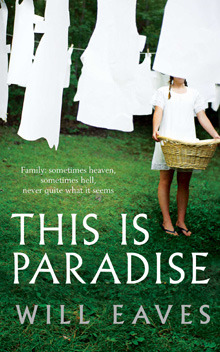
paradiseMy latest read has inspired these questions. After my enthusiastic encounter with Will Eaves’ The Absent Therapist, I turned to his 2012 novel This Is Paradise, which I have had on hand for nearly two years. The right book, at the right moment it seems. A relatively spare novel that is at once intimate and ambitious in scope, this book opens with Emily Allden’s difficult pregnancy with her fourth child, and closes decades later following her death. Benjamin, the youngest, unborn at the beginning is an enthusiastic traveller on his first chance to join his older siblings and parents on their regular holiday trip to France in the first half of the novel. In the second half Benjamin, now grown becomes the lens through whom we see the family – his well meaning but emotionally distant father; his intelligent but volatile older brother Clive (who is clearly dealing with perhaps aspergers or a mental health disorder) and his two sisters, the capable Liz and the delicate Lotte – as they cope with their mother’s increasing dementia, the decision to place her in a care facility, and the lingering final days of her life.

Eaves’ deft ear for the nuances of conversation, sensitivity for the complex social dynamics that bind and divide family, and keen eye for visual detail allow him to create a coherent interplay between the members of this large family and a handful of supporting characters across the decades. He does this by employing a style that is at times fragmentary, sometimes reflectively slipping back into passing remembrances, but always evocative of the way that we tend to think about and experience our lives over time. The result is rich with wonderful moments that add depth and resonance.

Yet as I was reading This Is Paradise, I was especially struck by the pivotal account of Emily’s illness, the details of her physical and mental disintegration, and the mixed emotions that rise and fall between the various members of the Allden clan throughout this process. It rang true in a way that made me wonder if it was grounded in lived experience. It was then no surprise to find that Will Eaves had in fact published an essay in The Guardian about his mother’s struggle with Alzheimer’s. When he recounts an event repeated in the novel I naturally wanted to know where reality and fiction intersect in his story. And how does an author decide what to paint clearly and what to disguise?

To be honest I am not generally drawn to family dramas, especially ones with such a sprawling cast and ambitious reach across the years. Mind you in another writer’s hands this would likely be a book at least 600 pages long. In half that length, we trace a loving portrait of a complex and deeply human family from childhood spats through adult stresses and concerns to the bonding moment of shared loss.

And since it is from my own immediate family that the story I want to tell arises, I suppose I will be paying closer attention than ever to the way such dynamics are played out in literature.