What the streets cannot retain: Border Documents by Arturo Soto

Considering the escalating tensions on the Mexico – US border, heightened even more under the present American administration, Mexican photographer and writer Arturo Soto’s new photo book, Border Documents, is an especially opportune release. The images belong to today; the texts to another time. The late fifties through the late seventies, to be exact. They reflect the environment in which his father grew up in the deeply entwined sister cities of Juárez, Mexico and El Paso, Texas. That world has been irrevocably altered by social and political forces over the past three or four decades, but this uniquely personal project sets out to attempt to “see” echoes of a remembered past in the urban landscape of today. The challenges arise not simply from the passage of time, but from the reputation, both earned and exaggerated, that this area now bears. As Soto points out in his Afterword:

People acquainted with Juárez, particularly those outside of Mexico, tend to know it for its infamies. The femicides of the late nineties cemented an infernal image of the city amply propagated in pop culture. A few years later, the ‘war on drugs’ further precipitated the erosion of civic life, which encouraged the media to focus its attention solely on the gruesome side of things. Such a narrow understanding renders everyday life invisible, putting it at risk of being lost. The past cannot be restored, but it can be conjured for insight to understand past and present lives.

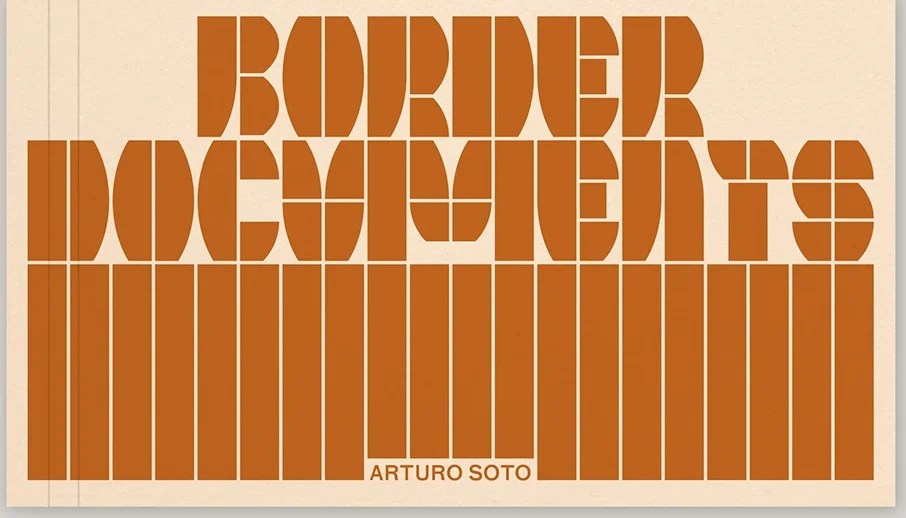
The presentation of Border Documents is clean and spare. (See selections here.) Two-tone school photos of the senior Soto from the sixties and seventies line the inside of the front and back covers. Stark black and white photographs, taken in Ciudad Juárez and El Paso in 2016, appear as almost ghostly images of the streets and neighbourhoods of his childhood and youth. They are characterized by harsh light, sharp angles, lonely vistas. Parked cars are common, but few people are in sight (notably there is one where the photographer’s shadow stretches out from the lower right corner). By contrast, the accompanying vignettes are populated with a vivid cast of friends, classmates, grandmothers, siblings, parents and other relatives. The juxtaposition of the chronological collection of memories, anecdotes, and musings filled with life in all its shades of joy and discontent against contemporary images of the settings where they once took place demonstrates the complex reality of the environments in which we grow up and the degree to which they are both preserved and lost over time.

A case in point, border crossing. Apart from being a source of employment opportunities for Juárez residents, legal or not, El Paso was also a destination for amusements, such as a trip to the zoo, or, more commonly, a place to acquire goods and access services otherwise unavailable at home. An early memory from 1958 captures a child’s early impressions of the experience:

We took the transnational trolley to shop at JC Penney, everyone’s favorite store. The journey felt tediously long despite the short distance because of the long immigration line. They even forced some passengers to get vaccinated before letting them in. Overheard conversations had led me to believe things were much nicer on the other side, but everything looked more or less the same once we reached El Chuco. Over time, I found reference points that sparked my imagination along the route. Some of my favorites were the old customs building, the Spirit of St. Louis replica above a cantina and the clay figures of sleeping Mexicans flanking Don Marcos Flores’ house. A former municipal president, he had a gift shop close to the Santa Fe bridge. My grandma Esther cashed the money my aunt wired her from Los Angeles there. Don Marcos, always at the entrance, greeted her by name, which made me feel distinguished.

However, the photograph that faces the above memory depicts, from across the cracked pavement of West 4th Avenue, a plain, all-purpose structure with its available services painted right onto its front wall in English and Spanish—Copies, Fax, Foto, Income Tax, Public Notary, Medicare, Medicaid. Hard to picture such a destination sparking a child’s imagination today.

Some of the photographs captured appear to closely align with the accounts of the relative freedom afforded by a makeshift cement and brick playground in a barrio defined by specific streets and bridges. Perhaps these scenes are little changed with time. Of course, not every photo has a story, though each one has a location indicated. Likewise, not every story is matched to a photo. Soto’s father’s anecdotes carry enough humour, wisdom, and empathy to form vivid portraits on their own. He recalls, for example, a near spiritual crisis on the occasion of his First Communion with his sister Elsa in 1963. His mother was able to find him a second hand outfit and, with luck and a generous repayment plan, a most elegant new dress for Elsa. Simply clothing the outside, however, was not enough:

My peace of mind and the purity of my soul proved harder to secure. Some distant relatives were in town, and my cousin kissed me while playing a game. I felt very conflicted. This happened after my confession, and we had just been instructed on the consequences of receiving communion in a state of sin. I went back to the church and explained myself to the priest. He laughed and made me promise not to do it again but assigned me no penance. Liberated, I bought an orange from the market, feeling closer and closer to heaven with every slice I ate.

Life was not easy—along with the typical boyhood and adolescent adventures, and misadventures with friends and siblings, there was an alcoholic uncle, a father inclined to infidelity and other challenges—but the reflections Soto’s father shares show a distinct compassion or understanding, even if it is filtered through an adult’s appreciation of his younger self. One can see why his son who grew up listening to his stories would be inspired to encourage him to engage in this project even if some memories would be destined to transcend the physical spaces in which they were formed:

I keep a sad memory of the Cine Reforma. I watched there El Señor Doctor when Cantinflas was at the height of fame. Since overselling tickets was standard, I had to watch it on my feet. At some point, I thought I recognized someone a few rows ahead, but it wasn’t until the credits rolled that I made out my uncle Carmelo, a subject of constant gossip in our family. My dad used to say that his sister, the fearful Aunt Berta, would seize Carmelo’s salary. On Sundays, she would give him just enough for a newspaper, a shoeshine, and a movie ticket. I always thought my dad exaggerated the situation, but I confirmed my uncle’s capitulation was true that day.

As in Arturo Soto’s earlier work, a strong thread of social commentary is woven into the relationship between images and commentary. He is drawn to challenging the existing assumptions about a place by focusing on the ordinary to expose the everyday reality overshadowed by the outsized image an urban centre may otherwise project. His last work, A Certain Logic of Expectations (see my review) was the outcome of his time spent studying for his PhD in Fine Art at Oxford University during the BREXIT years. But rather than focusing on the famed campus environment, he turned his camera on the other Oxford, the working class community that belongs to a geographically larger but psychologically and socially distinct space from the hallowed University environs. Of course, he views this world from the perspective of a Mexican outsider who can’t help but marvel at how relatively safe and clean even the “rough” parts of town feel. However, with this new collaborative project, he is exploring an urban environment he frequently visited while growing up in Mexico City, but that always felt at odds with the images his father’s anecdotes had conjured. In revisiting these streets, avenues and corners, Soto allows his camera to offer a visual counterpoint to the record of his father’s memories and the result is a very powerful—and personal—documentary that crosses borders, both temporal and political.

Border Documents by Arturo Soto is published by and available from Eriskay Connection.

No, it’s not complicated at all: Recognizing the Stranger by Isabella Hammad and One Day, Everyone Will Have Always Been Against This by Omar Al Akkad

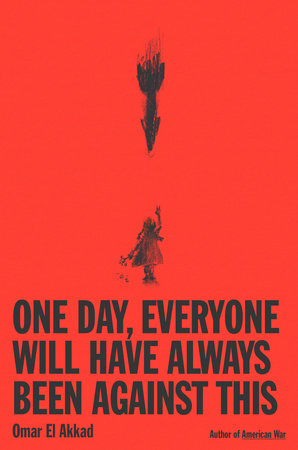
Nine days before October 7, 2023, British-Palestinian writer Isabella Hammad delivered the Edward W. Said Memorial Lecture at Columbia University. Eighteen days after October 7, on October 25, 2023, Egyptian-born Canadian-American novelist and journalist Omar Al Akkad sent a tweet out on Twitter (X) that read: “One day, when it’s safe, when there’s no personal downside to calling a thing what it is, when it’s too late to hold anyone accountable, everyone will have always been against this.” Hammad’s lecture along with an Afterword penned in the early weeks of 2024 and Al Akkad’s “heartsick breakup letter with the West,” inspired, not by his social media post per se, but by his growing frustration and anger at the daily barrage of images of a people under siege, are two recent releases that present powerful, critical responses to the ongoing violence in Gaza and the West Bank. To genocide. Both address the failure of the West to respond to the humanity of the Palestinian people and the all too common tendency to look away, to plug one’s ears, or worse, to celebrate the destruction we’ve seen live streamed to the world.

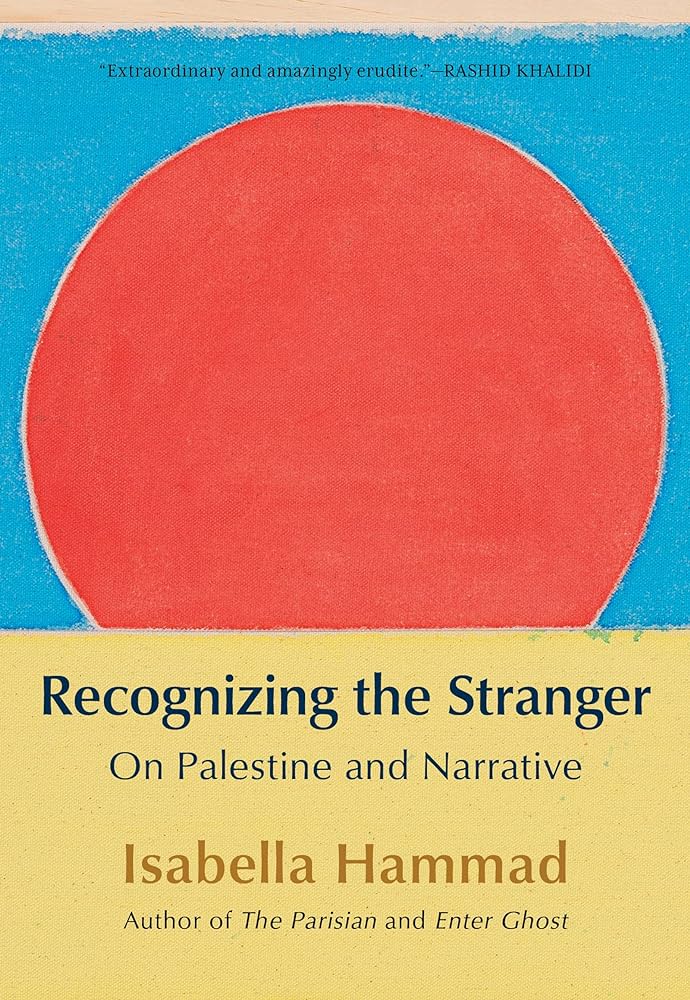
Hammad’s Recognizing the Stranger: On Palestine and Narrative is a smaller, more focused work, given the context of its origin. Her primary interest is in the telling of stories. She speaks of literary devices, especially the moment of recognition, in the character and/or the reader, in which a certain understanding arises. Drawing on literary sources, she explores this technique, then suggests that the same kind of recognition can shake firmly held beliefs about real life political realities too. Humanize the perceived enemy. Ideally, Palestinians writing about their history and circumstances should spark a chord in their audience, but, although they have been telling their stories through poetry, fiction and nonfiction for decades now, too many still refuse to acknowledge the conditions of the occupation or their right to their land and culture.

We are at a moment when elementary democratic values the world over have eroded and in some places almost completely disappeared. I feel it as a kind of fracturing of intention. The big emancipatory dreams of progressive and anti-colonial movements of the previous century seem to be in pieces, and some are trying to make something with these pieces, taking language from here and from there to keep our movements going.

There is a measure of optimism in Hammad’s lecture, a sense that “(o)pen declarations of racism and fascism by the Israeli government, while no means new, are becoming audible to Western ears.” Of course, as we read this, we know her hope that the plight of the Palestinians is reaching a wider receptive audience is about to be dramatically undone. She addresses the terrifying fallout in Gaza in her Afterword. This small volume, then, bridges the time before and after the Hamas attack, reminding those who need it, that the circumstances the Palestinians have suffered are long standing and long ignored. History did not begin on October 7.

Recognizing the Stranger is very much of the moment, especially in the sense that it records a lecture given at a pivotal time, but it is framed within the framework of literary critique with a political and historical background. Omar Al Akkad’s work is likewise immediate and direct, urged on by the atrocities that he sees every morning when he turns on his computer. But he is addressing not only the genocide in Gaza as it is happening, but viewing it within a broader personal, professional and global framework. He is writing as an Arab man, born in Egypt and raised in Qatar; as an immigrant, first to Canada and then to the US; as a journalist with a decade’s worth of reporting on acts of terrorism, war, and unlawful confinement; and, perhaps most powerfully, as the father of young children. He repeatedly returns to the endless stream of images of children torn to pieces which weighs on him as a heavy anchor of pain and disbelief.

But this is not an account of that carnage, though it must in its own way address it, if only to uphold the most pathetic, necessary function of this work: witness. This is an account of something else, something that, for an entire generation of not just Arabs or Muslims or Brown people but rather all manner of human beings from all parts of the world, fundamentally changed during this season of completely preventable horror. This is an account of a fracture, a breaking away from the notion that the polite, Western liberal ever stood for anything at all.

The tone which rings clear in this quote from early in Al Akkad’s text, carries through to the end. He is blunt, he is angry, but he is not surprised. As he talks about his childhood in Qatar under a regime that censored and controlled everything coming in from the West and his family’s move to Canada when he was sixteen, there is the promise and the disillusion, perhaps in equal measure, that accompanies such a journey. As he brings in the sobering experience of reporting from front lines, prisons and other points of confrontation, he calls attention to the dehumanization of those that West see as disposable, even when, as in the case of Afghan soldiers, for example, they are supposed to be fighting beside the American forces. Of course, governments and news media never address any of this directly, rather they employ passive language and unmake meanings and outright restrict the use of certain words and phrases in the determination of who are the real victims, who are the aggressors (the “terrorists”), and who are acceptable collateral damage. In such a linguistic landscape, calling a thing what it really is becomes something that is not only undesirable or inconvenient, but as we have seen very clearly over the last eighteen months, it can cost individuals opportunities, jobs, degrees, and even their right to live or study in a country where they have legal status.

Al Akkad is well aware of the consequences of speaking out. He knows that his own career is at risk if not already irrevocably damaged. But he is unable to remain silent and his book is, as he says above, primarily directed at the myth of Western liberal values. He claims that in a world invested in the unmaking of meaning, the writer cannot be expected to turn away from the political, to only focus on the sublime. That is a luxury he cannot afford and, although he acknowledges that for some the cost of speaking out may be too great, there are many established writers and artists and intellectuals who have remained silent. Or have claimed that it is all too complicated.

One Day, Everyone Will Have Always Been Against This is an intensely personal essay, an exceptionally well-written plea for human compassion in a polarized and uncertain world. Al Akkad, although he is now an American citizen living and raising a family in Oregon, has a unique perspective to bring to this assessment of the current political dynamics, their development in a post-9/11 world, and what we, if anything, as individuals can do. It’s an empowering  if sadly realistic work that will speak loudly to those of us who have likewise been devastated by the brutal destruction of Gaza and the death and injury of so many children and their families. We need to hear articulate and passionate voices like his to know we are not alone, and trust that others who may have relied solely on Western mainstream media, if that, may also be inclined to listen.

At this moment in time, Hammad’s and Al Akkad’s books both stand in an unusual, disconcerting light. They address something that is still happening, that is not yet safely in that distant rear-view mirror if, in fact, it ever will be. And since they have been published, the tectonic plates that underlie the Western world have shifted in new and frightening ways that have not only exacerbated the ongoing  violence in the Middle East, but are rapidly revealing new fracture lines within former global alliances. New military concerns are emerging and censorship is more even more insidious, especially in the US. How it will play out is far from clear, but we cannot afford to let the new threats to peace and trade overshadow continuing genocide in Palestine, or, for that matter, in other ongoing conflicts in Ukraine and in the Global South. More than anything, we cannot afford to be silent.

Recognizing the Stranger: On Palestine and Narrative by Isabella Hammad is published by Alfred A. Knopf in Canada, Grove/Black Cat in the US and Fern Press in the UK. One Day Everyone Will Have Always Been Against This by Omar Al Akkad is published by McClelland & Stewart in Canada and Alfred A. Knopf.

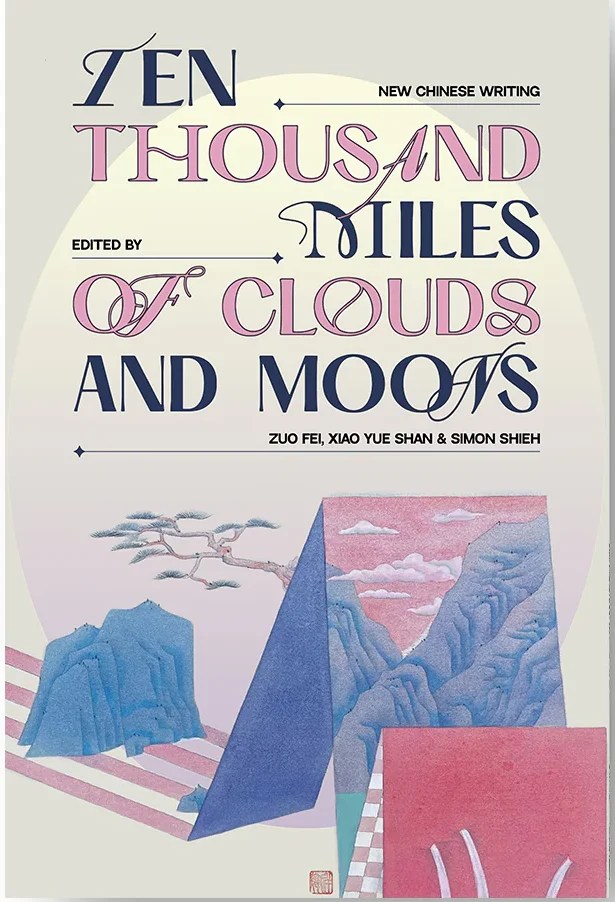
To go where the language goes: Ten Thousand Miles of Clouds and Moons – New Chinese Writing, edited by Zuo Fei, Xiao Yue Shan and Simon Shieh

Grey cloud grasping light,
unrolling the softness of another world
towards the wobbling plane wing; its folds ripple,
someone has scattered seeds in each furrow.

Who’s thinking, underneath the clouds,
how hard it is to restore the life of a flower,
when rain never coincides with favorable winds.

But we have a shred of light.
Today, passing through a mid-gate
as if remembering.

(from “Introspection on a Cloud” by Du Lulu, translated by Dave Haysom)

What exactly does it mean to enter into another world, to open oneself to a landscape at once familiar and strange? That is, one might suggest, one of the functions of literature. But if the map that grants access to that other world with its many artistic and cultural riches is in another language, translation is the key. For the editors of Ten Thousand Miles of Clouds and Moons, a collaboration between Beijing-based Spittoon Literary Magazine, a dual-language journal of contemporary Chinese literature, and Honford Star, the guiding inspiration for this first anthology project is, in keeping with that of the magazine, to seek out and bring into English translation, some of the most original, exquisite, and daring voices—new and established—contributing to the present literary landscape in China.

The introduction lays out the vision that guided their selection of pieces

The work had to be excellent; the writer had to have a point of view that is under-explored in the Anglosphere; there had to be a balance of genders; and the language had to be so special that it has the potential to torture translators. This final aspect came only from our love for the Chinese language—which, like all languages, has a singular soul, a force drawn from its age and its malleability throughout time. The more a writer is able to tap into that soul, the more difficult the piece would inevitably be to translate.

Thus sixteen contributors—eight writers of fiction, six poets, and two essayists—were paired with eighteen translators, to offer readers a journey that covers a wide literary terrain. You will find yourself in a world with a long rich cultural history and traditions, and you will find stories that depict a modern society that Western, English language readers will instantly recognize, with influences drawn from an international well of literary sources. You will find work that pays homage to the China’s past and tales that turn on distinctly futuristic, apocalyptic visions. And surreal, experimental tones alongside traditional Chinese poetic form.

The opening story in the compilation sets the mood perfectly. A piece of dystopian science fiction that  revolves around the fate of the 18th century work considered the greatest of all Chinese novels, “Mass in Dream of the Red Chamber” by Chen Chuncheng (translated by Xiao Yue Shan) is set in the far future—the 4800s—at a time when this great work of literature is not only lost, but any effort to retrieve its contents or storyline are strictly forbidden. There is, at this time, a belief that the text was completed at the peak of the universe’s development, and that all had begun to decline and dissipate since that time. The narrative follows the recorded account of a prisoner, a man born in 1982, who fell into a deep coma for several thousand years, only to miraculously awake and find himself as a specimen in a museum exhibit. He becomes a kind of missing link to the lost masterpiece for a clandestine organization desperate to recreate, as much as possible, the original; its preservation being essential to the continued existence of the universe itself. But that also makes him, and those who come to hear him access his memories of the text, the target of murderous government forces. It is a wonderful meeting of the glory of past achievements and the horrors of a post-apocalyptic totalitarian future, connected with an out-of-time protagonist’s personal recollections of life in the 1990s and 2000s.

The settings of the tales that follow vary, from a contemporary urban environment where bored youth hang out and make trouble, to the account of family history, to a mystical encounter on a mountainside. The energy shifts from story to story, often turning to the unexpected, cracking the fragile veneer of reality. Particularly delightful is the excerpt from Lu Yuan’s novella The Large Moon and Other Affairs (translated by Ana Padilla Fornieles), a piece of weird fiction that reflects, perhaps, in its magical strangeness, the influence of Bruno Schulz whose work the author has translated. As the moon, being pulled toward the earth, grows larger and larger in the sky, the eccentric Mr. Lu struggles with insomnia and troubled dreams. One night, having taken a concoction to aid his sleep, he finds himself carried off on a nocturnal adventure through the skies:

Mr. Lu rose from the valley of dreams and rowed out the window, picturing himself an unthinking mycoplankton or a sea cow, heading back to the Amazon River Delta. Riding upon the clouds and the wind with neither a northeastern wife nor a Vietnamese mistress at his side, the invoices seeking his death yet to arrive, and the murderous plots working their shapeless, invisible night shifts had been temporarily put on hold. There were no cold, mechanical alarms, no greasy company breakfasts, and definitely no covetous relatives, neighbours, acquaintances, or colleagues. The naked Mr. Lu, wearing only a heavy pair of  plastic slippers, flew over the sparse suburban streetlights, bounding towards the corridors of stars spiraling in a snail-shell pattern along the horizon’s towers. A thin sheet of air gently caressed his bulging beer belly, and the city was as far away as a firefly, succumbing to the hallucinatory bird’s eye view of inebriated men.

The two nonfiction pieces add a welcome new dimension to the collection. Hei Tao’s “Three Essays” (translated by Simon Shieh and Irene Chen) paint delicate portraits of southern China, and a lifestyle that is gradually disappearing, while Mao Jian’s “No One Sees the Grasses Growing” is a relatable, and humorous, memoir of her years as a student at East China Normal University in Shanghai in the 1980s and 90s. She recalls a time when students paid less attention to their studies than might have been wise. They were young and in love with a certain literary coolness. Her first degree was in Foreign Languages, but she found it hard to resist the allure of another course of study:

The truth is, in the eighties, it was impossible to resist the passions of the Chinese Department. The notice boards were plastered with adverts promoting literary lectures, and all sorts of clubs and societies adopted the grandiose affectations of belles-lettres, prancing about the center of campus. If someone were to ask you about going corporate after graduation, you’d have to self-reflect on the unrefined impression you must have been giving off. Those years were the golden age of Casanovas, who made names for themselves by proclaiming their undying love for poetry, and any girl who could be moved by Rilke would inevitably enter into a spontaneous fling with one of these campus poets.

It was an era of living away from home, first trips to KFC, young love, and inspiring and unconventional professors. But looking back decades later, now a professor herself at the same institution, she realizes that that time is past, in so many different ways.

Spread out among the prose pieces, are the contributions of the poets, three poems each. This arrangement works very well, offering a change of pace and granting each poet the space to have their unique voice heard. As with the fiction and nonfiction, there is both variety and, of course, precise, evocative imagery that is at once modern, yet with an echo of the long-standing traditions of Chinese verse.

Anthologies can be uneven projects, but this selection of new Chinese writing is strong, varied, and continually fresh and surprising from beginning to end. The contributors range in age, with the youngest in his mid-twenties, the oldest in his mid-sixties. Their work is consistently fresh and vibrant, and the translators all appear to have produced results that feel effortless. It should also be noted that this volume is beautifully presented, with a simple, yet elegant design. This is an endlessly engaging collection for anyone with an interest in contemporary Chinese literature, especially if you are seeking work that challenges expectations.

Ten Thousand Miles of Clouds and Moons: New Chinese Writing is edited by Zuo Fei, Xiao Yue Shan and Simon Shieh, and published by Spittoon Literary Magazine in collaboration with Honford Star

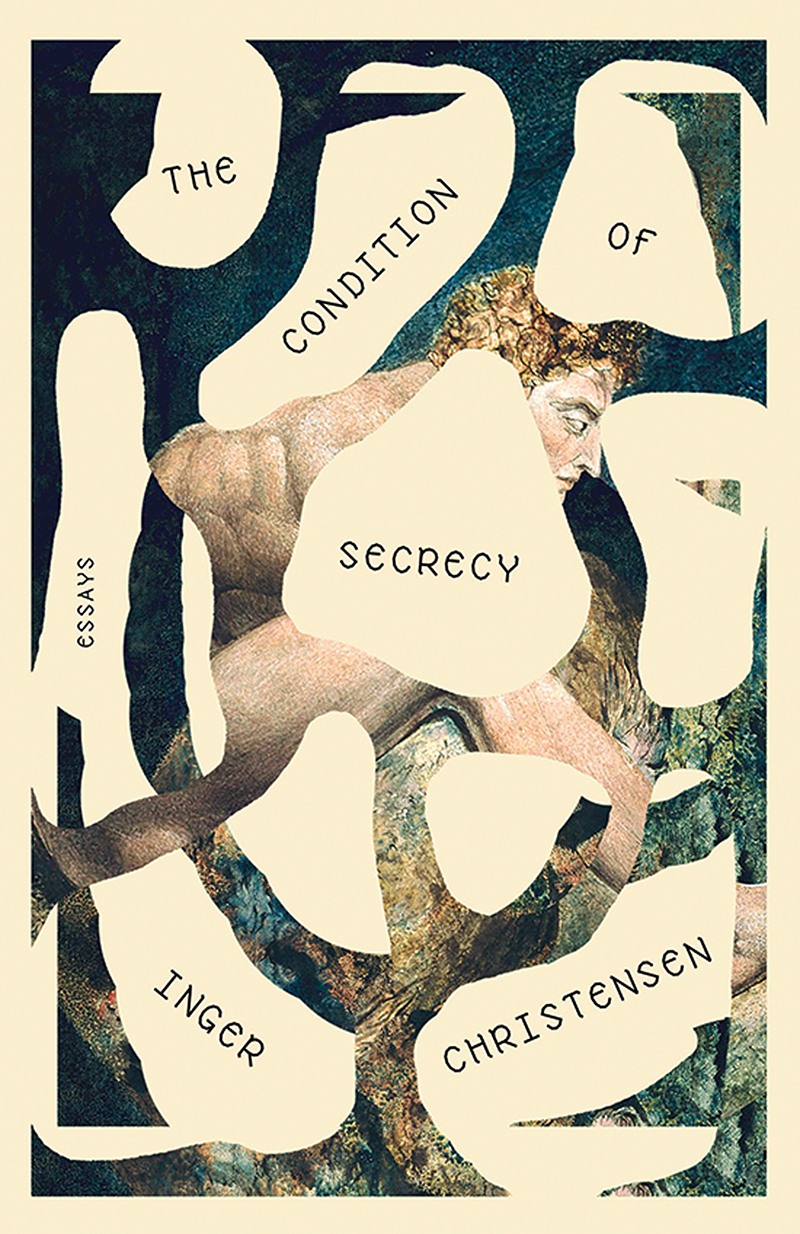
An inexhaustible landscape of words: The Condition of Secrecy by Inger Christensen

Writing poems is just as much a mysterious miracle. Not that there’s anything mystical or ceremonial about it. Or anything religious. It’s a neutral miracle, so to speak, granted in advance, because in the process of writing we need to use language in its whole, indissoluble connection with reality. It’s that connection with reality that’s a mysterious miracle. And that’s what poetry has to enter into.

It is clear from the essays collected in The Condition of Secrecy, that Danish poet, novelist, and essayist Inger Christensen (1935–2009) was not only in love with words, but that she understood language—and the way we seek to give meaning to the world—as part of the dynamic process of nature. For those who are already familiar with the experimental writer’s poetry and fiction, this collection offers insight into her view of the world, which was heavily influenced by a lifelong interest in science, mathematics, and linguistic theory, and the questions she was inclined to ask about her own engagement with language. For those who are new to her work, myself included, her philosophical musings and poetic investigations are no less interesting, and may well serve as an invitation to explore her work further—and fortunately there is a good selection currently available in English translation with more forthcoming this year.

What is most immediate in this compilation of essays, originally published across four decades, from the 1960s through the 1990s, and arranged intentionally rather than chronologically, is the sheer force of Christensen’s intellectual curiosity. At its most basic, it is a book about writing and meaning, but a book by an original inventive poet trained in German, mathematics, and medicine, who read six modern and two ancient languages. And, as a child of the Second World War, social and political concerns are never far from her mind. The Cold War and the fear of nuclear annihilation casts a clear shadow on a number of pieces. So, although this volume only numbers 138 pages, Christensen encourages her reader’s close engagement with ideas as she herself works her way through her own questions about the world and the way we find meaning in it through language.

Words are, of course, essential and she has a wonderful way of employing them. Her opening sentences are often quite special. “Interplay,” an essay about coming to understand time and one’s place in history as a child in Denmark at the end of World War II, begins:

When I was nine years old, the world, too, was nine years old. At least, there was no difference between us, no opposition, no distance. We just tumbled around from sunrise to sunset, body and earth as alike as two pennies.

Another piece, one of several more explicitly about words, meaning, and form, especially in the art of poetry, “Silk, the Universe, Language, the Heart,” opens:

Silk is a noun. All nouns are very lonely. They’re like crystals, each enclosing its own little piece of our knowledge about the world.

This playful essay, in conversation with the Ars Poetica or Wen Fu of Chinese poet Lu Chi (261–303 AD), examines the personalities of nouns, adjectives, adverbs, and verbs, along with the ever important prepositions that hold them in relation to one another.

Another essay that explores the interconnectedness of words, meaning, and writing poems, “It’s All Words,” moves from an analysis of what it means to say: “The word creates what it names” with all its Biblical overtones, through an existential (and anthropological) notion of naming the world into existence, to try to answer the question of why poetry is not a common practice when it requires no special tools beyond a paper and pen.

As it is right now, when the world has existed for so long, words come from everywhere, and they’re never there for the first time. Not only that. Although there may not be an infinite number of them, nor an infinite number of combinations, nevertheless there is an inexhaustible landscape of words, there are more than any one individual could manage to travel through. This is where it ends and where it begins, if a person is going to write poems: in the imagined concept of this mysterious landscape. For poems are created exclusively from words.

What makes this piece especially intriguing is that it leads into a discussion of the creation of one Christensen’s most inventive book-length poems, Alphabet. She began collecting words and then, in her gathering, she happened to come across Fibonacci numbers, a formula of increasing numbers that describe a pattern present in the growth principles of many plants. By employing this structure, she had a framework upon which her poem could eventually grow and bloom.

Most of the essays in this volume are short, some are only a few pages long, but midway through, the longest piece, coming in just shy of 30 pages, marks a turn of focus to more philosophical and political themes—not without abandoning talk of writing poetry and fiction, mind you. “The Regulating Effect of Chance” is an extended discussion of the role that chance plays in the world—fundamental, as she sees it, in accord with Jacques Monod’s Chance & Necessity—and in our experience of the world, our tendency to assign a notion of fate or destiny, and our understanding of art, creativity, imagination and much more. The later essays turn their attention to subjects such as the nature of truth, the depiction of night and, in a futuristic and somewhat fatalistic effort, “Snow,” the idea of the inevitability of nuclear winter.

This collection is one that I have owned for a number of years, without any previous experience of Christensen’s poetry or prose. Several times I pulled it from the shelf, but it did not seem that the time was right. Now I am especially keen to read her poetry. There are four volumes available in English, all translated, like The Condition of Secrecy, by Susanna Nied who enjoyed a close collaborative relationship with Christensen when working on her poetry. So, all things in good time; the words will be waiting.

The Condition of Secrecy: Selected Essays by Inger Christensen is translated from the Danish by Susanna Nied and published by New Directions.

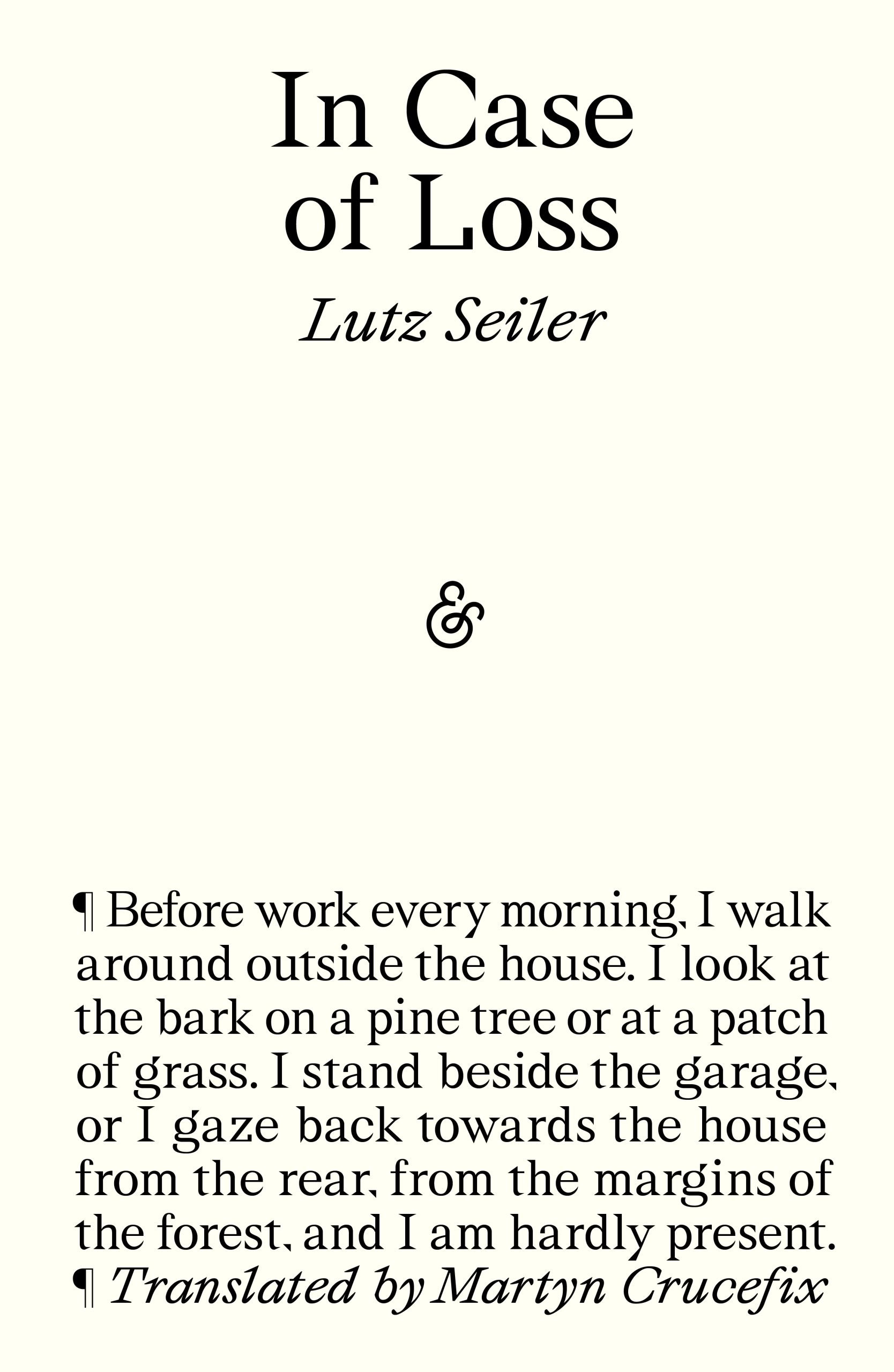
The only possible way: from In Case of Loss to Pitch & Glint by Lutz Seiler (and much more)

Some writers pass through your reading life and move on, perhaps appearing by chance now and then over the years, others ignite a clear desire to read more, if not all, that you can get hold of. That might be a small library of volumes to collect, but for those of us drawn to writers in translation—writers we often discover as a direct result of following a known or trusted translator—it can mean watching and waiting for more work to slowly emerge in English.

For me, one such writer is German poet, essayist and novelist Lutz Seiler. I first encountered his poetry about two and half years ago through Alexander Booth’s translation of his 2010 collection in field latin. At the time, the only other title available was his first novel Kruso which was, when I first checked, out of stock. Yet, when UK publisher And Other Stories announced they would be publishing Seiler’s debut poetry collection, Pitch & Glint, his second novel, Star 111, and a collection of essays, In Case of Loss, in late 2023, I took note. Then, when I had the opportunity to read Star 111 this year in advance of its North American release from NYRB in October, I quickly set about acquiring his other work. And, as these things go, while reading the poetry and the essays, I was inspired to add work by two of the poets Seiler writes about or honours—but more about that later.

Born in the Thuringia region of the GDR in 1963, Seiler’s poetry is rooted in the rural landscape of his childhood, scarred by years of uranium mining, sensitive to place and relationship to family, as child and as a parent. However, unlike many writers, he had no interest in books or literature when he himself was young. He did not start reading poetry until he was completing his mandatory military service in his early twenties, having already trained as a bricklayer and carpenter. He was certainly not writing, not even jotting the odd observation down, but something was brewing. As he says in his essay “Aurora: An Attempt to Answer the Question ‘Where is the Poem Going Today?’”:

Yet a good ten years later, I wrote poems that had been, in that earlier period, when poetry did not feature in my life, gathering and storing their subject matter, their materials. Doubly hidden from me at the time, clearly the poems had been, even then, making their way towards me. What is different these days is that I have become more conscious of the signs of a poem being on its way. I am aware of what situations, materials and substances it might respond to, what it is likely to ingest—for later use.

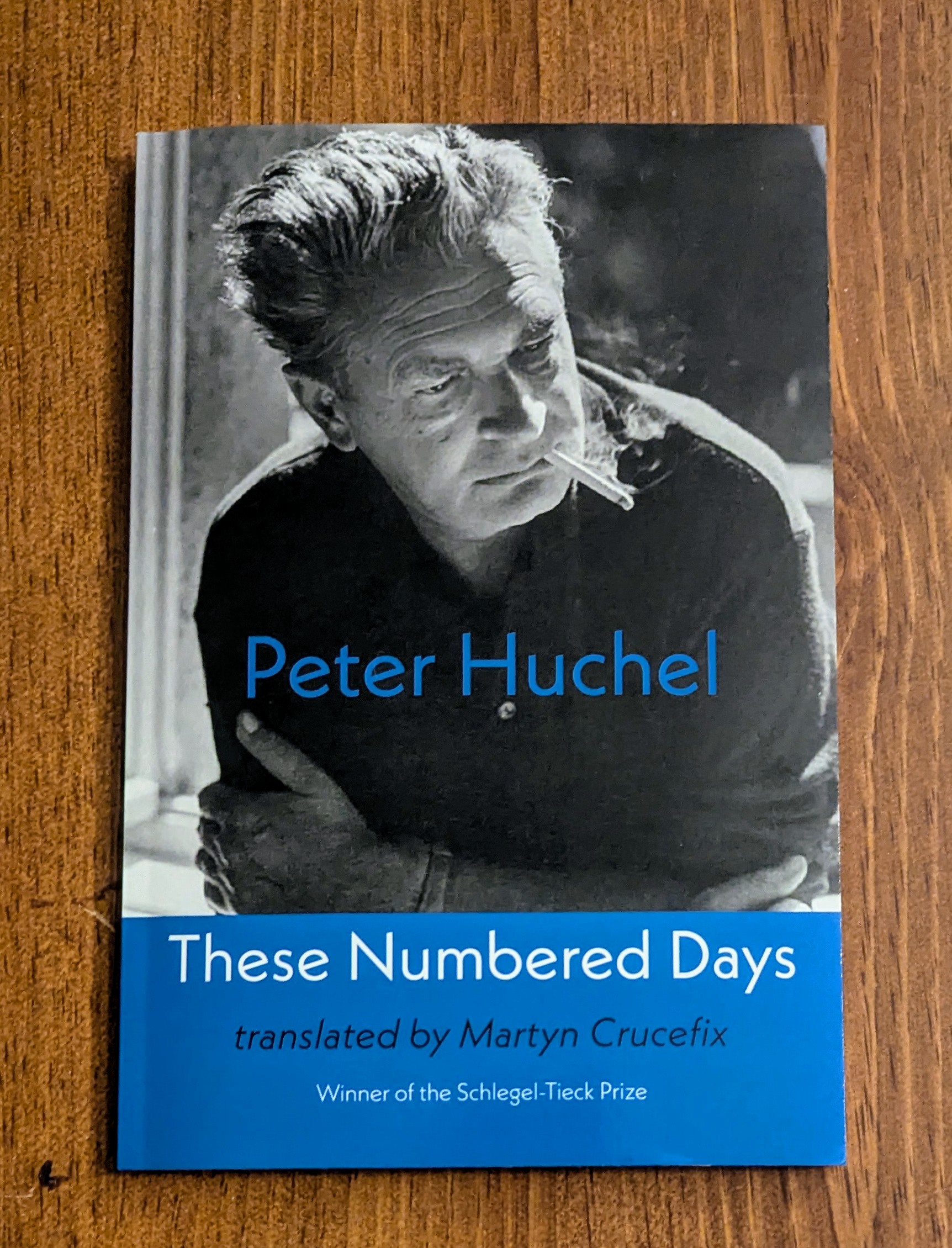
For a poet who came to literature somewhat unexpectedly, Seiler’s writing about writing, and about the poetic art and process is excellent, presumably of interest to other poets, but also, and perhaps more critically, for those of us who enjoy poetry but sometimes feel inadequate to examine a poem without a strong literary vocabulary and the requisite coursework (assumed to be) required to read and write it. In Case of Loss contains several essays about the work of other poets. One, Peter Huchel (1903–1981), was new to me. I was aware that Seiler is the custodian of the Huchel House in Wilhelmhorst near Berlin, but knew nothing of Huchel himself, one of the most an important German poets of the post-war era who ended up running afoul of the government of the GDR and was eventually allowed to migrate to the West. The title essay is an account of Seiler’s first impressions of the house itself after breaking in with Huchel’s widow’s blessing and his coming into possession of a notebook the poet kept all his life in which he recorded images, metaphors, lines, and tentative sketches, all categorized by theme. The manner in which Seiler traces some of the formative elements that will, often years later, appear as shadows or echoes in a finished piece is fascinating and a testament to the gestation period a poem can have. Of course, I wanted to read more, so I sought out These Numbered Days, Huchel’s 1972 collection, released in 2019 in an award winning English translation by Martin Crucefix (who is also the translator of In Case of Loss). His poetry often draws on the landscape of his youth for atmosphere frequently in concert with mythological, historical, and Biblical images to create crisp, even chilling poems. Although they are generally spare, one can sense that they have been carefully shaped and honed over time, each word or phrase carrying much weight, very often political—something confirmed by both Seiler’s insights, Crucefix’s notes, and Karen Leeder’s Introduction.

At the edge of the village the wind
flung its ton of frost
against the wall.
The moon lowered a fibrous gauze
on the wounds of the rooftops.

Slowly the emptiness of night descended,
filled with the howling of dogs.
Defeat sank
into the frozen veins of the country,
into the leather-upholstered seats
of old Kresmers in the coach sheds,
between the horse tack and grey straw
where children slept.

(Peter Huchel — from “Defeat”)

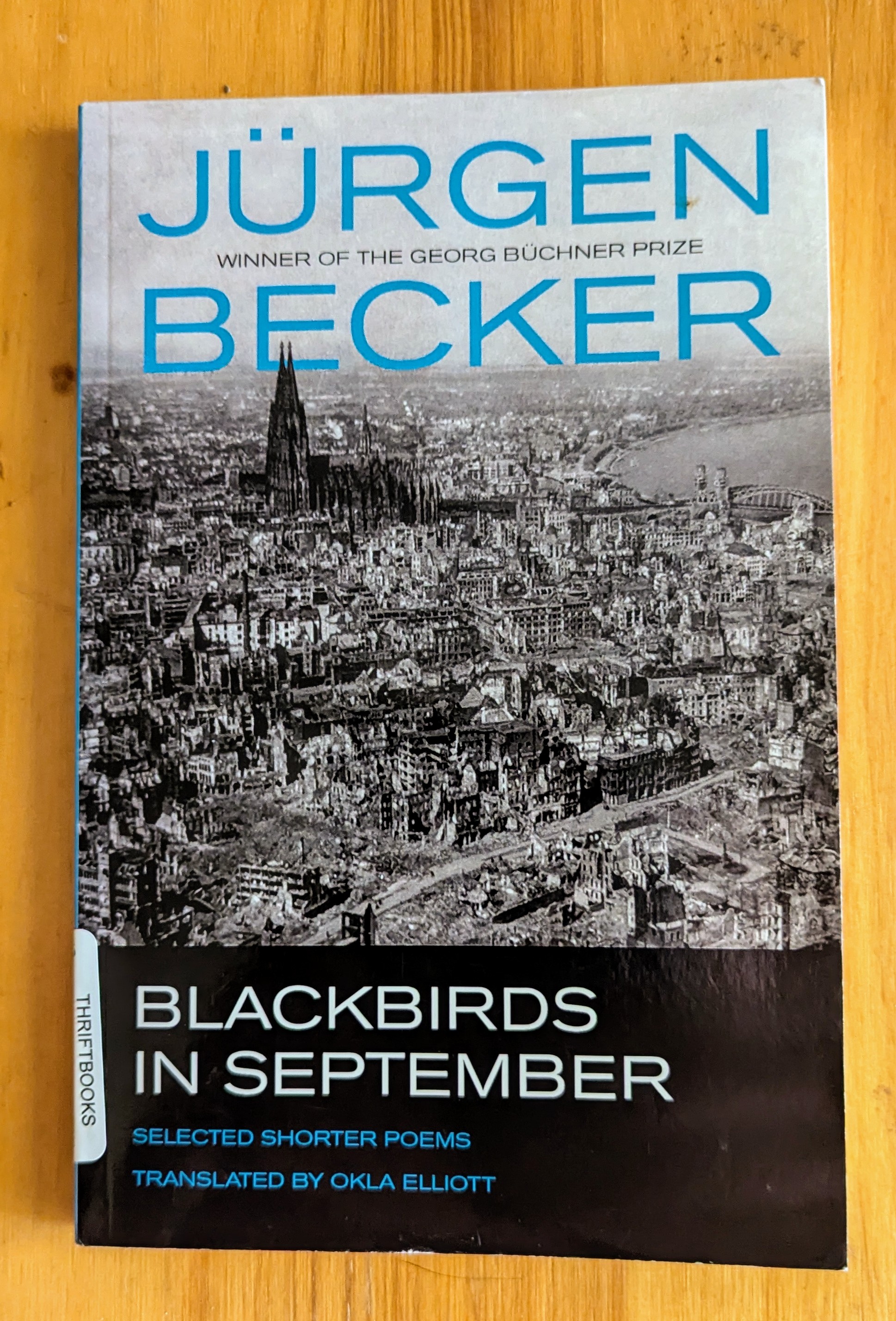
In addition to an unusual back to front reading of a book by Ernst Meister, the other poet Seiler devotes an essay to is Jürgen Becker. I had already read Becker’s fragmentary poetic novel, The Sea in the Radio, but a dedication to the poet (who very recently passed away) in Seiler’s collection Pitch & Glint, called to mind a collection of selected shorter poems, Blackbirds in September, which I was able to track down and read alongside the essay “’The Post-War Era Never Ends’: On Jürgen Becker.” Here Seiler takes a more personal approach acknowledging Becker’s influence and his own friendship with the older established poet. He traces his own process of learning to read and appreciate Becker’s poetry. Born in Cologne in 1932, Becker was a member of Group 47, the organization formed to promote young German writers after the war. He employed an experimental, open form of writing with an emphasis on landscape and the persistence of memories of the war in German land and history. His language tends to be spare and his poems have a calm, light feel, but that is only the surface.

But the landscape is rather quiet.
Invisible the destruction, if in fact
there is destruction.

And the time is passed
which the subsequent, the subsequent time produced.

But you never speak of Now.

Probably in the summer. At that time of year
we remember. Fence posts follow the paths,
or turned around, all of it belonging
to the landscape . . . who owns it? The landscape
leads into landscapes, from the visible ones
to the invisible ones which await us.

(Jürgen Becker — from “A Provisional Topography”/translated by Okla Elliott)

Other essays of particular interest in this collection (which gathers a selection of Seiler’s nonfiction from across twenty-five years) include “Illegal Exit, Gera (East),” a return in memory and in more recent years to a landscape that is being transformed and remediated, and “The Tired Territory” which begins as an exploration of the history of uranium mining in his home state, but turns into a meditation on the distinct poetic sensibilities that he had to define for himself after what he describes as the difficulties encountered in his “brief  career as a doctoral student in literary studies.” The categories that hold his fascination are intangible: heaviness, absence, tiredness. Understanding this for himself is essential:

Writing poetry: a difficult way to live and, at the same time, the only possible way.

One aspect of all this is that the poem engages specifically with what cannot be verbalised. The mute and non-paraphrasable and its unique, existential origin: the particular qualities of any poem arise from these two subtly interwoven elements. The poem travels towards the unsayable, yet this is a movement without an end.

It is not only the reading and writing of poetry that slips into Seiler’s essays—to a greater or lesser extent—but the final piece tackles his slow transition to prose. “The Soggy Hems of His Soviet Trousers: Image as a Way into the Narration of the Past” chronicles the year he moved with his wife and children to Rome for a period of dedicated novel writing. He dragged along boxes and boxes of books, research and paraphernalia he had gathered in preparation for the writing of his first novel. He’d planned to draw heavily on his own experiences moving to Berlin in the aftermath of the fall of the Wall and the more he describes his intentions, the more it sounds like what would eventually become his second novel, Star 111. But it’s only 2011 and our would-be novelist is staring at an empty page day after day. It is not until he finally gets out of his room, into the city, that everything changes. A suggestion that he write a short story set in a location he had not previously considered soon conjures forth an image so strong that ten pages become 500 and he has what will ultimately become his first novel Kruso.

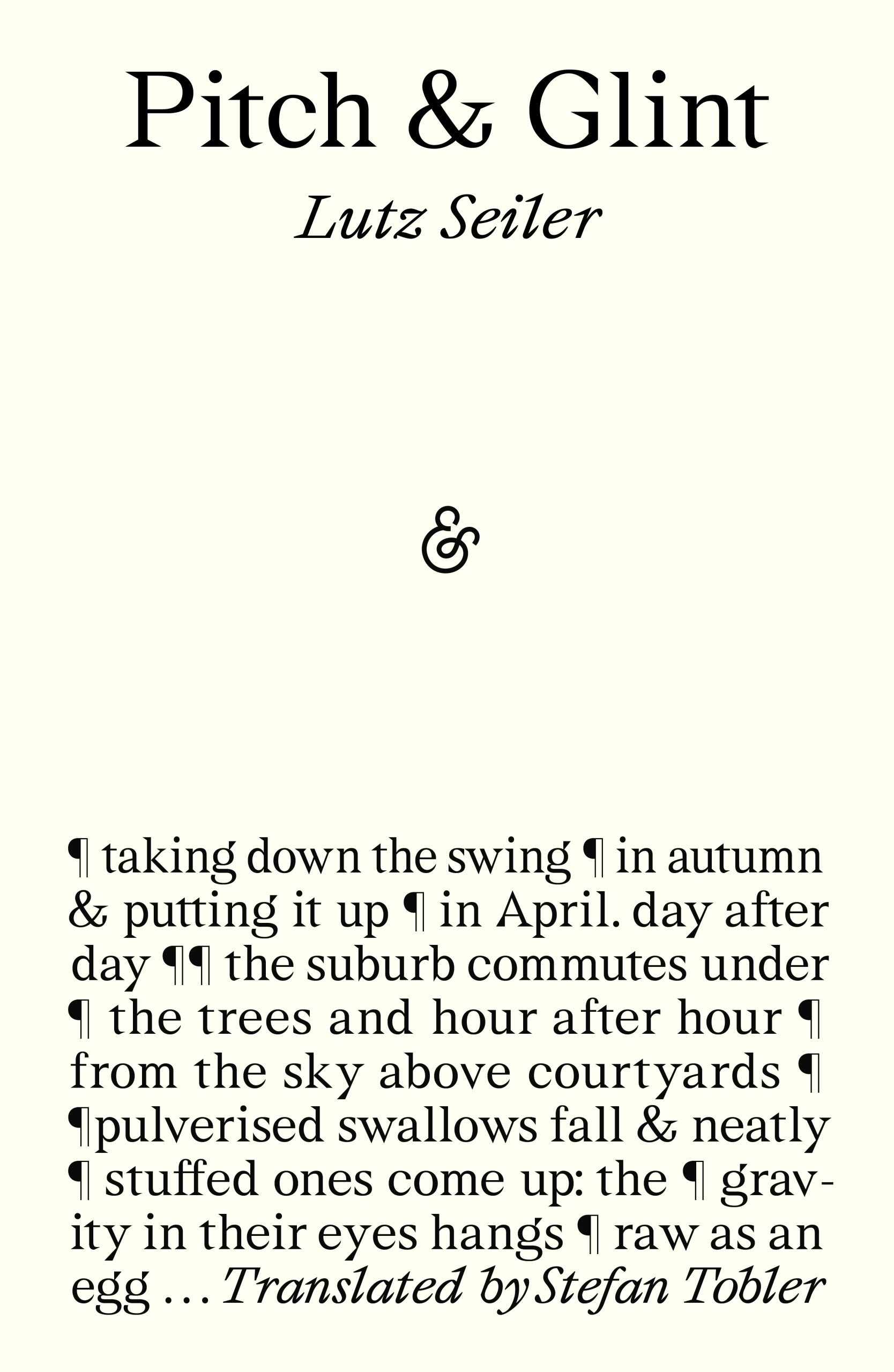
Finally, if I return now to own Seiler’s poetry, in field latin and his debut collection from 2000, Pitch & Glint, more recently released in Stefan Tobler’s translation, many of the allusions in individual poems become clearer in light of having read his essays and the autobiographically influenced novel Star 111. But neither is necessary. Seiler’s poetry has a natural appeal. I wrote about in field latin here, and this earlier work (ten years separate the two volumes) is likewise rooted in the East Germany of the poet’s youth—the wildness, the strict schools, the land with its slag heaps and detritus of mining. Yet, for Seiler, the sound and rhythm are critical, as is the construction of images that move beyond the mere biographical. Darkness, frost, echoing footsteps recur. You can feel the chill:

wind came up the border
.   dogs were rising on
their delicate branching skeletons

whistled a bewitching witless
wanderlied. the snow came in
& tore the iron

curtain of their eyes, a
blunted gaze towards the hinterland
and made plain that we do.

(— from “in the east of the land”)

Seiler’s characteristic use of lower case letters and ampersands (especially striking in German where nouns are capitalized) adds to the mood and intensity of his poetry. One of the blurbs on the back of Pitch & Glint describes it as “a real-world Stalker with line breaks.” That captures the feel well.

The beauty of reading a number of works—nonfiction, fiction and poetry— that intersect like this is that each individual experience is heightened. Seiler’s poetry and fiction easily stand on their own, but the essays add an extra dimension. To be fair, one’s enjoyment of this collection may depend on whether one is a poet, or interested in poetry and the process of poetic inspiration/creation, or familiar with his other work. Nonetheless, his essays are thoughtful with a very strong personal flow and reflect the mind and experiences of a man for whom poetry is central to his very existence—in his memories, in his specific creative pursuits, and even in the everyday act of taking his daughter to dance lessons or son to football practice.

In Case of Loss and Pitch & Glint by Lutz Seiler are translated from the German by Martin Crucefix and Stefan Tobler respectively and published by And Other Stories. These Numbered Days by Peter Huchel is translated from the German by Martin Crucefix with and Introduction by Karen Leeder and published by Shearsman Books, and Blackbirds in September by Jürgen Becker is translated from the German by Okla Elliott and published by Black Lawrence Press.

Other titles mentioned and reviewed earlier on this site are Star 111 (And Other Stories/NYRB Imprints) and in field latin (Seagull Books), both by Lutz Seiler, translated from the German by Tess Lewis and Alexander Booth respectively.

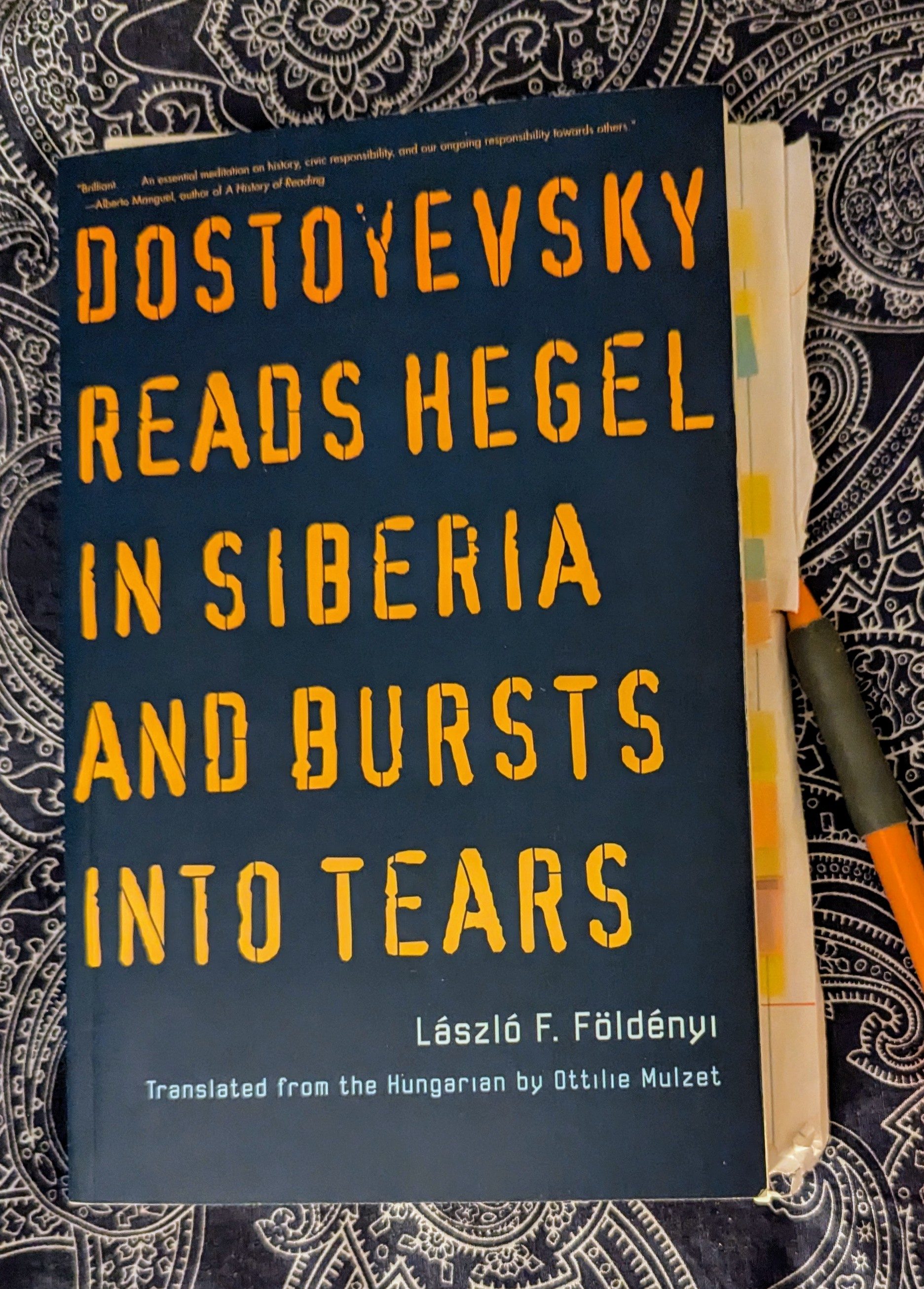
There be monsters: Dostoyevsky Reads Hegel in Siberia and Bursts into Tears by László Földényi

Humans have become alienated from their own history, as they are from their own cosmic nature.
– “Mass and Spirit”

The title is irresistible. It is impossible to read it and not wonder: what is this book about? In truth, it is about many things, or rather, many ideas, but in essence they can all be understood as variations on a dichotomous theme: darkness and light. Pivotal to these inquiries is the lasting impact of post-Enlightenment thinking on a traditional understanding of metaphysics, that is, questions of being and the nature of reality. Where once religion, or belief in God, gods, or some transcendent quality of existence could be turned to in times of darkness, the Enlightenment heralded a belief in “the omnipotence of reason that illuminates all phenomena.” Yet, as László Földenyi posits in this wide-ranging collection of essays, adroitly translated by Ottilie Muzlet, darkness and light (or other similar opposites or variants) are inextricably linked—one cannot be imagined or understood without the other—but in our secularized modern age, we, in our restricted, nondivine omnipotence can find ourselves confronting our own fragility in situations where reason alone may not seem like enough to fall back on. What then?

In his explorations of this conundrum, Földenyi, a Hungarian critic, essayist and professor of art based in Budapest, entertains the ideas, experiences and tribulations of a broad cast of thinkers, writers, poets, artists, and literary figures including Elias Canetti, Heinrich von Kleist, Caspar David Friedrich, Nietzsche, Novalis, Marquis de Sade, Antonin Artaud, and many more. And, of course, the protagonists of the evocatively titled eponymous essay: Dostoyevsky and Hegel. As he examines the manner in which rationalism, and within it a constrained idea of freedom and existence, has been met by those who chafed against its confines to a greater or lesser extent, Hegel is often assigned to the role of advocate for the primacy of logic and reason—not necessarily always fairly—so he makes a regular appearance in a number of pieces. But his main starring role is as philosophical foil to a certain Russian writer exiled to Siberia.

“Dostoyevsky Reads Hegel in Siberia and Bursts in Tears” is a vivid exercise in imagination which takes us to Semipalatinsk in southern Siberia where Dostoyevsky was sent in 1854, to serve a period of military service following four years of forced labour. In this barren, desert environment, he lived in a sparely furnished room and made friends with the young local prosecutor, Aleksander Yegorovich Vrangel, with whom he recited poetry, discussed religion, most critically, studied the books that Vrangel was able to secure for him. There is some reason to believe that one of the authors they read together was Hegel, possibly his lectures on the philosophy of world history, either ordered from Germany or in the form of the book in which they had been gathered and published. Földényi enthusiastically admits that he is taking liberties with his assumptions, but the notion is too tempting to resist.

Dostoyevsky emerged from his years of imprisonment and exile, as a man and writer whose experience with hardship and isolation had ignited a metaphysical drive that he would go on to channel against nineteenth century Europe’s adherence to utilitarianism and rationality through his protagonists. For Hegel, history, despite its messiness and violence,  could only be properly understood as the logical, progressive march of reason. That which fails to conform—at least in terms a European mind might understand, as such Africa and Siberia—is relegated to stand outside of the historical process and to be worth no further consideration.

If the infinite and the transcendent become lost behind the finite things, then it is no longer possible to speak of freedom. God, subjugated to rationality, is not the God of freedom, but of politics, conquest, and colonization. This is the secular religion of the God of the modern age. And history—looking at it from a Hegelian point of view—is the history of secularization. Dostoyevsky might have justifiably felt that Hegel was not just ushering Siberia (and himself with it) out the door; he was trying to convince, in missionary-like fashion, all humanity to accept as historical only that which the censorship of rationality admitted as such.

In envisioning an intellectual clash between the ideals represented by Hegel, and Dostoyevsky’s own experience of life in a place deemed separate from history, under conditions he would never have known had he not been forced to leave Europe, Földényi sees the ground for the openly acknowledged spiritual transformation that the Russian underwent in Siberia, and the writer he would become.

This may be the most passionate essay in the collection, but many of the smaller, quieter pieces turn on equally intriguing ideas in an open, speculative manner. He writes, for example, about happiness and melancholy, fear and freedom, sleep and dreams. Often his intention is to push beyond a simple dichotomy, at other times he wishes to dig down into an idea through the examination of the lives and ideas of one or more individual who found themselves confronting the limitations imposed by a society dedicated to the furthering of rational ideals. Case in point, in the also cleverly titled “Kleist Dies and Dies and Dies,” Földényi unwinds Kleist’s trajectory from an enthusiastic supporter of Enlightenment ideas through an early “Kantian crisis” which shattered his faith that Truth was knowable, to an act—possibly inspired in part by Goethe’s Werther—that eclipsed any of his writing: his carefully orchestrated double suicide with Henriette Vogel on November 21, 1811.

It bears repeating: the death of Kleist is the most thoroughly documented event of his entire life. The French-Romanian philosopher Emil Cioran justifiably states that it is impossible to read even one line of Kleist without thinking of how he put an end to his own life. His suicide preceded, as it were, his life’s work.

It is tempting to consider, and Földényi obliges, how Kleist’s embrace of death, or the act of dying, might be an answer to the loss he felt in an uncertain world.

The pieces in this collection were published in their original form (some have been substantially revised) between 1990 and 2015. They are not presented chronologically, nor can they be read as one cohesive argument, not least due to the fact that times, and presumably their author’s views, change. But it is telling that the volume opens and closes with essays addressed to Elias Canetti: the first, “Mass and Spirit” written in honour of his ninetieth birth anniversary, the latter, “A Capacity for Amazement,” an examination of his seminal Crowds and Power, fifty years after its original publication in 1960. His examination of Canetti’s exploration of the universal crowd and its ambiguous role in human history is measured, at least for Földényi, against Hegel’s understanding of universal freedom as a rational ideal. For Canetti, the crowd is more than a gathering of humans, it transcends that simple notion to incorporate all natural phenomena, it is cosmic and inherently irrational. Although he may or may not be onside with all the implications of Canetti’s singular arguments, Földényi clearly admires his metaphysical energy and, as the title suggests, his capacity for amazement.

The best essays wrestle with ideas, challenge assumptions, and invite the reader to entertain possibilities, debate with them or, even better, be inspired to read further. Dostoyevsky Reads Hegel is filled with references to so many writers and works that it is impossible not to stop to look someone or something up, or pull a volume off one’s shelves. It encourages side trips down rabbit holes. And that is what is so rewarding about spending time with László Földényi and the fascinating company he keeps.

Dostoyevsky Reads Hegel in Siberia and Bursts into Tears by László Földényi is translated from the Hungarian by Ottilie Mulzet and published by Yale University Press.

With a restless curiosity: A Question of Belonging: Crónicas by Hebe Uhart

To experience the world through the words of the esteemed Argentinian writer Hebe Urhart is to be offered a uniquely calm and compassionate view of ordinary places and people that effortlessly makes them seem anything but ordinary. A Question of Belonging, a newly translated collection of her crónicas—short, informal, observational writings, often published in newspapers or magazines—pulls together a selection of texts composed over five decades, and offers a fine introduction to the distinctive voice she brought to this form, one that became increasingly important to her over the course of her literary life (she also published two novels and collections of short fiction).

In her fascinating introduction, Mariana Enríquez reports that Uhart always considered herself a “writer of the outskirts.” She was born in Morena, a town on the edge of greater Buenos Aires, and experienced many family tragedies in her early life. As a young adult, she took on a position a rural school teacher in an impoverished region and cites that experience as one which not only helped her mature, but taught her to guard against self-centredness. Yet, she was also restless and loved to travel, devoting much of her writing to chronicling her excursions. Enríquez describes her friend as:

so unlike most people I have met in my life: she was brave, curious, carefree, sure of herself. Yet, as a traveler, she didn’t like going to big cities – they unsettled her (despite having visited many, of course). She preferred small towns. Places that were easy to get to know. Because what she loved was talking to people. These trips, day trips, in general (she referred to herself as a “domestic” chronicler) were a search for different ways of expression, a search that would take on the contours of the place itself.

The early pieces in A Question of Belonging, with the exception of a description of train trip to La Paz taken when she was twenty, tend to be brief musings, sometimes personal, but also more general observations about topics like the way pets seem to resemble their owners or how families commonly inherit a style in keeping with their political leanings, even if the politics themselves are not always passed down. Her writings are peppered with examples of her characteristic subtle humour, something is that sustained even as her work becomes more serious and more political throughout her career. “Inheritance,” reproduced on the Paris Review blog offers a perfect taste of her wit and style.

Once the travel bug sets in, her trips become a key subject for her chronicles. Her excursions would take her to cities, towns and communities throughout Latin America, but time and costs often kept her closer to home. In “Irazusta” she describes how:

Once, when I did not have the money to go on vacation, I saw a TV ad for Irazusta, a town of a thousand residents. The reporter explained that the town was near Gualeguaychú and then asked some women cooking what kind of tourist attractions it had to offer. One of them said, “The handcar on the railroad and the otters bathing in the lagoon.”

Not extraordinary attractions per se, but the women seemed optimistic about summoning a visitor. And so I went.

When she arrives, she discovers there are no accommodations. Residents simply open their homes to this novel phenomenon—a tourist. In fact, the TV ad lures twenty tourists and the town is beside itself with excitement. Undeterred by the ad hoc way interactions and opportunities that arise in this otherwise ignored community, Uhart manages to find, amid the pigs running around freely, an interesting assortment of intelligent people to engage with.

No matter where she goes, Uhart’s approach is one of open curiosity; she displays an honest interest without judgement, in the lives and customs of others. Socially conscious, she is keen to learn more about Indigenous peoples and, in her typically unobtrusive way, call attention to the layers of discrimination existing in Latin American societies—typically allowing the people she engages with to express their concerns in their own words. And, more than once, she finds herself up against people who do not wish to entertain her questions, or even her attempts to be cordial. But, she never lets that upset her. She figures they must have their reasons and, if she senses her presence is truly unwanted, she simply remains silent or, if possible, leaves.

A lifelong teacher, she frequently seeks out local historians or anthropologists to interview, and visits libraries and schools. She is especially interested in language and colloquial expressions—finding in them clues to the diverse ways that different peoples view and understand the world. But she also likes to take time to herself, to observe. One of her favourite means of exploration is to simply walk through neighbourhoods, look at the homes and gardens, visit local markets, and then find a comfortable café where she can sit and watch people pass by.

Uhart’s crónicas paint vivid portraits through relatively spare accounts. She tends to be well prepared when she ventures into a community, and draws on what she has read to guide her interactions, but the intention is to ignite her reader’s interest and awareness, rather than to overwhelm them. But she can be energetic in her descriptions, as in “Río is a State of Mind,” her rollicking take on Río de Janeiro during Carnival:

Río bares it all: its gardens, its past, its beggars, its beauty, its ugliness. An obese man with two bellies, one on top of the other, is eating at the restaurant. His shirt isn’t long enough, but he doesn’t mind. Beggars move around the street without fear for themselves or others: one of them was ranting with a very long iron bar in hand – nobody seemed to be frightened. A man with dyed blond hair was dipping a piece of bread inside a can of Coke and offering it to anybody who walked by. Another beggar, a woman this time, was wearing an underskirt that hung behind her like the train of an evening gown. She sat down at a bar next to some middle-class women and drank like any other customer.

During her time in the Brazilian city, she also takes an opportunity to explore another of her favourite resources—the programs available on the television set in her hotel room. Unlike many fellow writers and academics, Uhart loved TV. As a source of information and as entertainment.

Although she does not discuss finances, her excursions are generally modest, either day trips from her home in Buenos Aires (even visits to areas within the city limits), or longer trips by bus, train, car, small plane or some combination thereof. In addition to Argentina and Brazil, the crónicas in A Question of Belonging see her visiting Paraguay, Colombia, Bolivia, and Peru. Later in life, when her literary fame led to invitations to attend festivals in major centres, she would go, but tended to find the crowds, the disorienting hotels, the vast festival grounds, and the general businessiness overwhelming. She is inclined to try to get away, to explore and see what the location has to offer outside the closed festival environment. In the longest text here, “Off to Mexico,” she details a visit to Guadalajara and Mexico City in 2014, when she was already in her late seventies. It’s an account rich with humour, scenic descriptions, and historical and literary references. No trip can ever be wasted. Since she’s in the country, she hopes to come to understand something of Mexico’s history, society, and culture.

Rarely does Uhart write directly about her own life in these dispatches, the exceptions in this collection include the first piece, “A Memory from my Personal Life” in which she recalls an alcoholic boyfriend from her past, a brief account of her varied experiences with therapy, and the final crónica, “My Bed Away from Home,” published just days after her death in 2018, at the age of eighty-one. Here, with remarkable humour and sensitivity, she writes about a stay in the hospital when she already very ill. She starts in ICU and eventually gets “promoted” to Intermediate Care where she is delighted to discover her bed is close enough to the bathroom that she go on her own. She details her frustration with some of the staff and the humiliation of having her diapers changed in full view of others, but as ever, she is careful to keep in mind that so many of her fellow patients are in much more compromised and unfortunate circumstances than she is; she never wishes to be overly self-centred. Humble and grateful to the end.

A Question of Belonging: Crónicas by Hebe Urhart is translated from the Spanish by Anna Vilner and published by Archipelago Books.

At last, the final volume of Michel Leiris’ The Rules of the Game is available in English—a few (well, more than a few) words about it and a link to my review at Minor Literature[s]

As a reader, I do not tend to be a completest, collecting and diligently making my way through the complete works and associated letters and journals of a particular writer, but if I have made one exception, it is for French poet, novelist, essayist, ethnographer, and critic Michel Leiris. However, as English language Leiris enthusiasts will know, his most important work—the four-volume autobiographical essay to which he devoted thirty-five years of his writing life, The Rules of the Game—was not yet translated in full. That is, until now. This spring, Yale University Press released the final volume, Frail Riffs in Richard Sieburth’s translation.

Sieburth, who translated the book that served as my introduction to Leiris, his 1961 dream diary, Nights as Days, Days as Nights, takes over the Rules of the Game translation enterprise from Lydia Davis, who translated the first three parts of the project, plus Leiris’ novel Manhood. But, if there is any stylistic shift, it is not an issue because Frail Riffs itself marks a sharp shift in approach and style from the dense, labyrinthine prose that characterizes the first volume, Scratches, Scraps and Fibrils toward the fragmented, eclectic form of Leiris’ late work which will be familiar to readers of The Ribbon at Olympia’s Throat (which I wrote about at length for The Critical Flame).

Leiris was, throughout his long life which spanned most of the twentieth century, deeply engaged with the political, intellectual and artistic culture of Paris. Yet, his influential autobiographical endeavour was self-focused, scrupulous and often obsessive and critical. It’s not an accounting of his life, per se, but rather of episodes that strike him as important or interesting, against which he can analyze or dissect himself. A love of language and a concern about truthfulness and discretion in the autobiographical exercise are critical. He draws on, among many things, his childhood experiences, travel (as an ethnographer or as part of political or artistic delegations) and, in a particularly vulnerable section of the third volume of Rules, on his suicide attempt, the affair that triggered it and his difficult recovery.

Frail Riffs continues in this vein, but in a more open manner, with short essays and observations, typically grouped thematically, and interspersed with poems, lists, and passages of word play. One of the aspects of Leiris’ character that becomes more apparent in this book and again in Olympia, is his deep despair with the ongoing state of war and violence in the world. He is, as he ages, increasingly confirmed in his anti-colonial and anti-racist convictions. He knows he is too afraid of pain and death to be a true “revolutionary” but as students take to the streets of Paris in 1968, he watches from his well-placed apartment with admiration and offers what refuge he can (the irony of his own bourgeois contradictions never lost on him). I’ve thought about his observations a lot in recent weeks. He would, were he here now, still be in despair.

Anyhow, this long introduction stands as an invitation to follow up with my review of The Rules of the Game Volume 4: Frail Riffs, which has been published at Minor Literature[s]. Thank you to everyone for welcoming my work back to this great literary journal .

The Rules of the Game Volume 4: Frail Riffs is translated from the French by Richard Sieburth and published by Yale University Press.

An extraordinary interrogation: Ordinary Notes by Christina Sharpe

I want to tell how sorrow makes a shape that is familiar. And how that familiar thing can be difficult to both name and to narrate. (Note 83)

For the past week or so I have been sitting in the presence of this singular text. I have been ill, so it has had a little extra time to spin through my fevered brain. And yet, it is not easy to articulate my response.

Ordinary Notes is a text one must come to openhearted and openminded. Over the course of 248 numbered “Notes,” writer and professor Christina Sharpe examines, interrogates and honours the reality of ordinary Black existence. This collection of reflections and observations, some as brief as a single sentence, others extending for several pages, supplemented at times with photographs, documents, and artworks, may appear fragmented yet there is form and direction as Sharpe moves through a series of themes or inquiries, with careful focus and lyrical intensity. The result is a dynamic response to the many horrors and losses faced by Black communities, in the face of white supremacy, historically and recently, but, at the same time, it is a deeply personal work—a memoir, an acknowledgement of the writers and artists who have inspired her, and, above all, a love letter to her mother.

Although a wealth of thinkers, writers and historical figures are referenced in Ordinary Notes, Ida Wright Sharpe is the central inspirational figure in this project. In a number of the earliest notes, Sharpe reflects on the resolve of some of the earliest Black individuals to challenge the colour divide in middle class America: Elizabeth Eckford daring to attend an all-white high school in Little Rock, Arkansas, in 1957, or a Black family moving into an all-white Pennsylvania neighbourhood in the early 1960s. She recognizes an echo of her own experience years later as the only Black student at an all-white Catholic elementary school and then as one of a small number of Black students in a public junior high where it seemed she had made good friends.

Sharpe describes how her mother, recognizing that these friendships her daughter had made were destined to shift with the onset of adolescence, wanted to ensure that she had the necessary knowledge to make her own life choices moving forward—choices she might not have even known she had:

This telling set into motion a series of events that fundamentally changed me.

My mother wanted me to build a life that was nourishing and Black.

My mother wanted me to live in spaces where I would be reflected back to myself without particular distortions.

She spare me tremendous pain.

This Black note changed the course of my life. (from Note 10)

Later Sharpe will explore the lives of her mother and her grandmother, whom she did not know, and the nurturing atmosphere within which she was raised. In a world where Black people are still subjugated in so many areas of ordinary life and society, her mother was determined to ensure that she and her siblings were exposed to literature and arts in which they could see themselves as valued and strong.

As one makes one’s way through this volume, it is perhaps best to take time to stop and process what is being presented, take advantage of the generous footnotes as needed, pay attention to the images. Many of the impressions of anti-Black brutality may be historical, others very recent and widely covered. Slavery, lynching, police violence. Museum visits commemorating historical injustices are described. A multitude of Black voices are welcomed into a conversation with the past and present, the voices of Toni Morrison, Dionne Brand, Audre Lorde, bell hooks and many more. As the Notes accumulate, the observations, reflections, and memories naturally and gradually gather into an examination—a questioning—of the way art, beauty, and literature can form a positive understanding of the meaning of Black experience.

The primary audience Sharpe is addressing and speaking with in Ordinary Notes is a Black one. But a white reader open to listening will find much to both challenge and expand understanding and, as with any intentional engagement with literature, where one comes from and one’s own experiences will inform the reading. Sharpe makes some telling observations about the expectations the often-white reader or reviewer, by virtue of colonialism, brings to a book by a Black writer, fostering a view that “all of that book’s explorations, its meanings, and its ambitions lodge in a place called identity.” They may then praise the writer that “‘bravely’ eschews identity” or does not centre their work strictly in “Black life” as if this is to be commended:

These readers and reviewers are stuck on something they call identity and not something called life or genre or craft or intertextuality or invention or literary tradition.

These readers continually misread the note. They decant all complexity, all invention into that thing they name identity that they imagine is both not complex and not relevant to them.  (from Note 97)

This comment strikes me as applicable to the way much literature is presently reduced to identity, whatever that “identity” is perceived to be, when seen as something distinct from a reader or reviewer’s own experience, disregarding that we are all much more complicated—and ordinary—than any arbitrary designation of identity.

Some things I remember but they no longer live on the surface of my days. (Note 198)

Ordinary Notes has been my companion throughout this Black History Month. It has stimulated much reflection, especially on the legacy of anti-Black racism that is still with us and growing, along with other elements of racism and intolerance, as we don’t have to look too far to see. It challenges me to think more deeply about these issues and explore some of the authors and artists she highlights with whom I should become better acquainted.

Ordinary Notes by Christina Sharpe is published by Knopf Canada, Farrar, Straus & Giroux in the US, and Daunt Books in the UK.

In the footsteps of the man pretending to be me: Under Our Skin – A Journey by Joaquim Arena

The first large group of captured and enslaved Africans arrived in Lagos, a maritime town on the southern coast of Portugal on August 8, 1444. The shipment of 235 men, women, and children marked the establishment of the earliest slave market in Europe, and a segment of that initial African population would end up in Lisbon. A century later, Black Africans would not be an uncommon sight in the city, as colonial Portugal became a major player in the growing trans-Atlantic slave trade. A street scene painted in 1570 depicts a busy plaza in the capital in which half of the people pictured are Black, some socializing, others working, and in the middle of it all, a Black knight passes through on his horse. This image, and the conference where he first sees it, will serve as a catalyst for a journey that will take Cape Verdean-born writer and journalist Joaquim Arena into the Portuguese countryside following the family history of an older woman he befriends who is the descendant of a freed slave. Alongside this narrative, runs the author’s meditation on his own personal history in light of the death of his estranged stepfather.

The hybrid essay is a delicate balance—a common focus must lie at the root of seemingly disparate threads or it feels awkward and forced. With his first nonfiction effort, Under Our Skin: A Journey, originally published in Portuguese in 2017,  Arena manages to weave history, memoir, and travel writing, into an idiosyncratic and entertaining exploration of the early roots of the Black African diaspora in Europe. The thematic mix along with the inclusion of grainy black and white photos will remind some of Sebald (to whom he has been compared), but although both writers blend a personal story with historical and landscape writing, Arena’s story is not fictionalized and his literary style, if at times digressive, is generally more direct.

Under Our Skin opens with Arena’s first encounter with Leopoldina, a retired school teacher, at a conference on Lisbon’s history to which he, much to his surprise, has been invited to represent the ethnic minorities of the city—he, a man of mixed race born in Cape Verde and raised in Lisbon who had until recently been living back in his homeland. While discussing the painting described above, Chafariz d’El Rei, this striking older woman rises to speak,  seemingly with a particular sense of intimacy, of the Blacks, slaves and Moors who would have been living in Portugal in the sixteenth century. Several weeks later, Arena and Leopoldina happen to meet again on a train. They are both returning from an exhibit entitled Blacks at the Heart of the Empire and, as they talk, she confesses that since her retirement, research into the history and social conditions of Africans in Portugal has become a passion of hers. He’s inclined to wonder if this hobby has a personal meaning. Her response: “It’s in the blood.”

Since he is back in Lisbon, at least for the time being, Arena begins to visit Leopoldina on a regular basis, to help her out with occasional tasks and listen to her stories about her family which she can trace back to her great-great-great-grandmother Catarina, a slave in the first Count of Belmonte’s estate. She was apparently treated so badly that she took advantage of an opportunity to escape with a group of slaves who disappeared one morning early in the nineteenth century, making their way south across the Rio Sado valley to settle near the village of São Romão where they found farm work alongside poor white and Black families already in the area. Leopoldina, who would be born there a hundred years later, came to understand her bond to Catarina through the memories and accounts passed down by her female descendants and now she shares this history with her new, younger friend. However, when Leopoldina has a stroke, she asks Arena to go one step further. Unable to speak, she puts her thoughts down on paper, as strength allows, expressing regret that she cannot be buried in her village cemetery because it has been closed for years:

These words make me realize just how much of her life has been spent, that few joys remain for her, and she knows it. I think of her village as a corner of the universe and about time deferred, about permanence and eternity, about all the moments that contribute to a life. I feel an incredible longing for the Sado valley, a nostalgia for heaths, woodland, and rice fields I’ve never seen.

She starts writing again: “Will you go there for me . . .?”

Against Arena’s account of his friendship with Leopoldina, her family’s past and the journey it inspires, is the story of his own family history. Chapters numbered in alphabetical form tell the first story while the latter unfolds in unevenly alternating chapters designated with Roman numerals. Arena’s is a distinctly Cape Verdean story. It is also a search for identity. Born on the island of São Nicolau, to a local woman and a Portuguese temporary worker, Arena grew up with only an imagined picture of his birth father who left when he was two. Four years later he found himself bound for Lisbon, as part of a migration of Cape Verdeans drawn to the city in the early 1970s with the strange man his mother intends to marry. But as a child he initially greeted this new land with a sadness and longing for his island home while his new stepfather, a seaman, essentially remained a stranger who disappeared for months at a time. Now, after years living back in Cape Verde, Arena has returned to Lisbon to help settle his stepfather’s affairs. Can the city’s streets lead the middle-aged man to the boy he once was and, in the process, to himself?

These intertwined journeys, one through the landscapes, villages, and historical sites in an area south of Lisbon reaching, ultimately, all the way to the site of that fateful landing in 1444  and the other exploring the author’s own heritage, as a mixed race Cape Verdean, both include fascinating detours to include eccentric relatives and Black historical figures who started life as slaves, only to find themselves rising to positions of influence in European and Russian society—even if such transformations had their limitations. Arena’s journalistic skills are evident in his ability to transition between historical details and present day encounters. Although they do not explicitly play off one another, the two strands of his journey are necessarily connected, or rather, it seems as if he needs to trace Black African history in Portugal to complete a piece of himself that is missing, a piece that connects him back to a distant African homeland that generations of Cape Verdeans have sought to deny. Cape Verde was discovered and settled by the Portuguese to serve as a base for cross-Atlantic slave trade and, as a result, most of the local population are mixed race and were, historically, afforded a better education than other colonized populations in mainland Africa. This enabled them to play a more active role in the structures designed to exploit African peoples. Such a legacy can foster a complicated relationship—or rejection of a connection—with others of African origin.

Of course, following the stories of others, tracing their lives, and visiting the places they lived is one piece of a much larger puzzle. To understand himself, Arena will also have to come to terms with his own experiences growing up in Portugal and attempt to understand those closest to him, even the one man he feels most estranged from. The journey he will take extends far beyond the Lisbon city limits and reaches far back in time, and it’s conclusion is as rewarding and as nebulous as any historical/existential exploration can be. But it does make for a very rich reading experience.

Under Our Skin: A Journey by Joaquim Arena is translated from the Portuguese by Jethro Soutar, and published by Unnamed Press. It is Arena’s first work to appear in English.