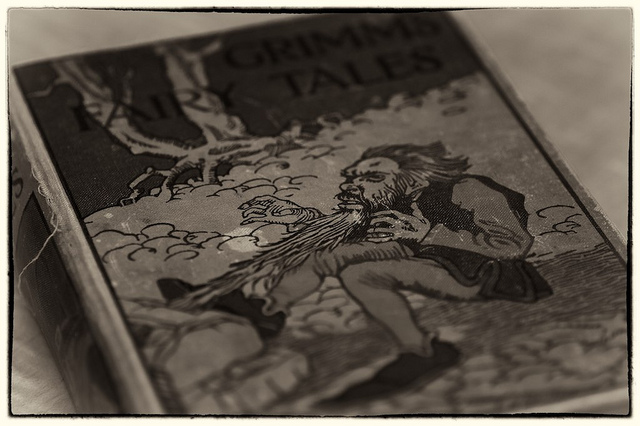
On reading and writing and slowly going nowhere

I track the books I read, I have since I was in my early twenties—first in small hardcover journals, now on a spreadsheet. I’m not a spectacularly fast reader but in recent months my completion rate has fallen to a crawl. I have submitted a couple of reviews for publication elsewhere but my blog has seen few fresh posts. I’m probably reading half a dozen books, including several poetry and essay collections, but focus is hard to find and sustain. However, I am not a loss for the company of words. I have a couple of longer essays to edit for the upcoming Scofield, as well as final assignments for a copy editing course I’ve been taking; and I have to say that losing myself in the words of others from a perspective that draws from, and yet differs from, that of a reader or a writer, is proving to be exactly the distraction I needed.

These past few weeks have been difficult.

Thanksgiving was a trigger point; the first day where the magnitude of the recent losses—of my parents and one of my closest friends—hit home and hit hard. That aloneness that goes to the core. Rather than dissipating, the darkness grew, and despite some very positive events and occurrences in my life, it threatened to overwhelm. Within a week I was feeling seriously suicidal for the first time in more than twenty years. The only thing holding me back was the thought of all the work I would put my children and brothers through, something I know especially well as co-executor of my father’s will.

I have sought help. I have reached out.

It does not seem to be depression as much as grief; and it’s a multi-layered, complex grief. So although I still struggle, at times, against the feeling that I don’t want to keep on living; I am not feeling inclined to take matter into my own hands. Of course, none of this is aided by the fact that I have been fighting a vicious cold, hacking cough and all. Makes it very hard to find that spark, but I hope it’s rekindled soon. This is a hell of a way to live, but I’ll keep reading, sketching out ideas, and writing while I wait.

6412706291_3376c44b28_zThroughout all of this there has been goodness: A forthcoming review of a book that has, more than anything I have read for a long while, made me think about a way to approach some writing I have in mind (I will write about it when the review goes live); a long conversation with a Twitter friend who is still far away, but now close enough to call (a real treat because Twitter has been a little uncomfortable for me of late, but that’s another story); and the publication of an essay I wrote for Literary Hub. The essay is called A Reader’s Journey Through Transition, and I don’t know what was more exciting, publication day itself or seeing my name in the week-end review with other authors like Toni Morrison, Junot Diaz, Rabih Alameddine, and Marilynne Robinson!


Reading into writing: Two years of roughghosts

Beyond the ear there is a sound, at the far end of sight there is a view, at the tips of the fingers an object—that’s where I’m going.

At the tip of the pencil the line.

Where a thought expires is an idea, at the final breath of joy another joy, at the point of the sword magic—that’s where I’m going.

– Clarice Lispector, “That’s Where I’m Going”

Today is the second anniversary of the rather haphazard and ill-defined birth of roughghosts. The evolution of this space that I tend has far exceeded my expectations. When I look back at my very first post, a quick note to self, I talk about having long put aside the desire to write so as to live a little first, acknowledging that life had given me more material than I was comfortable addressing–a theme I’ve revisited since. My first year of blogging saw a collection of random observations and occasional book related posts develop into increasingly structured book reviews interspersed with the occasional reflective essay. Looking ahead to my second year I had hoped to broaden my reading while privately I was more actively playing with ideas that I hoped would eventually lead to a serious creative effort of some measure. But as much as I had been filling notebooks, I was writing more about wanting to write as if wishing could make it so, rather than believing that I would ever offer something beyond the confines of this blog.

For me, my blog, no matter how seriously I consider every word I offer here, no matter how many hours I spend constructing essays or reviews, has always been a twilight place. It belongs to neither the day nor the night but sits at the intersection of the two: a place where I can imagine that I am not quite exposed to the full light of day, a place where the darkest truths remain unspoken. For that is the realm of real writing and what am I, editing my efforts and posting them myself, but pretending to the art?

I know, of course, that this is not true.

The past twelve months have changed everything, and in more ways than I might ever have imagined.

Writing is the conscious attempt by the human to participate in his fate, that ‘story’ written from birth to death. Casting spells, exorcising, whistling in the dark, inventing the textures and structures of consciousness, keeping a backdoor open to memory, getting to know who or what we are, both reflecting what is and shaping the new. Memory is nothing but dead time, but death seeds the soil: from forgetting new shapes sprout. . .

For writing is a means to transformation: using words and their interacting combinations—the meanings, the feel, the sounds and the shadows—to broaden our scope of apprehending and understanding ourselves and others, and in the process creating new spaces and references. Sometimes looking down into hell.

– Breyten Breytenbach, Intimate Stranger

Last year, on July 7 to be exact, with the majestic Table Mountain rising in the background, I started to write the essay I had been toying with for over a year. It was my last full day in South Africa and looking back over the preceding year I envisioned this grand narrative that would guide my writing, shape the story I wanted to tell. On July 27 a pulmonary embolism caused me to go into cardiac arrest. I stared into the abyss, metaphorically speaking, that is, because I have no memory of the event or of the days immediately before or after, but I do know that if my son had not been home that night I would not be here.

And I know that every idle word to page before that moment was precious more than wishful scribbling. To write, honestly and openly, was now critical.

My path from the confines of my blog to the publication of my first piece of essay/memoir writing earlier this month has been quite remarkable. Doors have opened, starting with Douglas Glover at Numéro Cinq where I am proud to be on the masthead. I have since published reviews for several other sites or publications and have more forthcoming, and I have another piece of creative writing that will be in the Seagull Books Catalogue this fall. It does mean that my attention is necessarily diverted from my blog at times but I will link to new pieces as they appear and have created a page of links to outside writing. I never would have dared to dream that I would need such a page at this time last year. Nor did I imagine that I would now call myself a writer.

I derive a great deal of satisfaction from the challenge of writing longer critical reviews. To read and engage with a text at a deeper level opens an entirely new appreciation of language and literature. It fuels and, I hope, enhances my own ability to write. And over the past year I have been fortunate to become acquainted with some truly gifted thinkers and writers who inspire and encourage me, as well as building stronger intellectual and readerly camaraderie with fellow bloggers.

Copyright JM Schreiber

I don’t know where fiction is born, but I am certain that the best essay/memoir writing does not have its roots on our brightest days. Rather, it emerges from the shadows, when we are wounded, grieving, shaken to the core. We write to make sense of pain, of confusion, of loss. We write out of the darkness toward the light. We write in the in-between spaces—daybreak, twilight—find the patterns, themes, edit, shape, refine and edit again, careful to leave room for tension, friction, the beating heart.

And, of course, we write because we have to.

Here’s to a new year, so to speak.

Immersed in the moment: Incidents by Roland Barthes

In his Publisher’s Note to the French edition of Roland Barthes’ Incidents, a collection of essays published shortly after the theorist’s death in 1980, François Wahl suggests that the four very different texts assembled form a coherent whole because each piece “strives to grasp the immediate”. These are not theoretical or critical investigations in any sense, rather, in each text, Barthes is immersed in the moment, observing, reflecting, and recording his reactions. There is an unchecked flow and intimacy, by turns nostalgic, sensual, and melancholic but always tuned to the instance of occurrence: to the incident.

2016-05-19 21.38.01These are works that invite the reader to engage with all five senses, mediated through words and memory–they are not formal pieces but rather take the form of journal entries, diary writing, and fragmented travelogue. Barthes writes people and he writes place, never really entirely at ease with too much of either. Delight, boredom, and sadness filter through his reflections creating an immediacy that is at times startling. He is not writing for posterity, he is writing for himself.

The collection opens with “The Light of the South West”, an evocative essay/memoir, a personal tribute to the south west region of France. He writes about the experience of traveling south from Paris. Passing Angoulème he becomes aware that he is on the “threshold” of the land of his childhood. It is the quality of light that defines the place:

. . . noble and subtle at the same time; it is never grey, never gloomy (even when the sun isn’t shining); it is light-space, defined less by the altered colours of things . . . than by the eminently inhabitable quality it gives to the earth. I can think of no other way to say it: it is a luminous light. You have to see this light (I almost want to say: you have to hear it, hear its musical quality). In autumn, the most glorious season in this land, the light is liquid, radiant, heartbreaking since it is the final beautiful light of the year, illuminating and distinguishing everything it touches. . .

He goes on to turn his attention to the elements of the south west that resonate with different aspects of his childhood, to reflect on the way that memories formed in childhood inform way we remember the places associated with that time, the magical spaces and the difficult times will each carry their own tone, their own qualities.

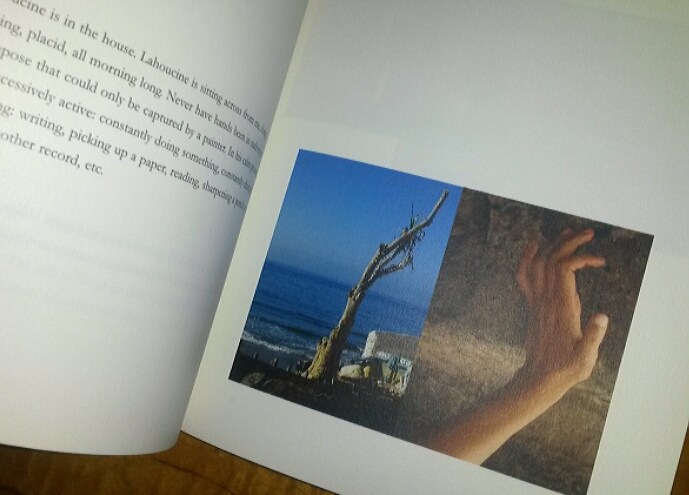
2016-05-19 21.41.06The title piece is the earliest in the book. Recorded in 1969 when the author was in his mid-50s, “Incidents”, as the name implies, captures moments from an extended stay in Morocco through an incidental series of fragmented encounters and experiences. Here, people form the scenery; with a special attention reserved for young men. Barthes demonstrates a a particular eye for detail (and somewhat of an obsession with hands) in these passing observations, combined with an acute sensitivity for scents and colours. The vibrancy, shades and contrasts of the country come alive. As a reader you become aware of the blinding light, the dark shadows–they are not described, you sense them in the background.

A young black man, wearing a crème de menthe-coloured shirt, almond green pants, orange socks and, obviously, very soft red shoes.

A handsome, mature looking young man, well dressed in a grey suit and a gold bracelt, with delicate clean hands, smoking red Olympic cigarettes, drinking tea, is speaking quite earnestly (some sort of civil servant? One of those who track down files?), and a tiny thread of saliva drips onto his knee. His companion points it out to him.

Some young Moroccans–with girlfriends they can show off in front of–pretending to speak English with exaggerated French accents (a way of hiding the fact without losing face that they will never have a good accent).

The art of living in Marrakesh: a fleeting conversation from open carriage to bicycle; a cigarette given, a meeting arranged, the bicycle turns the corner and slowly disappears.

The Marrakesh soul: wild roses in the mountains of mint.

The third essay, “At Le Palace Tonight . . .” is a tribute to a Paris club in a converted theatre. He describes the ornate detail, the mood and the atmosphere of this place where he seems to almost prefer to be an observer, watching the dancers and the human interactions rather than taking part. And as in the first essay, we find once again a wonderful evocation of light, this time light as informed by the interior of a structure:

Isn’t it the material of modern art today, of daily art, light? In ordinary theatres, the light originates at a distance, directed onto the stage. At Le Palace, the entire theatre is the stage; the light takes up all the space there, inside of which it is alive and plays like one of the actors: an intelligent laser, with a complicated and refined mind, like an exhibitor of abstract figurines, it produces enigmatic shapes, with abrupt changes: circles, rectangles, ellipses, lines, ropes, galaxies, twists.

This collection closes with “Evenings in Paris” a series of journal entries from 1979 that open with words Schopenhauer wrote on a piece of paper before he died: “Well, we’ve escaped very nicely.” The Barthes who comes through in this selection is tired, often impatient with colleagues and irritated by noise. A certain loneliness and dissatisfaction underscore his descriptions of dinners with friends, failed attempts to win the affections of the younger men he covets, and an unresolved mourning for his beloved mother. Most nights he finds himself heading home alone, half despairing, half relieved, to settle into bed in the company of Pascal, Chateaubriand, Dante, or the echoing ghost of Proust. Although he still enjoys longingly watching attractive men, he has little patience for crowds or social functions. This is a heavier, more emotionally intense offering, the intimacy of “the immediate” weighs heavily as Barthes commits his thoughts to paper, unaware in the writing as we are in the reading, that he is nearing the end of his life.

2016-05-20 02.33.11And, because he is recording the ordinariness of the daily encounter of the self with the world, there is the possibility of shock waves that ring down the years with a new intensity in light of the incidents (that word again) that have unsettled Paris in recent years:

The guy who sells Charlie-Hebdo walks by; on the cover in the publication’s idiotic style, there’s a basket of greenish heads that look like lettuces: ‘2 francs the head of a Cambodian’; and, right then, a young Cambodian rushes into the café, sees the cover, is visibly shocked, concerned, and buys a copy: the head of a Cambodian!

Not without a little social commentary, even in a deeply personal journal, Roland Barthes, remains ever relevant down the years.

Reading Incidents is, in itself, a sensuous experience, it is doubly so in this edition from Seagull Books. With a sparkling fresh translation by Teresa Lavender Fagan and illustrated with the evocative photographic images of Bishan Samaddar, this collection of writings becomes one that can, as Barthes himself would have intended, be savoured.

Beginning to find my voice: Reflections on publishing a piece of essay/memoir writing

We should only believe in our feelings, after the soul has been at rest from them; and express ourselves, not as we feel, but as we remember.
– Joseph Joubert, Pensées

Late last month I wrote about voice, about how I have recently been focusing more attention on voice; not only in literature, but as it pertains to meaning, sounds, and silences. I was, at that time, anticipating the publication of my first piece of non-review writing–not the first that I have written, there is a related piece, a parable, that will appear later this year–but rather the first to be published.

I was extremely anxious in advance of the release. I knew that I would be laying forth an aspect of my experience of being in the world that few people were aware of. I am not talking about my queer identity, that is something I have spoken of from time to time although it rarely impacts the books I chose to read and write about. I am referring to the fact that this short essay addresses my complicated relationship with my body in very bold terms.

It can be found here. (The journal that published my piece is under reconstruction so I have reproduced the essay below.)

Now that the piece is out there, granting me the necessary distance, I am extremely pleased with the results. It is raw and honest, but I feel comfortable that I have touched the heart of my experiences while maintaining a healthy and comfortable boundary. I am not a fan of confessional memoir/autobiographical fiction that tends to the revelation of excessive, unguarded intimate information. It is a delicate balance to measure vulnerability and self respect when writing about the personal details of one’s life. And, I would argue, it is essential to remember that there are limits to what we can ever really know about ourselves and if we remember that we can more honestly write from the heart.

Solitary daisyI have found that I am most comfortable leaning toward a more spare prose the closer I come to the self in my writing. I am hoping that it is a style, a voice if you like, that I can build on. But a detailed account of my life is not my goal in writing–my interest is more philosophical in nature.

I have to say that I am overwhelmed by the positive response to this piece. It is far beyond anything I could have hoped for. And I feel very excited about where I can go from here with further explorations. So much of my reading and the conversations that I’m having in the virtual sphere seem to be converging at this moment. Or perhaps I am simply in a fertile state of mind. It is not, however, an overnight phenomenon, these ideas have been growing for a long time, knocking around in awkward, unfinished form. I am grateful to everyone who has offered inspiration, support and encouragement to this point. I trust they know who they are.

May the conversations continue.

As published on Minor Literature[s], May 6, 2016.
Your Body Will Betray You — Joseph Schreiber

“From the inside out, but from which inside to which outside?”—Róbert Gál, On Wing

This is not the story of my life but the story of my living it, of my being in it.

And that’s a different story altogether.

I am, for lack of a better term, a differently gendered man. No, maybe there are better terms, more common terms—transgender, or queer, perhaps. I use these too. At least, when it’s expedient to do so or when I choose to take my place under a larger umbrella. But by their very inclusiveness, these terms are rendered senseless. Defining the self for one’s self requires an explicit ownership of the language employed. The words I embrace are mutable, evolving, even in the act of committing them to paper or speaking them aloud. Labels can only take us so far.

History is subjective. We can only know what we think we know.

And that isn’t very much at all.

This is what I do know:

I lived, for almost four decades, defined by the parameters of the body in which I was born. I recall the sensation of harbouring a fugitive being—an early social memory (at four? Five? Six?) This someone inside me was not with me, he was me. I saw him in my eyes and I wanted him gone. I wanted to be the girl my mother longed for—the one whose gender mattered solely because her first child, the sister I never knew, was stillborn.

I was not a tomboy. I did not wish to be a boy. I wanted to be the girl I confronted in the mirror, the one whose authenticity no one else questioned. I imagined that feeling female was something you learned, like tying your shoes or riding a bicycle. Yet, although I passed in the world of girls and women, this passing was a measured performance. The rules remained opaque.

The company of boys and men became a refuge—the space where my otherness was validated, where no one would ever question whether I was really female. Sexual attraction to men was a precious counterpoint to my persistent gender insecurity. Never mind that the romantic encounters between men in Mary Renault’s historical fiction held a far more desperate appeal that anything encountered in the pages of a typical boy-girl romance.  I reasoned that if I had a boyfriend, I must truly be female after all.

I married young and disappeared.

You have to understand, when I was growing up, in the 1960s and 70s in rural Canada, no one talked about ‘gender identity’ at all. And they certainly never suggested that it could differ from biological sex. Even now many choke on the concept, quote Bible and verse. My upbringing was liberal, neither fundamentalist nor homophobic, but still, my ‘out of placeness’ was my own, the faint light in the dark room. An old story, but I had no idea that there were others like me.

Self-defined gender insecurity continued to haunt me. It prescribed my path. Twice I walked away from graduate studies, turned down admission to law school, all because the more I exercised my intellect, the less energy I had to devote to maintaining the fragile equilibrium of being female in the world. I retreated to the most unequivocally female spaces I could imagine. Eventually, against my natural instincts, I decided to have children, and that was the beginning of the end—the beginning of the end of my ability to hang on to any reconciliation of my internal identity with the life I had constructed.

I fell apart.

Only in cobbling myself back together, in the aftermath of a breakdown, could I finally openly face the two fundamental notions that had driven me into mania—sexuality and gender. I realized that they were not going away, and that one could not make sense without the other.

Please note, in today’s world where trans* is appended to all manner of identities, where sexuality is no longer narrowly delineated and gender is something to defy, it may seem impossible to imagine that I could crack my head against the wall for so long before the light broke through. But mine was a different time.

I found myself in the library with a copy of Transgender Warriors and learned, for the very first time, what a few years of testosterone could do to transform the outside and fuel the inside of a female-born man. I understood, in that instant, that there was no other option. I finally had a name, a label for myself, and everything else started to fall into place.

I am not reckless. I knew there would be compromises. I knew what surgery could offer and what, at best, it could only approximate. I knew that the scalpel exacts more than its pound of flesh, that healing well is not the best revenge, and that there would be limits to the choices I would make. But none of that was on my mind as I waited for my first injection of the right hormones, the ones I had been craving, body and spirit, for so long.

That was fifteen years ago now. I was forty years old. And in puberty—even when you are old enough to know better—everything seems possible.

Today: 

On the street, I am invisible.

To see me, you would never suspect the truth of my history, the convoluted path to the dream of my genesis. Even those who do know, if they didn’t know me before, don’t ever think of me as any different from any other man.

I just am.

And yet I am not.

I am at once more, and less, than the sum of my parts.

Always have been. Always will be.

For a long time I believed that what I had rendered visible was the true me, the authentic self made flesh, but it’s not that simple. There is an inherent groundlessness, an embodied inauthenticity at play.

I am always in the process of coming into being.

The (meta)physicality of it all: 

I hold a life contained within a life—a life disjointed and hybridized, receding and resurfacing against the passage of time. That other life never leaves me, but with distance I can touch it less and less, as if it never was mine. Now it feels as if it belongs to someone else. It belongs to those who hold it in their memories—my parents, my siblings, my children—but what, if anything, does it mean to me?

It’s as if I own the inside, but not the outside, of the first forty years of my life.

So what do I have now? A more coherent existence, absolutely, but with the knowledge that a fully whole experience is not something I will ever have. My body is disfigured; not by choice or wilful design—it is simply the best I can achieve. And in the end as in the beginning, the body is only an echo of what I am, a reminder of what I have been.

You can change your face but your body will betray you.

The further I proceed, the more I realize that I will never arrive. Transition is an experience that is always in the reframing and redefining of boundaries.

Borderless, I am forever a migrant—endlessly coming into being.

Being cannot be measured.

Being cannot be reduced to the change of a marker on a passport.

On the street I am invisible.

And here lies the crux of the matter. Invisibility, once achieved, is deemed to be a mark of success. That’s what a person in transition means when they say: I pass. To pass is to be seen, without question, at one with a gender identity that feels true. And it is more than an ability to disappear in a crowd. There is an internal completeness that comes with the hormones and the pronouns and the new name—a levelling, a sense of peace.

But the body, the body is another matter. Only now, the axis of discord has shifted.

For those of us who traverse the visible lifeline from female to male, there is a sacrifice. The journey is forever written on the body, no matter how far one is able or chooses to travel. We are at once dramatically transformed and decidedly unfinished or differently designed. Scarred. I accepted that cost, assumed it would not matter.

Fifteen years on, it matters. At least, it does for me.

Don’t get me wrong. I made no mistake. This is the only path I could have taken once I found it on the map. I am infinitely happier, more settled than I might ever have imagined I could be. But if I long for anything, it’s the life I never had, the boy’s life—or any life, male or female—that might have been coherent, sex and gender, gender and sex. As much as the two are divided, the physical and the psychological, they are not separate in the living, in the experience of being. We exist as embodied minds, or if you prefer, embodied spirits, in the world.

Pre-transition, there was an internal fracturing of being. I struggled to align the outside world with the inside space I inhabited. I was an awkward misfit. Nothing made sense. Even the glam rock and punk of my teen years offered little more than a glimmer of hope before fading away. For years I fancied myself a Cartesian dualist. The ontological reality I experienced was akin to being tethered to a body that could never be a home. Over the years I began to talk about this body, to describe it as a distinct entity. I would catch myself at moments feeling like I was consciously moving my hips and propelling my legs forward, like an injured person re-learning how to walk. I floundered in pregnant form. By then I was at a complete loss.

Recognizing myself as transgender, that is, understanding that the real me was the male identity inside and learning that the outside could be modified to conform, was sufficient to see me through a divorce and launch me on my way into a new life. In the early years there was so much to look forward to, so many changes, and so much random strangeness. Puberty at forty is intense and wild and weird. For years I threw myself into work, measuring my worth by the title on my business cards, and finding validation in the sole corner of my life in which no one knew my past.

My transition was a textbook success. Or so it seemed.

I made no close friends, took no lovers, dared not risk the delicate balance of finally existing as a man in society. I sacrificed newfound authenticity for another superficial truth—one coherent with an implied history that would not threaten to expose me. The wall I had once constructed on the inside, I reconstructed on the outside.

Now I have dismantled and deconstructed it again.

But I still find myself troubled by a restless inauthenticity of being. It worries its way into the tension between my desire to blend and my need to be true to a life lived against the grain. It is looking for a voice.

On the street I am invisible.

I am. And I am not.

I am at once more, and less, than the sum of my parts.

Always have been. Always will be.

Here I am writing about my life, opening up the veins of the story without fleshing out the details. I have offered scraps and fragments, just enough to begin to frame a question, to try to begin to articulate my hybridized experience of living—then and now.

This is a sketch. That is all.

I am forever in the process of writing myself into being.

Postscript:

If the apex of manhood is to stand to pee, the nadir of manhood is to be gay and to understand that you will always arrive short-handed.

The bride stripped bare by his bachelors. Even.
 

Listening to voices in search of my own: A reflection

§ New Line of Thought

Every new line of thought is a departure.

Or a new way of arriving where one already is.

–  S.D. Chrostowska, Matches

I have been thinking about voice lately.

I am drawn to voices in literature, listening to the way stories are told, the language, the perspective, the vision, the content. I can’t say what I am looking for but I know when I find it. Or, more critically, I know when there is, in an otherwise worthwhile read, nothing for me at this time. As a reader I am grazing, hunting and pecking, listening for the voices that startle and ideas that stimulate. It is an entirely idiosyncratic endeavour driven by my own writing–reading to write that is sometimes at cross purposes with reading to review.

But it is reading that leads one down interesting side roads.

I’ve been immersed for the past few days, in en abîme, the blog of Daniela Cascella, in anticipation of reading her book of the same name and its successor F.M.R.L.. From the fragments and articles I have read to date, it is clear that she writes with an intuitive grace about the experience of language as rhythm, tone, and meaning. Reading, writing and listening are, for Cascella, deeply sensuous experiences. Most explicitly she is drawn to writing after sound, a project as seemingly elusive as the task that drives my own writing: that is, writing after being.

In her review of Marlene van Niekerk’s mesmerizing The Swan Whisperer for Music & Literature, Cascella prefaces her piece by describing this work as:

“ . . . a tale of transmission, disappearance, and utterance, of writing as it hovers at the edge of language, trafficking with the ephemeral and the unreliable; challenging the primacy of the written text through a compelling reflection on flow and interference, rhythms and non-origin.”

I am deeply interested in articulating the experience of being, an age old question I know, but I would suggest that its timelessness arises from the inherent challenge of adequately giving voice to an experience that, itself, “hovers at edge of language.”

We live in a world of sound-bites, of inspirational quotations, often ripped out of context and juxtaposed against images of flowers, beaches, or sunsets and spilled out on Twitter or printed on coasters and tea towels in gift shops. Authenticity is a watch word, To thy own self be true, as the Bard himself would say. We hunger after the healing journey of self-discovery, we admire it in our heroes, we long for it in our own lives.

I have sought it myself. My life has been a constant struggle to balance and rationalize an incongruent and conflicting experience of being in the world. I don’t know if my own challenges are, or have been, greater or less than those of anyone else, for in truth, the only truth I have is my own and even that is suspect.

“He has the feeling that merely by being alive he is blocking his own way. From this sense of hinderance in turn, he deduces the proof that he is alive.”
– Franz Kafka, Aphorisms

What I do know is that I am possessed of a persistent sense of groundlessness, a very real and present awareness of a fragile and constant process of coming into being. It is an ongoing expression of inauthenticity that I experience – if I could capture a truth it would be momentary and fleeting, cancelled out by its negative in the act of expression. My writing is directed toward giving this experience, as I know it, voice.

Which brings me back to the point where I started. As I said, I have been thinking about voice. But until this point I was thinking of voice in the sense of expression, not sound.

Spring in silverMy own voice is damaged. Metaphorically and in fact. I sacrificed my voice a number of years ago in my endeavour to be real, and as a result I have lost power and depth. My voice strains easily. To speak loudly and project takes concentration and effort and leaves me hoarse. Yet I frequently read aloud to myself. I find that to write seriously, I require silence and the freedom to read my writing aloud as I progress. Those that have the misfortune to live with me have learned to accept this quirk, but I must confess I really love to write when I am alone in the house.

That makes me wonder about the necessity of an aural component to the process of writing about being. About silence and sound.

Interactive Silence

“A stillness that is initially a stillness ready to be, once it ceases to be still . . . An end, recurring so many times that in the moment that it ends . . . An ignited fire of the end to an extent of necessary measure . . . A braided braid . . . Getting to know one another and being known . . . In the trap of mental unification . . . Nonbreak-down . . . Silence, sounded over, blaspheming about silence and about not being silent . . . The inability to locate the word, and yet the necessity to seek it, as if the word could save one from that which is unsaid.”
– Róbert Gál, On Wing

To talk about being, for now, for me, begins with writing about my life. I need to be able to frame the angle at which I intersect with the world. To that end my first piece of “memoirish” writing will be published on Minor Literature(s) in the near future. I am concurrently exhilarated and horrified by the prospect. This is an openly queer piece, at once honest and guarded, and marks the beginning of a journey to find that elusive voice in all its permutations.

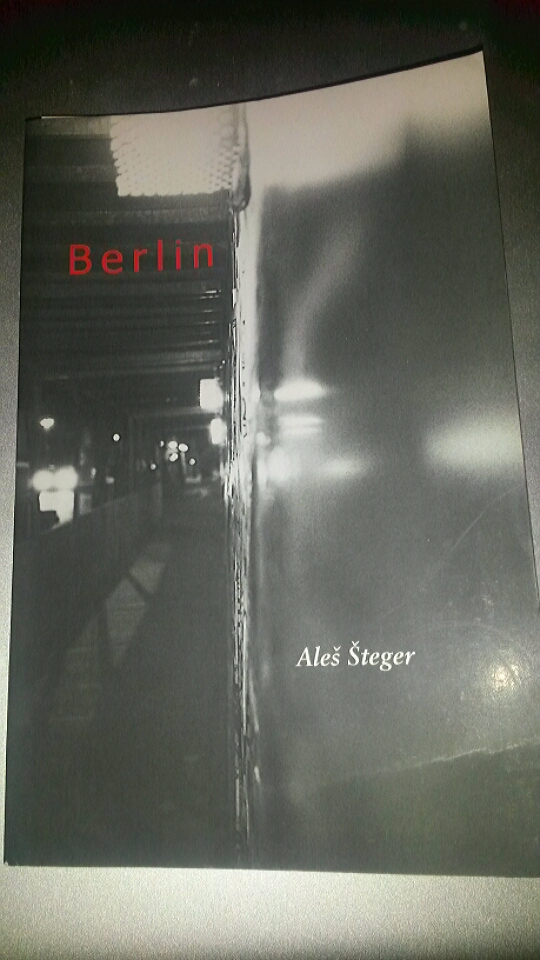
Twenty-first century flâneur in the German capital: Berlin by Aleš Šteger

‘Berlin separated me from my body. I searched for it as for a torn-off calendar page while scenes, streets, faces slowly migrated into me. Time doesn’t exist outside these streets, scenes and faces. Only in their lavish self-obliteration in space do hours acquire some meaning.’

Yesterday I spent a year in Berlin. I didn’t mean for the year to pass so swiftly, I intended, as has been suggested, to linger a little, take time to reflect, to let the sense of place sink in. But I could not refrain from inhaling the city in one fevered sitting. I walked, for a few hours, in the company of Aleš Šteger, a modern day flâneur, shadowing Walter Benjamin, through the German capital, experiencing it with an outsider’s eye and a poet’s soul – at once filtered and enhanced – emerging at the end, altered as only one can be, from the chance not just to visit but to inhabit a foreign space for a period of time.

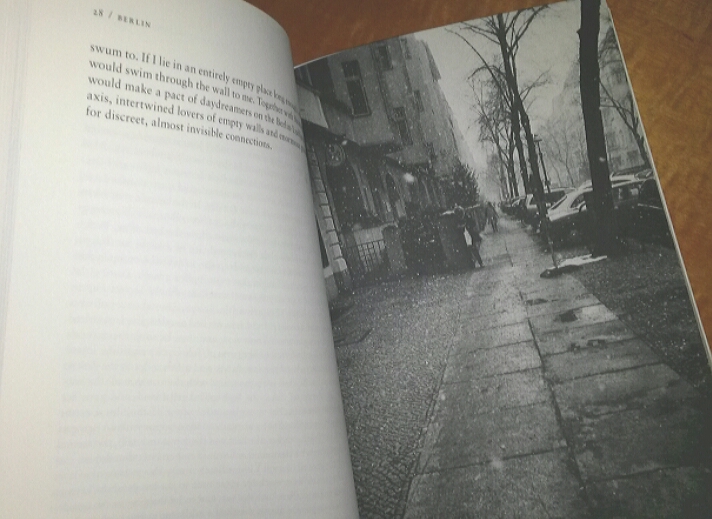
2016-04-16 18.26.37Berlin is a collection of short stories, very short in fact, that emerged from a year that the Slovenian writer spent in the city. Illustrated with Šteger’s own black and white photographs, these stories, two to three page single-paragraph pieces, tread the blurred line between fiction and essay, prose and poetry, and contain some of the most arresting urban imagery I have ever encountered in such a tight and concise format. With themes that run from the extravagant, to the insightful, to the mundane; this collection holds fast to the spirit of the epigraph from the German poet Durs Grünbein that opens the book:

‘Essentially every city is merely an extension of your own room, you are never entirely homeless/ . . . /The ideal city, which I see in all cities, is nothing but the brain turned inside out.’

Thus it is a book explicitly about Berlin, but implicitly about every city. Native son Walter Benjamin is a clear and present inspiration, and Bertolt Brecht figures, but a range of literary ghosts from antiquity through to the present day, visit the city through Šteger’s imagination. Their voices slide through German, into Slovenian, and back, in the book at hand, into English. The play of language is critical, it marks the experience of the outsider who not only shifts meanings but translates currencies, cultures and habits as he or she dwells in a strange place. In “Crack Berlin”, a story whose title refers to the map-like system of cracks running across the ceiling of an apartment bedroom, the narrator rests in the poetic arms of Ingeborg Bachmann to sketch out his space in this, his temporary home:

‘Translating words, I carry them from German into Slovenian, break them, spin them, just like I spin the map of Berlin, it turns me, searches me, moves me from place to place. The words of someone who died the year when I was born. Words of despair in some city, which has the same name as the city in which I am now alone. Words of despair and loss, which could also be mine, which could be from everyone.’

Berlin is as much a book about a city as it is a book about the language of being. Placing oneself in a foreign place, be it for a week or a year, and finding in the resulting otherness an ability to be present to the moment away from the routine demands of family, responsibility and commitments that pile up around us in those places we come to think of as home, can be an opportunity to open up to the small details, the sounds, the angle of light, and, yes, the people we might otherwise overlook.

Šteger, whose poetry collection The Book of Things, won the Best Translated Book Award (BTBA) for poetry in 2011, is a sensitive observer of objects and emotions, and of the relation between the two. Items that he (or his narrators, though the two seem indistinguishable) covet beckon with the allure of a lover – he looks, he resists, he panics and purchases the moment it appears that his beloved might have another serious suitor. The anxiety that wells up when it appears that he has tarried too long is captured deliciously in “Flea Markets”: ‘I looked at the spot where the object of my desire had stood before and didn’t see it. I dawdled and glanced around me like an abandoned bride, melted butter, a cracked bell. And finally I spied a pair of its elegant legs jutting from beneath a pile of old records.’ His pride is beyond him when he rides the subway home seated on his precious purchase, an antique chair/chamber pot.

For those seeking stories with more conventional style and narrative arc, this collection may bemuse, even disappoint. However, the compulsive appeal of the pieces in Berlin, for this reader at least, is largely a function of form. The single paragraph first person narratives unfold with the rhythm and restless energy of incantations, whether Šteger’s alter ego is observing animals in the zoo, describing an infestation of ladybugs in his apartment, or speculating about the potential, in a city of museums, for the creation of a museum of museum guards. His Berlin is a city marked by the wounds of war, bearing the scars and the monuments of its divided history. As a visitor from a land more recently ravaged by war, Šteger is acutely sensitive to this element, but he resists dwelling there. His Berlin is more importantly a city of infinite detail, a play of light and shadows, an intersection of bakeries and kebab sellers, a point bound by countless threads to the rest of Europe and beyond – a central hub, a beating heart.

2016-04-17 20.51.08This is a slim volume. It can easily be read in one sitting. I found it impossible to tear myself away and reread several pieces along the way, simply to immerse myself in the flow of words, to marvel at the imagery. I read much of it aloud. It would, on the other hand, be suitable for a slower, contemplative read. Steger’s grainy black and white photographs capture the ordinary, the every day – the buildings, streets and, of course, things – that complement the view of the city that he, through his twenty-first century flâneur, experiences and brings to life. It is also worth noting that the thrity-one stories that comprise this book are translated by three translators, Brian Henry, and the team of Aljaž Kovać and Forrest Gander. Although an index at the end lists the stories and the translators, it is not evident in the reading a shift from one translator (or pair) to another.
This book is, deservedly, one of the longlisted nominees for the 2016 BTBA for fiction, standing, if nothing else, as an indication of the rich diversity of that list. This is a special and unique collection.

I would be remiss though, to end this review without offering a taste of “About Temples”, one the most unabashedly romantic entries in Berlin. It would be a cold booklovers heart that could not at least smile at this evocation of that most sacred of spaces granted the full force of Šteger’s playful fondness for religious metaphor:

‘After the tinkling of the front door, the entrant is delivered to the grace and disgrace of fallen literary demons smuggled back into heaven. He climbs humbly like some pilgrim, only two steps and he is already in the highest spheres. The air is pregnant with the smell of myrtle, bookbinding glue and dust, and before he realizes it, a shadow of an angel’s wing of one of the classics printed in small letters has stroked him. Whoever enters must leave his reading, his literary snobbery, yes, even the power of credit, outside. Two spaces, two houses of prayer, from hell to heaven, nothing but books, books, books.’

Meditation on a poetic meditation: To Duration by Peter Handke

In a month during which reading proved to be a slow, at times disjointed enterprise, I feel it would be shortsighted to let January come to a close without calling attention to one of the simplest, most precious reading experiences I enjoyed over the past 31 days. It arrived, courtesy of the translator, on a morning when I was rushing out of the house on my way to an appointment across town. A slender, pocket sized volume, it proved perfect company for a busy day. Only 40 pages long I read it several times before the week was out. I am speaking of Peter Handke’s poetic meditation To Duration, translated from the German by Scott Abbott.

The author tells us in the opening stanza, that he has long wished to engage in the following personal quest, the exploration of a topic that he feels is best suited to the poetic medium. Perhaps it is only with a poem that language can circle around and come close to touching on a subject that is, by its very nature, difficult to pin down and describe. Words are almost too solid to capture an experience that dissolves as quickly as it arrives:

Time and again I have experienced duration,
in early spring at Fontaine Sainte-Marie,
in the night wind at the Porte d’Auteuil,
in the summer sun of the Karst,
on the way home before dawn after love.

This duration, what was it?
Was it an interval of time?
Something measurable? A certitude?
No duration was a feeling, the most fleeting of all feelings,
more swiftly past than the blink of an eye,
unpredictable, uncontrollable,
impalpable, immeasurable.

Duration, Handke tells us, is not fixed or prescribed; it cannot be scheduled or delayed. It can be approached, but it cannot be forced or guaranteed. I would wager that as our lives grow more stretched, weary, and fraught with the disillusion of time, duration becomes ever more elusive. I also wonder if, when we try to grasp at it through our memory of those moments when it seems we once met duration in passing, the more impossible it seems. And then, one day, when we are not expecting it, the feeling taps us on the shoulder, washes over us and moves on but leaves its trace, like frost on a bare branch or the hint of dew on the grass. One of the true gifts of this book, is that it inspires the reader to explore his or her own experience of duration. What is it for me,when is it, when was it, where? These are the questions that the reader is encouraged to meditate upon, as Handke reflects back upon his relationship with duration in his own life. His calm, measured, and sensitive introspection invites you to engage in the same.

At one point he talks about travel and journey as opportunities to open oneself to encounters with this feeling. There was a time when I was able to regularly visit certain parks and pathways in my hometown, typically with my camera in hand, focused on nature framed through the lens – a dried leaf here, a glimpse of a meandering stream there, the shifting pattern of clouds in the wide blue sky. At home, processing the files, I could almost revisit the moment – it was not the photograph that fixed the moment, in and of itself, it was rather an ability of the image to contain, for me alone, the experience of being in the moment. Is that duration? A variation on the theme? And why don’t I visit local parks as much as I used to?

In truth, I need a greater distance, at least right now.

23823656024_da6c196a78_b
Sea Point Promenade at sunset, July 2015 – Copyright JM Schreiber

Last summer I spent three weeks in South Africa. After a visit with a close friend in the Eastern Cape, I returned to Cape Town for a week on my own. I traveled on foot and by city bus, eschewing most of the tourist sites. I wanted to be in the city. I stayed in a small B&B in Sea Point and every day I walked the Promenade along the Atlantic. A popular pathway, no doubt, but there was, for me, an essential necessity to be close to the ocean. Sometimes I would stand at the salt-corroded railings and look out over the waves and find a deep peace at being so far from home and all of the complications left behind there. I could turn around and ground myself with the unmistakable landmarks of Signal Hill and Lion’s Head. It was the moment experienced and re-experienced each day that became the fulcrum of my stay in the city. No day was complete without it. If I lived in Cape Town I don’t think I could have touched duration like that, so intentionally. The measure of seven short days, coloured by an intention to be less a tourist than a presence in a city, not having to actually attempt to fit in like I do at home, I touched a peace of place I rarely experience. Travel can do that.

But physical travel,
the annual journeying and pilgrimages
for the jolt of duration,
the thrilling supplement,
is that really still necessary for me?

Handke acknowledges increasingly finding more instances of duration closer to home, even in his own garden. Restless as I am in my house and home, I likely frighten off duration, so fragile and fleeting a guest. Yet just the other night it caught me unaware. My elderly father, still seriously weakened and disoriented following his stroke, insisted on returning home from the hospital on Thursday against the recommendations of his doctors and the wishes of his family. I quickly gathered some clothing and personal items in one bag and tossed a handful of books from my priority pile into another and headed out the door for the two hour drive to the remote location where they live. That first evening, once my exhausted parents were safely tucked into bed, I sat in the delicious silence with my collection of books. I wasn’t actually expecting to have time to even start reading any of them – I just wanted to spend time with these relatively new acquisitions. Get to know them a little. Read a few pages. This unexpected moment, borne of a collision of unwelcome circumstances, opened the door to duration, inviting that unpredictable, immeasurable sensation, to wash over me, leaving a sense of contentment I hardly imagined I would encounter when I had headed for the highway only a few short hours earlier.

Perhaps then, if you watch for it, open yourself to it, maybe duration is not quite as elusive as it may seem.

scan-2


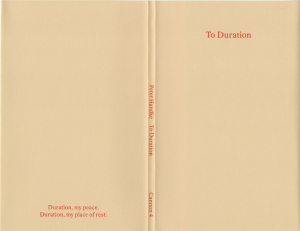
To Duration, Cannon Magazine No. 4, is published by The Last Books.

With infinite thanks to Scott Abbot.

January 2016: A slow start to my reading year (and why does that bother me?)

The first month of 2016 has almost slipped away and I am feeling overloaded. Too many stressors have collided to take a curious toll on my ability to read and blog. My reading continues to be fractured. Books are not the same refuge they were a few months ago. Not that they don’t keep arriving (or rather following me home) and haunting me as the stacks pile up, staring at me, daring me to read faster. But my reading is slow, and the books I had expected to venture into by month’s end have not yet been cracked.

And then there is life, the one that doesn’t exist in books, the one that can’t be shelved or put aside for a later date or, as much as I would love it sometimes, be tossed into a pile to go out to the next charity sale. It is hardly a surprise. Over the past month I have had to face some extraordinary challenges on the home front – some new, some long standing, and others simply arising from the financial reality of owning a car and a house, both of which are well past their prime. Some matters have been resolved – one mechanic and two plumbers later – I just have to figure out how to pay for them; others are less concrete, more emotionally corrosive and resolution is not in sight. If another well meaning person says, “This too shall pass,” my reaction may be less than generous.

Copyright JM Schreiber, 2013 The last time I had a month with two separate plumbing calls I took this shot to celebrate the joy of a clear drain that had been blocked for more than four weeks.
Copyright JM Schreiber, 2013
The last time I had a month with two separate plumbing calls I took this shot to celebrate the joy of a clear drain that had been blocked for more than four weeks.

Through it all I have been reading but by some weird twist of logic my attention has been drawn toward much more intensive review projects. Blogging is fine but for each review I write I spend 4-6 hours, so when I encounter an ambitious, complex, postmodern novel like Klaus Hoffer’s Among the Bieresch, forthcoming from Seagull Books; I can’t resist the desire to read into the varied subtextual materials, especially the works that I don’t know well and – with luck – explore the novel in a space with greater critical elbow room and a much wider audience than my blog commands. There’s a voice in my head that says “Are you out of your mind?” and, maybe I am but, at this moment, I seem to be most comfortable burying myself in demanding critical projects, losing myself I suppose. At the same time, I am also spending more time on my own writing: a personal essay I hope to enter in a contest and a piece of experimental prose.

Tell me then, what is with this book blogging pressure I feel? It’s not a numbers game. No one is going to disown me if I don’t read and review two books a week. Reading and writing about books is supposed to be fun. And, heaven knows, the spaces I that want to write for, on or off my blog, are literary acts of love and, as such, there’s typically no money involved.

So blog posts may be slower for a while. I am reading. I am writing. And I am dealing with all the messy business of living.

In the dark days of winter, searching for words

Normally January and February are my favourite months. The days are growing longer, minute by minute; the days cold and crisp, the ground a snow-covered white, the sky a bright clear blue. A perfect time for reading.

13204111743_c2952b7f51_b
Copyright JM Schreiber, 2014

More than one week into the new year, I have a strange sensation akin to trying to make my way on one of those moving sidewalks that traverse the passageways of major airports. However, because the direction of the sidewalk and I are at odds, I’m making little progress. Lately my weeks have been punctuated by trips to visit my father, 1 1/2 to 3 hours each way, depending on whether or not we pick up my mother. Weather dictates travel, scrambling the best laid plans, and now that my father has moved on to the rehabilitation unit his stubborn determination has returned – for better and, sadly, for worse. Through it all, my mother, now so tiny in her old winter coat, is entertaining the thought that he might someday return home – home to a setting that neither one of them is really well enough to live in anymore. The potential challenges that lie ahead are fraying the less than stellar relationships between myself and my brothers, and these are still the early days. Meanwhile I have dealt with car repairs and a burst hot water pipe. And I don’t even want to venture into the messy, potentially violent eruptions that have threatened peace in my own house as my son struggles with an addiction to alcohol.

To say that my reading has been scattered would be an understatement.

I am afraid that, anxiety and exhaustion aside, I seem to be responding to an internalized sense of guilt that reading, and writing about reading, has no value if it does not generate an income. If your life does not presently include income generating activity – a circumstance that was not by my design but has afforded me the time and energy to read and write – then my literary pastime is even more self-indulgent. Or at least that is what my family members (and their voices that echo in my head) are telling me.

Of course I have been reading, but my focus is off.

I have just emerged from Rafael Chirbes’ forthcoming On the Edge, a testament to internalized guilt, regret and resentment if ever there was one; fuel for my abiding mid-life angst. I’m preparing a review for Numéro Cinq. Otherwise most of what I have read lately is not quite carrying me through. I find myself distracted and picking at pieces, reading on line journals and stabbing aimlessly at collections. As I said, my focus is off.

§ Finish Your Thought!

As in death, we are equalized in thought when we think that every mind in its effort to comprehend the world must come upon the unthinkable.

§ Think for Yourself…

…not others. There is no such thing as thought to spare, only to share.

Matches_Cover_Front_Mockup_07182015-216x346That said, I find that I do have an appetite for aphorisms and fragments. Perhaps that is the ideal antidote for a scattered new year. I am dipping in and out of S.D. Chrostowska’s MATCHES: A Light Book, over 500 pages of illuminating meditative thoughts about the contemporary quality of thinking, reading, and writing. This is not a work intended to be read from cover to cover over a few sittings, rather it is ideal for slow, thoughtful engagement. Light the match, let it burn for a moment, reflect for a while – return again and again, over time. The perfect companion I hope, to lead me back into reading when I feel I am straying and, more critically direct me to writing when fear I am losing my way.

§ New Line of Thought

Every new line of thought is a departure.
Or a new way of arriving where one already is.

11161999254_aee46c0c32_b
Copyright JM Schreiber, 2013

MATCHES: A Light Book is available from Punctum Books.

Closing out the old year with December by Alexander Kluge and Gerhard Richter

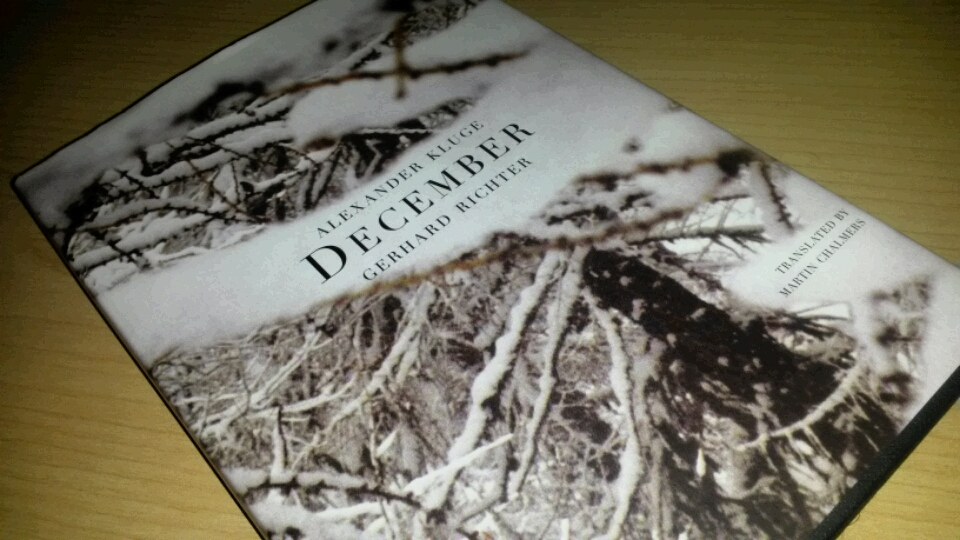
So, my first post of 2016 is a look at the last book I read in 2015. In truth I read it throughout the last month of the year, although not a little each day as intended, my father’s illness has interfered with all of my best laid reading plans of late. However I could not allow the year to draw to a close without finishing this book of calendar stories marking a passage through the month of December in the unique and inimitable style of Alexander Kluge, complemented by the haunting wintery forest scenes captured by Gerhard Richter.

2016-01-01 17.29.52This slim, elegant volume is my first encounter with the work of the German writer and film maker Alexander Kluge. The 39 stories, many less than a page long, are presented in a straightforward manner with a humour so subtle and wry that it simmers below the surface, blurring the perceptual line between history and speculation. Kluge offers a chronicle of an alternate reality so close to our own that it can catch you off guard. A flimic sensibility permeates each entry.

December is divided into two sections. The first part contains a series of dated entries, one story, or a cluster of stories, for each day. The years assigned to the dates vary. Many of the scenarios are set in or around the years of the Second World War. Others tend to be placed in the latter part of the first decade of the twenty-first century. But there are forays far back into prehistory and looking off to a distant future. Characters wander in and out from historical factual reality, war themes of conflict and destruction recur, as do images drawn from concerns about climate change and the fallout from the economic collapse of 2008. The ageless question of the nature of good and evil is a prevalent theme – “evil proves to be good displaced or straying in time” – as is the measure of the passage of time itself, whether measured on a global scale or at a much more personal, intimate level:

“The uncertainty, above all the lack of influence on whether and when someone will be struck down by the war, makes the soul bold. There is nothing to be lost any more.

So, after an air raid in 1944, which went on for hours, Gerda F. did not save herself up any longer. No thought of waiting for one of the returning warriors, whom she still knew and who would ask for her hand. She  didn’t want to get to know any better those left behind in the armament factories of the place. All were looking for closeness. She took a man who was passing through town up to her room. They never saw each other again. There was nothing about it that she regretted.”

The second, shorter section is titled “Calendars are Conservative”. They form a series of reflections on the way time – days, months and years – are recorded, calculated, and, as in certain situations such as during the height of the French Revolution, manipulated and distorted. The revolutions of the earth on its axis and the passage of the planet around the sun may be measurable with relative consistency, but that has not kept humankind from trying to understand, articulate and contain the progress of time, again in both the macro, political sphere and in the individual philosophical context:

“What manifests itself in my story, the story of a living person, is not COMPLETED PAST (what was, because it no longer is), also not the prefect tense of what has been in what I am but instead the OTHER of what I shall have been for what I am in the process of becoming.”

2016-01-01 17.32.15To spend a month, dipping in and out of the stories, anecdotes, and reflections Kluge has assembled to mark the end of the year is a treat. Although the images are often sombre, the atmosphere is contemplative. Gerhard Richter’s accompanying photographs enhance the measured tone. If you have ever experienced a day of heavy and unexpected snowfall, those days in the Northern Hemisphere that can bring all but the most essential services to a halt, granting a welcome reprieve from school or work for many; you will know how time can slow to a leisurely pace while the thick blanket of white muffles the day to day noise of the city. That is the sensation captured in the muted monochrome images of snow laden branches in silenced forests. This is the December we hope for but, caught up with the demands of year end and pressures of the holidays, frequently fail to achieve. A time to contemplate the past, for better or worse, speculate about the future and pull another calendar year to a close.

Translated from German by Martin Chalmers, December is published with the expected fine attention to detail by Seagull Books.