The dying gold of ruined stars – Poems: Book One of Our Trakl by Georg Trakl

“Sun, autumnal, thin and shy,
And the fruit falls from the trees.
Stillness dwells within its blue rooms
During a long afternoon.”

– from “Whispered during the Afternoon”, Georg Trakl, translation by James Reidel

Many years ago when I was in school, poetry, in so far as we were introduced to it, was almost exclusively the works of English language poets. In high school I fell under the spell of the English Romantic writers and that was the beginning. Over the years though, I would be inclined to think that most of the poets I have become obsessed with wrote in English, that is, until I began to read more translated fiction. With that my attention shifted, or to be more precise, my horizons became broader.

TraklThis year, a German book enthusiast I have come to know through the “internet of book discussions”, the corner of the web I inhabit, introduced me to Austrian poet Georg Trakl. Somehow he had escaped my attention before. Of course, when you come to read poetry in translation, the question of the translation itself becomes critical. Typically, when more than one translation of a poet’s work exists I try to access and compare a few. But when Seagull Books released the first installment of a three part series of Trakl’s poetry, I did not hesitate to order a copy, sight unseen.

Poems: Book One of Our Trakl is a new translation, by American poet and translator James Reidel, of the poet’s first collection, simply titled Poems (Gedichte), which was originally published in 1913. In his note at the opening of this volume, Reidel recounts that he has endeavoured to preserve the same concentrated mania that marks the works of the 19th century poets Trakl would have read: Baudelaire, Rimbaud, Verlaine, Hölderlin and Poe. He says:

“I want to actually channel Trakl, his craft (with its implicit painterliness) and work ethic, to have him, so to speak, absorbed in the right dosages he – as a poet, pharmacist and addict – intended.”

Reidel does go on to add that to emulate Trakl’s delivery in English, the rhyme scheme of the original poems is often necessarily sacrificed, but the contortions required to retain  rhyme can trivialize a poet’s spirit and tone.

In an essay in the online poetry journal Mudlark, Reidel expands on his Trakl translation project. He provides an overview of Trakl’s short and tragic life, as well a discussion of his approach to the translation, and a selection of his translations presented with the original German. A poet himself, Reidel brings a sensitivity and insight to his reading and approach that I, as reader, value:

“I have found that when you read Trakl in the original German, you get a snapshot of what is there. When you go back, you get another view. It may be sharper or less so, and with the feeling that it is intentionally less so. This can be frustrating for those who speak and think in English, that lawyer of languages. There is no fixed point to reading him or rendering him. This makes any book of translations simply a collection of snapshots of a particular reading at any point in time. Another way of rendering/reading a Trakl poem is through the barrel of a kaleidoscope, where one can only fix on a view when one stops or when the glass bits sometimes jam. I do this.”

Born in 1887, into a prosperous Salzburg family, Trakl was a precocious child, creative and intelligent – by his early teens he was experimenting with lyric verse that showed great promise. He could, however, be withdrawn and prone to depression. He was exceptionally close to his sister Margarete (Grete), a musical prodigy with whom he is thought to have engaged in an incestuous relationship. He began publishing poems in 1908, in Vienna where he had gone to study pharmacology, a tempting profession for one who already had a tendency towards addiction. As a budding poet, he enjoyed early success and mentorship during the following years, ultimately attracting the discreet patronage of Ludwig Wittgenstein. But the outbreak of war forced him into military service. Relying on his training as a pharmacist he hoped to avoid direct combat, but the trauma of trying to attend to desperately wounded troops without adequate supplies would drive him to attempt suicide. He was sent to a military hospital in Kraków for observation, but suffered a relapse and was found dead of a cocaine overdose on November 3, 1914. He was 27 years old.

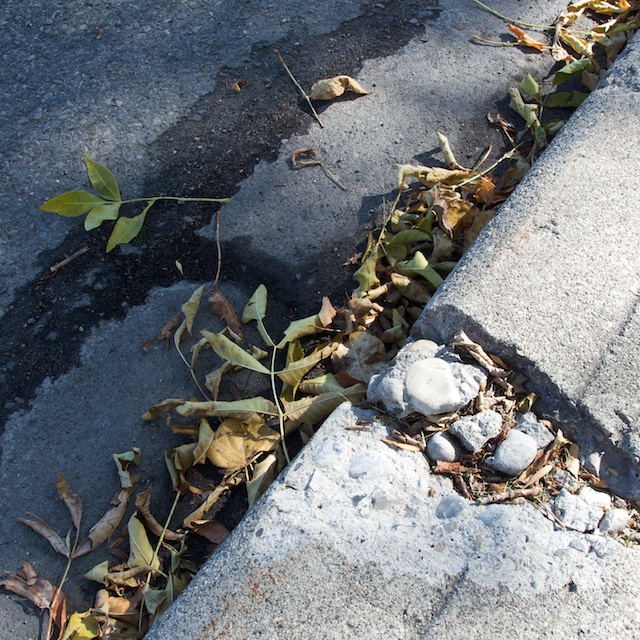
                Patterns of Decay  (c) JM Schreiber, 2011
Patterns of Decay , Copyright JM Schreiber, 2011

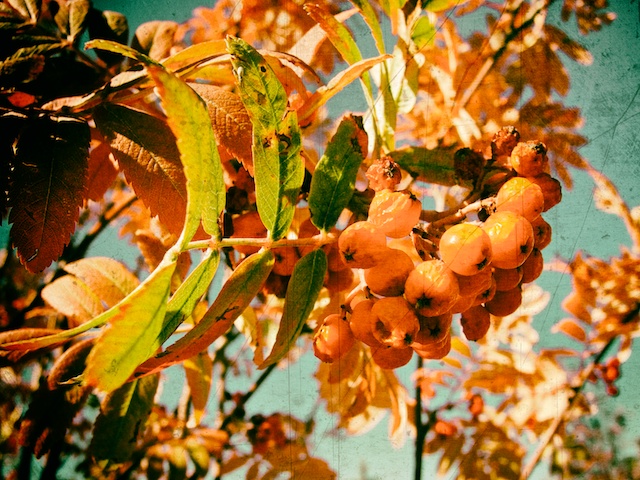
This first volume of Trackl’s poetry, beautifully bound and presented by Seagull books, readily lends itself to an immersive reading from beginning to end. The autumnal themes that feature so strongly make it an even more evocative read for someone like myself at this time – that is, in November in the northern hemisphere – but autumn is rendered almost metaphorical in his verses. Nature figures in his work, rendered through rural and religious imagery; however nature, for Trakl, is one which couches death and decay as an intrinsic element of its stark beauty and haunting appeal:

In the evening, when the bells toll of peace,
I follow the birds in their glorious flights,
Long multitudes, like pious trains of pilgrims,
Disappearing into autumn’s clear breadths.

Wandering through the twilight-filled garden
I dream following their brighter destinies
And feel the sundials barely move any more.
So I follow their journeys above the clouds.

There a blast of decay makes me start to tremble.
The blackbird laments in the leafless branches.
The red vine totters on rusting trellises.

While like a dance of death of pale children
Around the dark weathered rim of the fountain
The blue asters toss shivering in the wind.

– “Decay”

These are quiet, brooding poems that show a clear obsession with decline. They speak to a young poet struggling to capture the gloom in his own soul, consequently the poems have a very immediate and personal feel. Are they depressing? As someone who has had his own lifelong challenges with mood dysregulation, I find his words oddly comforting. I am not equipped to offer a critique of poetry, I am afraid I can, in this case, only speak to what I feel. And I don’t believe I am alone in registering a profound personal response to Trackl’s poetry. In his short life he produced a small, but vital, body of work that would have an important influence on other German language poets including Paul Celan, Thomas Bernhard and Peter Handke; and draw the ongoing interest of poets, translators and readers outside of German speaking countries that continues to this day, just over one hundred years after his death.

For my part, I can only eagerly look forward to the upcoming additions to Our Trakl.

To write one’s self: reflections on the stories we have to tell

IMGP2473 - Version 2

Don’t write yourself
in between worlds,

rise up against
multiple meanings,

trust the trail of tears,
and learn to live.

             – Paul Celan


I have resisted the act of writing my self. Writing about myself. The conceit of imagining that my own experiences hold a value, interest or point of connection for others. I wanted to tell stories, inventions, creations that were removed from the inexorable ordinariness of my own life.

IMGP2477 (1)I am not sure I have that gift. I fear that all the stories I have that are worth telling are real. Not true stories. I do not believe there is an objective truth to the stories we tell ourselves or others. But they are real.

For many years I worked as a storyteller. Not in the conventional sense of the word. I worked with survivors of acquired brain injury and their families. Whether I was meeting with clients, advocating with professionals or leading support groups stories were my medium. I had hundreds of stories, I had a facility for remembering the broad details of the experiences of our clients and their families. Tales of courage, tales of horror, tales of the ordinary and the everyday. I was able to pull out an example whenever I required one to offer warning, hope, validation. And I was able to do so without revealing identifying details.

IMGP2465 (1)As always I was the master of ambiguity. After all that was how I engaged with the world myself. But what is essential in a professional capacity is crippling in a personal sphere.

I have touched at the edges of my own stories, in so far as I am learning to articulate them, in this space from time to time. And I am beginning to wonder whether it is a folly for me  to assume that I have the capacity to make up stories, to entertain with carefully constructed lies.

Or if this mess of a life that has piled up in front of me like heavy wet snow against a plow has to be cleared, examined, transformed into words on a page before I can even begin to figure out if there might be something here that someone else might want to read.

IMGP2461 - Version 2 (1)In the coming days I will officially be two months out from the night a blood clot very nearly took my life. My chest still feels tight, bruised and cracked ribs are slow to heal completely, but I can finally get out and walk with comfort – something that was still impossible a few weeks ago. Rat poison is my friend.

I took my camera out into the neighbourhood this afternoon. The foliage is turning colour, the sky is crystal blue, yet I found my attention turning to the cracks in the road, the fallen leaves in the gutters. I photographed the little things that caught my eye and tried not to think too much.


Listening to the voices of Afghan women: I am the Beggar of the World

“In my dream, I am the president,
When I awake, I am the beggar of the world.”

With a long history, passed down through generations, landays are traditional two line poems recited or sung by the mostly illiterate Pashtun people who live along the border region between Pakistan and Afghanistan. They are composed of twenty-two syllables – nine in the first line and thirteen in the second. For the women in this area who face social and cultural restraints that define and restrict their lives, these anonymous couplets have become an important medium for self expression. Sometimes they gather to share or perform the landays they have learned, updated or re-invented; but radio and the ubiquitous social media and cell phones have also been worked into a new modern network for sharing.

beggarI Am the Beggar of the World: Landays from Contemporary Afghanistan, a collaboration between translator and poet Eliza Griswold and photographer Seamus Murphy, is a sensitive and moving collection of landays, brief essays, and photographs. Upon hearing of the death of a teenaged poet who had been forbidden by her family to write poems and burned herself in protest, Griswold was inspired to journey to Afghanistan to explore the role of landays in the lives of Pashtun women. She returned to collect some of these poems, assisted by native speakers and a Pashta translator, Asma Safi, who sadly died of a heart condition before the project was complete. Arranging meetings as an American was not always easy – being under occupation is a difficult, deadly environment – but along the way she collected the words and stories of some very strong, fascinating women.

Divided into three sections, the first is dedicated to Love. Many of the couplets are brazenly racy, teasing and modern. Yet because landays are by their nature anonymous, no woman can be held responsible for sharing them or for the contemporary imagery has been worked into the more traditional versions:

“Embrace me in your suicide vest
but don’t say I won’t give you a kiss.”

“Your eyes aren’t eyes. They’re bees.
I can find no cure for their sting.”

“”How much simpler can love be?
Let’s get engaged. Text me.”

The second section is dedictated to the themes of Grief and Separation. Suffering and servitude are enduring features of the lives of Pashtun women. Marriage implies both. Curiously love also features throughout the poems in this section because romantic love is forbidden. If a young woman is discovered to be in love with a man she can be killed or driven to take her own life to preserve her family’s honour.

“Our secret love has been discovered.
You run one way and I’ll flee the other.”

Once married, having one’s husband take another wife is emotionally painful, but being passed over altogether or married off to an old man can be worse.

“Listen, friends, and share my despair
My cruel father is selling me to an old goat.”

The final section explores War and Homeland. Complex, mixed emotions, anger and sorrow rise up here in poems that are moving and, again, shockingly modern. A long legacy of occupation under British, Russian, and American forces has placed the women of Afghanistan in a difficult position, torn between the brutality of American protection and the combined threat and promise of the Taliban. The landays and the images in this section are especially powerful and represent sentiments that women would not be able to express so readily in any other forum:

“Be black with gunpowder or bloodred
but don’t come home whole and disgrace my bed.”

“Beneath her scarf, her honor was pure.
Now she flees Kabul bareheaded and poor.”

“May God destroy your tank and your drone,
you who’ve destroyed my village, my home.”

This slim volume is a testament to the resilience of the Pashtun women in the face of the violence, threats and restraints they live with every day. These traditional two-line poems provide a framework for illiterate women to express themselves and share their sorrows, joys and wisdom with their sisters. In Afghanistan they still face risks in committing their own poetry to paper when they are able, so this oral tradition remains important, even if modern devices like cell phones have expanded their network. This beautiful book which pairs the simple landays with muted black and white photographs documenting the people of Afghanistan, the sparse landscape and the violence of war, provides a rare opportunity to hear the intimate voices of women that might otherwise be silenced.

One miserably roughed up ghost, rising from the ashes once more

Sometimes you fool yourself. You believe that you are invincible. You know that bad things happen to good people. You know that they have even happened to you. But time and time again we are caught off guard reminded of the wisdom of Monty Python’s idiom: Nobody expects the Spanish Inquisition.

14701351714_280be514fc_z
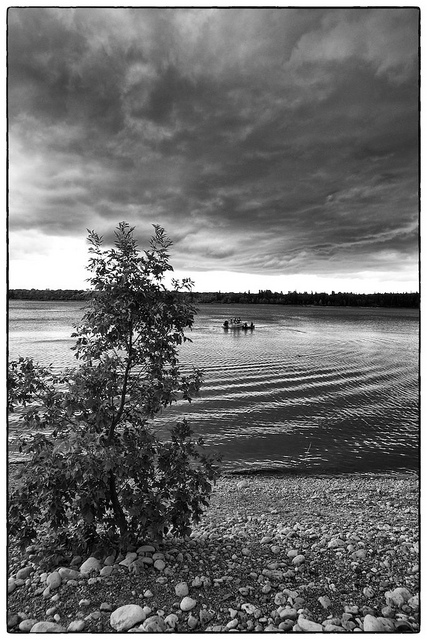
Copyright JM Schreiber Storm clouds over the Reservoir, Calgary, AB

If I had had more experience traveling I might not have made the mistakes that may very nearly have cost me my life this past week. I thought that by focusing my first visit to South Africa to longer stays in two areas, I would limit my travel time. But instead I ended up with long plane flights and interminable bus trips. Next time, and I definitely hope there is a next time  – *the hematologist looks at me askance* – I hope to take longer and fly between major centres once I get to South Africa. The buses have a certain charm and I definitely got to meet and talk to people in a way I might not have otherwise, but to top off my three week excursion with a three leg flight home with very short turnarounds was a major miscalculation  on my part. It sounded great. But I had no idea exactly how tight a three hour stop over is, especially if you have to clear customs. Longer stop overs would have helped. Baby asprins, compression stockings. Everyone has recommendations now.

Yet although I was tired and swollen upon my return, it would take a few weeks before my journey caught up with me. Last Sunday night, or rather, early Monday morning, two and half weeks after I returned home, all swelling and fatigue seemingly gone, I suffered a pulmonary embolism. Well actually, it was not clear what had happened at first. I have very little memory of that day or an evening event I had been to with friends. My 25 year-old son, a creative, troubled but wonderful soul, heard me moaning. Thomas came upstairs to find me disoriented. He called Emergency and started chest compressions.

The kid saved my life. In one of those odd ironies, or twists of fate, toward the end of my time away, Thomas had suffered a couple of acute panic attacks so severe that he twice was taken to the hospital. In the second situation he was referred on to a psychiatric nurse he liked and she suggested a 4 week outpatient program he had just started. Mind you my little detour has interrupted  his plans but they will contact him as soon as there is a good point for him to join back in. Me, I will be in the hospital for at least another week, but the more “functional” I am, the more I can spend time reading.

So good with the bad. Who knows? Maybe the two truly are bound more tightly than we realize.

Looking back over my shoulder at three weeks in South Africa

It is coming up on two weeks now since I left South Africa. I was missing the country before I left; I am missing it now. When I passed though customs at the airport the official who stamped my Canadian passport sighed and shook his head. “Everyone is going to Canada these days,” he said. What could I say? Only that morning I had only read a newspaper article about young South African families eager to find a new home abroad – the US, Australia, Canada.

I suppose if I was raising young children in a city where so many single family dwellings have the appearance of bunkers with high walls, spiked gates and coiled razor wire, I too would be looking to distant shores. Over the course of my limited stay in Cape Town I regularly walked between my B&B in Sea Point and the downtown core. The occasional house perched on the slopes of Signal Hill without such enclosures was a source of fascination. What manner of brave or reckless soul lives here?

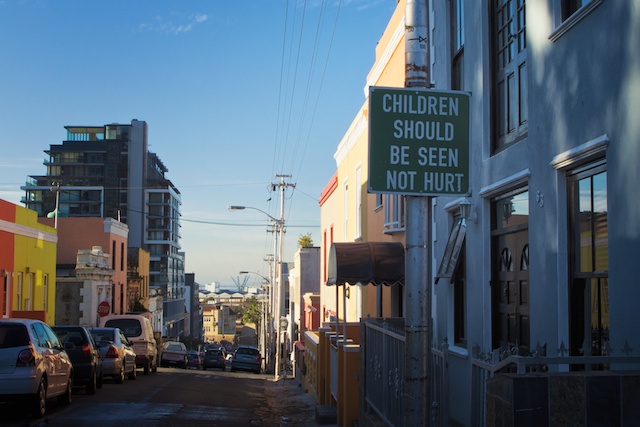
A sign on a narrow cobblestone street In the Bo Kaap district of Cape Town - Copyright JM Schreiber
A sign on a narrow cobblestone street In the Bo Kaap district of Cape Town
– Copyright JM Schreiber

I can’t say that I felt uncomfortable as I wondered the streets or rode the buses. I did quickly learn to make prudent choices, especially after a couple of unnerving encounters set me off my guard. My bad. I don’t make the same mistake twice. Aside from a night out with a friend in Green Point, my stay in the city was quiet, skirting most of the major tourist sites, sticking to bookstores, museums, galleries. Despite the cool weather tourists flocked to the Waterfront and Table Mountain but no one chanced more than a passing glance while I sat mesmerized by the full 30 minutes of William Kentridge’s installation The Refusal of Time at the South African National Gallery. I seemed to find hollow pockets in the city, safe but open empty spaces. And it felt right. I had come to South Africa, after all, to find myself.

What I found surprised me and is only beginning to take form in my thinking now that I am back home. My interest in South Africa is a curious blend of sociological, historical and literary factors but it has always been mutable and undefined. It just is. It stretches back to the early 1980s when I first encountered South African ex-pats while I was at university, continued forward, from the outside, as the world watched the steady and difficult move to independence. Being able to visit the country and, for the most part, simply talk to people and observe has marked the beginning of a process of reconciliation for myself – on a deeply personal level on the one hand, on a socio-political level on the other.

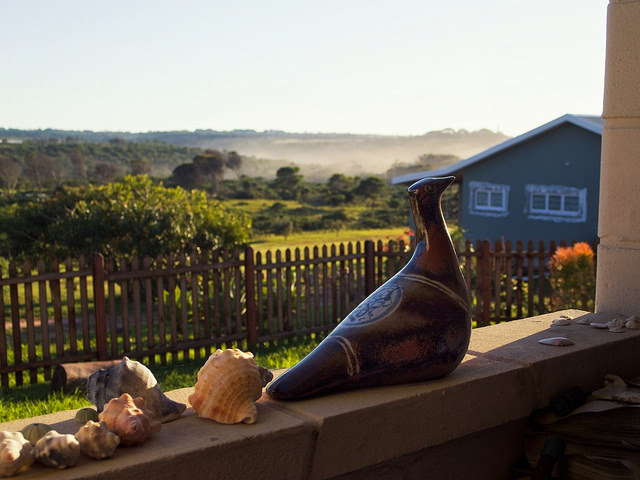
Eastern Cape morning - Copyright JM Schreiber
Eastern Cape morning
– Copyright JM Schreiber

With respect to the former I will simply say that my decision to actually visit South Africa this year was sudden and born of the intense loneliness that sweeps over me regularly. One day when that wave crashed upon me I stopped and realized that the one person in the world that I really needed and wanted to talk to, the sole person who could understand the strange mixture of illness and queerness that I have been struggling to sort out lately, lives across the globe – in South Africa, Eastern Cape province. And, with some money I had needed to access that was not worth reinvesting at today’s interest rates I had enough to get there. So I went.

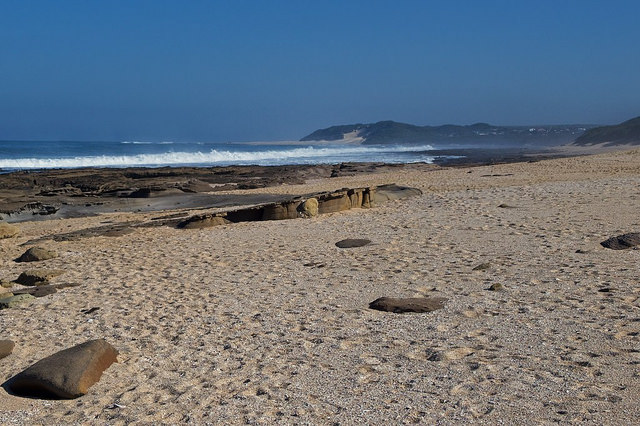
Arriving at my friend’s home in a small village perched on the edge of the Indian Ocean, I was stunned by the beauty of the unfolding landscape, green flecked with the orange of aloe in bloom, the wide open blue skies, and the crystal brilliance of the waves crashing upon rocky shores. I was at peace. I felt grounded. I felt I had come home to somewhere I had never been. My friend and I settled into a comfortable routine as if we had known each other forever. Although at ease in silence, we never ran short of things to talk about. When it came time for me to prepare to head back to Cape Town, her dog worried after me as I packed my bags in the same way that my own cats had fretted over my suitcases back in Calgary. In a little over a week I had been accepted as family.

Indian Ocean, Eastern Cape - Copyright JM Schreiber
Indian Ocean, Eastern Cape
– Copyright JM Schreiber

Oddly I never felt lonely in South Africa, even though I spent much of my time alone. Strange that that feeling oppresses me in the city that I have lived in or near for most of my life, or this country where I have lived for over five decades. At one time I was immensely proud to be a Canadian but I feel increasingly discouraged and estranged from this land. Oh, of course, it has its beauty and, compared to so much of the world, its benefits are innumerable. But there are concerns, inequities, a steady erosion of freedoms, unresolved historical debts to our First Nations and now a rapidly declining economy against a growing racism and xenophobia to think about.

While I was in South Africa, whenever anyone would ask me where I was from, eyes would light up and I would be met with statements like: “Ah Canada, that’s like the perfect country, isn’t it?” Perhaps I am less than patriotic (which is in itself a rather Canadian thing to be), but I felt it was worth engaging people in honest discussions. After all in early June the final report of our very own Truth and Reconciliation Commission was released. For over 100 years First Nations, Métis and Inuit children were routinely removed from their homes and placed in Residential Schools. The cumulative impact of the abuses, trauma and cultural disintegration has been significant and devastating for Aboriginal communities. If I wanted to engage in conversations about colonial legacies it is not to compare or absolve anyone. But no country is perfect. The question for a citizen is, what am I willing to speak to? I can only speak to my experience in Canada and listen to South Africans. Which is a good start.

Sunset over the Atlantic, Cape Town - Copyright JM Schreiber
Sunset over the Atlantic, Cape Town
– Copyright JM Schreiber

But not even two weeks home and I feel shiftlessness starting to seep in again. On the positive, I returned to the promise that some healthy changes may be emerging in the life of my troubled son, opportunities that might not have arisen had I not put a continent and hemisphere between us. And on my last full day in Cape Town I sat in the Company’s Gardens and finally began to write in earnest in the notebook I had been scribbling in throughout my visit. That has continued. Yet I am aching for that indefinable other that drew me to South Africa in the first place… the landscape, the people, my friend, the oceans.

Yes, the oceans. Landlocked here in a vast country that spans 5½ time zones, it really is little wonder I feel so alone.

Further notes from South Africa: Wildlife and quiet times in the Eastern Cape

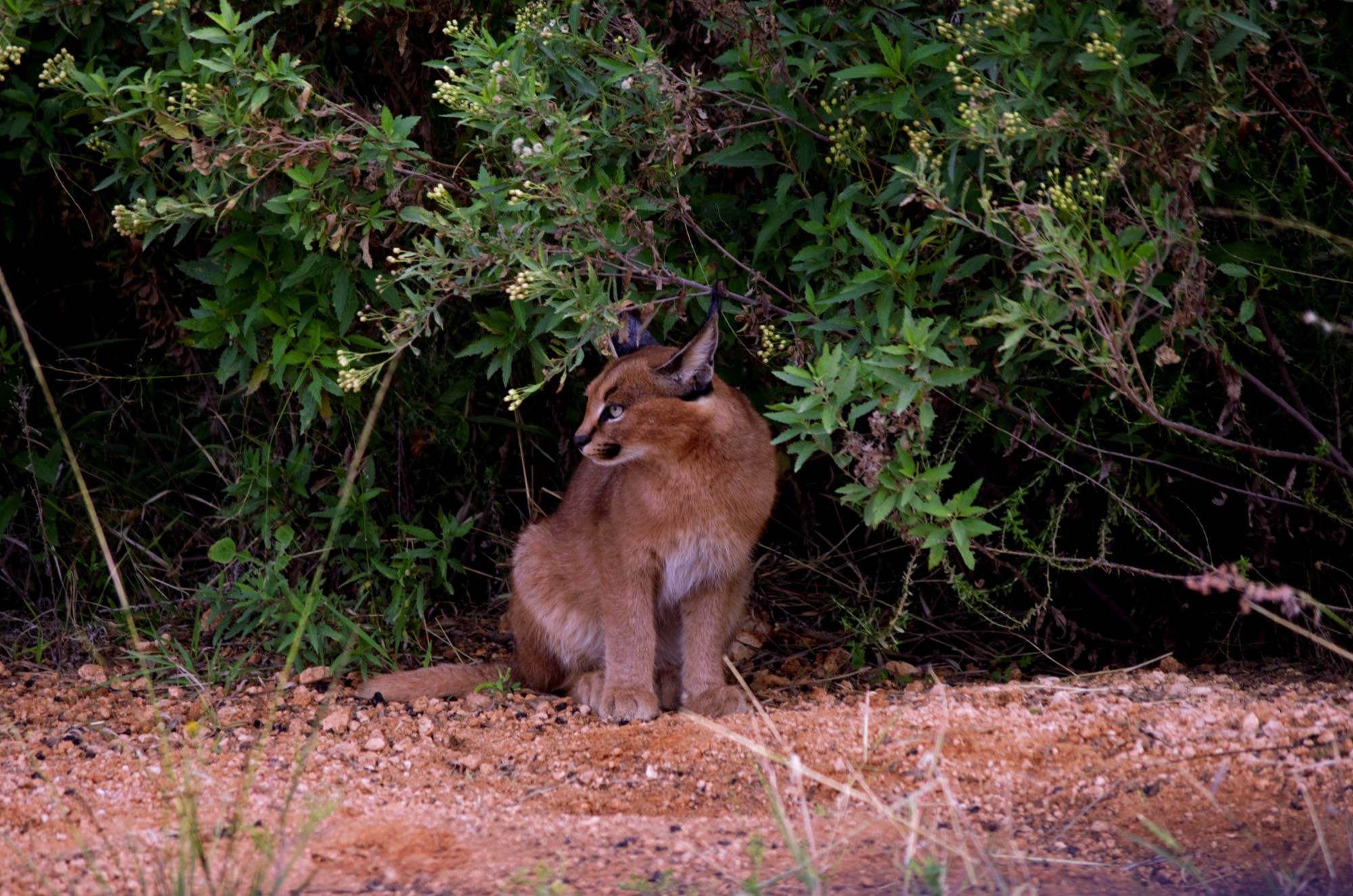
I have been in South Africa for just over a week now. It’s been an amazing opportunity to meet people and observe the country on its own terms. The closest I have had to a typical tourist experience has been our day trip to Addo Elephant Park. Nothing quite prepares you, on your first visit, for the sight of these huge majestic beasts looming ahead on the road, appearing out of the bushes. And there is so much more to see than elephants. We were stoked to encounter two young rooikatte along the roadside. These lynx are a rare sight at the best of times and we were able to sit and watch them for 15 minutes.

Rooikat
Rooikat
Addo Elephant Park
Elephant  – Addo Elephant Park, South Africa

The value of taking time to relax, soak in the countryside, meet fascinating individuals and spend quality time with my friend has been exactly the medicine I needed. In a few days I will make my way back to Cape Town for the much more urban, cosmopolitan side of my stay which will, in its way, be quiet and introspective. Cities can be good for being alone too.

Old sheep
Old sheep
Eastern Cape farm garden

My endeavour to gather more South African literature to bring home is going well. So far I have collected a stack of second hand books from a little shop in East London here in the Eastern Cape and have another stack waiting for me back in Cape Town. I have been digging through my friend’s bookcase for titles to look for here or back home and last night I was thrilled when my favourite author, Damon Galgut, won the Sunday Times Literary Award for South African fiction for his novel Arctic Summer. So, a fine literary excursion to date.

South African sunset - All photos copyright JM Schreiber
South African sunset – All photos copyright JM Schreiber

Otherwise it has been a relief to step back from my normally heavy engagement with news and social media. I did read with dismay about the terrorist attacks in France and Tunisia. I was relieved that my American LGBT brothers and sisters have achieved a long overdue milestone. But I came to South Africa in large part to put as much distance between myself and my life at home as possible for a few weeks and, for now, watching waves crash on the shore or sitting on the stoep and watching the sky burst with colour in the evening or listening to Breyten Breytenbach reciting poetry in Afrikaans is therapy of the best kind.

Roughghosts is one year old today: Looking back and ahead

Today I received a notification from WordPress congratulating me on my first anniversary. Well happy anniversary to my alter ego roughghosts who was born on this day from a scarp of creative writing I uncovered in one of my endless unfinished notebooks. I never was very clever with user names; most of my aliases amount to little more than my initials and the first 5 letters of my last name.

Copyright JM Schreiber, 2014

I have become quite fond of roughghosts. It suits me, more than I might have imagined, or at least been willing to admit on May 31st of last year. To be honest, I created this blog to engage with other WordPress blogs and, I don’t know, maybe reflect a little, and explore some creative writing. At the time, a little voice I the back of mind said this looks like a rather manic move. After all I was under a soul crushing amount of stress at my workplace, had a major fundraiser and annual report due, and had not slept for more than a few hours a night since the previous November. But I shrugged it off, forged ahead only to crash and shatter into a thousand pieces a few weeks later.

Today, I have managed to rebuild myself to a point. There is still a lot more glue, stitching and healing required. Mania has subsided to a simmering depression with doses of anxiety and a pill that I do not like but is presently necessary as a sleep aid. And roughghosts the blog has evolved from a space to moan about the shock of realizing that, yes, I still have a mood disorder and all the fallout that a major breakdown entails, to a book based blog with a strong focus on translated and international literature.

Over the past few months I became involved with a jury shadowing the International Foreign Fiction Prize (IFFP), a challenging and highly rewarding experience. It taught me to read faster – still no speed demon, I – and read more deeply with a specific goal to being able to rate and write a constructive review for each book. I have started scribbling in margins and filling notebooks when I read. As a reader and a writer this has been invaluable. The camaraderie of reading and discussing the books together was an added bonus, introducing me to a great group of book bloggers. My subsequent expansion of activity on twitter has further enhanced this community of readers, publishers, authors and translators.

Then, close on the heels of the IFFP came the Best Translated Book Award (BTBA) with a challenging and exciting longlist and a selection of small North American independent publishers to discover. Adding to this embarrassment of riches for lovers of translated literature was the conjunction of the biannual International Booker and the writers I want to explore from that list of finalists. And, on top of all this, my longstanding interest in South African literature will be further nourished by a trip to that county in a few weeks with a list of books I hope to obtain.

I am, I hope, reading my way back to wholeness. Preparing to write my way back into the world, or rather document my very real journey into the world in a full and honest way for the first time in more than half a century of living.

This past week’s awarding of the 2015 IFFP and BTBA prizes saw the celebration of female authors and translators. The IFFP honoured Jenny Erpenbeck and Susan Bernofsky for The End of Days, a decision that coincided with our shadow jury’s esteemed choice. This is a most important book with a timeless theme spanning the whole of the 20th century. About an hour later the 2015 BTBA was awarded to The Last Lover by Chinese author Can Xue and translator Annelise Finegan Wasmoen. I encountered this book as a longlisted IFFP title and simply fell in love with the surreal, dream-like tale. Notably, Can Xue was also named that same day with six other women and two men as finalists for the Neustadt International Prize for Literature. I’ve been decidedly excited by this celebration of female writers and for those who know me, that is a huge shift in my own approach to literature.

Back in late January I wrote a pot in response to a discussion on the Tips, Links and Suggestions blog of the Guardian which had caused me to reflect on the abysmal ratio of female to male authors in my reading and on my shelves. However, my more explicit focus on literature in translation is slowly beginning to shift that balance. Especially if one considers how many of the works I read, if written by men, were translated by women. And I am taking serious note – not only should I endeavour to read more female writers, I can easily fall under the spell of Can Xue, Anne Garréta, Marlene van Niekerk, Olja Svačević or Valeria Luiselli, just to name some of the authors that have really impressed me of late. And I am pleased to report that an increasing number of the books I am currently reading or planning to read feature female writers and/or translators.

Copyright JM Schreiber, 2014

So, on my first anniversary as a blogger, I look back over an ad hoc journal chronicling an ongoing passage from a terribly messed up state, struggling to make sense of a sudden shock to my self esteem, my confidence and my identity to a place where I have a strong real life community, solid mental health support and a creative environment where I am proud of the work that I publish in this space. Moving forward I hope to explore further writing opportunities, continue to recover and, with luck, make my way back into productive employment.

And keep reading a lot of terrific, exciting and challenging literature from around the world.

Behind the photographic impulse: Double Negative by Ivan Vladislavić

Copyright JM Schreiber, 2013

“How can I say what these fragments mean to me? The awkward truths of my life take shape in their negative spaces. In the lengthening shadows of the official histories, looming like triumphal arches over every small messy life, these scraps saved from the onrush of the ordinary are the last signs I can bring myself to consult.”

When we first meet him, Neville Lister, the narrator of Double Negative, is a disaffected young man, uncertain and aimless in a fractured and troubled environment – apartheid South Africa. It is the early 1980s and he cannot quite find his footing, either in academic study, the political protestations of his friends, or the mixed allegiances of his parents’ generation. The stakes are high, but his ambivalence is a luxury well known to middle class youth. Being close in age to Neville and his creator, South African author Ivan Vladislavić, I could not help but chuckle at his repeated references to “Beerhunter”, (a party game we Canadians lay claim to, by the way) or recognize the insidiousness with which The Eagles’ Hotel California album seems to define our lives even if we never owned a copy of that recording. However, unlike our most reluctant hero, I did not have political unrest or the real threat of conscription bearing down on me.

Double NDouble Negative traces Neville’s evolution from long-haired, pipe smoking dropout to middle-aged late blooming artist, framed against the shifting political, cultural and socioeconomic backdrop of Johannesburg. In the first section, “Available Light”, his father arranges a meeting with a famed local photographer, Saul Auerbach, in the hopes that the encounter might inspire his son to reach beyond his current employment assisting a man who spray paints lines on roadways. As Neville tags along, Auerbach and a journalist friend devise a game that will direct their photographic pursuit for the day. Standing on a hillside with a panoramic view of the city below, each man choses a roof top. They manage to visit two of the three selected homes where Auerbach charms his way in, and coaxes photographs out of the inhabitants – a poor black woman with her two surviving triplets living in a backyard shack and a white woman in a lounge suffocated with furniture and curios. But before they visit Neville’s choice, the photographer’s energy and his necessary light have faded and they head home.

When our narrator picks up the thread of his story in the second section, “Dead Letters”, he has been in London for ten years and the first free elections have just been held in South Africa. Swept up in a wave of nostalgic homesickness he flies home. By this time he is also making a living behind the lens, but as a commercial photographer. He returns to a city already morphing under new dynamics, post apartheid – street names changing, houses and entire city blocks replaced. Cities are, at the best of times, constantly re-inventing themselves, shedding their skins. The effects are more profound under the pressures that have been released and confronted in places like Johannesburg, where, by the time we catch up with Neville again for the final installment “Small Talk”, he has taken to photographing the ubiquitous walls that have arisen to close off and protect the city’s inhabitants from each other.

Upon his return to South Africa, he had experimented with trying to enter a home to photograph the resident, drawn, of course, to the house he had first chosen so many years earlier. The experience almost swallows him whole but does, in turn, offer the direction that will inform his own artistic photographic ventures. He no longer wants to see what lies behind the walls that have been erected. He draws the resident out but refuses to enter. It is now 2009 and our hero is being subjected to an interview by an eager, self-promoting young reporter and blogger who intersperses her blog posts with a litany of handy household tips that would make Oprah proud. She is of a entirely new breed, neither weighed down by nor fully appreciative of the reality of her nation’s history. By contrast, Neville Lister occupies the transitional space. As photography has moved from film to digital, a medium with remarkable capacity for storage and the editing and altering of images, so is his country altering and editing its own collective memories.

More than anything, this is a story that unfolds as a series of images, captured with Vladislavić’s poetic eye for detail. He translates scenes, the photographic and the interpersonal, with a language so effortlessly descriptive that I often stopped to re-read a paragraph for the sheer pleasure. Neville describes “gumption” as a “word that stuck to the roof of your mouth like peanut butter”. A character “moulted” his jacket. In navigating the city he talks of following “the simple arguments of avenues and squares”.
This ability to transform language into imagery is nowhere more apparent than in his descriptions of the scenes, immortalized by the lens of the camera under the direction of the photographer. One of the photographs resulting from the initial outing with Saul Auerbach is described in vivid detail:

“Mrs Ditton sat in the armchair beside the fireplace. The coffee table had been dragged away – there is no trace of it in the photograph – to expose the floorboards and a corner of the rug. Looming on the left is the largest of the cabinets, so imposing you would say it belongs in a department store. The chair has wooden arms with ledges for tea cups and on each side of these lies a pie-crust of crochet work and a coaster. The chair sprawls with its arms open wide and its fists clenched, and she wallows in its lap.”

I imagine that anyone with an SLR camera and a tripod has experimented with long exposures and the creation of ghost images. It seems to be a rite of passage. Double Negative is, in many respects, a book of ghosts. Visiting with the woman living in the house he had selected so many years earlier, Neville feels weighed down by the voices swirling around her lounge. In referring to the annotated cookbook passed down from his mother, he reflects that the food “tastes better when the ghosts adjust the seasonings.” And ghosts haunt a collection of dead letters that come into his possession and, it seems, may be destined to lead him into his next “artistic” endeavour. If growing older is a process of acknowledging and coming to terms with the ghosts we carry, our narrator is older and wiser but still working away to make sense of it all by the end of this book.

And so is his country.

Note: Originally published in South Africa in 2011, Double Negative was released to an international audience in 2013 (with an introduction by Teju Cole) through the amazing publisher And Other Stories. Supported by their unique subscription model, this release was followed by the publication of an earlier title, The Restless Supermarket in 2014, and his upcoming collection of stories, 101 Detectives, will be released this year. Ivan Vladslavić was recently named one of three recipients of the 2015 Windham Campbell Prize for fiction along with Teju Cole and Helon Habila.

The fiction of remembering, the realities of forgetting: New Finnish Grammar by Diego Marani

Copyright JM Schreiber, 2014

The damaged hero of Italian author Diego Marani’s first novel New Finnish Grammar, which was originally published in 2000, but only released in English in 2011 (translated by Judith Landry), is a mystery to himself and to those who find him. World War II is raging, when a badly beaten man is found on a dock in Trieste with no clue to his identification beyond a Finnish name sown into the collar of the naval jacket he wears. When emerges from a coma with, what would presumably be a severe traumatic brain injury, he has no memory and no ability to use language. He does know who he is or where he comes from but, by coincidence, the doctor who attends to him is a Finnish-German who has never overcome his own longing for his homeland. He becomes convinced that the best medicine for his amnesiac patient is to send him to Finland so that he can connect with what is assumed to be his land and language, and in doing so, retrieve the past that has escaped him.

maraniAs much as I wanted to love this book, this is where I started to have problems. Firstly, the storytelling approach is awkward. It is the doctor who takes on the task of
curating a selection of notebooks, journal entries and letters belonging to “Sampo”, our erstwhile Finnish patient, to both honour him and make amends. He frames and fills in the tale with his own reflections, corrections and assumptions. Somehow, we are asked to believe that a man with a brain injury severe enough to trigger such a complete loss of memory and language could manage to develop sufficient facility in a notoriously complex language to be able to report his earliest memories post injury, or even find his way around a strange city. Yes, his mastery of the language is never comfortable, he relies on his notebook and endless practice, and he is emotionally lost and eventually unable to find a grounding or the past he seeks. Meanwhile, the language and mythology of Finland were clearly chosen by the Italian linguist author as a template for the exploration of memory and identity, but I could just not suspend disbelief long enough to fully surrender myself to the story.

This is not to imply that there are not breathtaking moments in this novel. There is a heartbreaking sadness and loneliness that haunts our dislocated hero. As war closes in around him, he is the walking wounded, an invisible casualty in a place to which he so desperately wants to belong. But my practical side, the side that spent the last decade working with real survivors of traumatic and acquired brain injury, could not let go of the idea that the main character’s overall functionality did not mesh with his complete loss of identity and language. The assumption is that his memory loss is psychological in nature and that the return of language will release it. In reality though, his injuries would indicate traumatic causes and with such severe long term memory loss some elements would still typically remain intact, while short term memory would be greatly impacted hindering his ability to learn new things easily. A complicated “new” language? I find that especially hard to accept.

I suppose I will have to admit that I am not the ideal reader for this book. I don’t regret reading it and I am sure that there are moments that will continue to linger. Memory is one of the most fertile landscapes for a writer to explore. Even without the added impact of illness or injury, memory is a fleeting, nebulous and fundamentally subjective phenomenon. However, I opened New Finnish Grammar with too much experience with brain injury to fully appreciate the work. And, for that matter, I could not help but wonder how a reader with too much native experience with Finnish language and mythology would respond. Perhaps with an equivalent amount of skepticism.

I don’t know.

A love song for the loveless: Reflections on unrequited love – Arctic Summer by Damon Galgut

Copyright JM Schreiber, 2012

Valentines Day. It has been many years since I have had a true object of romantic affection. This annual occasion tends to come and go without my notice. Even my children are too old to warrant the heart shaped candies and chocolates I used to purchase. And yet I have to stop and wonder why I do not feel the absence.

I am not sure it is coincidental, but romance does not seem to figure highly in the work I tend to read. Lost love, dysfunctional relationships, misplaced attempts to find affection, yes; but it tends to be the underlying elements of discord that create dramatic tension and literary interest for me. Tolstoy’s unhappy families and all that. So in thinking about today’s exaltation of romantic love I decided to turn to a book I read last year but did not review, a novel that holds, at its heart, the account of a deeply felt but unrequited love: Damon Galgut’s Arctic Summer.

In this fictionalized biography of EM Forster, Galgut re-imagines the eleven years of frustrated creative blockage that spanned the time between Forster’s initial conception of his “Indian novel” and the final product, A Passage to India. Along the way we meet Syed Ross Masood, the Indian man with whom Forster will fall passionately in love – a love that will shape, define and haunt his romantic sensibilities – but which will remain one that the heterosexual Masood is unable to return in anything but platonic terms. During the World War I years in Alexandria, Forster finally loses his own virginity at the age of 37 but his meagre intimate relations will remain a sorry, even pathetic, attempt to achieve the emotional and physical comfort he longs to find in another man’s arms. Sexually repressed and closeted until his death, he is, nonetheless, able to channel his affections and experiences in India into one of the finest English novels of the early 20th century. It would be the last work of fiction Forster would produce though he would live and continue to write and engage actively in the literary world for another 45 years.

arctic summerIn my first encounter with Arctic Summer last fall my reactions were mixed. I was a great fan of Galgut’s more typical pared down, ambiguous and haunting novels and I was immediately struck by the more claustrophobic atmosphere he had created to evoke the sensibility of the world in which Forster lived and wrote. At times I felt it weighing on me as a reader. Having the good fortune to hear Damon speak in person and meet him when he passed through my home town with our writer’s festival while I was in the midst of my reading, I was aware that he had found the process of writing a historical novel rewarding but not one he would be anxious to repeat. That awareness may have been a factor but I suspect there was also something more at play. After all, as readers, we enter into any work with our own issues, histories and expectations.

At the timel I was still struggling to break down the barriers that I had constructed over the preceding decade or so to keep those around me from getting close. By that point I was painfully aware that I had re-closeted myself in the world to avoid emotional risk and vulnerability. At one point, despairing of ever experiencing desire in the way he longs, Galgut’s Forster reflects:

“His own sterility was apparent to him and would soon, he felt sure, be visible to others. Curiously, he didn’t feel depressed at the prospect. He was almost intrigued by the idea of giving in to his oddness, turning into one of those remote, ineffectual creatures so warped by their solitude that they became distasteful to normal people.”

I was struck by that passage, I remember where I was when I read it and the page number in my paperback American edition is burned into my memory. Although I had been, oddly enough, a single male parent for years, through my determined unwillingness to express romantic interest or engagement with anyone, female or male, I had stubbornly sought to neuter myself in the world. Unpeeling those layers of defense and reclaiming an identity, especially one that falls outside the default mainstream, is not easy. Forster’s dilemma was hitting too close to home.

As I have since learned to re-embrace my identity and sexuality, I did briefly imagine that I was ready to open myself again to the possibility of falling in love. The result was in influx of a emptiness and longing. I began to feel the absence and did not like the void. So I have decided to turn my focus to building an emotional support network based on common interest and experience. It is, I realize, a much better place to start. If, somewhere along the way, the potential for romance arises I would not necessarily reject it, but it cannot be the grounds for meaning and value in my life.

Now, four months after I first finished Arctic Summer, I have occasioned to revisit A Passage to India, and have found myself dipping back in and out of Galgut’s novel simply to savour the restrained beauty and sensitive recreation of the writer’s inner personal and creative journey against the lush landscape of India. The work has simmered in my consciousness and increased in the power that it holds for me as a reader. I cannot help but wonder what might have happened if Forster’s love for Masood had been reciprocated. I am not sure he would have ever been able to even crack open the closet doors and I suspect that he might have ended up even more deeply torn between his homosexuality and his attachment to his mother. For better or worse he was able to channel his energy into writing, friendship and a long life.

Well lived? For his sake I hope so.