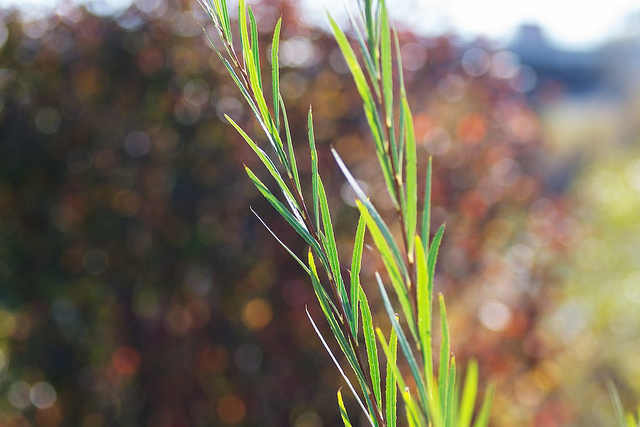
Granted midwinter in my part of the world is not the best place to find colour in nature. Branches are bare, grass is bunched and brown, snow is patchy and grey. But when I look back over the past year I can see how difficult it has been for me to register any enthusiasm to take my camera out. I walk a lot but I seem to want to stay in my head, maintain a fast pace, measure the rhythm of my boots against the ground. I circle the neighbourhood, walk with purpose on errands, but avoid the pathways and parks I have documented season after season these past few years.
Photography was a diversion, a relaxation and an isolated activity against a busy life at work and home. I would wander forest trails, across grassland parks or along the edges of rivers and lakes, framing and reframing the view and listening to recorded podcasts – discussions about books, philosophy, current events. It was a meandering, escapist pursuit. If I look back I have to wonder what I was escaping and where I had lost the capacity to dream.
Madness, mental illness if you prefer that term, brings back the capacity to dream because all the parameters are changed. For me it has brought words to the foreground but pushed the pictures to the background. Walking has become a means to expel restless energy, drive out the demons of anxiety and despair that keep reaching in. If I want to drown out the city noises I listen to music, the words in my head are my own.
Without being able to return to work at this time, I do feel a certain loneliness. But when I reflect on the years I devoted to a job that I believed validated and defined me, I realize that I was never more isolated than when I was working. Invisibility and an unwillingness to call attention to myself was not a measure of my successful transition. It was denial. To hide the fact that my past contained realities inconsistent with the man everyone knew, I believed I could not afford to allow anyone to get close. I captured colour in the outside world but painted myself with the blandest palatte possible.
A manic episode and all of the reckless behaviour and poor judgment it entails has left me with a professional legacy that I may never be able to salvage. I don’t even know if I want it back. Reclaiming my identity, being comfortable with my own history of sex and gender is a work in progress but I have to trust that it might lead me to a better more authentic place. It might even bring some colour back into my life.
Just before Christmas he returned to church, entertaining the hope that the community of faith, especially one welcoming to all, might help fill the emptiness he carried inside. It almost worked, for a few weeks.
Copyright JM Schreiber, 2014
After this Sunday’s service he retreated down the stone steps into the shadow of a void that no sermon could fill. It is not the church. It is him. He had hoped that faith might come back, comfort him as once it had when… well I can’t really remember when it last provided respite… but there was a time. He worried now that believing was beyond him. To be denied like other comforts. Perhaps one can only fall away from faith so many times before it is impossible to return.
You can only be lifted if you will yourself to let go, you can only be held if you allow yourself to be touched, you can only be loved if you dare to love first. But once you believe you have rendered yourself unlovable, the stalemate is long and sad and lonely.
I suppose I could say he is depressed and that this will pass. I could also admit that he is me and that there is something more fundamental at work.
You said: “I’ll go to another country, go to another shore, find another city better than this one. Whatever I try to do is fated to turn out wrong and my heart lies buried as though it were something dead. How long can I let my mind moulder in this place? Wherever I turn, wherever I happen to look, I see the black ruins of my life, here, where I’ve spent so many years, wasted them, destroyed them totally.” You won’t find a new country, won’t find another shore. This city will always pursue you. You will walk the same streets, grow old in the same neighborhoods, will turn gray in these same houses. You will always end up in this city. Don’t hope for things elsewhere: there is no ship for you, there is no road. As you’ve wasted your life here, in this small corner, you’ve destroyed it everywhere else in the world. (Translated by Edmund Keeley/Philip Sherrard)
My city was new when Alexandria which inspired these words was old but the sentiment rings across the century, speaking to me.
Copyright JM Schreiber, 2013
I live in a glass and rock cast stucco bungalow, the kind of finish that will slice your palm if you lose your balance and put a hand out to stop your fall. It sits on a 6500 square foot lot overgrown with 60 foot spruce and spiky hawthorns. The garage stands, roof sagging, without a foundation and no more than a scratch coat for stucco that was never applied, at best a large shed. It is only a matter of time before the sewer line to the street which is already oval shaped, collapses in on itself. After a few years of eager redecorating, projects remain incomplete, even though all the paint and supplies were purchased long ago.
This year my house will be 62 years old, I have lived here for 20 of those years. Due to the location, the lot size and the high property values in this city, it is assessed at a value that shocks me. I have ample equity in this house I own, but no secure income. And you can’t eat equity.
More and more the house is closing in on me. It is filled with the artifacts of 20 years of raising children. And a 25 year-old alcoholic son who seems to have taken root in the basement. After being a single parent for so long, I am done. My career prospects hanging on a thread frayed by mental illness; I feel haunted by the house, the responsibilities that weigh on me, and the fatigue of facing it alone.
And this city is no more a home than it has ever been. Without my job it holds nothing and never has. I love the pathways and wild areas, I love the wide open skies and the mountains on the horizon, the rolling foothills stretching to the west. But the city has no soul, or at least not for me. My relationship with this city, one to which I chose to return at one time, is fraught with complicated anxieties.
It may be my fault. Perhaps I am the one who failed to open up and build connections. But that has never been easy and the more I go out to meet people or attend events, the deeper the loneliness settles in on me the next day. Like it or not, there is a fundamental disconnect between me and this city of glass towers and oil executives.
As I walk these streets I am haunted by the sense that I have wasted so many years here, not certain what I have to show for it, feeling all is lost, fearing that I am, as the intended recipient of Cavafy’s advice, destined grow old in the same neighbourhood, turn grey(er) in the same house.
Every year, rather than rushing through a book before the clock strikes midnight just to push up the book count of the year that is slipping away (an inclination likely idiosynchratic only to those who of us would rather read than party on New Year’s Eve), I prefer to walk into the coming year in the company of a great writer, allowing the experience to end one year and launch the next. My companion of choice to see out a year marked by loss, the resurgence of mental illness and a recognition of not only my own isolation, but my role in facilitating that condition; was the late German writer W. G. Sebald. More specifically his haunting and heartbreaking novel The Emigrants (translated by Michael Hulse). As a curious coincidence, the Word of the Day email from Meriam Webster that appeared in my inbox this morning for January 1 is:
emigrate\EM-uh-grayt\
verb : to leave one’s place of residence or country to live elsewhere
If you have never read Sebald, his work almost defies simple description. It must be experienced. Adjectives from admirers abound: mesmerizing, beautiful, subtle, sublime. Long evocative sentences unfold into even longer reflective paragraphs – at times running for pages – enhanced with the insertion of grainy photographs of people, scenery, pages from notebooks, objects, sketches. The reader is pulled in, guided along through landscapes, recollections, side observations and historical reflections by a narrator who is present, patient and human in the face of the incompleteness afforded by memory and the passage of time.
The Emigrants may well be the most accessible of Sebald’s work that I have read, especially because it forms its structure around the apparent biographies of four men who have emigrated or been exiled from their homelands. Three of the four have a Jewish heritage and World War I and II form a critical backdrop to the four very different accounts. Our narrator encounters each of these men, in person, even if only as a child, but in most cases he pieces together part or all of their life histories through the recollections of others, and the diaries and memoirs that he acquires along the way. In some cases he even attempts to revisit the locations that impacted the lives of his subjects, finding only decay or even complete obliteration in his vain efforts to find traces of a past that cannot be revisited.
There is such a deep and abiding melancholy that runs through these pages, that I don’t think I could have chosen a better literary companion to mark the passing of this difficult year. But it broke my heart and drove me to tears on more than one occasion. The first two chapters end with suicide. In the first we meet the eccentric Dr Henry Selwyn who, by the time the narrator and his wife come to know him, has taken to dwelling in the garden of the house owned by his wife from whom he is long alienated. He confesses to a greater sense of loss over a friend who had disappeared into the crevice of a glacier years before than any regret for the dissolution of his marriage. A Lithuanian Jew who had sought to conceal his heritage after emigrating England, the gentle doctor would eventually put his hitherto unused rifle to final lethal use.
In the second chapter the narrator revisits a beloved childhood teacher, Paul Bereyter, upon hearing of his suicide. Through his own reflections and conversations with a French woman who became Paul’s friend in his later years, an attempt is made to piece together the roots of the melancholy that had been hinted at when Paul was an unconventional but enthusiastic teacher; yet grew with the realization that even being 1/4 Jewish was sufficient to make him an exile in his own country. Meticulous and pragmatic to the end, the former teacher carefully researches his decision to end his own life. But although you know it is coming, the recounting of Paul’s final day is none the less devastating for the reader.
The narrator then traces the history of his own great-uncle Ambros Adelwarth in the third section. I found this portrait at once the most moving and the most devastating. Here the emigrant destination is North America and, for a change we are in settings with which I have some connection. Eccentric and meticulous in presentation and decorum, Ambros rises quickly in the hotel industry of the early 1900s and, once he joins his siblings in the US, secures works with a wealthy Jewish family on Long Island. He is given charge for their son Cosmo, a young man driven to reckless excess and, as we will also see, its dark counterpart so recognizable to those of who are bipolar. Ambros and Cosmo embark on a tour of Europe and the Middle East, marked by gambling, daring aerobatic performances and a certain display of personal affection that raises the eyebrows of the elite that inhabit the rarefied world of wealth and glamour in the years just before the First World War.
With the outset of war though, Cosmo begins to plummet into despair and despite the best remedies that money and contemporary mental health care can buy, he will end his days in a private sanatorium. After staying on and looking after the family, Ambros retires to live in quiet isolation. But he is seemingly haunted by a deep unbearable grief. Suicide would be too messy, one imagines, for a man who dresses and presents himself as a formal gentleman to his dying day. Rather Ambros opts for voluntary commitment to the same sanatorium where Cosmo died, stoically submitting to an extreme regime of ECT as if the only way to truly destroy traumatic memory is through one bone blasting jolt at a time.
The final chapter, one which Sebald admitted was based on the amalgam of a landlord he once had and a well known artist; finds our narrator in Manchester, England. The city centre is in rapid decline. Here he meets Max Feber, an artist who, having emigrated from Germany, has for decades been single-minded in his efforts to find refuge through art. He devotes himself to this task seven days a week, drawing and erasing his work repeatedly, beyond the patience of his models. The narrator is curiously drawn to this anti-social, unusual character and they form an odd friendship but it is not until he revisits Max 25 years later that he realizes that there is here another story of loss to be fleshed out. But the lasting impression of the emigrant experience is as one in which both the realities from which emigrant has come and those to which he arrived (in this case in Germany and in Manchester) are both subject to decay, dissolution and the vagaries of memory and time.
Copyright JM Schreiber, 2011
I have never been one for family history. My mother’s family emigrated from Ireland to Brooklyn, New York in the mid 1800s, my father’s mother’s family would have arrived in Toronto from England probably around the turn of the 20th century whereas his father’s family were United Empire Loyalists, making him a 7th generation Canadian. My parents met in New York City in the late 1950s, an era to which my father repeatedly tried to return long after it had ceased to exist. My brother and I were born in New Jersey but, after exploring a variety of options, my family pulled up stakes and moved to western Canada away from everyone they knew and settled here when I was only a few years old, soon adding another son.
Apart from that rough sketch, I am not inclined to family trees, I have only two photos of myself as a child and by the time my own children were born I had developed such a strong aversion to having my picture taken that I sometimes worry that I may have failed to take enough photos of my own children when they were growing up. Many years ago I finally understood why the person I saw in pictures or in the mirror was so at odds with the person I knew myself to be and started on a journey to correct the discord. Having reached my intended destination I no longer know how I fit into my family tree. In a very fundamental way I am an emigrant who has become exiled in his own life, still seeking to define what that means for me.
As the richly imagined portraits in The Emigrants illustrate there is a melancholy, anxiety and despair that can haunt the emigrant experience. I found myself wondering about origin, that is, how much of the melancholy was carried into the experience and how much owed its origin to dislocation and loss? As a person with bipolar disorder recovering a from a serious breakdown, questions of cause and effect always simmer. In the end it is impossible to distinguish loss leading to despair from despair that enhances a sense of loss. Having experienced both this past year I enter 2015 with a cautious mix of anxiety and anticipation.
Anticipating a quiet Christmas, with circumstances necessitating a modest celebration, the lack of snow and relatively warm temperatures suit me fine. I am content with a brown Christmas. Oh I am sure there will be some anxious naval gazing over the next day or so. Add to that a Boxing Day trip to visit my parents, always a festive occasion fraught with the tensions and dynamics that only family can create, but for the moment I simply want to wish peace, whatever that means, to everyone.
Throughout the world that is one universal gift humankind is in sore need of, no matter who or where we are.
An empty bench overlooking the reservoir. Ice and snow have stilled the water. In the far distance the Rocky Mountains fade in the distance. I spend many hours along the shore of below this bench and further to the west where the flatlands spread as the Elbow River enters. In the springtime the water level is kept low to allow birds and waterfowl to nest. Although in warmer weather the parkland that runs along the northern shore of the reservoir is frequently bursting with couples, families, children, reunions and other large group activities, I prefer to pick my way along the water’s edge. I meet few others, mostly birdwatchers and photographers with ungainly long telephoto lenses hanging off their camera bodies.
I prefer a wide angle perspective, capturing the vista but keeping the details and any people in it reduced to a comfortable manageable size.
And I wonder why I feel so alienated and alone? I realize that the roots of that feeling run deep and cannot be divorced from an intense sense of being different at an early age, fractured through the prism of living with a mood disorder. But I have also become an expert at engaging with a wide range of people at a superficial level. In recent years I framed it in terms of maintaining a professional distance from clients and co-workers.
Some have speculated that this sense of alienation is essential to the artistic vision. Colin Wilson’s The Outsider was a popular formulation of this notion, of much interest and mystique to me and my friends back when we thought we knew everything. Much more recently I sensed this essential detachment from others contrasted with a deep affection for place in Orhan Pamuk’s Istanbul.
Copyright JM Schreiber 2011 Same location in the spring
So what can I draw from a landscape like this? A space I can return to throughout the year and always see anew?
I had become, with the approach of night, once more aware of loneliness and time — those two companions without whom no journey can yield us anything. Lawrence Durrell, Bitter Lemons of Cyprus
Five months have passed since I left my place of employment, deep in the manic vortex of a mental health disorder that had been stable for so long that I failed to recognize the indicators that work stress was taking a critical toll. The first thing I did was hire a psychologist, someone I believed would be able to help me address some of the serious realities that the return of bipolar symptoms threatened to expose. I trusted that her experience would provide a safe space for self exploration and I have not been proved wrong. Mind you I was pretty manic when I arrived at her office, but over the months we have worked together to unspool many of the challenges and concerns that I brought to our very first session.
At the core of our explorations over these past months has been the loneliness I feel and my persistent ability to reinforce the very barriers that maintain this loneliness. When there are people in my life on the superficial, safe level; I cherish being alone. Now that I am making some positive and healthy attempts to connect with others, loneliness seems to follow in the wake of each moment like a hangover.
I don’t know the extent to which my mood disorder has impacted this recurring sense of social isolation. Certainly the up and down waves of manic depression have been marked by episodes of outgoing behaviour, often in conjunction with poor judgement, followed by retreat to safety and protection. There are also temperamental and identity factors that have skewed my experiences. Now my son has shared with me personal concerns that mirror my own in a manner far closer than I ever expected but may help explain the much more severe social anxiety from which he has suffered all his life (and treated with alcohol in recent years). I am not even sure what to make of his situation but I also know that as an adult he has to find his answers on his own because I am weary enough carrying my own baggage.
I accept Durrell’s edict about loneliness and time as necessary for growth, but they can weigh heavily because no matter how much we achieve on our journeys, there always seems to be more open road ahead that, in the end, we can only travel alone.
With respect to many fellow bipolar bloggers who are weighed down with depression I am fighting a mixed hypomanic state. This is a more common concern for me and although I have only been fully manic twice in my life, I can run at a heightened level for years. Looking back now I probably was running high over the past few years while I took on increasing responsibilities at work in an increasingly unsupported and dysfunctional environment before landing in full manic mode this past June. I have had access to little psychiatric support since then so between my family doctor and a private psychologist I splurge to see once a month I am trying to stabilize my level of agitation. Hopefully before my disability benefits run out.
At the same time this time has allowed me to unpack a lot of baggage and make some critical reassessments at this point in mid-life. On that level I am making progress. But my brilliant experience volunteering at Wordfest last month, meeting and engaging with so many readers and authors was a high risk experiment with respect to my mood regulation efforts. I barely ate or slept for four days after the event ended.
For all the energy these past weeks have added to my creative efforts, I have trouble concentrating and tend to fall into periods of high energy thought processing without being able to channel the ideas productively. I have been making a point of getting out and spending a few hours writing or reading in coffee shops. Being in public spaces forces me to focus.
However, the word is that winter is truly rolling in tonight with snow and temperatures dropping to the minus double digits celsius. Since I haven’t gotten around to getting my winter tires mounted I am not likely to venture far for a few days. So I decided to spend the last temperate afternoon out, not hunched over a coffee cup but walking off some of my pent up energy.
Typically I walk with my camera and my ipod. It is a slow pace as I find myself regularly stopping to capture scenes or flora. However I hadn’t realized how that actually narrows my experience of some of the locations I regularly visit. When I was working such an activity was a great way to relax and unwind. Since I have been off ill, I have had little enthusiasm for photography and little motivation to visit my favourite natural haunts as if one required the other.
Today when I reached the riverside where I planned to walk I felt momentary regret that I had neither my camera nor my ipod with me. But as I set off on a brisk walk in the late afternoon light of this November day I was surprised to find how freeing and meditative the experience was. The movement helped me slow and focus my thoughts while, freed from the viewfinder of a camera, I was able to take in the fullness of the vista. I watched the changing colours of the slowly fading light reflected in the water and on the glass towers of downtown in the distance. I noted the shifting clouds and birds flying in to roost as the depth of darkness and shadow crept across the fir trees that cover the length of the high embankment across the river.
I returned refreshed, relaxed and calmed.
The path I walked today as it is likely to look in a month or so. Copyright JM Schreiber 2012
Typically I love autumn – the crisper weather, the bright blue skies, the excuse to pull out sweaters. Normally this is the busiest time of the year as new programs and courses start and activities halted for the summer resume. More than New Year’s, this can be the season for resolutions, goal setting and looking forward.
Copyright JM Schreiber 2014
Unless you are depressed.
Without the structure of work I feel lost. And unlike regular unemployment I am in a holding pattern, uncertain what type of work I may be able to return to when I do recover, if I recover, should I even recognize recovered if I meet it in myself.
I feel tired and agitated. Irritable and unfocused. I try to push myself out every day and have an exciting literary festival to look forward to in just over a week. Yet I am terrified that I have taken on more than I will be able to manage and I find myself fighting off regular amorphous panic attacks.
I feel like a wrung out dish towel. I miss having energy and enthusiasm but I have to guard against a reckless flood of these sensations lest they indicate trouble at the opposite end of the bipolar pendulum arc…
Copyright JM Schreiber 2014
For now I am looking toward the brilliant yellows of the moment. Apparently yellow is the colour of the mind and the intellect, it lifts the spirit, stimulates creativity but can also heighten anxiety and emotional instability.
O! WHY was I born with a different face? Why was I not born like the rest of my race? When I look, each one starts; when I speak, I offend; Then I’m silent and passive, and lose every friend.
Then my verse I dishonour, my pictures despised, My person degrade, and my temper chastise; And the pen is my terror, the pencil my shame; All my talents I bury, and dead is my fame.
I am either too low, or too highly priz’d; When elate I’m envied; when meek I’m despis’d. -William Blake, from a letter to his patron Thomas Butts, 1803
I first encountered these words in the months following my first manic breakdown in the late 1990s. With a diagnosis at hand I needed to understand its meaning so I read the standard popular memoirs of the time. But I found myself drawn into the work of William Blake. Although many readers reject the notion that madness may have fueled his tireless creative energies, his hours conversing with angels and his periods of darkness – I found comfort in his artistic conviction even if he was destined to die without ever receiving the recognition of understanding he deserved.
For every person who successfully rises above the challenges of mental illness and negotiates the pitfalls of drugs and alcohol, there are those who spend their lives living rough. And others who lose the battle altogether. But Blake drew inspiration from his angels and demons with his loving wife by his side until the end.
Today is my birthday, and having found myself back trying to figure out what I am supposed to learn from this second mania and unexpected fall from grace, Blake’s lament has a special resonance once again.
But this time I am reflecting on a very different face than that which I confronted 17 years ago. From the time I was very young I could not make sense of the face with which I was born. The eyes that looked out from within that visage threatened to give me away. The body I struggled to feel at home in never felt like mine. The girls I befriended seemed like aliens and, with no other explanation for my discomfort I assumed that I had never learned the tricks, never tried hard enough.
The idea that gender or identity could be misaligned never occurred to me when I was growing up. At least not in the context I needed to hear. And when It did start to seep into my awareness I was already well into marriage and motherhood. It was a complicated comfort to realize that there was an explanation for my feelings. It was even more terrifying to know what to do with this information.
I know well that my mood disorder runs back through my family, that it has a genetic basis somewhere. I have no idea what course it might have followed without this added sense of being out of step with rest of humanity. But my hospital psychiatrists were certain that my apparent gender dysphoria was simply a psychotic symptom that would resolve itself with the right dose of lithium.
They were wrong of course. Now, 17 years later, the average looking middle aged man who confronts me from the mirror is not special, but he is one I feel at home with. For many years I thought that was enough, as if I had found the magic bullet, the key to moving forward on all fronts. My family have been supportive, I recreated my identity and built a new career.
But I still found that the manic-depressive monster has followed me all along. Making sense of recovery this time around, I find myself doubly invisible. Behind a face that accurately reflects my sense of self identity, is a whole life I cannot fully share. Talking about being bipolar has been the easy part.
But moving forward from this birthday, I want to find a way to be whole.