Continuing the conversation: Four years of roughghosts

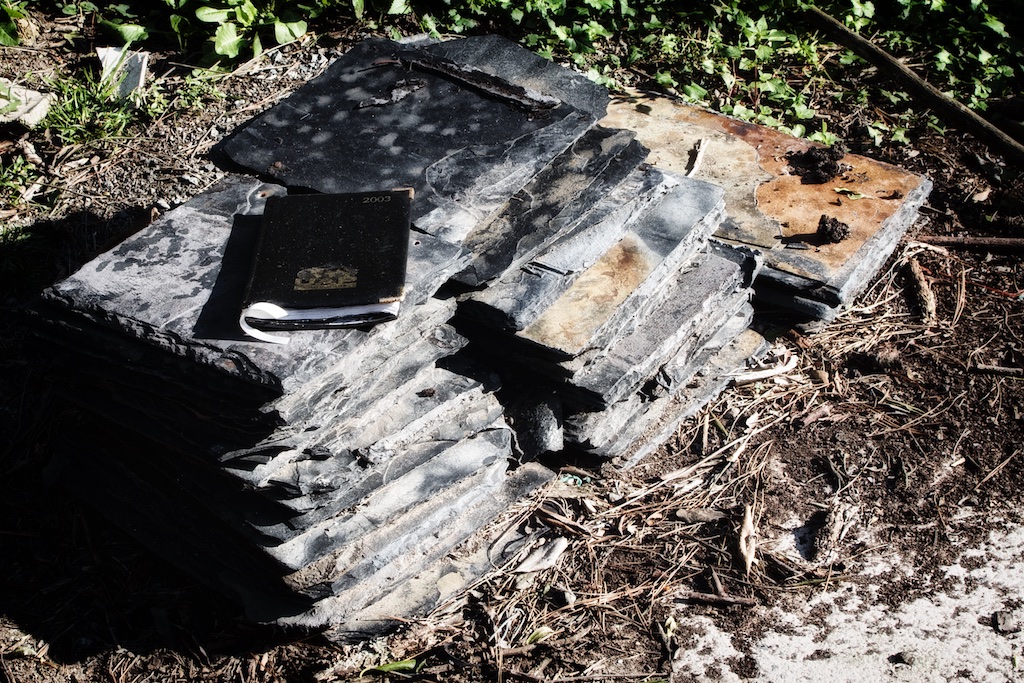
The neighbourhood I live in runs across the top of a steep escarpment carpeted with tall Douglas fir trees. Long before the city expanded this far west, the Bow Bank Quarry, one of fifteen quarries operating in the Calgary area prior to the First World War, mined a seam of sandstone along this ridge. Remains of the mining operation and the small settlement that housed the stonemasons who worked at the nearby brick factory and their families can still be seen today. But the only formal recognition of Brickburn is the sign that stands alongside the railway tracks.

I’ve been walking the pathways through this storied region for decades. Now only a short distance upstream from the downtown core, a precious wildness has reclaimed the embankment. To hike the challenging Douglas Fir Trail is to slip into a space that feels and smells like being in the mountains, in the middle of this city that sits where the foothills of the Rockies give way to open prairies. One can lose oneself in the beauty of the forest, but echoes of the past are ever present—in the rocks and trees, in the spirits of the Indigenous peoples who traversed the land and rivers for millennia, and in the traces of the settlers whose early industrial efforts transformed the river valley for better or not.

At one time, years ago, I sketched a few notes for a possible story about the years of mining and brick manufacturing in this location, or rather, about the rough ghosts that abandoned communities harbour. The thoughts I hastily gathered in a notebook were later uncovered by chance when I was searching for a title for what was an undefined blog effort. And thus, four years ago today, roughghosts was born.

I’ve mentioned before that this blog was created on a whim, about three weeks before months of increasingly unstable behaviour escalated into full blown mania, essentially ending in a nightmare that would cost me my career. I crawled home wounded, relieved to be away from what had become a very toxic, dysfunctional workplace, but suddenly found myself alone in the world. I had loved my job, it was my life. I was angry and hurt that things had been allowed to come apart so completely. I had worked in a disability field, was open about my own disability, but no one understood how desperately ill I had become and what that really meant. Cut off from all resources, I was left unsupported and isolated. I didn’t even have proper mental health care to turn to. Nor did I have any friends. No partner. My parents were aged and far away.

In the end, starting this blog when I knew it was the last thing I had time for, turned out to be the thing that kept me going in those early months following my breakdown and beyond that, through further challenges I could never have anticipated, including my own very-close-to-death experience, the sudden loss of both of my parents, a friend’s suicide, and a period of intense depression. It also gave me a forum to write. About mental health, about anxiety and loneliness, about sexuality and gender, and of course, about books. And it is the latter, that ultimately opened my world.

 In the past four years I moved from occasional musing about books I read, to writing critical reviews and creative essays for publication, and, most recently to editing for 3:AM Magazine. I have made friends around the world, and have travelled—something I thought I would never have a chance to do—visiting South Africa, Australia, and India. Had I not lost my job, I likely would have not moved beyond the idle musings and I would have continued to hide the truth of my personal history.

From the time I was a child, the one thing I really wanted to do was write; I was always bursting with ideas. But in adulthood, I found that stories began to elude me. I have stacks of notebooks filled with rough sketches that never moved past the vaguest of outlines. With each year, creative writing became a more desperately difficult act. I was losing a sense of self to anchor my writing. In searching for characters I was hoping to find myself. Yet what I ultimately came to appreciate was the truth that if I was going to feel whole, I would have to be able to live in the world in the gender I’d always sensed inside. But rather than freeing up my stories, transition threatened to bury them for good. As I devoted myself to a new reality as a single male parent, building a new career out of nothing, I quickly learned that my mis-gendered past—the first forty years of my life—could only be addressed in the most neutral terms. Being out as a differently gendered person was not an option. I had no supports within a LGBTQ community which, as it existed at the time, was alien and unwelcoming to me. So my stories, now that I’d started to understand them, had no audience.

Being freed from a closeted work existence has given me a voice, even if only a portion of my writing and my blog address queer issues. Meanwhile, in the real world, being “out” has proved to be an uneasy reality for me to navigate. My people, I know, are book people. Gender, sexuality, age or location are all secondary.

Roughghosts—as a blog and a Twitter handle—has served as my introduction to the world as a reader and a writer, under my real name. I still struggle with loneliness and depression, I’ve continued to face a tremendous amount of loss and challenge, and I grieve the years and opportunities I missed in this long queer journey of life. But this space has become an important outlet. It is a space to write about books, poetry, travels, and to offer the odd tortured reflection about the messy business of living. Literature will, I hope, continue to be the core focus of this blog.

Thank you to everyone—friends, fellow readers and writers, translators, and publishers—who have entertained my meanderings thus far. I’ve really come to love my blog, as place to talk about books, and a ground to explore writing ideas. It is one space that truly feels like home.

Another winter solstice: A dark year ends brightly

2017 has been a difficult year for many, personally and globally. It has become my custom to stop on this day—the shortest of the year, 7 hours, 54 minutes to be exact—and tally an account of sorts for the year just passed. That typically also includes some variation on a “books of the year” theme. This time I will refrain from the attempt to gather a formal list, but will work in some of my literary highlights.

My year began on a very low note.  2016 had been a year marked by significant creative achievement tempered by great personal loss. With the advent of the new year, I was awash in a mix of complicated emotions. Toward the end of February, probate was finally granted on my father’s will and I received the first part of my inheritance. This relieved the serious financial concerns that had been haunting me for months, but paradoxically, I felt worse than ever. As a wave of loneliness, threatened to completely overwhelm me, I sat down and composed a short blog post that, much to my surprise, garnered more views on the first day than any post I’ve ever made. Clearly I was not alone in my loneliness.

I don’t think I can say that post changed my life, but it represents the beginning of an awareness of the extent of the very real community that can develop online. Most tangibly it led to an invitation from fellow blogger Tony Messenger to take part in the annual extreme walk for charity he organizes in central Australia. And of course, because nothing is as perfect as we would like, I picked up an extreme cold somewhere between Calgary and Alice Springs, so I didn’t walk very much (or very fast), but to have almost two weeks out in the heart of the desert was an experience I’ll never forget. And the beginning of a deeper level of grieving for my parents. At the moment, much of the journey is, like so many of my photo files, unprocessed.

These things take time.

And, having travelled halfway around the globe, I had to at least stop into Melbourne and Sydney and catch up with some Twitter and online friends along the way. Every encounter was wonderful, and contributed to shrinking a large, lonely world a little, even if just for a few hours.

Brighton Beach, Melbourne
Glebe, Sydney
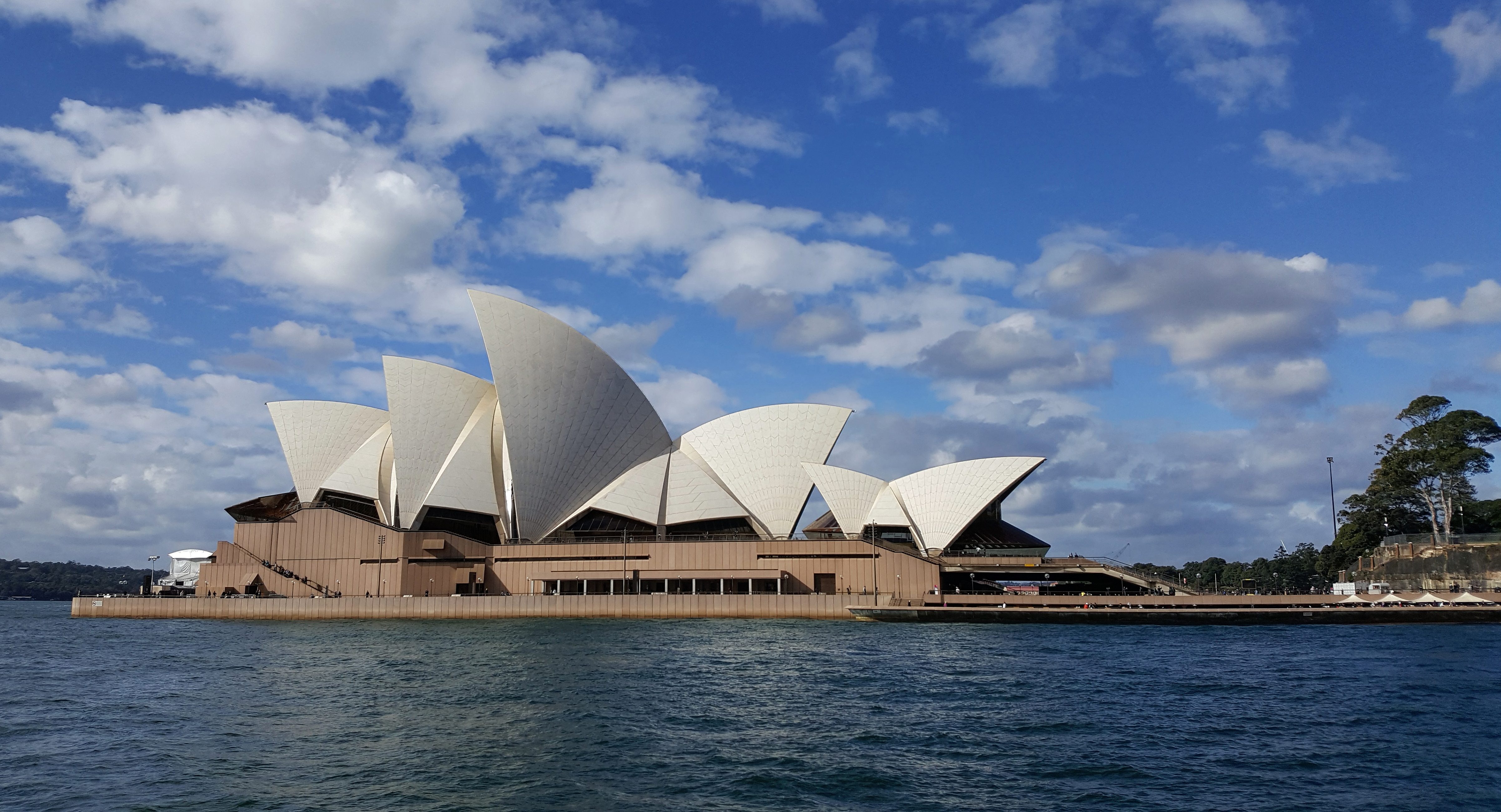
Sydney icon

Over the course of the summer, my brothers and I managed to get our parents’ home fixed up and ready to go on the market. They lived on an acreage outside a small village in a region of the province where the real estate market had been dormant for over a year due to the depressed oil industry. However, things were just starting to turn when we listed the house in late July. Within a week we accepted an offer. Now there are still some estate matters to clear up (and lots more stuff to dispose of), but with a measure of closure we can all start to move forward.

My highlight of the autumn was my city’s annual reader’s festival, Wordfest. I volunteered as a driver for the first time and had a blast. One has an opportunity to engage with authors in a completely different way when driving them around town. And this year’s event featured a strong line-up of Indigenous writers and an excellent poetry cabaret. But by far, my singular thrill was an opportunity to witness the phenomenal M. NourbeSe Philip performing from her experimental epic Zong! I had several opportunities to speak to her privately, and she was generous, supportive, and enthusiastic about my own writing project.

However, when I think back over 2017, I feel like I have been less productive as a writer. I would like to think that the work has been germinating… In truth, 2016 saw the publication of a couple of pieces that had been fermenting for a few years. This year it has been harder to find the focus, but I feel that shifting. I also limited critical writing off my blog, again an energy and concentration issue, but I am very pleased with the reviews I did publish. I’ve also been editing more, an invisible but very highly rewarding activity. And I’m excited to see where my new role with 3:AM Magazine will take me in the year ahead.

And so, at last, to the year in reading. I read many great books—and acquired many more that I’ve not yet gotten to—but here are some of the highlights:

This year I read, for the first time, several writers I have been meaning to get to for a while—Fleur Jaeggy, Ingeborg Bachmann, and Gerald Murnane—and I was in no instance disappointed.

I collected and read an embarrassing amount of poetry. These are a few of the collections I’ve been spending time with:

And somehow I’ve ended up with a healthy selection of contemporary Australian poets (with a few more still on the way):

Meanwhile, a couple of Canadian Indigenous writers really caught me off guard and I have since gathered earlier works by each to catch up on:

As a memoirist (or memoirish writer), I paid special attention to a variety of excellent (and different) memoirs:

And although I can say with confidence that almost every book I read this year was published by an independent publisher, I took special pleasure in supporting some very small indie outfits:

I also like to think that reading should be both intelligent and fun,so with that in mind, these are a few books that really surprised and delighted me:

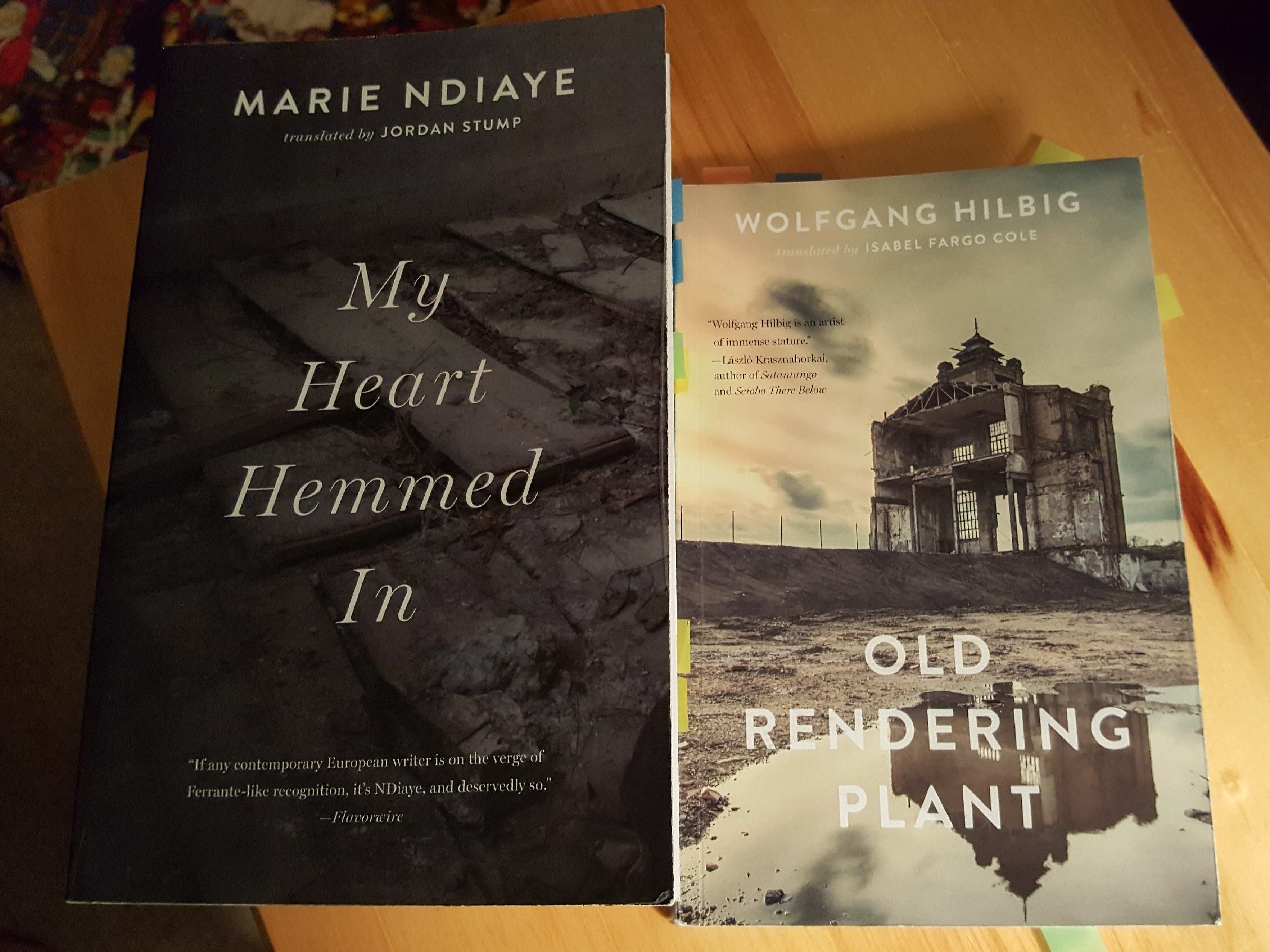
And finally, I loved every single book released by Two Lines Press in 2017, including two of my absolute favourites novels of the year:

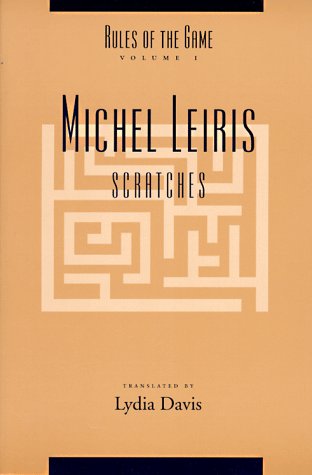
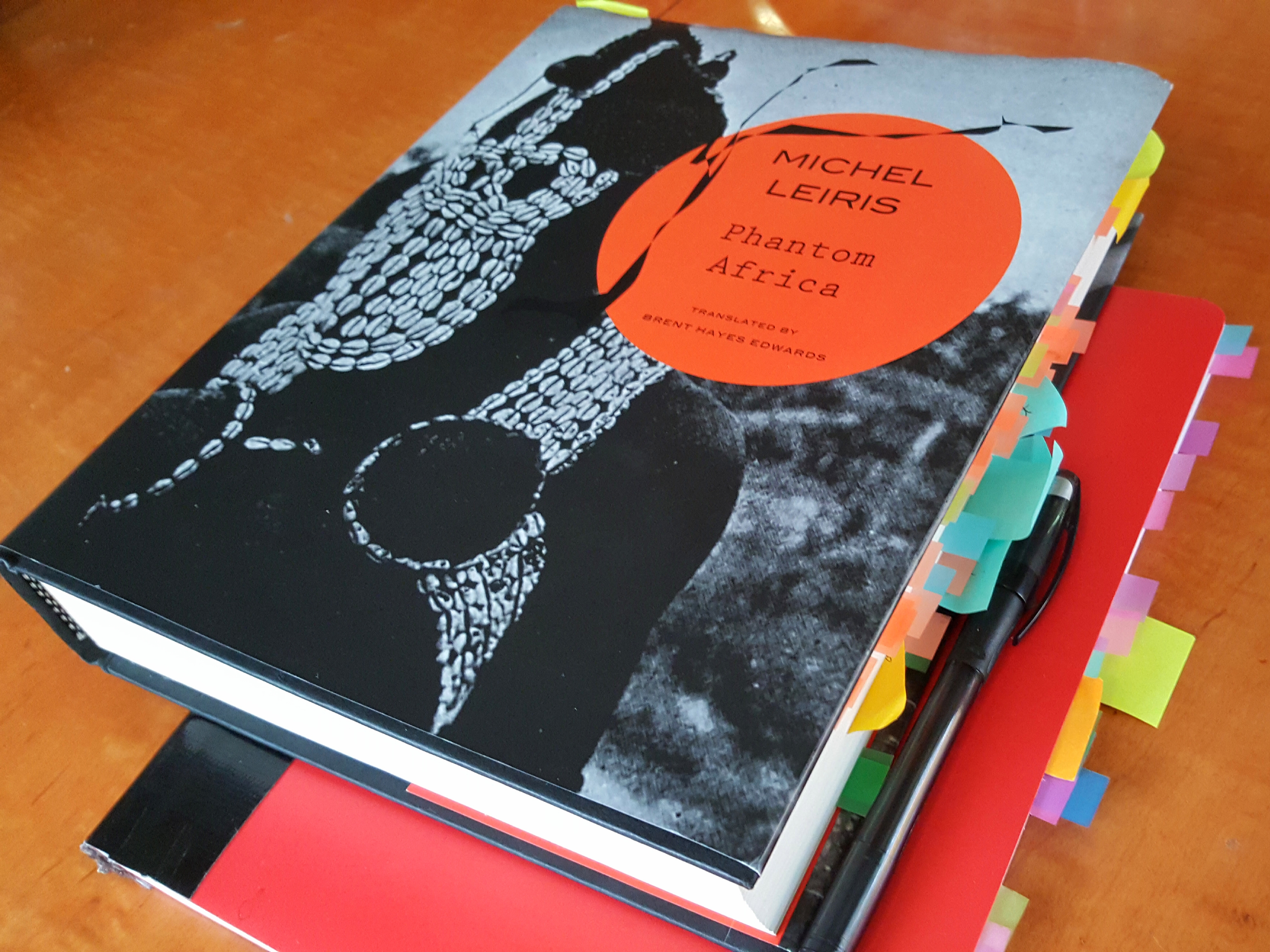
Last, but not least, 2017 is the year I became rather obsessed with French author Michel Leiris. I read the first part of his autobiography, Scratches, which I will write about soon, and purchased the next two parts (the last part has not yet been translated), along with his essays, fiction and correspondences. But, by far, the most demanding and rewarding reading experience I had all year was his monumental journal Phantom Africa. (With the exception of most of the poetry, I wrote about every book pictured here on my blog or for other online magazines. Links can be found on my Review Index 2017 page.)

Now, as the year is coming to a close, I am, of course, still reading. I’m also writing, and looking forward to an upcoming trip to India where I hope to be able get even more writing done. But the true reason this winter solstice is brighter than those of the past few years is that, as of tomorrow, my son who is just about to turn twenty-eight, will have been sober for two weeks. After eight years of heavy drinking and all of the discord, danger, and stress that loving an alcoholic entails this is something I feared I’d never see. I don’t know why he suddenly stopped. I have not asked. I am simply being supportive and hoping that this is the beginning of a new future for him.

So, at least for the moment, it’s all good. I hope everyone else finds a little goodness in the days ahead.

To sing the song unsung: A personal answer to Singed by Daniela Cascella

The voice soundless and then, records unheard, song unsung, voice also unsung
dipped enshrouded ensheathed enlandscaped tongueless tongueless tied no story no record.

Daniela Cascella is a literary ecstatic. She engages with the word—written, spoken, sung, depicted—at an essential point of being, at that place where the spirit, soul, or daimon resides.

She listens into the silences, to the whispers and echoes, to the frayed edges of meaning. As a native Italian who writes in English, she attends to the spaces between languages, bending and folding her adopted tongue to affect fractured layers of intent. To open yourself to reading her is to be challenged to read and write with a new sensitivity to sound, voice and significance.

If I sound like an enthusiast, I am. Daniela (if this was a review rather than an answer I would refer to her by her last name—I will honour her instead, as Brazil honours Clarice) has been a vital friend and mentor over the past year and half since I first came to know her. As an essayist, my primary goal is to reach toward an articulation of the ineffable, to give voice to an existence, not between languages, but between gendered experience in a way that gets closer to an expression of being as I understand it than the common dialogue surrounding trans identity allows. I have no idea if that is an attainable goal, but Daniela’s essays and meditations thrill, inspire and ignite me.

Inspire and ignite me.

Ignite.

Her latest book, Singed, takes its title from permutations of sing: sing, singed, sung. It opens with the account of a fire. A few months ago the room at the top of our house caught fire. A large number of books and cds were lost to the flames. I first read of these burned books from a PDF of the text. I responded with horror; I felt wrenched with every title. Returning to this accounting on the printed page a few weeks later, I sensed an exaltation, a calling forth, a rising to a challenge, a refrain to be reclaimed amidst the losses. And that is what Singed is. As Daniela sifts through the ashes and embers, sings through the ashes and embers, she calls forward precious voices—Clarice Lispector, Teresa of Ávila, Laura (Riding) Jackson, Elfriede Jelinek, Marlene van Niekerk, Isak Dinesen, Fleur Jaeggy, Ingeborg Bachmann and more—chanelling their words and their attempts to speak to otherness. Hers is a reading as inhabiting the spaces between words.  The observations she makes and questions she asks, hang in the air, inviting her reader to ponder the unspeakable and challenge the constraints placed on how we’ve been taught to read and to write.

Woven through her literary explorations, are reflections on music and art. These excursions help frame, and reframe, a multi-dimensional engagement with the written word. Hearing, seeing, and speaking are essential activities, as are silence, emptiness, and unfinished forms. A sigh, for example, Clarice’s in particular, which Cascella (at this moment, this feels like a review) first encounters listening to Lispector’s last recorded interview, inspires an intuitive and rhythmic engagement with the works of other writers, a series of echo and dub sessions on the page. The experience of reading and writing a review of Marlene van Niekerk’s The Swan Whisperer, a short tale in which a young student loses himself in his endeavour to transcribe the language of swans, leaves her spellbound, speechless and wordless, unable to write for months. Of that interlude she says:

Today I know that the silence I experienced was a deep working of the stuff that makes writing be. It was the encounter with the substance that eludes you and that causes such physical turmoil when you grasp it in other words, in words you read in a poem or hear in a song, and you recognize their subject as yours.

And the connections she draws when writing across languages are illuminating, especially for those of us who are unilingual. In an essay about Fleur Jaeggy’s as yet untranslated novel, Le statue d’acqua, Cascella writes:

Where did the spirit of the world hide that night its reservoir of dreamers?

The porous blank portions between the words in The Water Statues soak up Jaeggy’s discomfortable writing. They enfold the space of space, or as Gass wrote of Rilke’s Innerweltraum, the space made by Being’s breathing… Not just the space we call consciousness, but the space where we retire in order to avoid a feeling… These spaces are always palpable as though space were smoke, or the mountains of the heart where the last of the hamlet of feeling may be discerned. The blank spaces host echoes, speech where speech ends, the voices of ancestors. Jaeggy herself has acknowledged, in discussing herself hearing writing in between German and Italian, that German is the language of her dreams…

Voices and echoes, and echoes of voices.

Repetition of a refrain.

Call and answer.

If reading Daniela Cascella’s work—including her earlier books, En Abîme and F.M.R.L.— has nurtured in me an alertness to sound in language and imagery, and an awareness of voice, more explicitly a desire to voice what is known without words, Daniela, as a friend and fellow writer, has personally encouraged me to incorporate more photographs (or a photographic sensibility?) into the presentation of my writing—a process I am still just beginning to explore.

But take this image:
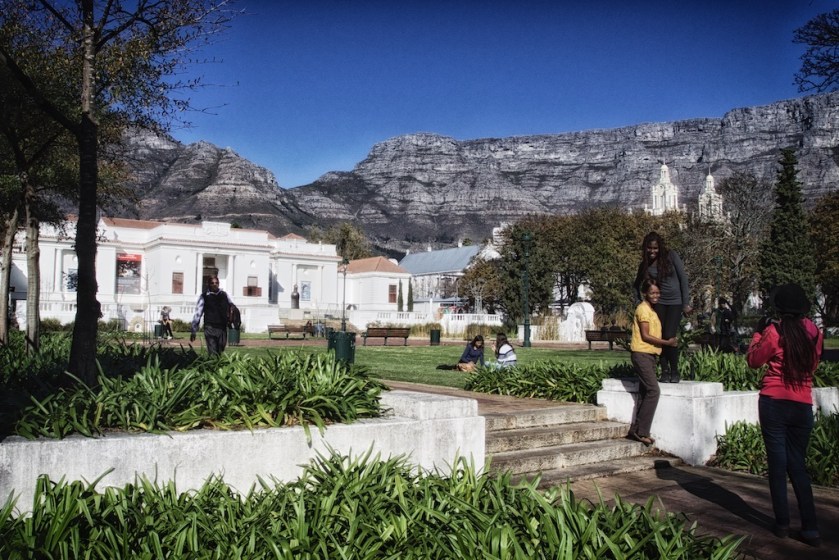
July, 2015, mid-winter in Cape Town. This is the Company’s Garden, with the iconic façade of Table Mountain looming in the background. On that white columned building in the distance, if you could see it, is a poster advertising William Kentridge’s multi-media installation, The Refusal of Time. That is the South African National Gallery and this is my last full day in the city. I made my way through the gallery in near isolation and as I passed into the room containing the Kentridge exhibit, the recorded rhythms of metronomes and bellows were triggered and seemed, in the moment, to be contained within this dark space where I experienced the entire presentation alone, surrounded by noise and images, free to wander and absorb the full sensory explosion unhindered. Later, as I explored the rest of the gallery, I realized that the sounds and rhythms of the exhibit resounded and echoed through the entire building, enhancing my sensory appreciation of every photograph, painting and artwork I saw. I cannot think back on that visit to the gallery without hearing and feeling, the steady cadence, the heartbeat, of The Refusal of Time.

But that’s not all, and this where I answer Daniela Cascella and Singed. When we first connected, we shared our mutual appreciation of Marlene van Niekerk—The Swan Whisperer and her monumental novel, Agaat. It is a trace of the latter work I carried with me during my stay in Cape Town. Every time I came into the bowl from my B&B in Sea Point and saw Table Mountain stretching out before me, I could not help but hear the awed voice of the young Agaat after a trip to the cape with her mistress: “I saw Table Mountain.”

I saw Table Mountain.

 That young girl’s voice echoed in my head. Agaat’s voice became my voice. The voice of a past part of myself.

I saw Table Mountain.

 That afternoon, I sat in the café in the Garden, with Kentridge’s metronomes and Agaat’s wonder punctuating every breath, and started to write. I was, I believed, at the beginning of a process of writing my way back through the year that had just passed, from the breaking point of a serious manic episode to the renewal of a sense of self identity and an clear understanding of the unfinished business of being differently gendered in the world. A neat, circular journey  that would, in the writing, lead to healing.

As if.

Life (and death) still held lessons I could not, in that moment, anticipate.

Today, the pen still hesitates on the page. Small forays have been made, but I am only beginning to learn to listen to the voices I am trying to transcribe, the voices of the selves I am and used to be—girl, woman, man.

Somewhere, in the distance, I am calling back the beat of the metronome and a child’s voice: I saw Table Mountain. That child is me. In Cape Town I believed I could rewind time, solstice to solstice, one year back to the day I left my job,  and move on from there.

No.

I need to go back farther. Back into my past and listen for that child’s voice, the child who had a feeling, but no words to express it. To gather what one can know in absence of language, to salvage words from the margins of memories. Attend to that distant silence.

So much has passed in the two and a half years since I took this photograph. I almost died, then both of my parents faded rapidly and were suddenly gone, and the friend who drew me to South Africa committed suicide.

Just when I thought I was ready to write, my life caught fire and burned for over a year. Now it is time to sift through the ashes and embers, re-enter the remembering, and embrace the discomfortable, pen to paper.
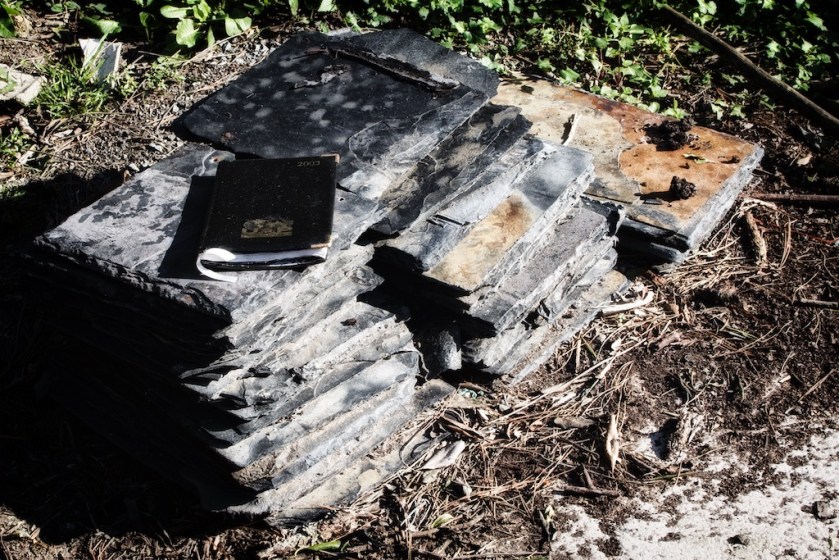
Singed by Daniela Cascella is published by Equus Press.
Writing into a new season with renewed hope: A reflection

Writers are the scattered or lost tribe of the world. They originated from one belief—even the tenants have been lost—shared rituals and music, and the same place, which was an oasis port on the edge of dark badlands. Because of a history of roaming and Diaspora long, long ago, the individual members became stultified in separate languages and they took on as protective colouring the customs and the beliefs of the populations among whom they lived. They may have given their hearts to the people. But when they meet they recognize one another by a look in the eyes as if squinting against the sun, and by the clumsy gestures of hands. Their hands are uncertainly looking for sugar signs of sharedness. This they will see, maybe with mortification, remorse and shame: That they are indelibly marked by the same stubborn illusions, the same shortcomings making their fit into life an awkward one, the same yearning for projecting connectedness and for initiating transformation.

— Breyten Breytenbach (from Intimate Stranger)

I entered September on a low note, still trying to stay a step ahead of the tendency to slide toward darkness that has been haunting me these past few years. At times I thought I had finally shaken it, only to have another challenge rise up. Last October, bereaved three times in the span of a few months but unable to begin to untangle my grief, I hit the lowest point I can recall since my teens. And paradoxically (because depression holds to its own logic) I had just sold several essays and had two pieces finally emerge in print.

Now, almost a year later, I sense a change.

I feel that I am beginning to heal, and that I am ready to begin to grieve.

The past six months have brought adventure, a degree of closure, a measure of financial security, and the recognition that with true friends, the ones that really matter, distance is not a barrier. However, I have not found a job and I have not written much beyond a few select critical reviews and a few short creative pieces. I talk about finally being ready to write, to focus on a larger project, but now that I no longer have any kind of regular income, writing can feel like a frivolous pursuit. Yet, as much as I was briefly tempted by a professional position I was interested in, I don’t really want to go back to my former line of work, even if that was a viable option and I’m not sure it is.

So, I have made an exciting—and a little unnerving—decision. From the money I recently inherited, I have put aside enough for the next twelve months. It’s a modest sum but my life is not extravagant and I now own my house. Of course, being a pragmatist, I’ve also left a decent amount for emergencies (the cat’s dental work to start) and with luck, a little travel. But rather than seeing this as a stopgap until I find a job, I am considering this as: Paying myself to write.

 My goal is to attend to writing as I would any other job. I’ve joined the Writers’ Guild, increased my volunteer commitments in book and writing related areas, and have several opportunities for contract work of various types. I want to continue to gain practical experience and build on the connections I have.

I made this decision several weeks ago, but only shared it privately with a few people. I needed to know if I could keep on task and keep my mood positive before making my commitment public. Before putting it out there.

And so now it’s public.

Today I turn fifty-seven, another fact I hesitate to share. I’m not sure how I got here so fast, but I don’t want another year to pass without making a serious effort to finally do the only thing I’ve ever wanted to do. To write. To believe in myself.

It is not easy. I realize now that every day I need to work to keep from slipping back into a negative spiral. To that end, I have taken a cue from Michel Leiris whose work has been a near obsession for me of late. I’ve just finished reading his monumental work Phantom Africa which is a journal he kept over the course of a two-year ethnographic expedition from Dakar to Djibouti in the early 1930s. He simply records the events of the day and his feelings about his experiences, in so much as he has time to do so. He does not edit himself, his moods fluctuate, his doubts, frustrations, and erotic dreams are all noted. I decided to follow suit and keep a journal of this year myself. My past journaling efforts have fizzled pretty swiftly because I assumed I had to be profound at all times, to only record my sculpted thoughts. Now my aim is to comment on my successes, or shortcomings for the day, and set a goal for the next. When time or inspiration allows I go further, write about the things that are worrying me, speculate, even dream a little. I don’t confine myself to reading and writing concerns, but they are always central.

So far so good.

I hope to stay open to possibility. To read and write to purpose and potential. I have certain projects in mind, call for submissions I want to answer, but I want to kindle and nurture other ideas and see where they take me.

To trust words.

Ever tried. Ever failed. You know the drill. August 2017, the month that was.

As August draws to a close, and September opens, I have some thoughts about the pressures of prescribed reading and the complicated emotion of loss.

Joseph Schreiber 2017

At the outset of the month I pulled out a selection of potential books to choose from for Women in Translation month. I knew that with several review related reading projects underway I was unlikely to get to more than a few titles. I managed three: one of my must-reads (Carmen Boullosa’s Before), one that was somewhat disappointing (Kjersti A. Skomsvold’s The Faster I Walk, The Smaller I Am), and one late addition (Isabelle Eberhardt’s The Oblivion Seekers). However, I found that many of the books I tried to pick up did not work at all for me— that is, they were not right for right now. Feeling that I ought to try to manage one more before the month was out I found myself frozen, almost unable to read anything… I had to stop and remind myself what such reading projects are all about.

Raising the awareness of the fact that fewer female writers are translated is important, as is celebrating the terrific authors who may not be well known. It never hurts to look at one’s reading habits and challenge one’s self. But it is another thing to get stressed and defensive. And that is what happens when I start to measure my reading by gender. I will admit, more male than female authors line my shelves. I have addressed this fact before in other posts. I also wrote about how for the better part of two decades I read almost exclusively female writers in an essay for Literary Hub last year. For a long time, I hoped that by filling my head with female voices I would find my own. And, of course, I never did. The sense of myself as male was unassailable. Seventeen years ago I set off on a course to realign my presented and internal gender. And here I am.

At this point, I like to think that the gender of the authors I read is secondary, although I will admit to a growing need to connect with gender-queered and gender non-conforming perspectives. Most specifically I am drawn to writing that is challenging, exploring style and form. In recent months, some of those writers have, in fact, been women in translation—Fleur Jaeggy, Can Xue, Marie Ndiaye. Before next August rolls around again I am certain there will be more. And I know for a fact I will be turning to some intriguing experimental female writers writing in English. But, as a person with a differently gendered history, gender is a complicated, messy space of being. Whenever I start to feel the burden of gender pressing on me from the outside, the existential anxiety (and anger) that haunts me is stirred.

So, let me read—as and how I need to read.

But my own self-imposed reading ambitions are not the only pressures that have weighed on me this past month. My brothers and I listed our parents’ house and it sold within one week. With the possession date looming we made several trips to clear the house out and, on the final visit, I found my mother’s nail file. She carried this file with its ivory coloured handle and tattered red plastic sheath for decades. Just looking at it I see her hands. It is perhaps the single most important keepsake I have. More than anything it reminds that she is well and truly gone.

When I first came out to my mother, back when transgender was just beginning to draw some serious public attention, she asked for some time to process what I had shared, but promised that she loved me unconditionally. And she never let me down. She was my advocate, my best friend, the one person I could call for comfort and reassurance, no matter what. I was otherwise alone. There were no local supports, I faced the challenges of being a single male parent of two children with learning disabilities, I experienced a breakdown, the loss of a career, and a life-threatening health crisis. Even though she was unable to travel far near the end, she phoned me every week without fail, and I spent as much time as I could with her and my father in their final months.

When my parents died last year, my mother’s death opened an intangible void.

My parents’ house. Our last day there.

I did, however, still have one faint, yet vital lifeline—a friend in South Africa, the closest queer friend I have ever had. Bookish and bipolar, like me, she was a sort of soul mate even though we only met in person once when I visited her in 2015. But as I was tumbling, she was falling further and farther. One year ago today, September 1, Ulla took her own life. Images of the rugged Indian Ocean shoreline near her home have been seeping into my dreams. As we spread our parents’ ashes before leaving their property for the last time, all I could think of was Ulla’s being spread on the beach. I couldn’t touch the urn. My son spread my share.

Eastern Cape, South Africa

Suddenly I am doubly aware of how alone I am. How alone I have been and how weary I am.

The intersection of Pride Week, rather than providing a distraction, exacerbates the sense of loss. I cannot imagine anything lonelier than a mass of shiny happy people. I did excuse myself from the volunteer commitments I had made and now I am free to avoid the parade as I usually do. I also happened to have a doctor’s appointment so I spoke to him about my recent depressive dips and my frustration with the reality of long-term trans loneliness that nobody talks about, that isn’t fashionable, that doesn’t fit the script.

Sometimes loss feels less like a temporary passage, than a layering, compounded, defining quality of life.

Welcome to my closed space reality:

All of old. Nothing else ever. Ever tried. Ever failed. No matter. Try again. Fail again. Fail better.

And so on.

Note: I should have included a link to the requiem I wrote for my friend. This piece was published at Sultan’s Seal last November, is constructed of salvaged language, and features photographs from my visit to South Africa.

Women in Translation Month: Some suggestions and my goal for this year

August is, as you may know, Women in Translation Month—a broad based initiative to promote the reading of translated literature by women, hosted by Meytal Radzinski.  Anyone and everyone is welcomed to take part in any way, large or small, to help celebrate, promote, or explore translated works by women writers.

This month I have several significant reading projects that involve writers that, if in translation are not female, or if female are not translated works. However, I have, as ever, made a selection of titles to choose from with the hopes that I will be able to work at least a few in over the weeks ahead. Being a painfully slow reader, and an even slower writer, I have been careful to keep all potential contenders at or below 200 pages—sometimes well below 200 pages. From the books pictured here, Carmen Boullosa’s Before and Magdaléna Platzová’s The Attempt are at the top of my must read list for this year’s WITMonth. I will be happy to manage to fit in four.

This modest collection includes works originally published in Afrikaans, Arabic, Catalan, Chinese, French Canadian, French (France), Norwegian, Polish, and Portuguese. And, of course, I reserve the right to choose something not pictured here, but I don’t want to let the month pass without honouring this worthwhile, and important, project.

On my nightstand, a selection of current touchstones in lieu of a personal canon

I have been on Facebook long enough now that I have begun to get those sunny reminders of what I was up to one year ago. Yesterday I discovered that it has been a year since I published my first piece of personal creative writing. The essay, Your Body Will Betray You, remains pinned to my Twitter timeline and continues to generate conversation. Readers have found it informative, inspiring, and, in one important case, a ground for opening a conversation that had been unspoken in that person’s life. And that particular response made baring a piece of my soul like that worth it. A writer may write for him or herself, or to entertain or educate, but to speak to the very core of one reader who needed those words more than anything… that is a gift.

My most recent piece of writing to be published comes deep within the pages of the new issue of The Scofield 2.2: Conrad Aiken & Consciousness. This issue marks my first opportunity to edit the work of other writers—a tremendous honour and thrill, with deep thanks to Tyler Malone and Dustin Illingworth for their faith in me. Putting a publication of this size and scope together is an enormous task and my role is a modest one, but I am proud to be involved. My written contribution is even more modest. I wrote several hundred words about Damon Galgut’s In a Strange Room for the “On Our Nightstand” section (it’s on page 287 if you care to have a look, the issue can be downloaded for free and has a wealth of good reading). In this piece I talk about my evolving relationship to this book by one of my favourite writers. I turned to it as a possible avenue into the task of writing about one’s self—which, for me, after more than a decade of deeply closeted existence and a life lived in two genders, seemed terrifying and overwhelming.  Galgut’s attempt to record three distinct experiences in his own life was so spare, so translucent, that I could not begin to imagine taking an approach like that to my own. In the end he comes to believe that memory necessarily fictionalizes our “truths.” I am, at this point, closer to and yet less troubled by that conviction than I was three years ago when I started to understand that I needed to write. I go back to In A Strange Room often. As I say in my Scofield piece:

This book has become one of my touchstones, an elegant example of the way personal experience can be pared down to its essentials and explored through the lens of time and memory. It remains, for me, some of the most meditative and precise writing about what it means to be grounded, in one’s self and in relation to others; the allure of the road and the ambiguity of home; and most vividly, the way that all truth lived is, in essence, a fiction.

In other words, if I had a personal canon, which I would argue I don’t, this book would be on it. And I do keep it on the shelf inside my nightstand.

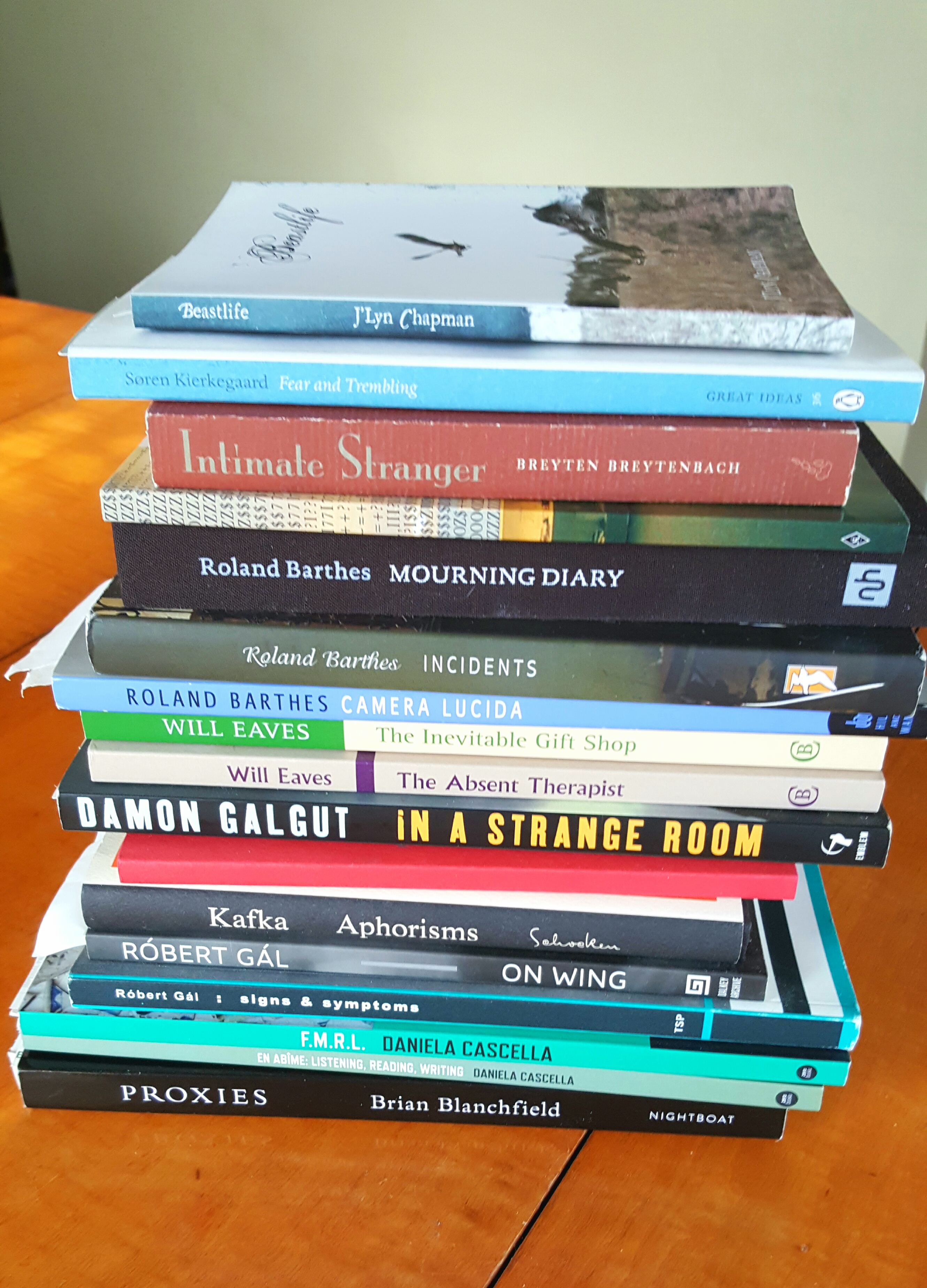
In the past few years, as writing has become more urgent, my reading has become more explicitly targeted. I am especially drawn to smaller, quirky, experimental works and, in many cases, books by people I have been fortunate enough to come to know—writers who have become part of a virtual network people who inspire me and suffer my creative ideas. The majority of those books are literally on (or technically inside) my nightstand. In lieu of a personal canon, here are the books that are currently fueling my literary scribbling. (Links to reviews, if applicable)

Beastlife by J’Lyn Chapman — I am always on the lookout for unique approaches to the personal essay. I have a large selection of books waiting to be read, but this little meditation on life, death and taxidermy is a treat.

Fear and Trembling  by Søren Kiekegaard — Well, just because.

Intimate Stranger by Breyten Breytenbach — This is a collection of essays and poems to a young poet. I ordered it when I came back from South Africa; it arrived when I was in the hospital recovering from cardiac arrest. I’ve mentioned and quoted from this book several times, but the post I’ve linked was written shortly after  I returned from the hospital. It addresses one of the key concerns—loss of a memory—that I am taking with me into the outback this month.  Reconciling one’s own near death is no small matter. I carry it deeply and have not yet found a way to write it out.

Thy Decay Thou Seest by Thy Desire by John Trefry — This little caprice or, as we’re advised, “Meditations for Sedentary Labourers,” is so delightfully eclectic that I found in it inspiration for an experimental project that, in contrast to the deeply personal work I write, will allow me to distance myself from the salvaging of the language I use and, depending on the constraints I set, some of the construction. I am proud to count John among the writer friends the internet has afforded.

Roland Barthes: Mourning Diary, Camera Lucida, and Incidents Three works that intersect for me, at a personal and literary level at this moment. Incidents, may well be one of my very favourite Seagull Books as well.

Will Eaves: The Absent Therapist and The Inevitable Gift Shop. Experimental, insightful, and devoid of pretension. Fragmentary works fascinate me. It seems to be a bit of popular device lately, but in my mind, these books—one fiction, the other essay/memoir—work very well. Eaves has a presence that is immediate and personal, he is good company.

In a Strange Room by Damon Galgut (see above)

The Surrender by Scott Esposito — This is one of those books I watched and waited for. I am cautious about trans themed writing but I knew this one would be different. This book holds infinitely more for me than I included in my review. My reading of this book coincided with the release of my own Minor Literature[s] essay, and the beginning of a valued friendship.

Aphorisms by Franz Kafka. Yes, I also love The Castle — one of the few books I own in multiple translations, but this is the Kafka I need to have close at hand at the moment.

Róbert Gál: Signs & Symptoms and On Wing — When I was first looking for a way to begin to write about my life and experiences, I was looking to fiction. But in defiance of conventional narrative form, I wanted current, accessible, experimental models. I read In A Strange Room and The Absent Therapist in late 2014 but it was almost a year later when I picked up On Wing. It remains a book that I read all the time, it has impacted my thinking in ways I cannot describe (because we ideally absorb and filter the work that drives and inspires our own—it should not be obvious in the final product) and Róbert was one of the first writers to suggest I should write a book. I don’t know where that book is, but it is no accident that a quote from On Wing opens Your Body Will Betray You.

Daniela Cascella: En Abîme and F.M.R.L. It may not be evident, but getting to know Daniela and her work has revolutionized the way I engage with language. Her enthusiastic approach to reading, listening and hearing work into being is wonderful. I find I am so much more attuned to sound when I read now. Maybe it will come through in my own writing one day.

Proxies by Brian Blanchfield. Again, this is another work that asks questions and contains ideas that are important to me. Essays that make me think about writing essays are my favourite kind.

If there was enough room, W.G. Sebald’s The Emigrants and Austerlitz would also count as work of current relevance. (They would probably be in that non-existent canon too, if I had one.)

Looking ahead to 2017: Finding light in the darkness

It may be a reflection of the year we have just endured as a global community, or the uncertain variables that cause 2017 to look like such a grey zone, but many people I know seem to be afraid to make any resolutions or commitments moving forward. A month or so ago, when I was still buried under a black cloud of grief and depression, I could not even imagine the utility of existing into the new year. I was in a peculiar space. I was receiving enthusiastic feedback for my work as a writer and critic—even selling a few pieces—but I felt empty and hollow inside. I could stand back and observe my malaise, but I could not bring myself to find an essential light to believe in.

Then, as suddenly as it had settled in, the darkness lifted. My parents are still dead, my friend is still gone, and I have not yet found a job. However, the stubborn, stupid optimism I always cherished as part of my character has returned. Wiser and soberer perhaps, and not at all naïve about the very real threats that the coming year holds. But with good books and the comradery of the many people I have come to know and respect, at home and afar, over the past couple of years, I resolve to try to read and write and photograph my way through 2017, come what may.

31760687801_ea5acb48c8_b

I have been making piles around the house lately and considered photographing them but have decided against being that committed in a public way. Suffice to say there is a healthy stack of fiction including a fair number of recent releases or purchases to which I am adding other titles I feel most guilty about ignoring to date. I have also been reading a good deal of poetry lately, new and classic, so I keep those handy. And then there is a growing collection of essays and memoirs which reflects my own interest, as a writer, in the variety of ways that personal experience or observation can be addressed. As much as I flirt with ideas of writing fiction, I seem to fall back into essay, at least as a starting point. If I end up taking a piece in the direction of storytelling or prose poetry, all the better, but the process has to be dynamic. I am learning to let my writing follow its own course as much as my reading does.

And this leads me to what might be thought of as my resolutions:

Reading: Some surprises surfaced when I added up my completed reads from 2016. I discovered that I read more German literature, than I had expected—11 titles, not including some Sebald that I am presently dissecting or the Kafka that I am always reading. I read 12 English language works (more actually, I have several essay collections and other books in process) and 8 translated from French. As for the balance of the translated literature I read, Spanish, Catalan and Portuguese accounted for a total of 10 books with many more waiting, while I read three Slovene, two Czech, and one each from Dutch, Korean, Arabic, Bosnian, Italian, Icelandic, Hebrew, and Polish.

Contrary to my previous pattern, I only read one South African, title though I added more and still have an embarrassing number of books crammed on to my bookcase. I had also intended to read more Arabic and North African lit and, again, failed. There are also a few key independent publishers I did not read from this year. So, all of these considerations will, if nothing else, be reflected in the piles I build. As to what I read—well, I’ll see…

Writing: I want to continue writing critical reviews but I am being very selective. Looking ahead I am especially excited about writing about new releases from Can Xue and Fleur Jaeggy for Numéro Cinq, while I also have a couple of other interesting reviews booked or underway. I continually debate the value of critical writing (this month the “Top of the Page “at Numéro Cinq features seven reviews—including one of my own—that I selected to highlight some books and reviews that impressed and inspired me). So often critics seem to be held in disdain and yet to write about a book sensitively and intelligently is challenging and creative—but it can be draining. Nonetheless, I have learned so much from the writing and from being edited, all of which has helped make me a better writer. Now that I am also involved with The Scofield as an editor I have further opportunities to continue to grow and contribute to the vital community of online literary magazines.

On the other hand, I am hoping to shift the focus of my blog a little, away from attempting to “review” books that I read (unless it seems appropriate). Rather I would like adopt a more personal reflection on the reading experience—try to pinpoint why the writing works, what ideas are generated, or simply celebrate reading for reading’s sake. I don’t ever want to feel obligated to write about everything I read, but at the same time I am increasingly reading books written by writers who are becoming friends and mentors. I want to be able to write about this work, in an informal, yet valuable way.

Finally, with what I call my “creative work,” I have several projects in mind or in process. One is an experimental, constraint-based project in honour of my father which may or may not lead to anything of interest to others. Otherwise, as much as I thought I was done with writing about the body, it seems that there is still a lot of unfinished business or baggage. It is inextricable from either my interest in being and authenticity, or my now expanded and complicated grief work. I am fortunate to have been approached by several online journals/sites that have invited my contributions and I am very excited about being able explore some ideas in smaller creative spaces to see where they take me. At the same time, I have a few other topics that I want, or even need to examine within, shall we say, a more conventional personal essay format.

Photography: After a long hiatus, I am inspired and eager to return to photography. A dear friend has kindly suggested —insisted— that I should incorporate more images into my writing. This possibility excites me and offers not only a direction for myself as a photographer, but also provides an opportunity to repurpose older shots, cropping and radically reprocessing images that were average and turning them into an integral part of a larger project.

So, even though it is impossible to know what the new year holds, I want to aim to face 2017 ready to build on what I have learned over the last two years which have held, for me, some of the most difficult and most rewarding moments of my life. It is really the only way I can think of to navigate what is bound to be a most interesting and surreal time.

What we read: A reflection on gender, language and necessity

My astonishment – and what is really my anxiety (my indisposition) come from what, in fact, is not a lack (I can’t describe this as a lack, my life is not disarrayed), but a *wound*, something that has harmed love’s very source.
– Roland Barthes, Mourning Diary

A comment made this morning on a post I wrote just over a year and half ago, has made me stop to consider what I am reading at this moment and why. The original post is called Gendering my bookshelves, a look at the gender of the authors I tend to read which were, at the time, and continue to be, predominately male. In the meantime I have read more female writers than I might have anticipated, but I have read more in general. So the ratio is perhaps closer to 80/20 than the 90/10 I figured last year.

This is Women in Translation Month, a project I respect and support, but I am unlikely to contribute with the same intensity as before. Truth is, despite a nice selection of titles that I had collected with this month in mind, I am not certain I will manage to read many. In fact I am close to putting my first effort Now and At the Hour of Our Death by Susana Moreira Marques aside. Don’t get me wrong, this piece of experimental nonfiction about a traveling palliative care team in rural Portugal is quite wonderful. But not right now. These are portraits of death and dying. And to read it so soon after watching both of my parents die hurts like hell.

I am relatively new to the business of maintaining a book blog and, of late, much of my review focus has actually moved off of my blog to online magazines. But what is a literary blog if not an opportunity to write about what one is reading? Sometimes that includes review copies and new releases, but that type of reading comes with pressures and can cut into other reading that one is drawn to. Themes like Women In Translation, German Lit, Spanish Lit all offer opportunities to open up and encourage conversation about literatures that one may or may not otherwise consider.

But sometimes our reading is directed by the forces and idiosyncrasies and, of course, the tragedies of our own lives.

At the moment, I want to read two different types of books–those that offer total distraction, and those that say something about grief and loss. That is where I am at, pure and simple. July was absorbed by hospital vigils and then, once my father finally passed, the immediate business of beginning to organize paperwork, notify institutions and prepare to apply for Probate. We have not even managed to plan a memorial of any kind. Over and over others have commented about how well I seem to be holding up…

2016-08-07 19.03.15But I’m not. The other night, reading Barthes’ Mourning Diary I found myself thinking, but this is different, he is so focused on his mother, my mourning is different. Is it? My father was injured and his death was slow. In the midst of it, my mother took sick and was gone within three days. My mother’s death, is a loss of an entirely different order than that of my father. She was my best friend. I could talk to her about anything. Without her I have no one else, no partner, and no friend as close. Although I have two children, I cannot burden them as they are each bearing their own grief. I woke up yesterday to the harsh recognition that I was trying to roll these two events, these two losses, these two individuals, these two unique relationships into one experience to be grieved as whole. But I cannot. They are separate events and they are one. Suddenly the magnitude of the task ahead is overwhelming.

So I will read and I will write. I want to write and publish something before time has a chance to edit it… a task inspired by Barthes and by Peter Handke’s A Sorrow Beyond Dreams. Women in Translation may or may not figure in the equation. In fact translation may not fit into much of my reading at all this month. So be it. Aside from Barthes, I have a memoir called When It Rains by Maggie MacKellar, a memoir that deals with two intersecting deaths, and I have ordered Love’s Work by Gillian Rose and Simon Critchley’s Very Little… Almost Nothing. Each one of these titles was suggested by Twitter/blogging contacts. I am open to more.

Finally I must say that I have been deeply moved by those who have reached out by email or on Twitter, publicly or through Direct Message, to offer condolences, good wishes, suggested reading and writerly support.

I am in mourning.

There will be words.

January 2016: A slow start to my reading year (and why does that bother me?)

The first month of 2016 has almost slipped away and I am feeling overloaded. Too many stressors have collided to take a curious toll on my ability to read and blog. My reading continues to be fractured. Books are not the same refuge they were a few months ago. Not that they don’t keep arriving (or rather following me home) and haunting me as the stacks pile up, staring at me, daring me to read faster. But my reading is slow, and the books I had expected to venture into by month’s end have not yet been cracked.

And then there is life, the one that doesn’t exist in books, the one that can’t be shelved or put aside for a later date or, as much as I would love it sometimes, be tossed into a pile to go out to the next charity sale. It is hardly a surprise. Over the past month I have had to face some extraordinary challenges on the home front – some new, some long standing, and others simply arising from the financial reality of owning a car and a house, both of which are well past their prime. Some matters have been resolved – one mechanic and two plumbers later – I just have to figure out how to pay for them; others are less concrete, more emotionally corrosive and resolution is not in sight. If another well meaning person says, “This too shall pass,” my reaction may be less than generous.

Copyright JM Schreiber, 2013 The last time I had a month with two separate plumbing calls I took this shot to celebrate the joy of a clear drain that had been blocked for more than four weeks.
Copyright JM Schreiber, 2013
The last time I had a month with two separate plumbing calls I took this shot to celebrate the joy of a clear drain that had been blocked for more than four weeks.

Through it all I have been reading but by some weird twist of logic my attention has been drawn toward much more intensive review projects. Blogging is fine but for each review I write I spend 4-6 hours, so when I encounter an ambitious, complex, postmodern novel like Klaus Hoffer’s Among the Bieresch, forthcoming from Seagull Books; I can’t resist the desire to read into the varied subtextual materials, especially the works that I don’t know well and – with luck – explore the novel in a space with greater critical elbow room and a much wider audience than my blog commands. There’s a voice in my head that says “Are you out of your mind?” and, maybe I am but, at this moment, I seem to be most comfortable burying myself in demanding critical projects, losing myself I suppose. At the same time, I am also spending more time on my own writing: a personal essay I hope to enter in a contest and a piece of experimental prose.

Tell me then, what is with this book blogging pressure I feel? It’s not a numbers game. No one is going to disown me if I don’t read and review two books a week. Reading and writing about books is supposed to be fun. And, heaven knows, the spaces I that want to write for, on or off my blog, are literary acts of love and, as such, there’s typically no money involved.

So blog posts may be slower for a while. I am reading. I am writing. And I am dealing with all the messy business of living.