Personal reflections on identity, for better or worse, on Canada Day

Today, July 1, is Canada Day.

Exactly one year ago I was in Cape Town. I arrived back in the city that day at 5:30 in the morning after seventeen hours on a bus from East London. Dragging my luggage with its maple leaf ID tags I encountered many who would note the flag and say “Ah, Canada, that’s just about the perfect country, isn’t it?” Invariably I was hearing this from black or coloured South Africans and, I have to confess, at that time in my country’s recent political history I was feeling most despondent, embarrassed even, to be Canadian. For the very first time in my life.

What a difference a year makes.

canada-159585_960_720Hard to measure the shifting sands in the glass but while our Federal election last year brought home to the ruling Conservative Party the cost of divisive politics, the limits of denial and disrespect, and the risk of stoking xenophobia to sway sympathies; we now seem more and more like an island in a sea of unrest. And, I don’t pretend that we are immune to hatred, or that we don’t have a legacy of shame four “our” treatment of the First Nations on this land, but this is a huge and vastly underpopulated place so there is greater room to breathe.

At least for now.

As Canadians we also have another advantage: an identity that is relatively amorphous, ambiguous, sometimes even apologetic. A contest held in 1972 on the CBC Radio program, This Country in Morning, famously invited listeners to finish the statement: As Canadian as ________. The winning entry?

As Canadian as possible under the circumstances. And proudly so, I say.

Which leads me to wonder about identity, a question that has been troubling me of late.

There is a series of advertisements running on the television for a company that, for a fee, will analyze your DNA and tell you what your ancestry is, in percentages, no doubt with colourful pie charts to justify the cost. Perhaps you’ve seen them or something similar. You know, there is, for example, a man who always believed he was of German heritage but thanks to a little DNA sleuthing he discovers he is Scottish. He promptly trades his lederhosen for a kilt. And there are other variations but you get the drift.

How can your DNA define your cultural and ethnic identity? It might and then again it might not. Peoples migrate, borders shift, cultures evolve. An aboriginal survivor of the 60’s Scoop that literally pulled First Nations youth out of their homes and communities and deposited them in white foster homes may justifiably have a need for healing and reconnection with their heritage, but a DNA test that simply reflects possible ancestral bloodlines going back centuries or longer does not tell you who you are. Cultural and ethnic identity are complex and cannot be understood divorced from lived experience.

As I find myself, midway upon my life’s journey, to paraphrase Dante, I carry two questions of identity that, to some degree, offer an understanding of myself that reaches back into childhood and adolescence. But even if they are grounded in some understanding of a genetic/epigenetic heritage I own, the degree to which they can and do form part of my identity is troublesome. Identity is, as far as I am concerned, a choice. That is not to say it is not grounded in fact and reality at some level, but what does it mean to say “I identify”? And how is that to be differentiated from “I am”?

I have bipolar disorder (I touch on this in some of my earliest blog posts) and I was born with a pervasive sense of a gendered self that was at odds with the sex/gender that I appeared to be (I address this most explicitly here). I did not begin to understand either of these facts until I was in my mid-30’s. But they are inextricable from my experience of myself in the world, they are formative and I have no idea what it would be like to have existed without either although I have learned, with greater or lesser success, to live with each one. Both are treated, neither is cured. I have written about both, but I would be hard pressed to say that I identify as either bipolar or transgender. Would someone identify as a diabetic? Would you say you identify as brown-eyed?

I know people who do hold a mental health diagnosis or a gender identity with pride. Perhaps I did too at one time. Perhaps I still do even though I don’t want to admit it.

Recently my psychiatrist suggested, having reviewed the only records she had from my past—the report of an inpatient stay during acute psychosis almost twenty years ago, the turning point at which I finally began to unravel the fractured and unhappy state against which I had raged for several years—that she did not believe I was bipolar. That cheerful announcement set off weeks of rumination in which I replayed all of the episodes of depression and hypomania I had surfed for so many years, blaming myself for a failure to commit to any single course of study or employment. I began to appreciate how my understanding of the place I find myself at this point is contingent on having an explanation, an illness to blame. Combined with acute gender dysphoria I can assuage the sense of failure that haunts me. Justify all the paths I took or did not take.

Or, as my therapist challenged me yesterday, have I been using bipolar as an excuse to avoid grieving the losses I have experienced?

I don’t even know how to begin to grieve and the thought terrifies me. And, if I find my way through it all, perhaps I will write about it. But I do believe it may be the one path I have not yet dared to take.

Finally, what of gender? That is a topic for many essays I’m afraid. My differently gendered existence is essential to who I am, but again, it is not my identity. If forced, I “identify” as male, but prefer to understand myself simply as a man, and every time I qualify myself by appending trans* I feel reduced, dehumanized. One only has to exist within the LGBTQ community, such as it is, as a man attracted to men, to feel the full force of transphobia from within. And to have transitioned when I did, before it was fashionable and trendy to be trans, other transgender men were often exceptionally homophobic toward anyone who identified as gay. For everyone who claims to defy gender binaries there is a whole cast of characters propping them back up. I’m probably in there myself.

pride-flag-meaningSo, although I tick three out of the five basic boxes in LGBTQ, I have no Pride. But then I have no shame either. And identify? Well, here I stand I can be no other. Even if I don’t feel I belong. June is always tough for me. This month with all the difficult emotions stirred by the Orlando shootings has been especially hard.

I actually do belong to an LGBTQ community and have good friends there. My very closest friends are all queer. And yet I always feel like I am on the outside looking in. An impostor. But in what way? And who decides who belongs and who does not? Even apparently marginalized groups seem to find a way to splinter and divide.

Which brings me full circle to the angry racist, xenophobic, sexist and homophobic aggression and violence that threatens us all, at a time and in a world in which we should know better.

At least, for now, and on this day, the one thing I can say is: I identify as a proud Canadian.

The pursuit of happiness: Sergio Y. by Alexandre Vidal Porto

“If happiness is not where we are, we must chase her. She sometimes lives very far away. You must have the courage to be happy.”

When it comes to the depiction of transgender individuals in literary fiction, I will confess that I am a rather cynical customer. Lets just say I know the reality too well. So much of what I have read does not even come close to scratching the surface of what it means to be at odds with one’s own birth-assigned gender. Intentions are good and, of course, the transgender or intersex character always allows for an interesting twist but the results can be misleading, even distressingly off base. That’s why Sergio Y. by Brazilian author Alexandre Vidal Porto is such a refreshing and original read. Here is a novel that treats the subject with intelligence and compassion—quite the feat for a book in which the transgender character meets an untimely and unfortunate end before the story even gets started.

SergioThe title character, Sergio Y. is the son of a wealthy businessman in São Paolo, Brazil, and the great grandson of an Armenian immigrant who escaped the tragic fate of so many of his countrymen, including the rest of his family, when he crossed the ocean in 1915, seeking his happiness in the Americas. The narrator is Armando, a well-respected seventy year-old psychiatrist. Sergio had been referred to him for therapy at the age of seventeen, described simply as “articulate, intelligent and confused.” They meet regularly for several years. This mature young man—so handsome, wealthy and talented—intrigues Armando and yet, in spite of all of these advantages, he professes to be possessed by a deep and abiding unhappiness.

Following a visit to New York City one Christmas, Sergio informs Armando that he wishes to discontinue therapy. He has had a revelation, he says, and he believes he has found a way to be happy. Our narrator is a little disgruntled to be dismissed as such but, as the years pass, Sergio Y. fades from his mind until a chance encounter with his former patient’s mother. She reports that her son has moved to New York where he attended culinary school and is now about to open his own restaurant. Armando is surprised, but pleased by this news and the praise he is afforded for his role in helping Sergio find happiness at last. However, this boost to his ego is short lived. Armando’s world begins to crumble when he learns, quite by chance, that Sergio Y. has been murdered at his home in the West Village.

Obsessive by nature, Armando becomes haunted by the need to know more. What he discovers with the help of a private investigator is completely unexpected and sends him reeling. The murder victim is identified as Sandra Yacoubian, female. Sandra and Sergio he soon learns are, in fact, one and the same person. His young patient had found his happiness as a woman and now she was dead at the age of 23! How could he have failed to recognize that Sergio was transsexual? And, even more serious, was his failure in some way responsible for this tragic outcome?

The main source of my frustration was not having detected any hint of Sergio Y.’s transsexuality. I felt I had been duped solely and exclusively by my own incompetence. I had always though that the secret to transsexuality was not all that deep, that it revealed itself in all of the individual’s attitudes, at all times, in all the decisions he or she took, since early childhood. As far as I was concerned, the pain in the patient’s soul and their inner confusion would be so visible that one did not need to be a Freudian or Jungian psychoanalyst to make the diagnosis.

Armando’s search for answers and his personal quest for understanding lie at the heart of this book. He begins with a handful of stereotyped assumptions. He labels them, admits to them, and lays them out. In the end, as he comes to a clearer,more nuanced appreciation of the decision his patient chose to take to find happiness and the determination with which she pursued it.

The narrative tone is highly idiosyncratic, dictated by the analytical, mildly obsessive-compulsive, immodest character of Armando. Even when he begins to doubt and second-guess himself as the account progresses, he maintains the matter of fact, dry, clinical delivery of a psychiatric report. The attention to detail—his clothing choices, his tendency to note the approximate height and weight of people he encounters, even his reports of his own emotional ups and downs—all create the illusion of a sterile account. But when the careful veneer cracks from time to time, we see a moody, somewhat petulant character, prone to bursts of pride, mixed with episodes of guilt and shame. He is continually measuring himself against his own successes and failures. His internal machinations are fascinating.

Ultimately, Sergio Y. is novel that approaches the transgender experience from the inside and the outside, allowing for the comfort with names and pronouns to vary, over time and from person to person, reflecting the complexities of relationships that others, even loving family members, can have when an accepted and assumed identity is challenged. In his own journey to understand and set his mind at ease, the questions Armando raises and the answers he finds serve to create a moving and compassionate portrait of the transgender person’s conflicted internal experience and the search to find a way to be happy in the world.

Happiness may be an ideal; comfort or contentment might work as well. From my point on this same journey I would hasten to add that it can be a difficult and lonely path, but that does not mean it is not worth following. In fact, if it is the right path, there is no other. Semantics aside, this novel is an important, engaging read. It deserves to be written about and it needs to be discussed.

Sergio Y. is translated from the Portuguese by Alex Ladd and published by Europa Editions.

Beginning to find my voice: Reflections on publishing a piece of essay/memoir writing

We should only believe in our feelings, after the soul has been at rest from them; and express ourselves, not as we feel, but as we remember.
– Joseph Joubert, Pensées

Late last month I wrote about voice, about how I have recently been focusing more attention on voice; not only in literature, but as it pertains to meaning, sounds, and silences. I was, at that time, anticipating the publication of my first piece of non-review writing–not the first that I have written, there is a related piece, a parable, that will appear later this year–but rather the first to be published.

I was extremely anxious in advance of the release. I knew that I would be laying forth an aspect of my experience of being in the world that few people were aware of. I am not talking about my queer identity, that is something I have spoken of from time to time although it rarely impacts the books I chose to read and write about. I am referring to the fact that this short essay addresses my complicated relationship with my body in very bold terms.

It can be found here. (The journal that published my piece is under reconstruction so I have reproduced the essay below.)

Now that the piece is out there, granting me the necessary distance, I am extremely pleased with the results. It is raw and honest, but I feel comfortable that I have touched the heart of my experiences while maintaining a healthy and comfortable boundary. I am not a fan of confessional memoir/autobiographical fiction that tends to the revelation of excessive, unguarded intimate information. It is a delicate balance to measure vulnerability and self respect when writing about the personal details of one’s life. And, I would argue, it is essential to remember that there are limits to what we can ever really know about ourselves and if we remember that we can more honestly write from the heart.

Solitary daisyI have found that I am most comfortable leaning toward a more spare prose the closer I come to the self in my writing. I am hoping that it is a style, a voice if you like, that I can build on. But a detailed account of my life is not my goal in writing–my interest is more philosophical in nature.

I have to say that I am overwhelmed by the positive response to this piece. It is far beyond anything I could have hoped for. And I feel very excited about where I can go from here with further explorations. So much of my reading and the conversations that I’m having in the virtual sphere seem to be converging at this moment. Or perhaps I am simply in a fertile state of mind. It is not, however, an overnight phenomenon, these ideas have been growing for a long time, knocking around in awkward, unfinished form. I am grateful to everyone who has offered inspiration, support and encouragement to this point. I trust they know who they are.

May the conversations continue.

As published on Minor Literature[s], May 6, 2016.
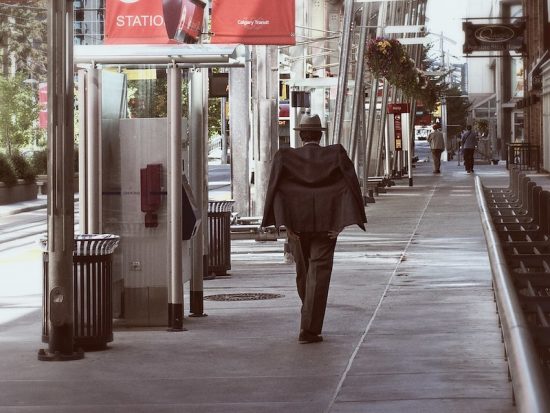
Your Body Will Betray You — Joseph Schreiber

“From the inside out, but from which inside to which outside?”—Róbert Gál, On Wing

This is not the story of my life but the story of my living it, of my being in it.

And that’s a different story altogether.

I am, for lack of a better term, a differently gendered man. No, maybe there are better terms, more common terms—transgender, or queer, perhaps. I use these too. At least, when it’s expedient to do so or when I choose to take my place under a larger umbrella. But by their very inclusiveness, these terms are rendered senseless. Defining the self for one’s self requires an explicit ownership of the language employed. The words I embrace are mutable, evolving, even in the act of committing them to paper or speaking them aloud. Labels can only take us so far.

History is subjective. We can only know what we think we know.

And that isn’t very much at all.

This is what I do know:

I lived, for almost four decades, defined by the parameters of the body in which I was born. I recall the sensation of harbouring a fugitive being—an early social memory (at four? Five? Six?) This someone inside me was not with me, he was me. I saw him in my eyes and I wanted him gone. I wanted to be the girl my mother longed for—the one whose gender mattered solely because her first child, the sister I never knew, was stillborn.

I was not a tomboy. I did not wish to be a boy. I wanted to be the girl I confronted in the mirror, the one whose authenticity no one else questioned. I imagined that feeling female was something you learned, like tying your shoes or riding a bicycle. Yet, although I passed in the world of girls and women, this passing was a measured performance. The rules remained opaque.

The company of boys and men became a refuge—the space where my otherness was validated, where no one would ever question whether I was really female. Sexual attraction to men was a precious counterpoint to my persistent gender insecurity. Never mind that the romantic encounters between men in Mary Renault’s historical fiction held a far more desperate appeal that anything encountered in the pages of a typical boy-girl romance.  I reasoned that if I had a boyfriend, I must truly be female after all.

I married young and disappeared.

You have to understand, when I was growing up, in the 1960s and 70s in rural Canada, no one talked about ‘gender identity’ at all. And they certainly never suggested that it could differ from biological sex. Even now many choke on the concept, quote Bible and verse. My upbringing was liberal, neither fundamentalist nor homophobic, but still, my ‘out of placeness’ was my own, the faint light in the dark room. An old story, but I had no idea that there were others like me.

Self-defined gender insecurity continued to haunt me. It prescribed my path. Twice I walked away from graduate studies, turned down admission to law school, all because the more I exercised my intellect, the less energy I had to devote to maintaining the fragile equilibrium of being female in the world. I retreated to the most unequivocally female spaces I could imagine. Eventually, against my natural instincts, I decided to have children, and that was the beginning of the end—the beginning of the end of my ability to hang on to any reconciliation of my internal identity with the life I had constructed.

I fell apart.

Only in cobbling myself back together, in the aftermath of a breakdown, could I finally openly face the two fundamental notions that had driven me into mania—sexuality and gender. I realized that they were not going away, and that one could not make sense without the other.

Please note, in today’s world where trans* is appended to all manner of identities, where sexuality is no longer narrowly delineated and gender is something to defy, it may seem impossible to imagine that I could crack my head against the wall for so long before the light broke through. But mine was a different time.

I found myself in the library with a copy of Transgender Warriors and learned, for the very first time, what a few years of testosterone could do to transform the outside and fuel the inside of a female-born man. I understood, in that instant, that there was no other option. I finally had a name, a label for myself, and everything else started to fall into place.

I am not reckless. I knew there would be compromises. I knew what surgery could offer and what, at best, it could only approximate. I knew that the scalpel exacts more than its pound of flesh, that healing well is not the best revenge, and that there would be limits to the choices I would make. But none of that was on my mind as I waited for my first injection of the right hormones, the ones I had been craving, body and spirit, for so long.

That was fifteen years ago now. I was forty years old. And in puberty—even when you are old enough to know better—everything seems possible.

Today: 

On the street, I am invisible.

To see me, you would never suspect the truth of my history, the convoluted path to the dream of my genesis. Even those who do know, if they didn’t know me before, don’t ever think of me as any different from any other man.

I just am.

And yet I am not.

I am at once more, and less, than the sum of my parts.

Always have been. Always will be.

For a long time I believed that what I had rendered visible was the true me, the authentic self made flesh, but it’s not that simple. There is an inherent groundlessness, an embodied inauthenticity at play.

I am always in the process of coming into being.

The (meta)physicality of it all: 

I hold a life contained within a life—a life disjointed and hybridized, receding and resurfacing against the passage of time. That other life never leaves me, but with distance I can touch it less and less, as if it never was mine. Now it feels as if it belongs to someone else. It belongs to those who hold it in their memories—my parents, my siblings, my children—but what, if anything, does it mean to me?

It’s as if I own the inside, but not the outside, of the first forty years of my life.

So what do I have now? A more coherent existence, absolutely, but with the knowledge that a fully whole experience is not something I will ever have. My body is disfigured; not by choice or wilful design—it is simply the best I can achieve. And in the end as in the beginning, the body is only an echo of what I am, a reminder of what I have been.

You can change your face but your body will betray you.

The further I proceed, the more I realize that I will never arrive. Transition is an experience that is always in the reframing and redefining of boundaries.

Borderless, I am forever a migrant—endlessly coming into being.

Being cannot be measured.

Being cannot be reduced to the change of a marker on a passport.

On the street I am invisible.

And here lies the crux of the matter. Invisibility, once achieved, is deemed to be a mark of success. That’s what a person in transition means when they say: I pass. To pass is to be seen, without question, at one with a gender identity that feels true. And it is more than an ability to disappear in a crowd. There is an internal completeness that comes with the hormones and the pronouns and the new name—a levelling, a sense of peace.

But the body, the body is another matter. Only now, the axis of discord has shifted.

For those of us who traverse the visible lifeline from female to male, there is a sacrifice. The journey is forever written on the body, no matter how far one is able or chooses to travel. We are at once dramatically transformed and decidedly unfinished or differently designed. Scarred. I accepted that cost, assumed it would not matter.

Fifteen years on, it matters. At least, it does for me.

Don’t get me wrong. I made no mistake. This is the only path I could have taken once I found it on the map. I am infinitely happier, more settled than I might ever have imagined I could be. But if I long for anything, it’s the life I never had, the boy’s life—or any life, male or female—that might have been coherent, sex and gender, gender and sex. As much as the two are divided, the physical and the psychological, they are not separate in the living, in the experience of being. We exist as embodied minds, or if you prefer, embodied spirits, in the world.

Pre-transition, there was an internal fracturing of being. I struggled to align the outside world with the inside space I inhabited. I was an awkward misfit. Nothing made sense. Even the glam rock and punk of my teen years offered little more than a glimmer of hope before fading away. For years I fancied myself a Cartesian dualist. The ontological reality I experienced was akin to being tethered to a body that could never be a home. Over the years I began to talk about this body, to describe it as a distinct entity. I would catch myself at moments feeling like I was consciously moving my hips and propelling my legs forward, like an injured person re-learning how to walk. I floundered in pregnant form. By then I was at a complete loss.

Recognizing myself as transgender, that is, understanding that the real me was the male identity inside and learning that the outside could be modified to conform, was sufficient to see me through a divorce and launch me on my way into a new life. In the early years there was so much to look forward to, so many changes, and so much random strangeness. Puberty at forty is intense and wild and weird. For years I threw myself into work, measuring my worth by the title on my business cards, and finding validation in the sole corner of my life in which no one knew my past.

My transition was a textbook success. Or so it seemed.

I made no close friends, took no lovers, dared not risk the delicate balance of finally existing as a man in society. I sacrificed newfound authenticity for another superficial truth—one coherent with an implied history that would not threaten to expose me. The wall I had once constructed on the inside, I reconstructed on the outside.

Now I have dismantled and deconstructed it again.

But I still find myself troubled by a restless inauthenticity of being. It worries its way into the tension between my desire to blend and my need to be true to a life lived against the grain. It is looking for a voice.

On the street I am invisible.

I am. And I am not.

I am at once more, and less, than the sum of my parts.

Always have been. Always will be.

Here I am writing about my life, opening up the veins of the story without fleshing out the details. I have offered scraps and fragments, just enough to begin to frame a question, to try to begin to articulate my hybridized experience of living—then and now.

This is a sketch. That is all.

I am forever in the process of writing myself into being.

Postscript:

If the apex of manhood is to stand to pee, the nadir of manhood is to be gay and to understand that you will always arrive short-handed.

The bride stripped bare by his bachelors. Even.
 

How do you see me, anyway? Sphinx by Anne Garréta

“What I was feeling for A*** needed its own embodiment; the pleasure I took in A***’s company demanded is own fulfillment. I wanted A***, it was true, and all my other desires, needs, and plans paled in comparison. Suddenly, the obsessive clamor for amorous possession took hold of me.
I was surprised to find myself desiring, painfully. In a sudden rush of vertigo, I was tantalized by the idea of contact with A***’s skin.”

What we have here is the impassioned confession of the unnamed narrator of Sphinx by Anne Garréta. A*** is the object of this sudden and intense desire. Neither are defined by sex or gender. This factor, acts as a constraint that places this French novel within the ranks of the works of the OuLiPo group of authors (though,written in 1986, it predates the author’s admission to this famed group). Yet in the end, Sphinx requires no such designation to work as a powerful literary, darkly existential meditation on memory, attraction and identity.

sphinxThe more I heard about this book, a new release from Deep Vellum Publishing, the more conflicted I felt about whether or not it was something I wanted to read. My reasons for that uncertainty are deep seated and will be discussed below, but let’s get one thing out of the way first… Sphinx is one stunning, dynamic and important novel. To finally have it available in English, and in a world in which the public understanding of sex and gender is evolving, serves as an invitation to approach this work as more than either a literary challenge in itself or a polemic of feminist/queer theory.

Oh, wait a minute. Is it a good story? One that stands on its own merits? At first blush, the set up sounds, and at points may even feel artificial, but that oddness passes quickly. The narrator is a young student of Catholic theology who is drifting without strong direction and, through a series of unusual, even disturbing, coincidences ends up working as a DJ at an after hours Paris nightclub. This serves as an introduction to a new world, an alternate reality that opens late at night, to unwind in the very early hours of the morning. Our narrator demonstrates a tangible ambivalence toward this radical change of lifestyle.

“I acquiesced to whatever presented itself without much arm-twisting, and I neither suffered from nor reveled in it: I was spared the exhaustion of searching and seizing. I was giving up a state of being that was in turn abandoning me and sliding into another that slowly, imperceptibly came to envelop me.”

In learning to navigate this world, an identity that may or may not be valid or true, is adopted to serve as a barrier, a means of mediating an alien environment. Within this identity a certain boundary, a sober vantage point is maintained until A***, an exotic dancer at a strip club, comes into the narrator’s life. At first their friendship is platonic, existing in a stylish public sphere. The narrator realizes it is not built on strong romantic or intellectual engagement. The attraction is one of opposites – race and personality – until sexual desire arises abruptly, throwing the narrator’s carefully constructed identity into a crisis which is heightened as A*** initially refuses to take their relationship to an intimate level.

When it is ultimately consummated, a highly charged sexual and romantic liaison develops, enduring several years marked by turns of passion, jealousy and domesticity. As might be anticipated in a union built on obsession rather than common interests, cracks and fissures begin to grow. This is heightened as the narrator seeks to revive abandoned theological pursuits, carving out time to focus on an essay, quite fittingly, on the apophatic tradition – the attempt to describe God only by negation. Later on, after the tragic end of this ill-fated love affair, the narrator will sink into a deeply existential rumination on love and loss. No sexual encounter, romance, intellectual or academic pursuit will fill the void left behind. A restless wandering overtakes our hero, driving a spiral into ever darker self exploration. Without the “other” as a frame of reference, it becomes increasingly evident that the self is isolated, disconnected.

“Had I confided more in A*** than in anybody else? What had I revealed? Had I unmasked myself? No, more likely I had exposed my own collapse, the ruin of the edifice I had so painfully constructed out of rhetoric and made to stand for an identity.”

At heart this is a novel of obsession, of memory, of mourning. The language is rich and sensual, with an intensity that is visceral and emotionally powerful. For that alone, Sphinx is a work worth attention.

But what about the matter of sex and gender?

I suppose it will come down to how important it is to have a fixed image of the protagonists in your mind as a reader and how fluid your conception of gender is in relation to sex and sexuality. Are they bound together, or three separate aspects of identity? For the majority of people, biological sex conforms to gender identity. They are experienced as one and the same. Sexuality hinges on the sex and gender of the persons to whom one is attracted. Transgender is an umbrella term for those for whom sex and gender do not fit exactly. The range of gender expressions, identities and bodies under that umbrella is wide and the intersection with sexuality can further complicate the issue. Queer theory aside, a novel like Sphinx opens up the potential for a completely free reading experience. One can choose gender, sex and sexuality as desired, play with alternatives in the reading, or re-encounter the work with repeatedly different contexts. Garréta has incorporated enough ambiguity to open up all possibilities. The decadence of club life is contrasted with the sober pursuits of the serious intellectual and blended with domestic engagement and the dynamics of extended family.

For a queer reader like myself it is a glorious opportunity, one I would have loved to encounter back in my isolated teenage years. Even into my 20’s and 30’s as I sought to make sense of a physically gendered space that felt fragile and ungrounded at its core, distorted and confused by my ostensible sexual orientation. Now in my 50’s, 15 years after transitioning, Sphinx speaks to me on yet another level. I can and have easily existed in the world as a gay transgender man without outing myself on either count unless I chose to (like I am at the moment). I am invisible not only online but in the real world. Yet the challenge arises in the building of close and honest relationships with others. I cannot talk about my past, my marriage, my subsequent affairs without resorting to a vagueness, to the construction of a gender neutral self-imposed witness protection program. If I am sexually attracted to someone an entirely different level of discussion is required. Coming out is a constant and continual process. Sometimes it is easier to retreat. And while English does not create as much difficulty for the moments in literature or life when genderlessness is preferred as French, a recent conversation with a young gay man from Mexico who is not out brought home to me the more profound challenges of a Spanish speaker who cannot even talk about a “partner” or “friend” without indicating gender!

I do not believe that the loneliness and ennui that seep into the narrator’s very marrow as Sphinx progresses are unique to queer experience. We all long for human contact and when you find yourself single when you had not expected to be alone, it becomes easy to imagine yourself undesirable, to berate yourself for not making the most of moments or opportunities that may be past, or seek fleeting satisfaction in meaningless encounters or distractions. However, the arrival of this novel at a moment when discussions and awareness of identity and sexuality have progressed well beyond where they were almost 30 years ago, is especially timely and exciting.

The anxiety with which I approached Sphinx was admittedly specific to my personal life history. I have been routinely disheartened by the way matters of sex and gender are presented in literature. I suspect that the author’s theoretical grounding would diverge from mine, but there is not, as I had feared, a perceivable political agenda that interfered in any way with my full enjoyment of this book. Thanks to a fellow blogger (Tony Malone) who challenged me in what was, in my time zone, a late night twitter conversation to give Sphinx a read – believe it or not it was his nod to Camus that sold me – I have become an enthusiastic supporter. I am writing this before I see his review but I am certain he will cover other angles.

Thank you to Deep Vellum for bringing this important work to an English language audience. Emma Ramadan’s translation is most wonderful. As she describes in her afterward, Garréta was forced to employ a great deal of ingenuity and creativity to avoid revealing the narrator’s gender. In English genderless narrators are not unique. A*** has to be presented with more care and less depth. But that is in keeping with the narrator’s own lack of understanding of A***. It all falls together beautifully with an intensity which is meditative, unsettling and, at times, deeply moving.

Hard to remember when the world had colour

- Copyright JM Schreiber, 2012
– Copyright JM Schreiber, 2012

Granted midwinter in my part of the world is not the best place to find colour in nature. Branches are bare, grass is bunched and brown, snow is patchy and grey. But when I look back over the past year I can see how difficult it has been for me to register any enthusiasm to take my camera out. I walk a lot but I seem to want to stay in my head, maintain a fast pace, measure the rhythm of my boots against the ground. I circle the neighbourhood, walk with purpose on errands, but avoid the pathways and parks I have documented season after season these past few years.

Photography was a diversion, a relaxation and an isolated activity against a busy life at work and home. I would wander forest trails, across grassland parks or along the edges of rivers and lakes, framing and reframing the view and listening to recorded podcasts – discussions about books, philosophy, current events. It was a meandering, escapist pursuit. If I look back I have to wonder what I was escaping and where I had lost the capacity to dream.

Madness, mental illness if you prefer that term, brings back the capacity to dream because all the parameters are changed. For me it has brought words to the foreground but pushed the pictures to the background. Walking has become a means to expel restless energy, drive out the demons of anxiety and despair that keep reaching in. If I want to drown out the city noises I listen to music, the words in my head are my own.

Without being able to return to work at this time, I do feel a certain loneliness. But when I reflect on the years I devoted to a job that I believed validated and defined me, I realize that I was never more isolated than when I was working. Invisibility and an unwillingness to call attention to myself was not a measure of my successful transition. It was denial. To hide the fact that my past contained realities inconsistent with the man everyone knew, I believed I could not afford to allow anyone to get close. I captured colour in the outside world but painted myself with the blandest palatte possible.

A manic episode and all of the reckless behaviour and poor judgment it entails has left me with a professional legacy that I may never be able to salvage. I don’t even know if I want it back. Reclaiming my identity, being comfortable with my own history of sex and gender is a work in progress but I have to trust that it might lead me to a better more authentic place. It might even bring some colour back into my life.

Imagine: A church for those who don’t trust church

“Imagine”

Imagine there’s no heaven
It’s easy if you try
No hell below us
Above us only sky
Imagine all the people
Living for today…

Imagine there’s no countries
It isn’t hard to do
Nothing to kill or die for
And no religion too
Imagine all the people
Living life in peace…

You may say I’m a dreamer
But I’m not the only one
I hope someday you’ll join us
And the world will be as one

Imagine no possessions
I wonder if you can
No need for greed or hunger
A brotherhood of man
Imagine all the people
Sharing all the world…

Copyright JJM Schreiber, 2011
Copyright JM Schreiber, 2011

Church music? Apparently and rightly so. Last week I emerged from the church I have been attending, despairing that a deep ambivalence about my own ability to connect with faith may stand in the way of my search for community. This morning I remembered why, if there is a church that I can connect with, the one I have been attending may be as close as I can get. John Lennon’s Imagine, performed by a soloist set the framework for the reflections of the pastor.

Imagine? Yes, imagine hearing a pastor admit that in the 25 years since his ordination in the United Church of Canada, he never thought he would be looking at the works of Richard Dawkins and Sam Harris and think, maybe they have a point there. One does not have to look far to see how religion is perpetuating hatred, within families and communities, between ethic groups and countries. And it is not a new phenomenon. Is the problem religion? An atheist does not hesitate to answer, but what causes a pastor to ponder? And what does that mean for churches like Calgary’s Hillhurst United? My own anxieties about faith aside, it is a church that practices what it preaches: welcome and advocacy for the poor, the disadvantaged and the marginalized; outreach and full acceptance of everyone regardless of age, ability, sexuality or gender identity. Yet the pastor, John Pentland, is accustomed to meeting newcomers who share that they have no problem telling someone that they are gay, but don’t want anyone to know they go to church.

Is religion always at odds with all that could be positive and affirming about faith?

I am not sure yet. But I did spend Saturday at the church helping set up for a performance by Australian-Canadian queer trans artist, Sunny Drake. In the evening as the church hosted homeless families in the gymnasium, the pews of the Sanctuary were filled with a diverse audience treated to an outrageously funny performance about the trials and tribulations of a gay transgendered man trying to quit his addiction to romance. Honest in language and content that one would not generally not expect to find in a church, but together with the panel discussion that followed, this partnership with the city’s only queer theatre, Third Street Theatre, offers a vital opportunity to improve communication and understanding within and beyond the LGBTQ community. And yet another indication that at this church Affirming means much more than hanging a rainbow flag in the corner.

As someone who often feels as alienated within the LGBTQ community as within a larger community of faith, this weekend was an important indication of just what a church that seeks to embrace rather than exclude, can be.

Of memories, grief and melancholy: walking into 2015 with W.G. Sebald

Every year, rather than rushing through a book before the clock strikes midnight just to push up the book count of the year that is slipping away (an inclination likely idiosynchratic only to those who of us would rather read than party on New Year’s Eve), I prefer to walk into the coming year in the company of a great writer, allowing the experience to end one year and launch the next. My companion of choice to see out a year marked by loss, the resurgence of mental illness and a recognition of not only my own isolation, but my role in facilitating that condition; was the late German writer W. G. Sebald. More specifically his haunting and heartbreaking novel The Emigrants (translated by Michael Hulse). As a curious coincidence, the Word of the Day email from Meriam Webster that appeared in my inbox this morning for January 1 is:

emigrate \EM-uh-grayt\
verb  : to leave one’s place of residence or country to live elsewhere

sebald2If you have never read Sebald, his work almost defies simple description. It must be experienced. Adjectives from admirers abound: mesmerizing, beautiful, subtle, sublime. Long evocative sentences unfold into even longer reflective paragraphs – at times running for pages – enhanced with the insertion of grainy photographs of people, scenery, pages from notebooks, objects, sketches. The reader is pulled in, guided along through landscapes, recollections, side observations and historical reflections by a narrator who is present, patient and human in the face of the incompleteness afforded by memory and the passage of time.

The Emigrants may well be the most accessible of Sebald’s work that I have read, especially because it forms its structure around the apparent biographies of four men who have emigrated or been exiled from their homelands. Three of the four have a Jewish heritage and World War I and II form a critical backdrop to the four very different accounts. Our narrator encounters each of these men, in person, even if only as a child, but in most cases he pieces together part or all of their life histories through the recollections of others, and the diaries and memoirs that he acquires along the way. In some cases he even attempts to revisit the locations that impacted the lives of his subjects, finding only decay or even complete obliteration in his vain efforts to find traces of a past that cannot be revisited.

There is such a deep and abiding melancholy that runs through these pages, that I don’t think I could have chosen a better literary companion to mark the passing of this difficult year. But it broke my heart and drove me to tears on more than one occasion. The first two chapters end with suicide. In the first we meet the eccentric Dr Henry Selwyn who, by the time the narrator and his wife come to know him, has taken to dwelling in the garden of the house owned by his wife from whom he is long alienated. He confesses to a greater sense of loss over a friend who had disappeared into the crevice of a glacier years before than any regret for the dissolution of his marriage. A Lithuanian Jew who had sought to conceal his heritage after emigrating England, the gentle doctor would eventually put his hitherto unused rifle to final lethal use.

In the second chapter the narrator revisits a beloved childhood teacher, Paul Bereyter, upon hearing of his suicide. Through his own reflections and conversations with a French woman who became Paul’s friend in his later years, an attempt is made to piece together the roots of the melancholy that had been hinted at when Paul was an unconventional but enthusiastic teacher; yet grew with the realization that even being 1/4 Jewish was sufficient to make him an exile in his own country. Meticulous and pragmatic to the end, the former teacher carefully researches his decision to end his own life. But although you know it is coming, the recounting of Paul’s final day is none the less devastating for the reader.

The narrator then traces the history of his own great-uncle Ambros Adelwarth in the third section. I found this portrait at once the most moving and the most devastating. Here the emigrant destination is North America and, for a change we are in settings with which I have some connection. Eccentric and meticulous in presentation and decorum, Ambros rises quickly in the hotel industry of the early 1900s and, once he joins his siblings in the US, secures works with a wealthy Jewish family on Long Island. He is given charge for their son Cosmo, a young man driven to reckless excess and, as we will also see, its dark counterpart so recognizable to those of who are bipolar. Ambros and Cosmo embark on a tour of Europe and the Middle East, marked by gambling, daring aerobatic performances and a certain display of personal affection that raises the eyebrows of the elite that inhabit the rarefied world of wealth and glamour in the years just before the First World War.

With the outset of war though, Cosmo begins to plummet into despair and despite the best remedies that money and contemporary mental health care can buy, he will end his days in a private sanatorium. After staying on and looking after the family, Ambros retires to live in quiet isolation. But he is seemingly haunted by a deep unbearable grief. Suicide would be too messy, one imagines, for a man who dresses and presents himself as a formal gentleman to his dying day. Rather Ambros opts for voluntary commitment to the same sanatorium where Cosmo died, stoically submitting to an extreme regime of ECT as if the only way to truly destroy traumatic memory is through one bone blasting jolt at a time.

The final chapter, one which Sebald admitted was based on the amalgam of a landlord he once had and a well known artist; finds our narrator in Manchester, England. The city centre is in rapid decline. Here he meets Max Feber, an artist who, having emigrated from Germany, has for decades been single-minded in his efforts to find refuge through art. He devotes himself to this task seven days a week, drawing and erasing his work repeatedly, beyond the patience of his models. The narrator is curiously drawn to this anti-social, unusual character and they form an odd friendship but it is not until he revisits Max 25 years later that he realizes that there is here another story of loss to be fleshed out. But the lasting impression of the emigrant experience is as one in which both the realities from which emigrant has come and those to which he arrived (in this case in Germany and in Manchester) are both subject to decay, dissolution and the vagaries of memory and time.

Copyright JM Schreiber, 2011

I have never been one for family history. My mother’s family emigrated from Ireland to Brooklyn, New York in the mid 1800s, my father’s mother’s family would have arrived in Toronto from England probably around the turn of the 20th century whereas his father’s family were United Empire Loyalists, making him a 7th generation Canadian. My parents met in New York City in the late 1950s, an era to which my father repeatedly tried to return long after it had ceased to exist. My brother and I were born in New Jersey but, after exploring a variety of options, my family pulled up stakes and moved to western Canada away from everyone they knew and settled here when I was only a few years old, soon adding another son.

Apart from that rough sketch, I am not inclined to family trees, I have only two photos of myself as a child and by the time my own children were born I had developed such a strong aversion to having my picture taken that I sometimes worry that I may have failed to take enough photos of my own children when they were growing up. Many years ago I finally understood why the person I saw in pictures or in the mirror was so at odds with the person I knew myself to be and started on a journey to correct the discord. Having reached my intended destination I no longer know how I fit into my family tree. In a very fundamental way I am an emigrant who has become exiled in his own life, still seeking to define what that means for me.

As the richly imagined portraits in The Emigrants illustrate there is a melancholy, anxiety and despair that can haunt the emigrant experience. I found myself wondering about origin, that is, how much of the melancholy was carried into the experience and how much owed its origin to dislocation and loss? As a person with bipolar disorder recovering a from a serious breakdown, questions of cause and effect always simmer. In the end it is impossible to distinguish loss leading to despair from despair that enhances a sense of loss. Having experienced both this past year I enter 2015 with a cautious mix of anxiety and anticipation.

As the year draws to a close…

At the beginning of 2014 my world was rapidly spinning out of control. There were clear indications that the extreme stress and toxic work environment I was living under was taking its toll. I was clearly struggling to hold myself together but like any good manic depressive I could not step aside and recognize the crisis that was unfolding. No one else in my life had the understanding to step in either and, in all fairness, I am not sure how I would have responded.

Now, at the end of the year, I have been out of the office for six months. My future is unclear. I had loved my work with brain injured adults and their families. It was challenging, rewarding and I was well respected. At least until I went crazy.

As soon as I walked away from my job I realized the price I had paid to build a career from community field worker to manager in less than a dozen years. I had intentionally alienated myself from people. I have always been a person inclined to isolation, shy in a curiously outgoing way. Public speaking does not phase me at all. I could speak to a crowd of 300, riffing on a theme if necessary, but face to face small talk is uncomfortable. The thought of baring my soul to another person in real time, over a coffee perhaps, is almost unbearable. In my life I have made few friends and had only two significant love affairs. And somehow I had managed to convince myself over the past decade or so that in addition to the challenges of raising children on my own, the social interaction provided by my work with hundreds of clients and professional colleagues would suffice. Close friendships and romantic relationships were not required.

I was wrong. But what now? I am in my 50s. I have repressed the very uniqueness of my history, that which had always set me apart. The very queerness of my being in the world. The ostensible and hard won success of fighting to be true to myself in the world was turned to dust in an instant. The road ahead suddenly looked lonely and long…

Slowly I am recovering. Much slower than I expected perhaps, but this unplanned respite has forced me to explore, re-evaluate and reach out. My therapist (thanks Jane) has been an important sounding board. Blogging and making contact with both bipolar and bookish fellow travelers has been vital. It has allowed a space for cathartic dumping. A medium for strengthening my ability to clearly articulate my thoughts and reflections. It has given me confidence to move out into the world closer to home.

Thanks to the fact that I have not been working I was able to volunteer at our writer’s festival and meet writers I admired from around the world, all of whom are in my age range. Financial constraints encouraged me to cancel my TV since I was generally using it as a mindless distraction. Consequently, reading and music have regained the attention they deserve. And when it is not -20C, like it is at the moment, I make a point to get out every day, frequently just to read and write at a local coffee shop.

So here is a song and a haunting video to carry you into the new year. It goes out especially to my brilliant friend of Blahpolar Diaries fame (infamy?) whose typically colourful ode to the therapeutic value music inspired this post.

Some ghosts have rougher journeys than others

- Copyright JM Schreiber 2012
– Copyright JM Schreiber 2012

O! WHY was I born with a different face?
Why was I not born like the rest of my race?
When I look, each one starts; when I speak, I offend;
Then I’m silent and passive, and lose every friend.

Then my verse I dishonour, my pictures despised,
My person degrade, and my temper chastise;
And the pen is my terror, the pencil my shame;
All my talents I bury, and dead is my fame.

I am either too low, or too highly priz’d;
When elate I’m envied; when meek I’m despis’d.
-William Blake, from a letter to his patron Thomas Butts, 1803

I first encountered these words in the months following my first manic breakdown in the late 1990s. With a diagnosis at hand I needed to understand its meaning so I read  the standard popular memoirs of the time. But I found myself drawn into the work of William Blake. Although many readers reject the notion that madness may have fueled his tireless creative energies, his hours conversing with angels and his periods of darkness – I found comfort in his artistic conviction even if he was destined to die without ever receiving the recognition of understanding he deserved.

For every person who successfully rises above the challenges of mental illness and negotiates the pitfalls of drugs and alcohol, there are those who spend their lives living rough. And others who lose the battle altogether. But Blake drew inspiration from his angels and demons with his loving wife by his side until the end.

Today is my birthday, and having found myself back trying to figure out what I am supposed to learn from this second mania and unexpected fall from grace, Blake’s lament has a special resonance once again.

But this time I am reflecting on a very different face than that which I confronted 17 years ago. From the time I was very young I could not make sense of the face with which I was born. The eyes that looked out from within that visage threatened to give me away. The body I struggled to feel at home in never felt like mine. The girls I befriended seemed like aliens and, with no other explanation for my discomfort I assumed that I had never learned the tricks, never tried hard enough.

The idea that gender or identity could be misaligned never occurred to me when I was growing up. At least not in the context I needed to hear. And when It did start to seep into my awareness I was already well into marriage and motherhood. It was a complicated comfort to realize that there was an explanation for my feelings. It was even more terrifying to know what to do with this information.

I know well that my mood disorder runs back through my family, that it has a genetic basis somewhere. I have no idea what course it might have followed without this added sense of being out of step with rest of humanity. But my hospital psychiatrists were certain that my apparent gender dysphoria was simply a psychotic symptom that would resolve itself with the right dose of lithium.

They were wrong of course. Now, 17 years later, the average looking middle aged man who confronts me from the mirror is not special, but he is one I feel at home with. For many years I thought that was enough, as if I had found the magic bullet, the key to moving forward on all fronts. My family have been supportive, I recreated my identity and built a new career.

But I still found that the manic-depressive monster has followed me all along. Making sense of recovery this time around, I find myself doubly invisible. Behind a face that accurately reflects my sense of self identity, is a whole life I cannot fully share. Talking about being bipolar has been the easy part.

But moving forward from this birthday, I want to find a way to be whole.