A reflection for Winter Solstice 2023

As soon as we pass the longest night of the year, there is a noticeable change in the quality of light. The afternoons immediately seem brighter as the days begin to lengthen, minute by minute, week by week. I can remember more than a few winter solstices that found me mired in a darkness that was soul-black and heavy. But this year, as the world, at home and afar, is facing so many serious threats, it feels essential to remain focused on what needs to be addressed—war, climate change, increasing polarization, a pandemic that is still causing illness and disability, and so much more. Heaven knows there is much to worry about, many reasons to be angry, ample cause for despair, but, at the moment, as someone who has known deep depression borne of chemistry rather than circumstance, what I tend to feel is a positive anger, that is, an emotion that fuels a desire to be more active in my speech and action as the new solar season dawns. There is an opening up to the other that, after years of relative isolation, has been reignited in me in recent months and I hope I can keep that energy in motion.

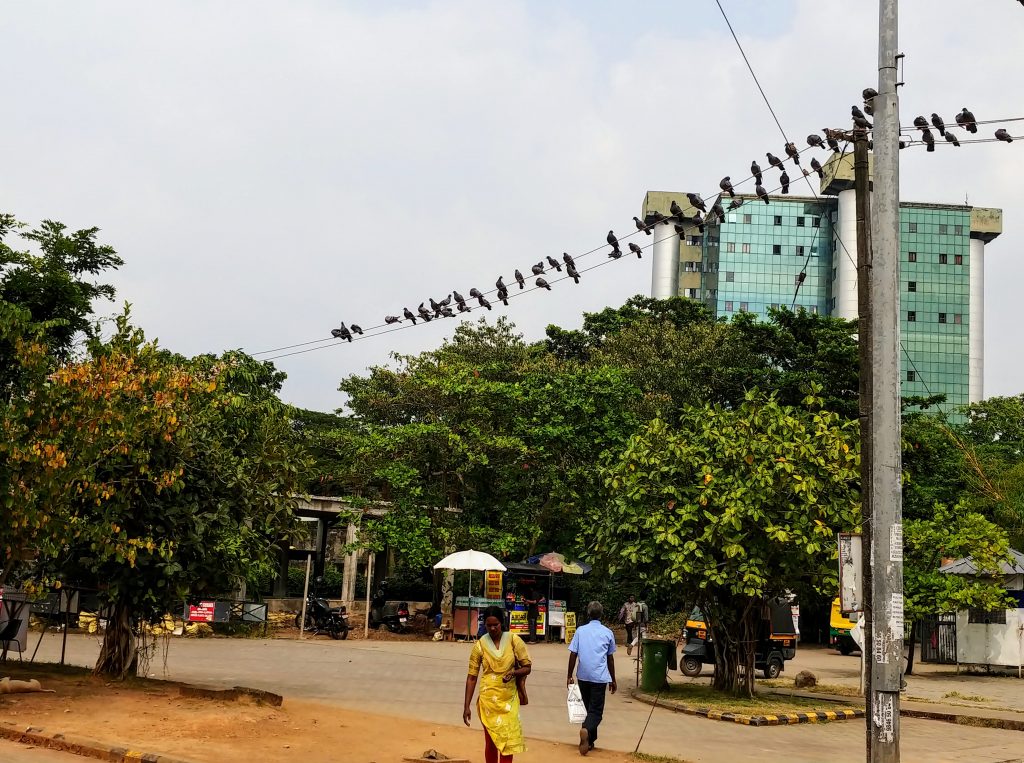
This past year was one of connection and reconnection. In mid-September I returned to India for the first time in four years—my first trip anywhere since 2019. As I made my way from Bangalore to Calcutta, Delhi, Pune, Mumbai, Jaipur and back to Bangalore, I enjoyed so many long and meaningful conversations over coffee and meals, and in cars, autos and trains, with friends old and new. I was looking for the inspiration and confidence to write again after a prolonged period of silence, and by the time I was getting ready to fly home I was beginning to feel a renewed creative drive. And then, the outbreak of conflict in the Middle East diverted my attention, shifted my reading, left me distressed and found me treading words with caution, shocked by the ability of apparently reasonable people to rationalize the massive destruction of infrastructure and indiscriminate killing of innocent children, women and men that we have witnessed these past two and a half months. Even now I know that whatever I say or don’t say, someone will take offense. This is the deeply fractured world we now inhabit.

Here in the northern hemisphere, the days grow longer as a new calendar year approaches; in the south, summer solstice marks the longest day of the year. What will we do with this light, that we either presently have or are eagerly anticipating? There is no condition—conflict, climate or clinical—that we cannot resolve, but, as human beings, we have to be able to do the one thing that seems to drive us apart over and over again: we have to recognize that every person is of equal value and deserving of dignity and life and commit to working together toward that end.

I will let you decide for yourself if that is a dream worth holding on to or justification for accepting that our problems are impossible to solve.

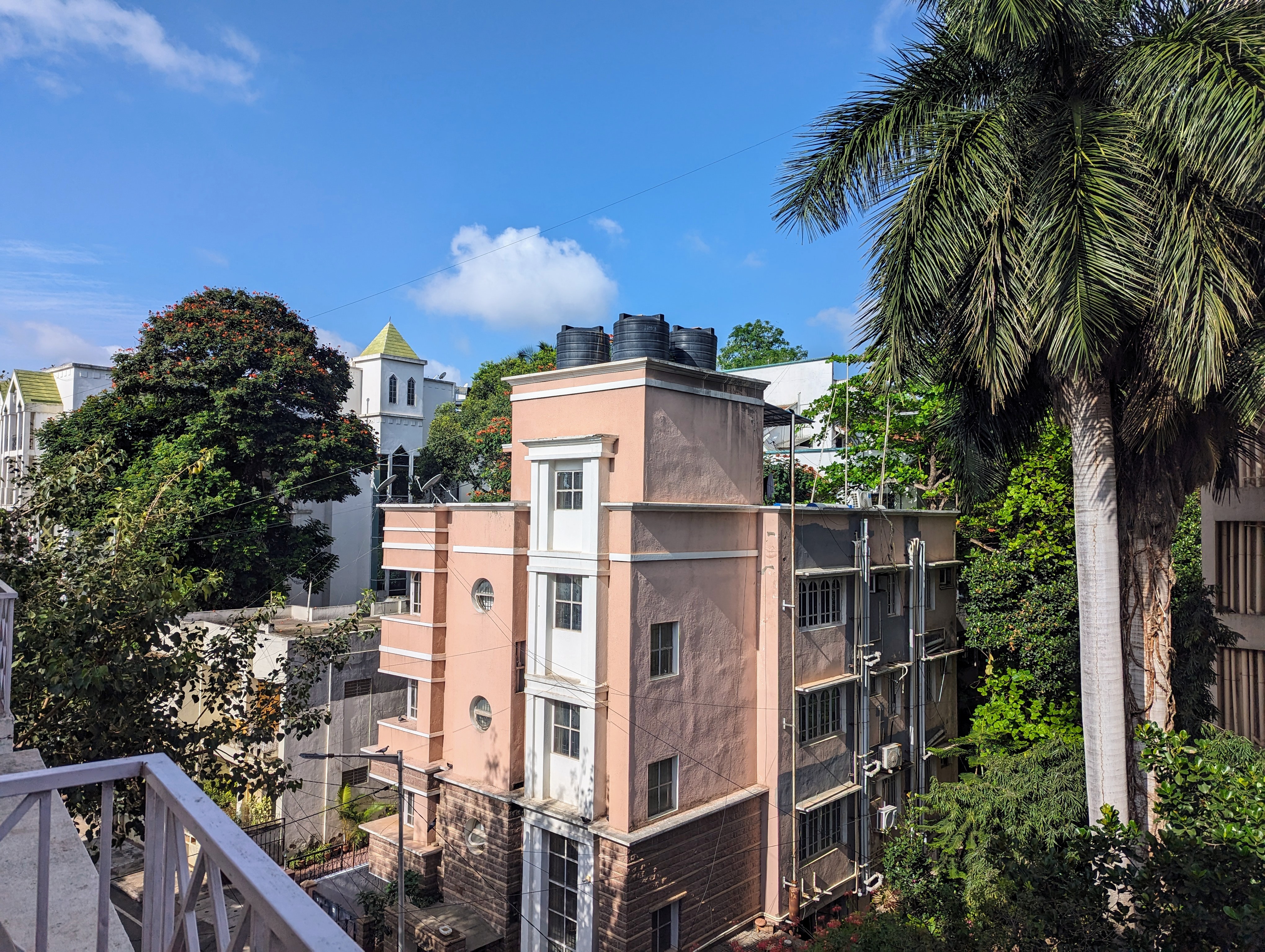
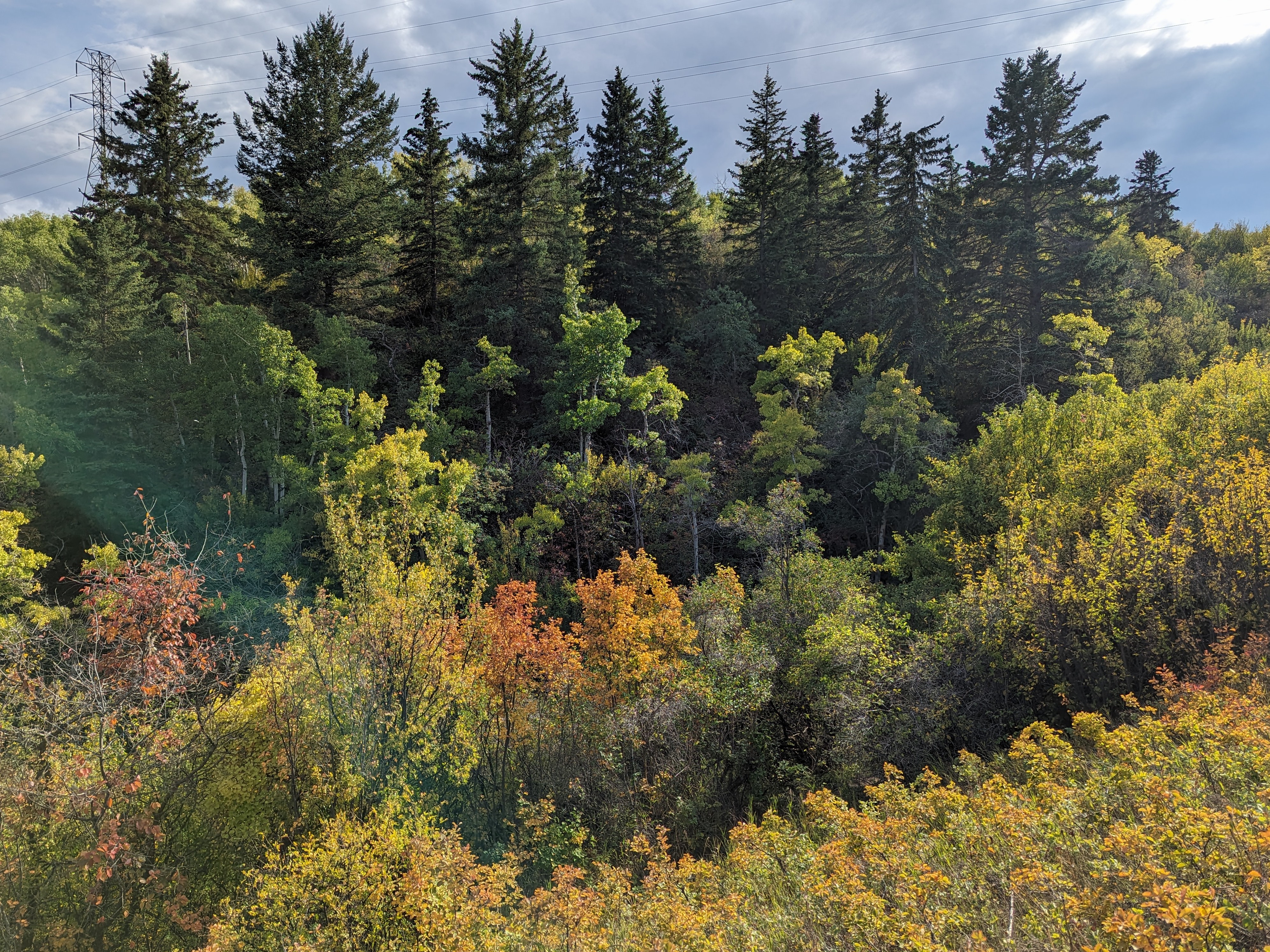
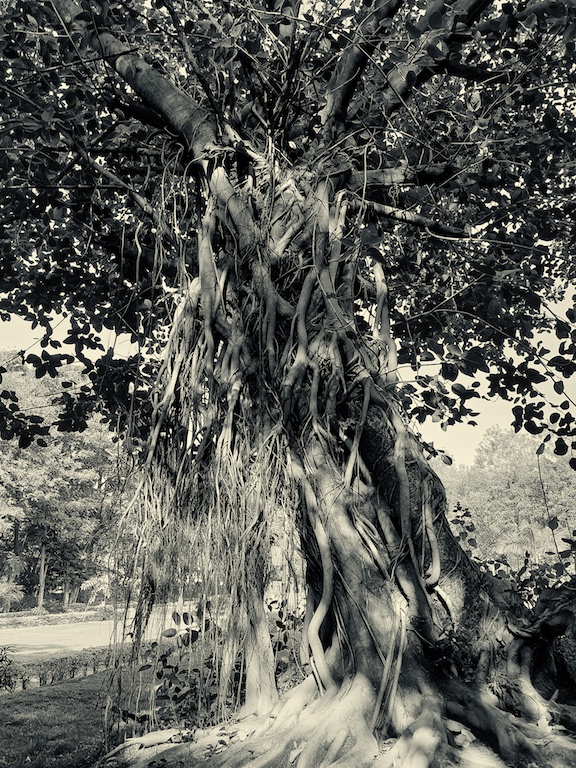
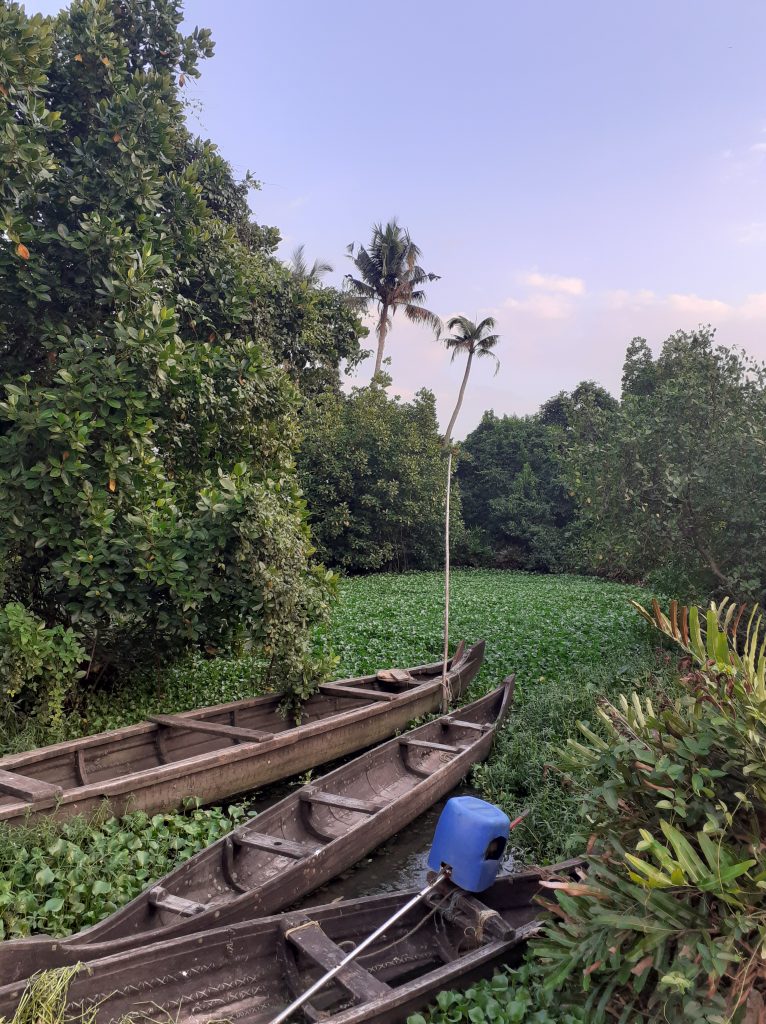
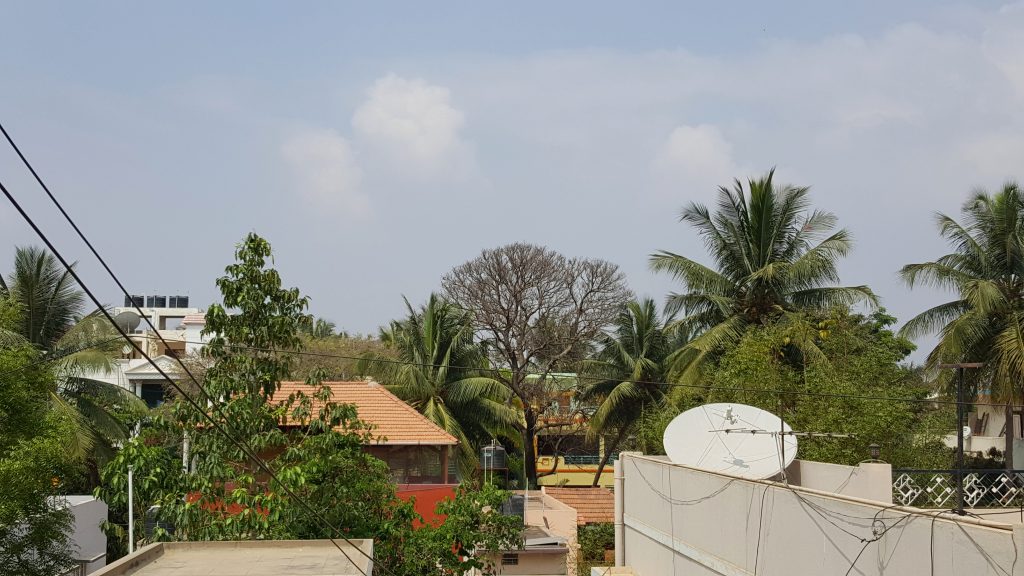
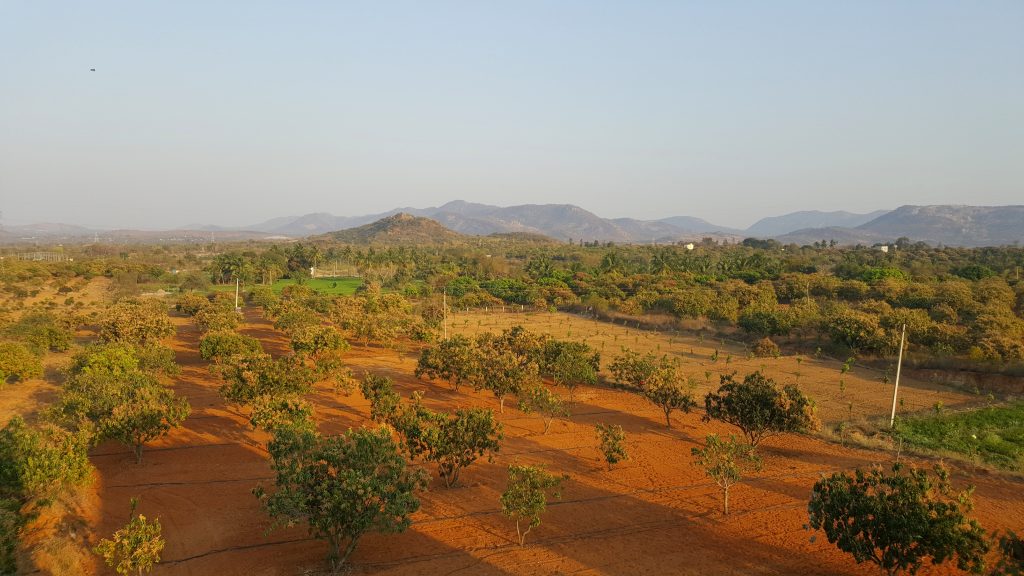
Photo by Joseph Schreiber

India update: Catching up with old friends, finally meeting others

Four years is a long time. Much has happened since I last visited this country. Since I last travelled anywhere as fate and pandemic would have it. Two-thirds into my stay and it feels like it has been a hectic time—not that I haven’t had free time, but I seem to find it hard to stay put on an empty day when a busy vibrant world awaits outside the door. And one doesn’t want to miss the chance to catch up with friends who are normally but a virtual prescience in one’s life. So, less reading and writing has been accomplished than I had anticipated to date.

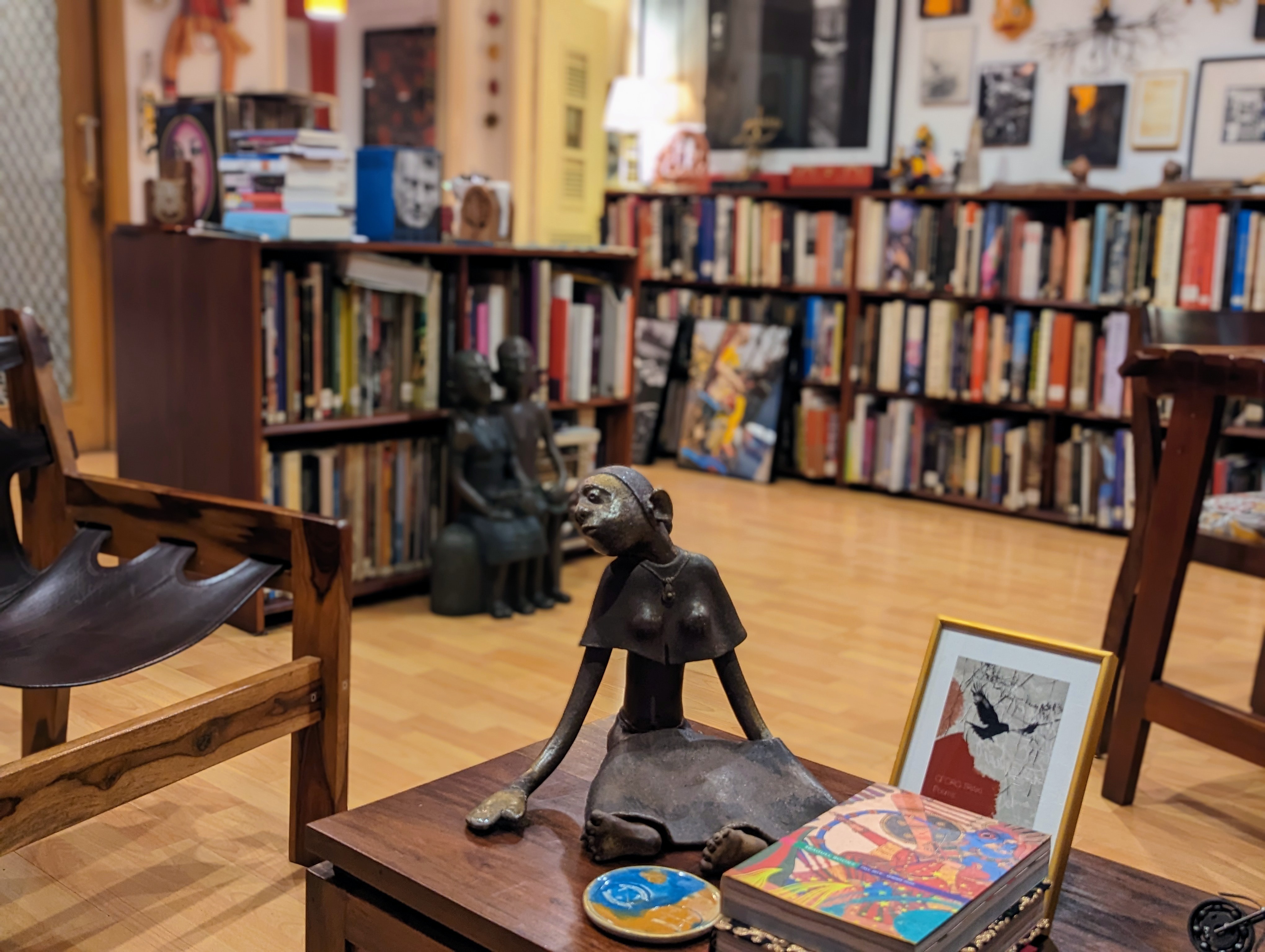
I started my trip in Bangalore, a city I will return to before flying home to stock up on books. Weight restrictions on internal flights have meant that if I buy books, I risk not being able to get to my next destination. It surprises me how just a few slim volumes will tip the scales! And it’s always a pleasure to spend time with my very dear friends here at either end of my India sojourn.

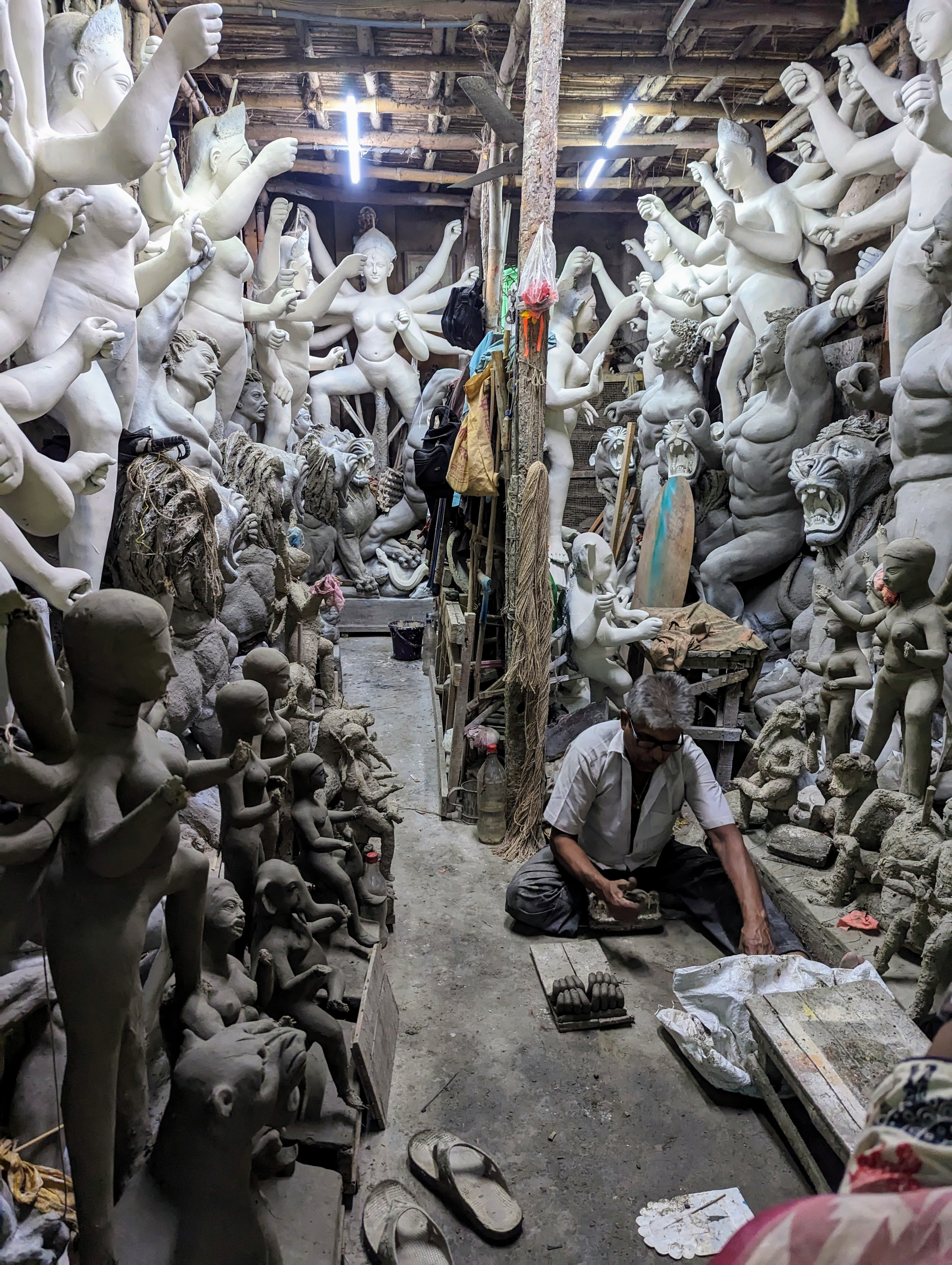
From Bangalore, I was off to the City of Joy, Calcutta or Kolkata, to the place (and the publisher) that first drew me to the subcontinent. Wet and humid beyond measure, it was my first visit outside the drier winter/spring months. But it was wonderful to see my dear friends at Seagull Books where I was able to play a small role in the creation of what will be another spectacular catalogue—this one tackling a vital theme for the times. I also had coffee with the couple who were my first tour guides in the city, this time meeting up with them in an area further south than I had been to date. I also made a pilgrimage to Kumartuli, the potters’ colony where craftsmen are busy making idols for the upcoming Durga Puja, Kolkata’s most important festival.

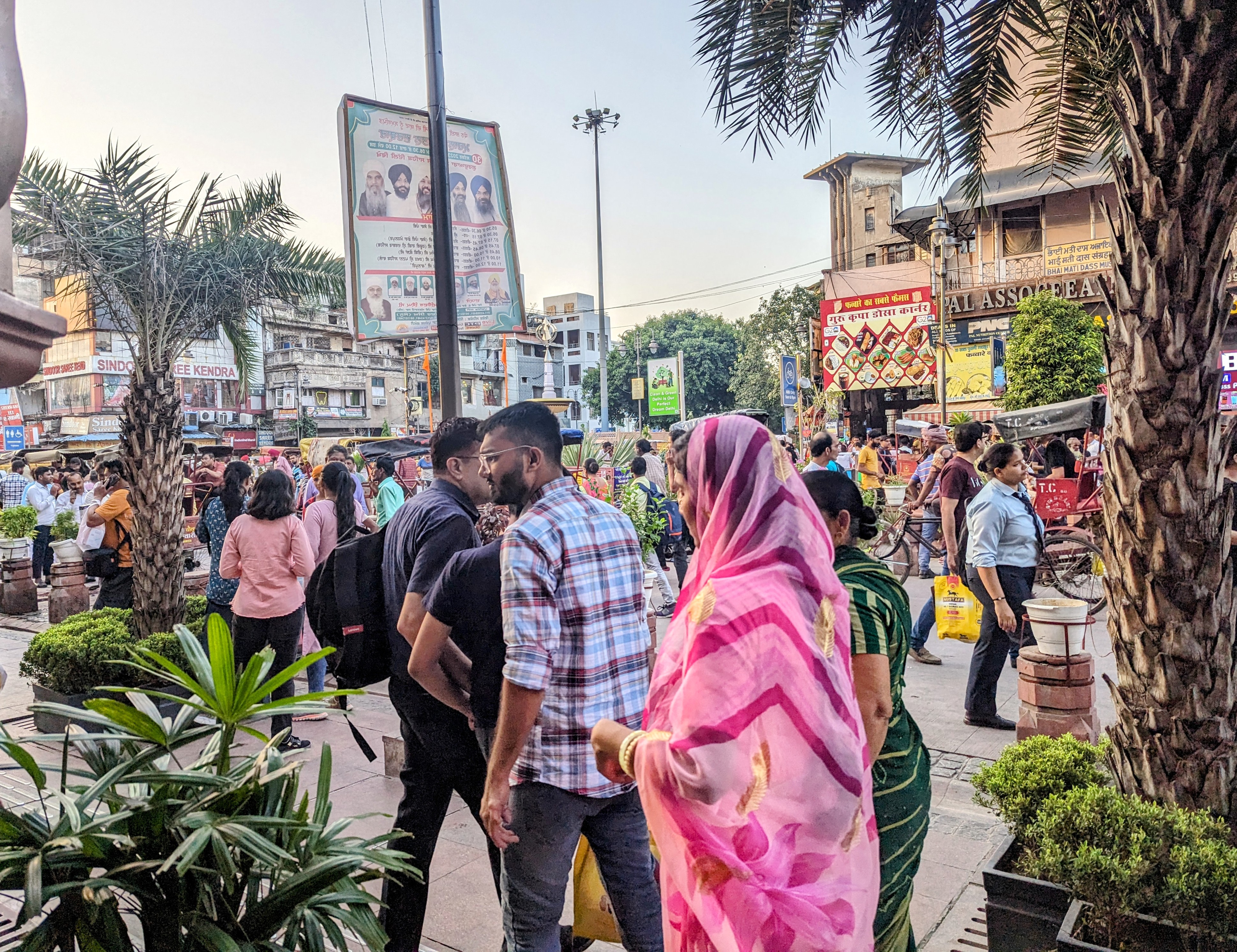
The next stop was Delhi, a short stay, but my first in the nation’s capital. I was met at the airport by a friend which was fortuitous because it proved difficult to get a cab willing to go into the congested area where I was staying. Subsequent forays in and out were facilitated by the Metro. On my first day in the city, the same friend escorted me to the university where he teaches and I gave a talk about writing book reviews. It was a very rewarding experience. The second day another friend took me into central Delhi where we had lunch, walked around, visited temples and enjoyed a most awesome lassi!

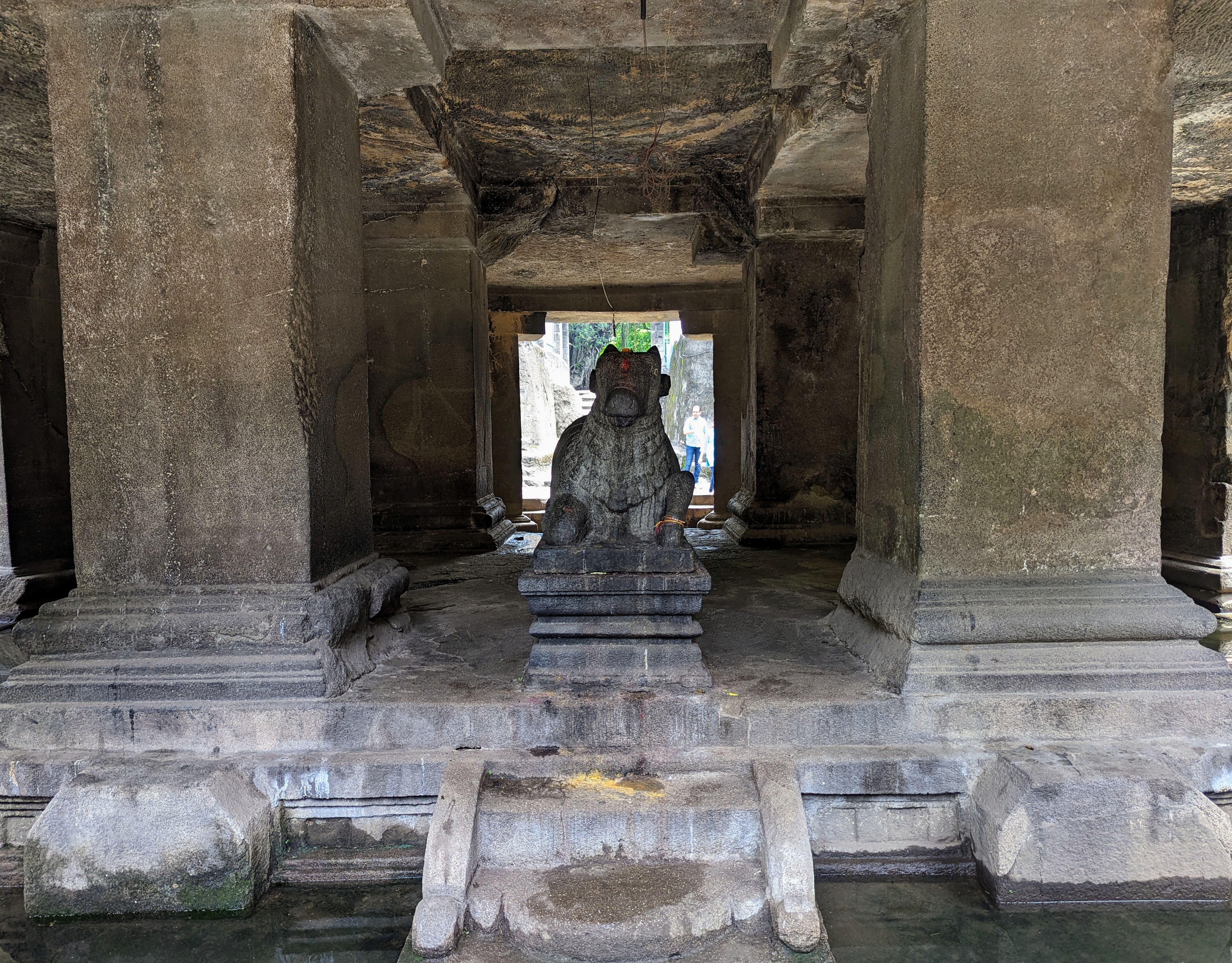
Then on to Pune, where I’m writing this on the final hour of my birthday. Here I caught up with dear literary friends and had a chance to finally meet someone whose friendship has offered solace during these long years of pandemic isolation. I also walked down to see the Pataleshwar Caves, the site of an eighth century Hindu temple carved out of the rock—a sanctuary within a busy city.

Tomorrow I fly to Mumbai for a brief stay then on to Jaipur where I hope to dry out a little after all the humidity of this extended wet season before returning to Bangalore. Whew!

It is good to be back in this hectic, vibrant country, even if I have arrived at a time of some diplomatic discord between my own country and India. I have never felt anything but welcome here.

The excellent books I’ve not been reading

As September began, with the prospect of a long-awaited trip looming, I had imagined I would have read and reviewed several new and recent releases before taking flight. Now it looks like these same books will be joining me on my way to India. I’d pictured myself only packing a few slender volumes so as to leave room to acquire more and still remain within the tighter weight restrictions of my internal flights. I should still be fine, of course, and I will still be able to fill up with even more books, so far as I can afford, before I head home from Bangalore. And, without even having to buy a second bag to get home as I have in the past.

It has been just shy of four full years since my last visit to India—in fact, since my last trip anywhere. I have spent hours sorting out flights, reserving hotels, making sure all my expenses at home are covered and making endless lists (which my toothless cat has mutilated on more than one occasion as he is inclined to do with my notebooks and sticky note reminders when I’ve recklessly left them unattended). I’ve also been invited to give a talk while I’m in India, so preparations for that have required my attention, as have an endless number of last minute errands. Considering how very busy I was prior to my last trip in 2019, it’s a wonder I got out of the door at all. Perhaps the enterprise of travel after the upheaval of the still-lingering pandemic is more precious and more precarious, and I don’t want to leave as much to chance as I did before.

Anyhow, the books I have been reading, each excellent in their own way, deserve a mention now should I not manage a proper review until I get back. I am not only a slow reader, but I’m an equally slow writer and I do hope to manage even a little personal writing while I’m away.

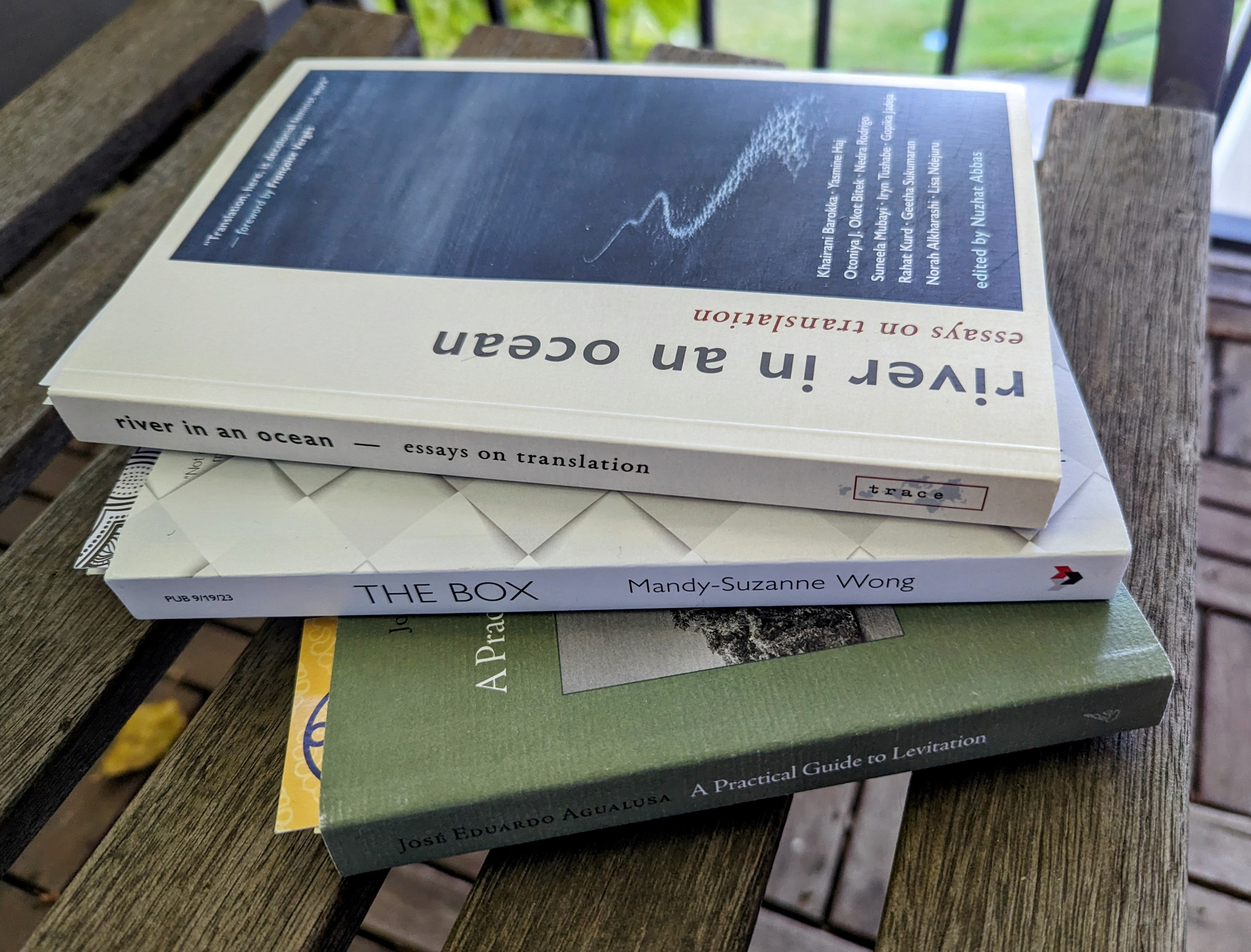
A Practical Guide to Levitation by José Eduardo Agualusa, translated from the Portuguese by Daniel Hahn (Archipelago) is a brilliantly fun collection of short stories set in Portugal, Brazil and Angola. For me, Agualusa’s eccentric characters and fondness for magical realism work so well in the short form.

The Box: A Novel by Bermudian writer Mandy-Suzanne Wong (Graywolf/House of Anansi Press) is a high-concept novel revolving around an enigmatic, unopenable box and the effect it has on those who come into contact with it. I’m only a couple of chapters in, but so far it makes me think of Czech writer Michal Ajvaz’s playful, intelligent postmodern fiction and I’m eager to see where it goes.

Finally, River in an Ocean: Essays on Translation, from the new Canadian publisher, trace press, is a collection of essays by poets, writers and translators from across the globe, edited by Nuzhat Abbas. These formally inventive pieces invite us, as the description advises, “to consider translation as a form of ethical and political love—one that requires attentive regard of the other—and a making an unmaking of self.” This project of decolonial feminism is a very important exploration of the intersection of language with questions of  identity, belonging, gender and sexuality, giving space to voices and perspectives that many of us might not hear or even consider otherwise. It is leading me to ask myself difficult questions about what my own interest in reading and promoting work in translation really means. And with many South Asian contributors I suspect this book would have landed in my travel bag anyhow—it seems only right.

Now, with only one day until I leave, I plan to continue to fuss over my packing, take a very long walk to celebrate the colours that will be gone by the time I get back and, with luck, get a little more reading done!

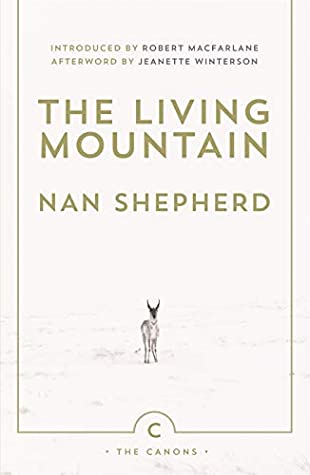
Off the beaten path: The Old Ways by Robert Macfarlane and The Living Mountain by Nan Shepherd

About a month ago, as the response to the COVID-19 pandemic began to have a greater impact on daily life in my community, I became more determined than ever to take full advantage of the pathways behind my home aware that, for a variety of reasons, my freedom of movement could be curtailed at some point. It seemed a good time to invite a companion on these walks, one who would not violate any rules of social distancing. I chose Robert Macfarlane, or rather his text The Old Ways as narrated by Roy McMillan which proved to be an ideal introduction to audiobooks for me and the perfect narrative to walk with. Coincidentally, my engagement with this wonderful evocation of the lure of long travelled trails and passageways overlapped a group reading of Nan Shepherd’s classic The Living Mountain, guided, on Twitter, by Macfarlane himself. But more about that book later.

One of the finest nature writers of our time, Macfarlane is able to bring the world, to use a cliché, alive on the page or, as in this recent circumstance, in the listening. He is able to pull one into the landscape, its history and its place in the human imagination. His books are the product of a deep engagement with the subject at hand, a commitment that often takes years before the final text is complete. The Old Ways, subtitled A Journey on Foot is perfect walking companion because it is, more than anything, about walking—tracing paths and passageways—a book that is not about the destination but act of following the trail. A trail peopled with a collection of intriguing characters, living and long gone, for a path exists as evidence of the creatures who have passed on it before, even if lies hidden for many years or longer, waiting to be uncovered and tracked once again.

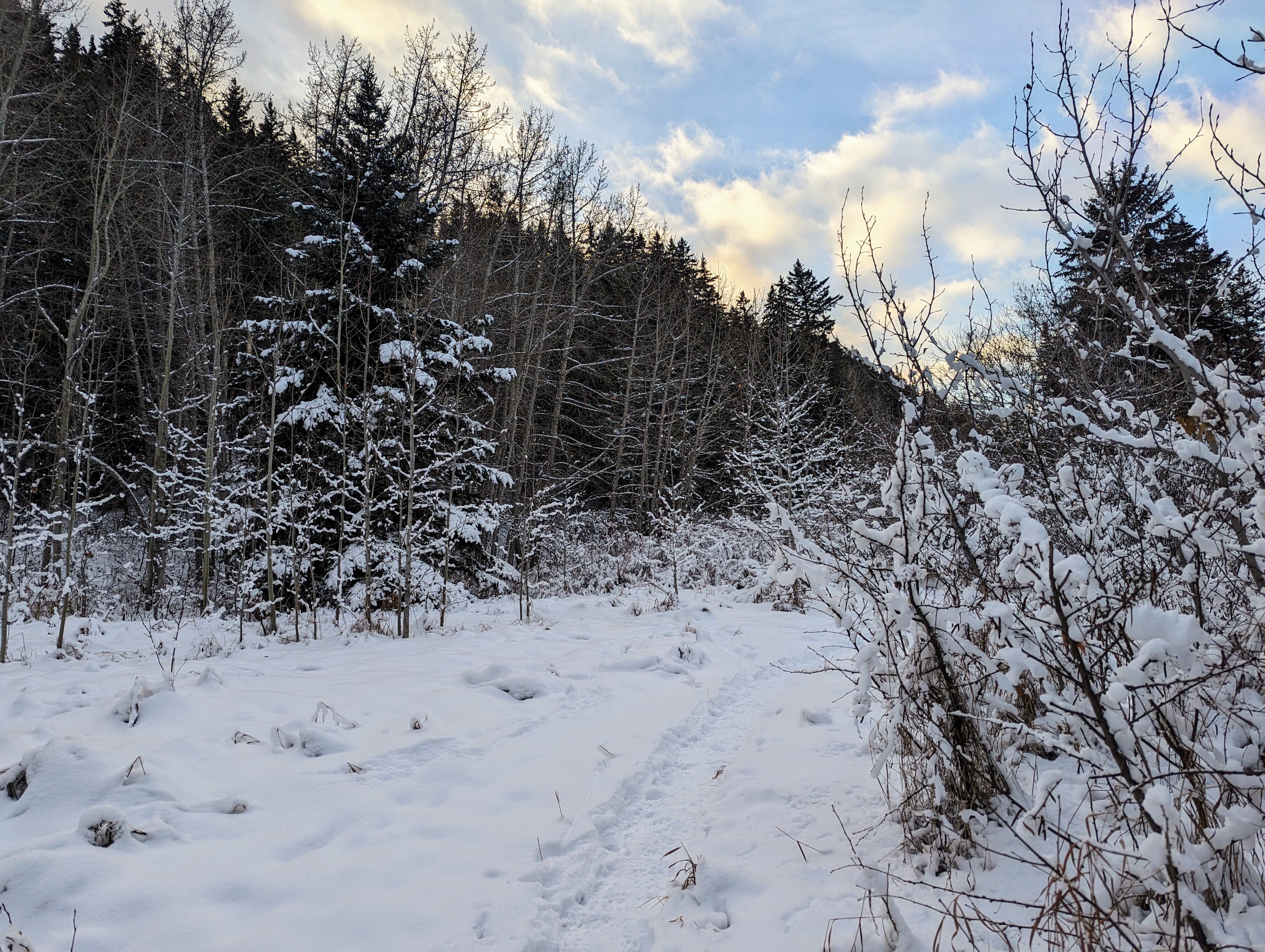
As ever, his eye is keen, his writing lyrical, and his affection for those he meets or travels with undeniable. The book opens with the detailed account of a December walk close to home, and as I made my way along the well-loved, oft-travelled trails behind my own home, still snow covered and wintery in denial of the season, I was secretly glad that I had an e-book copy buried unread in my electronic library. As much as I was certain I would cherish the audio experience, I knew I’d want to revisit the words. The setting he described was different, but the sentiment familiar:

This is the path I’ve probably walked more often than any other in my life. It’s a young way; maybe fifty years old, no more. Its easterly hedge is mostly hawthorn and around eight feet high; its westerly hedge a younger mix of blackthorn, hazel and dogwood. It is not normally a beautiful place, but there’s a feeling of secrecy to it that I appreciate, hedged in as it is on both sides, and running discreetly as it does between field and road.

Divided into four sections, The Old Ways, begins in England, traversing different types of landscapes—paths, chalk, and silt— and then moves to Scotland where he travels traditional waterways, explores the Hebridean moors and then revisits his first mountains, the Cairngorms. This is where his grandfather had settled after a life of adventure, and where young Robert fell in love with “high country and wild places.” It is also where his path crosses the ghost of Nan Shepherd whose intimate relationship with the same terrain is recorded in her masterpiece, The Living Mountain, a manuscript completed near the end of the Second World War, but unpublished until 1977. Macfarlane would not encounter her work until much later, long after the author’s death. But her poetic, deeply sensitive nature writing has no doubt informed his own. From Scotland, his journey moves abroad, to Palestine, Spain and Tibet, before coming home again to travel ancient paths and pay homage to poet and writer Edward Thomas whose footsteps guide him throughout this tribute to the powerful pull of the path.

Nan Shepherd, who was born in 1893, was well educated and travelled widely across Europe and to South Africa, but she spent most of her life in her childhood home near Aberdeen where she taught English. Known during her lifetime for a number of novels it is The Living Mountain, published only four years before she died, that places her in the company of the great nature and travel writers of the twentieth century. It is a quiet masterpiece. She writes about her beloved Cairngorm mountains with a mix of poetic passion and clear-eyed respect, chronicling her own maturing relationship with a landscape as alluring as it can be hostile and deadly. The early chapters explore, in turn, the features of the geological and meteorological environment, exhibiting a finely tuned attention to detail. She knows these mountains intimately, experiences a full-bodied engagement with the landscape. However, it is in the later chapters of this slender volume, those that deal with the living elements—flora, fauna, and human—and the more existential aspects—sleep, senses, and being—that this work really sings:

To bend the ear to silence is to discover how seldom it is there. Always something moves. When the air is quite still, there is always running water; and up here that is a sound one can hardly lose, though on many stony parts of the plateau one is above the watercourses. But now and then comes an hour when the silence is all but absolute, and listening to it one slips out of time. Such a silence is not a mere negation of sound. It is like a new element, and if water is still sounding with a low far-off murmur, it is no more than the last edge of an element we are leaving, as the last edge of land hangs on the mariner’s horizon. Such moments come in mist, or snow, or a summer’s night (when it is too cool for the clouds of insects to be abroad), or a September dawn. In September dawns I hardly breathe—I am an image in a ball of glass. The world is suspended there, and I in it.

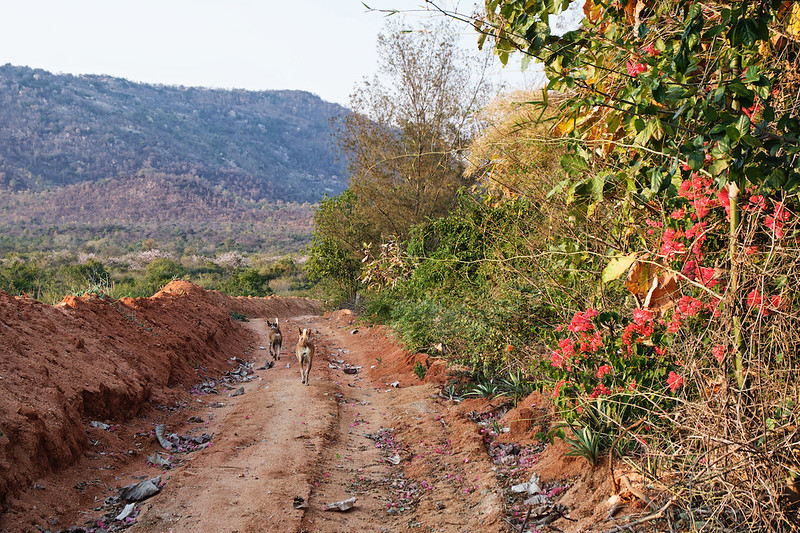
Over the past month as I travelled with Robert Macfarlane and Nan Shepherd, I could not help but reflect on the pathways I’ve travelled in my life. As child I spent each summer weekend camping and hiking with my family in the Rocky Mountains, my head filled with adventures out of King Arthur and Lord of the Rings. As a teenager I found refuge on the horse trails winding through the aspen woods near my childhood home. In my twenties I moved across country, exploring the bird sanctuaries and natural areas of the Ontario cities we lived in. And returning to western Canada, I have cherished the large natural parklands in this city where I’ve lived for last three decades, especially the Douglas Fir Trail that extends behind my home. But my mind also wandered along trails that my travels over recent years have opened—the rugged shoreline of the Eastern Cape of South Africa, sections of the even more rugged Larapinta running along the MacDonnell Ranges west of Alice Springs, Australia, or the rutted red roads and granite sheets of rural Andhra Pradesh, India.These are two books that allow you to experience the world through the words of dedicated guides, but like all journeys, the path ultimately leads you back home. Inspired by my engagement with these two gifted nature writers I recently wrote a piece for our “3:AM in Lockdown” series in which I attempted to follow the trail I know best and reflect on the uncertain state of our world at this moment. That short essay can be found here.

The Old Ways by Robert Macfarlane is published by Penguin Books and The Living Mountain by Nan Shepherd is published by Canongate.

My literary goals for 2020, or rather, where they begin

When I wrote my end of year post on New Year’s Eve, a wave of end of year gloom, fueled in part by media focus on the currents state of the world and a sense of anxious pessimism colouring the future outlook, for myself personally and the planet. When I look back over the past twelve months or so I feel fatigued. There seems to be so much I could not get a hold of—the volume of editing for 3:AM, coping with my son’s addiction, managing my own grief processing and mental health challenges.So, unable to set boundaries or take control I sought to escape. After a five week trip to India in February, I went back in late October. One should never confuse the desire to travel with a desperation to run away from loneliness and a failure to feel at home, but I suspect that drives many of us who are perpetually restless. I’ve only been back for a month and already I find myself watching planes take off from the airport across the city and wish I too was leaving again. It’s a financial and practical impossibility at the moment, and I don’t even have a destination in mind, but a part of me is always mentally packing bags and thinking about getting away.
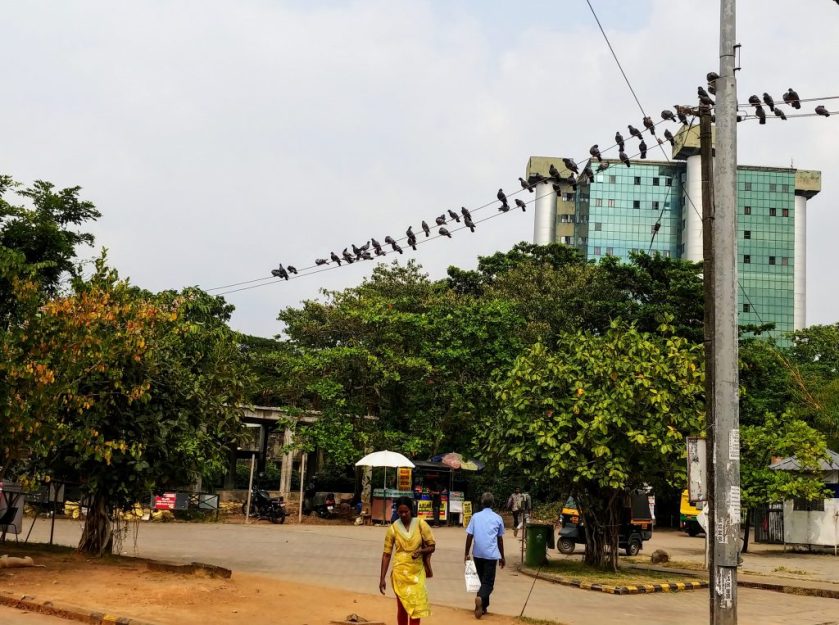
From this vantage point, I keep thinking about everything I did not do this year, all the bookish goals unmet, outlines unsketched, words unwritten. I made a few forays toward a fledgling project, some with promise, inspired in large part by essays I was reading. I fiddled with a little poetry, published a couple of pieces and wrote one major critical essay and a personal essay commissioned for a publication sometime this year.

However, sometimes it feels like my efforts fell short—for two months I even battled a crippling inability to open a book—but, in truth, 2019 held many moments of literary magic.  I visited Bombay for the first time early in the year to meet up with poet and cultural critic, Ranjit Hoskote, and also ended up meeting Priya Sarukkai Chabria—a translator, novelist and poet whose name was new to me. By the end of the year I would come to treasure her friendship and belief in me as a writer. In November I spent several days with her and her husband in Pune where she arranged for me to give a talk on book reviewing and, the next day, meet up with several poets who have now become part of my expanding network. I’m learning to trust her instincts.

In February I also made my second trip to Calcutta where, once again, I taught a class at the Seagull School of Publishing  (a session which has, in itself, added to my circle of friends) and I had the distinct honour of engaging in a public conversation with Edwin Frank, the founding editor of NYRB Classics. As usual, several other creative personalities were gathered at Seagull, but an unexpected delight was to spend a few days with Italian poet Franca Mancinelli who happened to be in the city on a residency. It was a busy, inspiring week in a city I’ve come to love.

On both of this year’s India visits I spent time in Kochi where my dear and long-time friend Mini lives, now that she has returned home after many years in Dubai. I made my first trip to Nepal to catch up with a Nepali friend who used to live in my home town. My closest queer friend, a graduate in theratre arts and probably the only person who understands my own complicated queerness, I miss the long conversations over coffee we used to have. Kathmandu is a long way to go to catch up. But worth it!

I also finally  got to Jaipur, a city I will have to go back to—magical energy, stunning architecture and a climate as long as I avoid the really hot months, suited to my natural desert temperament. (I live in a dry, albeit cold, environment.) I spent two days with Saudamini, another creative spirit I have known for a number of years, who was an enthusiatic tour guide. And together we found in the bedrooms of the Nahargarh Fort interior design perfect for book lovers!

On my third and final day in Jaipur, I enjoyed another serendipitous encounter with a Twitter follower who reached out when she heard I was on my way. A curator at the City Palace Museum, it turns out that we have a mutual friend in Bombay, because, of course, even in cities with millions of people, it is a small world. Apurna and I enjoyed a wonderful lunch together, strangers only for the first few minutes. Which, in itself, is one of the things that brings me back to India.

The other critical anchor for me on this most recent Indian adventure, was the opportunity to get to know another Twitter contact, someone unknown to me on my first visits whom I “met” through non-Indian readerly friends and who lives (at least for now) in Bangalore where I was based. A writer and reader with impeccable taste (that is, corresponding with my own), JP and I spent a lot of time drinking coffee and scouring bookstores on Church Street as one must when in that city. Last, but not least, I went to the Bangalore Lit Fest with a couple of students from my first year teaching at Seagull. Had I found the courage to venture to Delhi, I would have connected with even more former students, but I still find the city daunting. Someday, I will go.

For now I know that I need to take the time to drift through all the memories I gathered in India this year. There are so many that they sometimes feel like they are crammed to the back of a closet, waiting to see the light but too much, too confusing to deal with. They are filled with joy, pain and curiosity. I was in the country during the election campaign when Pakistan was bombed, I returned home as the controversial Transgender Protection Act was passed—something that reminds me how precarious my own travels are, no matter where I go because my outward appearance only provides a superficial security—and now I watch the citizenship protests roll out.

My attraction to India is complicated. I am not an Indian, I am not involved with or married to an Indian. Friendships aside I have no need to go there. But what I have gained over the course of my visits is a real life validation of my worth as a writer. Something no editing engagement, publication or Twitter chatter can equal. However, it inevitably makes me feel like I come home to a creative and emotional void. I hit waves of loneliness that turn back into bitterness and resentment.

Aimed at myself.

Aimed at my city.

Aimed at my life.

Once again, it serves to accomplish little more than to further absorb my creative energy. So, as 2020 begins, I am aware that, if I am ever going to be able to meet the  writerly goals I have set for myself, I have to start with, strangely enough, forgiveness. It is the only protection against anger and resentment.

So that, then is my primary literary goal for 2020. Everything I read and write will flow from there.

Travel, writing and poetry: A link to my new poem at RIC Journal

I have a new poem up today at RIC Journal.  I’ve called it “Indian Autumn Elegy.” For some reason, this most recent visit to India, my third in two years, has so far resisted my dedicated efforts to capture it in prose. At least not for this blog.  As I process my cumulative experiences, not simply in India but in the other countries I’ve spent time in over the past few years, South Africa and Australia, I am coming to understand that much of what I want to draw to the surface belongs to another, longer dedicated writing project. One that has long been a vague intention but is now beginning to fill empty pages.

In the meantime though, there are reflections and observations too restless to wait, and those seem to be slipping into poetic exercises.

Like this one.

The first sketches of this poem were composed last month, on the train between Delhi and Jaipur. It speaks to a recognition that something I have often told myself I was seeking through travel—a kind of validation I hoped I might find by losing myself in a crowd—is neither necessary nor possible.

“Indian Autumn Elegy” can be found here.

Beginning to understand what keeps calling me back: A short reflection

As I write this I am in Pune; this evening I fly back to Bangalore for a few days. Then I head home. Away from heat and greenery, back into cold and snow. Plenty of both.

As I look back on the past five weeks or so in India, images and memories shift and tumble like the pieces of coloured glass in a kaleidoscope. Diwali in Wardha, Blossom Book House in Bangalore, the crowded dusty streets of Kathmandu, the rocking rhythm of the train from Delhi to Jaipur, Jantar Mantar, the grand astronomical observatory built by Jai Singh II and the magnificent forts towering above the city he founded. Quiet days amid the lush tropical beauty of Kochi, and stimulating literary engagements in Pune.

I learned a lot on this visit—about India, Indians, and myself. About intersections where noise and colour can overwhelm, where nuance can be lost and small wisdoms can be gained.

This has been more of a spiritual encounter for me, if I can use that term. I’ve come a little closer to understanding what it is I am seeking in the repeated act of intentional, albeit short term, displacement. It has, I believe, something to do with death. With loss and grief. With finding a way to experience that which I have mourned, that which has caused me pain and anger, as a life-giving positive force.

It will take time to unravel this thread, this tangled web of thoughts. Now, I suppose, I need the space that distance will grant me to reflect a little. At this moment, from a balcony level with tree tops, I want to drink in the foliage and think about the past few weeks without forcing or directing anything.

What is it that stands out? The people, of course. Friends. Reconnection with old friends, encounters with new friends, and finally meeting face to face with those only known online. The luxury of long conversations. Exploring the landscapes and cityscapes with those who know it well and love it. Who feel it in their souls.

For now, that is what I will hold close to my heart as I prepare to head toward home.

My latest passage to India

Each visit to India brings its own rewards, but as one spends more time in another country, the cultural differences become more apparent. There are the obvious ones—fascinating and wonderful to observe. Like the great honour I had to share in a family Diwali celebration, from a respectful distance, delighted and deeply grateful for the experience. I was in Wardha with a friend—a city on few Western tourist’s agendas—a place that revelled in the celebrations. I visited Sevagram, Ghandi’s ashram, and had an opportunity to get out into the beautiful countryside of central India.

It is an experience I will always treasure. Perhaps, when I find the spirit, I will write more.

Until then there is a little pain that requires healing though that may not be possible.

In the meantime, the opportunity to get to know a Twitter friend, his wife and his unruly canine and feline household, has been wonderful, and with a Lit Fest happening here in Bangalore this weekend and Nepal, Jaipur, Kochi and Pune ahead, I hope to find some of the creative inspiration I was hoping for.

For now I’m just checking in.

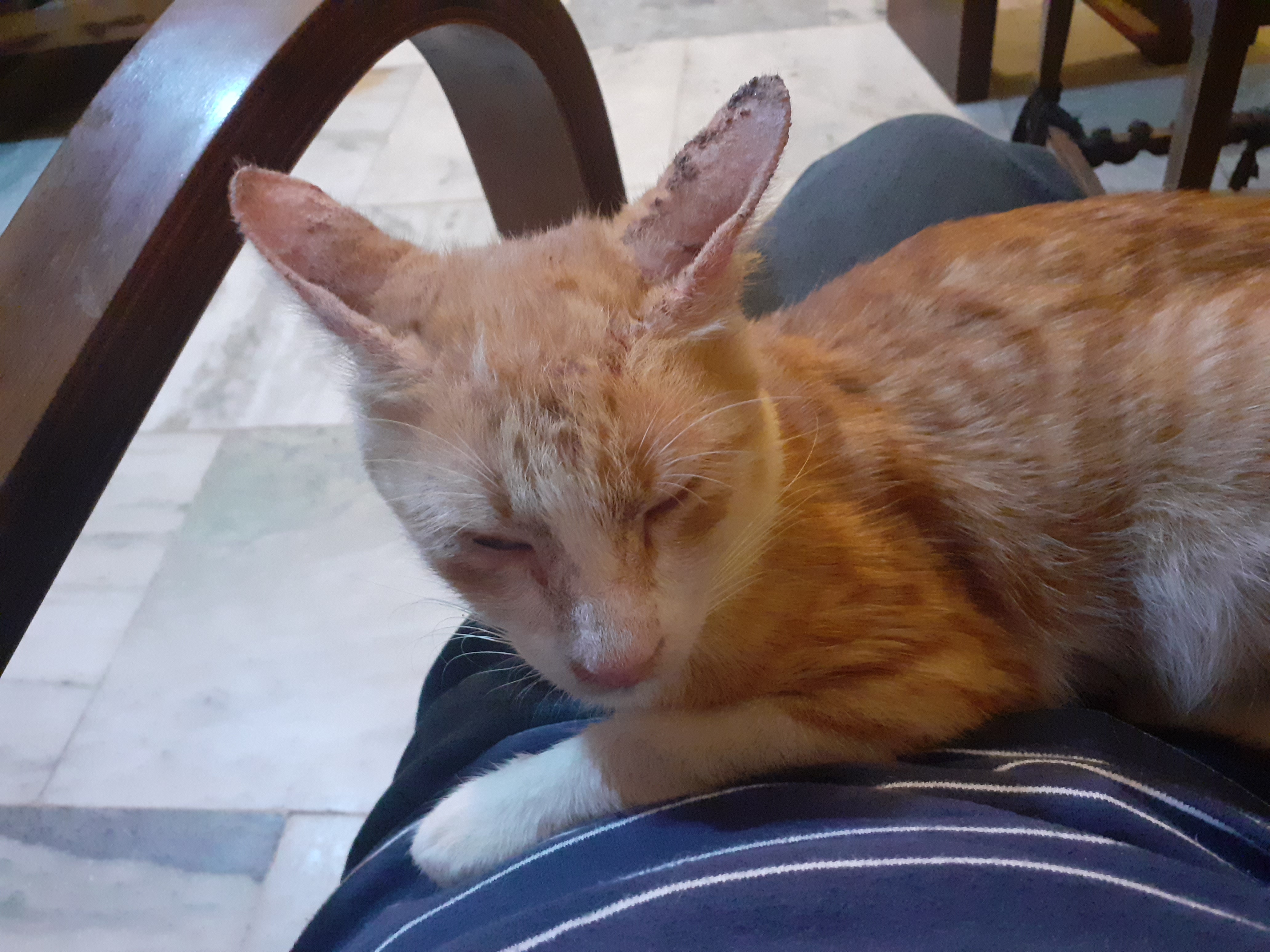
My new friend.

The appeal of India for this restless soul: A reflection

Back from a month in India, I am struggling to reorient myself. The jet lag and the cold I thought I had shaken that has now morphed into a different version of moderate misery do not help. My brain is foggy. My body is trying to adjust to the twelve and a half hours I just gained back. My heart is sick with a longing to grasp again, just for a minute, whatever it is that I left behind. That I leave behind every time I return.

India has a strange charm. One I can’t quite place. I never imagined I would go there; I cannot pinpoint when the seed was sown. I do know that for years it was a secret wish, not bound to any  particular calling but simply a desire to go there. Last year’s chance decision to visit Seagull Books in Calcutta was an opening, this year I expanded my time and orbit, and met so many more people along the way. Had so many great conversations.

How is it, I ask myself again and again, that I can travel halfway around the world, and make more solid connections—new or renewed—in four weeks, than I can manage in an entire year in a city I have lived in for most of my life? Is it, perhaps, that I am able to be myself in a strange land, relax into a comfort with who I am in a place where I do not naturally belong? Why can I not bring that person back with me? Or at least feel at ease with him when I come home.

What is home, then? And why does this place fail to complete me? Why do I feel a home-away-from-homesickness weighing on me? I envy those who belong someplace.

As long as I can remember, I have felt that I was out of step, out of sorts, a misfit. Marriage, moving, midlife metamorphosis—nothing has ever completely eased the discomfort. Only in travelling do I find relief. Only in upsetting the equilibrium do I feel whole.

At least for a while.

Toward the end of my visit, an unexpected event challenged this temporary relief. I went out to visit a friend at a school in Andhra Pradesh. Here, in a rugged and breathtaking location with only the faintest internet signal, the world was out of reach for the night. In the morning, as I climbed into the car, my driver greeted me with news he had just received. “India attacked Pakistan,” he reported with enthusiasm, “people are celebrating in Bangalore!” I politely responded that I wasn’t sure that was a good thing, but all the way back into the city I contemplated what it would mean to be in a country at war. I was not unaware of the tensions that had been building, but I had no clear grasp of the historical context. As an outsider, I am cautious to hold to a respectful neutrality, but somewhere along the way a line is crossed. I have become attached to people and places. I am not simply a visitor.

Once again I am aware of a sensation similar to what I feel as a person without a coherent gender history. A neither-here-nor-thereness defines my life. Always has, always will. Only now it is slipping across other boundaries, opening new possibilities.

After this recent trip to India, and the many rewarding and validating encounters that I was fortunate to have, I am beginning to believe that if I can learn to embrace an inherent disequilibrium as a fundamental and vital part of who I am, I can finally move ahead to tell the story that has been eluding me. My own story.

Oh Calcutta! Reflections on my second visit to the City of Joy

A week in Calcutta, my second visit to the city, now lies behind me. I am back in Bangalore again, looking out over the rooftops as the sounds of a busy Saturday remind me that life is ever alive and vital in a large Indian metropolis. But, as I sit here, the sights, sounds and scents of Calcutta are still coursing through my imagination. It’s a hard city to shake once it gets into your system.

Last year, as my first introduction to India, Calcutta was not what I expected. A full assault on the senses in ways I was not prepared for. It is still is, but this year I returned with a little bit more perspective, however limited. Unlike some people I’ve spoken to who cannot imagine why anyone would want to, or dare to, go to Calcutta, picturing the city at its most difficult times (enhanced perhaps by a little Hollywood melodrama as well), I had arrived expecting it to be more modern than what I found, especially in the grand, old, if somewhat decaying central parts of town. This time, however, I noticed more office complexes and taller buildings although somehow Calcutta manages to do “modern” and yet maintain a distinct element of shabby chic. Either that or, as in the new curator’s offices at the stately Victoria Memorial demonstrate, create a generic and unremarkable annex completely at odds with the echoes of the past. It’s a wonderfully eccentric we’ll do it our way way of being as stubbornly defiant as the hand pulled rickshaw drivers that continue to make their way along the back streets.

And speaking of streets, after a taste of the traffic in Bangalore, Mumbai or Kochi, Calcutta is comparatively ordered and slow. Very slow. Typically vehicles stay in their lanes, and the traffic police ensure a general order, lights at intersections are obeyed, and major roadways can be safely crossed. Which is saying a lot to be honest. It is a walkable city. The pathways can be rough at times, or filled with street sellers and food vendors, but if necessary one can generally manage to travel along the edge of the roadway. Some of the backstreets are fairly quiet and empty much of the day. But if a single vehicle comes along, you will hear of it. More than one vehicle and you won’t be able to hear yourself think. The noise of the car horns can be ear splitting. I’m inclined to think that anyone out to acquire a new or used vehicle must head to the showroom, car lot, back alley or wherever such transactions might occur and simply lean on the horn. If a few windows shatter, it does not matter if the wheels are falling off, it’s good to go!

Another traffic related observation I noted this time is the increased use of helmets on motorcycles. Friends told me that it has been a point of enforcement over the past year. And a good thing too. I was heading up a major thoroughfare on my way to meet a friend at the Marble Palace, when I came across a motorcycle accident. There were two children and one or two adults on the cycle, all fortunately with helmets. The one boy must have fallen off. As I passed, they were carrying this dazed child to a bus stop bench and a large crowd was gathering all shouting and offering their opinions. Without helmets it could have been far worse. All I could think of was the woman I saw speeding down the expressway in Bangalore with her young daughter on her lap, neither with helmets. But of course, where I live, motorcycles are a seasonal mode of transport, not a practical necessity as they are in this part of the world.

Traffic and faded architectural glory aside, to be back in Calcutta felt like coming home. A place I returned to seeking to refine a creative focus. On my first visit I came fully intending to write; this time I came with no such illusions. I came to experience, to meet other creative spirits, and to reconnect with all the good people at Seagull Books who have become dear to me. This time my stay was shorter, but coincided with so many wonderful visitors and events. It began, the night I arrived, with the opening of Removing the Gaze, an exclusive showing of collages by German artist Max Neumann. Monday morning began with NYRB Classics editor Edwin Frank’s masterclass at the Seagull School of Publishing, followed in the evening by my conversation with him at the Victoria Memorial (still fretting a little at what I had hoped to talk about but didn’t, I’m afraid). Tuesday it was my turn to lead a school session. As with my first experience last year, I was caught off guard by how quickly the three hours passed and by the engagement of the students. Wednesday was a full day of sightseeing with a new friend, Italian poet Franca Mancinelli who, by coincidence, has been in the city on a residency, and Thursday morning featured a masterclass with conversationalist extraordinaire, Paul Holdengraber. Throughout the week I also had a number of meaningful conversations with Colin Robinson, the co-publisher of OR Books who was staying at the same residence where I was and doing some work with Seagull. Along with many visits to Seagull Books’ new office in their former school space, now newly opened up—a bright, cheery and inspiring creative environment—this was week packed with literary energy.

Now to see if I can carry some of the inspiration and focus I was seeking forward.

In Bangalore tonight, the friend I am staying with remarked on a new sense of perspective, of direction, and perhaps peace. As if India does give me something I need. The one thing it won’t give me is planned time for the two of us to travel, as unexpected circumstances now call him to be with his family. But such is life. This leaves me with a little over a week, and apart from one more overnight journey out of the city, much needed time and solitude to put some perspective to my own writing goals and direction before I return to the distractions and demands of life at home.

Of course, I will be back. India is not finished with me yet. Nor I with her.