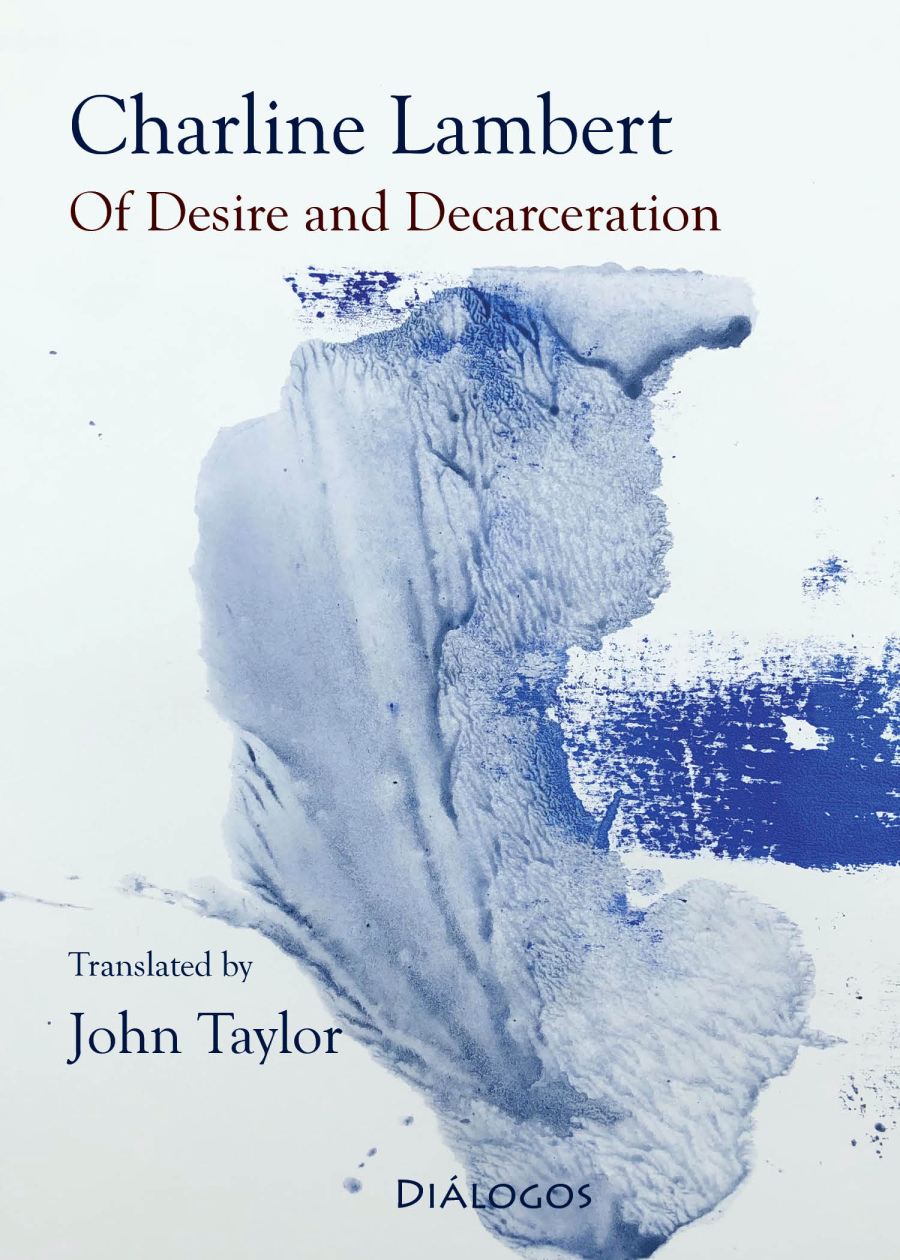
“and every day / you elucidate a knot”: Of Desire and Decarceration by Charline Lambert

When a poet’s work first appears in translation, it is rarely more than a single volume or an edited selection. Even then, it can take decades for a prominent foreign language poet to be finally be translated and published in English. But for young Belgian-Francophone poet Charline Lambert (b. 1989), the situation is quite different—her first four books of poetry (originally published between 2016 and 2020) have recently been released in one single, dual-language volume titled Of Desire and Decarceration. As her translator, John Taylor, explains in his Introduction (an earlier version can be found online here):

The motivation for bringing forth this substantial corpus is that the four books respond to each other, grow out of each other. They are like stages—beginning with the evocations of bewitchment, temptation, restraint, and detention besetting Ulysses, Circe, and Penelope in the poet’s first book, Hemp and Ivy—of an ongoing quest to grasp the mysteries of desire and gain insight into its innermost relationship, not only with the body, but also with language.

Her work is vibrant, ecstatic, alive—rich with imagery drawn from mythology, philosophy, nature, science and physiology. As someone very familiar with Taylor as a translator and a poet, I can see why he was so immediately captivated by her emotionally and linguistically inventive poetry which he has brought into English with such care and attention.
To read Lambert’s first four books—each an extended sequence of verse and poetic prose pieces—in sequence is to experience the poet’s deepening exploration into questions of identity, where an embodied self-expression is examined at the minute, physiological level in concert with an expansive metaphysical self-realization within an external world of earth, wind and water. Although subject, voice, and form shift as one moves from volume to volume, her writing is typically spare, and the same essential human forces—desire, solitude, spirit, joy—are present, even if they may be the source (or the outcome) of struggle and pain, while her occasional use of uncommon, even esoteric, words reflects the limits and the potential of language to capture complex states of being—in the body, the mind, and the world. There is a tension in the interplay of all these elements that courses through her work, finding new expression with each successive book.

Her first book, Hemp and Ivy (Chanvre et Lierre), as noted above, reimagines Ulysses’ encounter with Circe and brings Penelope in to the drama. All three characters struggle with desire and temptation in their own ways. For Ulysses, bound to his mast, his desire and the lengths he must go to avoid a tragic fate is depicted with vivid intensity:

    A desire swarms, coming from even farther
than the esophagus, a desire rounder than the
navel, more burning than the urethra. A resonant
canalizing desire, which widens the dikes of the
arteries and erodes the epidermis. It will later
become a song, if it is not hemp.

.     Circe’s fate is a patient fate.

*

   Naked ivy on the mast, a column of climbing
vertebrae.
   In volutes of breath and nervous arabesques,
he hoists himself into the sky.
.    He unfurls his great back muscles of wing or
verve.

From this mythologically themed excursion, Lambert’s work turns towards a more abstracted poetic examination of the themes and questions that inspire her. Her second book, Dialyzing (Sous Dialyses) turns on her idiosyncratic approach to language. As Taylor indicates: “Lambert’s writing, which often appeals to scientific and medical terminology, also sets into motion a poetic and self-analyzing process of ‘dialysis.’” Akin to the medical functions and procedures associated with the term, her subject here is removing an element from her body—physical, emotional, or mental—examining, processing, purifying it through the act of writing and returning it to the embodied form in which she exists. “She is ‘dialyzing’,” hence the title as Taylor has chosen for his translation. This sequence of poems also begins to hint at the struggle to break down the boundaries between the body and the self, a theme that will be explored more directly in her next book.

Lambert’s poetry is perhaps at its most explicitly scientific here, witnessed in the incorporation of unexpected  natural and physiological terminology in striking ways as her subject explores the intricacies of her own desires in a manner that blurs or escapes the limitations of the physical form and merges with a natural environment:

.    At the edge of a cliff, potent dialysis, she
fights over the infinite with the ocean. But they
breathe at the same gill.

.    Their breath escapes, enters through a crack,
dashes to lose itself in the volutes of her pleura-
colored dress.

There is a breathless intensity to her verse that is especially evident in this sequence as her subject repeatedly loses, dissembles, and reconstructs herself in a windy, watery, earthy space:

    She unstitches each vertebra from her
spine, carries out the denuding of her neck, her
windpipe, her thighbone.
    Erects them into a new nudity of columns.
.     Anchors it in soil, and watches herself grow.

But in the end, she is enveloped once more.

With her third book, Decarceration (Désincarceration), Lambert seeks to redefine identity and existence beyond the prison of embodied existence. The idea of breaking free from an incarcerated state of being (incarnation) is openly explored now in succinct, precise verse, addressed to “You”—a movement, at least in the progressive reading experience, closer to the speaker’s own self. The fleshy matter of the body has a limit that can seem impossible to override, so the first step is to free the language you employ to define your being:

You are a countable solitude.

You are a light shattered
into beams.

You are
A barely recognized fire.

*

You want to decarcerate the language from you,
decar–

cerate these words from your plexus
and every day
you elucidate a knot.

The struggle to emerge is a tension between solitude and longing as a path to both self-identification and transcendence. It is critical to be free to form and shape yourself before being named, defined by a  body and a pronoun.

Before evaluating
the situation,

draw up an inhuman
report

*

Re-forming oneself as meander, winding
into the maze before
the accident,

before having to be called
something.

This poetic invocation is open and affirming, and can be understood in more than one sense. In his introduction, Taylor speaks of the many challenges he encountered in his attempt to preserve or replicate the distinct word choices, puns, and double entendres that Lambert revels in. I would suggest that, as a primarily but not entirely unilingual Anglophone reader, one’s appreciation of her poetry is not dimmed for the inevitable loss of some of the allusions and word play. As for her fondness for unfamiliar words and scientific terms, many are essentially the same in both the French and English versions, and my dictionary did see considerable use, something which only served to enhance my reading experience (and vocabulary).

Finally, with A Salvo (Une salve), Lambert’s fourth—and in this context, final—volume, her poetic quest reaches a certain degree of resolution, and an understanding of Taylor’s impulse to translate and present these works together as one becomes clear. Again the voice shifts, as the poet’s speaker adopts an imperative tone, addressing the sensual and physical experience in relation to a natural and cosmic reality. An intense, incantatory rhythm propels this relatively short sequence, with its recurring double-stranded refrain “Inhabit the night / Enter the sea.” This is established in the opening pages as a rejection of the soul crushing cage of darkness:

Never again sight, its eyes aborting the horizon,
   that rude roughness in the psalms of the hand
.    from which the song of the clouds is removed.

And an invitation to a kind of whole body rebirth in the water:

Washing oneself–while seeking a flesh in which
  to be, a skin to embody oneself in. A swim.
.   A lapse of time. A parturient’s dawn. Then,
  nothing will better express thickness than
  fraying and fleetingness.

The strength of A Salvo lies, not only in its sustained energy—as befits its title—and in Lambert’s own maturity as a poet, but, in the deep satisfaction that arises from reading it as the culmination of the existential quest that unites her first four books of poetry. What a joy it is to have them together in one volume.

Inhabit the night—and these crystals of being,
.   emaciated out of deterioration, become meteors.
Enter the sea—and what you have already
.   experienced, decimated into a thousand
.   scintillations, becomes a sparkling splinter.

Of Desire and Decarceration by Charline Lambert is translated from the French by John Taylor and published by Diálogos.
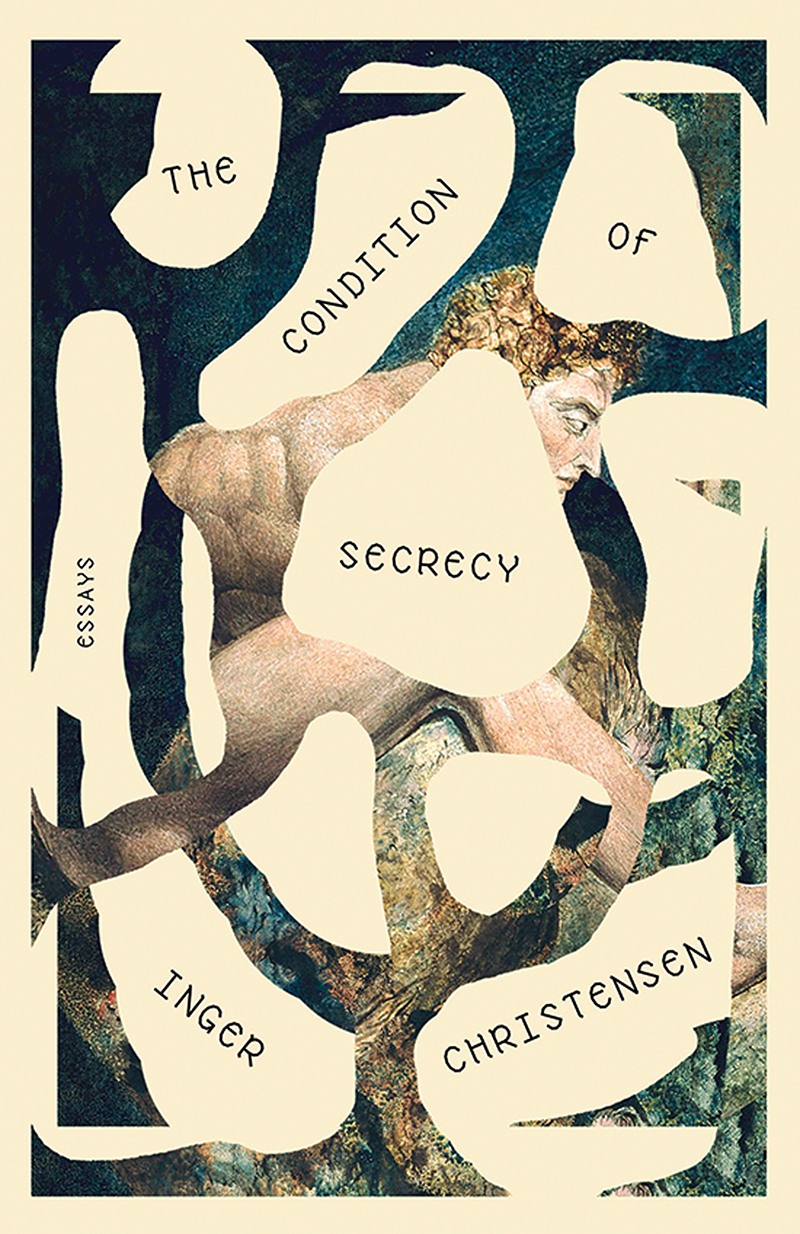


An inexhaustible landscape of words: The Condition of Secrecy by Inger Christensen

Writing poems is just as much a mysterious miracle. Not that there’s anything mystical or ceremonial about it. Or anything religious. It’s a neutral miracle, so to speak, granted in advance, because in the process of writing we need to use language in its whole, indissoluble connection with reality. It’s that connection with reality that’s a mysterious miracle. And that’s what poetry has to enter into.

It is clear from the essays collected in The Condition of Secrecy, that Danish poet, novelist, and essayist Inger Christensen (1935–2009) was not only in love with words, but that she understood language—and the way we seek to give meaning to the world—as part of the dynamic process of nature. For those who are already familiar with the experimental writer’s poetry and fiction, this collection offers insight into her view of the world, which was heavily influenced by a lifelong interest in science, mathematics, and linguistic theory, and the questions she was inclined to ask about her own engagement with language. For those who are new to her work, myself included, her philosophical musings and poetic investigations are no less interesting, and may well serve as an invitation to explore her work further—and fortunately there is a good selection currently available in English translation with more forthcoming this year.

What is most immediate in this compilation of essays, originally published across four decades, from the 1960s through the 1990s, and arranged intentionally rather than chronologically, is the sheer force of Christensen’s intellectual curiosity. At its most basic, it is a book about writing and meaning, but a book by an original inventive poet trained in German, mathematics, and medicine, who read six modern and two ancient languages. And, as a child of the Second World War, social and political concerns are never far from her mind. The Cold War and the fear of nuclear annihilation casts a clear shadow on a number of pieces. So, although this volume only numbers 138 pages, Christensen encourages her reader’s close engagement with ideas as she herself works her way through her own questions about the world and the way we find meaning in it through language.

Words are, of course, essential and she has a wonderful way of employing them. Her opening sentences are often quite special. “Interplay,” an essay about coming to understand time and one’s place in history as a child in Denmark at the end of World War II, begins:

When I was nine years old, the world, too, was nine years old. At least, there was no difference between us, no opposition, no distance. We just tumbled around from sunrise to sunset, body and earth as alike as two pennies.

Another piece, one of several more explicitly about words, meaning, and form, especially in the art of poetry, “Silk, the Universe, Language, the Heart,” opens:

Silk is a noun. All nouns are very lonely. They’re like crystals, each enclosing its own little piece of our knowledge about the world.

This playful essay, in conversation with the Ars Poetica or Wen Fu of Chinese poet Lu Chi (261–303 AD), examines the personalities of nouns, adjectives, adverbs, and verbs, along with the ever important prepositions that hold them in relation to one another.

Another essay that explores the interconnectedness of words, meaning, and writing poems, “It’s All Words,” moves from an analysis of what it means to say: “The word creates what it names” with all its Biblical overtones, through an existential (and anthropological) notion of naming the world into existence, to try to answer the question of why poetry is not a common practice when it requires no special tools beyond a paper and pen.

As it is right now, when the world has existed for so long, words come from everywhere, and they’re never there for the first time. Not only that. Although there may not be an infinite number of them, nor an infinite number of combinations, nevertheless there is an inexhaustible landscape of words, there are more than any one individual could manage to travel through. This is where it ends and where it begins, if a person is going to write poems: in the imagined concept of this mysterious landscape. For poems are created exclusively from words.

What makes this piece especially intriguing is that it leads into a discussion of the creation of one Christensen’s most inventive book-length poems, Alphabet. She began collecting words and then, in her gathering, she happened to come across Fibonacci numbers, a formula of increasing numbers that describe a pattern present in the growth principles of many plants. By employing this structure, she had a framework upon which her poem could eventually grow and bloom.

Most of the essays in this volume are short, some are only a few pages long, but midway through, the longest piece, coming in just shy of 30 pages, marks a turn of focus to more philosophical and political themes—not without abandoning talk of writing poetry and fiction, mind you. “The Regulating Effect of Chance” is an extended discussion of the role that chance plays in the world—fundamental, as she sees it, in accord with Jacques Monod’s Chance & Necessity—and in our experience of the world, our tendency to assign a notion of fate or destiny, and our understanding of art, creativity, imagination and much more. The later essays turn their attention to subjects such as the nature of truth, the depiction of night and, in a futuristic and somewhat fatalistic effort, “Snow,” the idea of the inevitability of nuclear winter.

This collection is one that I have owned for a number of years, without any previous experience of Christensen’s poetry or prose. Several times I pulled it from the shelf, but it did not seem that the time was right. Now I am especially keen to read her poetry. There are four volumes available in English, all translated, like The Condition of Secrecy, by Susanna Nied who enjoyed a close collaborative relationship with Christensen when working on her poetry. So, all things in good time; the words will be waiting.

The Condition of Secrecy: Selected Essays by Inger Christensen is translated from the Danish by Susanna Nied and published by New Directions.

“Most of the things you ‘recognise’ you’ve never seen before” Sojourn by Amit Chaudhuri

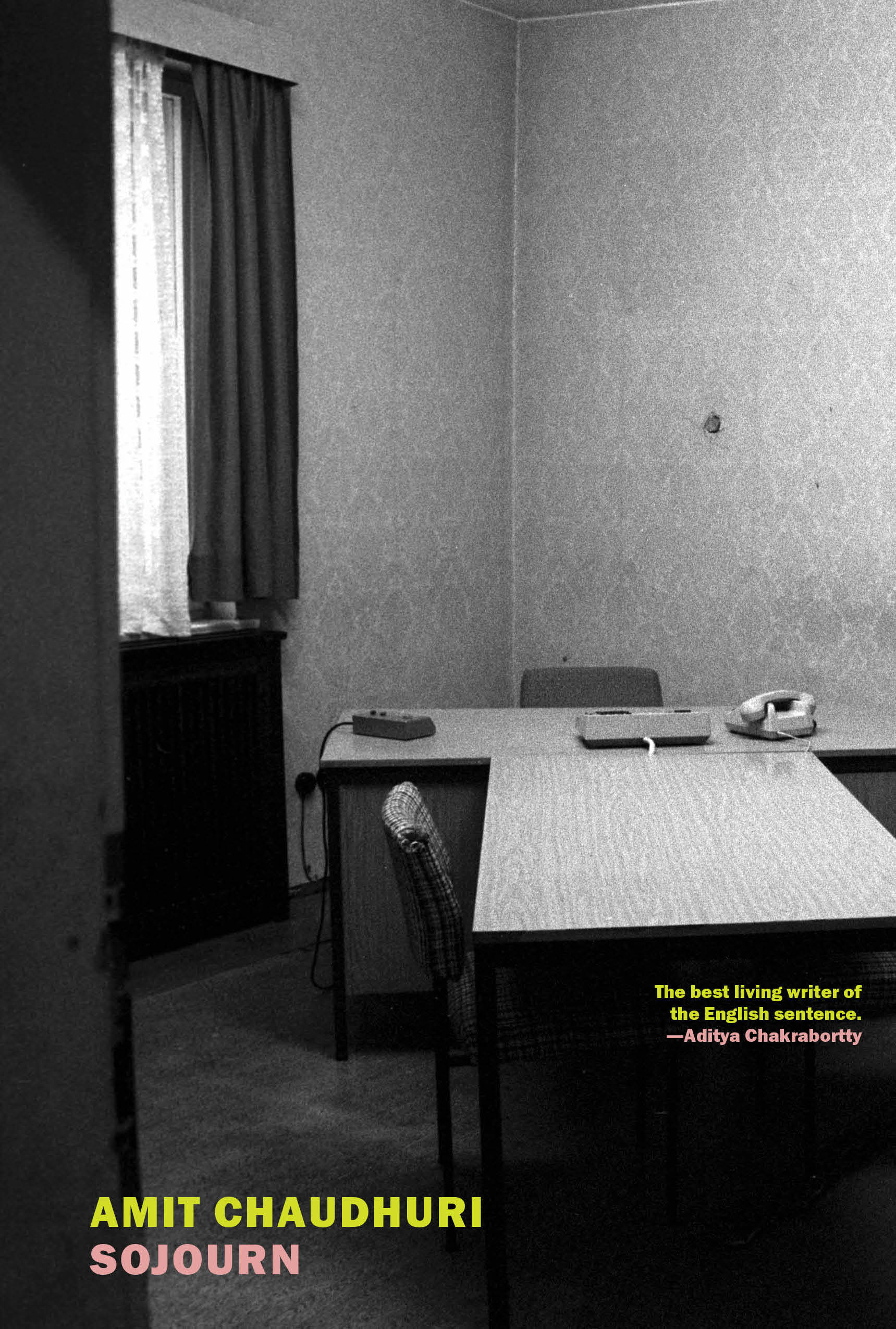
From the opening passages of Amit Chaudhuri’s quiet, lugubrious novella Sojourn, one can already sense that his unnamed narrator, an Indian writer on a four month visiting professorship in Berlin, is slightly out of sync with the world around him, but it’s not clear if it’s simply the strangeness of his environment or some unease he carries with him. It’s not even his first visit to the city, but little seems familiar. He constantly requires directions and gets lost easily. There is, however, a subtle tension running through this lowkey narrative that gradually builds into something more disorienting in this portrait of a man’s shifting relationship to time and place as he enters mid-life.

The year is 2004, fifteen years after the fall of the Wall, but its shadow persists; former demarcation lines and vast areas not yet cleansed of their link to a dark past remain. Residents are inclined to point them out to visitors as if sharing the city’s history with a certain wistfulness, while the narrator tends to react to these spaces as if they hold a connection to an interruption of time in a city that now, after reunification, is still finding its footing.

At his first official function, just days after arriving, our protagonist meets Farqul, the self-styled Bangladeshi poet who appoints himself as his guide and guardian during the early weeks of his stay. Their conversations are peppered with snatches of Bangla. A journalist with Deutsche Welle, Farqul is an elusive yet ubiquitous figure—or perhaps, furtive, as the narrator speculates on their first encounter—who is a well-known exile and appears to be well-liked among members of Berlin’s immigrant community. He had emigrated to Germany in 1977, two years after being kicked out of Bangladesh for writing a blasphemous poem. Prior to leaving India he had spent a rather fractious interlude among the literati in Calcutta where he met and was apparently aided in his move to Berlin by none other than Gunther Grass. (The narrator simply conveys this information without question.) He is a generous, if eccentric, host. He not only shows the narrator around, but helps him get outfitted for the coming cold weather.

Farqul – in the excitement of being in your company – was a man who liked to share. He gave you food; he stood next to you in solidarity when you tried on jackets; he would have shared cigarettes and his flat if I’d been a smoker or needed a room; he might offer his woman. He didn’t create a boundary round himself, saying, ‘This is mine; not yours.’ As long as he was with you he was in a state of transport.

Yet when Farqul suddenly disappears without notice, the narrator flounders a little. Most of the acquaintances he makes through the university remain casual, but he does have the hint of an affair with a German woman who unexpectedly reaches out to him after having attended his inaugural lecture. She tells him she loves India (“I’m wary of Europeans who ‘love’ India – an old neurosis”) and their liaison, for what it’s worth, develops rather uncertainly. The narrator is often uneasy; he seems to be unwilling to exercise any agency. Rather, he tends to drift without commitment. As a result, those who come into his life with whom he may have grounds for connection—social, academic, romantic—have to be persistent if any kind of relationship is going to develop.

He also, for some reason, maintains a distance from the German language. His housekeeper speaks no English and the simple German phrases she uses with him he claims to understand only through her accompanying gestures. He seems content to exist in the city without being able to interpret the conversations around him—to revel in the meaning conveyed by the music of the language rather than its vocabulary or grammar:

They go on about the rebarbative sound German makes, but individual words and names have greater beauty – more history – than English can carry. I entered Hackescher Markt in my mind’s eye five or ten minutes before reaching there. ‘Friedrichstrasse’ had come up in a dream recently, as a port of arrival. Kristallnacht was transparent, broken. I woke up to words and didn’t bother with the language.

Certainly his sojourn in the city is necessarily brief, but his passivity is notable, as is his unwillingness to acknowledge how unmoored he is. That is, until he begins to become disoriented and experience blackouts. The narrative becomes more fragmented as he  loses himself navigating an unfolding layout of streets and network of train stations:

The trains emanate sorrow. Not like humans. The humans, in fact, are distracted and impatient. The trains aren’t alive in the way we understand the word. But they feel.

Domination of steel: steel smoke, steel sky.

This book has an intentionally unfinished feel owing to the fact that the narrator’s own mental state seems to be unravelling as his time in the city nears an end. We learn little about his earlier life because he admittedly feels disconnected from it himself, making for a mysterious, yet beautifully written tale of one man’s estranged sojourn in Berlin.

Sojourn by Amit Chaudhuri is published by New York Review Books.

Looking back at a year of reading: 2024 edition

Each year when I review the list of books that I have read, I face the same challenge deciding what to include and what to leave out of a final accounting. As usual there are the books that I know, even as I am reading them, will be among my favourites for the year. Just as I know the ones I don’t like, the ones I won’t even mention or take the time to review. Basically, everything else that I have reviewed, was a good book.

This year, my count far exceeds a respectable “top ten” or “baker’s dozen” and there are some striking factors at play. One is that the ongoing  violence in Gaza has heightened my focus on Palestinian and Arabic language literature—long an area of interest and concern. Five of the Palestinian themed books I read made my year end list. As well, I have paired several titles, typically by the same author or otherwise connected, because the reading of one inspired and was enhanced by the reading of the other (not to mention that such pairings allow me to expand my list). Finally, as reflected by my top books, I read and loved more longer works of fiction this year than usual (for me). No 1000 page tomes yet, but perhaps I’m overcoming some of my long book anxiety.

And so on to the books.

Poetry:
I read far more poetry than I review, but this year I wanted to call attention to four titles.

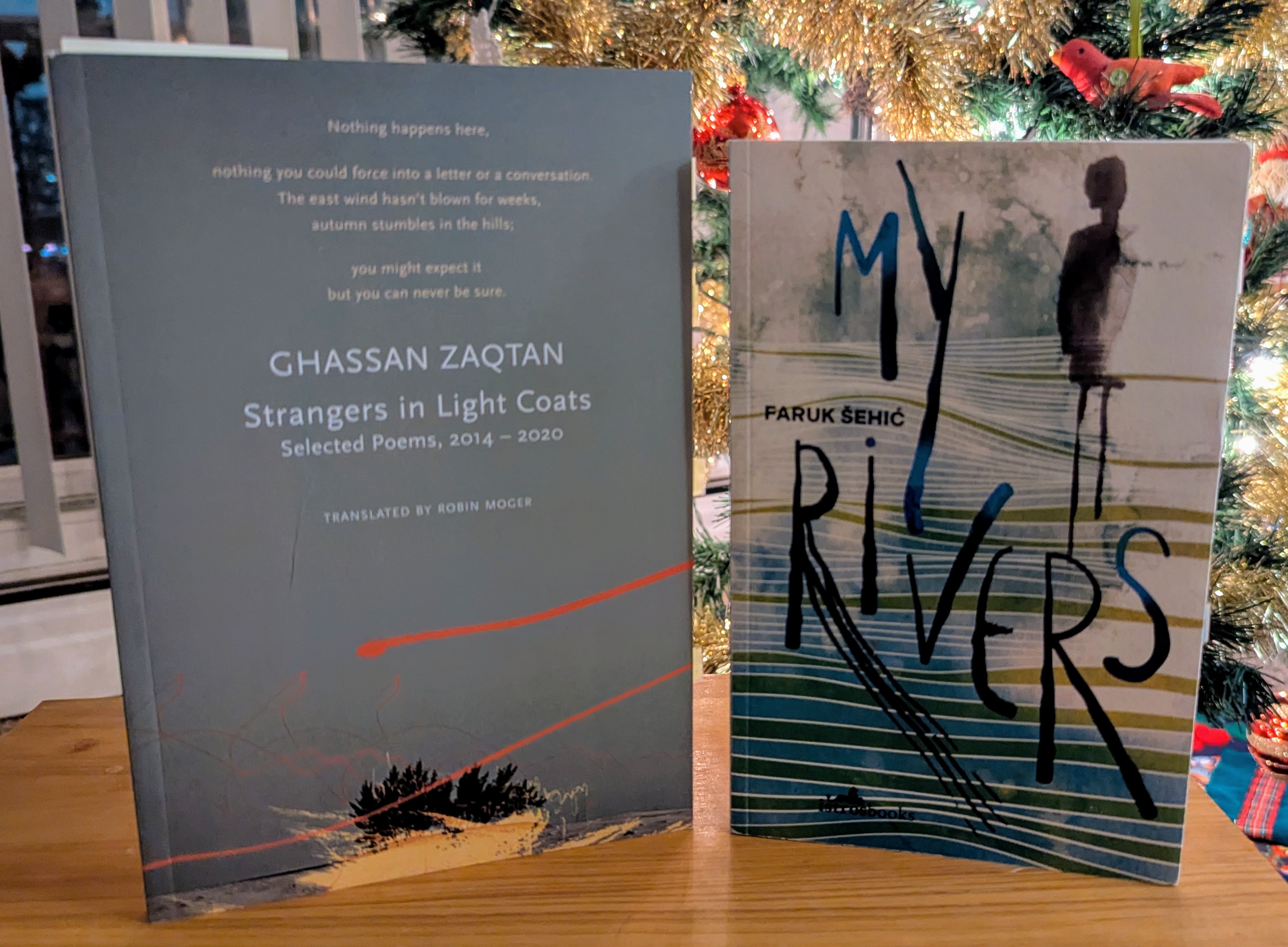
Strangers in Light Coatsevokes by Palestinian poet Ghassan Zaqtan (Arabic, translated by Robin Moger/Seagull Books) is, perhaps, a darker than his earlier collections. Comprised as it is, of poems from recent releases, it actively portrays a world shaped by the reality of decades of occupation and war.

My Rivers by Faruk Šehić (Bosnian, translated by S.D. Curtis/Istros Books) is a collection particularly powerful for its depiction of a legacy of wars in Bosnia/Herzegovina including the genocide in Srebrenica. His speakers carry the burden of history.

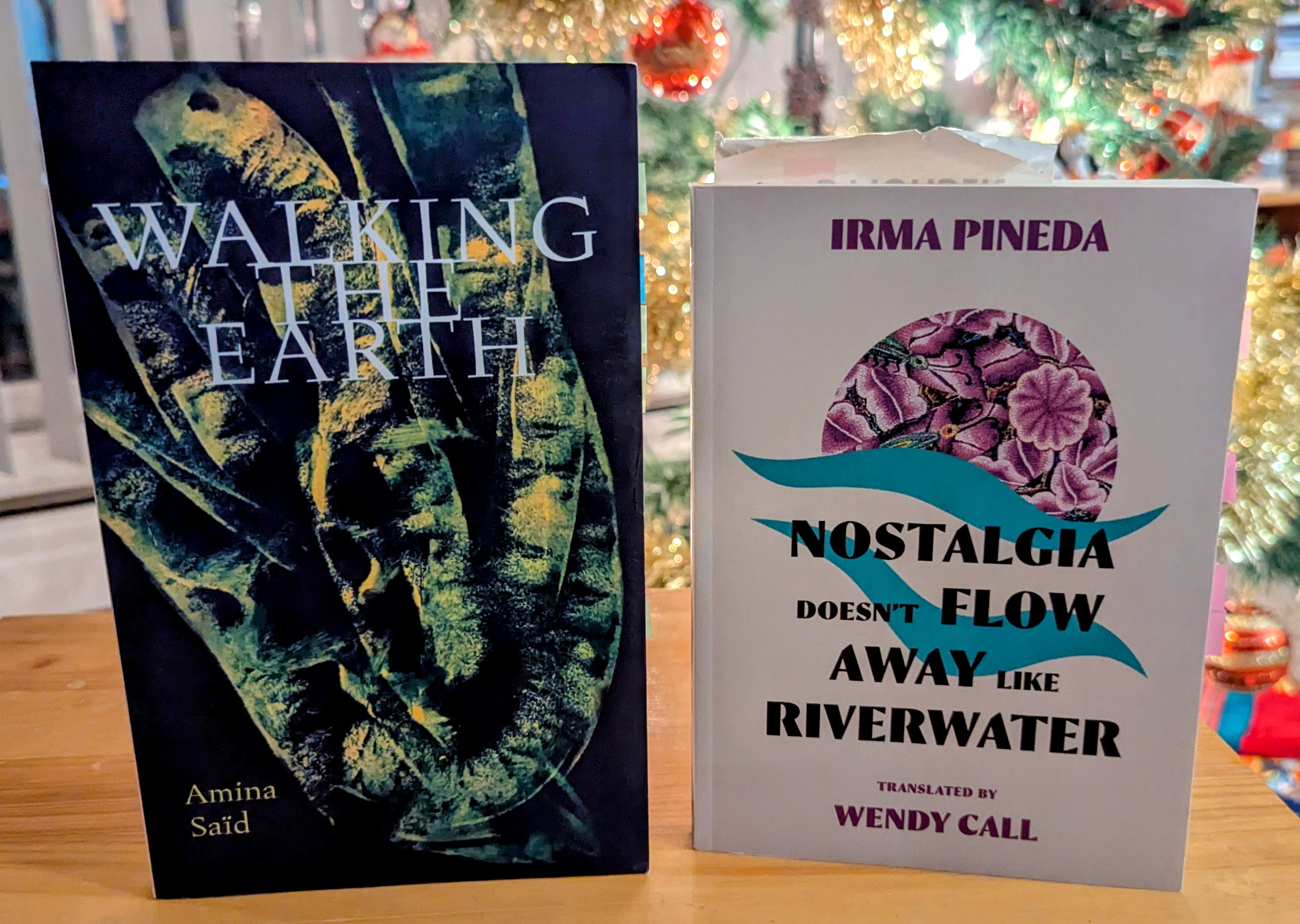
Walking the Earth by Tunisian-French poet Amina Saïd (French, translated by Peter Thompson/Contra Mundum) is such a haunting work of primal beauty that I can’t understand why more of her poetry has not been published in English. Perhaps that will change.

Nostalgia Doesn’t Flow Away Like Rainwater by Irma Pineda is one of a number of small Latin American poetry collection from poets and communities that have not been published in English before. This book, a trilingual collection in Didxazá (Isthmus Zapotec) and Spanish with English translations by Wendy Call (Deep Vellum & Phoneme Media) was particularly special.


Nonfiction:
This year, my favourites include a mix of memoir and essay and a couple of works that defy simple classification.

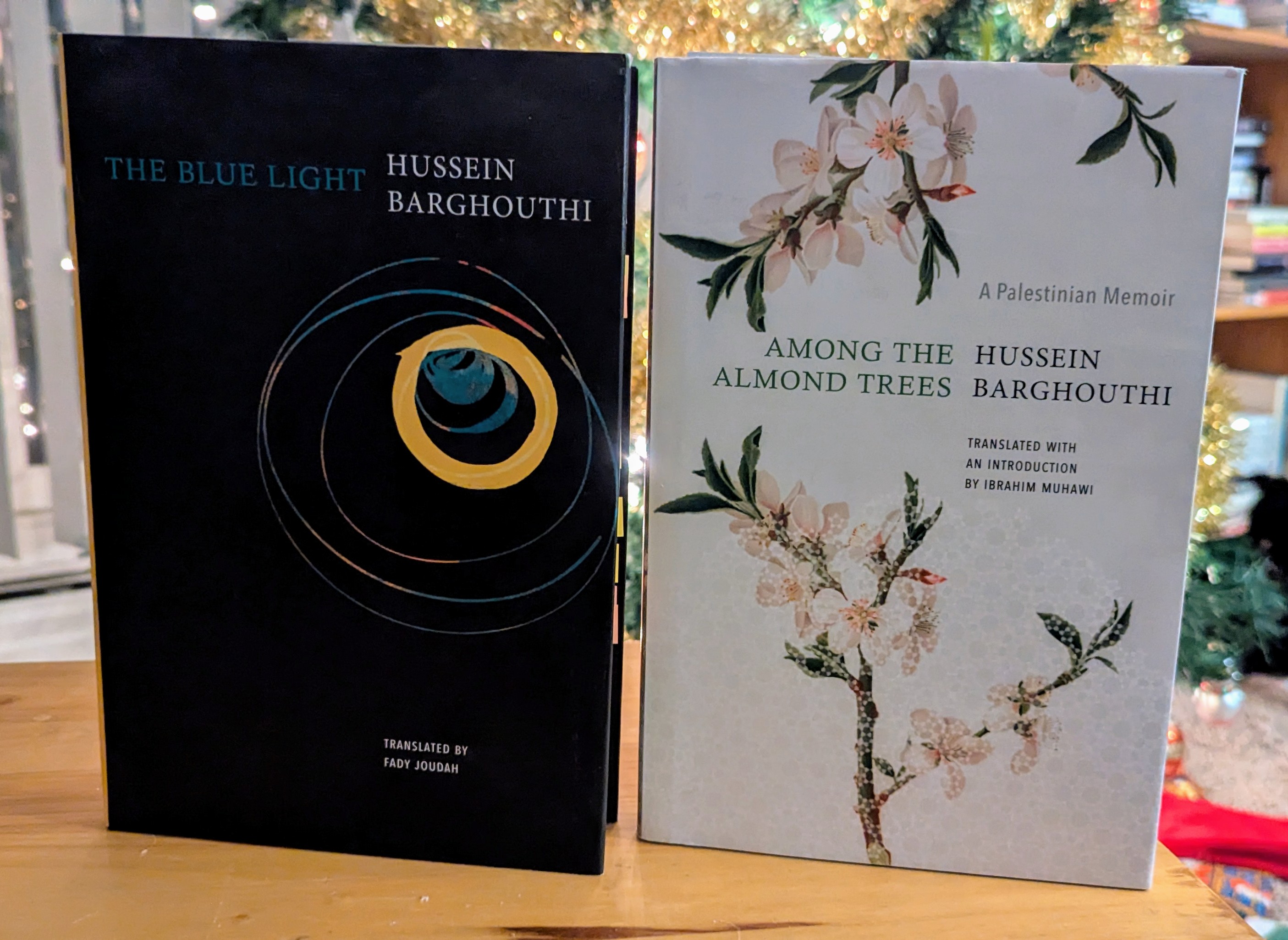
The Blue Light / Among the Almond Trees by Palestinian writer Hussein Barghouthi (Arabic, translated by Fady Joudah and Ibrahim Muhawi respectively/Seagull). Blue Light chronicles Barghouthi’s years in Seattle as a grad student and the eccentric circles he travelled in, whereas Among the Almond Trees is a much more sombre work written when he knew he was dying of cancer. The two books complement each other beautifully.

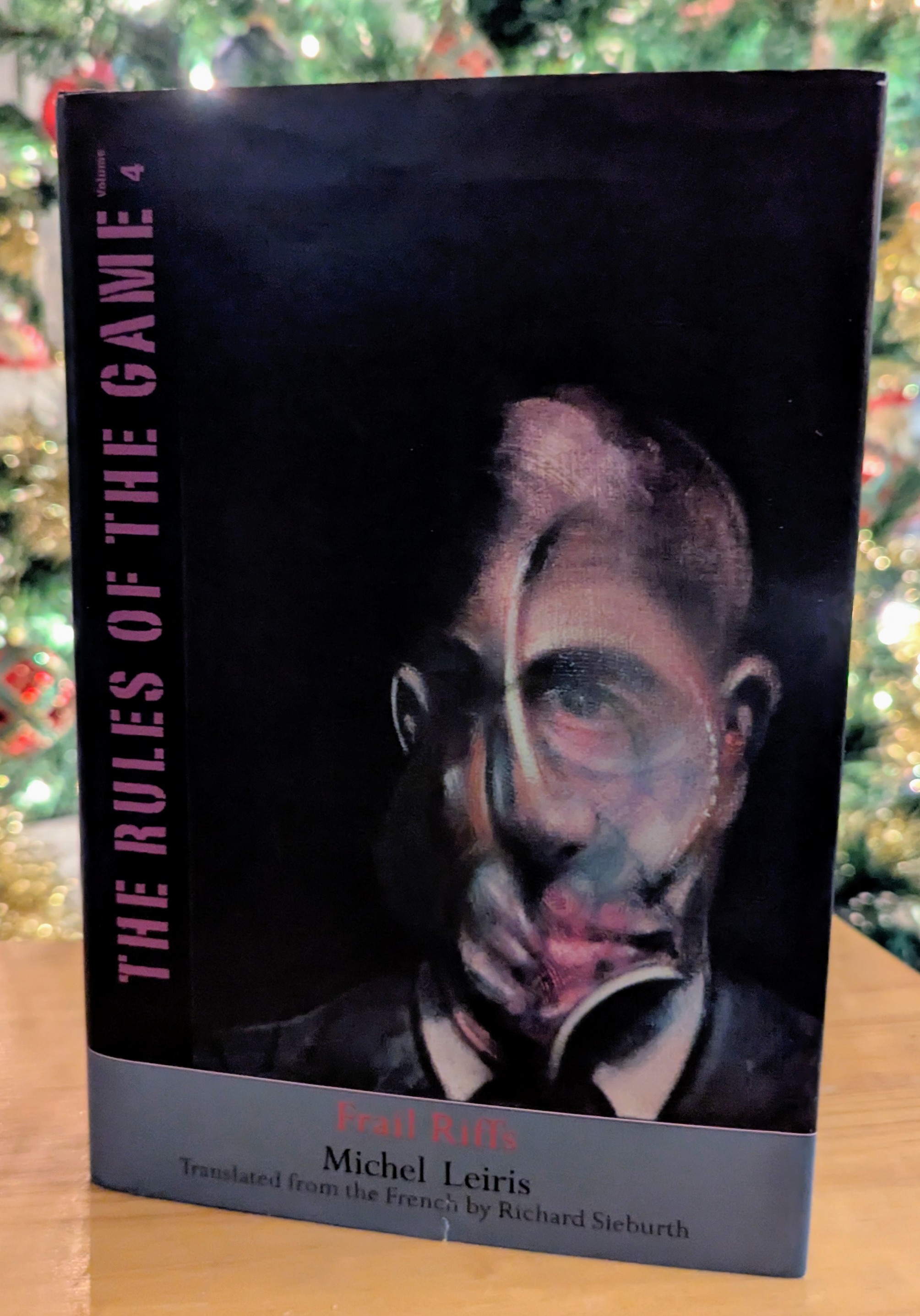
French intellectual, critic, ethnographer and autobiographical essayist Michel Leiris is a writer who means so much to me that the occasion of the release of Frail Riffs (Yale University), the fourth and final volume of his Rules of the Game in Richard Sieburth‘s translation, was not only an excuse to pitch a review but an invitation to revisit the earlier volumes. Definitely a highlight.

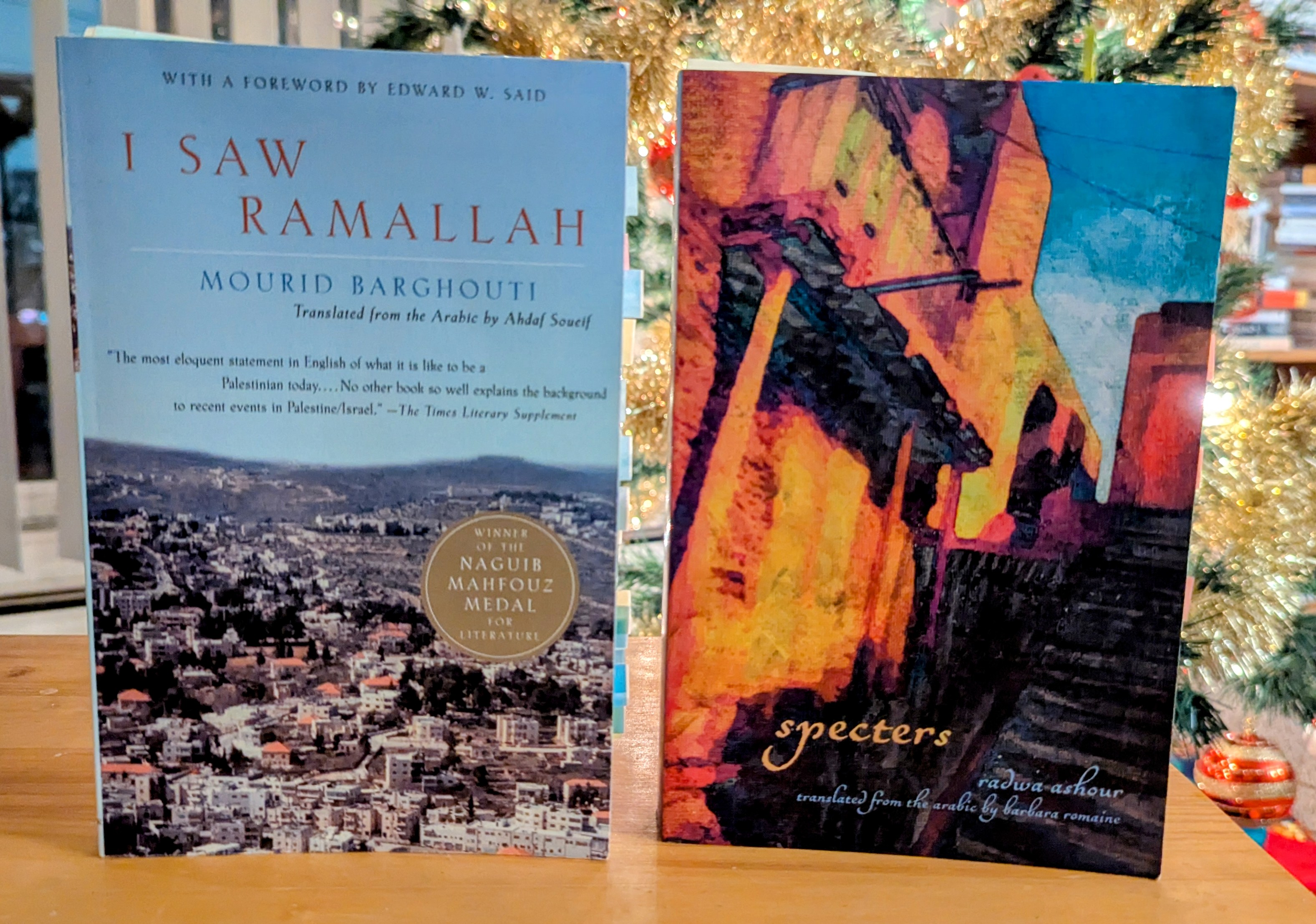
I Saw Ramallah by Mourid Barghouti (Palestinian/Arabic, translated by Ahdaf Soueif/Anchor Books) is a moving memoir detailing the author’s return to his homeland after thirty years of exile. Reading it reminded me that I had a copy of Scepters by his wife, Egyptian novelist Radwa Ashour (Arabic, translated by Barbara Romaine/Interlink Books). This ambitious work blends fiction, history, memoir, and metafiction and I absolutely loved it, but my decision to include it here, like this, rests on the memoir element which complements her husband’s in its account of the many years he was exiled from Egypt—a double exile for him—especially the years in which she travelled back and forth with their young son to visit him while he was living in Hungary.

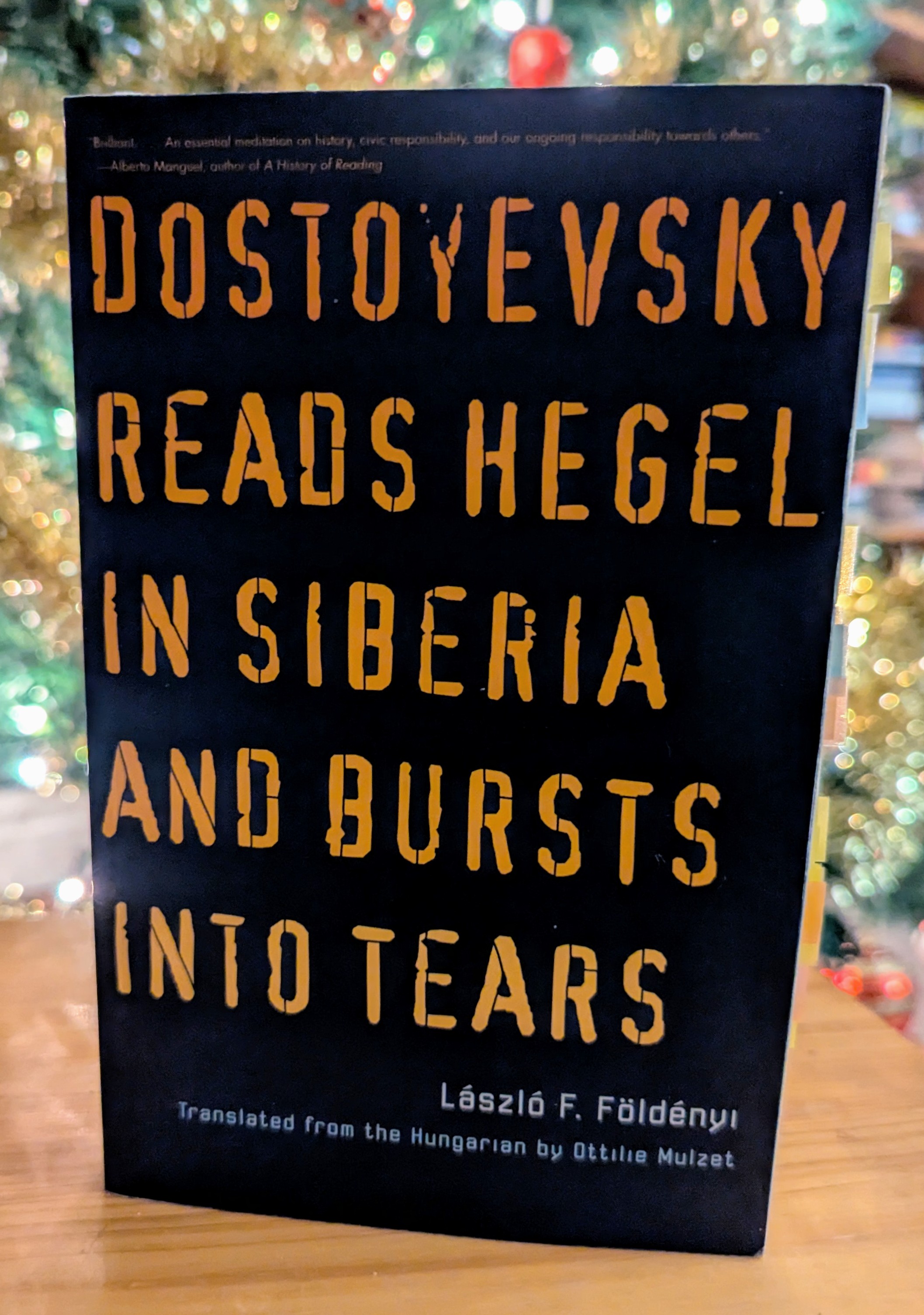
Candidate for the book with the best title, perhaps ever, Dostoyevsky Reads Hegel in Siberia and Bursts into Tears by Hungarian scholar  László Földényi (translated by Ottilie Mulzet/Yale University) was an endlessly fascinating collection of essays exploring the relationship between darkness and light (and similar dichotomies) through the ideas of a variety of writers, thinkers and artists.


Fiction:
As usual, fiction comprised the largest component of my reading and, as I’ve said, I read more relatively longer works than in the past. Normally I have a special fondness for the very spare novella and, of course, my list would not be complete without a few shorter works, including one more pair.

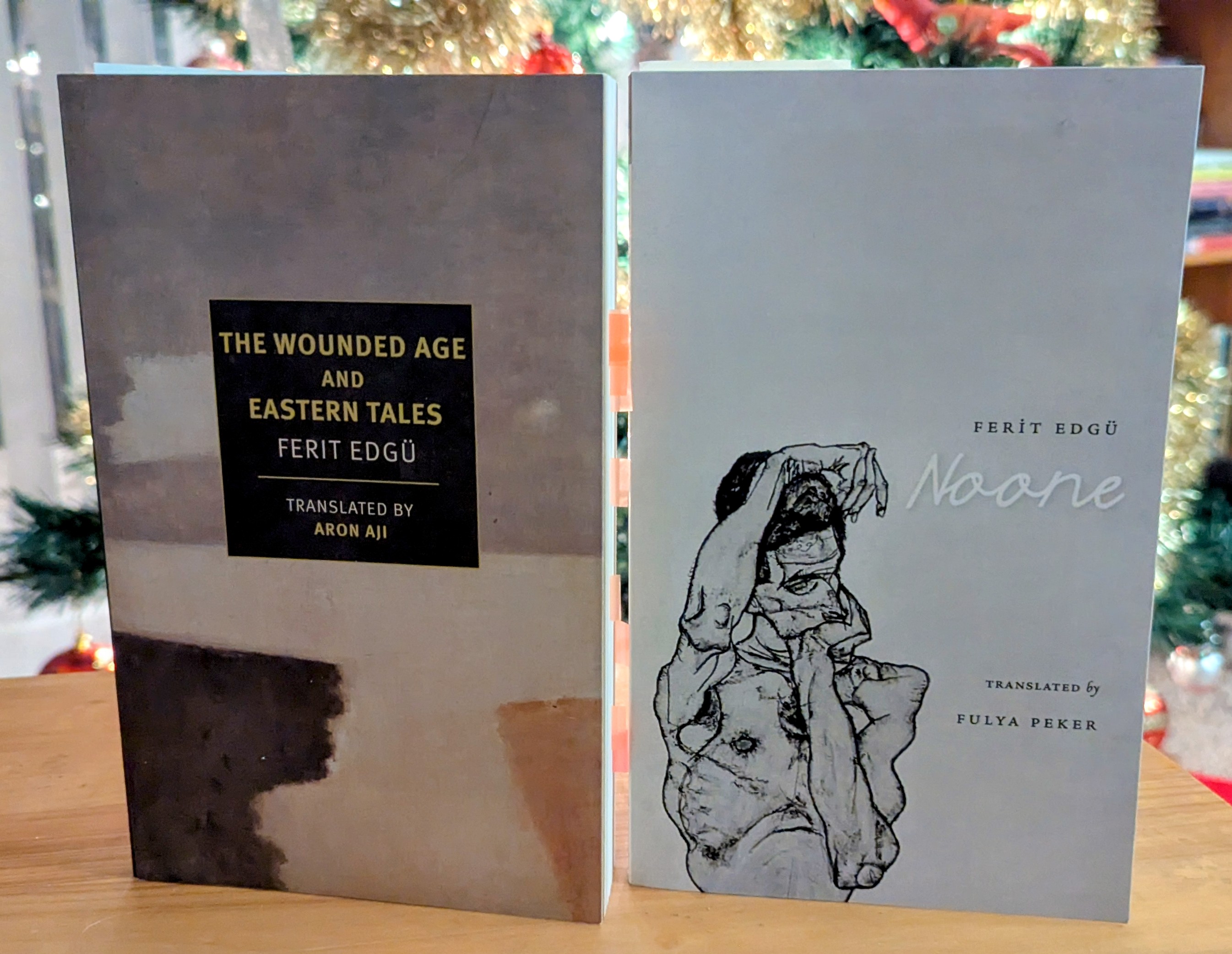
The Wounded Age and Eastern Tales  / Noone by Turkish writer Ferit Edgü—translated by Aron Aji (NYRB Classics) and Fulya Peker Cotra Mundum) respectively—who is sadly one of the writers we lost this year. His work, which draws on the time he spent teaching in the impoverished southeastern region of Turkey in lieu of military service, is filled with great compassion for the people of this troubled area. But his prose is stripped clean, bare, and remarkably powerful.

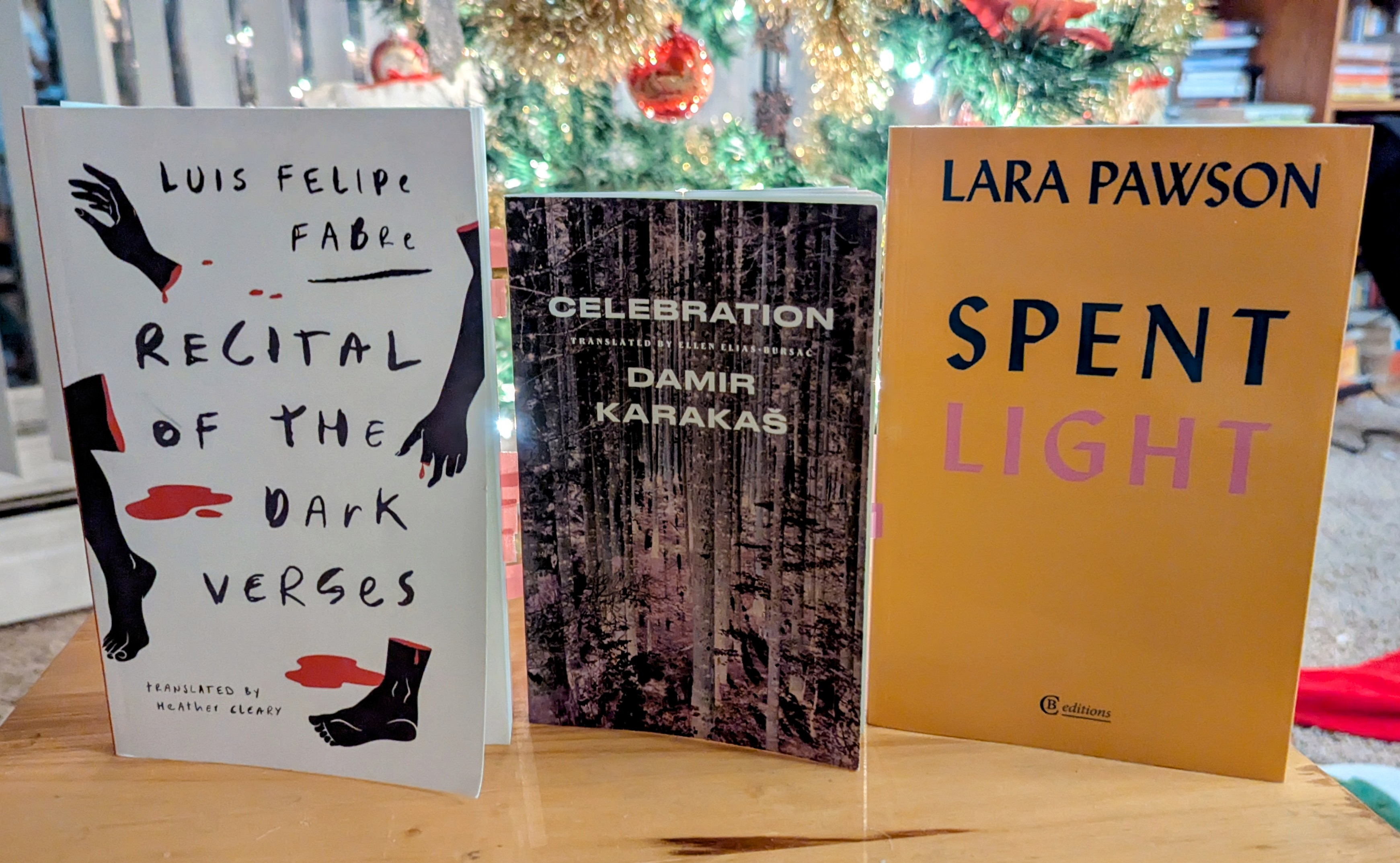
Recital of the Dark Verses by Luis Felipe Fabre (Mexico/Spanish, translated by Heather Cleary/Deep Vellum) is an award wining translation that seems to have garnered less attention than it deserves. This comic Golden Age road trip follows the misadventures of the body of John of the Cross on its clandestine voyage to Seville. Brilliant.

Celebration by Damir Karakaš (Croatian, translated by Ellen Elias-Bursać/ Two Lines Press) is an exceptionally spare, unsentimental novella about the historical forces that pulled the residents of Lika in central Croatia into World War II.

Spent Light by Lara Pawson (CB Editions) is a book I’d been anticipating since reading her This Is the Place to Be. Strange, at times disturbing, often hilarious and always thoughtful, this is one of those books that (thankfully) defies description.

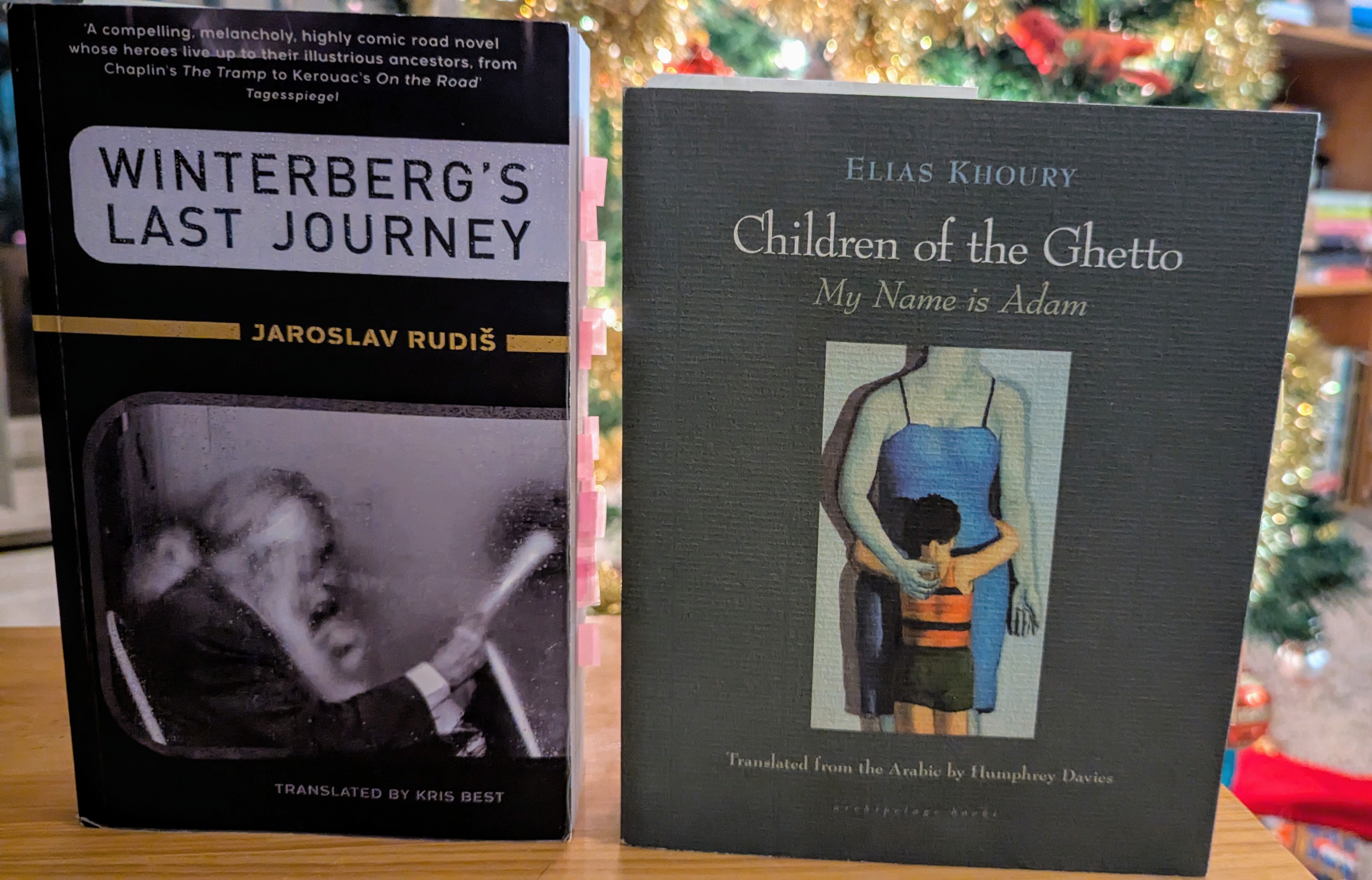
If Celebration is historical fiction at its most spare, Winterberg’s Last Journey by Czech writer Jaroslav Rudiš (German, translated by Kris Best/Jantar Publishing) is the exact opposite. Ambitious, eccentric, and filled with detail, it follows a 99 year-old man and his male nurse as they travel the railways with the aid of 1913 railway guide. What could possibly go wrong?

Children of the Ghetto I: My Name is Adam by Lebanese author Elias Khoury who also died this year (translated by Humphrey Davies/Archipelago Books) is the final Palestinian themed work on my list. This is a challenging and rewarding novel about a man born in the ghetto of Lydda during the Nakba that examines complex questions of identity.

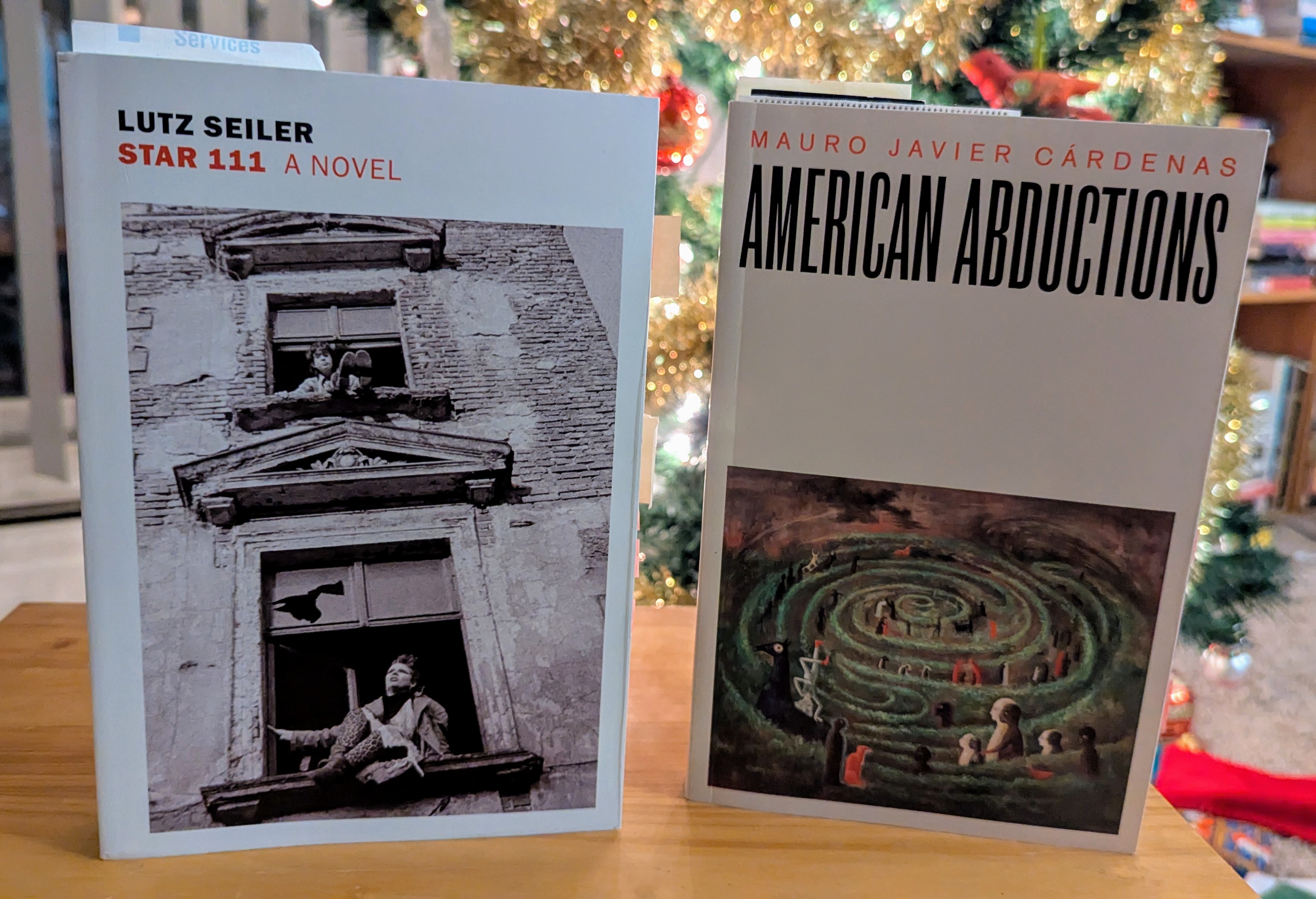
Star 111 by Lutz Seiler (German, translated by Tess Lewis/NYRB Imprints)is the autobiographically inspired story of a young East German would-be poet’s experiences among an eccentric group of idealists in Berlin in the immediate aftermath of the fall of the Wall. I was familiar with Seiler’s poetry before reading this, but I liked this novel so much that it lead me to follow up with his essays and the work of other poets important to him—the best kind of expanding reading experience.

Mauro Javier Cárdenas’ third novel American Abductions (Dalkey Archive) imagines the latest iteration of his hero Antonio in a future in which Latin American migrants are systematically sought out, separated from the children and deported. With a stream of single sentence chapters, he creates a tale that is both fun and uncomfortably too close for comfort. Quite an achievement!

Last but not least, my two favourite books this year are Hungarian:

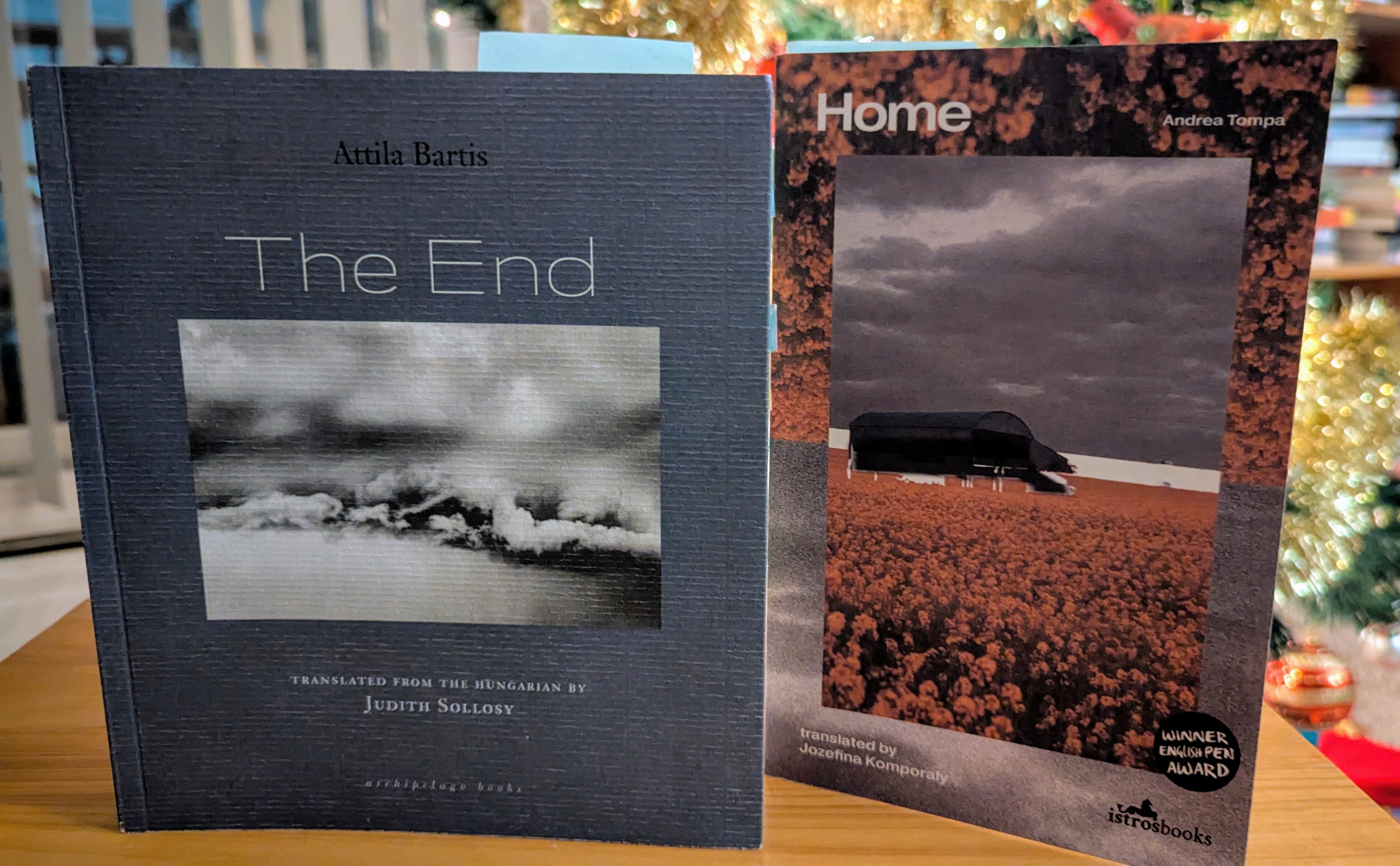
In The End by Attila Bartis (translated by Judith Sollosy/Archipelago Books), a fifty-two year old photographer looks back on his life—his successes and his failures. He reflects on his relationship with his mother, his move to Budapest with his father in the early 1960s following her death, life under Communism and the secrets held by those around him, and the role the camera played in his life. Presented in short chapters, like photographs in prose each with its “punctum,” the 600+ pages of this book just fly by.

Like Attila Bartis, Andrea Tompa also comes from the ethnically Hungarian community of Romania’s Transylvania region and now lives in Budapest. Her novel Home (translated by Jozefina Komporaly/Istros Books) follows a woman travelling to a school reunion, but it is much more. It is a novel about language, about what it means to belong, to have a home and a mother tongue. It’s probably not surprising that my two favourite novels involve protagonists in mid-life, looking at where they are and how they got there. As to why they’re both Hungarian—I suppose I’ll have to read more Hungarian literature in the new year to answer that.

So that is my 2024 wrap up. I’d like to think 2025 will be better than I fear it will, but at least I know there are countless good books to look forward to.

Happy New Year!