“Some are destined to stay behind, some are destined to depart, and yet others to arrive.
That’s how life works.”
The metaphysical truth that binds the five overlapping narratives that tell this story of one German woman’s life is simple: A day on which a life comes to an end is still far from the end of days.
Like waves crashing upon the shore and retreating again, in each section of this mesmerizing novel by German author Jenny Erpenbeck, the unnamed female character at its centre dies. Born in Galicia, in 1902, to a Jewish mother and a Christian father, the first section imagines her dying before her first birthday. While her mother sits shiva, her father escapes to America in his grief and the young family never recovers.
But then, the narrator steps in and asks us to reconsider the possibility that the infant’s life might have been saved and that another fate unfolds. Now, a second daughter follows the first and the father relocates his family to Vienna in hopes of improving his ability to support his wife and daughters. But war breaks out and life is cold, unimaginably cold, and meagre provisions are meted out to the hungry residents who line up each night, through the night, clutching their ration cards. As her father obsessively copies out earthquake reports brought home from his work in the department of meteorology and her mother assumes she is leading a questionable life, our heroine is simply in her late teens, trying to understand all of the normal passions of adolescence in an atmosphere that seems to hold out little hope. This time she will lose hope and conspire to take her own life.
In her third incarnation we find her in Moscow, having aligned herself with the Communists and trying to write and re-write her own story in a desperate attempt to save herself and, if possible, her husband who has already been arrested. This central section, the longest and densest, forms the axis upon which 20th century European history and the life of the woman at the heart of The End of Days seems to turn. Her own allegiances are complicated, everything she had believed in is tested, and the ground shifts so quickly that holding fast to moral or political ideals is like, well, surviving an earthquake. Her fate, like so many of her relatives is seemingly inescapable.
Or is it?
New Directions edition
As well as being a writer, Erpenbeck is also an opera director; and the hypnotic, haunting images and motifs that arise, disappear, and resurface throughout this exquisite novel are reminiscent of the phrases that are repeated and built upon in an extended piece of classic music. The mood is mournful, as themes of loss and the experience of death and grief are revisited, each time within vastly different contexts. Susan Bernofsky’s deft translation sustains the rhythm and music of the language. In the hands of a lesser writer this would seem contrived, but here, the bones are bare, the emotions raw and the result heartbreaking, horrifying and beautiful in its sheer humanity. The prose is spare, evocative. It gets under the skin, works its way right into the reader’s heart.
I could say so much more, but quite honestly, this book deserves to be experienced not described.
International Foreign Fiction Prize 2015: I finished this book on the eve of the announcement of the IFFP long list and I am thrilled to see it included. (Published by Portebello in the UK, I have the New Directions edition.) I feel confident that it will be one of my personal top reads of the year and I will be looking to read more of Erpenbeck’s earlier work in the future.
I will be reading along with 10 other fine book bloggers will keep me busy for the next few weeks as we have our go at the IFFP 2015 long list. I have 12 of 15 books to read. Yikes!!!!
Well we finally get to see what us shadow IFFP folks will be reviewing over the next few weeks .I managed to guess two right in my prediction post .I have read 7 of the longlist five I ve reviewed leaving me 8 read so here is this years longlist .A good year for what is 25 years since the prize started .I ve
It is not entirely clear in my memory, but by this time last year, the stress of trying to hold myself together in the face of mounting pressures in what had become a deeply dysfunctional workplace, was taking a serious toll on my emotional and mental health. I have not been able to return to regular work since last June. I have struggled to gather the energy to attend to many of the regular household tasks that seem to pile up week after week. My cameras, once my faithful companions, have hardly been touched. The unbearable sameness of my city fails to inspire and seems to be closing in on me despite a remarkably mild winter. But one activity has remained undiminished and if anything has flourished with the extra time I have these days. I am talking about reading.
A fraction of my shelves, some read, most not (yet).
Most of the books I read take me elsewhere. As I turn my blog focus more and more toward literary themes, it is clear that I have a few idiosyncrasies. I have a definite interest in South African literature. This owes its genesis in part to my own experiences knowing a number of South Africans over the years, from watching the momentous changes that have taken place in the country during my adult years, and in the understanding that the new South Africa faces challenges that create a context for important discussions that we need to continue to keep open. Discussions we can all learn from in our increasingly global reality. The same holds true for another area with which I have an increasing literary interest – central and Eastern Europe. The political turmoil of the past century has provided ample inspiration for a wide range of exciting literature, which, thanks to an increasing number of industrious small publishers, is catching the attention of English speaking audiences. Slowly but surely.
Of course, at the core of all great literature, classic and contemporary, is the essential quality of the human experience. We are born, we grow old, we fall in love, we lose those we love, we battle darkness, we face fear, we hope, we reach for those moments of joy. And the more I open myself to the stories of others from around the world, the less alone I feel.
But then there is this nagging guilt. As a Canadian, why don’t I read more Canadian writers? Well I do, but so many leave me unsatisfied and rarely reach my blog. And those I am especially fond of have tended to come from elsewhere; that is, they are Canadian with a hyphen and frequently write from that transitional perspective. I don’t think it was always that way. Maybe I have just been land bound too long. Maybe I crave the exotic just a little after all.
Well until I can travel, I will keep my bags packed, my options open and and a healthy pile of books standing by from near and far.
“How can I say what these fragments mean to me? The awkward truths of my life take shape in their negative spaces. In the lengthening shadows of the official histories, looming like triumphal arches over every small messy life, these scraps saved from the onrush of the ordinary are the last signs I can bring myself to consult.”
When we first meet him, Neville Lister, the narrator of Double Negative, is a disaffected young man, uncertain and aimless in a fractured and troubled environment – apartheid South Africa. It is the early 1980s and he cannot quite find his footing, either in academic study, the political protestations of his friends, or the mixed allegiances of his parents’ generation. The stakes are high, but his ambivalence is a luxury well known to middle class youth. Being close in age to Neville and his creator, South African author Ivan Vladislavić, I could not help but chuckle at his repeated references to “Beerhunter”, (a party game we Canadians lay claim to, by the way) or recognize the insidiousness with which The Eagles’ Hotel California album seems to define our lives even if we never owned a copy of that recording. However, unlike our most reluctant hero, I did not have political unrest or the real threat of conscription bearing down on me.
Double Negative traces Neville’s evolution from long-haired, pipe smoking dropout to middle-aged late blooming artist, framed against the shifting political, cultural and socioeconomic backdrop of Johannesburg. In the first section, “Available Light”, his father arranges a meeting with a famed local photographer, Saul Auerbach, in the hopes that the encounter might inspire his son to reach beyond his current employment assisting a man who spray paints lines on roadways. As Neville tags along, Auerbach and a journalist friend devise a game that will direct their photographic pursuit for the day. Standing on a hillside with a panoramic view of the city below, each man choses a roof top. They manage to visit two of the three selected homes where Auerbach charms his way in, and coaxes photographs out of the inhabitants – a poor black woman with her two surviving triplets living in a backyard shack and a white woman in a lounge suffocated with furniture and curios. But before they visit Neville’s choice, the photographer’s energy and his necessary light have faded and they head home.
When our narrator picks up the thread of his story in the second section, “Dead Letters”, he has been in London for ten years and the first free elections have just been held in South Africa. Swept up in a wave of nostalgic homesickness he flies home. By this time he is also making a living behind the lens, but as a commercial photographer. He returns to a city already morphing under new dynamics, post apartheid – street names changing, houses and entire city blocks replaced. Cities are, at the best of times, constantly re-inventing themselves, shedding their skins. The effects are more profound under the pressures that have been released and confronted in places like Johannesburg, where, by the time we catch up with Neville again for the final installment “Small Talk”, he has taken to photographing the ubiquitous walls that have arisen to close off and protect the city’s inhabitants from each other.
Upon his return to South Africa, he had experimented with trying to enter a home to photograph the resident, drawn, of course, to the house he had first chosen so many years earlier. The experience almost swallows him whole but does, in turn, offer the direction that will inform his own artistic photographic ventures. He no longer wants to see what lies behind the walls that have been erected. He draws the resident out but refuses to enter. It is now 2009 and our hero is being subjected to an interview by an eager, self-promoting young reporter and blogger who intersperses her blog posts with a litany of handy household tips that would make Oprah proud. She is of a entirely new breed, neither weighed down by nor fully appreciative of the reality of her nation’s history. By contrast, Neville Lister occupies the transitional space. As photography has moved from film to digital, a medium with remarkable capacity for storage and the editing and altering of images, so is his country altering and editing its own collective memories.
More than anything, this is a story that unfolds as a series of images, captured with Vladislavić’s poetic eye for detail. He translates scenes, the photographic and the interpersonal, with a language so effortlessly descriptive that I often stopped to re-read a paragraph for the sheer pleasure. Neville describes “gumption” as a “word that stuck to the roof of your mouth like peanut butter”. A character “moulted” his jacket. In navigating the city he talks of following “the simple arguments of avenues and squares”.
This ability to transform language into imagery is nowhere more apparent than in his descriptions of the scenes, immortalized by the lens of the camera under the direction of the photographer. One of the photographs resulting from the initial outing with Saul Auerbach is described in vivid detail:
“Mrs Ditton sat in the armchair beside the fireplace. The coffee table had been dragged away – there is no trace of it in the photograph – to expose the floorboards and a corner of the rug. Looming on the left is the largest of the cabinets, so imposing you would say it belongs in a department store. The chair has wooden arms with ledges for tea cups and on each side of these lies a pie-crust of crochet work and a coaster. The chair sprawls with its arms open wide and its fists clenched, and she wallows in its lap.”
I imagine that anyone with an SLR camera and a tripod has experimented with long exposures and the creation of ghost images. It seems to be a rite of passage. Double Negative is, in many respects, a book of ghosts. Visiting with the woman living in the house he had selected so many years earlier, Neville feels weighed down by the voices swirling around her lounge. In referring to the annotated cookbook passed down from his mother, he reflects that the food “tastes better when the ghosts adjust the seasonings.” And ghosts haunt a collection of dead letters that come into his possession and, it seems, may be destined to lead him into his next “artistic” endeavour. If growing older is a process of acknowledging and coming to terms with the ghosts we carry, our narrator is older and wiser but still working away to make sense of it all by the end of this book.
And so is his country.
Note: Originally published in South Africa in 2011, Double Negative was released to an international audience in 2013 (with an introduction by Teju Cole) through the amazing publisher And Other Stories. Supported by their unique subscription model, this release was followed by the publication of an earlier title, The Restless Supermarket in 2014, and his upcoming collection of stories, 101 Detectives, will be released this year. Ivan Vladslavić was recently named one of three recipients of the 2015 Windham Campbell Prize for fiction along with Teju Cole and Helon Habila.
Earlier this month I attended an inaugural PEN Canada event in my city. The purpose of bringing such discussions to locales throughout the country is to turn the discussion about censorship and freedom of expression inward where, against the outrages we see in other parts of the world, we risk falling into a false sense of complacency. The empty chair at this debate was reserved for Raif Badawi, the Saudi man sentenced to 10 years in prison and 1,000 lashes for the “outrageous” crime of blogging. His wife and children have been granted refugee status in Canada but the Canadian government is curiously reluctant to speak out. Why? I can’t help but wonder if their foot dragging around any international injustices that involve refugees or foreign born Canadians (the non-white ones, that is) reflects the persistent attitudes of the Conservative government’s core grass root supporters. Funny how soon we forget that all non-Aboriginal Canadians are immigrants in this colonial landscape if you go back far enough. The subjugation and treatment of our First Nations peoples is often seen as justifiable, built into our collective history. That is no excuse, but somehow racial concerns carry an entirely new intensity when the matter is much more black and white, so to speak.
Or when we see it elsewhere.
The recent passing of South African novelist André Brink led me to a long overdue reading of one of his classic novels, Rumours of Rain, which dovetailed nicely with the issues that have been in my mind since attending the PEN event. Published in 1978 and addressed directly to the injustices of apartheid, the echoes of this, and his other controversial novels of this period, have long reverberations that continue to ring close to the bone in this increasingly global new world.
The power of Rumours of Rain lies in the narrative voice. Martin Mynhardt, a successful Afrikaner businessman, has stolen a rare week of solitude in London to exercise his literary ambitions while attempting to exorcise any measure of guilt in the unfolding of a recent series of events that have torn apart the lives of some of the people who were once closest to him. Driven solely by his own over inflated sense of self worth and an endless internal cost-benefit analysis, Martin is a ruthlessly blind apologist for apartheid. He imagines himself sufficiently enlightened to know what is best for his country and his family. He focuses his attention on the events surrounding a weekend visit to the family farm with his son where his goal is to convince his mother to approve the sale of the land, an urgent deal to which he is already deeply committed. But nothing is simple. Violence not only intrudes on his visit to the farm, but back home in Johannesburg, a violent series of riots is about to erupt in Soweto.
In a long winded, self indulgent, but oddly engaging account, he chronicles his complicated relationships with his best friend, his wife, his son, and his mistress. He honestly feels personally affronted by the revolutionary political passions he is witness to, especially in his friend Bernard – after all, he does not want them to reflect badly on him. But he is unable to acknowledge any responsibility for the role any of his own action or inaction may have played in the end results; he can justify every selfish choice he makes in marriage, love, sex, business and friendship. No matter the cost.
Yet, in committing his story to paper, Mynhardt inadvertently succeeds in giving an eloquent voice to the very views he claims to disdain. He manages this by including transcripts from Bernard’s trial for treason, his son’s bitter reflections on his recent experiences with the army in Angola and through passionate exchanges with Charlie Mofokong, an educated black South African and childhood friend of Bernard’s whom he reluctantly employs to assist him in managing his mine interests.
Throughout the novel two interwoven refrains recur: Martin’s grandfather’s favourite Biblical passage “And have not love”(1 Cor:13) and the anthemic Nkosi Sikelel’ iAfrika.
What we end up is with is the voice of a deeply flawed, myopic (literally and figuratively) anti-hero; not surprisingly one who must have made more than a few attentive readers shift uncomfortably in their armchairs. Literature is often at its most effective when it gives voice to the under dog, but in skillful hands, like Brink’s, turning the narrative over to the less sympathetic side of the equation can have a resounding impact. Especially when we feel a moment of empathy with a man we want to despise, catch a glimpse of him in ourselves.
Fittingly, a month that started with a local PEN event, has ended with Freedom to Read Week in Canada. The opportunity to honour an author who used his voice, together with many of his fellow writers, to raise a chorus to question and challenge apartheid, seems appropriate. Today the intrinsic messages against racism, classism and greed still need to be heard by a wide audience.
The damaged hero of Italian author Diego Marani’s first novel New Finnish Grammar, which was originally published in 2000, but only released in English in 2011 (translated by Judith Landry), is a mystery to himself and to those who find him. World War II is raging, when a badly beaten man is found on a dock in Trieste with no clue to his identification beyond a Finnish name sown into the collar of the naval jacket he wears. When emerges from a coma with, what would presumably be a severe traumatic brain injury, he has no memory and no ability to use language. He does know who he is or where he comes from but, by coincidence, the doctor who attends to him is a Finnish-German who has never overcome his own longing for his homeland. He becomes convinced that the best medicine for his amnesiac patient is to send him to Finland so that he can connect with what is assumed to be his land and language, and in doing so, retrieve the past that has escaped him.
As much as I wanted to love this book, this is where I started to have problems. Firstly, the storytelling approach is awkward. It is the doctor who takes on the task of
curating a selection of notebooks, journal entries and letters belonging to “Sampo”, our erstwhile Finnish patient, to both honour him and make amends. He frames and fills in the tale with his own reflections, corrections and assumptions. Somehow, we are asked to believe that a man with a brain injury severe enough to trigger such a complete loss of memory and language could manage to develop sufficient facility in a notoriously complex language to be able to report his earliest memories post injury, or even find his way around a strange city. Yes, his mastery of the language is never comfortable, he relies on his notebook and endless practice, and he is emotionally lost and eventually unable to find a grounding or the past he seeks. Meanwhile, the language and mythology of Finland were clearly chosen by the Italian linguist author as a template for the exploration of memory and identity, but I could just not suspend disbelief long enough to fully surrender myself to the story.
This is not to imply that there are not breathtaking moments in this novel. There is a heartbreaking sadness and loneliness that haunts our dislocated hero. As war closes in around him, he is the walking wounded, an invisible casualty in a place to which he so desperately wants to belong. But my practical side, the side that spent the last decade working with real survivors of traumatic and acquired brain injury, could not let go of the idea that the main character’s overall functionality did not mesh with his complete loss of identity and language. The assumption is that his memory loss is psychological in nature and that the return of language will release it. In reality though, his injuries would indicate traumatic causes and with such severe long term memory loss some elements would still typically remain intact, while short term memory would be greatly impacted hindering his ability to learn new things easily. A complicated “new” language? I find that especially hard to accept.
I suppose I will have to admit that I am not the ideal reader for this book. I don’t regret reading it and I am sure that there are moments that will continue to linger. Memory is one of the most fertile landscapes for a writer to explore. Even without the added impact of illness or injury, memory is a fleeting, nebulous and fundamentally subjective phenomenon. However, I opened New Finnish Grammar with too much experience with brain injury to fully appreciate the work. And, for that matter, I could not help but wonder how a reader with too much native experience with Finnish language and mythology would respond. Perhaps with an equivalent amount of skepticism.
“Eternal hope: it kills us as much as Hansen’s does.”
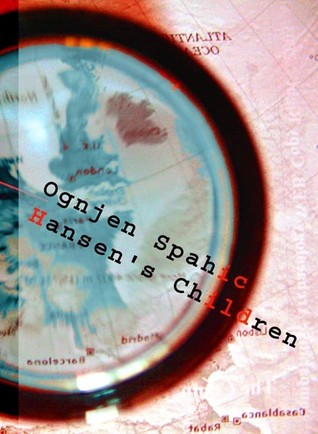
In his introduction to the second English edition of Hansen’s Children, BBC Correspondent Nick Thorpe visits a real life leper colony, the last in Europe, in the small hamlet of Tichieletsi in south-eastern Romania where a dwindling number of disfigured patients live out their final years, tended by medical professionals while enjoying the companionship and domestic tranquility of their close knit community. He then goes on to examine the way that Montenegrin novelist Ognjen Spahic re-envisions this leprosarium against the dying months of the brutal dictatorship of Nicolae Ceausescu in 1989; creating a perfect, if horrifying, template against which to explore questions of power, corruption and violence throughout the history of Europe – looking to the past, the present and the future.
The “children” of the title refers to the unfortunate souls infected by the bacillus first identified by Gerhard Armaeur Hansen. It is a term by which our unnamed narrator, our leprous Homer, refers to himself and his fellow inmates as he recounts the tale of life within the fenced grounds and the cold damp confines of the aging three-story building that serves to house the remaining inmates of the leprosarium. At the time he arrives they number eleven men and one ancient woman. Outside the gates, a fertilizer factory, ubiquitous on the Romanian landscape, belches out smoke and receives a rotating contingent of increasingly disgruntled workers. From his window he gazes longingly at the Transylvanian Alps, dreaming of freedom from exile and confinement. In fact we learn at the outset of his account that his dear friend and roommate, an American man named Robert, has secured false passports and made arrangements for their escape. This hope will not only feed our hero’s ego, but give him a will to live no matter what the cost, as conditions inside and outside the leper colony decline. In desperate circumstances, brutality knows no boundaries.
Perversely the leprosarium becomes a microcosm of the very divisions that divide human beings in the broader world. For example, when the inmates become aware of a new scourge on the rise outside their gates, HIV/AIDS, two men who have fallen in love will suffer the consequences because “this new disease was misunderstood and homosexual acts per se were seen as spawning the new evil. Mstislaw and Cion were shunned… like lepers. It was kind of understandable.” Mirroring the deteriorating conditions unfolding across Romania, and presaging the fate that awaits Spahic’s own Balkan homeland; power struggles, violence and death escalate within the bounds of the small community. As the conflict to free Romania approaches its final days, helicopters and gunfire splitting the air, our narrator lies in bed and imagines what such a new world could bring. He realizes the sad truth: “I knew that even in a world like that I would be where I was now. I would dream the same dreams and speak the same words. I would remain a leper.”
The picture this novel paints is not a pretty one. It is however strangely engaging and, in the end, deeply moving. The graphic, disturbing details of the progressive ravages of the cursed disease on the bodies, organs and functions of Hansen’s children is painted with a healthy serving of satire. Black humour and tragedy are deeply entwined.
Apart from this novel, only a few of Ognjen Spahic’s short stories have been translated into English although he has published three story collections. Hansen’s Children, which was originally released in 2004 when he was still under 30, has received several important European awards.His most recent story collection won the 2014 European Union Prize for Literature for Montenegro and in an interview on the site he describes himself as more of a short story writer than a novelist and speculates that prizes can increase international attention and encourage translations. I, for one, would be keen to see more.
Note: In addition to his story “Raymond is No Longer With Us – Carver is Dead” which was included in the anthology Best European Fiction 2011 (Dalkey Archive Press), the story “All of That” can be found on the online journal B O D Y and the title story from his latest collection Head Full of Joy can be found at the European Union Prize link above (following the original Montenegrin version).
Hansen’s Children (2nd edition), 2012
translated by Will Firth, Istros Books
Valentines Day. It has been many years since I have had a true object of romantic affection. This annual occasion tends to come and go without my notice. Even my children are too old to warrant the heart shaped candies and chocolates I used to purchase. And yet I have to stop and wonder why I do not feel the absence.
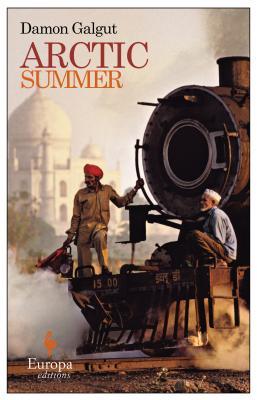
I am not sure it is coincidental, but romance does not seem to figure highly in the work I tend to read. Lost love, dysfunctional relationships, misplaced attempts to find affection, yes; but it tends to be the underlying elements of discord that create dramatic tension and literary interest for me. Tolstoy’s unhappy families and all that. So in thinking about today’s exaltation of romantic love I decided to turn to a book I read last year but did not review, a novel that holds, at its heart, the account of a deeply felt but unrequited love: Damon Galgut’s Arctic Summer.
In this fictionalized biography of EM Forster, Galgut re-imagines the eleven years of frustrated creative blockage that spanned the time between Forster’s initial conception of his “Indian novel” and the final product, A Passage to India. Along the way we meet Syed Ross Masood, the Indian man with whom Forster will fall passionately in love – a love that will shape, define and haunt his romantic sensibilities – but which will remain one that the heterosexual Masood is unable to return in anything but platonic terms. During the World War I years in Alexandria, Forster finally loses his own virginity at the age of 37 but his meagre intimate relations will remain a sorry, even pathetic, attempt to achieve the emotional and physical comfort he longs to find in another man’s arms. Sexually repressed and closeted until his death, he is, nonetheless, able to channel his affections and experiences in India into one of the finest English novels of the early 20th century. It would be the last work of fiction Forster would produce though he would live and continue to write and engage actively in the literary world for another 45 years.
In my first encounter with Arctic Summer last fall my reactions were mixed. I was a great fan of Galgut’s more typical pared down, ambiguous and haunting novels and I was immediately struck by the more claustrophobic atmosphere he had created to evoke the sensibility of the world in which Forster lived and wrote. At times I felt it weighing on me as a reader. Having the good fortune to hear Damon speak in person and meet him when he passed through my home town with our writer’s festival while I was in the midst of my reading, I was aware that he had found the process of writing a historical novel rewarding but not one he would be anxious to repeat. That awareness may have been a factor but I suspect there was also something more at play. After all, as readers, we enter into any work with our own issues, histories and expectations.
At the timel I was still struggling to break down the barriers that I had constructed over the preceding decade or so to keep those around me from getting close. By that point I was painfully aware that I had re-closeted myself in the world to avoid emotional risk and vulnerability. At one point, despairing of ever experiencing desire in the way he longs, Galgut’s Forster reflects:
“His own sterility was apparent to him and would soon, he felt sure, be visible to others. Curiously, he didn’t feel depressed at the prospect. He was almost intrigued by the idea of giving in to his oddness, turning into one of those remote, ineffectual creatures so warped by their solitude that they became distasteful to normal people.”
I was struck by that passage, I remember where I was when I read it and the page number in my paperback American edition is burned into my memory. Although I had been, oddly enough, a single male parent for years, through my determined unwillingness to express romantic interest or engagement with anyone, female or male, I had stubbornly sought to neuter myself in the world. Unpeeling those layers of defense and reclaiming an identity, especially one that falls outside the default mainstream, is not easy. Forster’s dilemma was hitting too close to home.
As I have since learned to re-embrace my identity and sexuality, I did briefly imagine that I was ready to open myself again to the possibility of falling in love. The result was in influx of a emptiness and longing. I began to feel the absence and did not like the void. So I have decided to turn my focus to building an emotional support network based on common interest and experience. It is, I realize, a much better place to start. If, somewhere along the way, the potential for romance arises I would not necessarily reject it, but it cannot be the grounds for meaning and value in my life.
Now, four months after I first finished Arctic Summer, I have occasioned to revisit A Passage to India, and have found myself dipping back in and out of Galgut’s novel simply to savour the restrained beauty and sensitive recreation of the writer’s inner personal and creative journey against the lush landscape of India. The work has simmered in my consciousness and increased in the power that it holds for me as a reader. I cannot help but wonder what might have happened if Forster’s love for Masood had been reciprocated. I am not sure he would have ever been able to even crack open the closet doors and I suspect that he might have ended up even more deeply torn between his homosexuality and his attachment to his mother. For better or worse he was able to channel his energy into writing, friendship and a long life.
“We experience life as a continuity, and only after it falls away, after it becomes the past, do we see its discontinuities. The past, if there is such a thing, is mostly empty space, great expanses of nothing in which significant persons and events float.” -Teju Cole, Open City
Sometimes a book sits at the corner of your awareness but, for whatever reason it remains there, a title and author you have encountered, and even entered into that mental note space which contains those books you were meaning to read, until one day you finally open it up and think: What took me so long?
Admittedly, Teju Cole’s Open City, originally published in 2011, is hardly a dusty old tome, but its relevance in the post 9/11 world becomes more acute with each passing day. At the heart of this meditative novel is Julius, a young man of mixed German and Nigerian ancestry who is completing the final year of his psychiatric residency at a New York City hospital. A sensitive and fragile narrator with widely eclectic interests ranging from Mahler to art to a keen eye for urban bird life; Julius spends much of his time walking the streets of New York, and, for one wet winter month, Brussels. He encounters strangers, visits with friends, explores parks and alleys. He is propelled by what seems to be a restless discontent: he has recently broken up with his girlfriend, he has a curious compulsion to see if his German grandmother is still alive, and he carries unresolved baggage from his childhood in Nigeria. Yet, as he nears the end of his psychiatric training, the respect he believes he has for the souls of the patients he treats, does not guarantee that he has any clearer sense of his own than, well, any of us do.
As much as Julius is an engaging, complex companion — at once insightful and shortsighted — it is Cole’s spare and evocative language that pulls the reader along on his journey. The frequent comparisons to WG Sebald are not without merit, both authors manage to create a hypnotic flow of reflective imagery rich with references to history, art, literature and film; but Open City speaks directly to the early 21st century, reframing questions of racial and ethnic identity, collective fear, violence, even mental illness, with a new and immediate relevance. I found myself wanting to linger in the pages, there are so many ideas packed into this slim volume.
In the days following the tragic events in Paris in January, Teju Cole wrote a very measured and sensitive response in The New Yorker, attempting to balance an appropriate reaction to the Charlie Hebdo situation in light the extreme violence committed, historically and presently, around the world. His challenge echoed the conversation his two disillusioned Moroccan intellectuals have with Julius in Brussels. They express their frustration at not being able to talk about Palestine as Muslims without being branded anti-Israel, despairing that no middle ground for dialogue is possible in some situations. The advantage in fiction, is that you can give characters voices to express contradicting, difficult and controversial perspectives. Julius’ encounters with a wide range of people, together with his own musings and self discoveries, provide a framework within which Teju Cole has created a novel that is deep, rich and timely.
In the opening pages of Teju Cole’s Open City, his narrator, the young medical resident Julius, introduces the reader to his own reading habits, setting perhaps the tone and frame of mind for the recollections and encounters that will unfold over the following pages. He explains his fondness for internet classical music stations, commercial free broadcasts from countries where the foreign languages of the announcers blend into, rather than distract from the musical tapestry. Settled with a book on the sofa he confesses that:
“Sometimes, I even spoke the words in the book out loud to myself, and doing so I noticed the odd way my voice mingled with the murmur of the French, German, or Dutch radio announcers, or with the thin texture of the violin strings of the orchestras, all of this intensified by the fact that whatever I was reading had likely been translated out of one of the European languages.”
Assuming I am not in a public space where others would likely look on in askance I am likewise inclined to read aloud to myself at times. Meditative, less conventional, writing forms itself especially to this practice, not only obvious writers like Cole or WG Sebald, but wonderfully spare and introspective works like Damon Galgut’s In a Strange Room or the experimental The Absent Therapist by Will Eaves. And Thomas Bernhard, even though I cannot read him in the original German, flows with energy and intensity against JS Bach. I often stop and read a few pages out loud when I feel that I may be losing my moorings in the book long paragraph structure of his novels. Similarly José Saramago and Javier Marías are authors that more people might be able to connect with by inhabiting the language through reading portions out loud.
I have also had the experience of coming to appreciate a piece of literature in an entirely new way through hearing an author’s reading. Last year I read All My Puny Sorrows by Canadian author Miriam Toews, the story of two sisters, one deeply depressed and suicidal, and the other faced with the dilemma of if and how to assist her beloved sister in achieving her goal. Being much closer to my own recent breakdown and knowing that Toews had drawn on the tragic history of suicidal depression in her own family, I read it seeking insight into the suicidal sister’s perspective. I was disappointed. But hearing Miriam read from her work and having the opportunity to meet her last fall, I suddenly realized that I was expecting something the story could not deliver and had, consequently, missed the self-deprecating black humour in this challenging, compassionate tale of unconditional sibling love.
Cliche shot of a favourite poem, WH Auden’s “As I Walked Out One Evening”
So if the experience of prose can, at times, be enriched by being read out loud, poetry would seem to be an obvious aural experience. Poetry readings have a long standing literary history, joined now with the likes of slam poetry and rap. What a surprise then to have someone on another readerly space I frequent declare that he is against reading poetry aloud. Assuming he was not typing with tongue in cheek, for who can tell, my immediate response was one of disbelief. Excuse me? I cannot imagine not reading poetry out loud. I even make an effort to commit the poems that I find especially powerful to memory, to recite them, to myself and, on occasion, to others. Hearing authors read their own work has a special value and impact. Listening to a poem shared aloud by a passionate reader can allow the words to be transformed and re-interpreted in a new and personal context.
Have you ever encountered a piece of prose or a poetry so breath taking that you had to stop and re-read it, mark or circle it in the text if you are so inclined, copy it into a journal or print it out to keep close at hand? Do you feel compelled to repeat the words out loud to yourself, inspired to share them with others? For me that is the beauty of being in love with language. Sometimes words just have to spill out beyond the confines of the printed page and be granted a full existence in the world.

 Like waves crashing upon the shore and retreating again, in each section of this mesmerizing novel by German author Jenny Erpenbeck, the unnamed female character at its centre dies. Born in Galicia, in 1902, to a Jewish mother and a Christian father, the first section imagines her dying before her first birthday. While her mother sits shiva, her father escapes to America in his grief and the young family never recovers.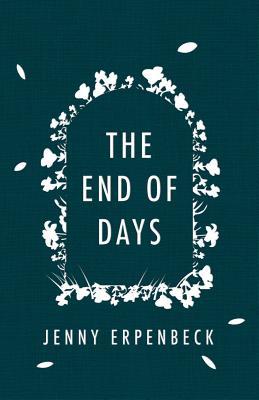







 roughghosts