Disembodied desire: Murmur by Will Eaves

The price of consciousness, of power, is choice.

 Mathematician Alan Turing is remembered as much for his critical role in the development of computer science , his contributions to code-breaking during the Second World War and his work on artificial intelligence as for being a man whose homosexuality led to a charge of gross indecency and a period of enforced chemical castration. His life has been examined in print and film, his character analyzed and debated, and his death mythologized, but to truly venture deep into the recesses of the mind of such a complex and extraordinary character is to invite challenge, scrutiny and dissension. After all, what can we ever truly know of another person’s internal processes? Or, for that matter, our own?

In his latest novel, Murmur, British writer Will Eaves takes the key elements of Turing’s career and ultimate predicament, and creates a shadow character, Alec Pryor, slips inside his skin and inhabits his dreams and anxieties while the state takes control of his body. This audacious approach stays close to the outlines of Turing’s life, even borrowing first names and specific details like his fiancé or his fondness for Snow White, but avoids the constraints of conventional biographical fiction. Presented through journal entries, letters and a feverish dream chronicle, Murmur offers a poetically charged reading experience that is at once scientifically astute, philosophically engaging, and emotionally disturbing. It imagines a rational minded man pushed beyond the edges of rational existence who still manages, we assume, to hold the surface still, controlled and humane.

So much of real life is invisible.

The novel begins with Pryor’s recorded reflections on the circumstances that led to his charge and conviction, his dalliance with a young man and subsequent reported robbery echoing Turing’s misadventure. Choosing one year’s probation with hormonal treatment over jail, he begins therapy with a psychoanalyst, Dr. Stallbrook, and weekly injections to turn him “into a sexless person.” Analytical by nature, he cannot resist the temptation to filter his situation through scientific, historical, and philosophical musings. As if he wants to quantify a situation that clearly has left him concerned and uncertain about what lies ahead.

The central section, which comprises the bulk of the narrative consists of extended dream sequences and an ongoing epistolary correspondence between Alec and June, a former colleague and friend to whom he was once engaged. It begins with a disassociation, a stepping away into third person, which leads to a recognition of a division, necessary perhaps to observe the self, but also speaking to the effect that the treatments are beginning to have on Alec’s relationship to his own physical being:

I am a thinking reflection. He is the animal-organic part, the body unthinking. I am a searching mechanism with a soul. I’m him, but only when he’s near the glass, metal, water, the surface where I’m found. I search for some way to express this separation which feels all the wrong way round.

A bird is puzzled by its reflection; not, surely, the reflection by the bird. And yet I’m one with him. I’m one and separate. I search for ways to describe this. I live and think within all glass. He only has a body and can’t hear this murmuring; sees himself in a mirror—doesn’t know that it is me.

From his detached vantage point, the dreaming Alec revisits his younger self at school, observes a schoolmate whom he once loved, and watches as the two boys swim naked across a lake where they will spend a night together. This other boy, Christopher, has a counterpoint in name and fact in Turing’s biography, a close friend and object of an affection most likely unreturned in the same nature. In both realities, Christopher dies young. But in Alec’s dreamscape, his psychiatrist is conflated with his former schoolmaster, and his friend’s post corporeal essence becomes an abiding presence. His intellectual preoccupations, such as the limits of machine intelligence are personified in bizarre interactions with a real life associate who visits him as a computational illusion. His mother and brother appear as cartoon effigies straight out of Snow White. By opening this vast and increasingly distorted space where, as is common in dreams, people known and events experienced become the scenarios that are continually replayed in response to current waking affairs, Eaves is able to twist Alec’s past and present together to create a complex, introspective character who is both troubled by and curious about the impact of  the unnatural situation in which he has found himself.

With his sex drive disabled, Alec admits to June that he is plagued by dreams and desires, a “coded overcompensation” for a reality supressed. Ever the scientist, he understands these dreams as a means of functional storage and processing:

My dreams are candid with me: they say I am chemically altered. They are full of magical symbolism! At the same time, they are enormously clear—where there is high reason and much thought, there will be much desire and many imaginings. Urges. I can be given drugs and hormones but they will only work as drugs and hormones work. They cannot get at excess desire. Take out libido and another drive replaces it. Materialism and determinism define me through and through, and yet there is more than they allow. And if that illusion of more—call it free will—is itself a mere effect, then an ‘effect’ suggests, does it not, a real cause, as a film ‘suggests’ a projector?

Balanced against this projected, or perhaps, “reflected” reality, Alec’s correspondence with June provides a safe place for him to explore his physical and existential uncertainties. She serves as confessor, sounding board, and unconditional support. Early on, especially as the hormones begin to soften and alter his body, as the estrogen causes his breasts to grow, he expresses fear of becoming a hybrid—less the fear of change than of loss. He grieves his past, his one true, yet quite likely impossible, love for Chris, and worries that he will somehow lose himself.

The estrangement between physical and essential being continues to grow. The dreamer longs to grasp a sense of if, and how, the body exists beyond death—dispersed, yet tangible, and at the same time, its elemental links to a geological, and for Alec, icebound past. The “self” seems suspended between:

The lake freezes. Ice calls to ice and Pryor’s raised and summoning hand is frosted black.

No trees, no distant school, a greenstick whine as cities pop, scatter. Another order of significance arrives. Air thickens with the charge of glaciers. The former gas solidifies, the mirror plane of my glass eye is crushed and I am fractioned, like a mote among asteroids. Only the world’s ship-like trembling, its great pistons concealed, attests the passage of aeons, time brakeless and unpeopled. Then, as fast as they arrived, faster, the glaciers recede, the waters rise, anoxic bile that boils away at Pryor’s still, unvoiced command—and I am either glass again, or obsidian, axe flint, my face upturned and refashioned.

The veil of night drawn back. The sun comes close, colossal in the sky. A pale hand hangs me on a wall that rises from the desert’s fiery sands.

There has been much controversy around the matter of Alan Turing’s death by cyanide poisoning a little more than a year after his hormonal sentence ended. Suicide was the official verdict; accident and murder have also been argued. The fortitude he is reported to have displayed throughout his ordeal, is offered as an indication that his mind was not as troubled as imagined. But, for Eaves’ shadow protagonist, there is both profound growth and insight as a result of his enforced period of introspection, and a fundamental internal loss of self that others cannot see. His perception of and relationship to his body is ever altered.

Murmur is a bold, imaginative accomplishment—one that manages to convey the strangeness of conscious experience while asking what it truly means to be conscious, pushing at the edges of its limits and constraints. It is, in many respects, a natural evolution of Will Eaves’ experimental novel, The Absent Therapist, a fragmented blend of scientific fact, philosophical reflection and fictional vignettes that read, not like snatches of overheard conversation, but as fleeting encounters with the thoughts of a wide range of characters. Murmur pulls you deep into the mental reality of one man whose rational and logical grounding is upended, but this time the therapist is present and inseparable from the subject.

However, as much as this is a novel embedded in conscious experience, it is a memoir of the body and its essentialness to being. It asks: Can a machine be encoded with emotional intelligence? What happens to the substance of the body after death? What of the self is lost or altered when the body is rendered sexless? No matter how cerebral one may be, the body matters. In my own, long-standing, welcomed and self-administered treatment with contrasexual hormones, I have experienced an evolving disassociation from the altered body I now inhabit. Yet, at face value, I look right. I am afforded the ability to live in the world in a manner that conforms with the internal gendered self I’ve always known. In a way that feels right. But I am changed. My body is othered and alien, de-sexualized. Over time that disassociation feeds existential discontent. Threatens the self in weird and curious ways I hear echoed in this book—a book which echoes my own murmurings.

Murmurs by Will Eaves is published by CB Editions and shortlisted for the 2018 Goldsmith Prize. A North American release is forthcoming from Bellevue Literary Press in April, 2019.

Musing about maintaining wellness on World Mental Health Day

World Mental Health Day. In the handful of years that I’ve been maintaining this blog, I have yet to stop for a moment to acknowledge this annual effort to raise awareness of mental health issues around the world.  In fact, I rarely address the subject even though mental illness, and the stigma it carries, has profoundly impacted my life. With significant costs.

And yet, compared to many of the people I have known, worked with, and cared about, I am lucky. I am capable of functioning well with medication and therapy. Mind you, I was well into my fifties with a ruined career behind me before adequate support for my bipolar condition was finally in place. It shouldn’t be so hard to access care, but it is, and continues to be so no matter where one lives.This morning, with another fresh snowfall on the ground, only a week after we were treated to an entirely unseasonal 40 centimetres of the stuff, I made my way downtown to volunteer with our annual readers’ festival. As I walked through the cold and fog, my mood was bleak. The importance of a strong social network is regularly stressed for the maintenance of mental health and well-being. However, in this city where I’ve lived for most of my life, I have no strong social connections. I have family, but we are not close. I have children—a daughter who is making plans to move to the US to marry her boyfriend and an adult son I live with who has his own long standing mental health concerns, but they really need to be living their own lives. Close friendships, meaningful relationships, continue to elude me. My closest friends, even my last partner, have been at a great distance.

A sense of loneliness, growing deeper and more pervasive in recent years, has become my most constant companion.

*

The city’s damp, misty streets seemed to feed negative ruminations as I walked. Much of a mood disorder is, to be certain, beyond one’s immediate control—my darkest, near suicidal depressions have come at times when things in my life were positive—but I am fully capable of falling into dark spaces when I allow myself to dwell on what I don’t have. My losses. My failures.

Fortunately, although the weather remained dismal, my day brightened. I made three runs to the airport to pick up visiting authors and, as a result, I was able to enjoy in depth conversations about life, literature, and writing with journalist and author Rachel Giese, and novelists Rawi Hage and Patrick de Witt. I was kept busy, engaged, and interacting with writers.  A good day—good for my writerly self and really good for my mental health.

So on this World Mental Health Day, I suppose I want to say that access to appropriate mental health care is vital. And for each person that can look  very different.  But the reality of living well with a serious mental illness, even with medical support, is a daily effort. For myself, being able to engage with others who are passionate about reading and writing is a vital part of maintaining wellness. It’s one of the factors that keeps me engaged with an online literary community, but it is always nice when I can enjoy a good conversation in person.

The never-ending ending: When will this move be over?

Although my son and I moved into our new home a week ago—that is, our furniture and all of my books and our two confused cats made the transition—this has become an endless process. In part it is a matter of proximity. Moving less that a kilometre invites a false sense that you can manage the bulk of it on your own. In packing and unpacking my little Honda Fit and trundling boxes and bags up to our second floor walk-up over and over, two things become painfully clear: (a) I was completely unprepared for the reality of downsizing and moving after twenty-four years in the same place, and (b) I am twenty-four years older than I was the last time I moved.

Tonight, back at the house with possession date quickly approaching, I was emptying the entryway closet and cursing myself for not clearing out all of the coats, boots, and orphan mittens stashed into boxes or bags long ago. It depresses me how much I’ve managed to acquire through all of my incarnations, hobbies, and business schemes. I’m shocked how many toys my children accumulated over the years. As a queer single parent with a relatively low income, I always wanted my kids to have a lot of things. I couldn’t afford vacations, or all of the fancy things their friends had, but somehow toys with lots of small pieces seemed like having more. Or like giving more.

What was I thinking? What are we ever thinking?

Even my single friends assure me that the more space one has, the more it seems to fill itself with stuff. We admire sparse décor, but given a chance, human nature abhors a vacuum.

And then there’s the emotional baggage one has to sift through, and decide to purge or pack. For both my son and myself, there’s evidence of the losses we’ve suffered, or worse, created, in every corner. This final clear-out is overwhelming. And there is still so much to do. We’ve rented a van and made a few runs to the landfill and wasted a couple of hours carting well-used, but still serviceable solid wood furniture around to charities but were unable to pass anything on. It’s a bit heartbreaking but, at this point, I am content to pass on the hauling away to a junk removal firm, cost be damned, I need my life back!

I haven’t read a book for almost two weeks. I feel like I’ve been cut off from my literary lifeline, but have yet to unpack and fill all my empty shelves. Where to begin? How to organize?

Soon. Soon this will pass and we’ll be able to settle into our new apartment.

But first we have a room full of charity donations to deliver, a mound of recycling to cart away, and a garage full of old furniture, junk and all of the tools and outdoor items we’ll no longer need, but simply don’t have time to take care of. Hopefully the removal firm has better luck finding a home for some of the stuff but for now the clock is ticking and we have to clear out, tidy up, toss the keys in, and lock the door.

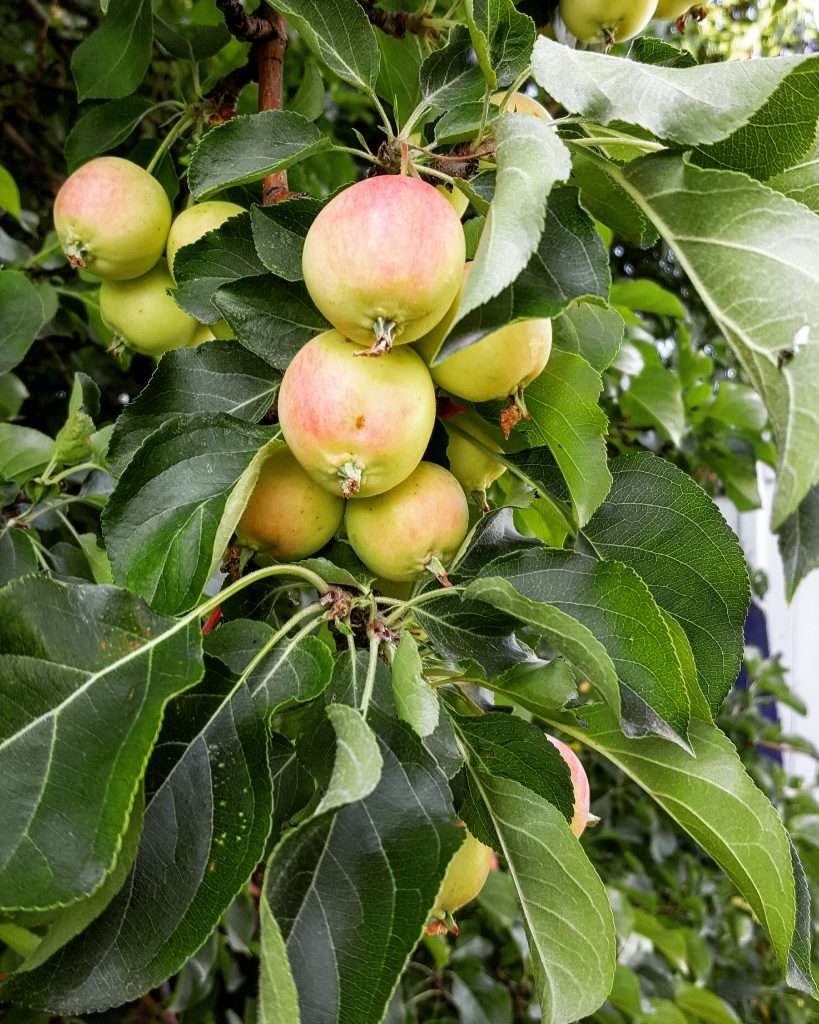
When it’s all over, maybe I’ll feel sad. I know my son will; he’s spent most of his life there, give or take, but I am ready to let go. The house is old and when I look around I am haunted by all of the projects I lost interest in, or could not afford to complete. It’s as unfinished as my life. I feel sad, strangely, for birds who will be losing their nesting spaces as the lot is redeveloped and the industrious little red squirrel who has amassed himself a huge pile of pine cones for the winter. And for the old apple tree.

For nearly a quarter century, that overgrown yard and 50s glass stucco bungalow was home. The only house I ever owned. Charged with memories of motherhood, madness, the end of a marriage, and the advent of my own manhood. Now its sale has afforded me a new lease on life.

Or so I hope.

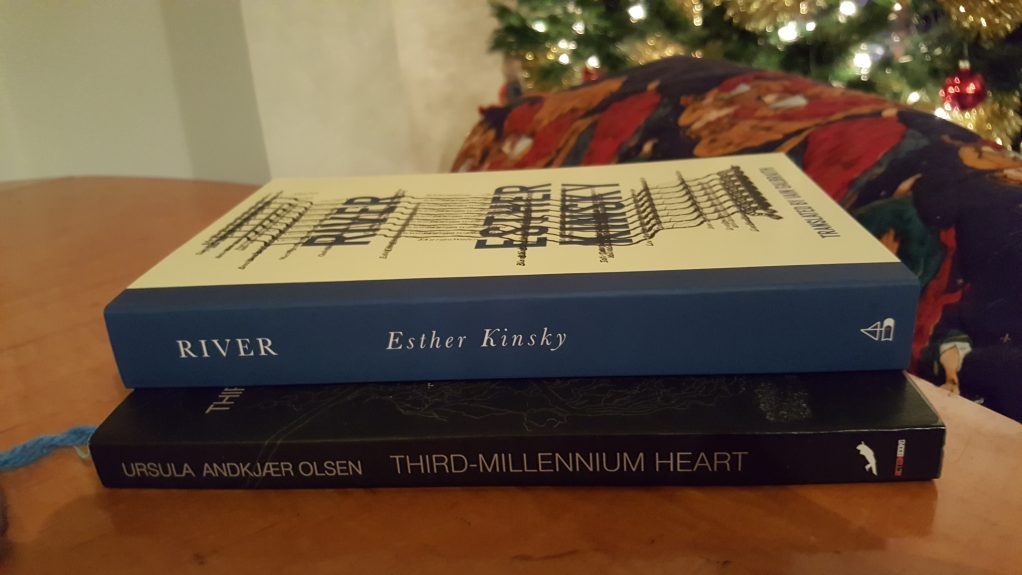
Neither here nor there: Esther Kinsky’s River and a link to my review at Music & Literature

Since I finished Esther Kinsky’s magnificent novel River, it has been difficult for me to contain my enthusiasm for this work, and yet, with a major review on the way, I wanted to refrain from talking at length about my reading of this languid, mesmerizing meditation on the relationships we have with place—those we live in, pass through, or linger in uncertainly during points of transition.  That review is now live, and yet Kinsky’s book is still working its way through my system.

River is a slow read; immersive, poetic, attentive to detail. It creates an atmosphere of intimacy with the spaces the unnamed narrator traverses during a time of restless displacement in a community on the edge of London; a time of gathering and preparation for leaving the city where she has lived for a number of years. Some of these spaces are immediate, defined by the course of the river Lea. Others exist in the distance, temporally and physically. And yet, although there are clear parallels between Kinsky’s own life history and the locations her narrator visits, River occupies an intentionally indistinct borderland between fiction and memoir, focusing on experience in the moment over biographical background and detail, resulting in a narrative that flows, organically, like the rivers than run through it.

My review of River can be found at the online site of the singular journal Music& Literature. The opening passages are reproduced below, you can read the rest of it here.

A mood, an atmosphere, rises up from the opening pages of Esther Kinsky’s River—a melancholy that unfolds so softly, so insistently that I repeatedly had to remind myself that I was reading words that originally existed in German. I found myself wondering: What would the German feel like in my hands? How would its texture taste, guttural tones against the back of my throat? These are questions that, in their asking, underscore how River is a text to linger in, to touch, to absorb, and recognize one’s self in. We follow the narrator as she temporarily suspends her life, settling for a time in a marginal community on the edge of London, so she can slowly disengage herself from a number of years spent in the city, and prepare, mentally and emotionally, to take her final leave. The process she details seems to be one we, too, undergo in reading River.

Under a pale sun and in the whitish, shadowless light peculiar to this place and these seasons, I took to following tracks which, time and again, led me back through the alder grove. This partly mutilated wetland wood with its childhood flowers and wild birds secretly appealing to my memory was my gateway to the lower reaches, to the path downstream that gradually taught me, during the final months of my stay, to find my own names for a city I had already spent many years labouring to decipher—names only walking and looking could force me to extract and reassemble from a web of trickling memories, a debris of stored images and sounds, a tissue of tangled words.


River by Esther Kinsky is translated from the German by Iain Galbraith and published by Fitzcarraldo Editions in the UK and Transit Books in North America.

A constant procession of ghosts: A reflection

August has passed, it seems, with little to show for itself. Smoky skies and an air quality rivalling that of some of the most polluted cities of the world curtailed much outdoor activity here. Further to the west, where the smoke originated and forests burned, it was worse. Now, as skies clear, temperatures are dropping and summer’s fading fast. Leaves are turning yellow. Autumn nears.

Two years ago today, September 1st 2016, a dear friend took her life. A second attempt after years of trying to fight off crushing bipolar depression. Unable to work and living on savings, treatment often meant driving to a public hospital, an hour each way. She lived in a small village in the Eastern Cape Province of South Africa. We only met once. I spent a week with her in 2015, but from the moment we first met online, it was as if we had known each other forever. We could joke and riff off each other, falling into a regular routine as a dysfunctional divorced couple that often fooled others. In truth, we were bound by queerness, books, and bipolar disorder. Soul mates shipwrecked in our own lives.

But, of course, I couldn’t save her.

In the months before Ulla died I held a certain distance. I was reeling from the recent death of my mother, followed closely by that of my father. Knowing that she was fragile, and, after three years, still grieving her own mother, I was unable to reach out to her to seek or offer support. We were both drowning, but her sea was darker and more deadly. It had been for a long time.

With my parents’ sudden and tightly timed deaths, I had imagined the possibility of an exercise of writing immediate grief—echoing Barthes and Handke—but the burdens of being an executor distorted and distended the mourning experience and, for the most part, these losses remain unwritten. Then again, my parents were in their eighties with long lives, well-lived, behind them. My friend’s death, at forty-six, was more complex. I knew it had to be addressed, not simply for myself but for a community of followers who responded to her actions intently and personally. It took three months to salvage words and craft a 300-word piece which was published, with my own photographs, in late November of 2016. Each time I come back to this eulogy I realize how much of my immediate grief is contained there, perfected and concise.

Who, and what, in the end, do we write grief for? If we are looking for catharsis, a way to move beyond grief, we may be disappointed. Perhaps grief simply moves with us, evolving and softening over time.

If Ulla’s death sits especially heavily at this time of year, at the moment there is an extra weight. Earlier this month, my son’s best friend lost a difficult battle with opioid addiction. He had been at our house quite a bit in the last weeks, and although clean at the time, he was really struggling. My son is devastated. He’s been seeking refuge in alcohol and routinely breaks down in a flood of tears and despair. His sister and I feel a loss too; Dylan was a common presence in our lives over the past twelve years, but to be honest, in recent times I wasn’t always happy to see him on the doorstep. He and Thomas have both, at twenty-eight, been fighting their own mental health and addiction issues for a long time. And they were not always good for each other. They could be up all night arguing—usually about politics, but sometimes about really “important” matters like the difference between a canon and fugue. Things could get violent. One morning Thomas broke his hand on Dylan’s head (and glasses). But music was their real bond. They wrote and recorded songs together and spent hours busking on street corners over the years. They believed in each other when neither could believe in himself.

As a parent it is agonizing to watch my child in pain and know that his is a mourning song I cannot write.

*

As September begins, I am aware more than ever that we are surrounded by a constant procession of ghosts. I’ve bought a two-bed flat and, at the moment, I’m deeply engaged in the process of emptying out closets, cupboards and rooms of accumulated stuff so that, by October 1st, my house will be empty and I will be settling into a much smaller space. The sheer volume of junk that needs to be dumped, donated, or moved is overwhelming. And with it, reminders of the losses of the last few decades keep resurfacing when I least expect it.

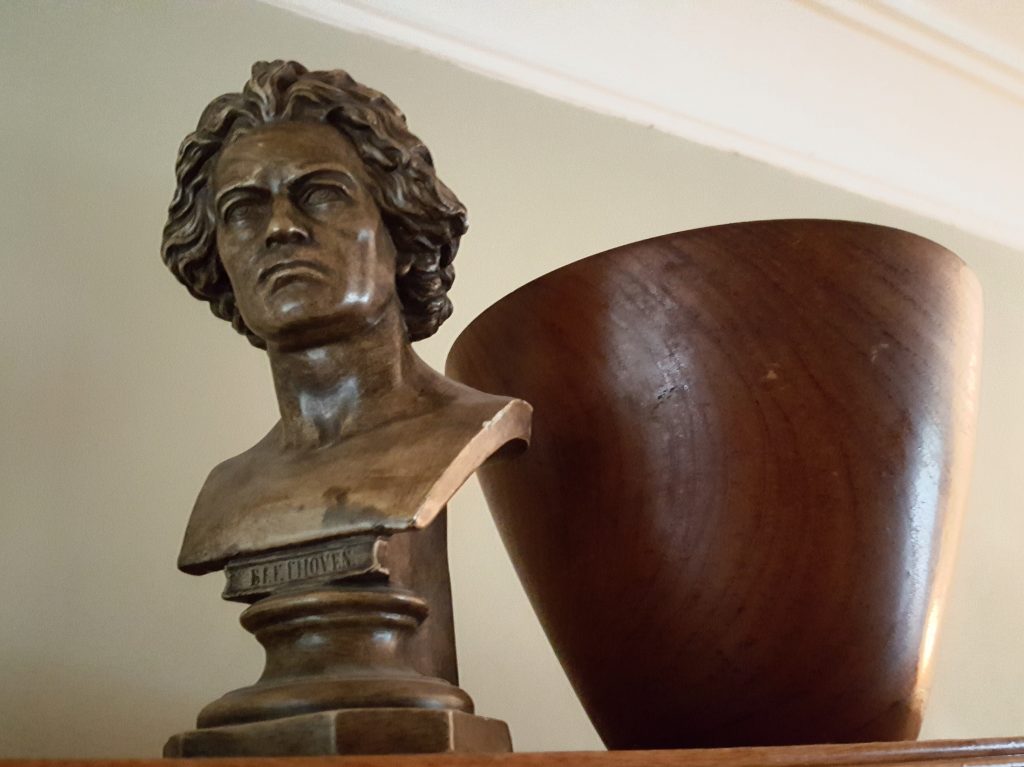
Out in my unfinished garage where I have amassed a mound of old, damaged furniture and broken objects waiting for pick up, I found a windshield propped against the wall. I have no idea what it was for or why it is there, but I know it was something my father must have picked up and forgotten. I’m surprised how much of him I couldn’t part with after his death—his Russian literature, a bust of Beethoven, a grandfather clock—all tangible reminders of a man who was so elusive, so hard to know.

Of my mother, there are few objects I wanted to bring home but her presence permeates so much of my life. Especially the one I tried to live in her image. As a girl and woman. Packing up children’s clothing for donation I find the beautiful outfits she crafted for her precious granddaughter—lined coats, fancy dresses—her attentions to Ginny’s wardrobe becoming ever more feminine as I, her only daughter, transitioned to male. I also unearth all the outfits I myself made for both my children in their early years when I was still determined to play the part birth had granted me. A part that, ultimately, has nothing to do with gender at all. I truly enjoyed creating beautiful things for my children. It just didn’t alter the sense that I wasn’t female.

And so, this house is also haunted by ghosts of myself, the selves I wanted to be, the self I became while living here. The self I still don’t know what to do with. I haven’t even uncovered the boxes filled with all my childhood photographs or angst-ridden adolescent writing. But documents with my old names, once-treasured possessions, and even a wedding dress have been revealed. Some will be retained, others hastily stuffed in bags and carted off to Goodwill.

Then last night, another more recent, unresolved ghost emerged. In a closet I found a manual from a leadership workshop I took a number of years back. At that time I was confident, more secure in my sense of self than I would ever be. My transition, in my mind, was complete and a success. But within a few years, my brief, yet promising, career in not-for-profit management would be destroyed by circumstance and my own mental illness. A loss I still have not come to terms with and yet it seems like something that belonged to another person. As if my life has just been a series of reincarnations that seem to leave me no wiser or further ahead.

And no more certain who I am.

And then there is my own addiction: books. Spread through three rooms, with most shelves double stacked, I shudder to think how many boxes there will be. No mercy for old magazines and outdated textbooks. They are bound for the recycling bin. But every time I scan my bookcases to collect charity sale donations, my decisions about what to hold on to shift. My anthropology and ecology texts are now gone, but my philosophy, classics and ancient Near Eastern history volumes remain. I notice that so many of the books I bought during my years of bookstore employment in the early 80s are still valued, even if I didn’t appreciate some for decades after purchase, whereas the literary bestsellers I devoured in my thirties and forties have been, and are, regularly pruned and sent off to new homes. Some of the obsessive tangents reflected in my collection are held dear, others are an embarrassment.

The books we read, and perhaps even more tellingly, the books we buy with the intention to read them, reveal a lot about who we are, who we want to be, and who we want others to imagine we are. More ghosts in our own lives.

And I suppose moving is one more opportunity to encounter, reshape, and even resolve a few of those ghosts—our own and those of others whom time, distance, or death have taken away.

Maybe even grieve.

Holding a creative distance: The origin of my recent engagement with Marcus Aurelius’ Meditations

This month I made my second appearance at Burning House Press. The first, a poem, was a distinctly personal effort, the most openly vulnerable piece of writing I have created this year. I’ve been debating the idea of what it means to write memoir—the only genre that really makes sense—and why I have a strange discomfort with much of what falls into that category. I’ve tossed about all sorts of approaches, from the straightforward essay to the fragmentary to the semi-poetic narrative and, in the end, I will probably just have to stop procrastinating and start putting down one word after another and see where it leads me.

In the meantime, I’ve long wanted to balance more experimental and detached projects against the personal. In particular, I wanted to find a way to engage with some of the books I brought home from my father’s library after his death. I started with randomly generated extractions from some of his collection of Russian literature, but quite honestly the material was not holding my attention. Of much greater appeal are his specialty volumes—slip-cased, illustrated collectible editions of classics like The Adventures of Marco Polo, The Rubiyat, and HG Well’s Time Machine.

One of my treasures is a small pocket-sized hardcover edition of The Meditations of Marcus Aurelius. And that’s where the current project began.

The theme at Burning House this month, craftily curated by my friend John Trefry, is “Non-nonfiction.” Inspired by a black and white postcard from New York City that I found tucked into my father’s copy of The Meditations, I decided to create a series of hyper-processed pseudo-wet plate images from some of my photographs. At first I imagined writing a mock report cataloguing these acquired images in some undefined post-apocalyptic future. But it felt too much like writing speculative fiction, forced and odd because fiction is not my territory. So I went back to Marcus, to exactly the location where the postcard still rests and extracted material from two verses on those pages. That material, manipulated with minimal intention, was then employed with the images to create an “excerpt” from an imagined series. Working like this allows me a creative expression from which I am distanced, at least to a degree, while at the same time honouring my father.

My piece, The Soul of a Man: A Meditation can be found here.  I hope you enjoy it.

The promise of change: Midsummer update, July 2018

With the end of July approaching, I am at a loss to know where the month has gone. To idle hours glued to my computer screen I’m afraid… it is amazing how the internet manages to suck away productivity when you are looking for something. And before you know it, deadlines loom, books are unread, words unwritten and summer is half over.

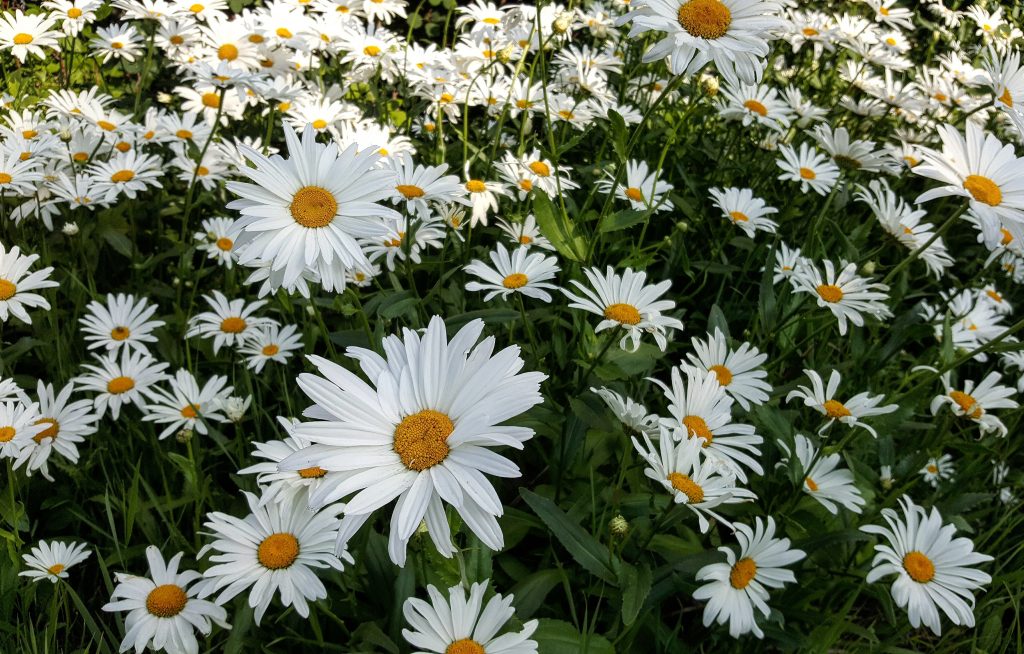
Earlier in the month I sold my house, “as is” fortunately, for the soil it stands on is worth more without it than otherwise. I am a little saddened to know the place I lived in for the past 24 years will be demolished, yet relieved that I don’t have to fix it up or worry about the aging furnace or sewer lines. I just have to get out by October 1. I will miss my yard with its defiant horde of Shasta daisies, army of saskatoon berries, gnarled old crab apple tree and row of prickly hawthorns. Not to mention, six towering spruce trees and one mostly dead mountain ash. But in return I am trading it for a two bed flat in a building that backs on to an escarpment lined with Douglas fir trees—a little piece of mountain wilderness cast off from the Rocky Mountains, and nestled here in this city of one million. And I don’t even have to move far; I am staying in the same neighbourhood.

However, in the few weeks between the time I accepted an offer on my house and the removal of conditions, I wasted so much time visiting and re-visiting real estate listings that precious little else got accomplished. I debated neighbourhoods, layouts, square metres  and, of course, price, ad nauseum. Somehow, all the information we now have at our fingertips, when we are planning a trip or a purchase, fuels obsessive behaviour rather than actually saving time. That is, at least until a decision is made and done. By the time I was actually able to start my physical house search, I knew all the listings on my radar by heart. We happened to visit my favourite first and nothing else came close. Offer made, a little back and forth, and it was accepted. Now after reviewing the building documents there is a slight concern about pending remediation work (nothing unexpected in a fifty year-old structure, but the decisions will be made before I myself an owner), so by Monday we should have a finalized sale and I will have seven to nine weeks to radically downsize and relocate.

Although I will have a lot to get rid of—sell, donate, or throw out—the idea of streamlining my life is greatly liberating. (Don’t worry though, I was cognizant of bookshelf-suitable wall space in my apartment search, and even then I’m still guaranteed to have more books than I can possibly accommodate.)

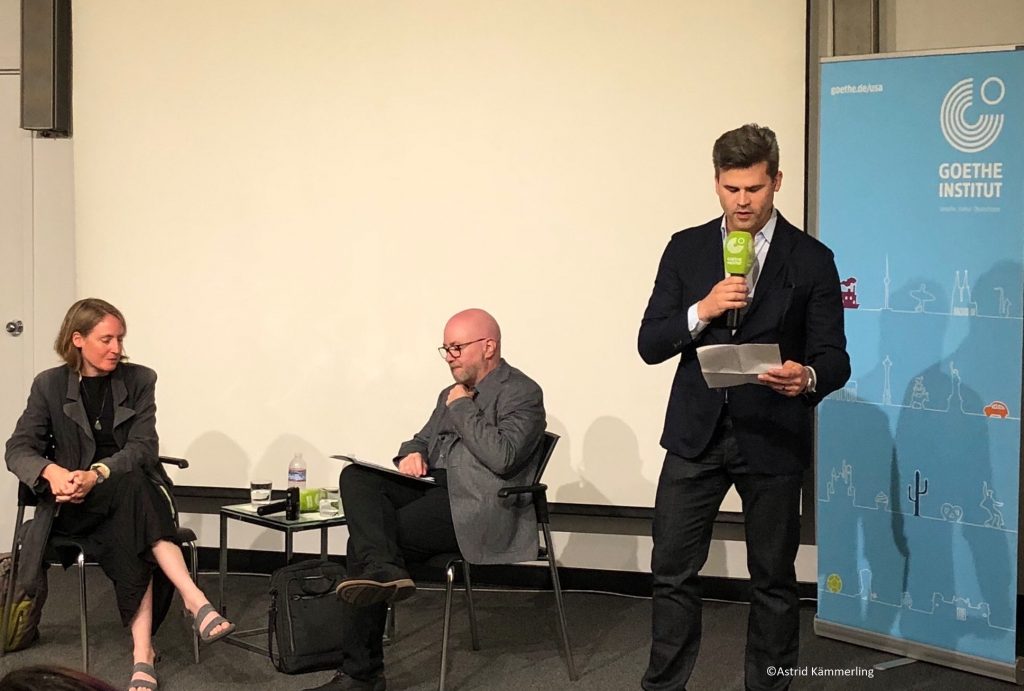
My house hunting helped ease me past the difficult anniversaries that accompany this month and, although it has cut into my reading and writing efforts, an invitation to visit San Francisco this week offered a most wonderful literary opportunity—one I never imagined would come my way in this belated, informal writerly “career” of mine. I had a terrific time stopping by the office of The Center for the Art of Translation and Two Lines Press—it’s always so nice to see where the magic happens—and talking Hilbig with Isabel Fargo Cole at a book launch for The Tidings of the Trees. I have attended many author interview sessions over the years, for better or worse, but to be on the stage at the Goethe Institute with a translator I have so long admired at was a huge thrill. I’ll confess to being a little nervous. I reread the book in advance and made countless notes and outlines. But in the end, I sounded reasonably intelligent and Isabel’s answers were detailed and informative. Even better, the audience had many interesting questions and inquiries, a sure sign of a successful event.

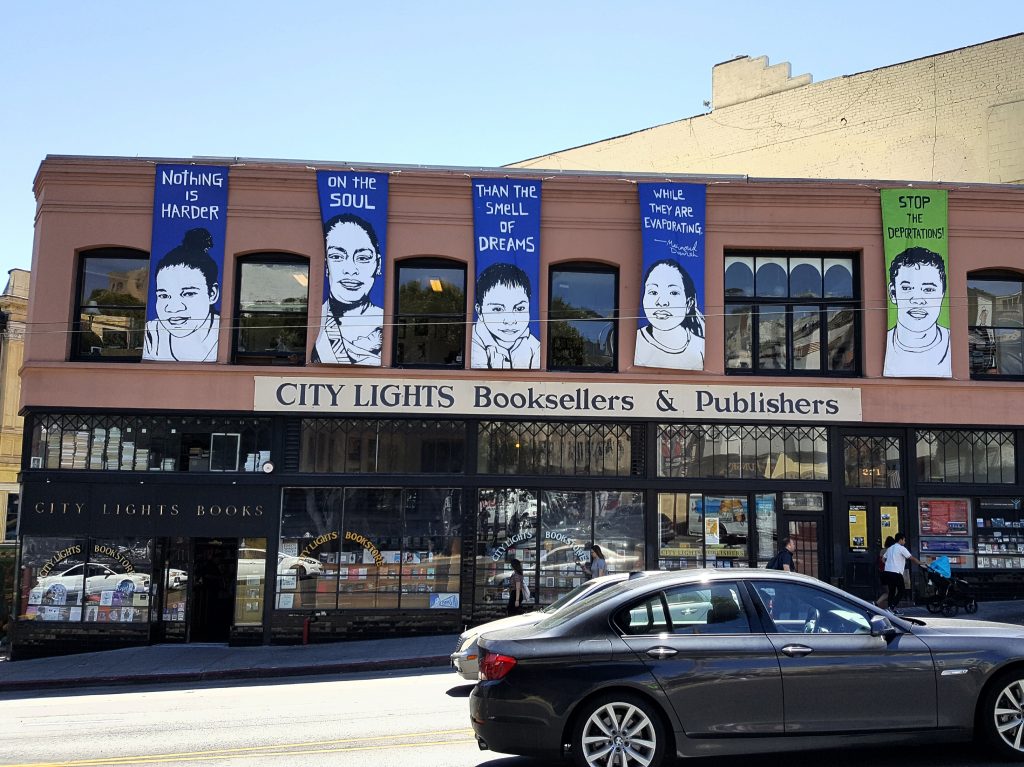
I chose to stay on for an extra day in the city, about all I could afford in a city not light on the wallet, but the extended time allowed me to have coffee with Veronica Scott Esposito and spend time at the MoMA, enjoy dinner with two of my cousins and their spouses—our first get together in thirty-five years—have lots of time to visit with Isabel, and also make my way up through Chinatown for the requisite pilgrimage to City Lights Books. I came home from that excursion with books (go figure) and a gorgeous, sturdy canvas bag.

So, suffice to say, my books-read-and-reviewed account looks a little shallow for July. I have, as usual, a handful of titles in progress including one for a published review to come later and I’ve also been quite busy editing for 3:AM Magazine. I’ve been amazed at the range and quality of submissions recently, so many that I’ve had to turn away otherwise strong work due to limits of time, but the experience of working with interesting material and authors is always rewarding and satisfying. If I do my work right, I am invisible, and I like to remind myself how nice it is to be spared the inevitable panicked staring at the blank page that seems to come with every essay or critical review I write for publication. That’s someone else’s problem when I’m the editor.

It is, as ever, a complex flow of emotions that washes over me with all of the decisions, changes and promises that have come into play over the last month. When I was young, the summer, short as it is in this part of the world, seemed to pass so quickly I could never seem to grasp it, hold on to the moment. Now, many decades later, July has become a month associated with some of the most significant events of my life—marriage in 1983, the beginning of transition and end of the same marriage in 2001, a pulmonary embolism and cardiac arrest that nearly cost my life in 2015, the closely entwined deaths of my parents in 2016, the surprisingly swift sale of their house last year, and now, this year’s exciting events.

There are still many challenges and unknowns, significant ones at that, but such is living.

Unfinished conversations: Still unable to address my mother, two years later

In memory of Mary Jane Ellis
1934-2016

I have accepted an offer on my house and, if all goes well, I will be moving. Knowing that I’ll be looking to purchase a much smaller space, there is, after twenty-four years here, an urgent need to reduce the collected detritus and all the unwanted belongings that have accumulated over time. Two children, a dissolved marriage, and my own double-folded existence have left a mass—no, make that a mess—of stuff to sort through and clear out.

One evening I uncovered a shoebox of cards and letters tucked into the most unlikely cupboard in the basement. I brought it upstairs and sat down to sort through the contents. Anniversary cards celebrating a marriage that ended seventeen years ago; longer than that if you count the painful years of unravelling that preceded the formal separation. Birthday cards addressed To a Beautiful Daughter. And letters. From friends. From my mother. From another time and life. Some I kept, others I tossed into the recycling box. I opened none of them. It seems one cannot bury the self, but one can put it aside—until a later date.

My mother’s death, two years ago today, opened a raw vein, exposed a deep insecurity that I believed I had moved beyond. As a result, my faint efforts to articulate my loss have continued to come up against an impenetrable wall  of guilt and shame. That box of old cards and letters troubles old wounds. Likewise, yesterday’s the discovery of nearly two decades of prayer journals uncovered in  a container stored at my brother’s place compounds the pain. When I suggested that the journals be burnt, unopened, my other brother admitted he had read some and that her prayers had been focused on our father—no surprise there—and me. It seems I had been her pressing concern. Me. The daughter who failed her. The daughter who could not be a woman.

I have always insisted, to myself at least, that my mother was my one and only unconditional support through the years of my transition and beyond. That when she died, I lost the one person who really believed in me. But, in truth, we never got the chance to properly address the impact of the shift in our relationship. We always talked around the subject.

In the last month of her life, when I was finally beginning to try to confront the extent of the loneliness and grief my own tangled life journey has caused me—when I needed more than ever for her to assure me I was a good person and that she still loved me—she was already slipping away. As her lungs became constricted within her shrinking frame, her energy and cognitive abilities declined rapidly. We thought she needed rest, a break from our father. We didn’t know she was on her way out.

On July 6, 2016, one day after my dad was in a serious accident that would ultimately claim his life, my mother was rushed into the city with critically low oxygen levels. She ended up in ICU in one hospital while her husband lay unconscious on the stroke unit of another. I saw her the next day, and although disoriented, she was hungry and joking with the nurses. One day later she was barely responsive. The respirator was not helping as we’d hoped. On the third day, Saturday July 9, I received a call from the hospital. A family member was needed. Both of my brothers were out of town, so my daughter and I went down. Ginny was twenty-three at the time and had been very close to her grandmother. We spoke to the doctor and agreed that the respirator should be removed, but requested that we wait until my brothers could be there—one was a few hours away, the other six.

So Ginny and I kept vigil. Held her hands. Told her we loved her. My son was too distressed to come. When my brothers and their wives arrived, the respirator was removed and we kept her company through her final hours. Eleven days later, our father would follow her. Throughout those troubled weeks, I sat many hours by my parents’ bedsides. To my brothers though, whatever I do, whatever I have done, is never enough. I am the oldest and the odd one out. Always wrong. But as they’ve been supported by their wives and extended families, I’ve been alone with two adult children, the three of us shocked and bereft.

It has been a long two years now. My mother’s absence still sits heavy—an empty space inside me. I cannot address her yet. I have no words. I’d like to think she would be proud that I am writing, but she never wanted to read anything I wrote. It might have been too painful. Perhaps that’s why it’s so hard to write my grief now. We were, it seemed, so close. We spoke on the phone every week, shared our hopes and concerns. But what of what was left unsaid?

And what of the daughter she lost, the one in the cards and letters in the shoebox, did she mourn her? She saw me happy, for a while at least, in this new masculine form. If I could trust that she remembered that person, her unexpected son, in her last hours, could I move on and begin the grief process?

Or am I still mourning a lost self too?

A little poetic musing: Three recent or current reads and a poem of my own

I haven’t posted much lately, in part because I have been focused on some writing and reviewing for other publications, and also, because I’ve decided to list my house, concentrated reading has been somewhat disrupted. In the midst of all this, however, there is always time for poetry. I find lately that poetry has become an increasingly important part of my reading routine. So, I thought I would take a little time to look at a recent read and a couple of the collections currently vying for my attention.

Unbearable Splendor by Sun Yung Shin (Coffee House Press, 2016)

The intersection of essay and poetry is of particular interest to me. This collection takes a wide-ranging approach to the confluence of the two forms and stands as an impressive example of what can be achieved by filtering essayistic meditations through a poetic lens.

Sun Yung Shin was born in Korea and adopted by an American family at the age of two. The weight of her dual identity pulls the explorations that comprise Unbearable Splendor together into a loosely spinning orbit. Along the way, she weaves in elements from cosmology, linguistics, Korean culture, Greek mythology, literature and futuristic visions of being. The result is dazzling and devastatingly beautiful. For my money, the most interesting pieces offer strange and unusual angles on the cellular, spiritual, and genetic implications of being an orphan, often referring to herself in the first person plural:

As we task our memory-organ to remember our life in Korea, we breed dream after dream. False dreams? Truthful dreams? Hanging? Phantom shaped? They drop like ripe fruit, then disappear before hitting the ground, preventing bruising, rotting. Dreams are ephemera and have no body to violate, no flesh, to decay. They can remain fresh as the wind, recycled like hot rising vapor from the ocean, into the frozen clouds, and eventually back into the crashing black water, the source of all dreams, the living body of our planet.

Kafka and Borges offer inspiration, a series of essay/poems feature Antigone, and toward the end, she draws on cyborg and cloning technology. The language is devastating. However, if I have any reservations, it would be that some of the pieces fall awkwardly in between the two forms—too much an essay to be a satisfying poem, but not developed enough as a nonfiction piece to really flesh out an idea.

*

Currently reading:

The Promised Land: Poems from an Itinerant Life by André Naffis-Sahely (Penguin Books, 2017)

This slender volume represents poet and translator André Naffis-Sahely’s first collection. Born in Venice to an Iranian father and Italian mother, he was raised in Abu Dhabi. The earlier poems in this collection deal with his childhood in the harshly surreal environment of a manufactured city, and his return visits in early adulthood. His shifting relationship with his parents, how he sees and understands them as their marriage crumbles and life in Abu Dhabi loses any lustre it may have had, provides the material for an strong series of poems. The second section, which is where I am currently biding my time, includes a number of poems that cross the globe and speak to a certain restlessness. Here, is a sample from the prose poem, “This Most Serene Republic” which opens with a description of Venice as his father experienced it when he first arrived in the 1960s and spent a cold damp winter huddling atop the wardrobes as water rose through holes in the floor of his flat. The son in his footsteps describes:

… Those old, porous palaces, whose upper floors housed the few penniless nobles whose hallowed ancestors once terrorized the Mare Nostrum. Those palaces, much like the one I’m sleeping in, smelt like Latin jungles: mahogany everywhere. I love this tiny room and its Franciscan sparseness. All my life, I’ve felt like a Jew, or a Gipsy, or some hapless scion of a lost wandering tribe, but they, at least, have Bar Mitzvahs, music… all I’ve left is this room. This was an empire ruled from rooms: chambers decorated for a single, specific purpose: to impress its numerous enemies. I can’t sleep. There’s a ghostly halo above my bed where a clock used to hang. One way, I suppose, to stake a claim on timelessness, if not serenity.

This is the type of collection I like to linger in, not to hurry through. A clear, authenticity shines through in Naffis-Sahely’s poetics, with a quiet reflective wisdom I am really enjoying.

*

Jonahwhale by Ranjit Hoskote (Hamish Hamilton/Penguin India, 2018)

This book seemed destined to prove more elusive than Ahab’s famous whale. I looked for it in Calcutta, a copy was sent to me in late February, and finally assuming that that one drowned somewhere along the way, I placed an order with an Indian distributor that ships by courier and the book made its way across the globe in four days. Sometimes you do get what you pay for.

Ranjit Hoskote is a poet, translator, curator and cultural critic based in Bombay. I’ve just started into this volume and I’m very excited to see where its currents will carry me. I’m expecting a lyrical adventure along fabled waterways, through literary and historical channels. Hoskote’s broad cultural perspective promises a timely exploration of the political and ecological realities that shape and threaten our world. This, again, is a text, that invites careful reading. No need to rush on this journey. Here is a taste  from a piece called “Ahab”:

Captain of castaways, the pilot calls out and his curse carries
                                         across docks, derricks, opium factories:
                                          a typhoon in the horse latitudes.
He’s hurled his ship after the whale
that swallowed him and spat him out.
.                                     The monster is the only system he’s known.
At the bridge, he’s drenched in the dark:
locked on target, silent, furrowed,
Saturned to stone.

I have, as ever, several other books close at hand. I’m finding that short, single author collections from contemporary poets  hold the most interest for me at the moment.

*

And, finally, this past week saw the publication at Burning House Press, of my own modest piece of poetry, a short prose poem called “Are We There Yet?” This is my first successful poem as far as I’m concerned, that is, something that came out as I intended. It was written in response to the theme “Liminal Spaces”, a perfect fit for a way of thinking about my own dual-gendered life experience. I did, coincidentally, advise the editor that he could consider it a poem or an essay, since I look at everything I write, no matter the form, to be nonfiction.

You can find my poem here.

Losing my story (or my capacity to tell it)

For the longest time I have entertained a writing project. Memoirish, I described it. I put time and money aside to facilitate this activity. I’ve been going through the money, but have little to show for my time. It has been more than a year since I’ve written anything serious of a personal nature beyond a few small prose pieces or random blog posts. I’ve written about writing and not writing and all manner of writerly insecurity. I regularly hear from people who, much to my surprise, enjoy what I do write, appreciate what I share. Yesterday, after submitting an overdue review, for better or worse, I told myself that I must finally get serious about trying to pull together a more significant effort.

Yet, I woke up today fearing that I can no longer tell my story. The only story I have to tell and I cannot share it. The cost is too great.I don’t know how others do it. Detail their personal lives, their vulnerabilities, their victories. Perhaps there is a part of ego that has no filter, a point of pride that longs to disclose. But that’s not me. In real life, I’ve come to understand that my existence can only begin to affect some measure of authenticity if I refrain from attempting to have full expression of all that I am. All that I have been. It’s one thing to write. I have published a few raw and honest pieces that have been well received, that can be searched online, and I am happy with each one. And here at home, for the past three years, I have been more intentionally out and involved in LGBTQ and affirming spaces in a way I never dared before. However, more often than not, I’m left feeling defeated. It’s all okay, it seems, until I try to have my voice heard. My history validated. My pain respected.

I would to dream that writing could heal the loss and grief I carry. Yet, too much loss and too little gain makes for a story no one would want to read. Life stories are supposed to show recovery, strength, hope. But that’s wishful thinking. Real life itself just goes on. I am afraid that attempting to write now would only reveal the anger and despair that I can’t get past.

This is not to say that there have not been many positives in recent years. I’ve a network of good friends across the globe. I’ve travelled to some amazing places. I still love writing—reviewing, interviewing, and editing. I am producing work that I am truly proud of. And I’m not ashamed of who I am. But I think I have reached the limit of what I want to explore on a deeply personal level in writing.

Perhaps some stories are better left untold. Some transmythologies are better left uncontested. And some lives are more coherently lived by keeping the closet doors at least partially closed.

This weekend I realized that, in no uncertain terms, it is one thing to be “accepted” as long as you don’t talk about yourself, or your life, in any way that others do not want to hear. This simple truth has finally extinguished my intention to continue this memoirish fantasy.

I wish I was a poet.

Sometimes I think poetry offers the only hope that one could touch the truth but keep the self intact.