Even the birds have gone away: Nostalgia Doesn’t Flow Away Like Riverwater by Irma Pineda

A drop of salt on paper
is silence killing us
Where have your footsteps taken you?
In what corner of the world
.                                  do they hear your laughter?
What shard of earth drinks your tears?

– from “A drop of salt on paper”

****

I traveled the path from the south
my feet blistered with memories
so tired from dragging
all my people’s dreams

– from “I travelled the path from the south”

The migration conversation, in various formulations, is occurring in countries and communities around the globe. Migrant workers are needed to do jobs no one else wants, but the migrants themselves are viewed with suspicion and worse; foreign students and the higher tuitions they can be charged are courted, but when they arrive they are blamed for housing shortages; and refugees fleeing war, famine and persecution—well, nobody really wants them at all it seems. But what about those who see no other option for themselves and their families than to seek opportunities abroad even if it means facing precarious, illegal conditions, torn from the land that they love, fueled by the hope that they will someday be able to go home again? And what about those who stay behind, holding onto tradition, waiting for the absent worker to return?
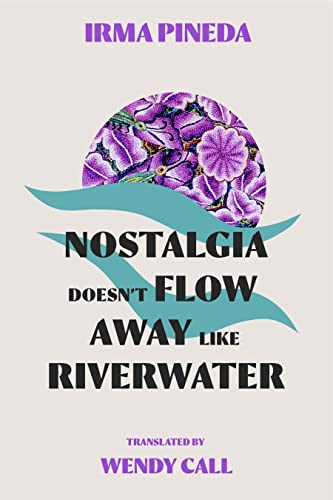
Nostalgia Doesn’t Flow Away Like Riverwater, a three-part sequence of poems by Indigenous Latin American poet Irma Pineda, breathes life into the painful situation in which many people in her own hometown of Juchitán, Oaxaca, have found themselves over the years. Pineda publishes her poems bilingually, in Didxazá, the language of the Binnizá (Isthmus Zapotec) people, and Spanish. She describes these two versions as “mirror poems.” In this collection, translator Wendy Call who has been translating Pineda’s work for many years, draws from both languages, with the close support of the poet herself, to create English translations. As she describes in her introductory essay, there are certain features of English that are closer to Didxazá than Spanish is, allowing her to reflect some qualities that cannot be maintained between the two original versions. The result is a simmering trilingual collection that offers even an unilingual Anglophone reader the opportunity explore and compare the very different appearance and tones of the poems as they appear in the three languages.

The poems in Nostalgia Doesn’t Flow Away Like River Water are divided into three sections of twelve poems each. They are “persona poems,” carrying the voices of two fictional characters from the poet’s hometown of Juchitán—one who has travelled north to the United States looking for work as an undocumented labourer, and their partner who has stayed behind. The poems speak to the impact of ecological pressures, climate change and pollution on the local fishing industry, as a main driver of migrants, men and youth, out of the community, leaving those who stay to try to hold on to their traditions for future generations and for those they hope might return. As Pineda explained to Call, “I create poetry as a way to keep collective memory of my culture alive and to reflect on what is happening to our culture. When I say ‘our culture,’ of course I’m also referring to the earth and the sea.” The river, the sea and the soil all feature in these poems, as do references to Isthmus Zapotec legends and stories.

The first part of this work, MY HEART IN TWO / Chupa ladzidua’ / Dos mi corazon, chronicles the migrating partner’s decision to leave. The reluctance to leave and sadness of those who must let a loved one go is palpable. The inevitability of homesickness is understood from the first poem onward:

Pack your suitcase well
leave the pain here
.                I will take good care of it
leave the nostalgia
.                so it won’t make you sick once you are there

– from “The Suitcase”

At the same time, the uncertainty of the fate that lies ahead of the departing partner weighs heavily:

Doubt wounds me
not knowing which rocks
I must stumble over
not knowing which paths lead
to my destiny
no way to stare
my future in the face

– from “Doubt”

The closing poems of the first section see the migrant departing before daybreak to make it easier on themselves and those who must stay behind. Part II, ON THE PATH / Lu neza / Sobre el camino chronicles the journey north while the character remaining behind speaks of the forces that have led so many to leave and the changed face of the village:

Where did its lifeblood go?
Did its unbearable silence scare away
the dogs?
There are no children in the street,
not even the robbers prowling the roofs
Even the birds have gone away…

– from “The houses of your village have eyes”

In the pieces in this central sequence the sense of absence and distance becomes increasingly evident. Far away from all they have known and loved, the feeling of homelessness and alienation settles on the migrant:

I don’t know which hurts us more
the misfortunes we left behind
or those we find here
becoming invisible
no one looks into my black eyes
no one hears the songs on my tongue
is my brown skin transparent?

– from “Many full moons have passed”

If the second part is transitional in relationship to place and form—somewhat direct and contained—the third, THE DAY WILL COME / Zedandá tí dxi / Un dia llegará, is intense in emotion and energy, similar to the first but more so. The longing is more desperate, tears flow freely, at home and abroad, and the migrant worries that if they are ever able to return will they be forever ruined by their experience in the north. Yet, for the partner waiting back home in southern Mexico, there is no question that welcome awaits no matter the circumstances. Nostalgia is a force pulling on both sides, a desire to be together where they belong is strong:

             You will return to me
lugging your heavy bags
in clothes woven of pain
and words carried from the other side
You will return with strange rhythms
unrecognizable thoughts
I won’t hold fear in my hands
but rather my heart’s song

– from “The days won’t end”

Nostalgia Doesn’t Flow Away Like Riverwater is a very special collection that lays bare the painful decisions that migrants face and the risks they take to provide a better future for their families, while exposing the sacrifices made by those who stay behind. By publishing her poetry in her native tongue, Didxazá, and in Spanish, Pineda is not only writing of and for the Binnizá (Isthmus Zapotec) people, but inviting others to hear their stories. Now with this trilingual edition, English language readers have the ability to appreciate this vital poetic conversation at a time when we need to be listening to the voices of others more than ever.

Nostalgia Doesn’t Flow Away Like Riverwater / Xilase qui rié di’ sicasi rié nisa guiigu’ / La nostalgia no se marcha como el agua de los ríos by Irma Pineda in Didxazá (Isthmus Zapotec) and Spanish with English translations by Wendy Call is published by Deep Vellum & Phoneme Media.
Journey into the distant past: Newton’s Brain by Jakub Arbes

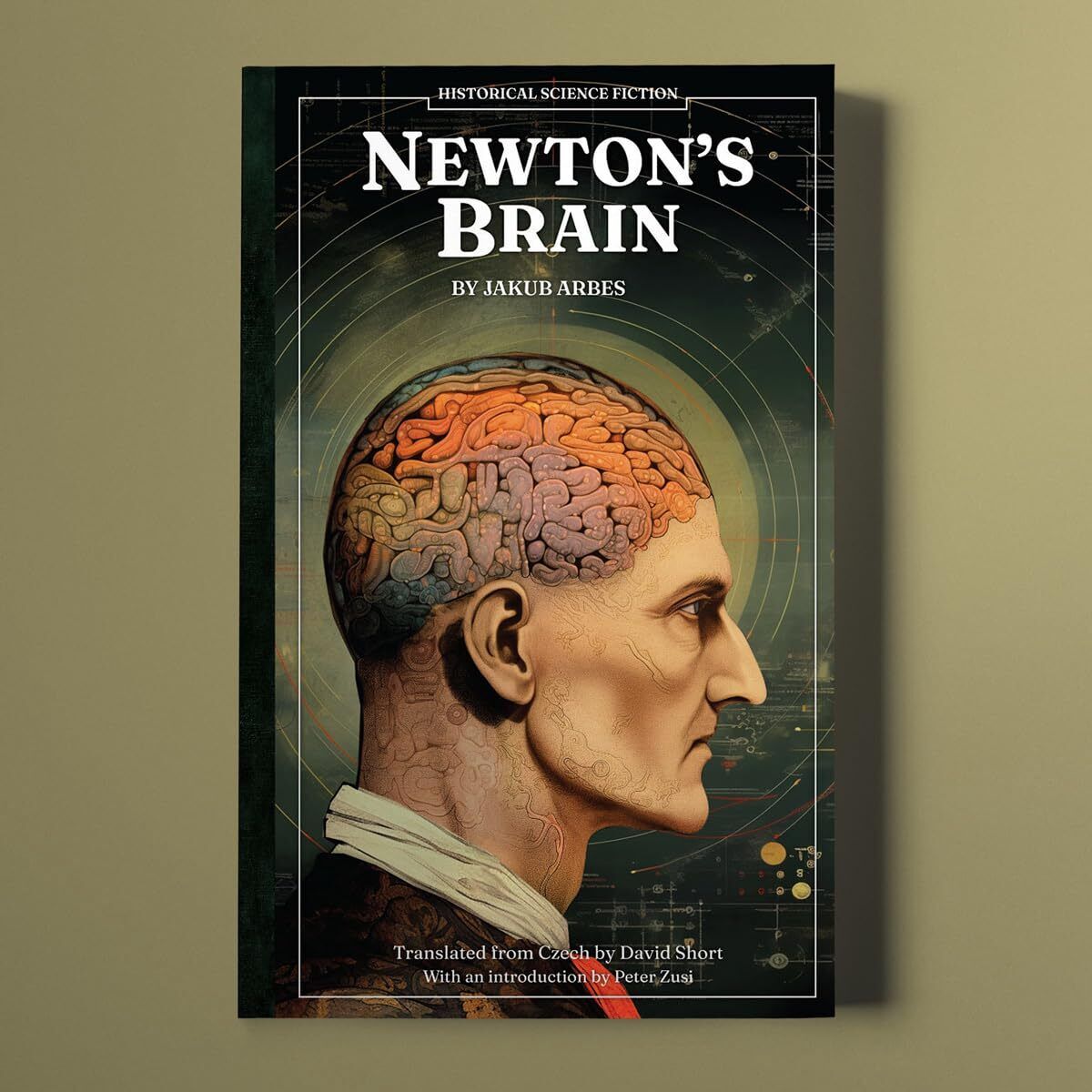
G. Wells’ first novel The Time Machine, published in 1895, has long been considered not only one of the earliest works of science fiction, but the popularizer of the notion of time travel. It was a concept Wells had explored in short fiction some seven years earlier, but in 1877, a full eighteen years before his landmark novel was released, a Czech writer and intellectual named Jakub Arbes (1840–1914) had already depicted a machine designed to peer into times distant in Newton’s Brain, a very short novel the author described as a “romanetto.” Now, as part of their new Historical Science Fiction series, Jantar Publishing has issued this underappreciated text in a new translation by David Short, complete with a fascinating introduction by Peter Zusi (as a note of interest, the earlier 1892 translation by Josef Jiří Král is available from Sublunary Editions).

As Zusi indicates in his introduction, time travel narratives were rather popular in eighteenth and nineteenth century literature, but ghosts and supernatural influences were typically called upon to explain a protagonist’s encounter with past or future events. The time machine, by contrast, depends on scientific reasoning to lend a degree of credibility to the premise that one might disrupt normal chronological progress. For Arbes, Zusi suggests a very likely inspiration for the particular idea of time travel that underpins his story. In 1846, a small pamphlet called The Stars and the Earth; Or, Thoughts Upon Space, Time and Eternity was published in London and became a sensation. The work, attributed to Felix Eberty (1812–1884), a Berlin-born lawyer, author and amateur astronomer, is thought to have influenced Kafka and Einstein. It seems quite possible Arbes would have read it as well. Eberty takes the already accepted notion that the light we see from faraway stars has travelled a long distance so to look into the night sky is to look into the past, and argues that if one could travel sufficiently far from the earth, it would be possible to view our planet’s past, including all of human history. Arbes presents a similar notion, one that, for both men, assumes the ability to travel faster than the speed of light and the existence of a device powerful enough to permit the observation of small details over vast distances. Charming to today’s reader perhaps, but not implausible to nineteenth century audiences. And, Zusi points out that although Arbes takes more literary license in his work, he is actually more aligned a modern scientific perspective than Eberty whose goal was a greater understanding of God’s omniscience and thus limited to a Biblical timescale. Arbes’ universe is 30 million years old and, at least in this book, his view of human nature and progress rejects all mythological constructs.  However, specific scientific considerations aside, the primary stylistic influence on the tale that unfolds in Newton’s Brain lies in the gothic mystery and macabre spirit of Edgar Allen Poe.

The narrator invites his reader to the “whimsical” tale he plans to tell from the allegorical graveside of a man whom he insists would have welcomed release from the sorrow and distress that troubles the human soul—a man who would not have wanted to be mourned:

The man of whom I speak was my friend from earliest childhood, and he died – or more properly fell – at the Battle of Sadowa as an officer in the Prince Constantine infantry regiment. His skull had been split in two by a Prussian pallasch…

This friend was the handsome son of the head gardener for the wealthy Kinsky family in Prague, while he, the narrator, was, by comparison, poorer and “hideous,” but the two young men had been close since boyhood. Both exhibited a lively enthusiasm for exploration and debate when they were young, and eventually they were each drawn to the sciences. However, being the plainer of the two, the narrator “leaned towards dreary, tedious and rarely amusing mathematics,” while his dashing companion pursued the more exciting natural sciences. Yet, his friend not only studied physics, chemistry, and mechanics, he collected and poured through volumes of arcane and obscure philosophical works as well—all with one singular objective: to master the art of illusion. He is, in fact, so obsessed that his formal studies suffer, a circumstance that ultimately causes his family, who know nothing of his passion for magic, to insist he enlist in the army.

Before leaving to join his regiment, the newly enlisted soldier collected all of the books and equipment he had purchased over the years and stored in the narrator’s room and had it carried away. Soon he is called into active service and their once inseparable friendship falls victim to the distance of time and space. Several years pass before the narrator hears from his friend again. Two letters arrive, the second containing an odd request to be fulfilled should he die. If his wishes are followed, his friend writes, they will see one another one more time.

Soon after, war is declared between Prussia and Austria. The next notice to reach the narrator is a letter from the parish priest in the town of Nechanitz, to inform him that a critically injured, unidentified young man has been brought in to his care. A letter found in the soldier’s uniform bearing our protagonist’s address was the only means by which they could track down his identity.  The narrator travels to the town, recognizes his friend and is there to witness his burial. He returns to Prague devastated by the loss. In his grief, he resumes his once abandoned studies, now focusing his attention on applied mathematics and astronomy. But, of course, this is not the end of the story.

One night, the narrator’s friend appears at his door:

Without uttering a word, my friend stood there, motionless, while I was unable to tear my gaze from him.

His face was deathly pale, but his clear, blue eyes radiated life and a light, amiable smile played upon his lips.

“Good evening,” he said after a while and took several steps forward.

Catching the clink of a sabre I registered that he was wearing an officer’s uniform.

His friend insists that he escaped death, that the fallen soldier was another man altogether, and now, that very evening, he is hosting an event at the Kinsky chateau to which all of their friends have been invited. He must hurry back but invites the narrator to come as soon as he is able.

The evening at the chateau is strange, marked by elaborate illusions, the incredible assertion by returned or seemingly resurrected soldier that he has procured the brain of Isaac Newton and had it installed in his own skull, and a long speech to a room filled with officials, academics and theologians in which he systematically critiques modern society and tears apart the so-called advances of human knowledge and technology. Finally, he reveals the existence of a driver, realized with the assistance of the wisdom contained in Newton’s grey matter, that will allow him to travel back in time to observe selected moments from human history. Is this perhaps the greatest invention ever, or the most sophisticated deception?

Arbes’ narrative is moody and atmospheric, his narrator alert to his own emotional and psychological state. As he tells his tale, there is much room for speculation woven in the account. Cleverly, Arbes makes his time machine inventor a young man with an eccentric enthusiasm for magic, sleight-of-hand and a vast range of scientific and philosophical knowledge, practical and arcane alike. This allows for possible interpretations, closing none entirely. It is also an often biting commentary on religion, politics, education and, in particular, man’s capacity for violence. The Time Machine may be better known today, but while Newton’s Brain’s inventive hero sets his sights back to the very origins of human community and Well’s time traveller takes a journey into the incredibly far flung future manifestations of humanity, both men were skeptical about the promises of technology and the evolutionary potential of humankind.

Newton’s Brain by Jakub Arbes is translated from the Czech by David Short with an introduction by Peter Zusi. This attractively illustrated and generously annotated edition is published by Jantar Publishing. It is available in the UK now and will be out in North America next month.

Farewell to 2023 with the annual list of favourite reads

In my small corner of the world, away from forest fires raging, earthquakes and wars continuing and erupting anew, I read some very good books. 2023 was, world events aside, a complicated year, which is to say, a very human one. Within my extended family there were life-changing diagnoses and surgeries, but all in all, we’ve been fortunate to access care within a health system buckling under the strain that is far from unique. And I finally returned to India for a visit, my first trip anywhere in four years, which was a much-needed opportunity to connect and re-connect with many friends, and even take a little time to explore on my own. But travel did cut into my reading, as one often imagines that with all that time spent flying and waiting for flights, books will be avidly consumed, but that’s not always the case. And then, when I returned home, just days after the events of October 7, a renewed politically motivated awareness started to influence my reading choices and appreciation, something that will no doubt continue into 2024. If one sets out, as I do, to read with a special interest in works and authors from outside my own experience, especially in translation, reading widely and intentionally should ideally be a guiding factor.

So what of 2023’s reading? I read just over 60 books, a number I’m satisfied with. I wrote reviews or responses to 48 of them. The majority of the books I chose not to review are books of poetry, in large part because I do not always feel confident that I can add something meaningful to the conversation about such works no matter how much I might enjoy them and return to them often. (Perhaps this year I can gather some of my favourite “unreviewed” collections into  a special post.) Nonetheless, for the purposes of this annual exercise, I selected 14 books  that I particularly enjoyed or wanted to call extra attention to.  It includes four nonfiction works, nine fiction and one poetry collection. Ten books are translated literature, while four are written English, although one of those is a book about translation.

Listed chronologically according to date read, I’ve divided my 2023 favourites into two categories—books I particularly enjoyed and, then,  my top five:

Journey to the South – Michal Ajvaz (Czechia) translated from the Czech by Andrew Oakland
This wild murder mystery/adventure that begins with a murder during a performance of a ballet based on Kant’s Critique of Pure Reason was my first introduction to Ajvaz’s idiosyncratic story with a story within a story narrative form. I definitely want to read more.

A Mountain to the North, A Lake to the South, Paths to the West, A River to the East
– László Krasznahorkai (Hungary) translated from the Hungarian by Ottilie Mulzet
The historical details that emerge in this dream-like journey in search of a mystical Buddhist monastery have lingered with me with all the misty beauty of the initial reading experience.

 Falling Hour – Geoffrey D. Morrison (Canada)
This strange and wonderful tale of a man trapped within an urban park is both smart and funny in just the right measure.

The Postman of Abruzzo – Vénus Khoury-Ghata (Lebanese-French) translated from the French by Teresa Lavender Fagan
As one of my favourite writers, it is difficult to imagine compiling a list like this without including Khoury-Ghata. This sharp, spare tale of a French woman who finds herself in a community of displaced Albanians in southern Italy in search of a connection with the work of her dead geneticist husband so that she may heal, is charming and profound.

All The Eyes That I Have Opened – Franca Mancinelli (Italy) translated from the Italian by John Taylor
Another favourite, a poet whose works always seems to speak directly to me, I would be hard pressed not to include her at year end, but this collection with its central image inspired by the eye-shaped scars on the trunks of trees continues to haunt me every day as I pass aspen trees on my walk.

river in an ocean: essays on translation – (Canada) Various authors, Nuzhat Abbas (ed)
The importance of this feminist decolonial project—a rich collection of essays on translation by writers with origins in the global South—was intensified by the changing world events that marked my reading, my review and every day since then. Vital and necessary.

A significant number of my favourite books of the year were read in the final months of the year, and hold political relevance for me by virtue of my desire to listen to the voices of those impacted by violence, occupation and genocide. The following three included:

Passage to the Plaza – Sahar Khalifeh (Palestine) translated from the Arabic by Sawad Hussain.
I have read a number of very powerful works by Palestinian writers and poets over the years. In search of more female voices I was drawn to this work by a new-to-me author who, fortunately, has been widely translated. Set, written and published during the First Intifada, this novel is the rarely told story of the impact of the events on women.

Tali Girls – Siamak Herawi (Afghanistan) translated by the Farsi by Sara Khalili
Based on true stories of girls and women in an isolated and impoverished region of Afghanistan under growing Taliban control and local corruption, this almost folkloric narrative is swift, devastating and, ultimately, hopeful.

Landbridge [life in fragments] – Y-Dang Troeung (Cambodian-Canadian)
Born in a Thai refugee camp just across the border from Cambodia, Troeung gathers memories, documents, photographs and artworks to tell the inspiring and difficult tale of her family’s survival against unspeakable horror, their lives as refugees in Canada, and her own personal journey to explore her own history in a world that, as we can see today, is reluctant to acknowledge genocide.

* * *

My top five reads of the year:

The Last Days of Terranova – Manuel Rivas (Spain) translated from the Galacian by Jacob Rogers
This was the first book I read in 2023 and I knew right away that it would be hard to beat.  Employing a narrative style that rewards the attentive reader, this is essentially the story of a family bookstore, the eccentric characters that pass through and their involvement in making banned literature available during the Franco years. I loved it.

The Book of Explanations– Tedi López Mills (Mexico) translated from the Spanish by Robin Meyers
As someone who has exclusively written and edited nonfiction, I am more often than not disheartened by the personal essays, book length or collected, that I try to read. This series essays exploring the nature of memory and identity blew me away. I don’t know if it was the innovative approach or the degree to which I related to the themes, but this is an excellent, innovative work.

The Geography of RebelsMaria Gabriela Llansol (Portugal) translated from the Portuguese by Audrey Young
This enigmatic work is simply a haunting and profound reading experience in which historical and imaginary figures interact in a world out of place and time, yet linked to faith, books and ideas. I can’t wait for her diaries to be released later this year.

AustralCarlos Fonseca (Costa Rica) translated from the Spanish by Megan McDowell
Another favourite author, Fonseca delights in intelligent, complex narratives that appear, on the surface, deceptively simple. Austral is perhaps his strongest work to date and, given that he is still a very young writer, I look forward to what may be yet to come.

We the Parasites – A.V. Marraccini (US)
As per what I said above about nonfiction, I approached this book with my usual essay wariness coupled by the fact that it was presented as a book about criticism. But everyone else is right, this is a singular piece of writing. Intelligent and completely original.

So, there you have it. As ever, many other excellent books from this year’s reading had to be left out but contributed, all the same, to a very satisfying literary year. This year I focused on Archipelago Books and will continue to read their publications with enthusiasm. I’ve found that looking at publishers rather than specific titles I hope to make my way through as each new year dawns is a good approach. To that end, I need to pay a little attention to some of the Dalkey Archive and NYRB books that I have been accumulating, among the many other works from worthy independent publishers that I do, and always will continue, to seek out. And, of course, all plans are subject to change, so I will commit to few.

Happy New Year. May there be peace in 2024.

And something went terribly wrong: Truth/Untruth by Mahasweta Devi

Arjun Chakravarty has everything under control. As a successful contractor, skilled in the necessary art of greasing the right palms, business is booming, and finally, after ten years of marriage he and his wife are expecting their first child. Kolkata in the 1980s is booming. A determined project of gentrification is underway; everywhere high-rise buildings are sprouting up, even in neighbourhoods long considered derelict and undesirable. Like Khidirpur, a well-known den of crime and smuggling. Denying the odds, towering housing societies boasting spacious flats equipped with all the latest appliances stand proud, like Barnamala where our unfortunate hero resides and the setting of Bengali writer Mahasweta Devi’s Truth/Untruth.

A self-named man, Arjun came into the world as Sanatan Pushilal. But Sanatan was a moniker unworthy of the man he wanted to be. Orphaned young and impoverished, his uncle found him student lodgings with a noted karibaj, an Ayurvedic practitioner, and this fortunate placement was his first step toward a new identity. That is:

How Sanatan became Arjun. And how, erasing the past, Arjun slowly rode the lift of high aspirations all the way to the twelfth floor of society . . . all that is but ancient history now.

With his old landlord long gone, only his son Keshtokali, likewise a karibaj, knows the truth about Arjun’s past. Fortunately, even his wife Kumkum, the daughter of a retired Supreme Court judge, has no interest in either Ayurveda or her prosperous husband’s history. Yes, Arjun-babu has it made. Until something goes terribly wrong.

You see, his wife, now eight months pregnant, has been staying with her parents where she can be pampered and protected while she awaits the arrival of their precious bundle—at thirty-five no one wants to see anything go awry. Thus, left to his own devices, Arjun-babu has been able to indulge his passion for Jamuna, the pretty young maid who comes by daily to clean the flat. Imagine his dismay, then, when she arrives to inform him that she is pregnant with his child. Something must be done, he must make the problem go away. Jamuna’s own husband left when he lost his job, but she still believes he will return. Arjun will arrange for a proper doctor to take care of the unwanted pregnancy, pay her off and hope she leaves, but before he can see his plans through, he comes home to find her dead on the bed in his guestroom.

He knows he didn’t kill her, but he can’t exactly go to the police. If he had killed her, well, that would be a different matter. For the right amount of money the police could take care of anything. But, if word gets out that she was found in his flat, his reputation, his business, his wonderful life—all would be ruined. Even a rumour of murder would do him in; after all she would hardly be the first “murdered” maid to be found in his building . . . Ah, but Jamuna also worked in two other adjacent flats, one belonging to an old man named Desai and his crazy wife, the other owned by a tobacco company and cared for by Mohsin, a local Muslim man. Maybe Arjun could shift the blame, simply by moving the body.

This farcical and fast-paced thriller unfolds over little more than forty-eight hours, and features a cast of vibrant characters from the silly Kumkum and her over-protective family, to a host of servants and building staff, to petty thugs and mysterious “bosses.” The complicated power dynamics between the established rich, the nouveau riche and the slum dwellers who provide necessary labour and services, legal and otherwise, for the residents of the new buildings is clearly exposed. However, we observe most of these people indirectly, as the narrative is driven almost exclusively by dialogue and by the internal monologues of the central male figures—the three men in the building who directly or indirectly employed Jamuna. By this approach, Devi is able to reveal the very different natures of each of these individuals, but her primary attention falls on Arjun who is the most incredibly hollow and self-centred creature, continually twisting his line of reasoning into pretzels to absolve himself of the slightest responsibility for anything that has happened. Jamuna might be dead, but he is the real victim as far as he is concerned—everyone else is to blame.

Arjun divides the blame up in his mind. The astrologer is to blame, he’d never once warned him that bad times lay ahead. Keshtokali is to blame, he gave him such a stimulant that his mind was always full of . . . and Jamuna, isn’t she to blame too? Why did she have such a body, such a way of walking and talking?

He is, by turns, irritating, hilarious and tragic.

Mahasweta Devi (1926–2016) was one of India’s most prominent writers and  social activists. If somewhat different in tone from much of her more openly political, feminist work, her dry humour and ability to highlight insincerity and hypocrisy is in full play in this dark satire. Her prose is rich with insider street slang and allusions to popular movies and songs of the day (necessary references are explained in the endnotes). She is assuming a certain familiarity with the time and place she’s writing from, but is not concerned about making her more genteel readers work to sort through the common language many of her characters employ. In her afterword, translator Anjum Katyal acknowledges the challenges involved in trying to capture the different registers of spoken language—critical in a narrative so dependent on dialogue—without falling into unacceptably “twee” English variants. She does give Jamuna and her close friends a coarser and cruder vocabulary which contrasts nicely with the sometimes overly-affected language that Kumkum and her family use in private settings. Arjun, being the most eccentric and erratic of the cast, is granted a range of emotional expression from the obsessive to the absurd.

A rollicking urban tale, terrifically fun to read, Truth/Untruth blurs the line between murder, mystery and crime novel but from beginning to end, amid the tension and comic mishaps, it remains a sharp piece of social commentary.

Truth/Untruth by Mahasweta Devi is translated from the Bengali by Anjum Katyal and published by Seagull Books.

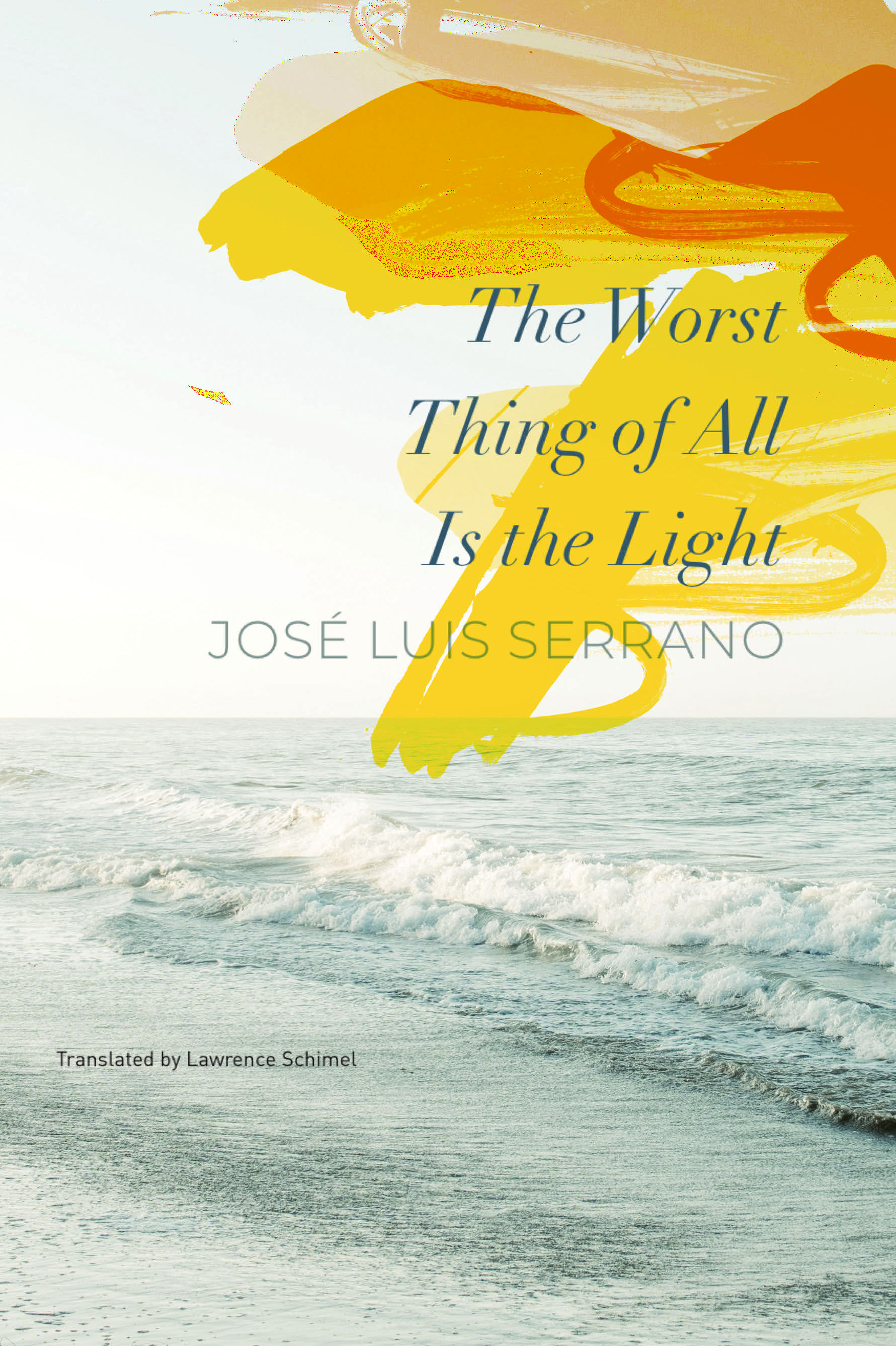
What is important is to love: The Worst Thing of All is the Light by José Luis Serrano

The worst thing of all is the light because it’s always the same, but we are not ever the same, and then that light reminds us of the others we were before, once, those others who did things that now we would not do, that we don’t admit to having done. In spring, the light of a clear, bright day, when the wind has left the air clean and pure, leads us to clearer days, days of youth, of holidays. Or that yellow light of autumn, also clean, sharp at the final hours of the afternoon.

Light, light, light. Such is the thread along which the thoughts of Edorta, a middle-aged man, run through the course of his free-flowing poetic reflections, a diary of sorts, addressed to, but not meant to be read by, his long-time friend Koldo. As he reaches for a way to understand and articulate his tangled and conflicted feelings, light serves as a mechanism of memory, sometimes consoling, at other times cruel. But Edorta’s musings are only half of The Worst Thing of All is the Light, an inventive, metafictional novel that sets an exploration of the boundaries between friendship and desire against a parallel examination of the relationship between imagination and reality.

Edorta and Koldo are the creations of Spanish writer José Luis Serrano, but within this double stranded novel, they are also the evolving characters taking shape in the mind of an “author” who is, presumably, a fictionalized representation of Serrano himself. In a series of journal entries, the author/narrator records the activities and conversations that mark each day of a vacation he and his husband are spending in Bilbao. His report, which details where they go, what they eat and what they talk about, is addressed to his husband directly, with the all familiarity two decades together has wrought. These dated entries, each illustrated with a scenic photograph, occur over the course of ten days in August of 2014 and appear to set up the proposed novel the author is planning to write: the story of a very close friendship—one that might even be described as love—between two heterosexual men. He’s not sure if he will be able to pull it off (his husband is even more skeptical) but he knows it will require an inventive approach, perhaps one that plays a fragmented diary of some kind against an author’s journal within which the potential narrative structure and details are formulated and debated. His husband plays the foil, devil’s advocate and, sometimes, the anxious spouse:

“But then, aren’t you going to write a normal novel?”

“I never write a normal novel. What’s more, I’ve always made it clear that I’m unable to tell a story, There will just be snippets, bits of what could have been the novel. Perhaps a diary by Edorta.”

“And these dialogues.”

“That’s right. Perhaps not these, but others I make up based on these.”

“And will I be myself? I’m worried about being myself in your novel, worried that you’ll put me in your novel.”

With chapters that alternate between the author’s journal and Edorta’s diary, the novel that exists is the one that the author is planning to write—the final project and a self-conscious analysis of that project in its formative state. This is where the metafictional game lies, where the boundary between literature and reality blurs and where questions about the “fictional” characters, their relationship, and the nature of love and attraction arise. As the author and his husband debate the possibility of platonic desire between men from the outside in so far as they can intellectualize beyond their own homosexuality, Edorta explores the matter from within, in trying to articulate the quality of his affection for Koldo while holding to an assumption of his own heterosexuality.

Edorta’s diary offerings are undated; each one is named after a song released by the Bristol-based UK independent Sarah Records(1987–1995), and opens with the artist name, catalog number, and a few lines of lyric. These sections resemble a form of stream of consciousness, admittedly composed in writing, but unfolding without clear direction or specific chronology as if Edorta is trying to sort out his feelings on the page. Consequently, allusions—to the light in particular—and scenes from the past are revisited repeatedly. Where he is writing from, temporally speaking, is intentionally vague, though he does often correct himself, pulling out of his revery to recall that adult life, relationships, and children have made the endless days of youth but a memory. Their occasions to actually be together are now few and time-constrained. His longing is palpable, his prose dense with fervid imagery:

Today I lug the grief of not being able to say the unsayable, fighting with the anguish of being and not wanting to be, of sinking into oblivion forever or of turning back, before even being, before myself, where there is not even oblivion. Life breaks loose from the poplars in tatters, and the branches, outlined in green-black shadows, shrink inward in their extinction of dying rapture, paralysed, surprised by the cold of November, overwhelmed in its frozen casket of gargoyles and waits.

The confluence of a grown man’s sense of loss with an adolescent ardor enhances the interrupted, unstructured memories and reflections that the novel’s “author” seems to want to capture with Edorta’s diary passages.

The two alternating streams form an intriguing novel that presents itself—openly—as a meditation on the nature of attraction, love, and memory within a discussion of the questions that arise in the process of formulating a story that a writer wishes to tell. But does it work as a cohesive whole? Certainly neither half of the equation—the author’s descriptive vacation diary or Edorta’s endless poetic entreaties to Koldo—would hold as a sufficiently interesting narrative on its own. Yet together they complicate one another, less to provide one complete story (even with the metafictional reshuffling of expectations that occurs as the novel nears a close) than to continually raise questions about the exercise of creating and inhabiting characters to flesh out a story that an author may or may not be able to realize. As such, much hinges on the idea of platonic love and the degree to which sexuality influences the way one conceives of and is able to realistically depict an attraction that differs from one’s own.

Are Edorta’s feelings for Koldo of a different order than anything his friend can ever return? On several occasions he tries to reassure himself that they are not. Certainly he recalls and cherishes moments of intimacy that seemed to have distressed and embarrassed Koldo. But he is unable to let go of the need to define and claim his love, whatever it may be, even if he would not be the first person, regardless of orientation, to be hopelessly attracted to someone who, shall we say, plays for “the other team.” Of course, as the author’s creation, one has to ask, who exactly—Edorta or his creator—is unable to accept that their affection for the other might just be of a different order? The author’s admitted obsession from the very beginning of the novel is: “What is important is to love whether or not it’s reciprocated.” However, if, at the end of the day, to love truly is enough is a question that may prove easier to ask than to answer.

The Worst Thing of All is the Light by José Luis Serrano is translated from the Spanish by Lawrence Schimel and published by Seagull Books as part of the Pride List.

Good news doesn’t come easy in this land of ours: Tali Girls – A Novel of Afghanistan by Siamak Herawi

The girls of Tali are beautiful. They have long hair, large almond shaped eyes, and skin the colour of wheat. They grow up learning to cook and sew. At seven, some are taught to embroider as well. They stitch and seam and sing together. And when they reach puberty, they fall in love with the sunburned boys who wear their skullcaps cocked to the side and play their reed flute as they scale the mountains shepherding goats and sheep and stealing young girl’s hearts.

Siamak Herawi’s Tali Girls opens with a disturbingly vivid account by his central character,  Kowsar, of one of her earliest memories. She offers it as an illustration of the condition that has plagued her for as long as she can remember. She is walking with her mother when a grizzled old man from her community comes up and kneels before her. He whispers, “Kowsar, I could eat you.” Before she can resist, the foul man has devoured her, leaving nothing but a pile of bones. When she comes to, in her mother’s arms, we realize she’s had a fainting spell complete with hallucination. Her family has been advised it’s epilepsy, but doctors are expensive and her family, like everyone else in her village, is poor. Once the harvest is complete, her father takes her into see a mullah in the nearby town. His appearance and manner is frightening to the child and, as he pronounces his call for the demon to leave her, waving his dagger in the air, she is lifted out of her body and watches as he slices her to pieces. Episodes marked by fever, convulsions and loss of consciousness will continue to strike Kowsar in moments of extreme distress, but the graphic visions that accompany these first two incidents stand as something else—a foreshadowing of the very real violence that lies ahead, especially for women, in a world where extremist fundamentalism is on the rise.

Set in Badghis Province in northwestern Afghanistan, Tali Girls is based on true stories and revolves around Kowsar and her friends Geesu and Simin, three young girls growing up in the village of Tali in the impoverished Jawad District. Although it is well into the first decade of the twenty-first century, the community is without electricity, plumbing or paved roads. The residents are farmers and shepherds. Conditions do not improve much over the course of this novel; in many ways they deteriorate greatly. But for three short years, the children of Tali will at least have the opportunity to go to school—if their families can spare their labour at home, that is. For Kowsar who demonstrates exceptional academic aptitude and a prodigious memory early on, her gifts could be her ticket out of a society in which women are married off young and typically spend their lives bound to the demands of home and husband. Unfortunately, her teacher’s effort to advocate for her in the provincial capital, does not succeed. Rather it turns the attentions of a powerful and hideously evil mullah to Kowsar and her little village, the first step in a series of events that will, over the years to come, have a devastating impact on the lives of the girls, their families and the peace of their little valley.

In clear, crisp prose with a tone that is almost folkloric, Herawi weaves a tale of rural life in contemporary Afghanistan that honours both the beauty of the landscape and the stark realities—internal and external—that have impacted the population over the years. For the poor farmers, conditions are harsh but it has long been a society designed by and for men, so often the only control they can exercise is over their wives and children. Women are restricted in their movement outside their homes and, in some communities, even inside their houses where they are not to be seen by any males who are not part of their immediate family. Without power or running water, traditional customs continue. Food and tea is prepared over fires, bread is baked in kilns and, when company is present, refreshments are left outside the doors of the rooms or guesthouses where men gather. Young, often prepubescent girls can be bartered for or purchased as brides for powerful mullahs and Talib leaders while the aging wives they have at home are pushed into increasingly subservient roles. And, if a woman’s fate was difficult before the Taliban’s presence expands, as they become a permanent fixture in Tali, taking over the schoolhouse and filling the fields with poppies, it becomes even more circumscribed. Excessive religious prohibitions are strictly enforced. But within this world, Herawi grants his female characters a strength and resilience that is not easily defeated, even in the face of unspeakable evil.

Kowsar, who is gifted, prone to fainting spells and a bit of a risk taker, is the primary first person voice in this multiple narrative in which, alternating with chapters told from a third person perspective, various characters pick up their own accounts as the action focuses on their particular experiences. Throughout, Kowsar is the voice of hope, however faint at times, in a story that is punctuated by moments of terrifying violence. The prose style is light, poetic and almost folkloric in tone, carrying a story that is at once a coming of age tale, a horror story, a love story and an adventure with action that moves across a mountainous landscape, from lush valleys to harsh deserts and back again. A decade and 380 pages pass swiftly, and it is best to say little in advance about what happens.

Through the dialogue and shifting narrative voice, Herawi has created an exhilarating novel with a relatively large cast of characters that we quickly come to care deeply about—or despise as the case may be. Some readers may feel that this is at the cost of depth and historical context, but much rests in the conversations between characters, as they share their hopes, dreams and fears. Mothers speak to their daughters and sons, with resignation, about the cards life has dealt them by virtue of their gender; Kowsar, who has had a wider access to books, expresses to Geesu how, the more she learns about the outside world, the more their own frightens her; a young man from a tribal community demonstrates an astute understanding of the current state of lawlessness in Badghis that has left the people caught between corrupt government officials and Taliban rebels:

“Back when the Taliban were first defeated and left, and a new government came into power, we though Afghanistan was finally safe and ready for progress. We though the Westerners who came with their money had freed us from living in limbo. But that sweet nectar soon turned into bitter poison. . . . It was all lies. Ignorant thieves left, cunning pillagers replaced them. And life here remains what it was. Every day, we have less security than the day before.”

Characters, scenes, and scenery propel this story forward. The result is a novel that is a vital portrait of simple people trapped by a shifting set of circumstances beyond their control.

Siamak Herawi is an Afghani writer born in Herat province who studied in Kabul and Moscow. After completing his masters in Russian language he returned to Afghanistan and started to work as a journalist. He then moved into politics, eventually taking on a diplomatic role at the Afghanistan Embassy in London. He resigned when Ashraf Ghani was elected in 2014 and presently lives in the UK. Tali Girls which was originally published in 2018, is his first work to become available in English.

Tali Girls: A Novel of Afghanistan by Siamak Herawi is translated from the Fasri by Sara Khalili and published by Archipelago Books.

The revolution isn’t a rocket but a river that flows and pours forth: Passage to the Plaza by Sahar Khalifeh

Each summer night in Nablus was just like the next: breezes pregnant with the scent of jasmine, dew and whiffs from the sewers. The municipality went to great pains: every morning the marketplace smelt like a freshly cut bouquet of the most fragrant flowers; however, by the time the afternoon rolled round—when the hustle and bustle had died down and the shops had closed and the rugs and carts had disappeared along with the cries of the hawkers—the city became a rubbish tip: crumpled papers, plastic bags, used tissues, piles of trampled fruit.

This is the setting of Sahar Khalifeh’s Passage to the Plaza. But Nablus is a city on edge. Originally published in 1990, this novel is not only set during the First Intifada (1978–1993), it was written and published in the middle of this period of upheaval marked by sustained Palestinian protests and rioting in Gaza and the West Bank. Born in Nablus in 1941, Khalifeh is one of the most prominent Palestinian women writers. As the fifth of eight daughters, she was well aware of the fate that awaited members of her sex but sought early refuge in reading and writing. Married off against her will, she endured a difficult thirteen year marriage in Amman, Jordan, during which she found it impossible to write. This changed in the aftermath of the Six-Day War in 1967—she not only published her first novels, but returned to school in her early thirties. Her work, which is centred around the lives of women, offers a wider female narrative than that often associated with resistance literature.

Passage to the Plaza, translated from the Arabic by Sawad Hussain, is a very immediate response to the circumstances of the Intifada through the intersection of the lives of three women and one man who come together in one unlikely location. There is Sitt Zakia, the midwife, an older woman who, by virtue of her chosen profession, is at once on the margins of society and yet central to the lives of the countless children she has brought into the world. She crosses class boundaries but, at the end of the day returns to the comfort of her hookah and her prayers. Her beloved nephew, Hussam, is a freedom fighter whose political indoctrination began young, inspired by his infatuation with a fashionable teacher. Samar, the baker’s daughter is a young woman with a university education and decent job. She is also an activist with a women’s movement. And, finally, Nuzha, living alone in a house rumoured to be a brothel, is the daughter of a woman who was accused of being a spy and publicly murdered. She is a true social outcast with a complicated past. When Hussam is wounded and finds himself at her door, her home becomes an unexpected sanctuary.

The three women in this novel represent different facets of the conditions women face in Palestinian society. Samar, a patriotic and hopeful twenty-six year-old, is conducting research into the impact of the Intifada on women’s lives and the answers her questions elicit from Sitt Zakia and Nuzha are telling. When asked how her life has changed, the midwife responds: “Honestly nothing much has changed for us except more worries. More worrying means more burning hearts. I pray for God to help us women!” She sees women out on the streets protesting, throwing stones and protecting the militants. But all of the old worries women have always carried still exist. Sitt Zakia’s own daughters are married and living in other countries and she hasn’t heard from them at all since the uprising began. Her more immediate worries involve her militant nephew who is on the run.

When Samar arrives at Nuzha’s house, survey in hand, her inquiries are greeted with anger and bitterness directed at Palestine, at the men who have let her down and at a community that has rejected her. Only one year older than Samar, her life has been impacted by a very different set of circumstances beyond her control. She is defiant and combative and slow to trust any kindness. Her greatest concern is for her younger brother Ahmed, a resistance fighter who is hiding somewhere outside the city; she longs for his return. While she shares her past with Samar, the wounded and feverish Hussam is in another room, listening from behind the door.

Hussam comes from a “family that was mediocrely rich, educated to a mediocre standard, mediocre in their claims to nobility and prestige.” His uncles went abroad and achieved success while his father took unethical advantage of their portions of the family land to present himself as a much richer man then he was. For Abu Azzam, his unconventional sister Zakia and rebel son were his sole sources of shame, not his own duplicity. For Hussam, his rebellion was fueled not only by his unrequited love for the beautiful and politically active Sahab, but reinforced by a series of arrests and periods of administrative detention—”a rite of passage for all young men”—that freed him from his boyish fears, ultimately pushing him toward the resistance. However, as the situation in Nablas deteriorates with an increased presence of Israeli soldiers, the imposition of curfews, establishment of checkpoints and construction of barriers, Hussam’s condition worsens, leaving him bedridden in Nuzha’s house, drifting in and out of consciousness. The female characters are the ones who must negotiate the challenges and dangers of the streets and the social expectations of their gender on their own.

As in all of Khalifeh’s work, women’s enslavement, lack of rights and fight for equality are important themes, but her female characters are complex, their motivations often at odds with one another. The pious Sitt Zakia, for example, despite her independence and estrangement from her brother, worries about protecting his reputation when her sister-in-law arrives begging for refuge from his cruelty. She sends Um Azzam back to her own house, insisting that it is where she belongs. Nuzha, abused by the men in her life, has been forced into a situation that causes her and her late mother to be despised by other women. She is rightly fed up with both sexes. Meanwhile, Samar, for all her ideological optimism, still dreams of love and a handsome husband to come home to her each night.

Khalifeh allows much of her story to unfold through interactions between her primary protagonists, occasionally punctuated with direct access to brief internal monologues that reveal emotions that often contrast with what is otherwise expressed or described. A natural tension builds by virtue of the complicated emotional responses the characters have to one another and to their own predicaments, but outside the particular house where most of the engagement takes place, action explodes in periodic episodes of violence—the women’s collaborative efforts to dismantle a barrier the soldiers have built, a beating Samar receives at home from one of her brothers, a deadly ambush—that raise the tension suddenly and intensely. This narrative style has an almost theatrical feel; the story moves quickly, shifting in unexpected directions. It is all reflective of Khalifeh’s in-the-moment manner of setting a story in motion amid critical historical events as they are happening rather than waiting for the dust to settle. If it creates a degree of uneasiness, if certain details are left unexplained, so be it. Through it all, the voice of the poet of resistance rings out, reminding us what is most critical:

Golden days like those of a birthday. In a revolution, one is born a hundred times and dies a thousand more. The revolution isn’t a rocket but a river that flows and pours forth. Sometimes foreign aid sinks, rain becomes scarce, the river goes through difficult times, drying up, seeming fine as a silk thread. Other times it breaks forth, like a turbulent volcano, sweeping away all in its path, deafening. Oh generous sky, oh angry earth, anger that, like a storm, chooses its hour. Then the cycle comes to an end and goes back to how it was: the river becomes an oscillating thread again, the revolution returns to reality, the boulder tumbles back to the bottom of the river and Sisyphus picks up his load once more.

Reading this book while Israel is waging war in Gaza offers a reminder that nothing is new. One is forced to remember this novel was published in 1990. There are lines uttered here, during the Intifada, that could just as easily appear on social media today. The desperate plea Nuzah utters toward the end of the book hits especially hard, some thirty-three years later: “Enough of God, Mohammed, Essa, Musa, Red Cross and the UN. No one sees or hears. Since when has the world thought of us as humans?”

Passage to the Plaza by Sahar Khalifeh is translated from the Arabic by Sawad Hussain and published by Seagull Books.

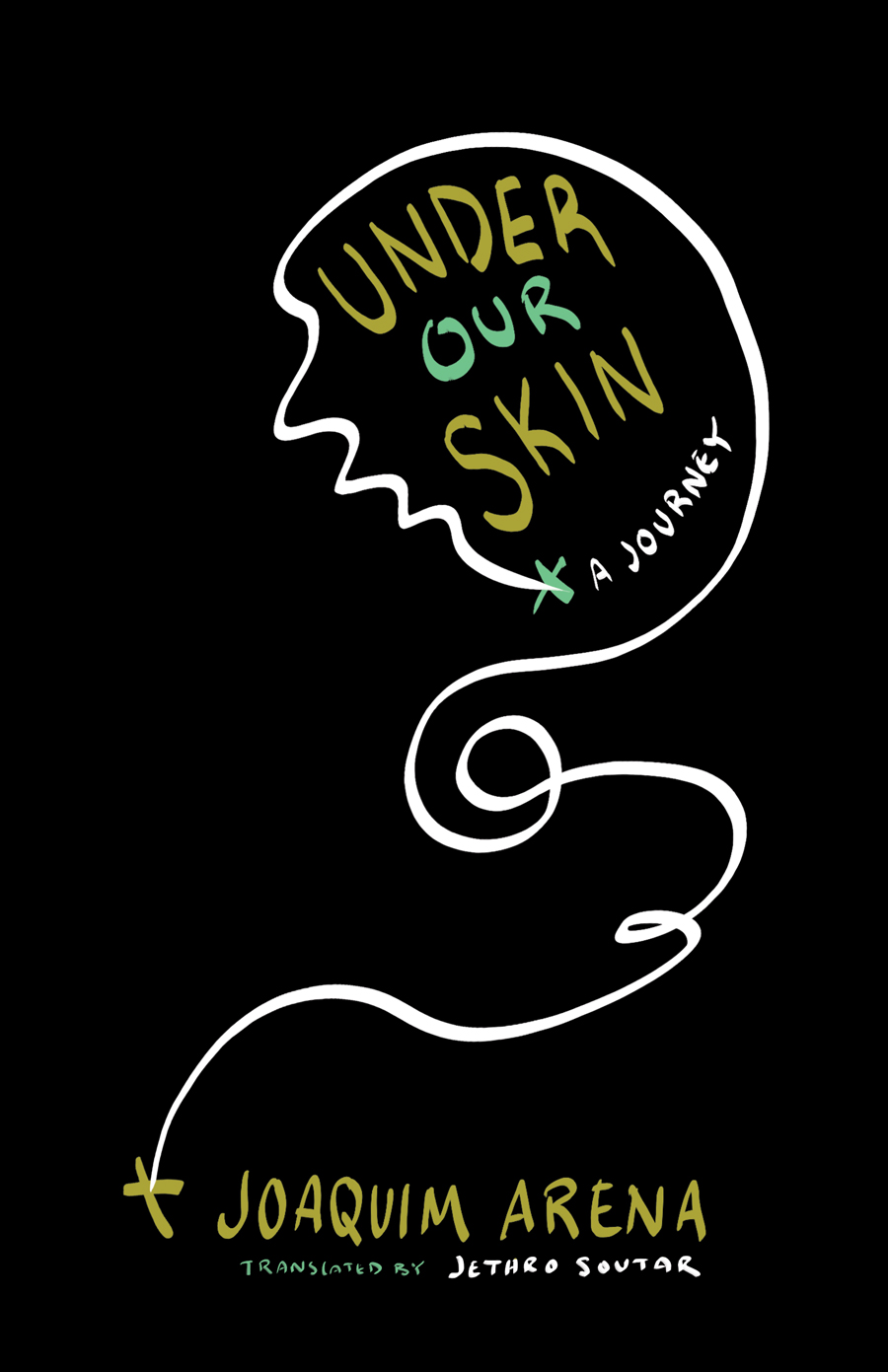
In the footsteps of the man pretending to be me: Under Our Skin – A Journey by Joaquim Arena

The first large group of captured and enslaved Africans arrived in Lagos, a maritime town on the southern coast of Portugal on August 8, 1444. The shipment of 235 men, women, and children marked the establishment of the earliest slave market in Europe, and a segment of that initial African population would end up in Lisbon. A century later, Black Africans would not be an uncommon sight in the city, as colonial Portugal became a major player in the growing trans-Atlantic slave trade. A street scene painted in 1570 depicts a busy plaza in the capital in which half of the people pictured are Black, some socializing, others working, and in the middle of it all, a Black knight passes through on his horse. This image, and the conference where he first sees it, will serve as a catalyst for a journey that will take Cape Verdean-born writer and journalist Joaquim Arena into the Portuguese countryside following the family history of an older woman he befriends who is the descendant of a freed slave. Alongside this narrative, runs the author’s meditation on his own personal history in light of the death of his estranged stepfather.

The hybrid essay is a delicate balance—a common focus must lie at the root of seemingly disparate threads or it feels awkward and forced. With his first nonfiction effort, Under Our Skin: A Journey, originally published in Portuguese in 2017,  Arena manages to weave history, memoir, and travel writing, into an idiosyncratic and entertaining exploration of the early roots of the Black African diaspora in Europe. The thematic mix along with the inclusion of grainy black and white photos will remind some of Sebald (to whom he has been compared), but although both writers blend a personal story with historical and landscape writing, Arena’s story is not fictionalized and his literary style, if at times digressive, is generally more direct.

Under Our Skin opens with Arena’s first encounter with Leopoldina, a retired school teacher, at a conference on Lisbon’s history to which he, much to his surprise, has been invited to represent the ethnic minorities of the city—he, a man of mixed race born in Cape Verde and raised in Lisbon who had until recently been living back in his homeland. While discussing the painting described above, Chafariz d’El Rei, this striking older woman rises to speak,  seemingly with a particular sense of intimacy, of the Blacks, slaves and Moors who would have been living in Portugal in the sixteenth century. Several weeks later, Arena and Leopoldina happen to meet again on a train. They are both returning from an exhibit entitled Blacks at the Heart of the Empire and, as they talk, she confesses that since her retirement, research into the history and social conditions of Africans in Portugal has become a passion of hers. He’s inclined to wonder if this hobby has a personal meaning. Her response: “It’s in the blood.”

Since he is back in Lisbon, at least for the time being, Arena begins to visit Leopoldina on a regular basis, to help her out with occasional tasks and listen to her stories about her family which she can trace back to her great-great-great-grandmother Catarina, a slave in the first Count of Belmonte’s estate. She was apparently treated so badly that she took advantage of an opportunity to escape with a group of slaves who disappeared one morning early in the nineteenth century, making their way south across the Rio Sado valley to settle near the village of São Romão where they found farm work alongside poor white and Black families already in the area. Leopoldina, who would be born there a hundred years later, came to understand her bond to Catarina through the memories and accounts passed down by her female descendants and now she shares this history with her new, younger friend. However, when Leopoldina has a stroke, she asks Arena to go one step further. Unable to speak, she puts her thoughts down on paper, as strength allows, expressing regret that she cannot be buried in her village cemetery because it has been closed for years:

These words make me realize just how much of her life has been spent, that few joys remain for her, and she knows it. I think of her village as a corner of the universe and about time deferred, about permanence and eternity, about all the moments that contribute to a life. I feel an incredible longing for the Sado valley, a nostalgia for heaths, woodland, and rice fields I’ve never seen.

She starts writing again: “Will you go there for me . . .?”

Against Arena’s account of his friendship with Leopoldina, her family’s past and the journey it inspires, is the story of his own family history. Chapters numbered in alphabetical form tell the first story while the latter unfolds in unevenly alternating chapters designated with Roman numerals. Arena’s is a distinctly Cape Verdean story. It is also a search for identity. Born on the island of São Nicolau, to a local woman and a Portuguese temporary worker, Arena grew up with only an imagined picture of his birth father who left when he was two. Four years later he found himself bound for Lisbon, as part of a migration of Cape Verdeans drawn to the city in the early 1970s with the strange man his mother intends to marry. But as a child he initially greeted this new land with a sadness and longing for his island home while his new stepfather, a seaman, essentially remained a stranger who disappeared for months at a time. Now, after years living back in Cape Verde, Arena has returned to Lisbon to help settle his stepfather’s affairs. Can the city’s streets lead the middle-aged man to the boy he once was and, in the process, to himself?

These intertwined journeys, one through the landscapes, villages, and historical sites in an area south of Lisbon reaching, ultimately, all the way to the site of that fateful landing in 1444  and the other exploring the author’s own heritage, as a mixed race Cape Verdean, both include fascinating detours to include eccentric relatives and Black historical figures who started life as slaves, only to find themselves rising to positions of influence in European and Russian society—even if such transformations had their limitations. Arena’s journalistic skills are evident in his ability to transition between historical details and present day encounters. Although they do not explicitly play off one another, the two strands of his journey are necessarily connected, or rather, it seems as if he needs to trace Black African history in Portugal to complete a piece of himself that is missing, a piece that connects him back to a distant African homeland that generations of Cape Verdeans have sought to deny. Cape Verde was discovered and settled by the Portuguese to serve as a base for cross-Atlantic slave trade and, as a result, most of the local population are mixed race and were, historically, afforded a better education than other colonized populations in mainland Africa. This enabled them to play a more active role in the structures designed to exploit African peoples. Such a legacy can foster a complicated relationship—or rejection of a connection—with others of African origin.

Of course, following the stories of others, tracing their lives, and visiting the places they lived is one piece of a much larger puzzle. To understand himself, Arena will also have to come to terms with his own experiences growing up in Portugal and attempt to understand those closest to him, even the one man he feels most estranged from. The journey he will take extends far beyond the Lisbon city limits and reaches far back in time, and it’s conclusion is as rewarding and as nebulous as any historical/existential exploration can be. But it does make for a very rich reading experience.

Under Our Skin: A Journey by Joaquim Arena is translated from the Portuguese by Jethro Soutar, and published by Unnamed Press. It is Arena’s first work to appear in English.

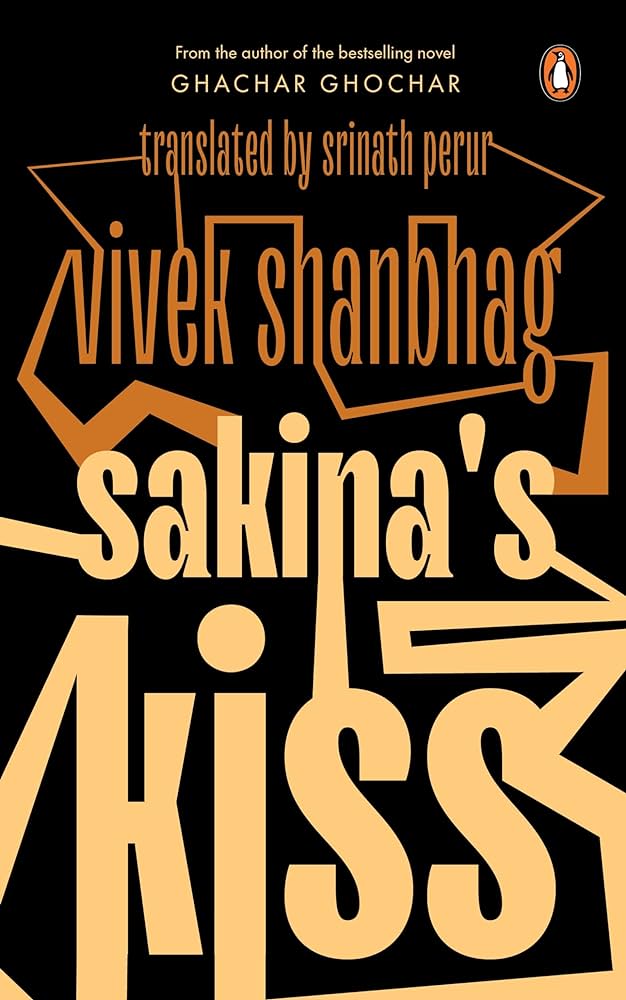
A knock at the door: Sakina’s Kiss by Vivek Shanbhag

Kannada author Vivek Shanbhag’s eagerly anticipated new novel opens with the statement: “There are no coincidences, only unseen chains of consequences.” It is a random quote that his middle-aged protagonist once scribbled down for future reference, accidently recovered during a search for something else altogether. Inspired by his finding, he rushes out to the kitchen to share it with his wife who is much too busy with dinner preparation to entertain his interruption. He is fully aware of this but intends to impose on her attention regardless when he is, in turn, interrupted by a knock at the door. That unexpected intrusion will mark the advent of a series of events that threaten to overturn Venkat’s comfortable complacency and not once over the following days will he heed the wisdom he was about to share with his wife on that fateful night.

As with Ghachar Ghochar, the widely acclaimed novella that, in English translation, introduced Shanbhag to a wide audience within and beyond India, Sakina’s Kiss also explores the impact of shifting dynamics within families, and is narrated by a man who is unable, perhaps unwilling, to understand the women in his life. But this time the cracks that threaten familial peace and security run along political, gendered, and generational fault lines and, although uncertain outside forces come into play, Shanbhag again resists any neat resolutions to the mysteries that arise.

Our hero is Venkat. Born and raised in a small rural community he comes to the big city somewhat conscious of his origins, and through his engineering studies and on into his career he works to cultivate the confident, sophisticated manner he wishes to project. He enters the workforce at a time when the necessity of dealing with foreign clients meant that offices tended to be places where Western styles and tastes were favoured and traditional Indian social factors such as caste advantages were publicly downplayed. When the insecure young manager happens to encounter a man whom he begins to see as a kind of secular guru, he is inspired to adopt a steady diet of self-help books as a roadmap to the life he hopes to craft for himself.

And, Venkat does achieve a respectable degree of professional and financial success but, as his narrative reveals, there is an underlying insecurity despite his expressed self-confidence. His wife, Viji, by contrast, appears to be the more rational, empathetic partner in their relationship even though we only see or hear her perspectives through Venkat’s report and, by the time this story opens, the couple has long since drifted into a rather distanced coexistence. When, early on, he launches into a rather detailed account of their arranged meeting, courtship and honeymoon, his descriptions are so oddly matter-of-fact and one-sided that it’s little wonder their marriage is strained decades later. She is also a successful professional and their combined incomes allowed them to purchase a decent two-bedroom apartment in Bengaluru where they still live with their adult child, a daughter who is now twenty-two and working toward an arts degree at university, much to her father’s dismay. He had, of course, favoured the sciences, but Rekha is a free-thinking, rather rebellious young woman. It is primarily around her that the troubling events at the heart of this novel revolve.

When two young men claiming to be friends of Rekha’s appear at the door desperate to reach her, Venkat explains that she is out in his home village, staying with her great uncle in a location where there is no landline or cell signal available and that they will have to wait until she calls to check in before their message can be passed on. The following day, a Sunday, the same young men return and when they receive the same response from Venkat, they leave and send in a couple of thugs to impress upon him the urgency of their need to contact his daughter. A strange story about two rival gangs, one led by the publisher of a sensational tabloid, the other led by the former owner of a poultry shop unfolds and somehow, in the middle of it, it appears that their sons are both smitten with Rekha who, curiously, is never mentioned by name. None of it makes any sense, but the messengers definitely look unsavoury. Neither Venkat nor Viji know what to make of it all, but when, on Monday, they learn that Rekha apparently left the village on the bus to Bengaluru on Saturday night, panic sets in.

Venkat’s narrative alternates between an ongoing account of current events and chapters that attempt to fill in the background, as he tries to explain and make sense of his marriage’s evolution, his daughter’s increasing radicalization, and the strange history of his politically active uncle Ramana. Buried family secrets and complicated levels of willful blindness and stubborn pride cloud his observations and limit his insight. He seems especially frightened of anyone who expresses individualistic or idealistic goals. For example, when Rekha becomes enamoured with the ideas her college English teacher espouses—“patriarchy, the myth of sexual purity, the shackles of marriage and so on”—Venkat responds defensively. Upon learning that this admired teacher secretly smokes on campus:

I began to criticize all smokers so I could ridicule him indirectly. I suppose I was trying to show that my contempt for Surendran was not without reason. This was a strange kind of envy. Or fear. Or something. Along with the feeling Rekha was escaping my orbit was the restlessness brought about by her infatuation with the words and ideas of this fool.

He makes a vain effort to expand his own world view to little avail. His fears only fuel his continued efforts to assert his role as the “man of the house.” This naturally causes his daughter to become even more defiant towards him while pushing her closer to her mother. That gulf only continues to grow.

There are many loose threads and potentially explosive elements in this novel, but with a narrator who is unable to step back and attempt to see the big picture, a number of “what ifs” remain just out of sight. Venkat comes close at times to wondering if he could or should have done something more with respect to the various dilemmas he has faced, yet, for all his self-help book consumption, a personal awakening eludes him. Even more critically, his fragile masculinity will not allow it. Unable to navigate a changing social and political terrain, he now finds himself excluded from his wife and daughter’s confidence and haplessly sliding into a potentially dangerous situation.

Sakina’s Kiss is, again like Ghachar Ghochar, a deceptively easy read with an unsettling undercurrent that leaves more questions than answers. Shanbhag excels at creating ordinary male characters who are unable or unwilling to fully appreciate shifting social dynamics or their role in them. As such, his narrators end up granting the women in their lives an insight that they are at a loss to understand. They find themselves in situations that are at once funny and tragic—how they will manage in the end is uncertain. In a way, his first two translated titles remind me of the work of South African writer Ivan Vladislavić who has perfected the myopic middle class male character who finds himself in over his head in a world that is changing around him.

Sakina’s Kiss by Vivek Shanbhag is translated from the Kannada by Srinath Perur and published by Penguin Random House India.

A tale of two travellers, You and I: In the Presence of Absence by Mahmoud Darwish

Allow me to see you, now that you have left me and I have left you, safe and sound like pure prose on a stone that may turn green or yellow in your absence. Allow me to gather you and your name, just as passersby gather the olives that harvesters forgot under pebbles. Let us then go together, you and I, on two paths:

You, to a second life promised to you by language, in a reader who might survive the fall of a comet on earth.

I, to a rendezvous I have postponed more than once with a death to whom I had promised a glass of red wine in a poem. A poet is at liberty to lie, but he only lies in love because the heart’s promises are open to alluring conquests.

The celebrated Palestinian poet Mahmoud Darwish was aware that his own death was nearing when he composed In the Presence of Absence, an intimate synthesis of memory and meditation that not only turns its attention to the past, but looks ahead to contemplate what words can carry into a future that he knows he will not see. It is a self-elegy, an established genre in classical Arabic poetry, re-imagined, reshaped and realized through a unique “convergence” of prose and poetry in which, as translator Sinan Antoon puts it in his Preface: “[t]he living ‘I’ bids farewell to its imagined dying other in a sustained poetic address divided into twenty untitled sections.” Presented as a dialogue between the poet’s present self and his absent self, each section explores a particular experience or theme.

Early on, Darwish invokes his younger self, a mischievous child caught up in the magic of the natural world, lured by curiosity toward adventure and injury. However, another love was also nurtured at a young age: the love of language. The third section is devoted to the endless possibilities that the future poet discovers in the wonder of letters and words. It will become his life:

You become words and words become you. You do not know the difference between utterer and utterance. You will call the sea an overturned sky and the well a jar to preserve sound from the world’s tinkering and the sky a sea hanging from clouds.

There is something that assumes the obscure. It cannot be smelled, touched, tasted, or seen. It is what makes childhood a sixth sense. They called you the dreamer because you often gave words wings invisible to grown-ups.

Darwish devotes several sections to this time of dreams and dreaming before, at the age of seven, dreams turn into nightmares. The Nakba’s destructive force drives him and his family from their homeland under the cover of darkness at a time when his absent self was:

Still too young, you could not imagine your own death. You did not yet grasp that children could die.

Life will go on but, but this sudden, unprecedented displacement  will cause him to hate the second half of his childhood and foreshadow the circumstances that will shape the rest of his life.

In the Presence of Absence is not a memoir in the familiar sense of the word, but significant life experiences—imprisonment, exile, heart surgery, a visit to his mother—shape his reflections. Yet, at times, he turns to more open meditation on themes like love, loss, dreaming and what it means to return. These meditations turn on the poetic as poetry is always, for Darwish, more than a vocation, but an essential means of making sense of the world. Ever the dreamer, his dreams are soaked in a melancholy that reveals itself in imagery bound to a land and a life forever lost:

Longing is the absent chatting with the absent. The distant turning toward the distant. Longing is the spring’s thirst for the jar-carrying women, and vice versa. Longing allows distance to recede, as if looking forward, although it may be called hope, were an adventure and a poetic notion. The present tense is hesitant and perplexed, the past tense hangs from a cypress tree standing on its rooted leg behind a hill, enveloped in its dark green, listening intently to one sound only: the sound of the wind. Longing is the sound of the wind.

The more you delve into your loneliness, like that tree, the more longing takes you with motherly tenderness to its country, which is made of transparent, fragile fibres. Longing has a country, a family, and an exquisite taste in arranging wildflowers. It has a time chosen with divine care, a quiet mythical time in which figs ripen slowly and the gazelle sleeps next to the wolf in the imagination of a boy who never witnessed a massacre.

Darwish plays presence and against absence through this text, the image surfaces and reshapes itself in endless variations, including the confrontation with his own absence when he visits the ruins of the village he was born in. For, to articulate an absence that is present or a presence that is absent is not only the task of this self-elegy, it is, for Darwish, a poet’s role. This is, then, more than anything, a book about language—as a means to express, to understand, and to exist in a world that has been torn apart. His prose is rich with metaphor and sensual, even sexual, imagery, but the pain of a man who was denied the ability to live freely within the land of his birth, and witnessed, by the time of his death in 2008, the impact of sixty years of occupation and conflict on the Palestinian people, is never far from the surface.  It is, sadly more timely than ever.

Sinan Antoon’s translation honours the poetic energy of this work, aiming, he tells us, to preserve, where possible, the pulse and rhyme of the original. Endnotes supply necessary context, as required. This text, like Journal of an Ordinary Grief and Memory for Forgetfulness, is classified as poetry, but, as poetic as these works are, I prefer to consider them closer to prose lest a potential reader who is apprehensive about poetry be inclined to avoid them. Darwish’s meditative, incantatory prose is neither elusive nor intimidating. He writes from the heart and with the heart his words are best met.

In the Presence of Absence by Mahmoud Darwish is translated from the Arabic by Sinan Antoon and published by Archipelago Books.