Time, space, and truth: Till Kingdom Come by Andrej Nikolaidis

“Windows, even those with heavy shutters, were no help against the rain. It came with a wild westerly one moment and with a sirocco the next, constantly changed the angle at which it fell, attacking now frontally, now from the side, until it had crept through every invisible opening in the walls and woodwork. In their rooms, people made barriers of towels and babies’ nappies beneath the windows. When they were sodden they would be wrung out in the bathroom and quickly returned to the improvised dykes.

Roofs let through water like a poorly controlled national border. Like in a bizarre game of chess, families pulled out pots and pans across the floor: Casserole to f3, frying pan to d2.”

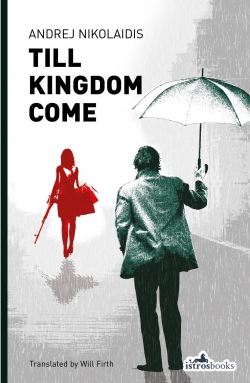
till-kingdom-come_5595626c38d7b_250x800rAs befits its title, Till Kingdom Come – the latest novel by Montenegrin author Andrej Nikolaidis’, his third to be released in English by London based indie publisher Istros Books – opens with a deluge of Biblical proportions. The heavens above the historically rich tourist town of Ulcinj have unleashed an extended season of torrential and relentless rain. As water rushes down the streets and seeps through walls and floorboards, the reader is quickly introduced to the narrator, a freelance journalist, a man who faces the world with reserved and stoic humour. Or so it seems. But then nothing is what it seems, and for our poor narrator most of all.

It soon becomes apparent that our hero has long suffered from periodic lapses in temporal/spatial reality. He has been known to just drift off, seeming to have lost consciousness to those around him, while he finds himself in some distant country or city previously strange to him that he suddenly knows intimately, until he wakes up back where he started. This dissociative tendency which has haunted him for years has left him with a rather slippery sense of self that, more than anything, seems to engender an abiding sense of ambivalence. That is, until the arrival of a man claiming to be his uncle causes him to have reason to doubt the veracity of his entire existence. He had believed that his mother was dead and he was raised by his grandmother, a belief supported with stories, photographs, a history and an unusual Jewish name. Discovering that his past was faked, sets him off on a passionate journey of speculation and self discovery, assistsed by a police inspector, directed by an anonymous email source and fueled by an obsessive fascination with serial killers and conspiracy theories.

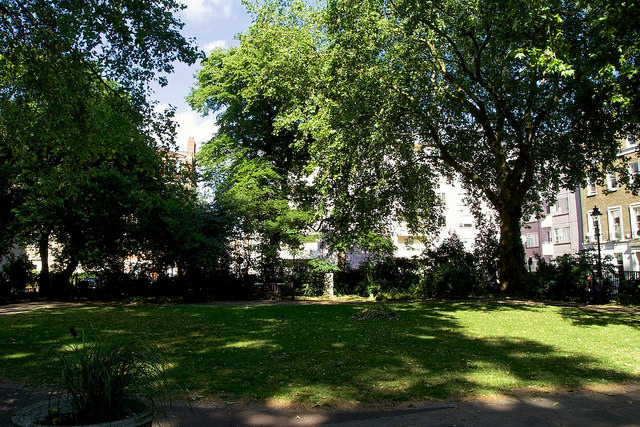
Biting in intensity, taking broad political and historical swipes at medieval and modern history – poking the bones of Oliver Cromwell and stirring up the horrors of the Balkan War – Nikolaidis is in fine form, building upon and expanding the canvases he painted in his previously translated works, The Coming and The Son. Ah yes, Thomas Bernhard would be proud. Yet, for its sarcastic humour, metafictional wanderings through Red Lion Square in London and up the stairs of Conway Hall to the tiny second story office of Istros Books, and the endless speculations about the role of the black arts in the exceptional acts of cruelty and violence perpetrated by mankind that have littered history; Till Kingdom Come is a starkly serious book. The narrator exists on a plane of his own, while his friends succumb to pressure of feeling too much, of being unable to cope with a world that is fundamentally uncaring. As he muses at one point:

“Alas, there is only one happy ending – the Apocalypse – even if it is only a promise. Everything else is just an open ending, a continuous series of open endings, whose resolution not only resolves nothing but further complicates already unbearably complicated things.”

For my money, Till Kingdom Come is a more mature and demanding work than The Coming and The Son, both of which I thoroughly enjoyed. Nikolaidis is a highly political journalist and here he is clearly intent to skewer politics and economics with more direct, at times shocking, barbs. The Bernhard inspired intensity of The Son is dialed back a little while the historical diversions that provided an intriguing counter commentary to The Coming have been worked back into the narrative. As in these first two Istros releases, translator Will Firth captures the mood and intensity seamlessly. And, on an entirely personal note, it was a delight to see Red Lion Square and the Istros Books office worked into the text. However when I visited this summer I did not magically find myself strolling down Oxford Street. I got hopelessly lost and had to be rescued from the Tube Station by the editor herself, but then London on a map and London on the ground for someone who has never been there is, well, a metaphysical rather than metafictional experience to say the least!

Red Lion Square, London UK Copyright JM Schreiber 2015
Red Lion Square, London UK
Copyright JM Schreiber 2015

Listening to the voices of Afghan women: I am the Beggar of the World

“In my dream, I am the president,
When I awake, I am the beggar of the world.”

With a long history, passed down through generations, landays are traditional two line poems recited or sung by the mostly illiterate Pashtun people who live along the border region between Pakistan and Afghanistan. They are composed of twenty-two syllables – nine in the first line and thirteen in the second. For the women in this area who face social and cultural restraints that define and restrict their lives, these anonymous couplets have become an important medium for self expression. Sometimes they gather to share or perform the landays they have learned, updated or re-invented; but radio and the ubiquitous social media and cell phones have also been worked into a new modern network for sharing.

beggarI Am the Beggar of the World: Landays from Contemporary Afghanistan, a collaboration between translator and poet Eliza Griswold and photographer Seamus Murphy, is a sensitive and moving collection of landays, brief essays, and photographs. Upon hearing of the death of a teenaged poet who had been forbidden by her family to write poems and burned herself in protest, Griswold was inspired to journey to Afghanistan to explore the role of landays in the lives of Pashtun women. She returned to collect some of these poems, assisted by native speakers and a Pashta translator, Asma Safi, who sadly died of a heart condition before the project was complete. Arranging meetings as an American was not always easy – being under occupation is a difficult, deadly environment – but along the way she collected the words and stories of some very strong, fascinating women.

Divided into three sections, the first is dedicated to Love. Many of the couplets are brazenly racy, teasing and modern. Yet because landays are by their nature anonymous, no woman can be held responsible for sharing them or for the contemporary imagery has been worked into the more traditional versions:

“Embrace me in your suicide vest
but don’t say I won’t give you a kiss.”

“Your eyes aren’t eyes. They’re bees.
I can find no cure for their sting.”

“”How much simpler can love be?
Let’s get engaged. Text me.”

The second section is dedictated to the themes of Grief and Separation. Suffering and servitude are enduring features of the lives of Pashtun women. Marriage implies both. Curiously love also features throughout the poems in this section because romantic love is forbidden. If a young woman is discovered to be in love with a man she can be killed or driven to take her own life to preserve her family’s honour.

“Our secret love has been discovered.
You run one way and I’ll flee the other.”

Once married, having one’s husband take another wife is emotionally painful, but being passed over altogether or married off to an old man can be worse.

“Listen, friends, and share my despair
My cruel father is selling me to an old goat.”

The final section explores War and Homeland. Complex, mixed emotions, anger and sorrow rise up here in poems that are moving and, again, shockingly modern. A long legacy of occupation under British, Russian, and American forces has placed the women of Afghanistan in a difficult position, torn between the brutality of American protection and the combined threat and promise of the Taliban. The landays and the images in this section are especially powerful and represent sentiments that women would not be able to express so readily in any other forum:

“Be black with gunpowder or bloodred
but don’t come home whole and disgrace my bed.”

“Beneath her scarf, her honor was pure.
Now she flees Kabul bareheaded and poor.”

“May God destroy your tank and your drone,
you who’ve destroyed my village, my home.”

This slim volume is a testament to the resilience of the Pashtun women in the face of the violence, threats and restraints they live with every day. These traditional two-line poems provide a framework for illiterate women to express themselves and share their sorrows, joys and wisdom with their sisters. In Afghanistan they still face risks in committing their own poetry to paper when they are able, so this oral tradition remains important, even if modern devices like cell phones have expanded their network. This beautiful book which pairs the simple landays with muted black and white photographs documenting the people of Afghanistan, the sparse landscape and the violence of war, provides a rare opportunity to hear the intimate voices of women that might otherwise be silenced.

Reflection: Fishing for memories denied

It is rare that I indulge in sharing a significant quotation simply because it speaks to the space in which I find myself but I keep returning to these words from Intimate Stranger by Breyten Breytenbach (Archipelago Books, 2009).

“Writing is fishing for memory in time. Viscous. Time black. Sometimes you see it flitting just below the surface – memory – miming time. Memory takes on the blackness of time. Memory will be time surfacing. Use word as bait. Beat the water. Beat the weird beat of baited words. Bloated. Wounds. The bleeding words like wounded boats on a black sea. Let the fleet wash up. The coast is the beginning of the sea’s wisdom. It comes with the territory.

Words have their own territory, they return home as in a song. The fish only discovers the water once it is removed from it. This land is a memotory.

But not peaceful. Memory as trigger for territory and tongue. The mind is full of bloody pieces staked out by tongue. Is there room enough? Memory killing memory.”

initmateThis book, a selection of meditations on reading and writing, was waiting for me when I returned home from the hospital just 10 days ago. I have been keeping it close and dipping in and out of it. Breytenbach is a South African poet, writer and painter but his life, his work, his vision is borderless. In this collection he offers practical advice, shares poems and reflections on the power of the word, drawing on his own experiences as well as the wisdom of a legacy of gifted writers.

Memory is the foundation of writing. One draws on experience when putting pen to paper – poetry, fiction, memoir alike. And it is memory that is weighing me down, threatening to drag me beneath the surface; a memory that haunts and obsesses me because although it involves me, I will never access it.

I have lost a space in time. Like a bruise it bleeds beyond the boundary of the injury, reaching backward and forward from the instant a clot in my lung threatened to stop my heart. Days are absolutely gone, the day or two before the incident, the day or so in ICU and the first days after waking. But I can’t let the blackness go. I cannot let it wash out to sea. I want to hold the moments, hours, days in my hands but I cannot. They do not belong to me. They are about me. They will never be mine.

I have read my discharge summary until I know it inside out. I have pestered my anxious son with questions. What was it like to find me in distress? How did you get to the hospital? How did you feel? Stupid questions. I am struck with shocked disquiet to realize that my family did not know if I would survive.

If I had not survived the blackness would be complete. Viscous. Time black. Inanimate from my perspective. My own memories lost. The sole distorted possession of those who knew me, no longer mine.

Sands are shifting. I have some fishing to attend to before the next high tide.

Indian Ocean, Eastern Cape, South Africa Copyright JM Schreiber 2015
Indian Ocean, Eastern Cape, South Africa
Copyright JM Schreiber 2015

Loss and longing: The Elusive Moth by Ingrid Winterbach

“I have been content up to now,” she said at last. I was perfectly content until recently. I could keep everything at a distance. But now, all of a sudden, I can no longer do so. I feel caught up in everything. And detached from everything too. So detached, and so caught up. A strange feeling.” She spoke more urgently. “I don’t know what I’ve done with my life! I don’t know if I can still love someone!” (She started, why speak of love all of a sudden?) “I can’t open my hand,” she said, opening her hand, her palm facing upward, “I can’t let go.”

This is the curious dilemma of Karolina Ferreira, the heroine of The Elusive Moth by South African novelist Ingrid Winterbach. A similar searching ambiguity, complicated tension and hidden motivation runs through the cast of this slowly simmering, cinematic novel. Moving across a finely painted canvass in fits and starts, The Elusive Moth is an evocative exploration of memory, loss and anxiety that almost feels more like an art film, unfolding scenes that repeat motifs, imagery, fragmented conversations, all playing out against racial tensions that are building to a critical point in and around a small Free State town.

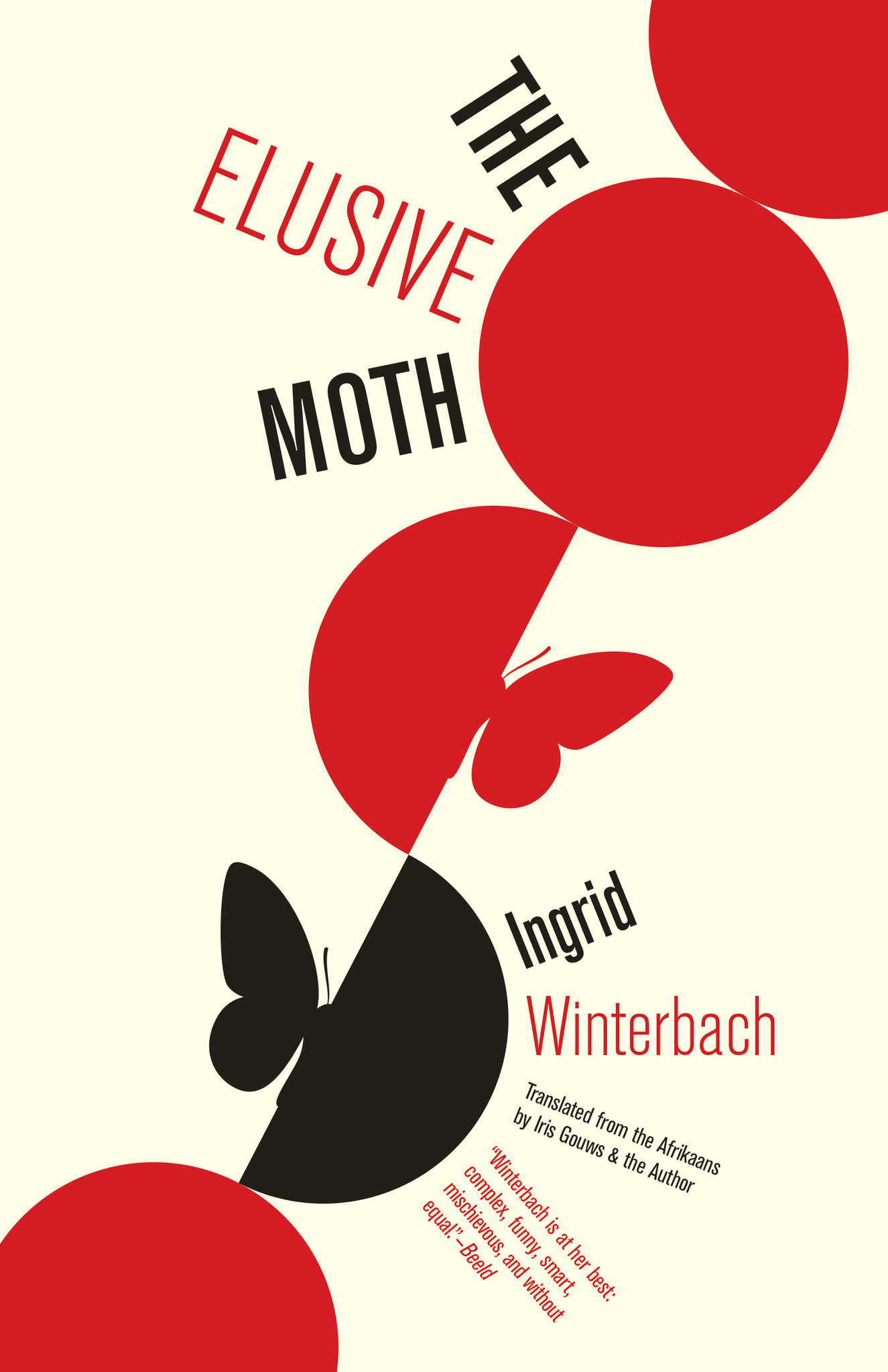
Elusive_Moth_cvrKarolina is an entomologist who returns to the town where her family spent time when she was growing up. Ostensibly she is in pursuit of a rare species of moth that is capable of withstanding extreme conditions and this is a brutally harsh, drought ridden area. However, on her way to her destination she makes two unusual decisions. She stops and picks up a fellow traveller, Basil September, an unusual and enigmatic individual who is on his way to spend time working with his Argentinian mentor, an expert in herbal remedies and medicinal practices. He will become her daily companion out on the dry veld where he collects a vast array of living and non-living samples while she observes insect life. Karolina also, despite her scientific tendencies, stops into a roadside caravan to have her palm read. The fortune teller promises that she will find a man who will love her forever and a woman who will be a close and faithful friend, suggestions she both laughs at and hopes for.

As she settles in to her research, Karolina seems to be increasingly restless. She spies lovers in the cemetery who fascinate her. She begins to frequent the snooker room of her hotel where the regulars, all male, are coarse, frequently lecherous – farmers, policemen, reservists. On Saturday nights she takes to the dance floor to lose herself in the arms of a man referred to throughout as “that Kolyn fellow”, theirs a connection based solely only on comparable tango skills. She tends to drink heavily, retreating when necessary to the Ladies Bar where she regularly encounters Pol, a singing lawyer, delightfully described throughout as amphibious, watery, and humid. He is a source of background information upon whom he she tends to rely as local political undertones begin to rise to the surface. Basil is also a helpful bellwether in this regard, as he possesses an uncanny ability to analyze the natures of others on sight and, as it turns out, foretell death. And then there is Jess, a red headed man who is singled out for her by Basil when they first see him. He is an economic analyst on a sabbatical to study, for himself, Buddhist philosophy, longing to learn to live in the moment and to overcome a persistent fear of death.

It is clear that Karolina is at a tremendous loss as she tries to find a rhythm to life in this small town. Loss intermingled with longing. She has destroyed or divested herself of most of her possessions. She is plagued by a sense that she disappointed and was disappointed by her father, also an entomologist from who she inherited her early and long standing fascination with insects. He had died just hours before she reached his bedside. She had imagined herself capable of dedicating herself to her studies without the bother of emotional entanglements. Now, in her dreams she is haunted by strange visitations and lewd sexual fantasies involving not only past friends and lovers, but characters from her immediate environs. By day her observations and interactions with others are a mix of curiousity, compassion and clinical dissection. By night she struggles with a desire for physical comfort and a need for space. As personal tragedies and political tensions in the town move toward a dramatic eruption, Karolina will ultimately find the ability to surrender and move forward with her own life.

For some readers, The Elusive Moth, may almost be too fragmented and repetitive. I read it slowly, over the last few days, luxuriating in the beauty of the imagery – the stark landscape, sensual descriptions of architecture and artwork, the enigmatic characters. Winterbach is also a painter, she writes in images and scenes. I simply did not want this book to end. I am currently recovering from a trauma that has left me with a mix of loss and anxiety that I recognized in Karolina, Jess, and Basil. I found it to be an exquisite and haunting experience.

witmonth15

* Originally published in Afrikaans as Karolina Ferreira under the pseudonym Lettie Viljoen in 1993, the first English translation by Iris Gouws and the author was published in South Africa in 2005. The edition I read was published by Open Letter Books in 2014.

A tenuous grasp on reality: All My Friends by Marie NDiaye

Oh my.

I was looking for a short story collection, something that might fit neatly into the Women in Translation theme that is guiding the reading of many of my fellow bloggers this month. Having heard so much about French author Marie NDiaye I decided to have a look at her collection All My Friends. What I found was a portal to a bizarre, surreal, mildly horrific literary Twilight Zone. If you like your stories neat and clear cut this is territory best avoided. If you enjoy challenging tales peopled by troubled characters who stretch the boundaries of reality, fueled by obsessions, fantasies and psychoses, well, step right in.

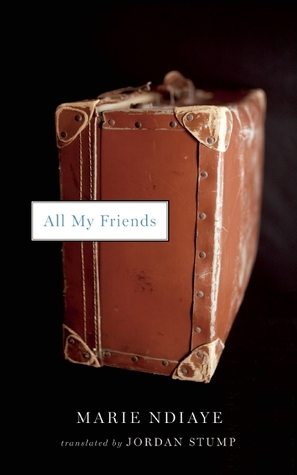
All My FriendsThe final heartbreaking, but relatively straight forward story, is very short. The four stories that proceed it are long, convoluted and slippery. The reader really has to surrender him or herself to the experience, to the strangeness and stunning evocative beauty of the language. After finishing this slim volume I had a glance at a number of other reviews and was surprised how differently others saw or interpreted the stories. And perhaps that is the ultimate power of this collection.

The title tale, “All My Friends” is narrated by a school teacher whose wife and children have left him. He leaves his house like a museum and hires a former student, Séverine, to work as his maid. His attraction to her is complex, a curious blend of obsession and loathing that extends back to the days when, as a beautiful student, she resisted his charms and his efforts to impart knowledge on her. She is, however, married to another former student, an unassuming Arab that the teacher can barely remember. And then, to add to this peculiar triangle (quadrangle?) is Werner, yet another former student from the same cohort who went to Paris to better himself and returns, wealthy and well educated, to win Séverine’s love. Complicated? Definitely, especially because, so far as I could tell, Séverine herself is portrayed as a rather cold, obstinate creature and it is hard to imagine what sort of appeal she holds over all the men who are drawn to her.

Two of the stories revolve around celebrity. In “The Death of Claude François”, the passing of a famed singer devastates the women of a housing project. As the story opens, Dr Zaka meets her former best friend, Marlène Vador, after a 30 year separation. Marlène has remained on the project, nursing it seems, an undying love for the long dead hero. Dr Zaka never shared the depth of that affection:

“How ridiculous, she told herself, all that sniveling, all that sweat, all that sorrow simply because a man has died, a perfect stranger to every one of the women on the lawn, although dearer to their wanting hearts than the many children they’d borne, than the husband who had begotten them, whose eyes stayed dry on the death of that luminous, splendid stranger, so French, so blue eyed, so blond-headed.”

However, if the death of the French idol failed to move her, Dr Zaka has conceived a most unusual “gift” for her friend, presumably to make amends for leaving so many years before. In the longest story, “Brulard’s Day”, an overtired, psychotic woman has retreated to a resort town in the mountains. She is clinging to the idea that she was once a famous actress although the true extent of her acting career is not clear. She has left her husband and daughter and is awaiting funds she expects from a mysterious lover. In the meantime she is haunted by visions of her younger self, mortified by the fact that she is reduced to wearing – gasp – loafers and attempting to perform an appearance that befits her image of herself. When her husband appears on the scene it begins to become evident that neither have more than a desperate desire to be more than they are or have ever been.

Finally, the story, “The Boys”, reads like a dystopian tale in which poor rural families seek wealthy women to purchase their sons. A family fortunate to have a son handsome enough to fetch a price as a sex slave will stand to benefit from the income. As the Mour family pass their handsome son on to his fate, René, a poorer boy from a nearby home who picks up odd jobs with the family but is otherwise allowed to disappear into the shadows, watches and comes to decide that he too would like a ticket out.

“He’d always known he could make a gift of himself. Assuming someone would take him, assuming someone was eager to have him, a colorless boy named René, he could subjugate himself to the will of anyone at all. Little matter if he was purchased or picked up for free.”

Tightly paced, haunting and deeply disturbing, this is perhaps the strongest entry in the entire collection.

witmonth15Born in 1967 to a French mother and Senegalese father, NDiaye trained as a linguist at the Sorbonne. She was was playing with form and style at an early age and her first novel was published when she was only 18. In 2013, at the age of 45, she was long listed for the International Booker. This collection was originally published in 2004. The English translation by Jordan Stump was published in 2013 by Two Lines Press.

You can’t go home again : Lost Ground by Michiel Heyns

On one level, Lost Ground sets itself up as a crime novel where the elements of the conventional police procedural are bound with deep echoes of the tensions and realities of the new South Africa. But in the skillful hands of Michiel Heyns it evolves into much more – a heart stopping rush headlong into a series of events that will leave its erstwhile hero irrevocably changed.

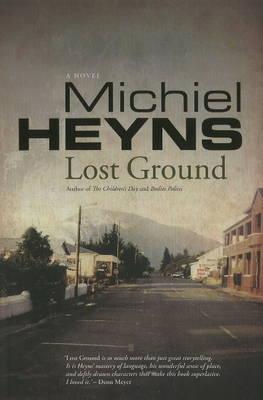
lost groundIt is a murder that draws Peter Jacobs, an ex-pat South African, back to his hometown of Alfredville, a sleepy little village in the Little Karoo. A freelance writer living in London, he has been away from his native soil for over 20 years. His father’s British citizenship afforded him the option to pursue studies abroad and thus avoid conscription. What finally draws him back is his writer’s sense of a good story. His own beautiful cousin Desirée has been murdered and her husband, the black police Station Commander, is under arrest. This is, Peter believes, the entry point for an examination of the complicated dynamics of post-Apartheid South Africa and, in his neatly planned agenda, a story that he imagines re-envisioning as a New Yorker friendly exposé drawing allusions to Othello. What it opens, in the end, is far more personal and devastating than he can even begin to imagine when he first returns to his hometown.

It is clear from the beginning that Peter is carrying more baggage than the basic wardrobe he itemizes. James, his partner of five years, a Jamaican actor, has just broken up with him and he is not entirely certain how he feels about it. As he settles into his hotel, old locations and familiar faces naturally trigger memories – of school days, childhood adventures and the awkward fumbling of youth. Then, he discovers that his best friend Bennie is also back in Alfredville. He is now a police officer, temporarily the acting Station Commander,  and married with two children. Their reunion is awkward and tentative at first but it slowly warms, reawakening a flood of memories of a past that Peter believed he had, with time and distance, left behind.

Heyns’ gift for language and dry wit bring a rich and detailed world to life. He deftly captures the village and surrounding farmland wilting under the extremes of summer heat and the distant sensations they evoke:

“I open the door of my room and go out onto the balcony. Victoria Street is empty at this hour, but the sullen air is teeming with the smells of a summer night – exhausted vegetation, wilting flowers, wet soil from the gardens being watered, heated asphalt. The blend hasn’t changed in twenty years. To smell it again is to remember not so much individual incident as the tonal value of those summer nights, the vague ache of an imperfectly articulated desire.”

A wide range of colourful characters and personalities pass through the pages, described with the precise care and attention befitting his detail oriented writer narrator. Some are ghosts from Peter’s past, others, like the elegant black female psychologist who becomes his challenger and confidant and the handsome vet who seems to have cast a spell over the bored housewives of Alfredville are either new or passing through. But it is the nostalgic revisiting of his youth, inseparable from the memories of his friendship with Bennie, that anchors the novel, creating the emotional texture and complexities that will ultimately leave the reader gasping for breath as the end nears.

This was, for me, my first read following a significant health scare. It was everything that I could have hoped for at this moment – a smart, well written and tightly paced story woven with literary allusions, significant observations about the current state of South Africa, telling observations about the risks inherent in returning to the past and an unobtrusive but entertaining gay subtext. By turns humorous, heart breaking and dark it was the perfect prescription.

* Published by Jonathan Ball, Lost Ground is one of Michiel Heyns’ books that is fairly easy to access outside of South Africa, at least through special order distributors.

Easing back into reading

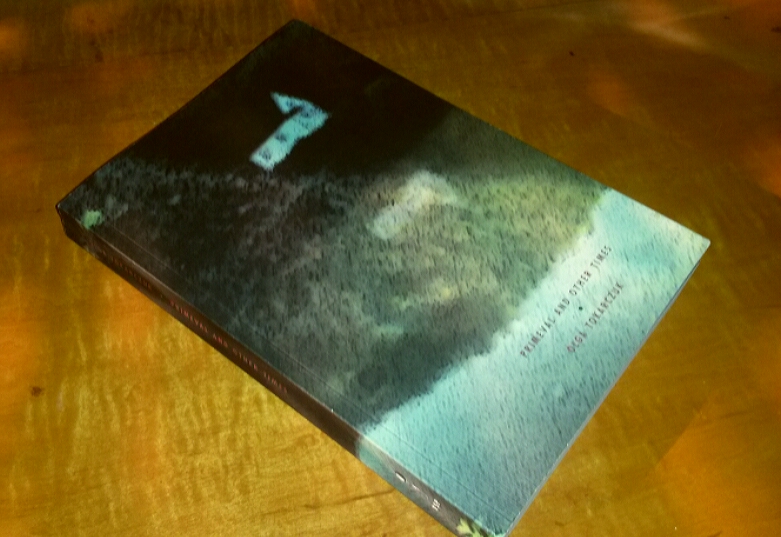
As soon as I was coming around a few days after my recent near death encounter (and I don’t mean that in any mystical tunnel of light sort of way) I told my kids that I wanted them to bring me books. I could barely stay alert long enough to get an entire sentence out but I wanted books. They obliged me. Wisely I asked for one of the few books on my shelves which might count as a mystery – Lost Ground by South African author Michiel Heyns – which has proved to be fine company indeed though I have only been able to read attentively for a few days now. They also brought along one of my endless stream of incoming purchases, a gem from Twisted Spoon chosen for Women in Translation Month – Primeval and Other Times by Polish writer Olga Tokarczuk. A surreal and fantastic work it looks good but I may have to push it a little further down the month. Reading is tough work after cardiac arrest. Go figure.

Now that I am at home, facing three blood tests each week and a host of other medical appointments all over the city when I have been told I can’t drive for 6 months, I find myself reading and re-reading my discharge report. I am living on warfarin – rat poison – afraid of bleeding too much or worse, clotting too easily and having a stroke. The devious little pulmonary embolism that triggered this whole adventure (a likely souvenir of a hellish 24 hours of flight time packed tightly into 28 hours on my recent return from Cape Town) is still sitting in my lung and will, they say, eventually be absorbed. My left leg is swollen and bruised due to a hematoma, a probable complication of the resuscitation process. I watch people jogging by outside on this hot summer day and feel like some sort of Frankenstein creature, dragging this heavy black and blue leg around.

Even though my friends have been amazing – I had a steady stream of visitors throughout my hospital stay and have no shortage of offers for rides around town – I feel a despair settling in. I don’t know where to turn, where to dig into the towers of books surrounding me. I wonder what would have happened had I slipped off this mortal coil two weeks ago. What would my family say about all these books on which I have squandered my limited funds? For heaven’s sake my open shelved coffee table loaded with books and stacks of journals – Granta, Paris Review, Music & Literature – came apart when the paramedics tried to pull it out of the way. I feel overwhelmed rather than excited about diving in to all the new books I have acquired in the past month. I had to buy an extra bag, after all, to get my haul of books home from South Africa and now they too sit on the shelf taunting me.

Will the magic of reading come back with my health?

2015-08-09 17.37.38I have also wondered if this experience is that final kick in the behind that I need to get serious about my own writing. I’m in my mid-50s. I’m not getting younger. Coincidentally while in the hospital I signed my first contract for the publication of an essay in a book coming out next Spring. It is a niche project – a collection aimed at gay, bisexual and transgender men – but my first professional publication credit all the same. So how much life with all its mess, joy and agony does one have to drag his or her sorry self through before there is enough fodder for a story? I wrote throughout my youth, being a writer was always my dream, a strength in every course I completed in university and every job I have ever held. But when it came down to creative writing I always insisted that I had to live a little first.

At this moment I feel that I lived so much that I don’t know where to begin. And now I have almost died too.

One miserably roughed up ghost, rising from the ashes once more

Sometimes you fool yourself. You believe that you are invincible. You know that bad things happen to good people. You know that they have even happened to you. But time and time again we are caught off guard reminded of the wisdom of Monty Python’s idiom: Nobody expects the Spanish Inquisition.

14701351714_280be514fc_z
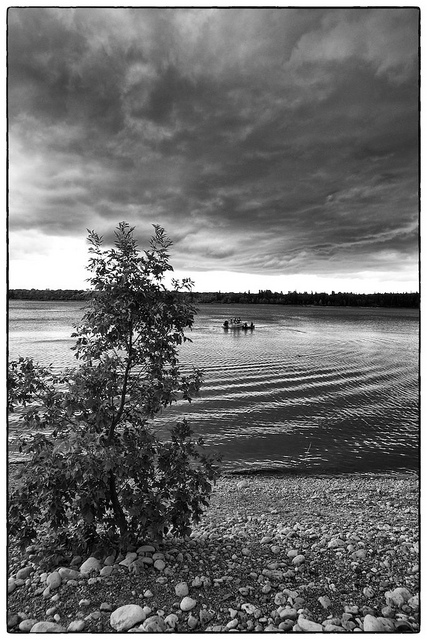
Copyright JM Schreiber Storm clouds over the Reservoir, Calgary, AB

If I had had more experience traveling I might not have made the mistakes that may very nearly have cost me my life this past week. I thought that by focusing my first visit to South Africa to longer stays in two areas, I would limit my travel time. But instead I ended up with long plane flights and interminable bus trips. Next time, and I definitely hope there is a next time  – *the hematologist looks at me askance* – I hope to take longer and fly between major centres once I get to South Africa. The buses have a certain charm and I definitely got to meet and talk to people in a way I might not have otherwise, but to top off my three week excursion with a three leg flight home with very short turnarounds was a major miscalculation  on my part. It sounded great. But I had no idea exactly how tight a three hour stop over is, especially if you have to clear customs. Longer stop overs would have helped. Baby asprins, compression stockings. Everyone has recommendations now.

Yet although I was tired and swollen upon my return, it would take a few weeks before my journey caught up with me. Last Sunday night, or rather, early Monday morning, two and half weeks after I returned home, all swelling and fatigue seemingly gone, I suffered a pulmonary embolism. Well actually, it was not clear what had happened at first. I have very little memory of that day or an evening event I had been to with friends. My 25 year-old son, a creative, troubled but wonderful soul, heard me moaning. Thomas came upstairs to find me disoriented. He called Emergency and started chest compressions.

The kid saved my life. In one of those odd ironies, or twists of fate, toward the end of my time away, Thomas had suffered a couple of acute panic attacks so severe that he twice was taken to the hospital. In the second situation he was referred on to a psychiatric nurse he liked and she suggested a 4 week outpatient program he had just started. Mind you my little detour has interrupted  his plans but they will contact him as soon as there is a good point for him to join back in. Me, I will be in the hospital for at least another week, but the more “functional” I am, the more I can spend time reading.

So good with the bad. Who knows? Maybe the two truly are bound more tightly than we realize.

1914 – Goodbye to All That: Writers on the Conflict Between Life and Art, Lavinia Greenlaw, ed.

War and conflict are among the most fundamentally human motivations behind our desire to tell and share stories. Religions, mythologies and histories draw on these timeless themes. And, as human history continues to prove that we have not yet managed to learn from the past; conflicts, ongoing or marked with progressive anniversaries, will continue to to inspire artists and storytellers alike.

greenlaw_2985334aThe centenary of the advent of the “War to End All Wars” in 2014 saw a renewed focus on the contemporary writers and poets of WWI as well as a broader assessment from today’s artists of the lasting influence of that critical event on the conflicts that have followed. An interesting contribution to the discussion arrived in the form of 1914 – Goodbye to all That: Writers on the Conflict Between Life and Art, a selection of essays edited by Lavinia Greenlaw which was published in the UK last year by Pushkin Press. This collection will see its release in North America on September 1, 2015.

For Greenlaw, the First World War has a resonance that is not tied to a particular time and place but rather stands as touchstone to “reinvigorate questions we should never stop exploring.” With that in mind a variety of writers were invited to offer reflections broadly inspired by the question: “What does it mean to have your life and your identity as an artist shaped by conflict?” To that end, writers from a number of different countries were recruited.

The final compilation is, perhaps inevitably, uneven. However, the strongest entries are startling and have stayed with me long after the reading. The first essay to catch my imagination was, much to my surprise, Daniel Kehlmann’s “A Visit to the Magician”. Having read his F: A Novel with a measure of disappointment, I was drawn into his account of his own attempt to pursue the experience of being hypnotized after this same novel was released. Because a visit to the performance of a hypnotist sets the stage for the events that unfold in F he decided that he ought to have a go at the real thing himself. The exploration of hypnotism leads to an interesting reflection on the mechanisms that may help motivate individuals to rise, against their better angels, to support dictatorships and even march to war.

“(I)t’s nothing more than the most normal effort to be like everyone else, to experience what everyone else experiences, to behave the way authorities want you to behave. And then of course there’s the desire not to do anything wrong in full sight of so many other people.”

For Belgian author Ewrin Mortier and Slovanian poet and writer Aleš Šteger connections are drawn between the First World War and subsequent conflicts, WWII in the first case, the Balkan War in the latter. In “The Community of Sealed Lips: Silence and Writing”, Mortier concerns himself with the silences that remain unspoken, and the way language and lies are employed to negotiate the complicated way that both World Wars divided Belgian communities and families. His essay encompasses the story of his own grandmother and her beloved younger brother containing the painful truth that he would weave into the fabric to his debut novel Marcel. By contrast, Šteger’s tale, “Tea at the Museum” is unsettling and unusual. When Z, a woman he has not seen or heard from in years, calls and suggests that they meet to for tea he cannot imagine why she wants to see him. She is, it seems, keen to apologize for a wrong she swears she has done to him – in a previous life lived during the First World War. The encounter leads him to confront the memories of individuals and of countries, and reflect upon the way poetic imagination is employed to talk about horrors to painful to face directly:

“Only through literature can we realize how impossible it is to have any true insight into the past, any true experience of it, and what’s more we will become part of some equally incomprehensible past.”

Elsewhere, novelist NoViolet Bulawayo writes about the work of writers from her native Zimbabwe who, through their voices raised in protest in the threat of censorship and imprisonment, served to reconnect her to her community from afar, ultimately leading to a focus and theme in her own writing. Her exploration of her own identity in this context serves as a direct and deeply personal tribute to her fellow Zimbabwean artists. Another striking and powerful contribution comes from UK based Chinese writer Xiaolu Guo. Her account of the experiences and often unfortunate end of thousands of Chinese coolies imported like cargo to dig trenches and lay railway tracks along the front toward the end of WWI is at once astonishing and disturbing.

The collection is rounded out by contributions from Ali Smith, Kamila Shamsie, Elif Shafak, Colm Toibin and Jeanette Winterson. What is most interesting is the varied and diverse ways that all of these accomplished writers respond to the theme presented for their consideration. There is plenty of food for thought here.

* Review copy provided by Steerforth Press through NetGalley.

Last season in paradise: Alexandrian Summer by Yitzhak Gormezano Goren

1951. In an apartment on the Rue Delta in Alexandria, a young boy plays a game to wile the hours away, recording and cataloging the makes and license plate numbers of the cars that pass on the street below. Inside, his mother, grandmother and an assortment of matrons gather and gossip over a game of rummy. Tourists flock to the city, to the beaches and warm waters. A rich mixture of languages play across the tongues of residents and visitors alike. But on the ground tensions are building, political frustrations run deep, threatening to fracture the tentative ties that have bound Muslims, Jews and Christians in this cosmopolitan playground. For thousands of families clinging to a fragile petit bourgeois existence, this may be one of the last glorious seasons of romance, horse racing and cool drinks served by discreet and obliging servants.

“True, Alexandria was rotten to the core, but its rot had roots, was saturated in history. Dig deep through the muck and you’ll find the remnants of a crumbling papyrus, or a lock of hair from the shrunken head of a mummy. Something is rotten, truly rotten in the kingdom of Alexandria. That’s why I love her so much, Alexandria. A city that lets you live like a carefree lord without even being rich. Of course you had to be European, or at least Jewish, and of minimal intelligence, and even that wasn’t always a staunch demand.”

GorenFrom the opening pages of Alexandrian Summer, the newly translated novel by Israeli author Yitzhak Gormezano Goren, the author’s deep affection for the city in which he spent the early years of his life is unmistakable. His narrator makes it clear that the story he is about to share is, in fact, his own. He is that 10 year old boy watching the cars pass. But he debates how best to tell the tale, admitting that he is looking back with the perspective and wisdom of an adult. First person, third person, real names, fictitious identites with the standard disclaimer? He opts to shift his focal length, like a photographer adjusting the depth of field of his lens, moving in and out of a series of scenes that collectively recount the visit of the Hamid-Alis, family friends from Cairo, who have come to spend the summer. Young Robby does not know it at the time but by the winter his family will leave for Israel. It is his mature self who is able to look back and sift through the events of his final summer in this magical city. Through Robby and a colourful canvas of characters – immediate family, extended family, friends and neighbours – he unfolds a story that is at once intimate and personal, and part of a broader political sea change.

From the moment that the Hamid-Alis pull up in their Topolino, an aura of glamour descends on the apartment on the Rue Delta. The father Joseph, a small man with his characteristic fez, is a former jockey who tasted fame and glory until the sudden and tragic death of his beloved mare. But rumours persist that, in his Turkish blood is a Muslim past that he abandoned to convert to Judaism when he fell in love with Emilie, his full bodied and patient wife. David Hamid-Ali, their 17 year-old son, is a perfectly pressed and groomed specimen of athleticism, a rising star on the horse racing circuit who has been groomed to take on his father’s sport. But the dedication is dependent on a strict diet to combat the tendency to weight gain inherited from his mother. And the one true desire of his heart, Robby’s older sister, is playing with his emotions. Finally the youngest son, 11 year-old Victor, is overlooked by his parents, subject to frequent pummeling at the hands of his older brother and, thus neglected, he occupies himself by engaging in sexual play with Robby and his friends. By the time they climb back into the Topolino to return to Cairo, the Hamid-Ali family will be reduced, weakened and irrevocably changed. Before long Egypt and Alexandria will also undergo a revolution.

By evoking small snapshots of the emotions, interactions, observations and events of this steamy summer, Gormezano Goren paints a heartbreaking and tender portrait of family dynamics complete with his own “Greek chorus” of rummy playing matrons. At the core of this story is the racetrack rivalry between David and the lightening fast Muslim jockey Al-Tal’ooni. Although he triumphs in the first race of the season, David’s loss in the second begins a series of conflicts between father and son, and spiraling self doubts and depression in the aging Joseph. Against the backdrop of a legendary city at a moment when the life that the Jewish and other European residents is about to unravel and dissolve, this one last summer blends the nostalgia of childhood with the disillusion of age to create a timeless tale, beautiful and sad.

Originally published in Hebrew in 1978, Gormezano Goren worked closely with translator Yardenne Greenspan to prepare this first English edition. In an interesting essay on Lit Hub, he recounts the challenges of preserving the polyglot quality of discourse in Alexandria and the value of being able to revisit the original text after so much time. Alexandrian Summer is published by New Vessel Press.