Time, space, and truth: Till Kingdom Come by Andrej Nikolaidis

“Windows, even those with heavy shutters, were no help against the rain. It came with a wild westerly one moment and with a sirocco the next, constantly changed the angle at which it fell, attacking now frontally, now from the side, until it had crept through every invisible opening in the walls and woodwork. In their rooms, people made barriers of towels and babies’ nappies beneath the windows. When they were sodden they would be wrung out in the bathroom and quickly returned to the improvised dykes.

Roofs let through water like a poorly controlled national border. Like in a bizarre game of chess, families pulled out pots and pans across the floor: Casserole to f3, frying pan to d2.”

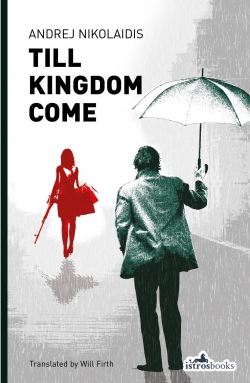
till-kingdom-come_5595626c38d7b_250x800rAs befits its title, Till Kingdom Come – the latest novel by Montenegrin author Andrej Nikolaidis’, his third to be released in English by London based indie publisher Istros Books – opens with a deluge of Biblical proportions. The heavens above the historically rich tourist town of Ulcinj have unleashed an extended season of torrential and relentless rain. As water rushes down the streets and seeps through walls and floorboards, the reader is quickly introduced to the narrator, a freelance journalist, a man who faces the world with reserved and stoic humour. Or so it seems. But then nothing is what it seems, and for our poor narrator most of all.

It soon becomes apparent that our hero has long suffered from periodic lapses in temporal/spatial reality. He has been known to just drift off, seeming to have lost consciousness to those around him, while he finds himself in some distant country or city previously strange to him that he suddenly knows intimately, until he wakes up back where he started. This dissociative tendency which has haunted him for years has left him with a rather slippery sense of self that, more than anything, seems to engender an abiding sense of ambivalence. That is, until the arrival of a man claiming to be his uncle causes him to have reason to doubt the veracity of his entire existence. He had believed that his mother was dead and he was raised by his grandmother, a belief supported with stories, photographs, a history and an unusual Jewish name. Discovering that his past was faked, sets him off on a passionate journey of speculation and self discovery, assistsed by a police inspector, directed by an anonymous email source and fueled by an obsessive fascination with serial killers and conspiracy theories.

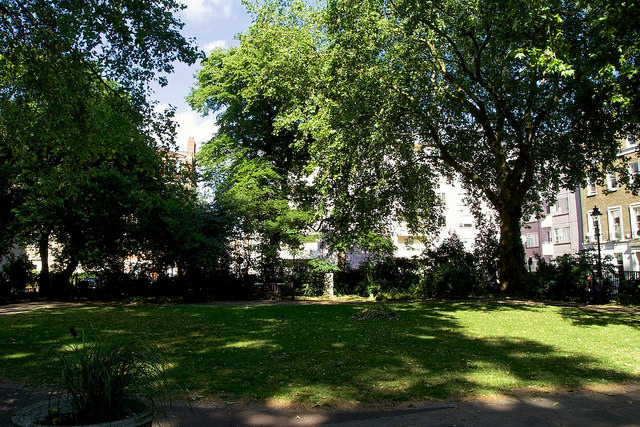
Biting in intensity, taking broad political and historical swipes at medieval and modern history – poking the bones of Oliver Cromwell and stirring up the horrors of the Balkan War – Nikolaidis is in fine form, building upon and expanding the canvases he painted in his previously translated works, The Coming and The Son. Ah yes, Thomas Bernhard would be proud. Yet, for its sarcastic humour, metafictional wanderings through Red Lion Square in London and up the stairs of Conway Hall to the tiny second story office of Istros Books, and the endless speculations about the role of the black arts in the exceptional acts of cruelty and violence perpetrated by mankind that have littered history; Till Kingdom Come is a starkly serious book. The narrator exists on a plane of his own, while his friends succumb to pressure of feeling too much, of being unable to cope with a world that is fundamentally uncaring. As he muses at one point:

“Alas, there is only one happy ending – the Apocalypse – even if it is only a promise. Everything else is just an open ending, a continuous series of open endings, whose resolution not only resolves nothing but further complicates already unbearably complicated things.”

For my money, Till Kingdom Come is a more mature and demanding work than The Coming and The Son, both of which I thoroughly enjoyed. Nikolaidis is a highly political journalist and here he is clearly intent to skewer politics and economics with more direct, at times shocking, barbs. The Bernhard inspired intensity of The Son is dialed back a little while the historical diversions that provided an intriguing counter commentary to The Coming have been worked back into the narrative. As in these first two Istros releases, translator Will Firth captures the mood and intensity seamlessly. And, on an entirely personal note, it was a delight to see Red Lion Square and the Istros Books office worked into the text. However when I visited this summer I did not magically find myself strolling down Oxford Street. I got hopelessly lost and had to be rescued from the Tube Station by the editor herself, but then London on a map and London on the ground for someone who has never been there is, well, a metaphysical rather than metafictional experience to say the least!

Red Lion Square, London UK Copyright JM Schreiber 2015
Red Lion Square, London UK
Copyright JM Schreiber 2015

Variations on a tragedy: Death in the Museum of Modern Art by Alma Lazarevska

The longest siege of a capital city in the history of modern warfare began on April 5, 1992 when Bosnian Serb nationalists surrounded Sarajevo. The assault would last for 1,425 days, almost four years. Inside the blockaded city, citizens tried to pull together as their city was bombarded with mortars and artillery fire, cut off from access to food, power and communication. Families were driven from their homes, faced the real possibility of detention, rape, torture and slaughter. And yet, in small corners of daily life, small embers of humanity were kindled and nurtured. Death in the Museum of Modern Art is a testament to the fragility and the resilience of the ordinary people trapped in the city, an evocation of beauty in the face of unspeakable horror.

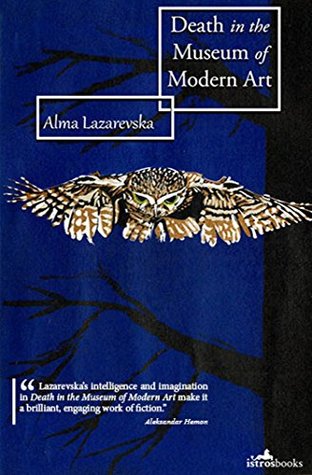
museumThis slim collection of six short stories by Bosnian writer Alma Lazarevska reads like a quiet musical meditation, a set of variations on a theme. Most of the stories are narrated by an unnamed woman, married, usually with a single child, a boy. The stories are imbued with a quiet humanness that is as comforting as the death and destruction that surrounds the characters is terrifying. To those of us who can only faintly imagine what it must be like to endure such conditions the effect is startling.

There is not a weak entry in this collection and despite the themes that do recur (in fact at times I wondered if the same family was at the core of some of the stories) each tale shines a light on a different angle of the experience of the residents of Sarajevo during the Bosnian war.

As a parent myself I was especially moved by the story “Greetings from the Besieged City”. Framed through a series of imagined picture postcard scenes this is a meditation on the desperate desire for a happy ending despite the awareness that in literature as in life, happy endings are elusive. While the knowledge of this truth drives a former classmate of the narrator mad, she herself tries to protect her own son from fictional unhappiness by changing the ending of the book she reads to him, The Seville Fan, a love story in which the hero dies:

“And so Pablo succeeded in not dying, which he was, after all, not accustomed to. Because, when I exhaled and put the closed book down, in its printed pages he was still dead. As I was pronouncing the sentences that were not in the book, it seemed to me that, for the first time in our reading sessions, our boy turned his eyes away from their fixed point. He glanced suspiciously at the book then at my face. A pedagogue would say that he was beginning to get used to the fact that parents tell lies. Or that they become accustomed to sentiment!”

The mother is conflicted by her need to prepare her child for the reality of death – of unhappy endings – and the desire to protect. But when “red-hot balls” start to fall on the besieged city, instantly transforming “human bodies into bloody heaps of flesh” the effort to create some variation of a picture postcard greeting against a landscape of horror is increasingly distorted. The impact is deeply unsettling, yet poignantly human.

The siege is a persistent presence in these tales. It drives the tenants of an apartment block from the odd niceties of shared accommodation to huddle in the basement in fear, or to flee the city if possible, in “Thirst in Number Nine”. The superstitious belief that each used match is a saved soul, leads a couple to use and collect precious matches to light cigarettes, rather than the candle that is equally vital in “How We Killed the Sailor”. This represents a perverse and symbolic luxury as civilian casualties mount around them. The wife wonders about these souls they pretend to protect as each day new faces grace the obituary pages of the paper: “Do they know that there is a besieged city somewhere in the world with the saviours of their souls in it?”

The title story “Death in the Museum of Modern Art”, features a narrator who muses on her involvement in a curious project. Bound for publication in a glossy magazine and an exhibit at the Museum of Modern Art in New York, photographs of 100 inhabitants of Sarajevo are to be paired with their answers to a survey which includes the haunting question: How would you like to die? In a besieged city how does one begin to answer a question like that?

Upon its publication, this collection received the “Best Book” award from the Society of Writers of Bosnia and Herzogovnia. In this lovely edition from Istros Books, the translator, Celia Hawkesworth, brings the gentle and shocking power of Lazarevska’s unique voice to life. I am extraordinarily grateful to Susan Curtis-Kojakovic, the editor of the wonderful Istros Books for selecting and passing this moving, haunting collection on to me. I can recommend it without reservation, these are stories that need to be read. After all, the Bosnian War only came to an end twenty years ago later this year and today, in so many parts of the world, ordinary families are still struggling to survive under the conditions of unimaginable conflicts.

Sadly the happy ending continues to be elusive.

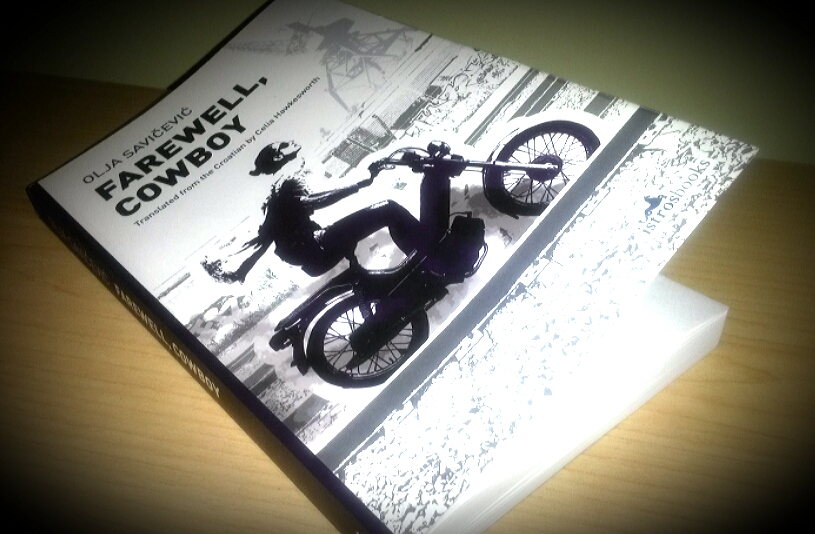
A little radiance: Farewell, Cowboy by Olja Savičević

“Everything’s the opposite of what it seems: hell is a comfort to the living, while heaven is ordinary blackmail.”

A deeply personal piece of unfinished business draws Dada, the spirited heroine of Farewell, Cowboy, from the towers of Zagreb, back to the grimy streets of her hometown on the shores of the Adriatic in this debut novel from Croatian poet and writer Olja Savičević. Once she arrives her first task is to relieve her older sister of the responsibility of keeping track of their mother who seems to be surviving on a routine of pharmaceuticals, soap operas and bi-weekly treks to the cemetery to visit the graves of her son and husband. But at the heart of Dada’s return to the Old Settlement is a need to lay to rest her questions surrounding the suicide of her beloved younger brother Daniel several years earlier.

2015-04-27 23.09.41Dada is feisty, in keeping with her fiery hair, an attribute she shared with Daniel and their late father who succumbed to at an early age to asbestos poisoning. An aficionado of the western film, spaghetti and American classics alike, her father spent his final years working at the local movie theatre and then, after the war, in a video store. He bequeathed to his son his love of western heroes and a jammed Colt pistol.

Upon her return to the Old Settlement, Dada settles in to her room under her brother’s fading movie posters, gets an old scooter running and cruises through town on her mission to piece together the past. She recalls the eccentric playmates with whom she roamed the streets and encounters a most beautiful young man who appears and reappears, usually playing a harmonica. Meanwhile it seems that a movie crew has moved in to shoot a film on a drab grassed expanse that will double as a prairie for a project spearheaded by no less than a legend of the bygone era of the spaghetti western.

The primary focus of Dada’s pursuit however, lies closer to home. The family’s neighbour, known to most as Herr Professor, a veterinarian who had befriended Daniel, has resurfaced. After a violent attack triggered by rumours about his sexual proclivities, he had disappeared. Months later, seemingly without warning, 18 year-old Daniel threw himself beneath a speeding express train. Now the old vet has returned. And Dada is certain he holds the key to her brother’s death; in fact she is bitterly obsessed with a desire to confront him, to confirm that he is the author of a cryptic typewritten letter that arrived a few weeks after the funeral, a letter that seemed to indicate that Daniel had been trying to contact the sender. Face to face over cake and barndy she cannot quite say what she wants. She grinds her teeth over his melancholy insistence that “I don’t ask anything of life other than a little radiance.” What on earth is that radiance he asks for, she wonders.

This postwar Balkan world is one of decaying architecture, graffiti scarred walls and woodworm rotted buildings. Tourists are moving in or passing through. Modern technology and old customs exist side by side. Dada is a most engaging heroine, her voice rings through the grime and dust of her environs with a cool crystalline clarity and youthful spirit. For example, after tracking down her former room-mate she recalls that her friend had considered herself the last emo-girl:

     “ ‘You’re certainly the oldest emo-girl, and probably the last’, I said.
I imagined her as a little old Gothic lady, but little old ladies, at least the ones here in the Settlement, are generally Gothic in any case, it’s in their dress code.
My room-mate and my Ma would get on well, I reflected. They could go to the graveyard together and shave their heads in keeping with the Weltschmerz.
I’m thinking as though she had settled in my head, I reflected, immediately after, anxiously. I really am my sister’s sister.
Sar-cas-ti-cal-ly, I reflected, in syllables.”

Savačević continually surprises with the originality and energy of her prose, translated skillfully by Celia Hawkesworth. Images are revisited, lines repeated, like refrains, throughout the novel, creating a very dynamic and original flow. Tragedy lurks in these pages, but what could be a dismal heartbreaking tale is lifted with humour and thoughtful asides. And that is the sense that lingers.

Farewell, Cowboy is another terrific offering from Istros Books, one of the wonderful independent publishers that can be harder, but not impossible, to source on this side of the Atlantic. And well worth the effort.

In praise of small publishers

In honour of World Book Day, I thought I would take a few moments to reflect on my growing obsession for small publishers. Once you start to turn your attention to non-mainstream literature, follow literary journals and publications online, or seek out works in translation; the world of independent publishers invariably opens up. As readers we live in a global world, and we engage in discussions with fellow readers spread far and wide, so it seems natural that you will hear about intriguing works that are not available wherever you happen to live. Sometimes, it’s simply a matter of time but years can separate releases in North America from those in the UK and Australia. Here in Canada we sometimes end up in between the two. Some small publishers do not yet have distribution on one side of the planet or the other, some may never manage it, but I would argue it is still worth trying to support independent publishers no matter where they are, whenever possible.

Why? Small publishers uncover challenging, interesting works, take chances, bring long ignored literature back into circulation, or into translation. Or both.

2015-04-23 13.08.58My two favourite books last year introduced me to two small publishers: CB Editions with Will Eaves’ The Absent Therapist and Istros Books with Selvedin Avdić’s Seven Terrors. Sadly both are publishers without North American distribution. That does not mean, of course that their books can’t be sourced, but the magic of a browsing reader happening to stumble across one of their titles on a bookstore shelf is lost. The joy of random discovery is denied.

After paying extra attention to the IFFP and BTBA longlists this year, I will now be watching out for titles from Pushkin, Open Letter, Deep Vellum, Archipelago among many others. Becoming more engaged as a book blogger and negotiating twitter has caused me to be distracted by some irresistible “shiny objects” – treasures like the stunning A Gothic Soul which arrived earlier this week, in a package covered in Czechoslovakian stamps, direct from Twisted Spoon Press. Oh yes, I could have downloaded it from Amazon for almost a third of what I paid but that would have been a pale substitute for what is truly a work of art and devotion from a small not-for-profit press.

2015-04-23 13.10.55And then there is And Other Stories. I don’t know how I was so late to the party but it was the release of The Alphabet of Birds by SJ Naudé in January that put them on my radar. Dovetailing nicely with my interest in South African literature, their publication of this brilliant debut of stories translated from Afrikaans as well as their ongoing release of works by Ivan Vladislavić was an obvious draw. But as soon as I learned about their grassroots funding of initial releases with subscription support and their engagement of readers in the process of exploring potential writers from around the world… well, I was sold. I subscribed right away. My only regret is that temporary financial uncertainty led me to opt for a 4-book rather than a 6-book subscription. A number of other publishers utilize subscriber support models so I hope in the future to extend my support further and wider.

Today my biggest thrill comes from walking into one of our local indie bookstores and finding a gem on the shelves. Of course I still end up placing special orders, through the same stores or from overseas. And, when there seems to be no option I order e-books but my preference for paper copies has grown after an initial blush of affection for the digital. I am even the sort of person who, having truly fallen in love with a book read electronically or borrowed from the library, just has to own a hard copy.

There must be diagnosis for this illness. But I don’t want to be cured.

Finding allegory in an ancient disease: Hansen’s Children by Ognjen Spahic

“Eternal hope: it kills us as much as Hansen’s does.”

Hansen'sIn his introduction to the second English edition of Hansen’s Children, BBC Correspondent Nick Thorpe visits a real life leper colony, the last in Europe, in the small hamlet of Tichieletsi in south-eastern Romania where a dwindling number of disfigured patients live out their final years, tended by medical professionals while enjoying the companionship and domestic tranquility of their close knit community. He then goes on to examine the way that Montenegrin novelist Ognjen Spahic re-envisions this leprosarium against the dying months of the brutal dictatorship of Nicolae Ceausescu in 1989; creating a perfect, if horrifying, template against which to explore questions of power, corruption and violence throughout the history of Europe – looking to the past, the present and the future.

The “children” of the title refers to the unfortunate souls infected by the bacillus first identified by Gerhard Armaeur Hansen. It is a term by which our unnamed narrator, our leprous Homer, refers to himself and his fellow inmates as he recounts the tale of life within the fenced grounds and the cold damp confines of the aging three-story building that serves to house the remaining inmates of the leprosarium. At the time he arrives they number eleven men and one ancient woman. Outside the gates, a fertilizer factory, ubiquitous on the Romanian landscape, belches out smoke and receives a rotating contingent of increasingly disgruntled workers. From his window he gazes longingly at the Transylvanian Alps, dreaming of freedom from exile and confinement. In fact we learn at the outset of his account that his dear friend and roommate, an American man named Robert, has secured false passports and made arrangements for their escape. This hope will not only feed our hero’s ego, but give him a will to live no matter what the cost, as conditions inside and outside the leper colony decline. In desperate circumstances, brutality knows no boundaries.

Perversely the leprosarium becomes a microcosm of the very divisions that divide human beings in the broader world. For example, when the inmates become aware of a new scourge on the rise outside their gates, HIV/AIDS, two men who have fallen in love will suffer the consequences because “this new disease was misunderstood and homosexual acts per se were seen as spawning the new evil. Mstislaw and Cion were shunned… like lepers. It was kind of understandable.” Mirroring the deteriorating conditions unfolding across Romania, and presaging the fate that awaits Spahic’s own Balkan homeland; power struggles, violence and death escalate within the bounds of the small community. As the conflict to free Romania approaches its final days, helicopters and gunfire splitting the air, our narrator lies in bed and imagines what such a new world could bring. He realizes the sad truth: “I knew that even in a world like that I would be where I was now. I would dream the same dreams and speak the same words. I would remain a leper.”

The picture this novel paints is not a pretty one. It is however strangely engaging and, in the end, deeply moving. The graphic, disturbing details of the progressive ravages of the cursed disease on the bodies, organs and functions of Hansen’s children is painted with a healthy serving of satire. Black humour and tragedy are deeply entwined.

Apart from this novel, only a few of Ognjen Spahic’s short stories have been translated into English although he has published three story collections. Hansen’s Children, which was originally released in 2004 when he was still under 30, has received several important European awards.His most recent story collection won the 2014 European Union Prize for Literature for Montenegro and in an interview on the site he describes himself as more of a short story writer than a novelist and speculates that prizes can increase international attention and encourage translations. I, for one, would be keen to see more.

Note: In addition to his story “Raymond is No Longer With Us – Carver is Dead” which was included in the anthology Best European Fiction 2011 (Dalkey Archive Press), the story “All of That” can be found on the online journal B O D Y and the title story from his latest collection Head Full of Joy can be found at the European Union Prize link above (following the original Montenegrin version).

Hansen’s Children (2nd edition), 2012
translated by Will Firth, Istros Books

Channeling Bernhard in the Balkans: The Son by Andrej Nikolaidis meets Bernhard’s Gargoyles

SonThere comes a moment in Andrej Nikolaidis’ novel The Son where the unnamed misanthropic narrator, confronted with a hideously deformed family of lepers who have taken up residence in an abandoned car park in the Montenegrin city of Ulcinj, imagines that he is “a piper with a funny Tyrollean cap, which Thomas Bernhard would find laughable, and (…) dressed in green knickerbockers with suspenders like Heidegger used to wear” who proceeds to march through the streets of his home town gathering a following of the wretched, desperate, and diseased denizens of the streets, dark corners and hovels and leading them right down to the seashore, where he proceeds, walking out across the water, while the “grisly army” he has amassed disappears beneath the waves.

The Son is a dark, unrelenting journey into all the misery and disappointment that life and, those who claim to be your friends, family and lovers can bring. Our anti-hero is not a warm, generous soul. Admitting to his own perverse, gruesome obsessions in the early pages, he reports that his wife has just left him and he is bitterly alienated from his father. He perseverates about the cruelty of the forgiveness his father repeatedly bestowed upon him regardless of the destructive nature of his actions. He manages to vent anger at everyone he encounters, remarking at one point that he was “reminded once again that the nicest things we can say about a person is that one day they will die and cease to bother us.” As readers we are swept along on a scotch fueled odyssey into the heart of the city where a series of old acquaintances and disreputable characters seem to fall into his path where they are treated with a curious mixture of revulsion, pity and disdain. He is, in essence, the most vitriolic Bernhard monologuist transported from Austria to Montenegro and boiled down to the meanest bare essentials. By contrast, my current Bernhard read, his early break through novel Gargoyles, seems airy and light.

LosersPublished in 1967, Gargolyes was given its title in the English translation (the original German translates closer to something like distress or disturbance) presumably drawing attention to the grotesque series of characters encountered by the narrator, a son home from school, as he accompanies his father, a rural doctor, on his rounds to a series of isolated, ill and mentally unstable patients. The themes of madness, isolation and suicide recur as they make their way to Hochgobernitz where the aging Prince Saurau takes centre stage for the second half of the book, embarking on an increasingly intense monologue, mourning his own estranged relationship with his son who is away studying in London, and philosophizing about the hopeless and inevitable destruction and collapse of human society.

For my money, the characters that inhabit the pages of The Son are every bit as grotesque as those in Gargoyles, if not more. In both cases they serve as extreme, cartoon-like voices for exploring themes that are in turn horrific, humourous and deeply human, pivoting coincidentally around the relationships between fathers and sons. Amidst the rants against man’s inhumanity to man and musings about the madness and disease of modern society; a desperate compassion comes through. That is the compulsive beauty of reading Bernhard and, for those curious but afraid of the endless single paragraph style typical of most of his work, Gargoyles is a perfect introduction. For his part, Nikolaidis seamlessly transports the energy of Bernhard to the post Balkan War reality of a country he clearly loves passionately. As with his earlier book The Coming, it is also a dark meditation on Montenegro’s rich, complex past and uncertain future.

In a guest blogpost for Winstonsdad’s Blog (a great resource for works in translation), Andrej Nikolaidis reflected on his love for Bernhard and the influence he has had on his own work. Upon his first encounter with The Loser, (also my first introduction), the Balkan war was raging and he could see timely parallels in Bernhard’s existential analysis of Austrian society in a state of decay and collapse. He also finds in Bernhard the prose response to poet Paul Celan’s famous poem ‘Fugue of Death’ or ‘Todesfuge’. He hears the rhythms of Bach ring through the works of both men – and Bernhard was a musician first – envisioning Celan as a character who could have walked out of a Bernhard novel. With The Son, and a sound track updated to incorporate the noisy sound styling of Sonic Youth, Nikolaidis’ work carries the banner forward.

The Son by Andrej Nikolaidis (trans Will Firth) – Istros Books                                     Gargoyles by Thomas Bernhard (trans Richard and Clara Winston) – Vintage Books

As the year draws to a close…

At the beginning of 2014 my world was rapidly spinning out of control. There were clear indications that the extreme stress and toxic work environment I was living under was taking its toll. I was clearly struggling to hold myself together but like any good manic depressive I could not step aside and recognize the crisis that was unfolding. No one else in my life had the understanding to step in either and, in all fairness, I am not sure how I would have responded.

Now, at the end of the year, I have been out of the office for six months. My future is unclear. I had loved my work with brain injured adults and their families. It was challenging, rewarding and I was well respected. At least until I went crazy.

As soon as I walked away from my job I realized the price I had paid to build a career from community field worker to manager in less than a dozen years. I had intentionally alienated myself from people. I have always been a person inclined to isolation, shy in a curiously outgoing way. Public speaking does not phase me at all. I could speak to a crowd of 300, riffing on a theme if necessary, but face to face small talk is uncomfortable. The thought of baring my soul to another person in real time, over a coffee perhaps, is almost unbearable. In my life I have made few friends and had only two significant love affairs. And somehow I had managed to convince myself over the past decade or so that in addition to the challenges of raising children on my own, the social interaction provided by my work with hundreds of clients and professional colleagues would suffice. Close friendships and romantic relationships were not required.

I was wrong. But what now? I am in my 50s. I have repressed the very uniqueness of my history, that which had always set me apart. The very queerness of my being in the world. The ostensible and hard won success of fighting to be true to myself in the world was turned to dust in an instant. The road ahead suddenly looked lonely and long…

Slowly I am recovering. Much slower than I expected perhaps, but this unplanned respite has forced me to explore, re-evaluate and reach out. My therapist (thanks Jane) has been an important sounding board. Blogging and making contact with both bipolar and bookish fellow travelers has been vital. It has allowed a space for cathartic dumping. A medium for strengthening my ability to clearly articulate my thoughts and reflections. It has given me confidence to move out into the world closer to home.

Thanks to the fact that I have not been working I was able to volunteer at our writer’s festival and meet writers I admired from around the world, all of whom are in my age range. Financial constraints encouraged me to cancel my TV since I was generally using it as a mindless distraction. Consequently, reading and music have regained the attention they deserve. And when it is not -20C, like it is at the moment, I make a point to get out every day, frequently just to read and write at a local coffee shop.

So here is a song and a haunting video to carry you into the new year. It goes out especially to my brilliant friend of Blahpolar Diaries fame (infamy?) whose typically colourful ode to the therapeutic value music inspired this post.

An eclectic collection of my favourite reads of 2014

I am not a conventional book blogger and, as such, I only touched on a limited selection of the 45 or so books that I read this year. Sometimes I can’t help devoting a post to a book that has grabbed me or fits into the particular flow of my life which, since June, has been waylaid by mental health concerns. I do hope that in the new year I will have more of a bookish focus but I am still likely to concentrate on musing about books that resonate with life for me at that moment. I am a firm believer that we have a kind of karmic relationship with books, that when we encounter a book that encounter is coloured by where we are at that moment in time. It might be the perfect moment. But that perfect moment might be passed or not yet come.

At this time I am particularly concerned with innovative approaches to story telling, especially stories that seek to give life to real or difficult experiences. To that end I have veered into some contemporary experimental novels, not always with entirely satisfying results. However, three novels are clear standouts, one new, one translated for the first time this year and one from a few years back. I have touched on all three to a greater or lesser extent in past posts.

My Top Three:
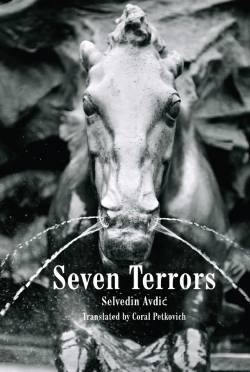
seventerrorsfrontcover_50acc7efa1d7c_250x800r Seven Terrors, is the first novel by Bosnian writer Selvedin Avdic (Istros Books). Briefly, this is the story of a man who takes to his bed for nine months after his wife leaves him, emerging only when the daughter of a former colleague approaches him to help her find out what happened to her father who disappeared during the war. What ensues is on one level a detective story into which come elements of Bosnian folklore, politics, criminal interests and an increasing sense of madness. The Balkan war is only approached obliquely, primarily in the accompanying end notes. The overriding theme is one of the damage, collective and individual, that the horror has left in its wake. The book concludes with musings about, terror, philosophy and Bosnian mythology, followed by seven blank pages for the reader to use to record his or her own fears. I read this book back in February and it has continued to haunt me all year.

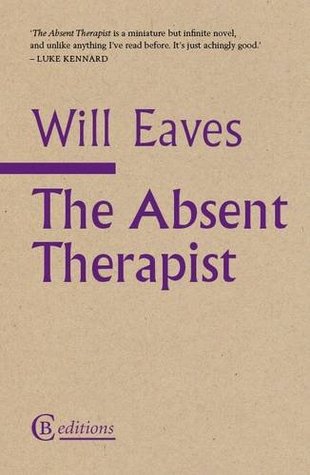
20797992The Absent Therapist by Will Eaves (CB Editions), a recently encountered treasure, is an inventive juxtaposition of the mundane everyday snippets of conversation, remembrances and idle thoughts, against the extraordinary musings and reflections about the nature of human existence. There is no singular voice, no story arc, no solid ground. But in this collection of fragments there lies the essence of a rich and deeply human experience, at once stripped down and laid bare as they are collected and made whole.


7199962


In a Strange Room by Damon Galgut (McClelland & Stewart), has been out for four years but I came to it this year, most specifically because I wanted to see how a personal experience could be pared down to its essentials and explored through the lens of time and memory. The result is some of the most evocative and precise writing about what it means to be grounded in ones self and in relation to others (or not); the allure of the road and the ambiguity of home; and, most vividly, the way that all truth lived is a fiction – one that is necessarily subjective. Galgut is quickly becoming one of my favourite authors and the opportunity to meet him and engage in an encouraging conversation about writing was the highlight of our local writer’s festival for me this fall.

Other books that had a particular impact on me this year included:

23626238I Refuse by Per Petterson. Recently translated, this latest book by another of my favourite writers is darker, richer and more complex than his masterful Out Stealing Horses. This book explores the memories of youth, the mystery and pain of mental illness, and the re-evaluations that mark mid-life. Like life, there are no neat, easy resolutions. I discussed this book in a recent post.


Pakistan


Train to Pakistan by Khushwant Singh. This was a recommendation from a regular poster on the brilliant Tips, Links and Suggestions (TLS) blog of the Guardian Books website, a must stop for any avid reader who likes to talk about books, reading and that endless TBR list. I had never heard about this classic tale of the brutal fallout following partition in India in 1947 as communities were dismantled and muslims relocated north to Pakistan, hindus south to Gujarat. Countless men women and children failed to make it across the border alive. I am ashamed that it took the death of the author just shy of his 100th birthday to bring this brilliant book to my attention and all I can say is, if you have not done so, read it. It is important, deeply moving and the last few pages are the most agonizingly intense you will ever read. Enough said.

BarracudaBarracuda by Christos Tsiolkas. Honestly this is a book totally outside my comfort zone, I just am not inclined to huge sprawling dramas that take on all of the big issues of class, race, family, love, sex, death, success, failure etc, etc and clock in over 500 pages. Give me spare novels with lots of space for unresolved tension and moral ambiguity, thank you. So I was blindsided by how much I loved this book. It was, in part, a book I needed to read at the time, as I was coping with shame, desire for redemption and loss of identity following my breakdown earlier this year and uncertainty around my ability to return to a career I loved. It is also a skillfully crafted, fast moving and intensely powerful novel on every count. And it contains the best descriptions of brain injury in adults that I have ever seen in literature – the main character has a brain injured cousin and goes on to find in himself (though he fails to fully appreciate it) a gift for working with the disabled. Tsiolkas was another author I was fortunate to see interviewed live and speak to at length. I found him to be absolutely passionate about reading and writing and extremely kind and generous with his time and enthusiasm.

There were many other novels I enjoyed and more than a few that were mediocre at best.

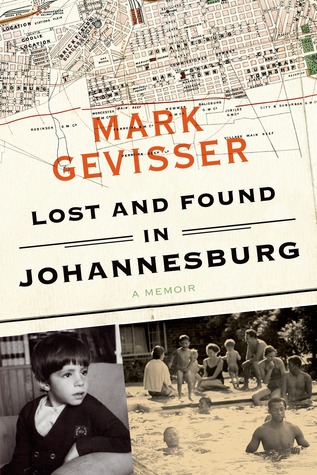
GevisserIn non-fiction, I only read a handful of titles, but my favourite was Lost and Found in Johannesburg by Mark Gevisser. The author came to my attention as the result of his recent article in Granta previewing his current involvement in a global survey of sexuality and gender diversity and, although these interests are also reflected in this memoir, the book is a fascinating family history tracing his Jewish ancestors back to Lithuania, recounting his upbringing in a segregated South Africa and his discovery through a childhood obsession with maps that there were places in his own city seemingly inaccessible. Communities, he would discover, that black people emerged from and returned to each day, often very close but in another reality altogether. He takes the reader on a journey back in time to the activists who challenged the colour barrier early on (a nice dovetail with my reading of Nadine Gordimer’s Burger’s Daughter this year), on a tour of the black communities as they exist today, and through the vivid horror of being held at gunpoint for three hours as he and two female friends were the victims of a home invasion in early 2012. It paints a stark and yet loving portrait of a difficult city.

SpaceFinally, my guilty pleasure is science fiction, generally veering to the weird. I regularly read J G Ballard and I did read Jeff VanderMeer’s acclaimed Southern Reach Trilogy this year and although I loved the first two books, the third seemed to try to resolve things in a most awkward and unsatisfying way for me. So my pick of the year was also my first read of 2014, the last installment of M John Harrison’s Kefahuchi Tract trilogy, Empty Space. It was just as haunting and grotesque as one could want, assuming one wants such an experience. But for me Harrison is in a league of his own and I am even enough of a geek fan to have purchased single story chapbook signed by the man himself this year. So there.

I may finish a few more books before the year is out but this is the longest post I have written to date, so I will stop here.

Happy reading in 2015.

The detective and the end of the world: The Coming by Andrej Nikolaidis

If you are a bit of a news junkie like I am, there is a lot of bad news on our TV screens and computers each day. Violent political upheaval, deadly viruses, floods and fires. But it is scattered and for so many of us our complaints are relatively minor, isolated. What if the signs suddenly started to rapidly multiply and spread across continents and communities. Would it herald the end of the world? Would we know or even agree on the meaning of the signs? Assign them to God, reduce them to science?

Translated by Will Firth Istros Books, available through Dzanc Books in North America
Translated by Will Firth
Istros Books, available through Dzanc Books in North America

The Coming, a wonderful novella by Montenegrin novelist Andrej Nikolaidis explores such questions from a rather unconventional perspective. Our hero is a private detective, a small town Philip Marlowe based in the ancient city of Ulcinj. He finds himself most comfortable providing his clients with the answers they want, regardless of whether or not he even manages to find the truth behind a crime or infidelity. This approach makes him popular with the locals who prefer to approach him  rather than the authorities. Consequently the quiet life he seems to desire tends to allude him. As the book opens he has become obsessed with the particularly brutal murder of an entire family which appears to have coincided with the burning of the local library.

Yet even stranger phenomena begin to threaten his routine. Snow starts to fall in June and does not let up. Around the world catastrophes – earthquakes, floods, raining amphibians – are reported with alarming intensity. Is this the Apocalypse, is the Second Coming finally at hand?

For our poor detective who faces this most peculiar string of circumstances with cynical humour and frustration, there is an added factor. Emmanuel, a child he fathered during a brief affair with an irresistible client, is now grown and has tracked him down from an asylum in the Alps where he has been confined after some serious mental breakdown. Through a series of emails Emmanuel shares details of his childhood with the father he has never met and offers his curious knowledge of messianic mystics, millennial cults and numerous attempts to calculate the date of the end of the world throughout western history. Perhaps because he himself has a mental illness, Emmanuel interprets the reported behaviours of many cult members or their charismatic, wildly erratic leaders in reference to what would be probable modern psychiatric diagnoses.

For myself, personally, in the months that followed my diagnosis with bipolar, I struggled to make sense of the role of my illness in the intensely spiritual experiences that I had periodically encountered growing up. During full blown psychosis, I could imagine that the frantic notions that I had the answer to the meaning of life were indeed in keeping with mania. I had the cramped and panicked nonsensical documents to prove it. But what about the earlier visions and spiritual experiences? Far less dramatic, frequently beautiful, these moments had filled me with such an assurance of the existence of God that I completed an honours degree in philosophy without once being troubled by any ontological questions. I could argue for or against the existence or nature of God while my own personal spirituality remained intact.

However, as I started to read about psychotic symptoms, I began to recognize similar features in the visions of Biblical prophets, the martyrdom of saints, the trance states of mystics and other ostensibly spiritual experiences. I could not divorce my own experiences from an underlying framework of biochemistry. My sense of personal faith crumbled.

Over the years as I have watched good people of faith rejected by their churches following mental breakdowns, I have been increasingly concerned by the double standard. After all who draws the line between mystical vision and clinical madness?

The Coming sees no need to draw those distinctions. I loved the way the pragmatic emails from the detective’s estranged son reach out to a world that may well be facing its final hours with the observation that the human desire for an Apocalypse can be compared to our urge to fast forward through a detective movie because we can’t wait to see how it ends.

We want answers – but we those answers to come from God or from science, not from the visions of those who are determined to be not in their right minds.