‘I thought femininity was something that could be learned’: Antiboy by Valentijn Hoogenkamp

The unique challenge that arises when one attempts to write about what it feels like when the experience of gender fails to conform with cultural and societal expectations is rooted in the problem of a lack of consensus about terminology. Whether language and meaning are defined by individuals with lived experience or those looking in from the outside, there is no one way to talk about gender identity. There are the absolutists who see male and female / woman and man as fixed black and white entities among both those who identify as transgender and those who deny our existence. And then there are those accept and relate to the notion of a spectrum or continuum in lived expression (reflecting but not necessarily mirroring the intricacies of genetic variation). But transpeople are, first and foremost, people, and our understanding of ourselves not only evolves and changes over time, it is typically measured against those we encounter in the world. And often that can involve many years of wondering where to find our own selves reflected. Just like other people who, for some reason or another, feel a persistent sense that they do not belong.

Antiboy, by Dutch poet and writer Valentijn Hoogenkamp, is an attempt to articulate the strangeness, the sorrow, and the satisfaction that can accompany the quest for a more natural way of being. This very spare memoir, translated in crisp, poetic prose by Michele Hutchison, chronicles the author’s lifelong inability to find himself within the female body and life into which he was born. When a genetic mutation for a rare form of cancer (one that will claim his mother’s life) necessitates that he undergo a bilateral mastectomy, he finds an unexpected opportunity to explore his identity. Much to the consternation of others, he rejects breast implants and opts for a flat chest:

‘When I got the diagnosis, I pictured my funeral and that nobody there would really know me because I’ve never spoken up. And, in the conversations I had at the hospital, they kept telling me what most women would do in my situation,’ I say. ‘I kept wanting to look over my shoulder and see if that woman was standing behind me.’

‘Because you don’t feel like a woman?’

‘I thought femininity was something that could be learned.’

This is a searching text. Unsentimental and questioning, not stubborn and defensive like some other memoirs that venture into this territory. Hoogenkamp speaks not so much of a boy inside, but an absence where a girl or woman should be. An emptiness. The surgery presents the means to open himself to physical transformation—breasts being such fundamental indication of womanhood—but his decision to forgo implants is not random, there is precedent reaching back much further. He describes the childhood of a social outcast. Set aside. “No one to walk hand in hand to the gym with, to go around to the classes with on my birthday.” Girls playing together in the schoolyard seem strangely alien.

I can do this. I have the same arms and legs as them, I am approximately the same size. I can be one of them.

It should be easy. Natural. But it is not.

Sexuality is another avenue for exploration. Sexuality and gender can easily be conflated, both can be subject to labelling by others or rejection of an individual’s right to define themselves. Hoogenkamp has boyfriends and a female friend she has sex with—a female friend who will, in time, transition to male and provide a little guidance along the way. But his intimate partners prove less flexible than he would hope once he comes out as non-binary. And he allows himself to be used:

My sexual orientation was being wanted. I was sick to death of feeling unwanted.

Although Hoogenkamp finds a space to exist between genders (but adopting male pronouns), there is so much in this short book that resonated deeply with my own experiences growing up without any context for my sense of otherness, my attempts to understand myself through questions of sexuality, and my ultimate decision to transition more than twenty years ago. There are many ways of feeling and talking about a gender anxiety or disconnect, just as there are many ways of trying to describe how one knows that their sex and gender are aligned. At one point Hoogenkamp puts that question to a number of non-trans-identified men and women and finds many hard pressed to articulate an answer. But at a time when differences in gender identity are increasingly being denied or weaponized, it is more important than ever to listen to the varied personal experiences of transgender people.

Antiboy by Valentijn Hoogenkamp is translated from the Dutch by Michele Hutchison and published by Seagull Books as part of their Pride List.
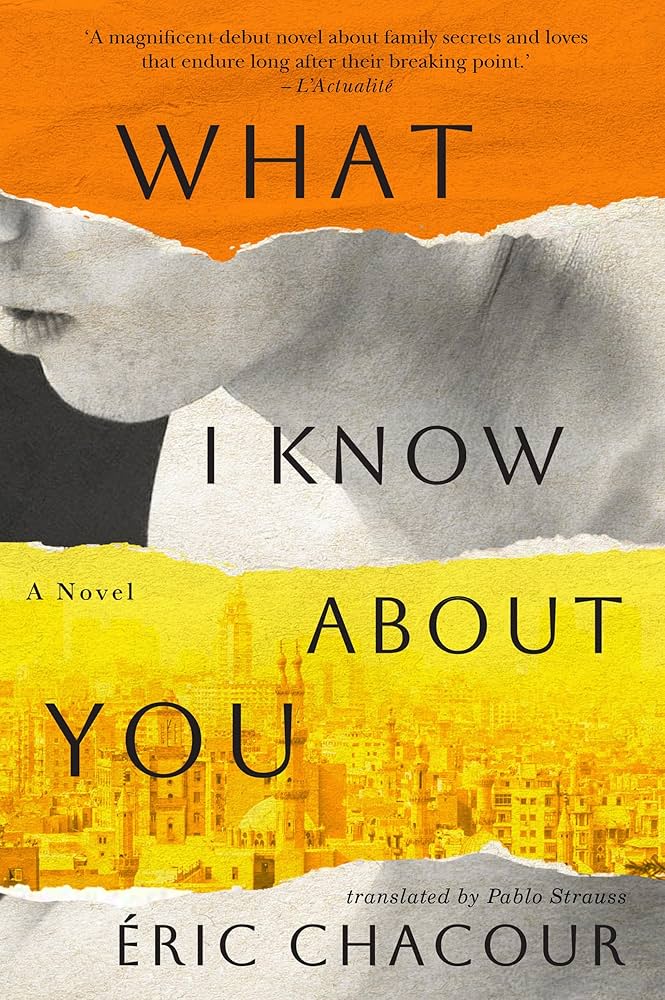
The secrets that define us: What I Know About You by Éric Chacour

Stories of queer love—hidden, unrequited, or impossible—tend to take on a special dimension when the temporal or cultural setting is one that outright forbids the expression of same sex attraction (and often even discourages public displays of opposite sex affection). A further challenge when bringing such a stories to life though, is the question of approach: can this tale be told in a manner that sets it apart from the burgeoning LGBTQ romance genre? Narrative is key, a metafictional twist perhaps, a less than reliable narrator, or an indirect angle through a spouse who never reveals what he or she knows. What I Know About You, by Québécois writer Éric Chacour, employs an inventive and surprisingly effective method to expose a story that spans forty years, from 1961 to 2001, and moves between Egypt and Montreal.

The novel opens in Cairo, or rather the narrative begins there, when the protagonist, Tarek Seidah, is twelve years old. He is out in the city with his father and his younger sister Nesrine. Their playful banter reveals that a certain order reigns. Even at this point, Tarek already senses that his life is set to follow an inevitable course laid out by fate and circumstance. As a member of a respected Levantine Christian family, there could be little debate. His father was doctor. He would be one too. In time he would marry and have a family, continue the family lineage, and the family practice.

It’s not hard to imagine that something or someone will threaten the ideal realization of this destiny, but what immediately sets this account apart is the perspective. It is a second person narrative, directed to Tarek, by a narrator whose identity will not be revealed until midway through the book, and at that point only to the reader, as the now-first person narration continues to be addressed to Tarek who has no idea it is even taking shape. It is a story—his own—that he wants to believe he has put far behind him.

As expected, Tarek does become a doctor and, by the age of twenty-five, he has taken over the family clinic after his father’s sudden death. The responsibilities to his legacy, his patients, and his mother weigh heavily, but he has his own project on the side that gives his life and career personal value away from home. He has established a weekly clinic in Cairo’s Mokattam slum area where he brings care attention to those who have little. It provides him with a great deal of satisfaction, but it also where Ali comes into his life.

By the time he meets the young man, Tarek is in his early thirties and has been married to Mira for less than a year. At first Ali approaches the doctor to ask if he will come see his mother who is ill but refuses to come to the clinic. These “house calls” soon become a regular practice, and, in time, Tarek invites Ali to come assist him on clinic days. For someone with little formal education, the boy is quick to learn and becomes a reliable assistant. As to how he earns money otherwise, Tarek does not ask, but there are insinuations that it is less than reputable employment. By the time he finds out, he has already started to become aware of his own feelings—attractions that defy the norms of age, sex and class. Their affair will threaten to destroy everything and everyone he cares for. His solution will be to escape, to emigrate to Canada, and leave his family behind. Even if it might have been possible to salvage his marriage:

What did you have to offer her in return? No real apology or explanation. A collection of monosyllables, I don’t knows and What can I says. You had long ago relinquished your duties as a husband. She wanted to know where you stood – as if the two of you were plotting geographical coordinates. Did you even know where you stood? Were there even answers to these questions? You observed her pain without trying to meet it halfway; your suffering and hers had grown so far apart they would never again meet. She didn’t mention Ali’s name, perhaps hoping you might broach the subject. The subject was never broached.

Once he is settled in Montreal, after retraining to meet Canadian standards, Tarek’s life continues with quiet dedication to medicine, alone and with little contact with his Egyptian past. Until it comes to confront him.

The second person narrative of the first section “You,” affords a certain spareness to the account of Tarek’s life in Cairo, events move swiftly and, at moments, possible details are surmised where the narrator does not dare to guess what might have done or felt. In fact, there is little direct insight into Tarek’s thoughts throughout the entire text. This is someone else’s version of the story, sometimes empathetic, sometimes tinged with bitterness. There’s also a peculiar sentimental note that slips in here and there, the echo of a piece of cliched wisdom perhaps. All of this will begin to make sense in the section, “Me,” wherein the narrator reveals their connection and motivation for the story they are telling. This is where the tension starts to build, as the long term implications of an attempt to bury the past are explored. Of course, given the clever way it unfolds, this is a book best not spoiled with too much advance detail.

Chacour was born in Montreal to parents who emigrated from Egypt, his family background likely allowing him to recreate the social and political mood of Cairo in the 60s, 70s and early 80s so seamlessly. This debut novel has won or was shortlisted for a large number of French language prizes, and now, in Pablo Strauss’s attentive English translation, it is again garnering attention. But, like many other queer novels that have ventured to entertain the possibilities for love when all the cards are stacked against it, a sadness and loneliness lingers.

What I Know About You by Éric Chacour is translated from the French by Pablo Strauss and published by Coach House Books.

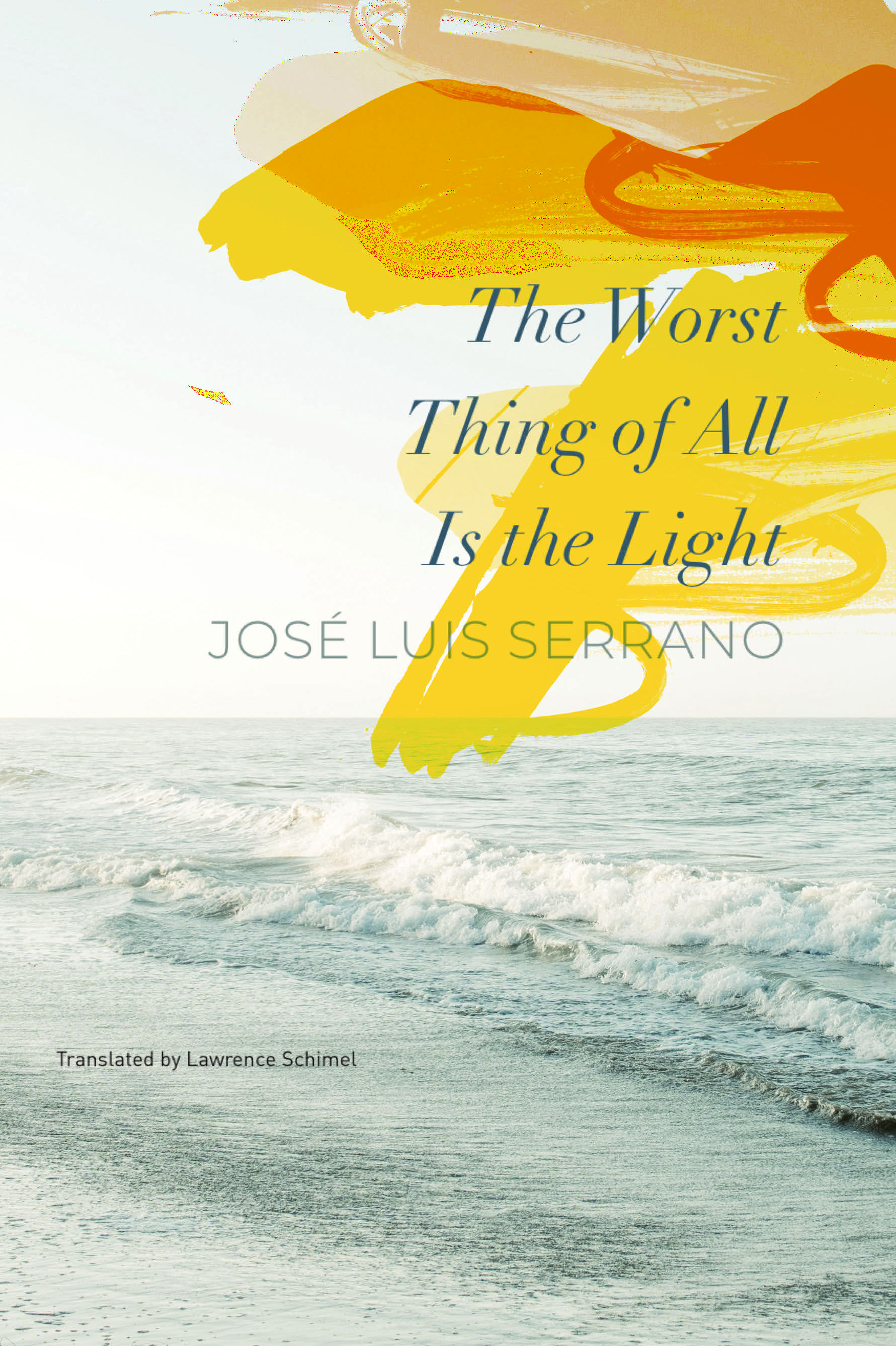
What is important is to love: The Worst Thing of All is the Light by José Luis Serrano

The worst thing of all is the light because it’s always the same, but we are not ever the same, and then that light reminds us of the others we were before, once, those others who did things that now we would not do, that we don’t admit to having done. In spring, the light of a clear, bright day, when the wind has left the air clean and pure, leads us to clearer days, days of youth, of holidays. Or that yellow light of autumn, also clean, sharp at the final hours of the afternoon.

Light, light, light. Such is the thread along which the thoughts of Edorta, a middle-aged man, run through the course of his free-flowing poetic reflections, a diary of sorts, addressed to, but not meant to be read by, his long-time friend Koldo. As he reaches for a way to understand and articulate his tangled and conflicted feelings, light serves as a mechanism of memory, sometimes consoling, at other times cruel. But Edorta’s musings are only half of The Worst Thing of All is the Light, an inventive, metafictional novel that sets an exploration of the boundaries between friendship and desire against a parallel examination of the relationship between imagination and reality.

Edorta and Koldo are the creations of Spanish writer José Luis Serrano, but within this double stranded novel, they are also the evolving characters taking shape in the mind of an “author” who is, presumably, a fictionalized representation of Serrano himself. In a series of journal entries, the author/narrator records the activities and conversations that mark each day of a vacation he and his husband are spending in Bilbao. His report, which details where they go, what they eat and what they talk about, is addressed to his husband directly, with the all familiarity two decades together has wrought. These dated entries, each illustrated with a scenic photograph, occur over the course of ten days in August of 2014 and appear to set up the proposed novel the author is planning to write: the story of a very close friendship—one that might even be described as love—between two heterosexual men. He’s not sure if he will be able to pull it off (his husband is even more skeptical) but he knows it will require an inventive approach, perhaps one that plays a fragmented diary of some kind against an author’s journal within which the potential narrative structure and details are formulated and debated. His husband plays the foil, devil’s advocate and, sometimes, the anxious spouse:

“But then, aren’t you going to write a normal novel?”

“I never write a normal novel. What’s more, I’ve always made it clear that I’m unable to tell a story, There will just be snippets, bits of what could have been the novel. Perhaps a diary by Edorta.”

“And these dialogues.”

“That’s right. Perhaps not these, but others I make up based on these.”

“And will I be myself? I’m worried about being myself in your novel, worried that you’ll put me in your novel.”

With chapters that alternate between the author’s journal and Edorta’s diary, the novel that exists is the one that the author is planning to write—the final project and a self-conscious analysis of that project in its formative state. This is where the metafictional game lies, where the boundary between literature and reality blurs and where questions about the “fictional” characters, their relationship, and the nature of love and attraction arise. As the author and his husband debate the possibility of platonic desire between men from the outside in so far as they can intellectualize beyond their own homosexuality, Edorta explores the matter from within, in trying to articulate the quality of his affection for Koldo while holding to an assumption of his own heterosexuality.

Edorta’s diary offerings are undated; each one is named after a song released by the Bristol-based UK independent Sarah Records(1987–1995), and opens with the artist name, catalog number, and a few lines of lyric. These sections resemble a form of stream of consciousness, admittedly composed in writing, but unfolding without clear direction or specific chronology as if Edorta is trying to sort out his feelings on the page. Consequently, allusions—to the light in particular—and scenes from the past are revisited repeatedly. Where he is writing from, temporally speaking, is intentionally vague, though he does often correct himself, pulling out of his revery to recall that adult life, relationships, and children have made the endless days of youth but a memory. Their occasions to actually be together are now few and time-constrained. His longing is palpable, his prose dense with fervid imagery:

Today I lug the grief of not being able to say the unsayable, fighting with the anguish of being and not wanting to be, of sinking into oblivion forever or of turning back, before even being, before myself, where there is not even oblivion. Life breaks loose from the poplars in tatters, and the branches, outlined in green-black shadows, shrink inward in their extinction of dying rapture, paralysed, surprised by the cold of November, overwhelmed in its frozen casket of gargoyles and waits.

The confluence of a grown man’s sense of loss with an adolescent ardor enhances the interrupted, unstructured memories and reflections that the novel’s “author” seems to want to capture with Edorta’s diary passages.

The two alternating streams form an intriguing novel that presents itself—openly—as a meditation on the nature of attraction, love, and memory within a discussion of the questions that arise in the process of formulating a story that a writer wishes to tell. But does it work as a cohesive whole? Certainly neither half of the equation—the author’s descriptive vacation diary or Edorta’s endless poetic entreaties to Koldo—would hold as a sufficiently interesting narrative on its own. Yet together they complicate one another, less to provide one complete story (even with the metafictional reshuffling of expectations that occurs as the novel nears a close) than to continually raise questions about the exercise of creating and inhabiting characters to flesh out a story that an author may or may not be able to realize. As such, much hinges on the idea of platonic love and the degree to which sexuality influences the way one conceives of and is able to realistically depict an attraction that differs from one’s own.

Are Edorta’s feelings for Koldo of a different order than anything his friend can ever return? On several occasions he tries to reassure himself that they are not. Certainly he recalls and cherishes moments of intimacy that seemed to have distressed and embarrassed Koldo. But he is unable to let go of the need to define and claim his love, whatever it may be, even if he would not be the first person, regardless of orientation, to be hopelessly attracted to someone who, shall we say, plays for “the other team.” Of course, as the author’s creation, one has to ask, who exactly—Edorta or his creator—is unable to accept that their affection for the other might just be of a different order? The author’s admitted obsession from the very beginning of the novel is: “What is important is to love whether or not it’s reciprocated.” However, if, at the end of the day, to love truly is enough is a question that may prove easier to ask than to answer.

The Worst Thing of All is the Light by José Luis Serrano is translated from the Spanish by Lawrence Schimel and published by Seagull Books as part of the Pride List.

Pride Month reading 2023—None of the Above: Reflections on Life Beyond the Binary by Travis Alabanza

I have long been ambivalent about Pride, but the rising waves of anti-LGBTQ, and especially anti-trans, sentiment seen over the past few years has made me very concerned. As a transgender individual who is white and fits visibly into the accepted gender binary, I have been able to stand in the shadows for a long time. For more than two decades. In fact, when I was a single parent supporting two children in a world without any legal protections on the grounds of gender identity, keeping my gendered history hidden was essential. On the occasions that I dared to out myself to a co-worker, job loss invariably followed. But, for the most part, especially outside of the LGBTQ world, I have encountered very few problems because I am older and exceptionally ordinary in my presentation. I pass so well that often I am not heard or believed when I try to tell someone that I am transgender.

For British writer and performer Travis Alabanza, on the other hand, none of the above applies. So when I heard about their Jhalak Prize-winning book None of the Above: Reflections on a Life Beyond the Binary, I knew I’d found my perfect read for this year’s Pride Month. And, even though our ages, lives and experiences differ greatly, I related more closely to many of the ideas they explore in this thoughtful and articulate examination of what it means to exist as an openly gender non-conforming person of colour in a world that is bound to the binary, than in most of the more “conventional” trans-themed books I’ve read. This is a bold and honest work that rides on a shifting current of hurt, uncertainty and self-affirmation against an unspoken pressure for trans identified people to be determined, self-assured, and often stubbornly binary in a world that increasingly strives to deny our validity. There is little room for doubt, less for admitting how exhausting it can be.

In our journey to ‘own our gender’, is it ever really our own? Or does it rely on us conditioning those around us to act and be a certain way too?

None of the Above is neither a typical memoir, nor an explicit defense/explanation of non-binary identity. It is, rather, something in between—a personal account structured around seven statements that have had a particular impact on Alabanza, as a youth and as a public figure, exploring their identity, sexuality and gendered expression. As they dissect these statements, there is a persistent question of how long an obviously gender-defiant presentation can be maintained before it simply becomes easier to move toward a more “acceptable” or “proper” presentation of transness. Of course, given the ongoing escalation of hostility directed at trans women, it’s not clear that such a progression toward hormones and surgery would be easier.

With chapter titles such as “So, When Did You Know?”, “But I Mean, Proper Trans”  and “This Ain’t A Thing We Do Around Here, Son,” Alabanza talks about growing up poor in a council project, their first joyful expressions of femininity, and their development of a successful career as a performer and theatre maker. The questions and comments they encounter come from curious, well-meaning friends, neighbours, fellow performers and critical journalists. Yet, in exploring their reactions and possible responses to these statements that weigh so heavily, there is a willingness to open up their experiences to concerns that intersect with those of others who may be white and/or cisgender. After all, the rigid strictures associated with the gender binary impact people who are not trans in many ways even if they also drive transphobic attitudes. The same gender binary can force trans people to consider medicalization as the measure of “true” transness and look at the openly queer and non-binary as troublesome distractions. For trans people of colour all of these contradictory forces are heightened.

Often what is projected onto those who are visibly gender non-conforming and non-binary, is that our existing, and claiming transness, will ruin it for those wanting (and deserving) a quieter life. Gender non-conformity and being outside of the gender binary cannot be seen as quiet: it is seen as purposefully choosing to cause trouble. To those so wanting a life of peace, others’ disruption can feel like a threat to that fought-for sanctuary.

This is a book that strives to come to terms with the feeling of being at odds with the gender one is assigned at birth, but not feeling comfortable identifying as a man or woman. It’s not a new phenomenon—I have friends who have identified as “gender neutral” for decades. What has changed, for better and for worse, is a wider public forum for people to see and be seen defying or transcending gender. I am grateful I transitioned before the advent of social media, but without the internet I would have had no community. Likewise, without the fabulous gender-bending musicians of the 1970s, I would not have survived my teens. As it was, I was thirty-eight before I finally had an understanding of the differentness I’d always known. But, even though my ultimate path was quieter and more conventional (to a point), my strongest connections have always been with those who stand at the intersection of masculine and feminine. So, for me, there was much food for thought in None of the Above that is beyond the scope of this brief reflection/review. Perhaps it will emerge elsewhere. Meanwhile, I will say that, for readers inside and outside the trans community, this is a very valuable and entertaining read (though one that might anger some on both sides).

None of the Above: Reflections on Life Beyond the Binary by Travis Alabanza is published by Canongate in the UK and will be published by The Feminist Press in the US in October.

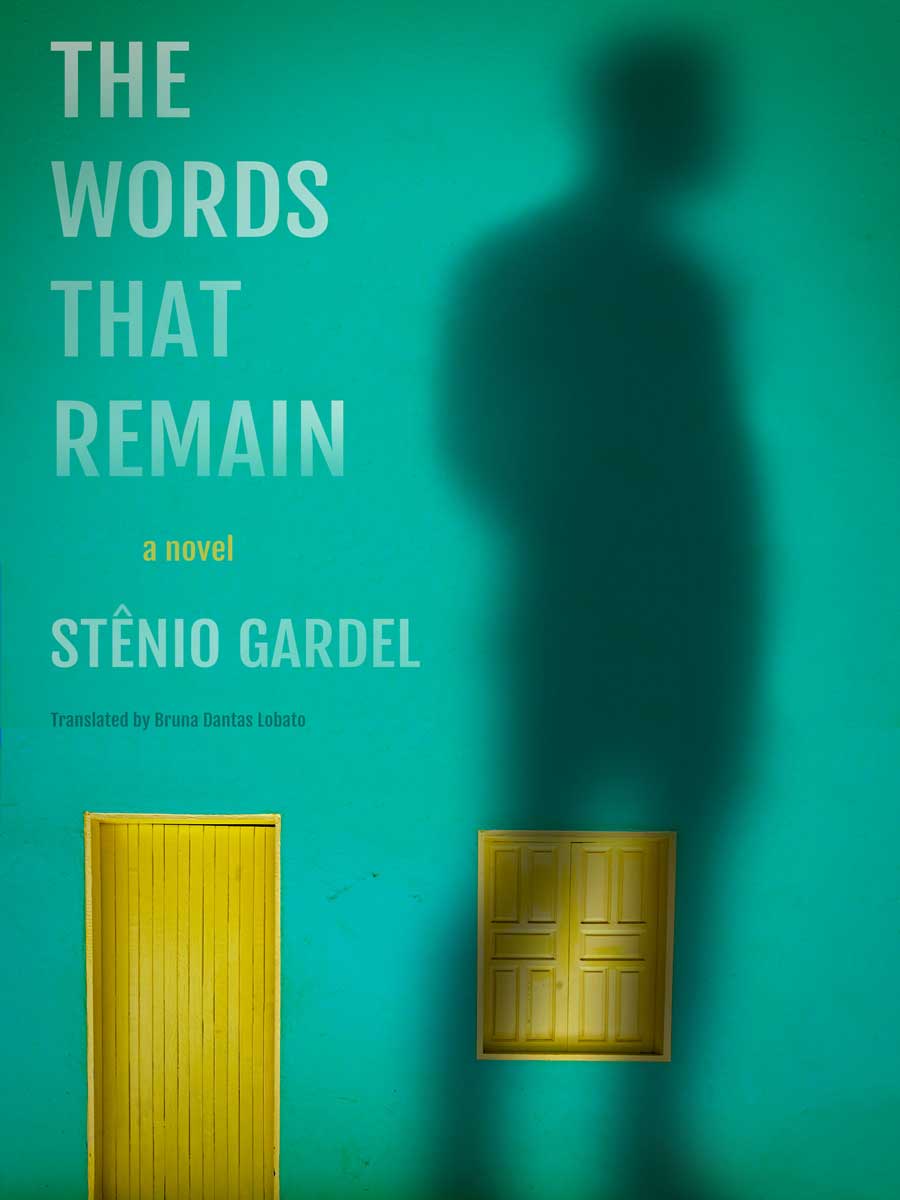
Of that which is left unspoken: The Words That Remain by Stênio Gardel

He knew how to sign his name, he had no reason to keep the ID card with just his thumbprint and a red stamp on top of it, illiterate. He had to change it, he was somebody else now. Knowing how to read and write was doing that him. Raimundo Gaudéncio de Freitas. Literate, alfabetizado.

The stories of those pushed out of their homes and communities when their sexuality or gender identity becomes known—or even for fear that their hidden truths might be revealed—have been, and are still, commonly echoed in societies around the world. For that reason alone it is important that such stories continue to be told. The Words that Remain by Stênio Gardel, a writer who was born in a rural part of northeastern Brazil, is an ambitious addition to the growing body of international LGBTQ literature.

This debut novel tells the story of an illiterate man who has carried a letter he has been unable to read for some fifty years. But, because it was written by the boy with whom he fell in love as a youth, he is unwilling to let anyone else read it to him. Now in his early 70s, he has learned the basics of reading and writing and yet the unread letter weighs heavily. The only son of a poor farmer, Raimundo was needed on the farm so he was denied the opportunity to go to school. As his father told him “writing was for people who don’t need to put food on the table.” Why then, when Cícero was well aware that he couldn’t read, did he insist on this form of communication rather than meeting at the river as planned so many long years ago? As he looks back over all the decades that have passed, Raimundo recalls his passionate affair with his childhood friend, hidden for a time from their families and their small agricultural community, and the violent, unforgiving reactions of their parents when they are exposed. When it becomes clear to him that he is no longer welcome in his family, Raimundo leaves, his final undecipherable message from Cícero carried close to his heart.

He makes his way to the Capital where he lives, closeted, for a quarter of a century. He supports himself picking up work with truckers, a life that allows him to enjoy the freedom of the open road and hide the fact that he is a man who likes men. His sexual indulgences are limited to the dark, dingy interior of a porn theatre when the opportunity arises. It is through the most unlikely friendship that he develops with a tough transgender sex worker named Suzzanný that he finally comes to peace with himself and settles into a new form of self-employment with a found family arrangement that, if not what he once imagined as a lovestruck young man, offers stability and affection. And, finally, the courage to learn to read and write.

There is much to like about this book and its intention, but the execution does it a disservice at times. Although he employs passages of third person narrative in setting the stage for this tale, it seems that Gardel is trying to achieve an immersive experience, pulling his reader into the world of a doubly marginalized man—gay and illiterate—by relying heavily on often fragmentary dialogue-driven scenes, in concert with extended passages of internal monologue that land somewhere between stream of consciousness and first-person remembrances. The chronology is choppy. Details from much later in the protagonist’s life are introduced early and out of context, whereas other events, such as the death of Raimundo’s twin brothers, are revealed awkwardly, some way into the story, leaving one to guess when it occurred. The result is a narrative that feels, especially through the middle third of the book, oddly pieced together, stretched thin. Overly simplified even.

With the final third, the narrative becomes much tighter and the timeframe starts to fall into place. Suzzanný, who is a wonderfully realized transgender character, acts as the catalyst that the protagonist needs to finally come into being as a fully fleshed person, a fact that then is also reflected in the storytelling. For someone who has been living in denial, in hiding  and filled with shame for so much of his life this is understandable, but in Raimundo’s personal story a certain depth is lacking until he finds companionship—a different kind of love that brings meaning in more ways than one.

In the end, sadness and joy blend together in The Words that Remain to paint a moving story of LGBTQ existence that does not attempt to hide the alienation and loneliness that marks the lives of so many people who do not fit into the expectations of their societies. Opportunities are lost perhaps, but resilience and self-acceptance prove more important in the long run.

The Words that Remain by Stênio Gardel is translated from the Portuguese by Bruna Dantas Lobato and published by New Vessel Press.

Pride Reading—Three: Love and Reparation by Danish Sheikh

My first two Pride reads for June 2022 were works by trans women, from India and the US respectively. My third read returns my attention to the Subcontinent, and dramatizes the impact of two important legal milestones impacting the Indian LGBT community over the past few decades. Part of Seagull Books’ Pride List, Love and Reparation: A Theatrical Response to the Section 377 Litigation in India is playwright and activist lawyer Danish Sheikh’s professional and personal reckoning with the effort to overturn Section 377 of the Indian Penal Code, the colonial era prohibition against “carnal intercourse against the order of nature” which had long been used to target members of the LGBT community, and the strange emotions that can arise when a lengthy battle is finally won. If that sounds like dry subject matter for theatre it is anything but. Sheikh deftly weaves material drawn from court transcripts and witness affidavits, with his own experiences and those of others to create a multi-voiced, engaging response to a life-altering legal decision.

It was, of course, not an easy road to decriminalization. Love and Reparation gathers two plays into one volume, a pairing that reads as both complimentary and necessary. Section 377 was first overturned in 2009, following a long, ultimately successful challenge of its constitutionality, in Delhi High Court, by the NAZ Foundation, an NGO. This welcome release would prove to be short lived; a week later an astrologer filed an appeal to the Supreme Court. In 2012, the final arguments in the case were heard over a six-week period. The first play, Contempt, draws on the court proceedings to creatively stage the legal arguments and affidavits that were presented to the judges. It is grounded in reality, as the playwright puts it, but is allowed to wander into passionate and poetic musings as witnesses share their experiences. The play ends with the judges’ fateful decision. In December 2013, the Delhi High Court ruling was reversed and same sex activity was once again criminalized.

A series of petitions challenging the validity of the judgement followed and after much delay, a five-judge bench was finally assembled to hear the matter in 2018. In September of that year, the earlier ruling was overturned, effectually decriminalizing queer sexual relations, in privacy, between consenting adults. The second play Pride, dramatizes the state the community finds itself in once the battle is over—both joy and uncertainty arise once the unifying bonds of the battle are no longer holding people together or framing their engagements with one another. The what now? moment. As Sheikh says:

Pride was my attempt to come to terms with—what? This time around, the object of my dissent was less clear. All I knew was that I had to write my way through this tangle.

Or, perhaps, to wrought this tangle into shape.

The drama revolves around sessions between a gay man and his therapist. He is trying to figure out why love seems so elusive to him. A character chorus of voices spread through the audience, speak to the legal case and the post-ruling experiences and presence of LGBT persons in Indian society.

For each play the setting and stage directions are simple and clear. That makes them easy to read and imagine in performance. By incorporating a blend of history, legal argument, personal accounts, and literary references, Sheikh has created drama that is both moving and at times surprisingly funny. In Contempt, the judges unwittingly supply the humour, pushing the lawyer to the point of absurdity at times and taking a little too much interest in the exact nature of unnatural carnal knowledge. The playwright admits he didn’t need to alter their words as found in the transcripts. The dramatized witness statements from a gay man, two lesbians and a transgender woman bring to life the reality of forced psychiatric interventions, innocent love affairs and brutal treatment from the police.

Pride demonstrates that legalization is not the end. There are, of course, more battles to wage to level the playing field for LGBT people, but there is also an uncertainty about how to live and love in a decriminalized landscape. How to repair all the years of existence up against the fear of being arrested simply for loving, for being yourself. The dynamic between the older female therapist and the young gay man whose conversations form the core of the play is very effective, and gives the drama it immediate emotional energy. As A. recounts his multiple failed attempts to find someone to love, T. challenges his conclusions.

A.  How does it work? How can it just come and go without warning? How is this not the most terrifying thing in the world, how can I wake up one morning and realize I’m out of love with this man who is otherwise perfect for me? How could Socrates wake up one morning and realize he’s out of love with me?

T.  Maybe he wasn’t perfect for you?

A.  Maybe

T.  And you know you weren’t perfect for Socrates.

A.  Possibly

T.  And then there’s the other thing.

A.  That I’m terrible at this stuff?

T.  That nobody is actually perfect for anybody else. It’s never not work. Sometimes you choose to do the work. Sometimes you decide it isn’t worth the work. You can’t choose how you feel, you can’t choose when it comes and goes. But that other part—that you can choose.

Their sessions are broken up by interludes during which the chorus of voices/characters speak to the legal fight against Section 377, the ways their lives have or have not changed since it was ruled unconstitutional, and, as needed, taking on a role within the therapy sections.

As an non-Indian LGBT person, I was not aware of the exact status of queer people in the country until more recently, but the final decision on Section 377 did come down following my first visit to the country, so it was of great interest to me. No matter what concerns face LGBT folk in the west, especially with the increasing pressure of more extreme right-wing conservative political influence, we are still accustomed to much more freedom and access to resources than our brothers, sisters and peers in many countries. The interesting thing for me in this book, particularly with Pride, is the examination of the degree to which achieving a measure of freedom can lead to a confusion or loss of meaning. It occurs at the level of the “community” leading to splintering and divisions, but it also happens in a deeply private way. Given my own personal journey, I have always held that I feel no shame but cannot embrace the concept of Pride. Without disclosing the protagonist’s revelation, I will say that this play has really caused me to question my conviction.

I feel this pair of plays holds much to appeal to readers interested in contemporary drama, legal debate, social justice and the evolution of LGBT rights, in India and beyond. The playwright clearly frames his motivation and inspiration for the writing of these plays in his introduction, while a timeline and an extensive resource list round out the supporting material. But most critically, at the heart of both plays are very important recognizable, sometimes disturbing, human stories that deserve to be heard.

Love and Reparation: A Theatrical Response to the Section 377 Litigation in India by Danish Sheikh is published by Seagull Books as part of their Pride List series.

Pride Reading—Two: This Body I Wore by Diana Goetsch

The second trans-themed nonfiction book I chose to read this month is, in contrast to my first (My Life in Trans Activism by A. Revathi), a literary memoir, but the transgender journey it details differs from the one that is commonly told because the details of the author’s actual transition are minimal and confined to the closing chapters. It is, rather, the story of one woman’s fifty-year-long odyssey to finally come to acknowledge what she had sensed from a very early age—that despite being born male, she was, and always had been female. So why did it take so long to acknowledge the truth? This Body I Wore is Diana Goetsch’s answer to that question, an eloquent chronicle of life that conspired to cloud the reality haunting her relationships and filling her closets for so long.

Goetsch’s account opens with her early unsuccessful attempts to form romantic or sexual relationships and her first forays out into the culture inhabited by cross-dressers. She is in 1980s New York City. The push-pull of her attraction to women and women’s clothing is exciting and confusing. She graduates college, lands a teaching position at the prestigious Stuyvesant High School and soon finds herself juggling secrets, while trying to build friendships and find a girlfriend.  By her early thirties she seems to be dropping all or most of the balls. That leads her back into her past to begin to trace the roots of her predicament.

The childhood described in This Body I Wore is one marked by little affection and an unhealthy measure of abuse. The youngest of two boys, Diana—or rather Doug (and briefly I am using male pronouns, this book spans decades of evolving and context specific usage)—is told by his mother that he was an “accident,” that is, unintended and unwanted. He grows up on Long Island, an athletic, sports-minded young man who seems to become increasingly and inexplicably unpopular. Although he is determined to keep his secret fascination with girl’s shoes and dresses and feminine undergarments to himself, it’s almost as if others sense a difference. Friends fall away. Doug cannot understand why; by the end of high school, unable to secure a college placement he feels left behind. I wonder how many trans people have experienced similar sensations of being out of step? I know I did.

The bulk of this memoir follows Diana’s efforts to build relationships with a series of women, most of whom she comes out to as a cross-dresser and with whom she explores social outings as female, but again and again her own male body becomes a barrier to full sexual expression. A trail of broken hearts and extended periods of loneliness carry her into middle age. Professionally, she spends a number of years teaching in a youth correctional facility, begins writing and publishing poetry, and tries to build a career as a writing teacher. Meanwhile, she increasingly dedicates her weary spirit to Buddhism, attending retreats and developing her practice to a point where she finally finds a way into her deepest self. Throughout the course of more than two decades she moves in and out a female identity that can be outfitted and carefully applied, then washed away and returned to the drawer. The decision to move forward is liberating, and increasingly magic as it gradually becomes her normal, everyday existence.

I enjoyed this book very much, it is a poetic and finely crafted tale. I will confess that I was reluctant to take it on. I have an uncomfortable reaction to memoirs, especially those with recreated dialogue and the inclusion of the stories that belong in equal part to those who come in and out of the story. Goetsch handles this well, with respect, but I did at times wonder about the women whose lives were exposed along the way. However, my greater concern was, as I mentioned in my previous Pride post, a general anxiety about trans stories, fiction or nonfiction, which I can never entertain as an impartial reader. As a transitioned man it’s impossible not to read myself into and against the stories of others and very often I find it an alienating and depressing adventure. Yet, This Body I Wore was a pleasant surprise.

Trans women and trans men typically have rather different trajectories, in both the coming to a decision to transition and in the treatment available. At least twenty or more years ago, the accepted norm for a “transsexual” man was a childhood as a tomboy, attraction to women, and commonly, for lack of any other place to seek an understanding of oneself, questioning sexuality or living as a lesbian. By contrast, my early reaction to the feeling that there was “a boy inside me” was not a desire to be male but the fear that my body carried signs of my wrongness, something I hoped I could learn to overcome. Although I could not believe it, I was pretty and reasonably feminine, not athletic or a tomboy or attracted to girls, but the gender insecurity was deep and increased as I grew older. I married and eventually had children, pushing to the back any careers or opportunities that I feared might reveal the truth about me. In the absence of any notion that trans men existed or what testosterone could accomplish, it would take thirty-eight years and an incredible emotional and mental toll before I knew I was not alone. Within two years of realizing the male feeling I’d fought against was me I was starting to transition. But my extended confusion, the searching for clues, the fear of revealing or even exploring what was happening, mirrors in a way the cross-dresser to trans woman scenario much more closely than the tomboy to butch to trans man route. In truth of course, transgender people are as diverse as any other people with unique social, cultural and emotional journeys to finally come home, but it is not uncommon for us to wonder, and debate, what it means to be “trans enough”.

It also struck me after finishing this book how flat Goetsch’s depiction of Doug seemed through the mid-section—the long adult years of exile. When Diana finally comes out to herself an entirely fresh energy enters the narrative, her excitement and growing confidence is palpable. Not surprising when I reflected on my own early years post transition. Once I was passing consistently and had established a new career and identity, I was forced to live stealth in my professional life so as to be able to keep a job and support my children—that is, I came out only to disappear into a closet. Still, the daily validation as a man and the thrill of no longer having to try to feel female, cast an unreal light on the past. It’s as if that life belonged to someone else as it drifted into the distance. No matter how lyrical the language, how vulnerable the account, I sensed a similar estrangement permeating the text. It makes sense and at the same time it’s refreshing because transgender memoirs can sometimes be combative and defensive. Goetsch avoids a tendency to overwrite her former existence; I imagine her maturity and her Buddhist grounding are at play. Transitioning later in life brings up such a sense of lost time, a mourning for what might have been, and that comes up here too, but briefly and with empathy and grace. In my own experience, transition is an ongoing adjustment and reframing for oneself in relation to a life lived across time and gender lines that leads to an understanding that those years “before” are not lost but a fundamental part of the person we become that a compatible sex/gender history could never afford.

This Body I Wore by Diana Goetsch is published by Farrar, Straus & Giroux.

Pride Reading 2022 – One: A Life in Trans Activism by A. Revathi

I have touched on the question of Pride before here on roughghosts. Each year as June comes around I face the increasing onslaught of rainbow enthusiasm with trepidation. It brings up a lot of complicated emotions for me as someone who technically falls within the LGBTQ spectrum but has never managed to find a home within that space. I am not ashamed of who I am, but I feel no thrill of connection with the notion of Pride and have some very painful memories of the rejection and intolerance I’ve encountered from within that “community.” However, every June I promise myself that I will face my anxieties head on with some sort of nod to the season, and, since my city does not celebrate Pride until late August, it’s more of an abstract goal. I don’t have to be out there, so to speak. I can read my way through.

This year I decided to read three books, two from India, one from the US. Two of these books are trans-specific, one of the Indian titles and the American work, both nonfiction. I don’t think I’ve read any trans-related nonfiction for at least twenty years, since the time when I myself was exploring transition and beginning my own journey. The works I have on my shelves and the common language and perspectives typically held within the transgender male support networks that saw me through the early years tend to be, to a new, vocal generation, offensively outdated. Distance and experience shape each trans person but, unfortunately, true diversity is not always applauded within groups of marginalized people who tend to be just as capable as any other group of fracturing along lines of race, class, sex, sexuality and gender, and insisting that those who are not like them do not belong. Trans people seem to be centre stage right now, inspiring plenty of negative and positive reactions in the process, but my own feelings about all of this, more than twenty years post-transition, are conflicted. I will just say that I am glad I came out and transitioned before the advent of social media.

The first book on my list is one I’ve been curious about for years, A Life in Trans Activism by A. Revathi, a trans woman and activist from India. Published in 2016, this book is a follow up to her popular memoir, The Truth About Me (2010). She does include an overview of her own basic life experiences: growing up longing to be a girl, running away from home to join a hijra community, her family’s often violent reaction, her eagerness to have surgery—castration for which she was awake—the dynamics within hijra society and the necessity to engage in begging and sex work for lack of other options. The world she describes is one which provides support but is also strictly hierarchical and sometimes cruel. It is an honest account, nothing is idealized, but she expresses pride in herself as woman and has tirelessly advocated for hijra and other transgender communities.

Revathi’s account of her work within not-for-profit agencies dedicated to supporting sexual and gender minorities, is quite telling. Initially she was welcomed to help expand their mandate, but it was often a fraught relationship in which, as a non-English speaking trans woman, she still battled the stigmas faced by hijras and other gender different persons. As her advocacy opened up to include the concerns of lower caste, dalit and adivasi (tribal) populations, the persistence of class biases even within organizations devoted to marginal groups ran deep. She spent a decade working with an agency in Bengaluru, an experience which offered a dignified, if less lucrative alternative to sex work, and taught her how to effectively advocate for trans people,  fight for their (and her own) basic rights—ID cards, passports—provide crisis support and legal resources, speak to international audiences, and much more. However, in the end it became clear she would never gain real respect from her co-workers. As she says:

We say that we work for the non-English speaking working class, for sexual and gender minorities. But I realized that as a director you are respected only if you are upper class and English speaking.

After leaving the agency, Revathi was again faced with the question of making a living without returning to the only avenues typically available to hijra. She decided to write a book. Sharing her story brought her attention and increased opportunities to speak for transgender people. Her memoir, originally published in her native Tamil, has subsequently been translated into English and a number of other Indian languages. Although a current of financial insecurity, family conflict and the tragic loss of friends and “chosen family” members runs through her life, I found her enthusiasm and heartaches to be endlessly moving. She seems to be forward looking, ever seeking to improve her own life and that of her community even when it has meant resisting the norms of traditional hijra culture. At the same time she alludes to moments of devastating despair along the way. Although my own experiences were not complicated by the extremes of class inequality and poverty faced by so many trans people in India, it was not and has not been easy. Discrimination, loss and isolation are very real for many of us. But what really excited me about this book is the extensive coverage of trans men who not only tend to be less visible, but lack the type of support network available to hijra who in turn frequently look at them with distrust, refusing to accept them as men. Revathi admits that she also had to overcome her own initial skepticism about the validity of the female to male experience—no surprise, I’m aware that many people, even trans women, still do not know we exist.

Included in My Life in Trans Activism are five profiles of trans men, transcribed from interviews the author collected, and two autobiographical pieces. I recognized these stories, but within the Indian context poverty, social class and the severe expectations and limitations placed on girls and women, especially in villages and small towns, vastly increase the challenges faced. The two personal essays were of particular interest to me, especially “Emperor Penguins” by Gee Imaan Semmalar who was involved in the theatre at the time of publication of this book but is now (I just had to search) a PhD candidate at the University of Kent. His account is striking because his mother, like mine, was supportive and his top surgery botched. Similarly, a long, lonely search for other trans men, a difficult decision to transition, then saving and searching for surgeons within a nascent resource network were challenges familiar to me, but this passage spoke clearly to concerns that never go away:

Health care (or the lack of it) is one glaring example of how trans people across caste along with the millions of poor dalits, Muslims, and adivasis of this subcontinent are denied basic rights. And so, every time a speeding ambulance goes past me on the streets, I relive my worst nightmare—of being in an accident and taken to a hospital on time, unconscious, with nobody to ‘explain’ why my body looks the way it does.

Health care where I live, even in an emergency, has been remarkably safe and respectful, but over the past few years I began to travel. I’ve made several trips to India where I am keenly aware of the relative security looking like a man affords me on streets where I sometimes see few women alone. But the thought of an accident or illness that would send me to hospital with a body that would instantly betray me is unsettling. I do have friends in the country who are aware of my status but I don’t think any realize what a predicament I could find myself in.

My Life in Trans Activism has an accessible, colloquial quality. Revathi was unable to physically write the book due to back problems, so she told her story in Tamil to Nandini Murali who translated it into English. Both women describe their working relationship as a special friendship and as such the narrative retains a natural conversational feel. What comes through repeatedly is Revathi’s passion and vision. She has observed divisions arise among members of the trans community within organizational settings, a not uncommon phenomenon within the wider LGBTQ community as well, but she continually speaks to unity that respects diversity, among trans people:

I believe that we are who we are. Being a transgender is all about who you are deep inside, not how you appear on the outside. Whether we call ourselves male to female trans persons, female to male trans persons, gender queer, we have to negotiate our transitions and our place in the world and struggle against oppression.

This is then, in many senses, a manifesto, one that ends with hope for a better world in which differences no longer tear people apart. Unfortunately, I’m afraid that may yet be a long way off.

A Life in Trans Activism by A. Revathi, as told to Nandini Murali, is published by Zubaan. Tilted Axis in the UK will be releasing this book in the fall of 2022. I imagine it may be updated as some of the legal circumstances impacting sexual and gender minorities in India have changed in the past few years. If so I will be curious to know her response to the current state of affairs.

Coming out elsewhere: Out of Line and Offline: Queer Mobilizations in 90s Eastern India by Pawan Dhall

Pride Month is typically a difficult time for me; it was worst in the years when I was trying to find a space within the LGBTQ “community.” For many, no matter what label(s) one lines up under, it can be an uneasy fit. Definitions are at once elastic and exclusionary and today, more than two decades after I first recognized myself as a trans man, I find myself drifting away from identities (in all aspects of my life) and exercising caution with language I do use to talk about who I am. However, there was a time—in the late 1990s and early 2000s—when self-identification was critical and a “queer” network (print, virtual and face-to-face) helped me come out, make the decision to transition, and cope with the fallout. Although my location and circumstances were far from those detailed in this book, it brought that time back to me all the same.

Out of Line and Offline: Queer Mobilizations in 90s Eastern India by activist and writer Pawan Dhall, traces the challenges, achievements and evolution of a fledgling  queer initiative in West Bengal and Odisha, one that was  driven by a need to provide connection, support, and sexual health resources to a variety of individuals who otherwise faced isolation, stigma, discrimination and physical threat. To read this account, one senses a time of darkness, concern and excitement, yet, although much has changed for queer people in India, especially in recent years, significant challenges still exist.

This slender, illustrated and referenced volume, part of Seagull Books’ Pride List series, presents a sort of textual and visual documentary of the early queer movement that began in Kolkata, eventually spreading out into rural areas and across state lines. As such it is a part of a broader story of queer life in India and across the globe, a story that in many countries still remains to be lived, let alone told. The author is a journalist with an archivist’s calling, and his intention is neither to explain nor justify the need for a queer movement; his focus is on the how, not the why. He relies on research into the archives of some of the earliest support forums in the area, and introduces many of the individuals who were involved with these groups or who sought their assistance at a time when resources were few and far between.  Where possible follow-up interviews were conducted in 2017. Allowing this story to unfold through real-life experiences, framed historically and in the present day, makes for a remarkably engaging read.

Central to the early queer mobilization as explored in Out of Line and Offline, is a support group called Kolkata Counsel Club, formed in 1993 by a small number of gay and bisexual men including the author. Dhall had already started publishing a queer themed newsletter on his own and it soon became the house journal of Counsel Club and a beacon for countless isolated, uncertain and questioning queer people who wrote letters seeking advice, validation or contact. As Dhall says, “This was the pre-Internet era; even acquiring a telephone connection was a tough task.” Younger folk coming out in the age of social media and a ubiquitous online world likely have little understanding of how vital books, photographs, and newsletters could be to people desperate to come to terms with feeling different, uncertain if anyone else like them exists. I remember it well.

In time, the group would grow and its sphere of influence would expand beyond that of men who have sex with men. Two female university students wrote to them, wishing to find a way to be together away from their families’ objections, so arrangements were made to help them “escape” to Delhi, a success that would not always be feasible for other such young women, sometimes with tragic consequences. Transgender women (often, but not always, hijras) would also find a place the queer movement, as well as representing an important target of sexual health advocacy, especially in poorer, rural communities. Of particular interest to me was the account of a young student who wrote to Counsel Club in 1999 from the small state of Meghalaya in Northeast India. An article on “women in love” had drawn their attention and through it they found the group’s mailing address. This individual (called “Ryan” in the book) claimed that although born a girl, they had the attitude and behaviour of a boy. Ryan was seeking help to have a sex-change. Dhall was struck by the absolute helplessness expressed and wrote two letters in response offering what empathy he could, albeit with a clarification that article that inspired the exchange had been about lesbians. Ryan did not write back, leaving much unresolved. Today Dhall is careful not to assign any label to his troubled correspondent—his own understanding has evolved with the changing awareness of a range sexualities and gender identities. This sensitivity is the mark of someone who has spent many years directly involved with the expanding queer community in India:

But I have also experienced the pitfalls of activist enthusiasm to get the terms right at the expense of the priorities of the person across me. Many of us have come around to believe (through day-to-day interactions, research and training) that there is no one way to be a man, woman, gay, lesbian, transgender, transsexual, Hindu, Muslim, Indian or anything else. Thus it should not have been my place to ‘correct’ Ryan if they somehow felt kinship with the women in love portrayed in the magazine.

Of course, Ryan’s sense of kinship makes perfect sense to me and, like Dhall, I hope they found a way to reach their goals. But I also wish more activists were similarly open rather than dictatorial in their approach.

In fact, Pawan Dhall’s holistic, inclusive perspective is the greatest strength of this book. He accepts the choices others make without judgement even if they are not immediately easy to understand. He sees value in all the people who become involved in advocacy and activism, recognizing that no matter what their background or identity (several of the key figures here are straight, drawn into work with queer communities by virtue of their professional or academic interests). Recent events—the repeal of Section 377 which decriminalizes consensual same sex activity and the passing of the controversial Transgender Bill—point to significant, if complicated, progress. Class inequality is still a critical issue as many queer people are marginalized, in urban and rural settings alike. And, of course, the ubiquitous online world of dating apps, support groups and hyper-visibility is at once a blessing and a curse. So there is always more work to be done and more people who need to be reached.

Out of Line and Offline: Queer Mobilizations in 90s Eastern India by Pawan Dhall is published by Seagull Books.

Seven years of roughghosts, now on to the eighth

May 31st, 2021. roughghosts is seven years old today. This space did not begin as a book blog, as I’ve said many times. I’m not sure what it began as other than a wildly impulsive fit of increasing mania. About three weeks after I posted my first sketchy musings, I crashed out completely, bipolar disorder effectively destroying my professional career and reputation. Much has passed since that time—cardiac arrest, my parents’ deaths, a dear friend’s suicide, travel to South Africa, Australia and India, depression, mixed moods, and diagnosis of bone loss. Oh yeah, and a global pandemic.

The only constant is the existence of this little blog which seems to sputter along and even grow in followers and visitors regardless of whether I add regular fuel to the fire.

I will confess that the creation of this space seemed to offer me an avenue to writing. I wrote poetry and stories all through my teens, but as I reached my twenties I became aware that I had little to say. I needed to live a little first. Then as I got older, I accumulated life experiences as we all do, yet the more I lived, the less I could channel any of it into writing. I could no more steal from my clients who all had fascinating stories than I could draw on my own. I discovered that I am not the kind of person who can violate the boundaries of others for the sake of writing, nor could I afford to push my own limits. By my forties I had found myself a closeted single parent whose gendered past had to remain a secret. It was not a space my twenty year-old self would ever have expected to be in, but I had a job, two children to support and no way out.

Except madness.

When I lost my job, my kids were in their twenties and I was in my fifties, I had this internet space and, well, I no longer had an excuse. On one level, writing was easy enough. My blog evolved into a bookish space rather quickly, my first essay submission for a queer themed book was accepted, and eventually I was writing critical reviews, occasional essays, and had been invited (recruited?) to edit for online publications. A scant few of these literary ventures paid but I didn’t care. I was writing.

And I was as out as possible under the circumstances.

Over the years I’ve chronicled my attempts to find a space within an LGBTQ identity and my increasing frustrations with the effort. During that period I became increasingly aware that I was stale dated. The trans man I know myself to be is not welcome by today’s trans community. Too old. Too old school. The essays and work I was creating fell on uncomfortably deafened ears when I shared them with people I had assumed were my peers. Not so when I reached beyond the LGBTQ world, but my fear of being either censored or misinterpreted has impacted my freedom to write. It’s like being closeted on the outside. I have, over time, shed all manner of identification with a space where I only nominally belong.

So, over the past few years, my literary ambitions have withered. My critical energies have, under the weight of intense editing responsibilities, all but disappeared. A medication change last summer affected my physical ability to read, a situation which is now slowly recovering. And although this blog has, in recent years, expanded my world and led to wonderful travel opportunities, the pandemic has taken its toll on my hopes for the future.

Now, having run myself into the ground on this, the beginning of the eighth year of roughghosts, there is probably nothing better to do than to start afresh. Find out, once again, where this blog might take me. Coincidentally, this is also the beginning of Pride Month. Something that no longer fills me with guilt and anxiety. It simply is.

So, going forward, I will set no goals, make no promises, and simply see where the next year takes me. Thank you to everyone who has kept me company thus far.

* All the images taken today on the Douglas Fir Trail, my favourite space.