In the dark days of winter, searching for words

Normally January and February are my favourite months. The days are growing longer, minute by minute; the days cold and crisp, the ground a snow-covered white, the sky a bright clear blue. A perfect time for reading.

13204111743_c2952b7f51_b
Copyright JM Schreiber, 2014

More than one week into the new year, I have a strange sensation akin to trying to make my way on one of those moving sidewalks that traverse the passageways of major airports. However, because the direction of the sidewalk and I are at odds, I’m making little progress. Lately my weeks have been punctuated by trips to visit my father, 1 1/2 to 3 hours each way, depending on whether or not we pick up my mother. Weather dictates travel, scrambling the best laid plans, and now that my father has moved on to the rehabilitation unit his stubborn determination has returned – for better and, sadly, for worse. Through it all, my mother, now so tiny in her old winter coat, is entertaining the thought that he might someday return home – home to a setting that neither one of them is really well enough to live in anymore. The potential challenges that lie ahead are fraying the less than stellar relationships between myself and my brothers, and these are still the early days. Meanwhile I have dealt with car repairs and a burst hot water pipe. And I don’t even want to venture into the messy, potentially violent eruptions that have threatened peace in my own house as my son struggles with an addiction to alcohol.

To say that my reading has been scattered would be an understatement.

I am afraid that, anxiety and exhaustion aside, I seem to be responding to an internalized sense of guilt that reading, and writing about reading, has no value if it does not generate an income. If your life does not presently include income generating activity – a circumstance that was not by my design but has afforded me the time and energy to read and write – then my literary pastime is even more self-indulgent. Or at least that is what my family members (and their voices that echo in my head) are telling me.

Of course I have been reading, but my focus is off.

I have just emerged from Rafael Chirbes’ forthcoming On the Edge, a testament to internalized guilt, regret and resentment if ever there was one; fuel for my abiding mid-life angst. I’m preparing a review for Numéro Cinq. Otherwise most of what I have read lately is not quite carrying me through. I find myself distracted and picking at pieces, reading on line journals and stabbing aimlessly at collections. As I said, my focus is off.

§ Finish Your Thought!

As in death, we are equalized in thought when we think that every mind in its effort to comprehend the world must come upon the unthinkable.

§ Think for Yourself…

…not others. There is no such thing as thought to spare, only to share.

Matches_Cover_Front_Mockup_07182015-216x346That said, I find that I do have an appetite for aphorisms and fragments. Perhaps that is the ideal antidote for a scattered new year. I am dipping in and out of S.D. Chrostowska’s MATCHES: A Light Book, over 500 pages of illuminating meditative thoughts about the contemporary quality of thinking, reading, and writing. This is not a work intended to be read from cover to cover over a few sittings, rather it is ideal for slow, thoughtful engagement. Light the match, let it burn for a moment, reflect for a while – return again and again, over time. The perfect companion I hope, to lead me back into reading when I feel I am straying and, more critically direct me to writing when fear I am losing my way.

§ New Line of Thought

Every new line of thought is a departure.
Or a new way of arriving where one already is.

11161999254_aee46c0c32_b
Copyright JM Schreiber, 2013

MATCHES: A Light Book is available from Punctum Books.

The illusion of reality: A Dream of Horses & Other Stories by Aashish Kaul

“A book is an enigma. Words that fill its pages present a shifty, relative universe. Through a reader, they create constructs where the past attempts to meet the future, the present arranging the meeting. In this present, as the reader receives and breaks apart the text – revives the past, contemplates the future – he, unknowingly merges the two and makes the present fluid, expansive, eternal: he defeats time.”

If the author’s medium is words – words strung together to hold a story until it can be read and unleashed by the reader, the reader who ventures into A Dream of Horses & Other Stories by Aashish Kaul is well advised to be prepared to follow those words on the paths they take, the forks they chose to follow, and the dreamscapes they uncover. And, if I advise said reader that they will emerge, in the final tale, on a boat on a lake listening in, no, almost absorbing, an imagined conversation between Jorge Louis Borges and Samuel Beckett, would that offer an indication of the journey in store? It should, but take that as an enticement. This is magical book. A magical book that celebrates the magic of books and traces the joys and heartaches that are bound to the process of translating the imagination into words on the page.

dreamhorsesThis slender collection of seven stories begins with two short tales, a parable about an archer who embarks on what starts out as way to occupy down time between periods of war, and becomes a mystical quest for knowledge; and a fable of sorts about a young child soldier, who wrenched from the opportunity to continue his education, finds himself ready to kill or be killed for the sake of a book. These stories follow a traditional, almost ancient form of storytelling. But from that point on, the influence of the two literary masters whom we will eventually meet on the boat mentioned above begins to infiltrate and inform the narrators, all writers themselves, who will carry us through the remaining tales.

In his enthusiastic introduction to this volume, Scott Esposito describes this collection as “seven dreams that Aashish Kaul has persuaded us to take for reality” but, as we discover, even the narrators often have a difficult time separating dream from reality in their own existences, creating a shifting maze, or labyrinth that must be negotiated. In the end the reader (and the narrator) can do little more than surrender to this blurred line between truth and imagination, and the experience of fiction is laid bare as an act of the suspension of disbelief.

The longer stories that form the centrepiece of this collection highlight Kaul’s ability to create dreamlike environments – landscapes or cityscapes – that contain and unfold for his characters as needed. The natural settings are typically isolated, atop mountains, amid pine forests or in desolate dry locations. Several stories take place, at least in part, in Paris, a ceaselessly romantic backdrop with bridges, wrought iron railings, gardens and the looming structure of the Eiffel Tour. The former become settings of solitude and refuge from the noise, intensity and heartache of the city. Time functions on different measures in different places, compresses or expands, hanging most heavily over the writer who fears he has lost his voice.

In “The Light Ascending”, a writer who is suffering from a creative block, finds himself retracing his steps daily along paths leading from the Institute where he is staying through forests and up hills, seeking answers, inspiration, a clue to the path he should follow. The one book he has published to date had the primary benefit of connecting him with the famed, but elusive writer “JC”. One night, drawn into the woods by the sound of a flute playing he will lose his way and discover that he is “in a dream, mine or another’s, I can’t tell.” He will find himself in a cottage engaged in a most unusual game of chess with JC himself – a game in which he is compelled to begin naming the pieces: Borges, Joyce, Faulkner… Beckett. As his blockage lifts, he is overwhelmed by the enormity of what he has come to realize about his chosen craft.

There is a melancholy chord that sounds throughout these pages. The question of capturing the moment and transmitting it in the written form becomes a philosophical question and a practical concern for several of the narrators. In the title story “A Dream of Horses” and the longest entry, “Tahiti”, our authors each have a story to tell inspired, no compelled, by a lost romantic experience. In the former story, the narrator is recovering from a long illness during which he was simply unable to write. He wants to recapture a particular autumn in his life, but reflects that we “breathe in the present, but are alive only in retrospect, in a time long lost to that treacherous monster: memory.” How then to do justice to this moment in time? When he finally feels up to the task, he finds that the effort is draining:

“How easily I tire. How difficult it seems to move your pen to shape words, sentences, stories. It has become a labour, a mere physical activity. And yet, I have not written, no scribbled, more than a handful of lines. So much the better to roll out words and sentences in your memory, where they float calmly and because they are formless always retain some element of the truth.”

And here he turns, as if abandoning the pen, to address directly the woman whom he met that autumn. In second person, he is able to unfold the story he wants to tell from her perspective. By the end we see why this is the only sensible way to attempt to tell the truth of what lies ahead.

“Tahiti” also involves a writer with a woman from his past who has returned to haunt his imagination. As the story opens he has sought respite from city life in an unnamed Asian country where he has come to live in a compound high atop a mountain. Here he discovers a library perched on the edge of a precipice over a deep ravine tended by a nearly blind librarian who knows and recognizes every volume on the shelves. In this environment our writer is able to rekindle an energy for writing through his conversations with the librarian and the books he borrows. Woven against this narrative is the story of his love affair with the enigmatic woman who calls herself Tahiti. As he moves back and forth in his story, the boundaries between reality and dreams – or rather, the realistic and the fantastic – begin to blur, raising the question whether a narrator is in control of the story he tells or subject to lose his own grounding in reality, whatever that is, before the tale is over.

For the reader of A Dream of Horses & Other Stories, the lines are so subtly shifted and so evocatively rendered that the sensation, as the last story draws to a close, is one of a renewed appreciation for the power of words and the books that contain them to inform, transform, and entertain. The imagined encounter between Borges and Beckett that rounds off the collection is followed with a brief essay in which Kaul compares the two writers, drawing the parallels that he sees in their work. This concluding piece nicely places into perspective much of the imagery and ideas encountered in the preceding work and brings this book to a satisfying conclusion, leaving the reader free to explore his or her own dreams. Maybe even those dreams that are calling to be put into words.

Born in New Dehli, Aashish Kaul presently lives in Sydney, Australia. A Dream of Horses & Other Stories was published in 2014 by Roundfire Books.

In praise of small publishers

In honour of World Book Day, I thought I would take a few moments to reflect on my growing obsession for small publishers. Once you start to turn your attention to non-mainstream literature, follow literary journals and publications online, or seek out works in translation; the world of independent publishers invariably opens up. As readers we live in a global world, and we engage in discussions with fellow readers spread far and wide, so it seems natural that you will hear about intriguing works that are not available wherever you happen to live. Sometimes, it’s simply a matter of time but years can separate releases in North America from those in the UK and Australia. Here in Canada we sometimes end up in between the two. Some small publishers do not yet have distribution on one side of the planet or the other, some may never manage it, but I would argue it is still worth trying to support independent publishers no matter where they are, whenever possible.

Why? Small publishers uncover challenging, interesting works, take chances, bring long ignored literature back into circulation, or into translation. Or both.

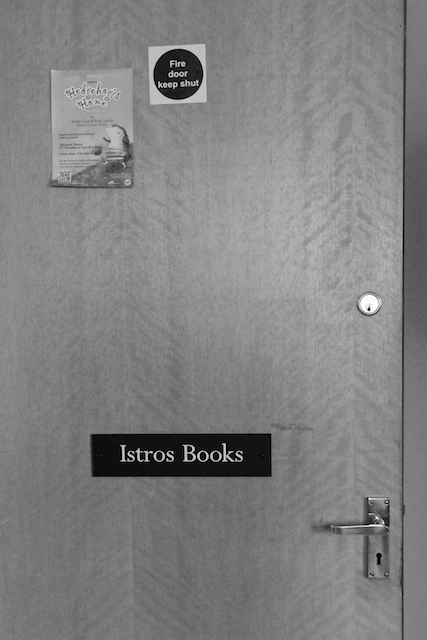
2015-04-23 13.08.58My two favourite books last year introduced me to two small publishers: CB Editions with Will Eaves’ The Absent Therapist and Istros Books with Selvedin Avdić’s Seven Terrors. Sadly both are publishers without North American distribution. That does not mean, of course that their books can’t be sourced, but the magic of a browsing reader happening to stumble across one of their titles on a bookstore shelf is lost. The joy of random discovery is denied.

After paying extra attention to the IFFP and BTBA longlists this year, I will now be watching out for titles from Pushkin, Open Letter, Deep Vellum, Archipelago among many others. Becoming more engaged as a book blogger and negotiating twitter has caused me to be distracted by some irresistible “shiny objects” – treasures like the stunning A Gothic Soul which arrived earlier this week, in a package covered in Czechoslovakian stamps, direct from Twisted Spoon Press. Oh yes, I could have downloaded it from Amazon for almost a third of what I paid but that would have been a pale substitute for what is truly a work of art and devotion from a small not-for-profit press.

2015-04-23 13.10.55And then there is And Other Stories. I don’t know how I was so late to the party but it was the release of The Alphabet of Birds by SJ Naudé in January that put them on my radar. Dovetailing nicely with my interest in South African literature, their publication of this brilliant debut of stories translated from Afrikaans as well as their ongoing release of works by Ivan Vladislavić was an obvious draw. But as soon as I learned about their grassroots funding of initial releases with subscription support and their engagement of readers in the process of exploring potential writers from around the world… well, I was sold. I subscribed right away. My only regret is that temporary financial uncertainty led me to opt for a 4-book rather than a 6-book subscription. A number of other publishers utilize subscriber support models so I hope in the future to extend my support further and wider.

Today my biggest thrill comes from walking into one of our local indie bookstores and finding a gem on the shelves. Of course I still end up placing special orders, through the same stores or from overseas. And, when there seems to be no option I order e-books but my preference for paper copies has grown after an initial blush of affection for the digital. I am even the sort of person who, having truly fallen in love with a book read electronically or borrowed from the library, just has to own a hard copy.

There must be diagnosis for this illness. But I don’t want to be cured.

Some reflections on my first experience with (shadow) jury duty

The official shortlist for the Independent Foreign Fiction Prize was announced within the last 24 hours or so. A few hours before that, the shadow jury that I am part of revealed its selection of its six book shortlist. How do they match up? Only on two points. With The End of Days by Jenny Erpenbeck (translated by Susan Bernofsky) and Haruki Murakami’s Colorless Tsukuru Tazaki and His Years of Pilgimage (translated by Philip Gabriel). Personally I am pleased with the first title but would not have chosen the latter for either list. But that is the way it goes. The experience of reading alongside 10 other bloggers has been challenging, exciting and a terrific insight into the joys and frustrations of shadow jury dury. That includes: finding terrific new books, dragging oneself through books that – without obligation – would have been abandoned at page 30, and watching some books you want to champion proceed while others fall by the wayside.

iffpAnd we are not done yet. A winner, the shadow version and the real one, will be announced on May 27. We will see if we agree. The longlists are as follows:

The Shadow IFFP Longlist (with links to my reviews):
Boodlines
Marcello Fois (tr. Silvester Mazarella)

Colorless Tsukuru Tazaki and His Years of Pilgrimage
Haruki Murakami (tr. Philip Gabriel)

The Dead Lake
Hamid Ismailov (tr. Andrew Bromfield)

The End of Days
Jenny Erpenbeck (tr. Susan Bernofsky)

The Ravens
Tomas Bannerhed (tr. Sarah Death)

Zone
Mathias Énard (tr. Charlotte Mandell)
Added by jury members who feel it was an oversight
(I have yet to complete and review)

The official list, in addition to the Murakami and the Erpenbeck titles, includes the following:

By Night the Mountain Burns
Juan Tomás Ávila Laurel (tr. Jethro Soutar)

F: A Novel
Daniel Kehlmann (tr. Carol Brown Janeway)

In the Beginning was the Sea
Tomas Gonzalez (tr. Frank Wynne)

While the Gods Were Sleeping
Erwin Mortier (tr. Paul Vincent)

I believe that our shadow jury has presented a solid shortlist, but I must confess that my favourite overall title, While the Gods Were Sleeping, did not fare well on the shadow poll so I am secretly happy to see it receive the attention of the official shortlisting. Likewise I am delighted to see And Other Stories, one of my favourite independent publishers, make the cut with their first ever longlisted title.

So what have I learned so far?

– There is a great community of online book bloggers and I have “met” so many avid  readers of translated fiction (and other literature too)
– The jury process is one of compromise and strongly divergent opinions between readers based on taste and inclination
– I have never read so many books in such a short time – I can do it – but it is a relief to have the pressure off a bit (I do not envy the Booker judges their task!)
– Twitter can suck up hours of your life, but again, is a great way to engage with readers around the world (and with authors and publishers too which is very cool)
– My TBR pile continues to grow astronomically the more that I blog about books and encounter fellow readers and amazing indie publishers

Looking to distant horizons: A few reflections on reading from afar

It is not entirely clear in my memory, but by this time last year, the stress of trying to hold myself together in the face of mounting pressures in what had become a deeply dysfunctional workplace, was taking a serious toll on my emotional and mental health. I have not been able to return to regular work since last June. I have struggled to gather the energy to attend to many of the regular household tasks that seem to pile up week after week. My cameras, once my faithful companions, have hardly been touched. The unbearable sameness of my city fails to inspire and seems to be closing in on me despite a remarkably mild winter. But one activity has remained undiminished and if anything has flourished with the extra time I have these days. I am talking about reading.

A fraction of my shelves, some read, most not (yet).

Most of the books I read take me elsewhere. As I turn my blog focus more and more toward literary themes, it is clear that I have a few idiosyncrasies. I have a definite interest in South African literature. This owes its genesis in part to my own experiences knowing a number of South Africans over the years, from watching the momentous changes that have taken place in the country during my adult years, and in the understanding that the new South Africa faces challenges that create a context for important discussions that we need to continue to keep open. Discussions we can all learn from in our increasingly global reality. The same holds true for another area with which I have an increasing literary interest – central and Eastern Europe. The political turmoil of the past century has provided ample inspiration for a wide range of exciting  literature, which, thanks to an increasing number of industrious small publishers, is catching the attention of English speaking audiences. Slowly but surely.

Of course, at the core of all great literature, classic and contemporary, is the essential quality of the human experience. We are born, we grow old, we fall in love, we lose those we love, we battle darkness, we face fear, we hope, we reach for those moments of joy. And the more I open myself to the stories of others from around the world, the less alone I feel.

But then there is this nagging guilt. As a Canadian, why don’t I read more Canadian writers? Well I do, but so many leave me unsatisfied and rarely reach my blog. And those I am especially fond of have tended to come from elsewhere; that is, they are Canadian with a hyphen and frequently write from that transitional perspective. I don’t think it was always that way. Maybe I have just been land bound too long. Maybe I crave the exotic just a little after all.

Well until I can travel, I will keep my bags packed, my options open and and a healthy pile of books standing by from near and far.

The fiction of remembering, the realities of forgetting: New Finnish Grammar by Diego Marani

Copyright JM Schreiber, 2014

The damaged hero of Italian author Diego Marani’s first novel New Finnish Grammar, which was originally published in 2000, but only released in English in 2011 (translated by Judith Landry), is a mystery to himself and to those who find him. World War II is raging, when a badly beaten man is found on a dock in Trieste with no clue to his identification beyond a Finnish name sown into the collar of the naval jacket he wears. When emerges from a coma with, what would presumably be a severe traumatic brain injury, he has no memory and no ability to use language. He does know who he is or where he comes from but, by coincidence, the doctor who attends to him is a Finnish-German who has never overcome his own longing for his homeland. He becomes convinced that the best medicine for his amnesiac patient is to send him to Finland so that he can connect with what is assumed to be his land and language, and in doing so, retrieve the past that has escaped him.

maraniAs much as I wanted to love this book, this is where I started to have problems. Firstly, the storytelling approach is awkward. It is the doctor who takes on the task of
curating a selection of notebooks, journal entries and letters belonging to “Sampo”, our erstwhile Finnish patient, to both honour him and make amends. He frames and fills in the tale with his own reflections, corrections and assumptions. Somehow, we are asked to believe that a man with a brain injury severe enough to trigger such a complete loss of memory and language could manage to develop sufficient facility in a notoriously complex language to be able to report his earliest memories post injury, or even find his way around a strange city. Yes, his mastery of the language is never comfortable, he relies on his notebook and endless practice, and he is emotionally lost and eventually unable to find a grounding or the past he seeks. Meanwhile, the language and mythology of Finland were clearly chosen by the Italian linguist author as a template for the exploration of memory and identity, but I could just not suspend disbelief long enough to fully surrender myself to the story.

This is not to imply that there are not breathtaking moments in this novel. There is a heartbreaking sadness and loneliness that haunts our dislocated hero. As war closes in around him, he is the walking wounded, an invisible casualty in a place to which he so desperately wants to belong. But my practical side, the side that spent the last decade working with real survivors of traumatic and acquired brain injury, could not let go of the idea that the main character’s overall functionality did not mesh with his complete loss of identity and language. The assumption is that his memory loss is psychological in nature and that the return of language will release it. In reality though, his injuries would indicate traumatic causes and with such severe long term memory loss some elements would still typically remain intact, while short term memory would be greatly impacted hindering his ability to learn new things easily. A complicated “new” language? I find that especially hard to accept.

I suppose I will have to admit that I am not the ideal reader for this book. I don’t regret reading it and I am sure that there are moments that will continue to linger. Memory is one of the most fertile landscapes for a writer to explore. Even without the added impact of illness or injury, memory is a fleeting, nebulous and fundamentally subjective phenomenon. However, I opened New Finnish Grammar with too much experience with brain injury to fully appreciate the work. And, for that matter, I could not help but wonder how a reader with too much native experience with Finnish language and mythology would respond. Perhaps with an equivalent amount of skepticism.

I don’t know.

A love song for the loveless: Reflections on unrequited love – Arctic Summer by Damon Galgut

Copyright JM Schreiber, 2012

Valentines Day. It has been many years since I have had a true object of romantic affection. This annual occasion tends to come and go without my notice. Even my children are too old to warrant the heart shaped candies and chocolates I used to purchase. And yet I have to stop and wonder why I do not feel the absence.

I am not sure it is coincidental, but romance does not seem to figure highly in the work I tend to read. Lost love, dysfunctional relationships, misplaced attempts to find affection, yes; but it tends to be the underlying elements of discord that create dramatic tension and literary interest for me. Tolstoy’s unhappy families and all that. So in thinking about today’s exaltation of romantic love I decided to turn to a book I read last year but did not review, a novel that holds, at its heart, the account of a deeply felt but unrequited love: Damon Galgut’s Arctic Summer.

In this fictionalized biography of EM Forster, Galgut re-imagines the eleven years of frustrated creative blockage that spanned the time between Forster’s initial conception of his “Indian novel” and the final product, A Passage to India. Along the way we meet Syed Ross Masood, the Indian man with whom Forster will fall passionately in love – a love that will shape, define and haunt his romantic sensibilities – but which will remain one that the heterosexual Masood is unable to return in anything but platonic terms. During the World War I years in Alexandria, Forster finally loses his own virginity at the age of 37 but his meagre intimate relations will remain a sorry, even pathetic, attempt to achieve the emotional and physical comfort he longs to find in another man’s arms. Sexually repressed and closeted until his death, he is, nonetheless, able to channel his affections and experiences in India into one of the finest English novels of the early 20th century. It would be the last work of fiction Forster would produce though he would live and continue to write and engage actively in the literary world for another 45 years.

arctic summerIn my first encounter with Arctic Summer last fall my reactions were mixed. I was a great fan of Galgut’s more typical pared down, ambiguous and haunting novels and I was immediately struck by the more claustrophobic atmosphere he had created to evoke the sensibility of the world in which Forster lived and wrote. At times I felt it weighing on me as a reader. Having the good fortune to hear Damon speak in person and meet him when he passed through my home town with our writer’s festival while I was in the midst of my reading, I was aware that he had found the process of writing a historical novel rewarding but not one he would be anxious to repeat. That awareness may have been a factor but I suspect there was also something more at play. After all, as readers, we enter into any work with our own issues, histories and expectations.

At the timel I was still struggling to break down the barriers that I had constructed over the preceding decade or so to keep those around me from getting close. By that point I was painfully aware that I had re-closeted myself in the world to avoid emotional risk and vulnerability. At one point, despairing of ever experiencing desire in the way he longs, Galgut’s Forster reflects:

“His own sterility was apparent to him and would soon, he felt sure, be visible to others. Curiously, he didn’t feel depressed at the prospect. He was almost intrigued by the idea of giving in to his oddness, turning into one of those remote, ineffectual creatures so warped by their solitude that they became distasteful to normal people.”

I was struck by that passage, I remember where I was when I read it and the page number in my paperback American edition is burned into my memory. Although I had been, oddly enough, a single male parent for years, through my determined unwillingness to express romantic interest or engagement with anyone, female or male, I had stubbornly sought to neuter myself in the world. Unpeeling those layers of defense and reclaiming an identity, especially one that falls outside the default mainstream, is not easy. Forster’s dilemma was hitting too close to home.

As I have since learned to re-embrace my identity and sexuality, I did briefly imagine that I was ready to open myself again to the possibility of falling in love. The result was in influx of a emptiness and longing. I began to feel the absence and did not like the void. So I have decided to turn my focus to building an emotional support network based on common interest and experience. It is, I realize, a much better place to start. If, somewhere along the way, the potential for romance arises I would not necessarily reject it, but it cannot be the grounds for meaning and value in my life.

Now, four months after I first finished Arctic Summer, I have occasioned to revisit A Passage to India, and have found myself dipping back in and out of Galgut’s novel simply to savour the restrained beauty and sensitive recreation of the writer’s inner personal and creative journey against the lush landscape of India. The work has simmered in my consciousness and increased in the power that it holds for me as a reader. I cannot help but wonder what might have happened if Forster’s love for Masood had been reciprocated. I am not sure he would have ever been able to even crack open the closet doors and I suspect that he might have ended up even more deeply torn between his homosexuality and his attachment to his mother. For better or worse he was able to channel his energy into writing, friendship and a long life.

Well lived? For his sake I hope so.

Releasing words from the page

In the opening pages of Teju Cole’s Open City, his narrator, the young medical resident Julius, introduces the reader to his own reading habits, setting perhaps the tone and frame of mind for the recollections and encounters that will unfold over the following pages. He explains his fondness for internet classical music stations, commercial free broadcasts from countries where the foreign languages of the announcers blend into, rather than distract from the musical tapestry. Settled with a book on the sofa he confesses that:

“Sometimes, I even spoke the words in the book out loud to myself, and doing so I noticed the odd way my voice mingled with the murmur of the French, German, or Dutch radio announcers, or with the thin texture of the violin strings of the orchestras, all of this intensified by the fact that whatever I was reading had likely been translated out of one of the European languages.”

Assuming I am not in a public space where others would likely look on in askance I am likewise inclined to read aloud to myself at times. Meditative, less conventional, writing forms itself especially to this practice, not only obvious writers like Cole or WG Sebald, but wonderfully spare and introspective works like Damon Galgut’s In a Strange Room or the experimental The Absent Therapist by Will Eaves. And Thomas Bernhard, even though I cannot read him in the original German, flows with energy and intensity against JS Bach. I often stop and read a few pages out loud when I feel that I may be losing my moorings in the book long paragraph structure of his novels. Similarly José Saramago and Javier Marías are authors that more people might be able to connect with by inhabiting the language through reading portions out loud.

I have also had the experience of coming to appreciate a piece of literature in an entirely new way through hearing an author’s reading. Last year I read All My Puny Sorrows by Canadian author Miriam Toews, the story of two sisters, one deeply depressed and suicidal, and the other faced with the dilemma of if and how to assist her beloved sister in achieving her goal. Being much closer to my own recent breakdown and knowing that Toews had drawn on the tragic history of suicidal depression in her own family, I read it seeking insight into the suicidal sister’s perspective. I was disappointed. But hearing Miriam read from her work and having the opportunity to meet her last fall, I suddenly realized that I was expecting something the story could not deliver and had, consequently, missed the self-deprecating black humour in this challenging, compassionate tale of unconditional sibling love.

Cliche shot of a favourite poem, WH Auden's "As I Walked Out One Evening"
Cliche shot of a favourite poem, WH Auden’s “As I Walked Out One Evening”

So if the experience of prose can, at times, be enriched by being read out loud, poetry would seem to be an obvious aural experience. Poetry readings have a long standing literary history, joined now with the likes of slam poetry and rap. What a surprise then to have someone on another readerly space I frequent declare that he is against reading poetry aloud. Assuming he was not typing with tongue in cheek, for who can tell, my immediate response was one of disbelief. Excuse me? I cannot imagine not reading poetry out loud. I even make an effort to commit the poems that I find especially powerful to memory, to recite them, to myself and, on occasion, to others. Hearing authors read their own work has a special value and impact. Listening to a poem shared aloud by a passionate reader can allow the words to be transformed and re-interpreted in a new and personal context.

Have you ever encountered a piece of prose or a poetry so breath taking that you had to stop and re-read it, mark or circle it in the text if you are so inclined, copy it into a journal or print it out to keep close at hand? Do you feel compelled to repeat the words out loud to yourself, inspired to share them with others? For me that is the beauty of being in love with language. Sometimes words just have to spill out beyond the confines of the printed page and be granted a full existence in the world.

Home is wherever you find yourself: The Alphabet of Birds by S.J. Naudé

birdsFor all my best intentions to read the stack of books I had planned to tackle with the new year, I keep getting side lined by new releases. And I am, it would seem, still caught in a South African vortex. This time I have been swept into the hypnotic landscape of words and images that is The Alphabet of Birds by S. J. Naudé. Originally published in Afrikaans, this debut collection of short stories has just been released in the UK and America in the author’s own English translation. A fascinating communication between Naudé and fellow countryman Ivan Vladislavic posted on the Granta website drew my attention to his work and I was not disappointed by a single story in this amazing collection.

Trained as a lawyer, Naudé spent many years working in New York and London before returning to South Africa to pursue a career in writing. As a result, most of the stories in The Alphabet of Birds explore the complicated existences of ex-pat South Africans who find themselves losing their footing abroad but are uncertain how to negotiate the emotional dynamics of family and the socio-economic realities of a new South Africa. Home is increasingly elusive, fleeting attempts to find meaning fall into emptiness. In one of my favourite stories, “A Master from Germany,” the desire to escape a soulless corporate existence leads to a fantastical hedonistic adventure that turns into an achingly sad domestic vigil at a parent’s bedside. There is a profound sense of alienation that runs through all of these tales: a husband unable to rescue his wife from herself, scattered siblings across the globe, men seeking solace with male lovers who are either too elusive or too intrusive.

These are not stories for those who prefer a traditional narrative arc. Naudé writes with a cinematic eye. The violent storms that stretch across the open South African skies in “The Van” are breathtaking, the slow and painful disintegration of a parent dying of cancer portrayed “A Master from Germany” and “War, Blossoms” are heartrending. Images and motifs recur. Illness and death. Sex and drugs. Love and loss. Music and birds. With a language that is poetic and precise, he focuses his attention on sounds and silences, brutality and fragility; opening wounds and blurring boundaries between identities. His characters tend to become increasingly opaque, mysterious even to themselves: “simultaneously armour-plated and flayed.”

I have been slow in coming to appreciate what can be done within the medium of the short story. In the Granta discussion Naudé explores his fascination with the processes at play in the work of W. G. Sebald and Thomas Bernhard, among others. As those two writers are a key focus for me as a critical reader this year, I was keen to see how such influences would play out in his work. In terms of possibilities for storytelling I find myself very excited by this collection. I simply did not want it to end.

The themes of borderlessness and alienation that drive these tales are very human and have far reaching relevance beyond the South African experience. Now that it is available to an English speaking audience, thanks to the subscription funded publisher And Other Stories (I just had to subscribe too), The Alphabet of Birds will hopefully reach a wider audience. I suspect it will likely be one of my favourite reads of the year too, and it’s only January.

Copyright JM Schreiber, 2010

Of memories, grief and melancholy: walking into 2015 with W.G. Sebald

Every year, rather than rushing through a book before the clock strikes midnight just to push up the book count of the year that is slipping away (an inclination likely idiosynchratic only to those who of us would rather read than party on New Year’s Eve), I prefer to walk into the coming year in the company of a great writer, allowing the experience to end one year and launch the next. My companion of choice to see out a year marked by loss, the resurgence of mental illness and a recognition of not only my own isolation, but my role in facilitating that condition; was the late German writer W. G. Sebald. More specifically his haunting and heartbreaking novel The Emigrants (translated by Michael Hulse). As a curious coincidence, the Word of the Day email from Meriam Webster that appeared in my inbox this morning for January 1 is:

emigrate \EM-uh-grayt\
verb  : to leave one’s place of residence or country to live elsewhere

sebald2If you have never read Sebald, his work almost defies simple description. It must be experienced. Adjectives from admirers abound: mesmerizing, beautiful, subtle, sublime. Long evocative sentences unfold into even longer reflective paragraphs – at times running for pages – enhanced with the insertion of grainy photographs of people, scenery, pages from notebooks, objects, sketches. The reader is pulled in, guided along through landscapes, recollections, side observations and historical reflections by a narrator who is present, patient and human in the face of the incompleteness afforded by memory and the passage of time.

The Emigrants may well be the most accessible of Sebald’s work that I have read, especially because it forms its structure around the apparent biographies of four men who have emigrated or been exiled from their homelands. Three of the four have a Jewish heritage and World War I and II form a critical backdrop to the four very different accounts. Our narrator encounters each of these men, in person, even if only as a child, but in most cases he pieces together part or all of their life histories through the recollections of others, and the diaries and memoirs that he acquires along the way. In some cases he even attempts to revisit the locations that impacted the lives of his subjects, finding only decay or even complete obliteration in his vain efforts to find traces of a past that cannot be revisited.

There is such a deep and abiding melancholy that runs through these pages, that I don’t think I could have chosen a better literary companion to mark the passing of this difficult year. But it broke my heart and drove me to tears on more than one occasion. The first two chapters end with suicide. In the first we meet the eccentric Dr Henry Selwyn who, by the time the narrator and his wife come to know him, has taken to dwelling in the garden of the house owned by his wife from whom he is long alienated. He confesses to a greater sense of loss over a friend who had disappeared into the crevice of a glacier years before than any regret for the dissolution of his marriage. A Lithuanian Jew who had sought to conceal his heritage after emigrating England, the gentle doctor would eventually put his hitherto unused rifle to final lethal use.

In the second chapter the narrator revisits a beloved childhood teacher, Paul Bereyter, upon hearing of his suicide. Through his own reflections and conversations with a French woman who became Paul’s friend in his later years, an attempt is made to piece together the roots of the melancholy that had been hinted at when Paul was an unconventional but enthusiastic teacher; yet grew with the realization that even being 1/4 Jewish was sufficient to make him an exile in his own country. Meticulous and pragmatic to the end, the former teacher carefully researches his decision to end his own life. But although you know it is coming, the recounting of Paul’s final day is none the less devastating for the reader.

The narrator then traces the history of his own great-uncle Ambros Adelwarth in the third section. I found this portrait at once the most moving and the most devastating. Here the emigrant destination is North America and, for a change we are in settings with which I have some connection. Eccentric and meticulous in presentation and decorum, Ambros rises quickly in the hotel industry of the early 1900s and, once he joins his siblings in the US, secures works with a wealthy Jewish family on Long Island. He is given charge for their son Cosmo, a young man driven to reckless excess and, as we will also see, its dark counterpart so recognizable to those of who are bipolar. Ambros and Cosmo embark on a tour of Europe and the Middle East, marked by gambling, daring aerobatic performances and a certain display of personal affection that raises the eyebrows of the elite that inhabit the rarefied world of wealth and glamour in the years just before the First World War.

With the outset of war though, Cosmo begins to plummet into despair and despite the best remedies that money and contemporary mental health care can buy, he will end his days in a private sanatorium. After staying on and looking after the family, Ambros retires to live in quiet isolation. But he is seemingly haunted by a deep unbearable grief. Suicide would be too messy, one imagines, for a man who dresses and presents himself as a formal gentleman to his dying day. Rather Ambros opts for voluntary commitment to the same sanatorium where Cosmo died, stoically submitting to an extreme regime of ECT as if the only way to truly destroy traumatic memory is through one bone blasting jolt at a time.

The final chapter, one which Sebald admitted was based on the amalgam of a landlord he once had and a well known artist; finds our narrator in Manchester, England. The city centre is in rapid decline. Here he meets Max Feber, an artist who, having emigrated from Germany, has for decades been single-minded in his efforts to find refuge through art. He devotes himself to this task seven days a week, drawing and erasing his work repeatedly, beyond the patience of his models. The narrator is curiously drawn to this anti-social, unusual character and they form an odd friendship but it is not until he revisits Max 25 years later that he realizes that there is here another story of loss to be fleshed out. But the lasting impression of the emigrant experience is as one in which both the realities from which emigrant has come and those to which he arrived (in this case in Germany and in Manchester) are both subject to decay, dissolution and the vagaries of memory and time.

Copyright JM Schreiber, 2011

I have never been one for family history. My mother’s family emigrated from Ireland to Brooklyn, New York in the mid 1800s, my father’s mother’s family would have arrived in Toronto from England probably around the turn of the 20th century whereas his father’s family were United Empire Loyalists, making him a 7th generation Canadian. My parents met in New York City in the late 1950s, an era to which my father repeatedly tried to return long after it had ceased to exist. My brother and I were born in New Jersey but, after exploring a variety of options, my family pulled up stakes and moved to western Canada away from everyone they knew and settled here when I was only a few years old, soon adding another son.

Apart from that rough sketch, I am not inclined to family trees, I have only two photos of myself as a child and by the time my own children were born I had developed such a strong aversion to having my picture taken that I sometimes worry that I may have failed to take enough photos of my own children when they were growing up. Many years ago I finally understood why the person I saw in pictures or in the mirror was so at odds with the person I knew myself to be and started on a journey to correct the discord. Having reached my intended destination I no longer know how I fit into my family tree. In a very fundamental way I am an emigrant who has become exiled in his own life, still seeking to define what that means for me.

As the richly imagined portraits in The Emigrants illustrate there is a melancholy, anxiety and despair that can haunt the emigrant experience. I found myself wondering about origin, that is, how much of the melancholy was carried into the experience and how much owed its origin to dislocation and loss? As a person with bipolar disorder recovering a from a serious breakdown, questions of cause and effect always simmer. In the end it is impossible to distinguish loss leading to despair from despair that enhances a sense of loss. Having experienced both this past year I enter 2015 with a cautious mix of anxiety and anticipation.