Listening to the voices of Afghan women: I am the Beggar of the World

“In my dream, I am the president,
When I awake, I am the beggar of the world.”

With a long history, passed down through generations, landays are traditional two line poems recited or sung by the mostly illiterate Pashtun people who live along the border region between Pakistan and Afghanistan. They are composed of twenty-two syllables – nine in the first line and thirteen in the second. For the women in this area who face social and cultural restraints that define and restrict their lives, these anonymous couplets have become an important medium for self expression. Sometimes they gather to share or perform the landays they have learned, updated or re-invented; but radio and the ubiquitous social media and cell phones have also been worked into a new modern network for sharing.

beggarI Am the Beggar of the World: Landays from Contemporary Afghanistan, a collaboration between translator and poet Eliza Griswold and photographer Seamus Murphy, is a sensitive and moving collection of landays, brief essays, and photographs. Upon hearing of the death of a teenaged poet who had been forbidden by her family to write poems and burned herself in protest, Griswold was inspired to journey to Afghanistan to explore the role of landays in the lives of Pashtun women. She returned to collect some of these poems, assisted by native speakers and a Pashta translator, Asma Safi, who sadly died of a heart condition before the project was complete. Arranging meetings as an American was not always easy – being under occupation is a difficult, deadly environment – but along the way she collected the words and stories of some very strong, fascinating women.

Divided into three sections, the first is dedicated to Love. Many of the couplets are brazenly racy, teasing and modern. Yet because landays are by their nature anonymous, no woman can be held responsible for sharing them or for the contemporary imagery has been worked into the more traditional versions:

“Embrace me in your suicide vest
but don’t say I won’t give you a kiss.”

“Your eyes aren’t eyes. They’re bees.
I can find no cure for their sting.”

“”How much simpler can love be?
Let’s get engaged. Text me.”

The second section is dedictated to the themes of Grief and Separation. Suffering and servitude are enduring features of the lives of Pashtun women. Marriage implies both. Curiously love also features throughout the poems in this section because romantic love is forbidden. If a young woman is discovered to be in love with a man she can be killed or driven to take her own life to preserve her family’s honour.

“Our secret love has been discovered.
You run one way and I’ll flee the other.”

Once married, having one’s husband take another wife is emotionally painful, but being passed over altogether or married off to an old man can be worse.

“Listen, friends, and share my despair
My cruel father is selling me to an old goat.”

The final section explores War and Homeland. Complex, mixed emotions, anger and sorrow rise up here in poems that are moving and, again, shockingly modern. A long legacy of occupation under British, Russian, and American forces has placed the women of Afghanistan in a difficult position, torn between the brutality of American protection and the combined threat and promise of the Taliban. The landays and the images in this section are especially powerful and represent sentiments that women would not be able to express so readily in any other forum:

“Be black with gunpowder or bloodred
but don’t come home whole and disgrace my bed.”

“Beneath her scarf, her honor was pure.
Now she flees Kabul bareheaded and poor.”

“May God destroy your tank and your drone,
you who’ve destroyed my village, my home.”

This slim volume is a testament to the resilience of the Pashtun women in the face of the violence, threats and restraints they live with every day. These traditional two-line poems provide a framework for illiterate women to express themselves and share their sorrows, joys and wisdom with their sisters. In Afghanistan they still face risks in committing their own poetry to paper when they are able, so this oral tradition remains important, even if modern devices like cell phones have expanded their network. This beautiful book which pairs the simple landays with muted black and white photographs documenting the people of Afghanistan, the sparse landscape and the violence of war, provides a rare opportunity to hear the intimate voices of women that might otherwise be silenced.

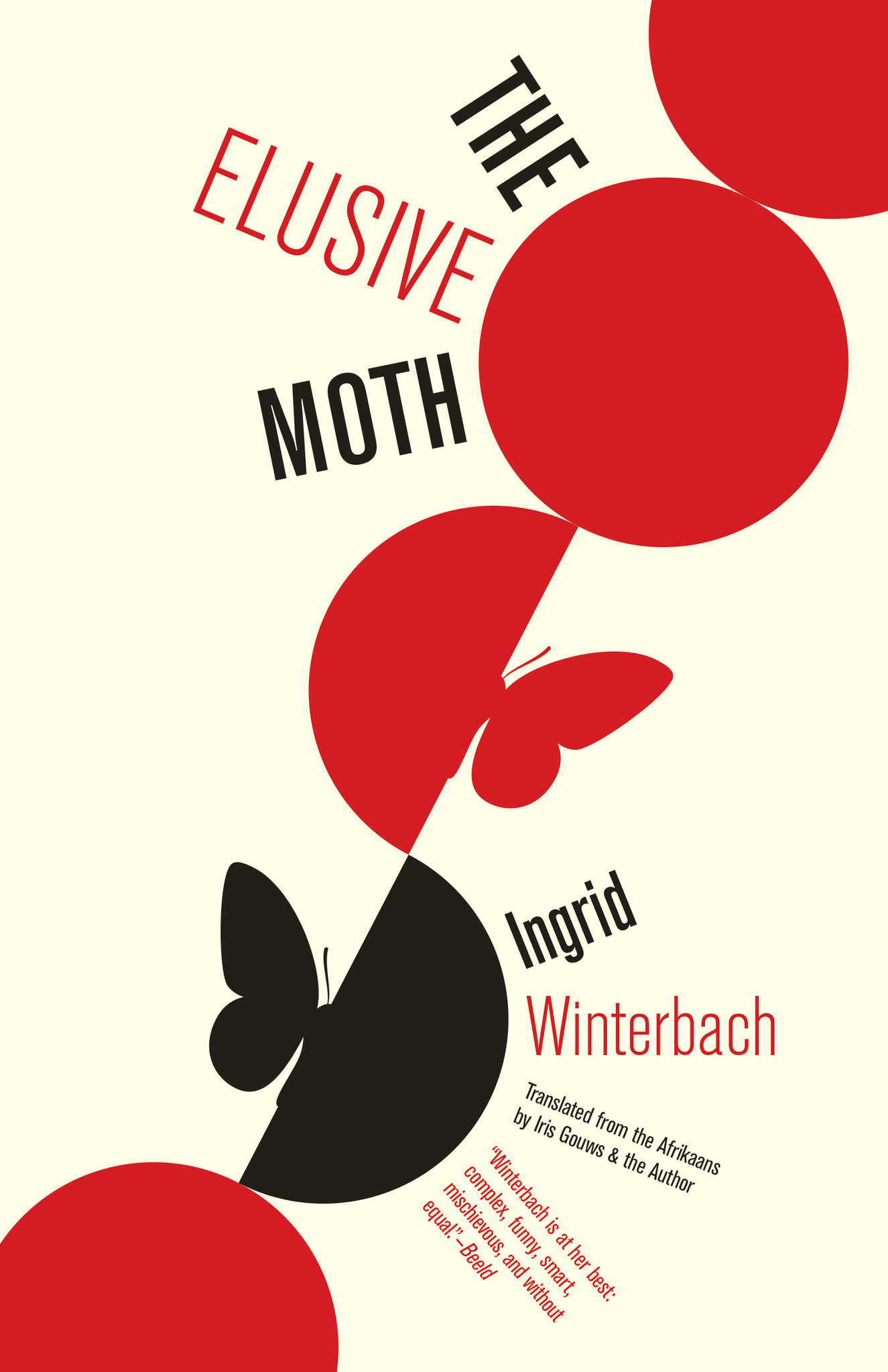
Loss and longing: The Elusive Moth by Ingrid Winterbach

“I have been content up to now,” she said at last. I was perfectly content until recently. I could keep everything at a distance. But now, all of a sudden, I can no longer do so. I feel caught up in everything. And detached from everything too. So detached, and so caught up. A strange feeling.” She spoke more urgently. “I don’t know what I’ve done with my life! I don’t know if I can still love someone!” (She started, why speak of love all of a sudden?) “I can’t open my hand,” she said, opening her hand, her palm facing upward, “I can’t let go.”

This is the curious dilemma of Karolina Ferreira, the heroine of The Elusive Moth by South African novelist Ingrid Winterbach. A similar searching ambiguity, complicated tension and hidden motivation runs through the cast of this slowly simmering, cinematic novel. Moving across a finely painted canvass in fits and starts, The Elusive Moth is an evocative exploration of memory, loss and anxiety that almost feels more like an art film, unfolding scenes that repeat motifs, imagery, fragmented conversations, all playing out against racial tensions that are building to a critical point in and around a small Free State town.

Elusive_Moth_cvrKarolina is an entomologist who returns to the town where her family spent time when she was growing up. Ostensibly she is in pursuit of a rare species of moth that is capable of withstanding extreme conditions and this is a brutally harsh, drought ridden area. However, on her way to her destination she makes two unusual decisions. She stops and picks up a fellow traveller, Basil September, an unusual and enigmatic individual who is on his way to spend time working with his Argentinian mentor, an expert in herbal remedies and medicinal practices. He will become her daily companion out on the dry veld where he collects a vast array of living and non-living samples while she observes insect life. Karolina also, despite her scientific tendencies, stops into a roadside caravan to have her palm read. The fortune teller promises that she will find a man who will love her forever and a woman who will be a close and faithful friend, suggestions she both laughs at and hopes for.

As she settles in to her research, Karolina seems to be increasingly restless. She spies lovers in the cemetery who fascinate her. She begins to frequent the snooker room of her hotel where the regulars, all male, are coarse, frequently lecherous – farmers, policemen, reservists. On Saturday nights she takes to the dance floor to lose herself in the arms of a man referred to throughout as “that Kolyn fellow”, theirs a connection based solely only on comparable tango skills. She tends to drink heavily, retreating when necessary to the Ladies Bar where she regularly encounters Pol, a singing lawyer, delightfully described throughout as amphibious, watery, and humid. He is a source of background information upon whom he she tends to rely as local political undertones begin to rise to the surface. Basil is also a helpful bellwether in this regard, as he possesses an uncanny ability to analyze the natures of others on sight and, as it turns out, foretell death. And then there is Jess, a red headed man who is singled out for her by Basil when they first see him. He is an economic analyst on a sabbatical to study, for himself, Buddhist philosophy, longing to learn to live in the moment and to overcome a persistent fear of death.

It is clear that Karolina is at a tremendous loss as she tries to find a rhythm to life in this small town. Loss intermingled with longing. She has destroyed or divested herself of most of her possessions. She is plagued by a sense that she disappointed and was disappointed by her father, also an entomologist from who she inherited her early and long standing fascination with insects. He had died just hours before she reached his bedside. She had imagined herself capable of dedicating herself to her studies without the bother of emotional entanglements. Now, in her dreams she is haunted by strange visitations and lewd sexual fantasies involving not only past friends and lovers, but characters from her immediate environs. By day her observations and interactions with others are a mix of curiousity, compassion and clinical dissection. By night she struggles with a desire for physical comfort and a need for space. As personal tragedies and political tensions in the town move toward a dramatic eruption, Karolina will ultimately find the ability to surrender and move forward with her own life.

For some readers, The Elusive Moth, may almost be too fragmented and repetitive. I read it slowly, over the last few days, luxuriating in the beauty of the imagery – the stark landscape, sensual descriptions of architecture and artwork, the enigmatic characters. Winterbach is also a painter, she writes in images and scenes. I simply did not want this book to end. I am currently recovering from a trauma that has left me with a mix of loss and anxiety that I recognized in Karolina, Jess, and Basil. I found it to be an exquisite and haunting experience.

witmonth15

* Originally published in Afrikaans as Karolina Ferreira under the pseudonym Lettie Viljoen in 1993, the first English translation by Iris Gouws and the author was published in South Africa in 2005. The edition I read was published by Open Letter Books in 2014.

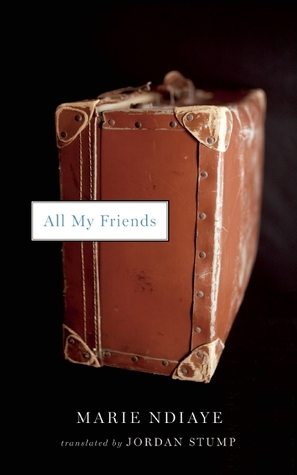
A tenuous grasp on reality: All My Friends by Marie NDiaye

Oh my.

I was looking for a short story collection, something that might fit neatly into the Women in Translation theme that is guiding the reading of many of my fellow bloggers this month. Having heard so much about French author Marie NDiaye I decided to have a look at her collection All My Friends. What I found was a portal to a bizarre, surreal, mildly horrific literary Twilight Zone. If you like your stories neat and clear cut this is territory best avoided. If you enjoy challenging tales peopled by troubled characters who stretch the boundaries of reality, fueled by obsessions, fantasies and psychoses, well, step right in.

All My FriendsThe final heartbreaking, but relatively straight forward story, is very short. The four stories that proceed it are long, convoluted and slippery. The reader really has to surrender him or herself to the experience, to the strangeness and stunning evocative beauty of the language. After finishing this slim volume I had a glance at a number of other reviews and was surprised how differently others saw or interpreted the stories. And perhaps that is the ultimate power of this collection.

The title tale, “All My Friends” is narrated by a school teacher whose wife and children have left him. He leaves his house like a museum and hires a former student, Séverine, to work as his maid. His attraction to her is complex, a curious blend of obsession and loathing that extends back to the days when, as a beautiful student, she resisted his charms and his efforts to impart knowledge on her. She is, however, married to another former student, an unassuming Arab that the teacher can barely remember. And then, to add to this peculiar triangle (quadrangle?) is Werner, yet another former student from the same cohort who went to Paris to better himself and returns, wealthy and well educated, to win Séverine’s love. Complicated? Definitely, especially because, so far as I could tell, Séverine herself is portrayed as a rather cold, obstinate creature and it is hard to imagine what sort of appeal she holds over all the men who are drawn to her.

Two of the stories revolve around celebrity. In “The Death of Claude François”, the passing of a famed singer devastates the women of a housing project. As the story opens, Dr Zaka meets her former best friend, Marlène Vador, after a 30 year separation. Marlène has remained on the project, nursing it seems, an undying love for the long dead hero. Dr Zaka never shared the depth of that affection:

“How ridiculous, she told herself, all that sniveling, all that sweat, all that sorrow simply because a man has died, a perfect stranger to every one of the women on the lawn, although dearer to their wanting hearts than the many children they’d borne, than the husband who had begotten them, whose eyes stayed dry on the death of that luminous, splendid stranger, so French, so blue eyed, so blond-headed.”

However, if the death of the French idol failed to move her, Dr Zaka has conceived a most unusual “gift” for her friend, presumably to make amends for leaving so many years before. In the longest story, “Brulard’s Day”, an overtired, psychotic woman has retreated to a resort town in the mountains. She is clinging to the idea that she was once a famous actress although the true extent of her acting career is not clear. She has left her husband and daughter and is awaiting funds she expects from a mysterious lover. In the meantime she is haunted by visions of her younger self, mortified by the fact that she is reduced to wearing – gasp – loafers and attempting to perform an appearance that befits her image of herself. When her husband appears on the scene it begins to become evident that neither have more than a desperate desire to be more than they are or have ever been.

Finally, the story, “The Boys”, reads like a dystopian tale in which poor rural families seek wealthy women to purchase their sons. A family fortunate to have a son handsome enough to fetch a price as a sex slave will stand to benefit from the income. As the Mour family pass their handsome son on to his fate, René, a poorer boy from a nearby home who picks up odd jobs with the family but is otherwise allowed to disappear into the shadows, watches and comes to decide that he too would like a ticket out.

“He’d always known he could make a gift of himself. Assuming someone would take him, assuming someone was eager to have him, a colorless boy named René, he could subjugate himself to the will of anyone at all. Little matter if he was purchased or picked up for free.”

Tightly paced, haunting and deeply disturbing, this is perhaps the strongest entry in the entire collection.

witmonth15Born in 1967 to a French mother and Senegalese father, NDiaye trained as a linguist at the Sorbonne. She was was playing with form and style at an early age and her first novel was published when she was only 18. In 2013, at the age of 45, she was long listed for the International Booker. This collection was originally published in 2004. The English translation by Jordan Stump was published in 2013 by Two Lines Press.

1914 – Goodbye to All That: Writers on the Conflict Between Life and Art, Lavinia Greenlaw, ed.

War and conflict are among the most fundamentally human motivations behind our desire to tell and share stories. Religions, mythologies and histories draw on these timeless themes. And, as human history continues to prove that we have not yet managed to learn from the past; conflicts, ongoing or marked with progressive anniversaries, will continue to to inspire artists and storytellers alike.

greenlaw_2985334aThe centenary of the advent of the “War to End All Wars” in 2014 saw a renewed focus on the contemporary writers and poets of WWI as well as a broader assessment from today’s artists of the lasting influence of that critical event on the conflicts that have followed. An interesting contribution to the discussion arrived in the form of 1914 – Goodbye to all That: Writers on the Conflict Between Life and Art, a selection of essays edited by Lavinia Greenlaw which was published in the UK last year by Pushkin Press. This collection will see its release in North America on September 1, 2015.

For Greenlaw, the First World War has a resonance that is not tied to a particular time and place but rather stands as touchstone to “reinvigorate questions we should never stop exploring.” With that in mind a variety of writers were invited to offer reflections broadly inspired by the question: “What does it mean to have your life and your identity as an artist shaped by conflict?” To that end, writers from a number of different countries were recruited.

The final compilation is, perhaps inevitably, uneven. However, the strongest entries are startling and have stayed with me long after the reading. The first essay to catch my imagination was, much to my surprise, Daniel Kehlmann’s “A Visit to the Magician”. Having read his F: A Novel with a measure of disappointment, I was drawn into his account of his own attempt to pursue the experience of being hypnotized after this same novel was released. Because a visit to the performance of a hypnotist sets the stage for the events that unfold in F he decided that he ought to have a go at the real thing himself. The exploration of hypnotism leads to an interesting reflection on the mechanisms that may help motivate individuals to rise, against their better angels, to support dictatorships and even march to war.

“(I)t’s nothing more than the most normal effort to be like everyone else, to experience what everyone else experiences, to behave the way authorities want you to behave. And then of course there’s the desire not to do anything wrong in full sight of so many other people.”

For Belgian author Ewrin Mortier and Slovanian poet and writer Aleš Šteger connections are drawn between the First World War and subsequent conflicts, WWII in the first case, the Balkan War in the latter. In “The Community of Sealed Lips: Silence and Writing”, Mortier concerns himself with the silences that remain unspoken, and the way language and lies are employed to negotiate the complicated way that both World Wars divided Belgian communities and families. His essay encompasses the story of his own grandmother and her beloved younger brother containing the painful truth that he would weave into the fabric to his debut novel Marcel. By contrast, Šteger’s tale, “Tea at the Museum” is unsettling and unusual. When Z, a woman he has not seen or heard from in years, calls and suggests that they meet to for tea he cannot imagine why she wants to see him. She is, it seems, keen to apologize for a wrong she swears she has done to him – in a previous life lived during the First World War. The encounter leads him to confront the memories of individuals and of countries, and reflect upon the way poetic imagination is employed to talk about horrors to painful to face directly:

“Only through literature can we realize how impossible it is to have any true insight into the past, any true experience of it, and what’s more we will become part of some equally incomprehensible past.”

Elsewhere, novelist NoViolet Bulawayo writes about the work of writers from her native Zimbabwe who, through their voices raised in protest in the threat of censorship and imprisonment, served to reconnect her to her community from afar, ultimately leading to a focus and theme in her own writing. Her exploration of her own identity in this context serves as a direct and deeply personal tribute to her fellow Zimbabwean artists. Another striking and powerful contribution comes from UK based Chinese writer Xiaolu Guo. Her account of the experiences and often unfortunate end of thousands of Chinese coolies imported like cargo to dig trenches and lay railway tracks along the front toward the end of WWI is at once astonishing and disturbing.

The collection is rounded out by contributions from Ali Smith, Kamila Shamsie, Elif Shafak, Colm Toibin and Jeanette Winterson. What is most interesting is the varied and diverse ways that all of these accomplished writers respond to the theme presented for their consideration. There is plenty of food for thought here.

* Review copy provided by Steerforth Press through NetGalley.

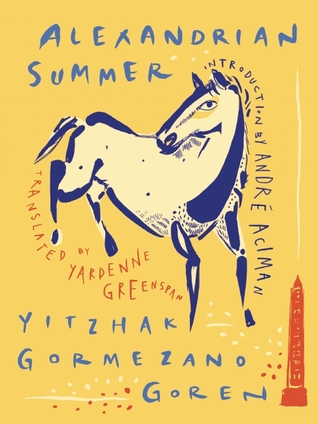
Last season in paradise: Alexandrian Summer by Yitzhak Gormezano Goren

1951. In an apartment on the Rue Delta in Alexandria, a young boy plays a game to wile the hours away, recording and cataloging the makes and license plate numbers of the cars that pass on the street below. Inside, his mother, grandmother and an assortment of matrons gather and gossip over a game of rummy. Tourists flock to the city, to the beaches and warm waters. A rich mixture of languages play across the tongues of residents and visitors alike. But on the ground tensions are building, political frustrations run deep, threatening to fracture the tentative ties that have bound Muslims, Jews and Christians in this cosmopolitan playground. For thousands of families clinging to a fragile petit bourgeois existence, this may be one of the last glorious seasons of romance, horse racing and cool drinks served by discreet and obliging servants.

“True, Alexandria was rotten to the core, but its rot had roots, was saturated in history. Dig deep through the muck and you’ll find the remnants of a crumbling papyrus, or a lock of hair from the shrunken head of a mummy. Something is rotten, truly rotten in the kingdom of Alexandria. That’s why I love her so much, Alexandria. A city that lets you live like a carefree lord without even being rich. Of course you had to be European, or at least Jewish, and of minimal intelligence, and even that wasn’t always a staunch demand.”

GorenFrom the opening pages of Alexandrian Summer, the newly translated novel by Israeli author Yitzhak Gormezano Goren, the author’s deep affection for the city in which he spent the early years of his life is unmistakable. His narrator makes it clear that the story he is about to share is, in fact, his own. He is that 10 year old boy watching the cars pass. But he debates how best to tell the tale, admitting that he is looking back with the perspective and wisdom of an adult. First person, third person, real names, fictitious identites with the standard disclaimer? He opts to shift his focal length, like a photographer adjusting the depth of field of his lens, moving in and out of a series of scenes that collectively recount the visit of the Hamid-Alis, family friends from Cairo, who have come to spend the summer. Young Robby does not know it at the time but by the winter his family will leave for Israel. It is his mature self who is able to look back and sift through the events of his final summer in this magical city. Through Robby and a colourful canvas of characters – immediate family, extended family, friends and neighbours – he unfolds a story that is at once intimate and personal, and part of a broader political sea change.

From the moment that the Hamid-Alis pull up in their Topolino, an aura of glamour descends on the apartment on the Rue Delta. The father Joseph, a small man with his characteristic fez, is a former jockey who tasted fame and glory until the sudden and tragic death of his beloved mare. But rumours persist that, in his Turkish blood is a Muslim past that he abandoned to convert to Judaism when he fell in love with Emilie, his full bodied and patient wife. David Hamid-Ali, their 17 year-old son, is a perfectly pressed and groomed specimen of athleticism, a rising star on the horse racing circuit who has been groomed to take on his father’s sport. But the dedication is dependent on a strict diet to combat the tendency to weight gain inherited from his mother. And the one true desire of his heart, Robby’s older sister, is playing with his emotions. Finally the youngest son, 11 year-old Victor, is overlooked by his parents, subject to frequent pummeling at the hands of his older brother and, thus neglected, he occupies himself by engaging in sexual play with Robby and his friends. By the time they climb back into the Topolino to return to Cairo, the Hamid-Ali family will be reduced, weakened and irrevocably changed. Before long Egypt and Alexandria will also undergo a revolution.

By evoking small snapshots of the emotions, interactions, observations and events of this steamy summer, Gormezano Goren paints a heartbreaking and tender portrait of family dynamics complete with his own “Greek chorus” of rummy playing matrons. At the core of this story is the racetrack rivalry between David and the lightening fast Muslim jockey Al-Tal’ooni. Although he triumphs in the first race of the season, David’s loss in the second begins a series of conflicts between father and son, and spiraling self doubts and depression in the aging Joseph. Against the backdrop of a legendary city at a moment when the life that the Jewish and other European residents is about to unravel and dissolve, this one last summer blends the nostalgia of childhood with the disillusion of age to create a timeless tale, beautiful and sad.

Originally published in Hebrew in 1978, Gormezano Goren worked closely with translator Yardenne Greenspan to prepare this first English edition. In an interesting essay on Lit Hub, he recounts the challenges of preserving the polyglot quality of discourse in Alexandria and the value of being able to revisit the original text after so much time. Alexandrian Summer is published by New Vessel Press.

A Pastoral Dystopia: Trencherman by Eben Venter

“Tears, nearly; heartache that I’m almost able to touch in my chest. Bossieveld stretches around this dorp, as wide as the vulture flies. In rain years the red grass pushes up. The veld surges and flows, with koppies of ironstone and mountains with cliffs where animals find shelter during the cold winters, where ewes search out the warmth of besembos during the lambing season. Elsewhere it breaks open into rivers and streams and vleis full of platannas and bullfrogs and wild geese. But only when the water runs, when the eyes of the springs open. I want to remember it like that one last time.”

I am not typically a fan of post-apocalyptic or dystopian fiction. No matter how intriguing the scenario, I find myself too frequently disappointed with the writing or the realization of the plot, or both. However, when a trusted friend enthusiastically recommended  Trencherman, a harrowing vision of a devastated South Africa by Eben Venter, my interest was piqued in spite of any reservations I might have otherwise held and, quite frankly, I would never have stumbled across this book without her guidance. Even then I was unable to source a copy outside of South Africa so it was high on my wish list for my recent visit to the country. Little could I have appreciated how my experience of this novel would be heightened by the fact that I would read it while my time in the rolling landscape of the Eastern Cape province was still very fresh in my imagination. That is, it happens, where this story is set and, for all the horror it envisions, Trencherman is also very much an evocation to the beauty of the land.

VenterTaking his lead from Joseph Conrad’s The Heart of Darkness, Venter imagines his native country at an undefined point in the near future. Years of civil unrest and socio-political upheaval have rocked the nation which never really found its footing. Now a massive explosion in the southern part of the country has destroyed the infrastructure, left a lawless void in which bribes and syndicates are the order (or lack of order) of the day. Drought has wasted the land, AIDS has has devastated the population. Our protagonist, Marlouw (a contraction of his first and last names Martin and Louw) is bachelor living in Melbourne, Australia. Both he and his sister Heleen had rejected the family farm and homeland two decades earlier. Yet for all the financial success afforded by an uninspiring career selling high end cookware, Marlouw is a rather bitter, self-centred man, crippled with a clubfoot. He has never forgiven his parents for failing to secure the surgery that would have corrected the deformity and, despite his denial, the pain and embarrassment of his disability weigh heavily on him. When his sister calls him one night desperately entreating him to return to South Africa in search of her only son, his nephew Koert, who seems to have gone missing in that dark land, Marlouw feels no immediate obligation to assist. When he does finally agree, he tells himself that he is doing so for his own personal reasons. Without fully understanding his motivations he senses that something unfinished lies in the deep recesses of his memory. His journey to unravel his own baggage will nearly cost his sanity.

As soon as he sets foot on South African soil, Marlouw realizes that he has arrived in a country that operates on cryptic and shifting terms. He adopts a heightened almost mystical approach to the task ahead, attempting to open himself to the “guides” that cross his path, but he rocks between selfish irritation and a deepening alienation as his quest proceeds. As a hero he is deeply flawed and deeply human. When he reaches the family farm, the place where he knows that his nephew has taken refuge and built up some manner of hideous power base, he is routinely thwarted in any attempts to make direct contact. The degree to which drought, disease and apparent apathy have wasted the land and the people he once knew is a shock but he is soon swept into their confined and miserable world. Upon his father’s death, he and his sister had passed the once proud farm on to the black families who had worked it for so many years. After twelve generations of Afrikaner ownership, the thirteenth generation had set their sights on foreign shores. But, as Marlouw will soon realize, he still carries a deep ancestral horror in his bones. He will not only have to confront whatever it is that his nephew Koert has come to represent, he will also have to come to terms with his own ghosts.

This is not the first time an author has turned to the Heart of Darkness to explore the dark corners of humanity. The late Canadian author Timothy Findley placed his own Marlow and Kurtz in the halls of a modern psychiatric institution in the startling and disturbing Headhunters. Trencherman skillfully evokes the darkness of the journey Conrad imagined in the depth of another part of Africa and updates it, raising important issues along the way. Venter takes the opportunity to offer harsh indictments on the divisions within his native country, envisioning an outcome that has its roots in a recklessness and disregard for ultimate risks among the privileged classes. This is, of course, a common context of the dystopian novel, but one which is, for me, often too carefully removed or generalized in some abstract future. South Africa offers a more immediate tableau that Venter does not shirk from, perhaps afforded by the fact that he, like his hero, has been living in Australia for several decades. He aims his sights close to home, directly at his own heritage and at the decision he and many other South Africans have made to leave.

Originally published in Afrikaans, the translation by Luke Stubbs is seamless. IsiXhosa passages are incorporated, and unlike some translations specifically aimed at a broader (i.e. US) English speaking market, common South African and Afrikaans expressions and terms are left in tact. A detailed glossary is included. There is a point where the dialogue degenerates into a bastardized English mixed with German that had me curious as to how these passages exist in the original, but that is only because the translation process itself, especially when it is striking and effective, is of particular interest to me. This topic is, I discovered, covered in an interview with the author here.

The memory of a land once rich, the protagonist’s struggle to balance compassion with self preservation, and the truly horrific, yet oddly contemporary spectacle that awaits Marlouw when he finally confronts his nephew combine to create an engrossing read. The closer a reader’s connection to South Africa, the more intensely this book will resonate or push buttons, but even with distance it paints an unsettling portrait.

And so it should.

Note:                                                                                                                                                                         It is my understanding that Trencherman is scheduled to be released in the UK and Australia in 2016. However, my attempts to obtain Venter’s more recent novel Wolf, Wolf which was similarly released earlier this year leads me to believe that rights do not extend to North America. Even so, once there is wider for release for Trencherman outside of South Africa, it will be easier to obtain through UK distributors.

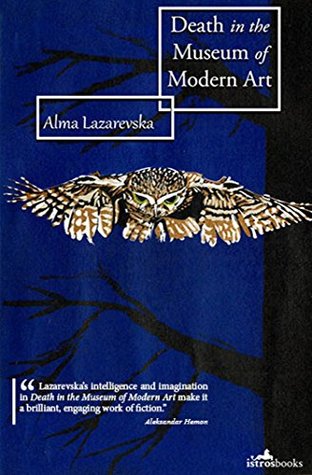
Variations on a tragedy: Death in the Museum of Modern Art by Alma Lazarevska

The longest siege of a capital city in the history of modern warfare began on April 5, 1992 when Bosnian Serb nationalists surrounded Sarajevo. The assault would last for 1,425 days, almost four years. Inside the blockaded city, citizens tried to pull together as their city was bombarded with mortars and artillery fire, cut off from access to food, power and communication. Families were driven from their homes, faced the real possibility of detention, rape, torture and slaughter. And yet, in small corners of daily life, small embers of humanity were kindled and nurtured. Death in the Museum of Modern Art is a testament to the fragility and the resilience of the ordinary people trapped in the city, an evocation of beauty in the face of unspeakable horror.

museumThis slim collection of six short stories by Bosnian writer Alma Lazarevska reads like a quiet musical meditation, a set of variations on a theme. Most of the stories are narrated by an unnamed woman, married, usually with a single child, a boy. The stories are imbued with a quiet humanness that is as comforting as the death and destruction that surrounds the characters is terrifying. To those of us who can only faintly imagine what it must be like to endure such conditions the effect is startling.

There is not a weak entry in this collection and despite the themes that do recur (in fact at times I wondered if the same family was at the core of some of the stories) each tale shines a light on a different angle of the experience of the residents of Sarajevo during the Bosnian war.

As a parent myself I was especially moved by the story “Greetings from the Besieged City”. Framed through a series of imagined picture postcard scenes this is a meditation on the desperate desire for a happy ending despite the awareness that in literature as in life, happy endings are elusive. While the knowledge of this truth drives a former classmate of the narrator mad, she herself tries to protect her own son from fictional unhappiness by changing the ending of the book she reads to him, The Seville Fan, a love story in which the hero dies:

“And so Pablo succeeded in not dying, which he was, after all, not accustomed to. Because, when I exhaled and put the closed book down, in its printed pages he was still dead. As I was pronouncing the sentences that were not in the book, it seemed to me that, for the first time in our reading sessions, our boy turned his eyes away from their fixed point. He glanced suspiciously at the book then at my face. A pedagogue would say that he was beginning to get used to the fact that parents tell lies. Or that they become accustomed to sentiment!”

The mother is conflicted by her need to prepare her child for the reality of death – of unhappy endings – and the desire to protect. But when “red-hot balls” start to fall on the besieged city, instantly transforming “human bodies into bloody heaps of flesh” the effort to create some variation of a picture postcard greeting against a landscape of horror is increasingly distorted. The impact is deeply unsettling, yet poignantly human.

The siege is a persistent presence in these tales. It drives the tenants of an apartment block from the odd niceties of shared accommodation to huddle in the basement in fear, or to flee the city if possible, in “Thirst in Number Nine”. The superstitious belief that each used match is a saved soul, leads a couple to use and collect precious matches to light cigarettes, rather than the candle that is equally vital in “How We Killed the Sailor”. This represents a perverse and symbolic luxury as civilian casualties mount around them. The wife wonders about these souls they pretend to protect as each day new faces grace the obituary pages of the paper: “Do they know that there is a besieged city somewhere in the world with the saviours of their souls in it?”

The title story “Death in the Museum of Modern Art”, features a narrator who muses on her involvement in a curious project. Bound for publication in a glossy magazine and an exhibit at the Museum of Modern Art in New York, photographs of 100 inhabitants of Sarajevo are to be paired with their answers to a survey which includes the haunting question: How would you like to die? In a besieged city how does one begin to answer a question like that?

Upon its publication, this collection received the “Best Book” award from the Society of Writers of Bosnia and Herzogovnia. In this lovely edition from Istros Books, the translator, Celia Hawkesworth, brings the gentle and shocking power of Lazarevska’s unique voice to life. I am extraordinarily grateful to Susan Curtis-Kojakovic, the editor of the wonderful Istros Books for selecting and passing this moving, haunting collection on to me. I can recommend it without reservation, these are stories that need to be read. After all, the Bosnian War only came to an end twenty years ago later this year and today, in so many parts of the world, ordinary families are still struggling to survive under the conditions of unimaginable conflicts.

Sadly the happy ending continues to be elusive.

Might as well face it, I’m addicted to books…

Three weeks in South Africa and I have not blogged much, in large part due to the painfully useless little laptop I bought for the journey (sorry Windows I am in serious Mac withdrawal right now) combined with frequently slow or inconsistent wifi connections. Quite frankly I have not even read much save for a slim collection of Bosnian short stories I have been dragging around. But I have been observing, writing, journaling and taking photographs. There will be plenty of time for reading after I get back and a strict embargo on book buying for some time.

After all I have spent more than R3000 on books. Shame. Well it’s not as bad as it sounds, I spend a fair amount on books at home but not all in one shot and not with the need to transport them across the globe. I fell asleep last night mentally rearranging my bookshelves to welcome my new acquisitions home.

A selection of new titles (there are more,  confess). Trencherman, the Michiel Heyns, Tales of Metric System, Rusty Bell and The Violent Gestures of Life were all on top of my list when I arrived.
A selection of new titles (there are more, confess). Trencherman, the Michiel Heyns, Tales of Metric System, Rusty Bell and The Violent Gestures of Life were all on top of my list when I arrived.

As long as I can remember, bookshops have been a highlight of any vacation for me. Sometimes it was the chance to visit a larger centre or to access books not available at home. I mean honestly who goes to San Francisco without stopping in to City Lights? I suppose those people exist but I don’t want to know them.

This is the first vacation I have had in years, the farthest I have traveled and what I hope will be the first of many visits to South Africa. I have stubbornly had a predominately anti-tourist experience and it has suited me just fine.

But books, they were always high on my agenda. From a second hand shop in East London to The Book Lounge and Clarke’s here in Cape Town I have built piles, triaged, sorted and made my selections – sometimes price, sometime size and weight were factors. Books readily obtainable in paper format outside of South Africa were eliminated, aside from some impulse purchases. Suggestions from the friend I was staying with in the Eastern Cape, books featured on the site of a South African book blogger I follow, and advice arising from conversations with booksellers were all tossed into the mix.

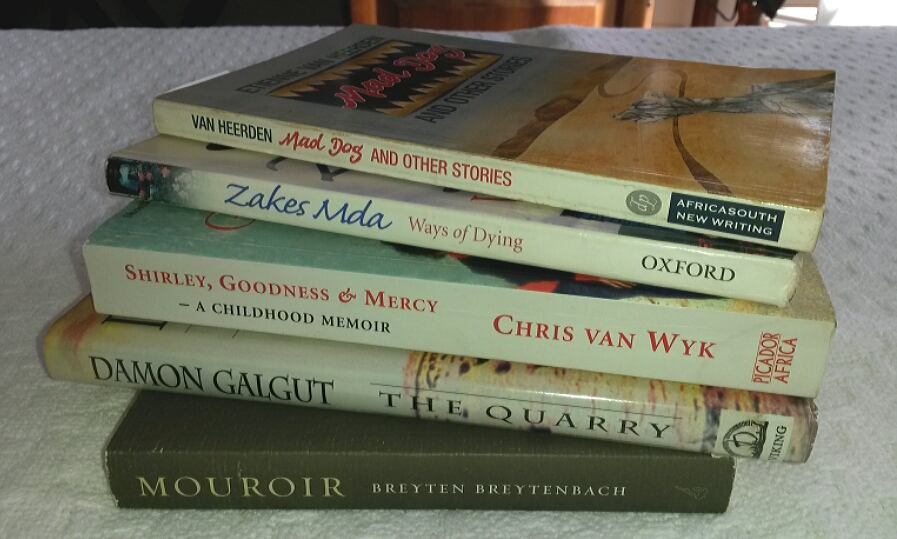
A few of my second hand finds: I am looking forward to the memoir by the late Chris van Wyk and the Ettiene van Heerden on top is signed (but sadly the only one of his books I was able to locate in translation).

There are still, inevitably, titles I wanted but could not find. And some I had to leave behind.

Not one given to ostentatious displays of book porn, I am showing off some of my new friends. Wish me luck packing and dragging them all to the airport on city transit!

And her name was Good: Agaat by Marlene van Niekerk

“Poor Agaat. What has my life been? What has her life been? How can I ever reward her for coming this far with me here on Grootmoedersdrift? How does one compensate somebody for that fact that she allowed herself to be taken away and taken in and then cast out again? And to be made and unmade and remade. Not that she had a choice. I even gave her another name.”

This is a variation on the refrain that haunts Milla de Wet’s thoughts as she lies, paralyzed in the advanced stages of Lou Gehrig’s disease, completely dependent on her black servant turned caregiver Agaat to attend to her every need. As Marlene van Niekerk’s magnificent novel begins, the two women are reduced to communicating through eye movements. Eventually even that will be impossible. But Milla’s mind is sharp and brittle in her confined waking hours and Agaat, stalwart and efficient to the end, knows her mistress well. Too well.

AgaatFrom this claustrophobic perspective a remarkably expansive and complex novel of Apartheid South Africa unfolds. Van Niekerk, a nominee for the 2015 International Booker Prize, achieves this by deconstructing the traditional farm novel and weaving together a complex, poetic and devastatingly powerful epic. It is almost impossible to find the words to adequately capture the experience of reading Agaat (or The Way of the Women as it was published in the UK) without resorting to hyperbole. It is, quite simply, an inspiring, unforgettable novel. One that invites and rewards careful reading.

Despite the rolling fields and pastures, river and mountains, this is an intensely focused novel. It is not easy to exist with Milla trapped inside her immobile body, or to listen as she bitterly dissects and dismantles her life – alternately self righteous and regretful – addressing herself in the second person. It is not comfortable to be swept into the stream of consciousness of her internal ramblings that mix obsession over her current state of being with the flotsam and jetsam of her farm woman’s domestic life. Or to discover, through her notebook journals, the details of Jakkie’s childhood and, eventually, Agaat’s early years in her home. By masterfully weaving together these four distinct narrative streams in each chapter, van Niekerk creates an enduring portrait of the complexities of power as they play out within families, between races, and in a country that is in an increasingly volatile political state.

My well marked copy!

As the story is fleshed out, we meet Milla in 1948, as a young woman engaged to the dashing Jak de Wet, a trophy husband of sorts, handsome but ill suited to the farming life. Their marriage is increasingly volatile and strained, with both playing their own counterproductive roles out to the bitter end. For many years the couple is unsuccessful in their efforts to conceive. That is where Agaat comes in. The daughter of one of the labourers on her mother’s farm, she is born with a withered arm and, as a result, is subjected to horrific abuse in her early years. Milla imagines a heroic role for herself in rescuing the rejected child and bringing her into her home against the protests of her husband and the sidelong glances of her neighbours. For years Milla treats Agaat as a surrogate daughter – in so far as a segregated society will allow – teaching her to read and write, to explore and appreciate nature, and to master the fundamentals of animal husbandry. And then, suddenly, she discovers she is pregnant. Before the baby arrives, Agaat’s role is abruptly shifted. She is moved into an outside room and a maid’s uniform with strict expectations. But when little Jakkie arrives Agaat, barely more than a child herself, becomes the loving and compassionate caregiver that neither of his parents can ever manage to be.

As the end is approaching Milla is forced to weigh and reevaluate her own life and the fate to which her actions have tethered Agaat. As often as she questions her actions, it is not clear that she can ever stand back from herself and see the big picture. She is, in the end, complicit in maintaining the Afrikaner social order that Jak so proudly believes in even if, in her own mind, she is a martyr. Agaat is at once the angel in the wings, servant and nanny; and the witch still bound to her “primitive” ancestry. She has been molded and created by Milla, but her thoughts remain hidden. Not until the closing pages of the novel is her side finally revealed in the dark and heartbreaking bedtime story she that she and Jakkie shared when he was small.

Originally published in Afrikaans, the translation by Michiel Heyns is simply brilliant. Van Niekerk is first and foremost a poet and her language is filled with allusions to music, children’s rhymes, and literature. The scent of fennel, colours of flowers and foliage, the calls of birds and nosies of farm animals, the guttural g’s of Afrikaans all add to the multidimensional experience of reading Agaat. As Heyns points out in his Translator’s Note: “Agaat is a highly allusive text, permeated, at times almost subliminally, with traces of Afrikaans cultural goods: songs, children’s rhymes, children’s games, hymns, idiomatic expressions, farming lore.” The ultimate result appears effortless, mediating the boundaries where necessary but maintaining a distinct cultural experience. An interview with Heyns in Words Without Borders is an informative and entertaining exploration of the text and the translation experience that is highly recommended for interested readers.

Agaat is bookended with a Prologue and Epilogue in Jakkie’s voice. It is 1996 and he is flying home from Canada because his mother is near death at the beginning and returning after the funeral at the end. He left South Africa in 1985 to escape the political conditions in his native country, and, one suspects, his parents. As I write this, I am about to fly from Canada to South Africa myself for my first ever visit. I am aware of the fraught tensions that continue to run through the country, most recently arising in the literary community. I will be carrying the many complex currents that run through this important novel with me as I leave.

Naming the unnamed: The Meursault Investigation by Kamel Daoud

“A man who’s drinking is always dreaming about a man who’ll listen,” advises Harun, the aged man sitting in a bar in Oran, Algeria, in the opening chapter of The Meursault Investigation. His companion, night after night, is a young student intent on sorting out the mystery behind the iconic text he carries in his briefcase. What unfolds over a series of encounters is the tale of the unnamed Arab murdered in the pivotal scene of  L’Etranger by Albert Camus. In presenting Harun as the fictional counterpoint to Camus’ Meursault, Algerian author Kamel Daoud sets up to name and flesh out a life not only for the victim of violence on that hot beach, but for his brother and mother as well. What follows is more than an homage; it is an active dialogue from the other side of the equation – ethnically, politically and historically.

kamelAn acquaintance with L’Etranger is not only assumed but a recommended prerequisite to The Meursault Investigation. Both are novellas so reading or reviewing the former in advance is not an arduous task. I last read Camus’ classic in late 2013 with The Guardian Reading Group so I had the advantage of being able to search the online archives for my own reflections and the discussions that ensued. I still found myself dipping back into my own copy as I started out with this book but as I fell into the story it no longer seemed necessary.

Our narrator this time around is immediately a more likable character than our old friend Meursault. He is not happy, but we have a context for our sympathies. He is seven years old when his beloved older brother Musa meets his senseless fate. Their father had disappeared before he had a chance to even form a memory of him so his brother was his hero and a surrogate father figure. His senseless death, unreported save for two obscure newspaper accounts his mother clings to, cannot be proved. No body is ever found. After all, in the novel in which he is killed he is neither named nor is the fate of his body mentioned.

His mother becomes obsessed with seeking answers. In the process Harun is reduced to a shadow of himself, he feels like an effigy of his brother. He follows his mother as she searches for clues. He is blamed for surviving and denied his own identity. He becomes a ghost in his own life. While Meursault’s relationship with his mother is, from that famous opening line – “Mother died today” – cold and flat, Harun and his mother share a complicated, emotional dynamic. “Mama’s still alive today” he reminds us repeatedly, but both are wounded and reduced, survivors of the unnamed Arab in an uncertain and shifting post-colonial Algeria.

Eventually he is led to avenge his brother’s death by taking the life of a Frenchman. It is, in itself, an act rooted in the story of Cain and Abel:

“I blame my mother, I lay the blame on her. The truth is, she committed that crime. She held my arm steady while Musa held hers and so on back to Abel or his brother. I’m philosophizing? Yes, yes I am. Your hero had a good understanding of that sort of thing; whether or not to commit murder is the only proper question for a philosopher, the only one he ought to ask.”

In an echo of L’Etranger, where Meursault is condemned to death not for killing an Arab, but for failing to cry at his mother’s funeral; Harun faces imprisonment not for an act of murder, but for killing his Frenchman one day after the Declaration of Independence rather than alongside his countrymen during the battle for freedom. Close on the heels of this new found Independence, some two decades after his brother’s death, our hero finally encounters the famous text which he instantly recognizes as explaining, complementing and mirroring his own. He is at once intrigued and dismayed.

The echoes with L’Etranger resound throughout this novel. Daoud answers the absurdity of Camus with his protagonist’s own absurd predicaments. He matches Meursault’s rejection of God with Harun’s dissolution with his faith. But his hero’s hopes and disappointments are his own, solidly grounded and charged with a power that, from the Algerian perspective 70 years out from the publication of the original inspiration, demands to be heard.

This is, of course, not the first time that fiction has been answered by fiction, untold stories have been re-imagined, or silenced characters have been granted voice. The Meursault Investigation has been met with international praise, a measure of skepticism and, in the author’s home country, calls that he be tried for blasphemy. Translated from the French by John Cullen and published by Other Press, this is a deceptively simple yet deeply important work. Time will tell how it holds up in the light of such a famous counterpoint, but, for my money, it has to be seen as a continuation of a conversation that will, because it is so deeply informed by L’Etranger, serve to draw Camus’ work forward into twenty-first century discourse while setting its own very important and timely literary agenda as we move forward.

Besides, Harun with his diversions and penchant for storytelling is much better company than poor miserable old Meursault.