Of ghosts and angels: The Painted Room by Inger Christensen

Recently re-issued by New Directions, Denise Newman’s translation of Inger Christensen’s 1976 novella The Painted Room might at first appear to be somewhat more conventional than the Danish poet’s experimental prose works like Azorno or Natalja’s Stories. That would, of course, be a premature assessment. Subtitled A Tale of Mantua, this slender three-part volume is set in, and revolves around, the court of Ludovico Gonzaga III and the painting of the famous Bridal Chamber by Andrea Mantegna in the mid-1400s, but it is more than a simple piece of historical fiction. By turns witty, magical, and wise, The Painted Room offers a pointed commentary on art and immortality, power and passion.
As Italy gradually splintered following the fall of the Roman Empire, it evolved into a patchwork of independent territories over which powerful families battled for control until, by the fifteenth century it was common for each of these regions to be held under the autocratic control of single princes. Mantua in northern Italy, ruled by the Gonzaga’s from 1328 to 1707, was not only a tyrannical, war-focused principality, but, as its ruling family sought to elevate its social status through patronage of the arts, architecture, and music, it would become an important cultural centre in the early years of the Renaissance.  In 1459, acclaimed artist Andrea Mantegna (1431-1506), noted for his striking compositions and innovative studies of perspective,  agreed to enter into the service of Ludovico, the Marquis of Mantua, and the following year he was appointed court painter—a position he would hold for over forty years. His masterpiece would be completed there, the Camera degli Sposi or The Bridal Chamber in the ducal palace, a room decorated with realistic architectural details, frescoes featuring interrelated narratives  and a spectacular illusionary ceiling that appears to be a concave structure with an oculus open to the sky. The painting of this room and its images, offer the inspiration for Christensen’s novel, but the story she weaves extends far beyond these four walls.

The first part, “The Diaries of Marsilio Andraesi: a selection” proports to be outtakes from the personal journal of Ludovico’s devoted secretary, pictured to the far left of the Bridal Chamber’s “court scene” fresco which features members of the Gonzaga family and their attendants. Here Andraesi is leaning in to listen to the prince who has turned to speak to him. From the secretary’s personal account, which begins in March of 1454, we get an unvarnished, if rather biased and often catty, record of events leading up to Mantegna’s arrival at Mantua through to his death in 1506. Andraesi is not impressed with his master’s persistent efforts to woo the celebrated artist and the reason for his resistance is unlikely. It seems that the painter’s wife, Nicolosia Bellini (of the Venetian artistic dynasty), was once his secret love, now forever lost. So he focuses his attention on rumours he’s heard of Mantegna’s reputation as a troublemaker trained in “arrogance, brutality, and the hunt for novelty.” He feels the prince’s idolatry will only lead to shame. But, of course, the offer is accepted and the secretary’s would-be romantic rival arrives, at first on his own, but soon followed by his family:

Today I finally caught a glimpse of Nicolosia. I became deathly pale and could barely move. My brain turned completely white and my heart so drained of blood that it could hardly beat; I froze. An angel in the fire of earthly feelings.
(17th of August, 1460)

Bitterness and jealously continue to colour Andraesi’s reports, especially as progress on decorating the palace room is slow, and his secret confrontations with Nicolosia intensify. Then, when Mantegna’s wife suddenly dies (at least in this version of reality), the relationship between the two men gradually begins to shift toward what will eventually become one of friendship and respect. In the meantime, Mantegna’s young children are devastated by the loss of their mother but comforted by their father’s inclusion of her likeness in his art. After all, in art, the dead live on. When the frescoes are finally completed in 1474, guests are welcomed for a dedication event in what Ludovico calls “The Painted Room,” but which the children have christened the “Ghost Room.” In his reflections on the occasion, Andraesi calls attention to the uncomfortable dynamic that exists between art and immortality:

There is more life in the paintings than in all of these lively and rapturous spectators who simply put on airs because they are afraid of the pictures’ soul which is their own. The pictures are like all great ghosts in Art who calmly and tirelessly wait for their living models to die. All those who have had the chance on this occasion to look at themselves in the light of Art’s exegesis have consequently entered  into a relationship with Death; and they must each conduct  their negotiations with him day by day over the time and place and manner of their dying, and about their measure of anxiety.

In the second part, Christensen’s narrative adopts an even more fantastic examination of life at court and its connections to the broader world. However, immortality continues to be a central theme, not explicitly through art but through children, legitimate or otherwise. Attention turns to the dwarf depicted in the “court scene,” a member of the prince’s entourage, re-imagined as Ludovico’s daughter and given the name Nana (Italian for dwarf). When we meet her she is distraught about her unfortunate fate, imagining that her diminutive height will deny her an opportunity to love and marry. The gardener steps in and arranges for her to marry his beautiful son Piero once they are both old enough.

Nana’s story adds an added dimension to the events recounted in the first part. On the day of her wedding three unknown women appear; no one is certain who they are but coincidentally Mantenga has captured their likenesses among the figures who are seen leaning over the balustrade that surrounds the oculus painted on the ceiling of the so-called Ghost Room. To Nana, they are clearly angels. They tell her that Piero is actually the son of Pope Pius II, and leave her what she calls “The Angel’s Book,” a volume that is in fact the popular erotic novel written by the Pope before his call to the priesthood, when he was known y his birth name, Aeneas Silvius Piccolomini. The Tale of Two Lovers tells of the tragic affair of Euryalus, one of the men waiting on a nobleman and Lucretia, the wife of a wealthy man. Their love is expressed through a series of letters until they are finally able to meet in bed. Variations on the theme of this tale are echoed and played upon as The Painted Room unfolds, along with the revelation of other surprising entanglements.

The final, dreamlike part of The Painted Room takes the form of a “how I spent my summer holidays” school assignment written by Bernadino, the then ten year-old son of Mantega. He details his role in assisting his father in his work on his masterpiece, describing much of the process involved in laying the foundation, and mixing and applying the paints. But then he realizes that he is expected to record some kind of trip or adventure when in truth he has gone nowhere. So taking inspiration from his younger sister, he imagines himself entering the background of one of his father’s paintings and meeting an aged Greco-Roman hero who has forgotten who he is. Yet another glance at the question of immortality through the daydreams of a child facilitated by the magic of art.

Inger Christensen’s fiction—and her poetry for that matter—tends to work with layers, variations, and cross-referenced themes. Her foray into the world of fifteenth century Italian court life is filled with art, intrigue, infidelity, and murder, blending fact and fantasy to create an informative, entertaining, and intelligent tale. And, like any one of Mantegna’s famous paintings, repeated visits and closer inspection promises to offer ever more detail and connections.

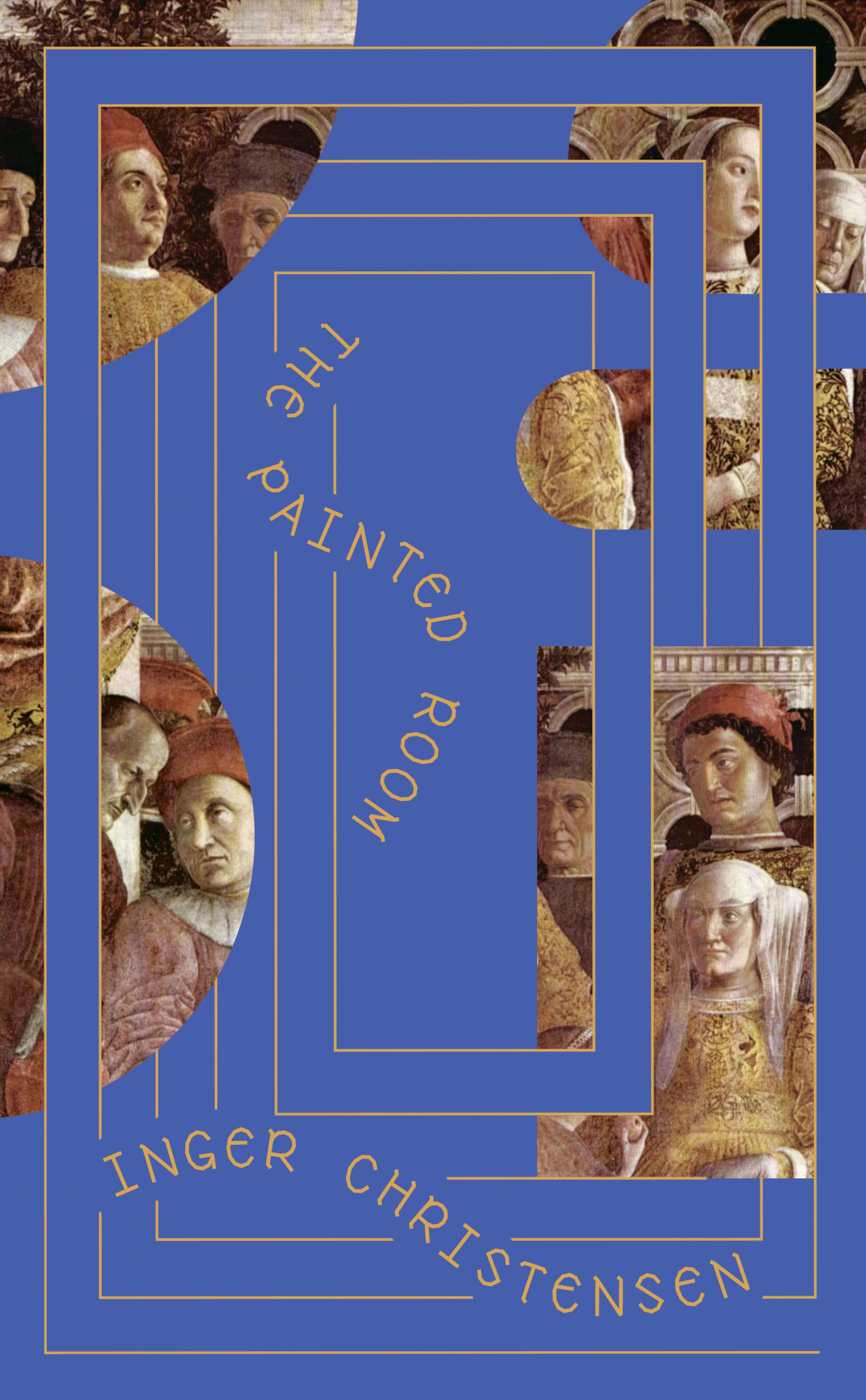
The Painted Room by Inger Christensen is translated from the Danish by Denise Newman and published by New Directions.
The truths we know and those we don’t: No One Knows Their Blood Type by Maya Abu Al-Hayyat

I don’t know which night I was conceived, but I do know that when nine months had passed, my life started to get complicated. All that I will relate here is not confirmed truth—these are stories I pass on from motley sources. None of them are entirely correct or straightforward, they follow the meandering intentions and motives of the storytellers.

Jumana, the central figure of Palestinian poet Maya Abu Al-Hayyat’s debut novel No One Knows Their Blood Type is,  as she tells us in an account of her early years living with an unloving aunt in 1980s Amman, a collector of secrets. The more she discovers, be it the rumour that her mother did not in fact die in the war in Lebanon, or the unwanted advances of a male cousin, the less certainty there is in her life.  As the story unfolds, shifting speakers and perspective backward and forward across more than three decades, it becomes clear that she is not the only member of her family haunted by secrets, doubts, and insecurity.

This slender, fragmented, nonchronological novel opens in a hospital in Jerusalem in 2007 where Jumana is assisting with the cleansing of the body of Malika, the gregarious midwife who has just passed away. She only knew this elderly Greek woman for less than two weeks—the time that she has been coming to visit her own dying father—but already she has fallen in love with her nephew Suheil, so she is almost family, so to speak.  However, when her father dies shortly after, the shock of attending to his body causes her to collapse and end up in emergency—a detour that will suddenly call into question her own relationship to the family she grew up in. Her father’s death certificate and her lab results reveal his blood type is O positive whereas hers is AB positive. While Suheil calmly shrugs it off as an error, Jumana is not so sure.

From here the novel moves back to Jumana’s account of her childhood in Amman. She and her older sister Yara were born in Beruit, but, at the ages of nine months and three years respectively, they are shipped off to live with their father’s sister in Amman. Their aunt treats them very poorly and the fate of their mother remains a mystery, while their father who in Spain with the PLO, is little more than a voice on the phone and a very occasional visitor. Then, in the early nineties when he has been exiled to Tunisia, the girls are packaged up and sent to join the father they barely know.

From here the narrative shifts to Tunisia in 1993. First, from the perspective of Abu al-Saeed, we see a man struggling with sudden single parenthood, anxious to protect—and if necessary, control—the honour of his two teenaged daughters. He goes to head with the eldest who is as stubborn as he is and, as a result, often incurs his wrath, while Jumana remains an enigma. He can’t figure her out, so he resents her. Meanwhile at work and among his fellow exiles he is frustrated, resentful, at odds with the world, and in turn he carries this frustration back home. When Yara picks up the thread, still in Tunisia, she details the close bond she and her sister have as security against their father, but even she notes, often with jealousy, how different Jumana seems. And then, when the signing of the Oslo Accords cements her father’s intent to return to Palestine, she not only feels despair at the thought of leaving her first love, but she wonders what it means to go “home” to a place she has never been.

Yet another angle to the story of this splintered and displaced family is offered from Amhal, the girls’ mother, as she gives her account of her life in Beruit from 1979 to 1982. She speaks of her unwanted and unhappy marriage to Abu al-Saeed, his disappointment with her failure to produce sons, and her longing to be with Omar, the young Lebanese man she truly loves. When her daughters are sent off to Amman she makes some effort to follow, but borders are difficult to cross and her direct account comes to an end. Jumana will later be in contact with her mother, but answers to the question that haunts her as she marries and has her own child, can only be addressed through DNA testing, but even then the whole question of her identity, not to mention her nationality, will be at risk if her father, or the man she knew as her father, was not related at all.

In his Afterword, translator Hazem JamJoum explians that his immediate attraction to this novel lay not in what was, but what it was not. Rather than writing to make grand statements against colonialism and oppression, or illustrate victimhood, he says: “It just assumes the grotesque facets of the workings of power, and conducts its conversation with whoever recognizes themselves as already in the fight.” He goes on to consider the questions might be more appropriate to ask, including:

Why do we lionize the figure of the revolutionary militant when that militant is, however understandably, transformed into a monster when it comes to those they supposedly love and cherish? Why aren’t questions about motherhood and fatherhood, sisterhood and kinship, love and friendship at the core of conversations about liberty and freedom? If they were, how would that change our notion of emancipation . . . should it change our notion of resistance?

If we ask such questions, and we should, this is a novel that raises more concerns than it settles. Which is okay. It is a story that is inextricable from Palestinian history, occupation, war, and exile, but its focus is on one girl and woman in particular, and the complex and delicate balance of relationships within the extended family network that surrounds her. The fragmented nature of the narrative gives us often conflicting interpretations and perspectives, and as such does not inspire an immediate empathy with any one character, even the primary protagonist. Siblings clash as much as they conspire, mothers struggle to connect with their infants, fathers respond in ways that often reflect their own upbringing, and decisions are made that may or may not be justified. But, in the end, what No One Knows Their Blood Type demonstrates so clearly, is that so often truth is not only relative, but ultimately elusive and perhaps there are times when it is better to leave it that way.

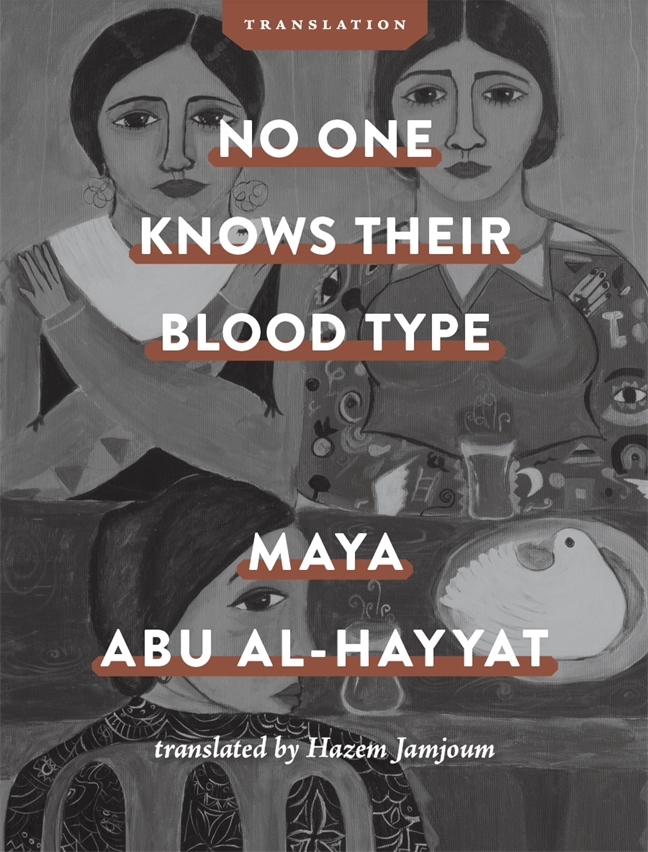
No One Knows Their Blood Type by Maya  Abu Al-Hayyat is translated from the Arabic by Hazem Jamjoum and published Cleveland State  University Poetry Center.

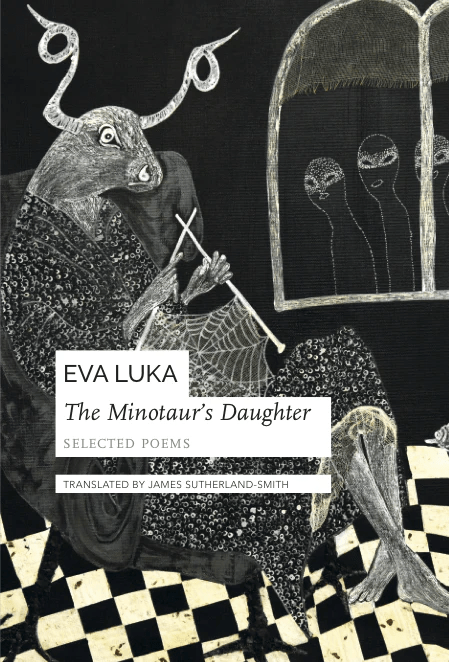
That day was a little bit odd: The Minotaur’s Daughter: Selected Poems by Eva Luka

That day was a little bit odd. After walking down the street
      I stopped in a movement,
at one particular moment of growing older.
And I sensed it (the moment of growing older) like a scientist
     over a microscope:
the precise split-second border between the former and the
      future me.
In that borderline, tangible second, I was nothing; only an echo
of a former self and the germ of the future, the old me.

It lasted for only that one moment. Then the air rustled like
     golden hay
and into the street a horse came.

(from “A Horse Came Into Our Street”)

Odd is one way to describe the poetry of Slovakian poet Eva Luka—deliciously, devilishly, delightfully odd. Her poems open up strange, shimmering vistas filled with fantastic imagery. Born Eva Lukáčová  in Trnava, Slovakia, in 1965, she studied English and Japanese, first in Slovakia and later in Japan. She began publishing poetry under her given name, first in anthologies and then, in 1999, with her first collection Divosestra (Wildsister).  For her second book, Diabloň (Deviltree), published in 2005, she adopted her nom de plume, along with what would become her practice of selecting a poem from each collection to provide the title for the work to follow. In this way, her poems speak to one another within and across collections which also include Havranjel (Ravenangel, 2011) and Jazver (I-Beast, 2019).

With The Minotaur’s Daughter, translated by James Sutherland-Smith, a selection of poetry drawn from her work to date, is now available in English for the first time. In his Afterword, Sutherland-Smith suggests that Lukáčová  may be one of the last great poets of resistance in Europe, citing her:

resistance to conform artistically and [a] resilience against the potential psychological pressures resulting from the circumstances of her life and times. Eva’s resistance to conform to being categorized within a specific poetic movement—particularly those associated with a single gender—reflects the individual nature of her work, and this artistic independence even challenges gender identity in the personae that inhabit her poems.

A transgressive spirit illuminates her poetry, extending beyond matters of gender, to explore questions of personal freedom, sexuality, and desire within a phantasmagorical landscape featuring eccentric figures, mythical creatures, and fabulous flora and fauna. She creates, with her poems, haunting, often dark, scenes or vignettes that can be as intriguing as they are disarming.

Unlike many similar selections that draw from across a poet’s oeuvre, the fifty-nine poems that comprise The Minotaur’s Daughter are not presented chronologically, or divided according to the individual volumes they come from. Rather, the assortment seems to be loosely thematic, with many of the earlier poems coming from more recent collections, and some of the Japanese inspired work from her first book coming later. And, because she sometimes writes companion pieces that appear one or two volumes apart—for example, “Wildsister,” the title poem from her first book, is later answered with “Wildbrother” in her third—here they are presented together. The impact is more powerful this way. It is also evident that Luka appreciates the poetic storytelling potential of triptychs and series, something that may have developed over time, as Sutherland-Smith seems to think that her upcoming fifth collection may include even more.

One of the most developed sequences in this selection begins with an ekphrastic poem inspired by Leonora Carrington’s painting  Portrait of the Late Mrs Partridge. In this piece, the speaker is the artist commissioned to capture the likeness of the wild-haired woman in her odd partridge skirt. He then becomes famous, but is ever haunted by the painting. Four more “Late Mrs Partridge” poems follow, addressing her body, her death, her husband, and finally her wake. Mrs Partridge herself voices all but her husband’s lament from beyond this life, even returning to her own wake, still nursing an internal flame, to drink a toast with the bereaved:

A man sits at the top table, his face,
wrinkled from the tertiary era, with an incalculable expression.
The atmosphere is gloomy, but still audible
is a ubiquitous slurping, gurgling and belching,
as if the whispered stories haven’t had as much power
as unstoppable bodily hunger and thirst.

Leonora Carrington’s eerie, fantastic paintings appear again as the stimulus for five other poems in this translation (not to mention the poet’s own artwork which graces the cover). At times, Luka stands as an observer, as in “And Then They Saw the Minotaur’s Daughter”  where she watches  the “two well-behaved boys—somewhere between childhood and doubt” watching the noble horned woman-creature while spirit-like forms fill the room, Elsewhere she animates and engages directly with the scene, even imagining the central figure outside their fixed setting as in the Mrs Partridge quintet and  “Necromancer,”  a poem after the abstracted, surreal painting of the same name.

The images that dominate Luka’s poetry are drawn from nature—water, flowers, birds, reptiles, and animals—but, as with her human beings, the line between the real and the spiritual is fluid. They inhabit a shifting borderland and there is a pagan, pantheistic sensibility at play. Her animals inspire awe and fear, mythological figures speak, and a woman invites an angelic black bird (Ravenangel) into her bed in a dark sequence of desire, longing, and loss. Hers is a magical world, albeit one that accepts that mystery can be tinged with heaviness and pain. But it is not a relentlessly dark place; rather it exists in a kind of intermediate, and yet, ultimately familiar, space:

It’s incomprehensible, that border of yours
between the feverish night and the healing morning; as if you
      didn’t recognize
the differences between frenzied hyacinths and tamed hyenas.
      What you tell me
in the evening, no longer applies in the morning, and vice versa

(from “You and Me When the Cock Crows”)

One might describe the poetry of Eva Luka as akin to richly woven tapestries; the vignettes she crafts are vivid, often disturbing, but they tend to close with a note of promise, that is, with a measure of the resilience that characterizes her work. This quality is evident in The Minotaur’s Daughter. Her striking imagery is well captured in Sutherland-Smith’s translations, while his decision to break with the typical chronological ordering of a “selected poems” collection offers her first English language readers a deeply rewarding introduction to her singular poetic universe.

The Minotaur’s Daughter: Selected Poems by Eva Luka is translated from the Slovak by James Sutherland-Smith and published by Seagull Books.

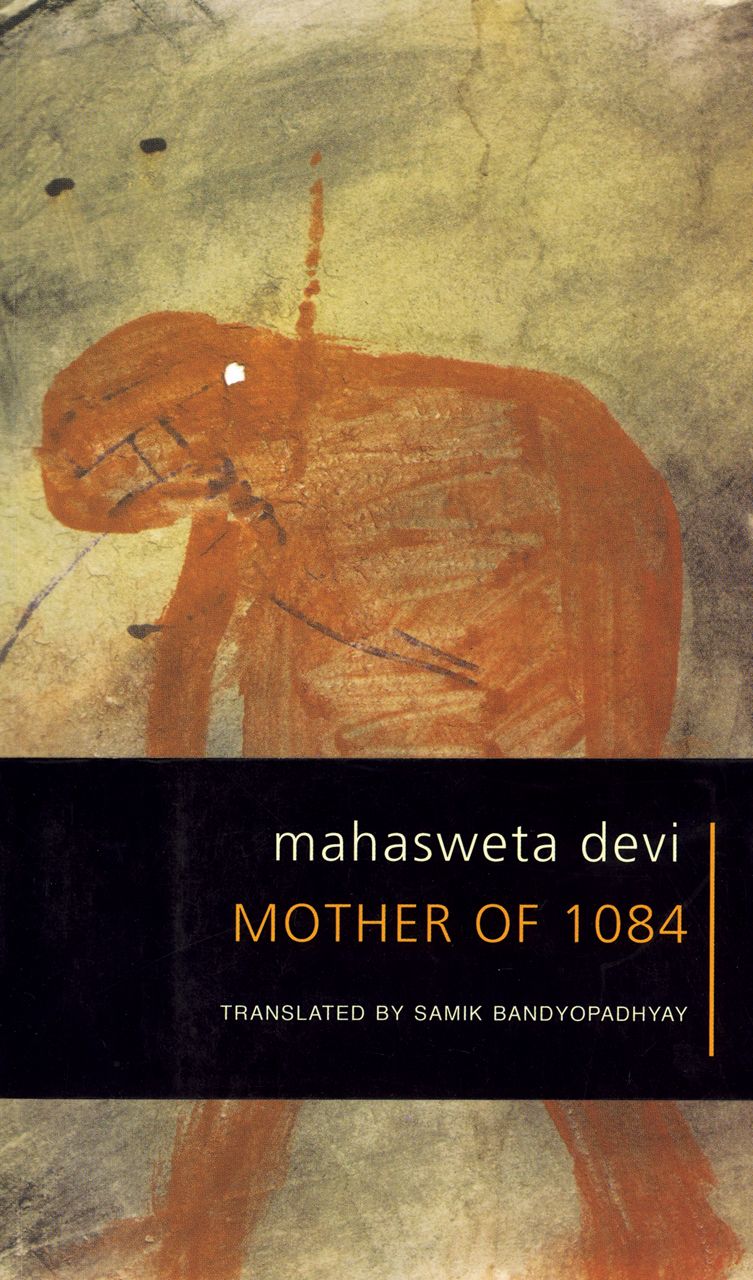
A chronicle of pain: Mother of 1084 by Mahasweta Devi

The pain had come at eight in the evening. Hem with all her experience had said, It won’t take time, Ma. The womb has started pushing it out. Hem held her hands and said, Let all be well. Let God bring you back, the two of you separate.

Sujata’s story is framed and defined by pain. As it opens she is asleep, her dreams have transported her back twenty-two years, to the morning following an agonizing night of labour and emergency surgery when she gave birth to her fourth child and second son, Brati. Now she is awoken by searing pain once more, on the same date, January seventeenth, but this time an inflamed appendix is to blame. Once her abdominal distress begins to settle, a glance at the calendar takes her back to the early hours of yet another January seventeenth, just two years earlier, when the telephone suddenly rang. At the other end of the line, a voice summoned her to the morgue. There she would find her beloved son reduced to a numbered corpse, 1084.

Set over the late sixties and early seventies, during the first phase of the Maoist-inspired Naxalite insurgency in West Bengal, Mother of 1084 by Indian writer and activist, Mahasweta Devi (1926–2016), is a focused examination of the impact of targeted violence on those left behind through the story of one woman stranded in her loss and grief. Sujata comes from a background of privilege, raised in a wealthy Calcutta family and afforded an education, but in marriage her life is constrained by the roles her social class expects of her. At the time of the critical events in this novel, she is in her early fifties. Her oldest son and daughter, Jyoti and Neepa, are both married and each have one child. Jyoti and his family, as custom would have it, lives in the family home. The younger daughter, Tuli, has a serious boyfriend. Her husband, Dibyananth—or as he is often described, “Jyoti’s father”—is a successful businessman with, once his wife decided she wanted no more children, a string of mistresses on the side. Sujata also has a job at a banking office, taken on her own initiative when her mother-in-law was still alive and commanding the daily affairs of the household. It is something she has refused to give up.

Brati, the youngest son, had always been unlike his other siblings. Imaginative and sensitive, he was easily frightened and deeply attached to his mother. From his earliest years on through adolescence, their bond was close while there was little love lost between Dibyananth and his second son. Naturally Sujata was blamed for spoiling him and making him weak. When Brati is killed with a group of young Naxalite revolutionaries, his father’s immediate concern is to assure that no one knows of his involvement. He pulls a few strings and Brati’s name is omitted from the news reports while at home all evidence of his existence is cleared away and locked in his bedroom on the uppermost floor. Sujata finds herself on the wrong side of her own family, on the side of the dead man who had failed to consider the shame and embarrassment he would cause. She is left alone to try to make sense of why her son had been drawn to such a radical movement and to understand the events of the night on the eve of his twentieth birthday that had cost him his life. It was a death that could not be classified in any of the usual ways—illness, accident, crime:

All that Brati could be charged with was that he had lost faith in the social system itself. Brati had decided for himself that freedom could not come from the path society and the state offered. Brati had not remained content with writing slogans on the wall, he had come to commit himself to the slogans. There lay his offence.

Extending from morning to evening over the course of a single day, exactly two years after his death, Mother of 1084 chronicles Sujata’s attempt to honour her son’s memory and perhaps find some sense of closure. At home, Tuli is preparing to hold her engagement party. Although it is her brother’s birth anniversary, the date has been determined by her future mother-in-law’s American guru—her own mother’s feelings be damned. Between attending to the necessary arrangements in the house, Sujata will make two excursions that will help fill in some of the missing information she craves, but not necessarily bring any peace.

In the afternoon she travels out from central Calcutta to the colony where the mother of Somu, one of Brati’s friends, lives. The young men killed had spent their last hours in her house. Sujata had first met Somu’s mother when she went to identify her son’s body and she had found in this poor woman a kind of a kindred spirit, another mother who understood the loss. But face to face with the graphic details of that fateful night and the absolutely devastating effect it has had on this impoverished family, she is reminded that her social status will forever be a barrier that cannot be wished away. The two women, brought together in shock and pain at the morgue and the crematorium, share an affinity that can never be more than temporary:

Time was stronger than grief. Grief is the bank. Time the flowing river, heaping earth upon earth upon grief.

Later that afternoon, Sujata makes another outing, this one closer in location and class, but again one with a divide that cannot be breached. For the first and last time, she visits Brati’s girlfriend Nandini who has recently been released from prison, bearing the injuries of torture and incarceration. In this encounter there is a bitter demonstration of the activist’s unshakable resolve, something the grieving mother will never fully appreciate. Upon returning home to where guests are gathered, Sujata is clearly affected by her experiences, and all of the memories and details that have come back to her over the course of that day. But even as pain rips through her abdomen, she must once more attempt to play her role as wife and mother. At least for the moment.

One of Devi’s most widely-read books, Mother of 1084 is not explicitly concerned with the broader political context of the Naxalite insurgency, rather it turns its attention to the intimate human experience—the appeal of the movement to individuals from different backgrounds, the reality of betrayal, the brutality of the violence, and the wide range of responses from the families and communities affected. That is not to suggest that this is not an intensely political work, but by centring an apolitical protagonist who finds herself navigating the space between the shocking indifference of her family and social class, the devastation of the bereaved who exist in the midst of conflict and destitution, and the anger of the activist committed to the cause at all costs, Devi crafts a powerful, unforgiving narrative. Sujata is the troubled conscience of this tightly woven novella but one is ever aware how very small she is against society’s pretense of normality in a time of upheaval.

Mother of 1084 by Mahasweta Devi is translated from the Bengali by Samik Bandyopadhyay and published by Seagull Books.

So much space to fill: Thirsty Sea by Erica Mou

Today it’s twenty-five years since I killed my sister.

Nobody has ever said it out loud, but I can hear other people’s thoughts loud and clear. And the unmanageable ones have a special sound: they make a low constant rumble like waves crashing against docks, like high heels as you carry on walking, resisting and smiling.

My mother says it wasn’t my fault.

My mother wears them often, high heels that is.

The voice of Maria, the narrator of Erica Mou’s debut novel Thirsty Sea, sings with a heady mix of guilt, defiance and insecurity. Not always likeable, sometimes driven to over dramatic metaphor, she manages to maintain an irresistible, infectious flow that carries you right along with her, even if you may sometimes wonder how or why other the characters in her life put up with her at all. She’s a little injured perhaps, but you can’t help hoping she will find a way to start to heal. It makes for a strangely captivating read.

Thirsty Sea is the first offering of Héloïse Press, a new venture dedicated to publishing contemporary female narrative that launched in the UK earlier this year. Mou is an award winning Italian indie singer-songwriter who brings a free-spirited musical energy to her writing, a vitality that is captured with creativity by translator Clarissa Botsford. In her introductory note, Botsford describes the challenges inherent in translating the work of an author who delights in playing with double meanings. It was necessary at times to make changes and alterations, especially to the short poems that occur within and at the close of each chapter. These brief verses have a title that reflects back on the theme just covered and, as such, it was not always possible or desirable to translate directly from Italian to English. Fortunately she had an opportunity to meet and work with Mou herself and the author was more than open to the idea of “trans-creating.” As she said: “It’s my text. We can do with it what we like.”

Watermark

All you needed to do was pick me up and shine a light
to see whether I’d ever been there

Maria, named after her two Maria grandmothers, is a thirty-two year-old woman living in Bari, Italy, with her extraordinarily patient partner Nicola. He is a pilot and she is the proprietor of a rather unlikely business, a gift-finding service—unlikely because she herself has never liked receiving gifts. This resistance, like most of the self-imposed roadblocks in her life and relationships, has its origins in the tragic death of her younger sister, Summer, when Maria was seven and her sister three. Despite frequent reassurances from her mother and several therapists, Maria cannot let go of a sense that she was somehow at fault, that everyone who knows of the situation sees her as a murderer. Her unyielding monologue continually turns comments, questions and recollections into varieties of self-accusation. Her sharp tongue is turned on herself and everyone else, though, for the most part, she manages to keep from expressing her harsher observations out loud.

Unfolding over the course of one twenty-four hour period, from one evening to the next, Maria gradually fills in details from her life, colouring in a self-portrait of a woman burdened by guilt, feeling crushed by her mother, alienated from her father and stifled by Nicola who wants to have a baby. She is weighed down by a block of marble she imagines carrying in her chest. Everything with Maria is intensified, technicolour, against the grey backdrop of her mother, her father’s crumbling edifice and Nicola’s pristine white palette. Almost the only person she trusts with the occasional honest expression of her feelings is Ruth, an American she met while visiting London in her youth. But what comes through loudest is the sense that Maria is truly isolated by her own inability trust herself. She cannot shake the trauma of her sister’s death no matter how unaffected she attempts to sound.

As the narrative unfolds and the pieces start to fall into place, tension builds. By this point we are attached to this wounded but entirely relatable soul as she nears a critical turning point. All we can do at that moment is trust that she will know what is right. For her. With Maria, Erica Mou has created a truly engaging, oddly eccentric character and a well-paced narrative that leaves one wondering where the future will take her. Definitely a writer to watch.

Thirsty Sea by Erica Mou is translated by Clarissa Botsford and published by Héloïse Press.

Somewhere between night and day: Trás-os-Montes by José-Flore Tappy

Dark, endless,
lampless
behind the windowpanes

the night

Yet even it
ends up famished
can be heard fidgeting,
shrinking to better flee,
suddenly escaping
over the roofs

Spare, essential in its spirit, the voice of Swiss poet José-Flore Tappy strikes a distinctive note  from the first lines of “The Corridor,” the poem that opens Before the Night, the first part of her book Trás-os-Montes—a note that continues to rise off all the pages that follow. Born in Lausanne in 1954, Tappy is a highly respected writer, researcher and translator. The present collection of poetry, her seventh, was awarded the prestigious Swiss Prize for Literature in 2019 and is now available in a dual language French / English edition in John Taylor’s translation. (Her first six books were released in a single volume as Sheds / Hangars in 2014, again in Taylor’s translation, available from Bitter Oleander Press.)

In his Preface, Taylor provides an overview of the key poetic elements at play in the poems, linking them, where appropriate, to a continuation or development of approaches emerging in Tappy’s earlier poetry. His long association with the poet and her work allows him to contextualize the themes that arise, but a conversation between poet and translator recorded and published in translation in The Fortnightly Review, offers a valuable opportunity to hear Tappy discuss her poetic philosophy and this work in particular. In speaking about her own poetic evolution, she notes that Spanish and Latin American poets have had an abiding presence in her life and writing. Taylor wonders how this influence is reflected and she responds:

Surely natural elements in all their intensity: the Mediterranean, the arid lands, the most deserted landscapes, or the poorest landscapes. This is where my imagination goes and where I recover my roots. I have spent many moments of my life on one of the Balearic islands, and I came of age in the midst of an environment that was at once solar and maritime — and very harsh, where sunlight can be hostile, the vegetation overgrown and inhospitable, where the violence of nature demands a strong existential response from a human being. The southern European landscapes and their inhabitants, the harshness of their daily lives, have always accompanied me: Spain, but also Sicily, Greece, and Portugal.

This sensitivity to the human-natural interplay of intense landscapes is directly evident in Trás-os-Montes which is set in Portugal and Spain, along with an extended poetic epigram set in Greece. The first series of poems, Before the Night, feature a village woman, Maria, as she tends to the tasks of her daily life in “Trás-os-Montes” (which means “on the other side of the mountains”), an impoverished, isolated region of northern Portugal with an aging population clustered in small villages, almost forgotten by the rest of the country, bound to this austere lifestyle by deep ancestral roots.

Tiny and bent over
the sink, so far from us
in her blue apron, lost
in her rain boots, she’s sorting
the black cherries, setting the ripest
off to the side, separating them
from the rotten ones

She seems to be measuring
an old dream from a distance,
visiting it with her fingertips

behind the bare windowpane
the clouds
leave stains

We see her tending her garden, cleaning her home, straightening a fence, heading off to market, engaging in communal activities. But this is more than a quotidian cataloguing of chores or portrayal of a life shaped by the forces of nature and defined by time. The precise, economical language carries its own emotional and existential weight. Through the speaker’s observations of this woman who is at once a real person and someone who stands for a kind of “universal humanity,” Tappy is exercising a form of distanced depiction to ask questions about what life means. She says:

This book does not draw her portrait, nor address her (she will obviously never read me!). It’s actually the opposite that happens. . . Without her knowing so, this discreet hardworking woman holds out a mirror to me, and in this mirror I look at myself. This woman is a lamp for me. She illumines me and helps me to think, to think about myself.

This sequence of poems, then, lays the groundwork for those of the second section, The Blank Hour. Here the tone is more personal, while landscape—natural and man-made—becomes an even stronger feature, as trails and roads lead the speaker into an encounter with an intimate past.  Although in neither section is a location explicitly stated, these poems are ostensibly set in the Balearic Islands of Spain where Tappy has spent much time during her life. The imagery is bleak and beautiful, coloured with an atmosphere of memory and loss that grows deeper as the sequence proceeds.

But for those who go afar
with neither lamp nor landmark
under a sky of black snow,
the earth with its lighthouses,
its bits of bone, its rockets,
the earth so noisy during the day,
every evening closes up
like a wooden chest
over hope

There is, again, a real person at the centre of The Blank Hour, someone Tappy once loved who has passed away. Her speaker, the lyric “I” which she understands as “an ‘augmented I,’ as it were, composed of personal experiences but also of projections of my imagination,” addresses this individual and encounters his absence in the places they once knew together. Her language, so evocative, illuminates the experience of sorrow and grief so perfectly. Our losses always seem magnified, not only by specific locations but by the vastness of the universe itself.

Today the tamarisks
covered with dust from the trucks,
pink stars become gray
that you’ll never see again,
persist,
and the enamel-bright houses
bunch together. In silence
they stand, staving off
absence

A single fault line suffices, however,
and that look from the past returns,
slipping by mistake
into the heart, reopening
what had been locked up so well

a nearby star twinkling
and ripping

In reading Trás-os-Montes, one has a sense of journeying alongside the speaker, yet at the end we are each, poet and reader alike, left alone to understand the destinations we have reached. Tappy’s poetic process is openly existential in a way that prescribes no specific conclusion. The story she is telling, she claims, is not her own but rather a means to self-understanding: “By writing, I get myself going on a path, towards a deeper, renewed self.” As such, the story we read, is, at least to some degree, our own, shaped and coloured by our lives and experiences. And that is the true beauty and power of poetry.

Trás-os-Montes by José-Flore Tappy is translated from the French by John Taylor and published by MadHat Press.

Welcome to Casablanca: Blood Feast by Malika Moustadraf

First, read the stories. Unsettling, allow them to assault your senses. Enter a world marred by poverty and illness, poisoned by the values of traditional patriarchal society, infused with everyday magic and superstition where women and men are trapped in roles defined by factors beyond their immediate control. This is the Casablanca of Malika Moustadraf’s fictional landscape, the space in which she ignites fires, large and small, and lets them burn. Finally, turn to the Translator’s Note and realize just how important and tragically small this remarkable work truly is.

Blood Feast (published in the UK as Something Strange Like Hunger) is a slender volume containing all of the stories the Moroccan Arabic-language writer wrote during her short life—fourteen tales, some only a few pages long. Together with one novel (Wounds of the Soul and Body) self-published in 1999, they form the sum total of her literary output. During her lifetime she was, through her writing, an out-spoken activist, with a style and thematic focus on gender, sexuality and class under patriarchy that challenged what was acceptable for turn of the twenty-first century female writers in her home country. Yet, until recently all of this work had long been out of print in Arabic and none was available in translation. Today she is recognized and celebrated as a feminist icon.

But, again let’s have a look at the stories. The first ten pieces were published in Arabic in 2004 as Trente-six, a project supported by the Moroccan Short Story Research Group. Her settings tend to be squalid, pungent and unpleasant. As are the people that inhabit them. Slang, harsh language, and cultural references abound. Her female narrators, are typically facing the consequences of severe gendered oppression, propagated by callous fathers, abusive partners, or the demands of unreasonable, outdated social norms. Her male narrators often echo the sexist attitudes of the system they were raised in, unable or unwilling to rise above it. And yet there is a defiance, a resilience, and a conscious weighing of the odds motivating many of her protagonists’ actions—even those that are unlikely to improve their situations. The narrator of “A Woman in Love, A Woman Defeated,” for example, visits a seer to find out how to make her husband return even though she herself wonders why she even wants him back. Looking out at her very pregnant cat, she says:

She left home a while back, chasing after a scabby tom who had seduced her, and then later she came back, rubbing herself up against me like nothing had happened. I did the same thing, left everyone behind and followed him. He wasn’t handsome. He looked like a little bald bear with a saggy paunch hanging down past his genitals, and he had a huge ass and a round face. I always hated men with huge asses and round faces. So how did I fall in love with him? Love is like that, it always shows up without an appointment. Love is like death, like illness, always arriving when we least expect it, at the most peculiar times and places. Love makes us behave like irrational children. Why can’t they just invent a vaccine against it?

Within the tight scope of her characteristically brief stories Moustadraf was able to paint claustrophobic portraits that often explored territory that was extraordinarily progressive, given the time when she was writing. The narrator of “Just Different,” for instance, is a gender non-conforming prostitute whose identity is never clearly defined. Perhaps an effeminate gay man or a transfemale or even intersexed person—that which is undefined leaves possibilities open— reflecting, on a quiet night working the street, back on childhood and their father’s brutal hostility toward any hint of feminine mannerisms. Later in this collection, among the four stories completed following the publication of Trente-six (three of which were published after her death), her protagonists appear to have somewhat more agency, and two even engage in online flirtation—probably, as the translator suggests, “the first ever published literary depictions of cybersex in Arabic.” One can only wonder what she might have produced if her health and economic situation had not conspired against her.

As it was, she died in 2006 at the age of thirty-seven, from the complications of chronic kidney disease and her inability to obtain the life-saving surgery she needed. The exact biographical details of her life are not well known but she seems to have been diagnosed with kidney disease and started on dialysis in her teens. She famously resented the fact that women writers were assumed to be only capable of writing autobiographical fiction, denying that they, like men, could have access to a robust imagination. However, the title story of the present collection, “Blood Feast,” can be read as a powerful exception to her rejection of autobiographically inspired themes. In this story, dedicated to her sister Karima from whom she received an unsuccessful transplant, the male narrator is struck with kidney disease shortly after his wedding. The bride is blamed, alternate understandings are sought, and the proclamation of the female doctor is met with distrust. But when he finds himself flat on his back in a putrid hospital, he becomes the unwillingly captive audience of his smoking fellow patient who imparts his wisdom about navigating the almost hopeless process of applying for financial assistance for the necessary treatments in a corroded semi-privatized system, a reality the author knew only too well.

Moustadraf faced her own host of impossible barriers in her journey, yet as her illness progressed, her literary spirit only burned brighter. Writing was her way of coping, one that paradoxically weakened her health when she had to go without medications to be able to afford to self-publish her novel. The challenges she faced, physically and artistically, to bring her work to light adds an important context and power to her bold voice, amplifying it far beyond her relatively small oeuvre. And at last she is getting her due, in no small part, thanks to the dedication of her translator Alice Guthrie who literally fell in love with her work when first invited to translate a piece for the online journal Words Without Borders several years ago. She has ensured that Malika Moustadraf is no longer forgotten.

Blood Feast by Malika Moustadraf is translated by Alice Guthrie and published in North America by Feminist Press. In the UK, this same collection was published by Saqi Books under the title Something Strange Like Hunger.

Everything is fine: Monsters Like Us by Ulrike Almut Sandig

Tolstoy’s famous adage about unhappy families might well apply to dysfunctional families, but as Ulrike Almut Sandig demonstrates in her starkly disarming debut novel, a harsh sameness can run through seemingly dissimilar families with equally tragic consequences. Sandig, a poet and writer born in Saxony in 1979, famously began her writing career as guerilla poet, posting poems on lampposts and handing them out on flyers. She has published four volumes of poetry and two collections of short stories and engaged in collaborative projects with composers, musicians and visual artists. Her poetry is at once politically charged and playful, as evidenced in her collection released in English translation in 2020, I Am A Field Full of Rapeseed, Give Cover to Deer and Shine Like Thirteen Oil Paintings Laid One on Top of the Other, which examines such subjects as the fate of migrants, the nature of modern warfare and the rise of nationalism through the revisiting of themes drawn from European folklore, in particular the tales of the Brothers Grimm which, in their unvarnished form provide ideal instruments to explore the barbarity of human nature. One could say that with Monsters Like Us, she is fashioning an elaborate, contemporary fairy tale that revolves around one of the most brutal realities haunting too many families. And like the original Brothers Grimm, the darkness runs deep.

So, off the top, let it be known that this is a story about families and it is a story about childhood sexual abuse. There is humour, there is affection and there is horror. The family as a microcosm of the world at its best and its worst, reimagined through a narrative that simmers with poetic intensity and suppressed rage.

Monsters Like Us is a coming of age story set in a rural village in East Germany during the final years of Communist rule. Ruth, like Sandig herself, is the daughter of a Lutheran pastor and a chemist’s assistant. She has an older brother called Fly, a reference to his love of being in the air whenever and however possible, and their lives revolve around their father’s profession, which, given the political context, makes him a bit of a reactionary. But their home contains a degree of tension, a feature not unknown in other homes in the community where a certain measure of negative physical interaction commonly marked the relationships of spouses, and parents and children. Ruth narrates the opening and closing sections of the novel, addressing a Voitto—a future lover, it turns out—with a matter-of-fact tone that increasingly appears to mask her emotion. Early on she describes overhearing a confrontation between her parents that ends with a slap:

That is the first slap in the story, Voitto. No idea whether it was Mother or Pap who delivered it and whether it was Pap or Mother on the receiving end. But after a few times round this haematoma of the sun, I can tell you this for one: it all starts with believing a slap can be the natural conclusion to a conversation. Fly and I turned over onto our sides and rolled in under our duvets. Then Fly turned off the light.

Soldiers on maneuvers were a frequent sight in the area due to the fact that barracks were located nearby. One day a new boy appears in Ruth’s kindergarten class, tall with white blond hair and a face that wrinkles when he smiles. Viktor’s father was a non-commissioned officer in the barracks of the People’s Army of the Republic, located next to the Soviet barracks, and his family had moved into a newly developed part of town. This all set him apart, earning a frequent “that Russian boy” epithet. Although he was not Russian, his mother spoke Ukrainian to him at home, a background she endeavoured to hide. Ruth is drawn to this strange new boy and they soon become fast friends. Unknown to one another at the time, it will turn out that they each harbour terrible secrets: Ruth’s maternal grandfather touches her inappropriately every chance he gets, a behaviour she does not understand but fuels a fascination with and fear of vampires; Viktor’s brother-in-law, his half-sister’s husband, enters his room whenever they visit or are invited to babysit, and forces him to engage in sex acts.

Neither family suspects a thing—after all, are these not trusted people in the children’s lives? And the children themselves? “If you don’t talk about it, then it hasn’t really happened,” Ruth says. “That’s right, isn’t it, Voitto? That’s how we learned it.” As the years pass, Ruth seeks to find escape in music. Naturally gifted she spends hours with her violin. It allows her to forget everything. She is aware that her playing seems to have an emotional affect on anyone else listening, even if she feels nothing. And that is fine. Viktor pours his energy into his body, building his muscles, protecting himself with a veneer of power, while at school he works his way into the local gang of tough kids, a group that will become small scale neo-Nazi styled punks as they get older.

The second half of Monsters Like Us, takes an unexpected turn. Unable to find work in the now united Germany and eager to put distance between himself and both his extended family and his rough riding friends, Viktor heads west to France where he has applied for a position as an au pair, feminizing his name on the application to aid his ability to secure an placement. As he gets off the train at the station in a town near Marseilles:

These were the last few metres during which the boy felt completely himself. That didn’t occur to him particularly at the time. But by the time he had left the platform, he was just another exhausted passenger arriving. Later he would be a salaud de Nazi. The stubborn boy with the inadequate vocabulary, the East German colossus in combat boots, Germanic giant-child, a case, a traumatized hobgoblin and other things besides. For his parents, he would simply be our successful son travelling abroad.

For the wealthy family in the expensive villa, he is an unwelcome surprise. But as he is the sixth au pair to be with the family, they have little leverage with the agency and have to give him at least a week or two. He will stay for months, gradually improving his French, preparing complicated recipes, ironing their laundry and walking the children to and from school. It is a most unlikely outcome. Yet behind the fancy façade, a very damaged family drama is playing out, one that daughter Maud is too young to understand, and Madame is either too naïve or too proud to acknowledge. Viktor recognizes his own agony magnified in the son, Lionel, who refuses to meet his eyes for the boy’s circumstances are an order of magnitude more terrifying than his own troubled history. As he keeps telling himself “everything is fine” he knows that it is not.

It may be hard to imagine, given this very rough outline, but this is a brave novel charged with a brutal beauty. The underlying subject matter is exceptionally difficult, but is dealt with with great care—openly as needed, but more often alluded to indirectly, echoing that unspoken awareness no one wants to address. The effect is all the more powerful for it allows the tension build within the reader. Where Ruth suppresses her pain, channelling her energy into her music, quiet, sensitive Viktor is potentially a ticking timebomb. Sandig’s lyric prose, captured brilliantly by translator Karen Leeder who has translated two volumes of her poetry, is tight and spare, directed into carefully crafted scenes that often end on an open note. Her narrative sensibility is well played. Ruth’s first person account, directed to an otherwise unknown adult contemporary captures a child’s spirit through a more mature perspective. Viktor’s time in France is a third person narration, from his perspective, with the regular insertion of Maud’s child’s eye observations and commentary. Although young, she is perhaps the most sensible member of her family, but one can only worry about the ultimate fate awaiting both of the unfortunate children of the wealthy Madame and Monsieur.

As her poetry clearly shows, Sandig does not resist shining a light on the darkness in our world. With Monsters Like Us she turns over another stone that many try to ignore, and shows that it would be easy to point to a troubled state that is falling apart to explain a level of domestic discontent and even violence, but this is far more than a fairy tale set in a crumbling landscape, it is a horror story that can just as easily unfold in the most ostensibly desirable settings of wealth and privilege. And if the “monsters” of the title refers, as it does, to those who have been hurt by time or circumstance, the true monsters too often go unnoticed and unpunished. This vital book is one of the most intense and moving works I have encountered in a long time.

Monsters Like Us by Ulrike Almut Sandig is translated by Karen Leeder and published by Seagull Books.


As long as I live in poetry: Acrobat by Nabaneeta Dev Sen

Just one more page left
one more paragraph, one more sentence—
give me one more word, dear nurse,
just one more day.
.        – from “The Lamp”

Nabaneeta Dev Sen (1938-2019) the much loved and highly respected Bengali author, scholar and feminist was a versatile and prolific writer whose extensive bibliography includes fiction, essays, children’s literature, travelogues, political columns and more. However, throughout her life she identified herself as a poet, first and foremost. As the daughter of two acclaimed poets, she began writing poems when she was a young child. In her comprehensive Introduction to the present collection, her daughter Nandana Dev Sen—not a poet herself, but a writer, actor and activist—reflects on the way poetry served as a vital and constant companion, one that was not always easy to satisfy. As Nandana records, in her mother’s own words:

“Poetry is like war,” she wrote. “A war with oneself. Finally, only when there is victory and peace, poetry follows. Poetry has to be earned.”

This sentiment can be felt in the clarity and precision that marks her work.

Acrobat presents a selection of poems that span Dev Sen’s career from the late 1950s through to 2019. It is very much a labour of love between a mother, the poet, and a daughter, the translator. Although she would not live to see the final publication, Nabaneeta Dev Sen was very excited about this book which would be her very first major release from a western publisher. She was gravely ill but undaunted when the project began and while translations of some of her poems already existed, she desired newer versions. A modest list of poems was compiled, but that was as far as mother and daughter could go together. Nandana translated those pieces and many more over the following months, gathering them together with a number of poems her mother had translated herself, a few that she had written in English, and one translated by her sister, Antara Dev Sen. Her Introduction includes a biography, personal in tone, and a discussion of the challenges of translating poetry and the considerations she followed when bringing her mother’s Bengali into English.

When presenting work drawn across a period of six decades, there is a common tendency to allow the date of publication to dictate the order. In Acrobat, however, the poetry of Nabaneeta Dev Sen is sorted along thematic lines. The book is divided into five sections, each named for a phrase pulled from one of the poems within it. A chronology is included at the back so one can, as I did, check to see the decade a particular poem belongs to. Such an organic approach makes for a wonderful reading experience, allowing one to appreciate the way the poet’s work visits and revisits similar subjects over the span of her life, with styles and perspectives shifting over time and place. Dev Sen married young and spent her twenties and early thirties living in the US and UK where her academic work eventually drew her away from poetry for a while. In 1974, when her marriage to economist Amartya Sen began to falter, she returned home to Kolkata. As a newly single mother with two daughters amid the scandal of divorce, poetry took on a new importance as a personal space in which to explore her pain, her identity, and her place in the world. In contrast to her scholarly writing which was primarily in English, for almost all of her creative work, she made the “political” decision to write in Bangla—not only a reflection of her feminist values and her language activism but as a voice for deeper emotional exploration and observation.

Nabaneeta Dev Sen’s poetry, to my reading, is distinguished by an alertness to the moment in all its strangeness and wonder. She is attuned to the anxieties and the triumphs of life, distilling key elements into vivid images. This is beautifully illustrated in an early poem, “The Great Fair” that appears in the first section which revolves around the notion of time. The speaker is waiting with a cup of saved coins for an adult who has promised to return to take her to the Great Fair. She lists wonderous toys and treasures she expects to be able to buy, but:

As I waited on my steps
My limbs grew long
My list blew away in the wind
My cup of change became a trunk of gold.

There is nothing left for me to buy
From your Great Fair anymore.

I am going to get up from my steps now

There is a remarkable sadness and defiance in the voice of the speaker; that complicated mix of emotion that comes with growing up, letting go of, or seeing through, the illusions of childhood.

As a passionate advocate for the preservation of Indian tongues, a translator and a promoter of the voices of women, it is not surprising that poetry, words and language, frequently appear as subjects in Dev Sen’s poems. She approaches the theme with humour, with elegance and with pain. “The Year’s First Poem,” for example, begins:

Pretending
as if nothing at all has happened,
picking up the heart
from the sand, dusting it clean
pushing it back inside my blouse
secretly, the first year’s poem gets written.

Other themes that resurface include identity, relationships with others, and a search for deeper truths in life. These are, of course, not unique as poetic topics. It is the distinctive voice, the vulnerability and the openness that combine to make the poems in this collection so strong. But, more than that,  Nandana Dev Sen’s translations and her loving curation of this volume—which opens with an Introduction that is both biography and translator’s note and closes with an open letter to her mother—makes Acrobat at once a beautiful memorial that honours Nabaneeta Dev Sen’s life and spirit and a vital introduction to her poetry for English-speaking readers.

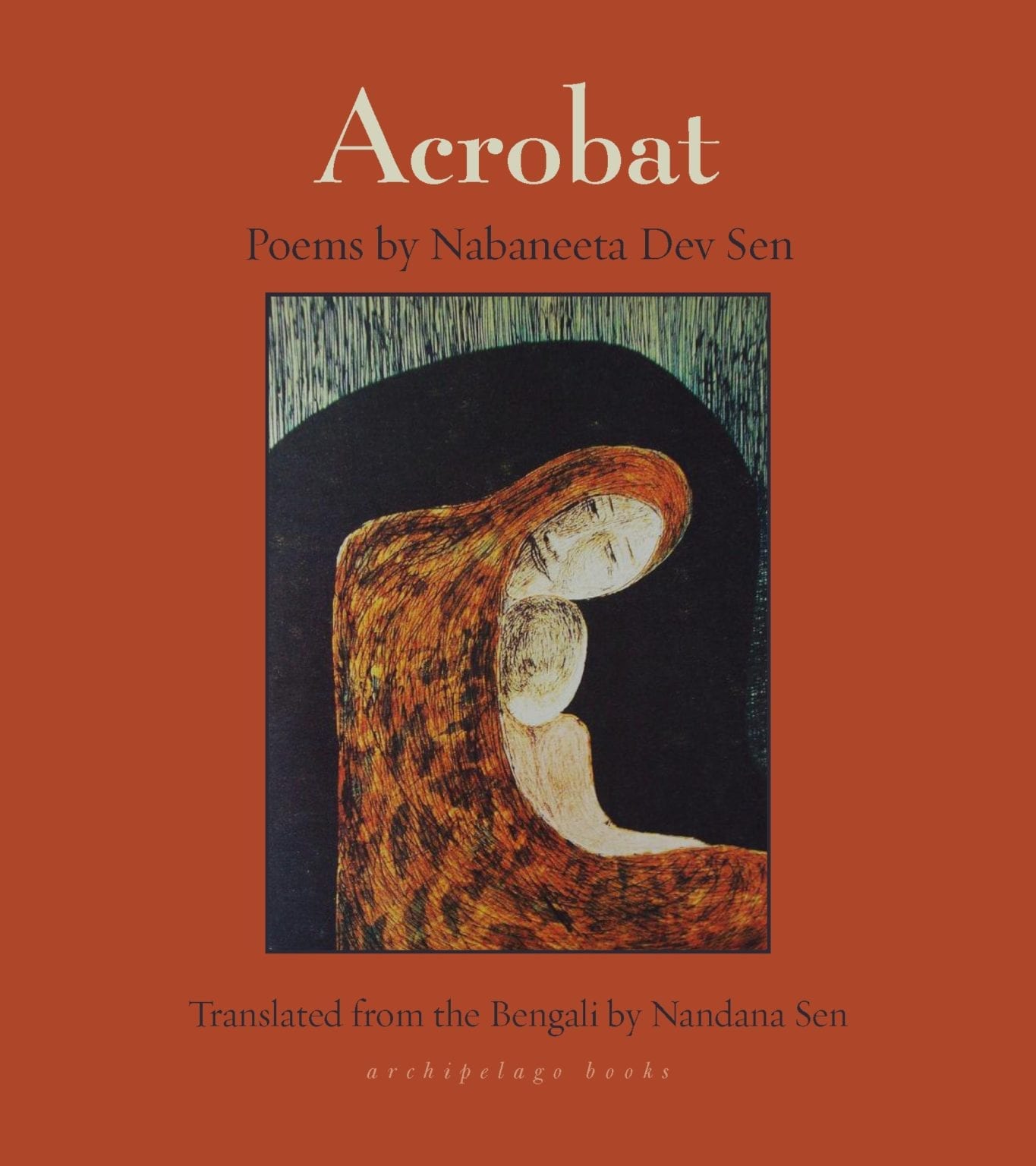
Acrobat by Nabaneeta Dev Sen is translated by Nandana Dev Sen and published by Archipelago Books.

Caught between seasons: Camille in October by Mireille Best

There is a chill that runs through Camille in October even though the seasons change—somehow it always feels like autumn, in the way that for some of us adolescence can feel like an interminable autumn. Growing up can be so complicated. And so it is for the critical, pensive, passionate narrator of this luminous novel, a young woman whose academic inclinations and sexual attractions increasingly alienate her from her working-class 1950s French neighbourhood. Familiar territory perhaps, but Camille’s distinctive voice and keen, if not entirely reliable, observations give it an undeniable energy and urgency.

Part of Seagull Books’ Pride List, this is the first English translation of a work by French author Mireille Lemarchand (1943-2005) who wrote under the pseudonym Mireille Best. Born into a working-class family in Le Havre, France, health problems kept her from attending university so she worked in a plastics factory and later as a civil servant. Known for her fiction featuring lesbian themes, Best published four short story collections and three novels with the French press Gallimard during her lifetime.

The world in which Camille and her siblings are growing up is one of relinquished dreams where the men are beaten down by hard labour and often turn to alcohol and violence, where housewives gather to trade gossip and offer criticism and support, and where few of their children will go on to complete their baccalaureate or go beyond that. The scars of World War II still run deep. And yet it is a tightly bound community.

The core of neighbourhood life is the group of women Camille refers to as the Mothers, her own included, who meet every afternoon to drink boiled coffee and talk about life. They are a regular presence throughout the book, a sort of opinionated, domesticated Greek chorus:

The Mothers should have killed themselves  Or let themselves die  It was the only logical step in the situation. But no. Very few died, of those among them. They had a stubborn resistance, animal-like  The passive resistance of things half-buried. The men climbed on top of them, knocked them about sometimes, weighed on their conscience as much as on the rhythm of their days  The kids screamed and vomited grew fell sick escaped went bad . . . The Mothers endured it all  The knocking down of days one after another endlessly  The eternal circuit house-shops-girlfriends and repeat

Yet if Camille’s cynical adolescent view of them is frequently caustic, she is often present at these gatherings, first with her siblings when they are younger, and later on her own, the misfit that everyone knows will never become a Mother like they are.

As for Camille’s family, they are strong characters, vividly portrayed. Her ever patient, loving mother harbours a dream of emigrating to Australia which her father, a veteran, refuses to even entertain. He’s a hard man, given to drink, and for a while Camille makes a few wildly unsuccessful, even humorous, attempts to kill him. Her younger sister Ariane is a firecracker, loud and fearless, possessed of resolute common sense that she never hesitates to dispense. A lively foil to her older sister’s intellectual seriousness, she is always ready to challenge anything and anyone. As one of the Mothers describes her:

—Poor little sweetie, says Gertrude. Not only does she think, but on top of that she thinks out loud . . . That age is carefree.

And finally, Abel, the youngest, has some kind of a seizure disorder of an unknown nature and his manner is oddly quiet with sudden outbursts. Camille reports that as a child he was “handsome in a strange and suspect way and it hollowed out around him an impalpable zone of emptiness.” As he gets older the strangeness comes to the fore.

Between her tough, firm sister and her soft but occasionally explosive brother, Camille describes herself as:

suspended in the atmosphere, participating in all realms. Endlessly permeable, I drifted, moved around like a fog. I was one or the other or everyone together, incapable of locating myself with certainty. I never really knew WHO I was. I don’t even know if this is a thing that gets better with time, or if I will never do anything besides wandering between contradictory solidarities, with bouts of intense haste when I become a pebble, a shell against the pain, an instrument of hatred.

This nebulous sense of identity is a quality that defines the narrative and gives it an authentic feel—this is the voice of a young adult who is increasingly out of place in her family and community. The black sheep with nowhere to go.

The central focus of Camille in October is a relationship between the protagonist and the dentist’s wife. It begins with tea and borrowing books, based on a common intellectual curiosity, but before long, Camille realizes that she has fallen for Clara. It is a deep and passionate attraction for an adolescent experiencing her first love, but one that is not so easily returned by a conflicted married woman. Theirs is a complicated friendship, beautifully and painfully executed. Camille as we come to understand her through her affection counterbalances the often harsh and cynical self defense she displays elsewhere in her account. Of course, although she is not the most reliable narrator, she is thoroughly engaging.

This novel, vibrantly translated by Stephanie Schechner, is a wonderful introduction to Mireille Best’s work. Coming of age / coming out novels often tread familiar ground. Place and personality set them apart. The 1950s working class setting would have no doubt mirrored the author’s own, but in Camille we have a contradictory and complex narrator. The intermittent use of an unusual punctuation style with dropped periods (as in the first quote above) grants a sense of urgency to some of her more idiosyncratic descriptive passages. Together with a broad, somewhat eccentric, supporting cast, Camille in October is a moving, thoroughly entertaining addition to the genre.

Camille in October by Mireille Best is translated from the French by Stephanie Schechner and published by Seagull Books.