The conversation we can’t have: Ti Amo by Hanne Ørstavik

Loss and grief are experiences that inspire and drive so much literature. For a writer there seems to be a compelling need to try to sort out the complicated flood of emotions that the injury, illness or death of a loved one releases with the only tool that makes sense—the pen. But that response typically requires a certain degree of distance before the diaries and records can be weighed against whatever it is one feels at the time and in the aftermath. The exercise of writing immediate grief is much more difficult. In his memoir, A Sorrow Beyond Dreams, Peter Handke seeks an element of closure by writing about his mother within two months of her death. He wants to honour her life without slipping into sentimentalism but discovers the peace he seeks is elusive, he cannot keep himself out of the story, and that is the best part of this raw, affecting meditation. More successful precisely because it was never intended for publication, is Roland Barthes’ Mourning Diary. This collection of fragments, scribbled on scraps of paper during the first days, weeks and years following his beloved mother’s death is entirely unselfconscious, honest and stripped to the barest essential emotions. As such it is one of the very few books a recently bereaved person can turn to for company. There are no conclusions, no prescriptions, and many unanswerable questions.

One could say that Hanne Ørstavik’s Ti Amo is also an exercise is immediate grief writing, but she turns to fiction, choosing to hold close to the details of her own life, and at the time of writing—or at least beginning to write—her ailing husband is still alive. Her unnamed narrator, a Norwegian novelist, is living in Milan with her Italian husband who is dying of cancer. The work she is writing, addressed to the man she loves, is an attempt to put some kind of meaning to a time in which their relationship, and the expectations and dreams they once had, is shifting, losing direction. It is an effort to reach out across the space that has opened up between their respective realities:

Why can’t we speak the truth? Why can’t we say things the way they are? Why do they have to hide your death from you? Do you really not want to know, not be in contact with, not feel, the truth about yourself?

“Ti amo”—I love you—is the phrase that links the narrator and her husband, becoming in moments of physical and psychological distance, a mantra that reaches out through the fogginess of medication and the void created by that which is not being said. At the time when he first became ill, they were still in the early, heady years of a mid-life romance. He was her Italian publisher and, as their desire to be together intensified, she relocated from Norway to Milan, immersing herself in a foreign culture and language. Their lives were filled with travel, literary events, social engagements. When the first indications that something was wrong appeared, they both tried to imagine it was nothing but before long his symptoms could no longer be ignored. A diagnosis, surgery and chemotherapy followed but the cancer is refuses to be stayed. In the present moment of the emerging text, it is early 2020. Their relationship goes back only four years and almost half of that time has unfolded under the shadow of serious illness. Even their marriage, the formal recognition of their partnership, was a response, at his insistence, to the suddenly altered circumstances.

Tracing the onset and progression of illness against an account of their lives before and after diagnosis, the narrator is continually seeking to understand what she feels and who she is in relation to a man who often seems so helplessly far away. Through the maze of appointments and tests and endless trips to the pharmacy in the hope that the prescribed pain meds have finally arrived, small things, the simple moments together—stopping for hot chocolate, buying suet for wild birds, tea in the morning—take on an added poignancy. The narrative is nonlinear but regularly circles back to January, 2020, as the last of the normal treatment options have been exhausted. And still, they are not together in accepting the one truth that hangs in the air.

Ti Amo is novel of passion, commitment and confusion. It is an open window into the complicated, often conflicted, emotions of caregiving without the numbing effects afforded by time and distance. Details of the ravages of an aggressive cancer are laid bare, woven into a story of two people brought together by a love of literature, art and travel. Two different natures, she reasons at one point, recalling that he always exhibited a certain degree of hesitancy while she always carried “a compulsion for truth that feels like my very life force itself.” Is that why they can’t approach the topic of death?

This is, of course, a one-sided story. The narrator’s husband is hostage to pain and its pacifiers, grasping at normal whenever he has the strength, and much of the time that entails going into the office. As if a semblance of work will keep him alive. But isn’t that what the narrator turns to as well? Her own work? “I write novels,” she says, “It’s my way of existing in the world…” If he will not or cannot ease her through her fear of bereavement by bravely accepting his own death (for is that not what lies behind her sense of loneliness?), she will turn their situation into a novelized love letter.

The resulting brief novella, written in just ten days, overflows with warmth, tenderness and  grief rendered in spare, poetic prose. Through her looping narrative style, Ørstavik allows emotional tension to build, in her protagonist and her reader, as a moment of reckoning dawns for the narrator and her husband in their separate but parallel journeys. However, the end, as such, lies outside the frame of the story. The author’s real-life husband, Italian publisher, translator and painter Luigi Spagnol, died on June 14, 2020. Ti Amo, in arising so directly from her experiences and emotions in his final months, is more than autobiographical fiction or memoir—it is also a deeply personal tribute to power of love.

Ti Amo by Hanne Ørstavik is translated by Martin Aitken and will be published by Archipelago Books in North America and And Other Stories in the UK in September.

Somewhere between night and day: Trás-os-Montes by José-Flore Tappy

Dark, endless,
lampless
behind the windowpanes

the night

Yet even it
ends up famished
can be heard fidgeting,
shrinking to better flee,
suddenly escaping
over the roofs

Spare, essential in its spirit, the voice of Swiss poet José-Flore Tappy strikes a distinctive note  from the first lines of “The Corridor,” the poem that opens Before the Night, the first part of her book Trás-os-Montes—a note that continues to rise off all the pages that follow. Born in Lausanne in 1954, Tappy is a highly respected writer, researcher and translator. The present collection of poetry, her seventh, was awarded the prestigious Swiss Prize for Literature in 2019 and is now available in a dual language French / English edition in John Taylor’s translation. (Her first six books were released in a single volume as Sheds / Hangars in 2014, again in Taylor’s translation, available from Bitter Oleander Press.)

In his Preface, Taylor provides an overview of the key poetic elements at play in the poems, linking them, where appropriate, to a continuation or development of approaches emerging in Tappy’s earlier poetry. His long association with the poet and her work allows him to contextualize the themes that arise, but a conversation between poet and translator recorded and published in translation in The Fortnightly Review, offers a valuable opportunity to hear Tappy discuss her poetic philosophy and this work in particular. In speaking about her own poetic evolution, she notes that Spanish and Latin American poets have had an abiding presence in her life and writing. Taylor wonders how this influence is reflected and she responds:

Surely natural elements in all their intensity: the Mediterranean, the arid lands, the most deserted landscapes, or the poorest landscapes. This is where my imagination goes and where I recover my roots. I have spent many moments of my life on one of the Balearic islands, and I came of age in the midst of an environment that was at once solar and maritime — and very harsh, where sunlight can be hostile, the vegetation overgrown and inhospitable, where the violence of nature demands a strong existential response from a human being. The southern European landscapes and their inhabitants, the harshness of their daily lives, have always accompanied me: Spain, but also Sicily, Greece, and Portugal.

This sensitivity to the human-natural interplay of intense landscapes is directly evident in Trás-os-Montes which is set in Portugal and Spain, along with an extended poetic epigram set in Greece. The first series of poems, Before the Night, feature a village woman, Maria, as she tends to the tasks of her daily life in “Trás-os-Montes” (which means “on the other side of the mountains”), an impoverished, isolated region of northern Portugal with an aging population clustered in small villages, almost forgotten by the rest of the country, bound to this austere lifestyle by deep ancestral roots.

Tiny and bent over
the sink, so far from us
in her blue apron, lost
in her rain boots, she’s sorting
the black cherries, setting the ripest
off to the side, separating them
from the rotten ones

She seems to be measuring
an old dream from a distance,
visiting it with her fingertips

behind the bare windowpane
the clouds
leave stains

We see her tending her garden, cleaning her home, straightening a fence, heading off to market, engaging in communal activities. But this is more than a quotidian cataloguing of chores or portrayal of a life shaped by the forces of nature and defined by time. The precise, economical language carries its own emotional and existential weight. Through the speaker’s observations of this woman who is at once a real person and someone who stands for a kind of “universal humanity,” Tappy is exercising a form of distanced depiction to ask questions about what life means. She says:

This book does not draw her portrait, nor address her (she will obviously never read me!). It’s actually the opposite that happens. . . Without her knowing so, this discreet hardworking woman holds out a mirror to me, and in this mirror I look at myself. This woman is a lamp for me. She illumines me and helps me to think, to think about myself.

This sequence of poems, then, lays the groundwork for those of the second section, The Blank Hour. Here the tone is more personal, while landscape—natural and man-made—becomes an even stronger feature, as trails and roads lead the speaker into an encounter with an intimate past.  Although in neither section is a location explicitly stated, these poems are ostensibly set in the Balearic Islands of Spain where Tappy has spent much time during her life. The imagery is bleak and beautiful, coloured with an atmosphere of memory and loss that grows deeper as the sequence proceeds.

But for those who go afar
with neither lamp nor landmark
under a sky of black snow,
the earth with its lighthouses,
its bits of bone, its rockets,
the earth so noisy during the day,
every evening closes up
like a wooden chest
over hope

There is, again, a real person at the centre of The Blank Hour, someone Tappy once loved who has passed away. Her speaker, the lyric “I” which she understands as “an ‘augmented I,’ as it were, composed of personal experiences but also of projections of my imagination,” addresses this individual and encounters his absence in the places they once knew together. Her language, so evocative, illuminates the experience of sorrow and grief so perfectly. Our losses always seem magnified, not only by specific locations but by the vastness of the universe itself.

Today the tamarisks
covered with dust from the trucks,
pink stars become gray
that you’ll never see again,
persist,
and the enamel-bright houses
bunch together. In silence
they stand, staving off
absence

A single fault line suffices, however,
and that look from the past returns,
slipping by mistake
into the heart, reopening
what had been locked up so well

a nearby star twinkling
and ripping

In reading Trás-os-Montes, one has a sense of journeying alongside the speaker, yet at the end we are each, poet and reader alike, left alone to understand the destinations we have reached. Tappy’s poetic process is openly existential in a way that prescribes no specific conclusion. The story she is telling, she claims, is not her own but rather a means to self-understanding: “By writing, I get myself going on a path, towards a deeper, renewed self.” As such, the story we read, is, at least to some degree, our own, shaped and coloured by our lives and experiences. And that is the true beauty and power of poetry.

Trás-os-Montes by José-Flore Tappy is translated from the French by John Taylor and published by MadHat Press.

Welcome to Casablanca: Blood Feast by Malika Moustadraf

First, read the stories. Unsettling, allow them to assault your senses. Enter a world marred by poverty and illness, poisoned by the values of traditional patriarchal society, infused with everyday magic and superstition where women and men are trapped in roles defined by factors beyond their immediate control. This is the Casablanca of Malika Moustadraf’s fictional landscape, the space in which she ignites fires, large and small, and lets them burn. Finally, turn to the Translator’s Note and realize just how important and tragically small this remarkable work truly is.

Blood Feast (published in the UK as Something Strange Like Hunger) is a slender volume containing all of the stories the Moroccan Arabic-language writer wrote during her short life—fourteen tales, some only a few pages long. Together with one novel (Wounds of the Soul and Body) self-published in 1999, they form the sum total of her literary output. During her lifetime she was, through her writing, an out-spoken activist, with a style and thematic focus on gender, sexuality and class under patriarchy that challenged what was acceptable for turn of the twenty-first century female writers in her home country. Yet, until recently all of this work had long been out of print in Arabic and none was available in translation. Today she is recognized and celebrated as a feminist icon.

But, again let’s have a look at the stories. The first ten pieces were published in Arabic in 2004 as Trente-six, a project supported by the Moroccan Short Story Research Group. Her settings tend to be squalid, pungent and unpleasant. As are the people that inhabit them. Slang, harsh language, and cultural references abound. Her female narrators, are typically facing the consequences of severe gendered oppression, propagated by callous fathers, abusive partners, or the demands of unreasonable, outdated social norms. Her male narrators often echo the sexist attitudes of the system they were raised in, unable or unwilling to rise above it. And yet there is a defiance, a resilience, and a conscious weighing of the odds motivating many of her protagonists’ actions—even those that are unlikely to improve their situations. The narrator of “A Woman in Love, A Woman Defeated,” for example, visits a seer to find out how to make her husband return even though she herself wonders why she even wants him back. Looking out at her very pregnant cat, she says:

She left home a while back, chasing after a scabby tom who had seduced her, and then later she came back, rubbing herself up against me like nothing had happened. I did the same thing, left everyone behind and followed him. He wasn’t handsome. He looked like a little bald bear with a saggy paunch hanging down past his genitals, and he had a huge ass and a round face. I always hated men with huge asses and round faces. So how did I fall in love with him? Love is like that, it always shows up without an appointment. Love is like death, like illness, always arriving when we least expect it, at the most peculiar times and places. Love makes us behave like irrational children. Why can’t they just invent a vaccine against it?

Within the tight scope of her characteristically brief stories Moustadraf was able to paint claustrophobic portraits that often explored territory that was extraordinarily progressive, given the time when she was writing. The narrator of “Just Different,” for instance, is a gender non-conforming prostitute whose identity is never clearly defined. Perhaps an effeminate gay man or a transfemale or even intersexed person—that which is undefined leaves possibilities open— reflecting, on a quiet night working the street, back on childhood and their father’s brutal hostility toward any hint of feminine mannerisms. Later in this collection, among the four stories completed following the publication of Trente-six (three of which were published after her death), her protagonists appear to have somewhat more agency, and two even engage in online flirtation—probably, as the translator suggests, “the first ever published literary depictions of cybersex in Arabic.” One can only wonder what she might have produced if her health and economic situation had not conspired against her.

As it was, she died in 2006 at the age of thirty-seven, from the complications of chronic kidney disease and her inability to obtain the life-saving surgery she needed. The exact biographical details of her life are not well known but she seems to have been diagnosed with kidney disease and started on dialysis in her teens. She famously resented the fact that women writers were assumed to be only capable of writing autobiographical fiction, denying that they, like men, could have access to a robust imagination. However, the title story of the present collection, “Blood Feast,” can be read as a powerful exception to her rejection of autobiographically inspired themes. In this story, dedicated to her sister Karima from whom she received an unsuccessful transplant, the male narrator is struck with kidney disease shortly after his wedding. The bride is blamed, alternate understandings are sought, and the proclamation of the female doctor is met with distrust. But when he finds himself flat on his back in a putrid hospital, he becomes the unwillingly captive audience of his smoking fellow patient who imparts his wisdom about navigating the almost hopeless process of applying for financial assistance for the necessary treatments in a corroded semi-privatized system, a reality the author knew only too well.

Moustadraf faced her own host of impossible barriers in her journey, yet as her illness progressed, her literary spirit only burned brighter. Writing was her way of coping, one that paradoxically weakened her health when she had to go without medications to be able to afford to self-publish her novel. The challenges she faced, physically and artistically, to bring her work to light adds an important context and power to her bold voice, amplifying it far beyond her relatively small oeuvre. And at last she is getting her due, in no small part, thanks to the dedication of her translator Alice Guthrie who literally fell in love with her work when first invited to translate a piece for the online journal Words Without Borders several years ago. She has ensured that Malika Moustadraf is no longer forgotten.

Blood Feast by Malika Moustadraf is translated by Alice Guthrie and published in North America by Feminist Press. In the UK, this same collection was published by Saqi Books under the title Something Strange Like Hunger.

Everything is fine: Monsters Like Us by Ulrike Almut Sandig

Tolstoy’s famous adage about unhappy families might well apply to dysfunctional families, but as Ulrike Almut Sandig demonstrates in her starkly disarming debut novel, a harsh sameness can run through seemingly dissimilar families with equally tragic consequences. Sandig, a poet and writer born in Saxony in 1979, famously began her writing career as guerilla poet, posting poems on lampposts and handing them out on flyers. She has published four volumes of poetry and two collections of short stories and engaged in collaborative projects with composers, musicians and visual artists. Her poetry is at once politically charged and playful, as evidenced in her collection released in English translation in 2020, I Am A Field Full of Rapeseed, Give Cover to Deer and Shine Like Thirteen Oil Paintings Laid One on Top of the Other, which examines such subjects as the fate of migrants, the nature of modern warfare and the rise of nationalism through the revisiting of themes drawn from European folklore, in particular the tales of the Brothers Grimm which, in their unvarnished form provide ideal instruments to explore the barbarity of human nature. One could say that with Monsters Like Us, she is fashioning an elaborate, contemporary fairy tale that revolves around one of the most brutal realities haunting too many families. And like the original Brothers Grimm, the darkness runs deep.

So, off the top, let it be known that this is a story about families and it is a story about childhood sexual abuse. There is humour, there is affection and there is horror. The family as a microcosm of the world at its best and its worst, reimagined through a narrative that simmers with poetic intensity and suppressed rage.

Monsters Like Us is a coming of age story set in a rural village in East Germany during the final years of Communist rule. Ruth, like Sandig herself, is the daughter of a Lutheran pastor and a chemist’s assistant. She has an older brother called Fly, a reference to his love of being in the air whenever and however possible, and their lives revolve around their father’s profession, which, given the political context, makes him a bit of a reactionary. But their home contains a degree of tension, a feature not unknown in other homes in the community where a certain measure of negative physical interaction commonly marked the relationships of spouses, and parents and children. Ruth narrates the opening and closing sections of the novel, addressing a Voitto—a future lover, it turns out—with a matter-of-fact tone that increasingly appears to mask her emotion. Early on she describes overhearing a confrontation between her parents that ends with a slap:

That is the first slap in the story, Voitto. No idea whether it was Mother or Pap who delivered it and whether it was Pap or Mother on the receiving end. But after a few times round this haematoma of the sun, I can tell you this for one: it all starts with believing a slap can be the natural conclusion to a conversation. Fly and I turned over onto our sides and rolled in under our duvets. Then Fly turned off the light.

Soldiers on maneuvers were a frequent sight in the area due to the fact that barracks were located nearby. One day a new boy appears in Ruth’s kindergarten class, tall with white blond hair and a face that wrinkles when he smiles. Viktor’s father was a non-commissioned officer in the barracks of the People’s Army of the Republic, located next to the Soviet barracks, and his family had moved into a newly developed part of town. This all set him apart, earning a frequent “that Russian boy” epithet. Although he was not Russian, his mother spoke Ukrainian to him at home, a background she endeavoured to hide. Ruth is drawn to this strange new boy and they soon become fast friends. Unknown to one another at the time, it will turn out that they each harbour terrible secrets: Ruth’s maternal grandfather touches her inappropriately every chance he gets, a behaviour she does not understand but fuels a fascination with and fear of vampires; Viktor’s brother-in-law, his half-sister’s husband, enters his room whenever they visit or are invited to babysit, and forces him to engage in sex acts.

Neither family suspects a thing—after all, are these not trusted people in the children’s lives? And the children themselves? “If you don’t talk about it, then it hasn’t really happened,” Ruth says. “That’s right, isn’t it, Voitto? That’s how we learned it.” As the years pass, Ruth seeks to find escape in music. Naturally gifted she spends hours with her violin. It allows her to forget everything. She is aware that her playing seems to have an emotional affect on anyone else listening, even if she feels nothing. And that is fine. Viktor pours his energy into his body, building his muscles, protecting himself with a veneer of power, while at school he works his way into the local gang of tough kids, a group that will become small scale neo-Nazi styled punks as they get older.

The second half of Monsters Like Us, takes an unexpected turn. Unable to find work in the now united Germany and eager to put distance between himself and both his extended family and his rough riding friends, Viktor heads west to France where he has applied for a position as an au pair, feminizing his name on the application to aid his ability to secure an placement. As he gets off the train at the station in a town near Marseilles:

These were the last few metres during which the boy felt completely himself. That didn’t occur to him particularly at the time. But by the time he had left the platform, he was just another exhausted passenger arriving. Later he would be a salaud de Nazi. The stubborn boy with the inadequate vocabulary, the East German colossus in combat boots, Germanic giant-child, a case, a traumatized hobgoblin and other things besides. For his parents, he would simply be our successful son travelling abroad.

For the wealthy family in the expensive villa, he is an unwelcome surprise. But as he is the sixth au pair to be with the family, they have little leverage with the agency and have to give him at least a week or two. He will stay for months, gradually improving his French, preparing complicated recipes, ironing their laundry and walking the children to and from school. It is a most unlikely outcome. Yet behind the fancy façade, a very damaged family drama is playing out, one that daughter Maud is too young to understand, and Madame is either too naïve or too proud to acknowledge. Viktor recognizes his own agony magnified in the son, Lionel, who refuses to meet his eyes for the boy’s circumstances are an order of magnitude more terrifying than his own troubled history. As he keeps telling himself “everything is fine” he knows that it is not.

It may be hard to imagine, given this very rough outline, but this is a brave novel charged with a brutal beauty. The underlying subject matter is exceptionally difficult, but is dealt with with great care—openly as needed, but more often alluded to indirectly, echoing that unspoken awareness no one wants to address. The effect is all the more powerful for it allows the tension build within the reader. Where Ruth suppresses her pain, channelling her energy into her music, quiet, sensitive Viktor is potentially a ticking timebomb. Sandig’s lyric prose, captured brilliantly by translator Karen Leeder who has translated two volumes of her poetry, is tight and spare, directed into carefully crafted scenes that often end on an open note. Her narrative sensibility is well played. Ruth’s first person account, directed to an otherwise unknown adult contemporary captures a child’s spirit through a more mature perspective. Viktor’s time in France is a third person narration, from his perspective, with the regular insertion of Maud’s child’s eye observations and commentary. Although young, she is perhaps the most sensible member of her family, but one can only worry about the ultimate fate awaiting both of the unfortunate children of the wealthy Madame and Monsieur.

As her poetry clearly shows, Sandig does not resist shining a light on the darkness in our world. With Monsters Like Us she turns over another stone that many try to ignore, and shows that it would be easy to point to a troubled state that is falling apart to explain a level of domestic discontent and even violence, but this is far more than a fairy tale set in a crumbling landscape, it is a horror story that can just as easily unfold in the most ostensibly desirable settings of wealth and privilege. And if the “monsters” of the title refers, as it does, to those who have been hurt by time or circumstance, the true monsters too often go unnoticed and unpunished. This vital book is one of the most intense and moving works I have encountered in a long time.

Monsters Like Us by Ulrike Almut Sandig is translated by Karen Leeder and published by Seagull Books.


Reading Women in Translation: Looking back over the past twelve months

For myself at least, as Women in Translation Month rolls around each August, there is, along with the intention to focus all or part of my reading to this project, a curiosity to look back and see just how many female authors in translation I’ve read since the previous year’s edition. I’ve just gone through my archives and am pleasantly surprised to find twenty titles, the majority read in 2022. Within this number are several authors I’ve read and loved before and a number of new favourites that have inspired me to seek out more of their work.

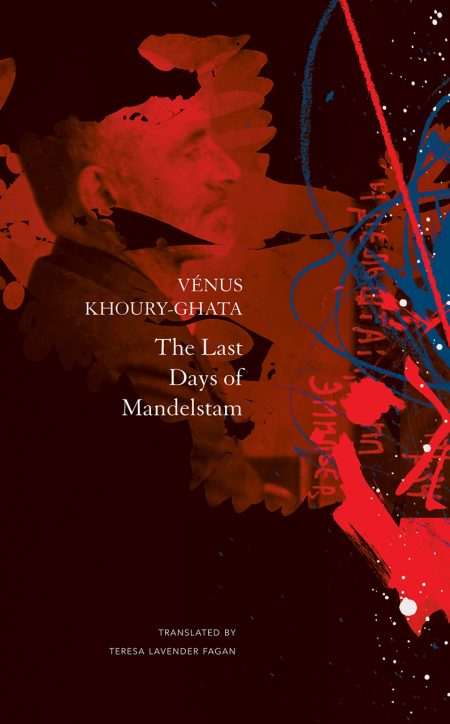
First among these is Lebanese-French writer Vénus Khoury-Ghata, whose The Last Days of Mandelstam (translated by Teresa Lavender Fagan) so thrilled me with its precision and economy that I bought another of her novellas and a collection of poetry, Alphabet of Sand (translated by Marilyn Hacker). I’ve just learned that another of her Russian poet inspired novels, Marina Tsvetaeva: To Die in Yelabuga, will be released by Seagull Books this fall. I can’t wait!


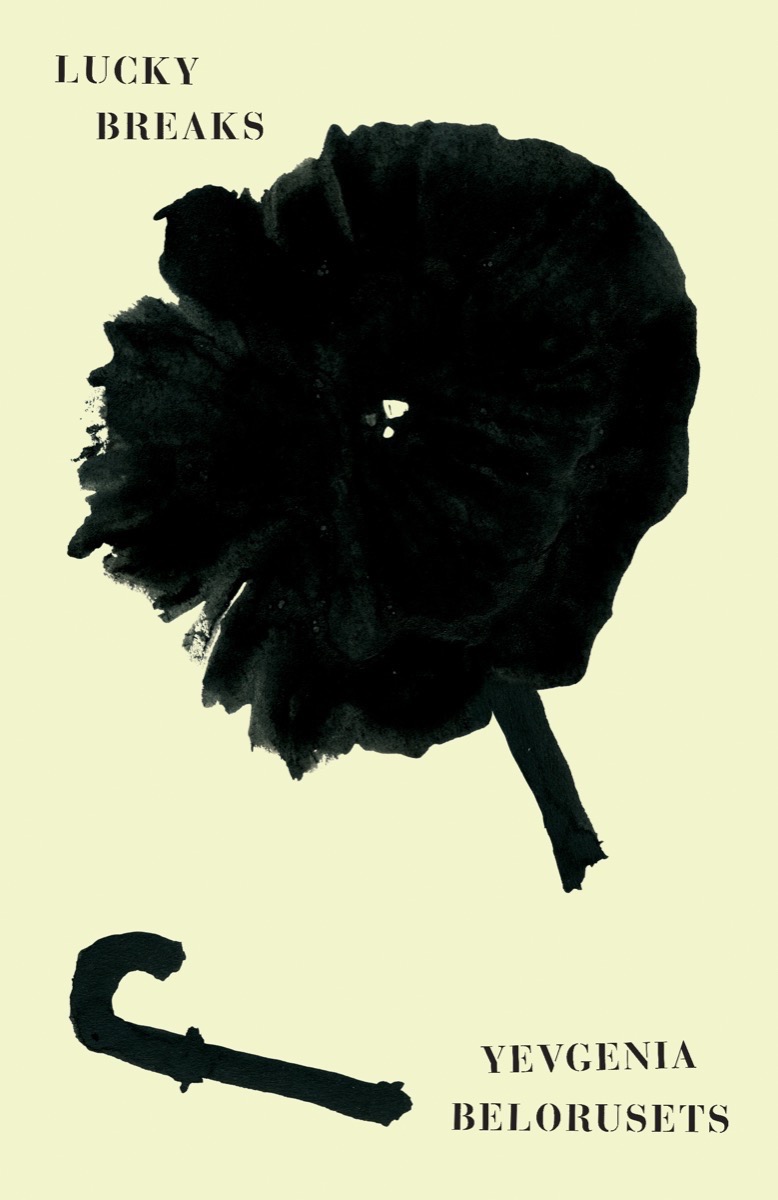
The advent of the war in Ukraine instantly drew my attention to a tiny book I had received from isolarii books. The name Yevgenia Belorusets became suddenly and tragically familiar as her daily diary entries from Kiev were published online. I read that small volume, Modern Animals (translated by Bela Shayevich), drawn from interviews with people she met in the Donbas region and as soon as it became available I bought and read her story collection Lucky Breaks (translated by Eugene Ostashevsky). Although both of these books reflect the impact of war in the east of the country, they could not be read without the context of the full scale invasion underway and still ongoing in her homeland.

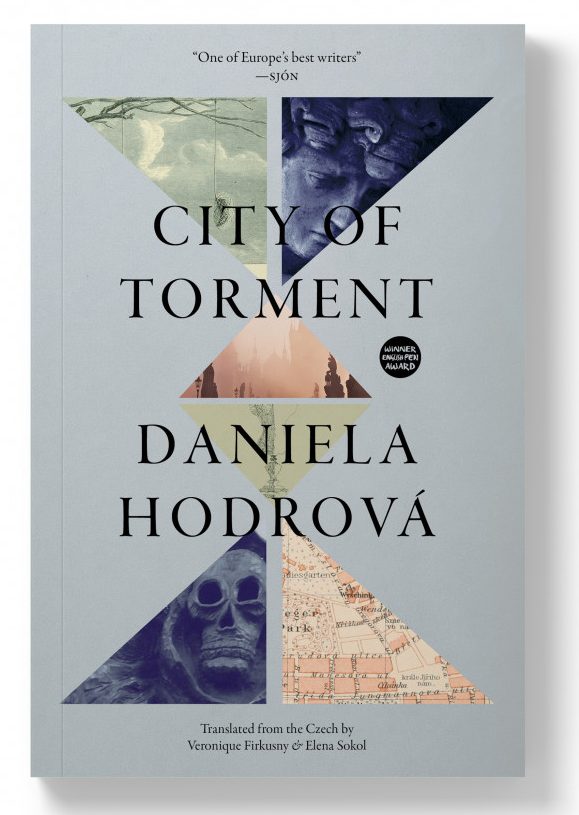
Another author I encountered for the first time that inspired me to read more of her work was Czech writer Daniela Hodrová whose monumental City of Torment (translated by Elena Sokol and others) is likely the most profoundly challenging work I’ve read in along time. Upon finishing this trilogy I turned to her Prague, I See A City… (translated by David Short and reviewed with the above) which I happened to have buried on my kindle. A perfect, possibly even necessary, companion.

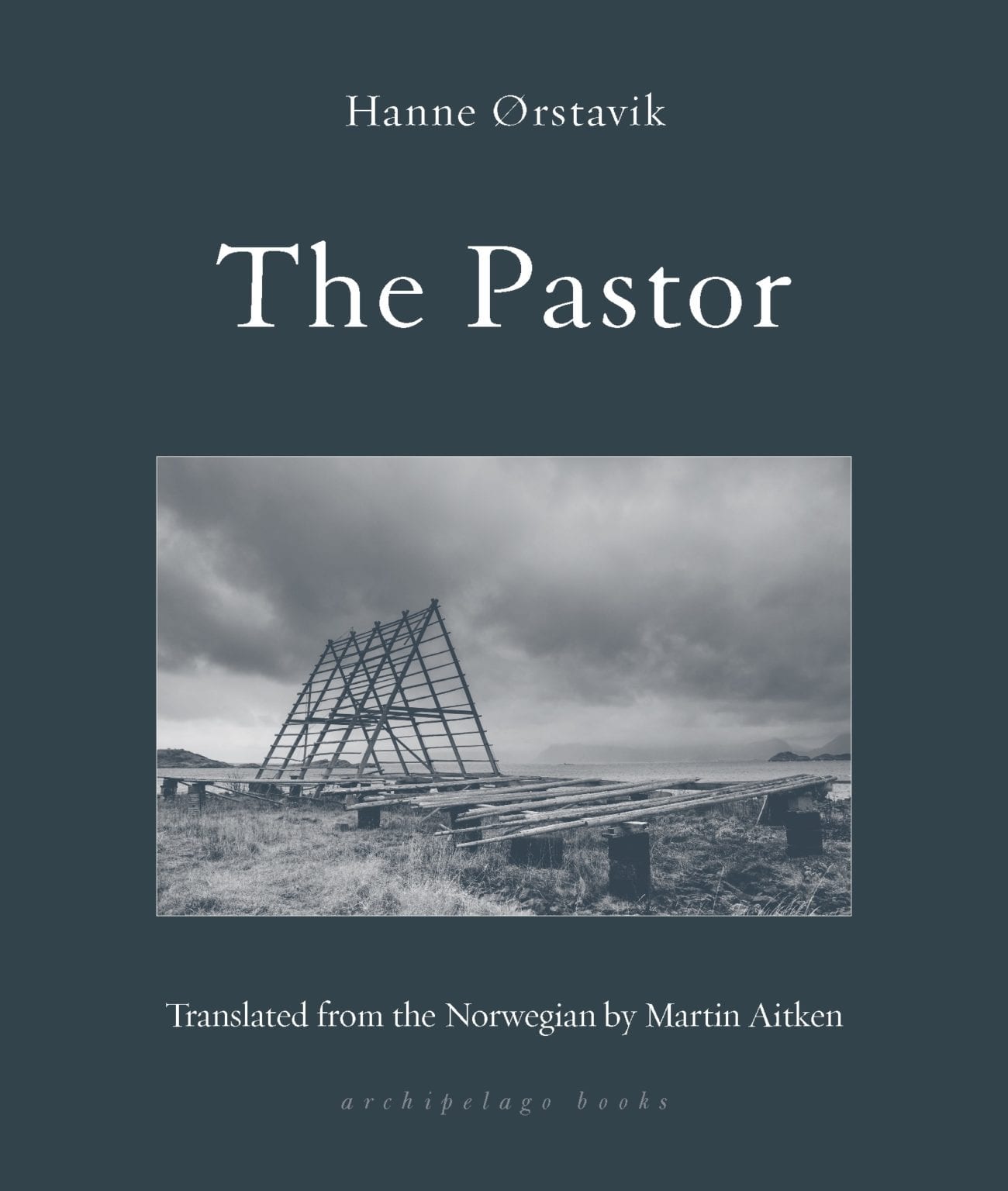
My personal Norwegian project introduced me to Hanne Örstavik, whom I had always meant to read. I loved her slow moving introspective novel, The Pastor (translated by Martin Aitken) and have since bought, but not read, her acclaimed novella, Love. However, lined up to read this month, I have her forthcoming release in translation, Ti Amo, a much more recent work based on her experience caring for her husband as he was dying of cancer. The only other female author I brought into this project was Ingvild H. Rishøi whose collection Winter Stories (translated by Diane Oatley) was a pure delight. I have been making note of other female Norwegian writers to fill in this imbalance in the future.

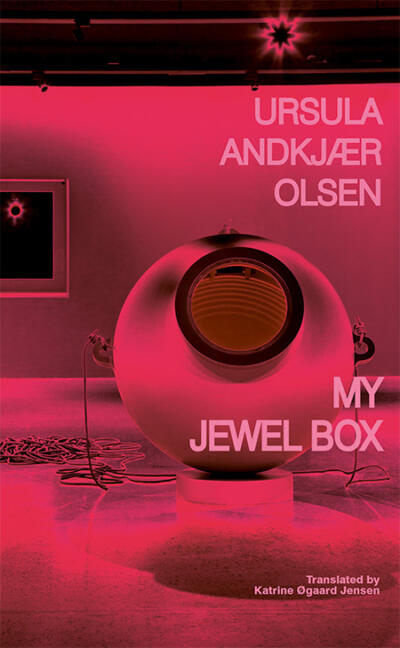
The past year also brought new work by two of my favourite poets: a book of prose pieces by Italian poet Franca Mancinelli, The Butterfly Cemetery (translated by John Taylor), and the conclusion to Danish poet Ursula Andkjær Olsen’s epic experimental trilogy, My Jewel Box (translated by Katrine Øgaard Jensen). In May I had the honour of speaking with Olsen and Jensen over Zoom for a special event—it was a fantastic opportunity I won’t soon forget. I also became acquainted with a new-to-me Austrian poet, Maja Haderlap, through her excellent collection distant transit (translated by Tess Lewis) and have since added her novel Angel of Oblivion to my shelves.

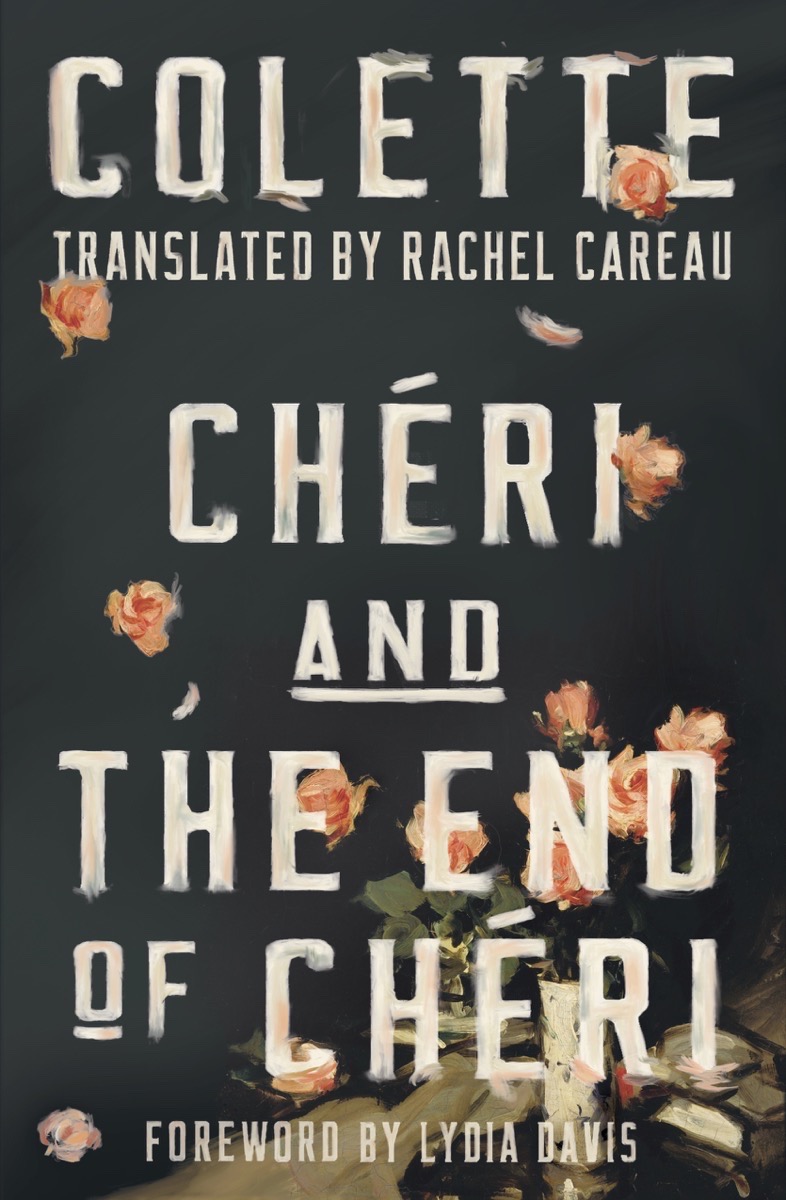
Among the many other wonderful women in translation I read over the past year, Geetanjali Shree’s International Booker winning Tomb of Sand (translated by Daisy Rockwell) needs no introduction—it is an exuberant, intelligent and wildly entertaining read. On an entirely different note, Rachel Careau’s brilliant new translation of Colette’s classic Cheri and the End of Cheri completely surprised me. I had no idea what a sharp and observant writer she was, in fact I didn’t know much about her at all and I discovered that she was quite the exceptional woman. Changing direction again, In the Eye of the Wild, French anthropologist Nastassja Martin’s account of her terrifying encounter with a bear in a remote region of Siberia (translated by Sophie R. Lewis) approaches the experience in an unexpected manner that I really appreciated.

Keeping with nonfiction for a moment, Grieving: Dispatches from a Wounded Country by Cristina Rivera Garza (translated by Sarah Booker), a collection of essays about contemporary Mexico, was a difficult, necessary read. Annmarie Schwarzenbach’s account of her overland journey to Afghanistan with Ella Maillart in 1939, All the Roads Are Open (translated by Isabel Fargo Cole) was another book I had long wanted to read that did not disappoint but which carries much more weight given the more recent history of that region. Finally, My Life in Trans Activism by A. Revathi (translated from Tamil dictation by Nandini Murali) offers vital insight into the lives of hijra and trans women and trans men in India from a widely respected activist. Tilted Axis in the UK will be releasing this book to an international audience later this year.

Rounding out the year, were three fine novels. First, I after owning it for years, I finally read Seeing Red by Chilean writer Lina Meruane (translated by Megan McDowell) and was very impressed. Last, but by no means least, I read two new releases from Istros Books who have an excellent selection of women writers in their catalogue. Special Needs by Lada Vukić (translated from the Croatian by Christina Pribichevich-Zorić) captures the slightly magical voice of child narrator with an undisclosed disability in a remarkably effective way, while Canzone di Guerra by the inimitable Daša Drndić (translated from the Croatian by Celia Hawkesworth) offers a fictionalized account of her years in Canada as a young single mother that was most enlightening for this Canadian reader.

I have, at this point, seven books selected for this year’s Women in Translation Month (#WITMonth) and we’ll see how I manage—and now I also have a goal to exceed for the eleven months before August 2023! I would, by the way, recommend any of the titles listed above if you are looking for something to read this month.