What the streets cannot retain: Border Documents by Arturo Soto

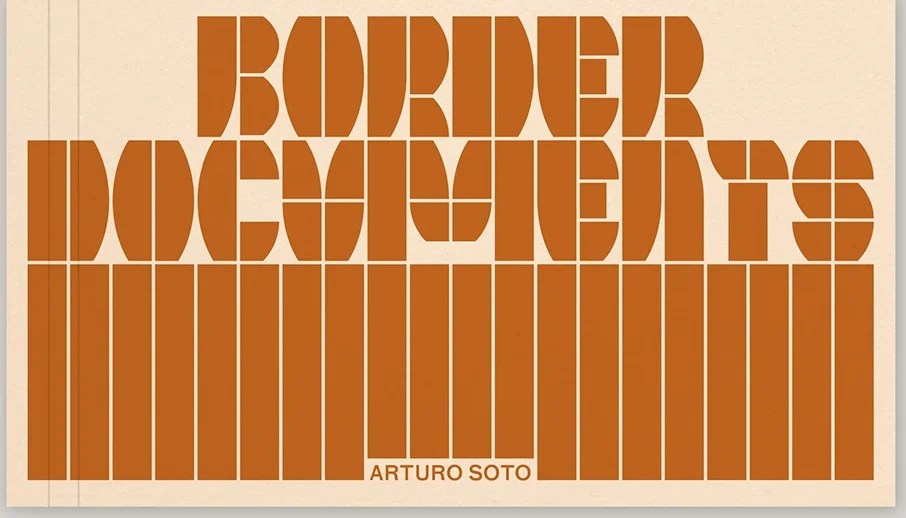
Considering the escalating tensions on the Mexico – US border, heightened even more under the present American administration, Mexican photographer and writer Arturo Soto’s new photo book, Border Documents, is an especially opportune release. The images belong to today; the texts to another time. The late fifties through the late seventies, to be exact. They reflect the environment in which his father grew up in the deeply entwined sister cities of Juárez, Mexico and El Paso, Texas. That world has been irrevocably altered by social and political forces over the past three or four decades, but this uniquely personal project sets out to attempt to “see” echoes of a remembered past in the urban landscape of today. The challenges arise not simply from the passage of time, but from the reputation, both earned and exaggerated, that this area now bears. As Soto points out in his Afterword:

People acquainted with Juárez, particularly those outside of Mexico, tend to know it for its infamies. The femicides of the late nineties cemented an infernal image of the city amply propagated in pop culture. A few years later, the ‘war on drugs’ further precipitated the erosion of civic life, which encouraged the media to focus its attention solely on the gruesome side of things. Such a narrow understanding renders everyday life invisible, putting it at risk of being lost. The past cannot be restored, but it can be conjured for insight to understand past and present lives.

The presentation of Border Documents is clean and spare. (See selections here.) Two-tone school photos of the senior Soto from the sixties and seventies line the inside of the front and back covers. Stark black and white photographs, taken in Ciudad Juárez and El Paso in 2016, appear as almost ghostly images of the streets and neighbourhoods of his childhood and youth. They are characterized by harsh light, sharp angles, lonely vistas. Parked cars are common, but few people are in sight (notably there is one where the photographer’s shadow stretches out from the lower right corner). By contrast, the accompanying vignettes are populated with a vivid cast of friends, classmates, grandmothers, siblings, parents and other relatives. The juxtaposition of the chronological collection of memories, anecdotes, and musings filled with life in all its shades of joy and discontent against contemporary images of the settings where they once took place demonstrates the complex reality of the environments in which we grow up and the degree to which they are both preserved and lost over time.
A case in point, border crossing. Apart from being a source of employment opportunities for Juárez residents, legal or not, El Paso was also a destination for amusements, such as a trip to the zoo, or, more commonly, a place to acquire goods and access services otherwise unavailable at home. An early memory from 1958 captures a child’s early impressions of the experience:

We took the transnational trolley to shop at JC Penney, everyone’s favorite store. The journey felt tediously long despite the short distance because of the long immigration line. They even forced some passengers to get vaccinated before letting them in. Overheard conversations had led me to believe things were much nicer on the other side, but everything looked more or less the same once we reached El Chuco. Over time, I found reference points that sparked my imagination along the route. Some of my favorites were the old customs building, the Spirit of St. Louis replica above a cantina and the clay figures of sleeping Mexicans flanking Don Marcos Flores’ house. A former municipal president, he had a gift shop close to the Santa Fe bridge. My grandma Esther cashed the money my aunt wired her from Los Angeles there. Don Marcos, always at the entrance, greeted her by name, which made me feel distinguished.

However, the photograph that faces the above memory depicts, from across the cracked pavement of West 4th Avenue, a plain, all-purpose structure with its available services painted right onto its front wall in English and Spanish—Copies, Fax, Foto, Income Tax, Public Notary, Medicare, Medicaid. Hard to picture such a destination sparking a child’s imagination today.

Some of the photographs captured appear to closely align with the accounts of the relative freedom afforded by a makeshift cement and brick playground in a barrio defined by specific streets and bridges. Perhaps these scenes are little changed with time. Of course, not every photo has a story, though each one has a location indicated. Likewise, not every story is matched to a photo. Soto’s father’s anecdotes carry enough humour, wisdom, and empathy to form vivid portraits on their own. He recalls, for example, a near spiritual crisis on the occasion of his First Communion with his sister Elsa in 1963. His mother was able to find him a second hand outfit and, with luck and a generous repayment plan, a most elegant new dress for Elsa. Simply clothing the outside, however, was not enough:

My peace of mind and the purity of my soul proved harder to secure. Some distant relatives were in town, and my cousin kissed me while playing a game. I felt very conflicted. This happened after my confession, and we had just been instructed on the consequences of receiving communion in a state of sin. I went back to the church and explained myself to the priest. He laughed and made me promise not to do it again but assigned me no penance. Liberated, I bought an orange from the market, feeling closer and closer to heaven with every slice I ate.

Life was not easy—along with the typical boyhood and adolescent adventures, and misadventures with friends and siblings, there was an alcoholic uncle, a father inclined to infidelity and other challenges—but the reflections Soto’s father shares show a distinct compassion or understanding, even if it is filtered through an adult’s appreciation of his younger self. One can see why his son who grew up listening to his stories would be inspired to encourage him to engage in this project even if some memories would be destined to transcend the physical spaces in which they were formed:

I keep a sad memory of the Cine Reforma. I watched there El Señor Doctor when Cantinflas was at the height of fame. Since overselling tickets was standard, I had to watch it on my feet. At some point, I thought I recognized someone a few rows ahead, but it wasn’t until the credits rolled that I made out my uncle Carmelo, a subject of constant gossip in our family. My dad used to say that his sister, the fearful Aunt Berta, would seize Carmelo’s salary. On Sundays, she would give him just enough for a newspaper, a shoeshine, and a movie ticket. I always thought my dad exaggerated the situation, but I confirmed my uncle’s capitulation was true that day.

As in Arturo Soto’s earlier work, a strong thread of social commentary is woven into the relationship between images and commentary. He is drawn to challenging the existing assumptions about a place by focusing on the ordinary to expose the everyday reality overshadowed by the outsized image an urban centre may otherwise project. His last work, A Certain Logic of Expectations (see my review) was the outcome of his time spent studying for his PhD in Fine Art at Oxford University during the BREXIT years. But rather than focusing on the famed campus environment, he turned his camera on the other Oxford, the working class community that belongs to a geographically larger but psychologically and socially distinct space from the hallowed University environs. Of course, he views this world from the perspective of a Mexican outsider who can’t help but marvel at how relatively safe and clean even the “rough” parts of town feel. However, with this new collaborative project, he is exploring an urban environment he frequently visited while growing up in Mexico City, but that always felt at odds with the images his father’s anecdotes had conjured. In revisiting these streets, avenues and corners, Soto allows his camera to offer a visual counterpoint to the record of his father’s memories and the result is a very powerful—and personal—documentary that crosses borders, both temporal and political.

Border Documents by Arturo Soto is published by and available from Eriskay Connection.
“I don’t know what I’m doing”: Do Not Send Me Out Among Strangers by Joshua Segun-Lean

Having never tried journaling until now, I can’t say if I’m doing a good job. Of all the activities people recommend for ‘staying positive’ through the pandemic, journaling seemed the most obvious choice for me. Though I have set no grand expectations for myself, I’m afraid I will be unable to keep from filling each page, eventually, with minutiae. With the flatness of time as it passes here. An instinct, I think, from an earlier, truncated life in the sciences. Or perhaps like the voice in Sans Solei, ‘I have been around the world several times, and now only banality interests me.’

I am not that far gone, I don’t think.

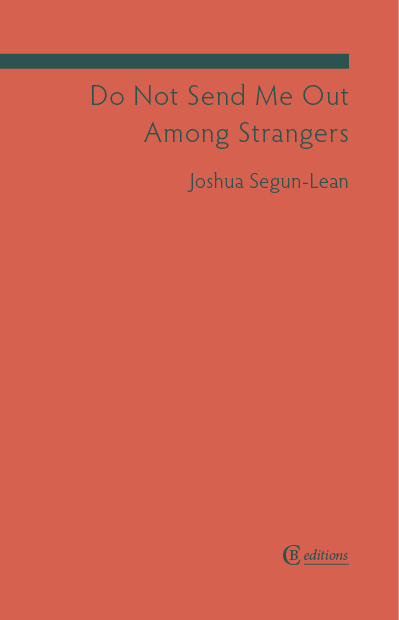
Some books are best measured not by the number of pages they hold between their covers, or the number of words they carry. Do Not Send Me Out Among Strangers by Nigerian writer, essayist and photographer Joshua Segun-Lean tells a deeply personal, vulnerable story in this slender volume that, at first blush, appears deceptively sparse and quiet, not unlike the pandemic-sheltering world in which it was conceived. But at its heart lies a raw testament to loss, distilled into a spare collection of images and words that is no less powerful than the too-much-information memoir that has become so ubiquitous.

Less is more.

Do Not Send Me Out Among Strangers is a collection of brief journal entries—observations, accounts, and recollections—nested among a series of harsh black and white photographs of soil, rock, and debris, marked with occasional tufts of vegetation. Numbered and time stamped, these images are titled “Field Notes.” This is the visual record of the search that occupies Segun-Lean’s lockdown days: he has been tasked with the dispersal of his father’s ashes. He thinks back on their strained relationship and his insecurity about the responsibility he has been given. Meanwhile, friends are falling sick with Covid; some are even dying. A journey of grief lies in the stillness of this book.

A couple of colour “Interior” photographs, also numbered and time stamped, appear along the way, echoed by a few Edward Hopper paintings. The explicit theme connecting these illustrations is the colour red. The inherent loneliness of the artwork perhaps, the author admits, “too obvious,” given the circumstances. There are also a handful of sketches, abstracted, and, finally, a number of short excerpts dealing with ancient burial practices from various archaeological and historical texts.

Taken together, this collection of thoughts and images, speak of the complicated relationship we have to life, death, and disability—to the body in sickness and health, whole or incomplete. At a time of isolation and uncertainty, as Segun-Lean is searching for the right place to scatter his father’s ashes, he is quietly exploring, as the book description says, “the strange terrain where private and public grief meet.” He is carrying both, as he will reveal.

Do Not Send Me Out Among Strangers by Joshua Segun-Lean is a haunting little book, the kind of small, unclassifiable work that UK publisher CB Editions specializes in.

Seeking release in the séance: The Unfinished Life of Phoebe Hicks by Agnieszka Taborska

Was it something in the air? In the history of the seaside town? Providence, Rhode Island in the mid-nineteenth century was, this curious biography assures us, famous for its abundance of unsettled spirits:

It is true that other towns also have their ghosts — nowhere, however, are they so noisy and restless. So many phantoms live in Providence they fill up every nook and cranny. Saturated with their breath, the air grows oppressive and causes headaches. You don’t so much walk down the streets as fight your way through invisible throngs.
(from “The Female Presence”)

And a plethora of phantoms makes it easier for a medium to conduct a séance that will satisfy the spiritualists gathered in her parlour. For an attentive and innovative medium like Phoebe Hicks, a successful séance was almost guaranteed, night after night.

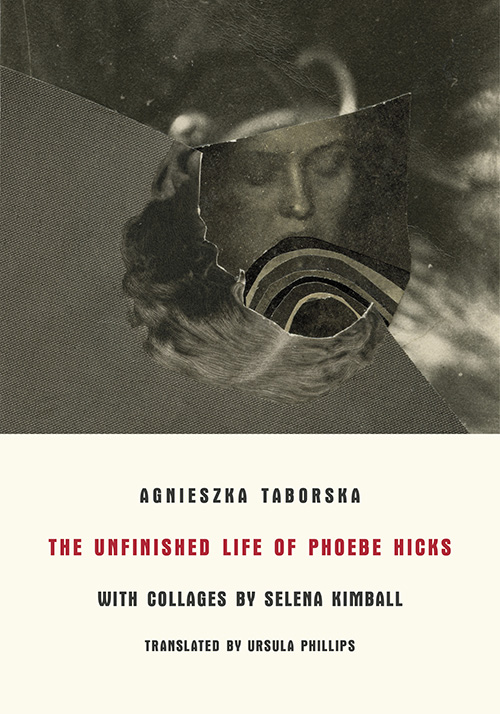
Her story, and that of the rise of Spiritualism in America, unfolds through a series of episodes recorded by Polish writer Agnieszka Taborska, and paired with stunning collages by Selena Kimball, in The Unfinished Life of Phoebe Hicks, new from the inimitable Twisted Spoon Press. If it seems odd that Taborska, an art historian specializing in French Surrealism has chosen to turn her attention to Rhode Island and placed her fictional heroine there, it shouldn’t be. She divides her time between Warsaw and Providence, and her affection for the town and its ghostly history comes through in this imaginative biographical endeavour.

Phoebe Hicks, medium extraordinaire, stumbled into her unlikely profession through the most peculiar circumstances. On November 1, 1847, she found herself violently ill with a bout of food poisoning triggered by a meal of clam fritters. Were it not for a nosey photographer who happened to peer into her window and catch her vomiting into the bowl on her washstand, the incident would have passed into Phoebe’s feverish memory and stayed there. But instead, the invasive images—coincidentally captured with a recently patented photographic method that allowed for an exposure of only three minutes—would be reproduced and widely interpreted as evidence of ectoplasm spewing from her mouth. Although ectoplasm, the manifestation of spiritual matter, would not be officially described until 1894, Phoebe would prove to be ahead of the curve in so many ways—so far ahead in fact that she would even entertain the ghost of Harry Houdini years before his birth—but for some reason her notable achievements have fallen from the records of the history of Spiritualism.

This book aims to rectify that oversight.

Phoebe’s first séance was awkward, but she quickly learned from her mistakes and as her gatherings grew in sophistication, her fame spread. Of course, as the interest in séances increased, so did the number of practitioners, both sincere and false. Yet, as ever, Phoebe was a class act. Her guests would be greeted by the cook’s son, and then ushered into the parlour by her maid, Miriam, a woman so dignified in manner and appearance that some would mistake her for the mistress. Others, however, mused that she may have been the true secret to Phoebe’s  success.

They accused her of practices employed by accomplices of other mediums to gain information about clients: bribing servants, placing “their people” in noisy inns where alcohol loosened tongues, studying gravestones — the most reliable sources of information about family relationships. They forgot that it sufficed to reside in Providence a little while to know enough about one’s neighbours to imagine the rest. For the inhabitants of the magic town were strangely alike.
(from “The Maid”)

Now, Phoebe was not content to simply summon the spirits of the locally departed, she also welcomed figures from history, and is reported to have performed a number of impressive feats during the course of her gatherings. But more critically, she established standards for the practice of conducting séances, strengthening the acceptance of the role of medium. For not only was Spiritualism a practice that held particular appeal for women, the profession of medium offered some of these same women an opportunity to support themselves outside of the traditional bonds of marriage. And for some that was a very worrying trend:

A few ill-disposed doctors claimed that Spiritualism was no more than a safety valve for madness and old-maidenhood, that participation in séances was conducive to hallucinations, that the fashion for the table turning, spreading at dizzying speeds, was responsible for madhouses bursting at the seams, that instead of a parlour with its round table a more fitting place for mediums was a hospital isolation ward.
(from “Something That Might Be Called Hysteria”)

Behind the accusations of madness, of course, lay the fear that in the communion with spirits might lead to emancipation.

Twisted Spoon publishes some of the most delightfully strange books and The Unfinished Life of Phoebe Hicks is no exception. Presented as a serious account—albeit with a healthy amount of wry humour—of the role of this somewhat mysterious medium in the early years of spiritualist practice, the portrait that emerges is of a woman for whom the boundary between the world of the spirit and the world of the flesh has become somewhat permeable. She ultimately disappears, not only from history, but from the town of Providence itself, her final whereabouts unknown. But the insinuation is that, unlike the many impostors and charlatans who flocked to the profession in its heyday, there was something uncanny about Phoebe. Something wise, practical, and well, just possibly, genuine. . .

The Unfinished Life of Phoebe Hicks by Agnieszka Taborska with illustrations by Selena Kimball is translated from the Polish by Ursula Phillips and published by Twisted Spoon Press. It is available now in the UK and Europe, and will be released in November 2024 in North America.

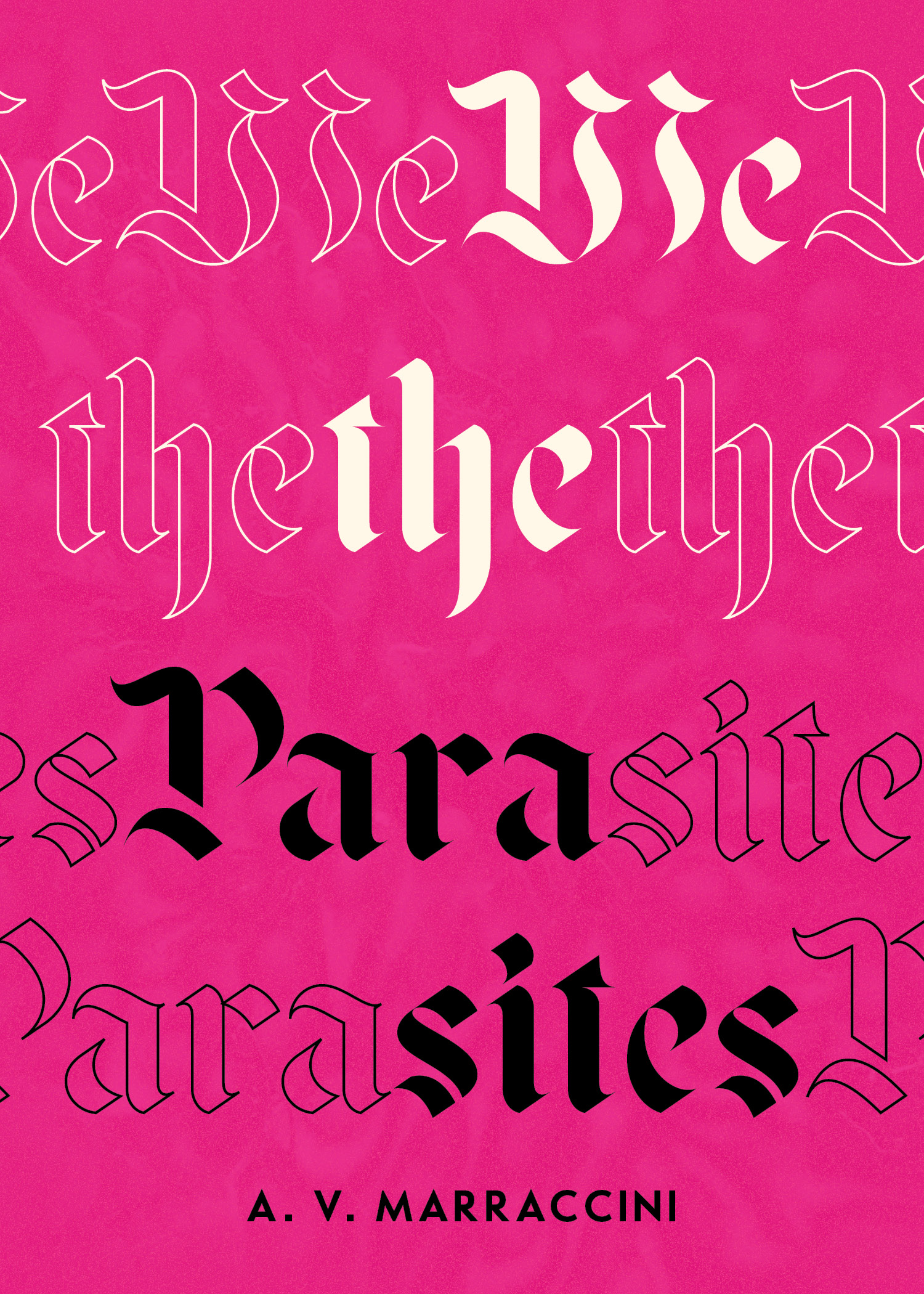
Beautiful scavenger: We the Parasites by A. V. Marraccini

“I’m boringly good,” A. V. Marraccini confesses. “Except when I write critique, I guess.” I am also boringly good, even when I write critique—or so I thought before I read We the Parasites. Now, I’m not so sure.

What I will admit, off the top, is that I have been staring at this hot pink volume waiting patiently on one of my overcrowded bookshelves for the better part of this year. As someone who has written and edited critical essays without any of the prerequisite training many of my literary friends seem to have, I was afraid that a book about criticism would be thick with the names of all those critical theorists I have not read and likely never will, and page after page I would be smiling and nodding politely, off in the corner, with no idea what was going on. I needn’t have worried though; for the most part, none of those folk were invited to this party. However, I was still concerned that, given what I’d heard about this book, I might yet be stranded outside my comfort zone.

You see, Marraccini puts her cards on the table right at the beginning. After describing the mechanics of the relationship between the fig and the fig wasp that burrows deep into the fruit flesh in a somewhat haphazard partnership that enables the reproduction of both fruit and insect, she finds a distinct affinity, as a critic, with the latter:

The critical gaze is tearing apart, clawing into the soft, central flesh of the tree bud.

The critical gaze is also erotic; we want things, we are by a degree of separation pollinating figs with other figs by means of our wasp bodies, rubbing two novels together like children who make two dolls “have sex”, except that we’ll die inside the fruit and someone else will read it and eat it, rich with the juice of my corpse.

And although the wasp/fig process involves, to unequal ends, male and female wasps and figs, there is an element that is, for our parasitic critic, inherently queer and, thus:

Criticism, too, is queer in this way, generative outside the two-gendered model, outside the matrimonial light of day way of reproducing people, wasps, figs, or knowledge.

Okay, I think. I will need to be convinced. The idea of digging into a work appeals quite naturally. That is what I do when I write about a book, whether in a literary journal or, at least most of the time, here on this site. I inhabit the words of others in order to write, but try to stay out of my own way in my writing so that my reading experience seasons but does not obviously alter the flavour of someone else’s. And erotic? Well, that is not something that comes naturally to me, nor does queer even though I’m hard-pressed to know what I am if not queer. I have a fraught relationship with matters of sexuality and identity. It’s complicated. Yet, I am intrigued. And, as We the Parasites demonstrates, reading—or viewing, since Marraccini is an art historian—with the body can be a messy endeavour. But I’m getting ahead of myself.

Deciding to give this much-praised work the benefit of the doubt, I held my anxieties to the side, burrowed into the flesh of this curious text (I know, I know) and, my god, what an excellent read! (Please excuse the abandonment of all the niceties of proper critical reviewing and even accept an errant exclamation mark, because this book is one that invites you into the critic’s heart, mind and bed in a way that is completely, even joyously unexpected.) It is wise and funny and, best of all, it draws its references from the most unlikely places. My limited acquaintance with the stalwarts of the Western canon was no barrier to my enjoyment and, much to surprise, the two years of Classics that preceded my eventual academic journey through Biological Anthropology and Philosophy, was finally of some use. I not only have The Illiad (who doesn’t?), but I also could pull long untouched copies of Xenophon’s The Persian Expedition and Arrian’s Anabasis off my shelf and feel so clever. Not to worry, though, there’s always Google which you will need to see Twombly’s The Age of Alexander for this particular discussion, unless you have a photographic memory. But my point is, really, that you don’t need any special background to enjoy the musings that arise in this book; Marraccini writes with such enthusiasm, even about work that she views with some skepticism, that anything that is not offered within the text itself will have you happily popping online for a quick refresher.

The parasite analogy, if at first odd, sparks the author’s playful love of the dark and yet speaks with striking accuracy to the nature of the critic’s task—burrowing into and feeding off of the work of (mostly dead) writers and artists, to produce a reading or a response that brings light to the spaces darkened by time. However, if the wasp burrows into the fig, the tape worm finds it way into its animal or human host, consider the fish-louse that swims into the gills of its victim, severs the roots at the base of the tongue and eats away at the flesh until it becomes the tongue itself. This offers Marraccini an image, graphically detailed, that corresponds to the way that she has, when appropriate, stolen the tongue of Homer, or John Updike, or whomever. Strange? Maybe, but it aligns with the experience I’m often referring to when I say that I write about books to “open up” a potential reading (or readings). It’s even more relevant when one has the runway (that is, the venue and necessary word count) for an in-depth critical essay. If not stealing, we are perhaps echoing a voice, while our “I” self remains in the shadows.

In this extended essay in which the subject is criticism itself, Marracinni draws on a wide range of sources and images from classical history and mythology, to poetry, prose and, of course, art. Cy Twombly is her main man on that last front. One can move from Updike, to Centaurs, to Genet and Rilke, but it seems there’s a Twombly painting or series for almost every season and, in her explorations, she manages to carry us right down into the layers of crayon and paint. This affinity between artist and critic is so vividly rendered I wish I could have read this before my only direct encounter with his work at MOMA in San Francisco, but that would require bending time.

Our parasite, in inhabiting the works of the artists she consumes, also develops a strange relationship with the notions that arise out of that connection—a who-did-that-idea-come-fromness—that emerges in unlikely settings. Like dreams. Like when a nocturnal lecturer pontificating about the attributes of a strange painting-carpet he insists is a Twombly says No one wants queer art to be queer any more, Marraccini acknowledges, “to be clear, (that) is my brain saying that, and yet me in the dream is somehow intimidated by his prognostic authority” and she wakes up in a puddle of sweat. This is, for me, the kind of uncanny thing that only occurs when one is so deeply engaged with an idea or a book or an artwork or an artist, that the boundary between the ruminations of the sleeping self and the waking self is breeched. Blurred.

The question then is one of embodiment. Is the reader/viewer/critic inhabiting the work, or is it the other way round? Is this a risk of reading/viewing with the body? Marraccini writes about longing and desire, how they can be awoken or perhaps interfere with the engagement. Yet desire is not necessarily realized (at least not without breaking a law). And she does write about the body, her body, but typically in the most clinically frank way about the myriad way the body and its discontents can betray one. To be a parasite it one thing, to host one is something one would rather not entertain, thank you. Yet there are illnesses, physical and mental, that many of us live with and to pretend that they never mediate the way we read a poem of look at a piece of art would be an act of denial.

Finally, Marraccini is writing all of this against the backdrop of the early months of the pandemic, when London was eerily quiet and she could wander at will under the cover of darkness. (We are both naturally nocturnal creatures, it seems.) She captures the eerie otherness or suspended unknown of that period of time so well:

The whole world is so new now, there will surely be a spate of essays like this one, about The Before and After, or there will be no After and there will still be essays anyway.

I love this sentence. There surely was a spate of essays—as nonfiction editor for 3:AM Magazine, my inbox saw four or five new pandemic inspired essays arrive nearly every day. Meanwhile, a temporary medication change made it increasingly difficult for me to make my way through them as 2020 wore on, and by the end of the year I was no longer editing or entertaining the idea of pitching or writing any more essays myself. Whether there actually has been an After, as year four of Covid dawns, there are still essays, but I’m not writing them. However, reluctant queer, recalcitrant parasite that I am, perhaps I should be, duly inspired by this idiosyncratic, astute and undeniably queer essay. This is an original and very entertaining book.

We the Parasites by A. V. Marraccini is published by Sublunary Editions.

“Ask the light to be clement”: Portrait Tales by Jean Frémon

This book arrived unannounced. An author unfamiliar to me, but on the very first page ten previous titles are listed, complete with translator and publisher. Then, on the title page, a personalized salutation from the author himself and the explanation of how this lovely little book found its way to me—the name of the translator: John Taylor. Over the years, through John’s translations, I have come to know of a number of writers and poets who have quickly become indispensable additions to my library. And now, another.

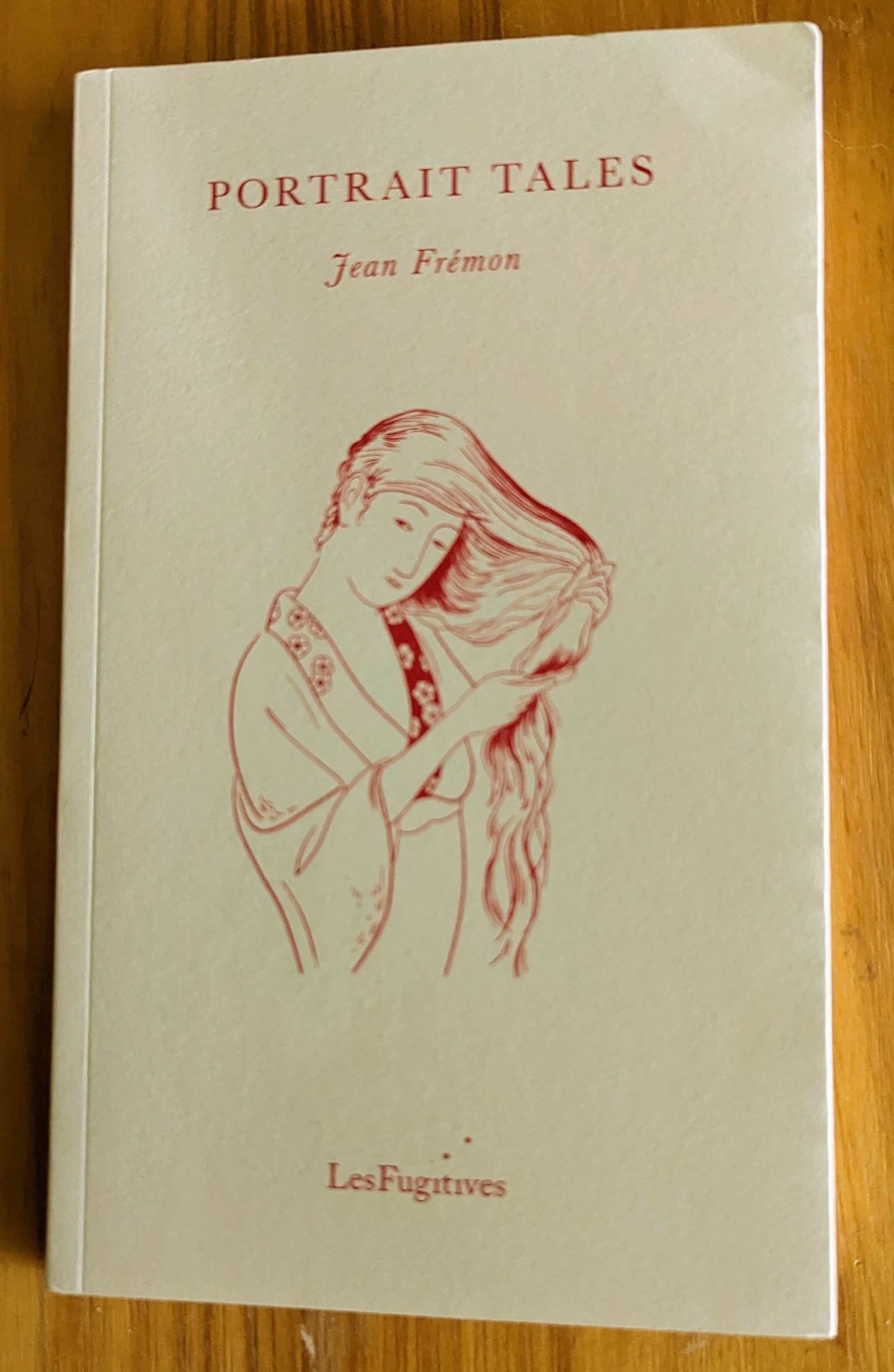
Jean Frémon is French author who, in the words of the publisher of this volume, Les Fugitives, “has been contributing to a trans-genre tendency in contemporary French letters since 1969.” By day, he is the president of Galerie Lelong, by night a prolific writer of poetry, fiction and essays on art, or, quite often, work that blends all three forms. He has published over twenty books in France and the present text, Portrait Tales is a selection of narratives on portraiture originally published in his 2020 book Le miroir magique. His tales explore well-known and little-known works and artists alike, and demonstrate Frémon’s extensive knowledge and deep appreciation of art whether he is playfully fictionalizing his subject or examining artistic techniques or revealing the historical consequences faced by those who allowed their likenesses to be captured against religious or cultural mores.

These short narratives cover a wide range of subjects. He begins with Lucian Freud’s singular, and less than flattering, portrait of Queen Elizabeth II, travels back in time and across the world to close with a remembered conversation with Louise Bourgeois, the only artist to appear twice and someone he worked closely with as a gallerist. In between—although reading the pieces in order is not prescribed, freedom of movement as in an actual gallery is encouraged—we are invited to learn about an Indian ambassador who paid the ultimate price for allowing Élisabeth Vigée-Lebrun to paint his portrait in defiance of Koranic law and entertain a meditation on the legendary impossibility of rendering a likeness of a young Jewish prophet named Jesus.

We travel back to Imperial China and Japan, to trace changes to ideas and styles of portraiture and conventions about what can or cannot be captured.  Meanwhile in Europe, a number of factual or elaborated tales unfold. Frémon details, for example, the obsessiveness of Maurice Quentin de la Tour who worried his pastel portraits into being and the revenge of a young sculptor who becomes enamoured with the woman he is commissioned to portray.  One of the shortest and most charming essays, is a sketch of the life and remarkable art of seventeenth-century Italian painter Sofonisba Anguissola:

Having withdrawn to Palermo, Sofonisba continued to paint. There is a self-portrait of her at age seventy-five. She is sitting in an armchair, in a three-quarter profile, her arms on the armrests. A large white ruff surrounds her oval face, which she has not tried to make look younger; her cheeks are hollow, her lips thin and tight; two large folds surround her mouth; but the pose is dignified and her bearing is not without nobility.

Ever confident in her ability to capture life in her many noble subjects and in herself, Frémon closes his sketch with an account of her submission to another artist’s pencil, the young Van Dyk, when he visits her at the age of eighty-nine. Her only instruction to him: “Ask the light to be clement.” It almost feels like each of the artists, or artistic moments  Frémon considers here, is presented in a clement light. It is an intrinsic element of his tone.

Varied in spirit and style, every piece in this slim volume is a gem, enlightening and entertaining. As I was reading, I frequently found myself stopping to search the internet to find the portrait or artist in question, if such a record was available. That is a compliment, of course, not a criticism. A sign of a good book is, for me, one that sends a reader down the odd rabbit hole or two, expanding the experience of reading beyond the pages of the text.

Portrait Tales by Jean Frémon is translated from the French by John Taylor and published by Les Fugitives.

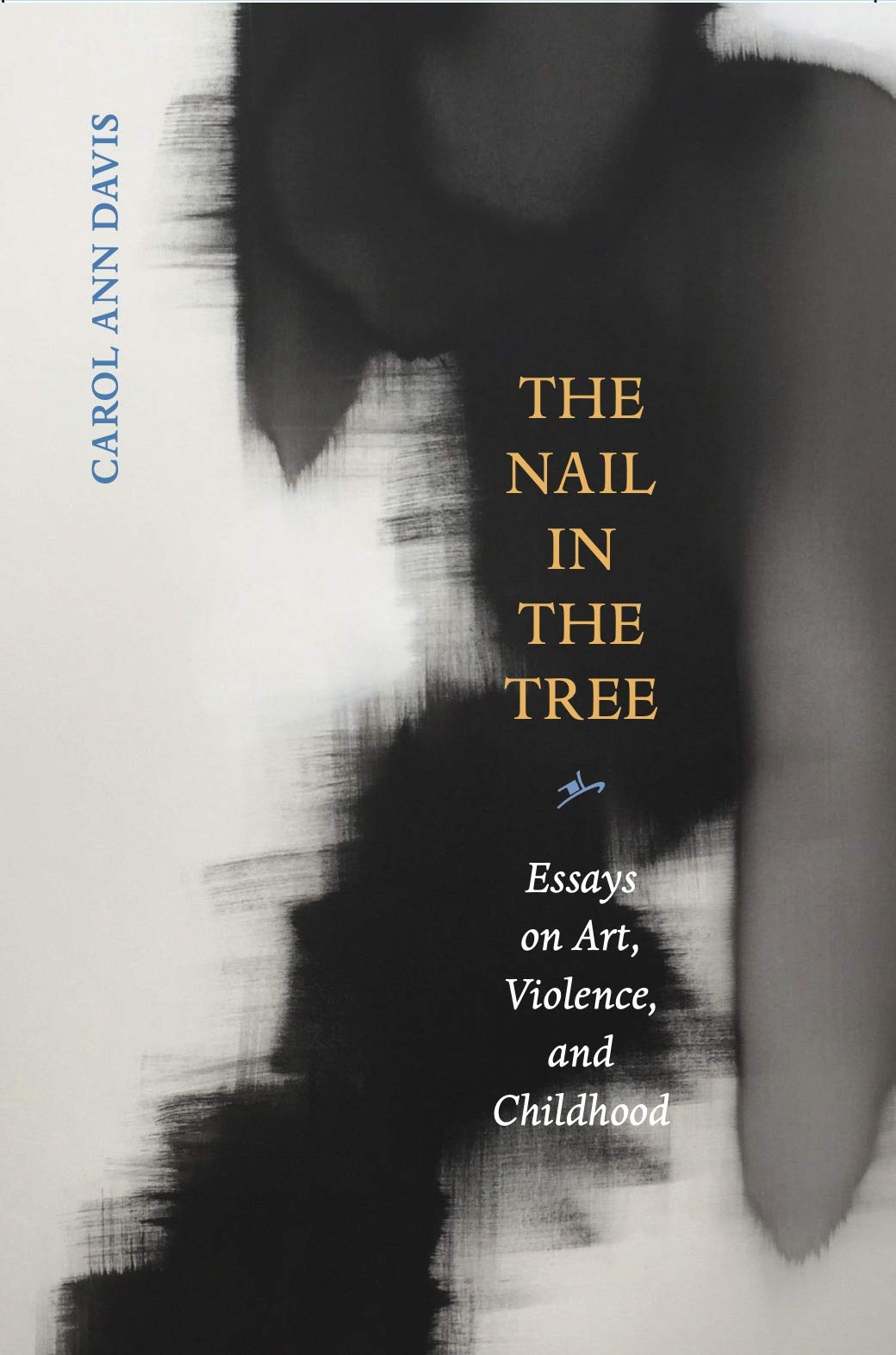
Taken, not taken: The Nail in the Tree – Essays on Art, Violence, and Childhood by Carol Ann Davis

I accepted this book as a review copy when it first came out, just over three years ago now. I put on the shelf with all the best intentions, and then forgot it. When I rediscovered it there, lost among assorted volumes of nonfiction, I felt ashamed by my negligence. Surely I could have read it earlier, if not when I first received it, at the very least during the trial of Alex Jones for the outrageous conspiracy theories that hurt so many people and ushered in a whole new form of denial, or a few months later when the tenth anniversary of the Sandy Hook school shooting was marked last December. But The US seems an endless supplier of senseless and tragic school shootings so it’s no surprise that, when I finally did take the time to read The Nail in the Tree: Essays on Art, Violence, and Childhood, I happened to finish it on the one year anniversary of Uvalde.

Poet and essayist Carol Ann Davis was newly relocated to Newtown, Connecticut, with her husband and two young sons when the Sandy Hook shooting occurred. They lived close to the site but, due to zoning, the boys attended another school. Willem was in fourth grade at the time, Luke in kindergarten. They were safe, but not untouched. “And this is what it is not to suffer that day,” she tells herself when recalling the shooting, “This is the not-suffering, happy ending story.” But, of course, it’s not that simple. The trauma sends lasting ripples throughout the community in way that leaves no one unaffected:

Sacerdos, from the French and earlier from Latin, literally meaning “offerer of sacrifices.” The children who live here, perhaps it’s strange to say, now glow. They do, they glow. No one can approach unmoved, and the children, understanding their role, shoulder, take on, burden themselves with us. Their skin nearly translucent, they walk around like that, glowing. They offer themselves like bits of mirror, and we accept.

The adults, by virtue of wider perspective, suddenly become acutely aware of the fragility of childhood. For those who still have to send their children back to school, trust them to the school bus each morning, there is the conflicted desire to both protect and prepare. Older siblings want to look out for their younger brothers and sisters. No one wants to trigger memories that may or may not even exist.

It is within the altered dynamic of the six years that follow the tragedy, that Davis endeavours to articulate and make sense of what it means to raise children in the aftermath of violence. In a series of essays that make their way slowly but not strictly chronologically away from the pivotal event, she turns to poetry and art to understand how artistic practice might be a productive way of integrating trauma into life moving forward—for herself and for her sons.

This is not a typical grief memoir, nor does it delve into the specifics of the shooting or the political fallout. The event itself rests as a horror too large to think about directly—it sits, unspoken, in all aspects of community life, especially at the bus stop, in the schools and on the playing field. Yet Davis seeks answers at her desk, beneath the hummingbird feeder, at art galleries and museums and, ultimately swimming in the open ocean, the one desperately longed-for release her newly adopted, landlocked hometown denies her. Along the way, among others, she turns to the work of Hélène Cixous and poet Miklós Radnóti and, for an extended period, she follows the lead of (and argues with) Rumi. She engages with the art of Eva Hesse to better understand the poetic process, and when, four years after the fact she has to fully explain to Luke, now that he is old enough to know, the extent of what happened at Sandy Hook, she draws on Paul Celan and Armenian born artist Arshile Gorky to help her untangle the enormity of her own grief.

Davis’s writing is poetic, pulling images, quotes and refrains through her essays, like threads to link or unravel her thoughts as needed. And she is an astute observer of art who is able to find in a number of artists, their techniques and philosophies about their practice, clues to appreciating how she is growing and, more importantly, how the boys are not only coping, but finding their own ways to thrive. More than once the boys are dragged through exhibitions, like one of Picasso’s sculptures in New York, or shown a show catalogue, like that of American abstract painter Agnes Martin. Davis hopes that Luke, who is a budding draftsman will find some connection in Martin’s geometrically precise but somewhat dissonant canvases (he does not). The message in the artist’s work and her method, however, is less for the child than his mother:

I’m suddenly afraid: I am not ready to admit to myself, as Martin has, that the purpose of art may be to unlock an inner happiness in the viewer. I am doubtful such a happiness is inherent, and unsure whether it is larger than forces with which I’ve engaged in my own work (such as grief and difficulty). I am uncertain I can place the function of art, art-making, its practice, in the category of making-happy, given all I’ve seen and felt in the last five years, all my children have endured in the service of gaining a working understanding of the world into which they’ve been thrown. Of course, any difficulty can be a subset of happiness, Martin’s work virtually shouts at me. Don’t be so narrow-minded.

Throughout these original, thoughtful essays, it becomes clear that the search for meaningful expression—even happiness—after trauma is Davis’s personal journey, one within which her children are her motivation and measure of progress, but not her exactly creative companions. One cannot grieve for anyone else as much a parent might wish shield their child from their own inevitable process. With luck and their parents’ support, Willem and Luke will hopefully have the resources to come, in time, to their own mature understandings of the event that they escaped only by chance. Sadly, with school shootings such a regular occurrence in the US, shadows of the horror that erupted at Sandy Hook on December 14, 2012 may be hard for any of the Newtown residents to fully move beyond.

The Nail in the Tree: Essays on Art, Violence, and Childhood by Carol Ann Davis is published by Tupelo Press.

“How many lives go into a life?” Leaving by Cees Nooteboom, Drawings by Max Neumann

A man standing in a winter garden becomes aware of something not quite right—a cloud that seems too heavy, bare branches against an ancient wall, the refusal of neighbouring geese—an unspoken uneasiness that carries his thoughts back to the war:

The war that never stopped coming back,
a guest who’s known to all, a toothless
kiss, the language of intimate betrayal
around him now again, remembering a past

he couldn’t share with anyone.

This is how Dutch poet and writer Cees Nooteboom’s Leaving begins, its speaker in his garden thinking about family, war, times past. About those images that fail to fade. But as this three-part sequence of poems was coming into being, another guest, unexpected and uncertain, arrived and shifted the focus. His work would, in the end, acquire a subtitle: A Poem from the Time of the Virus. Without ever mentioning the virus itself outside of his Afterword, the shifting currents of the early months of its spread cannot be ignored even within the poet’s green refuge, for “Whimpering at the garden gate is the world, the / fuss of a newspaper.”

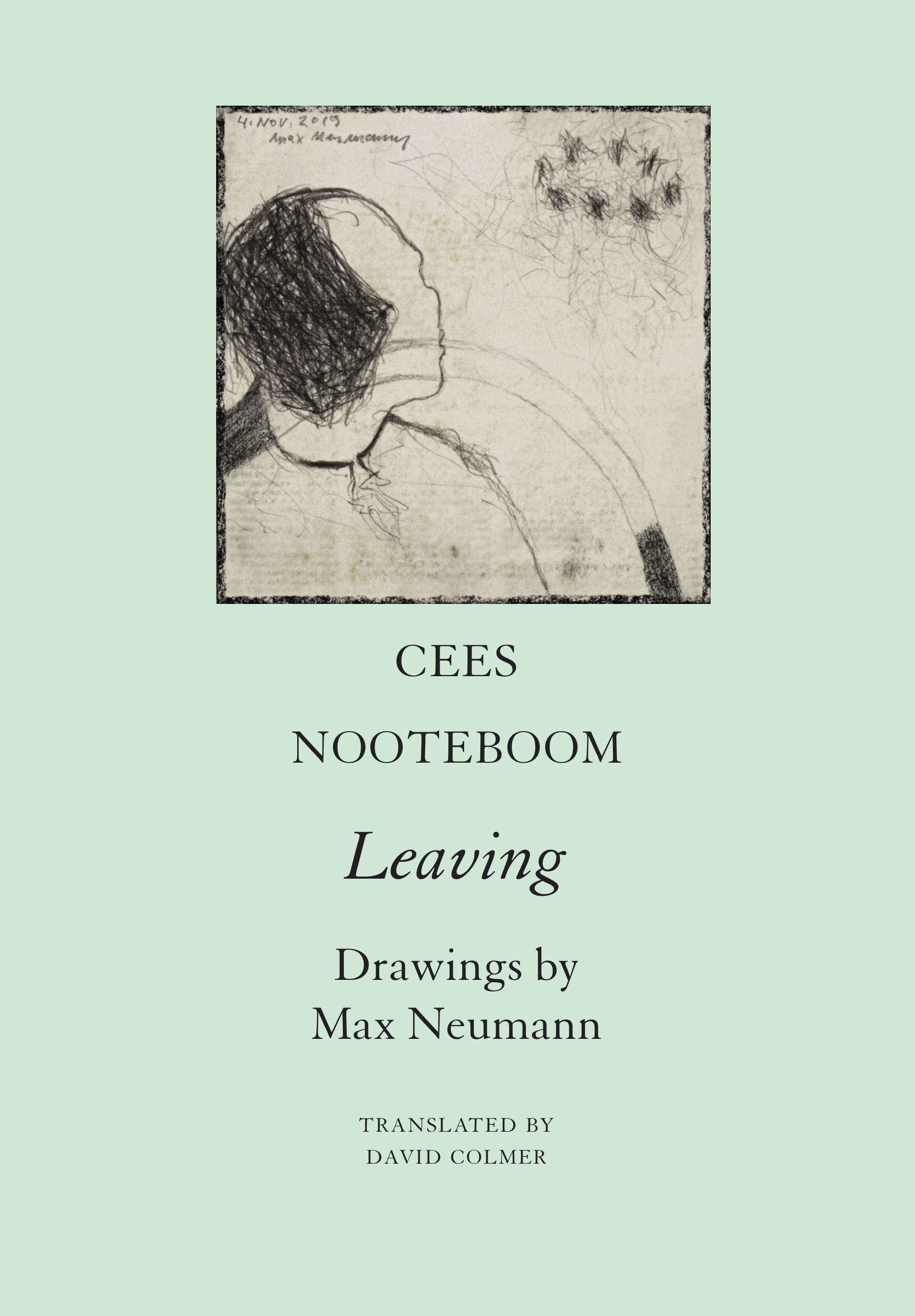
Heads and faces—remembered, imagined, dreamed—form a key motif throughout these poems, complemented by German artist Max Neuman’s series of drawings of abstract figures with spare features, completed in advance of news of the pandemic, for this, their second collaboration. The man in his garden is haunted by heads:

I saw heads, countless heads,
field marshals, lovers, travellers
from star to star. Each head its
own story, hidden in the folds

of the brain, alongside narrow streams
of blood, reeds on the banks, secret
landscapes no one can reach,
except for a lonely traveller

This leads into the second sequence, where the poet, the lonely traveller, wants to make sense of the darkness and strangeness of his visions  that surface from memory. All these heads. Who are these people, he asks, these creatures, these voices? As spartan as Neumann’s drawings, these poems propose questions that the poet cannot or does not want to answer. Can one look for meaning in life if, when looking back, one is confronted with forms, shadows, faces without mouths? The past seems intent on revisiting the man who knows that the end is nearing:

Life, the song of songs? Sure,
but underneath there is that other truth,
the truth of night and fog,
the test that lasts

until the end.

The third and final sequence, or movement if one wishes to read this poem as a musical composition, moves into a space of quiet and melancholy. Others—friends, brothers, lovers—have left the path once shared, one by one, “disappearing like ghosts.” The silence descending on the world is like a nothingness the poet has never heard before: “contradiction / surrounds me, an organ, / no keys, a song // whose sound has been sealed.” Yet, where the poet is troubled by the images that confront him in the second sequence, he is now coming to a place of peace with himself and others in the silence and isolation, and finds he is ready to take the road ahead and let the past be:

Now my feet are counting the road, I know,
looking back is not allowed. My steps measure time,
a dark and peerless poem, a beat
that can’t be slowed.

In the Afterword, Nooteboom who is not a writer to shy away from contemporary issues,  talks about how a poem comes to be, how influences enter and make themselves known, changing the direction in which the poet thought he was headed. It would be strange, he says, if the arrival of a mysterious virus were to be completely ignored; sometimes reality intervenes to help one write. And so we have this thoughtful, timely work, one that invites rereading and lingering on the words and the drawings.

Leaving: A Poem from the Time of the Virus by Cees Nooteboom with drawing by Max Neumann is translated by David Colmer and published by Seagull Books.

A Viennese Odyssey: Ulysses by Nicolas Mahler after James Joyce

James Joyce’s Ulysses is a monumental work of Modernist literature, dense with detail and interior narrative,  so when an illustrator and author known for a characteristically minimalist style of graphic storytelling decides to reimagine this classic what could possibly go wrong? Nothing if it’s Austrian illustrator and author Nicolas Mahler holding the pen.

This ambitious volume is my second encounter with Mahler’s ebullient art and wit. The first was his delightful take on fellow Austrian Thomas Bernhard’s Old Masters, a work that didn’t have to break with location or language in its reincarnation. However, this time he is transporting another equally idiosyncratic writer from Dublin to Vienna and from English to German (translated back into English in this edition by Alexander Booth). This is a retelling “after Joyce” as liberally inventive as the original. As one can imagine, the medium necessitates some streamlining of the story, so Stephen Dedalus is left out (although there is a nod to his tower abode) and some key scenes in which he appears are reimagined in a wild exposition of our German Bloom, Leopold Wurmb’s sexually frustrated, guilt-ridden fears and obsessions. But the parallels with Joyce’s masterpiece are wonderfully realized; after all, the visual medium can reproduce the overlay of experience and internal monologue in a remarkably efficient manner. As they say, a picture is worth a thousand words.

So we find ourselves tailing along after Wurmb (who unfortunately resembles his implied namesake  Wurm” or worm) as he makes his way around Vienna on June 16, 1904. While Bloom was an advertising canvasser with the Freeman’s Journal in Dublin, Wurmb is similarly employed by the Viennese Neuigkeits-Welt-Blatt. Headlines, excerpts and image offsets from the June 16, 1904 edition of this paper are used to great effect in the chapter where our hero goes to the office. Mahler also draws on images and advertisements from some other Vienna publications from the same day and finds German names for key characters from the same archival sources. But he also adds a really special touch to his Ulysses. Joyce’s novel was first published in 1922, at a high point in the history of newspaper comics, so we find in the pages of this graphic variation many of the cartoon characters who were popular at the same time. Most notably, Olive Oyl stars as his secret romantic pen pal, while Popeye takes on the role of the garrulous sailor W. B. Murphy who regales Wurmb with unlikely tales of adventure in the bar.

If some of the fun of reading Joyce’s novel is looking for the echoes of Odysseus’ journey in the narrative, some of the fun here is marveling at how cleverly Mahler manages to echo key features of Bloom’s journey in his Austrian themed tribute. Wurmb, like Bloom, is trying to avoid going home, knowing that his wife Molly, a singer, will be having sex with her manager Berlyak that afternoon. The impresario’s posters haunt him on his wanderings and reminding him he’s a cuckold, while recurring thoughts of sexual frustration, bitterness and depression mark his day. He mourns his infant son, dead now eleven years, attends a friend’s funeral, takes care of bodily functions and finally, after a day of work, social engagements and some wild, guilt driven fantasy, returns home without his key and is forced to break into his own home. From her bed Molly then takes the stage, so to speak, with a version of her infamous soliloquy which, if necessarily abbreviated, is not devoid of much of the key imagery and sentiment.

Of course, Ulysses is a novel famous for the use of stream of consciousness. Bloom’s inner thoughts are injected into the events of the day (or vice versa). One might wonder if a graphic novel, and one that leans toward a relatively spare open form, can reproduce this effect. Mahler’s solution is to project Wurmb’s thoughts in large, bold letters, across sparsely illustrated pages and over cartoon-strip style interactions when his thoughts wander. Obsessions are illustrated boldly. Thus his inner world takes precedence, as it should, if you want to do justice to Joyce’s masterpiece. Mahler’s variation on this classic is inventive and funny without undermining the sadness and ordinariness of the Everyman at its heart and might even inspire a few readers who have not yet read (or, ahem, finished) the Irish original to pick it up.

Ulysses by Nicolas Mahler, after James Joyce, is translated from the German by Alexander Booth and published by Seagull Books.

What are we going to do now? The Tomb Guardians by Paul Griffiths

Four was a good number.
So now we’re three. What difference does it make?
We knew where we were, then.
And now we don’t?

It’s an unusual premise. Three Roman soldiers, charged to guard the tomb of a “local rebel,” have awoken from their unintentional slumber to find one of their number missing and the heavy stone rolled away from the mouth of the cave where the body had been laid. Panicked, they try to assess their situation. How had they allowed themselves to fall asleep on the job? Where has their fellow guard gone? And how are they going to find a way out of this predicament without even fully understanding what is at stake?

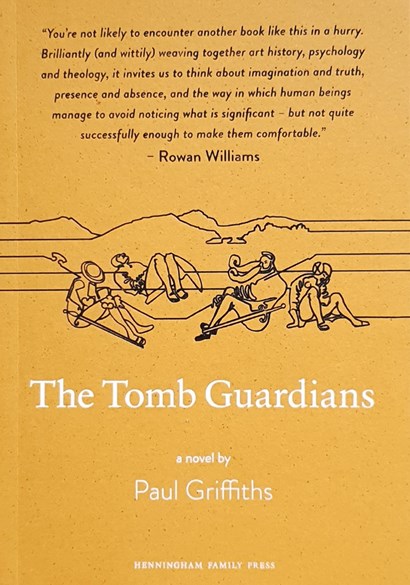
Their debate in its own right might offer material for a light comedy of errors, but our three guardians simultaneously exist, sound asleep, in individual portraits painted by sixteenth-century German master Bernhard Strigel and currently housed in Munich. Meanwhile, in the present day, an anxious lecturer is afraid that his pending presentation about these paintings, and their relationship to a fourth portrait, now in the UK, that somehow became separated from them, is falling apart at the seams. As he and a friend review his arguments about the artistic and theological questions raised by the images—included as four full colour plates—the subjects of the paintings try to imagine a way to get themselves out of an awkward situation, as uninformed bit players at a profound moment in Christian history. As the text weaves its way back and forth between these two conversations, further questions about history, truth and faith arise in clever, unexpected ways.

And it all works like a charm.

The Tomb Guardians, the latest novel from the prolific music critic, writer and librettist, Paul Griffiths, is inventive, witty and wise. This short novel, so simple in its conception and yet so extraordinary in its execution, should be read, on its own, in one or two sessions, rather than slipped in among other reads. It is not difficult, but is best met without distraction so as to appreciate the full effect of the two interlaced dialogues that drive this singular text.

The lecturer works his way through his presentation, responding to his friend’s interruptions and encouragements, beginning with the artist’s depiction of ordinary sleeping figures—unique in his oeuvre and the art of his time—and moving on to consider the possible inspiration to illustrate guardians at all. Most widely known official accounts beyond the Gospel of Matthew make no mention of any watch being set. At the same time, the soldiers, their conversation set apart in italics, have very little understanding of the circumstances that led to this assignment. They try to sort out what they do know and craft potential explanations, from the mundane to the supernatural, to offer their superiors should they be discovered in dereliction of duty or decide to report to their camp. Not surprisingly, consensus is hard to come by:

Whoa, can we please discuss this a bit?

“As to the –”

Yes, we should be very careful what we say here.

“As to the soldiers sent to stand guard, Matthew indicates that they didn’t just drift off but were shocked into sleep by the appearance of the angel.”

We can’t just say we fell asleep. Anyone would say we should’ve been taking it in turns. Anyone would say that.

“Now how does Strigel deal with this? Observe this fellow here, seated on the ground, resting his head on his left palm, while his right arm dangles.”

Did we try taking it in turns? Did any of us suggest that?
Wait.

“Look at him with his half-open mouth.”

We have to be very careful here, even in what we say just to each other, because you say something, and somebody else’ll remember it, and then little by little it becomes the truth, you know, it becomes the story, it becomes what we all of us remember, even if it never happened that way at all.

As the novel proceeds, the guardians’ musings range wider while the lecturer’s concerns begin to focus more on the likely intention behind the paintings’ commission, how they fit into the shifting religious politics of the Reformation and how one portrait came to be separated. The quoted passages from his presentation are framed within the comments and inquiries of his friend. Against the academic tone of his developing thesis, the guardians’ debate offers a critical and entertaining counterpoint. Speaking in anything but Biblical tones, they are as delightfully anachronistic as their Renaissance dress and weaponry. Together this dual-strand narrative forms a work that richly rewards return visits.

The Tomb Guardians by Paul Griffiths is published by Henningham Family Press.

Among the immortals: The Beloved of the Dawn by Franz Fühmann

Franz Fühmann was a prolific and important East German poet and writer whose own life was fascinating. Born in 1922, in the predominantly German Sudetenland region of Czechoslovakia, he was the son of an apothecary who fostered the development of an ardent German nationalism. After the annexation of Sudetenland in 1938, he volunteered for the Wehrmacht but was deemed to be too young so he joined the Reich Labour Service which performed construction work for the military. He saw little direct action until the end of the war when, between 1941 and 1943, he was deployed to various areas of Ukraine. Then, as Germany’s final retreat began, he was transferred to Greece, an experience that would later have a significant influence on his writing. In the closing days of the war he was captured by Soviet forces and would spend the next four years in a POW camp in the Caucasus.

Fühmann emerged from captivity passionately converted to the tenets of Soviet Socialism; he had rejected the Nazi ideology on which he had been raised and was dedicated to the vision of a new world view. He chose to settle in the GDR where his mother and sister were living. He would remain there for the rest of his life, working solely as a freelance writer from the early 1950s until his death in 1984, but his conviction to the realist approach to poetry and literature favoured by the government soon wavered, as his writings grew increasingly confrontational and, to the Stasi, suspect. He would, however, go on to produce work in a wide variety of genres, for both adults and children, and became an important advocate for the translation and publication of authors previously banned in East Germany and a mentor for younger non-conforming writers like Wolfgang Hilbig and Uwe Kolbe.

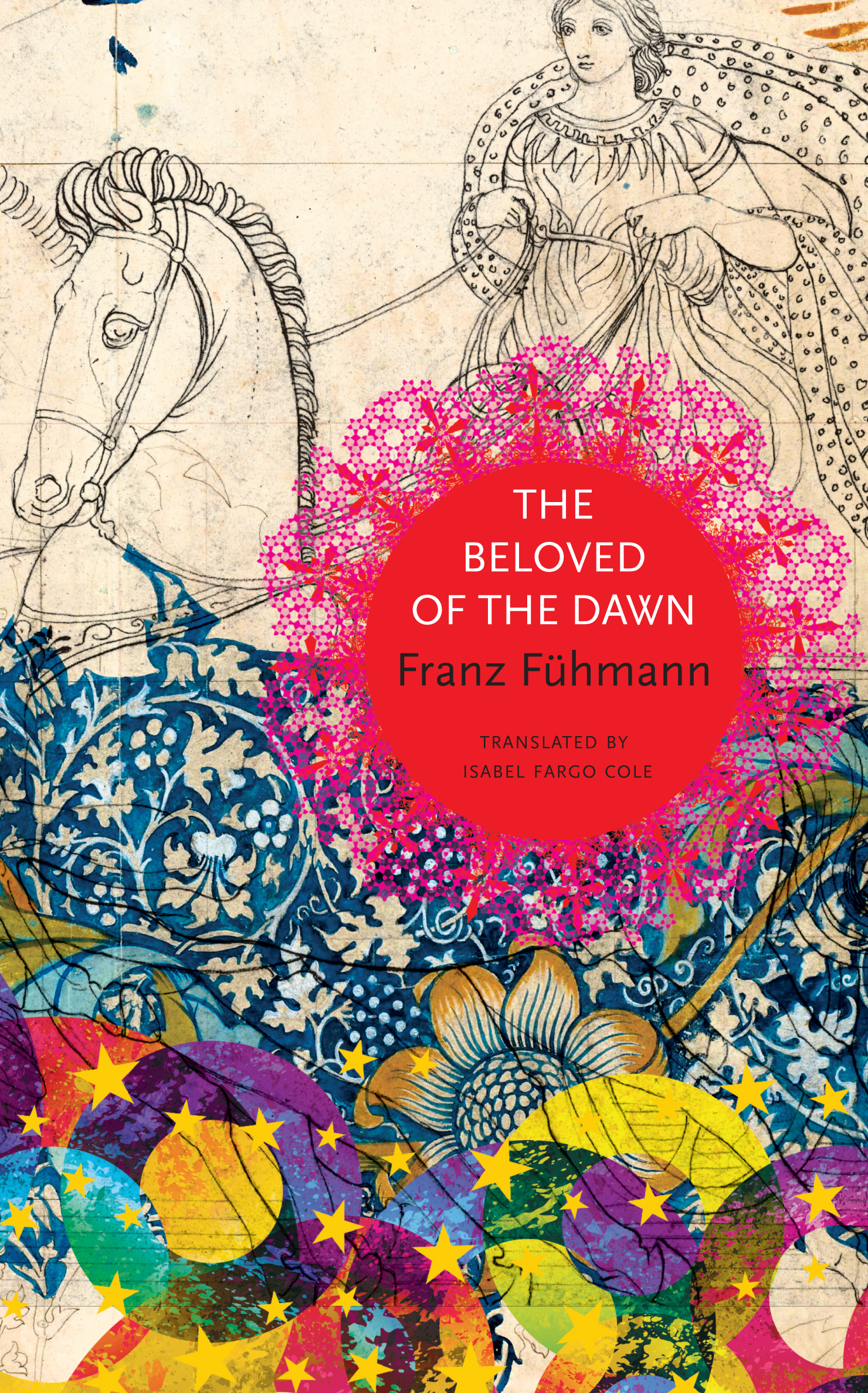
I have previously reviewed Fühmann’s story cycle The Jew Car, which offers a fictionalized account of his childhood and war years, and his magnificent final major work At the Burning Abyss, a meditation on poetry—in particular that of Georg Trakl—and its power to speak to what is fundamentally human. In this essay he reflects on the way Trakl’s poetry triggered a crisis of literary faith, so to speak, allowing him to heal and understand himself in a way no rigid doctrine could ever manage to do. Both books are translated by Isabel Fargo Cole and published by Seagull Books, as is the very different Fühmann title I am looking at here, The Beloved of the Dawn, a slender volume comprised of four retellings of Greek legends, beautifully presented alongside vivid digital collages by Sunandini Banerjee.

As mentioned, Fühmann spent time in Greece toward the end of the war. As translator Isabel Cole indicates in her note at the end of The Jew Car, this opportunity to spend time in the country was especially valuable: “Since childhood Greek mythology had fascinated him, and the confrontation with Greek reality, the juxtaposition of myth and war, would inspire much of his literary work.” This awareness charges his personal take on these stories—drawn from a collection originally published in 1978—with a certain tension that gives them a contemporary energy. Despite its colourful presentation, this is not a book for young children, rather he is speaking to young adult and adult readers, fleshing out well known incidents with a very human, somewhat subversive tone.

The first of the four legends to which Fühmann turns his imagination in this collection is Homer’s Hymn to Aphrodite (219-239) which chronicles the love of Eos, the goddess of the dawn, for the mortal Tithonus. She begs Zeus to grant him immortality so they can spend eternity together, but forgets to ask for eternal youth. The reality of life with an immortal mortal is vividly evoked. The second tale focuses on Hera’s magic-enabled seduction of her wandering husband as depicted in Homer’s Iliad, chapter XIV, portraying the great king of the gods, he of enormous appetites, in his moment of weakness and subsequent bitter revenge:

That night, three hundred years, he’d sworn fidelity: one night, but what a night!—He was Zeus, and he was who he was.—Then he’d deceived her ten thousand times: with her sister, with the Wanton One and her retinue, with all the nymphs, all the Muses, all the Horae, all the Charities, with all the wives of all the gods and all the daughters of all of the goddesses,  even with his own, not to mention countless mortals: she-humans, she-beasts, and even plants, and with boys, too, with monsters, with ghosts.—He was who he was, and now he was one who desired Hera and none other.

The third story—dedicated to Heinrich Boll— recounts the silenus Marsyas’ reckless challenge of Apollo to a musical duel with melodious pipe cursed by Athena. In its graphic depiction of agony, this version makes the hideously aging Tithonus’ fate seem mild. Marsyas’ grisly destiny is hinted at throughout, but he ignores the warnings of dreams and even fails to believe his opponent is serious in exercising his reward for winning as the blade slips beneath his hide. Fühmann makes visceral what no marble statue and few paintings can aspire to.

The final tale similarly breathes depth and life into another of the less fortunate characters in the Greek pantheon of major and minor deities, in this case Hephaistos the physically disabled god of fire, the eternal guardian of blacksmiths, craftsmen and artisans who was, in this role, worshipped and yet required to serve in Olympus. Fühmann portrays this conflicting position, its balance of strength and weakness clearly in his hero. The story at hand is, of course, the famous account of Hephaistos’ response to the news that his wife, Aphrodite, is having an affair with Ares, the god of war. The crafting of an invisible, infinitely strong web to capture a theoretically invincible foe is depicted with poetic, elemental detail:

He laid his hand on the pristine metal.

The beauty of its coldness and resiliency, and the force of the fire that conquers them both.

He melted off a handful of the material and once it had cooled began to rub it between the fingertips of his right hand while stretching it out with his left. When the hot metal had a ductility, when a cool hardness such as he had never encountered, such as could arise only here, as the solar plexus of all metal veins between the heart of the earth and its diaphragm.—Soul of matter: his medium.—What he need now was the finest of eyelets: a flake from a diamond, shot through by a sunbeam.

The net he weaves and the trap he sets succeeds, but only so far. Hephaistos is too bold, and too stigmatized to not be mocked even in his triumph. The resulting story is one of a bittersweet and complicated relationship between a gifted genius and his fellow gods and goddesses, even his beautiful wife.

The strength of each of the tales collected in The Beloved of the Dawn lies not in the overall arc of events which have been illustrated and revisited countless times, but in Fühmann’s ability to tell them anew. His distinctive prose style which employs poetic fragments and a frequent use of em-dashes, often to open new sentences, allows him to add colour, shadow and character to these archetypal figures and convey a relatable, recognizable agency to his portrayals of these familiar legends. His narrative acknowledges that many poems and artworks have come before, and openly claims to be more interested in some of the lesser known backstory, but he never abandons the mythic form. Witty and sharp, he is having fun with these timeless tales of Gods behaving badly.

The Beloved of the Dawn by Franz Fühmann is translated by Isabel Fargo Cole and published by Seagull Books with full colour illustrations by Sunandini Banerjee.