Winter solstice 2018: From now on each day gets brighter

It seems as if each year, as I come to my customary winter solstice year-in-review post, I am looking back at another bleak year—not entirely bleak of course, but on the northern hemisphere’s shortest day, it’s easy to allow the dark days to slide into one’s imagination. Last year, I ended my post on a high note, enthusiastic about my son’s sobriety. It did not last, but a solid alcohol-free stretch is a start. I was at once cautiously optimistic and typically cynical, knowing how my life has been playing out in the recent past.

And so, yet another year of ups and downs nears an end.

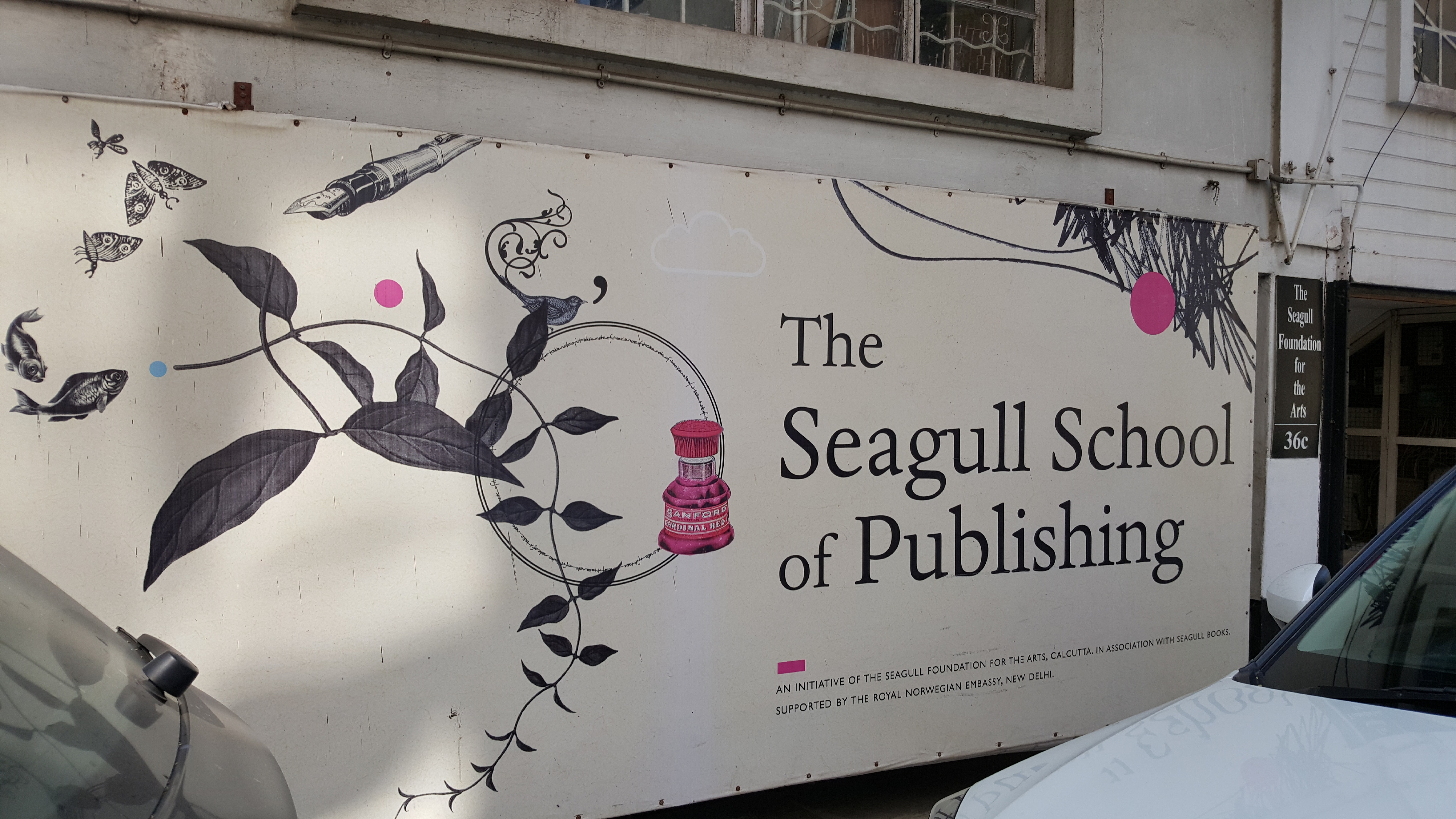
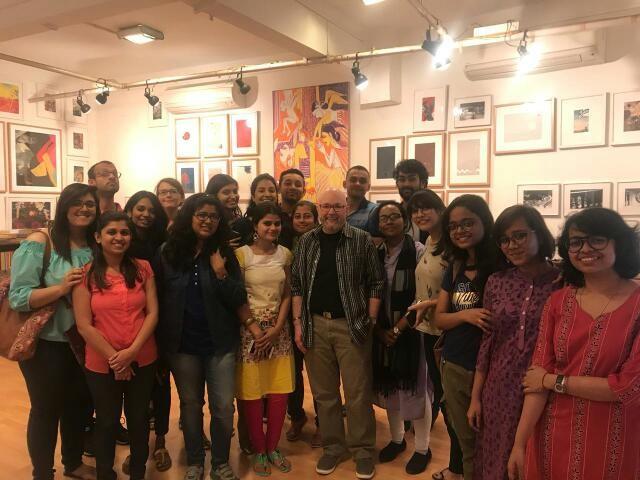
2018 began with the excitement of getting ready to head to India, to spend two weeks in Kolkata. I was, I told myself, going to get some serious writing done. I gathered all of my fragments and half-finished pieces of work, backed up in the cloud, and packed a stupid number of books and too many warmer clothes “just in case”. I wrote little, read nothing, bought even more books to drag back home, and had the time of my life. If the city’s particular character overwhelmed me for the first few days, it won my heart before long. I was able to spend time at the office of Seagull Books, taught a class at their school of publishing and met Ngūgī wa Thiong’o. I had a chance to meet and spend time with friends, contacts from blogging and Twitter, reinforcing my experiences in Australia the year before—this online space can translate into real life contact, contact that sometimes builds into deeper lasting friendships. As I write this, I am looking forward to returning to India this coming February, this time for a full month, visiting  Calcutta for a week, but expanding my journey to include Kochi, Mumbai, and wherever else time and circumstance affords.

However, my failure to meet any of my, perhaps unrealistic writing ambitions during my stay in India turned out to be prophetic for the rest of 2018, especially with regard to my ability to make progress on the increasingly phantom memoirish project I keep fretting over. I’ve spent much of the year doubting the value of writing about the self at all, and then wondering what, if any, stories I have worth telling. So, apart from a few photo essays, a short poem and a handful of reviews, I’ve published no significant personal work at all. Instead, I channelled a fair amount of my writerly energy into editing for 3:AM Magazine. Admittedly there is an element of productive procrastination at play, but I truly find editing, especially for such a respected and unclassifiable journal, to be a highly rewarding activity. Over the year, I’ve had the honour of working on some really fascinating and original projects with a wide range of gifted writers.

I also had the honour of being invited to San Francisco this past summer to host an event in honour of translator Isabel Fargo Cole and the release of The Tidings of the Trees by Wolfgang Hilbig. Meeting Isabel and having the opportunity to visit the offices of Two Lines Press and the Center for the Art of Translation was a thrill. The trip also afforded me a chance to catch up with my cousins whom I had not seen for close to forty years. Our mothers, now both gone, were sisters making this precious opportunity extra special.

On a personal level, 2018 was another year of upheaval. I have lived without income for several years, a result of a series of unanticipated  traumas and a reconsideration of what is really important at this point in my life, but well aware that this is unsustainable in the long run. So I decided to sell my house, move to a smaller, more manageable space, and invest the proceeds (just in time for markets to plummet, as would be my luck). The sale and purchase went well, but the move was devastating. My son and I made the time-honoured mistake of thinking that because we were moving less than a kilometer, we could handle most of it alone. Downsizing from a house I lived in for twenty-four years to a two-bed apartment condo was impossibly heartbreaking—especially for my son who was grieving the recent overdose death of his best friend, someone who had spent a lot of time at our home over the last dozen years—and the physical stress of trying to unload and move a quarter-century of life and living.

As I settled into my new place, an older low-rise building above an embankment of Douglas fir trees, just steps away from one of my favourite natural areas in the city, I was hopeful that the change of environment would mark a new beginning. I hoped for a fresh surge of creative energy, a renewed focus, and an opportunity to move beyond the losses and loneliness of the past few years. But, of course, when you are facing challenges deeply rooted within, your problems simply move with you.

Over the fall, as the days grew shorter, my world grew darker. I found myself feeling increasingly isolated socially and emotionally. When I did go out with others, I would come home and feel like gouging my heart out. Online I often pulled away so as not to post anything as dark as the thoughts I was harbouring. Cautiously, much of this was released in a post I published in late November, Who am I now? Slouching toward queerlessness. It stands as the most popular new post on my blog this year—misery loves company? I’m not sure. Ostensibly a brief essay about the difficulty of trying to address a truth of experience, however subjective, in a world—and for me that world is queer and differently gendered—that only values certain truths. The subject, hardly a new one on this blog, is still valid. But some friends heard the acute pain just beneath the surface and reached out.

I’m happy to report that my psychiatrist heard that pain too and recognized it for more than my usual seasonal blues or the lingering effects of a bad cold. To be honest I was more concerned than I dared to admit. By early December I had become so weak that I was wondering if I’d even have the energy to manage my trip to India. Yet, I was reluctant to believe that a small increase in my psych meds would help. With my doctor’s encouragement I agreed to give it a try. Within days, the pain in my arms and shoulders lifted and the world looked brighter. I celebrated the renewed energy and focus. Depression is an insidious foe, fooling you into believing it’s all your own fault. I was diagnosed bipolar in my thirties, but until recently elevated moods were my demons; serious downswings are still a new territory.

So, although the core concerns visited in my Who Am I? post still exist, the creative juices have started flowing again after almost two years in abeyance. I am reading and writing with purpose. With luck (knock on wood) it will continue for a while.

And so, at last, to my year in books.

This year was a little different. I read a lot of strong books, including a fair number that I didn’t end up reviewing, most often simply due to lack of time. However, when it came to prose—fiction and nonfiction—there were fewer standouts, whereas with poetry, I had a hard time narrowing down my favourites. Poetry was a constant and essential companion this year. At times it was the only literature that could hold my attention.
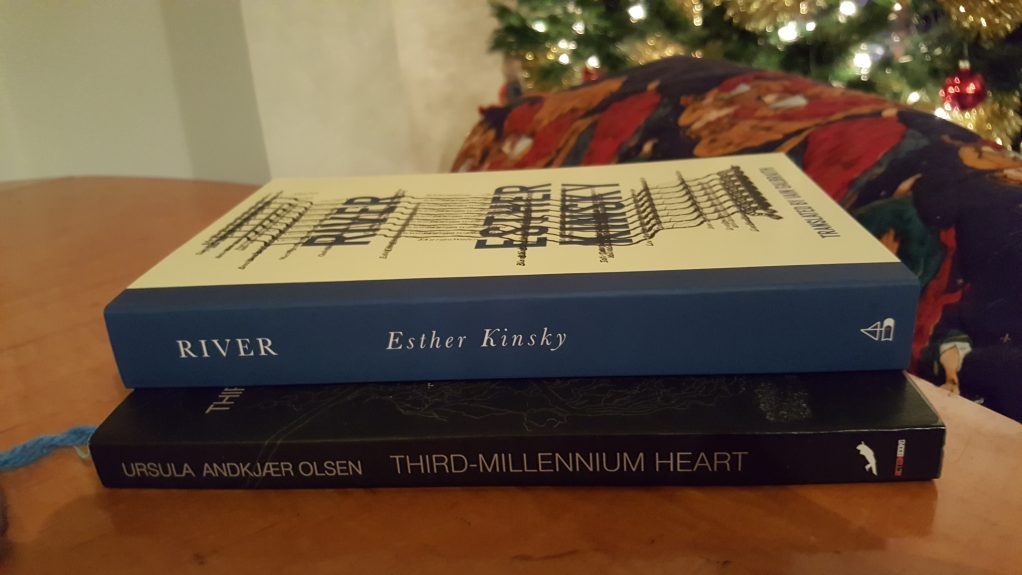
The best two books I read in 2018—and no matter what else might slip into the final days this will not change—are Esther Kinsky’s wonderfully evocative novel, River (tr. Iain Galbraith) which I reviewed for Music & Literature and Ursula Andkjær Olsen’s awesome collection of experimental poetry, Third-Millenium Heart (tr. Katrine Øgaard Jensen) which I responded to experimentally and poetically at Minor Literature[s].

Beyond that, these are some of the books that I have continued to think about often since I read them:

Fiction:
Bergeners by Tomas Espedal (tr. James Anderson)
The Tidings of the Trees by Wolfgang Hilbig (tr. Isabel Fargo Cole)
Where the Bird Disappeared by Ghassan Zaqtan
Murmur by Will Eaves

Poetry:
Adrenalin by Ghayath Almadhoun (tr. Catharine Codham)
Brink by Jill Jones
The Little Book of Passage by Franca Mancinelli (tr. John Taylor)
Jonahwhale by Ranjit Hoskote
Footnotes in the Order of Disappearance by Fady Joudah

In most parts of the planet, winter solstice is likely over, but where I am, this post makes it under the wire. Regardless, best of the season to all.

The never-ending ending: When will this move be over?

Although my son and I moved into our new home a week ago—that is, our furniture and all of my books and our two confused cats made the transition—this has become an endless process. In part it is a matter of proximity. Moving less that a kilometre invites a false sense that you can manage the bulk of it on your own. In packing and unpacking my little Honda Fit and trundling boxes and bags up to our second floor walk-up over and over, two things become painfully clear: (a) I was completely unprepared for the reality of downsizing and moving after twenty-four years in the same place, and (b) I am twenty-four years older than I was the last time I moved.

Tonight, back at the house with possession date quickly approaching, I was emptying the entryway closet and cursing myself for not clearing out all of the coats, boots, and orphan mittens stashed into boxes or bags long ago. It depresses me how much I’ve managed to acquire through all of my incarnations, hobbies, and business schemes. I’m shocked how many toys my children accumulated over the years. As a queer single parent with a relatively low income, I always wanted my kids to have a lot of things. I couldn’t afford vacations, or all of the fancy things their friends had, but somehow toys with lots of small pieces seemed like having more. Or like giving more.

What was I thinking? What are we ever thinking?

Even my single friends assure me that the more space one has, the more it seems to fill itself with stuff. We admire sparse décor, but given a chance, human nature abhors a vacuum.

And then there’s the emotional baggage one has to sift through, and decide to purge or pack. For both my son and myself, there’s evidence of the losses we’ve suffered, or worse, created, in every corner. This final clear-out is overwhelming. And there is still so much to do. We’ve rented a van and made a few runs to the landfill and wasted a couple of hours carting well-used, but still serviceable solid wood furniture around to charities but were unable to pass anything on. It’s a bit heartbreaking but, at this point, I am content to pass on the hauling away to a junk removal firm, cost be damned, I need my life back!

I haven’t read a book for almost two weeks. I feel like I’ve been cut off from my literary lifeline, but have yet to unpack and fill all my empty shelves. Where to begin? How to organize?

Soon. Soon this will pass and we’ll be able to settle into our new apartment.

But first we have a room full of charity donations to deliver, a mound of recycling to cart away, and a garage full of old furniture, junk and all of the tools and outdoor items we’ll no longer need, but simply don’t have time to take care of. Hopefully the removal firm has better luck finding a home for some of the stuff but for now the clock is ticking and we have to clear out, tidy up, toss the keys in, and lock the door.

When it’s all over, maybe I’ll feel sad. I know my son will; he’s spent most of his life there, give or take, but I am ready to let go. The house is old and when I look around I am haunted by all of the projects I lost interest in, or could not afford to complete. It’s as unfinished as my life. I feel sad, strangely, for birds who will be losing their nesting spaces as the lot is redeveloped and the industrious little red squirrel who has amassed himself a huge pile of pine cones for the winter. And for the old apple tree.

For nearly a quarter century, that overgrown yard and 50s glass stucco bungalow was home. The only house I ever owned. Charged with memories of motherhood, madness, the end of a marriage, and the advent of my own manhood. Now its sale has afforded me a new lease on life.

Or so I hope.

A constant procession of ghosts: A reflection

August has passed, it seems, with little to show for itself. Smoky skies and an air quality rivalling that of some of the most polluted cities of the world curtailed much outdoor activity here. Further to the west, where the smoke originated and forests burned, it was worse. Now, as skies clear, temperatures are dropping and summer’s fading fast. Leaves are turning yellow. Autumn nears.

Two years ago today, September 1st 2016, a dear friend took her life. A second attempt after years of trying to fight off crushing bipolar depression. Unable to work and living on savings, treatment often meant driving to a public hospital, an hour each way. She lived in a small village in the Eastern Cape Province of South Africa. We only met once. I spent a week with her in 2015, but from the moment we first met online, it was as if we had known each other forever. We could joke and riff off each other, falling into a regular routine as a dysfunctional divorced couple that often fooled others. In truth, we were bound by queerness, books, and bipolar disorder. Soul mates shipwrecked in our own lives.

But, of course, I couldn’t save her.

In the months before Ulla died I held a certain distance. I was reeling from the recent death of my mother, followed closely by that of my father. Knowing that she was fragile, and, after three years, still grieving her own mother, I was unable to reach out to her to seek or offer support. We were both drowning, but her sea was darker and more deadly. It had been for a long time.

With my parents’ sudden and tightly timed deaths, I had imagined the possibility of an exercise of writing immediate grief—echoing Barthes and Handke—but the burdens of being an executor distorted and distended the mourning experience and, for the most part, these losses remain unwritten. Then again, my parents were in their eighties with long lives, well-lived, behind them. My friend’s death, at forty-six, was more complex. I knew it had to be addressed, not simply for myself but for a community of followers who responded to her actions intently and personally. It took three months to salvage words and craft a 300-word piece which was published, with my own photographs, in late November of 2016. Each time I come back to this eulogy I realize how much of my immediate grief is contained there, perfected and concise.

Who, and what, in the end, do we write grief for? If we are looking for catharsis, a way to move beyond grief, we may be disappointed. Perhaps grief simply moves with us, evolving and softening over time.

If Ulla’s death sits especially heavily at this time of year, at the moment there is an extra weight. Earlier this month, my son’s best friend lost a difficult battle with opioid addiction. He had been at our house quite a bit in the last weeks, and although clean at the time, he was really struggling. My son is devastated. He’s been seeking refuge in alcohol and routinely breaks down in a flood of tears and despair. His sister and I feel a loss too; Dylan was a common presence in our lives over the past twelve years, but to be honest, in recent times I wasn’t always happy to see him on the doorstep. He and Thomas have both, at twenty-eight, been fighting their own mental health and addiction issues for a long time. And they were not always good for each other. They could be up all night arguing—usually about politics, but sometimes about really “important” matters like the difference between a canon and fugue. Things could get violent. One morning Thomas broke his hand on Dylan’s head (and glasses). But music was their real bond. They wrote and recorded songs together and spent hours busking on street corners over the years. They believed in each other when neither could believe in himself.

As a parent it is agonizing to watch my child in pain and know that his is a mourning song I cannot write.

*

As September begins, I am aware more than ever that we are surrounded by a constant procession of ghosts. I’ve bought a two-bed flat and, at the moment, I’m deeply engaged in the process of emptying out closets, cupboards and rooms of accumulated stuff so that, by October 1st, my house will be empty and I will be settling into a much smaller space. The sheer volume of junk that needs to be dumped, donated, or moved is overwhelming. And with it, reminders of the losses of the last few decades keep resurfacing when I least expect it.

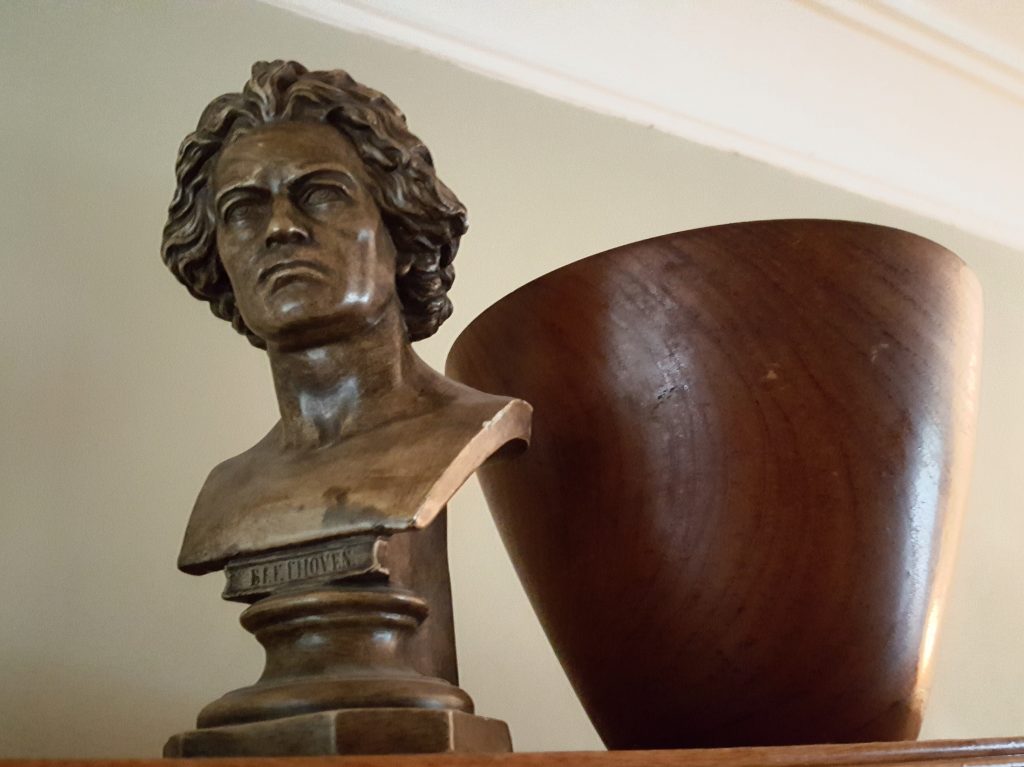
Out in my unfinished garage where I have amassed a mound of old, damaged furniture and broken objects waiting for pick up, I found a windshield propped against the wall. I have no idea what it was for or why it is there, but I know it was something my father must have picked up and forgotten. I’m surprised how much of him I couldn’t part with after his death—his Russian literature, a bust of Beethoven, a grandfather clock—all tangible reminders of a man who was so elusive, so hard to know.

Of my mother, there are few objects I wanted to bring home but her presence permeates so much of my life. Especially the one I tried to live in her image. As a girl and woman. Packing up children’s clothing for donation I find the beautiful outfits she crafted for her precious granddaughter—lined coats, fancy dresses—her attentions to Ginny’s wardrobe becoming ever more feminine as I, her only daughter, transitioned to male. I also unearth all the outfits I myself made for both my children in their early years when I was still determined to play the part birth had granted me. A part that, ultimately, has nothing to do with gender at all. I truly enjoyed creating beautiful things for my children. It just didn’t alter the sense that I wasn’t female.

And so, this house is also haunted by ghosts of myself, the selves I wanted to be, the self I became while living here. The self I still don’t know what to do with. I haven’t even uncovered the boxes filled with all my childhood photographs or angst-ridden adolescent writing. But documents with my old names, once-treasured possessions, and even a wedding dress have been revealed. Some will be retained, others hastily stuffed in bags and carted off to Goodwill.

Then last night, another more recent, unresolved ghost emerged. In a closet I found a manual from a leadership workshop I took a number of years back. At that time I was confident, more secure in my sense of self than I would ever be. My transition, in my mind, was complete and a success. But within a few years, my brief, yet promising, career in not-for-profit management would be destroyed by circumstance and my own mental illness. A loss I still have not come to terms with and yet it seems like something that belonged to another person. As if my life has just been a series of reincarnations that seem to leave me no wiser or further ahead.

And no more certain who I am.

And then there is my own addiction: books. Spread through three rooms, with most shelves double stacked, I shudder to think how many boxes there will be. No mercy for old magazines and outdated textbooks. They are bound for the recycling bin. But every time I scan my bookcases to collect charity sale donations, my decisions about what to hold on to shift. My anthropology and ecology texts are now gone, but my philosophy, classics and ancient Near Eastern history volumes remain. I notice that so many of the books I bought during my years of bookstore employment in the early 80s are still valued, even if I didn’t appreciate some for decades after purchase, whereas the literary bestsellers I devoured in my thirties and forties have been, and are, regularly pruned and sent off to new homes. Some of the obsessive tangents reflected in my collection are held dear, others are an embarrassment.

The books we read, and perhaps even more tellingly, the books we buy with the intention to read them, reveal a lot about who we are, who we want to be, and who we want others to imagine we are. More ghosts in our own lives.

And I suppose moving is one more opportunity to encounter, reshape, and even resolve a few of those ghosts—our own and those of others whom time, distance, or death have taken away.

Maybe even grieve.

Holding a creative distance: The origin of my recent engagement with Marcus Aurelius’ Meditations

This month I made my second appearance at Burning House Press. The first, a poem, was a distinctly personal effort, the most openly vulnerable piece of writing I have created this year. I’ve been debating the idea of what it means to write memoir—the only genre that really makes sense—and why I have a strange discomfort with much of what falls into that category. I’ve tossed about all sorts of approaches, from the straightforward essay to the fragmentary to the semi-poetic narrative and, in the end, I will probably just have to stop procrastinating and start putting down one word after another and see where it leads me.

In the meantime, I’ve long wanted to balance more experimental and detached projects against the personal. In particular, I wanted to find a way to engage with some of the books I brought home from my father’s library after his death. I started with randomly generated extractions from some of his collection of Russian literature, but quite honestly the material was not holding my attention. Of much greater appeal are his specialty volumes—slip-cased, illustrated collectible editions of classics like The Adventures of Marco Polo, The Rubiyat, and HG Well’s Time Machine.

One of my treasures is a small pocket-sized hardcover edition of The Meditations of Marcus Aurelius. And that’s where the current project began.

The theme at Burning House this month, craftily curated by my friend John Trefry, is “Non-nonfiction.” Inspired by a black and white postcard from New York City that I found tucked into my father’s copy of The Meditations, I decided to create a series of hyper-processed pseudo-wet plate images from some of my photographs. At first I imagined writing a mock report cataloguing these acquired images in some undefined post-apocalyptic future. But it felt too much like writing speculative fiction, forced and odd because fiction is not my territory. So I went back to Marcus, to exactly the location where the postcard still rests and extracted material from two verses on those pages. That material, manipulated with minimal intention, was then employed with the images to create an “excerpt” from an imagined series. Working like this allows me a creative expression from which I am distanced, at least to a degree, while at the same time honouring my father.

My piece, The Soul of a Man: A Meditation can be found here.  I hope you enjoy it.

The promise of change: Midsummer update, July 2018

With the end of July approaching, I am at a loss to know where the month has gone. To idle hours glued to my computer screen I’m afraid… it is amazing how the internet manages to suck away productivity when you are looking for something. And before you know it, deadlines loom, books are unread, words unwritten and summer is half over.

Earlier in the month I sold my house, “as is” fortunately, for the soil it stands on is worth more without it than otherwise. I am a little saddened to know the place I lived in for the past 24 years will be demolished, yet relieved that I don’t have to fix it up or worry about the aging furnace or sewer lines. I just have to get out by October 1. I will miss my yard with its defiant horde of Shasta daisies, army of saskatoon berries, gnarled old crab apple tree and row of prickly hawthorns. Not to mention, six towering spruce trees and one mostly dead mountain ash. But in return I am trading it for a two bed flat in a building that backs on to an escarpment lined with Douglas fir trees—a little piece of mountain wilderness cast off from the Rocky Mountains, and nestled here in this city of one million. And I don’t even have to move far; I am staying in the same neighbourhood.

However, in the few weeks between the time I accepted an offer on my house and the removal of conditions, I wasted so much time visiting and re-visiting real estate listings that precious little else got accomplished. I debated neighbourhoods, layouts, square metres  and, of course, price, ad nauseum. Somehow, all the information we now have at our fingertips, when we are planning a trip or a purchase, fuels obsessive behaviour rather than actually saving time. That is, at least until a decision is made and done. By the time I was actually able to start my physical house search, I knew all the listings on my radar by heart. We happened to visit my favourite first and nothing else came close. Offer made, a little back and forth, and it was accepted. Now after reviewing the building documents there is a slight concern about pending remediation work (nothing unexpected in a fifty year-old structure, but the decisions will be made before I myself an owner), so by Monday we should have a finalized sale and I will have seven to nine weeks to radically downsize and relocate.

Although I will have a lot to get rid of—sell, donate, or throw out—the idea of streamlining my life is greatly liberating. (Don’t worry though, I was cognizant of bookshelf-suitable wall space in my apartment search, and even then I’m still guaranteed to have more books than I can possibly accommodate.)

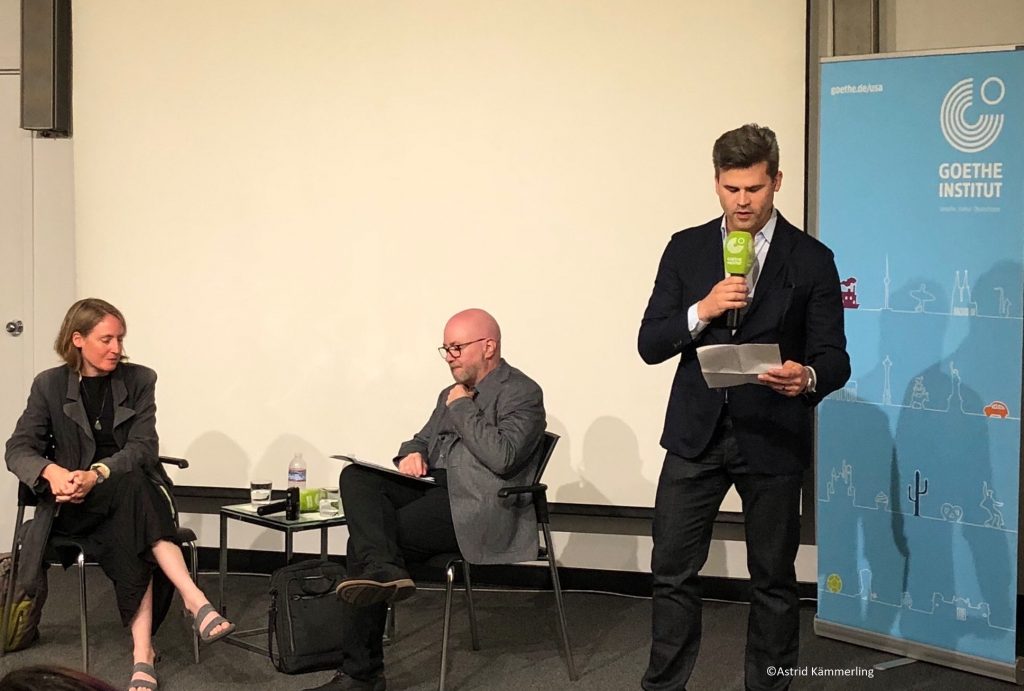
My house hunting helped ease me past the difficult anniversaries that accompany this month and, although it has cut into my reading and writing efforts, an invitation to visit San Francisco this week offered a most wonderful literary opportunity—one I never imagined would come my way in this belated, informal writerly “career” of mine. I had a terrific time stopping by the office of The Center for the Art of Translation and Two Lines Press—it’s always so nice to see where the magic happens—and talking Hilbig with Isabel Fargo Cole at a book launch for The Tidings of the Trees. I have attended many author interview sessions over the years, for better or worse, but to be on the stage at the Goethe Institute with a translator I have so long admired at was a huge thrill. I’ll confess to being a little nervous. I reread the book in advance and made countless notes and outlines. But in the end, I sounded reasonably intelligent and Isabel’s answers were detailed and informative. Even better, the audience had many interesting questions and inquiries, a sure sign of a successful event.

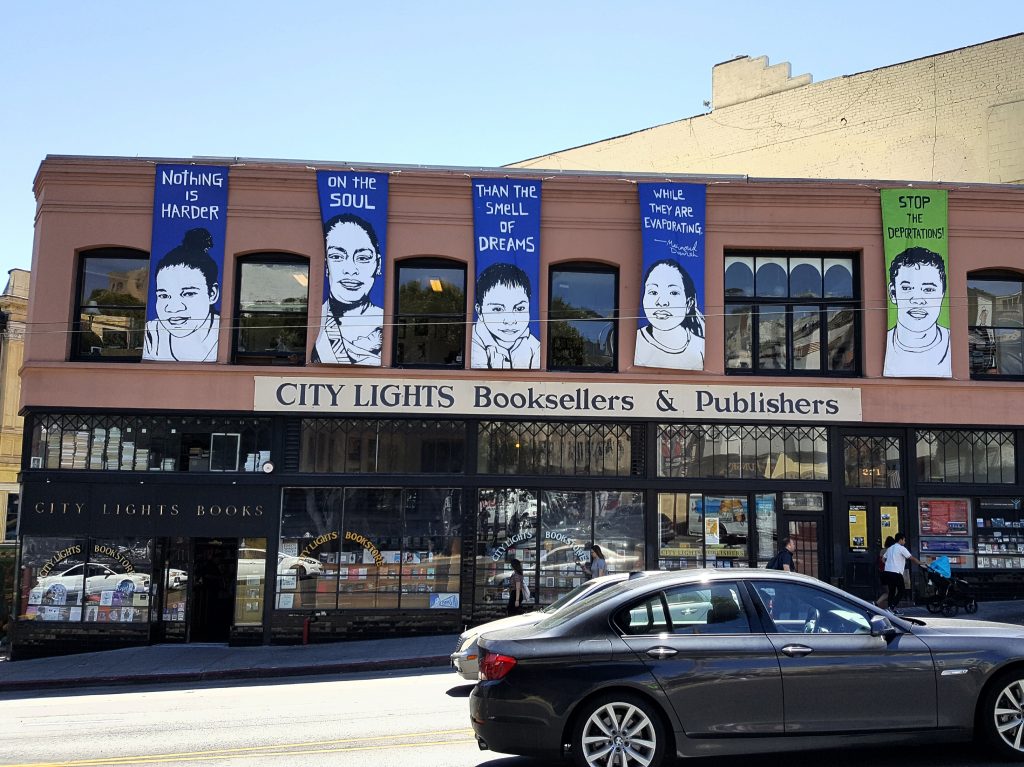
I chose to stay on for an extra day in the city, about all I could afford in a city not light on the wallet, but the extended time allowed me to have coffee with Veronica Scott Esposito and spend time at the MoMA, enjoy dinner with two of my cousins and their spouses—our first get together in thirty-five years—have lots of time to visit with Isabel, and also make my way up through Chinatown for the requisite pilgrimage to City Lights Books. I came home from that excursion with books (go figure) and a gorgeous, sturdy canvas bag.

So, suffice to say, my books-read-and-reviewed account looks a little shallow for July. I have, as usual, a handful of titles in progress including one for a published review to come later and I’ve also been quite busy editing for 3:AM Magazine. I’ve been amazed at the range and quality of submissions recently, so many that I’ve had to turn away otherwise strong work due to limits of time, but the experience of working with interesting material and authors is always rewarding and satisfying. If I do my work right, I am invisible, and I like to remind myself how nice it is to be spared the inevitable panicked staring at the blank page that seems to come with every essay or critical review I write for publication. That’s someone else’s problem when I’m the editor.

It is, as ever, a complex flow of emotions that washes over me with all of the decisions, changes and promises that have come into play over the last month. When I was young, the summer, short as it is in this part of the world, seemed to pass so quickly I could never seem to grasp it, hold on to the moment. Now, many decades later, July has become a month associated with some of the most significant events of my life—marriage in 1983, the beginning of transition and end of the same marriage in 2001, a pulmonary embolism and cardiac arrest that nearly cost my life in 2015, the closely entwined deaths of my parents in 2016, the surprisingly swift sale of their house last year, and now, this year’s exciting events.

There are still many challenges and unknowns, significant ones at that, but such is living.

Unfinished conversations: Still unable to address my mother, two years later

In memory of Mary Jane Ellis
1934-2016

I have accepted an offer on my house and, if all goes well, I will be moving. Knowing that I’ll be looking to purchase a much smaller space, there is, after twenty-four years here, an urgent need to reduce the collected detritus and all the unwanted belongings that have accumulated over time. Two children, a dissolved marriage, and my own double-folded existence have left a mass—no, make that a mess—of stuff to sort through and clear out.

One evening I uncovered a shoebox of cards and letters tucked into the most unlikely cupboard in the basement. I brought it upstairs and sat down to sort through the contents. Anniversary cards celebrating a marriage that ended seventeen years ago; longer than that if you count the painful years of unravelling that preceded the formal separation. Birthday cards addressed To a Beautiful Daughter. And letters. From friends. From my mother. From another time and life. Some I kept, others I tossed into the recycling box. I opened none of them. It seems one cannot bury the self, but one can put it aside—until a later date.

My mother’s death, two years ago today, opened a raw vein, exposed a deep insecurity that I believed I had moved beyond. As a result, my faint efforts to articulate my loss have continued to come up against an impenetrable wall  of guilt and shame. That box of old cards and letters troubles old wounds. Likewise, yesterday’s the discovery of nearly two decades of prayer journals uncovered in  a container stored at my brother’s place compounds the pain. When I suggested that the journals be burnt, unopened, my other brother admitted he had read some and that her prayers had been focused on our father—no surprise there—and me. It seems I had been her pressing concern. Me. The daughter who failed her. The daughter who could not be a woman.

I have always insisted, to myself at least, that my mother was my one and only unconditional support through the years of my transition and beyond. That when she died, I lost the one person who really believed in me. But, in truth, we never got the chance to properly address the impact of the shift in our relationship. We always talked around the subject.

In the last month of her life, when I was finally beginning to try to confront the extent of the loneliness and grief my own tangled life journey has caused me—when I needed more than ever for her to assure me I was a good person and that she still loved me—she was already slipping away. As her lungs became constricted within her shrinking frame, her energy and cognitive abilities declined rapidly. We thought she needed rest, a break from our father. We didn’t know she was on her way out.

On July 6, 2016, one day after my dad was in a serious accident that would ultimately claim his life, my mother was rushed into the city with critically low oxygen levels. She ended up in ICU in one hospital while her husband lay unconscious on the stroke unit of another. I saw her the next day, and although disoriented, she was hungry and joking with the nurses. One day later she was barely responsive. The respirator was not helping as we’d hoped. On the third day, Saturday July 9, I received a call from the hospital. A family member was needed. Both of my brothers were out of town, so my daughter and I went down. Ginny was twenty-three at the time and had been very close to her grandmother. We spoke to the doctor and agreed that the respirator should be removed, but requested that we wait until my brothers could be there—one was a few hours away, the other six.

So Ginny and I kept vigil. Held her hands. Told her we loved her. My son was too distressed to come. When my brothers and their wives arrived, the respirator was removed and we kept her company through her final hours. Eleven days later, our father would follow her. Throughout those troubled weeks, I sat many hours by my parents’ bedsides. To my brothers though, whatever I do, whatever I have done, is never enough. I am the oldest and the odd one out. Always wrong. But as they’ve been supported by their wives and extended families, I’ve been alone with two adult children, the three of us shocked and bereft.

It has been a long two years now. My mother’s absence still sits heavy—an empty space inside me. I cannot address her yet. I have no words. I’d like to think she would be proud that I am writing, but she never wanted to read anything I wrote. It might have been too painful. Perhaps that’s why it’s so hard to write my grief now. We were, it seemed, so close. We spoke on the phone every week, shared our hopes and concerns. But what of what was left unsaid?

And what of the daughter she lost, the one in the cards and letters in the shoebox, did she mourn her? She saw me happy, for a while at least, in this new masculine form. If I could trust that she remembered that person, her unexpected son, in her last hours, could I move on and begin the grief process?

Or am I still mourning a lost self too?

On another way of seeing and remembering Calcutta: A link to my photo essay at Sultan’s Seal

Before I went to Kolkata last month, my strongest visual image of the city was not informed by guide books, travel websites, or National Geographic features. Rather, it was Naveen Kishore’s haunting black and white photographs of his hometown that captured my imagination. I remember, in particular, a darkened residential street—Calcutta, at night—quiet and empty. What would it be like to be there?

Naveen Kishore’s photographs on display at the Seagull Books store.

And, of course, I arrived to what seemed a circus of noise, colour and crowds. It wasn’t until I began to pull out my phone as I navigated the streets of Bhowanipore, that I began to see the neighbourhood in which I was staying. Even when I had my proper camera with me, I continued to use my phone, for the built in GPS as much as for the ease of uploading and sharing photos along the way.

But I knew that I would want to do more. Photographs have increasingly become part of my creative process. And when I use them in concert with words, I feel liberated to edit and manipulate them as much as I edit and manipulate language to express myself. The images that accompany my recent essay for RIC Journal were processed to heighten the colour and dreamlike quality I wanted to achieve with the text. The photographs that comprise the piece that has just been published at Youssef Rakha’s Sultan’s Seal website are entirely different in style and intent.

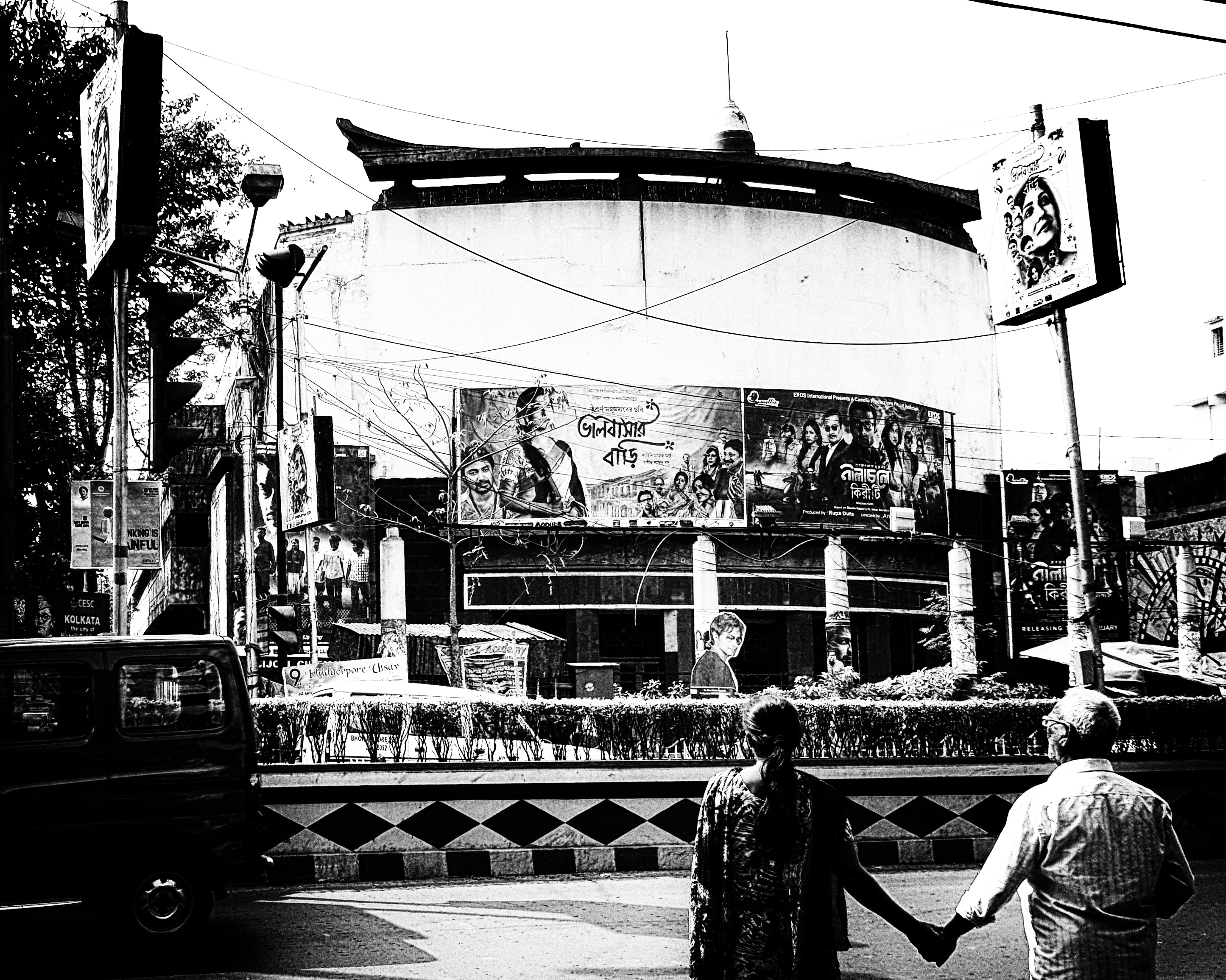
Youssef Rakha is an Egyptian novelist, journalist, and very fine photographer. Over the years he has provided a home for photo essays by a number of excellent photographers and photojournalists. My humble contribution is entirely personal, again a reflection of my time in Calcutta, this time in black and white. The ordinary and the extraordinary. Twenty-four images—sometimes detailed, sometimes stark—and a simple text. And that special magic that only be conveyed with black and white (and all the shades of grey).

You can find my piece, Calcutta in Grey here. With much gratitude to Youssef for putting it together so beautifully.

Brief notes on returning home from travel and a link to my photo essay at RIC: Journal

Kolkata is not a place that inspires indifference. It has been almost exactly one month since I left it behind, and yet my thoughts and imagination are still occupied by the city, the people I met, and the experiences I had.

Now that I’m home, with the endless winter so very slowly melting away, I am once again confronting that familiar heaviness that weighs me down and reminds me how hollow and lonely life here can be. Perhaps it is this perennial inability to fit in that drives the restless traveller on. I don’t know.

In the meantime, I’d like to share a photo essay, just published at the wonderful RIC:Journal. This is, in words an images, an attempt to hold my first encounter with India close just a little longer.

You can find my piece here. With gratitude to Saudamini Deo.

Ferries, trains and yellow cabs: Navigating Kolkata in good company

I headed to India without any clear expectations about what I might find in Kolkata. The trip seemed to arrive much faster than I could prepare myself. But just as well. I like to approach a place with an open mind, content to inhabit a small corner, tracing and retracing pathways until they become, for the moment, familiar. I anticipated a fair degree of wandering, alone and unguided. However, as fortune would have it, nearly every day I was out with a friend or acquaintance, for a walk, coffee, or a meal. The opportunity to see fragments of the city through the eyes of others—life-time residents and more recent arrivals, regular visitors and newcomers—opened up varied angles and perspectives I would never have glimpsed as a lone, foreign observer.

A kaleidoscopic view of a kaleidoscopic city.

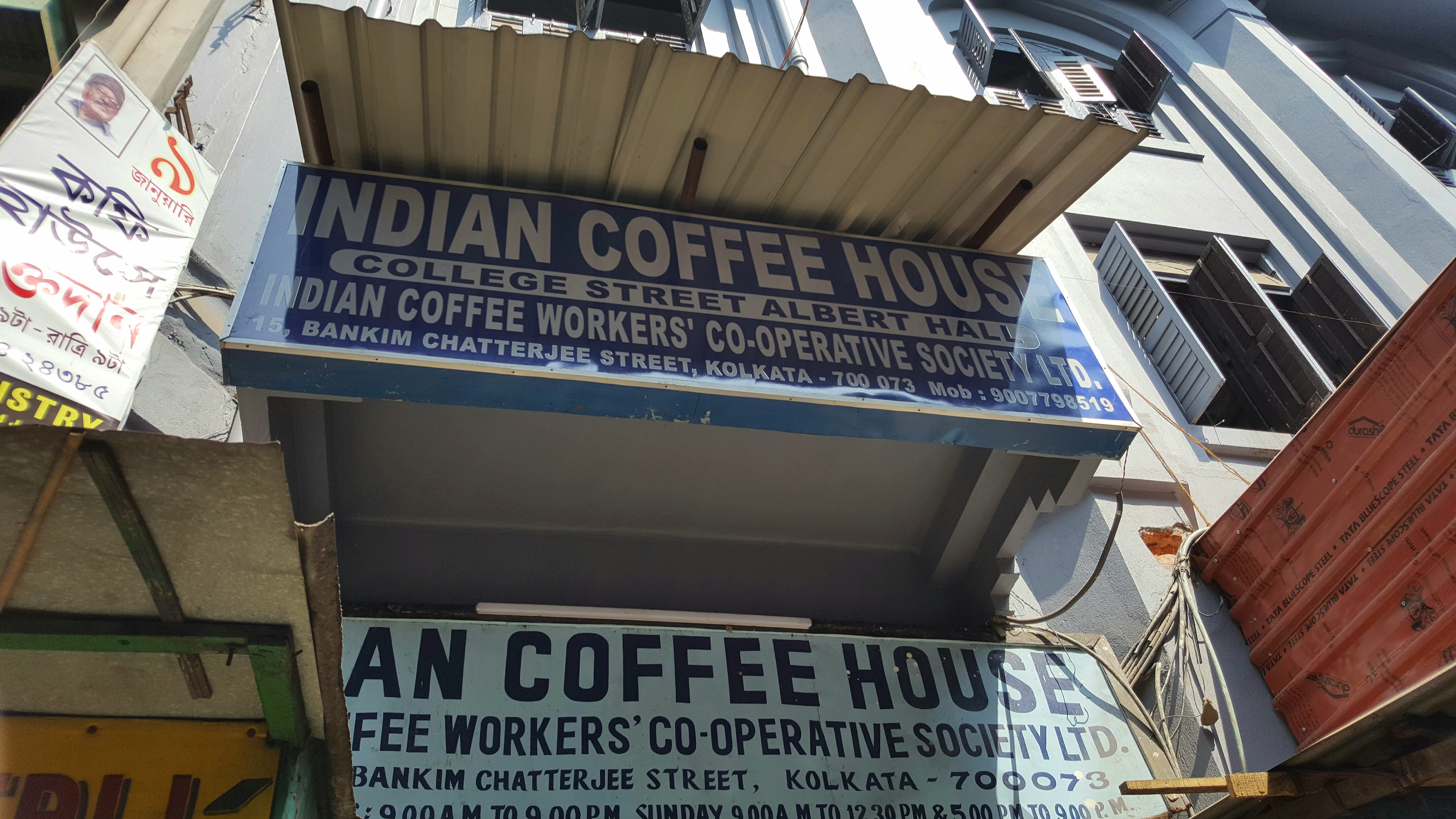
Love it, hate it, or a complicated mix somewhere in between, it is difficult to imagine Kolkata leaving anyone indifferent. I suppose one could sit still or tread carefully from one established tourist venue to another, but quite honestly it is a city that, despite initial appearances, is more welcoming and safer to move through than one might imagine. It invites personal engagement.On my own, walking remained my default mode of locomotion and, over the course of two weeks I came to know a couple of routes well, especially the stretch of Sarat Bose Road, from my home-stay to Minto Park, a diverse, commercial street. The only public transport I would entertain was the Metro, the aged but determined subway line running across the city from north to south. There was a station close by and one morning I squashed myself into a crowded car to travel north to meet a friend outside the Central station. Together we wandered through the book-lined roads and alleys of the College Street area before joining her husband to enjoy cold coffee at the legendary Indian Coffee House which has, over the past seventy-five years, served as an important gathering place for leading intellectual, cultural and political figures.

Kolkata, at least in the older central part of the city, is conspicuous in its absence of a cluster of gleaming high-rises and commercial office towers. It appears to the outsider like an accidental city. Yet it was once the centre of an empire. Scratch the surface and a cosmopolitan quality still lingers. It has a rich artistic and cultural heritage, but the weight of history and ghosts of the past are tangible. The scars of years of decline and neglect mar the surface.

Layers of existence and subsistence share the same spaces in a manner unimaginable in other major cities. Sidewalk vendors and luxury hotels. Modern buildings beside crumbling ruins. It is a place where anyone with a burner and a pot, a few shoemaking tools, or a pair of scissors can set up business. No one is swept off the street, tucked away out of sight. A dynamic urban ecosystem exists here. At once vibrant and decaying, often side by side. As a friend of mine said, there is a place for everyone in Kolkata: “there is food for every budget. There’s space for every fatigued body and there is transport for every pocket.”

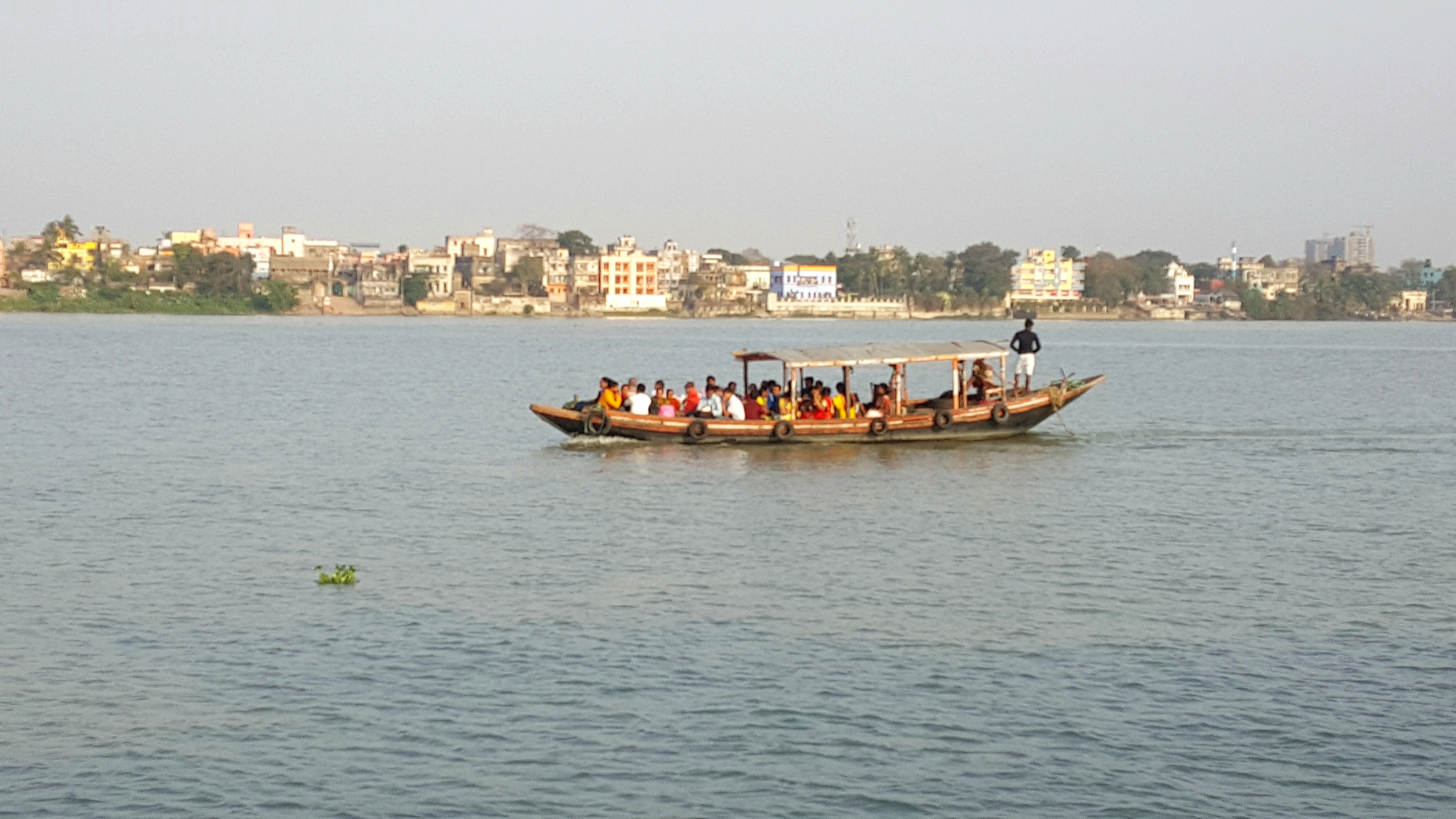
My final weekend in the city was spent in the company of this same friend who had come up from Bangalore for a few days. Together we rode ferries, hired tricycle rickshaws, and experienced the prickly hospitality (or hostility) of an assortment of Yellow Cab drivers. We started out on Saturday morning with a ride across the Hooghly River to Howrah where a rickshaw driver carried us up to the railway station. There we bought platform tickets and my friend shared his enthusiasm for train travel. He led me through a third tier A/C car, insisting that I must, at some point, experience India by rail. (I’m not quite yet confident to attempt that on my own, but challenge registered, and accepted.)

We made several more transits across the river on Saturday, with a longer ride between the Dakshineswar Kali temple and Belur Math on Sunday. These passages introduced an entirely different space and pace. The Hooghly is a wide, languid, opaque green waterway. After the sensory crush of the city, time seems suspended, but even here echoes of the past persist. A mix of magic and sadness.

My friend and I covered a lot of ground over two days, in kilometres and in conversation. At his insistence my experience of Kolkata included small pleasures I would not have otherwise entertained—water from unripened coconuts, delicious fresh squeezed sugar cane juice, and peanuts and puffed rice served in bags crafted from folded newspaper. And his personal perspective on the intersection of municipal grandeur and deterioration helped me begin to frame what I’d observed during my sojourn. A walk after dark through B. B. D. Bagh (Dalhousie Square), the seat of the provincial government and central business district, was a powerful experience, inspiring and haunting in equal measure.

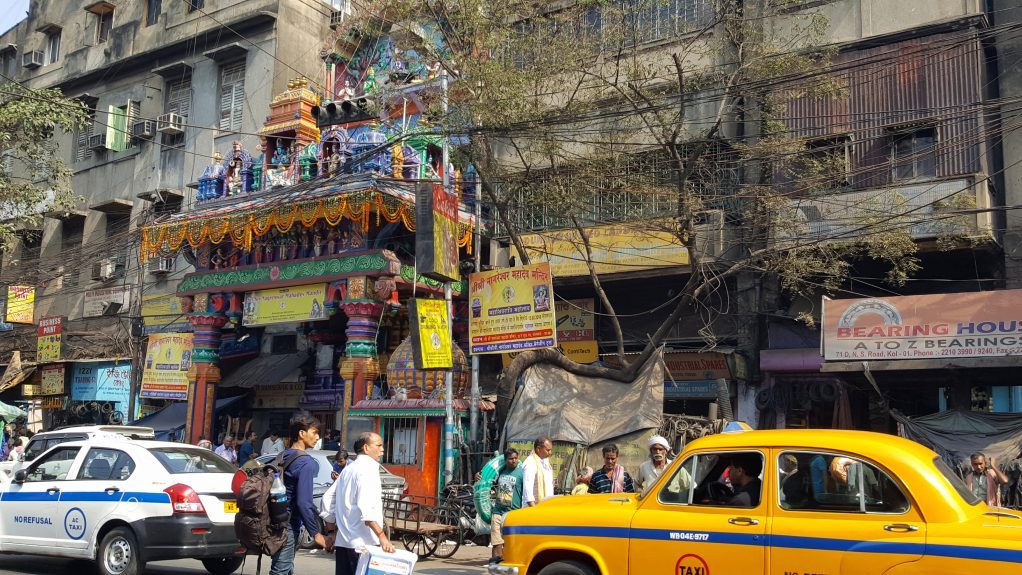
And what would a trip to Kolkata be, in the end, without cab rides? Yellow cabs, even.

And so I left the city carrying the intensity of the place—its mass of contradictions—as a kind of thickened stew that will take time to sift through and clarify. Calcutta. Kolkata.

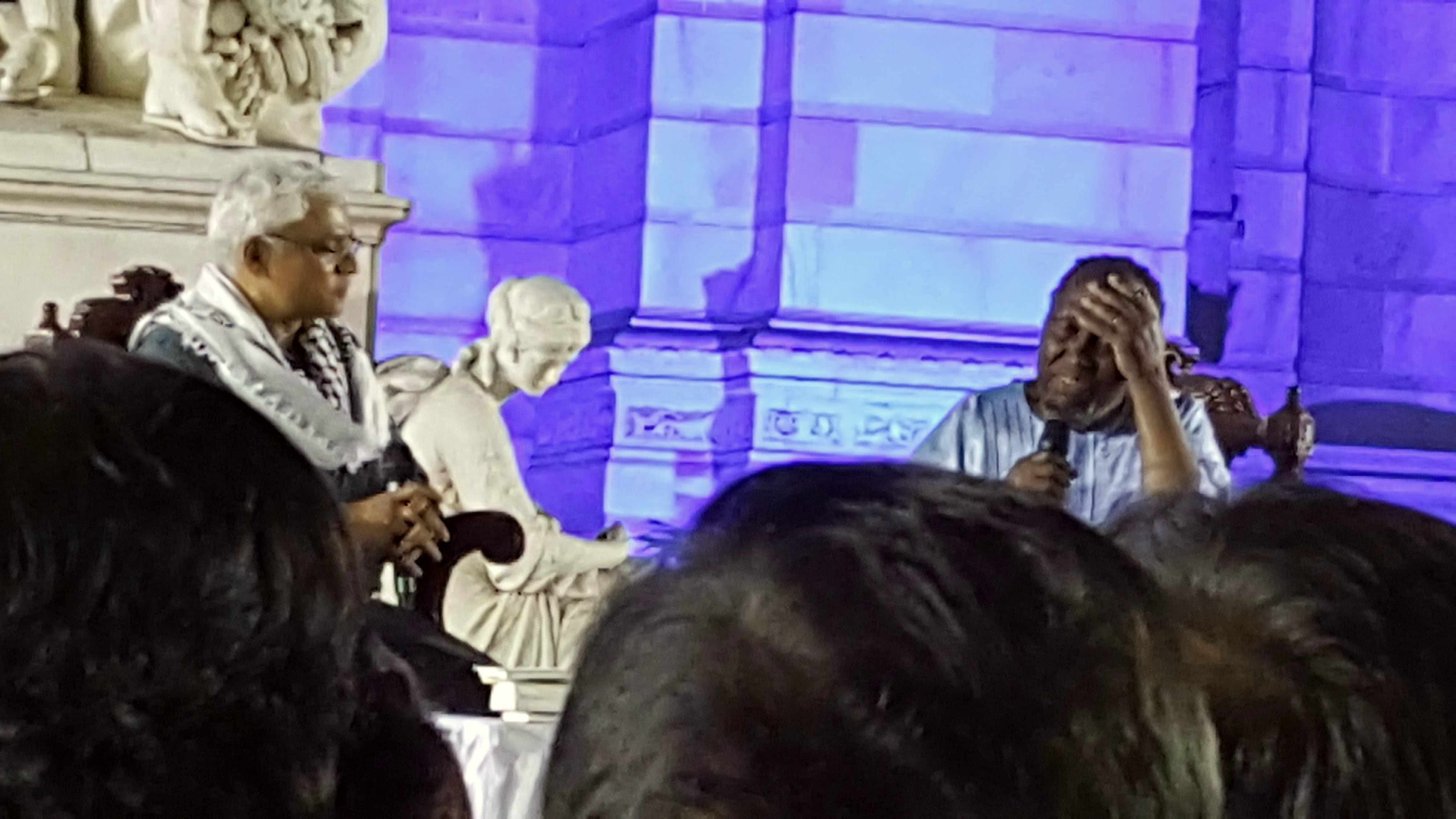
I remember jammed roadways. Taxis—yellow, white and, Uber. An endless chorus of bleating car horns. Brightly coloured buses jammed with passengers. Three wheeled auto-rickshaws scooting by. Bicycles and motorcycles, sometimes with a single passenger, but more often couples, even families—father driving, mother behind sitting side saddle in a sari, and a youngster on the handlebars—typically all without helmets. The whimsical magic of the Seagull Books office, the enthusiasm of the students at the school, the ambitious and inspiring Peaceworks project. Ngūgī wa Thiong’o in conversation at the Victoria Memorial, under the open sky, surrounded by that monument to colonial glory. Towering tombs, and stalls overflowing with books. The century-old residence where I stayed and my eager, affable host, Nandu.

Coffee. Conversation. Friends.

Until we meet again.

Sifting through my experiences in Kolkata: Leading a class at the Seagull School of Publishing

I’m home from India and slowly recovering from jet lag and food poisoning. It’s the latter, acquired, most likely, on my last evening, that is really dragging the transition out—blurring the kilometres between there and here. In a strange way, the exhaustion and muscle fatigue feels like a metaphorical and physical rinsing of Kolkata out of my system.

It won’t work. I’ve been infected. By the city—and a country—that I want to return to and explore further.

For the moment though, a little distance is required so I can review, focus, and calibrate the experiences of the past two weeks. Then I can begin to weave it into words. I anticipate essays, interviews, and other projects to emerge in the coming months.  But for now, back to this space, roughghosts, to share a little more of my visit over the next few posts.

I did not travel overseas until I was in my mid-fifties. Not having had the opportunity when I was younger, I think I’d become resigned to the notion that it was something I’d never be able to afford. It is, strangely, loss that has made it possible. I live very modestly, I travel alone, and the internet has opened up a network of people to connect with across the globe. So I never feel lonely when I arrive in a strange place. Perhaps I travel to escape the loneliness of home.

My decision to go to Kolkata was spontaneous. It arose out of a chat with Naveen Kishore, the publisher of Seagull Books, sometime last fall. His enthusiastic response to my idle comment that “someday” I would visit, set my plans in motion. And, while an opportunity to see the store and office and meet the staff was the draw, and Ngūgī wa Thiong’o’s planned appearance in the city determined my timing, I ended up with so much more, not only from the Seagull experience but through my exploration of the city on my own and with friends.Rather than attempting to craft a whirlwind tour through a number of Indian centres, I opted to stay in place for two weeks. Cost and available time were the primary limiting factors, but I tend to prefer to be able to exist in a city for a while if I can, rather than dash through. It was a fortuitous decision. Calcutta is not only extremely affordable, but it takes at least a week to begin to learn how to “see” the city, and that has nothing at all to do with getting around or visiting tourist sites. It was only toward the end of my visit that I was beginning to appreciate how deeply my time in Kolkata stands to inform my understanding of Seagull, not just the publishing venture, but the entire Foundation for the Arts. I still need time to reflect and follow up with further conversations before I’ll be ready to write any major essays.

However, there is more. I headed to India with the idea that I would spend time engaging with my endless memoir project—reading, writing, reflecting. Yet I worried that left alone with my own literary ambitions I might be exposed to myself as a fraud. Despite my successes and accomplishments over the past few years, I still struggle with self-esteem. I feel old. Late. Writers that emerge in mid-life or later are a relative rarity in this world that celebrates the promise of the young—the 30 under 30, 40 under 40—and undervalues the possibility of those of us for whom life and circumstance have delayed entry into the creative literary environment.My anxiety was increased with the prospect of giving a presentation at the Seagull School of Publishing. When, Naveen suggested I could do “a session” with the students, I assumed he meant drop in, talk for twenty minutes or something. No stranger to public speaking, facilitation, or educational settings, I have always talked about subjects with which I had some degree of knowledge—developmental projects, brain injury, even bird feeding—but when Assistant Editor, Sayoni Ghosh, advised me that they wanted me to talk about my career (“career”??) in writing, editing, blogging, and online publishing I was taken aback. And the details? I would be leading a masterclass running from 10:30 to 1:30 with a fifteen-minute break for tea at noon.

Excuse me? What of my so-called career could I stretch into three hours?

Yet, as I started to create an outline for this effort, a strange thing happened. I knew that I had always been a naturally strong writer, something that had served me well in academic, professional, and volunteer settings since college, but I hadn’t fully appreciated the extent to which I’d been writing, editing and designing newsletters, publications, and even detailed annual reports for years—typically without the technical resources that should have been employed in the circumstances. My early efforts at one job were produced on a Smith-Corona typewriter with a simple word processing function that allowed me to print out blocks of text (and several different heads that could be exchanged for varying the font style). These blocks were then cut and carefully taped onto 11×17 inch sheets of coloured paper, photocopied and folded to produce eight-page monthly newsletters that, for the era, looked as good as professionally printed products. I fussed to avoid any telltale shadows, took care not to repeat themes or designs. In a later position, I would eventually move on to Microsoft Publisher, working under-resourced on top of my regular job responsibilities to create promotional, educational, and fundraising documents that my not-for-profit employer refused to invest in adequately. Why? Because I could not abide by the amateurish materials they had relied on before I arrived.

The difference today is that I am finally engaged in projects that are personally and creatively rewarding. I have learned to call myself a writer. Perhaps I will someday believe it.In the meantime, on the morning of February 14th, my date with masterclass destiny arrived. The previous day the students had spent the morning with German translator and musician Wieland Hoban, who has translated a number of works for Seagull, most proudly Correspondence: Ingeborg Bachmann and Paul Celan. That afternoon they’d enjoyed the warm wit and wisdom of Kenyan literary giant, Ngūgī wa Thiong’o—a session I’d also been invited to attend.

And then me. No pressure, eh?

Although my carefully created Powerpoint presentation—primarily photographic images and links to websites—baffled me and was abandoned, three hours passed easily with lively discussions of online publishing, blogging, and writing critical reviews. My intention was to promote the idea that in today’s environment, creative engagement is possible, easier and more rewarding than ever, and that it is never too late, even if one’s life or career goes sideways as life and work realities can. To that end I did briefly share my story, my gender-distracted diversions and delays that interfered with my earlier creative writing ambitions for so long. I hoped to help the students to appreciate the truly international nature of a literary community (or circles of communities) that exist and how actively engaging in that world opens opportunities on personal and professional levels no matter “when” or “where” one might be.

In keeping with the spirit at the core of a project like Seagull which started very simply, expanding slowly and organically over time, I also wanted to talk about very small indie publishing efforts. So I told them about my friend John Trefry and Inside the Castle, and how a desire to get his own first book into print has grown into a spirited little publisher, still a singular enterprise out of his own Lawrence, Kansas home, but boasting an impressive roster of authors and published titles. And to illustrate that limited resources should not restrict quality or design, I brought along a copy of Douglas Luman’s The F Text. Much to my surprise and pleasure, one of the students fell in love with it and worried that she wasn’t sure she could obtain a copy. So I gave her mine. And signed it. Which was weird, but cool.

Yesterday the same budding editor contacted me to let me know that she had written about my class for the Students’ blog on the Seagull School webpage! I feel an odd mixture of embarrassment and pride. And relief that my session was of value to the students. I’m also insanely excited that Mihika created a little erasure poem out of an excerpt from my piece, Your Body Will Betray You. What a gift!

Leading a masterclass like this is the last situation I ever expected to find myself in, and I would wager I am the real beneficiary of the opportunity. Gradually I’m learning to believe that others believe that I have something to offer.

One of the many, many precious gifts I am bringing home from Kolkata.