And something went terribly wrong: Truth/Untruth by Mahasweta Devi

Arjun Chakravarty has everything under control. As a successful contractor, skilled in the necessary art of greasing the right palms, business is booming, and finally, after ten years of marriage he and his wife are expecting their first child. Kolkata in the 1980s is booming. A determined project of gentrification is underway; everywhere high-rise buildings are sprouting up, even in neighbourhoods long considered derelict and undesirable. Like Khidirpur, a well-known den of crime and smuggling. Denying the odds, towering housing societies boasting spacious flats equipped with all the latest appliances stand proud, like Barnamala where our unfortunate hero resides and the setting of Bengali writer Mahasweta Devi’s Truth/Untruth.

A self-named man, Arjun came into the world as Sanatan Pushilal. But Sanatan was a moniker unworthy of the man he wanted to be. Orphaned young and impoverished, his uncle found him student lodgings with a noted karibaj, an Ayurvedic practitioner, and this fortunate placement was his first step toward a new identity. That is:

How Sanatan became Arjun. And how, erasing the past, Arjun slowly rode the lift of high aspirations all the way to the twelfth floor of society . . . all that is but ancient history now.

With his old landlord long gone, only his son Keshtokali, likewise a karibaj, knows the truth about Arjun’s past. Fortunately, even his wife Kumkum, the daughter of a retired Supreme Court judge, has no interest in either Ayurveda or her prosperous husband’s history. Yes, Arjun-babu has it made. Until something goes terribly wrong.

You see, his wife, now eight months pregnant, has been staying with her parents where she can be pampered and protected while she awaits the arrival of their precious bundle—at thirty-five no one wants to see anything go awry. Thus, left to his own devices, Arjun-babu has been able to indulge his passion for Jamuna, the pretty young maid who comes by daily to clean the flat. Imagine his dismay, then, when she arrives to inform him that she is pregnant with his child. Something must be done, he must make the problem go away. Jamuna’s own husband left when he lost his job, but she still believes he will return. Arjun will arrange for a proper doctor to take care of the unwanted pregnancy, pay her off and hope she leaves, but before he can see his plans through, he comes home to find her dead on the bed in his guestroom.

He knows he didn’t kill her, but he can’t exactly go to the police. If he had killed her, well, that would be a different matter. For the right amount of money the police could take care of anything. But, if word gets out that she was found in his flat, his reputation, his business, his wonderful life—all would be ruined. Even a rumour of murder would do him in; after all she would hardly be the first “murdered” maid to be found in his building . . . Ah, but Jamuna also worked in two other adjacent flats, one belonging to an old man named Desai and his crazy wife, the other owned by a tobacco company and cared for by Mohsin, a local Muslim man. Maybe Arjun could shift the blame, simply by moving the body.

This farcical and fast-paced thriller unfolds over little more than forty-eight hours, and features a cast of vibrant characters from the silly Kumkum and her over-protective family, to a host of servants and building staff, to petty thugs and mysterious “bosses.” The complicated power dynamics between the established rich, the nouveau riche and the slum dwellers who provide necessary labour and services, legal and otherwise, for the residents of the new buildings is clearly exposed. However, we observe most of these people indirectly, as the narrative is driven almost exclusively by dialogue and by the internal monologues of the central male figures—the three men in the building who directly or indirectly employed Jamuna. By this approach, Devi is able to reveal the very different natures of each of these individuals, but her primary attention falls on Arjun who is the most incredibly hollow and self-centred creature, continually twisting his line of reasoning into pretzels to absolve himself of the slightest responsibility for anything that has happened. Jamuna might be dead, but he is the real victim as far as he is concerned—everyone else is to blame.

Arjun divides the blame up in his mind. The astrologer is to blame, he’d never once warned him that bad times lay ahead. Keshtokali is to blame, he gave him such a stimulant that his mind was always full of . . . and Jamuna, isn’t she to blame too? Why did she have such a body, such a way of walking and talking?

He is, by turns, irritating, hilarious and tragic.

Mahasweta Devi (1926–2016) was one of India’s most prominent writers and  social activists. If somewhat different in tone from much of her more openly political, feminist work, her dry humour and ability to highlight insincerity and hypocrisy is in full play in this dark satire. Her prose is rich with insider street slang and allusions to popular movies and songs of the day (necessary references are explained in the endnotes). She is assuming a certain familiarity with the time and place she’s writing from, but is not concerned about making her more genteel readers work to sort through the common language many of her characters employ. In her afterword, translator Anjum Katyal acknowledges the challenges involved in trying to capture the different registers of spoken language—critical in a narrative so dependent on dialogue—without falling into unacceptably “twee” English variants. She does give Jamuna and her close friends a coarser and cruder vocabulary which contrasts nicely with the sometimes overly-affected language that Kumkum and her family use in private settings. Arjun, being the most eccentric and erratic of the cast, is granted a range of emotional expression from the obsessive to the absurd.

A rollicking urban tale, terrifically fun to read, Truth/Untruth blurs the line between murder, mystery and crime novel but from beginning to end, amid the tension and comic mishaps, it remains a sharp piece of social commentary.

Truth/Untruth by Mahasweta Devi is translated from the Bengali by Anjum Katyal and published by Seagull Books.


Women in Translation Month 2023: Some suggestions from the past year of reading

August. Another Women in Translation Month is upon us. I have already read my first contribution to the annual project with a review to come in a few days but, as usual, there will be a few non-women read and reviewed this month as well. Nonetheless, I hope to make a good showing.

Looking back over the reviews I posted since last year’s edition, I see that I have read less women in translation than I expected—less women over all, perhaps, but my reading has been governed a little more by review copies and release dates than usual, something which can be offer opportunities and present restrictions. However, I have read some excellent books since last August and if you are looking for suggestions, I have linked them here:

Eastbound by Maylis de Kerangal, translated by Jessica Moore (French)             — A spare, yet intense thriller. (Archipelago)

Balkan Bombshells: Contemporary Women’s Writing from Serbia and Montenegro, compiled and translated by Will Firth — A  surprisingly sharp, strong collection introducing many new voices. (Istros Books)

Grove by Esther Kinsky, translated by Caroline Schmidt (German) A novel born of grief and a healing sojourn in Italy by one of my favourite contemporary writers. (Fitzcarraldo /Transit Books)

Rombo by Esther Kinsky, translated by Caroline Schmidt (German) — Again Kinsky’s acute sensitivity to landscape writing frames this fictionalized account of a year of devastating earthquakes in northern Italy. (Fitzcarraldo/NYRB)

The Book of Explanations by Tedi López Mills, translated by Robin Myers (Mexico/Spanish) — A highly original collection of essays that I simply loved. (Deep Vellum)

Mothers and Truckers by Ivana Dobrakovová, translated by Julia and Peter Sherwood (Slovak) — Five stories, five difficult, complicated women you won’t easily forget. (Jantar Publishing)

The Geography of Rebels Trilogy by Maria Gabriela Llansol, translated by Audrey Young (Portugal) — A surreal, immersive tale of saints, heretics, philosophers, strong-willed women and what it means to write. Quite unlike anything I’ve ever read. (Deep Vellum)

Requiem for Ernst Jandl by Friederike Mayröcker, translated by Roslyn Theobald (German) — A collection of poems Mayröcker composed after her long time partner’s death, perhaps the best place to start with her idiosyncratic work. (Seagull Books)

Hospital by Sanya Rushdi, translated by Arunava Sinha (Australia/Bengali) — Rushdi, a Bangladeshi Australian writer draws on personal experience to capture the reality of psychosis with humour and grace. (Seagull Books/Giramondo)

Twilight of Torment I by Léonora Miano, translated by Gila Walker (Cameroon/French) — Over the course of one night, three women with a connection to a man who is absent, tell their stories of love and determination. (Seagull Books)

Marina Tsvetaeva: To Die in Yelabuga, by Vénus Khoury-Ghata, translated by  Teresa Lavender-Fagan (Lebanese French) — Another favourite author offers an intense, short fictional account of the life of the tragic Russian poet.

If you are looking for Women in Translation Month inspiration, I can recommend any one of these wonderful books.

The boundary between the psychiatric ward and the real world: Hospital by Sanya Rushdi

But why have we turned to the right? That’s where the psychiatric ward is. Of course, there must be examples in history of those who, in an effort to protect their non-mainstream alternative thinking, pretended to be who they were not in order to shield themselves from politics. This may be a similar arrangement. Even as I’m wondering about this, a wheelchair emerges from somewhere and I am told to sit in it. I refuse, saying I’d rather walk. They say if I don’t sit in it on my own, they will make me. So I sit.

Books and movies about mental illness and psychiatric wards frequently play to either the horror or mystique of madness, while language related to psychiatric conditions—bipolar, psychotic, schizophrenic—is often applied carelessly to describe a range of circumstances that have nothing to do with actual diagnoses. Around the world, the stigma of mental illness is difficult to shake. A heart attack will bring friends and family to your hospital bedside; a serious breakdown can leave you isolated and alone, at home or if you are sick enough, confined to a psychiatric unit. From the outside, a worse fate cannot be imagined but, in reality, once the shock of finding oneself hospitalized subsides, the world behind the locked doors tends to contain a community, at once strange and familiar, within which one can recover. Days pass with a certain routine that gradually returns structure to a life that has been temporarily, or periodically, upended, distorted, weighed down or wired up. Hospital, by Bangladeshi-Australian author Sanya Rushdi, takes you into that environment as seen through the eyes of a patient experiencing psychosis.

Based on real-life events, this debut novel is set in Melbourne, originally written in Bangla and translated by Arunava Sinha. Rushdi’s protagonist, is, like the author, a Muslim woman named Sanya. Years earlier, psychosis interrupted her PhD studies in Psychology. Now, with her third episode pointing to a diagnosis of schizophrenia, she finds herself at odds with her family, a community mental health team, and everyone who seems to be conspiring to force her to comply with the medical model of treatment that she distrusts. She acknowledges her past psychosis, but is unable understand that the curious coincidences, obsessive behaviour, and lurking paranoia might signal that she is sick again. That is the cruel nature of serious mental illness—what one experiences from the inside is increasingly at odds with what others observe from the outside. As her psychosis progresses, the world is simultaneously terrifying and brilliant, but Sanya resists all efforts to encourage her to access care willingly, so ultimately she arrives at the hospital under police escort.

Sanya’s narrative is restrained and oddly lacking in affect, even when she describes her tears and outbursts. She is continually trying to observe herself and logically reason her way through whatever arises. However, her reasoning is often disjointed and confused. She is constantly seeking symbols of significance, spends a lot of time trying to figure out the secrets behind the thoughts and actions of others, questions why certain song lyrics keep coming to mind, and fitfully attempts to draw strength from her faith. Rushdi’s ability to present this state of fractured association and allow her protagonist’s processing to slowly become more coherent as the story progresses is very impressive. Madness has a logic of its own as anyone who has experienced depression, mania or psychosis knows well.

Rushdi captures this shifting state of awareness by combining Sanya’s internal monologue, readings, and diary entries with the use of a dramatic format to capture external dialogue. This allows a record of what is said apart from what Sanya hears or wants to hear. It is also especially effective for reflecting the banter between the residents on the ward. On her first day in the hospital, one of the patients, an older man that Sanya describes as “so handsome,” exposes himself to her as she passes his room. Her self-appointed tour guides try to explain:

Michael: Please don’t be upset. He does these crazy things, but he has a beautiful heart. Give him a day or two and you’ll see what a lovely person he is.

Me: I’ve seen it already.

Glen and Michael laugh.

Glen: Yes, many of the girls are crazy about him.

Me: They need a reason to be here, after all.

Glen and Michael laugh again.

Initially, most of the men Sanya meets seem exceptionally attractive to her—a charged energy between the sexes is not uncommon on the unit. She becomes obsessed with a few of the male patients during her early weeks in the hospital, while other women barely register unless she senses that there might be something between one of them and a man she fancies. At such moments, jealous and conspiratorial thoughts immediately engulf her. At one point, when a doctor suggests she seems to be spending too much time following the male patients around, she becomes defensive. She will leave that session with another drug, lithium, added to her regime as a mood stabilizer and eventually these persistent passions will start to subside.

With her education in psychology and her prior experience with psychosis, Sanya feels she is in a good position to determine whether or not she is sick this time. She blames her family for sending her to the hospital and is resistant to drugs.  She argues that a particular type of language-focused talk therapy would be preferable, but, if she wants to be released, she knows that medication is part of the game. Convinced of the value of language, she pours her thoughts into her diary, filling pages with arguments that are, at the height of her psychosis, bound by incoherent and tenuous  connections. Reasoning and recognition are slow to return.

I read this book very slowly, although it is neither long nor difficult. But as someone who has been hospitalized for manic psychosis, I was impressed and sometimes shaken by Rushdi’s ability to draw on her own experience to craft such an uncanny portrait of psychosis from the inside. Her protagonist appears very logical and rational, and within her own inner construct she is, but from the outside, it is clear to her family and the medical personnel that she is unaware or unwilling to believe that she is ill. She lacks insight. It is almost like being separated from the rest of the world by a one way mirror. On her side, are her fellow patients who form among themselves a community, an island.  She remains convinced that language is the answer to her survival and recovery. And perhaps she has a point there, as Rushdi has demonstrated through her own use of language to create a work that is masterful, moving and tightly controlled.

Hospital by Sanya Rushdi is translated from the Bangla by Aruava Sinha and published by Seagull Books. In Australia, Hospital is published by Giramondo.

Rain like this doesn’t wash away the filth: Hawa Hawa and Other Stories by Nabarun Bhattacharya

The gleaming wet road, the rusty tin roof of a motorcar repair garage, behind it an old paint-peeling stunned-still old house and a chimney precariously propped up with haphazard wires—the sky can see all this. And, not as clearly, the burnt-black tin-backed shops and buses and the in-between blocks of darkness that were Matador sheds and not the half-rotten bellies of fish but the shells of banged-up taxis. There were crumbling and dead accident cars too, their mouths full of dirt. The sky view mists over every now and then, for it has been raining continuously.

This is the setting of “Last Night,” one of the pieces in Hawa Hawa and Other Stories, the recently released collection of inventive short stories by Bengali writer Nabarun Bhattacharya. As the angry rain beats down on the trash-filled water logged street, two young men are fighting. They are unevenly matched, a condition mediated by sheer intoxication, but they are each intent on doing damage to the other. And in a very unexpected way they are also best friends.

Bhattacharya (1948-2014), the son of writer and activist Mahasweta Devi and actor and playwright Bijon Bhattacharya, worked as a journalist from 1971 to 1993, before turning his attention to writing fulltime. His magic realist tales tend to feature eccentric characters drawn from the shadows—dirty cops, nostalgic former revolutionaries, unsavoury figures and an assortment of anxious souls. His Calcutta is gritty, pungent, dark and unforgiving. The scenes that unfold, on these streets and beyond, range from sharp political and social satire to strange meditations on violence, madness and love. Set primarily in the 1970s and 80s, but reaching back as far as the 1940s, there are stories that play out against the early Communist-led peasant movements in West Bengal, the Naxalite uprising and the 1975 Emergency, as well as more intimate dramas set in family homes, trains and, of course, on the street.

Bhattacharya excels at creating memorable characters, and rapid, witty sequences of dialogue peppered with English words (indicated in the translation with the use of italics) and references to popular Indian films and songs. A number of his stories rely heavily on a steady back and forth between two people who happen to meet up and share some kind of common past or current circumstance. Others unfurl under surreal conditions, influenced by alcohol, madness or some impending fear. There is an immersive quality to these dark tales.

Take, for example, “Mole,” the story of a seemingly unrepentant cop with a patch of skin on his neck that begins to itch and become inflamed just before he murders someone—“murder” being an accepted language for the state-sanctioned killing his investigative role entails. The itch causes his restless right hand to fumble in his pants pocket where his pistol awaits. The sweat, the smells and the agitation grow. We follow him on a mission to a nightclub. Once the job is done he kicks at the corpse bouncing on the floor of the police van and emotionally decompresses as he returns to the station. A bleak and grim premise perhaps but for the banter in the office (with its water tank filled with bombs to be deactivated), the pointed parenthetical commentary on authorized violence, and the insatiable demons that haunt the protagonist:

Back home, he usually takes a bath, uses soap—puts some ointment on the itch—the sweat from his body and the dirty soap-lather swirl into the drain and disappear. He rubs scented oil on his hair. He is very sleepy, but sleep never comes without dreams. Dreams have eyes, they ask questions, they laugh, they beat on drums. Their limbs are ripped and shredded, bits and pieces bloody. His family has told him he sometimes talks in his sleep, groans, slurs out orders. Sometimes he scratches his back so furiously that he wakes up in the morning to find it bleeding.

There is a deeply embedded hallucinatory fear that follows him down the darkened Calcutta streets and adds a spark of troubled humanity to his situation.

Fear and superstition mark several of the tales, most tragically perhaps in “A Piece of Nylon Rope” in which two men meet outside a hospital on a rainy night. The narrator is there to look in on a colleague who had a stroke at the office, while the other is waiting for news of his son who suffered a serious football injury. The latter, Jagadish-babu, has a uncertain confidence despite the poor prognosis. He feels his fate has turned. He explains that he was already inclined to seeking fortune tellers and good luck charms when he learned that what he really needed was to get a piece of a hanging rope:

‘Hanging rope?’

‘Yes. Suppose someone hangs themselves to death. If you can get a piece of that rope and keep it with you, then boom!—whatever you want is yours. All the evil eyes on you, the vexing, the hexing—the whole fucking lot will vanish. Khoka’s injured so badly. But do you see any fear in me?’

Jagadish shows the narrator the length of nylon rope he has acquired and carries with him everywhere, but admits that the good fortune it promises comes with a steep price. He cannot be alone, for fear the suicide victim will return and demand the rope back. For a man with a trusted talisman, he is a nervous wreck.

Several of the stories in Hawa Hawa, including the title tale and “Mole,” highlight the brutality of the West Bengal police, while another demonstrates the inability of a newly elected politician to protect an old friend and revolutionary comrade. Elsewhere we meet a child with a cruel streak, the brother of an accused murderer who holds to his belief in his innocence, a businessman offering the perfect suicide—for a price—and a gangster who prophetically spends the evening with a headless prostitute. Inequality, injustice and the abuse of power are common themes driving the world that Battacharya wanted to bring to the surface through his darkly humorous, weirdly engaging fiction. And if his comfortable contemporary Bengali audience was disturbed by what they found in his work, he was hitting his mark.

Notably, this translation is the work of a young translator, Subha Prasad Sanyal, and his ability to bring Battacharya’s subversive and playful writing to life is impressive. He pays careful attention to rhythm and tone. As mentioned, the English words transliterated in the original Bengali text are italicized, yet many Bangla terms are left intact where context is sufficient to imply meaning, a choice that helps maintain a distinctive narrative feel. Meanwhile, any cultural, political and place references that enhance understanding are explained in the Translator’s Note.

Hawa Hawa by Nabarun Bhattacharya is translated by Subha Prasad Sanyal and published by Seagull Books.
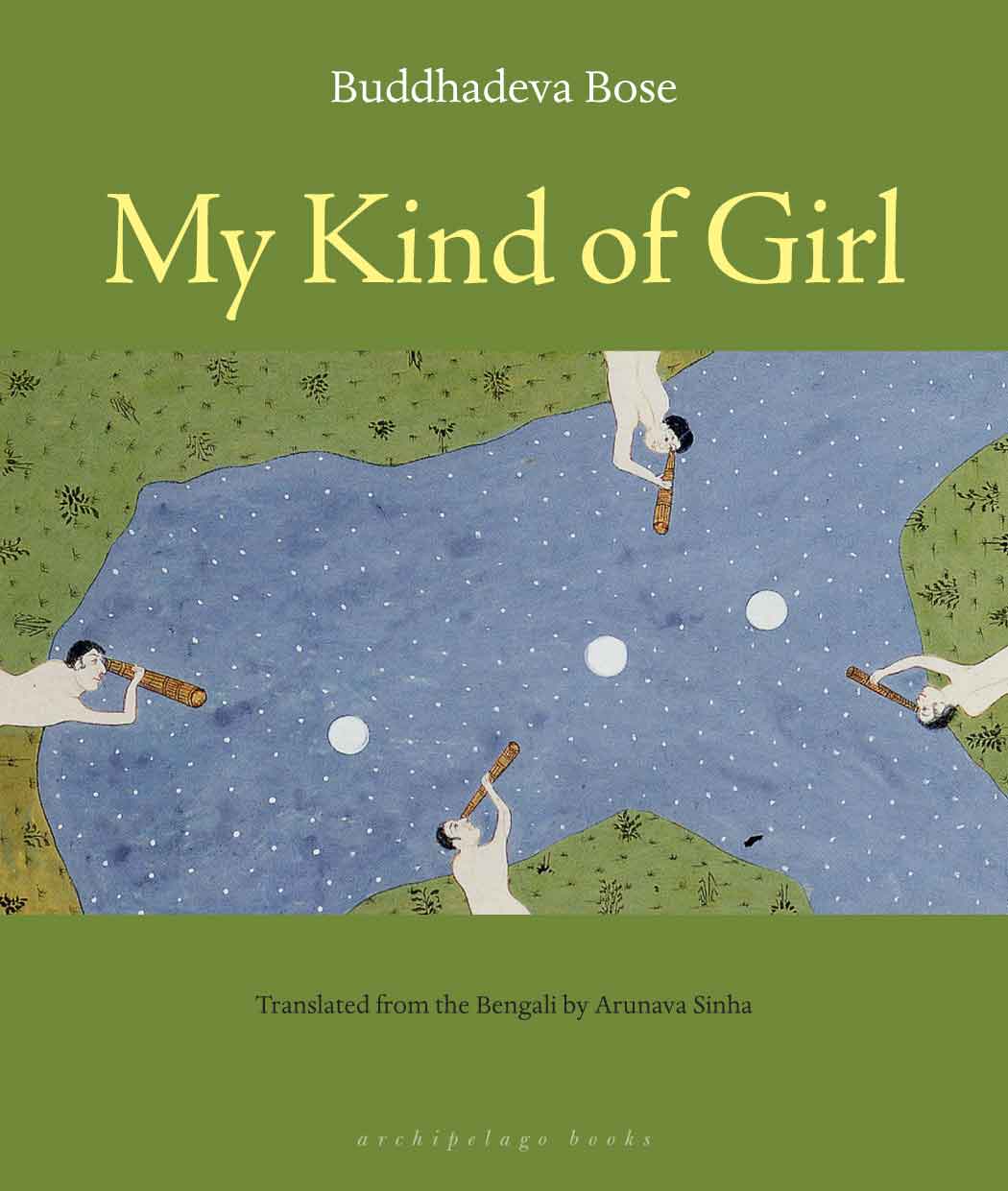
The memory remains: My Kind of Girl by Buddhadeva Bose

Sometimes, the simplest premise is all you need. Like this one. The setting is Tundla Station near Agra in north India on a frigid December night. In the first-class waiting room four middle-aged men sit, bundled up in their winter coats, as long, bitterly cold hours stretch before them. A derailment on the rail line ahead has forced this unanticipated stopover and now all they can do is wait. This is the unfortunate predicament that sets the stage for a warm-hearted take on the Decameron in Bengali writer Buddhadeva Bose’s 1951 novel My Kind of Girl.

 The four delayed travellers include an exceptionally large-framed contractor leisurely making his way back from a business trip, an established bureaucrat from Delhi with an urgent and important schedule to hold to, a well-known doctor from Calcutta on his way home from a conference and a man on holiday who described himself as writer, if, the others might have wondered, writing could even be considered a profession. As they prepare themselves for an unwelcome and uncomfortable sojourn, the doors to the room slide open, briefly revealing a young man and woman, clearly newlyweds, looking for a private place to settle. This moment changes everything:

That couple, who had only given them a glimpse of themselves at the door before disappearing, had left something behind; it was as though the bird of youth had shed a few feathers as it flew by: some sign, some warmth, some pleasure, some sorrow or tremor that refused to dissipate, something with which these four individuals – even if they did not speak, if they only thought about it silently – would be able to survive this terrible night.

First love—that joy, so fleeting, but never forgotten. As if they have been awakened to memories long assigned to the past, the men decide to pass the time by sharing, in turn, stories of their own first loves. As each man slips into his own youthful reminisces, the story he offers emerges with a distinct setting, character and voice. The contractor goes first, refusing to own the account he shares, saying it is only one that he heard of, but the young man he describes as burly and powerful, but admittedly a little thick-witted, seems to be only a faint effort to camouflage himself. Perhaps the sadness is hard to acknowledge; it is the tale of a family that builds a successful manufacturing empire right through the worst of the Japanese attacks on Calcutta during the war and the enterprising son whose mother is endlessly obsessed with securing for him the hand of the daughter of the neighbouring professor, all for envy of their library no less. But money, it turns out, cannot buy everything.

The Delhi bureaucrat’s story carries him back to his adolescence in rural Bengal and his first intimations of love, barely spoken, with Pakhi, a girl he secretly adored. Over the years, as life leads them both in different directions, to different cities, they chance to meet from time to time, and her actions lead him to wonder if she might have once cared for him in return. His tale asks if the embers of love can still burn even if busy lives, marriages and families separate the two people who may have shared that early spark. He thinks back to a night long ago when they had walked home from town together, ahead of their families. Pakhi says:

“I was thinking – I was thinking, this walk is lovely, but it’s because we’re walking on it that the road will end.”

Back then, I found this funny. But now it seems that fourteen-year-old girl had, without knowing it, spoken wisely. Our existence is like that: living eats into our life, all the roads we walk end because we take them.

The doctor, when his turn comes, takes the subject in yet another direction. He promises a happy story, one in which his first love becomes his wife, but the route by which that end is reached is a strange and convoluted one. Suffice to say, when he meets the woman he will eventually marry, her focus is on someone else altogether. Finally, the writer, almost reluctantly, takes over. His poetic, tragic tale is one in which he and his two best friends are all completely besotted with the same girl, collaborating with and competing against one another to win her favour in sickness and health.

This gentle, affecting novel is a thoroughly entertaining read, always feeling fresh as it moves from speaker to speaker. Each man reaches deep into his own memories to share youthful passions and vulnerabilities that, by the light of day and in any other circumstances, would have remained half-buried in the mists of time. Everyone marvels at how their emotions have been stirred in this unexpected interlude—until daybreak returns each traveller to the road he was on the day before.

Buddhadeva Bose (1908–1974) was one of the most accomplished and versatile Bengali writers of the twentieth century. He was also celebrated for translating Baudelaire, Hölderlin and Rilke into Bengali. My Kind of Girl by Buddhadeva Bose is translated from the Bengali by Arunava Sinha and published by Archipelago Books.

Twenty Seagull books to mark forty years of publishing magic: A 2022 reading project wrap up

Long-time followers of roughghosts will know that I have a particular fondness for Seagull Books. They continually publish a wide range of interesting international and Indian authors, bring many to English language audiences for the first time and, oh, those covers! Senior Editor and Designer Sunandini Banerjee’s work is instantly recognizable, yet always original. And not only have I amassed a healthy collection of their publications, but I have also visited Calcutta twice, taught classes at their School of Publishing and treasured their friendship and encouragement over the years. I admire the work they produce, their dedication to supporting fellow independent publishers in India and abroad, and their work to further understanding and education through the Seagull Foundation for the Arts. So to mark their fortieth anniversary this year I decided, somewhat late in the game, to embark on a personal reading project. I promised myself that I would read and write about twenty Seagull books by year’s end. Twenty for forty.

And here we are.

To date, I have reviewed all but one of these books—the remaining review of Vénus Khoury-Ghata’s Marina Tsvetaeva will follow in the next few days—but I wanted to stop and celebrate twenty excellent reading experiences before the holiday busyness begins. My reading naturally overlapped with my other 2022 self-directed projected, a focus on Norwegian literature, and the annual months devoted to Women in Translation and German Literature that I try to contribute to each year. Within and beyond that there was still plenty of room for variety. Two of the books I read were English originals—both from India—and the rest were translated: six German, four Norwegian, three French (two of which were by African writers, the third Lebanese-French), two Arabic, one Hungarian, one Dutch and one Bengali. I read five works of poetry/prose poetry, nine novels, three collections of short fiction, one long form essay, one play, and one graphic novel. Had I planned this project a little earlier I might have read more nonfiction, but as the year was rushing to a close book length became a deciding factor—December’s four books were necessarily shorter and that influenced choice!

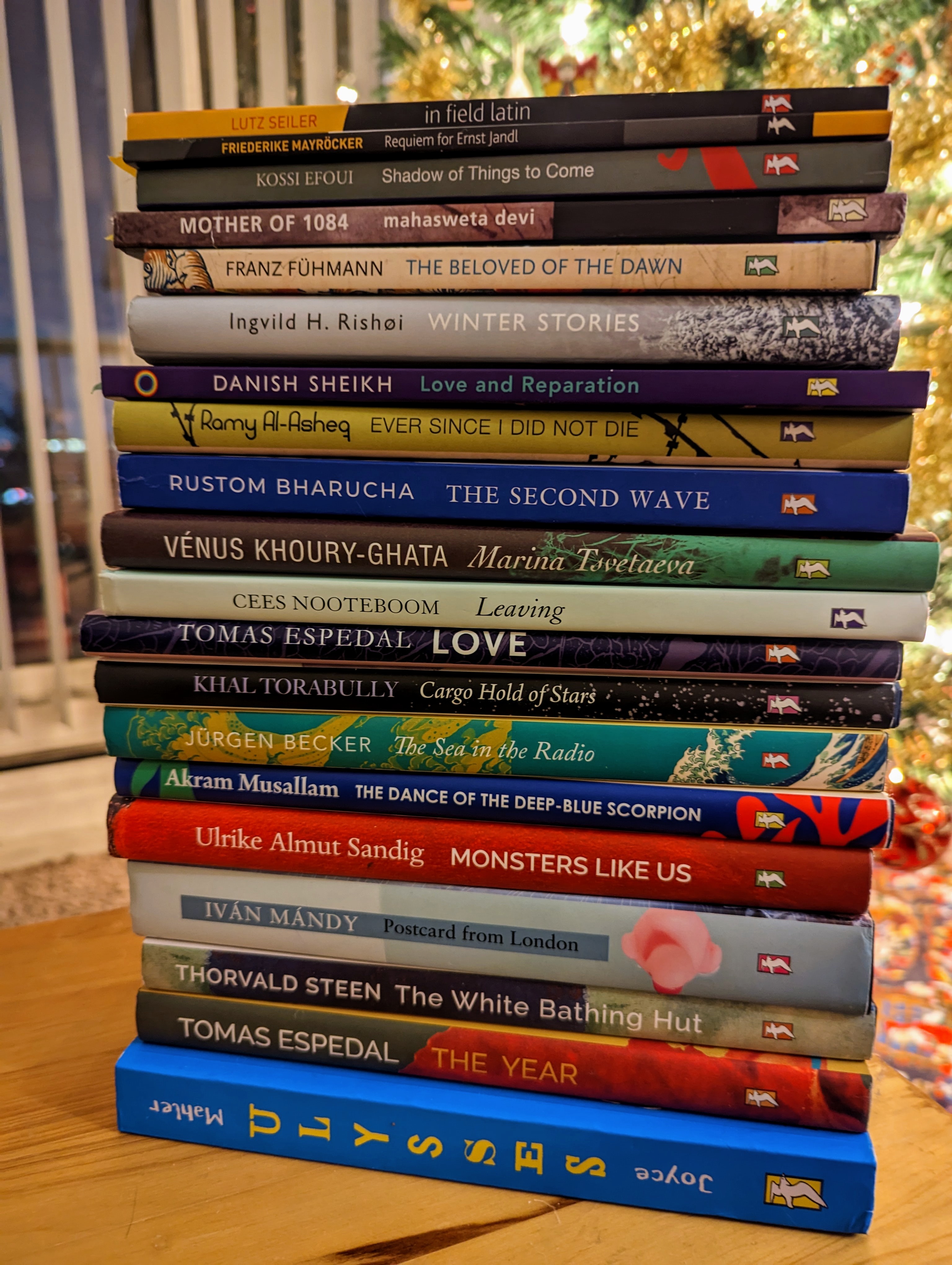
Among this stack of handsome books are some authors I had already come to know and love through Seagull—Tomas Espedal, Vénus Khoury-Ghata, Franz Fühmann, Ulrike Almut Sandig and Friedrike Mayröcker, plus one writer I have long wanted to read: Mahasweta Devi. But, as usual, there were some unexpected surprises among the authors I encountered for the first time, most notably German Jürgen Becker and Hungarian Iván Mándy.

Happy fortieth anniversary, Seagull! Here’s to an ever brighter future.

Books read:
in field latin by Lutz Seiler, (German) translated by Alexander Booth
Requiem for Ernst Jandl by Friedrike Mayröcker (German) translated by Roslyn Theobald
Shadow of Things to Come by Kossi Efoui (Togo/French) translated by Chris Turner
Mother of 1084 by Mahasweta Devi (India/Bengali) translated by Samik Bandyopadhyay
The Beloved of the Dawn by Franz Fühmann (German) translated by Isabelle Fargo Cole
Winter Stories by Ingvild Rishøi (Norwegian) translated by Diane Oakley
Love and Reparation by Danish Sheikh (India)
Ever Since I Did Not Die by Ramy Al-Asheq (Arabic) translated by Isis Nusair
The Second Wave by Rustom Bharucha (India)
Marina Tsvetaeva by Vénus Khoury-Ghata (Lebanese-French) translated by Teresa Lavender Fagan
Leaving by Cees Nooteboom, w/ drawings by Max Neumann (Dutch) translated by David Colmer
Love by Tomas Espedal (Norwegian) translated by James Anderson
Cargo Hold of Stars: Coolitude by Khal Torabully (Mauritis/French) translated by Nancy Naomi Carlson
The Sea in the Radio by Jürgen Becker (German) translated by Alexander Booth
The Dance of the Deep Blue Scorpion by Akram Musallam (Arabic) translated by Sawad Hussain
Monsters Like Us by Ulrike Almut Sandig (German) translated by Karen Leeder
Postcard from London by Iván Mándy (Hungarian) translated by John Batki
The White Bathing Hut by Thorvald Steen (Norwegian) translated by James Anderson
The Year by Tomas Espedal (Norwegian) translated by James Anderson
Ulysses by Nicolas Mahler, after James Joyce (German) translated by Alexander Booth

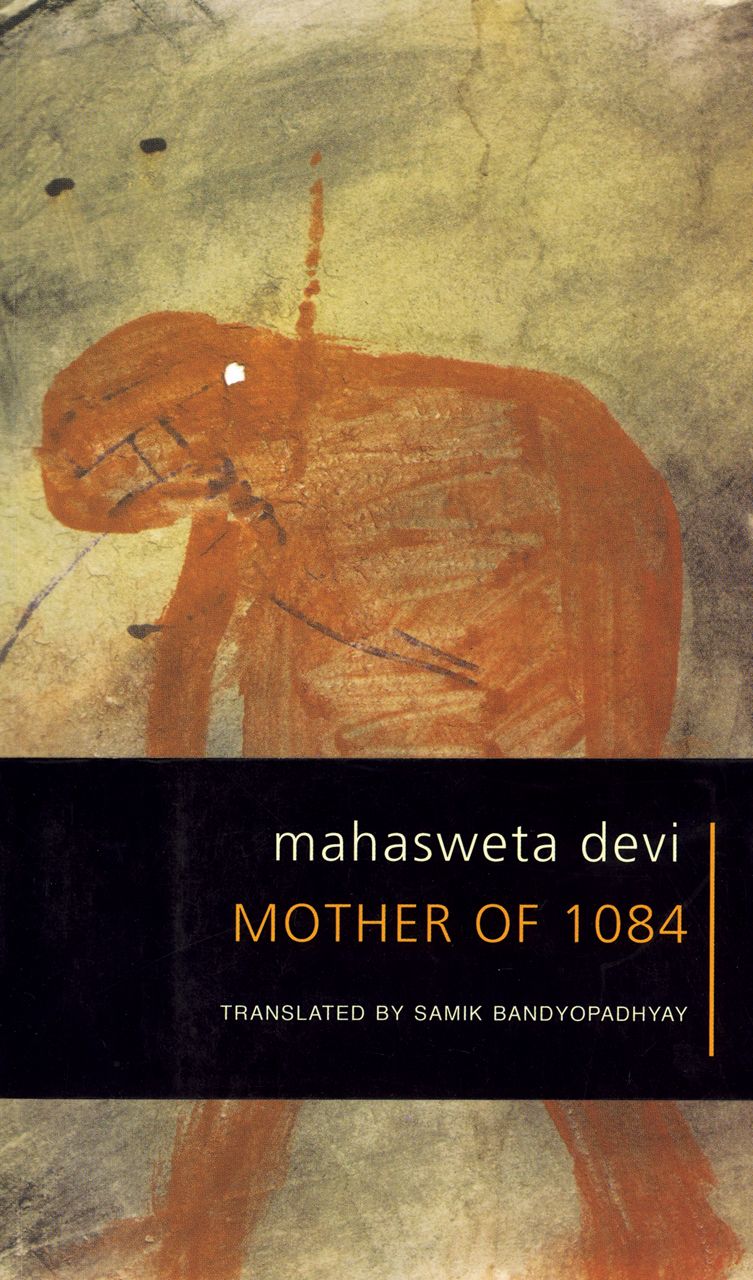
A chronicle of pain: Mother of 1084 by Mahasweta Devi

The pain had come at eight in the evening. Hem with all her experience had said, It won’t take time, Ma. The womb has started pushing it out. Hem held her hands and said, Let all be well. Let God bring you back, the two of you separate.

Sujata’s story is framed and defined by pain. As it opens she is asleep, her dreams have transported her back twenty-two years, to the morning following an agonizing night of labour and emergency surgery when she gave birth to her fourth child and second son, Brati. Now she is awoken by searing pain once more, on the same date, January seventeenth, but this time an inflamed appendix is to blame. Once her abdominal distress begins to settle, a glance at the calendar takes her back to the early hours of yet another January seventeenth, just two years earlier, when the telephone suddenly rang. At the other end of the line, a voice summoned her to the morgue. There she would find her beloved son reduced to a numbered corpse, 1084.

Set over the late sixties and early seventies, during the first phase of the Maoist-inspired Naxalite insurgency in West Bengal, Mother of 1084 by Indian writer and activist, Mahasweta Devi (1926–2016), is a focused examination of the impact of targeted violence on those left behind through the story of one woman stranded in her loss and grief. Sujata comes from a background of privilege, raised in a wealthy Calcutta family and afforded an education, but in marriage her life is constrained by the roles her social class expects of her. At the time of the critical events in this novel, she is in her early fifties. Her oldest son and daughter, Jyoti and Neepa, are both married and each have one child. Jyoti and his family, as custom would have it, lives in the family home. The younger daughter, Tuli, has a serious boyfriend. Her husband, Dibyananth—or as he is often described, “Jyoti’s father”—is a successful businessman with, once his wife decided she wanted no more children, a string of mistresses on the side. Sujata also has a job at a banking office, taken on her own initiative when her mother-in-law was still alive and commanding the daily affairs of the household. It is something she has refused to give up.

Brati, the youngest son, had always been unlike his other siblings. Imaginative and sensitive, he was easily frightened and deeply attached to his mother. From his earliest years on through adolescence, their bond was close while there was little love lost between Dibyananth and his second son. Naturally Sujata was blamed for spoiling him and making him weak. When Brati is killed with a group of young Naxalite revolutionaries, his father’s immediate concern is to assure that no one knows of his involvement. He pulls a few strings and Brati’s name is omitted from the news reports while at home all evidence of his existence is cleared away and locked in his bedroom on the uppermost floor. Sujata finds herself on the wrong side of her own family, on the side of the dead man who had failed to consider the shame and embarrassment he would cause. She is left alone to try to make sense of why her son had been drawn to such a radical movement and to understand the events of the night on the eve of his twentieth birthday that had cost him his life. It was a death that could not be classified in any of the usual ways—illness, accident, crime:

All that Brati could be charged with was that he had lost faith in the social system itself. Brati had decided for himself that freedom could not come from the path society and the state offered. Brati had not remained content with writing slogans on the wall, he had come to commit himself to the slogans. There lay his offence.

Extending from morning to evening over the course of a single day, exactly two years after his death, Mother of 1084 chronicles Sujata’s attempt to honour her son’s memory and perhaps find some sense of closure. At home, Tuli is preparing to hold her engagement party. Although it is her brother’s birth anniversary, the date has been determined by her future mother-in-law’s American guru—her own mother’s feelings be damned. Between attending to the necessary arrangements in the house, Sujata will make two excursions that will help fill in some of the missing information she craves, but not necessarily bring any peace.

In the afternoon she travels out from central Calcutta to the colony where the mother of Somu, one of Brati’s friends, lives. The young men killed had spent their last hours in her house. Sujata had first met Somu’s mother when she went to identify her son’s body and she had found in this poor woman a kind of a kindred spirit, another mother who understood the loss. But face to face with the graphic details of that fateful night and the absolutely devastating effect it has had on this impoverished family, she is reminded that her social status will forever be a barrier that cannot be wished away. The two women, brought together in shock and pain at the morgue and the crematorium, share an affinity that can never be more than temporary:

Time was stronger than grief. Grief is the bank. Time the flowing river, heaping earth upon earth upon grief.

Later that afternoon, Sujata makes another outing, this one closer in location and class, but again one with a divide that cannot be breached. For the first and last time, she visits Brati’s girlfriend Nandini who has recently been released from prison, bearing the injuries of torture and incarceration. In this encounter there is a bitter demonstration of the activist’s unshakable resolve, something the grieving mother will never fully appreciate. Upon returning home to where guests are gathered, Sujata is clearly affected by her experiences, and all of the memories and details that have come back to her over the course of that day. But even as pain rips through her abdomen, she must once more attempt to play her role as wife and mother. At least for the moment.

One of Devi’s most widely-read books, Mother of 1084 is not explicitly concerned with the broader political context of the Naxalite insurgency, rather it turns its attention to the intimate human experience—the appeal of the movement to individuals from different backgrounds, the reality of betrayal, the brutality of the violence, and the wide range of responses from the families and communities affected. That is not to suggest that this is not an intensely political work, but by centring an apolitical protagonist who finds herself navigating the space between the shocking indifference of her family and social class, the devastation of the bereaved who exist in the midst of conflict and destitution, and the anger of the activist committed to the cause at all costs, Devi crafts a powerful, unforgiving narrative. Sujata is the troubled conscience of this tightly woven novella but one is ever aware how very small she is against society’s pretense of normality in a time of upheaval.

Mother of 1084 by Mahasweta Devi is translated from the Bengali by Samik Bandyopadhyay and published by Seagull Books.
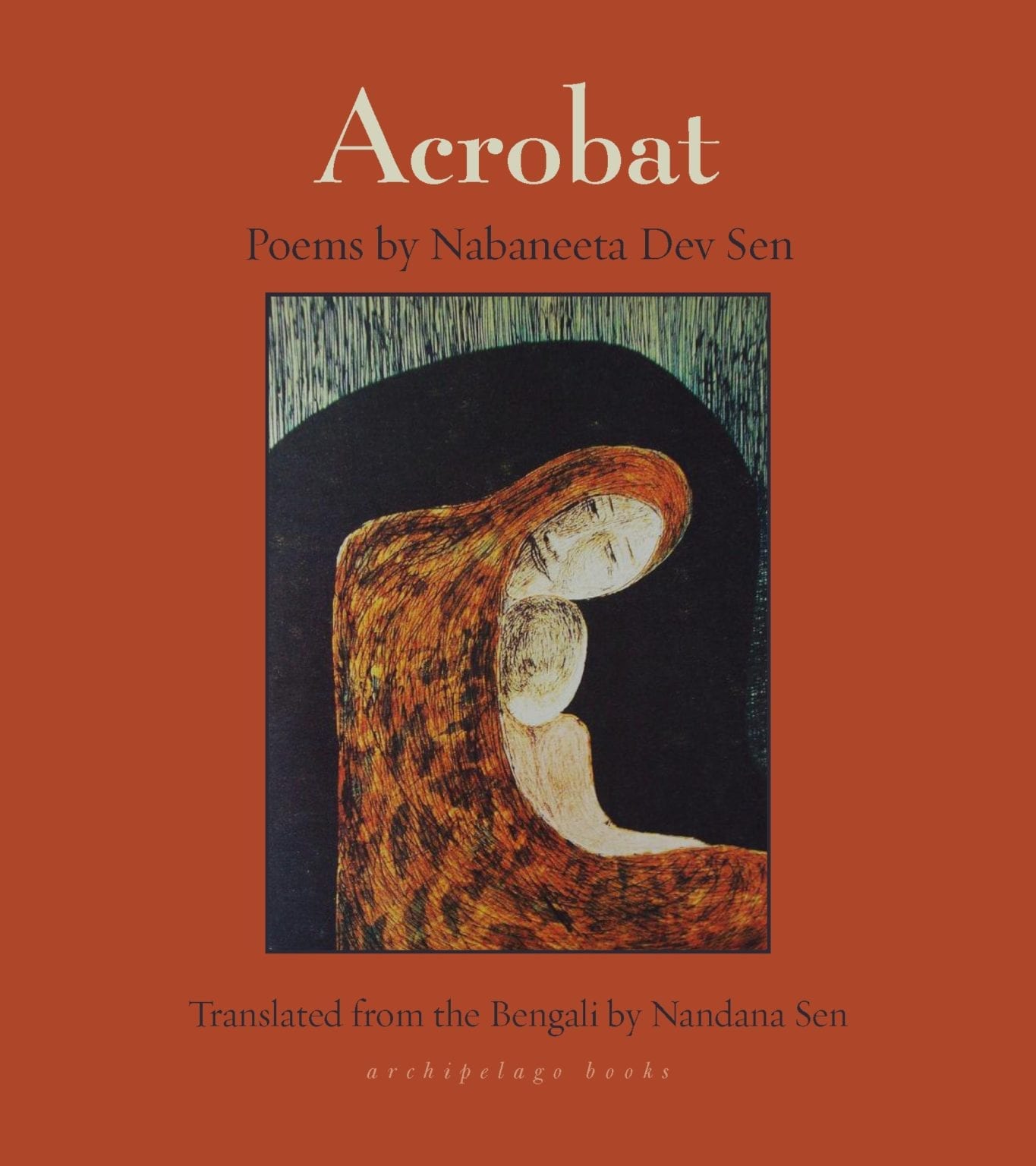
As long as I live in poetry: Acrobat by Nabaneeta Dev Sen

Just one more page left
one more paragraph, one more sentence—
give me one more word, dear nurse,
just one more day.
.        – from “The Lamp”

Nabaneeta Dev Sen (1938-2019) the much loved and highly respected Bengali author, scholar and feminist was a versatile and prolific writer whose extensive bibliography includes fiction, essays, children’s literature, travelogues, political columns and more. However, throughout her life she identified herself as a poet, first and foremost. As the daughter of two acclaimed poets, she began writing poems when she was a young child. In her comprehensive Introduction to the present collection, her daughter Nandana Dev Sen—not a poet herself, but a writer, actor and activist—reflects on the way poetry served as a vital and constant companion, one that was not always easy to satisfy. As Nandana records, in her mother’s own words:

“Poetry is like war,” she wrote. “A war with oneself. Finally, only when there is victory and peace, poetry follows. Poetry has to be earned.”

This sentiment can be felt in the clarity and precision that marks her work.

Acrobat presents a selection of poems that span Dev Sen’s career from the late 1950s through to 2019. It is very much a labour of love between a mother, the poet, and a daughter, the translator. Although she would not live to see the final publication, Nabaneeta Dev Sen was very excited about this book which would be her very first major release from a western publisher. She was gravely ill but undaunted when the project began and while translations of some of her poems already existed, she desired newer versions. A modest list of poems was compiled, but that was as far as mother and daughter could go together. Nandana translated those pieces and many more over the following months, gathering them together with a number of poems her mother had translated herself, a few that she had written in English, and one translated by her sister, Antara Dev Sen. Her Introduction includes a biography, personal in tone, and a discussion of the challenges of translating poetry and the considerations she followed when bringing her mother’s Bengali into English.

When presenting work drawn across a period of six decades, there is a common tendency to allow the date of publication to dictate the order. In Acrobat, however, the poetry of Nabaneeta Dev Sen is sorted along thematic lines. The book is divided into five sections, each named for a phrase pulled from one of the poems within it. A chronology is included at the back so one can, as I did, check to see the decade a particular poem belongs to. Such an organic approach makes for a wonderful reading experience, allowing one to appreciate the way the poet’s work visits and revisits similar subjects over the span of her life, with styles and perspectives shifting over time and place. Dev Sen married young and spent her twenties and early thirties living in the US and UK where her academic work eventually drew her away from poetry for a while. In 1974, when her marriage to economist Amartya Sen began to falter, she returned home to Kolkata. As a newly single mother with two daughters amid the scandal of divorce, poetry took on a new importance as a personal space in which to explore her pain, her identity, and her place in the world. In contrast to her scholarly writing which was primarily in English, for almost all of her creative work, she made the “political” decision to write in Bangla—not only a reflection of her feminist values and her language activism but as a voice for deeper emotional exploration and observation.

Nabaneeta Dev Sen’s poetry, to my reading, is distinguished by an alertness to the moment in all its strangeness and wonder. She is attuned to the anxieties and the triumphs of life, distilling key elements into vivid images. This is beautifully illustrated in an early poem, “The Great Fair” that appears in the first section which revolves around the notion of time. The speaker is waiting with a cup of saved coins for an adult who has promised to return to take her to the Great Fair. She lists wonderous toys and treasures she expects to be able to buy, but:

As I waited on my steps
My limbs grew long
My list blew away in the wind
My cup of change became a trunk of gold.

There is nothing left for me to buy
From your Great Fair anymore.

I am going to get up from my steps now

There is a remarkable sadness and defiance in the voice of the speaker; that complicated mix of emotion that comes with growing up, letting go of, or seeing through, the illusions of childhood.

As a passionate advocate for the preservation of Indian tongues, a translator and a promoter of the voices of women, it is not surprising that poetry, words and language, frequently appear as subjects in Dev Sen’s poems. She approaches the theme with humour, with elegance and with pain. “The Year’s First Poem,” for example, begins:

Pretending
as if nothing at all has happened,
picking up the heart
from the sand, dusting it clean
pushing it back inside my blouse
secretly, the first year’s poem gets written.

Other themes that resurface include identity, relationships with others, and a search for deeper truths in life. These are, of course, not unique as poetic topics. It is the distinctive voice, the vulnerability and the openness that combine to make the poems in this collection so strong. But, more than that,  Nandana Dev Sen’s translations and her loving curation of this volume—which opens with an Introduction that is both biography and translator’s note and closes with an open letter to her mother—makes Acrobat at once a beautiful memorial that honours Nabaneeta Dev Sen’s life and spirit and a vital introduction to her poetry for English-speaking readers.

Acrobat by Nabaneeta Dev Sen is translated by Nandana Dev Sen and published by Archipelago Books.

Noticing the unnoticed: Wildfire by Banaphool

Those who love my writing need no introduction to it. Those who do not, need it even less. As for those who are unfamiliar with my writing, they will recognize my nature as soon as they read my stories. I have nothing particular to say to them, either.

In this brief introduction to the collected volumes of his short stories which, over the course of his lifetime amounted to some 578, the Bengali author Banaphool sets out all one really needs to know about his writing. Or to be more exact, the spirit of his work.

While maintaining a busy medical practice in Bhagalpur, Bihar, Dr. Balaichand Mukhopaghyay (1899-1979) produced an astonishing quantity of stories, poems, novels, plays and essays that reflect his deep sensitivity to the human condition and do full justice to his chosen pen-name Banaphool, which means “wildflower” in Bengali. As he was advised by Rabindranath Tagore, the wildflower blooms along the roadside, unnoticed but by creative vision. For a writer who wished to bloom outside the formal literary garden and from this unique vantage point, notice the complexities of the human condition that were often otherwise unnoticed, the name was a perfect fit. Frequently compared to O. Henry and Chekov, two authors he came to know of only after he himself started producing fiction, the similarities are there, but his world is distinctly Indian. The tensions and anxieties that ripple through many of his stories not only reflect the nation’s troubled emergence from colonial rule, but are still tragically disruptive today.

Wildfire is a collection of forty-four pieces translated by Somnath Zutshi, published by Seagull Books in 1999 and reissued in 2018. Most are very short, three to four pages or less, stark and straight to the point with little build up or fuss. There are fables, morality tales, ghost stories and character studies. Banaphool does not shy away from timeless philosophical questions, contemporary politics, or long-standing issues of caste and social class, but he does not proselytize. He expects his reader to fill in the blanks. To read between the lines. He creates characters who are either brave or blemished (or both) with compassion and without judgement. Petty rivalries can have tragic consequences, and vanities can invite supernatural intervention, frequently of the be-careful-what-you-wish-for variety. As such, a measure of moral messiness is typically allowed; his stories often end with an unexpected twist, a surprise revelation, an act of courage, or an unembellished sucker punch to the gut.

The range of the tales in this collection reflects the author’s extensive exposure to a wide range of human personality and behaviour in the course of his work, but although many of his protagonists are also doctors or other middle class professionals, he grants voices to people from all backgrounds as well as natural objects, animals, the dead, and, in one striking example, “Creator”, to a piece of paper whose screams of protest are inaudible to the artist applying paint to its surface. In this way, his work reaches across traditions, but never feels dated. Psychological themes are common, as in “The Human Mind” which tells the tale of two brothers, one devoted to science, the other to religion, similar only in their shared devotion to their orphaned nephew whom they have raised together. When the boy becomes gravely ill their differences are tested.  Other tales examine the vagaries of pride, greed, love and loss.

However, it is notable that a number of the stories speak to political discontents that are still very current in his native country. I brought this book home earlier this year, not long after the deadly riots in northeast Delhi, in late February. By chance the first story I happened upon was “During the Riots” set during the Bihar riots of late 1946. It opens:

Even the air had stopped moving in terror of the Hindu-Muslim riots. The days passed somehow but the nights seemed to last for ever. The blare of the conch shell from one direction, shouts of ‘Vande Mataram’ from another! At the slightest hint of a disturbance, we scrambled up to the terrace. Not a lot happened, generally; things quieted down in a couple of minutes. Moreover, the bitter cold made it impossible to stay on the terrace. My wife spent her time checking to see the various doors and windows were bolted and secured. We took turns staying awake.

As the narrator and his household struggle to arm themselves against certain attack, he thinks about the Muslim man who ran his father’s farm, whose wife had suckled him at her own breast. At several points the interdependence of the two communities is laid bare. But the speed and ferocity with which rumour spreads as tension rises demonstrate that even without WhatsApp and Twitter, misinformation is rampant. Through the narrator’s rising panic, encouraged by his neighbours, Banaphool deftly brings the story to a devastaing conclusion. One that sounds so freshly familiar.

Finally, included with the multitude of short short stories is one novella length addition, “Bhuvan Shome”, the quiet, extended study of a bitter, isolated Railways official who learns a valuable life-altering lesson from a young peasant girl on his annual hunting trip. A slow, complex character study, both sad and comic, this story was made into a Hindi-language movie by celebrated Indian film maker Minal Sen. The narrative takes much more time to build, at first a sharp contrast to the other condensed tales that populate this collection, and yet, even in this longer piece, the initially unpleasant main character is presented with empathy, encouraging the reader to hear what is not being said, and to realize what Bhuvan Shome, for all his self-obsessed rumination, cannot see. He is a classic Banaphool protagonist. An embodiment of the adage that there are none so blind as those who do not wish to see. It is to his good fortune that he comes to recognize the fact before it’s too late—so many of the characters who haunt these pages are not so fortunate.

But such is the view from the roadside sometimes. . .

Wildfire by Banaphool is translated with an introduction by Somnath Zutshi and published by Seagull Books.
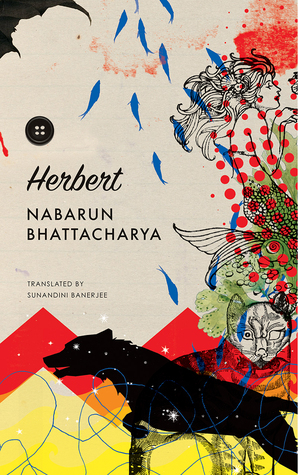
A ghost from Calcutta revived: Herbert (or Harbart) by Nabarun Bhattacharya

With an opening not for overly delicate sensibilities, Harbart (or Herbert depending on the edition) takes you down into the darkened streets of Calcutta where a group of intoxicated men vomit and piss their way home, and a “rag-clad mumble-mad woman” washes herself at the neighbourhood water tap. They’ve spent the evening partying at the home office of “Conversations with the dead” with the proprietor, the title of the character of the book, who has by now, unknown to them, slit his wrist and lies bleeding to death while a blue fairy frantically presses at the window unable to alter his fate.

Recently released in a brilliant new translation by Sunandini Banerjee[1], this beloved cult classic is a spirited—and spirit-filled—story of a man who never quite manages to fit himself into a world that is in upheaval, through a time of shifting social and political uncertainties. If our hapless hero exercises a certain practical and historical indifference and finds himself caught up in a number of currents he does not understand, his creator was anything but complacent. Writer and poet Nabarun Bhattacharya was a dedicated humanitarian, passionate about the lives of all members of society—a man who was, as his daughter-in-law remembers him, keen to explore “the unknown, the unearthly, the underbelly of Indian society, where he dared to immerse himself with wild abandon, unapologetically.” This inclination shines through warmly and vibrantly in this, his first novel, originally published in 1994.

From its ominous, dramatic beginning, the narrative slips back in time to fill in the gaps, and make its way forward to close the circle of Harbart’s short, unfortunate life. From the start, tragedy marks him. Orphaned before the age of two after his father is killed in an automobile accident, and his mother accidentally electrocuted while hanging laundry on a wire, Harbartt ends up deposited at his father’s family home in Calcutta where he “proceeded, through indifference and neglect, toward adulthood.” His aunt Jyathaima will be, throughout his life, the sole family member to show him kindness. His cousins, especially the greedy Dhanna-da, resent his presence, abusing him whenever the opportunity arises, while his uncle whose unrestrained fondness for whores leaves mentally incapacitated as the result of venereal disease, spends his time circulating from room to veranda with the regularity of a cuckoo clock, screaming “Peeyu kahaan, peeyu kahaan!” This Hindi version of the brain-fever bird call, meaning “Where is my love?” becomes a running gag in the book—just one small indication of the humour and character that runs through the story.

Although Harbart spends a few years in school, he finds it not to his liking and drops out, preferring to read on his own and even, for a brief time, dabble in some, less than elegant poetry. Had his father not been obsessed with movies and squandered his share of the family fortune on film projects before his untimely death, this entire tale might have been quite different. But, instead, what he and the boy’s beautiful fair-skinned mother leave their son is a handsome profile, a Hollywood-ish, Leslie Howard-ish air, and a notably shahebi name—Harbart (or Herbert).

Early on, Harbart develops an interest in the dead when he find a human skull and a few bones in a trunk in the house. He eventually takes them to cleanse and release them into the waters of the Hooghly River, but from that point on he starts to immerse himself in two tattered books on the occult that had once belonged to his grandfather. This is not, however, the beginning of his career as a communicator with the deceased. His cousin Binu, a young man with connections the Communist Party had come to the city just as political tensions were rising in the early 1970s and is killed by the police. Despite his attention to Binu as he lays dying in the hospital, the incident slips from Harbart’s memory until, many years later, he recalls his cousin’s long forgotten last words in a dream and, before long, his fortunes take an unexpected turn:

Herbert could sense it. He would have to charge-barrage now. Binu had had his time. It was Herbert’s time now. He would have to produce panic-pandemonium. Rip apart everything, torment-turmoil everything until the entire universe whirled in the dance of devastation.

All of a sudden, Harbart is in business. At the same time, a chain of events is set in motion that catches the naturally anxious proprietor unaware. It seems that there are forces intent on cashing in on his talents and others determined to shut him down.

Harbart’s business may be a sham, but it is not conducted with an entirely mercenary intention. On the one hand, he is too inept to concoct an illusion worthy of the mediums of the past, like the personalities who populate the reference books he clings to, on the other, the painful stories of those who seek his services tug at his heart. It is exactly this weakness that allows him to fall into the trap set by those intent on discrediting him. But is he really hurting anyone? He is accused of playing on the desires of the bereaved to believe ghosts exist. And yet, in truth, Harbart’s own ghostly ancestors are never far away. His deceased parents huddle close by whenever their son is in trouble, his progenitors confront him in a terrifying god-like vision, and they all will cluster around at his unforgettable cremation.

This slender novella moves with a force and energy of its own—stretched out in places, sliding sidelong in others—and packs an entirely unanticipated punch at the end. By turns funny and tragic, it sings with the spirit and energy of the Calcutta streets and neighbourhoods, which are slowly changing, where modernization—like the satellite dishes sprouting on roof tops—is leading to more isolation and less compassion. It’s a world where a lonely misfit like Harbart, clinging to illusions (like that afforded by the moth-eaten Ulster great coat he walks around in, or his infatuations with a lady doctor he happens to see in passing or a stone fairy in a store window) hardly stands a chance.

Finally, I have to add a few words about the two editions of this book. I bought and read the New Directions edition first and thoroughly enjoyed it. The language is vibrant, coarse, and playful. Calcutta as I’ve experienced it comes alive on the pages. But I was curious about the different spellings of the title character’s name. It is not unusual for a book published in North America by one publisher and in the UK and the rest of the world by another to have two different titles, or small variations in the edits, but the name is rather obvious. Harbart is the Bengali rendition of “Herbert,” the name the Seagull edition uses which, depending on how you choose to look at it, given that this is an English translation, the protagonist was given an English name and he likes to imagine that others might detect in him a whiff of “white blood,” there is a fair cause for an English spelling but it’s not a major concern for me. In this review, I decided to hold to the US edit. However, the quote above is from the Seagull version, and for some reason that I can’t quite fathom, the delightful hyphenated rhyming or alliterative verbs and nouns that litter the text in this edition have been, largely diluted, sometimes even replaced in the New Directions edit. Same with some of the vernacular. Given that the translator is the senior editor at Seagull who are themselves based in the heart of Calcutta, this noticeable difference begs the question: Was the translation deemed too lively for American audiences?

Both Seagull Books and New Directions are publishers I greatly respect and I don’t want to belabour the differences. This is an exceptional, moving and important book—not to be missed, no matter the edition!


[1] This new translation has been published by New Directions in North America as Harbart, and by Seagull Books in the rest of the world as Herbert.