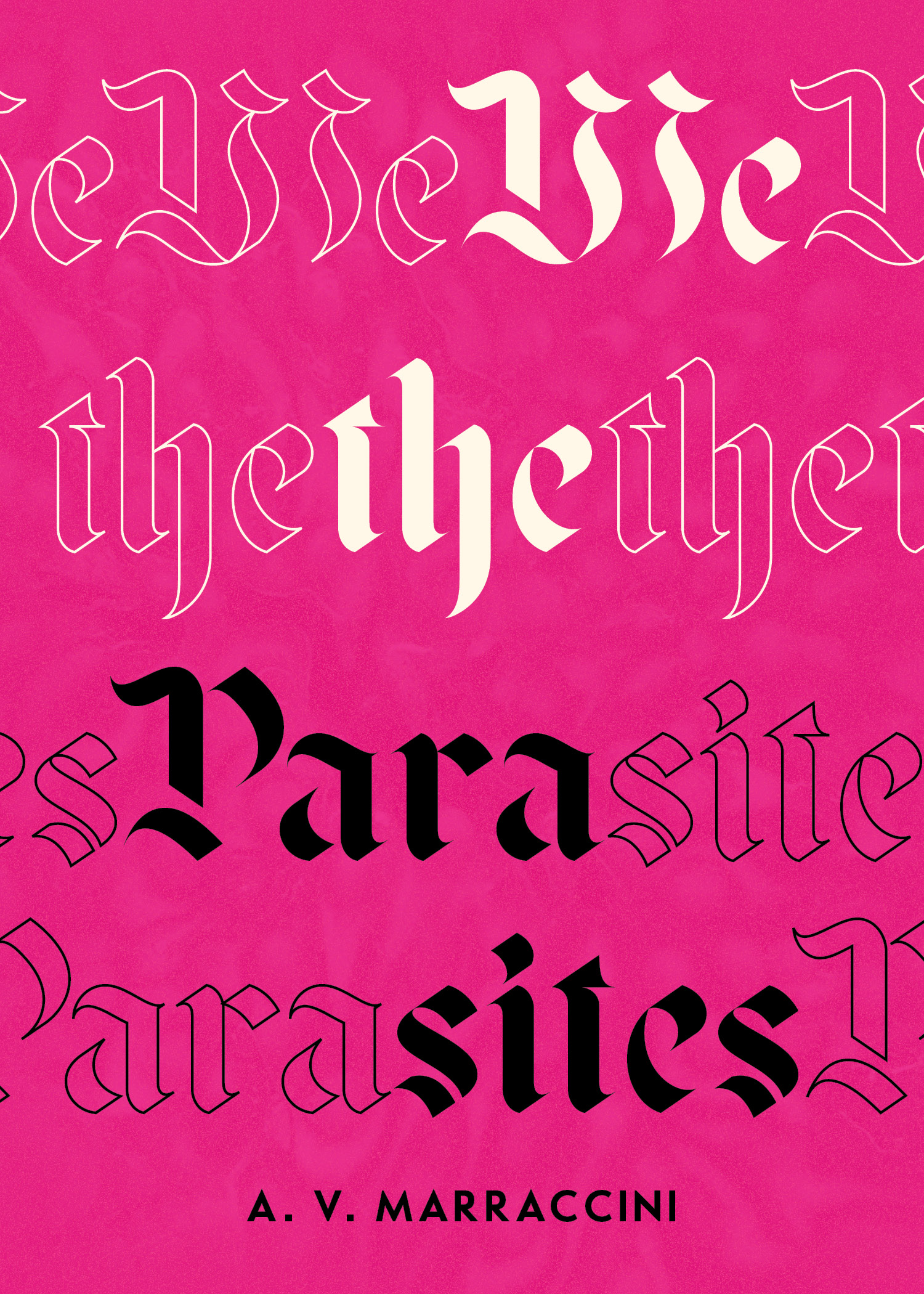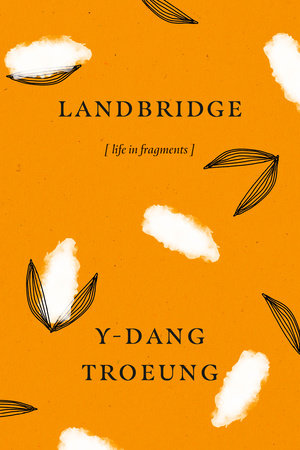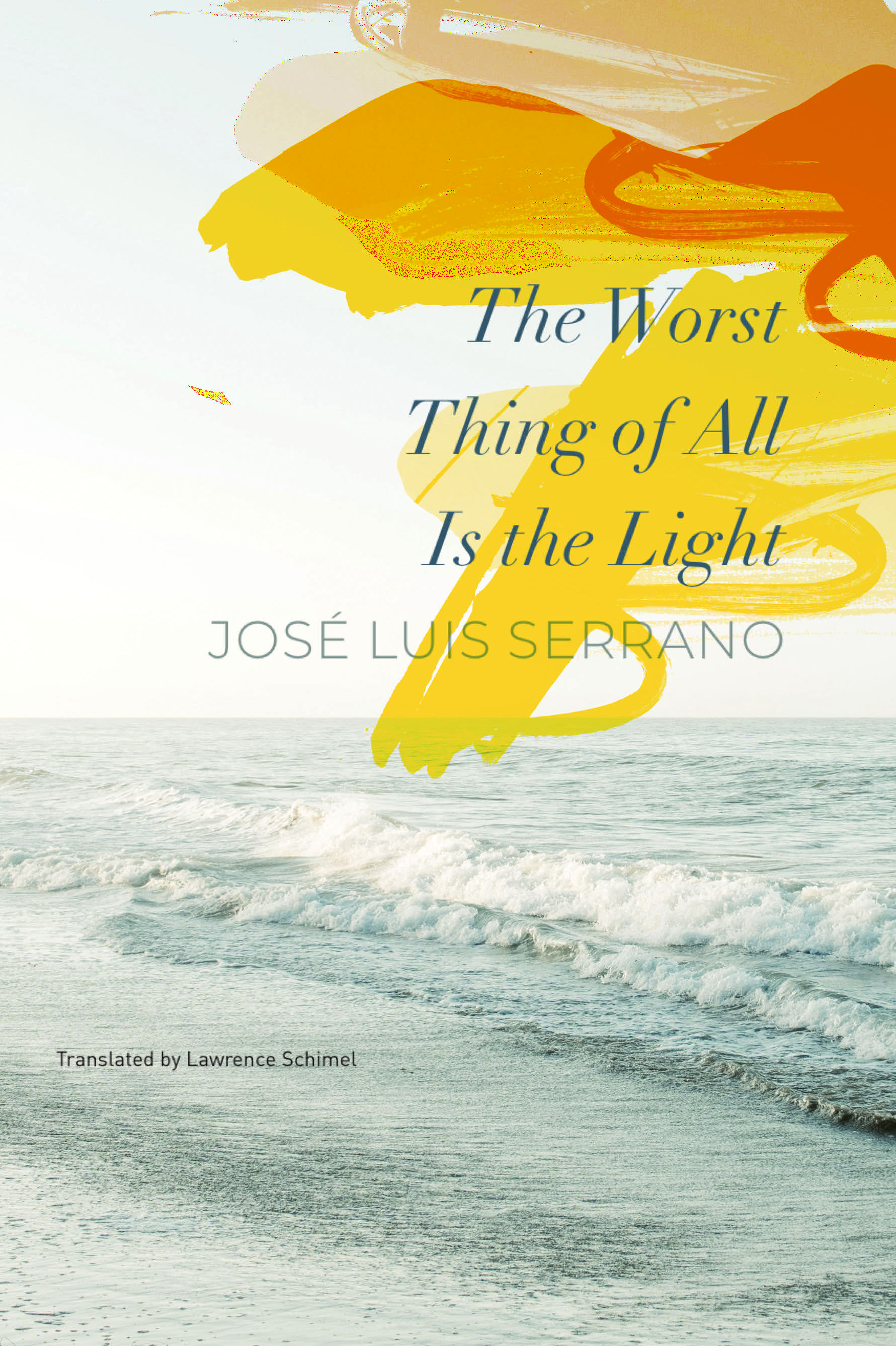
Things that will come to pass and cannot be stopped: January by Sara Gallardo

What is a day? What is the world when everything inside you shudders? The sky darkens, houses swell, merge, topple, voices rise in unison to become a single sound. Enough! Who is that shouting? Her soul is black, a soul like the fields in a storm, without a single ray of light, silent as a corpse in the ground.

Sixteen year-old Nefer has a secret. A secret growing inside her body that is pushing her away from her family and deeper into herself. Desperate to resist the abrupt transition to womanhood that has been thrust upon her, her predicament is the central focus of Argentinian writer Sara Gallardo’s January. Originally published in 1958, when Gallardo was only twenty-seven, this unsparing novella about rape, pregnancy and abortion in a world where a woman’s body and being was strictly defined by church and convention, has come to be regarded as required reading in her native country. It has now been released in Frances Riddle and Maureen Shaughnessy’s English translation.

This brief novella simmers with stark intensity as it follows Nefer’s conflicted and tumultuous emotions as she struggles to cope with her unfortunate circumstances alone in a deeply religious rural community in mid-twentieth century Argentina. The youngest of three daughters, her life on her family’s farm is one filled with hard work and constant expectations. She admires her disabled father’s quiet dignity, resents her sister’s fulsome beauty and fears her mother’s large, threatening presence. And, in spite of her condition, she nurses a hopelessly passionate crush on her handsome neighbour, Negro. In her mind, in fact, it is he who is responsible for her pregnancy although the child is not his. She had invested so much time and desire into the design and creation of a dress for her eldest sister’s wedding imagining it might magically catch his eye and, had she not been so intent on making an impression, she believes she would not have inadvertently attracted the attention of the older man who forced himself that day.

Playing out against a landscape defined by blistering heat, vast open spaces, sparse shade and clouds of dust, Nefer’s experience of her surroundings is highly charged and fragmented. She swings from rage to fear to jealousy to waves of crushing guilt. Unable to escape the stain of her strict Catholic upbringing, the sorry state of her soul is a constant concern. Anxiety eats away at her. She cannot help but think back to a time when she was carefree, when the world still held promise. But she remains determined to face her fate on her own terms, no matter where it takes her. Gallardo brings us right into the heart of her effort to assert control over her mind, her body and her life, as in this scene where she slips out during siesta to sneak into town in search of a possible medicinal intervention:

She kicks and takes off at a gallop, steering toward the thick grass that will absorb the footfalls. She doesn’t want to think about the end of her journey, about the old lady she’s never seen but with whom all her hope now lies. Her eyes pick out objects one at a time, attributing an exaggerated importance to each. Thistle, she thinks, thistle partridge, dung, anthill, heat; and then she hears – one, two, three, four, one, two, three, four – as the hooves hit the ground. Slowly, sweat begins to appear behind the horse’s ears and runs in dark strands down his neck where the reins chafe against his coat, churning up dirty foam. Little voices, little voices speak to Nefer, but she continues her journey indifferent to them. Cow, she thinks, a Holstein, and another and another. That one’s overheated. Lapwings. Two lapwings and their chick. Those piercing shrieks!

In less than 120 pages, January offers a vivid, internalized account of a young woman facing impossible odds. Gallardo was born in 1931 to a wealthy Buenos Aires family with broad agricultural interests and this, her first book, shows a clear sensitivity to the social dynamics impacting disadvantaged rural communities and the suffocating influence of the Catholic mission churches. But beyond the constraints of her time, it is Nefer’s private horror, as reflected in her relationship to other people and to the natural environment, that makes this such a compelling—and timeless—read.

January by Sara Gallardo is translated from the Spanish by Frances Riddle and Maureen Shaughnessy and published by Archipelago Books.

Unwrapping the unwrappable: The Box – A Novel by Mandy-Suzanne Wong

She didn’t laugh. Something about the box precluded laughing. The way it coiled around itself, perhaps. The paradox of the self-contained container self-sufficient as a brick and fragile as a poem. The “air of pandemonium” about it as like a poisonous plant its mere existence “filtered an intrusive, disruptive element into the atmosphere.”

The Box, the latest novel by Bermudian writer Mandy-Suzanne Wong, is an enigma that defies simple classification or clear resolution. Experimental in form, dystopian in setting, it follows, indirectly, the movement of an unusual box constructed of white woven paper through a city trapped in an endless snowfall that has blurred all normal social interactions. A novel of ideas it is entirely composed of interdependent but distinct narratives that vary widely in style and form. Yet, the voices that take turns carrying each chapter are strange and estranged, each projecting a strong character or tone, but in most cases revealing only fragments of their own pasts and hinting at a larger story that stubbornly remains at the edges of the unfolding journey of the unusual little box.

In the first chapter, “Secondhand,” a recently retired, self-described anthrophobe, sees a small item fall from the pocket of a man’s jacket onto the snow covered laneway and, for some reason, is inclined to pick the object up and hurry after him. The narrator, perplexed by their own behaviour, cannot resist temptation and we have our first and clearest description of the box:

that thing, a paper thing, white paper in the snow, exerted forces which I cannot define but which proved stronger than history and all my instincts: the little white box fit in the palm of my hand with perhaps a whisper of a rattle when it moved, was of a size that could’ve accommodated cigarettes or playing cards, a wallet or a slim wad of cash, yet was absolutely self-contained lacking the door or flap of the cigarette or playing-card carton, but then again it was the opposite of self-contained being all-over seams, by which I mean it was constructed of paper strips entangled as if haphazardly, shooting out as if dynamically between one another and diving under one another in all directions, but so tight a weave it was that no strip seemed to have an end, delicate as they were the strips held fast to one another with a tension that resulted in an impenetrable rectangle

In long, winding sentences, the misanthrope recounts the story that the apparent box-owner shares about how he came into possession of this strange thing through the unlikely adventure of his cousin’s first wife’s stepbrother’s eldest daughter and her friend in a bizarre short-term rental apartment decorated with and filled with boxes. The roundabout account introduces images that will reappear, such as the idea that the mysterious object could easily be lost in the persistent blanket of snow that is covering the city, and offers the first appearance of a woman with artificially blackened hair and a chipped tooth who, in her obsessive pursuit of the box, will resurface in the events described in each of the following chapters.

As we move from narrator to narrator, we see the small white box make its way through an art exhibit, a warren of decrepit second hand shops, the peculiar story shared by a hotel guest before becoming an object of near-religious veneration and ultimately passing into the hands of a security guard. Most of its journey is reported through layers of doubt, supposition and even cynical dismissal. Meanwhile, the snow continues to fall at a steady pace just exceeding the rate of evaporation, effectively cutting the city off from the rest of the world. Isolated it becomes an increasingly hostile and unforgiving place, and the narrators become increasingly bitter, intolerant or emotionally injured. The box, by contrast, indestructible and preternaturally white, exudes a kind of innocence that is either attractive or diabolical, depending on the perspective of those who fall under its spell.

Although the mood, energy and prose style shifts with each chapter, the overall tone of The Box is both absurdist and intentionally self-referential. As such, it is not an easy read. Given what looks like a puzzle, a reader naturally looks to find clues and links uniting the stories that are told, but here the mystery is a kind of moebius strip that turns in on itself. Wong includes a list of writers and thinkers whose ideas and images she misquotes and misinterprets along the way, but I I’m not certain how essential a familiarity with these authors is to appreciate this work. The one fundamental, perhaps, is Jane Bennett’s notion of the vitality of matter that ascribes life and agency to all beings—human, nonhuman and seemingly inanimate alike. Various things—works of art, antiquarian books, buildings and other objects—have a particular importance for most of the characters that populate this decaying society, but the little white box that invites both obsession and scorn appears to be of another order altogether.

One is left, then, to ask: What existence and power does the box contain in itself and how is that related to the people who come into contact with it? Is it possible to conceive of an object with independent agency without imagining it in an environment within which the human actors have found themselves with restricted agency due to some impersonal yet impenetrable force of nature? Or is the matter that matters all in the experience of the beholder? Ambitious and original, it will take time for me to put this strange text behind me.

The Box: A Novel by Mandy-Suzanne Wong is published by Graywolf Press in the US and House of Anansi in Canada.

India update: Catching up with old friends, finally meeting others

Four years is a long time. Much has happened since I last visited this country. Since I last travelled anywhere as fate and pandemic would have it. Two-thirds into my stay and it feels like it has been a hectic time—not that I haven’t had free time, but I seem to find it hard to stay put on an empty day when a busy vibrant world awaits outside the door. And one doesn’t want to miss the chance to catch up with friends who are normally but a virtual prescience in one’s life. So, less reading and writing has been accomplished than I had anticipated to date.

I started my trip in Bangalore, a city I will return to before flying home to stock up on books. Weight restrictions on internal flights have meant that if I buy books, I risk not being able to get to my next destination. It surprises me how just a few slim volumes will tip the scales! And it’s always a pleasure to spend time with my very dear friends here at either end of my India sojourn.

From Bangalore, I was off to the City of Joy, Calcutta or Kolkata, to the place (and the publisher) that first drew me to the subcontinent. Wet and humid beyond measure, it was my first visit outside the drier winter/spring months. But it was wonderful to see my dear friends at Seagull Books where I was able to play a small role in the creation of what will be another spectacular catalogue—this one tackling a vital theme for the times. I also had coffee with the couple who were my first tour guides in the city, this time meeting up with them in an area further south than I had been to date. I also made a pilgrimage to Kumartuli, the potters’ colony where craftsmen are busy making idols for the upcoming Durga Puja, Kolkata’s most important festival.

The next stop was Delhi, a short stay, but my first in the nation’s capital. I was met at the airport by a friend which was fortuitous because it proved difficult to get a cab willing to go into the congested area where I was staying. Subsequent forays in and out were facilitated by the Metro. On my first day in the city, the same friend escorted me to the university where he teaches and I gave a talk about writing book reviews. It was a very rewarding experience. The second day another friend took me into central Delhi where we had lunch, walked around, visited temples and enjoyed a most awesome lassi!

Then on to Pune, where I’m writing this on the final hour of my birthday. Here I caught up with dear literary friends and had a chance to finally meet someone whose friendship has offered solace during these long years of pandemic isolation. I also walked down to see the Pataleshwar Caves, the site of an eighth century Hindu temple carved out of the rock—a sanctuary within a busy city.

Tomorrow I fly to Mumbai for a brief stay then on to Jaipur where I hope to dry out a little after all the humidity of this extended wet season before returning to Bangalore. Whew!

It is good to be back in this hectic, vibrant country, even if I have arrived at a time of some diplomatic discord between my own country and India. I have never felt anything but welcome here.

The excellent books I’ve not been reading

As September began, with the prospect of a long-awaited trip looming, I had imagined I would have read and reviewed several new and recent releases before taking flight. Now it looks like these same books will be joining me on my way to India. I’d pictured myself only packing a few slender volumes so as to leave room to acquire more and still remain within the tighter weight restrictions of my internal flights. I should still be fine, of course, and I will still be able to fill up with even more books, so far as I can afford, before I head home from Bangalore. And, without even having to buy a second bag to get home as I have in the past.

It has been just shy of four full years since my last visit to India—in fact, since my last trip anywhere. I have spent hours sorting out flights, reserving hotels, making sure all my expenses at home are covered and making endless lists (which my toothless cat has mutilated on more than one occasion as he is inclined to do with my notebooks and sticky note reminders when I’ve recklessly left them unattended). I’ve also been invited to give a talk while I’m in India, so preparations for that have required my attention, as have an endless number of last minute errands. Considering how very busy I was prior to my last trip in 2019, it’s a wonder I got out of the door at all. Perhaps the enterprise of travel after the upheaval of the still-lingering pandemic is more precious and more precarious, and I don’t want to leave as much to chance as I did before.

Anyhow, the books I have been reading, each excellent in their own way, deserve a mention now should I not manage a proper review until I get back. I am not only a slow reader, but I’m an equally slow writer and I do hope to manage even a little personal writing while I’m away.

A Practical Guide to Levitation by José Eduardo Agualusa, translated from the Portuguese by Daniel Hahn (Archipelago) is a brilliantly fun collection of short stories set in Portugal, Brazil and Angola. For me, Agualusa’s eccentric characters and fondness for magical realism work so well in the short form.

The Box: A Novel by Bermudian writer Mandy-Suzanne Wong (Graywolf/House of Anansi Press) is a high-concept novel revolving around an enigmatic, unopenable box and the effect it has on those who come into contact with it. I’m only a couple of chapters in, but so far it makes me think of Czech writer Michal Ajvaz’s playful, intelligent postmodern fiction and I’m eager to see where it goes.

Finally, River in an Ocean: Essays on Translation, from the new Canadian publisher, trace press, is a collection of essays by poets, writers and translators from across the globe, edited by Nuzhat Abbas. These formally inventive pieces invite us, as the description advises, “to consider translation as a form of ethical and political love—one that requires attentive regard of the other—and a making an unmaking of self.” This project of decolonial feminism is a very important exploration of the intersection of language with questions of  identity, belonging, gender and sexuality, giving space to voices and perspectives that many of us might not hear or even consider otherwise. It is leading me to ask myself difficult questions about what my own interest in reading and promoting work in translation really means. And with many South Asian contributors I suspect this book would have landed in my travel bag anyhow—it seems only right.

Now, with only one day until I leave, I plan to continue to fuss over my packing, take a very long walk to celebrate the colours that will be gone by the time I get back and, with luck, get a little more reading done!

“I remain / in the baptism of this window.” All the Eyes that I Have Opened by Franca Mancinelli

from here ways parted
breathing was growing

in the collapse, something sweet
a hollow of time

all the eyes that I have opened
are the branches I have lost.

Ever since I started reading Italian poet Franca Mancinelli’s latest collection, recently released in a beautiful dual language edition, I have been haunted by the couplet from which the title was born—all the eyes that I have opened / are the branches I have lost. I have been more aware than ever of the eyes of the aspen meeting me on my daily walk, watching over me as in some sense I have always known them to, but now I was seeing my own journey reflected in their stare… the branches I have lost, and the growth that I have gained over the years.

I’ve always loved aspen, widespread as they are throughout North America. I found an adolescent refuge in the hidden depths of an expanse of aspen that spread across a wide, open field near my childhood home and, now, every day I look out at the clusters of aspen that mark the edges of the forest of Douglas firs I live above. Ever since I learned that they are typically colonial, that a growth of aspen are a single organism, I love them even more. An extended family in nature to balance my fragmented human one.

All the Eyes that I have Opened is a mature collection from a poet whose work I have read since her first English translation, The Little Book of Passage, arrived at my door courtesy of our mutual friend, her long-time translator John Taylor. A few months later, our paths would fortuitously crossed in Calcutta, so I can’t help but hear her voice when I read her words, even as her poetic voice continues to expand beyond the strictly personal to encompass an ever wider range of experiences and circumstances. The enigmatic title of this latest collection came to Mancinelli, as she explains in “An Act of Inner Self-Surgery,” a piece in her essay collection The Butterfly Cemetery, during a time of “inner devastation” when, walking through the woods she came upon a tree with a heavily scarred trunk. Despite many cuts and amputations the tree had healed and transformed itself, reaching ever upwards to the light:

I continued to walk with this voice that had been articulated in me, and one clear image: there are losses that you can weep over with all your tears, fight with every effort, yet they are necessary. We would give our life so that they won’t happen, yet they are guiding our sap toward the shape and the place that belongs to it.

This understanding is expressed most explicitly in an early sequence, “Master Trees,” which like many of the others in this book blends verse and prose poetry. The poet speaks of branches and pruning and seeing “the eyes of the trees,” of opening herself up “according to the light.” But growth is uneven:

the air was inert, traversed by trembling and quivering. It needed to withdraw, to set life aside, to push it towards areas where pockets of quietness opened. I thus grew in this maimed form. You can see in me how the nearby street burns.

Her ensuing engagement in the woods with the very bark of the trees is existential in nature. She emerges with her gaze freed. The following sequence, “All the Eyes that I Have Opened,” turns to experiences that have caused pain, abstracted in natural imagery that is often brutal yet from which new strength and determination seems to arise in the speaker. As ever, Mancinelli distills emotion, memory and experience into crystalline elements, moving from the intimate to the universal in rarely more than a handful of finely wrought lines. Drawing her metaphors from nature and the land, with eyes, sight, branches, darkness and light as recurring images throughout this book, she focuses her attention on a world—internal, external, and interpersonal—in which the dynamic tensions are always shifting, always in flux, and aims to capture its essence.

This collection, as Taylor points out in his introduction, sees an expansion of Mancinelli’s poetic universe, as she brings ancient and traditional sources into her work for the first time, including Saint Lucy (Lucia), the patron saint of the blind, often depicted with her eyes on a plate, whose own sight was restored by God. All the Eyes that I Have Opened also begins and ends with sequences in which the poet endeavours to give voice to the plight of migrants seeking a better life in Europe, meeting danger, cold, and closed borders along the way.

My body has an open texture from which hangs a thread. Someone at the other end, without even noticing, pulls it, and slowly I grow thin. The absence beckons me. I approach the spirits of the cold, that white wordless nucleus which governs this earth. I close my eyes as if pervaded by a flat colorless sea.  (from “Diary of Passage”)

These works stem from an interdisciplinary project she took part in which she and other artists traced a route through Croatia often used by refugees.

This is but a brief and rather personal response to this rich new collection. Every time I open it I find something else that catches my attention. I will be turning to it again and again, and thinking of these poems as I encounter the eyes of the aspen each day.

All the Eyes that I Have Opened by Franca Mancinelli is translated from the Italian by John Taylor and published by Black Square Editions.

A wanderer between two worlds: The Postman of Abruzzo by Vénus Khoury-Ghata

“Rifling through the papers of a dead man isn’t enough to bring him back to life.”

Ten years after her geneticist husband died following his return from a village in a mountainous part of southern Italy, Laure leaves her home in Paris in search of something—she’s not sure exactly what—that will help her understand why he kept returning to this isolated community of displaced Albanians again and again. As Luc travelled to collect samples from populations scattered across the globe, being left behind became such a constant condition of their marriage that Laure can’t quite accept that he is really gone for good. The only way to come to terms with this unsettled absence, she is certain, is to visit the one place he had returned to fifteen times and where, on his last trip, his “heart had broken down.” Armed with a folder of his final notes on the Albanians and her portable typewriter, she arrives in Malaterra in the region of Abruzzo, and rents a house.

This is the set-up of Lebanese-French writer Vénus Khoury-Ghata’s 2012 novella, The Postman of Abruzzo, the latest of her works to be released by Seagull Books in Teresa Lavender-Fagan’s English translation. But, if Laure embarks on her journey under the illusion that she will somehow be able to put names to the anonymous donors of blood, urine and saliva recorded in her husband’s files, as if some code rests in the notes she has yet to transcribe, she soon recognizes the foolishness of that idea. What she encounters instead is an eccentric collection of characters who hold fast to beliefs and traditions long since forgotten back in their homeland, preserved in Abruzzo like a fly in amber, and she discovers she is not the only one mourning an unresolved past.

The first and most essential villager Laure meets is Yussuf, the postman of the title. On her first day, he arrives on the doorstep of her cave-like temporary residence high on the exposed mountainside above the valley where the villagers are spending the hot summer months. He has come, he tells her, to feed a litter of kittens, and promises to return every day regardless of whether or not he has any mail to deliver. As one of the only people in town who can read, having learned in prison, he knows everyone’s secrets and has an opinion on everything, sharing his knowledge and uncanny insights with the newcomer as he see fit. Yet, although he can read, the postman has no time for writing:

Putting words on top of words doesn’t construct a house, doesn’t make a child or a tree grow, doesn’t plough a field or prevent locusts from devouring an entire crop of corn. The pages one writes on a table don’t change the shape of the table but make the brain of the one writing explode. Too many word’s crack one’s skull and shorten one’s life.

With his mailbag and his tendency to hold fast to the letters that he feels are too painful to deliver or too important to release to the vagaries of the postal system, Yussuf plays a critical role linking the residents of Malaterra to one another, and Laure, as an outsider, to the community where she hopes the answers to the questions Luc has bequeathed her lie.

The only person in the village who professes to have a true respect for words is the Kosovar, the sole Muslim in a community of Catholics, who has, over the years, bitterly retreated into the confines of his dusty bookshop. In Laure he hopes he has found a kindred spirit, but his desperation and general state of deterioration unnerve her. The other residents are of a much earthier stock, including Mourad, the lusty baker, who proposes marriage despite the fact that he already has a wife and household full of children and the local women who, guided by superstitions, eye the skinny, short-skirted foreigner with distrust. Most are widows, by fact or fate, as economics have driven husbands and sons away to seek work in cities from which they rarely return. And they all seem to remember a Luc very different from the one his wife thought she knew. But the one person who interests and terrifies Laure most is Helena, the woman who cared for Luc in his illness and sent his washed and ironed shirts to Paris after his evacuation to a hospital in Rome. Helena has been waiting thirty years, rusty rifle at hand, to avenge the deflowering and subsequent death of her daughter—by hanging from a fig tree with her mother’s assistance.

Even the mountains mourned the girl, only the mother’s eyes were dry. She cried inside. Condolences poured in from every direction: plastic buckets of every colour, aluminum pans, wicker baskets, even a nightingale in a cage, but nothing consoled her. The priest who refused to give her absolution because of suicide was immediately replaced with another priest. No people are more solidary than Albanians. It makes sense! The same blood flows in their veins . . .

This blood, O negative, not only binds this community and attracted the interest of the foreign medico, but nurtures a deep-seated tradition of blood tax and blood debt imported and preserved through generations of migrants. Laure’s agitation is heightened when Yussuf reveals that a letter sitting undelivered in his bag indicates that the “boy” Helena has been waiting for, known as the Australian because he was rushed off to an uncle in Sydney for his safety, is finally on his way back to Malaterra. His arrival will affect the entire village, Laure included.

The Postman of Abruzzo reads a little like a fable set in a place caught between the modern world and a past that is filled with a complicated network of ancient traditions and carefully maintained prejudices. Laure is also caught between two worlds, half-underground and half-aboveground as the Kosovar keenly observes. Khoury-Ghata’s prose, characteristically poetic, spare, and unsentimental, is perfectly suited for the telling. Sometimes it is simply breathtaking to experience the way she can conjure a vivid and moving image with just a few well-placed words. With this work she uses this gift for precision to craft a story of loyalty, love and loss that is both tender and gently absurd.

The Postman of Abruzzo by Vénus Khoury-Ghata is translated from the French by Teresa Lavender Fagan and published by Seagull Books.

In a hidden corner of the world: In Red by Magdalena Tulli

Whoever has been everywhere and seen everything, last of all should pay a visit to Stitchings. Simply take a seat in a sleigh and, before being overcome by sleep, speed across a plain that’s as empty as a bank sheet of paper, boundless as life itself. Sooner or later this someone—perhaps it is a traveling salesman with a valise full of samples—will see great mounds of snow stretching along streets to the four corners of the earth, toward empty, icy expanses.

It begins like this, with the sketch of a town isolated against a fanciful landscape of an unending winter, each gloomy day broken only for a moment at lunchtime between soup and the main course. It is sometime after the turn of the twentieth century, when Poland was divided among three empires—Austria-Hungary, Russia and Prussia—but Stitchings exists in an imaginary fourth partition under the control of a Swedish garrison, a condition the residents consider most favourable. As the years pass, however, conflict and commerce from the outside world will exert influence on the community of Stitchings for better or worse.

In Red, the 1998 novella by Polish writer Magdalena Tulli is a celebration of the power of stories to create a world that is at once magical and a microcosm of the early decades of the twentieth century in her native country. Echoes of Calvino and Saramago can be heard in her portrait of Stitchings and the many eccentric characters who pass through it and strange circumstances that arise in its streets, structures and public places. Defined by its industry and modes of approach—or exit—the town is, when we first arrive, home to three factories and a salt mine and, should one not approach by sleigh, a railway station to welcome newcomers. The primary businesses, all longstanding family concerns, are Strobbel’s porcelain works, Neumann’s phonograph record factory and Loom & Son who manage the flow of money and goods, and manufacture fine ladies’ corsets for the local and international market. Meanwhile, the salt mine and its miners hold an economic role that is essential to the very lifeblood of the town:

But it was to them alone that the factories, stores, banking houses, and law firms owed their prosperity. Any kind of enterprise would have run aground in a heartbeat if there’d been a lack of salt, which, as everyone knows, is the essence of tears. For along with riches, success in industry and commerce brings weeping. A boom requires weeping if it is to last. Otherwise it will dry up. A certain number of tears are needed to fill the channels of trade and allow the expeditious flow of assets and liabilities, just as water under the keel is essential for ships with holds full of cargo.

This town is no stranger to weeping. As war brings destruction its commercial strongholds, and death and injury to a generation of young men, the function of the various business and the visions of their new owners and managers evolve. Cycles of poverty and prosperity follow and the seasonal nature of the environment around Stitchings grows warmer. Eventually the snow is but a distant memory, a port is open to ships ferrying goods and visitors, and the daylight hours begin to expand until night is reduced to a brief daily moment of dimness. In the sweltering heat, sailors roam the streets and frequent the brothel. Life in Stitchings goes on. And, sometimes, it does not, as charcters fall prey to injury, illness and despair.

For a reader accustomed to following the path of an individual protagonist or collection of individuals, In Red might feel underdeveloped. But the primary character is the place, Stitchings. It evolves, with changes in development, climate and atmosphere rising and falling over the course of this short novella. People, as the framing reinforces—regularly describing how prospective visitors can approach or exit this mythical space—are transient figures whether they are born and die there or brought by commerce, external factors or familial obligation. They fall into routines, often emotionally destructive for themselves and those around them. There is, it seems, little true happiness in the streets and hallways of Stitchings. For that a person really needs to escape.

This fantastic fable moves forward with the inexorable pressure of forces that come from outside and from within. With a tumultuous flow of images, Tulli’s narrative never stops to take stock. It is up to the reader to catch references and pick up on the wry commentary woven into the account. Following the detail is less important than riding the flow, and appreciating the wisdom and humour woven into this dark tale. In the end we are reminded that the story is an entity with its own ontological motivation, but formed as it is on a community caught in the ebb and flow of larger world currents, it carries the best and worst of human nature in its wake.

In Red by Magdalena Tulli is translated from the Polish by Bill Johnston and published by Archipelago Books.

Days and hours, light and darkness: South by Babak Lakghomi

The sun setting. Quiet sea. The rig looked like a chandelier made of wire. The cranes slanted like seabirds waiting for prey.

This is not a book that eases you in gently, slowly constructing a framework and political context for the events to follow. We are offered no false assurance of safety and normal, only glances into the narrator’s past that indicate that at one time he might have harboured hope for the future, no matter how illusory. When we meet B in the opening passages, he is already off the map, so to speak, and heading for something much larger and darker than he can possibly imagine. But, as he makes his way to the South through a bleak, drought-ravaged landscape inhabited by a sparse impoverished, superstitious population with strange beliefs, he already has serious doubts about the wisdom of his mission:

As a journalist, I tried not to go after topics that the state was sensitive to. My father’s history and my mother’s continuous discouragement had made me conservative. I was diverging from that path now by taking this assignment.

South by Babak Lakghomi, a writer born in Tehran, currently living in Canada, is a desolate, dystopic fable unfolding in an undefined time and place where environmental devastation, political unrest and totalitarian control have distorted the rules that once governed human engagement. That is, a future that seems less distant, less improbable by the day. In Lakghomi’s vision, the increasingly dire economic and ecological circumstances that have plagued an unnamed country have forced men south to work in oil refineries and on off-shore oil rigs, but as the profitability of this industry also starts to decline, labour unrest has started to spread. This is the phenomenon his protagonist B has been sent to report on.

Having just secured a contract to publish a book about his father, a former union leader who mysteriously disappeared when he was a boy, B feels a certain obligation to take the assignment when it is offered to him by his editor. Perhaps it’s for the best. Back home his marriage is faltering and his recent sobriety is shaky. However, when he finally reaches his destination, it soon becomes clear that his presence on the rig will be tolerated, but not welcomed. Finding people willing to talk to him is difficult and, before long, dangerous. His past experiences researching and writing articles, such as an investigation into the extinction of the painted stork, have taught him that much of what is uncovered about the deep layers of corruption running through so much of what is happening in his country cannot be included in a final draft. This time he is even more restricted. He had been required to leave his cellphone and laptop before flying out to the rig. All communications with his editor and publisher, and even his wife, have to pass through administrative staff who can read every word, blocking, altering and fabricating his messages at will.

With a narrative style that is tight, almost skeletal in nature, South moves at a steady pace, growing increasingly distorted and claustrophobic. We gradually learn more about the protagonist, haunted as he is by the unexplained absence of his father, the crumbling state of his marriage, and a recent encounter with a strange woman back in the city, but much of what he is enduring as his circumstances and condition deteriorate, first on the rig and, later, captive on a cargo ship, remain shrouded by mystery. What is clear is that B has found himself caught in a net that reaches into his immediate past and perhaps further, back to whatever took his father away. The helplessness of being in a situation where you don’t even know what kind of a game you’re playing is chilling, a sensation that is heightened by the exceptionally spare prose. Every word counts.

Dystopic fiction can sometimes get bogged down in explanatory detail. In that regard South is stripped to its essentials. Acute attention is given to settings and sensations, but the only named characters are B and his wife Tara. Everyone else is referenced in simple terms—the Editor, the Assistant Cook, the girl with the lighter and so on—preserving an anonymity that reflects how precarious and unreliable every relationship is. And yet against this uncertainty, we have in B a compelling and empathetic narrative voice, continually questioning, struggling as his ordeal weighs on him physically and mentally. The horrific scenario he encounters in the South, one that is closely tied to the all-too-recognizable reality he observes back in the city, make this a novel that sits uncomfortably with a reader—as it should.

South by Babak Lakghomi is published by Rare Machines, an imprint of Dundurn Press.

Making every word count: The Questionable Ones by Judith Keller

A police car drives slowly along the streetcar tracks in front of the central station. The officers scrutinize the waiting pedestrians through the window. Most of those waiting here are out of the question. But some do come into question. These are the questionable ones.

This simple story, “Casting,” not only provides the title for Judith Keller’s collection of micro fictions, now available in English translation by Tess Lewis, but is a perfect representation of what this young Swiss writer is able to achieve with an economy words and a sensitivity to the multiple meanings that potentially blossom from familiar expressions. A quick glance at this book of short (sometimes very short) stories can be misleading. Some pieces are barely two sentences, a number extend for a page or two, while a few stretch to seven or more pages. One might then wonder how much a of story such an abbreviated form can contain, but as Keller knows well, the careful choice of words and the confidence to leave open space for the reader is key.

Arranged into sections named after stops on the Zurich tram line, the stories in The Questionable Ones offer snapshots into the lives, passions and idiosyncrasies of a variety of characters. Absurd, often humorous, sometimes reaching toward the political, Keller’s micro fictions reflect recognizable human emotions and actions, frequently relying on common expressions taken to their literal extreme, or language that is inherently ambiguous. Of course, this reliance on meaning, especially in such a confined literary space, presents a particular challenge for a translator.

The publisher’s webpage for this book features links to a published interview and a video conversation between the author and her translator, both recorded in April 2020 when the pandemic had intervened in Keller’s plans to attend a festival and a residency in New York City. Although both cover her literary influences—including Robert Walser and Ilse Aichinger—and the reasoning behind her unusual decision to study German as a foreign language in Bogota, Colombia, the video is particularly enlightening. It not only offers anyone interested a taste of Keller’s mini fictions, read by the author herself, but zeroes in on some of the difficult decisions her translator faced when the choice of an appropriate word to convey the nuances implicit in the original was not obvious. At this point, the translations were not necessarily fixed in their final form, so several times, Lewis and Keller discuss possible options for critical words in particular pieces. After all, if every word counts in the initial composition, the same is true for the translation. Further, the opportunity to witness the writer and translator openly examining the subtleties of meaning together is inspiring.

Keller’s playfulness with words and capacity to see things from a slightly odd angle allows her to pack more into a few sentences or a few pages in ways that longer, more conventional fiction might not. Less is more. Each piece is left open for interpretation, encouraging the reader to imagine a larger tale. They are at once sketches and revealing portraits of ordinary people trying to make sense of life, one way or another. As well, the spare prose, focused on the most essential, if unusual, qualities of  character and setting leads to some wonderful images. Take for example, the opening of the two-page story “In a House”:

A band of light lay on a hillside as if a glance from half-closed eyes had fallen from above. On the hill stood a house and in it lived a man whose movements were slow. He slowly raked the leaves. He had a wife and two sons. His wife looked like an owl with her brown and golden eyes. She had taken to standing behind herself and sending her body on ahead and calmly watching what happened to it. Their marriage was a muted one.

The only obvious connection between the stories that comprise The Questionable Ones and the tram stations that denote each section—Bucheggplatz, Schwert, Micafil and so on—is the recurring piece, always called “High Time” that closes out each sequence. The circumstances change, but each instance, begins with a “far-fetched woman” making her way through the city, by day or by night, often reaching the relevant tram station and, ends with the acknowledgement that she, or someone else, has been “waiting for it to be high time for a good while now.” This variation on a theme within which what “high time” is meant to refer to is never revealed, adds an intriguing continuity to this irresistible collection of microfictions.

The Questionable Ones by Judith Keller is translated from the German by Tess Lewis and published by Seagull Books.

“I’m afraid of myself.” Down with the Poor! By Shumona Sinha

In my half-sleep I saw faces and bodies emerge out of the floor tiles. Blissful, intrigued, tormented people. They appeared when I blinked my eyes. Disappeared when I blinked my eyes. Like this night, in this police cell. To tell the truth, I am still not rid of that shouting and whispering.

Opening with an epilogue from Pascal Quignard about the implication inherent in ancient Greek notions of liberty and freedom of movement that those who defy borders and fences are akin to wild beasts rather than obedient animals, and taking its title from Baudelaire’s narrative prose poem “Assommons les pauvres!” in which a self-enlightened man inadvertently rebalances inequality by violently attacking an elderly beggar, unleashing an equally violent response from his victim, Shumona Sinha’s novella Down with the Poor! is a relentless meditation on the complicated and corrupted system that drives desperate migrants to seek fairer shores, only to find themselves mired in equally, if not worse, circumstances and threatens to destroy the spirits of those who attempt to help them. As she lies in a cell in a Paris police station, a young woman endeavours to untangle the forces that conspired to drive her, an Indian immigrant working as a translator for asylum claimants, to assault a migrant on the metro by smashing a bottle over his head.

Born and raised in Calcutta, Sinha started studying French at the age of twenty-two and moved to Paris a couple of years later. In this award winning novel, her second, originally published in 2011, her unnamed narrator is also from Calcutta. She is a woman who has tried to separate herself from her parents and her hometown, but finds the shadows of Kali, the city’s dark, powerful and protective deity, and Mother Teresa, its symbol of charity, haunt the life she had imagined she had earned, far from memories of poverty, in France, the adopted country she loves. Everything starts to unravel when a series of personal and professional endings lead her to accept employment as an interpreter—a “language gymnast”—in an office on the edge of Paris where ragged petitioners are called to appear before an officer and make their case, or more typically repeat the story they’ve been forced to purchase, in the hope that they might be allowed to stay in a new hostile, unwelcoming land and make some kind of better life.

Unfolding as an intense monologue, poetic and compulsive, the narrator, in light of her arrest and recent interrogation, navigates a flood of feverish thoughts and memories in attempt to figure out how and where things started to fall apart in her world. From early on it is apparent that her role as the conveyor of meaning, from her first language to her second, is more than a simple act of rewording. For her, it is an act of verbal alchemy that carries an emotional cost.

The officer spoke her language, the language of the host country, the language of glass-walled offices. The petitioner spoke his supplicant’s language, the language of the hidden, the language of the ghetto. And I repeated what he said, translated it and served it up piping hot. The foreign language melted in my mouth, leaving its aroma. When I said the words, those of my native language, they turned awkwardly in my mouth, paralyzed my tongue, echoed in my head, hammered my brain like the wrong notes on a wobbly piano. It was a rope bridge, thin, quivering, between the petitioners and me. I had to lean toward each one of them to hold out my hand, lean into their dismembered, chopped-up sentences, fish for their disjointed words and reassemble them, weave them together, make them sound coherent.

The stories she hears, the horrors, real and embellished alike, start to seep into her being. She finds herself carrying their pain. Their desperation. The knowledge that many, if not most, have paid smugglers dearly, become slaves consigned to a poverty much more wretched and inhumane that anything they left behind, builds up inside her. She seeks to shake it in meaningless sexual encounters, while secretly harbouring an attraction for a female officer that she cannot quite articulate.

Over time, her work takes her into other overlooked corners of the city’s margins, while the in the offices of her primary employment, she finds it increasingly difficult to hold herself apart from the stories she hears. Questions of class, colour, gender are never far from her mind, knowing that her own skin, sex and status bind her to and irrevocably separate her from the masses of refugees, while also keeping her apart from those who are driven into work with these populations by charitable passions. She cannot help but absorb the fear she encounters in others. Eventually that fear is transformed into anger and in turn her anger frightens her. She finds she is afraid of herself.

Holding its intensity for a little over one hundred pages, Down with the Poor! is a poetic novella that addresses some of the most pressing and difficult questions we face today in a manner that is shocking, brutal and lonely. This is a very powerful little book.

Down with the Poor! by Shumona Sinha is translated from the French by Teresa Lavender Fagan and published by Deep Vellum in North America and Les Fugitives in the UK.