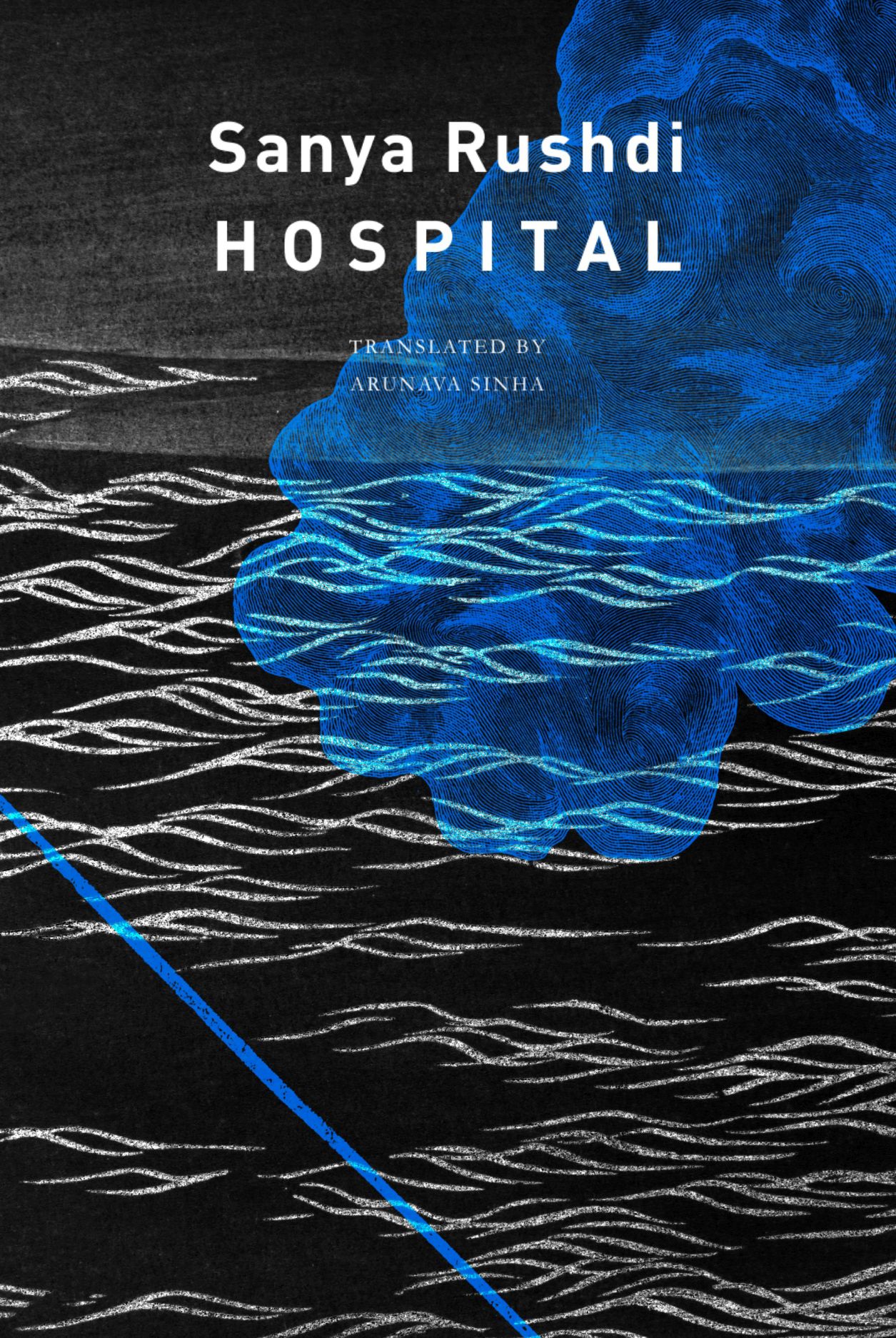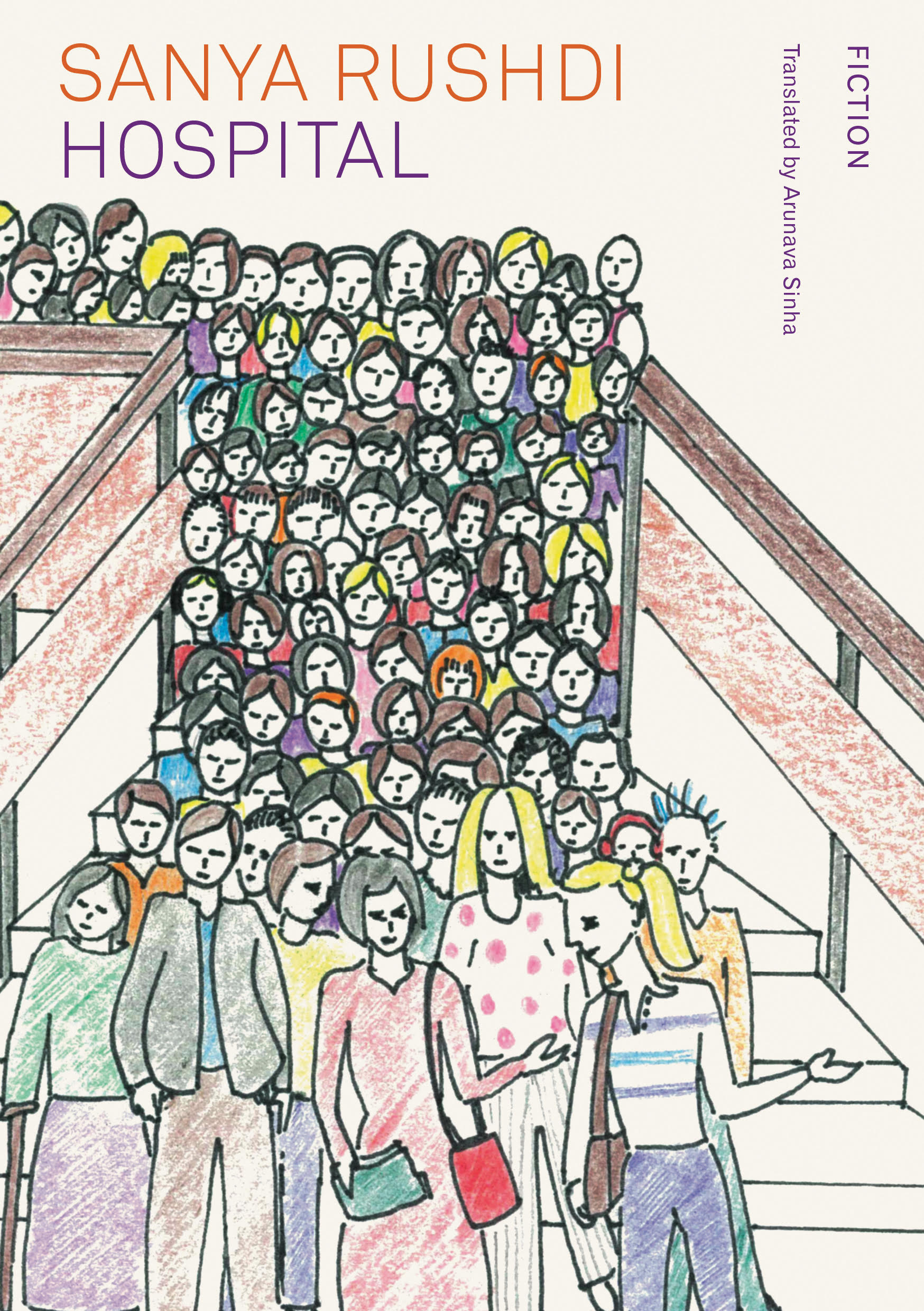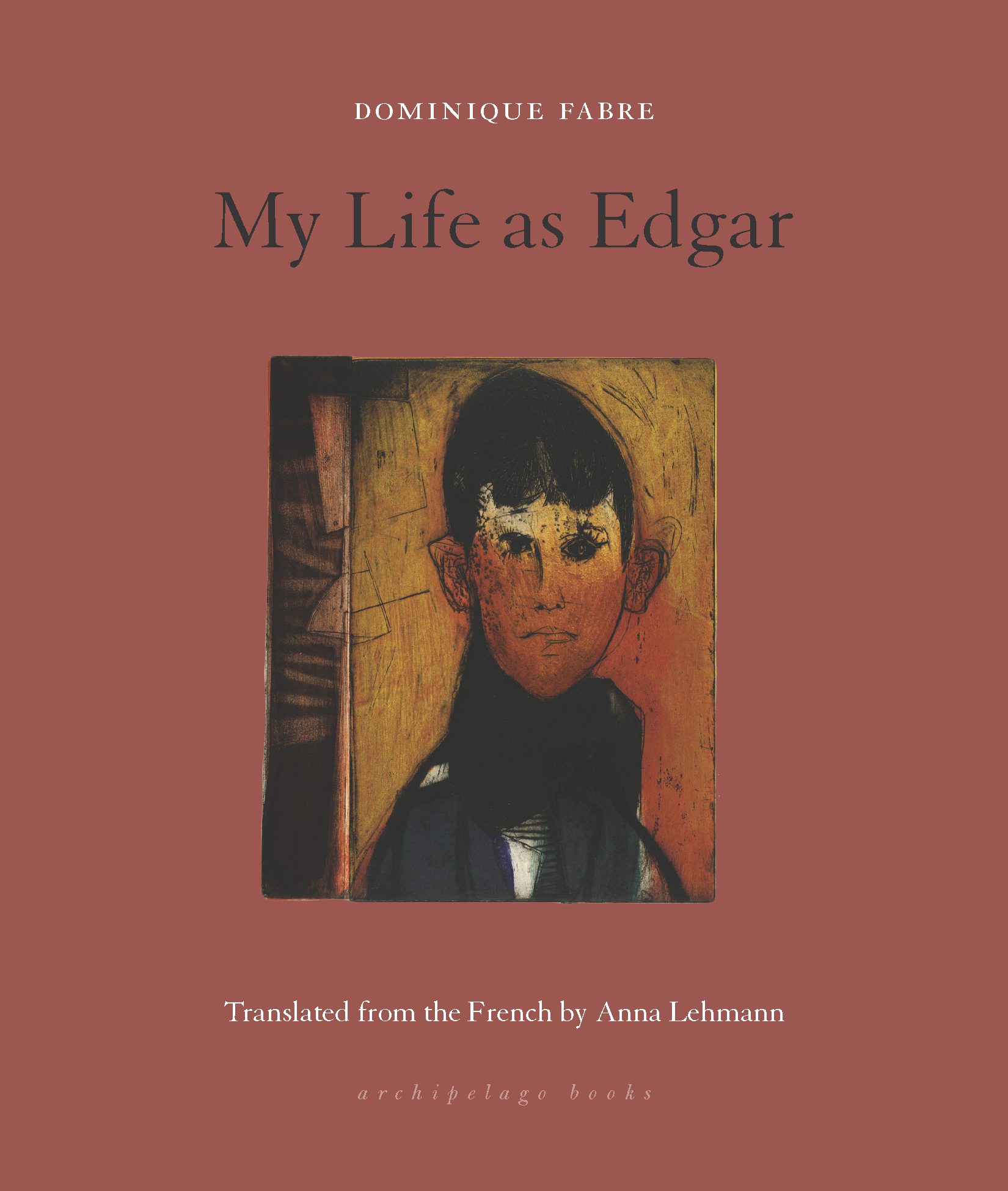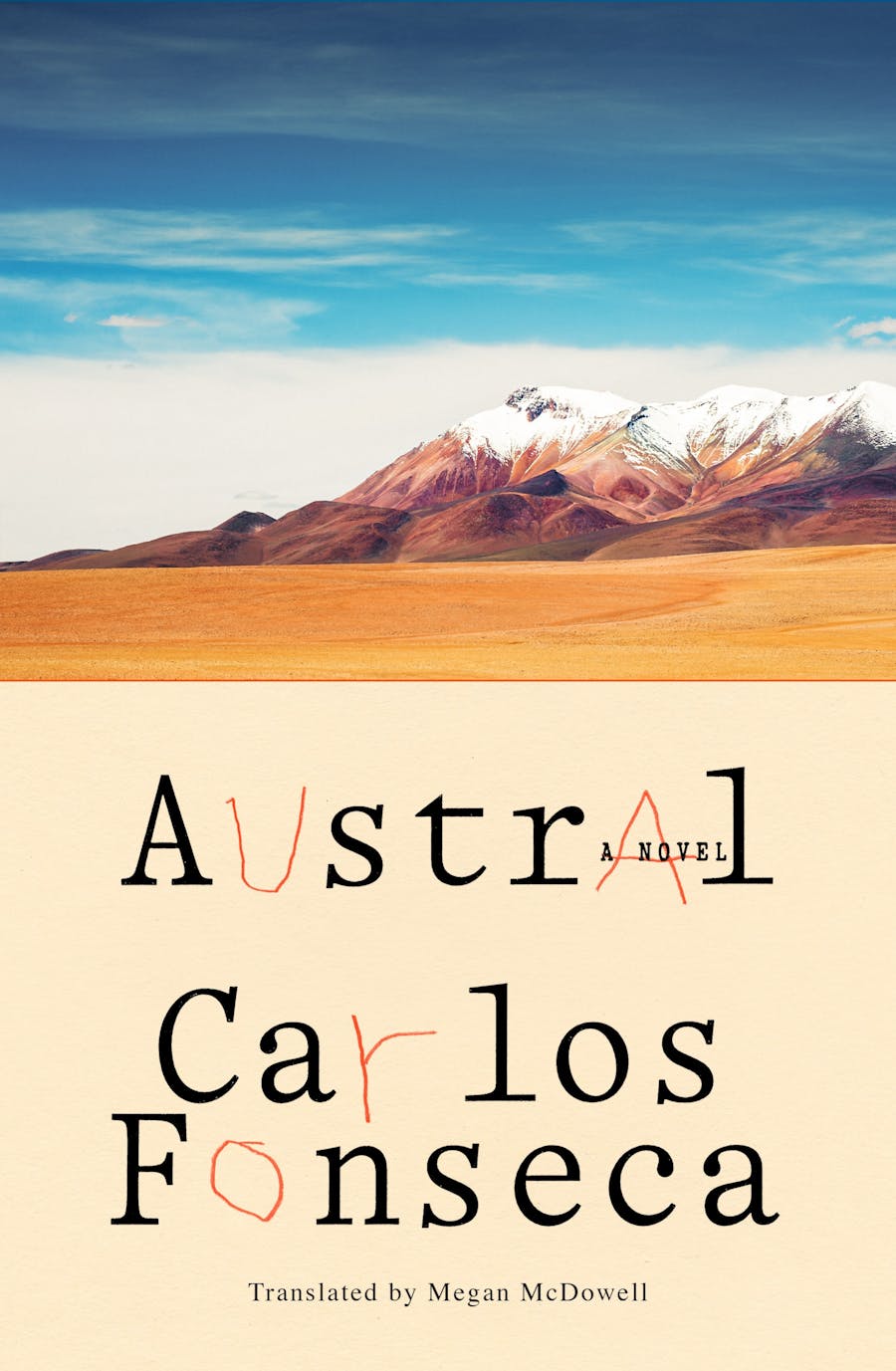
Rain like this doesn’t wash away the filth: Hawa Hawa and Other Stories by Nabarun Bhattacharya

The gleaming wet road, the rusty tin roof of a motorcar repair garage, behind it an old paint-peeling stunned-still old house and a chimney precariously propped up with haphazard wires—the sky can see all this. And, not as clearly, the burnt-black tin-backed shops and buses and the in-between blocks of darkness that were Matador sheds and not the half-rotten bellies of fish but the shells of banged-up taxis. There were crumbling and dead accident cars too, their mouths full of dirt. The sky view mists over every now and then, for it has been raining continuously.

This is the setting of “Last Night,” one of the pieces in Hawa Hawa and Other Stories, the recently released collection of inventive short stories by Bengali writer Nabarun Bhattacharya. As the angry rain beats down on the trash-filled water logged street, two young men are fighting. They are unevenly matched, a condition mediated by sheer intoxication, but they are each intent on doing damage to the other. And in a very unexpected way they are also best friends.

Bhattacharya (1948-2014), the son of writer and activist Mahasweta Devi and actor and playwright Bijon Bhattacharya, worked as a journalist from 1971 to 1993, before turning his attention to writing fulltime. His magic realist tales tend to feature eccentric characters drawn from the shadows—dirty cops, nostalgic former revolutionaries, unsavoury figures and an assortment of anxious souls. His Calcutta is gritty, pungent, dark and unforgiving. The scenes that unfold, on these streets and beyond, range from sharp political and social satire to strange meditations on violence, madness and love. Set primarily in the 1970s and 80s, but reaching back as far as the 1940s, there are stories that play out against the early Communist-led peasant movements in West Bengal, the Naxalite uprising and the 1975 Emergency, as well as more intimate dramas set in family homes, trains and, of course, on the street.

Bhattacharya excels at creating memorable characters, and rapid, witty sequences of dialogue peppered with English words (indicated in the translation with the use of italics) and references to popular Indian films and songs. A number of his stories rely heavily on a steady back and forth between two people who happen to meet up and share some kind of common past or current circumstance. Others unfurl under surreal conditions, influenced by alcohol, madness or some impending fear. There is an immersive quality to these dark tales.

Take, for example, “Mole,” the story of a seemingly unrepentant cop with a patch of skin on his neck that begins to itch and become inflamed just before he murders someone—“murder” being an accepted language for the state-sanctioned killing his investigative role entails. The itch causes his restless right hand to fumble in his pants pocket where his pistol awaits. The sweat, the smells and the agitation grow. We follow him on a mission to a nightclub. Once the job is done he kicks at the corpse bouncing on the floor of the police van and emotionally decompresses as he returns to the station. A bleak and grim premise perhaps but for the banter in the office (with its water tank filled with bombs to be deactivated), the pointed parenthetical commentary on authorized violence, and the insatiable demons that haunt the protagonist:

Back home, he usually takes a bath, uses soap—puts some ointment on the itch—the sweat from his body and the dirty soap-lather swirl into the drain and disappear. He rubs scented oil on his hair. He is very sleepy, but sleep never comes without dreams. Dreams have eyes, they ask questions, they laugh, they beat on drums. Their limbs are ripped and shredded, bits and pieces bloody. His family has told him he sometimes talks in his sleep, groans, slurs out orders. Sometimes he scratches his back so furiously that he wakes up in the morning to find it bleeding.

There is a deeply embedded hallucinatory fear that follows him down the darkened Calcutta streets and adds a spark of troubled humanity to his situation.

Fear and superstition mark several of the tales, most tragically perhaps in “A Piece of Nylon Rope” in which two men meet outside a hospital on a rainy night. The narrator is there to look in on a colleague who had a stroke at the office, while the other is waiting for news of his son who suffered a serious football injury. The latter, Jagadish-babu, has a uncertain confidence despite the poor prognosis. He feels his fate has turned. He explains that he was already inclined to seeking fortune tellers and good luck charms when he learned that what he really needed was to get a piece of a hanging rope:

‘Hanging rope?’

‘Yes. Suppose someone hangs themselves to death. If you can get a piece of that rope and keep it with you, then boom!—whatever you want is yours. All the evil eyes on you, the vexing, the hexing—the whole fucking lot will vanish. Khoka’s injured so badly. But do you see any fear in me?’

Jagadish shows the narrator the length of nylon rope he has acquired and carries with him everywhere, but admits that the good fortune it promises comes with a steep price. He cannot be alone, for fear the suicide victim will return and demand the rope back. For a man with a trusted talisman, he is a nervous wreck.

Several of the stories in Hawa Hawa, including the title tale and “Mole,” highlight the brutality of the West Bengal police, while another demonstrates the inability of a newly elected politician to protect an old friend and revolutionary comrade. Elsewhere we meet a child with a cruel streak, the brother of an accused murderer who holds to his belief in his innocence, a businessman offering the perfect suicide—for a price—and a gangster who prophetically spends the evening with a headless prostitute. Inequality, injustice and the abuse of power are common themes driving the world that Battacharya wanted to bring to the surface through his darkly humorous, weirdly engaging fiction. And if his comfortable contemporary Bengali audience was disturbed by what they found in his work, he was hitting his mark.

Notably, this translation is the work of a young translator, Subha Prasad Sanyal, and his ability to bring Battacharya’s subversive and playful writing to life is impressive. He pays careful attention to rhythm and tone. As mentioned, the English words transliterated in the original Bengali text are italicized, yet many Bangla terms are left intact where context is sufficient to imply meaning, a choice that helps maintain a distinctive narrative feel. Meanwhile, any cultural, political and place references that enhance understanding are explained in the Translator’s Note.

Hawa Hawa by Nabarun Bhattacharya is translated by Subha Prasad Sanyal and published by Seagull Books.

A book is vegetal: The Geography of Rebels Trilogy by Maria Gabriela Llansol

I then began to accumulate memories of the future in a great meditation

There was a woman named Maria Gabriela Llansol, born in Lisbon who, fleeing repression in her native country, put herself into exile in Belgium for twenty years before returning to Portugal to settle in Sintra for the rest of her life. She was a writer when she arrived in Belgium, but it was during her time there in that, in an environment more conducive to her creative energies, writing began to flow in earnest—that she became as she might have preferred to say, a “writing being,”[i] for hers is a deeply inhabited landscape within which an experience of living with the wisdom of the past and the present, of human, animal and plant life alike, is not only possible but necessary.

Despite a relatively late start, Llansol would go on to have an extraordinarily prolific career as an author and translator. At the time of her death at the age of seventy-six in 2008, she left twenty-seven published books and more than seventy notebooks. Her singular style won her significant critical praise, but she was not expecting her books to attract a general audience. Like the many religious, historical and literary figures who move through her texts, she was writing with the belief that her work would outlive her. And so it has, for those who venture into her literary universe are unlikely to emerge unchanged. But it is a journey that requires one to have a willingness to suspend expectations of how a work of fiction should behave. In fact, Llansol herself would reject the notion that her books are fiction at all:

I don’t see them that way. Because they are really books based on a reality that is lived, that is an intimate observation of my journey as a body, as a person. So even though they usually call it fiction, I think this writing isn’t fiction. It is the product of an experience that deepens, a textual conveyance of the worlds I traverse.[ii]

This understanding encourages an engagement with her novels, then, as one might with mystical and philosophical writings that are continually questioning, seeking and exploring relationships where the “characters” and the authorial voice is a shifting, open plain—sometimes specified, other times formless and timeless. Conventions of spatial and temporal continuity have their own logic. And yet, as one catches the rhythm and flow, a beautiful, sensitive, otherworldly narrative unfolds.

The first opportunity English language readers have had to enter Llansol’s expansive world came with the 2018 release The Geography of Rebels Trilogy from Deep Vellum in Audrey Young’s translation. Comprised of three linked novellas, The Book of Communities, The Remaining Life and In the House of July & August, these works can be considered as a clear directional shift away from the two short story collections she had already published and later dismissed as too conventional. They are connected thematically, with recurring personages, the first two texts perhaps to a greater extent than the third, but for Llansol all her books draw on her own earlier books as well as the writers, texts, conversations and experiences that she has along the way. She sees writing as a cumulative process, one in which “characters” appear and reappear, situations recur and take on new realities, while at the centre of it all is the being, the writing being, who is “giving them a certain response.”[iii] As such, perspectives shift, moving in and out of a first person voice that may or may not identify itself in a fragmented narrative that often drops off mid-sentence or rearranges itself on the page into narrow columns. Yet although it may sound unlikely, Llansol’s work is enveloping, atmospheric and not difficult to read if one respects the fact that it is not prescriptive in nature, but rather inquisitive and exploratory.

The Book of Communities opens with the description of a woman who “did not want children from her womb” and instead invited men to bring their children to be educated. While the children recite passages from the writings of Saint John of the Cross she entertains dreams of the discalced Carmelite himself. This woman initially echoes Llansol who, upon moving to Belgium, taught in a community school for international students, but she introduces herself as Ana del Mercado y Peñalosa, a historical figure who was a friend and benefactress of Saint John of the Cross. Little detail is known about her life, so into this open biographical space blossoms an enigmatic, inspirational and generative female force whose presence provides a continuity to the trilogy, at times central to the “action,” at other times observing, and eventually seemingly directing activities from afar. Ana de Peñalosa is regularly described as being near the end of her life, at one point she appears to die and be immediately reborn, but it begins to seem that she is simply ageless. Yet, although death is spoken of with some fear, “living” and “dead” have no permanent meaning in this world. Many of the characters or “figures” that populate these novels are long dead, often by centuries or not yet born at the time in which the work is loosely set—the years of the Counter Reformation. But, of course, this trilogy exists on its own plane of reality, one in which writing is the vital and essential metaphysical force that unites disparate strands to form images with their own unique integrity.

The work proceeds through a series of often strange or surreal scenes or vignettes. Some are centred around a house that belongs to (or is dreamed into existence by) Ana de Peñalosa in a remote, forested area near a river. Others depict periods of exile or wandering. A number of controversial, even heretical, figures are drawn into the narrative, including John of the Cross, the radical Protestant Thomas Müntzer, Friedrich Nietzsche, 13th century mystic Hadewijch, Meister Eckhart, Lorenzo de Medici and many more. Animals and plants are also an important part of the community that arises—in their own right and as forms that human characters assume permanently or in passing. John and Thomas Müntzer are especially dear to Ana de Peñalosa; she refers to them as her sons. The latter, beheaded in 1525 for his role in the German Peasant Revolt, carries his head with him throughout. Nietzsche, who arrives first in correspondence before appearing in person, also briefly in child-like form, will spend more of his time alone in his room writing and is the third key figure, while the fourth, Hadewijch, the Flemish Christian Beguine known for her ecstatic poetry, appears midway through the trilogy and becomes more influential as the work progresses.

The third novella, In the House of July & August, maintains a somewhat more consistent narrative. It is revolves around an imagined community of Beguines, the Christian lay order of women who dedicated themselves to a life of devotion and service, which includes among their number, Hadewijch. Ana de Peñalosa appears to have a role directing the lives of this group along with a man referred to as Luis M. He is not further identified, but early in The Book of Communities, Ana de Peñalosa speaks of a brother-in-law, Don Luis del Mercado who entrusted her with care of her niece Inés, so there may be a nod toward the historical Ana here. Nonetheless, Luis has a cryptic relationship to these women that may extend to the physical. There is a deeply sensual feminine aspect to this community who are known as The Ladies of Complete Love.

If the act of writing and the book have an existential quality in the first two books of The Geography of Rebels, both become somewhat more concrete in the third as the focus turns to the printing and production of texts and the acquisition of manuscripts. One of the beguines, Marguerite, is sent to study in the house of Christophe Plantin, the French printer and book publisher who lived and worked in Antwerp. The craft becomes a vocation for herself and some of her sisters until she is sent on a dream-like mission to locate the headwaters of the Tigris and the Euphrates where she is to obtain an important document. Meanwhile her dearest companion, Eleanor, is sent Portugal to work as a gardener before being taken to Lisbon to live in a convent where she discovers a library containing forbidden books. Communications between Marguerite and Eleanor form much of the narrative, however, this is still a world featuring enigmatic beings, neither living nor dead, consultations with ancient and arcane knowledge and an intense connection to rivers. In other words, well within Llansol’s expansive, yet self-contained universe—one that is, as ever, realized through a living text, carried on a breath and a prayer.

Maria Gabriela Llansol’s works may defy easy summary or classification, but they are born of a deep personal engagement with the philosophers, authors and spiritual figures who emerge in her writings. There are few writers to whom she can be meaningfully compared, Clarice Lispector and Fernando Pessoa possibly being the most immediate, but hers was a life-long project with a distinct and innovative continuity running from book to book that allowed her to chart a literary cartography all her own. One can only hope that this luminous trilogy will be followed by further opportunities for English language readers to explore Llansol’s oeuvre.

The Geography of Rebels: The Book of Communities, The Remaining Life and In the House of July & August by Maria Gabriela Llansol is translated by Audrey Young with an Introduction by Gonçalo M. Tavares and an Afterword by Benjamin Moser, and published by Deep Vellum.

Endnotes:
[i] This is from a transcript of a radio interview with Llansol recorded in 1997 at the time of the release of her Inquérito às Quatro Confidências: Diary III, translated by Audrey Young and reproduced with permission on Anthony’s excellent site Times Flow Stemmed. Llansol discusses her own unique perspective on the nature of her writing.
[ii] Ibid.
[iii] Ibid.

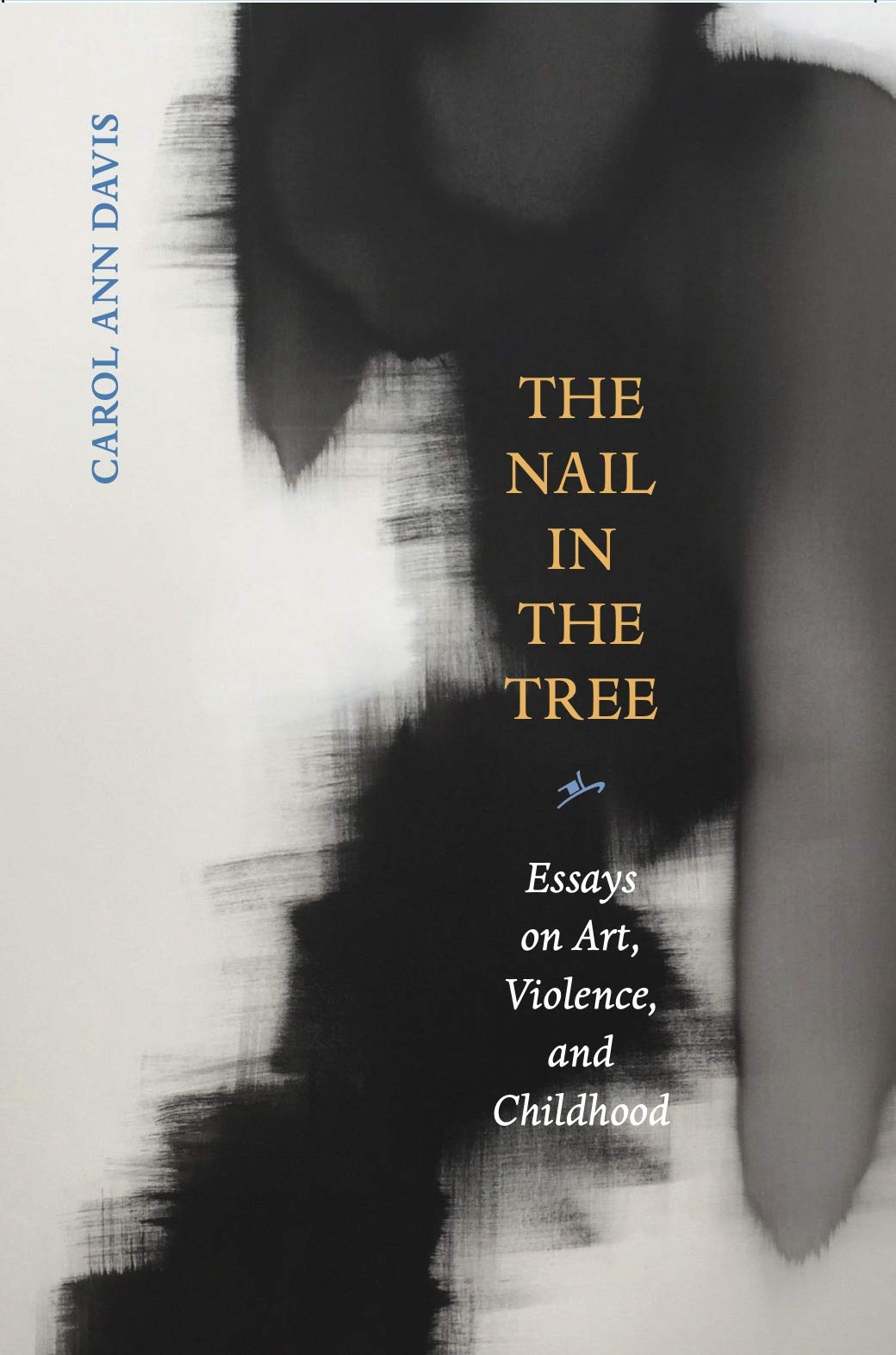
Taken, not taken: The Nail in the Tree – Essays on Art, Violence, and Childhood by Carol Ann Davis

I accepted this book as a review copy when it first came out, just over three years ago now. I put on the shelf with all the best intentions, and then forgot it. When I rediscovered it there, lost among assorted volumes of nonfiction, I felt ashamed by my negligence. Surely I could have read it earlier, if not when I first received it, at the very least during the trial of Alex Jones for the outrageous conspiracy theories that hurt so many people and ushered in a whole new form of denial, or a few months later when the tenth anniversary of the Sandy Hook school shooting was marked last December. But The US seems an endless supplier of senseless and tragic school shootings so it’s no surprise that, when I finally did take the time to read The Nail in the Tree: Essays on Art, Violence, and Childhood, I happened to finish it on the one year anniversary of Uvalde.

Poet and essayist Carol Ann Davis was newly relocated to Newtown, Connecticut, with her husband and two young sons when the Sandy Hook shooting occurred. They lived close to the site but, due to zoning, the boys attended another school. Willem was in fourth grade at the time, Luke in kindergarten. They were safe, but not untouched. “And this is what it is not to suffer that day,” she tells herself when recalling the shooting, “This is the not-suffering, happy ending story.” But, of course, it’s not that simple. The trauma sends lasting ripples throughout the community in way that leaves no one unaffected:

Sacerdos, from the French and earlier from Latin, literally meaning “offerer of sacrifices.” The children who live here, perhaps it’s strange to say, now glow. They do, they glow. No one can approach unmoved, and the children, understanding their role, shoulder, take on, burden themselves with us. Their skin nearly translucent, they walk around like that, glowing. They offer themselves like bits of mirror, and we accept.

The adults, by virtue of wider perspective, suddenly become acutely aware of the fragility of childhood. For those who still have to send their children back to school, trust them to the school bus each morning, there is the conflicted desire to both protect and prepare. Older siblings want to look out for their younger brothers and sisters. No one wants to trigger memories that may or may not even exist.

It is within the altered dynamic of the six years that follow the tragedy, that Davis endeavours to articulate and make sense of what it means to raise children in the aftermath of violence. In a series of essays that make their way slowly but not strictly chronologically away from the pivotal event, she turns to poetry and art to understand how artistic practice might be a productive way of integrating trauma into life moving forward—for herself and for her sons.

This is not a typical grief memoir, nor does it delve into the specifics of the shooting or the political fallout. The event itself rests as a horror too large to think about directly—it sits, unspoken, in all aspects of community life, especially at the bus stop, in the schools and on the playing field. Yet Davis seeks answers at her desk, beneath the hummingbird feeder, at art galleries and museums and, ultimately swimming in the open ocean, the one desperately longed-for release her newly adopted, landlocked hometown denies her. Along the way, among others, she turns to the work of Hélène Cixous and poet Miklós Radnóti and, for an extended period, she follows the lead of (and argues with) Rumi. She engages with the art of Eva Hesse to better understand the poetic process, and when, four years after the fact she has to fully explain to Luke, now that he is old enough to know, the extent of what happened at Sandy Hook, she draws on Paul Celan and Armenian born artist Arshile Gorky to help her untangle the enormity of her own grief.

Davis’s writing is poetic, pulling images, quotes and refrains through her essays, like threads to link or unravel her thoughts as needed. And she is an astute observer of art who is able to find in a number of artists, their techniques and philosophies about their practice, clues to appreciating how she is growing and, more importantly, how the boys are not only coping, but finding their own ways to thrive. More than once the boys are dragged through exhibitions, like one of Picasso’s sculptures in New York, or shown a show catalogue, like that of American abstract painter Agnes Martin. Davis hopes that Luke, who is a budding draftsman will find some connection in Martin’s geometrically precise but somewhat dissonant canvases (he does not). The message in the artist’s work and her method, however, is less for the child than his mother:

I’m suddenly afraid: I am not ready to admit to myself, as Martin has, that the purpose of art may be to unlock an inner happiness in the viewer. I am doubtful such a happiness is inherent, and unsure whether it is larger than forces with which I’ve engaged in my own work (such as grief and difficulty). I am uncertain I can place the function of art, art-making, its practice, in the category of making-happy, given all I’ve seen and felt in the last five years, all my children have endured in the service of gaining a working understanding of the world into which they’ve been thrown. Of course, any difficulty can be a subset of happiness, Martin’s work virtually shouts at me. Don’t be so narrow-minded.

Throughout these original, thoughtful essays, it becomes clear that the search for meaningful expression—even happiness—after trauma is Davis’s personal journey, one within which her children are her motivation and measure of progress, but not her exactly creative companions. One cannot grieve for anyone else as much a parent might wish shield their child from their own inevitable process. With luck and their parents’ support, Willem and Luke will hopefully have the resources to come, in time, to their own mature understandings of the event that they escaped only by chance. Sadly, with school shootings such a regular occurrence in the US, shadows of the horror that erupted at Sandy Hook on December 14, 2012 may be hard for any of the Newtown residents to fully move beyond.

The Nail in the Tree: Essays on Art, Violence, and Childhood by Carol Ann Davis is published by Tupelo Press.

Some nights silver others pale gold: Kerala Journal by Kim Dorman

Rain drips on the
tin roof, frogs
& crickets chant.

The passing days
turn to years.

Lying awake in the
dark, I know the
taste of ash.

The images are simple, rendered with honesty and clarity. Darkness and light. Sound and silence.  Rituals of nature and moments in time.

American poet Kim Dorman was drawn to India as a child, and made his first visit to the country in 1976. He made several more journeys over the years until, after a long absence, he and his wife returned in 2019 to live in the southern state  of Kerala. Drawing inspiration from classical Japanese literature, especially Matsuo Bashō’s travel diaries, he focuses his attention on the small details and everyday routines and rhythms of life—his own and his neighbours—in this tropical environment. Kerala Journal is a collections of his poetic observations, recorded between March 2019 and January 2021.

A farmer clears his field with a sickle.
Fodder for cows.

On the road, a young family goes past
on a scooter.

Man, woman, child.

Certain images—night skies, dust on the road, rats in the attic, cawing crows—appear and reappear regularly, highlighting the rhythms that run through the days but as the poet, who admits to having three versions of Heraclitus among his books, knows well, one never steps in the same river twice. Time flows on.

Solitary path, dust.
Cockcrow sounds far:
All is lost, gained.
Sunrise on the river.

Yet, as Covid strikes, the world beyond the local community enters the immediate environment as newspapers bring news of migrant workers and their families slowly making their way to distant homes, while elsewhere a rhino ambles down an empty road meeting no one. Time during lockdown takes on a different shape for different people based on circumstance just as the reality of a pandemic heightens an awareness of mortality. I do notice that the poet seems ever more conscious of his age as this collection nears its close.

I was already in my late fifties when I first travelled to India and I had the great opportunity to visit a friend in Kerala twice in 2019. I am impressed with the Dormans’ decision to return there later in life. But I understand the perspective only age can bring. To fully appreciate a place takes patience and time and a quiet introspection. These poems observe without judgment. They inspire us to isolate and pay attention to the smallest details in our lives. And, sometimes, even the unexpected humour:

The chemist
hands me a bottle
wrapped in
newsprint—
the obituaries.

Kerala Journal by Kim Dorman is published by Xylem Books, an imprint of Corbel Stone Press.

A bell in the distance: ‘La Clarté Notre-Dame’ and ‘The Last Book of the Madrigals’ by Philippe Jaccottet

When Swiss Francophone writer Philippe Jaccottet died in 2021 at the age of ninety-five, he left two final manuscripts, finished in the final year of his life with the assistance of his friend, poet José-Flore Tappy. These two works, La Clarté Notre-Dame, a sequence of prose pieces, and The Last Book of the Madrigals, a selection of verses, have now been published together in John Taylor’s translation and, in them, we see the poet looking back over certain past experiences, ever asking questions of himself and the world he observes, even as his age weighs heavily on his thoughts.

The first work opens with a remembered outing with friends, when, as they walked down a gentle slope under grey skies, the silence or “deep absence” of the vast open space surrounded them:

Until the little vesper bell of La Clarté Notre-Dame Convent, which we still couldn’t see at the bottom of the valley, began to ring far below us, at the heart of all this almost-dull greyness. I then said to myself, reacting in a way that was both intense and confusing (and so many times in similar moments I’d been forced to bring together the two epithets), that I’d never heard a tinkling—prolonged, almost persistent, repeated several times—as pure in its weightlessness, in its extreme fragility, as genuinely crystalline . . . Yet which I couldn’t listen to as if it were a kind of speech—emerging from some mouth . . . A tinkling so crystalline that it seemed, as it appeared, oddly, almost tender . . .

This bell is the initiation and the subtle motif that binds a series of reflections that carry Jaccottet back to childhood, to earlier travels and, along the way, to inspirations and writings from his past. There is an element of reassessment to this sequence, a restless questioning of the poetic and the political, with frequent parenthetical asides. And though many of the passages date back to 2012, the image of being “at the very end of my life’s path” is ever present. Doubt, not of his accomplishments, but of their faithfulness to some kind of truth and ethical value, creeps into his musings.

There is a slowness, a patience, and willingness to set aside reflections for a time, to let them rest, that lends La Clarté Notre-Dame an organic wholeness in its final form, even if its genesis was more fragmentary. The vesper bells seem to effortlessly feed Jaccottet’s ongoing concerns about the situation in Syria, thoughts about his own poetic influences, memories of subtle details and interconnections arising from his long life of experiences and human interactions, and uncertainty about what lies beyond but, in the end, he is willing to close on an open, unfinished note. This is true to form. When asked what Jaccottet’s writing has to offer to a new generation of readers, John Taylor, one of his long-time translators suggests:

We have entered an age of unequivocal partisan discourse, of linguistic robotization, of tiny symbols standing for complex emotions. In total contrast to this, Jaccottet’s writing constantly shows nuance, attentiveness, perseverance, circumspection, and a genuine quest for essential truths. His hesitations and doubts are salutary because they bring us to a halt and help us to observe and ponder anew, sometimes against our own preconceptions and wishful thinking, as we learn to cast away chimeras but also not to abandon all hopes.

The Last Book of the Madrigals, Jaccottet’s final poetic offering is a return to verse, a form he had moved away from in favour of prose poetry in the 1990s. The dual language text opens with a piece entitled “While Listening to Claudio Monteverdi” which imagines an encounter with the most influential madrigalist of the early 17th century. It opens:

When singing he seems to call to a shade
whom he glimpsed one day in the woods
and needs to hold on to, be his soul at stake:
the urgency makes his voice catch fire.

Then by its own blazing light, we spot a moist
night-time meadow and the woods beyond
where had come across that tender shade
or much better and more tender than a shade:

now there’s nothing but oaks and violets.

The voice that has brightened the distance fades.

I don’t know if he has crossed the meadow.

Their long summer night together continues under the starry sky, becoming a transformative  experience for the speaker.

The poems that follow in this sequence draw on mythic, celestial and natural interactions. Other voices are invited into conversation with the poet on his journey, but an image of a writer nearing the end of his time recur—these are the last madrigals, an allusion to Monteverdi, perhaps—invoking the same sense of solemn awareness haunting La Clarté Notre Dame. After an encounter with an old blacksmith he asks:

Was he delirious when I heard him murmur:

‘If this lamp that is like a beehive
is removed from me,
if this perfume drifts away, companions,
you can carry off these quills and bundles of paper:
where I’m being led, I’ll have no more use for them . . .’

Later in another madrigal, as a summer evening falls, the poet again recalls the “blacksmith of volutes and flames,” whom imagines wishing away temptation only to then wonder of himself:

And he who still writes on the last staffs,
perhaps, of his life:

‘That unknown woman fishing in her lightweight skiff
has struck me as well.

I first thought it sweet to be her prey,
but now the hook tugs at my heart
and I don’t know if it’s the daylight or me
bleeding in these pearly waters.’

These poems are filled with beauty and longing, calling on the stars in the heavens for silent answers and anticipating the turning of the seasons toward autumn and winter. One can well imagine a chorus of voices carrying the final songs of a poet who looked at the world closely, listened to silences and distant bells, and sought the meanings in it all on the page. This volume with his two final works is not only a fitting literary addition to a life of great accomplishments, but can serve as an introduction for those who wish to read more.

‘La Clarté Notre-Dame’ andThe Last Book of the Madrigals’ by Philippe Jaccottet is translated from the French by John Taylor, with an Afterword by José-Flore Tappy, and published by Seagull Books.

A compilation of shadows: Ninth Building by Zou Jingzhi

From childhood till now, I’ve spoken many bold words. Publicly or in private, I’ve proclaimed the kind of person I wanted to be, though it never happened in the end. I feel like someone has somehow taken my place, leaving me to become the person I am now.

When I’m around too many people, I lose myself. In an unfamiliar city, among crowds of strangers, I keep having to stand still—not to ask directions, but to find myself. Even when I’ve done that, I’m still lonely, so I head back to my hotel and listen to the sound of rain.

These lines, drawn from the melancholy and poetic Introduction to Ninth Building by acclaimed Chinese writer, poet and playwright Zou Jingzhi, speak to a fragmented sense of self, a “compilation of shadows,” that has long accompanied him, appearing unbidden on the street or haunting quiet nights. This book, originally published in Chinese in 2010 and now available in Jeremy Tiang’s excellent English translation, is an attempt to give these shadows some of the depth, context and meaning distorted by the experience of growing up during the years of the Cultural Revolution. As Jingzhi says in an interview on the site of the 2023 International Booker Prize for which his book has been nominated:

 In the early 1990s, my childhood felt like it had been a gust of wind behind the trees. I used to spend my days being lost: What should I write? Whatever I wrote was wrong. It was impossible to get rid of my childhood back then. So I just wrote like that. I wrote for myself. I wrote to let go of my childhood.

Ninth Building is a cohesive work with a common narrator, but it is presented as a series of vignettes or very short stories, set between 1966 and 1977, arranged in a roughly but not strictly chronological order. Time, in its experiencing and remembering, has a somewhat fractured quality. After all, the Cultural Revolution was an unnatural period of disruption and upheaval and, as Jingzhi’s stories so clearly demonstrate, many hours of unstructured tedium. The first section “Ninth Building,” takes its name from the housing complex in Beijing where Zou is living with his family when the Revolution begins. He is about thirteen or fourteen at the time. The first story “Eight Days” is a diary format tale set in November 1966 that describes the eagerness and concern with which a group of boys set out to obtain Red Guard armbands. It is not clear that they understand just what they signify, only that they don’t want to be seen without one. Many of the pieces in this part demonstrate the haphazard way that the adolescents try to make sense the objectives of this movement sweeping the country, rejoicing in the death or humiliation of old women labelled part of the “landlord class,” unaware that many of their own families would soon be suspect. Yet amid the increasing levels of violence among their classmates and peers, there is a lot of idle time to be filled with a variety of friends and neighbours. Boredom had company.

There is a lot of humour in the first part of Ninth Building, some of it rather black, even disturbing, but much also reliant on the innocence of the protagonist and his young buddies (it is the 1960s after all). A wonderful early vignette (“Capturing the Spoon”) describes a night patrol during which the intrepid and enthusiastic guards observe, through a lighted window, a naked couple thrashing around in a bed. Alarmed, they rush to report this obvious, if strange, infraction, but the grown-ups from their compound’s “Attack with Words, Defend with Force” Unit are unmoved by this important information:

Nothing came of our waiting. We’d imagined they’d jump up immediately to stop whatever incorrect action was taking place. This was at the height of the Revolution, and the train we were on had switched to another track. What we’d seem didn’t fit the scenery on this route; red armbands and nakedness didn’t go together. The five of us had three flashlights between us, and for more than half a month now we’d stayed awake night after night, fully alert, wishing something would actually happen. Now something had, but the adults didn’t feel about it the same way we did.

The second and slightly longer part of Ninth Building, “Grains of Sand in the Wind,” opens in 1969 when is Zou sixteen and sent to the Great Northern Waste for “re-education through poverty.” He is one of the millions of “educated youth” sent to work in rural areas and learn from the peasant population. He will not return to the city until after the Revolution comes to an end in 1976. These are years filled with long days of back-breaking labour under harsh conditions, yet no more immune to extended periods of boredom than he knew in Beijing. But here the distractions, apart from the required performances of patriotic operas, were limited to gambling, drinking and practical jokes. Innocence is gone; the underlying tone is now one of resignation. Zou and his peers have come of age in a time when their lives and dreams of the future are suspended:

Youth is a concept whose meaning isn’t easy to grasp. You might as well try to wrap your mind around every era, every event. The word doesn’t really evoke any special memories for me. Perhaps I’ll have to wait till the age when every other sentence begins with “back then” before I truly understand it.

The vignettes set against the vast rural landscape are harsher, with more tragic elements. They are not devoid of humour or eccentric characters, but illness, injury and death feature regularly. Life is cheap. However, poetry and increasingly astute observations are woven into Jingzhi’s anecdotes and tales. As his narrator matures and grows more cynical, he also begins to recognize the seeds of his future as a writer that have been sown during these long years.

The Cultural Revolution was a period of great turmoil during which the power of radicalized youth was harnessed against the Communist Party hierarchy, but as illustrated by Ninth Building, the impact on many young people during this time was marked not by heroism or the glory of conflict, but by years of boredom, dislocation and numbly tedious labour. With its brisk pace and refusal to succumb to despair in spite of the countless temptations, this collection of brief vignettes makes for an entertaining and powerful read.

Ninth Building by Zou Jingzhi is translated from the Chinese by Jeremy Tiang and published by Open Letter in North America and Honford Star in the UK.

Forever before and after: Rombo by Esther Kinsky

The seismic shocks of May divided life and the landscape into a before and after. The before was the object of memory, stories unceasingly layered and blown over by words. One argued over the form of the cliffs, the course of the brooks, the trees that avalanches rolled over. About the whereabouts of objects, the order of things in the house, the fate of animals. Each of these arguments was an attempt at orientation, at carving a path through the rubble of masonry, mortar, split beams and shattered dishes, to understand the world anew. To begin living in a place anew. With one’s memories.

On May 6, 1976, just before 9:00 pm, a devastating earthquake tore through the Friuli district of northeastern Italy. Several strong quakes followed in September. Bordered, today, by Slovenia to the east and Austria to the north, this region which extends from the slopes and foothills of the Carnic Alps, onto the flat flood plain of the River Tagliamento, would be forever changed, as would the lives and memories of those who survived that year of death and destruction. Rombo, the latest novel by German poet and writer Esther Kinsky, places this event at its centre and turns its attention to the rich and deeply interwoven stories that bind the land and its inhabitants together.

As her novels River and Grove demonstrate, Kinsky is deeply sensitive to and observant of landscapes, urban and rural; her narratives move through environments that are simultaneously emotional and physical—spaces of memory, grief and reconciliation. The same can be said of Rombo, but here, instead of a peripatetic first person narrator tracing a deeply personal journey, a chorus of voices carry the flow of a unique, multi-layered narrative that encompasses the human and non-human, the animate and inanimate alike. The text is divided into seven sections, each opening with a quote from a classic geological work and a coarse black and white illustration depicting a fragment of the remaining frescos from the cathedral at Venzone. A neutral narrative voice describes the landscape and its history—present and past—offering observations of a geological, ecological, folkloric and scientific nature. Woven into this tapestry are the memories and stories of seven men and women—Anselmo, Olga, Mara, Lina, Gigi, Toni and Silvia—who were children or youth at the time of the earthquake, and whose reflections take them back to the events that forever divided their world into before and after.

This choral narrative flows and swirls like a river, rising and falling, turning in eddies, joined by streams and tributaries along the way. Moving back and forward in time, repetition, contradiction and fractured accounts are gradually woven together to create a rich, if heartbreaking, whole. In the beginning we are briefly introduced to the seven survivors, from a third person perspective, on May 6 and in the present, decades later. Then, the dynamics of the seismic event are set up, the unevenness of the impending disruption are alluded to, and the forces of the earth are unleashed:

It is said that animals are much quicker to sense the vibrations that gradually build up in the Earth’s interior and eventually exceed the stress limit in the spreading centre, causing the tectonic plates to snag and tip, irrevocably shifting the order of hollow cavities and mass, the order of emptiness and fullness.

For each one of the survivors, the hours leading up to the May earthquake were marked by unusual observations—an unexpected sighting of a snake, anxious goats, loudly barking dogs, fitfully chirping birds. The day was unseasonably hot, the light oddly filtered. And everyone remembers the otherworldly sound, il rombo, rising out of the ground just before it started to shake. In the moment, they are pushed out of their houses, stand under archways or find themselves crawling out from under collapsed structures. Damage is extensive but, all things considered, their village is one of the lucky ones. Others are almost completely destroyed.

After our first glimpse of that fateful day, the survivors begin to speak for themselves. They talk of their memories of life in the valley, their families, and their later adult years. But mostly they speak of the earthquake and its immediate aftermath—the strange, dislocated summer of freedom for the school-aged children, the stress of rebuilding and rising tensions among the adults and, amid the turmoil, the accommodation of marriages and deaths and the business of life. Then, when things are beginning to promise a return to some degree of normal, the severe September shocks roll through. Everything is unsettled again.

The lives and stories of some of the characters intersect, contradict one another or offer different angles on the same situations or experiences. Their individual histories reflect the historical and economic realities of the region. Fractured, multi-generational families are common as people are forced to leave to search for work, or driven back again by the need for the support of extended family. Anselmo and Olga, for instance, were both born abroad, in Germany and Venezuela respectively. They come to the valley with their locally born fathers after divorce or widowhood finds them stranded in foreign lands and brings them home. Some couples comfortably fall into a pattern of living in different towns or countries, like Silvia’s parents or Lina and her husband. After the earthquake, many will leave the region for good, having lost their jobs and their homes, but for the seven villagers featured here, including those who do leave for a time and return, the valley is and always will be home. As Lina says about the land and her place in it:

The soil is poor here. Limestone ground, the ground of poverty. The flowers are paler here than elsewhere. The winter is long. But winter is alright by us, because it brings snow and whatever grows around here has snow and goat shit to thank for it. The snow saturates the ground differently than the rain does, they always say. On the other side of the mountain, in the south, it only rains, even in winter no snow falls. It’s God’s pisser, the people say.

What is my life? sometimes I ask myself. My life is this place. Here I know everything. Every stick and every stone. The animals and the people. I write down what I want to remember. The weather, the harvest, the comings and goings, misfortunes. Surprises.

As these witnesses, now looking back through the filter of more than half a lifetime’s experience, recall the upheaval of the earthquake and talk about their lives before and since, their reminisces are framed and reframed through the shifting sedimentary layers of accumulated memory. Just like the land around them. Unfolding with an uneven, yet natural pace, the flow of personal stories, woven among the descriptive passages, observations and anecdotes, lends a filmic documentary-like feel to the novel, successfully achieving a Sebaldian balance of truths and fictions imbued with Kinsky’s distinctly meditative poetics. The result is an unusual and highly affecting form of storytelling that follows its own narrative logic.

Rombo: A Novel by Esther Kinsky is translated from the German by Caroline Schmidt and published by New York Review Books  in North America and Fitzcarraldo in the UK.

Searching for the ever elusive “I”: The Book of Explanations by Tedi López Mills

Lately, when I imagine, I remember. Then I shift into a peaceful kind of forgetfulness. And I start to imagine again, remembering. Like a circle that’s no longer vicious because it erases its own trail, little by little, always resketching its outline for the first time.

How much of identity is memory? It would seem that the experience of being in the world is dependent on memory because each moment, as it passes, becomes part of an ever accumulating past—a past that gives coherency to the existential “I.” Yet, can what we think we know about ourselves help us live with our choices, idiosyncrasies, strengths and faults? In her inventive and intelligent collection of personal essays, The Book of Explanations, Mexican poet and writer Tedi López Mills begins with a look at a most basic question of identity, her “improper” (read: “unconventional”) name, followed by playfully distinctive explorations and dissections of the nature of memory. These opening pieces set the groundwork for a journey that will carry us through many of the experiences, influences, values and ideals that make her who she is and, by extension, any one of us who we are—or might be—because, after all, what can anyone ever really know for certain?

I don’t know the history of the fourteen essays—cleverly numbered from 0 through 13— that comprise The Book of Explanations. That is, I cannot tell if the original 2012 collection was assembled from previously published pieces or intended as a cohesive work from the outset, but it definitely succeeds as a whole. López Mills’ style is eclectic and fresh; her essays open up in unexpected directions, adopting different forms and approaches from piece to piece. She is always very much present, drawing on memories and personal experience, but even her more memoirish essays swing toward broader social, psychological and philosophical questions.

After her early forays into the nature of remembering, López Mills turns her attention to that strange period of often dark introspection otherwise known as adolescence and to reflections on the peculiarities of family dynamics. As a teenager, the author, or  her possible alter ego/alternate “I,” falls into to some classically heavy reading—Hesse, Nietzsche—in search of formulative role models. On her family’s frequently uprooted home front, her father, an eccentric, frustrated architect of dreams and schemes, is an unpredictable but memorable character while her mother is the stabilizing presence. She explores the lasting impact of her childhood in the essay “Father, Mother, Children,” where she posits: “Maybe there are no happy families, just happy days. I remember them because they’re always flanked by unhappy ones.” Her father, she says, was “erratic, original every day,” her mother “homogenous, predictable.” She is tempted to imagine who her mother might have been without children, although that necessarily imagines the imaginer out of existence. This leads into a fascinating observation about childlessness—her own situation which she insists is neither right or wrong—and its implications:

You belong to yourself, and in the end you may realize that your persona dims if you don’t put it at risk; you start melting away into a nervous, perfectionist mind. The influence of childlessness may even be more shocking, a deprivation so intense that it triggers hallucinations of a crowd as you rummage around, hearing no one’s noise. A fictitious identity, if forced and constant. While there’s no room for regret—you can’t undo what was never done—there’s an extravagant kind of nostalgia. You miss the future, not the past.

Either option, parenting or childlessness, simply puts you on one side of anguish or the other. And as a parent, I would add that you can experience an extravagant kind of nostalgia as well. In fact, I suspect that we all have some aspects of our lives in which it is the future we miss, not the past.

From one essay to the next, López Mills, examines those notions that intrigue or trouble her, or both. Her affection for cats, the pervasive and evasive nature of guilt (a regular evening visitor), what makes some people prone to jealousy (something she does not experience) and what makes others “good” (something she would like to be). She defends pessimism in what is essentially an essay about Cioran, makes some astute observations of the way we show or fail to show compassion for those in need and, finally, engages in a spirited Wittgensteinian-like investigation of wisdom by way of by Marcus Aurelius, Epictetus and the Bhagavad Gita with plenty of introspective musing unfolding over 54 short reflections.

Not only is López Mills an engaging companion with a philosopher’s tendency to question and a poet’s sensitive attention to language, she puts herself—as the typically uncertain “I”—into all of the subjects she explores in a way that is always thoughtful and recognizable. This is a book filled with so many intriguing thoughts and ideas, but it is never intimidating or alienating. At a time when “genre-bending” essays have become quite popular, I sensed something here that I have not found in other similarly described collections. I suspect it may have to do with age. Although I grew up in a different environment and my soul searching may have had some differing triggers along the way, I had a sense from early in this collection that the author had to be close to my own age. There were no particular pop culture references to cling to but rather a shared atmosphere of being a teenager in the seventies, and a certain accumulated, well, wisdom. I finally looked her bio up online and discovered that she was born in 1959 and is just one year older than I am. Even though this book, first published in Spanish in 2012, was probably compiled when she was in her early fifties, I felt I was reading a contemporary.

It’s so easy to believe we know it all when young, but the older you get the more you realize how naïve your younger self was and the more you appreciate how little you ever really understand about who you are. At fifty or sixty, you may care less what others think in explicit terms, but that doesn’t mean you stop trying to figure out what it all means at the end of the day. As with one of my heroes, Michel Leris, who differs greatly from López Mills in style but not in intent, there is this unending desire to catch oneself in the act of being and examine a subject—the elusive “I”—which can really only be observed in passing. Both writers know we can look back at what we remember, but in the moment we are fluid beings and what we remember is always being reimagined. There will always be more questions than answers.

And that’s okay.

The Book of Explanations by Tedi López Mills is translated from the Spanish by Robin Myers and published by Deep Vellum.

The seeker’s search: A Mountain to the North, A Lake to The South, Paths to the West, A River to the East by László Krasznahorkai

He did not find the gate where he thought he would, by the time he noticed that he was about to step inside he was already inside, he couldn’t perceive how he’d stepped across, suddenly he was just there, and facing him—he was on the other side of the wall—was the enormous gate construction known as Nandaimon: in the middle of the courtyard there suddenly rose four pairs of wide, colossal smooth-burnished hinoki columns upon raised stone plinths, and atop them a gently arching double roof construction; two roofs placed one above the other as if there had been a moment in which, at its beginning and its end, two enormous autumn leaves, slightly singed at the edges, were descending, one after the other, and only one of them had arrived, and now it rested on the timberwork of the columns, while the other was as if still descending through the perfect symmetry of the air…

At first glance, it is the endless title that catches one’s attention. But, by the time you have made your way through this enigmatic volume by Hungarian writer László Krasznahorkai, it is difficult to imagine a more appropriate way of signalling that this is a novel that will gently challenge expectations. Originally published in 2003, now available in a discerning translation by Ottilie Mulzet, A Mountain to the North, A Lake to The South, Paths to the West, A River to the East is a enveloping work that is part existential meditation and mystery, part exposition of the design and construction of Buddhist monasteries, part fantastical geological and botanical visualization and much more. It exists and unfolds in a magical realm of its own, suspended on meticulous details of Japanese Buddhist tradition, practice and design, but raising a much more pragmatic question: what is more important, the quest or its successful completion?

Central to this unusual novel is the grandson of Prince Genji, a character out of time and place, born of and bound to a fictional legacy reaching back a thousand years, who is seeking a garden whose existence has obsessed and eluded him for at least one hundred and fifty years. A suggestion that the hidden garden he seeks may in fact be located in an ancient  monastery above a community outside of Kyoto, he sets off to find it without letting his retinue of attendants know. When he arrives on the train, he is already feeling ill, so his passage through a warren of confusing and seemingly deserted streets is difficult but he perseveres.

However, the monastery, which seems to find him as much as he finds it, appears to be abandoned and, in some places, falling into disrepair. Fatigued and desperate for a drink of water, the grandson of Prince Genji clings to faith that someone will emerge from the silence to attend to him. We learn that his perpetually reinvented existence has left him subject to an “extraordinary sensitivity” manifested in weakness and fainting spells. Now, having escaped his caregivers, he is on his own. His passage through the monastery grounds is accompanied by digressions that describe his surroundings, natural and constructed, and detail the precise and laborious processes of designing the monastery, searching for a location, gathering material and overseeing craftsmen. The layout of walkways, the purpose of structures, the history of paper and book making and the art of gardens are explored in poetic, sometimes mystical terms. Kraznahorkai, at once meditative and restless, paints the confined canvases of his short chapters with uncommon energy. This passage, for example, describes the final effect of the monastery courtyards, where carefully selected stone, transported over long distances, and painstakingly crushed and spread out by select young monks, were finished using the teeth of heavy rakes, drawing:

into the white-gravel surface, those parallel undulations, so that there would come about not merely the idea but the reality of the perfection of paradise which seemed to wish to evoke the ocean’s restless surface, its eddying waves here and there between the wild cliffs, although in reality, it dreamt—into the incomparable simplicity of that beauty—that there was everything, and yet there was nothing, it dreamt that in the things and the processes, existing in their inconceivable, ghastly velocity, enclosed with a seemingly interminable constraint of flashes of light and cessation, there was yet a dazzling constancy as deep as the impotency of words before an unintelligible land of inaccessible beauty, something like the bleak succession of the myriad of waves in the ocean’s gigantic distance, something like a monastery courtyard where, in the peacefulness of a surface evenly covered with white gravel, carefully smoothed over with a rake, a very frightened pair of eyes, a gaze fallen into mania, a shattered brain could rest, could experience the sudden enlivening of an ancient thought of obscure content, and at once begin to see that there was only the whole, and no parts.

Extending over forty-nine brief chapters (numbered to Roman numeral L but commencing with II), most only 2-3 pages long, through flowing, often unbroken sentences that might extend for a page or more, this is a book that is engaging, informative and beautiful. At moments it is even farcical. However, the narrative winds back on itself at points, almost reimagining itself from another angle, blurring an illusion of chronology. Of course, for all the descriptive information woven into it, this is a story that exists outside space and time in a place where ancient and modern collide and fall away again. Thus, the circularity that arises subtly as the story unfolds, doubly rewards a reader on the second passage through this evocative work.

A Mountain to the North, A Lake to The South, Paths to the West, A River to the East by László Krasznahorkai is translated from the Hungarian by Ottilie Mulzet and published Serpent’s Tail imprint Tuskar Rock Press in the UK and New Directions in North America.

“Foolish I may have been, but never silly.” The Stone Angel by Margaret Laurence

Now I am rampant with memory. I don’t often indulge this, or not so very often, anyway. Some people will tell you the old live in the past—that’s nonsense. Each day, so worthless really, has rarity for me lately. I could put it in a vase and admire it, like the first dandelions, and we would forget their weediness and marvel that they were there at all.

Meet Hagar Shipley. A woman nurtured and fueled by a stubborn pride and determination for ninety years, staring down death and, if refusing to live in the past, pulled to make some reluctant peace with it all the same. This singular, unforgettable character whose internal monologue—by turns funny, caustic, indomitable and confused—is the very soul (though she might dispute that designation) of Margaret Laurence’s classic 1964 novel, The Stone Angel. In person, it’s easy to imagine that Hagar would have been a difficult person to like, but as she chafes against the physical and familial restrictions of her current circumstances, and her thoughts drift back to revisit the lost relationships that continue to haunt her, it is impossible not to hope that she will find a way to go gentle into that good night. For once.

The daughter of a Scottish immigrant, Hagar was born in Manawaka, Manitoba, a town inspired by the author’s own hometown of Neepawa, sometime midway through the second half of the nineteenth century. Her mother does not survive her birth, so she and her two older brothers are raised by their father, a prominent local businessman, and Auntie Doll, the family’s housekeeper. Hagar is every bit her father’s daughter, hardworking, hard-headed and proud. But her gender limits the possibilities available to her. She is sent off to finishing school in Toronto and returns armed with skills of a proper lady, expected to accept one of the many suitable matches her father parades before her. But she is having none of them. In her typical spirit of defiance, she chooses Bram Shipley, a local farmer and widower fourteen years her senior who is uncouth, uneducated and unambitious. Her bed is made—a bed that will produce two sons over the next two decades before she finally gets it in her mind to leave.

Meanwhile, in the present day, Hagar is living in a city on the coast, with her eldest son Marvin, and his wife Doris. The house they live in is hers—or it was, she can’t remember if she really did sign over ownership somewhere along the way—and now that her grandchildren are grown and gone, it becomes clear to her that her son and daughter-in-law have plans to send her packing too. They have even selected a lovely nursing home: Silverthreads.

“If you make me go there, you’re only signing my death warrant, I hope it’s clear to you. I’d not last a month, not a week. I tell you—”

They stand transfixed by my thundering voice. And then, just when I’ve gained this ground, I falter. My whole hulk shakes, the blubber prancing up and down upon my rib cage, and I betray myself in shameful tears.

So far as she is concerned, there is no debate. She will not go, even if she has to take matters into her own hands. And Hagar, being Hagar, will attempt to do just that in the most unlikely, ill-advised, fashion.

Moving between the present and the memories that keep flooding back, Hagar’s monologue begins with a confident, frequently condescending tone that slowly grows less self-assured and more introspective over time. She clings to her desire to appear in control against the physical insults of an aging body, while questioning her life-long inability to speak from the heart when needed or silence the mind’s impulse when diplomacy is called for—“I can’t keep my mouth shut. I never could,” she says. As the distance of the past comes into better, if pained focus, especially as she seeks to come to terms with the loss of her beloved younger son John, her contemporary existence becomes slipperier, more difficult for her to hold on to. At times she returns from her reveries uncertain if she has simply been lost in her own thoughts or has been speaking them aloud. And then, of course, her indefatigable pride leads to shame. In Hagar Shipley we have a complicated, painfully human woman unpacking a life time of tightly packed baggage as the end nears.

Of course, her story is also one that spans ninety years of Western Canadian history, from the tough pioneer spirit of the early settlers, through wars, financial collapse, and rapid modernization. However, as this history unfolds through Hagar’s memories, shaped by the personal experiences most significant to her now, it never becomes forced or unwieldy. In fact, her story never stands still for a moment; her recollections instantly bring a forgotten time to life again and again. As in this description of her return to the Shipley place during the drought years of the 1930s:

The prairie had a hushed look. Rippled dust lay across the fields. The square frame houses squatted exposed, drabber than before, and some of the windows were boarded over like bandaged eyes. Barbed wire fences had tippled flimsily and had not been set to rights. The Russian thistle flourished, emblem of want, and farmers cut it and fed it to their lean cattle. The crows still cawed, and overhead the telephone wires still twanged all up and down the washboard roads. Yet nothing was the same at all.

At each turn, across every page, The Stone Angel is a brilliantly realized novel. Hagar is such a wonderful character that it is perhaps best to come to know her as she comes to know and understand herself, but as one reads it is impossible not to marvel at Margaret Laurence’s achievement. In the Afterword, her friend, the writer Adele Wiseman, shares excerpts from letters Laurence sent her during the agonizing process of writing this novel, fretting about its possible appeal, temporarily abandoning, briefly rewriting and finally returning to her original manuscript. Only in her thirties at the time, she wanted to give a meaningful voice to an old woman:

Old age is something which interests me more and more – the myriad ways people meet it, some pretending it doesn’t exist, some terrified by every physical deterioration because that final appointment is something they cannot face, some trying to balance the demands and routines of this life with an increasing need to gather together the threads of the spirit so that when the thing comes they will be ready – whether it turns out to be death or only another birth.

In the end, Laurence wisely allowed the voice of the character who had so captivated her to guide the story she would tell. The Stone Angel truly is Hagar’s story—fiction but somehow so true. For a book I have been meaning to read forever (my copy was purchased more than thirty years ago), I only wish I hadn’t waited so long.

The Stone Angel by Margaret Laurence, originally published by McClelland and Stewart, is currently  published by Penguin/Random House.