Now and at the Hour of Our Death by Susan Moreira Marques, a reflection and review

We obsess over lasts as we do over firsts. Last days, last images, last words. We want signs.

Last month, my brothers and I made a most difficult decision about our father who was, at the time facing a cluster of serious complications resulting from a stroke and car accident. Four days earlier we had gathered around our mother’s bedside as the respirator that was barely keeping her breathing was removed. Within four hours she was gone. After agreeing to discontinue treatment of our father, he would continue to live, slowly dying, for another week. As I kept vigil day after day I tried to remind myself that there was a time when death was allowed to take its course, in the home, even as so-called “normal” life would begin to spin, a troubled satellite, around the dying person. Death was part of life, not something that happened elsewhere, surrounded by tubes and machinery. Although my dad remained in the hospital until the end, he was moved to a quiet, private room where he was kept comfortable, free of pain, and cared for by the nursing staff. As a family we were supported and respected. It wasn’t easy, and we’re all still numbed and distorted in our grieving, but if there is such a thing as a good death, I think that both of my parents had good deaths, if good means having a chance to say I love you, over and over and over until the end.

nowdeathWhen I first started to read Susana Moreira Marques’ Now and at the Hour of Our Death, I wondered if I was too raw, too plagued with second thoughts about the decisions we had made, to be able to surrender to a lyrical and experimental essay about death and dying. This book had been sitting on my shelves since it arrived last year with my And Other Stories subscription, several times I had opened it but somehow the time was not right. I suppose the book was waiting for me.

Over the course of five months in 2011, Marques made several visits to a palliative care project in rural north-east Portugal. She accompanied a team of health care professionals as they traveled from village to village to assist those on their final journeys, allowing them to be able die, as comfortably as possible, in their own homes; and along the way she recorded her own observations, collected anecdotes, and listened to the stories of the people she met. The result is powerful meditation dying, as a lived experience shared by a family, a community.

The first half of the book is fragmentary in style and form, blending facts and definitions, character sketches, brief stream-of-conscious like passages, pieces of wisdom—all presented with a quiet dignity in lucid, affecting prose:

The swallows have already built their nests above the back door; this is how they do it every year. They are useful birds, and beautiful, and have always been a favourite of his. But now he watches them as he never has before, because he might not see another spring.

*

AGONY: 1. The last struggle against death. 2. [Figurative] Anguish, affliction. 3. An imminent conclusion (preceded by a great disturbance).

‘Agony,’ the dictionary does not note, is a technical term.

*

Immortal in the morning. At night, the fear of never waking.

*

Lands, roads, people, time, time, people, roads, land. What matters here is different, very different.

The second half of the book, entitled “Portraits”, offers a closer look at three individual stories. Here Marques becomes a gentle presence as she describes each situation, then she steps back and lets those involved have their say. There is Paula, a woman with a young family, who is dying of cancer. She speaks with a brave spirit about how she and her husband had taken their time, waiting to have their second child, assuming they had “all the time in the world.” She will only have another year to live at the time that her thoughts are recorded. Then we meet João and Maria, a couple in their 80s who reminisce about their years in Angola. Both are ill, yet neither feels that they are ready to die, they live for visits from their children and grandchildren, and each one fears being the one left behind.

Finally, in the third portrait, the dying person is silent by the time Marques meets the family. While their father Rui lies on his death bed, his adult daughters, Elisa and Sara, each respond in their own way in his final months, the latter driving home from France every fortnight to spend time with him and her mother. Their own accounts follow his death, capturing the early weeks of grief, anger and regret. Very different in temperament, the sisters respond in their own ways to the loss, but for each of them it is the first time they have come up against the close experience with death and it is a leveling experience. Sara realizes she had never appreciated the magnitude of what others she had known would have been going through when they lost a parent, regretting that she had failed to say anything. I can’t help but feel that that is a common occurrence. Nothing but the death of a close friend or family member prepares you for the experience. Elisa, on the other hand, is surprised to find that she is unable to shriek and scream in anguish the way her sister and mother do when her father finally passes:

. . . I couldn’t react. It must have been two months before I cried. It’s really hard for me to cry. And now I’ve finally started crying, but only because I’ll get all worked up over something minor, and then I might cry a little out of frustration. But when it happened – and the atmosphere at our house was just so strange . . . It took me a long time to realize what was going on.

The final section, a single page long, is a guide for “When you come back from the journey no healthy person wants to take,” a list of the ways “you”, that is anyone who survives the death of a loved one, can be expected to act. . . paying attention to time, the things and people that are precious, the bridges that need to be mended and, simply, endeavouring to live well. I hope I can follow this wisdom even if, at the moment, I am inclined to relate to Elisa’s reaction, with grief coming in angry outbursts more than tears.

witm-logo

Now and at the Hour of Our Death is translated from the Portuguese by Julia Sanches and published by And Other Stories.


In uncertain terms – Proxies: Essays Near Knowing by Brian Blanchfield

This is a book braver than I am.

I am not even certain where to begin to unravel my reaction to reading this collection of essays. Until recently I was resisting the dawning recognition that what I needed to say—the subjects I wanted to explore—would be best met through essay/memoir writing. Or to put it another way, I realized that I have neither the patience nor aptitude for fiction. But what of the essay and its personalized variant, the memoir? I wasn’t even sure I liked the form. So I have learned to approach reading essays with an eye to writing. I read not simply for the joy of encountering well-crafted, intellectually and emotionally engaging prose. A work that excites me, in style, content, or both, invariably sends me to my current notebook where I spin, inward and outward, a cascade of thoughts, images, and ideas… fuel for my own scribblings.

Proxies, by the American poet and essayist Brian Blanchfield, is one such work.

proxiesSubtitled Essays Near Knowing, the pieces that comprise this collection were composed under a particular creative constraint. Blanchfield decided to refrain from seeking any guidance from authoritative sources during the writing process. Thus these essays were written unplugged, if you like. Of course, adopting a learned tone without fact checking (and we all do it, especially in conversation), necessitates allowing for a margin of error. Consequently, pages of “Corrections” addressing many of the resultant inaccuracies and inconsistencies, close out the book. However, Blanchfield also gives himself a secondary challenge in this project:

Having determined that this would be unresearched essaying, analytic but nonacademic, I was almost immediately drawn to a second constraint—or better, invitation: to stay with the subject until it gives onto an area of personal uneasiness, a site of vulnerability, and keep unpacking from there.

As he hits these points of reflection that effectively bend the essay toward memoir, there is, he admits, a certain fumbling allowed, stimulating a transition that, in its sometimes sudden movement, creates an energy that is dynamic, emotionally raw. What begins as a focused consideration of a topic, a concept, or theme, seems to turn personal in a heartbeat, and works its way through to a resolution, however ambivalent that may be. No grand narrative arcs here, only furtive digging through the fragmented moments of life, each essay preceded by the same caveat: Permitting Shame, Error and Guilt, Myself the Single Source.

Blanchfield’s starting points are varied. As a poet, it is not surprising that many start with language and meaning: “On Propositionizing”, “On Confoundedness”, “On Abstraction”, “On the Ingénue”, “On the Near Term”. Some have more tangible contexts at the outset: “On Minutes”, “On the Leave” (as in the game of pool), “On Dossiers”. He often draws on specific images from his own life to set the stage, but those musings typically lead him much closer to the bone as the essay takes shape. Relationships with his parents, the tenuousness of his chosen profession, and his sexuality—his queerness of being—are common themes that regularly surface as he ventures into those areas of private anxiety and susceptibility.

As personal as he gets, and he can lay himself bare, these essays are rich with fascinating intellectual ideas, with references to philosophers, psychologists and, naturally, poets. Some essays are simple and relatively self-contained, while others seem to mutate, in the reading, as the author reaches for a subject that expands, like a pool of liquid, resisting the ordered shape one might anticipate. At best, at their most intriguing, these are essays meant to be experienced as much as read.

Take, for the sake of illustration, “On Minutes.” This piece begins, objectively, with a discussion of meeting minutes, the recorded, dispassionate account of the details of a meeting—no place for embellishment, dramatic flair. Expanding on this basic subject, Blanchfield recounts his own experience working as an executive assistant at a performing arts organization in Tuscon at a time when he and his partner were struggling to make ends meet on one salary. It was a job borne of necessity not desire to say the least. He slides from the drudgery of typing up minutes into memories of accompanying his mother to her office job on weekends as a young child, occupying himself creating stories while she worked, reading them aloud to her co-workers at the end of the day. These childhood creations are then parlayed into a link to the remembrance of his return to his mother’s home for his stepfather’s funeral. From there he passes into a reflection on “Paraphrase”, a poem by Hart Crane that, for Blanchfield, “gets the sudden, lights-out fact of death right.” At this point, what has become a quick dip into the territory of memoir, turns again and, as it shifts, the language of the essay slides into richly poetic territory with a meditation on the closing stanza of Crane’s poem in which the white head of the deceased is observed as a “paraphrase” among the roses on the wallpaper:

The word choice is inexplicable, querulous, oblique, just right. A paraphrase among the rows of roses—a relief receding there—renders their locked pattern a kind of language, but what can it say?; and the head in the place where the living being lay is nominated as this titular hermeneutic tool, useless as such without its objective genitive of. It cannot be said what original locution this paraphrase summarizes. A case, I think, for Crane, of Flesh Made Word again. A reversion. Revelation withdrawn.

The essay winds down with thoughts of Crane who, fittingly, worked an office typist; and the speculation that the imagined head on the bed might have been that of his lover’s father. Some strange, small circle, elegantly wrought from very humble beginnings. The essays in this book move like this, through memories, reflections, ideas and poetic contemplation.

One of the most profoundly moving pieces in the collection arises from Blanchfield’s attempt to address his relationship with his mother—once loving, now long strained by her inability to accept his sexuality. “On Peripersonal Space” begins with the notion that an individual’s concept of the self includes all the space within reach around his or her body. He hears a radio discussion with the authors of a book on the subject, a mother and son team, a collaboration that, within his own scope of experience, is unimaginable. Yet he finds it difficult to approach his desired subject, as much he feels it is essential that he make the attempt. This is a challenge I understand—writing about those with whom our relationships are close but complicated, is an uneasy task:

Since I began this project, I have tried a number of times to write about my mother and me, and have abandoned a few attempts already. If these essays are, in part, inroads to disinhibited autobiography, as I have come to claim they are, and demand they be, I feel the imperative to address the subject above all others. But ours is a relationship so deep and damaged and (still) so tenuous it has defied emergence.

So how to start? He takes the peripersonal space as a cue, beginning with an account of the closely bound emotional intimacy and playful games that he, as an only child, and his then divorced mother used to enjoy when he was young. His description and the psychological implications of their connection is startlingly frank and triggers a concern that I also share with respect to writing about close family members:

It is more than embarrassing to relate all of this. I come up against the inappropriateness of, for one thing, sharing what is only half mine to share. But is that partiality, expressed by that proportion—half of one—ethical, or healthy for a grown man? Roland Barthes has famously said that to be a writer is, essentially, to violate a primal taboo, to “play with the mother’s body.” No, I love Barthes and he is a signal influence on my conception of this very book; but the remark presumes a class and level of literacy I was not born into.

The resulting essay achieves a surrogate catharsis of sorts, but not between the author and his mother. The roots of their (as yet) unresolved divide lie deep in the American south where Blanchfield was raised in a Primitive Baptist family. He had to leave to live openly as a gay man, moving to New York City in his early twenties. The years that have passed, and the miles that have separated them have not healed the rift. Honestly sharing the pain of rejection, the frustration at his mother’s inability to come to any terms of respectful disapproval, and the sting of hearing her say “I shouldn’t have to choose between my God and my son” leaves a deep sorrow that lingers on the page.

Essayists are no strangers to the practice of blending intellectual and literary observations with autobiographical reflections. What Blanchfield seems to approach here is a means of allowing himself, as a writer, to push his way inward, passing from the factual (more or less), the abstract or the sentimental into the territory of the immediate, the raw, and the real. He touches nerves (his own) but avoids falling into two traps that can snare those who venture toward autobiographical writing: the artificial narrative and the open air confessional. At the most personal end of the spectrum, what he is sharing are unguarded moments of naked emotional vulnerability, decidedly queer, but recognizable and resonant to anyone who has lived, loved, won and lost.

For prospective or developing essayists, Proxies is, as a project, idiosyncratic, bold and illuminating. Barthes’ essays, as he admits, are an ever present influence and Blanchfield demonstrates a similar natural ease with the form. To be able to unfold ideas and follow their course without fact-checking is an interesting exercise in itself, useful at the very least in drafting an essay in its early stages. Lifewriting in this format offers ample reward for readers and some significant points of interest for those of us who struggle to achieve the balance between a story we want to explore and the open wounds that may not have quite healed—the truths that give a personal essay its soul.

For me, this book generated a series of provocations, flash points for my own writing, current and potential. I loved the way Blanchfield focuses in on ideas and uses them as pivot points to make his way from concept to experience and back to ideas. It took me, I confess, over a month to read this collection of twenty-four short essays. But in that time I lost both of my parents, the outcome of two intersecting, but unrelated series of events. I sat long at the bedsides of both my mother and father, witness to their final days. I want to attempt to capture the immediate experience, in its unfiltered rawness, before my memories begin to become distorted by time. I gleaned some possibilities, some instances of inspiration, some ideas to bring into my own project which will be, in its own way, necessarily imprecise, emotionally liable, and queer.

And that, to borrow from the title of the final essay, will suffice for the near term.

Proxies: Essays Near Knowing is published by Nightboat Books.

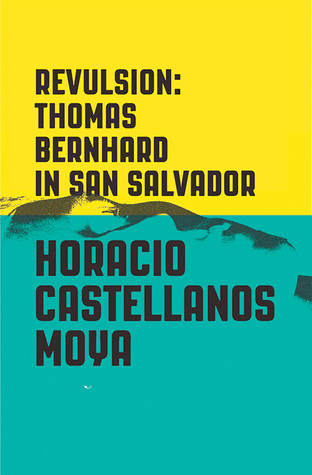
Homecoming – Revulsion: Thomas Bernhard in San Salvador by Horatio Castellanos Moya

In the note appended to the 2007 re-issue of Revulsion: Thomas Bernhard in San Salvador, author Horatio Costellanos Moya describes how a playful exercise in imitation led to very frightening death threats. Within a week of the book’s publication in 1997, his mother called to warn him against returning to El Salvador as he had planned. The immediate and hostile reaction indicates that not only was the element of satire missed, but the miserable misanthropic protagonist’s exaggerated rants were not entirely without grounds. But what angered some, impressed others, and the little book has endured, inspiring study, debate, and requests from citizens of other Central American countries for Castellanos Moya to similarly skewer their troubled nations. And now, at last, this incendiary novella is available in English from New Directions, in a no-holds-barred translation by Lee Klein.

RevulsionPresented with exuberant Bernhardian spirit, Revulsion is a relentless parody of the Austrian writer’s trademark style. The rhythms, repetition, and tone of Bernhard’s classic works are evoked along with a brutal, insistent ravaging of El Salvador and its capital city that is reminiscent, if not even more graphically emphatic, than the famous rants Bernhard routinely leveled against his own native country.

The eponymous narrator here, in a role common to many Bernhard novels, is on the receiving end of a breathless monologue recorded over the course of one single paragraph that stretches for more than 80 pages. The speaker is Edgardo Vega, a professor of art history who fled El Salvador for Montreal at the age of eighteen. Now, a further eighteen years later he has returned for the first time, to attend his mother’s funeral and ensure that her house is sold so that he can secure his claim on his share of her estate. To say there is no love lost between Vega and his native country would be an understatement.  His most prized possession is his Canadian passport, if he is proud of anything it is his successful escape from the pathetic aspirations of his middle class brother, the crime, the social decay, and the miserable dearth of anything resembling class or culture in San Salvador.

San Salvador is horrible, Moya, and the people who populate it are worse, they’re a putrid race, the war unhinged everyone, and if it was already dreadful before I took off, if it was unbearable for my first eighteen years, now it’s vomitous, Moya, a truly vomitous city where only truly sinister people can live, which is why I can’t explain why you’re here, how you can be around people who are so repulsive, around people whose greatest ambition in life is to be a sergeant; have you seen them walk, Moya?

No custom, institution or individual is left unscathed. Vega rails against his brother who owns a lock and key business, but shows no interest in books or art or anything beyond the most pedestrian popular music. He has less respect for his “ex-clothing store clerk” wife and his two “pernicious” boys who spend their time glued to the television set and have the audacity to call him Uncle Eddie. Even the old school friend with whom he is sharing a few hours at the local bar, a place he tolerates only in the quiet hours between 5:00 and 7:00 pm, is not entirely free from a measure of Vega’s contempt. The patient narrator’s literary ambitions are soundly ridiculed. In this way, Castellanos Moya is mocking himself, as he allows his ranting character to eviscerate his country.

The famished little stories about sex and violence aren’t worth it, I say this to you with affection, Moya, you’d be better off staying in journalism or another discipline; but at your age to be publishing these famished stories is a pity, said Vega, no matter how much sex and violence you put into them, there’s no way these famished little stories will transcend. Don’t waste your time, Moya, this isn’t a country of writers, it’s impossible for this country to produce writers of quality; it’s not possible for writers who are worth it to emerge in this country where no one is interested in literature, art, or any manifestation of the spirit.

As Vega’s account of the indignities to which he as thus far been subjected over the course of his return to his home town builds to a hilarious conclusion, one can feel the enthusiasm with which this exercise in imitation was created. Imagery is pushed to a vile extreme in places and, as much as humour slides through, the polemic unleashed against El Salvador is merciless. Castellanos Moya captures Bernhard’s tone and style with an almost pitch perfect delivery right down to the surprise ending. But with a protagonist who spits enough venomous spleen to make Bernhard’s most hyperbolic vitriol read like an afternoon at a Sunday school picnic, it is little wonder the satire was lost on some readers. All the same, for those who love the infectious wit and humour of the Austrian master, Revulsion: Thomas Bernhard in San Salvador is a wonderfully entertaining look at post-Communist El Salvador through a very dark lens.

Poets, artists and other lost souls: Last Evenings on Earth by Roberto Bolaño

A poet can endure anything. Which amounts to saying that a human being can endure anything. But that’s not true: there are obviously limits to what a human being can endure. Really endure. A poet, on the other hand, can endure anything. We grew up with this conviction. The opening assertion is true, but that way lie ruin, madness, and death.

The individuals that populate the stories collected in Roberto Bolaño’s Last Evenings on Earth tend to be poets, writers, artists, and dreamers. Typically they are oddly groundless, restless beings who seem to drift through not only their own lives but through the lives of those they encounter. Most are either exiles or products of the Chilean diaspora, loosely set down or wandering between Mexico or Europe. As a result, their existences carry a ghostly aura, they are haunted by an otherness that is indefinable to themselves and obscures their relationships with others. The narrators or protagonists are unsure of their own memories, sometimes anxious and paranoid, sometimes bored and aloof–unwilling to trust, to fully engage with those around them.

eveningsIn this, my first encounter with Bolaño’s work, I found myself captivated by the misty melancholic mood, the affecting prose, and the characters, who are commonly struggling with the vagaries of what it means to be creative and to find value in life. Yet there is an underlying ambivalence, anxiety, and insecurity that lends the collection an atmosphere that can be unnerving and faintly depressing. And it can also tend to contribute to blurring of the edges of many of the stories so that a reader may, at the end, be left with a sense of appreciating the journey but losing track of the details that set many of the tales apart.

That is not to imply though that there are not stories that stand out. In my reading, my favourites were the ones that happened to strike me as especially sad, but then I read this book at the bedside of a dying parent. Sadness was the order of the day.

The title story follows a young man and his father on an ill fated holiday to Acapulco. Their days pass in relative calm, though a strain can be felt in the relationship between the two. The father wants to go out, have fun, while the son prefers more solitary outings and spends much of his time reading a book about surrealist poets and contemplating the fate of one particular poet, a minor writer who disappeared and was essentially forgotten by his peers. Father and son engage in aimless conversations that highlight their differing temperaments while the latter is haunted by a feeling of impending doom. For a time the imagined threat is held at bay:

Then the lull comes to an end, the forty-eight hours of grace in the course of which B and his father have visited various bars in Acapulco, lain on the beach and slept, eaten, even laughed, and an icy phase begins, a phase that appears to be normal but is ruled by the deities of ice (who do not, however, offer any relief from the heat that reigns in Acapulco), hours of what, in former days, when he was an adolescent perhaps, B would have called boredom, although he certainly would not use that word now, disaster he would say, a private disaster whose main effect is to drive a wedge between B and his father: part of the price they must pay for existing.

As the threat becomes real, the son’s passive reaction to all of the warnings that come his way add to a tension built on the very human ability to fail to act on one’s better instincts. Bolaño is a master at exploiting the ambivalence that erodes relationships. Again and again his characters prefer to observe rather than engage, things are left thought but unsaid until, very often, it is too late.

Another especially poignant story is ‘Mauricio (“The Eye”) Silva’. Here the narrator recounts the experiences of a fellow Chilean exile he meets in Mexico City. The Eye is described as a sensitive man, one who always tried to avoid violence, “even at the risk of being considered a coward.” He eventually finds work as a photographer and as his modest fortunes improve he develops a style of dress that sets him apart from other Chilean exiles and likely leads to the intimation that he is a homosexual–a designation received with considerable derision, even fear, by his fellow countrymen at that time.

One night the narrator encounters The Eye in a cafe. The description of his friend is striking. Bolaño’s characters seem to pay particular attention to the appearances of their friends and acquaintances, almost as if they are looking to read something lurking beneath the surface, an understanding, a message or an ulterior motive:

I sat down next to him and we talked for a while. He seemed translucent. That was the impression I had. The Eye seemed to be made of some vitreous material. His face and the glass of white coffee in front of him seemed to be exchanging signals: two incomprehensible phenomena whose paths had just crossed at that point in the vast universe, making valiant but probably vain attempts to find a common language.

On this evening, The Eye not only confirms his sexuality, but announces that he will be moving to Paris where he can live more openly and pursue the kind of photographic work he has always dreamed of. It will be years before they meet again. The narrator, now married with a child and published books to his credit, crosses paths with The Eye in Berlin and learns of the life altering, disturbing experiences his friend had in India. It seems that the man who had always tried to avoid violence has discovered, like other Latin Americans of his generation born in the 1950’s, that violence would ultimately find him, even on a distant continent.

The fourteen stories that comprise Last Evenings on Earth are imbued with a wistfulness that captures the spirit of dislocation of the exiled. But with his evocative, evenly paced prose Bolaño speaks to a borderlessness that many of us feel when we don’t fit in wherever we happen to be. It is, perhaps, the writer’s soul that responds, I don’t know. I feel at a loss to define it, in this, my first experience with his work, but I do know I will return for more.

Last Evenings on Earth is translated from the Spanish by Chris Andrews and published by New Directions.

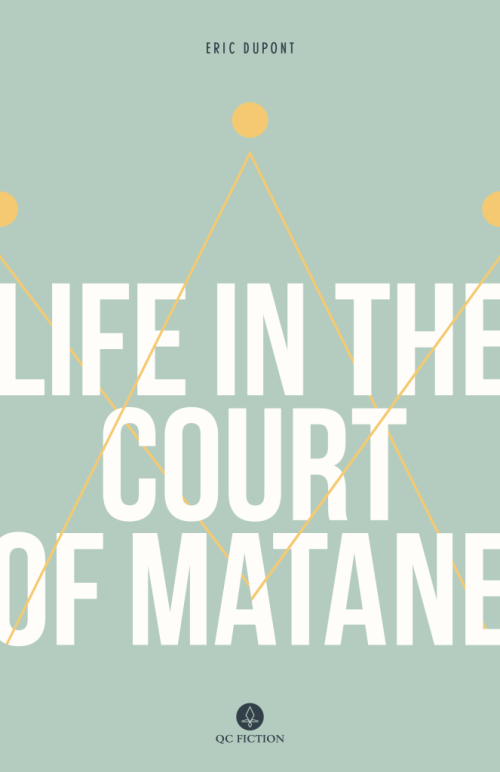
Life in the Court of Matane by Eric Dupont – My Numéro Cinq review

The publication of my most recent review for Numéro Cinq the other day, was, for me, a welcome opportunity to revisit an intelligent, humourous, bittersweet tale about growing up in Québec during the 1970’s and 80’s. This debut release from QC Fiction, a new imprint from Baraka Books created with the bold ambition to bring a new generation of Québec writers to an international audience through a subscription funded model, is first and foremost a story about family.

I have been thinking a lot about family myself these days as my brothers and I have been shaken and shattered by the critical injury of our father and the sudden passing of our mother within the span of the past week. Like all families, ours has its share of idiosyncratic dysfunction, but in our heartbreak we’ve been remembering the beauty and the humour above all of the difficulties and anxieties that have divided and united us over the years.

The family that Eric Dupont brings to life in Life in the Court of Matane, separated, defined and redefined by divorce and remarriage, shimmers with sparks of love, respect and affection. Even in the court of this latter day Henry VIII and his past and future queens, a sense of humour goes a long way, setting the ground for an unforgettable, original coming of age tale.

Here’s a taste of the review, please click through the link at the end to read the rest. A second link leads to an excerpt:

A Very Funny Novel: Eric Dupont’s Life in the Court of Matane — Joseph Schreiber

CoverLivreMatane_RVB

Growing up in a broken home is rarely easy. Too often children become pawns on the emotional battlefield as their parents face off against one another. This is the atmosphere of uncertainty and insecurity in which the eponymous narrator of Life in the Court of Matane and his sister find themselves at an early age. So it’s little wonder that they would recognize their predicament in the feats of a certain young Romanian gymnast swinging between the uneven parallel bars at 1976 Olympic Games in Montreal. But Nadia Comaneci is only one of a number of personalities evoked in this inventive coming-of-age story. She joins the re-imagined court of Henry VIII, key figures in the debate between Québec Separatists and Federalists, and a menagerie of assorted birds and beasts in Eric Dupont’s engaging account of a childhood defined by divorce.

Originally published as Bestiaire in 2008, Peter McCambridge’s translation of this acclaimed novel heralds the debut of QC Fiction, an ambitious publishing initiative dedicated to introducing readers to an new generation of Québec literature. Their goal is to be able to offer “surprising, interesting novels in flawless English translation” to a wide audience through a subscription funded model inspired by publishers such as And Other Stories, Deep Vellum, and Open Letter Books. With this in mind, it is difficult to imagine a more enchanting and original novel to launch this new imprint than Life in the Court of Matane.

Continue reading here:

Read an excerpt here:

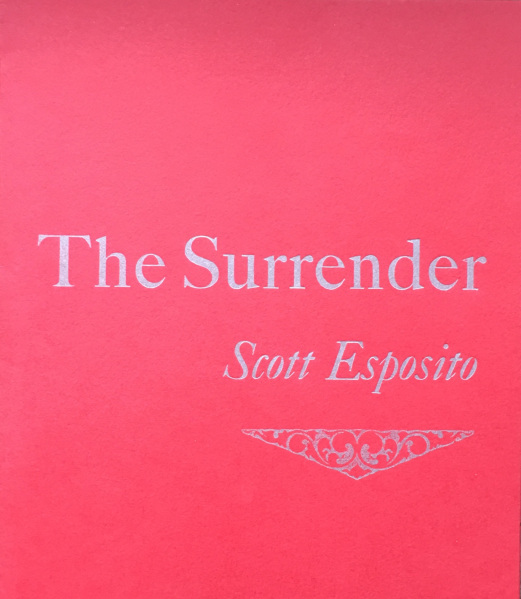
Thoughts on writing about The Surrender by Scott Esposito for Minor Literature(s)

The moment I heard that this book was on the horizon last year, I knew it was one that I had to read. But I could never have anticipated how tightly the release of The Surrender would intersect with my own fledgling efforts to put a voice to my own journey. The precipitous timing coloured not only how I read, but how I would go on to write about this book.

surrI entered Scott Esposito’s sensitive and intelligent three part essay into the heart of his own gendered identity armed with two notebooks. In one I catalogued my observations about the essays themselves–the structure, the form, and the content–while the other captured the flow of emotion, the moments of recognition, the ideas that spoke to my soul. One could say that I surrendered to this book. But I could only review it by putting my deepest personal reactions to one side and allowing Scott and his accounting centre stage. To do anything else would have been self indulgent, unprofessional. At the same time I simply wanted to open the work to the point that other readers would be drawn to enter in. One deserves to hear a story like Scott’s directly.

For my part, writing about The Surrender was an absolute joy. Thank you to Tomoé Hill at the wonderful Minor Literature(s) for entertaining my review.

You can read my review and see the original photograph I created to accompany it here.

Haunting fables for a modern world: Ninety-Nine Stories of God by Joy Williams

She was a writer on my radar, Joy Williams, somehow unknown to me until recently, but then, the world of literature is large and sometimes voices pass us by until fate or chance draws them to our attention. Or, if the rather ambivalent and perplexed Lord who appears in so many of the stories in her latest collection has His way, a little divine intervention is exercised. And so it happened that I found myself in the ER earlier this week, an advance reader’s copy of Ninety-Nine Stories of God on my phone. Between the tests and assessments to rule out any heart problems (my own private post cardiac arrest paranoia I’m afraid), I devoured a healthy measure of these bite-sized fictional treats. The true cause of my symptoms laid me under for a good 36 hours, but I emerged today to finish the collection, slowly only for the sake of savouring these deliciously dark, reflective, engagingly original tales.

99storiesA healthy dose of the unique joy of Joy Williams proved the perfect medicine.

The ninety-nine vignettes and mini stories that comprise this precious volume run the range from the brief and aphoristic to “longer” tales that run for a page or two. A cast of literary, philosophical and other assorted personalities make appearances, as characters or subjects. Williams delights in building fables that feature Kafka, Karl Jung, Simone Weil, or Philip K. Dick among others. At times she reduces her musing to the very simplest of terms, as in this one sentence micro-story which receives its context, as most of the stories do, by the title which is always placed at the end:

You should have changed if you wanted to remain yourself but you were afraid to change.

SARTRE TO CAMUS

The Lord Himself is a regular presence, as one might expect. He tends to appear in the most innocuous situations—He waits in a pharmacy line for His shingles shot, dreams of participating in a demolition derby, and expresses horror at the suggestion that He go to Home Depot to purchase supplies for a tortoise He wishes to adopt. Williams’ God is as curious and confused by His creations, especially those of the human form and He seems to have little control over the fate of His charges.

The Lord was asked if He believed in reincarnation.

I do, He said. It explains so much.

What does it explain, Sir? someone asked.

On your last Fourth of July festivities, I was invited to observe an annual hot-dog-eating contest, the Lord said, and it was the stupidest thing I’ve ever witnessed.

NEGLECT

Bemused and caring, lovingly benign, this is a God one can’t help liking. Good thing too, because the world of the ordinary people (and animals, for that matter) who feature in the majority of these stories is often marked by loss, despair and an odd isolation from others.

In his Numéro Cinq review of The Visiting Privilege, a recent compilation of her first three collections of short stories, Jason DeYoung describes her work as:

Strange and dark, her stories and novels make their foundation in realism, but then you never know quite where they will lead to. Most stay firmly planned in the “manifest world,” while others drift off toward the uncanny.

This description holds fast here too, even in abbreviated form. The humour is black, and a disturbing energy courses just below the surface. Nothing is spelled out beyond the most spare, necessary, imagery. So many stories pivot, or pack their punch, not in the ostensible actions recounted but in the reactions of the characters which are often counterintuitive. There is a suggestion that we cling to our dysfunction, our delusions, possibly as a stand in for faith, leaving the poor Lord Himself an awkward outsider in a world He designed.

The style and format of this collection is most strongly reminiscent of Thomas Bernhard’s The Voice Imitator. Of course, it would be remiss if the great writer did not make an appearance as he does in a story about a woman reading book reviews:

She was reading a broadside that reviewed a number of books. The reviews were extremely intelligent and gracefully presented. She read about a cluster of works by Thomas Bernhard, the cranky genius of Austrian literature, works that had been translated into English. She doubted that she would buy these books. She learned that he always referred to his lifelong companion, Hedwig Stavianicek, as his “aunt”. She was thirty-seven years older than Bernhard. She couldn’t imagine she had been his lifelong companion for long.

Given the condition I’ve been in over the last few days that, through a wicked case of the flu, I reveled in these ninety-nine gems. This story goes on in a way that most wonderfully spoke to my state and made me smile:

She had had a fever for several days and she was loafing around, drinking fluids and reading. With her fever, the act of reading became ever stranger to her. First the words were solid, sternly limiting her perception of them to what she already knew. Then they became more frighteningly expansive, tapping into twisting arteries of memory. Then they became transparent, rendering them invisible.

I can assure you this will not be my last encounter with Joy Williams. I would encourage anyone whose interest has been sparked to check the review I’ve linked above which contains a video of Williams reading an essay entitled “Why I Write.” Ninety-Nine Stories of God will be released in July by Tin House.

Goethe Dies by Thomas Bernhard – My Numéro Cinq review

I have written about Thomas Bernhard’s novels before, but faced with prospect of writing a longer critical review of a book containing four short stories I was faced with a dilemma: What does one say about Bernhard?

The question really is: How much familiarity with Bernhard should one assume? He is, most definitely, a singular writer. Those of us who count ourselves among the converted tend to have bulging bookshelves filled with a healthy supply of Bernhard’s novels, memoirs and poetry. Others are uncertain or fail to be immediately captivated. A bit of Bernhard primer is thus in order for those potential new readers, especially in this instance, because Goethe Dies, the collection at hand, offers a perfect opportunity to experience the magic of the master in miniature. A treat I argue for readers no matter their degree of prior acquaintance.

So in the following review published at Numéro Cinq earlier this week I tried to balance my general discussion of Bernhard’s prose style to provide a context for the appreciation of my analysis of the stories that would not be too redundant for the experienced or too vague for the novice.

Here’s a taste of the review, please click through the link at the end to read the rest. And while you’re there have a look around. There is another great issue shaping up at NC.

A Master Set Loose in a Small Space: Review of Thomas Bernhard’s Goethe Dies — Joseph Schreiber

Goethe Dies

Once acquainted with the work of the late Austrian writer, Thomas Bernhard, it is difficult to remain indifferent. One is either put off by his endlessly convoluted sentences, his bitter, misanthropic vision, and his fondness for digressive, contradictory and self-obsessed narratives; or one is swept up in the singular energetic flow of his darkly comic genius and never looks back. For those who find themselves in the latter camp, the announcement of a newly translated collection of four short stories originally published in periodicals in the early 1980’s is good news indeed.

Bernhard in short form may lack the unleashed full force intensity afforded when a single paragraph is allowed to unspool over one or two hundred pages or more; but these minor works, if you like, offer a valuable and entertaining opportunity to observe a master at play in a small, contained space. As with the early stories of Prose and the micro-fiction of The Voice Imitator, the short pieces collected in Goethe Dies, recently released by Seagull Books, highlight many of the essential elements that lend Bernhard’s work such a distinctive, infectious voice. Consequently, they may be best appreciated against a certain familiarity with the author and the idiosyncratic features that characterize his novels.

Continue reading here:

Innocence betrayed: My Father’s Dreams by Evald Flisar

Adolescence is, at the best of times, a period of turbulence. Hormones take over, driving hopes, desires and emotions. For Adam, the fourteen year-old narrator of My Father’s Dreams puberty becomes a twisted, surreal experience as he finds himself swept up in a world in which the line between dreams and reality becomes dangerously blurred. In this dark multi-faceted tale, Slovenian author Evald Flisar sets the stage for a story that is oddly out of time and place—a contemporary novel that evokes, in its backward rural setting and naive tone, a feeling of gothic horror or psychological drama that would be perfectly at home in the literature of the early twentieth century. But themes running through the narrative that are distinctly modern in their context and execution create an atmosphere that is eerily discordant and profoundly disturbing.

fathersdreamsAdam is a loner. He lives with his parents in a small rural village in an unnamed country. He describes his mother as shrill, over emotional and unduly concerned with social appearances. But he adores his father, the local doctor, unreservedly. He is the centre of his universe and he cannot imagine that he would ever cause him any harm. Adam spends his free time devouring books borrowed from his father’s library, a wide range of classic literature that runs the gamut from Zane Grey to Goethe to de Sade and Kafka and more. Not one to make friends easily, his sole confidant is his assumed brother Abortus, a jarred fetus who “lives” in his father’s secret laboratory in the basement of the health centre.

As puberty hits, Adam is increasingly beset by vivid dreams. He is unaware of just how odd and unnerving the content is until he allows it to fuel a school assignment. His teachers and his mother respond with shock. However, his rich dream life quickly becomes an object of fascination—or perhaps manipulation—for his father. Before long Adam finds that he is losing the ability to define the intersection of dreams and ordinary life:

. . . soon I was having too many dreams, and they began to suffocate me. Daily hallucinations merged with nightmares so imperceptibly that I was finding it harder and harder to draw the line between them. Afraid that I would sink in the burgeoning swamp of my own imagination, I began to flee in the direction of hard reality, grasping at anything that could be seen, felt, heard, or smelled. Soon I became so oversensitive that I registered the slightest rustle, the tiniest change in light, the least noticeable smell.

Over the course of the summer, the content of his dreams continue to haunt his days and nights. They regularly feature a familiar theme. Time after time he finds himself observing his father engaged in sexual activity with Eve, an attractive young teenaged girl from the city who is staying with her grandfather for the school holidays.

His father had warned him not to discuss his dreams, but encouraged him to record them. In his journals, Adam documents his thoughts and dreams which, with the blurring of his sense of reality, he has come to understand as being one and the same… the dream context granting immunity from the content of his thoughts which are peppered with images of sexual arousal and a desire for revenge against his parents. He quickly learns that these diaries are better kept hidden. And he has the perfect location—behind his jarred little brother, with whom he shares all of his secrets without reservation. With adults he is cautious to edit his responses to their queries about his dreams which are then subjected to Freudian and Jungian inspired debates. The only adult with whom he dares to approach an honest account is Eve’s kindly grandfather, who listens with a sharp concern that Adam notices but fails to appreciate.

During his strange dreams, Adam sometimes questions his ability to fall in and out of a hallucinatory state as well as his peculiar ability to exercise some agency, but he invariably seems to be able to assure himself that he is dreaming and, as a result, safe from any real danger. He continues to trust his father implicitly even when during an intentional “shared dream” proposed as a potential cure, he finds himself abandoned in a strange town with two young women:

The mist is now all around us, I can feel it on my cheeks; it is cold. The church clock delivers eleven strikes. There is no sign of Father. They are closing the inn, we have to leave. Like shadows we slink off along the the road leading into the centre of the town. It’s a very small town, almost a village. I am tired and sleepy. I am beginning to worry that Father might not return. Where will I sleep? It’s a strange thought, asking oneself where one will sleep in a dream, but the night is cold, and my worry is almost real. We roam around, passing houses, shuttered shops, and silent buildings. The church clock announces the time: half past midnight. And still there is no sign of Father.

Curiously (or not), the dreams involving his father and Eve cease as soon as the latter returns to the city in September. With autumn’s arrival his mother makes increased efforts to salvage the family, while his father’s behaviour becomes more erratic and threatening. Adam’s “dreams” begin to seem more like a protective psychological suggestion or even a defense mechanism evoked to cloud his perception of the events he observes or experiences. But again, he never openly contemplates this. His narrative, offered from a future perspective, looking back, belies a folkloric sense of innocence that cannot entirely be trusted. It casts a strange shadow across the work contributing to the odd tone. Dark topics such as addiction, suicide and pedophilia lurk at the heart of this tale amid the supernatural, surreal and grotesque elements. As a result the reader is left to navigate a slippery substrate that, even as tensions build to to a horrifying conclusion, refuses to yield to clear interpretation. The result is a complex, unnerving, unforgettable novel.

Novelist, playwright, essayist, and world traveler, Evald Flisar is one of Slovenia’s best known writers. Translated from the Slovene by the author and Alan McConnell-Duff, My Father’s Dreams is published by Istros Books. In their new collaboration with Peter Owen Publishers, they will be releasing Flisar’s Three Loves, One Death in November.

The pursuit of happiness: Sergio Y. by Alexandre Vidal Porto

“If happiness is not where we are, we must chase her. She sometimes lives very far away. You must have the courage to be happy.”

When it comes to the depiction of transgender individuals in literary fiction, I will confess that I am a rather cynical customer. Lets just say I know the reality too well. So much of what I have read does not even come close to scratching the surface of what it means to be at odds with one’s own birth-assigned gender. Intentions are good and, of course, the transgender or intersex character always allows for an interesting twist but the results can be misleading, even distressingly off base. That’s why Sergio Y. by Brazilian author Alexandre Vidal Porto is such a refreshing and original read. Here is a novel that treats the subject with intelligence and compassion—quite the feat for a book in which the transgender character meets an untimely and unfortunate end before the story even gets started.

SergioThe title character, Sergio Y. is the son of a wealthy businessman in São Paolo, Brazil, and the great grandson of an Armenian immigrant who escaped the tragic fate of so many of his countrymen, including the rest of his family, when he crossed the ocean in 1915, seeking his happiness in the Americas. The narrator is Armando, a well-respected seventy year-old psychiatrist. Sergio had been referred to him for therapy at the age of seventeen, described simply as “articulate, intelligent and confused.” They meet regularly for several years. This mature young man—so handsome, wealthy and talented—intrigues Armando and yet, in spite of all of these advantages, he professes to be possessed by a deep and abiding unhappiness.

Following a visit to New York City one Christmas, Sergio informs Armando that he wishes to discontinue therapy. He has had a revelation, he says, and he believes he has found a way to be happy. Our narrator is a little disgruntled to be dismissed as such but, as the years pass, Sergio Y. fades from his mind until a chance encounter with his former patient’s mother. She reports that her son has moved to New York where he attended culinary school and is now about to open his own restaurant. Armando is surprised, but pleased by this news and the praise he is afforded for his role in helping Sergio find happiness at last. However, this boost to his ego is short lived. Armando’s world begins to crumble when he learns, quite by chance, that Sergio Y. has been murdered at his home in the West Village.

Obsessive by nature, Armando becomes haunted by the need to know more. What he discovers with the help of a private investigator is completely unexpected and sends him reeling. The murder victim is identified as Sandra Yacoubian, female. Sandra and Sergio he soon learns are, in fact, one and the same person. His young patient had found his happiness as a woman and now she was dead at the age of 23! How could he have failed to recognize that Sergio was transsexual? And, even more serious, was his failure in some way responsible for this tragic outcome?

The main source of my frustration was not having detected any hint of Sergio Y.’s transsexuality. I felt I had been duped solely and exclusively by my own incompetence. I had always though that the secret to transsexuality was not all that deep, that it revealed itself in all of the individual’s attitudes, at all times, in all the decisions he or she took, since early childhood. As far as I was concerned, the pain in the patient’s soul and their inner confusion would be so visible that one did not need to be a Freudian or Jungian psychoanalyst to make the diagnosis.

Armando’s search for answers and his personal quest for understanding lie at the heart of this book. He begins with a handful of stereotyped assumptions. He labels them, admits to them, and lays them out. In the end, as he comes to a clearer,more nuanced appreciation of the decision his patient chose to take to find happiness and the determination with which she pursued it.

The narrative tone is highly idiosyncratic, dictated by the analytical, mildly obsessive-compulsive, immodest character of Armando. Even when he begins to doubt and second-guess himself as the account progresses, he maintains the matter of fact, dry, clinical delivery of a psychiatric report. The attention to detail—his clothing choices, his tendency to note the approximate height and weight of people he encounters, even his reports of his own emotional ups and downs—all create the illusion of a sterile account. But when the careful veneer cracks from time to time, we see a moody, somewhat petulant character, prone to bursts of pride, mixed with episodes of guilt and shame. He is continually measuring himself against his own successes and failures. His internal machinations are fascinating.

Ultimately, Sergio Y. is novel that approaches the transgender experience from the inside and the outside, allowing for the comfort with names and pronouns to vary, over time and from person to person, reflecting the complexities of relationships that others, even loving family members, can have when an accepted and assumed identity is challenged. In his own journey to understand and set his mind at ease, the questions Armando raises and the answers he finds serve to create a moving and compassionate portrait of the transgender person’s conflicted internal experience and the search to find a way to be happy in the world.

Happiness may be an ideal; comfort or contentment might work as well. From my point on this same journey I would hasten to add that it can be a difficult and lonely path, but that does not mean it is not worth following. In fact, if it is the right path, there is no other. Semantics aside, this novel is an important, engaging read. It deserves to be written about and it needs to be discussed.

Sergio Y. is translated from the Portuguese by Alex Ladd and published by Europa Editions.