Truth, lies and wild allegations: The Major Refutation by Pierre Senges

In an age when climate denial, an increasing distrust of immigrants, and the epithet “fake news” dominate the headlines, the eloquent arguments ventured forth in the pages of the anonymous Refutatio major (c. 1517–1525) play neatly against the public consciousness, reminding us that, even now, there are still those who hold to a view that the world is flat and the moon landings were fabricated. But none of our contemporary doubters or conspiracy theorists who peddle their “alternate facts” would deny the existence of the New World. . . However, in the decades that followed Christopher Columbus’ fated encounter with a land mass that would soon turn long held assumptions about the geographical reality of the world on their heads, what sort of skeptics might have crawled out of the woodwork?

Well, if you accept the premise French author and playwright, Pierre Senges, is prepared to offer alongside his spirited “translation” of this curious treatise claimed by no one but attributed to Antonio de Guevara, we have a Renaissance-era Latin document that purports to call into question the veracity of the reports, artefacts, and individuals ferried across the ocean from this distant new land by a steady stream of seafaring Spanish and Portuguese adventurers, colonists, and missionaries who have disappeared and reappeared over the watery western horizon since the reported discovery of the Mundus novus. And what an imaginative and persistent defense is waged in this apparent “Epistle to Charles V,” now translated into English by Jacob Siefring as The Major Refutation.

The new world, an enchantment? however when John Day, a good sailor no doubt, but a geographer of little import, announces that somewhere to the west islands have been found where “grass grows,” he is either smirking with deceit, or mocking our rulers, to whom he extends an offer of six square yards of lawn in the guise of a vast kingdom. These men go off into the horizon, where they lose their heads, exert themselves furiously, ravish Indian women, move mountains and entire populations, drown a thousand sailors in their wake, and then come back to us, swearing in magnificent syllables that grass grows on these lands and that in their environs, by the grace of God, rain falls from on high.

Senges is a prolific French writer, but to date little of his work is available in English. With a spirit akin to Borges and Calvino, Senges frequently exploits the possible, potential, and unfinished spaces that exist in history or literature. That porous line between fact and invention is blurred with a nimble oratorical style that lends itself to work with a sharp satirical, critical, and philosophical edge. Throughout the text, the personages and recorded events are real, but it’s the dogged determination to prove that the celebrated New World is an elaborate hoax that forms the heart and soul of this wildly entertaining feat of double imposture.

The magic of The Major Refutation lies in the delight the author (or his surrogate, shall we say) takes in language. The biting, sarcastic humour is infectious. One can imagine our Franciscan chronicler writing with a healthy measure of unholy abandon in this passionate entreaty to Charles V, king and Holy Roman Emperor. Antonio De Guevara (1480–1545), the imagined author of the manuscript at hand, was in truth, no stranger to writing in the voice of another—he infamously penned a text he tried to pass off as original by Marcus Aurelius. Granted free reign he openly attacks anyone, his clerical brethren notwithstanding, who comes within his sights in his effort to prove that the so-called New World is nothing more than a grandly orchestrated act of fraud and collusion. The concessions granted with respect to dominion over the distant vistas fail to impress him:

To the observer, these textual games and universal decrees sitting alongside and contradicting one another, these privileges to a single treasure granted to so many, these supposedly definitive treaties that are deprecated before the year is even up, that manner of signing at just two streets’ remove a couple of decrees that mutually refute one another, all the while perceiving that the world carries on under the weight of such numerous paradoxes, to the solitary witness all of this looks as much like naiveté, as much like a superior ruse. Because to adopt a proprietary attitude towards invisible islands is either proof of blindness, become lately a fashion of the courts & palaces, or it is a deliberate strategy, dictated by the crafty to the envious; to delude the people, it would hence be a question of acting as though the chimerical continents were so valuable they were worth the price of humiliations on their behalf, worth the aristocrats sharing trading posts and territories, like barkers sharing stalls in the marketplace.

With an stirring echo of florid baroque language, The Major Refutation calls in the prominent personages of the day, and implicates the state, merchant bankers, and the Church in the creation and perpetuation of the myth of the new world. Queen Isabella, Columbus’ sponsor, is a favourite suspect to whom the author returns repeatedly. He imagines ingenious means by which the entire enterprise could be facilitated —insisting that once beyond the horizon ships turn south to Cape Verde to hold over before sailing back with gold smuggled out of Spanish coffers and returned again. Of course, the unspoken value of fostering belief in a far off land of untold wealth and opportunity is not lost on him:

The principal reason for the invention of the new world would surely be to send off into the ocean a portion of our great surplus of useless men, who fill our countrysides, our cities, and betwixt the twain our faubourgs, with the speed of a spreading plague. . . . The new world and the enticing advertisements which speak of it so fantastically invite all these beggars & jobless, worthless players to board dinghies, strap a sail to their torso and head due west, without demerit. A steady stream of disfigured men, ugsome-faced knaves and scrawny blackguards have thus quit terra firma, this world for its beyond, in prestigious and ruined galleons.

From the opening “Editor’s Foreword” that places the Refutation into historical context, to the scholarly “Afterword” that vigorously defends the case for Antonio de Guevara, confessor to Charles V, as the probable author while considering less likely alternate candidates, Senges is essentially presenting a carefully designed meditation on the nature of truth—on that which is credible and that which is contrived, on belief and doubt. Selecting de Guevara as his preferred composer, a historical figure with an attempted forgery to his credit, and allowing him to imply that his faith in his own argument is perhaps less than genuine, adds depth to the layers of a deception designed and executed as one thoroughly intelligent and entertaining whole.

Of course, the release of the of “English Version of Refutatio major” in late 2015, ten years after the “original” French version, is especially timely. Conspiracies abound. In saecula saeculorum.

The Major Refutation by Pierre Senges, translated by Jacob Siefring, is published by Contra Mundum Press. And, for the record, the book design and typesetting is exceptional.

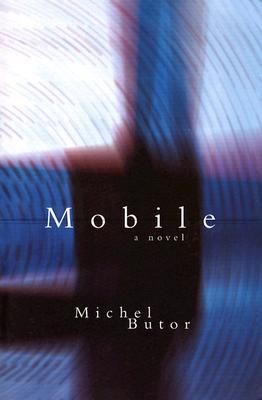
Experimental road trip: Mobile by Michel Butor

Freedomland prospectus:
“Excitement! Adventure! Education!
Cross the centuries from Colonial New England to the pioneer West, from the Mexican border towns to the Great Lakes ports, from Cape Canaveral to the Northwest Passage! Chug the picturesque Old West on an early iron horse, explore the Northwest in a fur trapper’s canoe, soar 70 feet above the earth in a mine oar bucket . . . tour through America’s waterways and wilderness on the most thrilling new rides ever designed!
Over forty authentic themes to make history live again at Freedomland! . . .”

freedomland

As I write this, the 45th President of the United States has been in office for just over two weeks. Watching the country of my birth from north of the 49th parallel where I have lived since I was three years old, it does feel as if one has wandered into the freak show tent at the Circus-at-the-End-of-the-World. Reading Michel Butor’s Mobile at this moment in American history, frames much of what we are currently watching unfold from an eerie perspective. When the French avant-garde writer was travelling the newly connected highways of America in 1959, he could not have known how very timely all the pieces of information he was gathering, fragmenting, and reconstructing into this ambitious experimental work would still seem more than half a century on. Or perhaps he did. In much of today’s rhetoric, it sounds as if there is a desire to return to some ideal USA, but if Mobile is any indication, that ideal never existed. It is a myth, like the many myths celebrated and reproduced at the grand, but very short-lived, Freedomland Amusement Park.

mobileSubtitled “A novel” in the Dalkey Archives edition I read, the original subtitle offers a more accurate indication of the project at hand: Study for a Representation of the United States. Butor draws from a wide range of materials to create, or allow for the creation of, a representational framework for looking at America. He incorporates substantial excerpts from the writings of Thomas Jefferson and Benjamin Franklin, reports from the Salem witch trials, traditional and treaty records from Native American history, newspaper accounts of the 1893 World’s Fair and more, but one cannot emerge from this journey without an appreciation of an expansive land, rich in history, natural beauty, and diversity.

As eclectic and idiosyncratic as the nation he is attempting to capture, Mobile reads more like a poem than any manner of traditional textual prose. Even the larger textual pieces are broken up and juxtaposed against other materials including an extensive collection of place names, signs, facts, ethnic newspaper and radio programming, travel boards, catalogue descriptions, Audubon bird portraits, and Howard Johnson ice cream flavours. There is a rhythm and an awareness of pattern that binds the work together within a strict overarching structure. He follows an alphabetic rather than geographic guideline from state to state, plays up the seemingly endless recurrence of place names, and links sections across time zones:

The sea,

                    oysters,

razor clams,

                    mussels,

littleneck clams,

                    Washington clams

A white Oldsmobile driven by a young, tanned white man in a pineapple-colored shirt with coffee polka dots (55 miles), “How much longer? Two hours?”—Dead Indian and China Hat Mountains.

The sparkling snow.

SPRINGFIELD. . . . and three o’clock in

SPRINGFIELD, Mountain Time, on the desert plain of the Snake River,
near the lava fields,

WELCOME TO ILLINOIS

                     already four in
SPRINGFIELD, Central Time, where you can order black-currant ice
cream in the Howard Johnson Restaurant.

The Chicago World’s Fair in 1893.
“The New York World,” April 9, 1893:
“Ward McAllister has given careful attention to the question of how New York society will be treated in Chicago during the World’s Fair. He is disposed to think that fashionable persons in this city need not fear anything but the best treatments at the hands of Chicagoans . . .”
Quoted by John Szarkowski: “The Idea of Louis Sullivan.”

The trains coming from New York.
The trains leaving for San Francisco.

Dedicated to Jackson Pollock, Mobile is often described as an unclassifiable work. It is clearly not a study in the formal sense of the word, though by standing back from the flow of fragments, a picture of the country emerges in the patchwork text. There is the sense that Butor harvested this wide range of sources and arranged them to allow the rhythm and flow of language paint a colourful portrait of the United States. It feels dynamic, natural, even when it is the intentional cleverness and humour that catches your eye. But then, it is this same playfulness that makes Mobile such a wonderfully fun read. I especialy enjoyed his use of catalogue listings, as in this pairing of an advertisement for paint-by-number kits with the description of a set of panties:

 “…With this set you receive two Rembrandt water-colors. Panels in pairs, 40 oil-colors in vacuum-sealed glass jars, four superior quality, washable brushes. Net weight: six pounds. . . .”

Or, through Sears, Roebuck & Co., and assortment of seven knitted nylon or rayon panites artistically embroidered with the days of the week:

                      “. . . Choose from

– white for Sunday,

                      – The Last Supper, with The Sermon on the Mount,

– yellow for Monday,

                     – Autumn Landscape, with The End of the Day,

– blue for Tuesday,

                      – Sunset at Sea, with Homecoming,

– pink for Wednesday,

                     – Thoroughbred, with The Foxhunt,

– white for Thursday,

                     – Scenes from Swan Lake, ballet,

– green for Friday,

                     – Venus and Adonis.”

– black for Saturday,
“please include hip measurements,”

This book is not, of course, all light and fun. There are deeply disturbing passages. Segregation is still a reality in many regions (“For whites only”), and the selections from Thomas Jefferson’s writing on the intrinsic inferiority of the black and red races are uncomfortable to read. In the light of the current concern about migrants, the ethnic and cultural diversity captured on Butor’s travels are telling (The Arabs who read “As-Sameer,” The Armenians who read Gochtnag,” The Chinese who read “China Tribune.”) Yet it is all bound together through the repetition of place names from state to state, and the famed ice cream selection at that classic highway stalwart of the era, Howard Johnsons. In the end, filtered through the lens of an outsider, Mobile succeeds in tracing a fractured songline across the heartland of America.

hojo

Mobile is translated by Richard Howard and published by Dalkey Archive Press with a fascinating introduction by John D’Agata.

Everything here is dead: Brothers by David Clerson

My first book of 2017 is not the cheeriest of novels, but all the same, it came as a very pleasant surprise. The story is a dark fable, decidedly not for children, but then, the fairy tales we remember from childhood were much bleaker, gruesome affairs in their original incarnations. So imagine, if you will, a scene taking place just off the edge of a canvas painted by Bruegel the Elder, where two deformed boys play on the shore of a wild sea, dreaming of escape to fantastic lands, and you will evoke the setting—and the mood—of Brothers by Quebecois writer David Clerson.

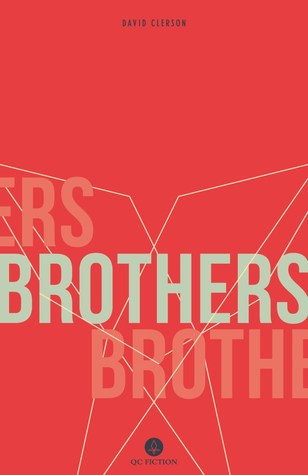
The third title to be released by QC Fiction, a new subscription-based imprint of Baraka Books, Brothers is quite possibly the Quebec publisher’s most daring and impressive offering to date (I reviewed the first release, Life in the Court of Matane for Numéro Cinq last July). This slender volume with the striking red cover—QC Fiction has chosen a most impressive graphic design for their books—cbrothersontains a world that overflows with mythological adventure, shocking violence, and nightmarish beauty.

Brothers plays with and twists themes pulled from myth and legend. The central character, “older brother” is born of the union between his aging mother and a wild dog. She does not want her son to face the world alone, so she cuts off his left arm and from that limb she fashions a “younger” brother who has two very short arms. The two disfigured boys spend their days running through the fields and marshes around their clapboard house, fishing off the pier, and scavenging oddities that the waves bring in.

One day the sea offers a wreck of a boat, another day a wooden puppet washes up. Together the brothers work to patch the boat as best they can, dreaming of the day that they cross the waters to distant lands populated with monstrous creatures in search of their “dog of a father.” When they find a drowned dog, they know that the time has finally come. With the older brother dressed in the animal’s tanned pelt, one of the puppet’s arms strapped to his shoulder in place of his missing limb, they set to sea, leaving their aging, desiccated mother behind. She has withdrawn from them so completely they doubt she will notice their absence.

The first days it took a long time to get away from the shore. Not by choice, but because the wind kept them there, or they didn’t know how to handle their sail, to make the boat go where they would have wanted. Instead, they followed the coast, in a direction they had never been, not toward the marshes and the neighbouring village, but out to where the coastline fell away steeply, with cliffs sliced by creeks and a multitude of shrieking birds soaring above.

The brothers are ill-prepared for their adventure. Illness levels the younger boy, storms rage, and ultimately, disaster strikes. The older brother eventually ends up alone, on a farm, chained to a doghouse. Yet he finds, for a time, a certain peace in this new existence, save for the torments dished out by the six pig-like children who also live there. He will even experience a mixture of love and lust with a grey dog—the daughter of a dog of a father—whose life has been much lonelier and harsher than his. But this respite does not last, and it does not end well.

If there is a moral here, it is that life is brutal—that goodness and evil are both instinctual survival mechanisms. The former is weak and the latter consumes. Redemption is elusive.

So why read it? The prose, beautifully translated by poet Katia Grubisic, is crystalline, spare, and unsentimental. The balance is just right… it holds you in awe. It is surreal, grotesque and beautiful in turn. The older brother is self-reflective. He notices his contentment, contemplates the stirring of love, and knows he is helpless against the escalation of murderous revenge. The cruelty he has experienced, the violence he has perpetrated, the guilt that haunts him, and the kindness he cannot accept leave their mark, shape him. He has existed at the intersection between beast and man—more whole and complete for the months he lives as a dog, as harsh and mean as they are—but in the end, in the absence of the brother who completed him—he can find comfort only in the company of a murder of crows. And it is insufficient.

This book is not, as I had feared, magic realism. This is not a human tale with a magic element—it is a magical tale with a human heart. Like a folktale for a post-apocalyptic future, Brothers, in all its grotesque surrealism, reflects a truth in which we recognize ourselves, with an equal measure of horror, sadness and shame.

Originally published in 2013 as Frères, this first novel won the Grand prix littéraire Archambault 2014.

The enigmatic fiction of Roger Lewinter: Story of Love in Solitude and The Attraction of Things

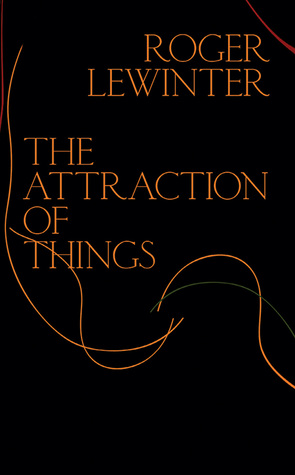
It is unusual to come to the end of a book and be completely at a loss as to how to write about the reading experience one has just had, and yet feel compelled to make some sort of attempt, however indirect or uncertain that might be. And that is exactly how I find myself now, having just finished Roger Lewinter’s novella The Attraction of Things. Together with Story of Love in Solitude, a very brief collection of three short stories, these two recent releases from New Directions (translated by Rachel Careau) serve as an English language introduction to the French writer and translator’s beguiling, meditative, and sometimes simply perplexing, fiction.

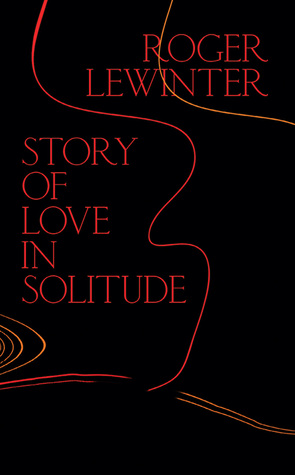
lovesolitudeThe latter volume, originally published in 1989, is one of the most unusual and strangely captivating books I read all year. The stories are focused and contained, reading almost like prose poetry, but they offer a taste of Lewinter’s idiosyncratic unspooling sentences that can wind around seemingly unrelated clauses before finding their way, from beginning to end, by such a circuitous route that one often feels inclined to retrace the pattern back to its source. It is an experience akin to untangling a long garden hose, or, more appropriately, following the designs of a richly decorated tapestry such as the Kashmir shawls that Lewinter’s narrator—whose writing and translating projects mirror the author’s so directly that the line between fiction and memoir appear to blur—obsesses over in the story “Passion” and throughout the course of the longer novella. Even attempting to write about Lewinter’s prose invites a tendency to add divertive notes, set off with dashes, not entirely unlike the style he employs.

See? Already it feels as if I am spinning my wheels. The reward though, especially in the shorter pieces, lies in the attention to detail and emotion, often of a detached or self-reflective nature, that is granted the events, objects or individuals with whom the narrator is engaged. The simplest story, the opening titular piece of Story of Love in Solitude, lasts for less than three pages and concerns the persistent presence of a spider. It captures so acutely the type of everyday irritation that quickly turns to a sense of loss when the routine is broken and an odd affection is realized after the fact.

athingsThe other two stories are more complex in the attractions and obsessions they entail and introduce characteristics that are present—and I want to say, more inclined to cause a measure of frustration—throughout the novella: Lewinter’s tendency to use explicit dates and translation projects to track time while he dismantles and reconstructs the chronological (in)consistencies in his stories—one which involves an epic battle against insect infestation and fate to save two camellias, and the other, which traces the protagonist’s drawn out and ultimately fruitless obsession with a young man he observes in the market. What makes these set-pieces work is the way that, for all his musing and meandering, Lewinter writes with an almost symphonic intensity, building tension into his narratives, and bringing each one to a charged conclusion. These small discursive journeys relate ordinary events that are oddly familiar, sensitive, and moving.

The same forces are at play in The Attraction of Things, which is the earlier of the two works, originally published in 1985, and, again, the overlap of characteristics between the narrator of the novella and, at the very least, the literary career of the author, create the sense that this is one voice, an alter-ego or fictionalized version of Lewinter himself. As he states, Attraction is:

…the story of a being who lets himself go toward what attracts him—beings, works, things—and who, through successive encounters, finds the way out of the labyrinth, to the heart, where passion strikes. This is the story of a letting go toward that passion.

The path that this being follows is one that appears to be characterized by an attempt to avoid deep emotional engagement with people by allowing objects—78 RPM records, Kashmir shawls, porcelain collectibles—to distract him. Against this pursuit of things, his mother and father become ill and eventually die, he allows a relationship with a woman to drift away, and lets a man take advantage of him. His passivity approaches denial of mortality, commitment, and sexuality. The flea market and the lure of things is a refuge. So too, is his work, which primarily involves immersing himself in the words of others.

Lewinter, the author and his narrator alike, has translated Karl Kraus, Elias Canetti, Robert Walser, and Rilke among others. But of special significance perhaps, is his deep association with the work of Georg Groddeck (1866-1934), the German physician widely regarded as a pioneer of psychosomatic medicine. If nothing else, this presents a possible context for understanding the manner in which the protagonist and his parents each face, and deal with, illness and physical ailments. There is a strong self-determination and stubbornness shared by the three family members that is, at the same time, a source of frustration to the son in his own distracted state. It is also interesting that Lewinter—separating him from his narrator is becoming redundant in this context—mentions writing about the connection between Bosch and Groddeck in an essay on paradise in psychoanalysis (Groddeck et Le Royaume millénaire de Jérôme Bosch—1974). Immediately this adds a new dimension to the obsession with Kashmir shawls—the colours and designs integrating cardinal points, black hearts, and angels—that runs throughout the novella and resurfaces in the later story “Passion.” To what extent are the textiles collected, cherished and hung on the walls an attempt to reflect a dream of paradise? But, most critically, when winding one’s way through the elliptical sentences that stretch on and on, often for a page or more, the narrator’s absorption with the work of a man who envied Freud’s discovery of psychoanalysis offers a way to “read” Lewinter’s distinct style of writing.

Any quotation from either book that captures a fragment of one of the gloriously nested sentences, would fail to do justice to the effect, or serve as a necessary sample for discussion, so permit me one longer, complete quote (by happy coincidence, this passage, which I selected as I was reading, happens to end a longer excerpt that was reproduced on Lit Hub):

The health of my father, since the previous September, had been deteriorating, the drugs having less and less control over the tremor that was now paralyzing him in spurts, disjointing his day with gaps to which, not wanting to hear of another hospitalization, he reconciled himself, and which I likewise trivialized; while, returning after the three months’ interruption occasioned by Antigone to Le chercheur, I finished the word-for-word translation in June, to find myself confronted with the difficulty unresolved, since I still didn’t know how to convey in French what showed through in the German, in my version rendering, as I was aware, only a state of amazement, not, in its magnetization, the torrent  of a life; and, the more I advanced, the more I was losing my way, when, on August 13, I had to have my father admitted, despite his refusal—“because you die there”—, to Thônex so that they could try, by gradually changing his medication, to stabilize his condition; but it was the balance found upon the death of my mother, three years earlier, that was undoubtedly slipping away.

Lewinter’s narrative clearly fits into the broad category of stream of consciousness writing. It is not as loosely unformed as some variations; the insertion of exact dates and concurrent writing and translation projects provides a structural formality and logic to the account. Not being well acquainted (yet) with the pioneers of the nouveau roman, I am not as well equipped as another reviewer (see John Trefry here) might be to draw refernces from that direction—my reading is necessarily instinctual and informed by the spaces where I related with particular poignancy to the larger story. The way the narrator’s mind wanders is reminiscent of the way we talk to ourselves and allows him to capture something somewhere between unarticulated thoughts and formal discourse. This is the private debate, the ongoing perseveration, the way we justify our obsessions with objects or people, our impatience with others—especially with those closest who invariably raise the most complex emotions—and any other shortcomings we care to catalogue and excuse as we structure our own internal narratives. As we articulate ourselves into being.

As the narrator’s equilibrium is slowly undone, that is, as his father’s deteriorating health challenges him to break down his own defenses, he is forced to finally open himself up and truly embrace the man he must admit he has never really understood. Father and son, mirrors in more ways than either wishes to recognize, are drawn, both resisting the pull, into a full acknowledgement of their affection for one another. And what is the first thing our narrator does to mark this breakthrough? He looks for an object to commemorate the occasion. There is constant interplay between emotional exhilaration and exhaustion that drives The Attraction of Things, at the level of the sentence and across the text as a whole, that to no small degree, contributes to the state in which a reader emerges at the end. In the span of 79 small pages one has experienced something at once fantastic and draining.

Not unlike a session on the analyst’s couch. And very much like the experience of trying to untangle and make sense of our own lives.

Lewinter is not going to be for everyone. If I was uncertain in the early chapters of Things after loving the smaller pieces in Story of Love, I became increasingly engaged as the father’s health deteriorated, in part because there were echoes of my own father’s decline and death over the first six months of this year. At times I almost had to laugh out loud at the older man’s stubborn resolve and refusal to give in to a weakening, crumbling body—my father was exactly the same. Now, having taken the time to write about this novella, I have come to respect and marvel at what it demonstrates about how an essentially ordinary, even mundane story can be told—no, orchestrated—and granted an operatic arc that creates an experience a reader will have a hard time shaking. There is a lot in this slender volume.

In the end, I am not certain I have articulated or elucidated anything especially profound about these two small books. To date, there is one more piece of fiction in Lewinter’s oeuvre and, as I understand it, Rachel Careau is still dedicated to translating his works. I know I will be watching for more.

Story of Love in Solitude and The Attraction of Things are published by New Directions. Each book is bilingual, with the complete French text following the English.

A modern day folktale: Baloney by Maxime Raymond Bock—my Rusty Toque review

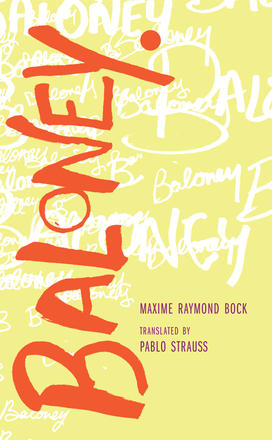
baloneyOne of my favourite books of 2015 was Atavisms, a collection of short stories by Quebec writer, Maxime Raymond Bock. I was especially impressed by his ability to employ a wide range of styles and genres, from historical to speculative fiction, in a multi-faceted exploration of Québécois history, society, and identity. His newest release, Baloney,—now available from Coach House Books and translated, like Atavisms, by Pablo Strauss—offers further evidence of Bock’s versatility. This novella evokes the spirit of a traditional folktale, with its tragic-comic hero whose larger-than-life adventures are immortalized by a disillusioned young writer drawn to the aging, eccentric would-be poet. By turns funny, sad, and wise, this simple story is surprisingly moving and thoughtful, and stands as yet another fine example of a new generation of Quebec writers who deserve to be more widely read in English-speaking Canada and beyond.

My review of  Baloney can be found in the current issue of The Rusty Toque—my first contribution to this fine Canadian online literary and arts journal.

Theatre on the page: 50 Drawings to Murder Magic by Antonin Artaud

They are 50 drawings

taken from exercise books

containing notes

       literary

       poetic

       psychological

       Physiological

       magical

especially magical

magical first and foremost.

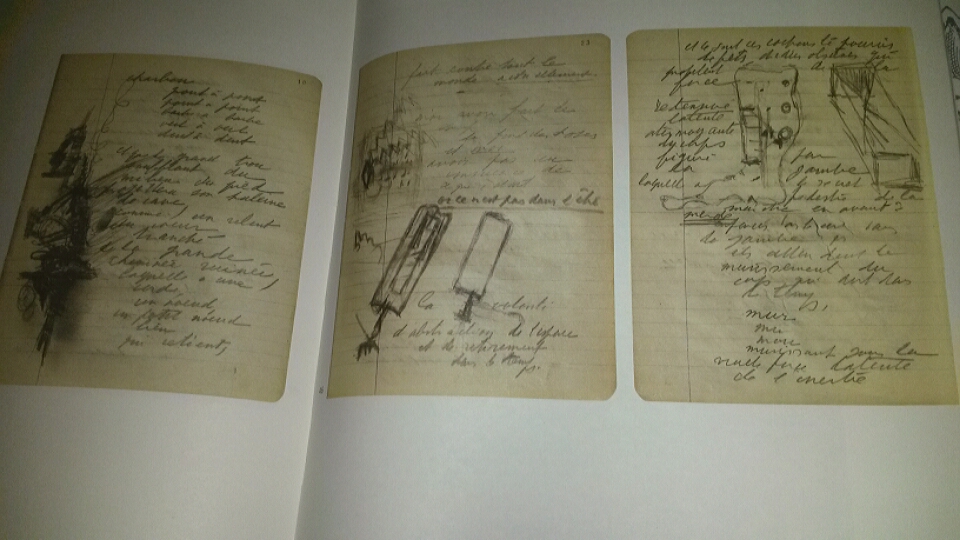
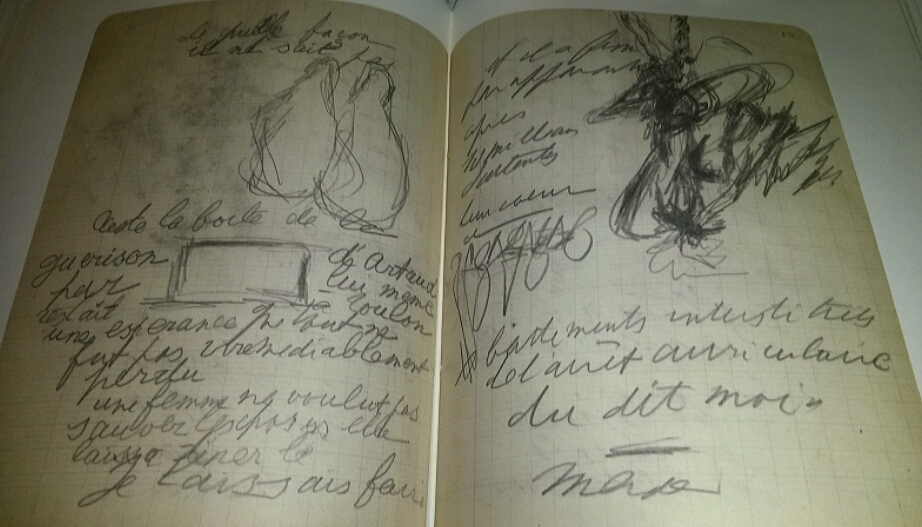
Thus ends the first page of Antonin Artaud’s last piece of writing, 50 Drawings to Murder Magic. Scrawled on notebook pages, this piece was written as a text to accompany a selection of sketches and fragmentary notations that he had been collecting for several years in small school exercise books. The sketches are frantic, the paper intentionally stabbed and tattered, the missives angry and disjointed. The ultimate design of this project, which was initiated at the request of art dealer Pierre Loeb, will never be known. It was interrupted by Artaud’s death in March 1948, two months after it was begun.

50drawingsArtaud was a poet, dramatist, actor and theoretician, best known for his notion of the “Theatre of Cruelty”—an approach to experimental theatre that envisioned the removal of the barrier of the stage between the audience and the performers, and the transformation of the theatrical experience into a primal, mythic spectacle involving groans, screams and verbal incantations. In her preface to the Seagull Books edition of 50 Drawings, the editor, Évelyne Grossman, suggests that his drawings reflect Artaud’s preference, in his later years, for the “restricted framework of the small format.” His feverish drawings of faces, torsos, hands, totems, spikes and other undefinable shapes and scratches may be seen as a form of dynamic performance on paper:

“This is not to say that his intention is to breach the frame of the page, to escape its confines; rather he is seeking to break out within the sheet: to raise the paper surface, to dig down into it, to lend it volume, to open up its unsuspected depths and thicknesses. The pages dimensions are thus exploded. Writing and drawing alike are set in motion.”

2016-10-25-02-39-30Originally associated with the Surrealist movement, Artaud had a deep interest in magic and the occult that extended far beyond that of his peers. He saw magic not only as a very powerful form of communication, but, he hoped, as a means to heal the deep rifts in his own troubled psyche. Plagued by mental health concerns, Artaud would spend much of his life in and out of asylums. Increasingly he was haunted by the demons of his own imagination and, as a result, it is intriguing to turn to his intense, often seemingly angry notebook drawings as an effort, as he puts it himself “to murder magic.”

2016-10-25-02-36-23In entering this gloriously reproduced edition of 50 Drawings to Murder Magic, I turned first to the facsimiles of the drawings themselves—selected from notebooks dating from 1946 to 1948, and presented in the order chosen by Artaud himself—before turning to the poetic introduction (also reproduced with the accompanying facsimile). That approach seemed to suit my mood at the moment and rendered an extra impact to his words. Even though I was only able to recognize and understand about half of the text accompanying the drawings, the intensity of the imagery is undeniable.

Artaud himself insists that his images:

…are not drawings

they figure nothing,

disfigure nothing,

are not there

to construct

build

institute

a world

even an abstract one.

He proposes an interactive engagement with the words he has captured and illuminated on the pages of these notebooks. In and of themselves, he claims that they have no meaning:

To understand these drawings

fully

       you must

       (1) leave the written page

             and enter

             the real

             but also

leave the real

             and enter

                         the surreal

                         the extra-real

                         the supernatural

                         the suprasensible

                         into which these drawings

                         continually

                         plunge

                         because they come from there

and because they are in fact

merely commentary

on action that

has really occurred…

There is, I sense, in this commentary created to accompany these sketches a prescription that applies to the dynamics between words or images on the page and the reader or viewer that also applies to the creator. There is something in this text that speaks to the creative process—especially to the degree to which so much of what the writer or artist commits to the page (or canvass) extends from a place beyond conscious attention, to be received actively but without specific intention.

When I write and a reader finds their own answer in the work, to a question I may not have even asked, that is when magic happens. Artaud may have imagined that is drawings murdered magic, but his accompanying text indicates that the magic he believed to be the mediation between artist and audience was alive right to the end.

50 Drawings to Murder Magic is published by Seagull Books and translated from the French by Donald Nicholson-Smith.

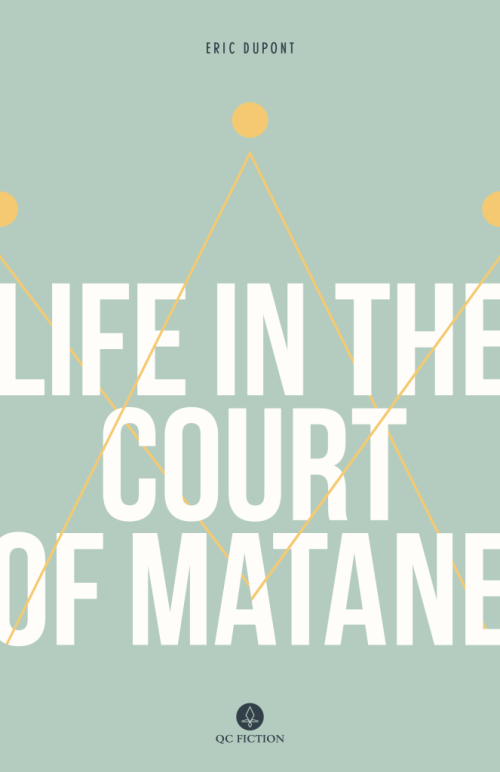
Life in the Court of Matane by Eric Dupont – My Numéro Cinq review

The publication of my most recent review for Numéro Cinq the other day, was, for me, a welcome opportunity to revisit an intelligent, humourous, bittersweet tale about growing up in Québec during the 1970’s and 80’s. This debut release from QC Fiction, a new imprint from Baraka Books created with the bold ambition to bring a new generation of Québec writers to an international audience through a subscription funded model, is first and foremost a story about family.

I have been thinking a lot about family myself these days as my brothers and I have been shaken and shattered by the critical injury of our father and the sudden passing of our mother within the span of the past week. Like all families, ours has its share of idiosyncratic dysfunction, but in our heartbreak we’ve been remembering the beauty and the humour above all of the difficulties and anxieties that have divided and united us over the years.

The family that Eric Dupont brings to life in Life in the Court of Matane, separated, defined and redefined by divorce and remarriage, shimmers with sparks of love, respect and affection. Even in the court of this latter day Henry VIII and his past and future queens, a sense of humour goes a long way, setting the ground for an unforgettable, original coming of age tale.

Here’s a taste of the review, please click through the link at the end to read the rest. A second link leads to an excerpt:

A Very Funny Novel: Eric Dupont’s Life in the Court of Matane — Joseph Schreiber

CoverLivreMatane_RVB

Growing up in a broken home is rarely easy. Too often children become pawns on the emotional battlefield as their parents face off against one another. This is the atmosphere of uncertainty and insecurity in which the eponymous narrator of Life in the Court of Matane and his sister find themselves at an early age. So it’s little wonder that they would recognize their predicament in the feats of a certain young Romanian gymnast swinging between the uneven parallel bars at 1976 Olympic Games in Montreal. But Nadia Comaneci is only one of a number of personalities evoked in this inventive coming-of-age story. She joins the re-imagined court of Henry VIII, key figures in the debate between Québec Separatists and Federalists, and a menagerie of assorted birds and beasts in Eric Dupont’s engaging account of a childhood defined by divorce.

Originally published as Bestiaire in 2008, Peter McCambridge’s translation of this acclaimed novel heralds the debut of QC Fiction, an ambitious publishing initiative dedicated to introducing readers to an new generation of Québec literature. Their goal is to be able to offer “surprising, interesting novels in flawless English translation” to a wide audience through a subscription funded model inspired by publishers such as And Other Stories, Deep Vellum, and Open Letter Books. With this in mind, it is difficult to imagine a more enchanting and original novel to launch this new imprint than Life in the Court of Matane.

Continue reading here:

Read an excerpt here:

Immersed in the moment: Incidents by Roland Barthes

In his Publisher’s Note to the French edition of Roland Barthes’ Incidents, a collection of essays published shortly after the theorist’s death in 1980, François Wahl suggests that the four very different texts assembled form a coherent whole because each piece “strives to grasp the immediate”. These are not theoretical or critical investigations in any sense, rather, in each text, Barthes is immersed in the moment, observing, reflecting, and recording his reactions. There is an unchecked flow and intimacy, by turns nostalgic, sensual, and melancholic but always tuned to the instance of occurrence: to the incident.

2016-05-19 21.38.01These are works that invite the reader to engage with all five senses, mediated through words and memory–they are not formal pieces but rather take the form of journal entries, diary writing, and fragmented travelogue. Barthes writes people and he writes place, never really entirely at ease with too much of either. Delight, boredom, and sadness filter through his reflections creating an immediacy that is at times startling. He is not writing for posterity, he is writing for himself.

The collection opens with “The Light of the South West”, an evocative essay/memoir, a personal tribute to the south west region of France. He writes about the experience of traveling south from Paris. Passing Angoulème he becomes aware that he is on the “threshold” of the land of his childhood. It is the quality of light that defines the place:

. . . noble and subtle at the same time; it is never grey, never gloomy (even when the sun isn’t shining); it is light-space, defined less by the altered colours of things . . . than by the eminently inhabitable quality it gives to the earth. I can think of no other way to say it: it is a luminous light. You have to see this light (I almost want to say: you have to hear it, hear its musical quality). In autumn, the most glorious season in this land, the light is liquid, radiant, heartbreaking since it is the final beautiful light of the year, illuminating and distinguishing everything it touches. . .

He goes on to turn his attention to the elements of the south west that resonate with different aspects of his childhood, to reflect on the way that memories formed in childhood inform way we remember the places associated with that time, the magical spaces and the difficult times will each carry their own tone, their own qualities.

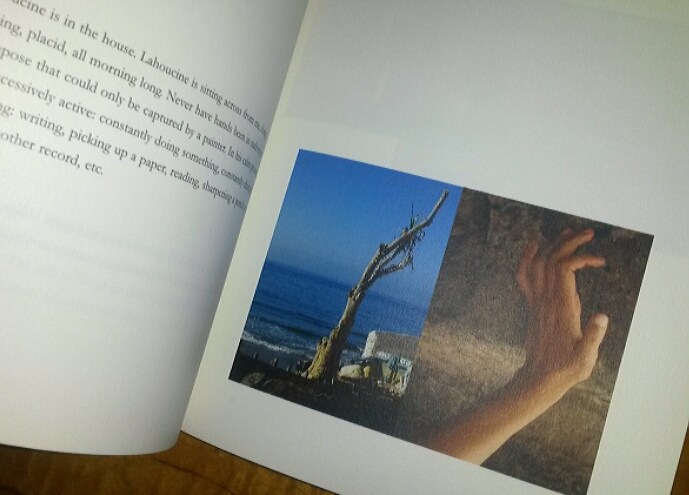
2016-05-19 21.41.06The title piece is the earliest in the book. Recorded in 1969 when the author was in his mid-50s, “Incidents”, as the name implies, captures moments from an extended stay in Morocco through an incidental series of fragmented encounters and experiences. Here, people form the scenery; with a special attention reserved for young men. Barthes demonstrates a a particular eye for detail (and somewhat of an obsession with hands) in these passing observations, combined with an acute sensitivity for scents and colours. The vibrancy, shades and contrasts of the country come alive. As a reader you become aware of the blinding light, the dark shadows–they are not described, you sense them in the background.

A young black man, wearing a crème de menthe-coloured shirt, almond green pants, orange socks and, obviously, very soft red shoes.

A handsome, mature looking young man, well dressed in a grey suit and a gold bracelt, with delicate clean hands, smoking red Olympic cigarettes, drinking tea, is speaking quite earnestly (some sort of civil servant? One of those who track down files?), and a tiny thread of saliva drips onto his knee. His companion points it out to him.

Some young Moroccans–with girlfriends they can show off in front of–pretending to speak English with exaggerated French accents (a way of hiding the fact without losing face that they will never have a good accent).

The art of living in Marrakesh: a fleeting conversation from open carriage to bicycle; a cigarette given, a meeting arranged, the bicycle turns the corner and slowly disappears.

The Marrakesh soul: wild roses in the mountains of mint.

The third essay, “At Le Palace Tonight . . .” is a tribute to a Paris club in a converted theatre. He describes the ornate detail, the mood and the atmosphere of this place where he seems to almost prefer to be an observer, watching the dancers and the human interactions rather than taking part. And as in the first essay, we find once again a wonderful evocation of light, this time light as informed by the interior of a structure:

Isn’t it the material of modern art today, of daily art, light? In ordinary theatres, the light originates at a distance, directed onto the stage. At Le Palace, the entire theatre is the stage; the light takes up all the space there, inside of which it is alive and plays like one of the actors: an intelligent laser, with a complicated and refined mind, like an exhibitor of abstract figurines, it produces enigmatic shapes, with abrupt changes: circles, rectangles, ellipses, lines, ropes, galaxies, twists.

This collection closes with “Evenings in Paris” a series of journal entries from 1979 that open with words Schopenhauer wrote on a piece of paper before he died: “Well, we’ve escaped very nicely.” The Barthes who comes through in this selection is tired, often impatient with colleagues and irritated by noise. A certain loneliness and dissatisfaction underscore his descriptions of dinners with friends, failed attempts to win the affections of the younger men he covets, and an unresolved mourning for his beloved mother. Most nights he finds himself heading home alone, half despairing, half relieved, to settle into bed in the company of Pascal, Chateaubriand, Dante, or the echoing ghost of Proust. Although he still enjoys longingly watching attractive men, he has little patience for crowds or social functions. This is a heavier, more emotionally intense offering, the intimacy of “the immediate” weighs heavily as Barthes commits his thoughts to paper, unaware in the writing as we are in the reading, that he is nearing the end of his life.

2016-05-20 02.33.11And, because he is recording the ordinariness of the daily encounter of the self with the world, there is the possibility of shock waves that ring down the years with a new intensity in light of the incidents (that word again) that have unsettled Paris in recent years:

The guy who sells Charlie-Hebdo walks by; on the cover in the publication’s idiotic style, there’s a basket of greenish heads that look like lettuces: ‘2 francs the head of a Cambodian’; and, right then, a young Cambodian rushes into the café, sees the cover, is visibly shocked, concerned, and buys a copy: the head of a Cambodian!

Not without a little social commentary, even in a deeply personal journal, Roland Barthes, remains ever relevant down the years.

Reading Incidents is, in itself, a sensuous experience, it is doubly so in this edition from Seagull Books. With a sparkling fresh translation by Teresa Lavender Fagan and illustrated with the evocative photographic images of Bishan Samaddar, this collection of writings becomes one that can, as Barthes himself would have intended, be savoured.

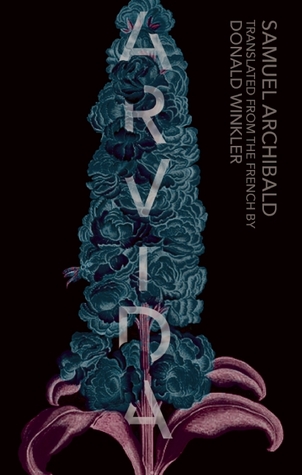
Life in a company town: Arvida by Samuel Archibald

You could almost envision Arvida as a town constructed as a backdrop, like a movie set, just waiting to be called upon by a talented story teller; one who would pull and draw legends, myths, and memories out of the woodwork of his hometown and re-imagine them, use them as fuel for his creative fire – a writer like Samuel Archibald. And you would not be that far off. Arvida was, in truth, a company town, founded in 1927 on the banks on the Saguenay River, 240 km north of Quebec City. Archibald describes the town’s genesis as follows:

“The Americans built the town beside the aluminum smelter in a hundred and thirty-five days. There’d been nothing around for 200 million years, then there was the Alcan smelter, and a hundred and thirty-five days later, a town.”

A town with no history suddenly appearing in the middle of nowhere was a haven for those with a past to escape, those who wanted to forget or be forgotten… “a town of second chances”.

arvidaBy the time that Archibald was born 1978, Arvida had been fused with the town of Jonquière and today a number of smaller communities have been amalgamated to form the city of Sanguenay. Arvida, as separate entity, the model town once praised by the New York Times no longer exists as such. But its glory days, its decline, its humanity – and a measure of misguided inhumanity – provide a wealth of inspiration for the stories that make up Arvida, Archibald’s short story collection first published in French in 2011, and now available in English translation. It has been shortlisted for the 2015 Giller Prize.

On the back cover of this book, Samuel Archibald is compared to a “Proust-obsessed Cormac McCarthy”. Stir in a nod to Stephen King and it is not an inaccurate billing. There is a dark heart throbbing throughout these stories, a pulse that binds them together, weaving often disparate tales into a surprisingly coherent and effective whole.

The series is bookended by the first and third parts of the “Arvida” story: “My Father and Proust” and “Madeleines”. Together with “The Centre of Leisure and Forgetfulness” (Arvida II) which appears about two thirds of the way through, we have a fictional glimpse of the author, his family, and his hometown. Funny, sad, and philosophical, this tripartite tale begins with humorous accounts of the narrator’s father’s boyhood penchant for stealing pastries and ends with the challenge of facing Proust’s madeleines armed only with the memory of McNuggets, anchored in the middle with a celebration of the spirit and fortitude of his grandparents and the characters that brighten small town life at its best.

Many of the stories that fill out the collection are decidedly darker. Blood and violence are not unknown. But then neither are dreams and a spirit of magic. “Cryptozoology” features a father and son who live between dream and waking life without holding one as more valid than the other. Sharing a cabin in the woods, 13 year-old Jim is essentially his hard-drinking father’s care taker, driving him home from social gatherings, and cleaning and sobering him up the morning after. On the road and along the traplines he is haunted by sightings of an elusive animal, perhaps a cougar, that cross into his sleeping hours and take on an increasingly mythical significance as Jim himself becomes ill.

“Now Jim is dreaming and listening. He hears what they’re saying about him. He’d like to reassure them, to explain to them. He often has a dream with no up nor down, where the beast attacks him and devours him. It’s a dream of carnivorousness and violence, but not of death. He does not expire while the cougar is annihilating his body, he fossilizes within the animal like a memory of flesh.”

Ghosts are also a featured presence in Arvida, from the old fashioned gothic horror of “A Mirror in the Mirror”, the tale of a woman who wastes away into a state of otherworldliness waiting for her playwright husband to return from an extended stay in Montreal; to the spirits, real or imagined, that haunt and ultimately destroy the family life of a man who takes on the restoration of a crumbling historic mansion. But the horror theme is taken to an extreme in “Jigai”, a gruesome fantastical tale of ritual mutilation set in Japan, safely across the globe from small town Quebec. It is apparently an allegory of an unimaginably brutal story Archibald heard when he was growing up. Placing it in the middle of this collection however, has the effect of providing a powerful counter point to the small moments and the everyday terrors, fears, and passions of life in a remote community.

The fictional Arvida is inhabited by a wide assortment of colourful, often hapless, indiviuals. For example, in “América”, for the promise of three thousand dollars, a pair of young men decide to accept the challenge of smuggling a woman from Costa Rica into the United States. First they enlist a cokehead as an accomplice who turns out to be little more than a burden that must be abandoned, and then neglect to consider the impact that the events of September 2001 will have on their attempt to cross the border in 2002. Later on in another story, “The Last-Born”, a man who is less than a deep thinker, decides he can kill a man, again for a couple thousand dollars. Yet what starts out as attempted murder, turns into an unexpectedly heartwarming tale. Archibald is sensitive to the complicated dynamics of human interaction, allowing his characters to find their own ways in to and, with luck, out of trouble.

Arvida was very well received in Quebec. Archibald worked with translator Donald Winkler for a year to realize the work in English. Hopefully the Giller nomination will serve to introduce him to a wider audience, and to provide a well deserved boost for his small publisher, Biblioasis, who had three titles on the long list this year, two moving on to the short list. The stories in Arvida may be inspired by a particular place, but they vividly evoke the reality of small town Canadian life, especially in the 1960’s and 70’s. They could be set in any number of communities across the country, especially those company towns that rose up around mining or pulp and paper factories. Some, like Arvida have been absorbed into larger centres, while others are fading away.

School Days: Our Lady of the Nile by Scholastique Mukasonga

“Our Lady of the Nile: how proudly the school stands. The track leading to the lycée from the capital, winds its way through a labyrinth of hills and valleys and ends, quite unexpectedly, in a twisting climb up the Ikibira Mountains – which geography textbooks call the Congo-Nile range, for want of any other name.”

NileThis first novel by Rwandan born French writer Scholastique Mukasonga imagines life in an exclusive girls’ school high in the mountains of Rwanda close to the source of the Nile. Created by the Belgian Catholic church to nurture and prepare the daughters of wealthier Rwandan families for a future that befits their pedigree in the now independent nation, the lycée offers a well rounded education for a young lady and protection from the undue attentions of the opposite sex. Being a virgin, or at the very least not pregnant, is still key to securing a good marriage. And keeping watch over this small community is a blackened statue of the Virgin Mary enshrined nearby, practically assisted by a rigid Mother Superior, several sisters and a chaplain with a lecherous eye for his female charges. Lessons cover academic subjects, languages, religious studies and finishing school skills such as cooking and sewing.

Our Lady of the Nile opens at the beginning of a new school year. Land Rovers, limousines and buses arrive to deposit students. As one might expect, the girls form alliances, engage in gossip, develop crushes on the French male teachers. Assuming a dominant role among her third year classmates is Gloriosa, the big boned, intimidating daughter of a high ranking Party official. In the Hutu dominated nation, her greatest scorn is reserved for the two Tutsi girls admitted under the quota requirements, Virginia and Veronica.

As the year progresses it becomes clear that for all the Catholic school’s efforts to civilize the young ladies, traditional superstitions, beliefs, and customs have a strong hold over the students at the lycée, blending in with Christian faith and fear. For Veronica in particular, another element comes in to play. An eccentric white man who lives nearby on a crumbling estate, lures her into his obsessive fantasy about the Ancient Egyptians and his belief that the Tutsi are their direct descendants. In her vanity she is willing to entertain his delusions. Virginia is skeptical and uncomfortable by her friend’s willingness to assume a queen’s role and seeks instead to assuage disturbed spirits.

Of course underlying racial tensions are never far from the surface. One student, Modesta, with a Tutsi mother and Hutu father, is caught between the two. She likes to confide in Virginia but cultivates a place of security by playing Gloriosa’s lapdog. Although the Rwandan genocide is still years off at the time this story is set, violence is a real and present threat and each side is aware of where their fate lies and it all comes down to a question of race:

“Because there were two races in Rwanda. Or three. The whites had said so; they were the ones who discovered it. They’d written about it in their books. Experts came from miles around and measured all the skulls. Their conclusions were irrefutable. Two races: Hutu and Tutsi, also known as Bantu and Hamite. The third race wasn’t even worth mentioning.”

As Our Lady of the Nile unfolds, life at the lycée and the adventures of some of the girls in this tiny African nation are sketched out at a slow, simmering pace. However, because each chapter tends to deal with a distinct event, the novel has the feel of interlinked short stories. I did enjoy this book, it reads well with moving, often funny, passages, but the overall effect is somewhat disjointed. I found it too easy to put it down and not pick it up for a day or so. A little more consistency and tension would have helped propel the story toward what is a shocking and violent end.

witmonth15Translated by Melanie Mauthner, the tone is graceful and clear. But I have to say that there was one moment that set the reading experience off and had me wondering where the editor was. Told from an omniscient third person perspective throughout, there is one paragraph that falls into the first person plural, in the first half of the novel. The effect is jarring. One of those times that, as a reader, one wants to have a peek at the original text.

* Our Lady of the Nile was longlisted for the Best Translated Book Award (BTBA) 2015