My literary goals for 2020, or rather, where they begin

When I wrote my end of year post on New Year’s Eve, a wave of end of year gloom, fueled in part by media focus on the currents state of the world and a sense of anxious pessimism colouring the future outlook, for myself personally and the planet. When I look back over the past twelve months or so I feel fatigued. There seems to be so much I could not get a hold of—the volume of editing for 3:AM, coping with my son’s addiction, managing my own grief processing and mental health challenges.So, unable to set boundaries or take control I sought to escape. After a five week trip to India in February, I went back in late October. One should never confuse the desire to travel with a desperation to run away from loneliness and a failure to feel at home, but I suspect that drives many of us who are perpetually restless. I’ve only been back for a month and already I find myself watching planes take off from the airport across the city and wish I too was leaving again. It’s a financial and practical impossibility at the moment, and I don’t even have a destination in mind, but a part of me is always mentally packing bags and thinking about getting away.
From this vantage point, I keep thinking about everything I did not do this year, all the bookish goals unmet, outlines unsketched, words unwritten. I made a few forays toward a fledgling project, some with promise, inspired in large part by essays I was reading. I fiddled with a little poetry, published a couple of pieces and wrote one major critical essay and a personal essay commissioned for a publication sometime this year.

However, sometimes it feels like my efforts fell short—for two months I even battled a crippling inability to open a book—but, in truth, 2019 held many moments of literary magic.  I visited Bombay for the first time early in the year to meet up with poet and cultural critic, Ranjit Hoskote, and also ended up meeting Priya Sarukkai Chabria—a translator, novelist and poet whose name was new to me. By the end of the year I would come to treasure her friendship and belief in me as a writer. In November I spent several days with her and her husband in Pune where she arranged for me to give a talk on book reviewing and, the next day, meet up with several poets who have now become part of my expanding network. I’m learning to trust her instincts.
In February I also made my second trip to Calcutta where, once again, I taught a class at the Seagull School of Publishing  (a session which has, in itself, added to my circle of friends) and I had the distinct honour of engaging in a public conversation with Edwin Frank, the founding editor of NYRB Classics. As usual, several other creative personalities were gathered at Seagull, but an unexpected delight was to spend a few days with Italian poet Franca Mancinelli who happened to be in the city on a residency. It was a busy, inspiring week in a city I’ve come to love.

On both of this year’s India visits I spent time in Kochi where my dear and long-time friend Mini lives, now that she has returned home after many years in Dubai. I made my first trip to Nepal to catch up with a Nepali friend who used to live in my home town. My closest queer friend, a graduate in theratre arts and probably the only person who understands my own complicated queerness, I miss the long conversations over coffee we used to have. Kathmandu is a long way to go to catch up. But worth it!

I also finally  got to Jaipur, a city I will have to go back to—magical energy, stunning architecture and a climate as long as I avoid the really hot months, suited to my natural desert temperament. (I live in a dry, albeit cold, environment.) I spent two days with Saudamini, another creative spirit I have known for a number of years, who was an enthusiatic tour guide. And together we found in the bedrooms of the Nahargarh Fort interior design perfect for book lovers!

On my third and final day in Jaipur, I enjoyed another serendipitous encounter with a Twitter follower who reached out when she heard I was on my way. A curator at the City Palace Museum, it turns out that we have a mutual friend in Bombay, because, of course, even in cities with millions of people, it is a small world. Apurna and I enjoyed a wonderful lunch together, strangers only for the first few minutes. Which, in itself, is one of the things that brings me back to India.

The other critical anchor for me on this most recent Indian adventure, was the opportunity to get to know another Twitter contact, someone unknown to me on my first visits whom I “met” through non-Indian readerly friends and who lives (at least for now) in Bangalore where I was based. A writer and reader with impeccable taste (that is, corresponding with my own), JP and I spent a lot of time drinking coffee and scouring bookstores on Church Street as one must when in that city. Last, but not least, I went to the Bangalore Lit Fest with a couple of students from my first year teaching at Seagull. Had I found the courage to venture to Delhi, I would have connected with even more former students, but I still find the city daunting. Someday, I will go.

For now I know that I need to take the time to drift through all the memories I gathered in India this year. There are so many that they sometimes feel like they are crammed to the back of a closet, waiting to see the light but too much, too confusing to deal with. They are filled with joy, pain and curiosity. I was in the country during the election campaign when Pakistan was bombed, I returned home as the controversial Transgender Protection Act was passed—something that reminds me how precarious my own travels are, no matter where I go because my outward appearance only provides a superficial security—and now I watch the citizenship protests roll out.

My attraction to India is complicated. I am not an Indian, I am not involved with or married to an Indian. Friendships aside I have no need to go there. But what I have gained over the course of my visits is a real life validation of my worth as a writer. Something no editing engagement, publication or Twitter chatter can equal. However, it inevitably makes me feel like I come home to a creative and emotional void. I hit waves of loneliness that turn back into bitterness and resentment.

Aimed at myself.

Aimed at my city.

Aimed at my life.

Once again, it serves to accomplish little more than to further absorb my creative energy. So, as 2020 begins, I am aware that, if I am ever going to be able to meet the  writerly goals I have set for myself, I have to start with, strangely enough, forgiveness. It is the only protection against anger and resentment.

So that, then is my primary literary goal for 2020. Everything I read and write will flow from there.

Wrapping up another year in reading: Farewell to 2019 and a long decade

The end of a another year is upon us and, at the same time, another decade is also drawing to a close. Both have offered a mix of joy and pain. I have written enough about the personal challenges and the opportunities these past years have brought. Suffice to say I approached the 20-teens, so to speak, with confidence, prepared to face my fifties as a time of increased professional growth as I assumed day-to-day parenting would become less pressing. I could not have imagined what life would look like heading into the year during which I will turn sixty. I still have a troubled now-thirty-year-old child at home, my career imploded years ago, I have lost dear friends and family members, and today I look around the world to see fires raging, Arctic ice melting, right-wing Nationalist movements rising, and hatred and instability spreading, often in countries that have nuclear capabilities.

We are living in interesting times, as the Chinese curse goes.

Thankfully I still have books. And writing. And an international literary community — one that has expanded my horizons in ways I could never have anticipated.

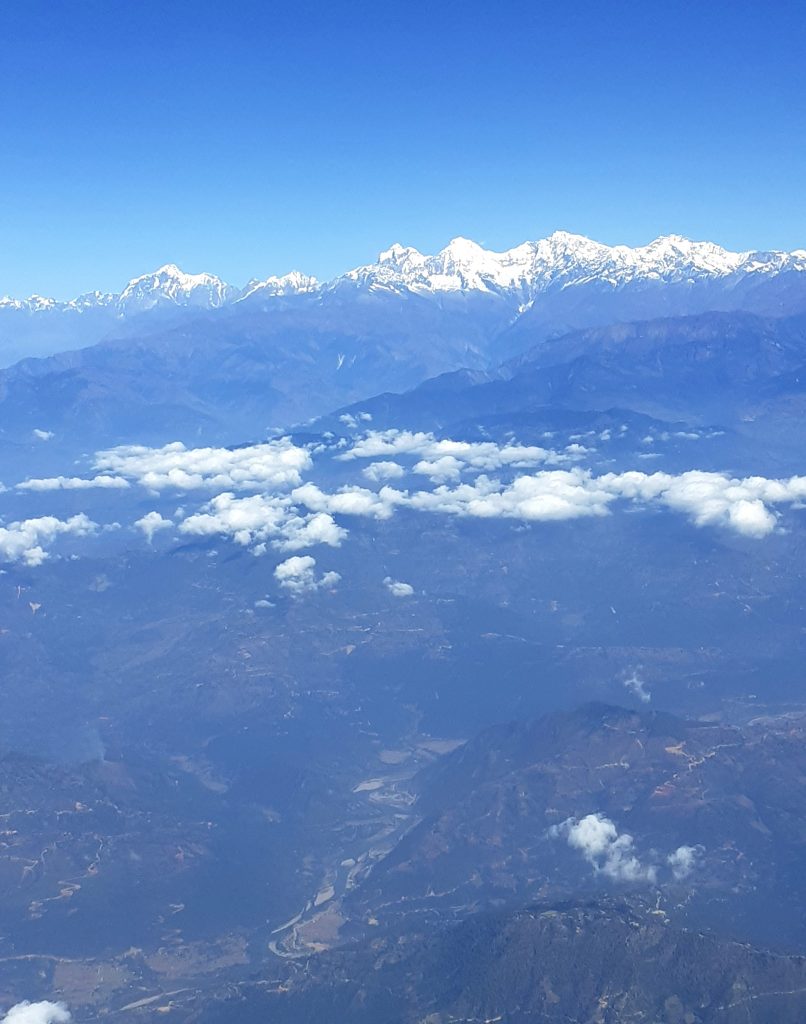
The Himalya on the horizon above Nepal.

As avid readers roll out their annual lists of favourite books of the year, I’ve noticed many efforts to celebrate a personal book (or books) of the decade. I couldn’t even begin to do that. It would be like trying to hit a moving target. My reading has changed a lot, especially since I started actively writing reviews and publishing my own work. Chances are it will change again. Reading, like most things, is dynamic. As it is, it’s hard enough to narrow down a selection of favourites at the end of the year. There are so many that get left out. However, even though I keep promising myself I will give up on the regular spectacle, come the end of December, I find it impossible to resist shining a light on some of the books I especially enjoyed (and to be honest, I always like to see what others have been up to as well).

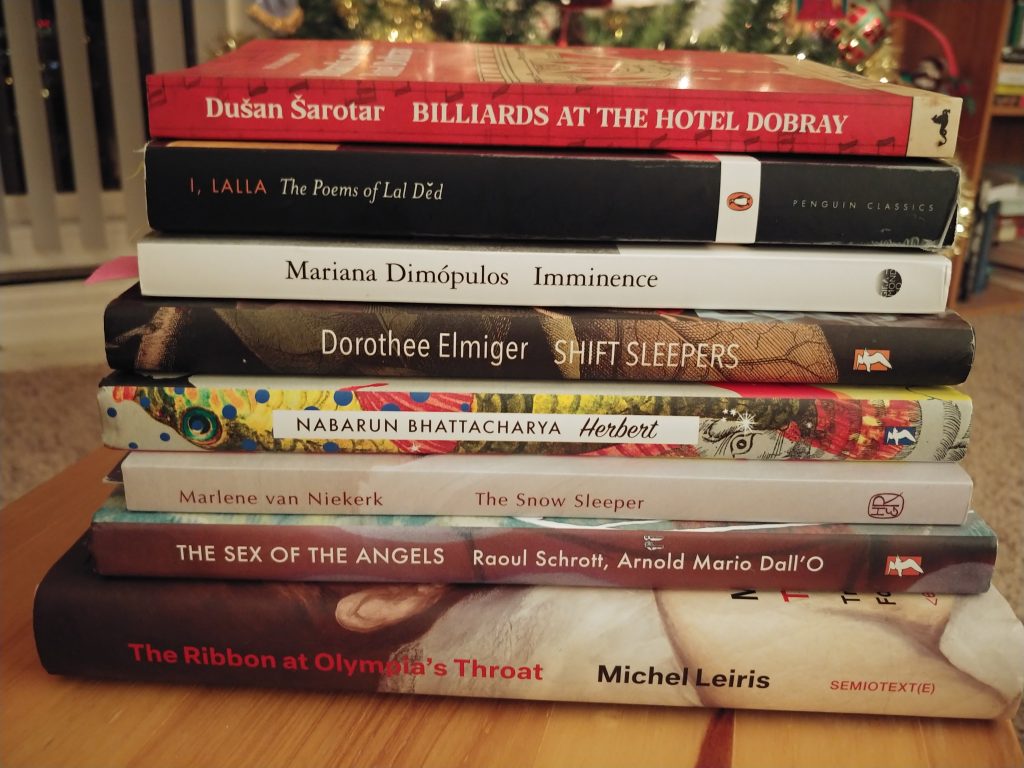
Now that I have them together, I’m surprised to see that my top reads for 2019  were all published this year save one — I, Lalla: The Poems of Lal Ded. However, reading the poems of a 14th century Kashmiri mystic in the same month the Indian government revoked Article 370 triggering a crisis in Kashmir that is still ongoing made it disturbingly timely. As well, all are translations.

Absent from this photo because I do not own a hard copy is Wild Woman by Marina Šur Puhlovski, tr. by Christina Pribichevich-Zorić from Istros Books, a tale of an unhappy marriage with a wonderfully engaging narrator.

The balance of my selection, arranged for aesthetics not relative value, includes:

Billiards at the Hotel Dobray by Dušan Šarotar (Slovenia, tr. by Rawley Grau) an evocative, filmic Holocaust tale set in the north eastern region of Slovenia lying between the Mura River and the Hungarian border.
I, Lalla: The Poems of Lal Ded (Kashmir, tr. by Ranjit Hoskote). Not only is this book timely given the state of affairs in Kashmir, but because the body of work attributed to Lalla was likely created, in her name and honour, over the centuries by contributors reflecting a range of faith communities, ages, genders and backgrounds. Thus her example is critical at a time when forces are tearing at the threads of India’s diverse heritage.
Imminence by Mariana Dimópulos (Argentina, tr. Alice Whitmore) features a troubled difficult narrator who does not relate to others in a “normal” way — a challenge for author and reader, but I found much to recognize in her lack of social skills. Brilliantly realized.
Shift Sleepers by Dorothee Elmiger, (Swiss/German, tr. by Megan Ewing). Reading like a performance piece rather than a conventional narrative, this confident, complex, intelligent novel circling around the subject of borders and migration is one of the most original works I’ve encountered in a long time. Stunning.
Herbert by Naburan Bhattacharya (India/Bengali, tr. Sunandini Banjerjee). A new translation of this Bengali cult classic was also published as Harbart in North America. Both that edition and the Calcutta-based Seagull Books edit are boisterous and fun, but as an editor I was surprised to see how much was smoothed out of the former.
Snow Sleeper by Marlene van Niekerk (South Africa/Afrikaans, tr. Marius Swart) this wonderful collection of interconnected stories by the inimitable Marlene van Niekerk, one of my favourite authors, is an example of how an English translation can maintain elements of Afrikaans and Dutch without alienating readers — if you trust your audience. These are stories about the magic of language, where the magic is allowed to shine through.
The Sex of the Angels, The Saints in Their Heavens by Raoul Schrott (Austria/German, tr. by Karen Leeder). Undefinable, indescribably beautiful, this text — best described as a prose poem paired with haunting illustrations by Italian artist Arnold Mario Dall’O — is etheral, heavenly and bound to the earth all at once.
Ribbon at Olympia’s Throat by Michel Leiris (France, tr. by Christine Pichini). As soon as I learned of the release of this text, the last major work by one of my literary heroes, I knew I had to have it and write about it.  A moving exploration of art, writing and aging by one of the most important French intellectuals of the twentieth century.

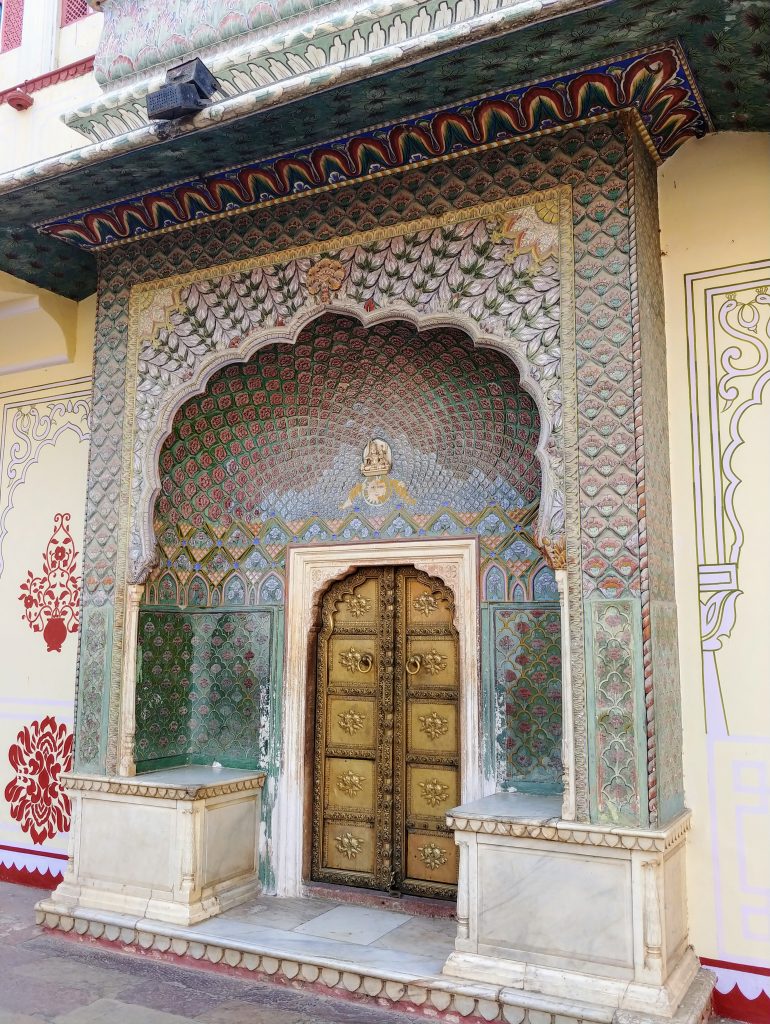
At the City Palace, Jaipur

This year I made two trips to India, both over a month long. Presently I am watching tensions rise there with concern, aware that I am an outsider, but it is impossible to ignore hateful rhetoric no matter where it arises. None of our countries or communities are immune from divisive discontent or politicians prepared to capitalize on it. And yet I still think about going back, about the places I have yet to visit, people I want to meet up with or see again. The restless loneliness of being home settles in quickly and India has become important to me. But I suspect it will be a while. . .

As I look ahead to the coming year, my primary objective is to write. Seriously this time. I know I have said that before, but my writer’s block has eased. I now need discipline. My goal is to have a draft of a nonfiction manuscript of perhaps 100 pages complete before my birthday in October. All other writing, reading, and volunteer editing will have to fit around that goal.

And so I go. Into a new decade.

Travel, writing and poetry: A link to my new poem at RIC Journal

I have a new poem up today at RIC Journal.  I’ve called it “Indian Autumn Elegy.” For some reason, this most recent visit to India, my third in two years, has so far resisted my dedicated efforts to capture it in prose. At least not for this blog.  As I process my cumulative experiences, not simply in India but in the other countries I’ve spent time in over the past few years, South Africa and Australia, I am coming to understand that much of what I want to draw to the surface belongs to another, longer dedicated writing project. One that has long been a vague intention but is now beginning to fill empty pages.

In the meantime though, there are reflections and observations too restless to wait, and those seem to be slipping into poetic exercises.

Like this one.

The first sketches of this poem were composed last month, on the train between Delhi and Jaipur. It speaks to a recognition that something I have often told myself I was seeking through travel—a kind of validation I hoped I might find by losing myself in a crowd—is neither necessary nor possible.

“Indian Autumn Elegy” can be found here.

Beginning to understand what keeps calling me back: A short reflection

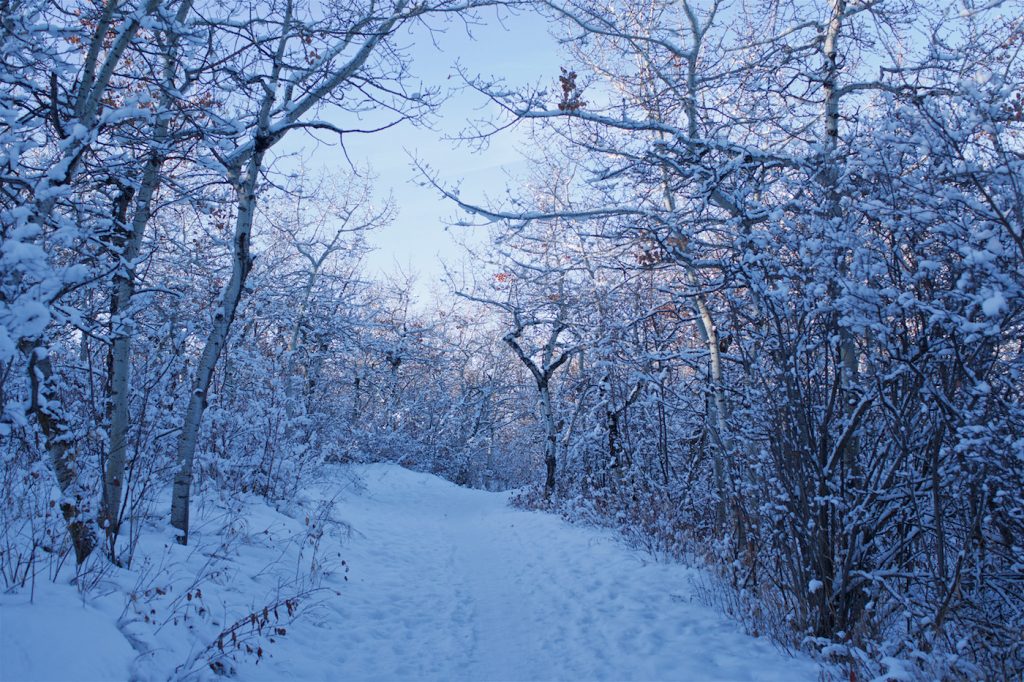
As I write this I am in Pune; this evening I fly back to Bangalore for a few days. Then I head home. Away from heat and greenery, back into cold and snow. Plenty of both.

As I look back on the past five weeks or so in India, images and memories shift and tumble like the pieces of coloured glass in a kaleidoscope. Diwali in Wardha, Blossom Book House in Bangalore, the crowded dusty streets of Kathmandu, the rocking rhythm of the train from Delhi to Jaipur, Jantar Mantar, the grand astronomical observatory built by Jai Singh II and the magnificent forts towering above the city he founded. Quiet days amid the lush tropical beauty of Kochi, and stimulating literary engagements in Pune.

I learned a lot on this visit—about India, Indians, and myself. About intersections where noise and colour can overwhelm, where nuance can be lost and small wisdoms can be gained.

This has been more of a spiritual encounter for me, if I can use that term. I’ve come a little closer to understanding what it is I am seeking in the repeated act of intentional, albeit short term, displacement. It has, I believe, something to do with death. With loss and grief. With finding a way to experience that which I have mourned, that which has caused me pain and anger, as a life-giving positive force.

It will take time to unravel this thread, this tangled web of thoughts. Now, I suppose, I need the space that distance will grant me to reflect a little. At this moment, from a balcony level with tree tops, I want to drink in the foliage and think about the past few weeks without forcing or directing anything.

What is it that stands out? The people, of course. Friends. Reconnection with old friends, encounters with new friends, and finally meeting face to face with those only known online. The luxury of long conversations. Exploring the landscapes and cityscapes with those who know it well and love it. Who feel it in their souls.

For now, that is what I will hold close to my heart as I prepare to head toward home.

My latest passage to India

Each visit to India brings its own rewards, but as one spends more time in another country, the cultural differences become more apparent. There are the obvious ones—fascinating and wonderful to observe. Like the great honour I had to share in a family Diwali celebration, from a respectful distance, delighted and deeply grateful for the experience. I was in Wardha with a friend—a city on few Western tourist’s agendas—a place that revelled in the celebrations. I visited Sevagram, Ghandi’s ashram, and had an opportunity to get out into the beautiful countryside of central India.

It is an experience I will always treasure. Perhaps, when I find the spirit, I will write more.

Until then there is a little pain that requires healing though that may not be possible.

In the meantime, the opportunity to get to know a Twitter friend, his wife and his unruly canine and feline household, has been wonderful, and with a Lit Fest happening here in Bangalore this weekend and Nepal, Jaipur, Kochi and Pune ahead, I hope to find some of the creative inspiration I was hoping for.

For now I’m just checking in.

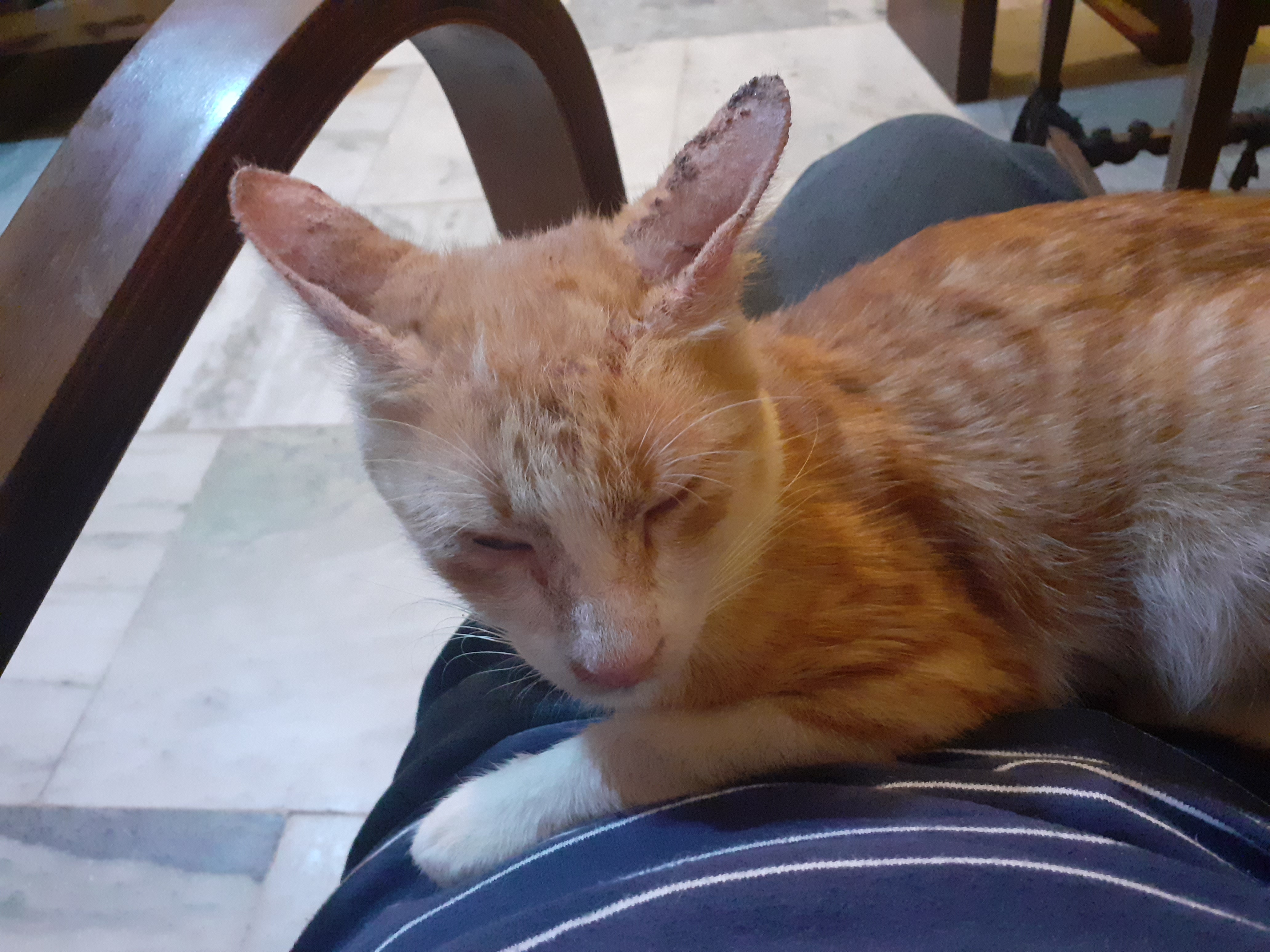
My new friend.

Cloaked in Literature: Clone by Priya Sarukkai Chabria

In the years that I have been maintaining this blog, I don’t believe that have written about any book that might fall into the category of science or speculative fiction. I probably haven’t read much in recent years. As my attention has shifted to translated and more unconventional literature, I have set aside less time for the type of books I used to pick up as what I might have considered casual or escapist reading. Which sounds, I’m aware, like a little snobbishness and a lot of equivocating. But I don’t intend it that way, however, if one is not well read within a particular arena, writing about or reviewing a book becomes more difficult. The inclination is to simply read for pleasure, as if that is somehow a bad thing. Is literature supposed to hurt? Of course not. By this point in my life I like to think I’ve earned the right to read—or not read—whatever I want. Jump ship after 30 or 50 pages if I the book’s not working for me. Or to be surprised by a book I was less certain about.

In recent years there has been, it seems, a rush of speculative and apocalyptic themed fiction, drawing authors and readers from across the literary spectrum. I have tended to avoid it. I came to this book, Clone, almost by chance, when I was in Mumbai earlier this year and made plans to meet up with the author, poet and translator Priya Sarukkai Chabria at the Kala Ghoda Festival. Neither of us knew much about the other beforehand. A few hours over coffee and cake later and I’ve come to consider her a good friend. So although we have not discussed this book at all (I actually went to hear her lead a panel discussion on translating ancient literature), it is only fair that I consider this post a response rather than a formal review. As I’ve already indicated, I’m not sufficiently well-read in dystopian fiction anyhow. However, it’s also fair to say I was completely captivated by the scope and passion of this tale of an engineered clone “evolving” within a rigid, dispassionate world that is as fantastic as it is terrifyingly plausible.

The novel is set in a highly stratified twenty-fourth century India, where a select group of Originals lead a protected life of privilege and guarded luxury serviced by a vast array of clones bred from their own DNA, often mixed with or fortified by genetic material derived from animals. Divisions between classes of beings, or life forms, are strictly controlled. Museums exist to guard art and history from curious visitors and elaborate blood sports are a popular entertainment. It is, from the outside looking in, a world order long since divorced from the very qualities that faith, philosophy, and literature would have associated with humanity. In fact it would seem that the stirrings of these forgotten ideals, filtered through a vestigial genetic legacy that has resisted attempts to contain it, is the greatest threat to those in power. However, mutations keep arising.

Our narrator, Clone 14/54/G is, she insists, not a mutant. What sets her apart is something more unsettling. Her consciousness is changing. She remembers. The memories she seems to be accessing are desired by some and dangerous to others. Her Original, Aa-Aa was a writer living in the late twenty-first century, now being made manifest in her fourteenth generation likeness, cloaking her in Literature, so to speak. But Aa-Aa was a controversial figure who met an untimely end mid-way through an important public address. Her intended message died with her and Clone 14/54/G is seen a potential conduit to that message, for good or ill.

In a society dependent on unquestioned obedience and compliance, and designed to enforce it, poetry and stories are subversive elements. For our Clone, an early sign that something is amiss comes when she begins to experience unexplained compulsions and strange “visitations.” Like inhabiting a dreamscape although clones are not supposed to be able to dream, she finds herself caught up in stories—sometimes as a human, sometimes as an animal—reliving a life from a long lost time. These visitations which will later comprise a significant portion of the book, echo historical and mythological themes reaching far back into Indian history. They not only threaten the rigid consistency of the narrator’s programmed existence, they speak to the ineffable power of stories, to the poetry of our DNA.

Clone 14/54/G’s initial response is to wish these unwelcome intrusions away. Her sense of her place in the “Global Community’s” order of reality has been challenged. Originals alone have life, Firehearts who were created to play an empathic role have presence, and Superior Zombies claim existence, but Clones simply “exhibit actuality.” However, as words and ideas begin to come to her, to make their way into her experience of this actuality, her sense of her own reality is altered, or less certain. She responds whenever feasible by reducing her mode of function. But this strangeness does not simply affect her feelings. Her body is also responding:

Beneath my overalls I grew hair. At work, I made no error. I was allowed full rations. I was living in two worlds. Is this what is meant by loneliness? That you don’t belong to any world. Not the old one. Not the new. You don’t even seem to belong to yourself.

But as her awareness continues to evolve, she is relieved of her former worker role, and removed to a holding facility where she is afforded certain luxuries and encouraged to foster a connection with her Original. Her adjustment is not without reservations as the routines she knew are pulled away. And she is subjected to real pain, frequently pushed to her physical limits as the months pass. For support she has the Fireheart clone Couplet, an attentive almost insect like-creature assigned to assist in her recovery of Aa-Aa’s memories. Meanwhile, a handsome Original known only as The Leader, takes a particular interest in her progress and soon they become lovers. Her situation becomes at once more tenuous and more exciting. To what extent is she being played? By whom? To what ends? And is there anyone or anything she can trust, especially her own increasingly volatile and passionate heart? For example, after making love one day, she is haunted by questions that never would have troubled her before. What does it mean, for example, to be aware of the fact that she is alone?

Who is now speaking—Aa-Aa or me? Why do I wish it not be her?

“Clone 14/54/G” is no longer enough. I am more—and less—than I was. Less sure, less safe, less isolated. More curious, more in pain, more resolute about my uncertainties. With more words at my command.

The strengths of Clone lie in the strong voice of the narrator who comes to be known as Aa-Aa Clone 14/54/G and the realization of a multi-faceted, artificially manipulated society without laborious details or explanations. Aa-Aa Clone 14/54/G can only tell the story as she knows and understands it, nothing more. Her narrative moves from the focused and contained, yet conforming perspective of being whose entire world has been formed along established lines, to one whose humanity, if you will, starts to break through in fits and starts. The passion and spirit of her Original, and the characters whose stories she carries, simmers slowly, gradually building steam, but is never an entirely natural fit. This is not a Cinderella story. Too many horrors await, too many questions remain unanswered. Finally, the form, incorporating tales drawn from the accumulated memories of a distant past—the storyteller’s true legacy—is unexpected and effective; the language poetic and powerful.

Clone by Priya Sarukkai Chabria is published by New Delhi-based Zubaan Books, and distributed outside India by University of Chicago Press.

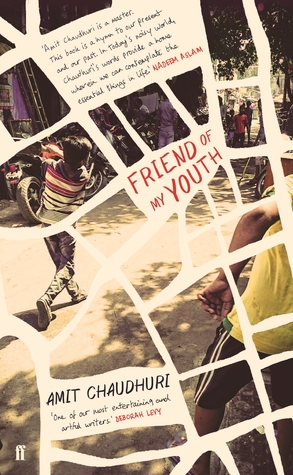
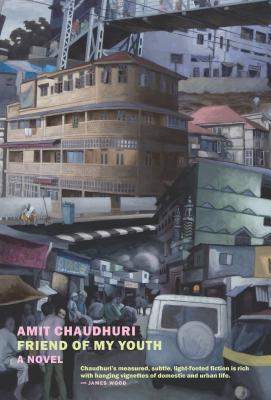
“The streets were never really mine”: Friend of My Youth by Amit Chaudhuri

Although he claims to feel no nostalgia, the narrator of Amit Chaudhuri’s most recent novel, Friend of My Youth, carries a wistful melancholy that can really be understood in no other way. It comes through in his discomfort and his attempt to articulate a mixed affection for and estrangement from the city in which he grew up—Bombay. Chaudhuri has woven a close line between his own life and the experiences and qualities he grants his characters before, but here he blurs it completely, even playfully. His protagonist is an author named Amit Chaudhuri, who is in the city to promote his latest release, The Immortals. If this is, on some level, a metafictional mechanism to reflect on the question of the relationship between an author and his narrator, it is exercised in such a light-handed, controlled, mildly self-deprecating manner, that it never risks becoming distracting or annoying. Chaudhuri is a restrained, thoughtful writer, and Friend of My Youth offers so much more. Set against the urban gridwork and landmarks of South Mumbai, a city, at the time, still recovering from the horror of the 2008 terrorist attack on the Taj Mahal Hotel, it is a quietly insistent meditation on the ways we try to make sense of our own personal and geographic histories over time.

From the beginning, the narrator confesses to an ambivalence toward his former hometown:

I feel a sense of purposelessness—is it the ennui of the book tour or book-related visit? Not entirely. No, it pertains to Bombay, to being returned to a city where one performed a function, reluctantly. Reluctance is fundamental. You don’t plunge into growing up; it happens in spite of you. Then, one day, it’s done: you’re ‘grown up’. You go away. Back now in the city of my growing up, there’s nothing more that can happen to me. I embrace a false busyness. I suppose I’m living life. Without necessarily meaning to. It doesn’t occur to me that the visit is part of my life. I believe I’ll resume life after it’s done.

But, although he has been back to the city many times in the decades since his family had moved back to their native Calcutta, and he himself had gone on to study and teach in the UK, there has always been one grounding constant—a friend from his school days, Ramu. On this occasion he learns that Ramu, whose life has been defined by drug addiction, is in intensive rehab and cannot be visited. Their friendship is strange, an attraction of opposites, one who would go on to achieve a degree of literary success and middle-class normalcy, the other troubled and stalled, unable to completely shake his demons, now in his fifties, still living in his family home with his sister. Theirs is an often awkward camaraderie, bound to a small geographical space in a city that has, over time, expanded exponentially beyond the confines of what has become known as South Mumbai. When Ramu is not there, Amit discovers that without this particular conduit to his past, whose eyes he had relied on, he is forced to encounter Bombay anew, even alone.

As the narrator traces his way through the city, a reflective uncertainty, a searching for words, underlines his thoughts. The prominent, well-known landmarks are laden with the hallmarks of his own idiosyncratic life history, from the restless eagerness to leave in adolescence and youth, to the regular returning, each opening shades of a city he knows he never really knew. How much, he wonders, was his inability to really see the city he grew up in rooted in a conviction that his origins as a Bengali prevented him and his family from ever full belonging, and encouraged his belief that his destiny lay elsewhere. If you feel, at heart, that you do not own a city, how can you truly see it?

So he is trying to make sense of his relationship to the city—and through that, to the shifting currents of memory and nostalgia that continue to haunt us all as we grow older. Ramu’s absence looms large. Who we believe we are is always, to some extent, measured and understood against the trajectories, real or imagined, of others.

I know I’ll see Ramu again. But it’s as if I won’t see him again. I’m thrown off-balance—but also surprised. I didn’t know I’d react like this. Ramu isn’t the only close friend I have. But it’s as if my sojourn in Bombay depends on him. ‘Depends’ is the wrong word: I haven’t come here because of him, to delve into his whereabouts. But the surprise I’ve mentioned is related to my astonishment at being here. ‘Astonishment’ denotes how you might start seeing things you hadn’t noticed earlier, but it could also mean becoming aware that you won’t see them again.  As I turn into Pherozeshah Mehta Road and then left into the long stretch of DN Road, I know I won’t see Bombay again. That is, I will see Bombay again, but not the Bombay I’m looking at now.

Toward the end of the book, two subsequent visits do bring Ramu back into Amit’s life, neither resolving nor further alienating his connection to the city. There is something oddly comforting in their unlikely location-specific friendship, one that speaks to the ineffable qualities of our own connections to the people and places that we leave, but can’t quite leave behind. This is a novel as much about loss and aging, as it is about recognizing that there are connections that perhaps we never really had, no matter how much time we spent with them.

I took this book to India with me, planning to read it in advance of my own recent visit to Bombay but, as it happened I did not open it until about a month after my return. Although familiarity with the city is by no means necessary, even a brief encounter will add an extra dimension because this is a novel so clearly linked to space. For those who know the city well, it will be potentially an even richer experience. I spent three days in the Fort area of South Bombay, visiting a few of the common tourist sites like Gateway of India and Marine Drive and attending several events at the Kala Ghoda Festival literary venue, the fabulous garden of the David Sassoon Library. I used Horniman Circle and Flora Fountain as guideposts and got lost in Churchgate, not realizing I was entering a train station (in my defense, the entry said “underpass” and I assumed I would avoid crossing one of the city’s notoriously congested roadways). All of these features or locations appear and it was fun to be able to immediately bring them to my imagination—mind you, without the emotional gravity with which Chaudhuri so effectively paints them.

Friend of My Youth by Amit Chaudhuri is published by Faber & Faber in the UK and New York Review of Books in North America.

The appeal of India for this restless soul: A reflection

Back from a month in India, I am struggling to reorient myself. The jet lag and the cold I thought I had shaken that has now morphed into a different version of moderate misery do not help. My brain is foggy. My body is trying to adjust to the twelve and a half hours I just gained back. My heart is sick with a longing to grasp again, just for a minute, whatever it is that I left behind. That I leave behind every time I return.

India has a strange charm. One I can’t quite place. I never imagined I would go there; I cannot pinpoint when the seed was sown. I do know that for years it was a secret wish, not bound to any  particular calling but simply a desire to go there. Last year’s chance decision to visit Seagull Books in Calcutta was an opening, this year I expanded my time and orbit, and met so many more people along the way. Had so many great conversations.

How is it, I ask myself again and again, that I can travel halfway around the world, and make more solid connections—new or renewed—in four weeks, than I can manage in an entire year in a city I have lived in for most of my life? Is it, perhaps, that I am able to be myself in a strange land, relax into a comfort with who I am in a place where I do not naturally belong? Why can I not bring that person back with me? Or at least feel at ease with him when I come home.

What is home, then? And why does this place fail to complete me? Why do I feel a home-away-from-homesickness weighing on me? I envy those who belong someplace.

As long as I can remember, I have felt that I was out of step, out of sorts, a misfit. Marriage, moving, midlife metamorphosis—nothing has ever completely eased the discomfort. Only in travelling do I find relief. Only in upsetting the equilibrium do I feel whole.

At least for a while.

Toward the end of my visit, an unexpected event challenged this temporary relief. I went out to visit a friend at a school in Andhra Pradesh. Here, in a rugged and breathtaking location with only the faintest internet signal, the world was out of reach for the night. In the morning, as I climbed into the car, my driver greeted me with news he had just received. “India attacked Pakistan,” he reported with enthusiasm, “people are celebrating in Bangalore!” I politely responded that I wasn’t sure that was a good thing, but all the way back into the city I contemplated what it would mean to be in a country at war. I was not unaware of the tensions that had been building, but I had no clear grasp of the historical context. As an outsider, I am cautious to hold to a respectful neutrality, but somewhere along the way a line is crossed. I have become attached to people and places. I am not simply a visitor.

Once again I am aware of a sensation similar to what I feel as a person without a coherent gender history. A neither-here-nor-thereness defines my life. Always has, always will. Only now it is slipping across other boundaries, opening new possibilities.

After this recent trip to India, and the many rewarding and validating encounters that I was fortunate to have, I am beginning to believe that if I can learn to embrace an inherent disequilibrium as a fundamental and vital part of who I am, I can finally move ahead to tell the story that has been eluding me. My own story.

Oh Calcutta! Reflections on my second visit to the City of Joy

A week in Calcutta, my second visit to the city, now lies behind me. I am back in Bangalore again, looking out over the rooftops as the sounds of a busy Saturday remind me that life is ever alive and vital in a large Indian metropolis. But, as I sit here, the sights, sounds and scents of Calcutta are still coursing through my imagination. It’s a hard city to shake once it gets into your system.

Last year, as my first introduction to India, Calcutta was not what I expected. A full assault on the senses in ways I was not prepared for. It is still is, but this year I returned with a little bit more perspective, however limited. Unlike some people I’ve spoken to who cannot imagine why anyone would want to, or dare to, go to Calcutta, picturing the city at its most difficult times (enhanced perhaps by a little Hollywood melodrama as well), I had arrived expecting it to be more modern than what I found, especially in the grand, old, if somewhat decaying central parts of town. This time, however, I noticed more office complexes and taller buildings although somehow Calcutta manages to do “modern” and yet maintain a distinct element of shabby chic. Either that or, as in the new curator’s offices at the stately Victoria Memorial demonstrate, create a generic and unremarkable annex completely at odds with the echoes of the past. It’s a wonderfully eccentric we’ll do it our way way of being as stubbornly defiant as the hand pulled rickshaw drivers that continue to make their way along the back streets.

And speaking of streets, after a taste of the traffic in Bangalore, Mumbai or Kochi, Calcutta is comparatively ordered and slow. Very slow. Typically vehicles stay in their lanes, and the traffic police ensure a general order, lights at intersections are obeyed, and major roadways can be safely crossed. Which is saying a lot to be honest. It is a walkable city. The pathways can be rough at times, or filled with street sellers and food vendors, but if necessary one can generally manage to travel along the edge of the roadway. Some of the backstreets are fairly quiet and empty much of the day. But if a single vehicle comes along, you will hear of it. More than one vehicle and you won’t be able to hear yourself think. The noise of the car horns can be ear splitting. I’m inclined to think that anyone out to acquire a new or used vehicle must head to the showroom, car lot, back alley or wherever such transactions might occur and simply lean on the horn. If a few windows shatter, it does not matter if the wheels are falling off, it’s good to go!

Another traffic related observation I noted this time is the increased use of helmets on motorcycles. Friends told me that it has been a point of enforcement over the past year. And a good thing too. I was heading up a major thoroughfare on my way to meet a friend at the Marble Palace, when I came across a motorcycle accident. There were two children and one or two adults on the cycle, all fortunately with helmets. The one boy must have fallen off. As I passed, they were carrying this dazed child to a bus stop bench and a large crowd was gathering all shouting and offering their opinions. Without helmets it could have been far worse. All I could think of was the woman I saw speeding down the expressway in Bangalore with her young daughter on her lap, neither with helmets. But of course, where I live, motorcycles are a seasonal mode of transport, not a practical necessity as they are in this part of the world.

Traffic and faded architectural glory aside, to be back in Calcutta felt like coming home. A place I returned to seeking to refine a creative focus. On my first visit I came fully intending to write; this time I came with no such illusions. I came to experience, to meet other creative spirits, and to reconnect with all the good people at Seagull Books who have become dear to me. This time my stay was shorter, but coincided with so many wonderful visitors and events. It began, the night I arrived, with the opening of Removing the Gaze, an exclusive showing of collages by German artist Max Neumann. Monday morning began with NYRB Classics editor Edwin Frank’s masterclass at the Seagull School of Publishing, followed in the evening by my conversation with him at the Victoria Memorial (still fretting a little at what I had hoped to talk about but didn’t, I’m afraid). Tuesday it was my turn to lead a school session. As with my first experience last year, I was caught off guard by how quickly the three hours passed and by the engagement of the students. Wednesday was a full day of sightseeing with a new friend, Italian poet Franca Mancinelli who, by coincidence, has been in the city on a residency, and Thursday morning featured a masterclass with conversationalist extraordinaire, Paul Holdengraber. Throughout the week I also had a number of meaningful conversations with Colin Robinson, the co-publisher of OR Books who was staying at the same residence where I was and doing some work with Seagull. Along with many visits to Seagull Books’ new office in their former school space, now newly opened up—a bright, cheery and inspiring creative environment—this was week packed with literary energy.

Now to see if I can carry some of the inspiration and focus I was seeking forward.

In Bangalore tonight, the friend I am staying with remarked on a new sense of perspective, of direction, and perhaps peace. As if India does give me something I need. The one thing it won’t give me is planned time for the two of us to travel, as unexpected circumstances now call him to be with his family. But such is life. This leaves me with a little over a week, and apart from one more overnight journey out of the city, much needed time and solitude to put some perspective to my own writing goals and direction before I return to the distractions and demands of life at home.

Of course, I will be back. India is not finished with me yet. Nor I with her.

Checking in from Bangalore midway through my India visit

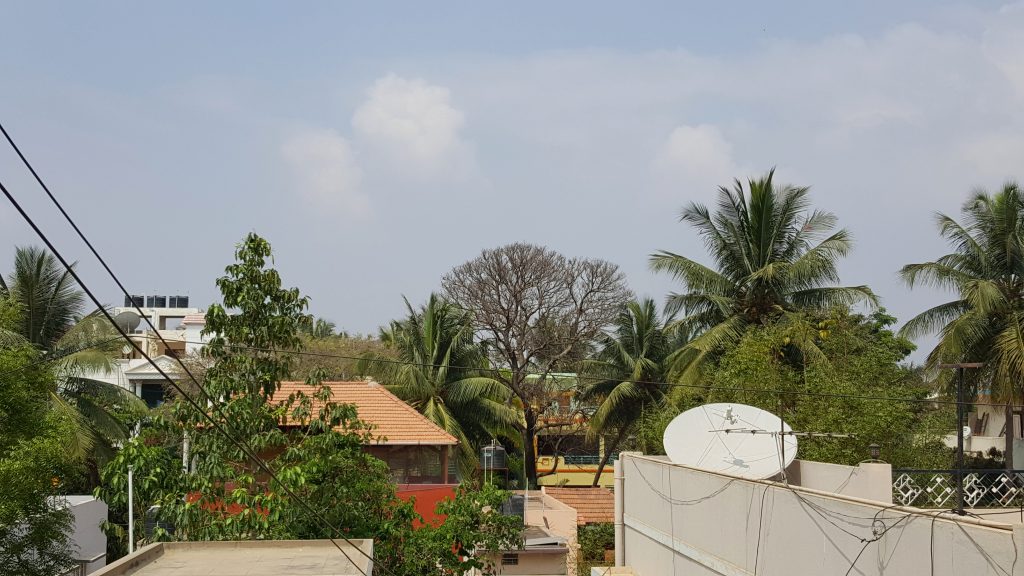
As I write this I am back in Bangalore, my pivot point, my home base for this month-long stay in India. A fresh breeze drifts in through the open balcony door of my friend’s flat. The comforting noises of a city and neighbourhood gearing up for another day—traffic, dogs barking, children singing—rise from the streets below. The sounds carry a certain comfort, a connectedness to life, a rhythm timed to the swaying coconut palms and soaring black kites that pass from rooftop to treetop roost.

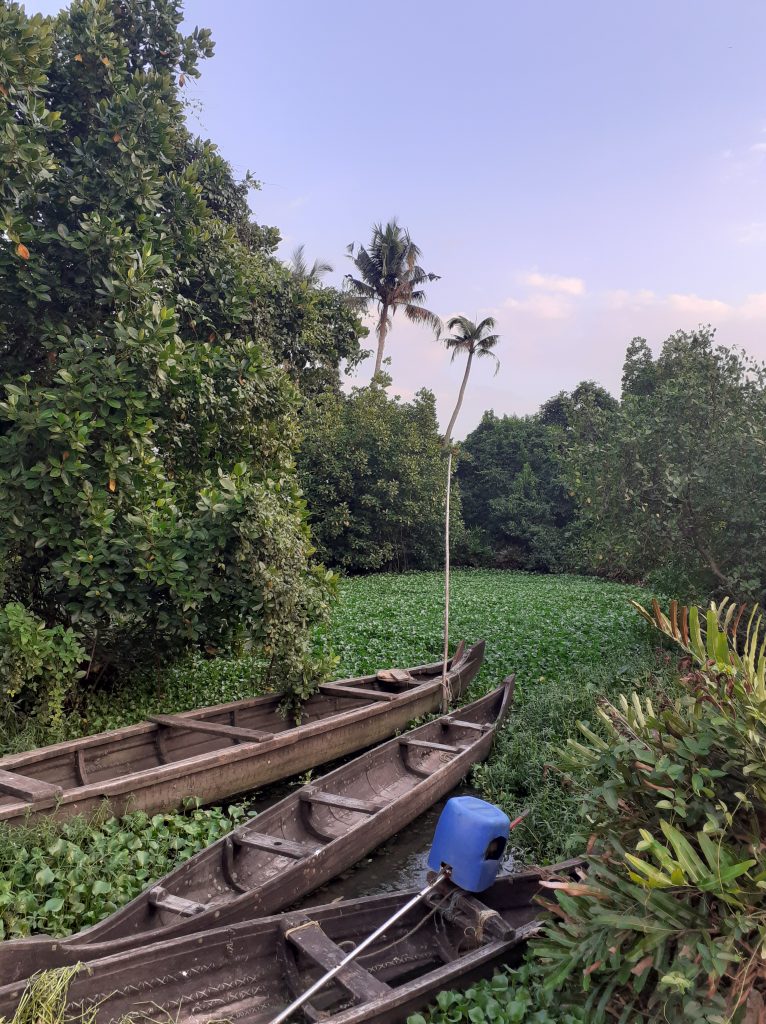
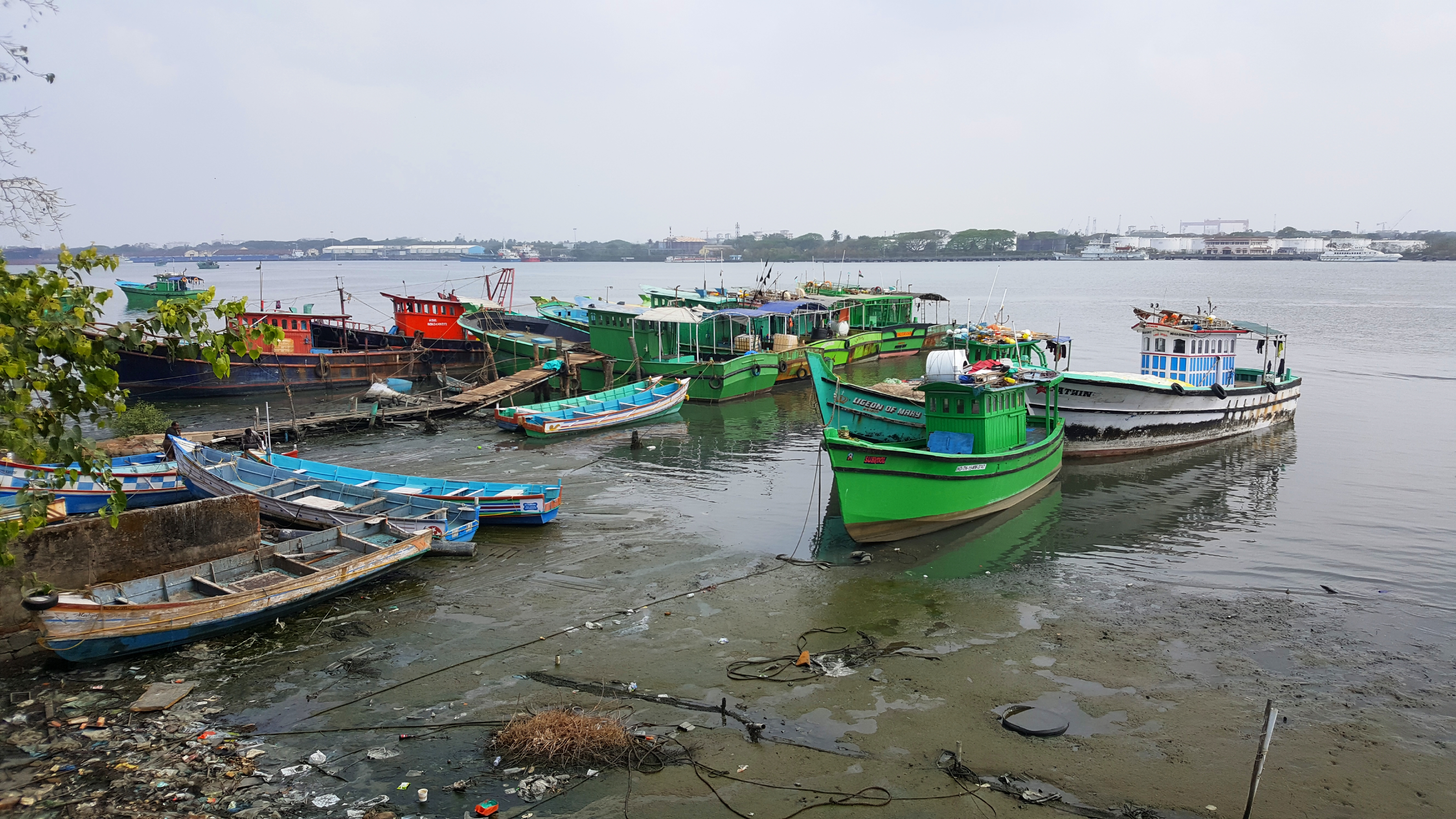
The past week took me to Mumbai, then south to Kochi. While my hometown back in Canada is in the midst of the longest unbroken deep freeze in decades, I struggled to adjust to the intense tropical heat and humidity, aware that it is not even the hot season in Kerala. Kochi is a port city, ribbons of land and ribbons of water, on the edge of the Indian Ocean. Huge tankers, barges and colourful fishing boats move in and out. It is lush and green, infinitely greener, they say, in the rainy season. With a population of about two and a half million, it is small in terms of Indian metropolises, with a greater sense of space and openness than I’ve noted elsewhere, perhaps due to the way the water is such a necessary and defining feature of the urban landscape.

I stayed with a friend at the beautifully tranquil compound where she owns a flat. Her recent return home from “exile” in Dubai makes perfect sense. Here, seemingly cut off from the inevitable rush and commotion of the city streets, it is easy to imagine the stresses of the world away for a moment. And yet it is in the midst of an almost fully developed residential neighbourhood, easily accessed by auto rickshaw over a a pedestrian bridge down the lane, but by car, only through a maze of the most circuitous and narrow roadways I’ve ever travelled. Passage across the city is a disorienting journey to say the least, but within a few days, I began to register landmarks and gain a basic sense of direction.

In Kochi I was aware of two elements in particular: the striking presence of Christian churches—a testament to the historical role the Portuguese and the Dutch played for better or worse—and the overwhelming number of tourists, both on my flights and on the ground. With so much of my travel in India, I am drawn by connections to people I know, even if I have yet to meet them personally, and this often allows me to explore a space either on my own or guided by locals. So I arrived in Kerala unprepared to encounter the typical tourist experience. The only specific destination on my agenda was the Kochi Biennale, but this extensive and diverse series of art exhibits was set up, understandably, throughout the tourist-heavy areas of Fort Cochin and Jew Town. Of course, now that I have been to Kochi, and had my first introduction to the fascinating textures and tones of the region, another visit with a wider focus will be in order.

As ever, the most precious moments of travel are, for me, time for face-to-face conversations with friends I’ve come to know through the internet. India then becomes the backdrop, its sounds the accompanying chorus. In Kochi, I had several days to visit with a friend I feel like I have, in some fashion, known forever, and an afternoon with another friend I met through her, an artist who came into the city to take in some of the Biennale with me. Although it can’t be long, I am often hard pressed to remember just how, or when, some of my Indian friends, Mini in Kochi, Sachin here in Bangalore, or the Seagull Books folk in Calcutta came into my life. Each city I visit expands my circle. I feel so very fortunate to have been given this opportunity to travel, something I never imagined, but for a serious of fortuitous, albeit essentially “unfortunate” circumstances, I would ever be able to experience. It is not a gift to be undervalued. And yet I carry, somewhere inside, a fear that I’m unworthy.

Now the halfway mark of my visit is nearing. I wait on the edge of a return trip to Calcutta, eager to be back in that most singular of cities, keen to reconnect with old friends and meet with new ones. I must confess, however, to being just a little anxious about an event that awaits me there.In a few days time, on February 18th, I will be in conversation with Edwin Frank, the founding editor of NYRB Classics at the impressive Victoria Memorial. No pressure! In truth I’m very honoured to have been invited to be part of the visit of such an esteemed guest and will be sure to report back on the experience once I recover! In the meantime, I will sign off with a few more images from Kochi…