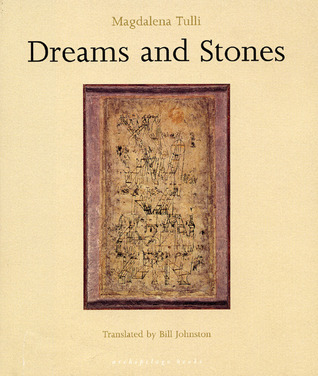
Dreams and Stones by Magdalena Tulli

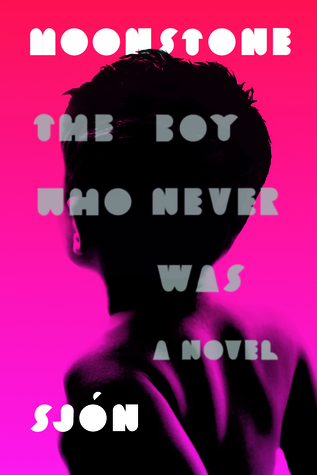
I am very pleased to have my first review published at The Quarterly Conversation. Dreams and Stones by Polish writer, Magdalena Tulli, is a poetic meditation on the city as an organic entity, essentially an urban cosmology. I read it through twice before writing my review and in my second encounter its nonlinear, cyclical quality was even more apparent. Thinking about it now, two months later, its fantastic, mythic qualities still have a strong hold on my imagination. But there is more that haunts me when I think about this book.
dreamsstones

I had been aiming to submit this review in mid-July, my first reading was in late June, but before I could put pen to paper, so to speak, my father had a stroke and car accident and my mother became ill and died. As one might imagine, I struggled to write, let alone read. During times like this words fail us. But, as my father’s death neared I returned to this short book, for distraction, comfort and, above all, to know that I could still write. The ability to sit down and pull together a critical review was an important turning point. In times of immediate crisis and grief when family members find themselves trudging back and forth to the hospital, the advice is to try to return to some measure of routine. The answer, for me, was to write.

Dreams and Stones is translated by Bill Johnston and published by Archipelago Books. My review, originally published at Quarterly Conversation is reproduced below:

“There are more things in heaven and earth,” Hamlet famously says to Horatio, “than are dreamt of in your philosophy.” So might Polish writer Magdalena Tulli be imagined to warn readers entering her enigmatic first novel, Dreams and Stones: to be prepared to open your minds to an urban cosmology that envisions the city—its evolution, destruction and rebirth—in the light of two seemingly opposite notions of the world. Paragraph by paragraph, Tulli’s images are startling and fresh, and they become the building blocks of a fanciful metropolitan vision that overflows with both magic and sorrow.

Born in 1955, Tulli is one of Poland’s most original contemporary writers. She has received three nominations for the prestigious Nike Prize, and four of her novels translated into English to date, including In Red which was longlisted for the 2012 Best Translated Book Award

Recently re-issued by Archipelago Books in paperback (they published a hardcover edition over a decade ago), Dreams and Stones truly defies simple classification. From the opening passages, the contemplative poetic imagery reads like a re-invented Book of Genesis, sketching out the life cycle of the metaphorical tree upon which a fruit ripens, falls to the ground, and germinates; it holds in its core the seeds of a great city and the parameters of the human system that surrounds it. This archetypal city is fundamental to the vision of the world that Tulli proposes, but herein lies the tension that motivates and propels the narrative: Tulli’s calmly disconnected narrator ponders, never committing to one conception over the other, how the world is to be understood: as a tree or as a machine? Is the city borne of the dreams of its citizens? Or is it grounded in the faith and certainty of its master builders?

Be it natural or mechanical, the city is created by an inextricable combination of thought and the appearance of objects. Necessity and a restless urgency drive this process onward. Tulli’s narrator describes the lines of the city as ordained to appear through the pens of the draftsmen, inspired by the builders’ unshakable belief in one possible truth.

Though it remains a supposition it is not hard to interpret. It proclaims that it is not the power of germinating seeds and not the pressure of juices circulating between the roots and the crown that give the world life, but that it is set in motion by motors, gears, and cogs, devices that keep the sun and stars rotating, pull the clouds across the horizon and drive water along the bed of the river. The clarity and simplicity of this notion may prove salutary. They will make it possible to dismantle, repair and reinstall every broken component—so long as the world is composed only of separate and removable parts . . .

However, as the narrator goes on to speculate, how can one be certain the world is a machine when it resembles a tree in so many respects? This continual pull between the two poles of this dichotomy suggests that the way one chooses to view the world influences, even governs, the way one attempts to exist in it. Both views, it is argued, are true. And both have their limitations.

Tulli spins webs of interconnected realities and counter-realities. As a tree has a network of roots that spread, like the branches of its crown, in the dark depths of the soil, the city and every object in it ideally has its counterpart. But as the inexorable progress of the mechanized world rushes forward, the city is easily separated from the counter-city and, like a tree cut off from its roots, everything begins to spiral out of control, break down, fall apart. The builders that once seemed so assured failed to leave room for fate, chance, and fatigue—not only of materials but of the legions of flesh and blood workers required to build, repair, and maintain the metroplis in its glory.

Eventually time begins to run short and the power required to hold the counter-city at bay outstrips demand. The city, and the framework of the world that surround it, enter a period of cosmic decline. Here the narrative registers a distinct shift in tone:

No one knows where sorrow comes from in a city. It has no foundations; it is not built of bricks or screwed together from threaded pipes; it does not flow through electric cables nor is it brought by cargo trains. Sorrow drifts amongst the apartment buildings like a fine mist that the wind blows unevenly across the streets, squares and courtyards. There are long streets and short ones, there are broad ones and narrow ones. The gray of some bears a trace of ochre while others are bluish from the sidewalks to the roof tiles. Each of them has its own peculiar shade of sorrow.

The city of thoughts is now precariously maintained in the dreams of its inhabitants, their memories. The city of sorrow grows increasingly disordered and fragile. When war threatens to level it forever, the survivors, like their forbearers who constructed the original city, attempt to reconstruct one of memories. For, as the narrator assures us, “nothing in the world—even imaginations—can be destroyed completely and finally.”

Although Tulli never names the city at the heart of her story, recent Polish history, the massive destruction of Warsaw during the Second World War, and the systematic rebuilding and redesign of that place all seem to be woven into Dreams and Stones; but, these threads need not be traced in a linear fashion. This is a fable, one that essentially folds back on itself, a poetic meditation on the soul and heart of a city built, rebuilt and kept alive in the imaginations of its people. A metropolis that is connected to the rest of the outside world, to those shifting, almost fantastic municipalities that exist elsewhere, and yet stands as a self-contained ideal. One has to be aware though, that such an ideal can become distorted over time. Warsaw was reconstructed, with great attention to detail on the one hand, but altered to accommodate the new pressures of a steadily increasing population on the other. Memories and the rebuilt reality do not always align:

It is possible to imagine a city perfect in its entirety, a city that is the sum of all possibilities. In it nothing is missing and nothing can perish, every china teacup comes from somewhere and is destined for somewhere. But precisely this absolute city is eaten away by the sickness of never-ending disasters. Change invariably brings confusion to the lives of the inhabitants. One has to pay attention so as not to drive accidentally onto a bridge that was demolished years ago, so as not to sit on the terraces of torn-down cafés once known for their unparalleled doughnuts.

An obvious counterpart to Dreams and Stones can be found in Italo Calvino’s Invisible Cities. Tulli has translated Calvino and admits to his influence. But in so far as this book can be understood as referencing Warsaw, it retains a sharply central European feel. I was especially reminded of Pavel Brycz’s  I, City.[1] Originally published in Czech in 1998, Brycz    honors the history and people of the industrial city of Most in northern Bohemia, by giving the narrative voice to that place, setting the stage for a melancholic meditation on an urban center widely understood, at the time, to be in a state of unemployment, decline, and despair. In Tulli’s urban landscape it is the city’s inhabitants who maintain, generation after generation, the idea of their home, even as its proud stone edifices are turned to rubble. In I, City, the concept is reversed. It is the city that retains the memories and affections for its people and its past—it dreams, keeping its spirit alive despite repeated historical destruction, occupations, and finally as its neighborhoods are leveled to mine resources and replaced, not by stones, but by prefabricated concrete slabs.

While Tulli regards Dreams and Stones as a novel, her translator, Bill Johnston, respectfully disagrees. He sees it as prose poem.[2] It is, essentially, a series of images and reflections, and there are no individual characters apart from the measured and detached narrator. Yet either way, novel or poem, the piece is endowed with an overwhelmingly orchestral quality. The dynamic life of the city, builds up speed, slows down, becomes erratic, falls into an abyss, and is reconstructed anew. Tulli is playful with her imagery, intentionally pushing her metaphors to the edge. Even the moods—pride, sorrow, nostalgia—that course through her streets are imbued with a mythic intensity. This motion and fluctuating energy, combined with the fundamental philosophical tension at its core, gives the work its flow, draws the reader in, and, in the end, offers a richly provocative experience that invites and rewards rereading.

[1] Brycz, Pavel. (2006) I, City. (J. Cohen & M. Hofmeisterová, Trans.) Prague: Twisted Spoon Press (Original work published 1998) – Link to publisher page for book: http://www.twistedspoon.com/city.html

[2] Interview with Bill Johnston on Magdalena Tulli. Polish Writing. Retreived from https://web.archive.org/web/20111106183056/http://www.polishwriting.net/index.php?id=125

Black Bread by Emili Teixidor—My Numéro Cinq review

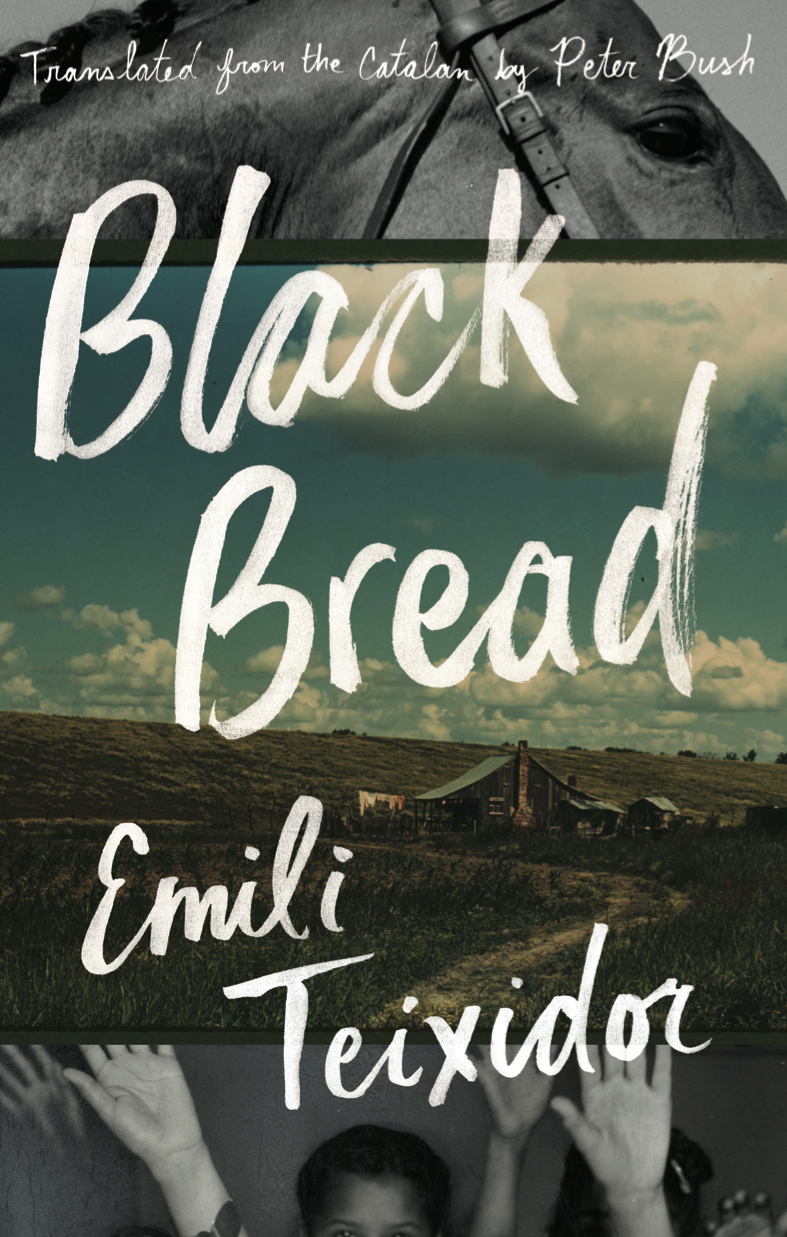
My latest review for Numéro Cinq is now live. When I read for these reviews, the question that guides me is “What is interesting about what the author is doing (or trying to do) in this book?” I am listening to the language, paying attention to the structure, the voice, the tone, and asking what makes this work come together? What sets it apart? I am reading as a writer–an intuitive writer–unaided and yet unburdened by a formal education in literary theory.

Coming of age themed novels such as Black Bread by Catalan writer Emili Teixidor present a particular challenge. When a first person narrator is recounting events and experiences from his or her own childhood, my attention is focused heavily on narrative voice. I am always trying to determine where the narrator is standing in time relative to the story being told. I had the sense with Black Bread that the protagonist Andreu was writing from his later teens–just far enough away to have some perspective on the limitations of his understanding of the precarious realities around him, but close enough to recreate the innocence and naivete of childhood. It works, but the more absorbing, and I suppose the more effective the voice, the more difficult it is to describe how and why it works.

Here’s a taste of the review, please click through the link at the end to read the rest. A second link leads to an excerpt:

In the Shadow of Civil War: Review of Black Bread by Emili Teixidor — Joseph Schreiber

black-bread

There is an interlude, just shy of a third of the way into Black Bread by the late Catalan writer Emili Teixidor, where the narrator steps back from his childhood reminisces to question the nature of memory. He asks why some things stay etched on his memory while he has forgotten others completely, and wonders, “how can I know I have forgotten what I can’t remember?” He recognizes that some places, people and incidents fade quickly whereas sometimes a word can come back unexpectedly and ignite a flood of distant memories. These reflections appear as a curious break in a narrative marked by a degree of youthful naiveté, but remind us that the journey from childlike to mature understanding is uneven and necessarily distorted in retrospect. So, although it is never entirely clear just how far removed the protagonist stands from the experiences he is sharing, as his account continues his ability to hold on to his own innocence will increasingly come into conflict with the harsh realities of life in post-war rural Catalonia.

In recent years, much revisionist debate has been dedicated to exhuming questions of the true impact of the civil war and the Franco dictatorship on Catalan culture and society; “true”, that is, depending on where one’s interests lie. Against this backdrop, a novel like Black Bread, originally published in 2003 when Teixidor was seventy years-old, could easily be construed as an attempt to reclaim history through lived memory. That may, in part, be a fair assessment, but this novel offers much more. It is, on one level, a tender and sensitive coming of age story, one that filters the joys, fears, mysteries, and discoveries of the fitful transition to adolescence through the unaffected lens of childhood memory. Our narrator, Andreu, an astute observer of his own confused emotions, must learn to navigate a world filled with dark dangers and even darker delights. He knows there is much going on around him that he doesn’t understand—truths that he isn’t certain he even wants to understand. However, his growing awareness and conflicted reactions open space for an indirect but honest commentary on the realities of Catalan existence during this time. In this respect, the work can be seen in line with that of writers like Josep Pla and Mercè Rodoreda.

Continue reading here:

Read an excerpt here:

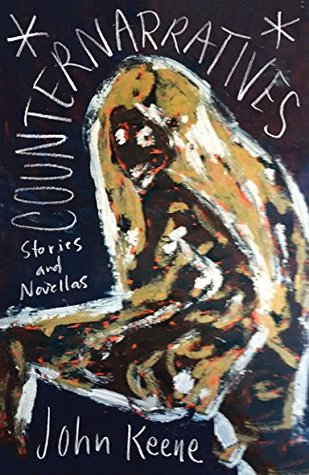
Tracing hidden lines across the Americas: Counternarratives by John Keene

Stretching over a span of four centuries, Counternarratives is a collection of stories and novellas that defies simple description or classification. In just over 300 pages, John Keene manages to challenge and reinvent the way we think about historical fiction by subverting the conventional narratives again and again, peering into dark corners, and prying the lid off of stories not typically part of the grand narrative tradition that has dominated so much of contemporary American literature. First off, for Keene, America has a broader scope. This is the New World, primarily the United States and Brazil—the two countries most closely associated with the slave trade—but over the course of this book we also venture into Mexico, the Caribbean and across the ocean. The characters, primarily, though not exclusively, of Black African heritage, are drawn from history, the arts, and the imagination; and demonstrate a strong will to run against the currents of normative discourse within which they would have otherwise fallen under the radar or been rendered invisible. In allowing their lives to flourish on the page, Keene is effectively queering history. Many of his characters are either implicitly or explicitly queer with respect to sexuality or gender, but all of them through their stories, push up against accepted mythologies, inverting or “queering” them in the process.

CounternarrativesThe earliest narratives in this collection tend to keep some distance from the subject at hand, some even have an investigative documentary feel, complete with maps inserted into the text. Over the course of the book, the control of the voice shifts, as characters begin to take command of their own stories (mid-way through the powerful central piece, “Gloss, or the Strange History of Our Lady of the Sorrows” Carmel, the mute protagonist, starts to “speak” through the written word, abbreviated and phonetic at first, then increasingly fluid over time) until eventually, as the accounts draw closer to the present day, internalized, experimental stream of conscience narratives begin to come into play. With any collection of shorter works there is always the risk that the stories will begin to blur at the edges, losing distinction from one to another. Not so in this case. Although the themes and characters are not directly connected, this evolving style of storytelling—from the relatively dry historical reportage of the opening pieces, through more traditional narrative accounts to the disembodied, disturbing dialogue of the closing entry “The Lions”—provides a continuity that serves to create a cohesive work of astonishing depth.

Throughout, Keene demonstrates an enviable capacity to create vivid, memorable characters and breathe life into the vital cross currents of history. He does not allow himself to get bogged down in background detail but allows the time, place, and social dynamics to come to the surface through the wide range of individuals and the varied settings and styles that he allows his narratives, or rather counternarratives, to adopt. And although it may seem strange to speak about these short stories and novellas as if they almost have an agency of their own, that is what it feels like to engage with them. Due to extenuating personal circumstances, my reading of this collection actually extended over the course of three months, but whenever I was forced to put it aside for a time I never feared that I would not return, nor did I find it difficult to lose myself, once again, right where I left off.

counterThroughout this collection, customary beliefs are routinely challenged through the presentation of lives typically discarded or seen through the lens of the dominant power, in a manner that seeks to restore a level of dignity. Black, Native American and queer characters are granted a reprieve from the more conventional historical portrayal. However, that release, or escape if it comes, is often at a cost. Some of the narratives are abruptly truncated, ending partway through a sentence. In most instances a resolution is uncertain regardless of whether it signals promise or pain.

By way of offering a taste of this collection, I’ll touch on three pieces. The epistolary novella “A Letter on the Trials of the Counterreformation in New Lisbon” offers a report on the experiences of one Dom Joaquim D’Azevedo, sent in 1629, to attend to matters at an isolated monastery in Brazil where some disturbing occurrences had been reported. He arrives at this remote location, populated by two padres, one brother and their bondspeople, or slaves, to find himself facing what will reveal, in time, a veritable heart of darkness. The atmosphere is charged with an unusual energy from the outset, as the newcomer struggles to get his bearings in his new setting and size up his charges:

Resuming his comments about the monastery, Dom Gaspar could see that D’Azevedo was growing unsteady on his feet, and with a gesture summoned a stool, which a tiny man, dark as the soil they stood on, his florid eyes fluttering, brought out with dispatch. They continued on in this manner, Dom Gaspar speaking—Padre Pero very rarely interjecting a thought, Padre Barbarosa Pires mostly nodding or staring, with a gaze so intense it could polish marbles, at D’Azevedo—detailing a few of the House’s particulars: its schedule, its routines, its finances, its properties and holdings, its relationship with the neighboring town and villages, and with the Indians.

Before long, D’Azevedo settles into a rhythm, feels he is making progress and begins to tutor boys from the town. But strange noises and mysterious sightings inside the monastery begin to unsettle him while outside threats from encroaching Dutch forces escalate, creating an atmosphere in which an evil long brewing is brought to the surface. Dark secrets are revealed, D’Azevedo is forced to confront a truth he has long buried, and the identity of the small African servant who seems to be ever present comes to light. This piece is a strong example of evocative storytelling, reminiscent in mood of The Name of the Rose, but reframed within the context of the Catholic Church’s role in the Americas, the clash with tribal African traditions, warring colonial tensions, and questions of ethnic heritage, gender and sexuality.

By way of contrast, “Rivers” turns the tables on a classic of American literature, giving Jim Watson of Huckleberry Finn fame, an opportunity to flesh out the details of his life after the book ended. Jim, now a free man who has reclaimed his own name, James Rivers, is a tavern owner in Missouri when he chances to meet Huck and Tom on the street. Their conversation, is dominated by Tom’s racist jibes, but Jim remains circumspect. He thinks of what he could have told them but chooses not to (“I thought to say…/Instead I said…”), in this way sharing with the reader a full account of the women in his life, his children, his time in Chicago, and his return to his home state, while little is offered to his former acquaintances. There is no joyous reunion, rather the occasion is marked by arrogance on one side, bitterness and suspicion on the other. But as the Civil War looms, another chance meeting awaits.

Beyond this story, the narratives begin to take on an increasingly playful, experimental form in style and content. An especially affecting piece is Cold. Narrated from an internalized second person perspective, this short story takes us inside the troubled mind of Bob Cole, the composer, playwright and producer who co-created, with Billy Johnson, A Trip to Coontown in 1898, the first musical owned entirely by black showmen. It is now 1911, and the voice in his head taunts him, catalogs his losses, his failures, driving his desperate decision to take his life before the day is out. . .

For the last month or two, or five, has it been a year—why can you not remember?—these newest melodies you cannot flush from your head, like a player piano with an endless roll scrolling to infinity. Songs have always come, one by one or in pairs, dozens, you set them down, to paper, to poetry, like when you set the melody of the spiritual Rosamond was whistling as you walked up Broadway and in your head and later on musical paper clothed it in new robes. Then somewhere along the way after the first terrible blues struck you tried to hum a new tune, conjure one, you thought it was just exhaustion, your mind too tired to refresh itself as it always had, that’s why the old ones wouldn’t go away.

The pieces I have briefly touched on just graze the surface of this book. Its relatively short length can be deceiving. Counternarratives offers a demanding, immersive reading experience. It is, at the same time, compulsively engaging and deeply satisfying. I heard reverent talk of it long before I finally picked up my own copy earlier this year and I can fully understand the respect it has garnered even I find myself at a loss to do it justice. Bold and expansive, this is a haunting, unsettling, important work.

Counternarratives by John Keene is published by New Directions in North America and by Fitzcarraldo in the UK.

A meditation on life and death: Beastlife by J’Lyn Chapman

Once I became aware that this book existed, I knew I had to have it. So I ordered it immediately.

When it arrived and I went down to the bookstore to retrieve it (that is, release it from the bookseller who could not refrain from glancing through it as if he was regretting having to let it go), trusting some odd intuition that it might hint at something I was looking for. But, to be fair, I had little idea what to expect.

J’Lyn Chapman’s Beastlife is very small, fitting into the palm of the hand, or better yet, a pocket. An ideal companion for a walk in a park or natural area. I bought it with the idea that it might offer an unconventional provocation for a process of loosening, prying open, the closed window between my loss and the grief that I cannot begin to touch yet. At this point, in the first months following my parents’ deaths, mourning feels more like an empty space. Written of the body, mine and theirs. Confused. Contorted. Corporeal.

2016-08-21 19.53.09Not everyone would look to a book containing photographs of dead birds (albeit small, grainy black and white images), to find a voice for sorrow. For me it makes a strange sort of sense. It sounds morbid, but hopefully, if I manage to put to word the images that haunt my memories of my mother’s last month and days, I will be able to illustrate the beauty. If I have learned anything yet in these early days following the first significant losses of my life, it is that making sense of the death of those closest to us is at once universal and specific. And I lost both parents. Two very different relationships, two different circumstances, two separate yet entwined experiences of grief.

Of course, there is much more to Beastlife than photographs of birds.

This collection of essays—poetic meditations—on life and death, birds and beasts, and our human interaction with the natural world offers evocative, yet insistent reminders that we should strive to observe, engage with, and exist in this world with grace and compassion. Not that we, as humans, always succeed. Sometimes we are careless. And sometimes we are unthinkably cruel—inhuman even.

Death is a theme throughout, up close and afar. And violence too. Chapman explores the ways we intersect with nature—as hunters, naturalists, observers of atrocities, and, most fundamentally perhaps, bearers of new life. This tiny volume challenges the readers to reflect on our place in the cycle of life, in the beauty and the pain.

For me, at this time, when death is very much on my mind, there is an odd comfort in these pages.

The volume opens with “Bear Stories,” a series of very short pieces; raw, visceral prose poems that draw on the intimate complexity of our connection to the natural world. Bound with water, blood, fur, and feather the beauty is shocking, brutal, sublime. Drawn from an earlier longer form chapbook, these “stories” invite us to consider the world at gut level.

In the dark, a body is a pond. The night birds make hollow sounds, and then there is a sound of the mouth, pulled back, curled out. And so on. Fur catches the moon as it comes out barbed and dark. A vertical cut whines under the ribs, and the long grass keeps it from you.

The micro essays and meditations that comprise the central portion of  Beastlife are remarkably rich, drawing on a range of literary and critical resources. “A Catalogue and Brief Comments on the Archive Compiled and Written by the Ministry of Sorrow to Birds,” for instance, takes inspiration from Ovid, Heidegger, Barthes, Sebald, Tennyson and more. Despite its seemingly whimsical name, this is a more explicit meditation on death and dying framed against images, photographic and descriptive, of dead birds. The ministry of the title is an imagined institution dedicated to a form of archival lamentation, an understanding of death and mourning through the collection of photographic specimens. They seek and gather images into a growing chronicle of sorrow:

We were stopped, and looked down, in the walk by the bird, flies, cigarette, glint of coin. We saw the futility in keeping—the ornaments in hydriotaphia and their obsidian speaking something of its keeper. But the detritus we die alongside or do not die alongside, the litter jettisoned from our death and dying bodies or we die too quickly to regard, utter the currency of living things.

And there is this discomfort: the spectacle. Its hard edges. We have bodies too, we say, and we want them wrapped in webby husk, a film, a membrane huddled into self. But our bodies are still over-looked by our own flânerie, in which the world, and its subtle schism of that which is alive and that which is dead, becomes our final coup for all we have lost in the leaving. All the unmeasured ether, it flames with our light.

In death we are confronted with the fragility of the body—the body of the one who has died and, in reflection, our own. In her next essay, “We Continue to Unskin: On Taxidermy,” following Truth’s advice to Petrarch to constantly meditate upon his own mortality, Chapman contemplates mortality and the miracle of immortality which, paradoxically involves an engagement with death. Structured along lines from a poem by Paul Celan, this journey takes us through the a more familiar archive of natural history. From the delicate art of the taxidermist, preserving the form and imitation of natural life in the animal’s natural habitat, to the narrator’s own relentless search to find her place in the urban spaces she inhabits, the promise of immortality lies, of course, in language.

And yet every sentence has its beginnings and each animal, posed as it is in flight or in fright has its past-tense. Beauty, eternal gesture. I want to write sentences that stretch on toward desperation, as in the fugal voices that become discordant but still lovely, then recollected in harmony. At the apotheosis of the desperation, the line would break into clause or new sentence and the break would be the point of discord rather than calm, and still the dissolution would be reprieve, as when the healthy mind refuses any more annihilation and in its descent decides to rest. But there must be sentences that travel toward the desperate one. There must be travel.

The last entry, “Our Final Days,” echoes in form the contained short prose pieces of “Bear Stories,” but here the brutality is decidedly human—dispatches of cruelty, violence, and injury are played against the hope that some semblance of beauty in nature may preserve us. It’s a faint hope, a lament of an entirely different order. It’s too easy to get wrapped up in the disheartening news that floods our lives through our TVs and news feeds. Sometimes I find myself relieved that my parents will not see any more of the potential darkness that seems to ever loom on the horizon. But then I remember that I have two children. Life goes on. I reorient myself to the future again.

There is a woeful inadequacy that washes over me when I read more conventional memoirs of loss and explorations of grief. I keep peeking into odd corners, turning over rocks to see what crawls out. Reading books like Beastlife.

I keep the other poetic evocations of grief, the books I am amassing, close at hand. I read them to stir up and open the gates that are still secured against the flood of choked tears, the barricades of numbed sadness, that do not seem to be able to allow more than a slow leak in occasional shuddered gasps. At the moment mourning feels more like emptiness. I feel a need to find a starting point with death, with these particular deaths, with watching each one on their deathbeds, before I can find and begin to work through the grief.

Beastlife by J’Lyn Chapman is published by Calamari Archive.

I am a horror in the face of things: The Passion According to G.H. by Clarice Lispector

Take it as a warning. Clarice Lispector prefaces this metaphysically intense novel with a short address to her “possible readers” that states:

This is a book like any other book. But I would be happy if it were only read by people whose souls are already formed. Those who know that the approach, of whatever it may be, happens gradually and painstakingly—even passing through the opposite of what it approaches. They who, only they, will slowly come to understand that this book takes nothing from no one.

She does not want your existential “blood” on her hands, dear reader. You have to be willing to surrender it freely, to engage with G. H.’s passion on your own terms, experience her horror and joy as she struggles to make sense of, and give voice to, the “truth” that she has just come to understand. And, if you do, you may well find that the journey is unforgettable.

GHIt is clear from the stuttering opening sentence of The Passion According to G.H. that the narrator, a woman known only by the initials embossed on her suitcases, is uncertain, fragile, and disoriented. It is only by recounting the events of the previous day, by shaping them and giving them form, that she can make sense of the radical transformation she seems to have experienced. This is not a conventional narrative. In her retelling, addressed to the invisible owner of a disembodied hand that she imagines she is holding—the “you” who is at once the reader and, as the monologue progresses, a stand-in for an intimate from her past—she pieces together a superficially simple encounter that unleashes in her a torrent of thoughts, images, and emotions. She spirals into a very vivid personal hell, suffers a crisis of vast existential and spiritual dimensions, and emerges a decidedly changed being. But what of it? As the novel opens G. H. has no clear idea, she must start with who she was to discover who—or what—she has become.

One day earlier, she had arisen late with the intention of cleaning and tidying the room where her former maid had lived, a task she anticipated to be arduous yet satisfying. Assuming the room would be dirty, dank, and disordered, she would exercise her talent or, rather vocation, for “arranging.” G. H. is a wealthy sculptress living in Rio de Janeiro, who paints a portrait of herself as an independent woman, with no husband or child; she admits to a certain measure of vanity, but confesses that hers was a rather referential existence, one that in essence left her ripe for the events that would soon unfold:

My question, if there was one, was not: “Who am I,” but “Who is around me.” My cycle was complete: what I lived in the present was already getting ready so I could later understand myself. An eye watched over my life. This eye was what I would probably now call truth, now mortality, now human law, now God, now me. I lived mostly inside a mirror. Two minutes after my birth I had already lost my origins.

G. H.’s rapid descent to the brink of madness, begins when she enters the maid’s room and discovers a stark, nearly barren chamber. Most unsettling is the sight of three charcoal figures etched onto the whitewashed wall: a man, a woman and a dog. But the unexpected calm and order of the entire room catches our narrator completely off guard. The bed has been stripped, the curtains are gone from the window, three monogrammed suitcases are stacked along one wall and the narrow wardrobe, stands cracked and bleached by the harsh sunlight. She describes the room as “the portrait of an empty stomach.” And as she ventures into the room, she feels as if she has entered a nothingness, a formless space that cannot contain her. To gain some control she decides to wash down the wardrobe, and that is when her nightmare begins.

Cracking open the wardrobe, she confronts a cockroach, emerging through the door. The sight of the roach ignites a primal reaction, tied to memories of childhood poverty, but ultimately bound to a much deeper fear for G. H.—the cockroach is a prehistoric creature, durable and enduring, holding in its being the horror of unformed eternal existence. However, it is her response to the situation, her decision to kill the roach, that triggers what will escalate into an all-consuming metaphysical crisis.

To trace out G. H.’s tortured passion, one step removed through the limitations of a relatively brief review, one can only vaguely approximate the actual experience of revelling in Lispector’s haunting, sensual language. Through the agony and ecstasy of her protagonist’s journey of self-discovery we are invited to bear witness, to share her joy, to feel her pain, to taste the dawning strangeness of it all. And her awareness is startlingly acute. For instance, in her act of violence against the roach she instantly realizes that she has violated something in herself:

Because during those seconds, eyes shut, I was becoming aware of myself as one becomes aware of a taste: all of me tasted of steel and verdigris. I was all acid like metal on the tongue, like a crushed green plant, my whole taste rose to my mouth. What had I done to myself? With my heart thumping, my temples pulsing, this is what I had done to myself: I had killed. I had killed! But why such delight, and besides that a vital acceptance of that delight? For how long, then, had I been about to kill?

The terror that drives the narrator toward the breaking point is grounded in her acknowledgement of a kinship between herself as a human woman and the despised roach. As someone accustomed to defining the self only in the context of the other, it is conceivable that to see herself reflected in such a primitive, base creature could provoke a crisis of Biblical proportions. It shakes her admittedly superficial self-identity to the core. To recognize herself in the face of the roach is to acknowledge the potential annihilation of the self. “—Hold my hand” she implores her invisible listener, “because I feel that I’m going. I’m going once again toward the most divine primary life, I’m going toward a hell of raw life.”

During the hours that follow, G. H. will wrestle with questions of heaven, hell, morality, humanity and, most critically, the troubling reactions that these metaphysical problems provoke in her. She fears her own ambivalence, and discovers that the promise of hell is not a torture of pain but a torture of joy.  In what she will insist are not hallucinations but “visual meditations”, her awareness of being is stretched and exploded, extending back beyond the Cradle of Civilization across deserts and oceans to reach beyond the time of the dinosaurs. To encompass the humble origins of the primeval roach. Gradually, slowly, she will begin to fashion a reformed, redefined spiritual sense of self, to approach her own salvation, to embrace life in all of its uncertain terms.

From its opening passages, The Passion According to G. H. is propelled forward with a relentless intensity that builds as the narrative proceeds. The final sentence or phrase of each chapter is carried forward to open the next, as if with each chapter the narrator is reorienting herself, gathering her resources to move on with her story. The revelations advance in fits and starts, more noticeably as her questioning becomes increasingly obsessed with the nature of being. There seem to be things she can only come to terms with piece by piece, as she attempts to reconstruct and express an understanding of a world in which she can exist. In the end, she must come to an acceptance that being is a process, an act of trust in the unknowable, a continual active re-engagement. Her creator, Clarice Lispector, knows intimately that language—words—are essential to articulating, not just the emotional journey G. H. endures, they are essential to articulating the truths of human existence, once being has been stripped to its most fundamental elements.

Although I have read many of her short stories, this was my first encounter with one of Lispector’s novels. I had wanted to read this particular title for years, but had not realized how closely her theme ties into the existential questions that drive my own most personal writing project. And in a timely instance of serendipity, my finishing this work dovetailed nicely with joining the editorial team of The Scofield in time to copyedit and proofread 70 pages of the upcoming Lispector issue which will be out very soon. The opportunity for some very focused, close reading of some wonderful Lispector inspired writing, including a number of detailed critical essays, has left me eager to read the rest of her work. I can fully understand why she was (and is) so beloved in Brazil, and such a powerfully influential writer.

The Passion According to G.H. was originally published in 1964. This evocative translation from the Portuguese by Idra Novey (2012) is published by New Directions.

Update: The Scofield Issue 2.1 Clarice Lispector and the Act of Writing is now available and can be downloaded for free as a PDF. You’ll find it here. You will find a wealth of Lispector related and inspired reading, including two short stories and much, much more!

Now and at the Hour of Our Death by Susan Moreira Marques, a reflection and review

We obsess over lasts as we do over firsts. Last days, last images, last words. We want signs.

Last month, my brothers and I made a most difficult decision about our father who was, at the time facing a cluster of serious complications resulting from a stroke and car accident. Four days earlier we had gathered around our mother’s bedside as the respirator that was barely keeping her breathing was removed. Within four hours she was gone. After agreeing to discontinue treatment of our father, he would continue to live, slowly dying, for another week. As I kept vigil day after day I tried to remind myself that there was a time when death was allowed to take its course, in the home, even as so-called “normal” life would begin to spin, a troubled satellite, around the dying person. Death was part of life, not something that happened elsewhere, surrounded by tubes and machinery. Although my dad remained in the hospital until the end, he was moved to a quiet, private room where he was kept comfortable, free of pain, and cared for by the nursing staff. As a family we were supported and respected. It wasn’t easy, and we’re all still numbed and distorted in our grieving, but if there is such a thing as a good death, I think that both of my parents had good deaths, if good means having a chance to say I love you, over and over and over until the end.

nowdeathWhen I first started to read Susana Moreira Marques’ Now and at the Hour of Our Death, I wondered if I was too raw, too plagued with second thoughts about the decisions we had made, to be able to surrender to a lyrical and experimental essay about death and dying. This book had been sitting on my shelves since it arrived last year with my And Other Stories subscription, several times I had opened it but somehow the time was not right. I suppose the book was waiting for me.

Over the course of five months in 2011, Marques made several visits to a palliative care project in rural north-east Portugal. She accompanied a team of health care professionals as they traveled from village to village to assist those on their final journeys, allowing them to be able die, as comfortably as possible, in their own homes; and along the way she recorded her own observations, collected anecdotes, and listened to the stories of the people she met. The result is powerful meditation dying, as a lived experience shared by a family, a community.

The first half of the book is fragmentary in style and form, blending facts and definitions, character sketches, brief stream-of-conscious like passages, pieces of wisdom—all presented with a quiet dignity in lucid, affecting prose:

The swallows have already built their nests above the back door; this is how they do it every year. They are useful birds, and beautiful, and have always been a favourite of his. But now he watches them as he never has before, because he might not see another spring.

*

AGONY: 1. The last struggle against death. 2. [Figurative] Anguish, affliction. 3. An imminent conclusion (preceded by a great disturbance).

‘Agony,’ the dictionary does not note, is a technical term.

*

Immortal in the morning. At night, the fear of never waking.

*

Lands, roads, people, time, time, people, roads, land. What matters here is different, very different.

The second half of the book, entitled “Portraits”, offers a closer look at three individual stories. Here Marques becomes a gentle presence as she describes each situation, then she steps back and lets those involved have their say. There is Paula, a woman with a young family, who is dying of cancer. She speaks with a brave spirit about how she and her husband had taken their time, waiting to have their second child, assuming they had “all the time in the world.” She will only have another year to live at the time that her thoughts are recorded. Then we meet João and Maria, a couple in their 80s who reminisce about their years in Angola. Both are ill, yet neither feels that they are ready to die, they live for visits from their children and grandchildren, and each one fears being the one left behind.

Finally, in the third portrait, the dying person is silent by the time Marques meets the family. While their father Rui lies on his death bed, his adult daughters, Elisa and Sara, each respond in their own way in his final months, the latter driving home from France every fortnight to spend time with him and her mother. Their own accounts follow his death, capturing the early weeks of grief, anger and regret. Very different in temperament, the sisters respond in their own ways to the loss, but for each of them it is the first time they have come up against the close experience with death and it is a leveling experience. Sara realizes she had never appreciated the magnitude of what others she had known would have been going through when they lost a parent, regretting that she had failed to say anything. I can’t help but feel that that is a common occurrence. Nothing but the death of a close friend or family member prepares you for the experience. Elisa, on the other hand, is surprised to find that she is unable to shriek and scream in anguish the way her sister and mother do when her father finally passes:

. . . I couldn’t react. It must have been two months before I cried. It’s really hard for me to cry. And now I’ve finally started crying, but only because I’ll get all worked up over something minor, and then I might cry a little out of frustration. But when it happened – and the atmosphere at our house was just so strange . . . It took me a long time to realize what was going on.

The final section, a single page long, is a guide for “When you come back from the journey no healthy person wants to take,” a list of the ways “you”, that is anyone who survives the death of a loved one, can be expected to act. . . paying attention to time, the things and people that are precious, the bridges that need to be mended and, simply, endeavouring to live well. I hope I can follow this wisdom even if, at the moment, I am inclined to relate to Elisa’s reaction, with grief coming in angry outbursts more than tears.

witm-logo

Now and at the Hour of Our Death is translated from the Portuguese by Julia Sanches and published by And Other Stories.


What we read: A reflection on gender, language and necessity

My astonishment – and what is really my anxiety (my indisposition) come from what, in fact, is not a lack (I can’t describe this as a lack, my life is not disarrayed), but a *wound*, something that has harmed love’s very source.
– Roland Barthes, Mourning Diary

A comment made this morning on a post I wrote just over a year and half ago, has made me stop to consider what I am reading at this moment and why. The original post is called Gendering my bookshelves, a look at the gender of the authors I tend to read which were, at the time, and continue to be, predominately male. In the meantime I have read more female writers than I might have anticipated, but I have read more in general. So the ratio is perhaps closer to 80/20 than the 90/10 I figured last year.

This is Women in Translation Month, a project I respect and support, but I am unlikely to contribute with the same intensity as before. Truth is, despite a nice selection of titles that I had collected with this month in mind, I am not certain I will manage to read many. In fact I am close to putting my first effort Now and At the Hour of Our Death by Susana Moreira Marques aside. Don’t get me wrong, this piece of experimental nonfiction about a traveling palliative care team in rural Portugal is quite wonderful. But not right now. These are portraits of death and dying. And to read it so soon after watching both of my parents die hurts like hell.

I am relatively new to the business of maintaining a book blog and, of late, much of my review focus has actually moved off of my blog to online magazines. But what is a literary blog if not an opportunity to write about what one is reading? Sometimes that includes review copies and new releases, but that type of reading comes with pressures and can cut into other reading that one is drawn to. Themes like Women In Translation, German Lit, Spanish Lit all offer opportunities to open up and encourage conversation about literatures that one may or may not otherwise consider.

But sometimes our reading is directed by the forces and idiosyncrasies and, of course, the tragedies of our own lives.

At the moment, I want to read two different types of books–those that offer total distraction, and those that say something about grief and loss. That is where I am at, pure and simple. July was absorbed by hospital vigils and then, once my father finally passed, the immediate business of beginning to organize paperwork, notify institutions and prepare to apply for Probate. We have not even managed to plan a memorial of any kind. Over and over others have commented about how well I seem to be holding up…

2016-08-07 19.03.15But I’m not. The other night, reading Barthes’ Mourning Diary I found myself thinking, but this is different, he is so focused on his mother, my mourning is different. Is it? My father was injured and his death was slow. In the midst of it, my mother took sick and was gone within three days. My mother’s death, is a loss of an entirely different order than that of my father. She was my best friend. I could talk to her about anything. Without her I have no one else, no partner, and no friend as close. Although I have two children, I cannot burden them as they are each bearing their own grief. I woke up yesterday to the harsh recognition that I was trying to roll these two events, these two losses, these two individuals, these two unique relationships into one experience to be grieved as whole. But I cannot. They are separate events and they are one. Suddenly the magnitude of the task ahead is overwhelming.

So I will read and I will write. I want to write and publish something before time has a chance to edit it… a task inspired by Barthes and by Peter Handke’s A Sorrow Beyond Dreams. Women in Translation may or may not figure in the equation. In fact translation may not fit into much of my reading at all this month. So be it. Aside from Barthes, I have a memoir called When It Rains by Maggie MacKellar, a memoir that deals with two intersecting deaths, and I have ordered Love’s Work by Gillian Rose and Simon Critchley’s Very Little… Almost Nothing. Each one of these titles was suggested by Twitter/blogging contacts. I am open to more.

Finally I must say that I have been deeply moved by those who have reached out by email or on Twitter, publicly or through Direct Message, to offer condolences, good wishes, suggested reading and writerly support.

I am in mourning.

There will be words.

In uncertain terms – Proxies: Essays Near Knowing by Brian Blanchfield

This is a book braver than I am.

I am not even certain where to begin to unravel my reaction to reading this collection of essays. Until recently I was resisting the dawning recognition that what I needed to say—the subjects I wanted to explore—would be best met through essay/memoir writing. Or to put it another way, I realized that I have neither the patience nor aptitude for fiction. But what of the essay and its personalized variant, the memoir? I wasn’t even sure I liked the form. So I have learned to approach reading essays with an eye to writing. I read not simply for the joy of encountering well-crafted, intellectually and emotionally engaging prose. A work that excites me, in style, content, or both, invariably sends me to my current notebook where I spin, inward and outward, a cascade of thoughts, images, and ideas… fuel for my own scribblings.

Proxies, by the American poet and essayist Brian Blanchfield, is one such work.

proxiesSubtitled Essays Near Knowing, the pieces that comprise this collection were composed under a particular creative constraint. Blanchfield decided to refrain from seeking any guidance from authoritative sources during the writing process. Thus these essays were written unplugged, if you like. Of course, adopting a learned tone without fact checking (and we all do it, especially in conversation), necessitates allowing for a margin of error. Consequently, pages of “Corrections” addressing many of the resultant inaccuracies and inconsistencies, close out the book. However, Blanchfield also gives himself a secondary challenge in this project:

Having determined that this would be unresearched essaying, analytic but nonacademic, I was almost immediately drawn to a second constraint—or better, invitation: to stay with the subject until it gives onto an area of personal uneasiness, a site of vulnerability, and keep unpacking from there.

As he hits these points of reflection that effectively bend the essay toward memoir, there is, he admits, a certain fumbling allowed, stimulating a transition that, in its sometimes sudden movement, creates an energy that is dynamic, emotionally raw. What begins as a focused consideration of a topic, a concept, or theme, seems to turn personal in a heartbeat, and works its way through to a resolution, however ambivalent that may be. No grand narrative arcs here, only furtive digging through the fragmented moments of life, each essay preceded by the same caveat: Permitting Shame, Error and Guilt, Myself the Single Source.

Blanchfield’s starting points are varied. As a poet, it is not surprising that many start with language and meaning: “On Propositionizing”, “On Confoundedness”, “On Abstraction”, “On the Ingénue”, “On the Near Term”. Some have more tangible contexts at the outset: “On Minutes”, “On the Leave” (as in the game of pool), “On Dossiers”. He often draws on specific images from his own life to set the stage, but those musings typically lead him much closer to the bone as the essay takes shape. Relationships with his parents, the tenuousness of his chosen profession, and his sexuality—his queerness of being—are common themes that regularly surface as he ventures into those areas of private anxiety and susceptibility.

As personal as he gets, and he can lay himself bare, these essays are rich with fascinating intellectual ideas, with references to philosophers, psychologists and, naturally, poets. Some essays are simple and relatively self-contained, while others seem to mutate, in the reading, as the author reaches for a subject that expands, like a pool of liquid, resisting the ordered shape one might anticipate. At best, at their most intriguing, these are essays meant to be experienced as much as read.

Take, for the sake of illustration, “On Minutes.” This piece begins, objectively, with a discussion of meeting minutes, the recorded, dispassionate account of the details of a meeting—no place for embellishment, dramatic flair. Expanding on this basic subject, Blanchfield recounts his own experience working as an executive assistant at a performing arts organization in Tuscon at a time when he and his partner were struggling to make ends meet on one salary. It was a job borne of necessity not desire to say the least. He slides from the drudgery of typing up minutes into memories of accompanying his mother to her office job on weekends as a young child, occupying himself creating stories while she worked, reading them aloud to her co-workers at the end of the day. These childhood creations are then parlayed into a link to the remembrance of his return to his mother’s home for his stepfather’s funeral. From there he passes into a reflection on “Paraphrase”, a poem by Hart Crane that, for Blanchfield, “gets the sudden, lights-out fact of death right.” At this point, what has become a quick dip into the territory of memoir, turns again and, as it shifts, the language of the essay slides into richly poetic territory with a meditation on the closing stanza of Crane’s poem in which the white head of the deceased is observed as a “paraphrase” among the roses on the wallpaper:

The word choice is inexplicable, querulous, oblique, just right. A paraphrase among the rows of roses—a relief receding there—renders their locked pattern a kind of language, but what can it say?; and the head in the place where the living being lay is nominated as this titular hermeneutic tool, useless as such without its objective genitive of. It cannot be said what original locution this paraphrase summarizes. A case, I think, for Crane, of Flesh Made Word again. A reversion. Revelation withdrawn.

The essay winds down with thoughts of Crane who, fittingly, worked an office typist; and the speculation that the imagined head on the bed might have been that of his lover’s father. Some strange, small circle, elegantly wrought from very humble beginnings. The essays in this book move like this, through memories, reflections, ideas and poetic contemplation.

One of the most profoundly moving pieces in the collection arises from Blanchfield’s attempt to address his relationship with his mother—once loving, now long strained by her inability to accept his sexuality. “On Peripersonal Space” begins with the notion that an individual’s concept of the self includes all the space within reach around his or her body. He hears a radio discussion with the authors of a book on the subject, a mother and son team, a collaboration that, within his own scope of experience, is unimaginable. Yet he finds it difficult to approach his desired subject, as much he feels it is essential that he make the attempt. This is a challenge I understand—writing about those with whom our relationships are close but complicated, is an uneasy task:

Since I began this project, I have tried a number of times to write about my mother and me, and have abandoned a few attempts already. If these essays are, in part, inroads to disinhibited autobiography, as I have come to claim they are, and demand they be, I feel the imperative to address the subject above all others. But ours is a relationship so deep and damaged and (still) so tenuous it has defied emergence.

So how to start? He takes the peripersonal space as a cue, beginning with an account of the closely bound emotional intimacy and playful games that he, as an only child, and his then divorced mother used to enjoy when he was young. His description and the psychological implications of their connection is startlingly frank and triggers a concern that I also share with respect to writing about close family members:

It is more than embarrassing to relate all of this. I come up against the inappropriateness of, for one thing, sharing what is only half mine to share. But is that partiality, expressed by that proportion—half of one—ethical, or healthy for a grown man? Roland Barthes has famously said that to be a writer is, essentially, to violate a primal taboo, to “play with the mother’s body.” No, I love Barthes and he is a signal influence on my conception of this very book; but the remark presumes a class and level of literacy I was not born into.

The resulting essay achieves a surrogate catharsis of sorts, but not between the author and his mother. The roots of their (as yet) unresolved divide lie deep in the American south where Blanchfield was raised in a Primitive Baptist family. He had to leave to live openly as a gay man, moving to New York City in his early twenties. The years that have passed, and the miles that have separated them have not healed the rift. Honestly sharing the pain of rejection, the frustration at his mother’s inability to come to any terms of respectful disapproval, and the sting of hearing her say “I shouldn’t have to choose between my God and my son” leaves a deep sorrow that lingers on the page.

Essayists are no strangers to the practice of blending intellectual and literary observations with autobiographical reflections. What Blanchfield seems to approach here is a means of allowing himself, as a writer, to push his way inward, passing from the factual (more or less), the abstract or the sentimental into the territory of the immediate, the raw, and the real. He touches nerves (his own) but avoids falling into two traps that can snare those who venture toward autobiographical writing: the artificial narrative and the open air confessional. At the most personal end of the spectrum, what he is sharing are unguarded moments of naked emotional vulnerability, decidedly queer, but recognizable and resonant to anyone who has lived, loved, won and lost.

For prospective or developing essayists, Proxies is, as a project, idiosyncratic, bold and illuminating. Barthes’ essays, as he admits, are an ever present influence and Blanchfield demonstrates a similar natural ease with the form. To be able to unfold ideas and follow their course without fact-checking is an interesting exercise in itself, useful at the very least in drafting an essay in its early stages. Lifewriting in this format offers ample reward for readers and some significant points of interest for those of us who struggle to achieve the balance between a story we want to explore and the open wounds that may not have quite healed—the truths that give a personal essay its soul.

For me, this book generated a series of provocations, flash points for my own writing, current and potential. I loved the way Blanchfield focuses in on ideas and uses them as pivot points to make his way from concept to experience and back to ideas. It took me, I confess, over a month to read this collection of twenty-four short essays. But in that time I lost both of my parents, the outcome of two intersecting, but unrelated series of events. I sat long at the bedsides of both my mother and father, witness to their final days. I want to attempt to capture the immediate experience, in its unfiltered rawness, before my memories begin to become distorted by time. I gleaned some possibilities, some instances of inspiration, some ideas to bring into my own project which will be, in its own way, necessarily imprecise, emotionally liable, and queer.

And that, to borrow from the title of the final essay, will suffice for the near term.

Proxies: Essays Near Knowing is published by Nightboat Books.

Homecoming – Revulsion: Thomas Bernhard in San Salvador by Horatio Castellanos Moya

In the note appended to the 2007 re-issue of Revulsion: Thomas Bernhard in San Salvador, author Horatio Costellanos Moya describes how a playful exercise in imitation led to very frightening death threats. Within a week of the book’s publication in 1997, his mother called to warn him against returning to El Salvador as he had planned. The immediate and hostile reaction indicates that not only was the element of satire missed, but the miserable misanthropic protagonist’s exaggerated rants were not entirely without grounds. But what angered some, impressed others, and the little book has endured, inspiring study, debate, and requests from citizens of other Central American countries for Castellanos Moya to similarly skewer their troubled nations. And now, at last, this incendiary novella is available in English from New Directions, in a no-holds-barred translation by Lee Klein.

RevulsionPresented with exuberant Bernhardian spirit, Revulsion is a relentless parody of the Austrian writer’s trademark style. The rhythms, repetition, and tone of Bernhard’s classic works are evoked along with a brutal, insistent ravaging of El Salvador and its capital city that is reminiscent, if not even more graphically emphatic, than the famous rants Bernhard routinely leveled against his own native country.

The eponymous narrator here, in a role common to many Bernhard novels, is on the receiving end of a breathless monologue recorded over the course of one single paragraph that stretches for more than 80 pages. The speaker is Edgardo Vega, a professor of art history who fled El Salvador for Montreal at the age of eighteen. Now, a further eighteen years later he has returned for the first time, to attend his mother’s funeral and ensure that her house is sold so that he can secure his claim on his share of her estate. To say there is no love lost between Vega and his native country would be an understatement.  His most prized possession is his Canadian passport, if he is proud of anything it is his successful escape from the pathetic aspirations of his middle class brother, the crime, the social decay, and the miserable dearth of anything resembling class or culture in San Salvador.

San Salvador is horrible, Moya, and the people who populate it are worse, they’re a putrid race, the war unhinged everyone, and if it was already dreadful before I took off, if it was unbearable for my first eighteen years, now it’s vomitous, Moya, a truly vomitous city where only truly sinister people can live, which is why I can’t explain why you’re here, how you can be around people who are so repulsive, around people whose greatest ambition in life is to be a sergeant; have you seen them walk, Moya?

No custom, institution or individual is left unscathed. Vega rails against his brother who owns a lock and key business, but shows no interest in books or art or anything beyond the most pedestrian popular music. He has less respect for his “ex-clothing store clerk” wife and his two “pernicious” boys who spend their time glued to the television set and have the audacity to call him Uncle Eddie. Even the old school friend with whom he is sharing a few hours at the local bar, a place he tolerates only in the quiet hours between 5:00 and 7:00 pm, is not entirely free from a measure of Vega’s contempt. The patient narrator’s literary ambitions are soundly ridiculed. In this way, Castellanos Moya is mocking himself, as he allows his ranting character to eviscerate his country.

The famished little stories about sex and violence aren’t worth it, I say this to you with affection, Moya, you’d be better off staying in journalism or another discipline; but at your age to be publishing these famished stories is a pity, said Vega, no matter how much sex and violence you put into them, there’s no way these famished little stories will transcend. Don’t waste your time, Moya, this isn’t a country of writers, it’s impossible for this country to produce writers of quality; it’s not possible for writers who are worth it to emerge in this country where no one is interested in literature, art, or any manifestation of the spirit.

As Vega’s account of the indignities to which he as thus far been subjected over the course of his return to his home town builds to a hilarious conclusion, one can feel the enthusiasm with which this exercise in imitation was created. Imagery is pushed to a vile extreme in places and, as much as humour slides through, the polemic unleashed against El Salvador is merciless. Castellanos Moya captures Bernhard’s tone and style with an almost pitch perfect delivery right down to the surprise ending. But with a protagonist who spits enough venomous spleen to make Bernhard’s most hyperbolic vitriol read like an afternoon at a Sunday school picnic, it is little wonder the satire was lost on some readers. All the same, for those who love the infectious wit and humour of the Austrian master, Revulsion: Thomas Bernhard in San Salvador is a wonderfully entertaining look at post-Communist El Salvador through a very dark lens.

Poets, artists and other lost souls: Last Evenings on Earth by Roberto Bolaño

A poet can endure anything. Which amounts to saying that a human being can endure anything. But that’s not true: there are obviously limits to what a human being can endure. Really endure. A poet, on the other hand, can endure anything. We grew up with this conviction. The opening assertion is true, but that way lie ruin, madness, and death.

The individuals that populate the stories collected in Roberto Bolaño’s Last Evenings on Earth tend to be poets, writers, artists, and dreamers. Typically they are oddly groundless, restless beings who seem to drift through not only their own lives but through the lives of those they encounter. Most are either exiles or products of the Chilean diaspora, loosely set down or wandering between Mexico or Europe. As a result, their existences carry a ghostly aura, they are haunted by an otherness that is indefinable to themselves and obscures their relationships with others. The narrators or protagonists are unsure of their own memories, sometimes anxious and paranoid, sometimes bored and aloof–unwilling to trust, to fully engage with those around them.

eveningsIn this, my first encounter with Bolaño’s work, I found myself captivated by the misty melancholic mood, the affecting prose, and the characters, who are commonly struggling with the vagaries of what it means to be creative and to find value in life. Yet there is an underlying ambivalence, anxiety, and insecurity that lends the collection an atmosphere that can be unnerving and faintly depressing. And it can also tend to contribute to blurring of the edges of many of the stories so that a reader may, at the end, be left with a sense of appreciating the journey but losing track of the details that set many of the tales apart.

That is not to imply though that there are not stories that stand out. In my reading, my favourites were the ones that happened to strike me as especially sad, but then I read this book at the bedside of a dying parent. Sadness was the order of the day.

The title story follows a young man and his father on an ill fated holiday to Acapulco. Their days pass in relative calm, though a strain can be felt in the relationship between the two. The father wants to go out, have fun, while the son prefers more solitary outings and spends much of his time reading a book about surrealist poets and contemplating the fate of one particular poet, a minor writer who disappeared and was essentially forgotten by his peers. Father and son engage in aimless conversations that highlight their differing temperaments while the latter is haunted by a feeling of impending doom. For a time the imagined threat is held at bay:

Then the lull comes to an end, the forty-eight hours of grace in the course of which B and his father have visited various bars in Acapulco, lain on the beach and slept, eaten, even laughed, and an icy phase begins, a phase that appears to be normal but is ruled by the deities of ice (who do not, however, offer any relief from the heat that reigns in Acapulco), hours of what, in former days, when he was an adolescent perhaps, B would have called boredom, although he certainly would not use that word now, disaster he would say, a private disaster whose main effect is to drive a wedge between B and his father: part of the price they must pay for existing.

As the threat becomes real, the son’s passive reaction to all of the warnings that come his way add to a tension built on the very human ability to fail to act on one’s better instincts. Bolaño is a master at exploiting the ambivalence that erodes relationships. Again and again his characters prefer to observe rather than engage, things are left thought but unsaid until, very often, it is too late.

Another especially poignant story is ‘Mauricio (“The Eye”) Silva’. Here the narrator recounts the experiences of a fellow Chilean exile he meets in Mexico City. The Eye is described as a sensitive man, one who always tried to avoid violence, “even at the risk of being considered a coward.” He eventually finds work as a photographer and as his modest fortunes improve he develops a style of dress that sets him apart from other Chilean exiles and likely leads to the intimation that he is a homosexual–a designation received with considerable derision, even fear, by his fellow countrymen at that time.

One night the narrator encounters The Eye in a cafe. The description of his friend is striking. Bolaño’s characters seem to pay particular attention to the appearances of their friends and acquaintances, almost as if they are looking to read something lurking beneath the surface, an understanding, a message or an ulterior motive:

I sat down next to him and we talked for a while. He seemed translucent. That was the impression I had. The Eye seemed to be made of some vitreous material. His face and the glass of white coffee in front of him seemed to be exchanging signals: two incomprehensible phenomena whose paths had just crossed at that point in the vast universe, making valiant but probably vain attempts to find a common language.

On this evening, The Eye not only confirms his sexuality, but announces that he will be moving to Paris where he can live more openly and pursue the kind of photographic work he has always dreamed of. It will be years before they meet again. The narrator, now married with a child and published books to his credit, crosses paths with The Eye in Berlin and learns of the life altering, disturbing experiences his friend had in India. It seems that the man who had always tried to avoid violence has discovered, like other Latin Americans of his generation born in the 1950’s, that violence would ultimately find him, even on a distant continent.

The fourteen stories that comprise Last Evenings on Earth are imbued with a wistfulness that captures the spirit of dislocation of the exiled. But with his evocative, evenly paced prose Bolaño speaks to a borderlessness that many of us feel when we don’t fit in wherever we happen to be. It is, perhaps, the writer’s soul that responds, I don’t know. I feel at a loss to define it, in this, my first experience with his work, but I do know I will return for more.

Last Evenings on Earth is translated from the Spanish by Chris Andrews and published by New Directions.