
If one could paraphrase Tolstoy’s famed opening line of Anna Karenina within the context of just one aspect of the family dynamic, the bond between mothers and daughters, one might suggest that all happy mother-daughter relationships are alike, yet each unhappy mother-daughter relationship is unhappy in its own way. Or would the contrast be peaceful and conflicted? Or close and distant? For Karin, the protagonist of Norwegian writer Hanna Stoltenberg’s debut novella, Near Distance, the situation with her adult daughter would fit, as the title implies, into the latter set of contrasts. She and Helene are not close. They both live in Oslo but rarely see each other and, at least for Karin, this does not seem to be a problem. She is content working at a job that does not ask much of her and keeping her relationships of any kind casual:
The days have a regularity she enjoys. She rarely listens to music; she usually reads novels and online newspapers or chats with men from the dating website and fixes dates she either keeps or cancels, depending on how she feels on the day. Sometimes she sees friends, old colleagues, goes to the cinema or has dinner. She has no problem finding things to talk about and is a good listener, but afterwards she often feels distorted by her own words and wishes she had stayed at home. It doesn’t bother her to be alone. As long as your basic needs are covered – food, shelter, the possibility of intimacy – how much difference is there really between a good life and a bad life?
Yet, as much as she may tell herself otherwise, one senses that there is a deep discontent within Karin, something she is aware of, but unwilling to address.
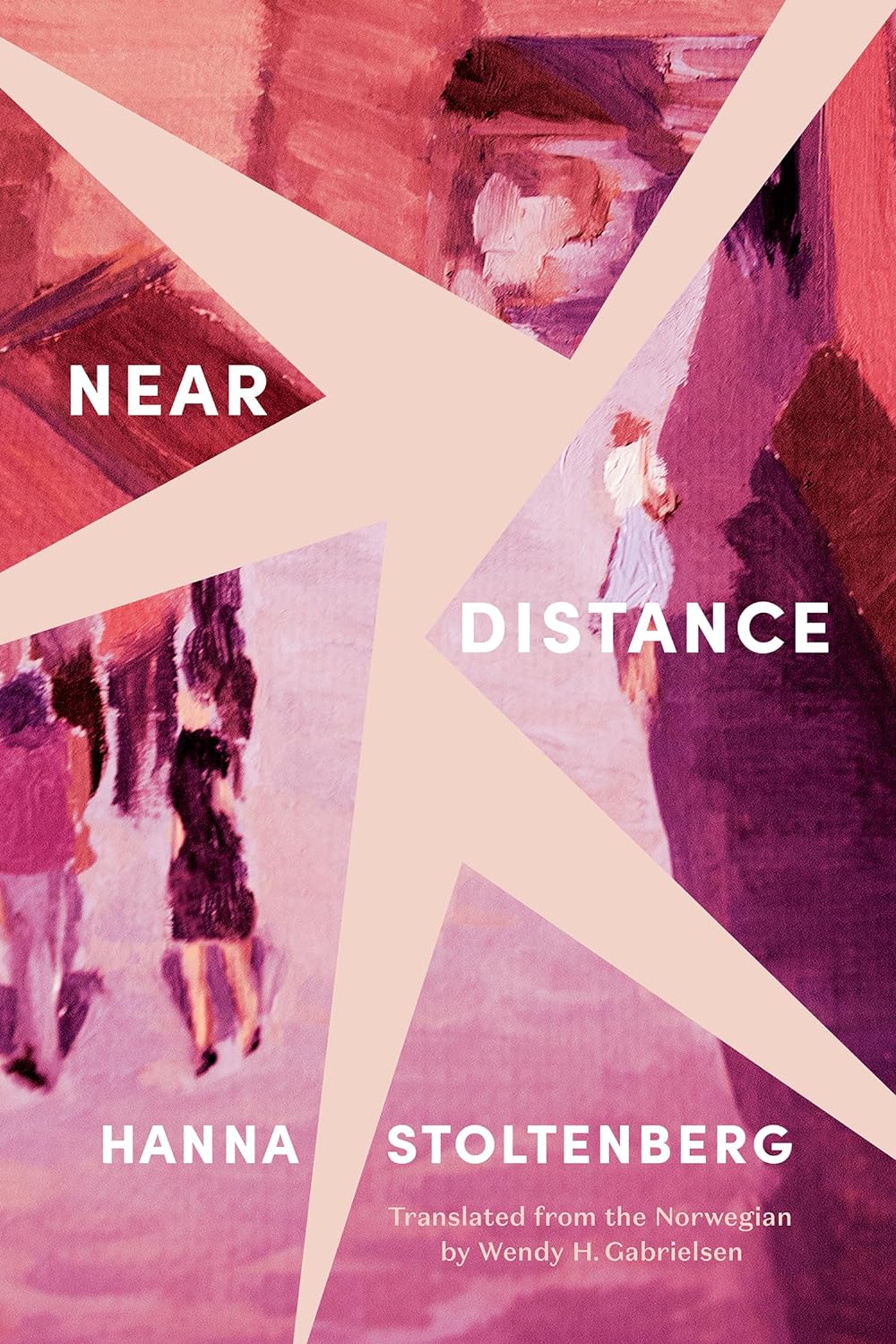 She had never really wanted to have children when she was growing up, so motherhood caught her off guard. When she found herself pregnant in her first year of university, she dropped out to devote herself to her new role, believing, at the insistence of Erik, the baby’s father, that they could make it work. And for a while it did. Gradually Karin began to drift away, restless and disconnected, ultimately falling into a loose affair that would trigger the dissolution of her relationship with Erik and strain her bond with Helene. Now that her daughter is grown and married with two children of her own, they rarely talk to one another. Until late one night when Helene calls to ask if she can drop by. She must talk. It can’t wait. Karin bows out on the man she’s just gone home with and meets her at the bar.
Helene is distraught. She has learned that her husband Endre is having an affair with the leader of a meditation retreat centre he has been frequenting and does not know what to do. Her daughter’s circumstances and her appeal for advice and assistance will lead Karin to reflect on her own past and revisit her fragmented memories of her relationship with Helene from her earliest years to the present. Questioning what she knows and what she doesn’t know. Soon an opportunity to explore this uneasy mother-daughter bond in a new light arises when Helene asks her mother to join her for a weekend away in London. She has already bought the tickets and made the hotel reservations, so Karin can hardly decline. This time together will reveal some things about both women, where they are in their lives, and how they got there.
This spare novella is a closely observed, well composed character study, with a sharp focus on the kind of persistent internal unease that can drive someone into themselves and away from those they care about. Karin is extremely self-conscious. She is always aware of how she thinks she is being perceived, relying on what she calls her “external gaze” to regulate her behaviour in relation to others. Whether what she believes she is projecting (or hiding) is really being perceived as she imagines is difficult to tell, because her thoughts and experiences mediate the close third person narrative. Meanwhile, she tends to be hyper-observant of those around her, continually taking in and assessing other people—fellow patrons at the bar, passengers on the plane, strangers seen on a London street:
In the central reservation by a pedestrian crossing, two women are hugging each other. Karin watches them while the taxi waits at a red light. They are both wearing turquoise uniforms under puffa jackets; one has her dark hair pinned up with a clasp, and it looks like she’s the one being comforted. They have white slip-on shoes which makes Karin wonder if they’re maids, nannies maybe? She has the feeling of having intruded on a story more dignified, more authentic than her own.
Karin’s vigilant nature, isolated as she is in her own mid-life existence, allows for the creation of rich, intense—and yet spare—narrative. Stoltenberg’s cool, detached prose is translated to a perfect pitch by Wendy H. Gabrielsen. As the book progresses, the scenes which alternate between Karin’s past reflections and present circumstances become shorter and tighter, heightening the tension especially as she and Helene appear to be at risk of losing contact with one another in the middle of a London night. But this is not a book with a neat conclusion, nor is it certain how much either Karin or Helene have gained beyond a slightly closer connection. Are they too different in nature? Or perhaps too similar? An inescapable feeling of loneliness and distance lingers, but without judgement. For a young author, this is a very confident debut and it will be interesting to watch her develop in the years to come.
Near Distance by Hanna Stoltenberg is translated by Wendy H. Gabrielsen and published by Biblioasis.















 roughghosts