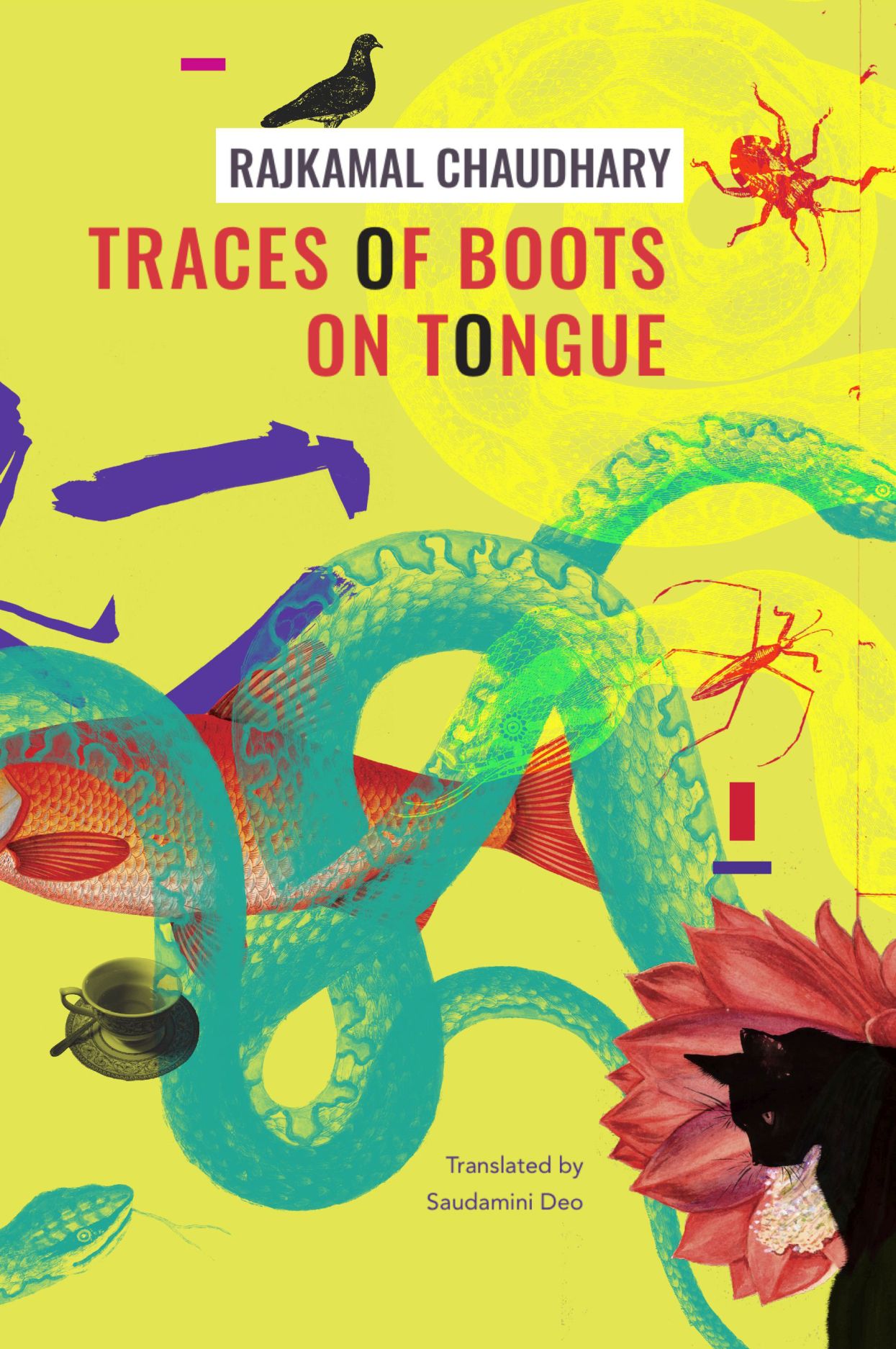
And something went terribly wrong: Truth/Untruth by Mahasweta Devi

Arjun Chakravarty has everything under control. As a successful contractor, skilled in the necessary art of greasing the right palms, business is booming, and finally, after ten years of marriage he and his wife are expecting their first child. Kolkata in the 1980s is booming. A determined project of gentrification is underway; everywhere high-rise buildings are sprouting up, even in neighbourhoods long considered derelict and undesirable. Like Khidirpur, a well-known den of crime and smuggling. Denying the odds, towering housing societies boasting spacious flats equipped with all the latest appliances stand proud, like Barnamala where our unfortunate hero resides and the setting of Bengali writer Mahasweta Devi’s Truth/Untruth.

A self-named man, Arjun came into the world as Sanatan Pushilal. But Sanatan was a moniker unworthy of the man he wanted to be. Orphaned young and impoverished, his uncle found him student lodgings with a noted karibaj, an Ayurvedic practitioner, and this fortunate placement was his first step toward a new identity. That is:

How Sanatan became Arjun. And how, erasing the past, Arjun slowly rode the lift of high aspirations all the way to the twelfth floor of society . . . all that is but ancient history now.

With his old landlord long gone, only his son Keshtokali, likewise a karibaj, knows the truth about Arjun’s past. Fortunately, even his wife Kumkum, the daughter of a retired Supreme Court judge, has no interest in either Ayurveda or her prosperous husband’s history. Yes, Arjun-babu has it made. Until something goes terribly wrong.

You see, his wife, now eight months pregnant, has been staying with her parents where she can be pampered and protected while she awaits the arrival of their precious bundle—at thirty-five no one wants to see anything go awry. Thus, left to his own devices, Arjun-babu has been able to indulge his passion for Jamuna, the pretty young maid who comes by daily to clean the flat. Imagine his dismay, then, when she arrives to inform him that she is pregnant with his child. Something must be done, he must make the problem go away. Jamuna’s own husband left when he lost his job, but she still believes he will return. Arjun will arrange for a proper doctor to take care of the unwanted pregnancy, pay her off and hope she leaves, but before he can see his plans through, he comes home to find her dead on the bed in his guestroom.

He knows he didn’t kill her, but he can’t exactly go to the police. If he had killed her, well, that would be a different matter. For the right amount of money the police could take care of anything. But, if word gets out that she was found in his flat, his reputation, his business, his wonderful life—all would be ruined. Even a rumour of murder would do him in; after all she would hardly be the first “murdered” maid to be found in his building . . . Ah, but Jamuna also worked in two other adjacent flats, one belonging to an old man named Desai and his crazy wife, the other owned by a tobacco company and cared for by Mohsin, a local Muslim man. Maybe Arjun could shift the blame, simply by moving the body.

This farcical and fast-paced thriller unfolds over little more than forty-eight hours, and features a cast of vibrant characters from the silly Kumkum and her over-protective family, to a host of servants and building staff, to petty thugs and mysterious “bosses.” The complicated power dynamics between the established rich, the nouveau riche and the slum dwellers who provide necessary labour and services, legal and otherwise, for the residents of the new buildings is clearly exposed. However, we observe most of these people indirectly, as the narrative is driven almost exclusively by dialogue and by the internal monologues of the central male figures—the three men in the building who directly or indirectly employed Jamuna. By this approach, Devi is able to reveal the very different natures of each of these individuals, but her primary attention falls on Arjun who is the most incredibly hollow and self-centred creature, continually twisting his line of reasoning into pretzels to absolve himself of the slightest responsibility for anything that has happened. Jamuna might be dead, but he is the real victim as far as he is concerned—everyone else is to blame.

Arjun divides the blame up in his mind. The astrologer is to blame, he’d never once warned him that bad times lay ahead. Keshtokali is to blame, he gave him such a stimulant that his mind was always full of . . . and Jamuna, isn’t she to blame too? Why did she have such a body, such a way of walking and talking?

He is, by turns, irritating, hilarious and tragic.

Mahasweta Devi (1926–2016) was one of India’s most prominent writers and  social activists. If somewhat different in tone from much of her more openly political, feminist work, her dry humour and ability to highlight insincerity and hypocrisy is in full play in this dark satire. Her prose is rich with insider street slang and allusions to popular movies and songs of the day (necessary references are explained in the endnotes). She is assuming a certain familiarity with the time and place she’s writing from, but is not concerned about making her more genteel readers work to sort through the common language many of her characters employ. In her afterword, translator Anjum Katyal acknowledges the challenges involved in trying to capture the different registers of spoken language—critical in a narrative so dependent on dialogue—without falling into unacceptably “twee” English variants. She does give Jamuna and her close friends a coarser and cruder vocabulary which contrasts nicely with the sometimes overly-affected language that Kumkum and her family use in private settings. Arjun, being the most eccentric and erratic of the cast, is granted a range of emotional expression from the obsessive to the absurd.

A rollicking urban tale, terrifically fun to read, Truth/Untruth blurs the line between murder, mystery and crime novel but from beginning to end, amid the tension and comic mishaps, it remains a sharp piece of social commentary.

Truth/Untruth by Mahasweta Devi is translated from the Bengali by Anjum Katyal and published by Seagull Books.
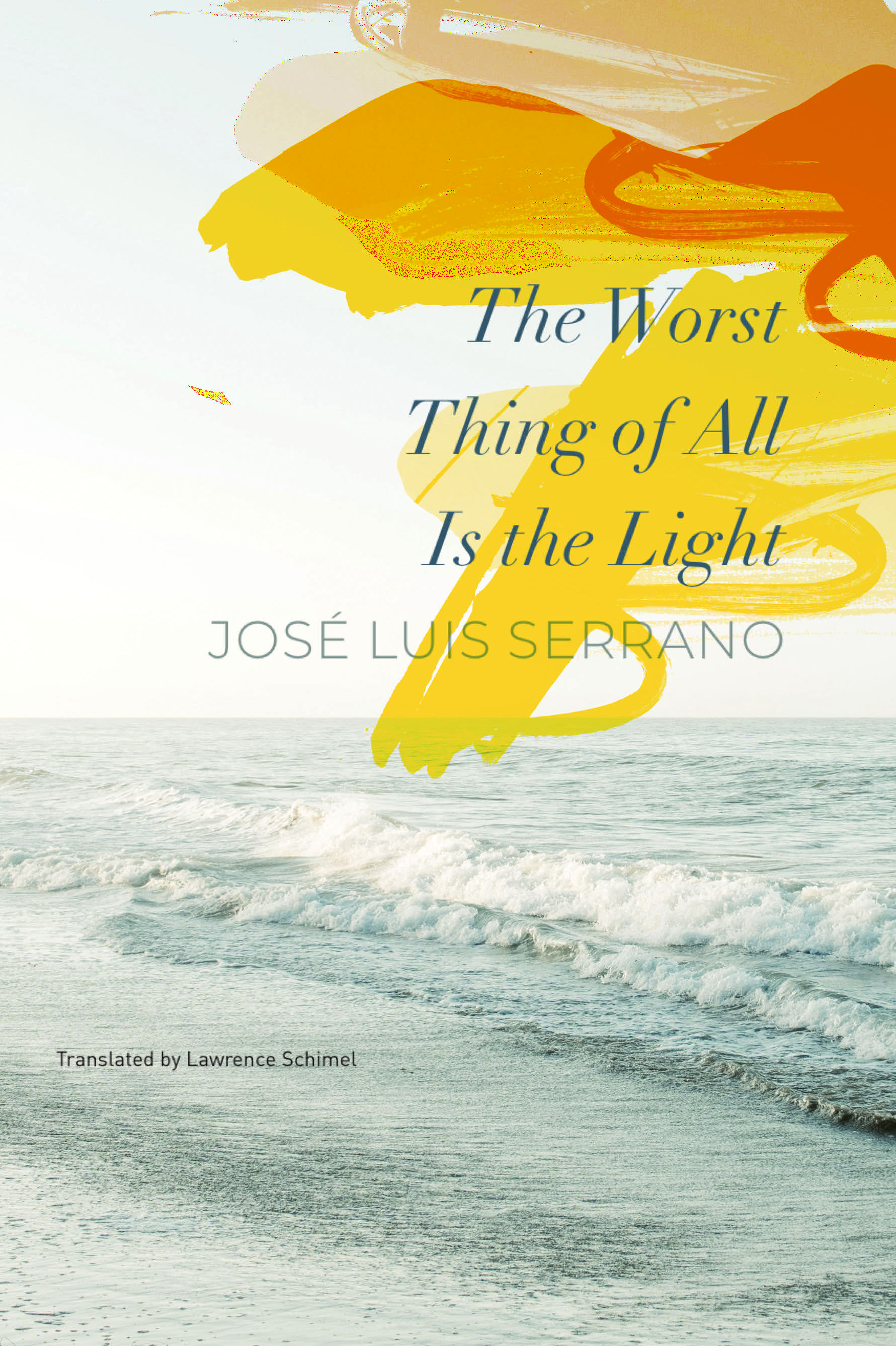
What is important is to love: The Worst Thing of All is the Light by José Luis Serrano

The worst thing of all is the light because it’s always the same, but we are not ever the same, and then that light reminds us of the others we were before, once, those others who did things that now we would not do, that we don’t admit to having done. In spring, the light of a clear, bright day, when the wind has left the air clean and pure, leads us to clearer days, days of youth, of holidays. Or that yellow light of autumn, also clean, sharp at the final hours of the afternoon.

Light, light, light. Such is the thread along which the thoughts of Edorta, a middle-aged man, run through the course of his free-flowing poetic reflections, a diary of sorts, addressed to, but not meant to be read by, his long-time friend Koldo. As he reaches for a way to understand and articulate his tangled and conflicted feelings, light serves as a mechanism of memory, sometimes consoling, at other times cruel. But Edorta’s musings are only half of The Worst Thing of All is the Light, an inventive, metafictional novel that sets an exploration of the boundaries between friendship and desire against a parallel examination of the relationship between imagination and reality.

Edorta and Koldo are the creations of Spanish writer José Luis Serrano, but within this double stranded novel, they are also the evolving characters taking shape in the mind of an “author” who is, presumably, a fictionalized representation of Serrano himself. In a series of journal entries, the author/narrator records the activities and conversations that mark each day of a vacation he and his husband are spending in Bilbao. His report, which details where they go, what they eat and what they talk about, is addressed to his husband directly, with the all familiarity two decades together has wrought. These dated entries, each illustrated with a scenic photograph, occur over the course of ten days in August of 2014 and appear to set up the proposed novel the author is planning to write: the story of a very close friendship—one that might even be described as love—between two heterosexual men. He’s not sure if he will be able to pull it off (his husband is even more skeptical) but he knows it will require an inventive approach, perhaps one that plays a fragmented diary of some kind against an author’s journal within which the potential narrative structure and details are formulated and debated. His husband plays the foil, devil’s advocate and, sometimes, the anxious spouse:

“But then, aren’t you going to write a normal novel?”

“I never write a normal novel. What’s more, I’ve always made it clear that I’m unable to tell a story, There will just be snippets, bits of what could have been the novel. Perhaps a diary by Edorta.”

“And these dialogues.”

“That’s right. Perhaps not these, but others I make up based on these.”

“And will I be myself? I’m worried about being myself in your novel, worried that you’ll put me in your novel.”

With chapters that alternate between the author’s journal and Edorta’s diary, the novel that exists is the one that the author is planning to write—the final project and a self-conscious analysis of that project in its formative state. This is where the metafictional game lies, where the boundary between literature and reality blurs and where questions about the “fictional” characters, their relationship, and the nature of love and attraction arise. As the author and his husband debate the possibility of platonic desire between men from the outside in so far as they can intellectualize beyond their own homosexuality, Edorta explores the matter from within, in trying to articulate the quality of his affection for Koldo while holding to an assumption of his own heterosexuality.

Edorta’s diary offerings are undated; each one is named after a song released by the Bristol-based UK independent Sarah Records(1987–1995), and opens with the artist name, catalog number, and a few lines of lyric. These sections resemble a form of stream of consciousness, admittedly composed in writing, but unfolding without clear direction or specific chronology as if Edorta is trying to sort out his feelings on the page. Consequently, allusions—to the light in particular—and scenes from the past are revisited repeatedly. Where he is writing from, temporally speaking, is intentionally vague, though he does often correct himself, pulling out of his revery to recall that adult life, relationships, and children have made the endless days of youth but a memory. Their occasions to actually be together are now few and time-constrained. His longing is palpable, his prose dense with fervid imagery:

Today I lug the grief of not being able to say the unsayable, fighting with the anguish of being and not wanting to be, of sinking into oblivion forever or of turning back, before even being, before myself, where there is not even oblivion. Life breaks loose from the poplars in tatters, and the branches, outlined in green-black shadows, shrink inward in their extinction of dying rapture, paralysed, surprised by the cold of November, overwhelmed in its frozen casket of gargoyles and waits.

The confluence of a grown man’s sense of loss with an adolescent ardor enhances the interrupted, unstructured memories and reflections that the novel’s “author” seems to want to capture with Edorta’s diary passages.

The two alternating streams form an intriguing novel that presents itself—openly—as a meditation on the nature of attraction, love, and memory within a discussion of the questions that arise in the process of formulating a story that a writer wishes to tell. But does it work as a cohesive whole? Certainly neither half of the equation—the author’s descriptive vacation diary or Edorta’s endless poetic entreaties to Koldo—would hold as a sufficiently interesting narrative on its own. Yet together they complicate one another, less to provide one complete story (even with the metafictional reshuffling of expectations that occurs as the novel nears a close) than to continually raise questions about the exercise of creating and inhabiting characters to flesh out a story that an author may or may not be able to realize. As such, much hinges on the idea of platonic love and the degree to which sexuality influences the way one conceives of and is able to realistically depict an attraction that differs from one’s own.

Are Edorta’s feelings for Koldo of a different order than anything his friend can ever return? On several occasions he tries to reassure himself that they are not. Certainly he recalls and cherishes moments of intimacy that seemed to have distressed and embarrassed Koldo. But he is unable to let go of the need to define and claim his love, whatever it may be, even if he would not be the first person, regardless of orientation, to be hopelessly attracted to someone who, shall we say, plays for “the other team.” Of course, as the author’s creation, one has to ask, who exactly—Edorta or his creator—is unable to accept that their affection for the other might just be of a different order? The author’s admitted obsession from the very beginning of the novel is: “What is important is to love whether or not it’s reciprocated.” However, if, at the end of the day, to love truly is enough is a question that may prove easier to ask than to answer.

The Worst Thing of All is the Light by José Luis Serrano is translated from the Spanish by Lawrence Schimel and published by Seagull Books as part of the Pride List.

The revolution isn’t a rocket but a river that flows and pours forth: Passage to the Plaza by Sahar Khalifeh

Each summer night in Nablus was just like the next: breezes pregnant with the scent of jasmine, dew and whiffs from the sewers. The municipality went to great pains: every morning the marketplace smelt like a freshly cut bouquet of the most fragrant flowers; however, by the time the afternoon rolled round—when the hustle and bustle had died down and the shops had closed and the rugs and carts had disappeared along with the cries of the hawkers—the city became a rubbish tip: crumpled papers, plastic bags, used tissues, piles of trampled fruit.

This is the setting of Sahar Khalifeh’s Passage to the Plaza. But Nablus is a city on edge. Originally published in 1990, this novel is not only set during the First Intifada (1978–1993), it was written and published in the middle of this period of upheaval marked by sustained Palestinian protests and rioting in Gaza and the West Bank. Born in Nablus in 1941, Khalifeh is one of the most prominent Palestinian women writers. As the fifth of eight daughters, she was well aware of the fate that awaited members of her sex but sought early refuge in reading and writing. Married off against her will, she endured a difficult thirteen year marriage in Amman, Jordan, during which she found it impossible to write. This changed in the aftermath of the Six-Day War in 1967—she not only published her first novels, but returned to school in her early thirties. Her work, which is centred around the lives of women, offers a wider female narrative than that often associated with resistance literature.

Passage to the Plaza, translated from the Arabic by Sawad Hussain, is a very immediate response to the circumstances of the Intifada through the intersection of the lives of three women and one man who come together in one unlikely location. There is Sitt Zakia, the midwife, an older woman who, by virtue of her chosen profession, is at once on the margins of society and yet central to the lives of the countless children she has brought into the world. She crosses class boundaries but, at the end of the day returns to the comfort of her hookah and her prayers. Her beloved nephew, Hussam, is a freedom fighter whose political indoctrination began young, inspired by his infatuation with a fashionable teacher. Samar, the baker’s daughter is a young woman with a university education and decent job. She is also an activist with a women’s movement. And, finally, Nuzha, living alone in a house rumoured to be a brothel, is the daughter of a woman who was accused of being a spy and publicly murdered. She is a true social outcast with a complicated past. When Hussam is wounded and finds himself at her door, her home becomes an unexpected sanctuary.

The three women in this novel represent different facets of the conditions women face in Palestinian society. Samar, a patriotic and hopeful twenty-six year-old, is conducting research into the impact of the Intifada on women’s lives and the answers her questions elicit from Sitt Zakia and Nuzha are telling. When asked how her life has changed, the midwife responds: “Honestly nothing much has changed for us except more worries. More worrying means more burning hearts. I pray for God to help us women!” She sees women out on the streets protesting, throwing stones and protecting the militants. But all of the old worries women have always carried still exist. Sitt Zakia’s own daughters are married and living in other countries and she hasn’t heard from them at all since the uprising began. Her more immediate worries involve her militant nephew who is on the run.

When Samar arrives at Nuzha’s house, survey in hand, her inquiries are greeted with anger and bitterness directed at Palestine, at the men who have let her down and at a community that has rejected her. Only one year older than Samar, her life has been impacted by a very different set of circumstances beyond her control. She is defiant and combative and slow to trust any kindness. Her greatest concern is for her younger brother Ahmed, a resistance fighter who is hiding somewhere outside the city; she longs for his return. While she shares her past with Samar, the wounded and feverish Hussam is in another room, listening from behind the door.

Hussam comes from a “family that was mediocrely rich, educated to a mediocre standard, mediocre in their claims to nobility and prestige.” His uncles went abroad and achieved success while his father took unethical advantage of their portions of the family land to present himself as a much richer man then he was. For Abu Azzam, his unconventional sister Zakia and rebel son were his sole sources of shame, not his own duplicity. For Hussam, his rebellion was fueled not only by his unrequited love for the beautiful and politically active Sahab, but reinforced by a series of arrests and periods of administrative detention—”a rite of passage for all young men”—that freed him from his boyish fears, ultimately pushing him toward the resistance. However, as the situation in Nablas deteriorates with an increased presence of Israeli soldiers, the imposition of curfews, establishment of checkpoints and construction of barriers, Hussam’s condition worsens, leaving him bedridden in Nuzha’s house, drifting in and out of consciousness. The female characters are the ones who must negotiate the challenges and dangers of the streets and the social expectations of their gender on their own.

As in all of Khalifeh’s work, women’s enslavement, lack of rights and fight for equality are important themes, but her female characters are complex, their motivations often at odds with one another. The pious Sitt Zakia, for example, despite her independence and estrangement from her brother, worries about protecting his reputation when her sister-in-law arrives begging for refuge from his cruelty. She sends Um Azzam back to her own house, insisting that it is where she belongs. Nuzha, abused by the men in her life, has been forced into a situation that causes her and her late mother to be despised by other women. She is rightly fed up with both sexes. Meanwhile, Samar, for all her ideological optimism, still dreams of love and a handsome husband to come home to her each night.

Khalifeh allows much of her story to unfold through interactions between her primary protagonists, occasionally punctuated with direct access to brief internal monologues that reveal emotions that often contrast with what is otherwise expressed or described. A natural tension builds by virtue of the complicated emotional responses the characters have to one another and to their own predicaments, but outside the particular house where most of the engagement takes place, action explodes in periodic episodes of violence—the women’s collaborative efforts to dismantle a barrier the soldiers have built, a beating Samar receives at home from one of her brothers, a deadly ambush—that raise the tension suddenly and intensely. This narrative style has an almost theatrical feel; the story moves quickly, shifting in unexpected directions. It is all reflective of Khalifeh’s in-the-moment manner of setting a story in motion amid critical historical events as they are happening rather than waiting for the dust to settle. If it creates a degree of uneasiness, if certain details are left unexplained, so be it. Through it all, the voice of the poet of resistance rings out, reminding us what is most critical:

Golden days like those of a birthday. In a revolution, one is born a hundred times and dies a thousand more. The revolution isn’t a rocket but a river that flows and pours forth. Sometimes foreign aid sinks, rain becomes scarce, the river goes through difficult times, drying up, seeming fine as a silk thread. Other times it breaks forth, like a turbulent volcano, sweeping away all in its path, deafening. Oh generous sky, oh angry earth, anger that, like a storm, chooses its hour. Then the cycle comes to an end and goes back to how it was: the river becomes an oscillating thread again, the revolution returns to reality, the boulder tumbles back to the bottom of the river and Sisyphus picks up his load once more.

Reading this book while Israel is waging war in Gaza offers a reminder that nothing is new. One is forced to remember this novel was published in 1990. There are lines uttered here, during the Intifada, that could just as easily appear on social media today. The desperate plea Nuzah utters toward the end of the book hits especially hard, some thirty-three years later: “Enough of God, Mohammed, Essa, Musa, Red Cross and the UN. No one sees or hears. Since when has the world thought of us as humans?”

Passage to the Plaza by Sahar Khalifeh is translated from the Arabic by Sawad Hussain and published by Seagull Books.

A wanderer between two worlds: The Postman of Abruzzo by Vénus Khoury-Ghata

“Rifling through the papers of a dead man isn’t enough to bring him back to life.”

Ten years after her geneticist husband died following his return from a village in a mountainous part of southern Italy, Laure leaves her home in Paris in search of something—she’s not sure exactly what—that will help her understand why he kept returning to this isolated community of displaced Albanians again and again. As Luc travelled to collect samples from populations scattered across the globe, being left behind became such a constant condition of their marriage that Laure can’t quite accept that he is really gone for good. The only way to come to terms with this unsettled absence, she is certain, is to visit the one place he had returned to fifteen times and where, on his last trip, his “heart had broken down.” Armed with a folder of his final notes on the Albanians and her portable typewriter, she arrives in Malaterra in the region of Abruzzo, and rents a house.

This is the set-up of Lebanese-French writer Vénus Khoury-Ghata’s 2012 novella, The Postman of Abruzzo, the latest of her works to be released by Seagull Books in Teresa Lavender-Fagan’s English translation. But, if Laure embarks on her journey under the illusion that she will somehow be able to put names to the anonymous donors of blood, urine and saliva recorded in her husband’s files, as if some code rests in the notes she has yet to transcribe, she soon recognizes the foolishness of that idea. What she encounters instead is an eccentric collection of characters who hold fast to beliefs and traditions long since forgotten back in their homeland, preserved in Abruzzo like a fly in amber, and she discovers she is not the only one mourning an unresolved past.

The first and most essential villager Laure meets is Yussuf, the postman of the title. On her first day, he arrives on the doorstep of her cave-like temporary residence high on the exposed mountainside above the valley where the villagers are spending the hot summer months. He has come, he tells her, to feed a litter of kittens, and promises to return every day regardless of whether or not he has any mail to deliver. As one of the only people in town who can read, having learned in prison, he knows everyone’s secrets and has an opinion on everything, sharing his knowledge and uncanny insights with the newcomer as he see fit. Yet, although he can read, the postman has no time for writing:

Putting words on top of words doesn’t construct a house, doesn’t make a child or a tree grow, doesn’t plough a field or prevent locusts from devouring an entire crop of corn. The pages one writes on a table don’t change the shape of the table but make the brain of the one writing explode. Too many word’s crack one’s skull and shorten one’s life.

With his mailbag and his tendency to hold fast to the letters that he feels are too painful to deliver or too important to release to the vagaries of the postal system, Yussuf plays a critical role linking the residents of Malaterra to one another, and Laure, as an outsider, to the community where she hopes the answers to the questions Luc has bequeathed her lie.

The only person in the village who professes to have a true respect for words is the Kosovar, the sole Muslim in a community of Catholics, who has, over the years, bitterly retreated into the confines of his dusty bookshop. In Laure he hopes he has found a kindred spirit, but his desperation and general state of deterioration unnerve her. The other residents are of a much earthier stock, including Mourad, the lusty baker, who proposes marriage despite the fact that he already has a wife and household full of children and the local women who, guided by superstitions, eye the skinny, short-skirted foreigner with distrust. Most are widows, by fact or fate, as economics have driven husbands and sons away to seek work in cities from which they rarely return. And they all seem to remember a Luc very different from the one his wife thought she knew. But the one person who interests and terrifies Laure most is Helena, the woman who cared for Luc in his illness and sent his washed and ironed shirts to Paris after his evacuation to a hospital in Rome. Helena has been waiting thirty years, rusty rifle at hand, to avenge the deflowering and subsequent death of her daughter—by hanging from a fig tree with her mother’s assistance.

Even the mountains mourned the girl, only the mother’s eyes were dry. She cried inside. Condolences poured in from every direction: plastic buckets of every colour, aluminum pans, wicker baskets, even a nightingale in a cage, but nothing consoled her. The priest who refused to give her absolution because of suicide was immediately replaced with another priest. No people are more solidary than Albanians. It makes sense! The same blood flows in their veins . . .

This blood, O negative, not only binds this community and attracted the interest of the foreign medico, but nurtures a deep-seated tradition of blood tax and blood debt imported and preserved through generations of migrants. Laure’s agitation is heightened when Yussuf reveals that a letter sitting undelivered in his bag indicates that the “boy” Helena has been waiting for, known as the Australian because he was rushed off to an uncle in Sydney for his safety, is finally on his way back to Malaterra. His arrival will affect the entire village, Laure included.

The Postman of Abruzzo reads a little like a fable set in a place caught between the modern world and a past that is filled with a complicated network of ancient traditions and carefully maintained prejudices. Laure is also caught between two worlds, half-underground and half-aboveground as the Kosovar keenly observes. Khoury-Ghata’s prose, characteristically poetic, spare, and unsentimental, is perfectly suited for the telling. Sometimes it is simply breathtaking to experience the way she can conjure a vivid and moving image with just a few well-placed words. With this work she uses this gift for precision to craft a story of loyalty, love and loss that is both tender and gently absurd.

The Postman of Abruzzo by Vénus Khoury-Ghata is translated from the French by Teresa Lavender Fagan and published by Seagull Books.

Making every word count: The Questionable Ones by Judith Keller

A police car drives slowly along the streetcar tracks in front of the central station. The officers scrutinize the waiting pedestrians through the window. Most of those waiting here are out of the question. But some do come into question. These are the questionable ones.

This simple story, “Casting,” not only provides the title for Judith Keller’s collection of micro fictions, now available in English translation by Tess Lewis, but is a perfect representation of what this young Swiss writer is able to achieve with an economy words and a sensitivity to the multiple meanings that potentially blossom from familiar expressions. A quick glance at this book of short (sometimes very short) stories can be misleading. Some pieces are barely two sentences, a number extend for a page or two, while a few stretch to seven or more pages. One might then wonder how much a of story such an abbreviated form can contain, but as Keller knows well, the careful choice of words and the confidence to leave open space for the reader is key.

Arranged into sections named after stops on the Zurich tram line, the stories in The Questionable Ones offer snapshots into the lives, passions and idiosyncrasies of a variety of characters. Absurd, often humorous, sometimes reaching toward the political, Keller’s micro fictions reflect recognizable human emotions and actions, frequently relying on common expressions taken to their literal extreme, or language that is inherently ambiguous. Of course, this reliance on meaning, especially in such a confined literary space, presents a particular challenge for a translator.

The publisher’s webpage for this book features links to a published interview and a video conversation between the author and her translator, both recorded in April 2020 when the pandemic had intervened in Keller’s plans to attend a festival and a residency in New York City. Although both cover her literary influences—including Robert Walser and Ilse Aichinger—and the reasoning behind her unusual decision to study German as a foreign language in Bogota, Colombia, the video is particularly enlightening. It not only offers anyone interested a taste of Keller’s mini fictions, read by the author herself, but zeroes in on some of the difficult decisions her translator faced when the choice of an appropriate word to convey the nuances implicit in the original was not obvious. At this point, the translations were not necessarily fixed in their final form, so several times, Lewis and Keller discuss possible options for critical words in particular pieces. After all, if every word counts in the initial composition, the same is true for the translation. Further, the opportunity to witness the writer and translator openly examining the subtleties of meaning together is inspiring.

Keller’s playfulness with words and capacity to see things from a slightly odd angle allows her to pack more into a few sentences or a few pages in ways that longer, more conventional fiction might not. Less is more. Each piece is left open for interpretation, encouraging the reader to imagine a larger tale. They are at once sketches and revealing portraits of ordinary people trying to make sense of life, one way or another. As well, the spare prose, focused on the most essential, if unusual, qualities of  character and setting leads to some wonderful images. Take for example, the opening of the two-page story “In a House”:

A band of light lay on a hillside as if a glance from half-closed eyes had fallen from above. On the hill stood a house and in it lived a man whose movements were slow. He slowly raked the leaves. He had a wife and two sons. His wife looked like an owl with her brown and golden eyes. She had taken to standing behind herself and sending her body on ahead and calmly watching what happened to it. Their marriage was a muted one.

The only obvious connection between the stories that comprise The Questionable Ones and the tram stations that denote each section—Bucheggplatz, Schwert, Micafil and so on—is the recurring piece, always called “High Time” that closes out each sequence. The circumstances change, but each instance, begins with a “far-fetched woman” making her way through the city, by day or by night, often reaching the relevant tram station and, ends with the acknowledgement that she, or someone else, has been “waiting for it to be high time for a good while now.” This variation on a theme within which what “high time” is meant to refer to is never revealed, adds an intriguing continuity to this irresistible collection of microfictions.

The Questionable Ones by Judith Keller is translated from the German by Tess Lewis and published by Seagull Books.

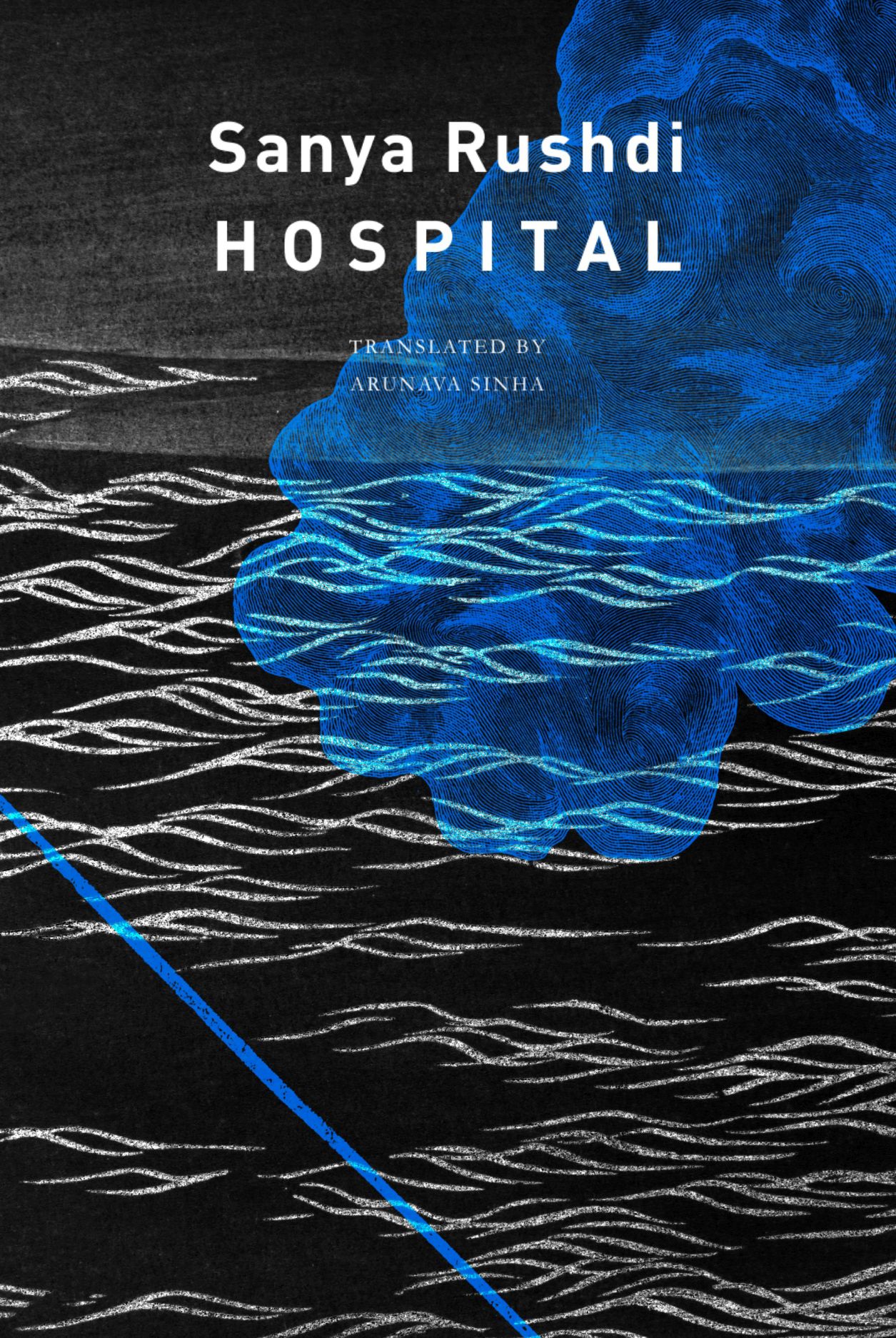
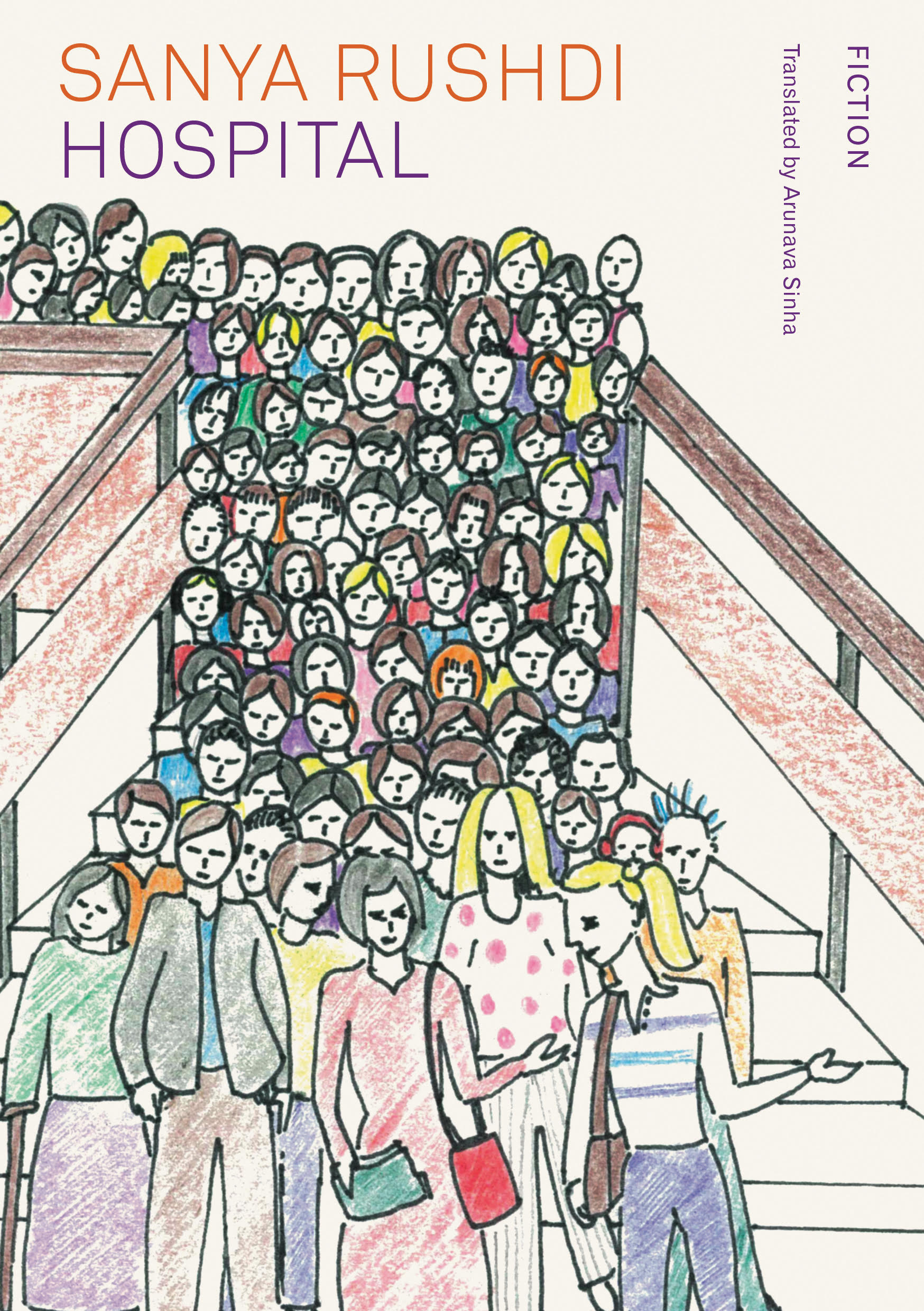
The boundary between the psychiatric ward and the real world: Hospital by Sanya Rushdi

But why have we turned to the right? That’s where the psychiatric ward is. Of course, there must be examples in history of those who, in an effort to protect their non-mainstream alternative thinking, pretended to be who they were not in order to shield themselves from politics. This may be a similar arrangement. Even as I’m wondering about this, a wheelchair emerges from somewhere and I am told to sit in it. I refuse, saying I’d rather walk. They say if I don’t sit in it on my own, they will make me. So I sit.

Books and movies about mental illness and psychiatric wards frequently play to either the horror or mystique of madness, while language related to psychiatric conditions—bipolar, psychotic, schizophrenic—is often applied carelessly to describe a range of circumstances that have nothing to do with actual diagnoses. Around the world, the stigma of mental illness is difficult to shake. A heart attack will bring friends and family to your hospital bedside; a serious breakdown can leave you isolated and alone, at home or if you are sick enough, confined to a psychiatric unit. From the outside, a worse fate cannot be imagined but, in reality, once the shock of finding oneself hospitalized subsides, the world behind the locked doors tends to contain a community, at once strange and familiar, within which one can recover. Days pass with a certain routine that gradually returns structure to a life that has been temporarily, or periodically, upended, distorted, weighed down or wired up. Hospital, by Bangladeshi-Australian author Sanya Rushdi, takes you into that environment as seen through the eyes of a patient experiencing psychosis.

Based on real-life events, this debut novel is set in Melbourne, originally written in Bangla and translated by Arunava Sinha. Rushdi’s protagonist, is, like the author, a Muslim woman named Sanya. Years earlier, psychosis interrupted her PhD studies in Psychology. Now, with her third episode pointing to a diagnosis of schizophrenia, she finds herself at odds with her family, a community mental health team, and everyone who seems to be conspiring to force her to comply with the medical model of treatment that she distrusts. She acknowledges her past psychosis, but is unable understand that the curious coincidences, obsessive behaviour, and lurking paranoia might signal that she is sick again. That is the cruel nature of serious mental illness—what one experiences from the inside is increasingly at odds with what others observe from the outside. As her psychosis progresses, the world is simultaneously terrifying and brilliant, but Sanya resists all efforts to encourage her to access care willingly, so ultimately she arrives at the hospital under police escort.

Sanya’s narrative is restrained and oddly lacking in affect, even when she describes her tears and outbursts. She is continually trying to observe herself and logically reason her way through whatever arises. However, her reasoning is often disjointed and confused. She is constantly seeking symbols of significance, spends a lot of time trying to figure out the secrets behind the thoughts and actions of others, questions why certain song lyrics keep coming to mind, and fitfully attempts to draw strength from her faith. Rushdi’s ability to present this state of fractured association and allow her protagonist’s processing to slowly become more coherent as the story progresses is very impressive. Madness has a logic of its own as anyone who has experienced depression, mania or psychosis knows well.

Rushdi captures this shifting state of awareness by combining Sanya’s internal monologue, readings, and diary entries with the use of a dramatic format to capture external dialogue. This allows a record of what is said apart from what Sanya hears or wants to hear. It is also especially effective for reflecting the banter between the residents on the ward. On her first day in the hospital, one of the patients, an older man that Sanya describes as “so handsome,” exposes himself to her as she passes his room. Her self-appointed tour guides try to explain:

Michael: Please don’t be upset. He does these crazy things, but he has a beautiful heart. Give him a day or two and you’ll see what a lovely person he is.

Me: I’ve seen it already.

Glen and Michael laugh.

Glen: Yes, many of the girls are crazy about him.

Me: They need a reason to be here, after all.

Glen and Michael laugh again.

Initially, most of the men Sanya meets seem exceptionally attractive to her—a charged energy between the sexes is not uncommon on the unit. She becomes obsessed with a few of the male patients during her early weeks in the hospital, while other women barely register unless she senses that there might be something between one of them and a man she fancies. At such moments, jealous and conspiratorial thoughts immediately engulf her. At one point, when a doctor suggests she seems to be spending too much time following the male patients around, she becomes defensive. She will leave that session with another drug, lithium, added to her regime as a mood stabilizer and eventually these persistent passions will start to subside.

With her education in psychology and her prior experience with psychosis, Sanya feels she is in a good position to determine whether or not she is sick this time. She blames her family for sending her to the hospital and is resistant to drugs.  She argues that a particular type of language-focused talk therapy would be preferable, but, if she wants to be released, she knows that medication is part of the game. Convinced of the value of language, she pours her thoughts into her diary, filling pages with arguments that are, at the height of her psychosis, bound by incoherent and tenuous  connections. Reasoning and recognition are slow to return.

I read this book very slowly, although it is neither long nor difficult. But as someone who has been hospitalized for manic psychosis, I was impressed and sometimes shaken by Rushdi’s ability to draw on her own experience to craft such an uncanny portrait of psychosis from the inside. Her protagonist appears very logical and rational, and within her own inner construct she is, but from the outside, it is clear to her family and the medical personnel that she is unaware or unwilling to believe that she is ill. She lacks insight. It is almost like being separated from the rest of the world by a one way mirror. On her side, are her fellow patients who form among themselves a community, an island.  She remains convinced that language is the answer to her survival and recovery. And perhaps she has a point there, as Rushdi has demonstrated through her own use of language to create a work that is masterful, moving and tightly controlled.

Hospital by Sanya Rushdi is translated from the Bangla by Aruava Sinha and published by Seagull Books. In Australia, Hospital is published by Giramondo.

Rain like this doesn’t wash away the filth: Hawa Hawa and Other Stories by Nabarun Bhattacharya

The gleaming wet road, the rusty tin roof of a motorcar repair garage, behind it an old paint-peeling stunned-still old house and a chimney precariously propped up with haphazard wires—the sky can see all this. And, not as clearly, the burnt-black tin-backed shops and buses and the in-between blocks of darkness that were Matador sheds and not the half-rotten bellies of fish but the shells of banged-up taxis. There were crumbling and dead accident cars too, their mouths full of dirt. The sky view mists over every now and then, for it has been raining continuously.

This is the setting of “Last Night,” one of the pieces in Hawa Hawa and Other Stories, the recently released collection of inventive short stories by Bengali writer Nabarun Bhattacharya. As the angry rain beats down on the trash-filled water logged street, two young men are fighting. They are unevenly matched, a condition mediated by sheer intoxication, but they are each intent on doing damage to the other. And in a very unexpected way they are also best friends.

Bhattacharya (1948-2014), the son of writer and activist Mahasweta Devi and actor and playwright Bijon Bhattacharya, worked as a journalist from 1971 to 1993, before turning his attention to writing fulltime. His magic realist tales tend to feature eccentric characters drawn from the shadows—dirty cops, nostalgic former revolutionaries, unsavoury figures and an assortment of anxious souls. His Calcutta is gritty, pungent, dark and unforgiving. The scenes that unfold, on these streets and beyond, range from sharp political and social satire to strange meditations on violence, madness and love. Set primarily in the 1970s and 80s, but reaching back as far as the 1940s, there are stories that play out against the early Communist-led peasant movements in West Bengal, the Naxalite uprising and the 1975 Emergency, as well as more intimate dramas set in family homes, trains and, of course, on the street.

Bhattacharya excels at creating memorable characters, and rapid, witty sequences of dialogue peppered with English words (indicated in the translation with the use of italics) and references to popular Indian films and songs. A number of his stories rely heavily on a steady back and forth between two people who happen to meet up and share some kind of common past or current circumstance. Others unfurl under surreal conditions, influenced by alcohol, madness or some impending fear. There is an immersive quality to these dark tales.

Take, for example, “Mole,” the story of a seemingly unrepentant cop with a patch of skin on his neck that begins to itch and become inflamed just before he murders someone—“murder” being an accepted language for the state-sanctioned killing his investigative role entails. The itch causes his restless right hand to fumble in his pants pocket where his pistol awaits. The sweat, the smells and the agitation grow. We follow him on a mission to a nightclub. Once the job is done he kicks at the corpse bouncing on the floor of the police van and emotionally decompresses as he returns to the station. A bleak and grim premise perhaps but for the banter in the office (with its water tank filled with bombs to be deactivated), the pointed parenthetical commentary on authorized violence, and the insatiable demons that haunt the protagonist:

Back home, he usually takes a bath, uses soap—puts some ointment on the itch—the sweat from his body and the dirty soap-lather swirl into the drain and disappear. He rubs scented oil on his hair. He is very sleepy, but sleep never comes without dreams. Dreams have eyes, they ask questions, they laugh, they beat on drums. Their limbs are ripped and shredded, bits and pieces bloody. His family has told him he sometimes talks in his sleep, groans, slurs out orders. Sometimes he scratches his back so furiously that he wakes up in the morning to find it bleeding.

There is a deeply embedded hallucinatory fear that follows him down the darkened Calcutta streets and adds a spark of troubled humanity to his situation.

Fear and superstition mark several of the tales, most tragically perhaps in “A Piece of Nylon Rope” in which two men meet outside a hospital on a rainy night. The narrator is there to look in on a colleague who had a stroke at the office, while the other is waiting for news of his son who suffered a serious football injury. The latter, Jagadish-babu, has a uncertain confidence despite the poor prognosis. He feels his fate has turned. He explains that he was already inclined to seeking fortune tellers and good luck charms when he learned that what he really needed was to get a piece of a hanging rope:

‘Hanging rope?’

‘Yes. Suppose someone hangs themselves to death. If you can get a piece of that rope and keep it with you, then boom!—whatever you want is yours. All the evil eyes on you, the vexing, the hexing—the whole fucking lot will vanish. Khoka’s injured so badly. But do you see any fear in me?’

Jagadish shows the narrator the length of nylon rope he has acquired and carries with him everywhere, but admits that the good fortune it promises comes with a steep price. He cannot be alone, for fear the suicide victim will return and demand the rope back. For a man with a trusted talisman, he is a nervous wreck.

Several of the stories in Hawa Hawa, including the title tale and “Mole,” highlight the brutality of the West Bengal police, while another demonstrates the inability of a newly elected politician to protect an old friend and revolutionary comrade. Elsewhere we meet a child with a cruel streak, the brother of an accused murderer who holds to his belief in his innocence, a businessman offering the perfect suicide—for a price—and a gangster who prophetically spends the evening with a headless prostitute. Inequality, injustice and the abuse of power are common themes driving the world that Battacharya wanted to bring to the surface through his darkly humorous, weirdly engaging fiction. And if his comfortable contemporary Bengali audience was disturbed by what they found in his work, he was hitting his mark.

Notably, this translation is the work of a young translator, Subha Prasad Sanyal, and his ability to bring Battacharya’s subversive and playful writing to life is impressive. He pays careful attention to rhythm and tone. As mentioned, the English words transliterated in the original Bengali text are italicized, yet many Bangla terms are left intact where context is sufficient to imply meaning, a choice that helps maintain a distinctive narrative feel. Meanwhile, any cultural, political and place references that enhance understanding are explained in the Translator’s Note.

Hawa Hawa by Nabarun Bhattacharya is translated by Subha Prasad Sanyal and published by Seagull Books.

A bell in the distance: ‘La Clarté Notre-Dame’ and ‘The Last Book of the Madrigals’ by Philippe Jaccottet

When Swiss Francophone writer Philippe Jaccottet died in 2021 at the age of ninety-five, he left two final manuscripts, finished in the final year of his life with the assistance of his friend, poet José-Flore Tappy. These two works, La Clarté Notre-Dame, a sequence of prose pieces, and The Last Book of the Madrigals, a selection of verses, have now been published together in John Taylor’s translation and, in them, we see the poet looking back over certain past experiences, ever asking questions of himself and the world he observes, even as his age weighs heavily on his thoughts.

The first work opens with a remembered outing with friends, when, as they walked down a gentle slope under grey skies, the silence or “deep absence” of the vast open space surrounded them:

Until the little vesper bell of La Clarté Notre-Dame Convent, which we still couldn’t see at the bottom of the valley, began to ring far below us, at the heart of all this almost-dull greyness. I then said to myself, reacting in a way that was both intense and confusing (and so many times in similar moments I’d been forced to bring together the two epithets), that I’d never heard a tinkling—prolonged, almost persistent, repeated several times—as pure in its weightlessness, in its extreme fragility, as genuinely crystalline . . . Yet which I couldn’t listen to as if it were a kind of speech—emerging from some mouth . . . A tinkling so crystalline that it seemed, as it appeared, oddly, almost tender . . .

This bell is the initiation and the subtle motif that binds a series of reflections that carry Jaccottet back to childhood, to earlier travels and, along the way, to inspirations and writings from his past. There is an element of reassessment to this sequence, a restless questioning of the poetic and the political, with frequent parenthetical asides. And though many of the passages date back to 2012, the image of being “at the very end of my life’s path” is ever present. Doubt, not of his accomplishments, but of their faithfulness to some kind of truth and ethical value, creeps into his musings.

There is a slowness, a patience, and willingness to set aside reflections for a time, to let them rest, that lends La Clarté Notre-Dame an organic wholeness in its final form, even if its genesis was more fragmentary. The vesper bells seem to effortlessly feed Jaccottet’s ongoing concerns about the situation in Syria, thoughts about his own poetic influences, memories of subtle details and interconnections arising from his long life of experiences and human interactions, and uncertainty about what lies beyond but, in the end, he is willing to close on an open, unfinished note. This is true to form. When asked what Jaccottet’s writing has to offer to a new generation of readers, John Taylor, one of his long-time translators suggests:

We have entered an age of unequivocal partisan discourse, of linguistic robotization, of tiny symbols standing for complex emotions. In total contrast to this, Jaccottet’s writing constantly shows nuance, attentiveness, perseverance, circumspection, and a genuine quest for essential truths. His hesitations and doubts are salutary because they bring us to a halt and help us to observe and ponder anew, sometimes against our own preconceptions and wishful thinking, as we learn to cast away chimeras but also not to abandon all hopes.

The Last Book of the Madrigals, Jaccottet’s final poetic offering is a return to verse, a form he had moved away from in favour of prose poetry in the 1990s. The dual language text opens with a piece entitled “While Listening to Claudio Monteverdi” which imagines an encounter with the most influential madrigalist of the early 17th century. It opens:

When singing he seems to call to a shade
whom he glimpsed one day in the woods
and needs to hold on to, be his soul at stake:
the urgency makes his voice catch fire.

Then by its own blazing light, we spot a moist
night-time meadow and the woods beyond
where had come across that tender shade
or much better and more tender than a shade:

now there’s nothing but oaks and violets.

The voice that has brightened the distance fades.

I don’t know if he has crossed the meadow.

Their long summer night together continues under the starry sky, becoming a transformative  experience for the speaker.

The poems that follow in this sequence draw on mythic, celestial and natural interactions. Other voices are invited into conversation with the poet on his journey, but an image of a writer nearing the end of his time recur—these are the last madrigals, an allusion to Monteverdi, perhaps—invoking the same sense of solemn awareness haunting La Clarté Notre Dame. After an encounter with an old blacksmith he asks:

Was he delirious when I heard him murmur:

‘If this lamp that is like a beehive
is removed from me,
if this perfume drifts away, companions,
you can carry off these quills and bundles of paper:
where I’m being led, I’ll have no more use for them . . .’

Later in another madrigal, as a summer evening falls, the poet again recalls the “blacksmith of volutes and flames,” whom imagines wishing away temptation only to then wonder of himself:

And he who still writes on the last staffs,
perhaps, of his life:

‘That unknown woman fishing in her lightweight skiff
has struck me as well.

I first thought it sweet to be her prey,
but now the hook tugs at my heart
and I don’t know if it’s the daylight or me
bleeding in these pearly waters.’

These poems are filled with beauty and longing, calling on the stars in the heavens for silent answers and anticipating the turning of the seasons toward autumn and winter. One can well imagine a chorus of voices carrying the final songs of a poet who looked at the world closely, listened to silences and distant bells, and sought the meanings in it all on the page. This volume with his two final works is not only a fitting literary addition to a life of great accomplishments, but can serve as an introduction for those who wish to read more.

‘La Clarté Notre-Dame’ andThe Last Book of the Madrigals’ by Philippe Jaccottet is translated from the French by John Taylor, with an Afterword by José-Flore Tappy, and published by Seagull Books.

Whose child are you? Twilight of Torment: Melancholy by Léonora Miano

During the heat of the dry season a storm is brewing. The air is thick, the skies dark and streaked with lightning. Thunder, still distant, is advancing, the prelude of a night that will threaten to open wounds and leave scars, on the parched ground, and in the lives of four women. Twilight of Torment: Melancholy, the first part of a two-volume novel by Cameroonian writer Léonora Miano, unfolds over the course of this one turbulent night and the day that follows. Directed to one man who is not present, the second person narrative is passed, like a torch from his mother to his ex-girlfriend to his fiancé and finally his sister, as each woman speaks to her individual circumstances, history with him and personal dreams for the future. Together their voices weave a complex tale which explores femininity, sexuality and self-identity in contemporary African society, against a backdrop in which the legacy of colonialism, slavery, patriarchy, ancestry, class, family dynamics and domestic violence intersect.

Set in Cameroon, exact place names are never used in this novel, affording a certain ambiguity that implies that it could easily be set in a number of sub-Saharan nations. What applies in the country, applies throughout the “Continent.” By contrast, the “North” refers to France, Paris in particular, but again reflects the double role Western countries play as an educational destination for those who wish to improve their prospects and as a point of origin for the descendants of the African forced dislocation who seek connection with a cultural and spiritual homeland. Mythologies drive movement in both direction. The use of such ambiguous language heightens this reality.

The novel opens with Madame, hotelier and mistress of a large family dwelling in a well-to-do neighbourhood in a coastal city. Her lonely soliloquy begins with a impassioned elegy for the loss of culture and tradition that occurred during the years of colonial control and its impact on women and female society. But it is also apparent that she was aware of the rules of the game that she needed to play if she wanted to achieve her goals. Her ambition was not money—she brought wealth into her marriage—but a level of respect no wealth could buy. She talks of the wound she carries early on, but otherwise addresses her son in guarded terms, she wants to explain herself but refuses to accept that her intentions were nothing but the best:

I can name the thorn that, lodged in me since an early age, is my torture and my compass. My true identity. I know the reasons that drive me and never delude myself in this regard. Let me be clear: everything proceeds from a crack but that does not mean I’m wrong. Our coastal plain, our country, have their ways. Their understanding of things. I make do. It took finesse, skill, and tact to hug the edge of this fissure without falling, and I only slipped once or twice.

Madame’s most valued possession, it becomes clear, is respect. Status matters. So she pursues a husband from a noble line, Amos Mususedi, who bears an patronym of import that she can pass on to her children. However, he also comes from a line of men known for their violent tendencies and the marriage she ultimately submits to is loveless and brutal. She is aware that her son resents her for not leaving, so much so that he is determined to put an to end his patrilineal bloodline. But he is not opposed to allowing the name to carry on.

When her son returns from the North with a woman he intends to marry and the child he wants to adopt, Madame is beside herself. Pride and respect matter above all and now this is the second lineageless woman he has brought home. His first girlfriend was less than ideal, but now, although she is willing to accept an adopted grandson knowing a biological heir is unlikely, young Kabral’s mother is an entirely unsuitable daughter-in-law and, after all, it seems like the proposed marriage is a sham. Madame will not allow it to happen, even if she has to turn to occult connections to ensure her desired outcome is realized. The strange storm brewing gives her pause…

As Amandla, the former girlfriend, picks up the narrative, we learn more about the absent man, her one great impossible love. A native of French Guiana, Amandla met him in the North where she was involved in political pro-African causes. Now resettled on the Continent she is engaged in a spiritual journey of self-discovery through deeper involvement with fellow Kemites, followers of an Egyptian neo-paganism. Her story calls attention to the longing to belong to an idealized ancient tradition and the challenges of finding acceptance in a world that views her as an outsider:

Rumors were running around town about a White Woman who’d rented a carabote house in a populated neighborhood of the district. A White. A Northerner in the minds of the people here. It’s interesting that the terms Black and White are unrelated to race in these parts. They refer to culture. To lifestyle. Racial thinking does not belong to original Kemite conceptions. Racism concerns us only because we deal with it. We’re not the ones who fractured the unity of humankind. We’re not the ones who hierarchized people only to recant when it was no longer useful. We’re not the only ones who are now duty bound to care for their souls. To cleanse their interiors. To make the inside shine until its reflected on the outside. May each know and accomplish his or her duty.

Midway through the book, at the height of the storm, a pivotal act of violence occurs that will bring the four women together, directly or indirectly and shift the balance of the narrative. Here we join Ixora, the questionable would-be fiancé and mother of Kabral as she lies, beaten immobile, on the muddy side of a road with the rain hammering her bruised body. Her spirit, however, is indefatigable. The narrative now takes a near stream of consciousness form, rolling out in breathless, single-sentence paragraphs. The woman so openly disparaged by Madame is revealed anew as she expands our understanding of the troubled man who has just left her for dead and the complicated and surprising circumstances that unite and differentiate the women who have come into his orbit.

Finally Tiki, the sister, takes over. No longer living on the Continent, she addresses her brother, Big Bro, with a directness, affection and understanding that belongs to her alone. Although he has disappeared into the night after attacking Ixora, she anticipates a call from her brother at some point and is preparing to fill him in on what she has learned about the fallout from what has occurred back home. But she also takes time to explain her rebellious youth, her need to fill in some of the pieces of her parents’ lives that have remained mysterious, and the strange process of self-discovery, through questions of sex and gender, that have led her to carve out an independent and idiosyncratic life in the North. Her account, played out against a soundtrack from the 1980s, comes full circle, painting a complex portrait of the lasting impact of life in a dysfunctional family, in a society still struggling to come to terms with its own legacy of complicated alliances and prejudices. But the novel closes waiting for the call which has not yet come. It is to Tiki’s brother’s story, from his perspective, that the companion volume, Heritage, will turn.

I plan to read that soon.

Twilight of Torment: Melancholy is an impressive novel that brings to the forefront the many diverse and conflicting elements that impact and shape the lives of African and African origin individuals in our modern world. It is an undeniably feminine novel, yet one which underlines the damage that patriarchal structures enact on both women and men. And, although I am not typically a fan of multi-voice narratives, this one is very well executed. A central story line is carried through the stormy night and the day that follows; events that occur and information revealed shifts the dynamics between the characters. Each woman, with her own torments of personal and historical origin, brings a distinct voice, complicated life experience and a surprising angle to this ensemble piece. By the time night falls again, Melancholy closes with promise and hope, but leaves many unanswered questions and uncertain outcomes.

Twilight of Torment: Melancholy by Léonora Miano is translated from the French by Gila Walker and published by Seagull Books.

Reading highlights of 2022: A baker’s dozen and then some…

It seems to me that last year I resisted the annual “best of” round-up right through December and then opened the new year with a post about some of my favourite reads of 2021 anyhow. This year I will give in, look back at some of my favourite reading experiences out of a year in which I had a wealth to choose from and aim to get some kind of list posted before friends start hanging up their 2023 calendars around the globe. In a year with war, floods, famine, storms and still no end in sight to Covid infections, books seemed more important than ever, as a respite, a record and a reminder that we, as human beings, have been here before and must learn from the past to face the increasing challenges of the future.

As ever, it is difficult to narrow down twelve months of reading to a few favourites. One’s choices are always personal and subjective, and many excellent books invariably get left out. This year especially—2022 was a productive and satisfying year for me as a reader and as a blogger. Not much for other writing, I’m afraid, but that’s okay.

This year I’m taking a thematic approach to my wrap-up, so here we go.

The most entertaining reading experiences I had this year:

Tomas Espedal’s The Year (translated from the Norwegian by James Anderson) was one of the first books I read in 2022. A novel in verse, it is wise, funny and, nearing the end, surprisingly tense as Espedal’s potentially auto-fictional protagonist careens toward what could be a very reckless act.

International Booker Prize-winning Tomb of Sand  by Geetanjali Shree (translated from the Hindi by Daisy Rockwell) looks like a weighty tome, but blessed with humour, magic and drama—plus a healthy amount of white space—it flies by. An absolute delight and worthy award winner!

Postcard from London, a collection of short stories by Hungarian writer Iván Mándy (translated by John Batki) was a complete surprise for me. In what turned out to be a year in which I read a number of terrific collections of short fiction, I was a little uncertain about this large hardcover volume some 330 pages long, but by the end of the first page I was hooked by the author’s distinct narrative voice and I would have happily read many more pages.

The most absorbing book I read this year (and its companions):

City of Torment – Daniela Hodrová’s monumental trilogy (translated from the Czech by Elena Sokol and others) is a complex, multi-faceted, experimental work that explores a Prague formed and deformed by literary, historical and political forces, haunted by ghosts and the author’s own personal past. After finishing the book, I sensed that I was missing much of the foundational structure—not that it effects the reading in itself—but I wanted to understand more. I read Hodrová’s own companion piece, Prague, I See a City… (translated by David Short) and more recently Karel Hanek Mácha’s epic poem May (translated by Marcela Malek Sulak), but I would love to have access to more of the related literary material, much of which is not yet available in English. I suspect that City of Torment is a text that will keep fueling my own reading for some time.

This year’s poetic treasures:

This is the most challenging category to narrow down. I read many wonderful collections, each so different, but three are particularly special.

Translator John Taylor has introduced me to a number of excellent poets over the years and in 2022, it was his translation of French-language Swiss poet José-Flore Tappy’s Trás-os-Montes. I read this gorgeous book in August and it is still on my bedside table. It’s not likely to leave that space for a long time yet, and that’s all I need to say.  

I first came to know of Alexander Booth as a translator (and read a number of his translations this year) but his collection, Triptych, stands out not only for the delicate beauty of his poetry, but for the care and attention he put into this self-published volume. A joy to look at, to hold and to read.

Finally, My Jewel Box by Danish poet Ursual Andkjær Olsen is the conclusion of an organically evolving trilogy that began with one of my all-time favourite poetry books, Third-Millennium Heart. Not only is this a powerful work on its own, but I had the great pleasure to speak over Zoom with Olsen and her translator, Katrine Øgaard Jensen, for Brazos Bookstore in May. The perfect way to celebrate a reading experience that has meant so much to me.

Books that defied my expectations this year:

Prague-based writer Róbert Gál has produced books of philosophy, experimental fiction and aphorisms—each one taking a fresh and fluid approach to the realm of ideas and experience. His latest, Tractatus (translated from the Slovak by David Short) takes its inspiration from Wittgenstein’s famous tract to explore a series of epistemological and existential questions in a manner that is engaging, entertaining and provocative.

A Certain Logic of Expectations (you see the back cover here) by Mexican photographer and writer Arturo Soto is a look at the Oxford (yes, that Oxford) that exists a world apart from the grounds of the hallowed educational institution. Soto’s outsider’s perspective and appreciation of the ordinary offers a sharp contrast to the famed structures one associates with the city (and where he was a student himself) and what one typically expects from a photobook.

The third unexpected treat this year was The Tomb Guardians by Paul Griffiths. This short novel about the soldiers sent to guard the tomb where Jesus was buried is an inventive work that explores questions of faith, religion, and art history. Truly one of those boundary-defying works to use a term that seems to get used a little too often these days.

The best books I read in 2022:

Again, an entirely personal assessment.

I loved Esther Kinsky’s River, but Grove (translated from the German by Caroline Schmidt), confirmed for me that she is capable of doing something that other writers whose work skirts the territory occupied by memoir and autofiction rarely achieve, and that is to write from the depth of personal experience while maintaining a degree of opaqueness, if that’s the right word. One is not inundated with detail about the life or relationships of her narrators. Rather, she zeros in on select moments and memories, allowing landscape to carry the larger themes she is exploring. So inspiring to the writer in me.

Monsters Like Us, the debut novel by Ulrike Almut Sandig (translated from the German by Karen Leeder) deals with an extraordinarily difficult topic—childhood sexual abuse. It does not shy away from the very real damage inflicted by predatory family members, nor does it offer a magical happy ending, but it does hint at the possibility of rising above a traumatic past. As in her poetry where Sandig often draws on the darkness of traditional European fairy tales, she infuses this novel with elements and characters that embody the innocence, evil and heroic qualities of folktales within an entirely and vividly contemporary story. So much to think about here.

Hanne Ørstavik’s The Pastor (translated from the Norwegian by Martin Aitken) was my introduction to the work of a Norwegian writer I had a lot about over the years. This slow, melancholy novel set in the far north regions of Norway, beyond the Arctic Circle in the dead of winter, was a perfect fit for me as a reader, in style and subject matter. The story of a female pastor who takes a position in a remote village following a personal loss that she does not fully understand, explores emotional, historical and spiritual questions through a character who is literally stumbling in the dark.

So, what might lie ahead? This past year I embarked on two self-directed reading projects—one to focus on Norwegian literature for two months, the other to read and write about twenty Seagull Books to honour their fortieth anniversary. I found this very rewarding experience. Both projects were flexible enough to allow me freedom, varietyand plenthy of room for off-theme reading, but in each case I encountered authors and read books I might not have prioritized otherwise. For 2023 I would like to turn my attention to another publisher I really admire whose books are steadily piling up in my TBR stack—Archipelago. As with Seagull, they publish a wide range of translated and international literature that meshes well with my own tastes and interests. I don’t have a specific goal in mind, but already have a growing list of Archipelago titles I’d like to read. Other personal projects—public or private—may arise, perhaps more focused toward the personal writing I always promise to get back to, but time will tell. If the last few years have taught us anything, it’s that it’s a long uncertain road from January 1st to December 31st and it’s best not to try to outguess what the road might hold. Hope for the best and prepare for the worst once more.

Best wishes for the New Year and thank you for reading!