Further notes from South Africa: Wildlife and quiet times in the Eastern Cape

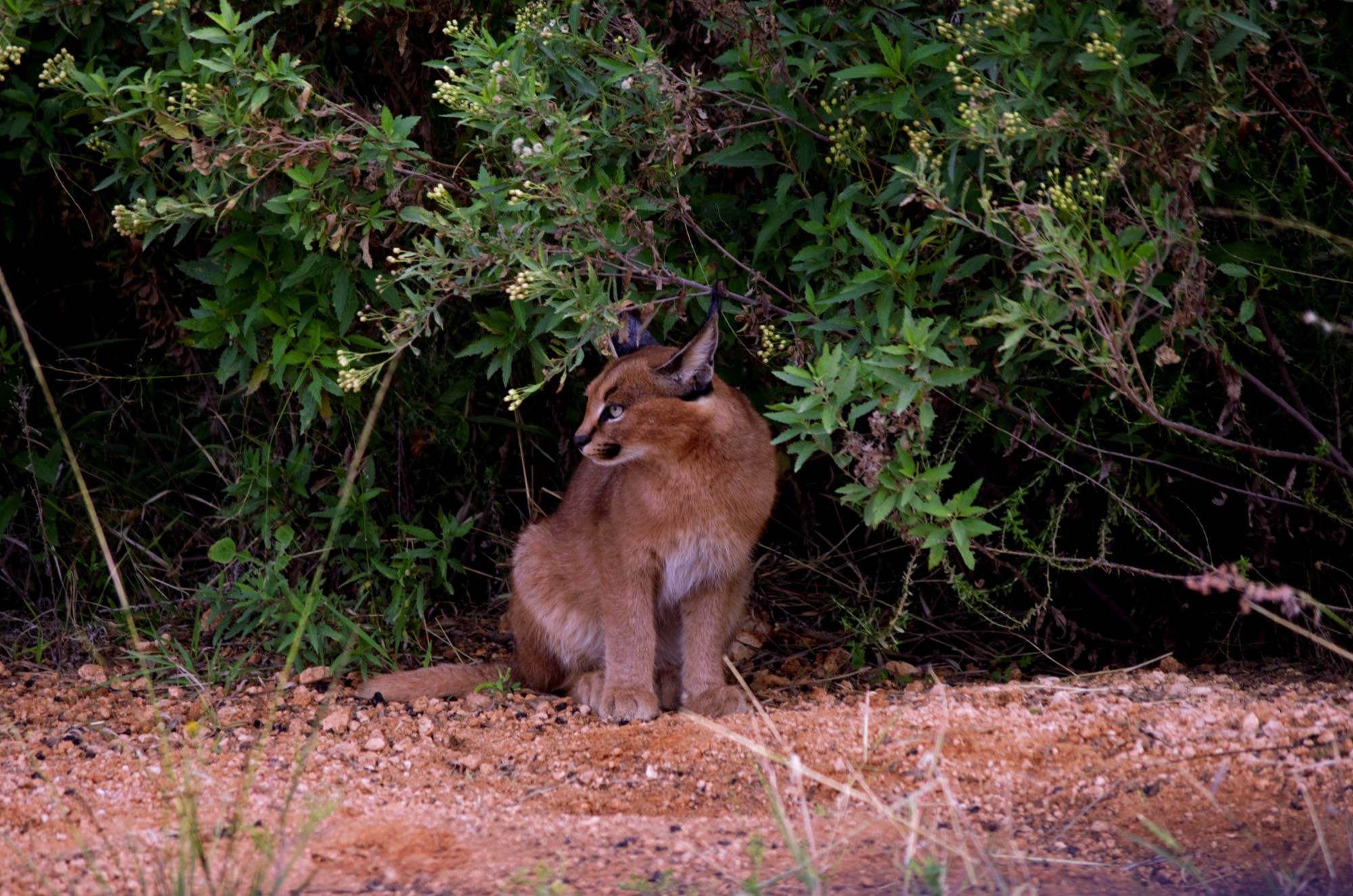
I have been in South Africa for just over a week now. It’s been an amazing opportunity to meet people and observe the country on its own terms. The closest I have had to a typical tourist experience has been our day trip to Addo Elephant Park. Nothing quite prepares you, on your first visit, for the sight of these huge majestic beasts looming ahead on the road, appearing out of the bushes. And there is so much more to see than elephants. We were stoked to encounter two young rooikatte along the roadside. These lynx are a rare sight at the best of times and we were able to sit and watch them for 15 minutes.

Rooikat
Rooikat
Addo Elephant Park
Elephant  – Addo Elephant Park, South Africa

The value of taking time to relax, soak in the countryside, meet fascinating individuals and spend quality time with my friend has been exactly the medicine I needed. In a few days I will make my way back to Cape Town for the much more urban, cosmopolitan side of my stay which will, in its way, be quiet and introspective. Cities can be good for being alone too.

Old sheep
Old sheep
Eastern Cape farm garden

My endeavour to gather more South African literature to bring home is going well. So far I have collected a stack of second hand books from a little shop in East London here in the Eastern Cape and have another stack waiting for me back in Cape Town. I have been digging through my friend’s bookcase for titles to look for here or back home and last night I was thrilled when my favourite author, Damon Galgut, won the Sunday Times Literary Award for South African fiction for his novel Arctic Summer. So, a fine literary excursion to date.

South African sunset - All photos copyright JM Schreiber
South African sunset – All photos copyright JM Schreiber

Otherwise it has been a relief to step back from my normally heavy engagement with news and social media. I did read with dismay about the terrorist attacks in France and Tunisia. I was relieved that my American LGBT brothers and sisters have achieved a long overdue milestone. But I came to South Africa in large part to put as much distance between myself and my life at home as possible for a few weeks and, for now, watching waves crash on the shore or sitting on the stoep and watching the sky burst with colour in the evening or listening to Breyten Breytenbach reciting poetry in Afrikaans is therapy of the best kind.

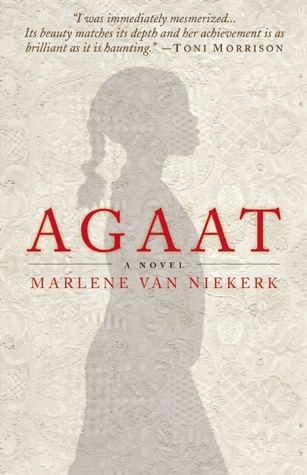
And her name was Good: Agaat by Marlene van Niekerk

“Poor Agaat. What has my life been? What has her life been? How can I ever reward her for coming this far with me here on Grootmoedersdrift? How does one compensate somebody for that fact that she allowed herself to be taken away and taken in and then cast out again? And to be made and unmade and remade. Not that she had a choice. I even gave her another name.”

This is a variation on the refrain that haunts Milla de Wet’s thoughts as she lies, paralyzed in the advanced stages of Lou Gehrig’s disease, completely dependent on her black servant turned caregiver Agaat to attend to her every need. As Marlene van Niekerk’s magnificent novel begins, the two women are reduced to communicating through eye movements. Eventually even that will be impossible. But Milla’s mind is sharp and brittle in her confined waking hours and Agaat, stalwart and efficient to the end, knows her mistress well. Too well.

AgaatFrom this claustrophobic perspective a remarkably expansive and complex novel of Apartheid South Africa unfolds. Van Niekerk, a nominee for the 2015 International Booker Prize, achieves this by deconstructing the traditional farm novel and weaving together a complex, poetic and devastatingly powerful epic. It is almost impossible to find the words to adequately capture the experience of reading Agaat (or The Way of the Women as it was published in the UK) without resorting to hyperbole. It is, quite simply, an inspiring, unforgettable novel. One that invites and rewards careful reading.

Despite the rolling fields and pastures, river and mountains, this is an intensely focused novel. It is not easy to exist with Milla trapped inside her immobile body, or to listen as she bitterly dissects and dismantles her life – alternately self righteous and regretful – addressing herself in the second person. It is not comfortable to be swept into the stream of consciousness of her internal ramblings that mix obsession over her current state of being with the flotsam and jetsam of her farm woman’s domestic life. Or to discover, through her notebook journals, the details of Jakkie’s childhood and, eventually, Agaat’s early years in her home. By masterfully weaving together these four distinct narrative streams in each chapter, van Niekerk creates an enduring portrait of the complexities of power as they play out within families, between races, and in a country that is in an increasingly volatile political state.

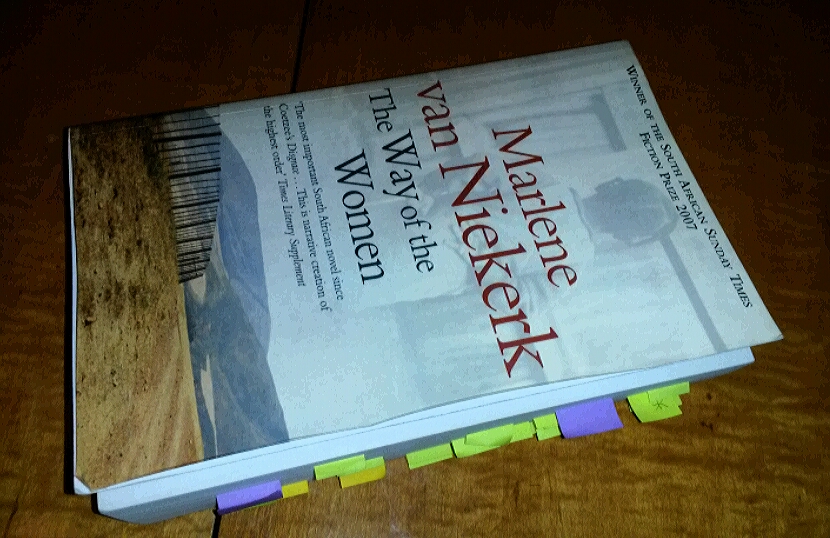
My well marked copy!

As the story is fleshed out, we meet Milla in 1948, as a young woman engaged to the dashing Jak de Wet, a trophy husband of sorts, handsome but ill suited to the farming life. Their marriage is increasingly volatile and strained, with both playing their own counterproductive roles out to the bitter end. For many years the couple is unsuccessful in their efforts to conceive. That is where Agaat comes in. The daughter of one of the labourers on her mother’s farm, she is born with a withered arm and, as a result, is subjected to horrific abuse in her early years. Milla imagines a heroic role for herself in rescuing the rejected child and bringing her into her home against the protests of her husband and the sidelong glances of her neighbours. For years Milla treats Agaat as a surrogate daughter – in so far as a segregated society will allow – teaching her to read and write, to explore and appreciate nature, and to master the fundamentals of animal husbandry. And then, suddenly, she discovers she is pregnant. Before the baby arrives, Agaat’s role is abruptly shifted. She is moved into an outside room and a maid’s uniform with strict expectations. But when little Jakkie arrives Agaat, barely more than a child herself, becomes the loving and compassionate caregiver that neither of his parents can ever manage to be.

As the end is approaching Milla is forced to weigh and reevaluate her own life and the fate to which her actions have tethered Agaat. As often as she questions her actions, it is not clear that she can ever stand back from herself and see the big picture. She is, in the end, complicit in maintaining the Afrikaner social order that Jak so proudly believes in even if, in her own mind, she is a martyr. Agaat is at once the angel in the wings, servant and nanny; and the witch still bound to her “primitive” ancestry. She has been molded and created by Milla, but her thoughts remain hidden. Not until the closing pages of the novel is her side finally revealed in the dark and heartbreaking bedtime story she that she and Jakkie shared when he was small.

Originally published in Afrikaans, the translation by Michiel Heyns is simply brilliant. Van Niekerk is first and foremost a poet and her language is filled with allusions to music, children’s rhymes, and literature. The scent of fennel, colours of flowers and foliage, the calls of birds and nosies of farm animals, the guttural g’s of Afrikaans all add to the multidimensional experience of reading Agaat. As Heyns points out in his Translator’s Note: “Agaat is a highly allusive text, permeated, at times almost subliminally, with traces of Afrikaans cultural goods: songs, children’s rhymes, children’s games, hymns, idiomatic expressions, farming lore.” The ultimate result appears effortless, mediating the boundaries where necessary but maintaining a distinct cultural experience. An interview with Heyns in Words Without Borders is an informative and entertaining exploration of the text and the translation experience that is highly recommended for interested readers.

Agaat is bookended with a Prologue and Epilogue in Jakkie’s voice. It is 1996 and he is flying home from Canada because his mother is near death at the beginning and returning after the funeral at the end. He left South Africa in 1985 to escape the political conditions in his native country, and, one suspects, his parents. As I write this, I am about to fly from Canada to South Africa myself for my first ever visit. I am aware of the fraught tensions that continue to run through the country, most recently arising in the literary community. I will be carrying the many complex currents that run through this important novel with me as I leave.

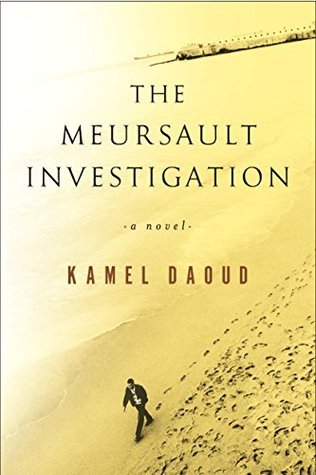
Naming the unnamed: The Meursault Investigation by Kamel Daoud

“A man who’s drinking is always dreaming about a man who’ll listen,” advises Harun, the aged man sitting in a bar in Oran, Algeria, in the opening chapter of The Meursault Investigation. His companion, night after night, is a young student intent on sorting out the mystery behind the iconic text he carries in his briefcase. What unfolds over a series of encounters is the tale of the unnamed Arab murdered in the pivotal scene of  L’Etranger by Albert Camus. In presenting Harun as the fictional counterpoint to Camus’ Meursault, Algerian author Kamel Daoud sets up to name and flesh out a life not only for the victim of violence on that hot beach, but for his brother and mother as well. What follows is more than an homage; it is an active dialogue from the other side of the equation – ethnically, politically and historically.

kamelAn acquaintance with L’Etranger is not only assumed but a recommended prerequisite to The Meursault Investigation. Both are novellas so reading or reviewing the former in advance is not an arduous task. I last read Camus’ classic in late 2013 with The Guardian Reading Group so I had the advantage of being able to search the online archives for my own reflections and the discussions that ensued. I still found myself dipping back into my own copy as I started out with this book but as I fell into the story it no longer seemed necessary.

Our narrator this time around is immediately a more likable character than our old friend Meursault. He is not happy, but we have a context for our sympathies. He is seven years old when his beloved older brother Musa meets his senseless fate. Their father had disappeared before he had a chance to even form a memory of him so his brother was his hero and a surrogate father figure. His senseless death, unreported save for two obscure newspaper accounts his mother clings to, cannot be proved. No body is ever found. After all, in the novel in which he is killed he is neither named nor is the fate of his body mentioned.

His mother becomes obsessed with seeking answers. In the process Harun is reduced to a shadow of himself, he feels like an effigy of his brother. He follows his mother as she searches for clues. He is blamed for surviving and denied his own identity. He becomes a ghost in his own life. While Meursault’s relationship with his mother is, from that famous opening line – “Mother died today” – cold and flat, Harun and his mother share a complicated, emotional dynamic. “Mama’s still alive today” he reminds us repeatedly, but both are wounded and reduced, survivors of the unnamed Arab in an uncertain and shifting post-colonial Algeria.

Eventually he is led to avenge his brother’s death by taking the life of a Frenchman. It is, in itself, an act rooted in the story of Cain and Abel:

“I blame my mother, I lay the blame on her. The truth is, she committed that crime. She held my arm steady while Musa held hers and so on back to Abel or his brother. I’m philosophizing? Yes, yes I am. Your hero had a good understanding of that sort of thing; whether or not to commit murder is the only proper question for a philosopher, the only one he ought to ask.”

In an echo of L’Etranger, where Meursault is condemned to death not for killing an Arab, but for failing to cry at his mother’s funeral; Harun faces imprisonment not for an act of murder, but for killing his Frenchman one day after the Declaration of Independence rather than alongside his countrymen during the battle for freedom. Close on the heels of this new found Independence, some two decades after his brother’s death, our hero finally encounters the famous text which he instantly recognizes as explaining, complementing and mirroring his own. He is at once intrigued and dismayed.

The echoes with L’Etranger resound throughout this novel. Daoud answers the absurdity of Camus with his protagonist’s own absurd predicaments. He matches Meursault’s rejection of God with Harun’s dissolution with his faith. But his hero’s hopes and disappointments are his own, solidly grounded and charged with a power that, from the Algerian perspective 70 years out from the publication of the original inspiration, demands to be heard.

This is, of course, not the first time that fiction has been answered by fiction, untold stories have been re-imagined, or silenced characters have been granted voice. The Meursault Investigation has been met with international praise, a measure of skepticism and, in the author’s home country, calls that he be tried for blasphemy. Translated from the French by John Cullen and published by Other Press, this is a deceptively simple yet deeply important work. Time will tell how it holds up in the light of such a famous counterpoint, but, for my money, it has to be seen as a continuation of a conversation that will, because it is so deeply informed by L’Etranger, serve to draw Camus’ work forward into twenty-first century discourse while setting its own very important and timely literary agenda as we move forward.

Besides, Harun with his diversions and penchant for storytelling is much better company than poor miserable old Meursault.

We’re extras in our own stories: Atavisms by Raymond Bock

I am often at odds with the literature from my own country, in fact I’m increasingly at odds with my own country itself. When I heard about Atavisms, a newly released translation of Maxime Raymond Bock’s award winning collection of short stories it caught my attention immediately. I was keen to have a look at Canada through the lens of a contemporary Québécois writer. I don’t know what I expected, but I was hooked from the opening pages.

atavismsNot content with niceties, Bock catapults his reader into this collection with “Wolverine”, a story about a disaffected nationalist nursing his resentment long after the FLQ (Front de Libération du Québec – a separatist paramilitary organization) has fallen into decline in the years following the institution of the War Measures Act in October of 1970 in response to the hostilities that had risen to a crisis point. When he happens to encounter a former Liberal cabinet minister, aged and intoxicated, he enlists a couple of friends on an adventure of revenge that turns brutally violent. It is shocking even if you come to this tale from a distance, but as a Canadian who will never separate the October Crisis from his 10 year-old imagination, I met it with intoxicated horror. Suddenly I was thrown back to my prairie schoolyard where my friends and I re-enacted events we were in no way equipped to understand – but with kidnapped officials and bodies in trunks it was infinitely more exciting, and terrifying, than anything on TV.

The horror continues to unfold in the second story, “The Other World”, but this time the reader is thrown back hundreds of years, to the early Quebec settlers and the immediate aftermath of the surprise attack by of a band of Iroquois on a couple of traders and their Huron guides. As the lone survivor lies under a thicket of pine branches hoping to remain hidden as the attackers relieve their victims of goods and scalps, he muses that, no matter what happens, he has no regrets.

From there we move, in “Dauphin, Manitoba”, to look outside the borders of Quebec, with a man’s monologue directed at a girlfriend he left behind in a prairie town. They had moved out there together. While she found herself captivated by her work, he failed to get a foothold or feel at ease in the vast empty landscape and retreated to the familiar blanketing comfort of a Montreal winter.

“You could pace back and forth a hundred years without coming close to the boredom I felt on those prairies, once sifted by antediluvian oceans, sculpted by retreating glaciers, surveyed by rambling nomads – friendly spirits, even better warriors – plowed to-and-fro by combines kicking up the dust of buffalo skeletons. You could say I caught you off guard when I left you alone to follow your path; you could say it was a nice trip, the time of your life. Lies. We’re both free now. You can study law, become a pastry chef, take up curling, or stay out there and keep up the good work; I’ll stay here and the snow will keep coming down.”

I once made a move like that in the opposite direction, albeit no further than Ottawa; but in the end made my way back west, never really at home at either end of the equation. As the narrator frames his missive to his girlfriend in terms of the generic novels he is making his way through, he does not sound any more committed to his move as something intrinsically right than as an acknowledgement of where he does not belong.

As the stories in Atavisms unfold, stretching back and forward in time, common themes, from history to politics to parental anxiety, reoccur, reflecting off one another. It can be argued that these thirteen stories are interconnected although they do not explicitly share any repeating characters and range from historical to surrealist to speculative fiction. Some of the contemporary stories are deeply universal and could almost be set anywhere, like “The Bridge” in which a depressed history teacher muses about his fate should he give in to his suicidal whims; or “Room 103”, a son’s one sided conversation with his dying father:

“It’s the end, Antoine, there’s nothing left to be done. You’re so light you don’t even make a dent in the mattress. It’s just you all alone with your obsolete quarter-million dollar machines, your network of tubing, your probes and dreams.”

Like a fragmented block of glass, each story in Atavisms offers a view of the Québécois experience through a different prism until the final tale, “The Still Traveler”, pulls all the threads together into a time and place in a precolonial reality dating back to the legends of the earliest residents and visitors to the Americas. After all, atavism refers to the tendency to revert to an ancestral type and that, more than anything is the underpinning theme of this collection: fathers and sons, family histories, political legacies, the identities that contain and define us.

Outside of Quebec, a sense of identity is diluted. I was struck by the depth of the colonial commentary that runs through a number of these tales and how the early days of New France are revisited with a harsh measure of reality. This is a conversational point sadly under played in Canada as a whole. As a new level of racism and xenophobia directed at new Canadians grows across this country, we would do well to remember how recently white Europeans made their way onto these shores.

Newly released by Dalkey Archive Press under their Canadian Literature Series, Pablo Strauss’ translation very effectively maintains the distinctive flavour of Bock’s richly varied stories. Supplemental endnotes fill in some essential language and historical references to enhance the reading experience.

I would strongly recommend Atavisms to anyone interested in knowing more about the Quebec experience, whether inside or outside Canada. Not only because the perspective is not as widely known or understood as it should be, but because this is simply a collection of very good stories. Period.

Small, quiet tale with a dark heart: Marcel by Erwin Mortier

In turning serious attention to the awards for translated and international literature that have dominated this spring, I have had pleasure of encountering many authors whose work I am looking forward to exploring at greater length. Belgian author Erwin Mortier is one such writer. His stunningly beautiful and moving account of a one woman’s experience coming of age in Flanders during the First World War, While the Gods Were Sleeping, was, truth be told, my personal favourite from the IFFP shortlist. A second installment of his epic WWI project has been released in Dutch, but until it sees an English translation I decided to turn my attention to his earlier novels which have recently been re-released by Pushkin Press.

MarcelI’ve started with his debut Marcel, originally released in Dutch in1999, followed by Ina Rilke’s English translation in 2001. This novella is a subtle and quiet work. The narrator is a sensitive ten year-old boy who lives with his grandparents, in a house that is sagging under the weight of time, literally and figuratively. From the opening paragraphs Mortier paints an image of the house as repository of secrets:

“Most of the rooms harboured a limbo of darkness, cool in summer, chilly in winter. In some the walls had absorbed the smell of generations of cooked dinners, as in the kitchen, where grease clung to the rafters. The cellar stored, the attic forgot.”

The grandmother, as he refers to her, is a dressmaker, tending to the sartorial needs – modest or grand – of the womenfolk of the small Flemish village where they live. But she is also her own family’s guardian of souls, helping to usher the dying to the afterlife, tending to their resting places in the nearby cemetery and, most critically, curating a parade of photographs of the deceased on display in a large glass cabinet. Four times a month, her grandson assists with the ritual removal, cleaning, naming, and replacement of generations of family portraits:

“When all the pictures had been properly dusted the grandmother closed the glass wings of her cabinet. She had reflected, reassessed and rearranged. She had piled proof upon proof, for and against Death, who was both her enemy and her most loyal ally. Death robbed her of her relatives, but he also fixed them in still poses ensuring they would meekly undergo her domestic ministrations.

When I saw my face reflected in the glass it was a fleeting glimpse, with far less substance than the images of the dear departed.”

The insubstantiality of his reflection is telling. The young narrator is routinely compared to Marcel, his grandmother’s youngest brother who died during the war. He is haunted by this spectral relative and, in a sense, never allowed to be seen for himself. He is routinely reminded that he is “Marcel to a tee, but for the eyes which I got from my mother.” Others remark that he takes after Marcel in nature: “Marcel always kept to himself, too.” But the exact circumstances of Marcel’s death are shrouded in mystery. Regular comments are made about the Germans, the aftermath of the war, implications about allegiances – but for all his perceptiveness, our narrator is too young to understand politics and history. It is not until he tries to impress his teacher, a buxom woman with whom he is utterly besotted, that a dark and ugly truth finally comes to light.

Mortier is a slow and patient writer, he allows his stories to unfurl in their own time. His love of language is evident – colours, patterns, textures, qualities of light, scents and sounds are all vividly evoked. But in contrast with his more recent work with its rambling, hypnotic Proustian sentences; the attention to detail is offered with a delicate restraint. The prose is spare and haunting, the mystery unfolds gently. Marcel stands as a most confident debut which, in hindsight, clearly points to great work to come.

Roughghosts is one year old today: Looking back and ahead

Today I received a notification from WordPress congratulating me on my first anniversary. Well happy anniversary to my alter ego roughghosts who was born on this day from a scarp of creative writing I uncovered in one of my endless unfinished notebooks. I never was very clever with user names; most of my aliases amount to little more than my initials and the first 5 letters of my last name.

Copyright JM Schreiber, 2014

I have become quite fond of roughghosts. It suits me, more than I might have imagined, or at least been willing to admit on May 31st of last year. To be honest, I created this blog to engage with other WordPress blogs and, I don’t know, maybe reflect a little, and explore some creative writing. At the time, a little voice I the back of mind said this looks like a rather manic move. After all I was under a soul crushing amount of stress at my workplace, had a major fundraiser and annual report due, and had not slept for more than a few hours a night since the previous November. But I shrugged it off, forged ahead only to crash and shatter into a thousand pieces a few weeks later.

Today, I have managed to rebuild myself to a point. There is still a lot more glue, stitching and healing required. Mania has subsided to a simmering depression with doses of anxiety and a pill that I do not like but is presently necessary as a sleep aid. And roughghosts the blog has evolved from a space to moan about the shock of realizing that, yes, I still have a mood disorder and all the fallout that a major breakdown entails, to a book based blog with a strong focus on translated and international literature.

Over the past few months I became involved with a jury shadowing the International Foreign Fiction Prize (IFFP), a challenging and highly rewarding experience. It taught me to read faster – still no speed demon, I – and read more deeply with a specific goal to being able to rate and write a constructive review for each book. I have started scribbling in margins and filling notebooks when I read. As a reader and a writer this has been invaluable. The camaraderie of reading and discussing the books together was an added bonus, introducing me to a great group of book bloggers. My subsequent expansion of activity on twitter has further enhanced this community of readers, publishers, authors and translators.

Then, close on the heels of the IFFP came the Best Translated Book Award (BTBA) with a challenging and exciting longlist and a selection of small North American independent publishers to discover. Adding to this embarrassment of riches for lovers of translated literature was the conjunction of the biannual International Booker and the writers I want to explore from that list of finalists. And, on top of all this, my longstanding interest in South African literature will be further nourished by a trip to that county in a few weeks with a list of books I hope to obtain.

I am, I hope, reading my way back to wholeness. Preparing to write my way back into the world, or rather document my very real journey into the world in a full and honest way for the first time in more than half a century of living.

This past week’s awarding of the 2015 IFFP and BTBA prizes saw the celebration of female authors and translators. The IFFP honoured Jenny Erpenbeck and Susan Bernofsky for The End of Days, a decision that coincided with our shadow jury’s esteemed choice. This is a most important book with a timeless theme spanning the whole of the 20th century. About an hour later the 2015 BTBA was awarded to The Last Lover by Chinese author Can Xue and translator Annelise Finegan Wasmoen. I encountered this book as a longlisted IFFP title and simply fell in love with the surreal, dream-like tale. Notably, Can Xue was also named that same day with six other women and two men as finalists for the Neustadt International Prize for Literature. I’ve been decidedly excited by this celebration of female writers and for those who know me, that is a huge shift in my own approach to literature.

Back in late January I wrote a pot in response to a discussion on the Tips, Links and Suggestions blog of the Guardian which had caused me to reflect on the abysmal ratio of female to male authors in my reading and on my shelves. However, my more explicit focus on literature in translation is slowly beginning to shift that balance. Especially if one considers how many of the works I read, if written by men, were translated by women. And I am taking serious note – not only should I endeavour to read more female writers, I can easily fall under the spell of Can Xue, Anne Garréta, Marlene van Niekerk, Olja Svačević or Valeria Luiselli, just to name some of the authors that have really impressed me of late. And I am pleased to report that an increasing number of the books I am currently reading or planning to read feature female writers and/or translators.

Copyright JM Schreiber, 2014

So, on my first anniversary as a blogger, I look back over an ad hoc journal chronicling an ongoing passage from a terribly messed up state, struggling to make sense of a sudden shock to my self esteem, my confidence and my identity to a place where I have a strong real life community, solid mental health support and a creative environment where I am proud of the work that I publish in this space. Moving forward I hope to explore further writing opportunities, continue to recover and, with luck, make my way back into productive employment.

And keep reading a lot of terrific, exciting and challenging literature from around the world.

Bohemian dreamer: A Gothic Soul by Jiří Karásek ze Lvovic

“Fiction is eternal; reality perishes” we are warned in the preface of A Gothic Soul, “Invented forms live, real ones vanish. Truth is ephemeral; illusion everlasting.” What follows in this classic of Czech Decadent literature, originally published in 1900, revived in a new translation by Kirsten Lodge and lovingly presented by Twisted Spoon Press, is a poetic account of the emotional and philosophical torments faced by a troubled young man who struggles to place his disaffected existence between real life as lived by others and the internal world of his dreams.

2015-05-19 19.33.24One can sense from the outset that this is not a happy story. The author has already made it clear that it will not be a “story” in the typical sense at all but rather a journey of internalized reflections. A romantic darkness and decay looms large, it is hard to imagine sunlight filtering through. The humour, the playful nods that the narrator directs to the great French Decadent writers, is very black indeed. And yet this work is permeated with a remarkable beauty.

The hero of A Gothic Soul is the last of his line, raised by maiden aunts after his parents’ death. His childhood is gloomy and oppressive, haunted by a fear of inheriting the religious mania that drove a cousin to take his own life. He responds to the external world with an affect of remote deadness while allowing to flourish, within his soul, an internal reality filled with light and magic. Each time he resolves to engage with world, to seek an end to his lonely isolation, he ends up retreating into his dreams to seek comfort. A deep conflict arises when his natural misanthropy clashes with his abiding desire for a true and perfect companion, a male friend and lover with whom he can meld body and soul. On the few occasions when he meets a potential friend, his fear and shyness drive him away.

“But everything was so distant. He was sick – he felt it. He could find no peace. It was as though all the atoms of his soul had been vapourized. He could no longer calm himself. He longed for a friend, a kindred soul. How beautiful to give himself to someone and to feel that he had given himself to someone. His life would immediately acquire meaning. What happiness! What charm!”

Early in his self-exploration he believes that the ultimate respite for his agonized soul lies in the Church, in monastic life. But his nihilistic temperament causes him to lose his grasp on his faith, to fall away from the idols and saints that once gave him comfort and to question what it means to believe in God. Spirits now begin to follow him through the streets and into his ancient family home. Fears of madness return.

His reflections then turn to the role that his Czech identity plays in this wretched existence to which he seems to be condemned. His Czechness, his city, become entwined with his struggle to make sense of his inability to live life fully. Is his nation seeking its own medieval traces, its own Gothic soul? Does the fate of his nation trying to define a space for itself in the Austro-Hungarian Empire mirror his own search? Some of the most stunning passages in this novella read like a heartbreaking ode to his native city.

“And now the evening bells rang out over Prague. A weight, darkly clanging and tragic, fell from their harmony. And unexpected numbness imbued the air. Stifling shadows hung drowsily over the rooftops. Not even a wing of a belated bird moved in this air. Everything suddenly seemed to be standing stock-still to listen to the conversing bells. Iron strokes broke through the windows of belfries and towers. The resonant sound cascaded down before dying out in the distance, flowing haltingly over the city’s rooftops.”

As the story progresses, our hero continues to overthink his dilemma as he wanders the streets of the city or takes refuge in his rooms. His reasoning pivots between optimism and despair. He realizes that he is losing his grip, that a life unlived is his likely destiny.

2015-05-19 19.38.39Jiří Karásek ze Lvovic (1871-1951) was an instrumental figure in the formation of the Czech Decadent movement. In a fascinating Afterword and author’s Biography, translator Kirsten Lodge describes the nature and development of this movement. In contrast with other strains of the same tradition, for the Czech Decadents the themes of despair and death are taken to the level of national obsession. For Karásek, his homosexuality also deeply informed his conception of Decadent thought. A desperate homoerotic longing runs throughout A Gothic Soul. This is complimented in this gorgeously presented publication by a series of illustrations by artist Sascha Schneider (1870-1927).

Twisted Spoon Press is a small independent publisher based in Prague. This is my first encounter with one of their publications. I was drawn in by the sheer beauty of this book. It is a joy to read and an important literary work that still resonates 115 years after it was first published. Trust me, an electronic copy would not be the same. You will want the hard cover version.

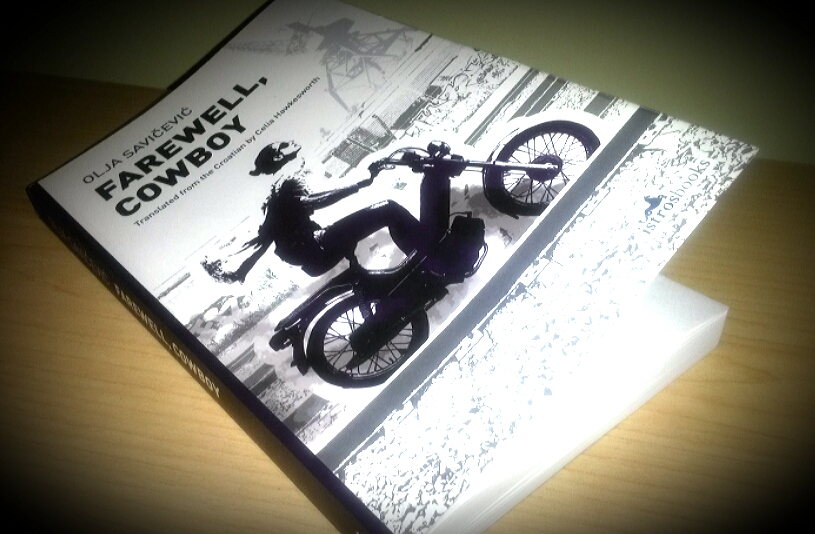
A little radiance: Farewell, Cowboy by Olja Savičević

“Everything’s the opposite of what it seems: hell is a comfort to the living, while heaven is ordinary blackmail.”

A deeply personal piece of unfinished business draws Dada, the spirited heroine of Farewell, Cowboy, from the towers of Zagreb, back to the grimy streets of her hometown on the shores of the Adriatic in this debut novel from Croatian poet and writer Olja Savičević. Once she arrives her first task is to relieve her older sister of the responsibility of keeping track of their mother who seems to be surviving on a routine of pharmaceuticals, soap operas and bi-weekly treks to the cemetery to visit the graves of her son and husband. But at the heart of Dada’s return to the Old Settlement is a need to lay to rest her questions surrounding the suicide of her beloved younger brother Daniel several years earlier.

2015-04-27 23.09.41Dada is feisty, in keeping with her fiery hair, an attribute she shared with Daniel and their late father who succumbed to at an early age to asbestos poisoning. An aficionado of the western film, spaghetti and American classics alike, her father spent his final years working at the local movie theatre and then, after the war, in a video store. He bequeathed to his son his love of western heroes and a jammed Colt pistol.

Upon her return to the Old Settlement, Dada settles in to her room under her brother’s fading movie posters, gets an old scooter running and cruises through town on her mission to piece together the past. She recalls the eccentric playmates with whom she roamed the streets and encounters a most beautiful young man who appears and reappears, usually playing a harmonica. Meanwhile it seems that a movie crew has moved in to shoot a film on a drab grassed expanse that will double as a prairie for a project spearheaded by no less than a legend of the bygone era of the spaghetti western.

The primary focus of Dada’s pursuit however, lies closer to home. The family’s neighbour, known to most as Herr Professor, a veterinarian who had befriended Daniel, has resurfaced. After a violent attack triggered by rumours about his sexual proclivities, he had disappeared. Months later, seemingly without warning, 18 year-old Daniel threw himself beneath a speeding express train. Now the old vet has returned. And Dada is certain he holds the key to her brother’s death; in fact she is bitterly obsessed with a desire to confront him, to confirm that he is the author of a cryptic typewritten letter that arrived a few weeks after the funeral, a letter that seemed to indicate that Daniel had been trying to contact the sender. Face to face over cake and barndy she cannot quite say what she wants. She grinds her teeth over his melancholy insistence that “I don’t ask anything of life other than a little radiance.” What on earth is that radiance he asks for, she wonders.

This postwar Balkan world is one of decaying architecture, graffiti scarred walls and woodworm rotted buildings. Tourists are moving in or passing through. Modern technology and old customs exist side by side. Dada is a most engaging heroine, her voice rings through the grime and dust of her environs with a cool crystalline clarity and youthful spirit. For example, after tracking down her former room-mate she recalls that her friend had considered herself the last emo-girl:

     “ ‘You’re certainly the oldest emo-girl, and probably the last’, I said.
I imagined her as a little old Gothic lady, but little old ladies, at least the ones here in the Settlement, are generally Gothic in any case, it’s in their dress code.
My room-mate and my Ma would get on well, I reflected. They could go to the graveyard together and shave their heads in keeping with the Weltschmerz.
I’m thinking as though she had settled in my head, I reflected, immediately after, anxiously. I really am my sister’s sister.
Sar-cas-ti-cal-ly, I reflected, in syllables.”

Savačević continually surprises with the originality and energy of her prose, translated skillfully by Celia Hawkesworth. Images are revisited, lines repeated, like refrains, throughout the novel, creating a very dynamic and original flow. Tragedy lurks in these pages, but what could be a dismal heartbreaking tale is lifted with humour and thoughtful asides. And that is the sense that lingers.

Farewell, Cowboy is another terrific offering from Istros Books, one of the wonderful independent publishers that can be harder, but not impossible, to source on this side of the Atlantic. And well worth the effort.

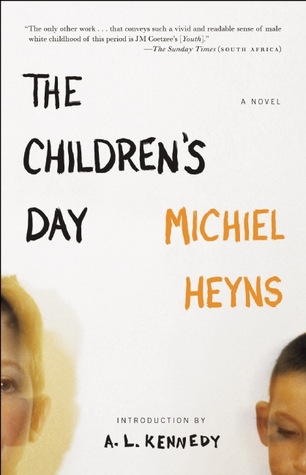
Coming of age in the 60’s: The Children’s Day by Michiel Heyns

Small town South Africa. The 1960’s. Rules govern social engagement. Black and white, Afrikaner and English, richer and poorer. Even in the smallest of towns a hierarchy of social stratification evolves and is reinforced with a blend of gossip and charity. And then there are those most ineffable mysteries of life: love, sex and death.

childrensSuch is the context of The Children’s Day by Michiel Heyns. At the heart of this Bildungsroman is Simon, a sensitive, intelligent boy charting his way through the machinations of childhood in the dusty environs of Verkeerdespruit. He is keenly aware that he is living in the heart of nowhere. But the books that are such a vital companion to this only child cannot even begin to answer the questions that his interactions with classmates and the curious behaviour of the adults around him continually raise. Simon is left with the impression that he is trying to put together a jigsaw puzzle without all the pieces.

The novel opens in the modest, relatively speaking, metropolis of Bloemfontein, where Simon, now 15, is attending Wesley College, a “second-rate” Methodist private school. The occasion of a tennis match between the boys of Wesley College and a nearby technical high school on a stifling hot December day in 1968 unspools a series of flashbacks that reach six years into the past and gradually move forward. Simon’s reflections are triggered by the unexpected, unwelcome appearance of a former classmate on the visiting school’s team – the awkward, epilectic Afrikaner Fanie van den Bergh.

From the time he first arrives in Verkeerdespruit, Fanie is a curiousity. His fits alarm his classmates and teachers, while his inarticulate, easy-going nature sets Simon off balance. He regards Fanie with a measure of contempt to which the latter appears oblivious. Yet  Fanie is a constant source of surprise. When Steve, in his tight jeans and white t-shirt, roars into town astride the magnificent Matchless G8 bringing a touch of heroic glamour to streets of the sleepy village, attracting the adoration of the boys,and the fluttering of female hearts, it is Fanie who disappears on the back of his bike. The fallout resulting from Steve’s arrival marks the advent of Simon’s awareness that the world is full of joys and dangers that the adults around him allude to with the most cryptic references. Frustratingly alert to the innuendos around him, Simon is delightfully naive as only a child of the pre-internet era can be. I remember it well myself. As Simon admits:

“Though I was probably quicker than my contemporaries at fitting together apparently unrelated observations, I was hampered in my deductions by an almost complete ignorance of sexual matters. I had arrived, for instance, at the conclusion that kissing was both a much sought-after pleasure for oneself and a much-ridiculed weakness in others, and that adults were too old for it and children too young.”

By observing the parade of adults that passes through his home town, Simon’s glimpses of the outside world become broader, if not necessarily clearer. A teacher who takes harsh discipline in the classroom a step too far is sent away, a pretty young girl he assumes is a special friend abandons him for the school jock, a woman with a shocking past appears and breaks the heart of one of his favourite teachers. And then there is Trevor with his dyed hair and pink shirts who shocks everyone by shaking up the life of the stuttering shy bachelor postmaster and his mother, briefly redesigning the beehived heads of the local women before being run out of town once speculations about the true nature of his friendship with the postmaster spread. Again Simon is perplexed, though it is Trevor who first implies that he sees in the boy a likely kindred spirit. The only outlet he has for the really “big” questions that trouble him are his Saturday afternoons at the local soda fountain with Betty “The Exchange”. The cynical, unfortunately chinless, telephone operator entertains Simon’s queries but confuses him as much as she informs him – children, after all, are only allowed so much enlightenment in this era.

It is Fanie who, in the end, stands to call attention to the missing puzzle piece that Simon has been holding in his hand all along.

I have an affection for strong coming of age/coming out stories. This is one. Sexually Simon is a slow learner, a boy who is less in touch with his body than the more viscerally grounded if intellectually dimmer Fanie. He over thinks the world even though he encounters more than one adult male who recognizes in him an inclination that he has, at an early age, no context for. Today with the ubiquity of queer conversation, imagery, access to internet, resources and young adult novels that explore queer themes, it may be hard to imagine how isolated a child could be growing up in earlier decades. Some claim this is an argument for censorship or against realistic sex education in the school system. But that is a spurious argument. One could still grow up LGBT in a vacuum. Or worse in denial. Many of us did.

I grew up in the 1960’s and 70’s in conservative rural Alberta. My parents, like Simon’s were liberal, but, like my peers, there were so many facts of life we did not understand and would not have dared to ask. Especially if there was any inclination that our own sense of self was off the norm. Long before one could retreat to the wisdom of Wikipedia, our resources were limited. I will never forget when the word “faggot” started to appear on our radar, probably as 10 or 11 year-olds. We would scurry to our dictionaries to find only “A bundle of sticks or an unpleasant woman”. Somehow we knew that couldn’t be right!

With The Children’s Day Heyns captures all of the curious confusion of growing up smart, bookish and not quite fitting in. And he does so with a warm, understated humour. Through his perceptive, yet naive, narrator the wonder and mystification, shame and humiliation of adolescence are evoked with remarkable resonance. Like many coming of age tales this was also a debut novel. But first published in 2002 when the author was in his late 50s, this novel also marked the debut of second career as a writer and translator – one that is still going strong – an inspiration to the rest of us in mid-life with writerly aspirations.

In praise of small publishers

In honour of World Book Day, I thought I would take a few moments to reflect on my growing obsession for small publishers. Once you start to turn your attention to non-mainstream literature, follow literary journals and publications online, or seek out works in translation; the world of independent publishers invariably opens up. As readers we live in a global world, and we engage in discussions with fellow readers spread far and wide, so it seems natural that you will hear about intriguing works that are not available wherever you happen to live. Sometimes, it’s simply a matter of time but years can separate releases in North America from those in the UK and Australia. Here in Canada we sometimes end up in between the two. Some small publishers do not yet have distribution on one side of the planet or the other, some may never manage it, but I would argue it is still worth trying to support independent publishers no matter where they are, whenever possible.

Why? Small publishers uncover challenging, interesting works, take chances, bring long ignored literature back into circulation, or into translation. Or both.

2015-04-23 13.08.58My two favourite books last year introduced me to two small publishers: CB Editions with Will Eaves’ The Absent Therapist and Istros Books with Selvedin Avdić’s Seven Terrors. Sadly both are publishers without North American distribution. That does not mean, of course that their books can’t be sourced, but the magic of a browsing reader happening to stumble across one of their titles on a bookstore shelf is lost. The joy of random discovery is denied.

After paying extra attention to the IFFP and BTBA longlists this year, I will now be watching out for titles from Pushkin, Open Letter, Deep Vellum, Archipelago among many others. Becoming more engaged as a book blogger and negotiating twitter has caused me to be distracted by some irresistible “shiny objects” – treasures like the stunning A Gothic Soul which arrived earlier this week, in a package covered in Czechoslovakian stamps, direct from Twisted Spoon Press. Oh yes, I could have downloaded it from Amazon for almost a third of what I paid but that would have been a pale substitute for what is truly a work of art and devotion from a small not-for-profit press.

2015-04-23 13.10.55And then there is And Other Stories. I don’t know how I was so late to the party but it was the release of The Alphabet of Birds by SJ Naudé in January that put them on my radar. Dovetailing nicely with my interest in South African literature, their publication of this brilliant debut of stories translated from Afrikaans as well as their ongoing release of works by Ivan Vladislavić was an obvious draw. But as soon as I learned about their grassroots funding of initial releases with subscription support and their engagement of readers in the process of exploring potential writers from around the world… well, I was sold. I subscribed right away. My only regret is that temporary financial uncertainty led me to opt for a 4-book rather than a 6-book subscription. A number of other publishers utilize subscriber support models so I hope in the future to extend my support further and wider.

Today my biggest thrill comes from walking into one of our local indie bookstores and finding a gem on the shelves. Of course I still end up placing special orders, through the same stores or from overseas. And, when there seems to be no option I order e-books but my preference for paper copies has grown after an initial blush of affection for the digital. I am even the sort of person who, having truly fallen in love with a book read electronically or borrowed from the library, just has to own a hard copy.

There must be diagnosis for this illness. But I don’t want to be cured.