Lament for a lost land: Journal of an Ordinary Grief by Mahmoud Darwish

A place is not only a geographical area; it’s also a state of mind. And trees are not just trees; they are the ribs of childhood. The tears flowed freely from my fingers as the bus passed quickly by. Upon our return, the sadness of my childhood came back. This dream standing before me, why didn’t I just wrap it around myself even once so I could say I have felt the joy that kills? The soldiers were guarding the dream, but I will enter it when they sleep.

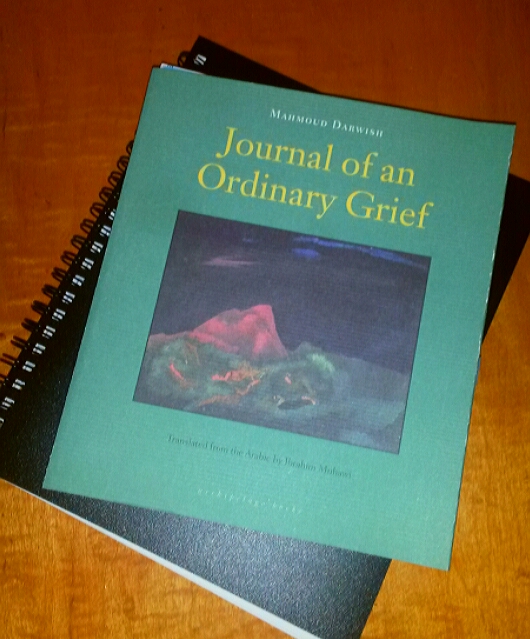
2017-02-09-15-32-49Journal of an Ordinary Grief, the first of three major works of prose spanning the career of late Palestinian poet Mahmoud Darwish (1941-2008), is a work of intense, heartbreaking loss and pain. Yet this collection of autobiographical essays is more than simple memoir. He chronicles his family’s history, meditates on the meaning of homeland, and focuses on the horror visited upon Arabs in the occupied territories. He talks about being under house arrest, his confrontations with Israeli interrogators, and his time in prison. He talks of the life of the refugee and the exile. As the translator, Ibrahim Muhawi, points out in his Foreword, Darwish makes it clear that Palestine is his cause. He equates his self with his country; the pronouns he uses—I or you—can represent his own personal experience or those of his people. Here the poetic is merged with the political, and the memoir becomes a requiem for a nation, up close and immediate: “In Journal, as in all of Darwish, we are placed in the middle of an encounter between writing and history where writing gives shape to the homeland.”

He approaches the telling, as a poet, with a lyrical force that levels one powerful image after another. The opening piece, “The Moon Did Not Fall into the Well,” sets out as a dialogue, presumably between a father and son:

—What are you doing, father?

—I’m searching for my heart, which fell away that night.

—Do you think you’ll find it here?

—Where else am I going to find it? I bend to the ground and pick it up piece by piece just as the women of the fellahin pick olives in October, one olive at a time.

In the end we realize that this is the poet’s younger self interrogating his older self. The latter speaks of his family, driven into exile in 1948, only to return to find themselves exiles in their own land. Childlike curiosity meets the sorrow born of experience and loss, wisdom and despair.

Attention to the quality and shape of the sentence informs Darwish’s poetic prose. He frequently, and efficiently, employs a dramatic dialogue in a number of his essays. The title piece is largely composed of a series of “conversations”—commonly ironic in tone—that cast light on the political dynamics of racial discrimination and oppression. The impact is strikingly effective:

—Where are you from, brother?

—From Gaza.

—What did you do?

—I threw a grenade at the conqueror’s car, but I blew myself up instead.

—And . . .

—They arrested me and charged me with attempted suicide.

—You confessed, of course.

—Not exactly. I told them the attempted suicide didn’t succeed. So they liberated me out of mercy and sentenced me to life.

—But you were intending to kill, not to commit suicide?

—It seems you don’t know Gaza. Distance there is an imaginary thing.

—I don’t understand.

—It seems you don’t know Gaza. Where are you from?

—From Haifa.

—And what did you do?

—I threw a poem at the conquerors’ car, and it blew them up.

—And . . .

—They arrested me and charged me with mass murder.

And so it goes. Thus the reader/listener is brought into the heart of the political struggle. Later on in this piece, the narrator addresses his audience directly to illustrate the losses of basic freedoms he has experienced: You want to travel to Greece? You want to rent an apartment? You want to visit your mother on a feast day? Other voices enter and play devil’s advocate. There is bitterness and defiance running through the sections of this essay, but the language carries a frightening beauty: “They place you under arrest when you are committing a dream.”

The poetic spirit and sensibility with which Darwish explores the fate of Palestine, and what it means to live, as he does, as an exile in Israel, pushes this memoir closer to the heart, generating more emotional energy than a more conventional first-person narrative essay format would typically allow. As such, the reading experience becomes more intense as one moves through the essays. And, of course, this work is sadly as relevant today, as it was when it was first published in 1973—speaking not only to the roots of the ongoing tensions between Israel and Palestine, but to broader concerns facing Arab refugees forced out of divided and troubled homelands throughout the Middle East, and of those who dare to speak out who risk detention, or worse, in many states:

You write to your imaginary lover: “I wish you despair for you, my love, that you may excel for the desperate are creative. Don’t wait for me. Don’t wait for anyone. Wait for the thought; don’t wait for the thinker. Wait for the poem; don’t wait for the poet. Wait for the revolution; don’t wait for the revolutionary. The thinker may be wrong, the poet may lie, and the revolutionary may get tired. This is the despair I mean.”

By making individual experience universal, and personifying historical tragedy and loss, Mahmoud Darwish—though his poetry and his prose—stands witness to the fate of his people under occupation. “The homeland,” he claims, “is always at its most beautiful when it is on the other side of the barbed wire fence.” He grieves, and his grief is anything but ordinary.

Journal of an Ordinary Grief, translated by Ibrahim Muhawi, is published by Archipelago Books.

On being lonely, and attempting to write my way out: A brief reflection

Words are lumpy, awkward, and unwieldy these days. Frozen, they neither form nor flow. I would like to blame it on the times, the weather—anything but this emptiness I can’t shake.

I used to say: I’m a loner, but I’m never lonely.

These days I’m lonely, even when I am not alone.

8460394828_a318b259c7_bI am reluctant to write about this. I can remember listening to others complain about being lonely—even when their lives were filled with activities and people—and wonder how they could talk that way. More critically, I blamed them. It must be something in them, I reasoned, a bitterness or despondency that drives others away.

And now that person is me.

I understand the sense of alienation—and the way it can so easily be reflected in a coldness borne of anger and pain. Loneliness engenders a void that fills the space between the self and others. A space that grows and pushes the lonely person farther away.

I’ve been reading about loneliness of late. In an essay published on Aeon last July, Cody Delistraty argues that for all its pain, loneliness can build character. It can be a positive experience.

Assuming one emerges, that is.

Depression, cognitive damage, and suicide are very real risks for those for whom loneliness becomes chronic. Delistraty’s thesis is self-serving. He goes to Paris seeking a period of solitude and finds himself irritated by a lonely woman who desperately craves someone to talk to. Choosing to isolate one’s self for a period of time—to recharge, to create, to write—is a deliberate, and hopefully productive, act. In The Lonely City, for example, Olivia Laing chronicles her experience being alone in New York City. I read it last year and related to her observations, but at that time I was still grounded by two important people in my life. One year later, both of them are gone.

And loneliness is very hard to bear.

As a loner, I was always careful to balance my tendency to isolate against work that was people focused. When I unexpectedly had to leave my workplace several years ago, I instantly became aware of the void that had developed over years of living closeted, as a man with no past. Unable to work, I sought to find a community where I could be out, be myself, but that seems to be a space that exists most authentically only when I write. In my experience, the LGBT “community”—at least in my age range, in my city—is not as supportive of diversity as one might imagine.

So if it is in writing that I find the freedom to be myself, how to exist beyond the page? Alone?

I will have to find a way to write through, above and beyond this loneliness, I suppose.

And find out where it takes me.

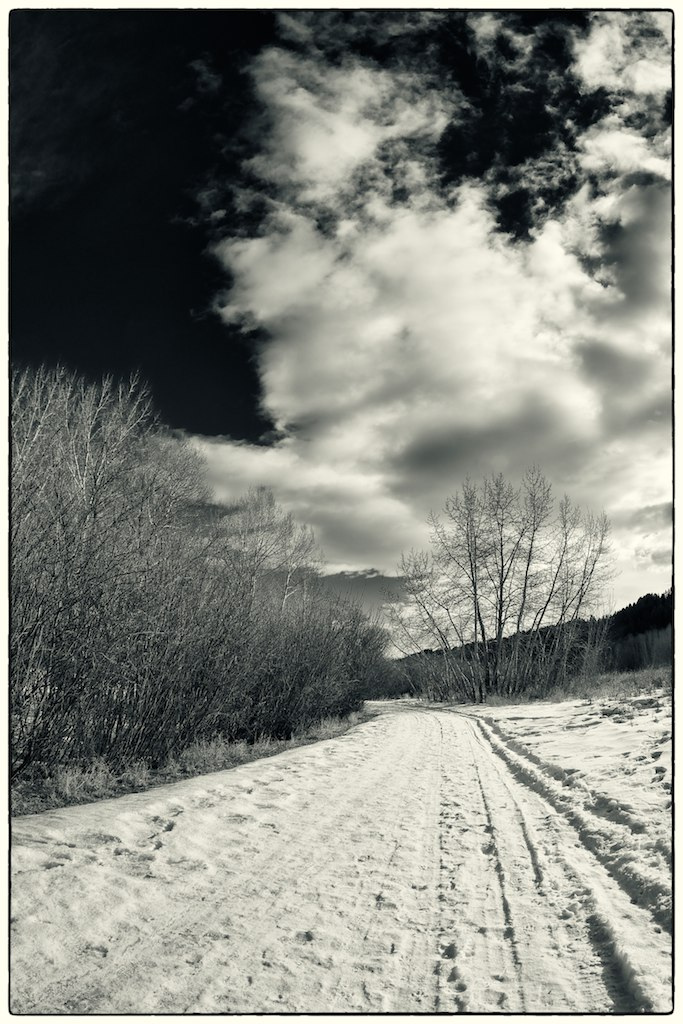
*Photograph by Joseph Schreiber, copyright 2013

You do not own life: Welcome to Our Hillbrow by Phaswane Mpe

The first thing you notice from the opening words of Phaswane Mpe’s only novel, Welcome to Our Hillbrow, is an unusual, and to Western readers, unconventional narrative voice:

If you were still live, Refentše, child of Tiragalong, you would be glad that Bafana Bafana lost to France in the 1998 Soccer World Cup fiasco. Of course you supported the squad. But at least now, you would experience no hardships walking to your flat through the streets of Hillbrow—that locality of just over one square kilometre, according to official records; and according to its inhabitants, at least twice as big and teeming with countless people.

This is not, as some mistakenly assume, a second person perspective, but rather a communal first person plural voice, speaking from a universal omniscient viewpoint to a character who is dead. It is a narrative form that freely moves from the physical to the metaphysical and back again. By drawing on traditional storytelling techniques, language, and expressions to tell a story that is rooted in one of the most crowded, disadvantaged, and violent inner-city neighbourhoods of post-Apartheid Johannesburg, Mpe is able to explore the intersection of complex issues—linguistic and literary marginalization, xenophobia, suicide, AIDS, and rural superstition—with a dazzling immediacy and intensity.

mpeMpe (1970-2004) was born in Limpopopo Province (formerly Pietersburg) in northeastern South Africa and, like his main character, Refentše, he moved to Johannesburg at the age of nineteen to attend the University of Witwatersrand, which had recently opened its doors to black students. Unable to afford accommodation on campus, he lived in Hillbrow. He would go on to complete an MA in publishing at Oxford Brookes in the UK—an experience that he would, in his novel, grant Refilwe, the female character whose life crosses and parallels that of Refentše. Thus, Mpe’s urban and rural experiences, informed by his modern liberal arts education, contributed to the development of a distinctive new literary voice, one which would be cruelly silenced all too early when he died suddenly at the age of thirty-four.

The voice that carries the narrative directly addresses the primary character throughout the course of this short novel, and is at once challenging and understanding. The voice recounts Refentše’s actions and emotions for him, reminding or reinforcing a memory of his experiences because he and  most of the primary characters have met untimely or unfortunate fates by end of the book (or, if you would rather, before the account even begins). This is a narrative to the dead from the dead. This unusual approach not only allows for a surprisingly effective engagement with a tragic tale of unfortunate coincidences, misunderstandings, and consequences, but it also creates a unique dialectical context for the exploration of the deep and critical issues that lie at the core of the story.

In simple terms, although it does not unfold in a straightforward manner, Welcome to Our Hillbrow, follows two main characters: Refentše, who comes to the city to study, and settles in Hillbrow, becoming a sensitive observer of the community; and Refilwe, his childhood friend and former girlfriend, who arrives in the city shortly before his death. He falls in love with Lerato, the “Bone of his Heart,” who is also an academic. But his mother and fellow villagers are not happy to see him with a city woman—urban/rural prejudices are acute. When a couple of unfortunate moments of infidelity “shatter” his enthusiasm for life and lead to his suicide, Refilwe exasperates the situation by implying that Lerato is the daughter of a Nigerian man, a curse that plays into a deep-seated xenophobia toward African migrants that still exists in some black South African communities today. Tribal justice, more suicide, and madness follow in the wake of Refentše’s death. Yet the narrator continues to address him in Heaven, where he is able to observe the action that ensues but is, of course, powerless to intervene.

I do not own life, you often said when you tried to laugh your difficulties away.

Many people could not see that you were not merely throwing jokes around. You did not own your life when you were alive. Now that you are alive in a different realm, you know for sure that you do not own life. You have watched God and Devil, gods and Ancestors, wondering whether *they* owned it, this thing called life. As far as you could see no one seemed to own it, judging by the way they too cast their eyes in the directions of our Hillbrow, Alexandra, and Tiragalong, clicking their tongues in deep sadness or grim amusement as people devoured one another. You were right there with them, still on your way to finding out whether any of them owned life.

The novel opens with a vivid evocation of the riotous atmosphere of Hillbrow, an area populated primarily by migrants from the townships, rural areas, and from beyond the borders of South Africa. Unemployment and poverty prevail. Those who have arrived from other countries, especially Nigeria, are rudely referred to as Makwerekwere, and are accused of bringing drugs, crime, and prostitution. AIDS is also beginning to take a toll, but the disease is poorly understood and also seen as imported by the outsiders. Rural residents, like the villagers of Refentše’s hometown, Tiragalong, believe they are protected from this mysterious ailment because they don’t eat Green Monkey meat as some West Africans are rumoured to do, and they don’t engage in anal sex. Xenophobia and ignorance in the face of the rising AIDS epidemic are two of the key concerns that Mpe sets out to address. The distrust of immigrants is both timeless and exceptionally timely. Refentše often debates the matter with his cousin, who claims that the neighbourhood had been fine before the arrival of the Nigerians with all their drug dealing:

You, Refentše, child of Tiragalong (and, as you insisted in the days just before your death, also of Hillbrow), had never shared such sentiments. It was your opinion that the moral decay of Hillbrow, so often talked about, was in fact no worse than that of Tiragalong.

Think about it, Cousin, you would challenge. How many people are here in Hillbrow? How many of them are criminals? If you consider that the concentration of people in Hillbrow is dense, and work out the number of crimes in relation to the number of people, I tell you, you will find Tiragalong to be just as bad…. And while we’re so busy blaming [the Makwerekwere] for all our sins, hadn’t we better also admit that quite a large percentage of our home relatives who get killed in Hillbrow are in fact killed by other relatives who bring their home grudges with them to Jo’burg. That’s what makes Hillbrow so corrupt…

Refentše tries to remind his cousin that many of those coming into the country are fleeing violence and deprivation elsewhere—they are driven into exile. Yet his cousin’s response echoes that which so often meets refugees, no matter the time or place:

Cousin insisted that people should remain in their own countries and try to sort out the problems of those respective countries, rather than fleeing them; South Africa had too many problems of its own.

During his years in Hillbrow, Refentše completes his studies and becomes a lecturer at the university. He dreams of writing a novel about his neighbourhood, believing it to be the kind of place underrepresented in literature. He only manages to publish one short story, one that explores, through the fate of its female protagonist, the limitations of writing in traditional tongues in a country with eleven official languages, but where only two dominate to the practical exclusion of the others. Mpe quite effectively works his arguments into and against the prevailing dynamics in South African literature: his main character reads Coetzee (Waiting for the Barbarians), while later, in Oxford, Refilwe introduces an Irish barman to Zakes Mda (Ways of Dying). He can be seen as attempting to build a bridge between established authors—with novels that reflect themes in his own work—and a vision of a literature that could be more inclusive of other languages, such as his native Sepedi.

Toward the end of the novel, the narrative zeroes in on Refilwe as she finally has the opportunity to pursue her MA at Oxford, but the narrator(s) will not actually address her directly until the closing passages of the book. Several years have passed since Refentše’s death, and guilt over her treatment of Lerato, plus her experiences living and working in Johannesburg, have softened her own xenophobic tendencies. While she is overseas she meets and falls in love with a Nigerian man. However, their bliss is cut short when they learn they both have AIDS, and would have in fact been HIV positive for many years. Her fate will serve to challenge the prejudices of Tiragalong when she returns home. Subtle shifts in the narrative voice through the final chapter, serve to add power to its heartbreaking conclusion.

The critical examination of contemporary themes, within a narrative shaped by the rhythms and poetry of an African oral tradition, offers readers an experience that is both fresh and deeply moving. Echoes of Mpe’s work, together with that of K. Sello Duiker, another young and tragically short-lived black writer who emerged in the early post-Apartheid years, has continued to resonate through an entire generation of young South African writers who are producing vital and original literature today.

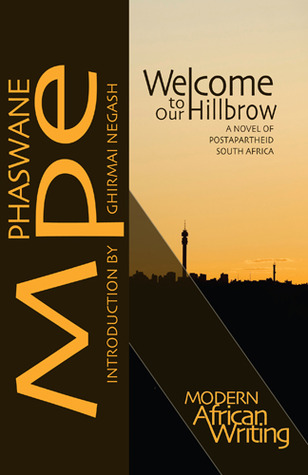
Welcome to Our Hillbrow: A Novel of Postapartheid South Africa, by Phaswane Mpe is available from Ohio University Press, with an excellent introduction by Ghirmai Negash.

2017 Africa Reading Challenge.

Experimental road trip: Mobile by Michel Butor

Freedomland prospectus:
“Excitement! Adventure! Education!
Cross the centuries from Colonial New England to the pioneer West, from the Mexican border towns to the Great Lakes ports, from Cape Canaveral to the Northwest Passage! Chug the picturesque Old West on an early iron horse, explore the Northwest in a fur trapper’s canoe, soar 70 feet above the earth in a mine oar bucket . . . tour through America’s waterways and wilderness on the most thrilling new rides ever designed!
Over forty authentic themes to make history live again at Freedomland! . . .”

freedomland

As I write this, the 45th President of the United States has been in office for just over two weeks. Watching the country of my birth from north of the 49th parallel where I have lived since I was three years old, it does feel as if one has wandered into the freak show tent at the Circus-at-the-End-of-the-World. Reading Michel Butor’s Mobile at this moment in American history, frames much of what we are currently watching unfold from an eerie perspective. When the French avant-garde writer was travelling the newly connected highways of America in 1959, he could not have known how very timely all the pieces of information he was gathering, fragmenting, and reconstructing into this ambitious experimental work would still seem more than half a century on. Or perhaps he did. In much of today’s rhetoric, it sounds as if there is a desire to return to some ideal USA, but if Mobile is any indication, that ideal never existed. It is a myth, like the many myths celebrated and reproduced at the grand, but very short-lived, Freedomland Amusement Park.

mobileSubtitled “A novel” in the Dalkey Archives edition I read, the original subtitle offers a more accurate indication of the project at hand: Study for a Representation of the United States. Butor draws from a wide range of materials to create, or allow for the creation of, a representational framework for looking at America. He incorporates substantial excerpts from the writings of Thomas Jefferson and Benjamin Franklin, reports from the Salem witch trials, traditional and treaty records from Native American history, newspaper accounts of the 1893 World’s Fair and more, but one cannot emerge from this journey without an appreciation of an expansive land, rich in history, natural beauty, and diversity.

As eclectic and idiosyncratic as the nation he is attempting to capture, Mobile reads more like a poem than any manner of traditional textual prose. Even the larger textual pieces are broken up and juxtaposed against other materials including an extensive collection of place names, signs, facts, ethnic newspaper and radio programming, travel boards, catalogue descriptions, Audubon bird portraits, and Howard Johnson ice cream flavours. There is a rhythm and an awareness of pattern that binds the work together within a strict overarching structure. He follows an alphabetic rather than geographic guideline from state to state, plays up the seemingly endless recurrence of place names, and links sections across time zones:

The sea,

                    oysters,

razor clams,

                    mussels,

littleneck clams,

                    Washington clams

A white Oldsmobile driven by a young, tanned white man in a pineapple-colored shirt with coffee polka dots (55 miles), “How much longer? Two hours?”—Dead Indian and China Hat Mountains.

The sparkling snow.

SPRINGFIELD. . . . and three o’clock in

SPRINGFIELD, Mountain Time, on the desert plain of the Snake River,
near the lava fields,

WELCOME TO ILLINOIS

                     already four in
SPRINGFIELD, Central Time, where you can order black-currant ice
cream in the Howard Johnson Restaurant.

The Chicago World’s Fair in 1893.
“The New York World,” April 9, 1893:
“Ward McAllister has given careful attention to the question of how New York society will be treated in Chicago during the World’s Fair. He is disposed to think that fashionable persons in this city need not fear anything but the best treatments at the hands of Chicagoans . . .”
Quoted by John Szarkowski: “The Idea of Louis Sullivan.”

The trains coming from New York.
The trains leaving for San Francisco.

Dedicated to Jackson Pollock, Mobile is often described as an unclassifiable work. It is clearly not a study in the formal sense of the word, though by standing back from the flow of fragments, a picture of the country emerges in the patchwork text. There is the sense that Butor harvested this wide range of sources and arranged them to allow the rhythm and flow of language paint a colourful portrait of the United States. It feels dynamic, natural, even when it is the intentional cleverness and humour that catches your eye. But then, it is this same playfulness that makes Mobile such a wonderfully fun read. I especialy enjoyed his use of catalogue listings, as in this pairing of an advertisement for paint-by-number kits with the description of a set of panties:

 “…With this set you receive two Rembrandt water-colors. Panels in pairs, 40 oil-colors in vacuum-sealed glass jars, four superior quality, washable brushes. Net weight: six pounds. . . .”

Or, through Sears, Roebuck & Co., and assortment of seven knitted nylon or rayon panites artistically embroidered with the days of the week:

                      “. . . Choose from

– white for Sunday,

                      – The Last Supper, with The Sermon on the Mount,

– yellow for Monday,

                     – Autumn Landscape, with The End of the Day,

– blue for Tuesday,

                      – Sunset at Sea, with Homecoming,

– pink for Wednesday,

                     – Thoroughbred, with The Foxhunt,

– white for Thursday,

                     – Scenes from Swan Lake, ballet,

– green for Friday,

                     – Venus and Adonis.”

– black for Saturday,
“please include hip measurements,”

This book is not, of course, all light and fun. There are deeply disturbing passages. Segregation is still a reality in many regions (“For whites only”), and the selections from Thomas Jefferson’s writing on the intrinsic inferiority of the black and red races are uncomfortable to read. In the light of the current concern about migrants, the ethnic and cultural diversity captured on Butor’s travels are telling (The Arabs who read “As-Sameer,” The Armenians who read Gochtnag,” The Chinese who read “China Tribune.”) Yet it is all bound together through the repetition of place names from state to state, and the famed ice cream selection at that classic highway stalwart of the era, Howard Johnsons. In the end, filtered through the lens of an outsider, Mobile succeeds in tracing a fractured songline across the heartland of America.

hojo

Mobile is translated by Richard Howard and published by Dalkey Archive Press with a fascinating introduction by John D’Agata.

Reading and writing my way through uncertain times

These are anxious times. It is easy, if you think too much, to wonder about the value of putting pen to paper with an atmosphere of doubt lingering so heavily in the air. But then, if you think a little further, wavering gives way to urgency. Reading and writing become acts of resistance, distraction, and revitalization. Or, that is what I remind myself.

I don’t want to venture too far into politics, but it would be naïve to pretend that we are not facing an unpredictable future. This uneasiness has been heightened for me over the past few weeks by an unproductive job search and increasing concern about my financial security as I’ve watched my cash buffer dwindle. The truth is though, with a will awaiting grant of probate, I stand to eventually find myself in a much better financial position than I had ever could have imagined. It doesn’t mean I won’t have to secure some outside income, hopefully some of that ultimately coming from writing related services, but I do dare to dream of finally having more freedom after years of struggling with identity, mental illness, and the challenges of a state of single parenthood that has extended far beyond my expectations.

2015-08-09 17.37.38So, world affairs aside, what right do I have to be anxious and insecure about writing? I suppose it’s enough that I am human, but I am also plagued by the unshakable feeling that I’m an impostor. All my life, the only thing I ever really wanted to be was a writer. And no matter how difficult writing is (and always has been), I still feel deliriously guilty to have been afforded, over the past two years of stress leave, the time and space to connect with writers, readers, translators, and publishers. It is a gift I am not ready to give up, rather I want to mould a life that will allow me to continue to read, write, edit, and grow.

And yet, every time I sit down with a pen and paper, or open a blank Word document the same fear that I will never write another solid review or creative essay sets in. Impostor.

I have two longer term projects—an extended personal essay/memoir and a constraint-driven experimental piece—in the early formative stages. Consequently, much of my present reading is directed towards exploring the ways ideas can be developed and stories can be told.  But every now and again I come up against a work that triggers my insecurity.

loiteringCase in point: I am slowly making my way through Loitering by American essayist and short story writer, Charles D’Ambrosio, and after each essay I feel temporarily overwhelmed. I can easily see why the friend who kindly sent me this book speaks of it so highly. Rather than attempting to review the entire collection at once, I want to pull out and look at some of the individual pieces along the way. They are that good.

First of all, D’Ambrosio notes in his Preface that, for him, the right to doubt is essential to the successful personal essay. “Loitering,” the title piece, is a perfect illustration of how and why this works. The setting: The middle of the night, outside a residential complex in the Belltown district of Seattle. Yellow police tape cordons off several blocks, while a large contingent of policemen and a cluster of journalists and TV news reporters wait in the rain. D’Ambrosio arrives at the scene around 2:00 AM, drawn by the reports of domestic violence and a possible hostage taking. With a Hollywood-tinged sarcastic romanticism, he imagines the scenario:

This guy—the Bad Guy—apparently thought he was just going to drink a few beers and bounce his girlfriend against the walls and go to sleep, but instead of a little quiet and intimate abuse before bed he’s now got major civic apparatus marshaling for a siege outside his window. No sleep for him tonight, and no more secrets, either, not at this unholy intersection of anomie and big-time news.

The clichés he arrived with quickly fall away as he joins the vigil. Quite frankly he is in rough shape himself. One of the key drawing cards for D’Ambrosio on this night is simple lack of human contact. A recent fishing trip has left him with severe atopic dermatitis due to contact with neoprene and he’s just spent a week isolated at home—his fingers, neck, feet, and legs swollen and covered with weeping sores.  Medication and the constant tingling sensation prevents him from sleeping, crackheads have stolen his duffle bag from his truck leaving him without a belt or a raincoat and now, armed with file cards and a pen lest he find a story, he is standing in the dark, soaking wet with his pants falling down. Nothing like setting a memorable scene.

As the night wears on he spots a man, angry, looking a reporter, someone to listen to his story. He makes his way through the crowd of journalists but no one wants to hear him out—a wretched resident displaced by the hostilities unfolding in his building, he is not on their agenda:

He’s now caught in between, trapped in some place I recognize as life itself. It’s obvious he hasn’t been sober in hours and maybe years. If it could be said that these big-deal journalists have control of the story… then this guy is the anti-journalist, because in his case the story is steering him, shoving him around and blowing him willy-nilly down the street. The truth is just fucking with him and he’s suffering narrative problems. He began the night with no intention of standing in this rain, and his exposure to it is pitiful. As he moves unheeded like the Ancient Mariner through the journalists I feel a certain brotherly sympathy for him, and I’m enamoured of his utter lack of dignity.

Our hapless would-be reporter knows the man will be back and knows that he alone will listen to him. And so he meets Dennis, a vet, and his friend Tom, a Native American man. Through them he will learn more, in so much as anyone knows anything about the armed man holed up inside in one of the sparse low-income units, and the story, through the eyes and words of this most astute and sensitive observer becomes one of the tragedy of the poor and dispossessed rather than a dramatic shootout and fodder for the six o’clock news. After years of working in human services, the tableau D’Ambrosio paints of the evacuated residents relocated to a city bus to wait out the proceedings rings true—a scene that could easily be played out in my city, or any other North American centre for that matter:

Inside this bus what you see is pretty much a jackpot of social and psychic collapse, a demographic of bad news. Everybody in there’s fucked up in some heavy way, dragged out of history by alcohol, drugs, mental illness, physical decrepitude, crime, old age, poverty, whatever. Riding this bus in your dreams would give you the heebie-jeebies big-time. There are maybe ten or fifteen people on the bus but between them if you counted you’d probably come up with only sixty teeth. In addition to dental trouble, there are people leaning on canes, people twitching and barefoot with yellow toenails curled like talons, gray-skinned people shivering in gauzy nightgowns, others who just tremble and stare. They’ve been ripped out of their bedrooms and are dressed mostly in nightwear, which is something to see—not because I have any fashion ideas or big thesis about nighties and pj’s, but rather because, this surreal dawn, the harsh, isolated privacy of these people is literally being paraded in public. The falling rain, the bus going nowhere, the wrecked up passengers dressed for sleep, the man with the gun—these are the wild and disparate components of a dream, and I haven’t slept, and it’s just weird.

This passage, in fact the entire essay, left me breathless. This is not beautiful. It is raw, honest and real. In telling the story D’Ambrosio allows himself to be vulnerable and despite flashes of humour, one senses he is defeated by the sheer sadness of the whole affair. The reporters will head off to other stories, but he will be left on hold, filled with doubt, open to questions. Upon first reading I felt a sense of writerly inadequacy descend on me; returning to write about it and copy out significant passages I feel re-invigorated, inspired even.

I don’t know when this essay was originally published but it doesn’t matter. It contains a certain urban timelessness that stretches back through the twentieth century, yet is especially relevant today, with the pending threats to affordable healthcare and Medicaid in the US under the new administration. And so, I’m back where I’m started… uncertain times…

Loitering by Charles D’Ambrosio is published by Tin House Books.

Ever returning: Describing the Past by Ghassan Zaqtan

She is my loss and she knows this. She is my absence and knows this too.

From the earliest passages, there is an abiding transience to the narrative flow of Ghassan Zaqtan’s novella, Describing the Past. The language is delicate, the imagery fragile and dream-like. The world his characters inhabit has an eerie timelessness. The past—immediate or distant—is tangible. Ghosts wander the streets, and memories are brought into being as ethereal images or objects that hold a vital presence in the room, breathe, come alive at night. We are among people who have been uprooted once and will be uprooted again; their dreams and recollections sustain them, give them something to hold on to.

ghassan_zaqtanZaqtan, a Palestinian poet, was born a refugee. In 1961, at the age of seven, his family was relocated (for the second time since 1948) from Beit Jala, in the West Bank, to the Karameh refugee camp across from Jericho, in the Jordan River Valley. But, as Fady Joudah indicates in his Foreword, the camp would be burned with the Israeli invasion in 1968. Zaqtan’s tale is set in this community, yet re-imagined and filtered through the chimerical memory of a place, like childhood itself, that no longer exists.

The narrative is carried by three separate voices—designated I, He, and She—each speaking in first person. The central narrator is nicknamed Christian (his mother was Christian, his father Muslim), and his friend, the other young man, is known as the Iraqi’s son after an uncle who identified himself as Iraqi due to his brief role helping the Iraqi Army at the end of the 1948 war, an experience he built into a sustaining myth that coloured his entire family’s identity. The young woman who holds their attention is, at the outset, married to an elderly man who takes her and her mother into his home. When he dies, she will marry the Iraqi’s son and bear him a child before he drowns, leaving her alone. As such, the outline of the plot is simple, much of it alluded to in the first chapter. However, the story is unwrapped slowly, moving back and forth in time, and relying on poetic imagery and the vagaries of memory to sketch out the spaces that exist between these three individuals.

And that is where the magic lies. In the opening section Christian inadvertently chances to see “her”, the young wife of the old man, naked in her room. He had come seeking some tea leaves for his mother and had not realized she was home. Transfixed by the sight of her body he watches her in hiding until she begins to sob and he runs away, terrified and exhilarated by what he has seen. Of course he must tell his friend, who beautifully describes the vividness of the account:

At first I didn’t believe it, it was not his voice. There was a strand of fantasy that glimmered in his words, some current of rash hunger and desire, of fear and fraud. Little by little, like dust growing slowly and insistently into heaps, she started to gather there in the voice toward the point of completion. She became clear and close. I saw her in his voice reclining nude and whole. Her knee flashed at a distance. At the centre of her figure a dark spot of light amassed, turning and breathing. I was there. I saw her in his voice with a clarity that did not exist for him; she was clearer and more complete in his voice than anything he had looked at and beheld.

The narrative glances forward and retreats in time. The voice of the Iraqi’s son who meets an early demise, disappears from the discourse about halfway through. But the dead are never gone. They are greeted in the street. They emerge from photographs. One has the sense of a world crowded with memories, individuals weighed down by what they have lost. The level, steadily-paced poetry of the language enhances this sensation. This novella, only 84 pages long, is best if savoured slowly, allowing the words to be absorbed.

As each of the narrators picks up the pieces of their own stories, the temporal distortion, shifting from chapter to chapter, can be disorienting. “Here” and “now” are terms without a fixed frame of reference. This is intensified because Christian, as the central narrator, rather than providing structure, is the most abstract and philosophical in his manner of being in the world. He is most sensitive to a past that extends beyond his experience. To ghosts. At one point his father had crept into forbidden territory in search of his village, only to find it in ruins, home now to a curtain of cacti and one remaining pomegranate tree. Stuffing his pockets with pomegranates he arrived home covered in juice, clutching one whole fruit:

He placed it on our only table, and the fruit stayed there. We were unable to wound it. We were afraid to cause it, or him, pain. It was in front of us—breathing and remembering—on that squat table, next the knife that my youngest sister had brought and about which we quickly forgot. It was impossible for us to go beyond that. The fruit was completely alive and necessary for him, his only means to make us believe him, to make us believe all those stories he had brought to us—of his house, his village and his land.

Our house, our village, our land.

There is a sense that the three young characters at the centre of Describing the Past are trapped, suspended in lives they cannot control. It is not clear how much time passes. Hopes and ambitions are fleeting when you face an uncertain future in a refugee camp—when the land you live on is shared with ghosts, haunted by memories, and liable to turn to dust without warning. Yet, circular, the dream-like narrative returns, in the end, to complete the fragmentary images that the set up by central narrator in the opening passages. The mood is gently haunting, beautiful and sad.

And it leaves you with chills.

Describing the Past by Ghassan Zaqtan is translated by Samuel Wilder and published by Seagull Books.

Of reality and imagination: To Begin at the Beginning by Javier Marías

In the opening paragraph of her “Postface” to Javier Marías’ recently released contribution to the Cahier Series, To Begin at the Beginning, famed translator Margaret Jull Costa confesses that every time she starts to work on a new Marías novel, she thinks: “I can’t do this.” His work, with its long, convoluted sentences, and its precise, but shifting, language lies ahead of her at the outset of each project, and until she gets back into the flow she feels a sense of anxiety. I must admit that similar sort of uncertainty faces me as a reader. I wonder, am I ready to commit to Marías again right now? Unfortunately, with a few efforts since I was first swept away by A Heart So White many years ago, the answer has been no, not now.

beginSo imagine my delight with this short, reflective essay about the art of taking the stuff of life—the truths and myths that arise from one’s own family history—and using, even re-using them, to tell stories, create literature. I found this Marías, talking about his family, and his approach to the art of writing, so wonderful to read that I’ve mentally added his trilogy to my list of books to read. And that is one of the absolute joys of the Cahier Series: the opportunity to meet, or meet again, a writer or translator, and spend a little time with them as they explore writing or translating, or the intersection of both, in unique and original ways.

Marías, the highly-respected Spanish novelist and translator, sets out in this piece to explain his desire to devote his energies to writing “inventions,” and why, even when he borrows elements from real life, so to speak, he is inclined to break them up, and blend them into his fictional characters and creations rather than putting them in, unaltered.

2017-01-15-02-12-11 He begins by trying to set himself apart from writers who make every effort to make their fictional offerings appear factual, and expresses his dismay whenever presented with the expression: Based on real events. His inevitable reaction? “I’m filled with a feeling of tedium and anticipatory boredom, of distrust and resistance, of suspicion and even scepticism,” he says, going on to be more exacting:

‘What is so strange and unbelievable, so extraordinarily random, arbitrary, and corny about this story that, even though it’s already happened in real life, they still want to tell me about it, even warning me that I have to believe it whether I like it or not, because this is how it was, this is what actually happened?’

2017-01-15-02-13-49Of course, in the essay that follows, he goes on to share aspects of his own family history, reaching back to his Cuban great-grandfather, pulling out some of the stories that have made their way into one or more of his novels. This abbreviated family history is fascinating in its own right (inadvertently causing one to think that any story “true” or otherwise can be magic in the hands of the right storyteller), but his discussion of his process of re-imagining and working people and incidents from the past into his fictions—and the decisions he has faced when handling elements of the real within the world of invention—is equally compelling.

2017-01-15-02-10-09Marías reports that, when he writes, he applies the same principle of knowledge that is at play in life. He does not know if what he writes at page five of a novel will prove to be a good idea at page 200 any more than we can know if what we do at age twenty will seem to have been wise from the vantage point of forty, and so on. In writing, one has the advantage of editing, adjusting events back and forth between earlier and later portions of the work, giving meaning to the capricious and superfluous, as required, so that “what had no meaning at the beginning does have meaning at the end.” Subject as it is to the unforeseeable variables that mould reality, he contends, life makes a very poor novelist. Imagination is a critical mediator—and one of the essential keys to literature— filtering the invented and the actual, rendering everything equal.

To Begin at the Beginning, the twenty-eighth addition to the Cahier Series, offers an opportunity to spend a little time in the company of a renowned novelist and his chief translator. Illustrated by the works of Cuban artist Wilfredo Lam, it will likely be appreciated by Marías’ committed readers. For those who have little or no experience with his novels, it serves as an ideal introduction, or, as in my case, an inspiration to read more.

The Cahier Series is a joint publication from the Center for Writers and Translators of the American University of Paris and Sylph Editions.

“Childhood is ancient”: Sweet Days of Discipline by Fleur Jaeggy

The bell rings, we get up. The bell rings again, we go to bed. We retire to our rooms; we saw life pass beneath our windows, observed it in books and on our walks, watched the seasons change. It was always a reflection, a reflection that seemed to freeze on our windowsills. And perhaps now we saw a tall marbly figure stand out before us: it is Frédérique passing through our lives and maybe we’d like to go back, but we don’t need anything, anymore. We imagined the world. What else can we imagine now if not our own deaths? The bell rings and it’s all over.

Switzerland, the Appenzell: the area where Robert Walser took his walks, including his final snowy outing, and the location of the boarding school where the narrator of Fleur Jaeggy’s hauntingly pristine first novel is living, at the age of fourteen. She regrets that they didn’t know of the writer’s existence at the time, but the perfection of his death, and the season, set the tone for the story that she is about to share—a chilling winter tone that persists even as the months and years pass and the harsh, spare beauty of Sweet Days of Discipline works its way right through to the bone.

sweetdaysThis novella is marked by a tightly controlled narrative voice. It is a tale of obsession. There is little action, it is the narrator’s emotional intensity that drives the story forward. Looking back on the years she spent in a series of boarding schools, from the age of eight to seventeen, she zeroes in on this one particular year, at the Bausler Institut, where Frédérique—beautiful, remote, and obedient—first entered her life. She sets out to conquer this newcomer who, only a few months older, has come from the outside with a certain detached worldliness that instantly sets her apart from the other girls.

The narrator, whose education is directed, long distance, by her mother in Brazil, is a seasoned veteran of boarding schools where, as she puts it, “a sort of senile childhood was protracted almost to insanity.” She knows the game, and how to play it, which she does with a healthy measure of cynicism:

Part of your education is learning how to thank with a smile. An awful smile. There is a mortuary look somehow to the faces of the boarders, a faint mortuary smell to even the youngest and most attractive girls. A double image, anatomical and antique. In the one the girl runs about and laughs, in the other she lies on a bed covered in a lace shroud. It’s her own skin has embroidered it.

She is, however, only an average student—a fact that does not trouble her at all. At one point she admits that all she remembers from her school years is Baudelaire. No surprise. She seems to have almost absorbed his dark poetic soul. Her narrative is liberally strewn with metaphorical references to graves, coffins, corpses, and death.

She befriends Frédérique, in good part because the others find the new girl too distant, and keep their distance in return. They take walks together, and she listens with sometimes exhausted attention, as Frédérique talks of literature, philosophy, and travel. Her own obsession borders, she supposes, on love. But it is a chaste, almost brittle affection.

Spring thawThere is a simmering violence that runs beneath the surface of the narrative. The narrator, long neglected by her own family, harbours a bitterness that colours her detailed, frequently nasty, appraisals of the appearance and idiosyncrasies of others—the headmistress and her husband, her German roommate, the little black girl, and more. When Micheline, a gregarious new student arrives, she suddenly turns her back on her precious Frédérique, more it seems, out of a sadistic streak than affection for the newcomer. She registers no remorse until Frédérique’s father dies, causing her to leave the school for good.

This novella is filled with conflicted, often dark, emotion. The tension lies not so much in what happens, as in the sombre frostiness of the prose. Frédérique, it turns out, is deeply troubled; however, the nameless narrator, is perhaps more unsettling and tragic. Either way, the result is a tale—captured so deftly in this translation by Tim Parks—of stark, poetic beauty:

I persevered in the pleasure of taking my sadness to the limit, the way one does with some practical joke. The pleasure of disappointment. It wasn’t new to me. I had been relishing it ever since I was eight years old, a boarder in my first, religious, school. And perhaps they were the best years, I thought. Those years of discipline. There was a kind of elation, faint but constant throughout all those days of discipline, the sweet days of discipline.

Fleur Jaeggy is an Italian speaking, Swiss-born writer. Sweet Days of Discipline is published by New Directions. Two newly translated works will be coming out, July 2017, from New Directions in North America and And Other Stories in the UK. (Sweet Days of Discipline is now available outside North America from And Other Stories)


Everything here is dead: Brothers by David Clerson

My first book of 2017 is not the cheeriest of novels, but all the same, it came as a very pleasant surprise. The story is a dark fable, decidedly not for children, but then, the fairy tales we remember from childhood were much bleaker, gruesome affairs in their original incarnations. So imagine, if you will, a scene taking place just off the edge of a canvas painted by Bruegel the Elder, where two deformed boys play on the shore of a wild sea, dreaming of escape to fantastic lands, and you will evoke the setting—and the mood—of Brothers by Quebecois writer David Clerson.

The third title to be released by QC Fiction, a new subscription-based imprint of Baraka Books, Brothers is quite possibly the Quebec publisher’s most daring and impressive offering to date (I reviewed the first release, Life in the Court of Matane for Numéro Cinq last July). This slender volume with the striking red cover—QC Fiction has chosen a most impressive graphic design for their books—cbrothersontains a world that overflows with mythological adventure, shocking violence, and nightmarish beauty.

Brothers plays with and twists themes pulled from myth and legend. The central character, “older brother” is born of the union between his aging mother and a wild dog. She does not want her son to face the world alone, so she cuts off his left arm and from that limb she fashions a “younger” brother who has two very short arms. The two disfigured boys spend their days running through the fields and marshes around their clapboard house, fishing off the pier, and scavenging oddities that the waves bring in.

One day the sea offers a wreck of a boat, another day a wooden puppet washes up. Together the brothers work to patch the boat as best they can, dreaming of the day that they cross the waters to distant lands populated with monstrous creatures in search of their “dog of a father.” When they find a drowned dog, they know that the time has finally come. With the older brother dressed in the animal’s tanned pelt, one of the puppet’s arms strapped to his shoulder in place of his missing limb, they set to sea, leaving their aging, desiccated mother behind. She has withdrawn from them so completely they doubt she will notice their absence.

The first days it took a long time to get away from the shore. Not by choice, but because the wind kept them there, or they didn’t know how to handle their sail, to make the boat go where they would have wanted. Instead, they followed the coast, in a direction they had never been, not toward the marshes and the neighbouring village, but out to where the coastline fell away steeply, with cliffs sliced by creeks and a multitude of shrieking birds soaring above.

The brothers are ill-prepared for their adventure. Illness levels the younger boy, storms rage, and ultimately, disaster strikes. The older brother eventually ends up alone, on a farm, chained to a doghouse. Yet he finds, for a time, a certain peace in this new existence, save for the torments dished out by the six pig-like children who also live there. He will even experience a mixture of love and lust with a grey dog—the daughter of a dog of a father—whose life has been much lonelier and harsher than his. But this respite does not last, and it does not end well.

If there is a moral here, it is that life is brutal—that goodness and evil are both instinctual survival mechanisms. The former is weak and the latter consumes. Redemption is elusive.

So why read it? The prose, beautifully translated by poet Katia Grubisic, is crystalline, spare, and unsentimental. The balance is just right… it holds you in awe. It is surreal, grotesque and beautiful in turn. The older brother is self-reflective. He notices his contentment, contemplates the stirring of love, and knows he is helpless against the escalation of murderous revenge. The cruelty he has experienced, the violence he has perpetrated, the guilt that haunts him, and the kindness he cannot accept leave their mark, shape him. He has existed at the intersection between beast and man—more whole and complete for the months he lives as a dog, as harsh and mean as they are—but in the end, in the absence of the brother who completed him—he can find comfort only in the company of a murder of crows. And it is insufficient.

This book is not, as I had feared, magic realism. This is not a human tale with a magic element—it is a magical tale with a human heart. Like a folktale for a post-apocalyptic future, Brothers, in all its grotesque surrealism, reflects a truth in which we recognize ourselves, with an equal measure of horror, sadness and shame.

Originally published in 2013 as Frères, this first novel won the Grand prix littéraire Archambault 2014.

Looking ahead to 2017: Finding light in the darkness

It may be a reflection of the year we have just endured as a global community, or the uncertain variables that cause 2017 to look like such a grey zone, but many people I know seem to be afraid to make any resolutions or commitments moving forward. A month or so ago, when I was still buried under a black cloud of grief and depression, I could not even imagine the utility of existing into the new year. I was in a peculiar space. I was receiving enthusiastic feedback for my work as a writer and critic—even selling a few pieces—but I felt empty and hollow inside. I could stand back and observe my malaise, but I could not bring myself to find an essential light to believe in.

Then, as suddenly as it had settled in, the darkness lifted. My parents are still dead, my friend is still gone, and I have not yet found a job. However, the stubborn, stupid optimism I always cherished as part of my character has returned. Wiser and soberer perhaps, and not at all naïve about the very real threats that the coming year holds. But with good books and the comradery of the many people I have come to know and respect, at home and afar, over the past couple of years, I resolve to try to read and write and photograph my way through 2017, come what may.

31760687801_ea5acb48c8_b

I have been making piles around the house lately and considered photographing them but have decided against being that committed in a public way. Suffice to say there is a healthy stack of fiction including a fair number of recent releases or purchases to which I am adding other titles I feel most guilty about ignoring to date. I have also been reading a good deal of poetry lately, new and classic, so I keep those handy. And then there is a growing collection of essays and memoirs which reflects my own interest, as a writer, in the variety of ways that personal experience or observation can be addressed. As much as I flirt with ideas of writing fiction, I seem to fall back into essay, at least as a starting point. If I end up taking a piece in the direction of storytelling or prose poetry, all the better, but the process has to be dynamic. I am learning to let my writing follow its own course as much as my reading does.

And this leads me to what might be thought of as my resolutions:

Reading: Some surprises surfaced when I added up my completed reads from 2016. I discovered that I read more German literature, than I had expected—11 titles, not including some Sebald that I am presently dissecting or the Kafka that I am always reading. I read 12 English language works (more actually, I have several essay collections and other books in process) and 8 translated from French. As for the balance of the translated literature I read, Spanish, Catalan and Portuguese accounted for a total of 10 books with many more waiting, while I read three Slovene, two Czech, and one each from Dutch, Korean, Arabic, Bosnian, Italian, Icelandic, Hebrew, and Polish.

Contrary to my previous pattern, I only read one South African, title though I added more and still have an embarrassing number of books crammed on to my bookcase. I had also intended to read more Arabic and North African lit and, again, failed. There are also a few key independent publishers I did not read from this year. So, all of these considerations will, if nothing else, be reflected in the piles I build. As to what I read—well, I’ll see…

Writing: I want to continue writing critical reviews but I am being very selective. Looking ahead I am especially excited about writing about new releases from Can Xue and Fleur Jaeggy for Numéro Cinq, while I also have a couple of other interesting reviews booked or underway. I continually debate the value of critical writing (this month the “Top of the Page “at Numéro Cinq features seven reviews—including one of my own—that I selected to highlight some books and reviews that impressed and inspired me). So often critics seem to be held in disdain and yet to write about a book sensitively and intelligently is challenging and creative—but it can be draining. Nonetheless, I have learned so much from the writing and from being edited, all of which has helped make me a better writer. Now that I am also involved with The Scofield as an editor I have further opportunities to continue to grow and contribute to the vital community of online literary magazines.

On the other hand, I am hoping to shift the focus of my blog a little, away from attempting to “review” books that I read (unless it seems appropriate). Rather I would like adopt a more personal reflection on the reading experience—try to pinpoint why the writing works, what ideas are generated, or simply celebrate reading for reading’s sake. I don’t ever want to feel obligated to write about everything I read, but at the same time I am increasingly reading books written by writers who are becoming friends and mentors. I want to be able to write about this work, in an informal, yet valuable way.

Finally, with what I call my “creative work,” I have several projects in mind or in process. One is an experimental, constraint-based project in honour of my father which may or may not lead to anything of interest to others. Otherwise, as much as I thought I was done with writing about the body, it seems that there is still a lot of unfinished business or baggage. It is inextricable from either my interest in being and authenticity, or my now expanded and complicated grief work. I am fortunate to have been approached by several online journals/sites that have invited my contributions and I am very excited about being able explore some ideas in smaller creative spaces to see where they take me. At the same time, I have a few other topics that I want, or even need to examine within, shall we say, a more conventional personal essay format.

Photography: After a long hiatus, I am inspired and eager to return to photography. A dear friend has kindly suggested —insisted— that I should incorporate more images into my writing. This possibility excites me and offers not only a direction for myself as a photographer, but also provides an opportunity to repurpose older shots, cropping and radically reprocessing images that were average and turning them into an integral part of a larger project.

So, even though it is impossible to know what the new year holds, I want to aim to face 2017 ready to build on what I have learned over the last two years which have held, for me, some of the most difficult and most rewarding moments of my life. It is really the only way I can think of to navigate what is bound to be a most interesting and surreal time.