Reflections on the challenge of writing the self, and a link to my essay at RIC Journal

I was lonely child and adolescent. I lived in a rural area, outside a small, but growing, city. There were no children my age in my neighbourhood, and although I had two younger brothers, I spent countless hours alone. A misfit of sorts, I found comfort in the world of words, spending hours reading and writing stories and poems. It was a way of imagining myself elsewhere, fashioning a time or place that I might fit into. However, as I neared my late teens, I became increasingly aware of an inability to inhabit, in reality or in my imagination, the kind of person I wanted to be.

If I couldn’t find my own voice, how could I grant a voice to characters?

So I stopped writing, hopeful that with a little more experience, I would have more to draw from. Gather stories to build on. Live a little first.

But I had no idea how strange and complicated my life would become, so monstrous, too untidy to reduce to words. Ultimately I found my way out of one fiction—the one I was living trying to be the gendered person I was born—and constructed another fiction around myself so that I could exit with some semblance of an ordinary, coherent history.

And then, when my re-orchestrated life was blown apart a few years ago, I was determined that I could no longer afford to hide. Nor could I continue to put off writing. But by then, the only story I had to tell was not the stuff of fantasy or imagination. It was my own. Raw and simple.

For a while I clung to the idea that the only way I could talk about myself was to create a character to carry the weight, bare the secrets, share the pain I was not prepared to own. But every word I wrote circled right back to me. And sounded forced, hollow, and false.

It took me a while to come to a level of comfort with the idea of writing work that I still often refer to as memoirish. I consider everything I write—no matter what form it takes at the end—to be nonfiction because it originates from my experience. But if asked, I simply say I write essay/memoir. I write of the self. On the one hand, I am always afforded a subject. But on the other, it is the most dangerous, difficult, and draining form of writing to do well. Boundaries are critical. The challenge is to touch on the essential and temper the detail.

Because all of my work comes back, in the end, to a lifetime disconnect between body and identity that has shifted but never resolved, I tread a very fine line indeed.

Two days ago, my most recent personal essay was published at RIC Journal. It is a meditation on photography, the body, Barthes, and grief. I wrote it in January for a specific publication and panicked. It was too raw. I didn’t know if it was finished or meant to go further. The thought that it might be part of something larger terrified me. So I put it away.

A few months ago, with my renewed intention to work once again toward a larger memoir project, I pulled it out. With a little distance, I saw it as is complete if rather unclassifiable. Now it is out in the world, another step forward in the ongoing process of writing myself into being.

This piece had no title when I sent it to Saudamini Deo at RIC Journal. As it is presented the first line of the epigraph—my favourite quote from Barthes’ Mourning Diary—has become the title. And it feels perfect.

My essay, “I am either lacerated or ill at ease,” with my own original photographs, can be found here.

Into the redheaded night: From the Observatory by Julio Cortázar

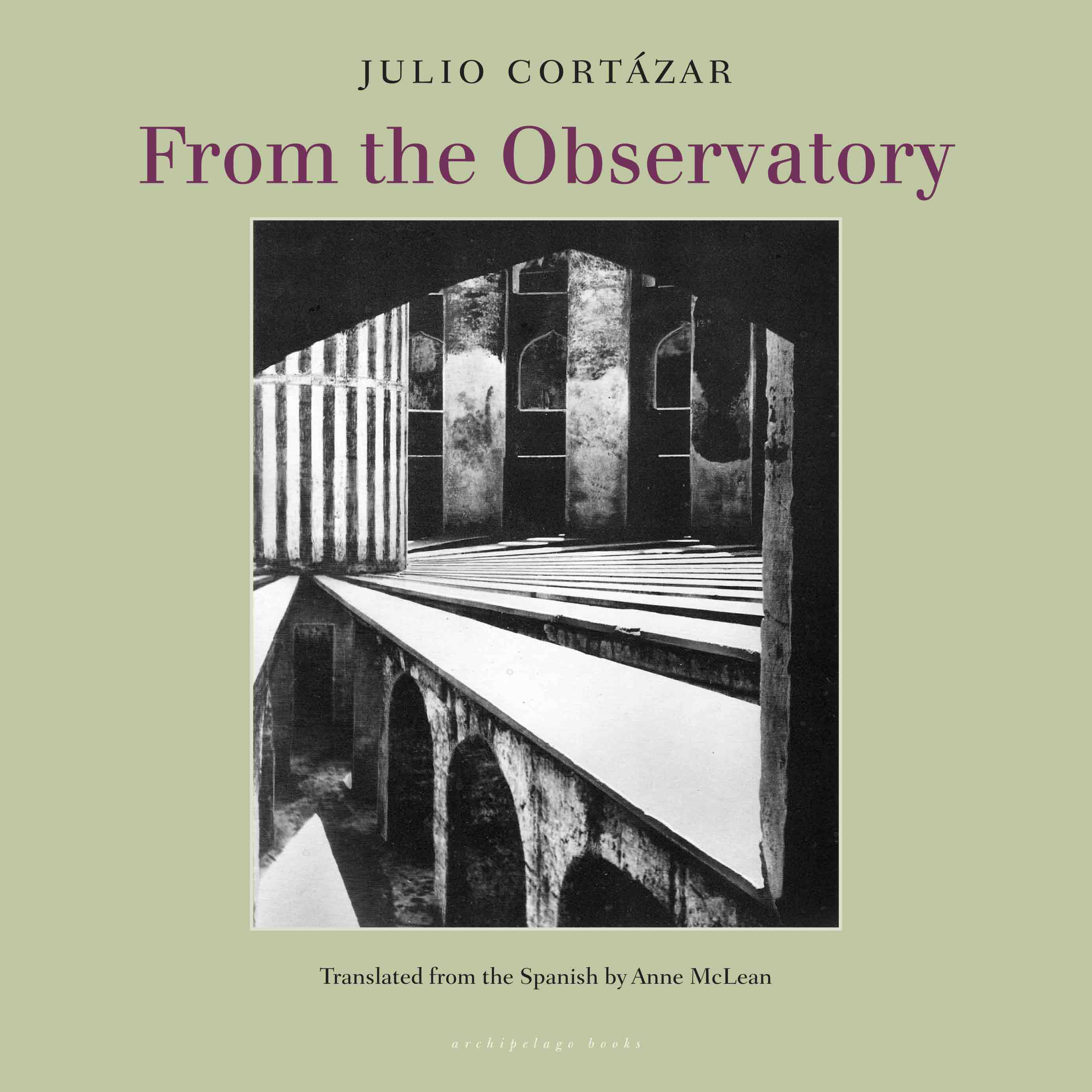
Serendipity is one of the joys of bookstore browsing. Case in point, my discovery of From the Observatory, a book I’d never heard of, discovered amid a selection of Archipelago Books in a local indie bookshop. There was something in the confluence of text and images that instantly captured my imagination. I had to take it home.

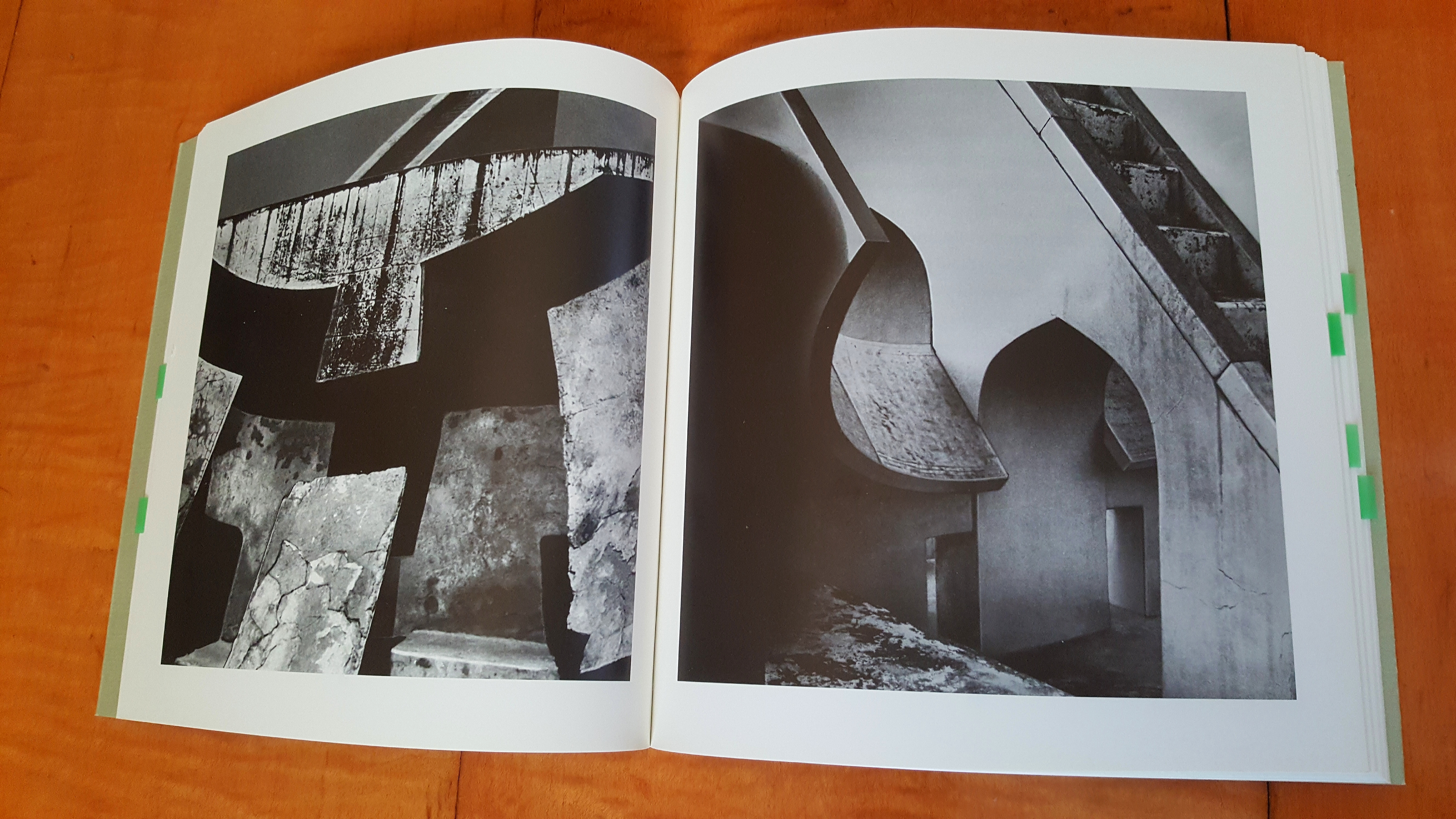
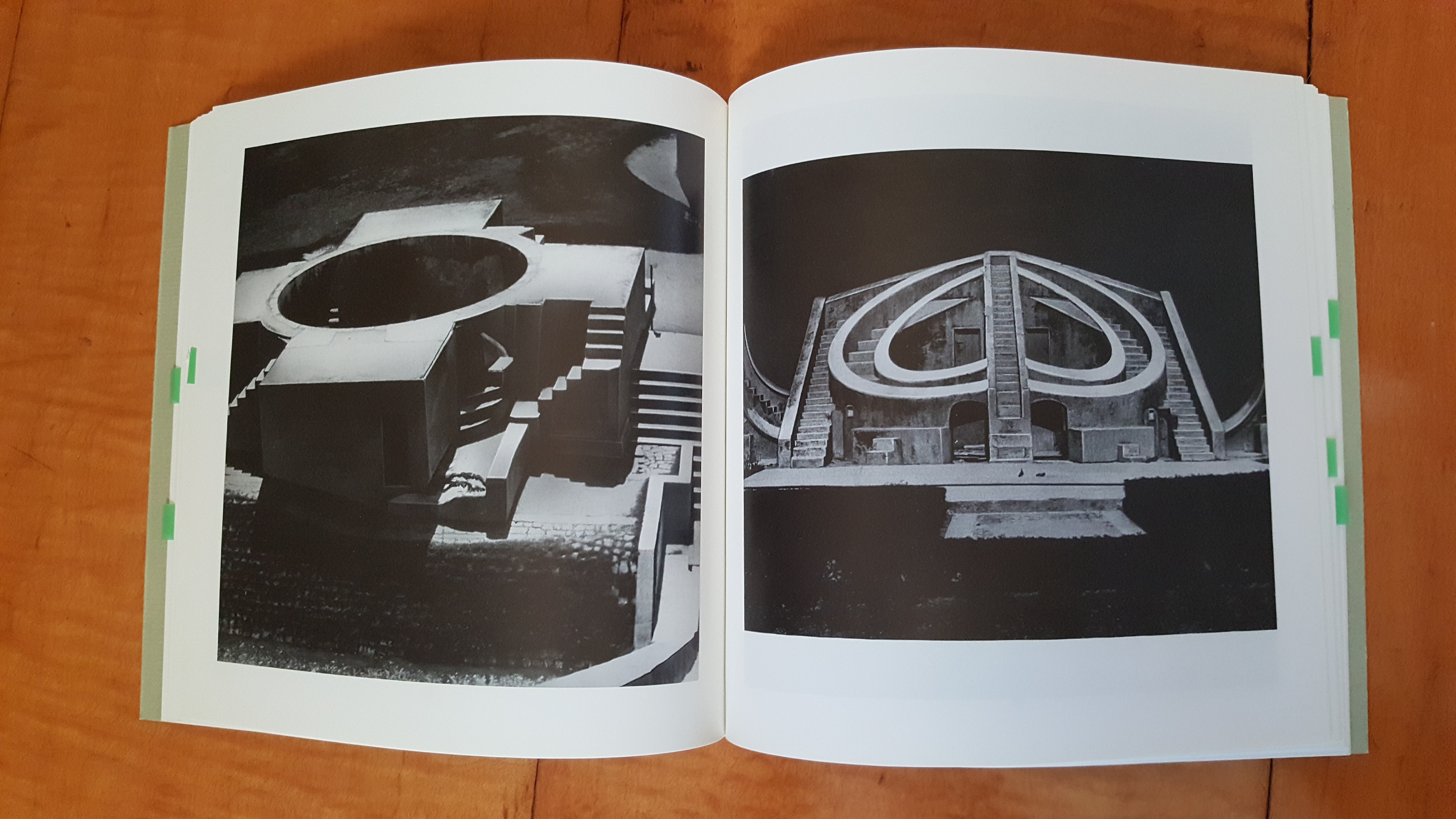
Billed as perhaps the “most unconventional work” of Argentinean author Julio Cortázar, an author who was not exactly known for sticking to conventions, this slender volume is essentially a meandering essay that moves between poetic contemplation of the life cycle of the European eel and reveries inspired by the precise angles and arches of the observatories constructed by Sawai Jai Singh, in Jaipur and Dehli, during the 18th century. If that sounds like an unlikely basis for a meditative discourse, the relentless flow of dream-like imagery pulls one into a space reflected in the silvery passage of migrating eels through dark waters and in the movement of stars across the night sky—a space that opens to an exploration of the nature of humanity, morality and society. One simply has to be willing to let go and follow the unspooling sentences:

Lovely is the science, sweet the words that follow the course of the elvers [eels at this stage of their life cycle] and tell us their saga, lovely and sweet and hypnotic like the silvery terraces of Jaipur where an astronomer in his day wielded a vocabulary just as lovely and sweet to conjure the unnameable and pour it onto soothing parchments, inheritance for the species, school lesson, barbiturate for essential insomniacs, and comes the day when the elvers have entered into the deepest depths of their hydrographic copulation, planetary spermatozoa already inside the egg of the high pools, in the ponds where the rivers settle down and dream, and the winding phalluses of the vital night calm down, bed down, the black columns lose their lithe erection advancing and probing, the individuals are born of themselves, separate off from the common serpent, feel their own way and at their own risk along the dangerous edges of ponds, of life; the time begins, no one can know when, of the yellow eel, the youth of the species in its conquered territory, the finally friendly water compliantly encircling the bodies at rest there.

Punctuating this mesmerizing text is a series of photographs taken by Cortázar himself at the observatories, and converted with the assistance of Antonio Gálvez into coarse, grainy black and white images. They provide a stark, antiquated contrast to the winding, lyrical prose.

There is an inherent sensuality to the language throughout—from the detailed descriptions of the eel’s extended journey, to the imagined sentiments of an Indian prince viewing the night sky, to the predicament of man seeking to make sense of life:

Nevertheless there Lady Science and her cohorts, morality, the city, society position themselves for ambush again: barely has one reached the skin, the beautiful surface of the face and the breasts and the thighs, the revolution is a sea of wheat in the wind, a pole vault over history bought and sold, but the man who steps out in the open begins to suspect the old in the new, bumps into those who’re still seeing the ends in the means, he realizes that in this blind spot of the human bull’s eye lurks a false definition of the species, that idols persist beneath other identities, work and discipline, fervor and obedience, legislated love, education for A, B and C, free and compulsory; beneath, within, in the womb of the redheaded night, another revolution must bide its time like the eels beneath the sargassum.

We move back and forth from Jai Singh’s observatories, constructed with mathematical precision as a response to the tyranny of the stars which for centuries had dictated the fate of his lineage, declining as he measured the skies; to the masses of eels, subject to the tyranny of genetic forces, irresistibly drawn through a long fresh water migration to ultimately return, mate and die, in the waters of the ocean. Within its two primary threads, From the Observatory, invites questions about the destiny of humanity, caught between passion and logic, nature and science, dream and reality.

Thoughtful and refreshing, this short book—barely 80 pages, roughly half given over to images—is the perfect accompaniment to a hot summer afternoon.

From the Observatory is translated from the Spanish by Anne McLean, and published by Archipelago Books.

Fans of Fleur Jaeggy rejoice: A link to my review of I Am the Brother of XX and These Possible Lives at Numéro Cinq

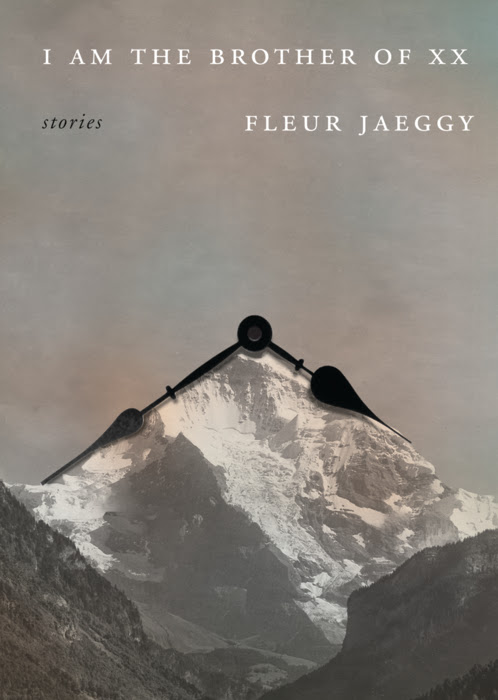
Any one who has fallen under the spell of the shimmering spare prose of Swiss-born Italian writer Fleur Jaeggy is well aware of her uncanny ability to evoke subtle shades of darkness and weave tales that linger in the imagination. However, for English speaking readers it has been a long wait for new work to emerge in translation. Fourteen years to be precise. That patience is finally rewarded, as this month sees the highly anticipated release of not one, but two recent collections: I Am the Brother of XX, a compilation of short stories, and These Possible Lives, a set of three hyper-condensed biographical essays.

These works, not surprisingly, reflect a more personal, reflective quality than her earlier fiction, directly featuring, at times, other writers with whom she became friends over the years. Familiar themes are also revisited, lines between light and dark are blurred. Her prose is, as ever, sharp, essential, charged with spine-tingling beauty. And applied to biographical subjects—De Quincey, Keats and Marcel Schwob—it is quite wonderful indeed.

I invite you to read my full review of these new releases at Numéro Cinq. Here is a taste. Please link through at the end to read the rest. A second link leads to an excerpt:

Sacred Inertia | Review of I Am the Brother of XX & These Possible Lives by Fleur Jaeggy — Joseph Schreiber

One might argue that Fleur Jaeggy does not write so much as channel language, allowing her words to form imaginary spaces that exist on an altered plane of experience. To read her is to inhabit, for a moment, that space—one that exists in the shadows, one that contains, to borrow an expression from one of her earlier stories, a certain “sacred inertia.” You can almost feel it. There is an unmistakable current of brisk, melancholic foreboding that courses beneath the surface of her prose. The chill can make you shudder, the stark beauty of her terse sentences catch your breath. Atmospheric. Disconcerting. And strangely alluring. It is a rare author who manages to sustain an emotionally intense voice that is at once distinct, abstracted, and tightly restrained. However, anyone who has fallen under the spell of Jaeggy’s fiction will know its undefinable appeal.

Of Italian-speaking Swiss heritage, Jaeggy was born in Zurich in 1940. Raised and educated in Switzerland, she moved to Rome when her studies were complete. There she met Thomas Bernhard and Ingeborg Bachmann. The latter would become an especially close friend. In 1968, she relocated to Milan to work with the famed publishing house, Adelphi Edizioni. She married writer and publisher Roberto Calasso, and established a reputation as a novelist and translator over the following years. But it was her masterful fourth novel, I beati anni del castigo (1989), translated as Sweet Days of Discipline (Tim Parks, 1991), that introduced her to an English speaking audience. Exquisitely spare, this subtly disturbing tale of obsession set in a boarding school in the Swiss Alps, examines themes that continue to resurface in her work: familial dysfunction, emotional detachment, and a preternatural obsession with sadness or, as her narrator so poignantly puts it, the “pleasure of disappointment.”

Continue reading here:

Read the story “The Black Lace Veil” here:

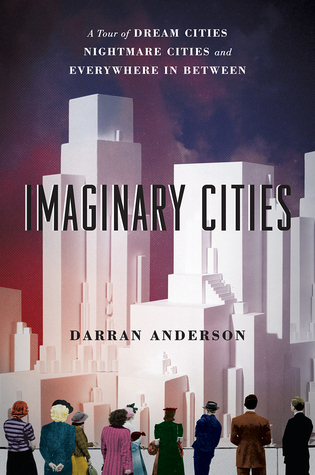
Imaginary Cities by Darran Anderson (originally published at TQC)

I’ve been busy reading and writing reviews lately, but everything seems to be directed at the future, scheduled for publication at online literary journals. It’s all good, but you put so much work in and then have to wait to share your thoughts and engage in conversation about the book. My review of Darran Anderson’s monumental Imaginary Cities, published earlier this week in the Spring 2017 issue of The Quarterly Conversation is a case in point. This extended essay on the idea of the city, in all of its possible and impossible incarnations, does not readily lend itself to the confines of a critical review… I know, I’ve had a look around. Originally published in the UK in 2015 (Influx Press), my piece has been written in anticipation of the North American release from University of Chicago Press next month. As I struggled to beat this essay into submission, I cast an eyeball at prior reviews. After all, it is already a well-known and well-loved work. And I was relieved to see that the best anyone can do is skim the surface of Anderson’s rambling, eclectic, and immensely readable tome.

The original publication where this review appeared seems to be offline or closed so my work is reproduced below:

Imaginary Cities by Darran Anderson.  University of Chicago Press. $22.50, 576 pp.

Imagine a city that you cannot contain, a city that forms and reforms itself around you constantly, a city that continues to change while your memories remain lodged in a reality that moves further into the past every day. That is the city of a man with a ten-second memory. I know such a person. Severely injured in an accident more than thirty years ago, this man, a former client, is unable to lay down new memoires. He lives in the continual present, working from a frame of reference decades out of date. But in the moment he is a highly intelligent, logical thinker—he was a young lawyer at the time of his injury. To see him today, his memory impairment is not immediately apparent. He is meticulous about his appearance, well-spoken, and polite. He tries to cover for his confusion as much as possible.

For many years, this man has spent several hours a week volunteering at a downtown law firm. The purpose is to provide him with social stimulation, stave off boredom. He goes to “work” in a suit, briefcase in hand. A special needs taxi delivers him to and from his placement. One day, a storm slowed all traffic, and his ride was late to pick him up. In the driving snow he began to walk toward the last home he could remember. But he had not lived there in years, and downtown, with its signature landmarks, had shifted in the meantime. The city around him no longer conformed to the one he had known, but on its streets he was invisible, a business man like any other, lost in a truly imaginary city.

As one navigates the sprawling streets and avenues that spread out across the pages of Darran Anderson’s ambitious guidebook to the metropolitan ideal—past, present, and future—there is likely to be more than one occasion of disorientation, an invitation to entertain an entirely new way of understanding the possibilities of the urban reality. In this sense, Imaginary Cities is a map that encourages you to get lost. Subtitled A Tour of Dream Cities, Nightmare Cities, and Everywhere in Between, this journey is an open-ended inquiry into the myriad ways that the idea of the city has been conceived in history, art, literature, social theory, and architectural design—for better or worse.

Unlike the standard guidebook, Anderson offers his traveler no pictures, maps, or diagrams. This is intentional. Side trips are encouraged as the fancy strikes, and generous footnotes are provided for those who wish to follow up on quotes and references. (Of course, there is also the ease of stopping into Google for quick access to an image, biography, or further background material.) Anderson’s extended essay feels like spending time with an entertaining, well-read explorer who has traversed the cities of the imagination and returned with exotic tales that stretch back into pre-history and out into the solar system. We are in the presence of a modern-day Marco Polo who understands that “all cities can, and should be read.” His aim is to help us learn to trace these narratives ourselves.

Our guide is an Irish writer living in Scotland. He is neither an academic nor an architect, but his focus of attention lies in the intersection of culture, architecture, and technology. In a recent podcast, Anderson traced the genesis of this project to long-standing fascinations with cities and with the point at which reality and myth meet. As he became increasingly obsessed with architects and started looking through their plans, he found that beyond their iconic structures, each had drafted countless schemes and designs that would remain, for a variety of reasons, unrealized. With a different set of circumstances, then, the skylines and urban landscapes we know now could have been very different—as they once were in the past and will be in the future. The modern city is in flux and can perhaps best be understood only through a shifting kaleidoscope of angles and perspectives.

Dividing his book into seven sections, Anderson manages to pull together a wide range of interrelated ideas—from sources as diverse as myth, archaeology, art, film, urban studies, science fiction, architectural design, and many others—into a thematically structured, meandering discussion, at once densely packed and tangential. Yet the quality that makes this project so impressive also makes it very difficult to adequately capture in a review. It is a slippery beast. The themes explored are neither exhaustive nor exclusive. Amorphous, the content exceeds the boundary of the pages. Each section necessarily offers more, and less, than it promises—echoing so many of the architectural, community, and metropolitan schemes that come in and out of focus along the way. Dreams cannot be contained—in their fulfilment sacrifices must be made.

Nonetheless, it’s inspiring to see just how much Anderson manages to squeeze into his thematic discussions. For example, the section, “The Tower,” with its twenty-seven chapters, starts with the quixotic. We meet Tommaso Campanella, whose proposed “City of the Sun”—with its utopian vision of a center devoted to intellectual engagement and physical pleasures—landed him in a dungeon as a guest of the Church during the Inquisition. But his mind could not be confined and he continued to construct his designs in his imagination. He was not forgotten, and his ideas would continue to the inspire the civic utopias of his contemporary Francis Bacon and, later, Ivan Ilich Léonidiv, who dreamed up urban plans to try to save himself under Stalin. None of these imagined designs were realized, but that did not lessen their influence.

Subsequent chapters introduce Le Corbusier, the ambitious and eccentric pioneer of Modernism; stop by Mega-City One, the vast metropolis of the Judge Dredd comics; spend time contemplating the Ideal City in Renaissance art and philosophy; and spare a few minutes glancing at various attempts to envision a New Jerusalem before turning to the unfortunate, even tragic, communities founded by messianic leaders and madmen. And at this point, the journey is just getting started. From the ziggurat to the skyscraper, “The Tower” will examine the titular subject both on its own and as an integral part of the cityscape. In later sections, many of the projects and personalities met here will reappear in other contexts.

Ever avoiding the temptation to belabour a point with exhaustive detail, Anderson prefers to paint with broad strokes as he explores concepts and themes. But he continually manages to punctuate his narrative with pointed observations that bring us back, from wherever he has wandered, to moments and ideas we instantly recognize, tying his discursions back into the book’s multifaceted main thread. In the chapter, “Cinematic Dystopia of the Everyday,” for instance, he moves from the surreal silent cityscapes of Metropolis and The Cabinet of Doctor Caligari to the futuristic noir of Blade Runner, then to the soullessness of the consumer-driven society depicted by French director Jacques Tati in his ambitious film Playtime, for which he constructed a set to mimic a modern city:

Tati foresaw it all. Everywhere looks sedately impressive and like nowhere in particular. People are inherently lost. Traffic crawls in barbiturate carousels. The shocking thing watching it back now is not how contrived his sledgehammer and slapstick satire is, but how pertinent. The open plan office floors with their individual cubicles are rife now. The large glass facades, echoing the quiet desolation of Edward Hopper’s paintings, are everywhere. This is life as a glistening empty waiting room and it is a life we are increasingly forced to live all over the globe.

Here we are reminded that, as what once was presented as part of a dystopic (or, for that matter utopian) vision arrives, it soon becomes commonplace. It is easy to forget that the future is now, or rather, to quote William Gibson, “The future is already here—it’s just not evenly distributed.”

The wide, eclectic sweep of Anderson’s project is fueled by an infectious sense of endless curiosity. One of the book’s greatest assets—perhaps the key to its success—lies in its author’s thoughtful, engaging tone. His lyrical, aphoristic prose offers a wealth of memorable lines. This is where his inner Marco Polo, channeled through Italo Calvino’s Invisible Cities, serves him well. He is an intelligent, witty, and consummate storyteller, never afraid to speculate, raise questions, and entertain ideas without the pressure to define and prove an overarching theory. But there is a persistent theme that runs through the book. It arises naturally from the earliest formations of human settlements and is so fundamental that it has essentially become part of the psycho-topography of the urban space, reflected in our mythologies, stories, and art. That is the endless tension between utopian aspiration and dystopian despair.

One might imagine that these are two opposite ends of the spectrum, but Anderson suggests that utopias and dystopias each imply the quality of the other, that is, every utopia contains its own dystopia and vice versa. Cities are fundamentally heterogeneous places. From their earliest incarnations, such as Uruk in Mesopotamia, they were marked by the production of an agricultural surplus and the development of social classes. Utopian visions with their idealistic, often philosophical or Puritanical agendas—the dream of a world without difference or inequity—tend to deny the very qualities that make city life possible, let alone vibrant and interesting. As a sort of heaven on earth, a utopia is rarely imagined for all, just as hell might be said to exist for those who want to imagine other people burning in it. And it is no question which scenario tends to capture the popular imagination. More visitors follow Dante and Virgil down into the depths of the Inferno than sign on for the subsequent treks through Purgatorio and Paradiso.

In the end, Imaginary Cities, is much more than a book. It is an ongoing project that invites participation. It opens conversations, challenges assumptions, exposes contradictions, and invites readers to lose themselves in the cities they live in, visit, and encounter in their dreams. And the discussion does not end when the final page is turned. Darran Anderson’s Twitter feed, @Oniropolis is a wonderful source of fascinating of images, links, and retweets guaranteed to keep the magic flowing.


On reading and writing and slowly going nowhere

I track the books I read, I have since I was in my early twenties—first in small hardcover journals, now on a spreadsheet. I’m not a spectacularly fast reader but in recent months my completion rate has fallen to a crawl. I have submitted a couple of reviews for publication elsewhere but my blog has seen few fresh posts. I’m probably reading half a dozen books, including several poetry and essay collections, but focus is hard to find and sustain. However, I am not a loss for the company of words. I have a couple of longer essays to edit for the upcoming Scofield, as well as final assignments for a copy editing course I’ve been taking; and I have to say that losing myself in the words of others from a perspective that draws from, and yet differs from, that of a reader or a writer, is proving to be exactly the distraction I needed.

These past few weeks have been difficult.

Thanksgiving was a trigger point; the first day where the magnitude of the recent losses—of my parents and one of my closest friends—hit home and hit hard. That aloneness that goes to the core. Rather than dissipating, the darkness grew, and despite some very positive events and occurrences in my life, it threatened to overwhelm. Within a week I was feeling seriously suicidal for the first time in more than twenty years. The only thing holding me back was the thought of all the work I would put my children and brothers through, something I know especially well as co-executor of my father’s will.

I have sought help. I have reached out.

It does not seem to be depression as much as grief; and it’s a multi-layered, complex grief. So although I still struggle, at times, against the feeling that I don’t want to keep on living; I am not feeling inclined to take matter into my own hands. Of course, none of this is aided by the fact that I have been fighting a vicious cold, hacking cough and all. Makes it very hard to find that spark, but I hope it’s rekindled soon. This is a hell of a way to live, but I’ll keep reading, sketching out ideas, and writing while I wait.

6412706291_3376c44b28_zThroughout all of this there has been goodness: A forthcoming review of a book that has, more than anything I have read for a long while, made me think about a way to approach some writing I have in mind (I will write about it when the review goes live); a long conversation with a Twitter friend who is still far away, but now close enough to call (a real treat because Twitter has been a little uncomfortable for me of late, but that’s another story); and the publication of an essay I wrote for Literary Hub. The essay is called A Reader’s Journey Through Transition, and I don’t know what was more exciting, publication day itself or seeing my name in the week-end review with other authors like Toni Morrison, Junot Diaz, Rabih Alameddine, and Marilynne Robinson!


A meditation on life and death: Beastlife by J’Lyn Chapman

Once I became aware that this book existed, I knew I had to have it. So I ordered it immediately.

When it arrived and I went down to the bookstore to retrieve it (that is, release it from the bookseller who could not refrain from glancing through it as if he was regretting having to let it go), trusting some odd intuition that it might hint at something I was looking for. But, to be fair, I had little idea what to expect.

J’Lyn Chapman’s Beastlife is very small, fitting into the palm of the hand, or better yet, a pocket. An ideal companion for a walk in a park or natural area. I bought it with the idea that it might offer an unconventional provocation for a process of loosening, prying open, the closed window between my loss and the grief that I cannot begin to touch yet. At this point, in the first months following my parents’ deaths, mourning feels more like an empty space. Written of the body, mine and theirs. Confused. Contorted. Corporeal.

2016-08-21 19.53.09Not everyone would look to a book containing photographs of dead birds (albeit small, grainy black and white images), to find a voice for sorrow. For me it makes a strange sort of sense. It sounds morbid, but hopefully, if I manage to put to word the images that haunt my memories of my mother’s last month and days, I will be able to illustrate the beauty. If I have learned anything yet in these early days following the first significant losses of my life, it is that making sense of the death of those closest to us is at once universal and specific. And I lost both parents. Two very different relationships, two different circumstances, two separate yet entwined experiences of grief.

Of course, there is much more to Beastlife than photographs of birds.

This collection of essays—poetic meditations—on life and death, birds and beasts, and our human interaction with the natural world offers evocative, yet insistent reminders that we should strive to observe, engage with, and exist in this world with grace and compassion. Not that we, as humans, always succeed. Sometimes we are careless. And sometimes we are unthinkably cruel—inhuman even.

Death is a theme throughout, up close and afar. And violence too. Chapman explores the ways we intersect with nature—as hunters, naturalists, observers of atrocities, and, most fundamentally perhaps, bearers of new life. This tiny volume challenges the readers to reflect on our place in the cycle of life, in the beauty and the pain.

For me, at this time, when death is very much on my mind, there is an odd comfort in these pages.

The volume opens with “Bear Stories,” a series of very short pieces; raw, visceral prose poems that draw on the intimate complexity of our connection to the natural world. Bound with water, blood, fur, and feather the beauty is shocking, brutal, sublime. Drawn from an earlier longer form chapbook, these “stories” invite us to consider the world at gut level.

In the dark, a body is a pond. The night birds make hollow sounds, and then there is a sound of the mouth, pulled back, curled out. And so on. Fur catches the moon as it comes out barbed and dark. A vertical cut whines under the ribs, and the long grass keeps it from you.

The micro essays and meditations that comprise the central portion of  Beastlife are remarkably rich, drawing on a range of literary and critical resources. “A Catalogue and Brief Comments on the Archive Compiled and Written by the Ministry of Sorrow to Birds,” for instance, takes inspiration from Ovid, Heidegger, Barthes, Sebald, Tennyson and more. Despite its seemingly whimsical name, this is a more explicit meditation on death and dying framed against images, photographic and descriptive, of dead birds. The ministry of the title is an imagined institution dedicated to a form of archival lamentation, an understanding of death and mourning through the collection of photographic specimens. They seek and gather images into a growing chronicle of sorrow:

We were stopped, and looked down, in the walk by the bird, flies, cigarette, glint of coin. We saw the futility in keeping—the ornaments in hydriotaphia and their obsidian speaking something of its keeper. But the detritus we die alongside or do not die alongside, the litter jettisoned from our death and dying bodies or we die too quickly to regard, utter the currency of living things.

And there is this discomfort: the spectacle. Its hard edges. We have bodies too, we say, and we want them wrapped in webby husk, a film, a membrane huddled into self. But our bodies are still over-looked by our own flânerie, in which the world, and its subtle schism of that which is alive and that which is dead, becomes our final coup for all we have lost in the leaving. All the unmeasured ether, it flames with our light.

In death we are confronted with the fragility of the body—the body of the one who has died and, in reflection, our own. In her next essay, “We Continue to Unskin: On Taxidermy,” following Truth’s advice to Petrarch to constantly meditate upon his own mortality, Chapman contemplates mortality and the miracle of immortality which, paradoxically involves an engagement with death. Structured along lines from a poem by Paul Celan, this journey takes us through the a more familiar archive of natural history. From the delicate art of the taxidermist, preserving the form and imitation of natural life in the animal’s natural habitat, to the narrator’s own relentless search to find her place in the urban spaces she inhabits, the promise of immortality lies, of course, in language.

And yet every sentence has its beginnings and each animal, posed as it is in flight or in fright has its past-tense. Beauty, eternal gesture. I want to write sentences that stretch on toward desperation, as in the fugal voices that become discordant but still lovely, then recollected in harmony. At the apotheosis of the desperation, the line would break into clause or new sentence and the break would be the point of discord rather than calm, and still the dissolution would be reprieve, as when the healthy mind refuses any more annihilation and in its descent decides to rest. But there must be sentences that travel toward the desperate one. There must be travel.

The last entry, “Our Final Days,” echoes in form the contained short prose pieces of “Bear Stories,” but here the brutality is decidedly human—dispatches of cruelty, violence, and injury are played against the hope that some semblance of beauty in nature may preserve us. It’s a faint hope, a lament of an entirely different order. It’s too easy to get wrapped up in the disheartening news that floods our lives through our TVs and news feeds. Sometimes I find myself relieved that my parents will not see any more of the potential darkness that seems to ever loom on the horizon. But then I remember that I have two children. Life goes on. I reorient myself to the future again.

There is a woeful inadequacy that washes over me when I read more conventional memoirs of loss and explorations of grief. I keep peeking into odd corners, turning over rocks to see what crawls out. Reading books like Beastlife.

I keep the other poetic evocations of grief, the books I am amassing, close at hand. I read them to stir up and open the gates that are still secured against the flood of choked tears, the barricades of numbed sadness, that do not seem to be able to allow more than a slow leak in occasional shuddered gasps. At the moment mourning feels more like emptiness. I feel a need to find a starting point with death, with these particular deaths, with watching each one on their deathbeds, before I can find and begin to work through the grief.

Beastlife by J’Lyn Chapman is published by Calamari Archive.

In uncertain terms – Proxies: Essays Near Knowing by Brian Blanchfield

This is a book braver than I am.

I am not even certain where to begin to unravel my reaction to reading this collection of essays. Until recently I was resisting the dawning recognition that what I needed to say—the subjects I wanted to explore—would be best met through essay/memoir writing. Or to put it another way, I realized that I have neither the patience nor aptitude for fiction. But what of the essay and its personalized variant, the memoir? I wasn’t even sure I liked the form. So I have learned to approach reading essays with an eye to writing. I read not simply for the joy of encountering well-crafted, intellectually and emotionally engaging prose. A work that excites me, in style, content, or both, invariably sends me to my current notebook where I spin, inward and outward, a cascade of thoughts, images, and ideas… fuel for my own scribblings.

Proxies, by the American poet and essayist Brian Blanchfield, is one such work.

proxiesSubtitled Essays Near Knowing, the pieces that comprise this collection were composed under a particular creative constraint. Blanchfield decided to refrain from seeking any guidance from authoritative sources during the writing process. Thus these essays were written unplugged, if you like. Of course, adopting a learned tone without fact checking (and we all do it, especially in conversation), necessitates allowing for a margin of error. Consequently, pages of “Corrections” addressing many of the resultant inaccuracies and inconsistencies, close out the book. However, Blanchfield also gives himself a secondary challenge in this project:

Having determined that this would be unresearched essaying, analytic but nonacademic, I was almost immediately drawn to a second constraint—or better, invitation: to stay with the subject until it gives onto an area of personal uneasiness, a site of vulnerability, and keep unpacking from there.

As he hits these points of reflection that effectively bend the essay toward memoir, there is, he admits, a certain fumbling allowed, stimulating a transition that, in its sometimes sudden movement, creates an energy that is dynamic, emotionally raw. What begins as a focused consideration of a topic, a concept, or theme, seems to turn personal in a heartbeat, and works its way through to a resolution, however ambivalent that may be. No grand narrative arcs here, only furtive digging through the fragmented moments of life, each essay preceded by the same caveat: Permitting Shame, Error and Guilt, Myself the Single Source.

Blanchfield’s starting points are varied. As a poet, it is not surprising that many start with language and meaning: “On Propositionizing”, “On Confoundedness”, “On Abstraction”, “On the Ingénue”, “On the Near Term”. Some have more tangible contexts at the outset: “On Minutes”, “On the Leave” (as in the game of pool), “On Dossiers”. He often draws on specific images from his own life to set the stage, but those musings typically lead him much closer to the bone as the essay takes shape. Relationships with his parents, the tenuousness of his chosen profession, and his sexuality—his queerness of being—are common themes that regularly surface as he ventures into those areas of private anxiety and susceptibility.

As personal as he gets, and he can lay himself bare, these essays are rich with fascinating intellectual ideas, with references to philosophers, psychologists and, naturally, poets. Some essays are simple and relatively self-contained, while others seem to mutate, in the reading, as the author reaches for a subject that expands, like a pool of liquid, resisting the ordered shape one might anticipate. At best, at their most intriguing, these are essays meant to be experienced as much as read.

Take, for the sake of illustration, “On Minutes.” This piece begins, objectively, with a discussion of meeting minutes, the recorded, dispassionate account of the details of a meeting—no place for embellishment, dramatic flair. Expanding on this basic subject, Blanchfield recounts his own experience working as an executive assistant at a performing arts organization in Tuscon at a time when he and his partner were struggling to make ends meet on one salary. It was a job borne of necessity not desire to say the least. He slides from the drudgery of typing up minutes into memories of accompanying his mother to her office job on weekends as a young child, occupying himself creating stories while she worked, reading them aloud to her co-workers at the end of the day. These childhood creations are then parlayed into a link to the remembrance of his return to his mother’s home for his stepfather’s funeral. From there he passes into a reflection on “Paraphrase”, a poem by Hart Crane that, for Blanchfield, “gets the sudden, lights-out fact of death right.” At this point, what has become a quick dip into the territory of memoir, turns again and, as it shifts, the language of the essay slides into richly poetic territory with a meditation on the closing stanza of Crane’s poem in which the white head of the deceased is observed as a “paraphrase” among the roses on the wallpaper:

The word choice is inexplicable, querulous, oblique, just right. A paraphrase among the rows of roses—a relief receding there—renders their locked pattern a kind of language, but what can it say?; and the head in the place where the living being lay is nominated as this titular hermeneutic tool, useless as such without its objective genitive of. It cannot be said what original locution this paraphrase summarizes. A case, I think, for Crane, of Flesh Made Word again. A reversion. Revelation withdrawn.

The essay winds down with thoughts of Crane who, fittingly, worked an office typist; and the speculation that the imagined head on the bed might have been that of his lover’s father. Some strange, small circle, elegantly wrought from very humble beginnings. The essays in this book move like this, through memories, reflections, ideas and poetic contemplation.

One of the most profoundly moving pieces in the collection arises from Blanchfield’s attempt to address his relationship with his mother—once loving, now long strained by her inability to accept his sexuality. “On Peripersonal Space” begins with the notion that an individual’s concept of the self includes all the space within reach around his or her body. He hears a radio discussion with the authors of a book on the subject, a mother and son team, a collaboration that, within his own scope of experience, is unimaginable. Yet he finds it difficult to approach his desired subject, as much he feels it is essential that he make the attempt. This is a challenge I understand—writing about those with whom our relationships are close but complicated, is an uneasy task:

Since I began this project, I have tried a number of times to write about my mother and me, and have abandoned a few attempts already. If these essays are, in part, inroads to disinhibited autobiography, as I have come to claim they are, and demand they be, I feel the imperative to address the subject above all others. But ours is a relationship so deep and damaged and (still) so tenuous it has defied emergence.

So how to start? He takes the peripersonal space as a cue, beginning with an account of the closely bound emotional intimacy and playful games that he, as an only child, and his then divorced mother used to enjoy when he was young. His description and the psychological implications of their connection is startlingly frank and triggers a concern that I also share with respect to writing about close family members:

It is more than embarrassing to relate all of this. I come up against the inappropriateness of, for one thing, sharing what is only half mine to share. But is that partiality, expressed by that proportion—half of one—ethical, or healthy for a grown man? Roland Barthes has famously said that to be a writer is, essentially, to violate a primal taboo, to “play with the mother’s body.” No, I love Barthes and he is a signal influence on my conception of this very book; but the remark presumes a class and level of literacy I was not born into.

The resulting essay achieves a surrogate catharsis of sorts, but not between the author and his mother. The roots of their (as yet) unresolved divide lie deep in the American south where Blanchfield was raised in a Primitive Baptist family. He had to leave to live openly as a gay man, moving to New York City in his early twenties. The years that have passed, and the miles that have separated them have not healed the rift. Honestly sharing the pain of rejection, the frustration at his mother’s inability to come to any terms of respectful disapproval, and the sting of hearing her say “I shouldn’t have to choose between my God and my son” leaves a deep sorrow that lingers on the page.

Essayists are no strangers to the practice of blending intellectual and literary observations with autobiographical reflections. What Blanchfield seems to approach here is a means of allowing himself, as a writer, to push his way inward, passing from the factual (more or less), the abstract or the sentimental into the territory of the immediate, the raw, and the real. He touches nerves (his own) but avoids falling into two traps that can snare those who venture toward autobiographical writing: the artificial narrative and the open air confessional. At the most personal end of the spectrum, what he is sharing are unguarded moments of naked emotional vulnerability, decidedly queer, but recognizable and resonant to anyone who has lived, loved, won and lost.

For prospective or developing essayists, Proxies is, as a project, idiosyncratic, bold and illuminating. Barthes’ essays, as he admits, are an ever present influence and Blanchfield demonstrates a similar natural ease with the form. To be able to unfold ideas and follow their course without fact-checking is an interesting exercise in itself, useful at the very least in drafting an essay in its early stages. Lifewriting in this format offers ample reward for readers and some significant points of interest for those of us who struggle to achieve the balance between a story we want to explore and the open wounds that may not have quite healed—the truths that give a personal essay its soul.

For me, this book generated a series of provocations, flash points for my own writing, current and potential. I loved the way Blanchfield focuses in on ideas and uses them as pivot points to make his way from concept to experience and back to ideas. It took me, I confess, over a month to read this collection of twenty-four short essays. But in that time I lost both of my parents, the outcome of two intersecting, but unrelated series of events. I sat long at the bedsides of both my mother and father, witness to their final days. I want to attempt to capture the immediate experience, in its unfiltered rawness, before my memories begin to become distorted by time. I gleaned some possibilities, some instances of inspiration, some ideas to bring into my own project which will be, in its own way, necessarily imprecise, emotionally liable, and queer.

And that, to borrow from the title of the final essay, will suffice for the near term.

Proxies: Essays Near Knowing is published by Nightboat Books.

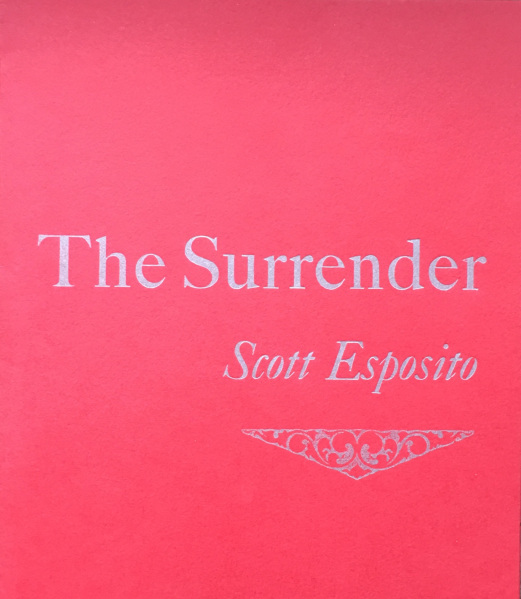
Thoughts on writing about The Surrender by Scott Esposito for Minor Literature(s)

The moment I heard that this book was on the horizon last year, I knew it was one that I had to read. But I could never have anticipated how tightly the release of The Surrender would intersect with my own fledgling efforts to put a voice to my own journey. The precipitous timing coloured not only how I read, but how I would go on to write about this book.

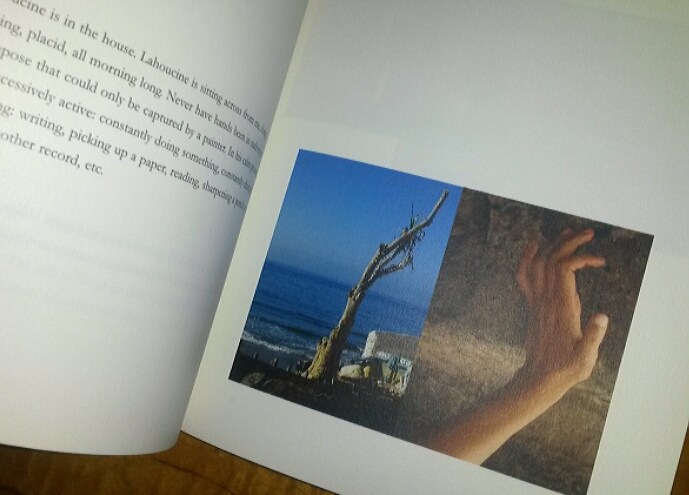
surrI entered Scott Esposito’s sensitive and intelligent three part essay into the heart of his own gendered identity armed with two notebooks. In one I catalogued my observations about the essays themselves–the structure, the form, and the content–while the other captured the flow of emotion, the moments of recognition, the ideas that spoke to my soul. One could say that I surrendered to this book. But I could only review it by putting my deepest personal reactions to one side and allowing Scott and his accounting centre stage. To do anything else would have been self indulgent, unprofessional. At the same time I simply wanted to open the work to the point that other readers would be drawn to enter in. One deserves to hear a story like Scott’s directly.

For my part, writing about The Surrender was an absolute joy. Thank you to Tomoé Hill at the wonderful Minor Literature(s) for entertaining my review.

You can read my review and see the original photograph I created to accompany it here.

Immersed in the moment: Incidents by Roland Barthes

In his Publisher’s Note to the French edition of Roland Barthes’ Incidents, a collection of essays published shortly after the theorist’s death in 1980, François Wahl suggests that the four very different texts assembled form a coherent whole because each piece “strives to grasp the immediate”. These are not theoretical or critical investigations in any sense, rather, in each text, Barthes is immersed in the moment, observing, reflecting, and recording his reactions. There is an unchecked flow and intimacy, by turns nostalgic, sensual, and melancholic but always tuned to the instance of occurrence: to the incident.

2016-05-19 21.38.01These are works that invite the reader to engage with all five senses, mediated through words and memory–they are not formal pieces but rather take the form of journal entries, diary writing, and fragmented travelogue. Barthes writes people and he writes place, never really entirely at ease with too much of either. Delight, boredom, and sadness filter through his reflections creating an immediacy that is at times startling. He is not writing for posterity, he is writing for himself.

The collection opens with “The Light of the South West”, an evocative essay/memoir, a personal tribute to the south west region of France. He writes about the experience of traveling south from Paris. Passing Angoulème he becomes aware that he is on the “threshold” of the land of his childhood. It is the quality of light that defines the place:

. . . noble and subtle at the same time; it is never grey, never gloomy (even when the sun isn’t shining); it is light-space, defined less by the altered colours of things . . . than by the eminently inhabitable quality it gives to the earth. I can think of no other way to say it: it is a luminous light. You have to see this light (I almost want to say: you have to hear it, hear its musical quality). In autumn, the most glorious season in this land, the light is liquid, radiant, heartbreaking since it is the final beautiful light of the year, illuminating and distinguishing everything it touches. . .

He goes on to turn his attention to the elements of the south west that resonate with different aspects of his childhood, to reflect on the way that memories formed in childhood inform way we remember the places associated with that time, the magical spaces and the difficult times will each carry their own tone, their own qualities.

2016-05-19 21.41.06The title piece is the earliest in the book. Recorded in 1969 when the author was in his mid-50s, “Incidents”, as the name implies, captures moments from an extended stay in Morocco through an incidental series of fragmented encounters and experiences. Here, people form the scenery; with a special attention reserved for young men. Barthes demonstrates a a particular eye for detail (and somewhat of an obsession with hands) in these passing observations, combined with an acute sensitivity for scents and colours. The vibrancy, shades and contrasts of the country come alive. As a reader you become aware of the blinding light, the dark shadows–they are not described, you sense them in the background.

A young black man, wearing a crème de menthe-coloured shirt, almond green pants, orange socks and, obviously, very soft red shoes.

A handsome, mature looking young man, well dressed in a grey suit and a gold bracelt, with delicate clean hands, smoking red Olympic cigarettes, drinking tea, is speaking quite earnestly (some sort of civil servant? One of those who track down files?), and a tiny thread of saliva drips onto his knee. His companion points it out to him.

Some young Moroccans–with girlfriends they can show off in front of–pretending to speak English with exaggerated French accents (a way of hiding the fact without losing face that they will never have a good accent).

The art of living in Marrakesh: a fleeting conversation from open carriage to bicycle; a cigarette given, a meeting arranged, the bicycle turns the corner and slowly disappears.

The Marrakesh soul: wild roses in the mountains of mint.

The third essay, “At Le Palace Tonight . . .” is a tribute to a Paris club in a converted theatre. He describes the ornate detail, the mood and the atmosphere of this place where he seems to almost prefer to be an observer, watching the dancers and the human interactions rather than taking part. And as in the first essay, we find once again a wonderful evocation of light, this time light as informed by the interior of a structure:

Isn’t it the material of modern art today, of daily art, light? In ordinary theatres, the light originates at a distance, directed onto the stage. At Le Palace, the entire theatre is the stage; the light takes up all the space there, inside of which it is alive and plays like one of the actors: an intelligent laser, with a complicated and refined mind, like an exhibitor of abstract figurines, it produces enigmatic shapes, with abrupt changes: circles, rectangles, ellipses, lines, ropes, galaxies, twists.

This collection closes with “Evenings in Paris” a series of journal entries from 1979 that open with words Schopenhauer wrote on a piece of paper before he died: “Well, we’ve escaped very nicely.” The Barthes who comes through in this selection is tired, often impatient with colleagues and irritated by noise. A certain loneliness and dissatisfaction underscore his descriptions of dinners with friends, failed attempts to win the affections of the younger men he covets, and an unresolved mourning for his beloved mother. Most nights he finds himself heading home alone, half despairing, half relieved, to settle into bed in the company of Pascal, Chateaubriand, Dante, or the echoing ghost of Proust. Although he still enjoys longingly watching attractive men, he has little patience for crowds or social functions. This is a heavier, more emotionally intense offering, the intimacy of “the immediate” weighs heavily as Barthes commits his thoughts to paper, unaware in the writing as we are in the reading, that he is nearing the end of his life.

2016-05-20 02.33.11And, because he is recording the ordinariness of the daily encounter of the self with the world, there is the possibility of shock waves that ring down the years with a new intensity in light of the incidents (that word again) that have unsettled Paris in recent years:

The guy who sells Charlie-Hebdo walks by; on the cover in the publication’s idiotic style, there’s a basket of greenish heads that look like lettuces: ‘2 francs the head of a Cambodian’; and, right then, a young Cambodian rushes into the café, sees the cover, is visibly shocked, concerned, and buys a copy: the head of a Cambodian!

Not without a little social commentary, even in a deeply personal journal, Roland Barthes, remains ever relevant down the years.

Reading Incidents is, in itself, a sensuous experience, it is doubly so in this edition from Seagull Books. With a sparkling fresh translation by Teresa Lavender Fagan and illustrated with the evocative photographic images of Bishan Samaddar, this collection of writings becomes one that can, as Barthes himself would have intended, be savoured.