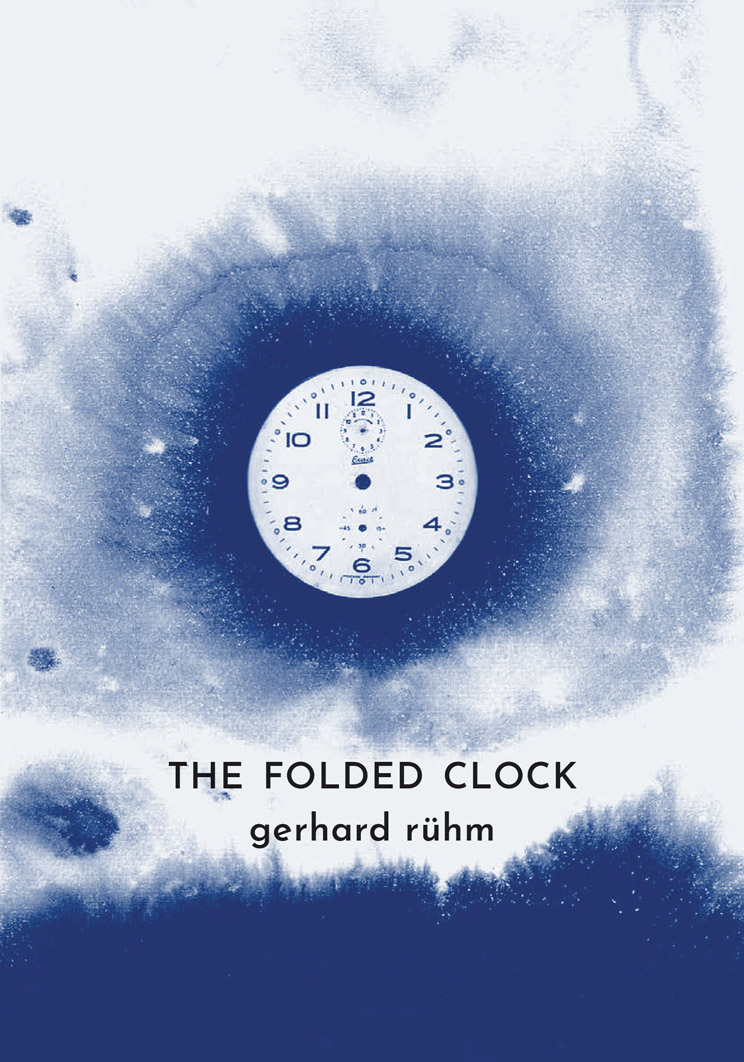
Counting, accounting and recounting: The Folded Clock by Gerhard Rühm

two!
one two  –
one two  –  three!
.        two
one two three  –   four
.       two

“a recounting,” the first number poem you encounter in Gerhard Rühm’s The Folded Clock, opens with a lengthy note explaining exactly how the piece should be recited—volume and intensity directed and measured—before erupting across the following five pages as numbers, spelled out, descend, rise, and repeat. Finding the flow and riding it (guided with a few more directives along the way) is not difficult, especially if you allow yourself to read aloud and, there are you are, from the very beginning, not simply reading but actively engaging with the poem.

And there are ninety-nine more, each one involving numerical elements in some shape or fashion. Some are sequential, others visual, still others are in verse form. Clever or funny or profound, it is amazing just how far numbers can take you.

Born in Vienna in 1930, Rühm, who recently celebrated his ninety-fifth birthday, is an author, composer and visual artist. His poems reflect all of these interests. He was an early practitioner of concrete poetry and an original member of the influential Wiener Gruppe. His interest in numbers as “the most pared-down and at the same time most universal element of design” goes back to the early 1950s. When he composed his first number poems in 1954 he was unaware of Dadaist Kurt Schwitters’ own explorations in this area, but he has continued to incorporate numerals and digits into his spoken and visual poetry, expanding the possibilities numbers offer. The Folded Clock, newly released from Twisted Spoon Press in Alexander Booth’s translation, gathers one hundred of these poems in a handsome volume.

Many of Rühm’s poems play with the rhythm and sound of numbers in various sequences and patterns. Others exploit visual qualities and double meanings that arise from the titles and the images or words they are paired with. And a sly humour surfaces throughout, as in “imperfect counting poem”:

one
two
three
four
five
six
seven
eight
nine
toes

one’s missing

Or “sixty-nine pairs of lovers” which depicts, inverted on their side, six rows of ten and one row of nine (sixty-nine) 69’s.

But, Rühm is also inclined to employ numbers and words to make thought provoking statements about the world. “time poem”—another piece that begins with a note on recitation—takes on cosmic dimensions starting with:

1 january, 12:am: bang!
2
3
4

And so on, counting down one calendar year, day by day, marking the significant events, from the Big Bang to the first moon landing. Given that fish don’t begin to swim in water until December 19, the final day of the year opens up, first by hours, then half hours, and by 11:30 pm, minutes, until the final minute opens up into seconds to allow human history from the first cave paintings to space exploration to fall int place. (You can read this poem online here.) Elsewhere he allows climate change, odd historical facts, and interesting news stories inspire poetic creations. Ruminations on living also fit well with the measurement of one’s personal relationship to time as in “sense of time”:

a week ago i was still a child
five days ago i  was an adult
four days ago was the time of the “vienna group”
three days ago i was living in berlin
for two days now i’ve been in cologne
everything since the turn of the millennium happened yesterday
since early this morning i haven’t aged at all

The variety of poems in this collection is wide and endlessly entertaining. They range in length from just a few numerals, to pieces that extend for several pages, to sketches and collages. Even if you fear you might be intimidated by avant-garde or experimental poetry (or poetry at all), this is a work that is not only intelligent and entertaining, but that contains many pieces that you could easily find yourself unable to resist reciting aloud.

The Folded Clock: 100 number poems by Gerhard Rühm is translated from the German by Alexander Booth and published by Twisted Spoon Press. (Excerpt and images can be seen at the publisher’s website.)

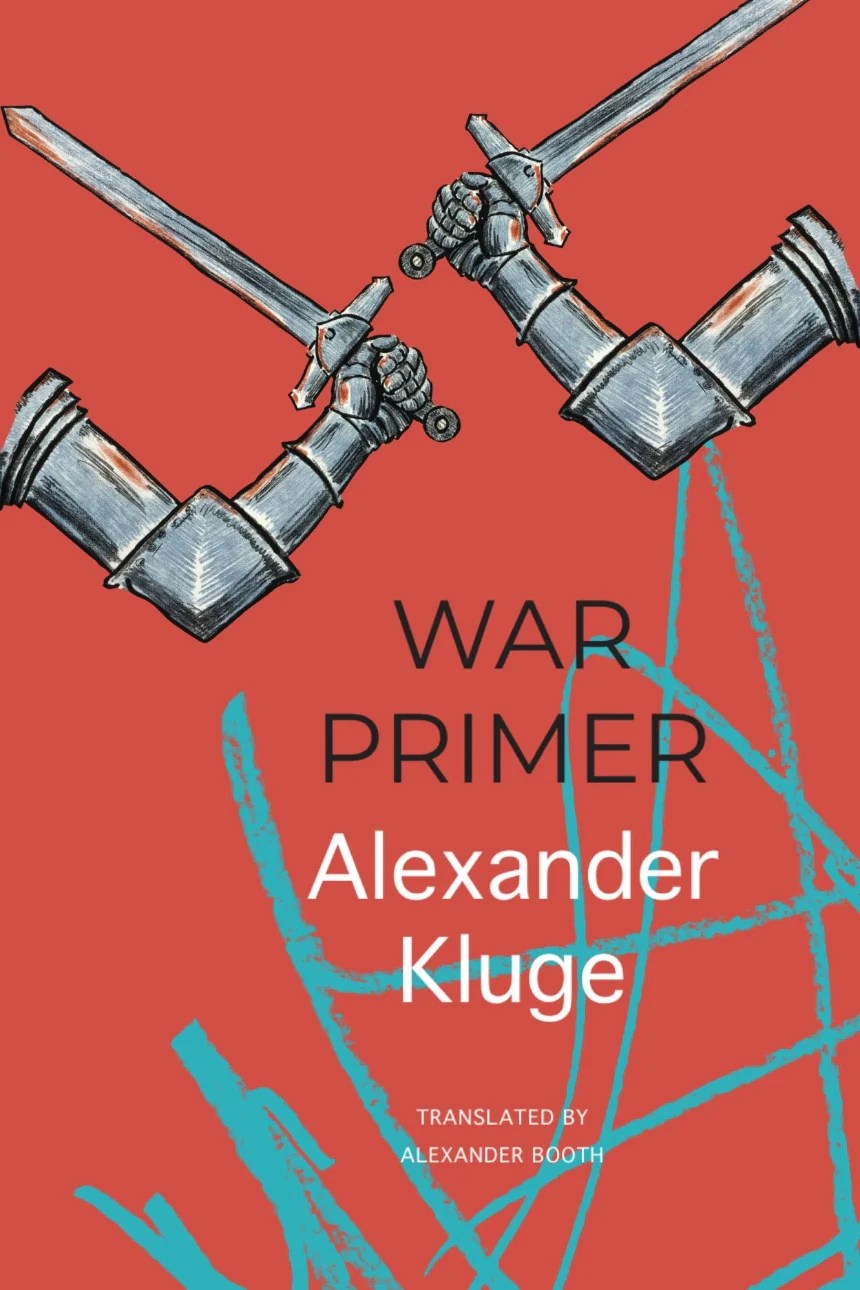
War is back again: War Primer by Alexander Kluge

When I was a pupil, we learnt to read and write with a primer. When war breaks out, Bertolt Brecht said, we have to learn to read and write again.

These words, which come from the acknowledgement at the close of Alexander Kluge’s War Primer, reference both the primer as a short introductory book on a subject or informative piece of writing, and Brecht’s famous War Primer, a series of short poems written in response to images the poet collected while exiled from Nazi Germany during the Second World War. Kluge’s own experience of the war, especially the allied bombing of his hometown of Halberstadt when he was thirteen,  has had a significant influence on his long career as a writer, philosopher, and filmmaker. And again it appears here in this slender volume, but the instigation for this work is Russia’s invasion of Ukraine in 2022—the return of full scale war to Europe. However, his multi-faceted look at  our stubborn propensity for conflict across the western world, is both wide and immediate, and conveyed via brief historical accounts, anecdotes, short stories, and imagined conversations, interspersed with images and film clips.

The book opens with a personal series of reflections. He thinks of his mother, born in 1908, considers how little he and his fellow students understood of the dangers mounting in late 1944, and recalls the last few months of the war and the burning of his hometown on April 8, 1945 (a subject to which he has devoted an entire book). As a boy whose sense of war was much coloured by the exploits of his tin soldiers on imaginary grounds, he could only have a thirteen year-old’s understanding of what the troops he was observing on those final days meant. From today’s perspective—in the case of this volume, his ninety-first birthday in February of 2023—his knowledge is much deeper, broader, and no less troubled.

Although some of the textual and visual material directly references the current conflict in Ukraine, the overall effect here is to create a mosaic of contextual commentary and musings about the nature of war, the military mindset, and the inevitable, often deadly, dance of diplomacy. Kluge’s short pieces approach moments or aspects of the First and Second World Wars, the US Civil War, the invasion of Iraq, and more. He examines the idea and illusions of armour from different angles, zeroes in on specific battles, and dramatizes often hapless discussions about the dynamics of power and peace. This is not a detailed exegesis, it is rather a collection of vignettes. Kluge’s characteristic approach to fiction that holds close to the borders of nonfiction, allows him to incorporate voices from the past in first person or dialogue. Yet, there are no solutions. As we continue to see, war is endlessly reinventing itself, and its small moments of hope always cling to a thread:

TWO SIDES TO A HAPPY ENDING

In the early days of the Ukrainian war, there was a report of a certain number of villagers, including young people and children, holding up a Russian tank. After a period of hesitation, the tank driver put it in reverse and rolled back out of the village.

This is an urban legend. It was already making the rounds during the Hungarian Uprising of 1956. During the 1991 coup in Moscow, the scene actually occurred several times and led to several tank divisions withdrawing from the city. In Beijing’s Tiananmen Square, however, the same kind of confrontation ended in a massacre.

The report in the case of Ukraine emphasized the bravery of the civilians who opposed the tank. But it takes two to tango, as it were, for an encounter to end happily: the determination of the residents, but also that of the young tank driver, perhaps all of 18, who put the tank in reverse.

The images that illustrate this book come primarily from Kluge’s original film montages, along with a few documentary photographs. QR codes link out to cinematic material of varying lengths, typically triptychs of these same images shifting against musical scores, but other material as well. Most are very short and worth viewing. Taken together, text, image, and sound make this very much is a primer for the twenty-first century. One that, sadly, seems to be still be a necessary resource.

War Primer by Alexander Kluge is translated from the German by Alexander Booth and published by Seagull Books.

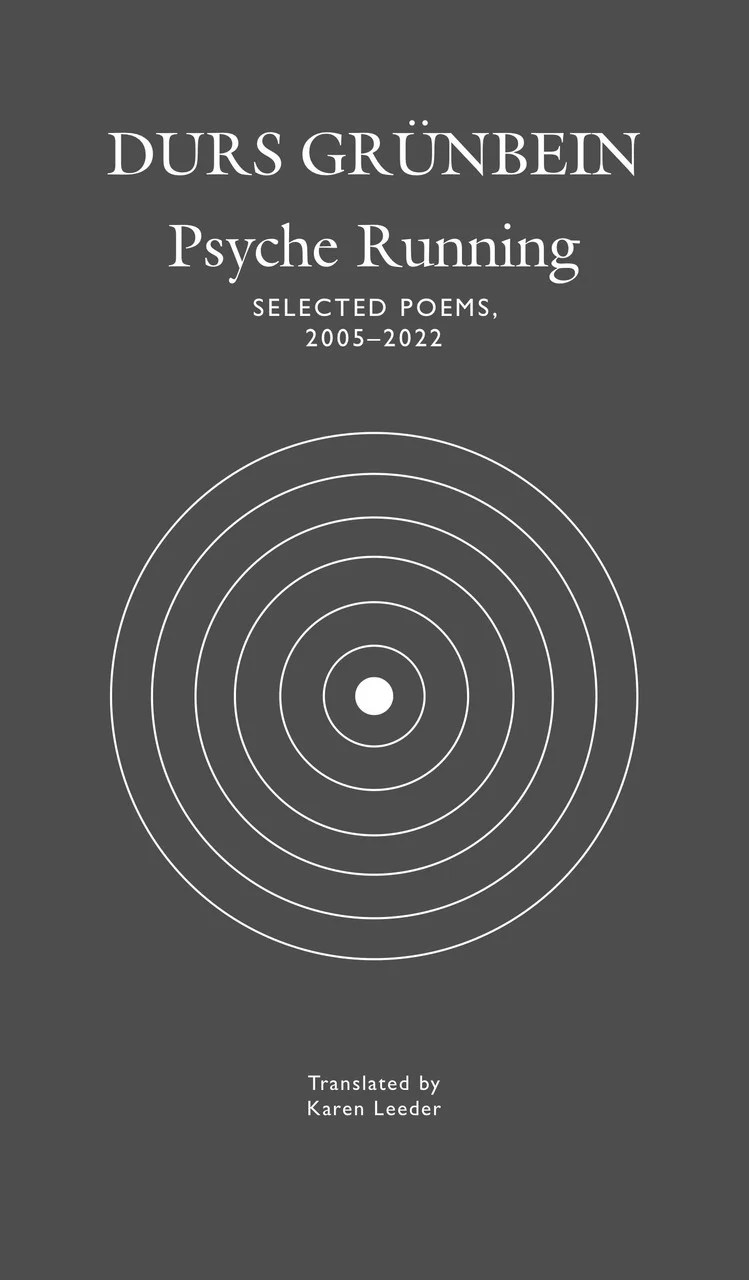
In that strange, that golden light: Psyche Running – Selected Poems, 2005–2022 by Durs Grünbein

And suddenly you saw it, far below
the coast road, after the twelfth curve,
stomach surging from the hair-pin drive.
En route for the south; so we sped on
perched above the drop, windows down.
Sorrento with its villas, its fan palms,
had been swallowed by the plug-hole
of the mirror in a great green swirl.
It hung in the haze, a hulk of bare rock.

The sea dead still. Not a trace of myth,
but for the yachts decked out in chrome
glinting in the sunlight. On a white hull
we made out ‘Nausicaa’ in faded letters.

Infectious energy, shifting, rising and falling. Durs Grünbein is a poet who writes as if regularly navigating the kind of winding roadway described here in “Island without Sirens” from his 2013 collection Colossus in the Mist. This poem, dedicated to Alexander Kluge, which begins with the promise of finding a site with rumoured Homeric association and ends with the view of an island not unlike a mass of barren lunar rock rising out of the water, is a clear reflection of what has made him one of the most important and successful contemporary German poets. Now his most recent release in English translation, Psyche Running: Selected Poems, 2005–2022, has just been shortlisted for the 2025 Griffin Poetry Prize (his second such honour for this prestigious award).

Born in Dresden in 1962, Grünbein moved to Berlin in his twenties to study theatre. Since the fall of the Wall, he has travelled widely and presently he lives in both Berlin and Rome. He has published more than 30 books of poetry, along with translations of classical and contemporary authors, essays, libretti, lectures, and collaborations with artists, composers and filmmakers. His prolific writings cover such a wide scope of literary form and history that he has, as translator Karen Leeder notes in her valuable Introduction, called himself an “unpoet.” Nonetheless, poetry remains central to his work, having won him widespread recognition and a number of major awards. The present collection offers an ample illustration of the breadth and appeal of his poetic vision.

The selections in Psyche Running represent nearly two decades of Grünbein’s output, drawn from ten volumes published beginning in his early forties through to the age sixty. As such, they trace the poet’s growth in mid-life and mid-career, his changes in tone, themes and exploration of form. This collection opens with work drawn from two books published in 2005. Both feature poetry inspired by history, though in very different contexts. Portraits of personalities and scenes from the ancient world figure in The Misanthrope on Capri while his focus turns closer to home with Porcelain: Poem on the Downfall of my City. The latter is a cycle of forty-nine numbered poems, a lament for Dresden, destroyed by Allied bombers in 1945. Yet, even in an elegy, Grünbein’s playful tendencies surface—something that was not necessarily received well by some readers:

Not a rowdy wedding-do. It was The Night of Broken Glass
or, what sharp-tongued folk called: the glazier’s lucky day.
And Ash Wednesday just a hop, skip and jump away.
Fools and Nazis—huzzah!—sure, they had a blast.
What’s that? Innocent? Disgrace came long ago.
Dresden shepherdesses, German bands, where are you now?

–  from “4”/ Porcelain

Twenty-four of the short poems from this sequence are included in this collection, but the complete work, with photographs and one additional poem, has been published as a separate volume, also translated by Karen Leeder and published by Seagull Books. My own review can be found here.

2007’s Verses for the Day After Tomorrow marks a turn to a more personal focus, exploring  themes of memory and human experience, then, after Grünbein began to spend more and more time in Italy, another shift occurs. With Aroma: A Roman Sketchbook (2010) and Colossus in the Mist (2013) classical elements appear, as do poems that draw direct inspiration from Rome and its environs. In a number of the pieces selected from these two works he demonstrates a wonderful sensitivity to the natural world, as in “Island without Sirens,” quoted above, and this magical evocation of a murmuration of starlings moving through the evening skies above Rome in “Aroma XLIX (Starling Swarms)”

How one envied them their nose dives, swooping down on
     gravel lanes,
or taking in Rome from a bird’s-eye view, conqueror style.
In fact, they only wanted a little urban updraft to be transformed
into currents and reflections, as their aureoles appeared
.     before
the rosé of the cloud-shading, in a sky painted by Turner.
It was a dance of veils, a stunt performed by thousands of
     points in synch:
something like the sound of bells, visible in silhouette above
    the domes.

The influence of  thinkers, ideas, and science on Grünbein’s poetic instincts takes centre stage in the next section, the first published translations from 2014’s Cyrano; or, Returning from the Moon. Each piece in this cycle of eighty-four poems, inspired by Cyrano de Bergerac, “takes its cue from a moon crater” Leeder tells us, “and pays homage to a thinker or philosopher known for their study of the moon.” The poems presented here were selected by the author and I, for one, would love to be able to read this inventive work in full. The mood changes once again with the next selection, the long poem “The Doctrine of Photography” from The Zoo Years: A Kaleidoscope (2015). Presented alongside postcards of prewar Dresden from Grünbein’s personal collection, this piece imagines into being scenes from daily life in the community as darker times close in:

Another spring. Imperial gardens on display:
for six months the magic of flowers
serves to ease the effects of the new
constraints, the new laws.
A hymn to existence, a scared hymn
to the beauty of nature around us,
the newspapers swoon in the
grandiose style of the times.
More powerful than any Olympiad,
closer to a feminine aesthetic sense,
like Hitler’s hands, eunuch-white.

A strong selection of poems have been chosen to represent the final two volumes collected in Psyche Running. Sparkplugs (2017) and Equidistance (published in 2022, marking the poet’s sixtieth birthday) build on imagery, sometimes dreamlike, drawn from science, nature, and everyday life to explore more introspective or existential themes that reflect an increasing awareness of aging and remembrance:

Do I know how many summers we have?
Whether we will recognize them as they were,
these  outdoor scenes, where we
slipped quietly past each other like angelfish
in that strange, that golden light?

I only know the day that keeps what
will happen next hidden behind glass.
Things grow more distant, swim up close,
in the film light. And the projector is me.

–  from “The Projector” / Sparkplugs

Altogether, this generous sampling of Grünbein’s poetic work over the better part of the last twenty years, fills in a long overlooked gap—Porcelain notwithstanding—in the availability of his poetry for an English language audience going back to Michael Hofman’s  2005 translation of a selection of poems from his first four collections, Ashes for Breakfast. Karen Leeder, who in addition to Porcelain also translated Grunbein’s Oxford lectures, For the Dying Calves (Seagull, 2022), has come to know the poet well over the years and has a deep affinity for his wry, vibrant spirit. Her informative Introduction and detailed notes provide an overview of the collection, her approach to this translation, and added detail, as required. Although he frequently draws on historical, philosophical, literary, and scientific sources, there is, in Grünbein’s perceptive, witty, and engaging verse, an irresistible quality that naturally invites a closer read. This volume, then, is not only an important addition to his available writing in English translation, but a wide ranging and vital introduction for anyone new to his work.

Psyche Running: Selected Poems, 2005–2022 by Durs Grünbein is translated from the German by Karen Leeder and published by Seagull Books.

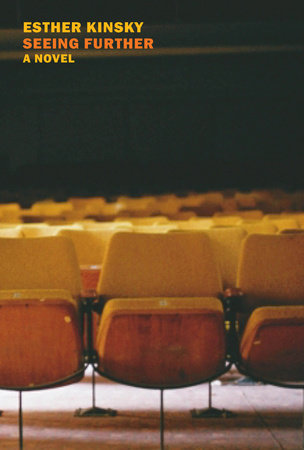
Look closely, wait: Seeing Further by Esther Kinsky

Early in her latest novel, Seeing Further, German writer Esther Kinsky sets out the parameters for the narrative ahead, for the story she intends to tell, the theme she wishes to explore:

There are two aspects of seeing: what you see and how you see it. This investigation into seeing further will involve only the question how. It pertains to the place that the viewer takes. It concerns point of view and remove from things and images, from the action, proximity and distance, vastness.

She, or rather her narrator, goes on to discuss this aspect of seeing, especially in relation to the cinema, but also with respect to other means of framing what we can view—windows, binoculars, open vistas—but it is the shared experience of the cinema that holds special attraction for her. This fondness began in childhood and has accompanied her throughout her various travels and relocations over the years, even as she acknowledges that it is competing with the convenience and privacy of smaller personal screens. But, of course, this is Esther Kinsky, and if the cinema is a space ideal for an examination of the how of seeing, her strong sense of place, sensitivity to natural or manmade landscapes, and generous appreciation of unique individuals also allow for perceptive descriptions of what her protagonist sees around her and the people she meets.

The narrator is living in Budapest when she comes across an abandoned cinema that seems to present her with an irresistible opportunity in a village in the open flatlands of southeastern Hungary known as the Alföld.  She had set out on a weekend adventure with the intention of taking photographs, but found herself confronted with a landscape that defied the camera’s frame. A vastness that presented a certain unphotogenic emptiness. She finds a place to spend the night while a storm rages outside. The next morning, uncertain where she is, she to explore the small town in which she has awoken. It is a Sunday:

A few cyclists, most of them women, rolled quietly past and then turned around to face me and stared, which nevertheless did not upset their equilibrium; unperturbed they proceeded onwards, skilfully balancing on their shoulders or the handlebars of their bicycles their hoes, rakes and spades. I felt foreign under their gaze, cut free from all contexts of familiarity and belonging. A strange sensation, yet it pleased me.

In this strange community she is aware of a sense of having seen similar scenes before. A sort of memory or images called from the past—perhaps somewhere in the Po Basin area of Italy, perhaps in a book or a film. And then she finds the old cinema building. A relic of a time gone by, now standing forgotten: “A splendid cinema in a no-man’s land of possibilities.”

Back in Budapest, a city with a wealth of cinemas, she becomes absorbed in thoughts of the magic of film, and before long she is back in what she refers to as the mozi village, mozi being the Hungarian word for cinema. She walks back and forth in front of the abandoned building until someone inevitably stops and asks if she needs help. She tells him she would like to see the cinema and he asks if she wants to buy it. With little hesitation she responds that, yes, perhaps she would like to buy it.

This is, then, the story of one woman’s dream of reopening a cinema and rekindling an interest in the forgotten joy of gathering together to share the experience of watching a film, engaging the act of seeing further. Jószi, the cinema’s former projectionist turned bicycle mechanic gets caught up in her enthusiasm and becomes her accomplice. She devotes herself to getting the building cleaned, repaired, painted and ready for its revival. Parts are sourced for the projectors. It’s a slow process, one that involves her eventual relocation from Budapest to the village. An interlude tracing the life of the mozi village’s original projectionist and the founder of the larger, now disused cinema, serves as a history of film in the region, from the early days of silent films as a travelling attraction carried from village to village and projected in tents, to the introduction of talkies, the impact of the Great Depression, and the eventual expansion of cinemas from the cities into smaller towns where they became vital venues for community entertainment. But times have changed. And so have people.

There were no spectacles to help me decipher it all, but I could see, observe, look closely, wait. Wait and see. Yet I still had faint doubts about whether this cinema would ever again be a space where one could sit, look closely, see, wait and see, in order to learn something about what once took place here between the screen and the gaze. The consensus today was that everyone came from far away, from a world unaccustomed to the cinema gaze, all of them projectionists at their own private screens, who chose the cinema as an exception, who were accustomed to seeing in their own private space, alone or with a few trusted fellow viewers. The cinema was always a place to which you brought your own solitude, but it used to be that you did so knowing you would take your place among other solitary people; you travelled to the cinema, hungry for film, and left sated, brushing against the outside world along the way.

Slow moving and inevitably Sebaldian, with many original black white photographs, this is a work that combines the narrator’s love of the cinema and appreciation of the possibilities that watching a film with others on a large screen offers, with a fictionalized account of the birth, death and attempted resurrection of a small town cinema. Kinsky’s work is often called autofiction and although there is always a strong sense of place, landscape, and experience running through her narratives, it is not wise to conflate the author with her narrators. The setting of this work, the endless plains of eastern Hungary is familiar. Her more conventional first novel Summer Resort is set there, so Kinsky is no doubt drawing on a real-life sojourn in this region, perhaps in the mid-2000s, and an actual cinema project of some sort (as the photographs attest), but as ever, very little of the narrator’s (and by extension the author’s) personal background or history is revealed beyond a few childhood reflections. Why is she in Hungary? What does she do for a living? Kinsky’s narrators tend to shadow her own life, but clear boundaries are invariably retained. Autofiction, on the other hand, tends to be a much more self-focused, sometimes even self-obsessed medium. It is Kinsky’s ability to focus on her attention on familiar emotions—leaving, grief, loss, nostalgia—within a richly detailed landscape while maintaining a measured invisibility that makes her narrators and her novels so intriguing.

Seeing Further by Esther Kinsky is translated by Caroline Schmidt and published by New York Review Books in North America and Fitzcarraldo in the UK.

Looking back at a year of reading: 2024 edition

Each year when I review the list of books that I have read, I face the same challenge deciding what to include and what to leave out of a final accounting. As usual there are the books that I know, even as I am reading them, will be among my favourites for the year. Just as I know the ones I don’t like, the ones I won’t even mention or take the time to review. Basically, everything else that I have reviewed, was a good book.

This year, my count far exceeds a respectable “top ten” or “baker’s dozen” and there are some striking factors at play. One is that the ongoing  violence in Gaza has heightened my focus on Palestinian and Arabic language literature—long an area of interest and concern. Five of the Palestinian themed books I read made my year end list. As well, I have paired several titles, typically by the same author or otherwise connected, because the reading of one inspired and was enhanced by the reading of the other (not to mention that such pairings allow me to expand my list). Finally, as reflected by my top books, I read and loved more longer works of fiction this year than usual (for me). No 1000 page tomes yet, but perhaps I’m overcoming some of my long book anxiety.

And so on to the books.

Poetry:
I read far more poetry than I review, but this year I wanted to call attention to four titles.

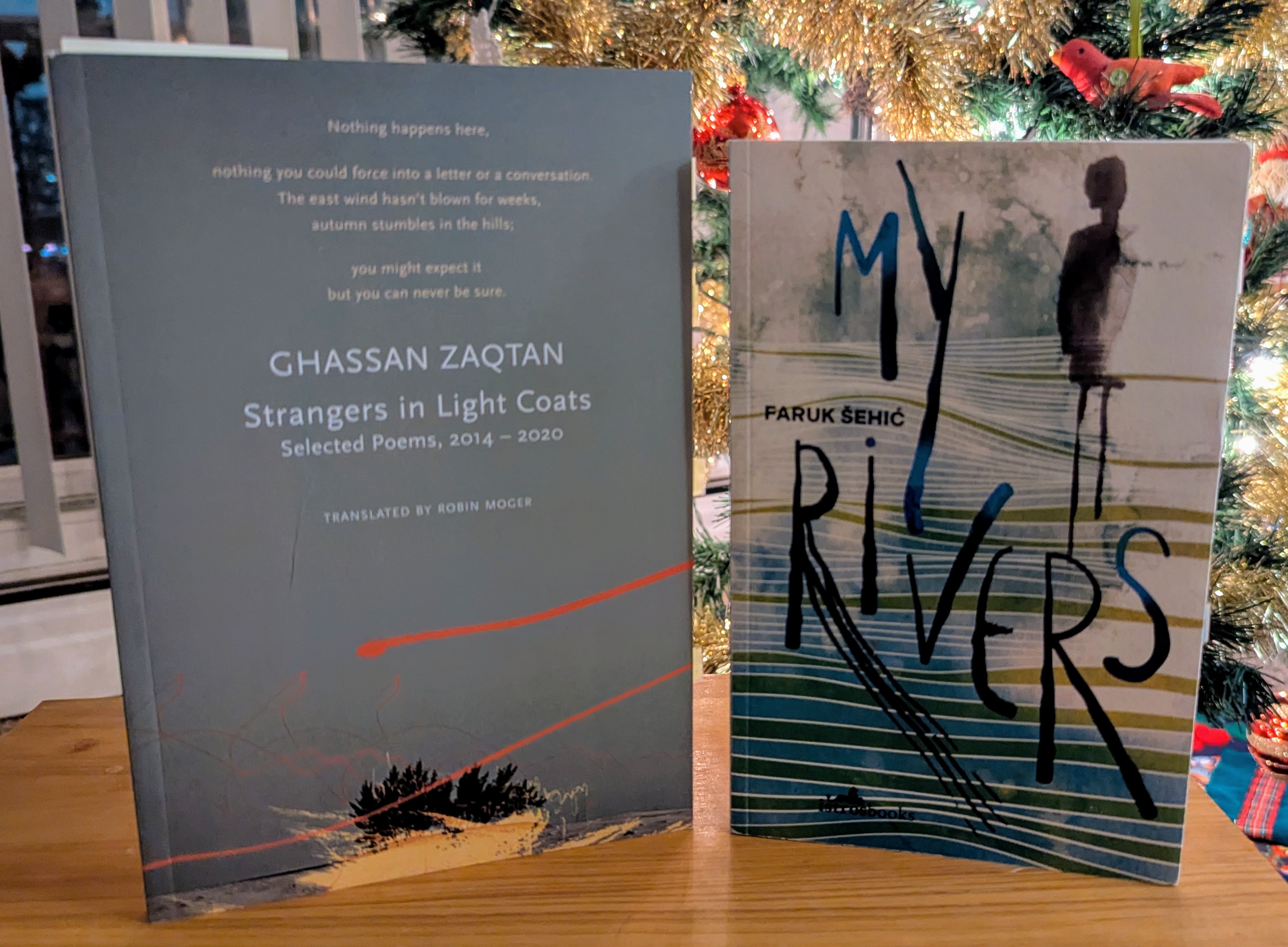
Strangers in Light Coatsevokes by Palestinian poet Ghassan Zaqtan (Arabic, translated by Robin Moger/Seagull Books) is, perhaps, a darker than his earlier collections. Comprised as it is, of poems from recent releases, it actively portrays a world shaped by the reality of decades of occupation and war.

My Rivers by Faruk Šehić (Bosnian, translated by S.D. Curtis/Istros Books) is a collection particularly powerful for its depiction of a legacy of wars in Bosnia/Herzegovina including the genocide in Srebrenica. His speakers carry the burden of history.

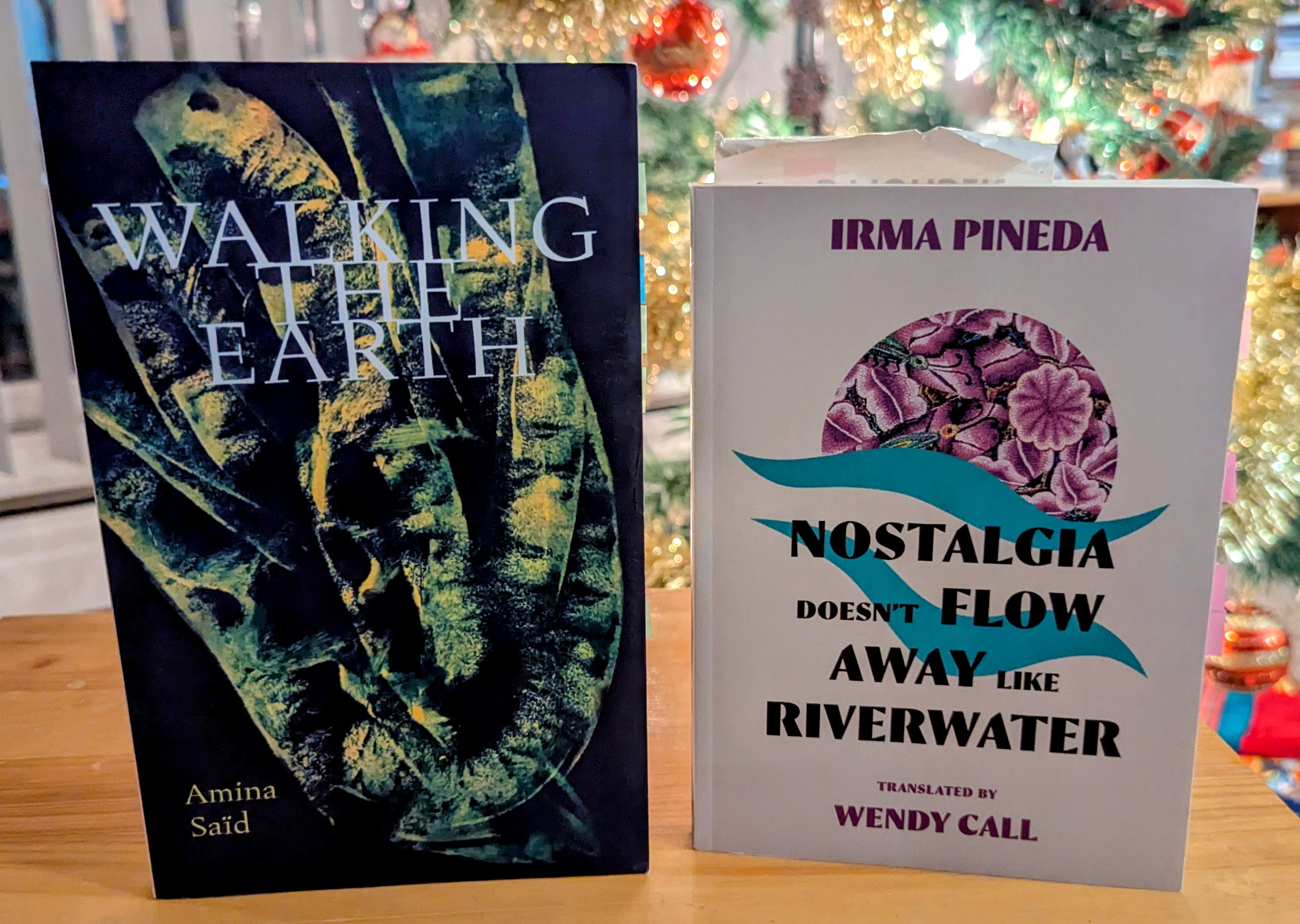
Walking the Earth by Tunisian-French poet Amina Saïd (French, translated by Peter Thompson/Contra Mundum) is such a haunting work of primal beauty that I can’t understand why more of her poetry has not been published in English. Perhaps that will change.

Nostalgia Doesn’t Flow Away Like Rainwater by Irma Pineda is one of a number of small Latin American poetry collection from poets and communities that have not been published in English before. This book, a trilingual collection in Didxazá (Isthmus Zapotec) and Spanish with English translations by Wendy Call (Deep Vellum & Phoneme Media) was particularly special.


Nonfiction:
This year, my favourites include a mix of memoir and essay and a couple of works that defy simple classification.

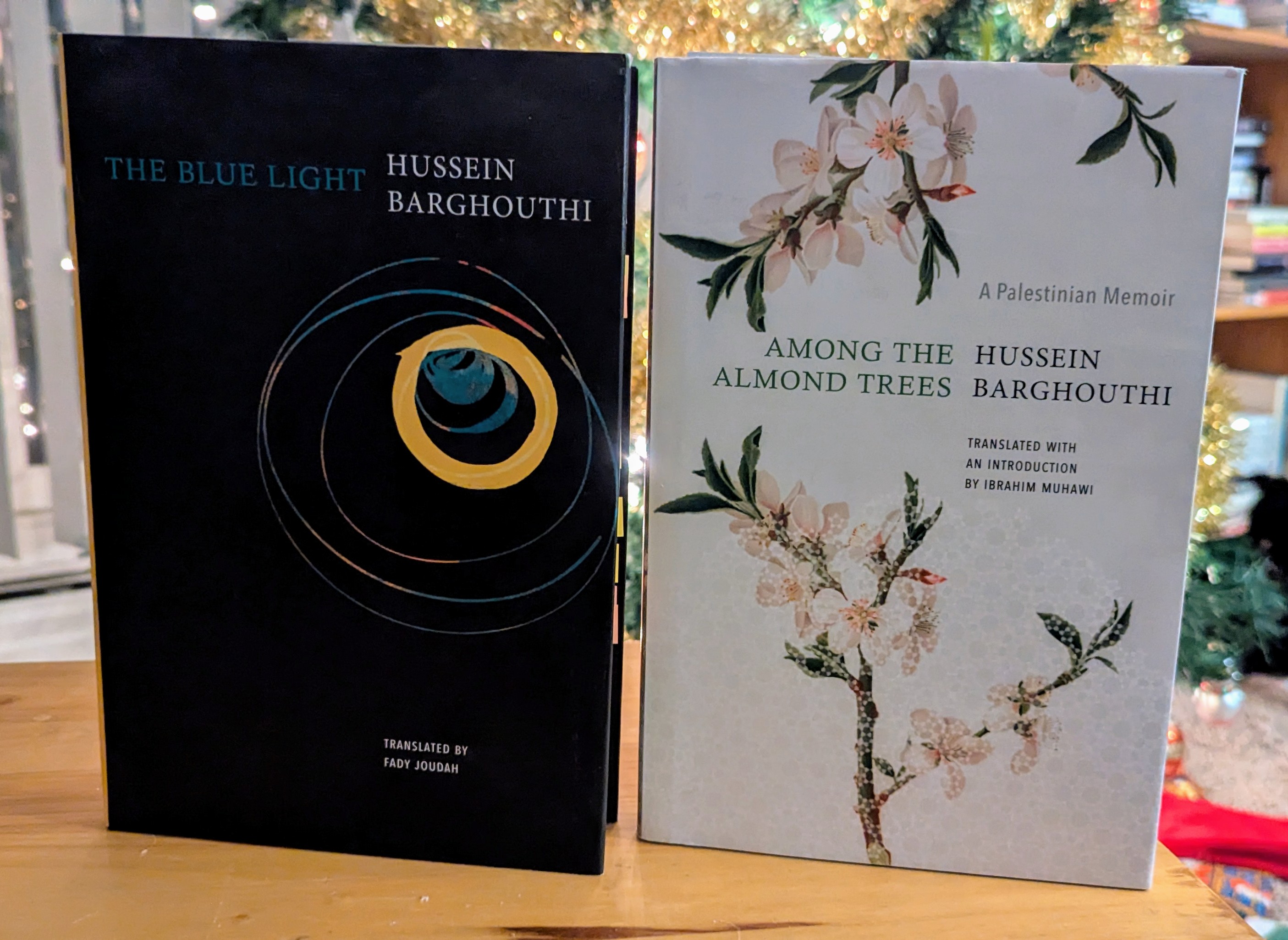
The Blue Light / Among the Almond Trees by Palestinian writer Hussein Barghouthi (Arabic, translated by Fady Joudah and Ibrahim Muhawi respectively/Seagull). Blue Light chronicles Barghouthi’s years in Seattle as a grad student and the eccentric circles he travelled in, whereas Among the Almond Trees is a much more sombre work written when he knew he was dying of cancer. The two books complement each other beautifully.

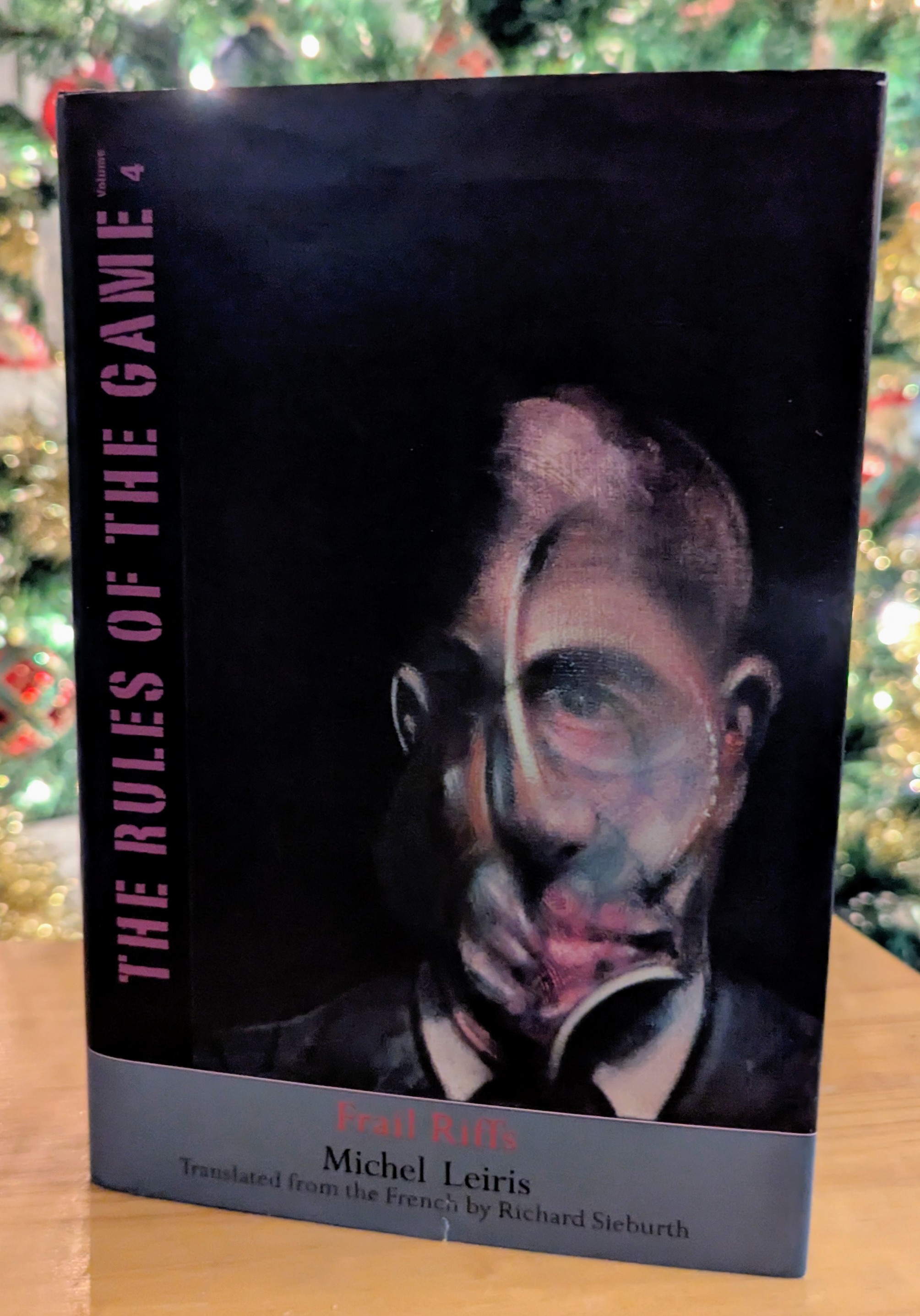
French intellectual, critic, ethnographer and autobiographical essayist Michel Leiris is a writer who means so much to me that the occasion of the release of Frail Riffs (Yale University), the fourth and final volume of his Rules of the Game in Richard Sieburth‘s translation, was not only an excuse to pitch a review but an invitation to revisit the earlier volumes. Definitely a highlight.

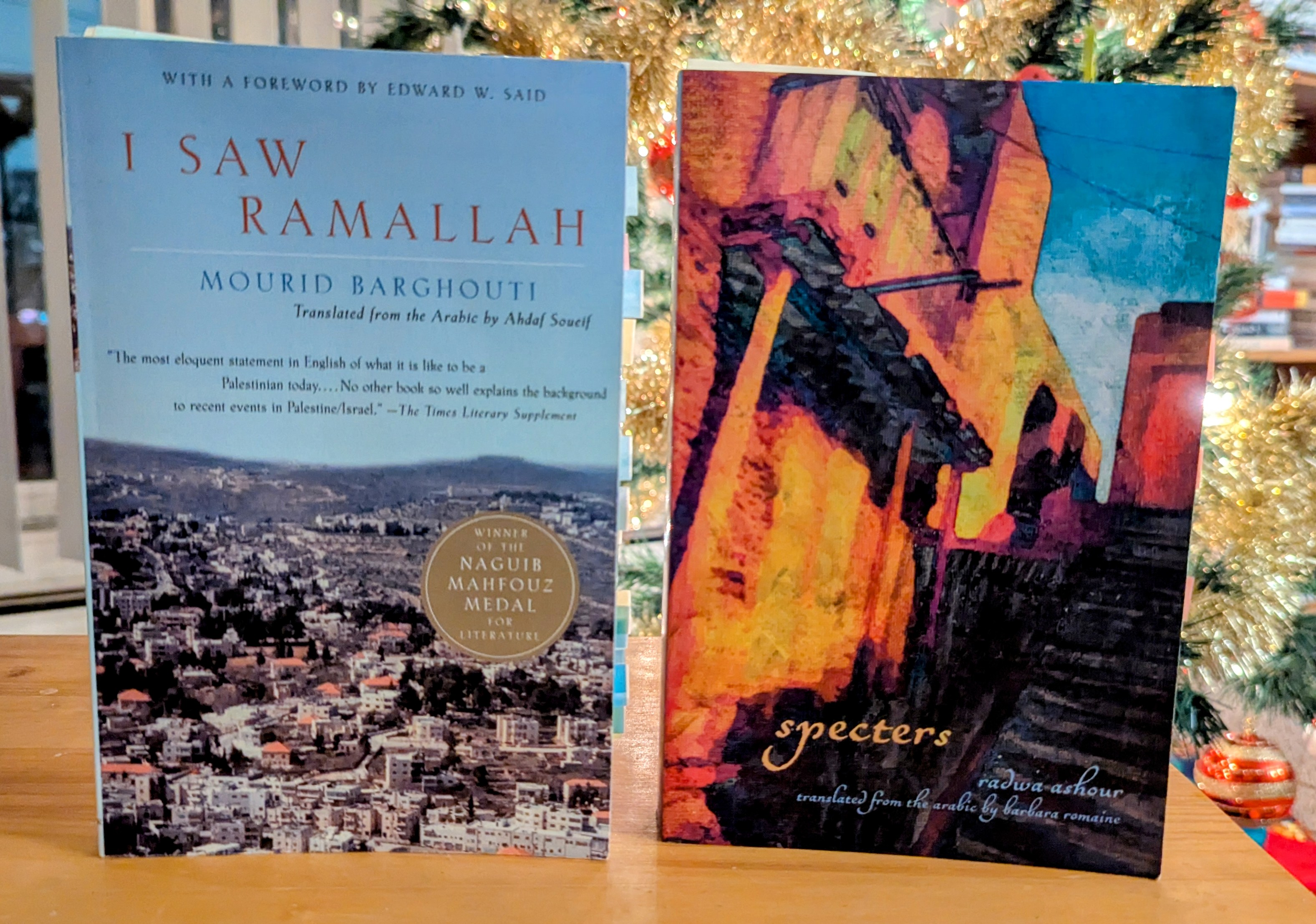
I Saw Ramallah by Mourid Barghouti (Palestinian/Arabic, translated by Ahdaf Soueif/Anchor Books) is a moving memoir detailing the author’s return to his homeland after thirty years of exile. Reading it reminded me that I had a copy of Scepters by his wife, Egyptian novelist Radwa Ashour (Arabic, translated by Barbara Romaine/Interlink Books). This ambitious work blends fiction, history, memoir, and metafiction and I absolutely loved it, but my decision to include it here, like this, rests on the memoir element which complements her husband’s in its account of the many years he was exiled from Egypt—a double exile for him—especially the years in which she travelled back and forth with their young son to visit him while he was living in Hungary.

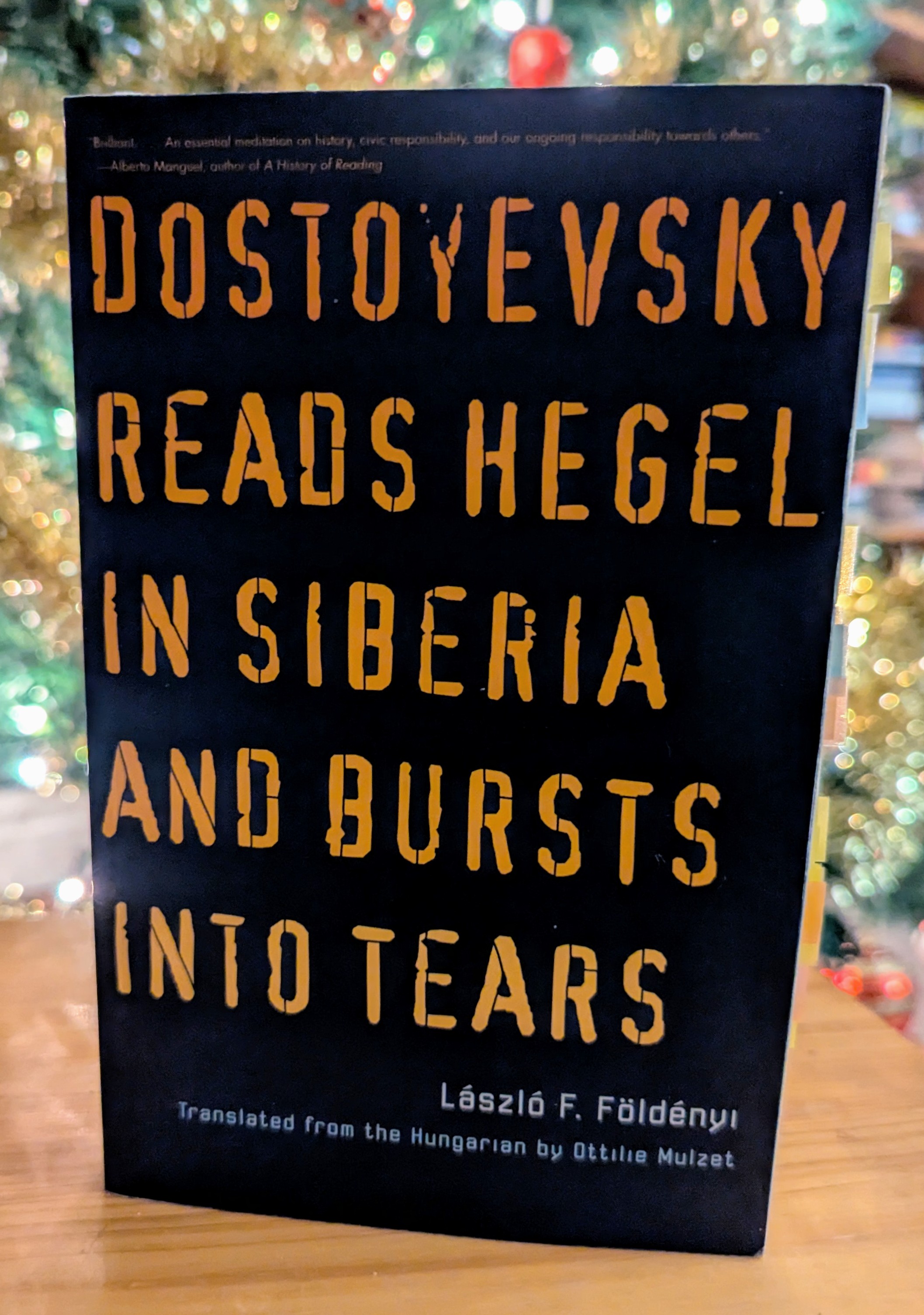
Candidate for the book with the best title, perhaps ever, Dostoyevsky Reads Hegel in Siberia and Bursts into Tears by Hungarian scholar  László Földényi (translated by Ottilie Mulzet/Yale University) was an endlessly fascinating collection of essays exploring the relationship between darkness and light (and similar dichotomies) through the ideas of a variety of writers, thinkers and artists.


Fiction:
As usual, fiction comprised the largest component of my reading and, as I’ve said, I read more relatively longer works than in the past. Normally I have a special fondness for the very spare novella and, of course, my list would not be complete without a few shorter works, including one more pair.

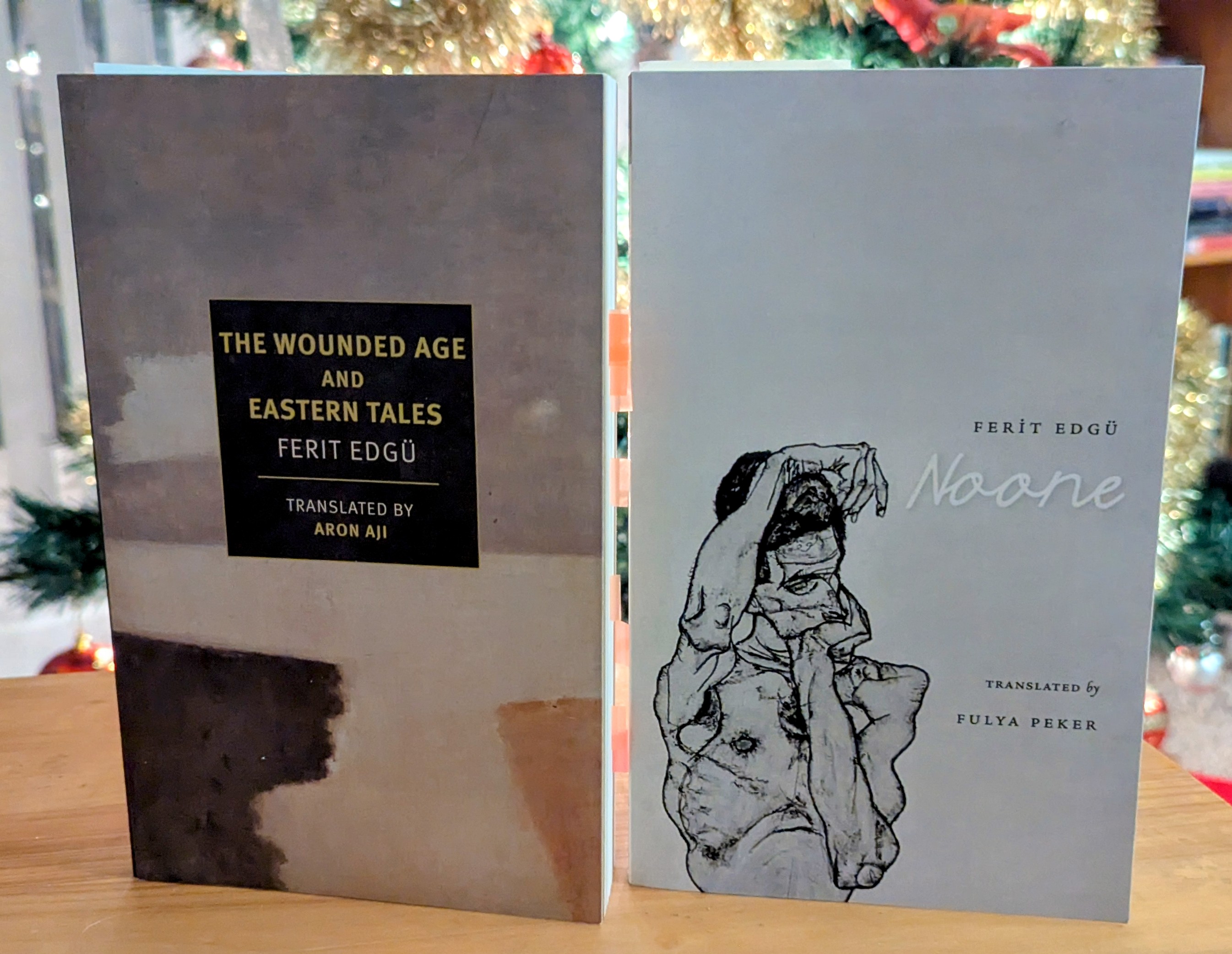
The Wounded Age and Eastern Tales  / Noone by Turkish writer Ferit Edgü—translated by Aron Aji (NYRB Classics) and Fulya Peker Cotra Mundum) respectively—who is sadly one of the writers we lost this year. His work, which draws on the time he spent teaching in the impoverished southeastern region of Turkey in lieu of military service, is filled with great compassion for the people of this troubled area. But his prose is stripped clean, bare, and remarkably powerful.

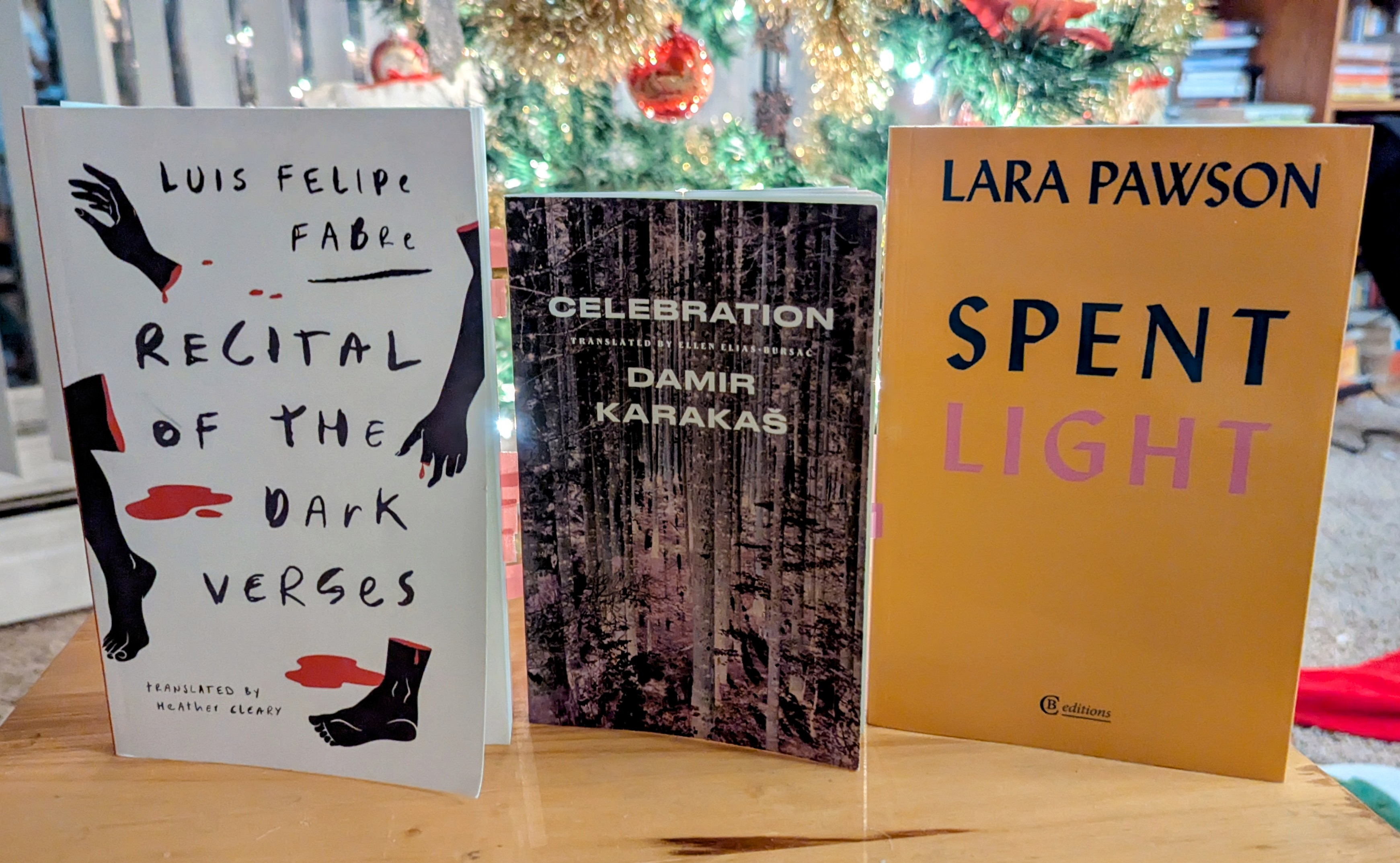
Recital of the Dark Verses by Luis Felipe Fabre (Mexico/Spanish, translated by Heather Cleary/Deep Vellum) is an award wining translation that seems to have garnered less attention than it deserves. This comic Golden Age road trip follows the misadventures of the body of John of the Cross on its clandestine voyage to Seville. Brilliant.

Celebration by Damir Karakaš (Croatian, translated by Ellen Elias-Bursać/ Two Lines Press) is an exceptionally spare, unsentimental novella about the historical forces that pulled the residents of Lika in central Croatia into World War II.

Spent Light by Lara Pawson (CB Editions) is a book I’d been anticipating since reading her This Is the Place to Be. Strange, at times disturbing, often hilarious and always thoughtful, this is one of those books that (thankfully) defies description.

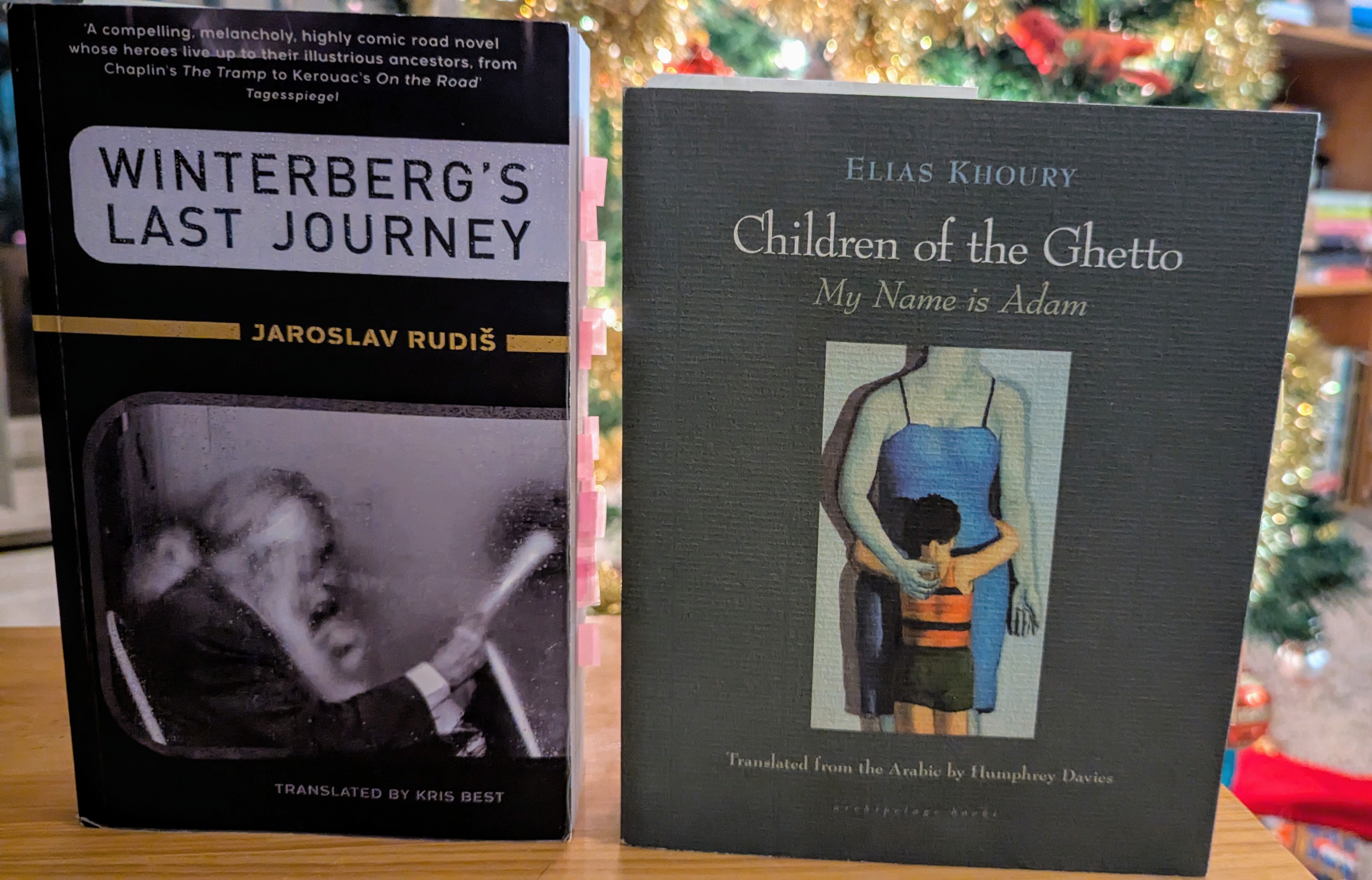
If Celebration is historical fiction at its most spare, Winterberg’s Last Journey by Czech writer Jaroslav Rudiš (German, translated by Kris Best/Jantar Publishing) is the exact opposite. Ambitious, eccentric, and filled with detail, it follows a 99 year-old man and his male nurse as they travel the railways with the aid of 1913 railway guide. What could possibly go wrong?

Children of the Ghetto I: My Name is Adam by Lebanese author Elias Khoury who also died this year (translated by Humphrey Davies/Archipelago Books) is the final Palestinian themed work on my list. This is a challenging and rewarding novel about a man born in the ghetto of Lydda during the Nakba that examines complex questions of identity.

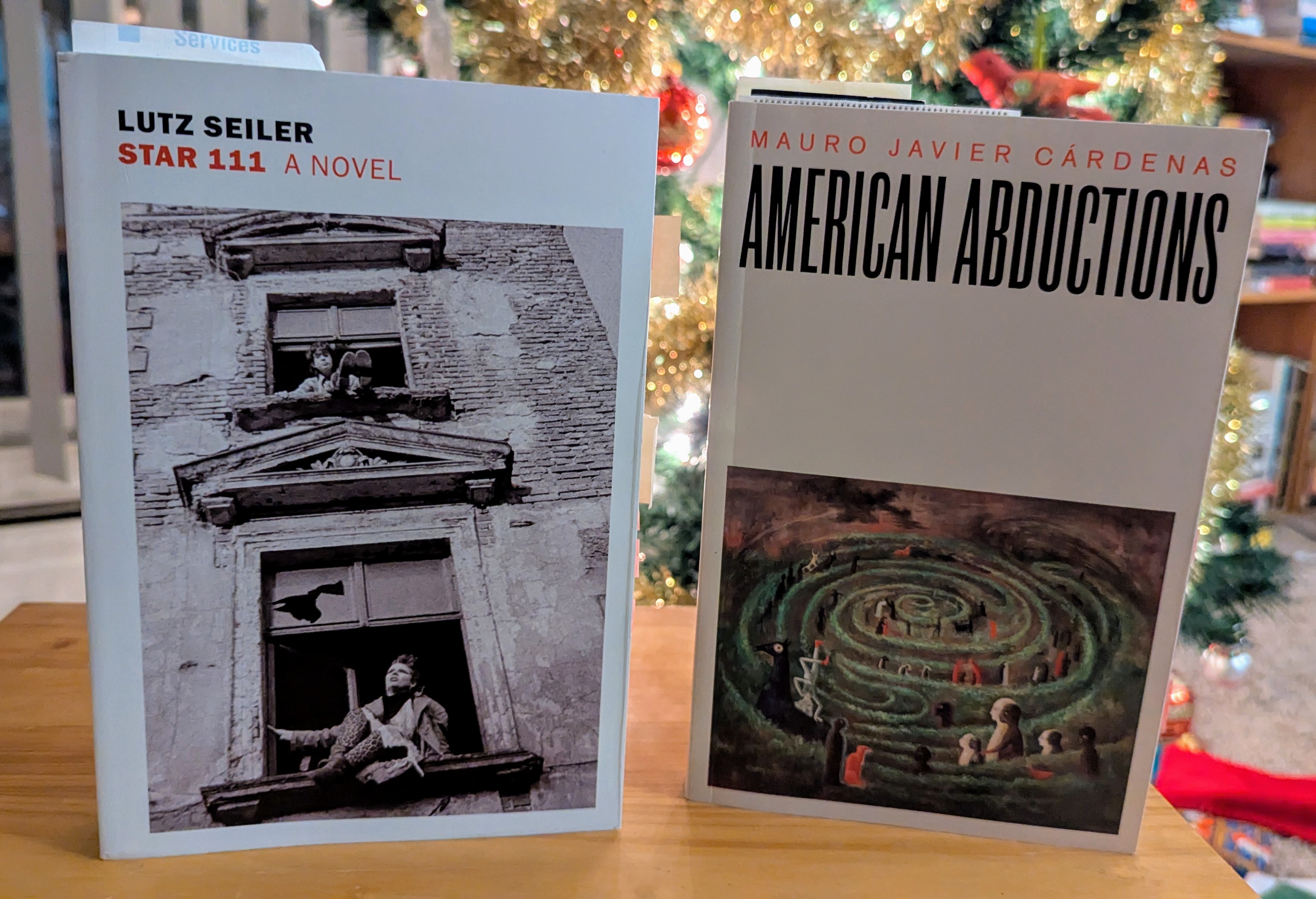
Star 111 by Lutz Seiler (German, translated by Tess Lewis/NYRB Imprints)is the autobiographically inspired story of a young East German would-be poet’s experiences among an eccentric group of idealists in Berlin in the immediate aftermath of the fall of the Wall. I was familiar with Seiler’s poetry before reading this, but I liked this novel so much that it lead me to follow up with his essays and the work of other poets important to him—the best kind of expanding reading experience.

Mauro Javier Cárdenas’ third novel American Abductions (Dalkey Archive) imagines the latest iteration of his hero Antonio in a future in which Latin American migrants are systematically sought out, separated from the children and deported. With a stream of single sentence chapters, he creates a tale that is both fun and uncomfortably too close for comfort. Quite an achievement!

Last but not least, my two favourite books this year are Hungarian:

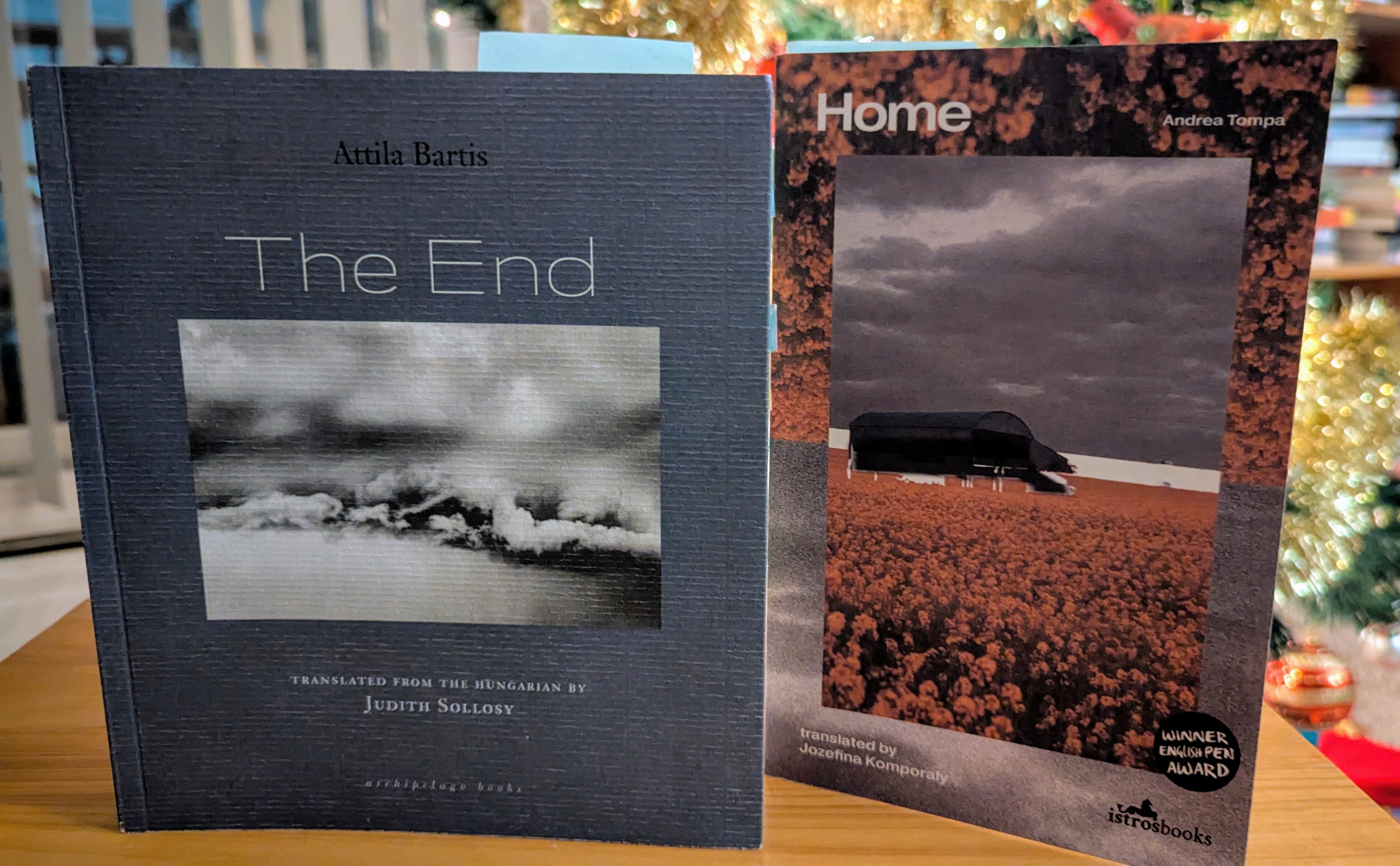
In The End by Attila Bartis (translated by Judith Sollosy/Archipelago Books), a fifty-two year old photographer looks back on his life—his successes and his failures. He reflects on his relationship with his mother, his move to Budapest with his father in the early 1960s following her death, life under Communism and the secrets held by those around him, and the role the camera played in his life. Presented in short chapters, like photographs in prose each with its “punctum,” the 600+ pages of this book just fly by.

Like Attila Bartis, Andrea Tompa also comes from the ethnically Hungarian community of Romania’s Transylvania region and now lives in Budapest. Her novel Home (translated by Jozefina Komporaly/Istros Books) follows a woman travelling to a school reunion, but it is much more. It is a novel about language, about what it means to belong, to have a home and a mother tongue. It’s probably not surprising that my two favourite novels involve protagonists in mid-life, looking at where they are and how they got there. As to why they’re both Hungarian—I suppose I’ll have to read more Hungarian literature in the new year to answer that.

So that is my 2024 wrap up. I’d like to think 2025 will be better than I fear it will, but at least I know there are countless good books to look forward to.

Happy New Year!

The only possible way: from In Case of Loss to Pitch & Glint by Lutz Seiler (and much more)

Some writers pass through your reading life and move on, perhaps appearing by chance now and then over the years, others ignite a clear desire to read more, if not all, that you can get hold of. That might be a small library of volumes to collect, but for those of us drawn to writers in translation—writers we often discover as a direct result of following a known or trusted translator—it can mean watching and waiting for more work to slowly emerge in English.

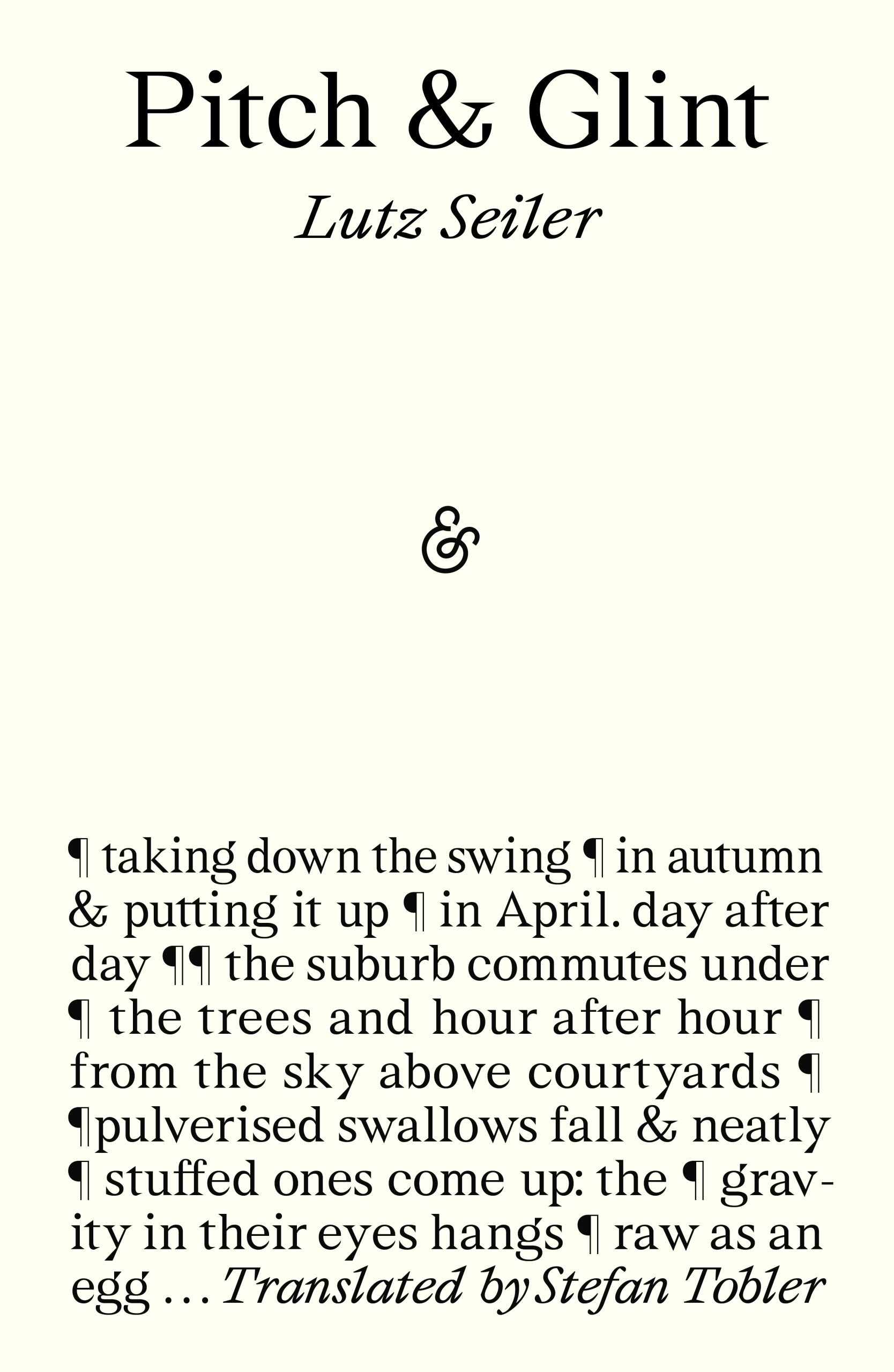
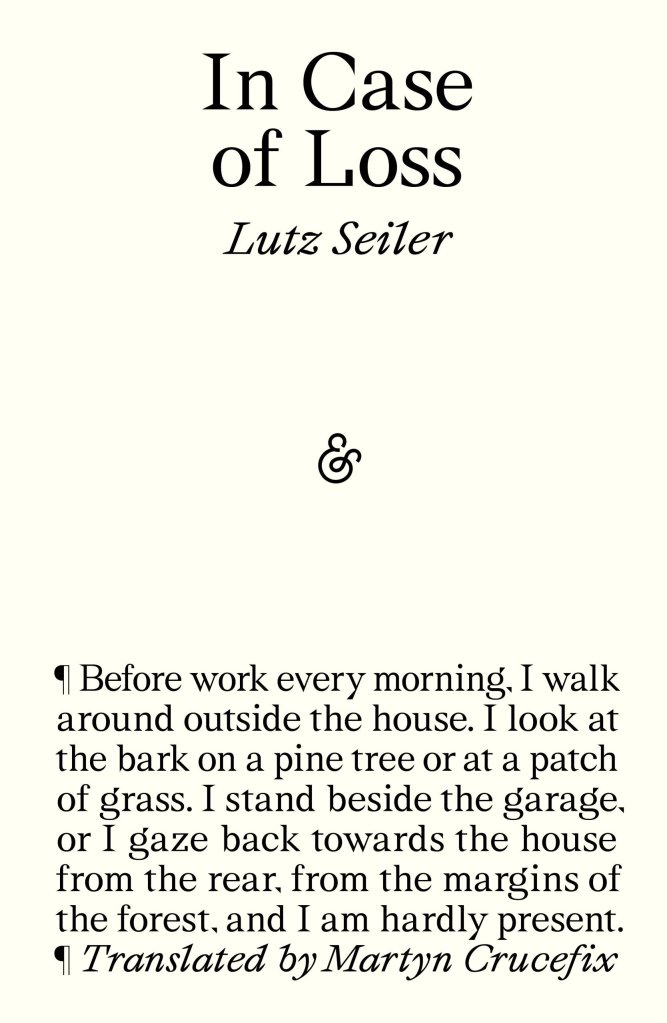
For me, one such writer is German poet, essayist and novelist Lutz Seiler. I first encountered his poetry about two and half years ago through Alexander Booth’s translation of his 2010 collection in field latin. At the time, the only other title available was his first novel Kruso which was, when I first checked, out of stock. Yet, when UK publisher And Other Stories announced they would be publishing Seiler’s debut poetry collection, Pitch & Glint, his second novel, Star 111, and a collection of essays, In Case of Loss, in late 2023, I took note. Then, when I had the opportunity to read Star 111 this year in advance of its North American release from NYRB in October, I quickly set about acquiring his other work. And, as these things go, while reading the poetry and the essays, I was inspired to add work by two of the poets Seiler writes about or honours—but more about that later.
Born in the Thuringia region of the GDR in 1963, Seiler’s poetry is rooted in the rural landscape of his childhood, scarred by years of uranium mining, sensitive to place and relationship to family, as child and as a parent. However, unlike many writers, he had no interest in books or literature when he himself was young. He did not start reading poetry until he was completing his mandatory military service in his early twenties, having already trained as a bricklayer and carpenter. He was certainly not writing, not even jotting the odd observation down, but something was brewing. As he says in his essay “Aurora: An Attempt to Answer the Question ‘Where is the Poem Going Today?’”:

Yet a good ten years later, I wrote poems that had been, in that earlier period, when poetry did not feature in my life, gathering and storing their subject matter, their materials. Doubly hidden from me at the time, clearly the poems had been, even then, making their way towards me. What is different these days is that I have become more conscious of the signs of a poem being on its way. I am aware of what situations, materials and substances it might respond to, what it is likely to ingest—for later use.

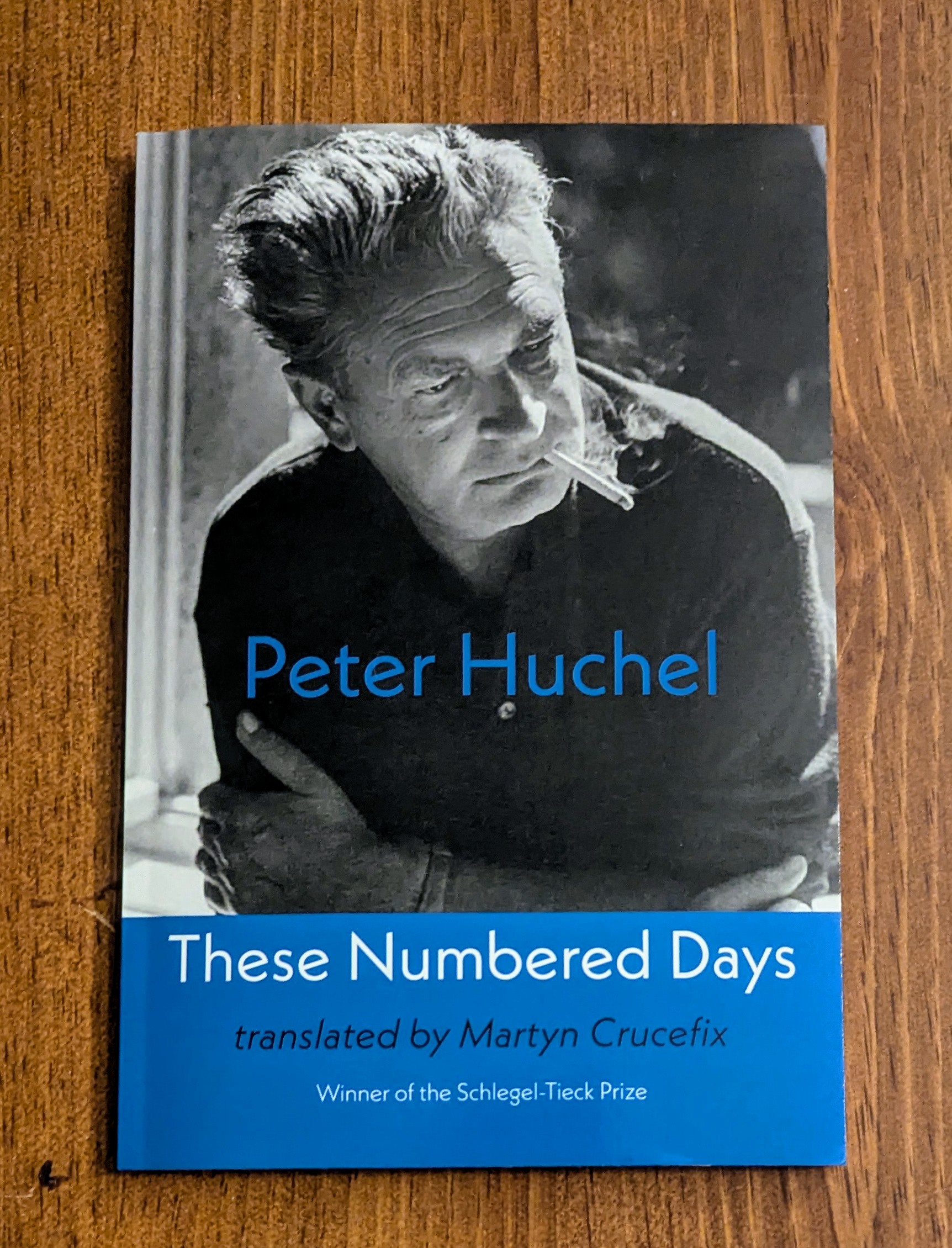
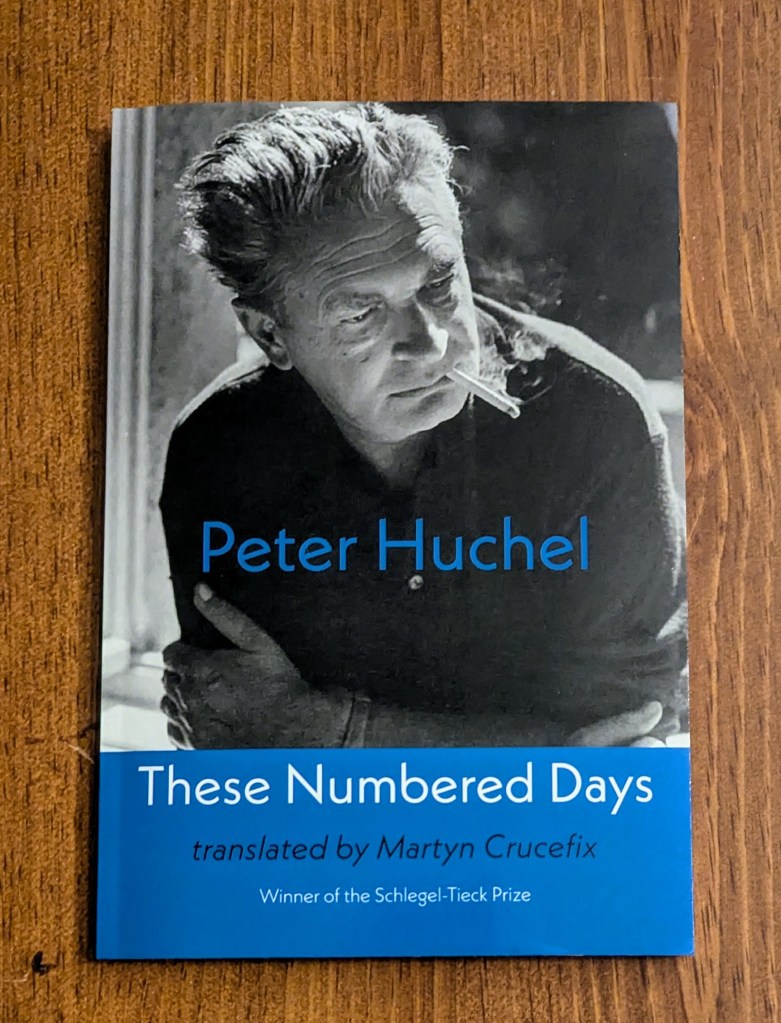
For a poet who came to literature somewhat unexpectedly, Seiler’s writing about writing, and about the poetic art and process is excellent, presumably of interest to other poets, but also, and perhaps more critically, for those of us who enjoy poetry but sometimes feel inadequate to examine a poem without a strong literary vocabulary and the requisite coursework (assumed to be) required to read and write it. In Case of Loss contains several essays about the work of other poets. One, Peter Huchel (1903–1981), was new to me. I was aware that Seiler is the custodian of the Huchel House in Wilhelmhorst near Berlin, but knew nothing of Huchel himself, one of the most an important German poets of the post-war era who ended up running afoul of the government of the GDR and was eventually allowed to migrate to the West. The title essay is an account of Seiler’s first impressions of the house itself after breaking in with Huchel’s widow’s blessing and his coming into possession of a notebook the poet kept all his life in which he recorded images, metaphors, lines, and tentative sketches, all categorized by theme. The manner in which Seiler traces some of the formative elements that will, often years later, appear as shadows or echoes in a finished piece is fascinating and a testament to the gestation period a poem can have. Of course, I wanted to read more, so I sought out These Numbered Days, Huchel’s 1972 collection, released in 2019 in an award winning English translation by Martin Crucefix (who is also the translator of In Case of Loss). His poetry often draws on the landscape of his youth for atmosphere frequently in concert with mythological, historical, and Biblical images to create crisp, even chilling poems. Although they are generally spare, one can sense that they have been carefully shaped and honed over time, each word or phrase carrying much weight, very often political—something confirmed by both Seiler’s insights, Crucefix’s notes, and Karen Leeder’s Introduction.
At the edge of the village the wind
flung its ton of frost
against the wall.
The moon lowered a fibrous gauze
on the wounds of the rooftops.

Slowly the emptiness of night descended,
filled with the howling of dogs.
Defeat sank
into the frozen veins of the country,
into the leather-upholstered seats
of old Kresmers in the coach sheds,
between the horse tack and grey straw
where children slept.

(Peter Huchel — from “Defeat”)

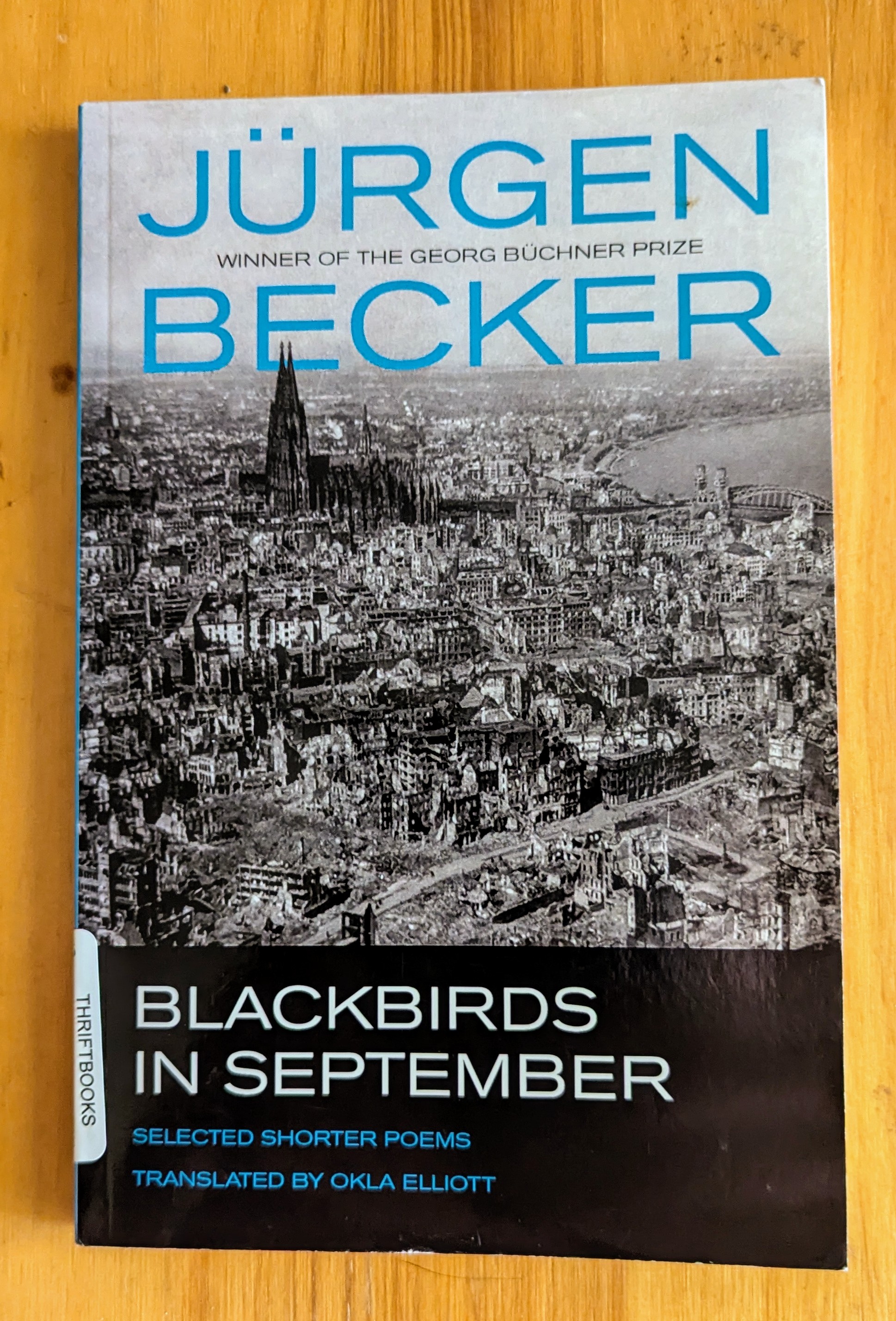
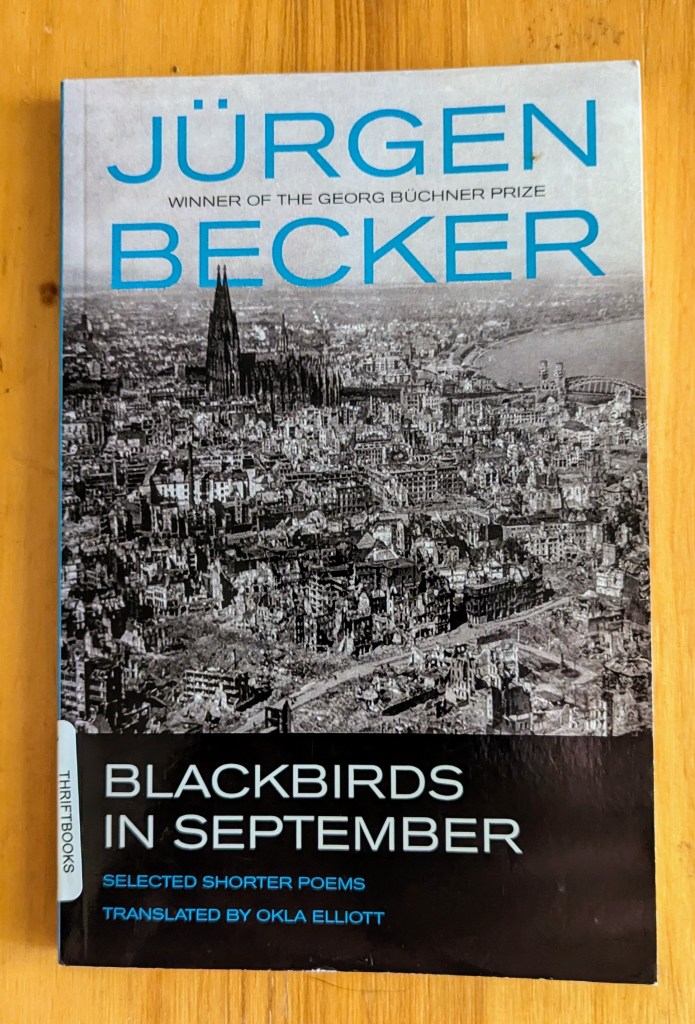
In addition to an unusual back to front reading of a book by Ernst Meister, the other poet Seiler devotes an essay to is Jürgen Becker. I had already read Becker’s fragmentary poetic novel, The Sea in the Radio, but a dedication to the poet (who very recently passed away) in Seiler’s collection Pitch & Glint, called to mind a collection of selected shorter poems, Blackbirds in September, which I was able to track down and read alongside the essay “’The Post-War Era Never Ends’: On Jürgen Becker.” Here Seiler takes a more personal approach acknowledging Becker’s influence and his own friendship with the older established poet. He traces his own process of learning to read and appreciate Becker’s poetry. Born in Cologne in 1932, Becker was a member of Group 47, the organization formed to promote young German writers after the war. He employed an experimental, open form of writing with an emphasis on landscape and the persistence of memories of the war in German land and history. His language tends to be spare and his poems have a calm, light feel, but that is only the surface.
But the landscape is rather quiet.
Invisible the destruction, if in fact
there is destruction.

And the time is passed
which the subsequent, the subsequent time produced.

But you never speak of Now.

Probably in the summer. At that time of year
we remember. Fence posts follow the paths,
or turned around, all of it belonging
to the landscape . . . who owns it? The landscape
leads into landscapes, from the visible ones
to the invisible ones which await us.

(Jürgen Becker — from “A Provisional Topography”/translated by Okla Elliott)

Other essays of particular interest in this collection (which gathers a selection of Seiler’s nonfiction from across twenty-five years) include “Illegal Exit, Gera (East),” a return in memory and in more recent years to a landscape that is being transformed and remediated, and “The Tired Territory” which begins as an exploration of the history of uranium mining in his home state, but turns into a meditation on the distinct poetic sensibilities that he had to define for himself after what he describes as the difficulties encountered in his “brief  career as a doctoral student in literary studies.” The categories that hold his fascination are intangible: heaviness, absence, tiredness. Understanding this for himself is essential:

Writing poetry: a difficult way to live and, at the same time, the only possible way.

One aspect of all this is that the poem engages specifically with what cannot be verbalised. The mute and non-paraphrasable and its unique, existential origin: the particular qualities of any poem arise from these two subtly interwoven elements. The poem travels towards the unsayable, yet this is a movement without an end.

It is not only the reading and writing of poetry that slips into Seiler’s essays—to a greater or lesser extent—but the final piece tackles his slow transition to prose. “The Soggy Hems of His Soviet Trousers: Image as a Way into the Narration of the Past” chronicles the year he moved with his wife and children to Rome for a period of dedicated novel writing. He dragged along boxes and boxes of books, research and paraphernalia he had gathered in preparation for the writing of his first novel. He’d planned to draw heavily on his own experiences moving to Berlin in the aftermath of the fall of the Wall and the more he describes his intentions, the more it sounds like what would eventually become his second novel, Star 111. But it’s only 2011 and our would-be novelist is staring at an empty page day after day. It is not until he finally gets out of his room, into the city, that everything changes. A suggestion that he write a short story set in a location he had not previously considered soon conjures forth an image so strong that ten pages become 500 and he has what will ultimately become his first novel Kruso.
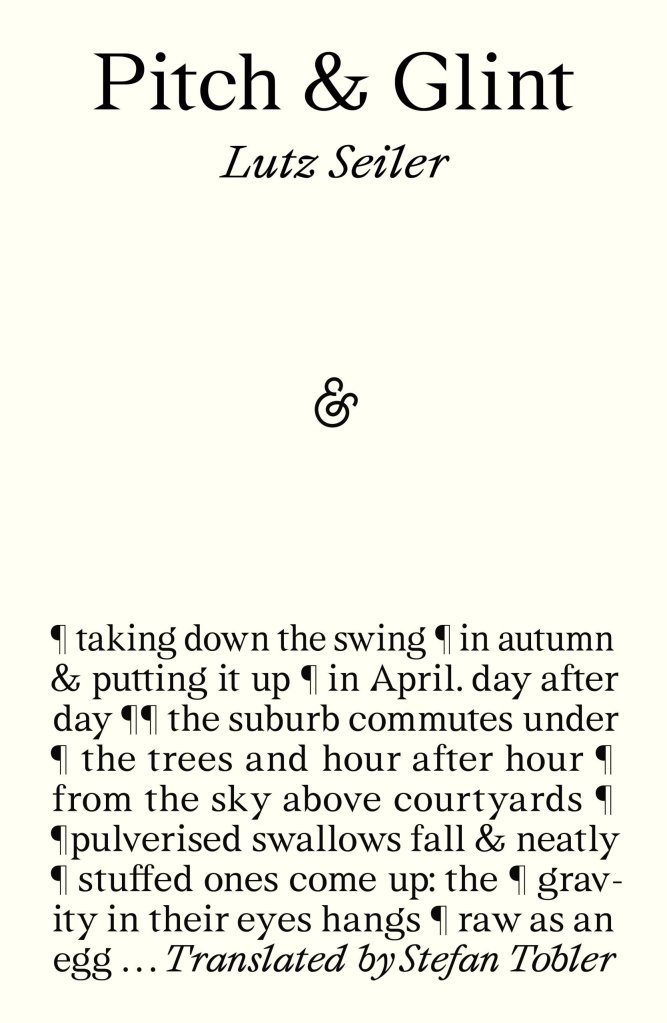
Finally, if I return now to own Seiler’s poetry, in field latin and his debut collection from 2000, Pitch & Glint, more recently released in Stefan Tobler’s translation, many of the allusions in individual poems become clearer in light of having read his essays and the autobiographically influenced novel Star 111. But neither is necessary. Seiler’s poetry has a natural appeal. I wrote about in field latin here, and this earlier work (ten years separate the two volumes) is likewise rooted in the East Germany of the poet’s youth—the wildness, the strict schools, the land with its slag heaps and detritus of mining. Yet, for Seiler, the sound and rhythm are critical, as is the construction of images that move beyond the mere biographical. Darkness, frost, echoing footsteps recur. You can feel the chill:

wind came up the border
.   dogs were rising on
their delicate branching skeletons

whistled a bewitching witless
wanderlied. the snow came in
& tore the iron

curtain of their eyes, a
blunted gaze towards the hinterland
and made plain that we do.

(— from “in the east of the land”)

Seiler’s characteristic use of lower case letters and ampersands (especially striking in German where nouns are capitalized) adds to the mood and intensity of his poetry. One of the blurbs on the back of Pitch & Glint describes it as “a real-world Stalker with line breaks.” That captures the feel well.

The beauty of reading a number of works—nonfiction, fiction and poetry— that intersect like this is that each individual experience is heightened. Seiler’s poetry and fiction easily stand on their own, but the essays add an extra dimension. To be fair, one’s enjoyment of this collection may depend on whether one is a poet, or interested in poetry and the process of poetic inspiration/creation, or familiar with his other work. Nonetheless, his essays are thoughtful with a very strong personal flow and reflect the mind and experiences of a man for whom poetry is central to his very existence—in his memories, in his specific creative pursuits, and even in the everyday act of taking his daughter to dance lessons or son to football practice.

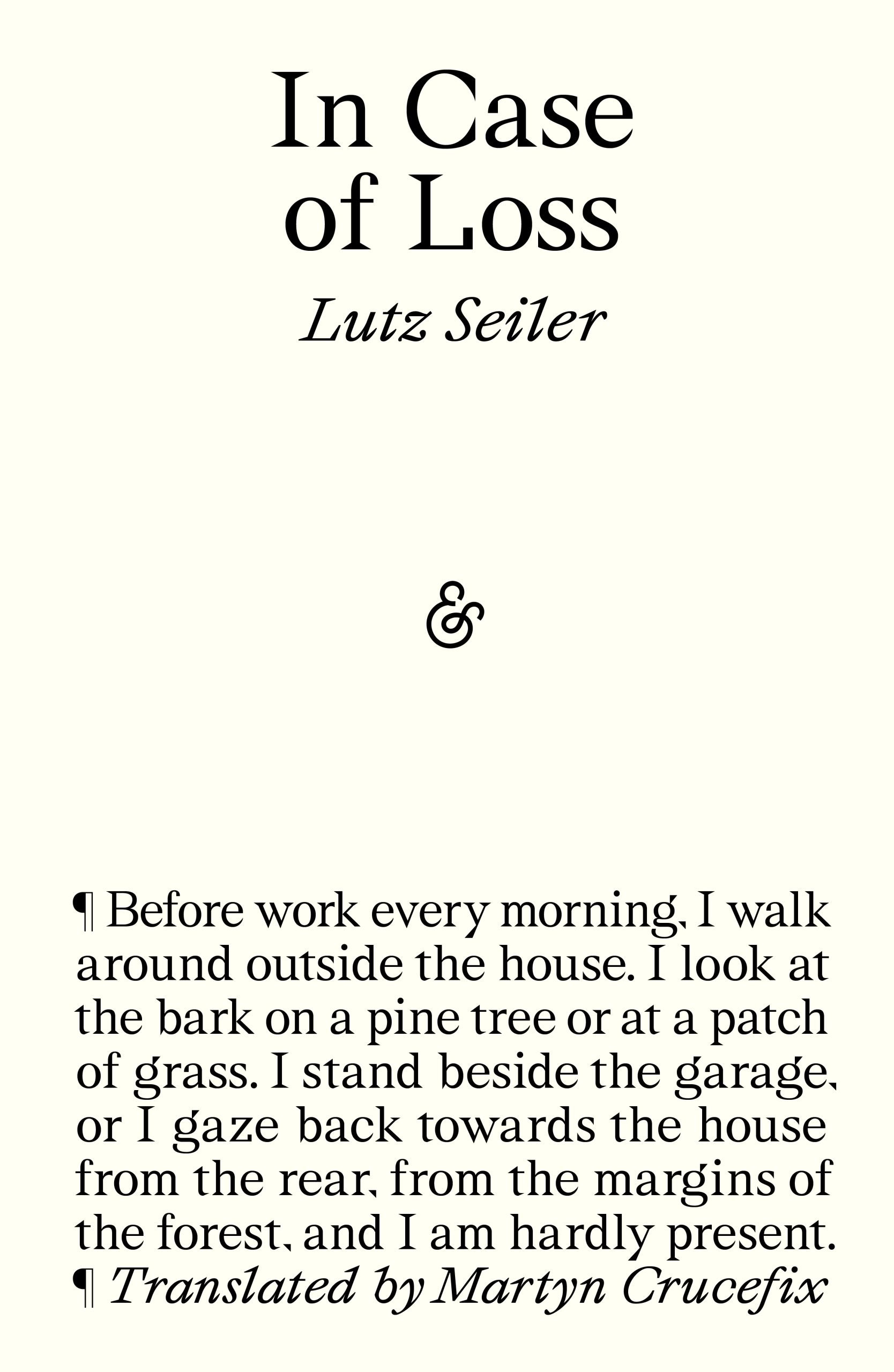
In Case of Loss and Pitch & Glint by Lutz Seiler are translated from the German by Martin Crucefix and Stefan Tobler respectively and published by And Other Stories. These Numbered Days by Peter Huchel is translated from the German by Martin Crucefix with and Introduction by Karen Leeder and published by Shearsman Books, and Blackbirds in September by Jürgen Becker is translated from the German by Okla Elliott and published by Black Lawrence Press.

Other titles mentioned and reviewed earlier on this site are Star 111 (And Other Stories/NYRB Imprints) and in field latin (Seagull Books), both by Lutz Seiler, translated from the German by Tess Lewis and Alexander Booth respectively.
People can grow old anywhere: Man in the Holocene by Max Frisch

—only human beings can recognize catastrophe, provided they survive them; Nature recognizes no catastrophes.

—man emerged in the Holocene.

It has been raining for days now, no night passes without thunderstorms and cloudbursts. In fact, Geiser can catalogue more types of thunder than the Encyclopedia which, to be fair, is rather mute on the subject, preferring to describe lightening instead. But, when we meet him, the seventy-four year-old widower is passing yet another stormy night trying to build a pagoda out of crispbread. And worrying the possibility of landslides. The highway through the valley is blocked so the mail bus can’t get through. Periodically the power goes out. To get through, he is intent on keeping his mind active, reading, accumulating facts and endeavouring to remember those details—like mathematical formulas—that have slipped into the dust of his aging memory.

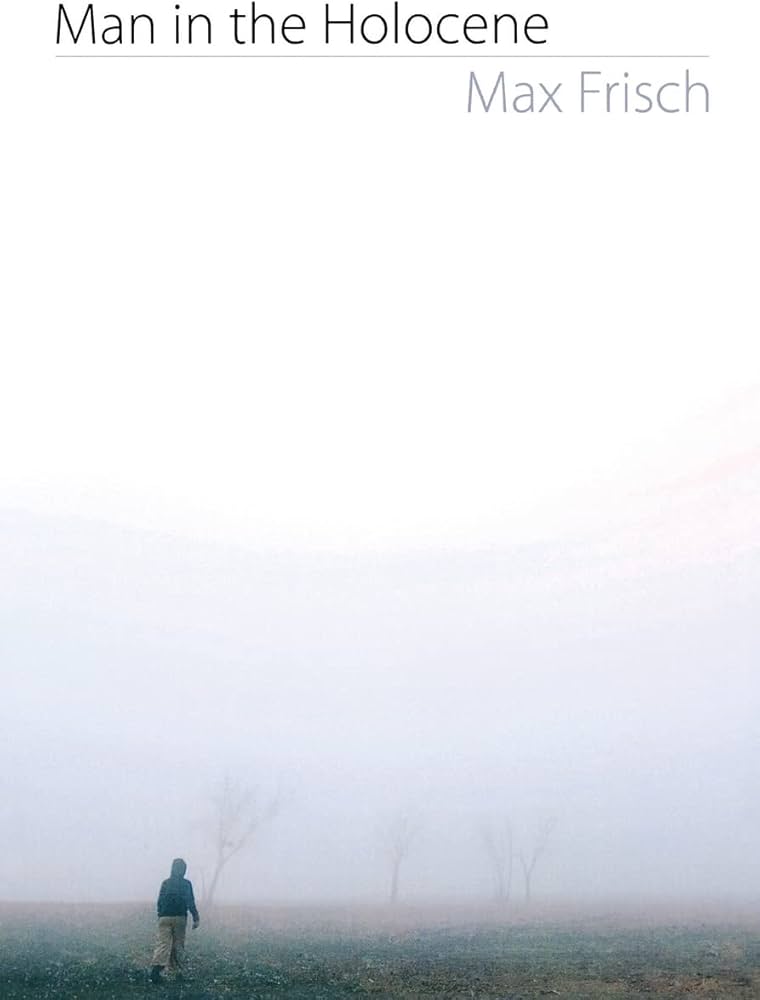
Man in the Holocene by Swiss writer Max Frisch is by turns the funny, unconventional, and bittersweet tale of a man who is waging his own little battle against the dying of the light, and attempting to construct a refuge in a gallery of facts while the storm rages outside his door.

Somewhere a tapping on metal.

He trains his field glasses on the mountainside watching for cracks, and reads up on the meteorological history of the valley he has lived in for the past fourteen years. He  delves into matters of rock formation, studies the measurement of geological time, and records details about dinosaurs. He begins by copying out information, but soon realizes that it is far more efficient to clip out passages of interest from the encyclopedia, the Bible, and other books, and then tape them to the walls of his home. Reproductions of his various cut and paste selections are embedded in the text.

Occasionally Geiser ventures out, umbrella in hand, to examine the state of his garden with its fallen dry stone wall, or once the power goes out for an extended period, to give away all the food in his deepfreeze—“the meat, usually hard as iron, is flabby, and the trout are repulsive to the touch, the sausages soft as slugs.” Only when he returns home, having foisted his thawed goods on his befuddled neighbours, does he remember that he could have at least roasted the meat over the fire in the wood stove.

One is becoming stupid—!

Through a fragmented text, repeated refrains, collected facts, and Geiser’s increasingly muddled meditations, Frisch brings us into the interior world of a truly memorable protagonist. He is a modest, somewhat eccentric figure who, at least since his wife’s death, has tended to keep to himself. Originally from Basel, where his daughter, son-in-law and grandchildren still live, he is an outsider, no matter how long he has lived in the valley. “A valley without through traffic,” as he describes it. A detailed description of the region, its industry, and social history is, if rather nonchalant in tone, not without moments of dry humour:

In the summer there are cranberries, also mushrooms. When it is not raining, the white trails of passenger planes can be seen high in the sky, though one does not hear them. The last murder in the valley—and that only rumored, since it never came to court—happened whole decades ago. Ever since the young men have owned motorcycles, incest has been dying out, and so has sodomy.

Women have had the vote since 1971.

What makes this novella work so well is that it is not simply an assemblage of fragmented passages, repeated refrains, and a collection of assorted facts. It is a well-paced and orchestrated, if crumbling, tragic comedy.  Geiser’s memory may be fading, but the narrative takes us into vivid accounts of the Icelandic landscape he once visited and a youthful attempt to climb the Matterhorn with his brother (a story he’s told so often that even his grandchildren are tired of it). And then there is his possibly ill-advised decision to, due to the blocked highway, head off early one morning with the goal of crossing the mountain pass so he can catch a train to the city. He changes his mind quite late into the adventure and returns home a weakened and diminished soul. A tired, confused man now determined to shut out the world once and for all, but still the reluctant hero of a story that is beautiful, sad, and quite unexpected.

Man in the Holocene by Max Frisch is translated from the German by Geoffrey Skelton and published by Dalkey Archive.

The reversal of the currents: The Lockmaster by Christoph Ransmayr

Five dead. That is the fact the opens and haunts The Lockmaster: A Short Story of Killing by Austrian author Christoph Ransmayr. Five people are killed when a longboat carrying twelve capsized above the Great Falls of the White River when the sluice gates suddenly opened releasing a torrent of water that caused the vessel to lose control and shoot downstream, all while a crowd of festival goers watched from the sidelines. The lockmaster, who had for thirty years, proudly guided boats safely around the falls through a series of locks, made a valiant effort to manually close the gate, and was locally regarded as a hero. But when his son, a hydraulic engineer working on a project in Brazil, receives word of the event, he is not so sure it is an accident.

Set in some indeterminate future time, when sea levels are rising and inland regions are drying out, this novella depicts a world in which water is a precious resource to be defended by force. In many places the tensions over resources have ignited tribal wars or enabled the rise of brutal dictatorships while in Europe the political landscape has been shattered into a vast number of warring microstates each with their own flags, languages, cultures and long list of enemies. The narrator and his sister Mira, as the children of the lockmaster and his foreign wife, grow up in a socially isolated home situated above the falls. The waterways are their playground, but all of their education is conducted over screens, so they rarely engage with other young people. As a result, they develop an intimate relationship, something that is no longer taboo but nonetheless unsettling to imagine, especially because the narrator is still so thoroughly obsessed with Mira who has a rare condition that makes her bones exceptionally fragile.

One year after the incident at the festival, the lockmaster himself disappears. When an angler reports having seen a man in a boat dragged over the crest of the Great Falls, although no remains are found, he assumed to have drowned. At this point, the narrator is still in Brazil, the very tight, globally controlled restrictions surrounding major water projects forbid his departure even for a family emergency. His sister is left to tidy up their father’s affairs (their foreign mother had long since been deported from the small central European microstate in which they lived) and by the time he finally gets home, even his beloved Mira is gone, having married a dyke reeve and moved with him to the rapidly eroding shoreline of the Elbe estuary. Already questioning his father’s innocence in the collapse of the festival longboat, when the narrator reaches his next assignment on the Mekong River, he is certain that his father is both a heartless killer and still alive.

Five or seven or twelve cannot have made any difference to him—after all, the precise number of their victims did not bother the bomb planters and well poisoners who were, in those times, bent on drawing attention to themselves and their grand ideas in countries, tribal areas and microstates. Deaths meant fear; and fear meant open ears and open eyes. No one could fail to hear; no one could fail to see what a murderer did, even if he denied his deed.

With this crime, my father clearly wanted to defy the course of time and take himself back to overweening dreams where a lockmaster had been more, much more and more influential than the curator of an open-air museum on the White River could ever be.

The world of conflict, armies, mercenaries, and rebels within which the narrator moves in his work which has taken him to so many of the earth’s great rivers, colours his understanding of the tragic event at the Great Falls and his father’s presumed role in it. He vows to hunt him down and kill him.

This is a more focused effort than Ransmayr’s more sweeping work like Atlas of an Anxious Man, but it does highlight his broad global perspective and ability to evoke a vivid natural—or unnatural—atmosphere as his protagonist navigates the world of his present and remembered past. But the narrator is not a readily sympathetic character. He continually refers to his father as a “man of the past,” but his own refusal to accept that his fragile sister has had the audacity to marry someone else and not sit at the Great Falls waiting for him while he travelled the world, demonstrates that he too is caught in his own self-centred and, to be honest, somewhat disturbing incestuous longings. This is, of course, a fable. A dark speculative folktale. Neither the characters nor the political and environmental dimensions are fully fleshed out—but in such a fractured and volatile world, the protagonist’s insularity would be an expected coping mechanism. As such, the oddly discomfiting narrator is not only plausible, but he adds a suitably unnerving tone to the gloomy undercurrents already driving his story. And Ransmayr’s trademark spare, poetic prose adds a further chilled quality to the work.

The Lockmaster: A Short Story of Killing by Christoph Ransmayr is translated from the German by Simon Pare and published by Seagull Books.

If such a thing is possible: Star 111 by Lutz Seiler

Maybe at twenty-six he was already too old to seriously go about becoming a poet.

The fall of the German Democratic Republic was rapid and unexpected. As other communist regimes in Eastern Europe began to disintegrate, the East German government tried to maintain control, but in early November 1989 a mistaken announcement led to the sudden opening of border crossings through which hundreds of thousands of East German residents would soon pass. This is where Star 111 by German poet and writer Lutz Seiler begins.

Twenty-six year old Carl Bischoff has just been summoned from Leipzig to his home town Gera in the state of Thuringia. The telegram, dated November 10, reads “we need help please do come immediately,” but as he waits for the train, he has no inclination that all the childhood securities he once imagined were unassailable are about to be upended. His parents, Inge and Walter (Carl has long addressed them by their first names), waste no time announcing their intentions. They are going to take advantage of the crumbling state of the GDR and cross the border. Now. This is, they tell him, a dream they have long held and, should the precious opportunity be short lived, they plan to leave promptly. They will head for the refugee camp at Giessen, and then split up to better their chances of finding suitable lodgings and employment on the other side. Carl’s assignment is to stay behind and look after the apartment. He will be the rearguard. But left behind, Carl finds he is at a loss, confused by this sudden inversion of what he imagines the parent-child dynamic should be and worried about his middle-aged parents who by rights should be the ones at home worrying about him.

His age is critical. Carl will repeatedly question what it means to be in his mid-twenties as if there’s some kind of high-watermark that he’s worried he has already missed. He has completed military service, learned a trade, and spent a few years at college, but he is without direction. His dream is to become a poet. Yet, when he is called home, he is apparently recovering from a breakup and a breakdown—something he alludes to but does not discuss because there’s no time. His parents’ departure is so immediate and unnerving that it entirely usurps whatever crash course he might have been on. But, even if it leaves him temporarily unmoored in a world that is rapidly changing, it does offer him a chance to chart a new direction for himself. After a few weeks in Gera, trying to keep a low profile while working his way through the preserves in the cellar, Carl is beginning to bottom out. So he loads up his father’s beloved Zhiguli with tools, a sleeping bag, and some provisions, and heads to Berlin. He has no particular destination in mind. He is simply following a fantasy founded on little more than a few poems set in that mythical city, seeking, as he will later describe it, “the passage to a poetic existence.

Arriving in East Berlin, Carl tries to get his bearings, picks up the odd unofficial taxi fare, and sleeps in his car. But, with winter settling in it’s a bleak—and cold—existence. Before long he falls ill. When, freezing and feverish, he happens to find his way through the rear door of a cinema, he suddenly steps into another world. So to speak. He finds himself in the company of an odd collection of individuals, led, it would appear, by a charismatic man they call the Shepherd—the owner or companion of a goat named Dodo—who nurse him through his illness and welcome him to their breakfast table, impressed in no small part by his car with its trunk full of tools. His tools?

“No, no Zhiguliman, you don’t have to explain anything here. More than a few people are on the move in this freshly liberated city. The whole world is being parcelled up anew these days—but if you’re looking for something permanent. . .”

Carl is not certain what he is looking for, or what something permanent might even mean. If stability cannot be assured in unstable times, he wants whatever it is the handful of men and women around him seem to have—community. And it seems to be on offer:

It was as if he were already part of a pack, as if he were of the same breed. Everything seemed already embedded according to a long-standing plan and leading toward the only logical conclusion. It was a strange feeling. It was the presentiment of a legend (if there is such a thing, thought Carl), on the point of taking him to its profound, all-embracing “once upon a time.”

It is, in fact, just the beginning. He settles into a spartan empty apartment and soon finds a place among a group of misfits, artists, and anarchists who are systematically occupying abandoned buildings, hoping to take advantage of the shifting political and social terrain to craft a kind of anti-capitalist utopia amid the ruins of a damaged urban landscape before others come to reclaim it. His bricklaying skills secure his place.

Over the months that follow, Carl will oversee renovations, begin to work in the Assel, the  café the Shepherd sets up, and embark on a romantic relationship with, much to his surprise and naïve delight, a woman from his hometown. Meanwhile, the progress of his parents is revealed regularly, but only insofar as his mother’s letters allow him to it piece together through what is shared, or more critically, what is left unsaid. For months after he had dropped them off at the border, there had been an unsettling silence. Then, once he has relocated to Berlin, the missives begin to arrive, secretly rerouted through the post office in Gera. For a long time Inge and Walter are apart (“separately after Giessen”, as planned), and the latter’s whereabouts are unknown. On her own, Inge proves to be remarkably self-sufficient, working and making social connections until Walter is finally found and the couple are reunited. From that point on, Carl’s father will rely on his computer programming skills to build toward the shared future they envision. Inge’s cryptic comments and idiosyncratic expressions imply that there is a greater game afoot, but Carl is being kept in the dark. But then, many months will pass before he finally confesses that he has abandoned his post as rearguard.

As Carl constructs a life for himself in Berlin, building relationships with others, testing his emotional boundaries, and tracing a regular path through the streets of his dilapidated neighbourhood, one central focus drives his days—the need to write, to dedicate at least some time to poetry. With a little promising feedback, he fantasizes about the day he will publish a book of his own poems. Yet, with all the uncertainty (and opportunity) that a rapidly evolving Germany promises, for Carl writing is a discipline that exists on its own ground away from it all. He is a purist, not a documentarian:

So-called reality and its abundance (“the most exciting times of our lives,” as everyone was claiming)—it would never have occurred to him to write about it, not even in a journal, never mind that he clearly wasn’t in any state to keep a proper journal (with regular entries). The main question was whether or not the next line would work. The next line and its sound preoccupied Carl, not the demise of the country outside his window. If the poem didn’t succeed, then life wouldn’t either.

It’s not an easy path to follow, but it’s one that sustains him when everything falls into place  and one that devastates him when life runs off the rail and words fail to come.

Decidedly autobiographical in nature, Star 111 is a tale of self-discovery, a portrait of a young man seeking to define his identity as an adult and as a poet against a backdrop of rapid change when, for a moment, all the old rules have been suspended before inevitably being rewritten and reshaped by capitalist interests. Seiler’s limited third person narrative with its frequent parenthetical refrains and clarifications, captures Carl’s insecurity and self-doubt as he navigates this strange terrain. It also facilitates the integration of a wide range of eccentric characters: members of the Shepherd’s “pack,” his neighbours, co-workers and customers at the Assel, his lover and her young son, and the many people he encounters vicariously through his mother’s regular updates. Essentially, then, this is a novel about family—natal, accidental, and imagined—and the forces that gather to form and inform one’s independent being. The “Star 111” of the title refers to the popular transistor radio that was the centrepiece of Carl’s family life when he was a child. The memories of it that haunt him reflect the strange longing that tends to set upon us when life conspires to force us to accept that not only are we truly grown up (whether or not we feel like it), but that our parents are independent adults too. As Carl spends a lot of time re-evaluating his relationship with Inge and Walter, he will wonder whether he ever really knew them at all. Or they him.

Lutz Seiler is, of course, like his protagonist, a poet first and foremost. This can be seen in the way his chapter titles are picked up in the text, often in the closing line, but more explicitly in his attention to the sounds and the rhythms of language. Translator Tess Lewis—who also translated his first novel Kruso which she describes as forming a sort of diptych with Star 111—writes in her Afterword of the challenge presented by his “ability to capture the minutiae and texture of a vanished world in rhythmic, lyrical prose.” She pays particular attention to the various registers in the original reflecting the different tenors of West and East German bureaucracy, varying speech patterns associated with social class, and the lines of poetry by a host of other poets that echo through Carl’s imagination. When words with multiple meanings afford the author an onomatopoeic flexibility that cannot be fully replicated, Lewis found she sometimes had to make alternate word choices, knowing the full affect could not always be maintained. This is not a loss noticed in the English reading though. The sense that this is a moment in time that will not last long and will never come again is captured so vividly through Carl’s adventures (and misadventures), not to mention those of his parents, that it feels, above all, like a privilege to be along for the ride.

Star 111 by Lutz Seiler is translated from the German by Tess Lewis and published by New York Review Books in North America and by And Other Stories in the UK.

“wrestling words, terror at the morning gray”: Territories of the Soul / On Intonation by Wolfgang Hilbig

Ah, yes, to enter Hilbig territory, be rural or urban, is to travel a terrain that is at once suffocating and strangely comforting. With each new work to emerge in English translation it is, for an admirer of his melancholy poetics, like coming home:

—Then comes the city of S., our destination almost, laagered on the valley floor, admitting no beam of spring sunlight; it resembles, in fact, a reservoir for all the wet the clouds cast down when they’ve finally gained the surrounding heights. I would have to continue further southward, continue further southwestward, until the actual sea, I think, if I wanted to breathe a sigh of relief . . . here in this valley you remain imprisoned, unarousable, and held to the earth here by an apparently stronger local gravitation, you walk stooped through the city with its churches, descend even lower, to where the empty markets stand, assembled against a yellow prefab administrative circus, such a scene has a sundial on its dome—, but there is no sun here.
From “Adieu”

No one creates an atmosphere quite Wolfgang Hilbig.

Territories of the Soul / On Intonation, pulls together short works from two collections published in the closing years of the GDR—eight stories and two poems—translated by Matthew Spencer and published by Sublunary Editions. Hilbig was born in Meuselwitz, Thuringia in 1941, and grew up in the industrial wilderness of postwar East Germany. He began writing poetry while working as a stoker, but his literary sensibilities were never going to fit with the socialist realism the GDR wanted its working-class poets to produce. Yet, although he migrated to West Germany in 1985, his spirit and his themes tended to remain anchored in the East.

The stories in this slim volume offer a classic cast of Hilbig characters—tloners, dreamers, misfits at odds with themselves and the world around them. They are also often writers, or aspiring writers, even if their literary endeavours take place after work, or in secret on the job if possible. And the workplaces many of them are bound to, like Hilbig himself in his early adult years in the GDR, are mines and factories in set grim, urban or rural wastelands. His work can evoke an atmosphere so heavy and gritty one can almost taste it; his protagonists wander landscapes marred by sludge, refuse, and discarded armaments, their restlessness fueled by anxiety, remorse, and regret. The narrator of “Adieu,” quoted above, has just walked out on his only child, knowing he is wrong, and wondering “how does love become just a thing I rob from another, become a thing I can feel only by denying it to another.” It’s an uncomfortable monologue, made more so by the weight of the speaker’s tortured conscience.

One  of the strongest pieces here is the second title story, “On Intonation.” It opens with a chilling description of a stormy, wet night, viewed from the cockpit window of the nightwatchman’s station above an open-pit mining operation. The narrator is filling in for a missing watchman, a task he put himself up for thinking it would provide him the necessary space, away from the heat of the boiler room, to address a long pressing concern:

What I needed to work out—I had known this for years—was a kind of self-assessment, which would either certify me as a worker or as a true writer; however, since my presentiment was that I had insufficient reasons to properly continue writing, I had so far neglected this decisive memorandum; and yet I needed to fix these details in written memory, so I could exhibit them as proof against myself. —Meanwhile, I had come to a conclusion: I had to note down some urgent thoughts about the intonation of these modern lyrics . . . so I could implicate myself in evading duty.

And, yet, although he had been thinking about this question for some time, he finds himself, at his little makeshift desk, unable to find a word to replace intonation—his thoughts are frozen, he is unable to write the words he is convinced will prove he cannot write. But through this night, as he makes his rounds and struggles with his creative despair, his monologue turns on its own existential exploration of the lyric. The speaker, fearing that he lacks what he needs to be a writer, finds, in spite of himself, that he does.

This compilation, which includes work originally published in 1986 and 1990, is a particular treat for fans of Old Rendering Plant and The Tidings of the Trees—not only for its misanthropic souls, distinctive landscapes, and the occasional hint of gothic horror, but for those long winding and unwinding sentences that seem to pull the narrative into dark corners, resisting but unable to avoid a splash of milky light now and again. Even better, it may serve as the perfect introduction for those who have not yet encountered the addictive terrain of Wolfgang Hilbig.

Territories of the Soul / On Intonation by Wolfgang Hilbig is translated from the German by Matthew Spencer and published by Sublunary Editions.