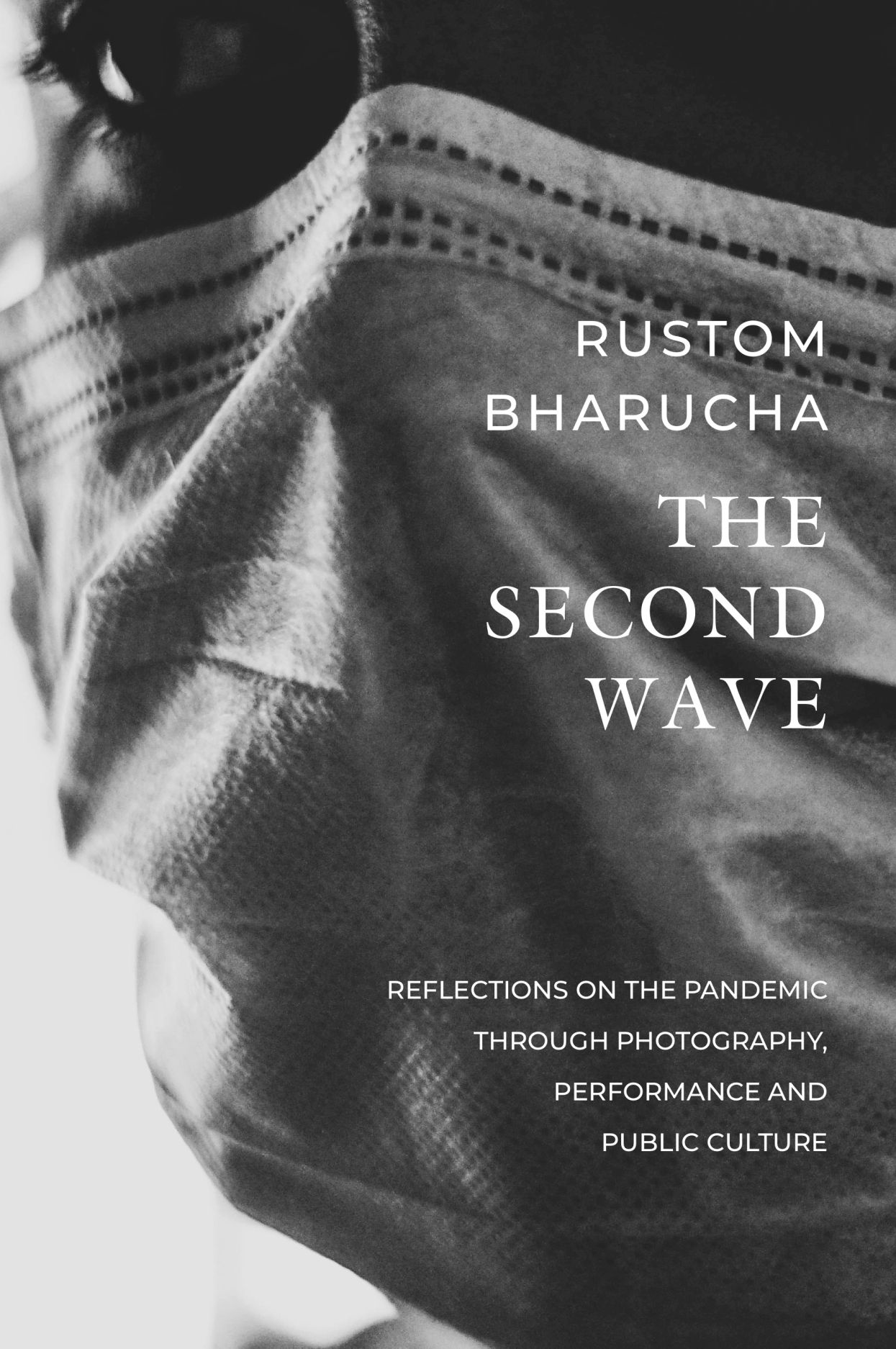
Writing toward a dark hope: The Second Wave by Rustom Bharucha

In the nearly three years since the first reports of a novel coronavirus emerged from China, this new SARS variant has caused illness, death and division across the globe. Seems the stuff of speculative fiction is not as interesting to live in as it is to imagine in a novel or film. So, while the early months of the pandemic inspired a flood of lock down essays and memoirs (I was editing for a magazine at the time and it seemed endless), the topic has been one that often has to be raised cautiously as so many are simply determined to move on, content to accept a certain level of weekly death and disability as a price society has to be prepared to pay. However, as the virus continues to circulate, fill hospitals and kill, its greatest weapon seems to be its ability to deepen hostilities and inequities within communities and around the world.
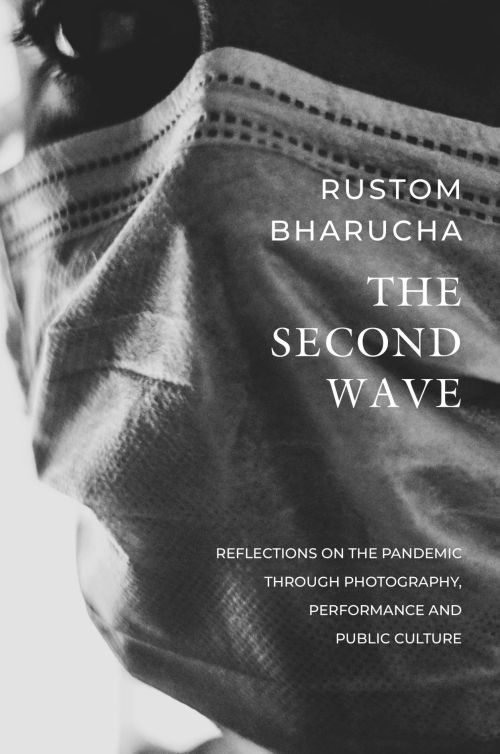
Yet, if I hit a point of poetic saturation in the first year of Covid, I now find myself curious to see how this global phenomenon is being responded to at this point, more than two years in. Thus, The Second Wave by Rustom Bharucha, newly released by Seagull Books, immediately caught my attention. Subtitled Reflections on the Pandemic through Photography, Performance and Public Culture, this is not a journal, a memoir or a clinical analysis, rather it is an extraordinarily thoughtful meditation on the depiction of illness, death and displacement, the expression of loss and grief, and the possible positive potential of the pandemic experience for the future. As a writer, cultural critic and dramaturg based in Kolkata, India, he does not concern himself with the details of the virus itself, epidemiology or the ongoing debates around vaccines. Instead he is interested in offering a personal response to “the turbulent state of a world that seems to have gone awry.” What sets this essay apart, then, are the questions Bharucha is led to ask and the resources he draws on in his exploration—he turns to photography, theatre, literature, dance and critical thought.

India famously reacted to the initial spread of Covid 19 in 2020 with a strict three month lock down that within hours had those with homes and some security retreating indoors, and forcing vast numbers of migrant workers to try to find a way back to their home villages across a country that had suddenly shut down. However, for Bharucha and his country, it is the second wave between April and October 2021, that struck as a harsh and heart-breaking demonstration of the ferocity of the disease which they had mistakenly fancied they had survived relatively unscathed. This book engages with four realities emerging from the crisis of this brutal wave of illness: death, grief, mourning and extinction.

The first section, “Photography in the Pandemic,” is primarily concerned with death. A number of communities and countries around the world experienced exceptionally high levels of infection and death in the early months of the pandemic, but much of it happened out of the sight of the general public. Streets were emptied and ICUs were closed to visitors, rendering the suffering invisible. Families said good-bye to loved ones over the internet. Refrigerated trucks backed up to hospitals were received as an abstracted image, and even expansive burial sites tended to blur with any number of other tragedies of nature or war. But the photographs coming out of India somehow seemed more real, more difficult to excuse as “fake.” Bharucha focuses on three striking, widely seen photographs: the image of two men sharing a bed in a public hospital, the tops of two oxygen cylinders just visible in the foreground; a photo of a man fleeing a cremation ground that looks more like a hellish scene of destruction than a place of funeral ritual; and a drone shot of bodies covered in saffron cloth lying on the shore of the Ganga, the final resting place of those too poor to afford cremation. The discussion of these iconic images calls on Barthes and Debord, contrasts the ordered depiction of the 1918 Spanish Flu outbreak in Bombay and considers the question of ownership. Today corporations and media houses own and control the distribution of the depictions of war, famine and disease, but their human truth cannot be forgotten:

[W]e cannot deny that these images, many of them too searing in their impact to be witnessed in a dispassionate mode, represent real events. One may question their mode of representation and capitulations to sensationalism and voyeurism, but, at a purely empirical level, the two men lying in a hospital bed, the man running through a cremation ground, and even the most extreme image of dead bodies on the banks of the Ganga were not fictions.”

This first part also looks back to the great displacement of the first wave with an examination of the depiction of families making the long journeys home and the way these internal migrations were recorded and presented.

The second section of The Second Wave, “No Time to Mourn,” opens with a discussion of the interrelationship between grief and mourning, and an acknowledgement of the disruption of the critical ritual practices associated with death and dying. This was, of course, a widely experienced phenomenon, but in Hindu and Islamic traditions  a physical connection with the body of the deceased is vitally important. Hospital death, fear of infection and the intense pressure on cremation and burial services left survivors unable to mourn and articulate their grief. Here again we see the power of photography with the inclusion of the image of Rampukar Pandit, a migrant worker making his way home from Delhi, learning that his infant son has died. Clutching his cellphone, his expression is one of absolute despair and it is impossible to look at him without feeling his pain. This single photograph speaks to the extraordinary grief and loss that, because grief is so often private, seems to have been scrubbed from so much of the discourse around the pandemic that aims to minimize its impact in many communities. But how can grief be expressed publicly in a meaningful way? Bharucha turns to several Euro/American efforts to capture grief though performance art before turning to literary and dramatic representations from Indian writers and artists. Helpfully, throughout this essay, he tries to chose material that can be readily accessed, in whole or in part, online. As well, detailed footnotes and an extensive bibliography catalogues the academic, dramatic and related resources that he references.

It is with the final section, “Endings / Beginnings,” that The Second Wave moves beyond any pandemic themed essays I’ve encountered to date. Bharucha writes with passion and a cautious but hopeful optimism, as he explores how  we might live after the pandemic, fully aware that an ending is, at the time of writing, still elusive and wanting to avoid the hopeless despair that the “seemingly endless postponement of ‘the end’” can fuel.

Instead, what comes to mind is ‘dark hope’, which is how Sanskritist and peace activist David Shulman has characterized the larger context of struggling for peace on the West Bank. It is this hope that shadows my reflections on the interstice between endings and beginnings which is the subject of this chapter.

He begins his analysis with the theatrical concept of “exit” and a discussion of the darkness and destruction at the end of the Mahabharata. He wonders what moment of time we might be entering, with the consideration of two possible modalities that could contribute to the shaping of a fatal end in our times—genocide and extinction—drawing on ancient and modern imagery and sources. The darkness is easy to imagine, given the record of human history on this planet, so where does the hope lie?

Bharucha proposes that within the possibility of destruction the possibility of rebirth or reinvention may be found. From here he embarks on a wide-ranging discussion, a sort of thinking out loud, that takes into account in his own Zoroastrian identity, then moves to the ethics of waiting with a look at Samuel Beckett’s most famous play and Gandhi’s message of restraint, admitting that waiting is not going to be an acceptable response to many who are tired of waiting and staying put. But, if the pandemic, which has most certainly arisen from an animal host, has taught us anything, he argues, it is “how intimately the animal world intersects with our own.” So the question then becomes one of how to inhabit the planet moving forward. Bharucha proposes that an answer might be found in an enhanced bodily awareness—stillness, movement and breath—explored in the context of dance, theatre, yoga, freediving and critical thought.

There is, of course, much more to this thoughtful book than I can begin to touch on in this review. It is ultimately a very personal journey tinged with sorrow, anger and a commitment to making sense of a global pandemic that has carved two years or more out of our “normal” existences, cost countless lives and left many more with serious lingering effects. The attention breath and breathlessness that closes out the essay is especially poignant in light of the rush for ventilators in the early stages of the pandemic and the scenes of lineups and desperate calls for oxygen canisters so ubiquitous as the second wave struck India. But a loss of breath is not strictly a feature of earlier variants, even if ICUs are not filled to capacity so much at this time. Talking to my thirty year-old daughter tonight, several weeks after her recovery from Covid, she admitted that her lungs are just not the same in a way she has never experienced before, and hers was not an unusually difficult bout. Those struggling with Long Covid are even more aware of how easily movement and breath can become strained, leaving them stranded on the cusp of an uncertain ending and an undefined beginning.

The Second Wave by Rustom Bharucha is published by Seagull Books.

“That’s how I remember it.” Postcard from London and Other Stories by Iván Mándy

Making the acquaintance of Iván Mándy, one of the most popular Hungarian writers of the post-war period, is one of the unexpected highlights of my reading year. Postcard from London and Other Stories, which gathers twenty-three stories and two novella excerpts, is the first comprehensive collection of his work to be published in English and, as with such larger volumes, there is always the risk of a certain sameness setting in. Yet, with Mándy, the appearance of the same characters and variations or extensions on related themes, is part of the appeal. His stories tend to tread the murky internal waters of his protagonists’ minds, so even when covering the same ground, one never really steps in the same stream twice.

Born in Budapest in 1918, Mándy’s parents divorced when he was young, leaving him in the care of his unconventional journalist father. He moved from school to school, but did not complete his formal education. Much of his writing draws on these early years of his life, channeled through his rather hapless alter ego János Zsámboky. He published his first work during the Second World War and, within a few years he was recognized with the Baumgarten Award. However, the advent of Communist rule in 1948 supressed his literary and editorial career until things started to loosen up in the mid-fifties. Through the sixties and seventies, his popularity grew as he published many novels and stories, often producing as much as a book a year. He died in 1995.

As a writer, Mándy focused his attention on life in the poorer communities of Budapest, on the eccentrics, the lonely and the misfits of society. But his stories often depend less on plot than on an ability to evoke mood, character and scene with a handful of words. Here, a room:

All around, the barren summer wasteland of the parquet floor. The carpets rolled up on the top shelf of the closet. Like defeated political dignitaries. Ousted statesmen.
“The Morning of the Journey” (1989)

This becomes especially apparent in his work from the 1970s onward. By employing techniques borrowed from radio plays and cinema, his narratives begin to explore the shifting textures of the narrator’s mindscape, as memories, desires and anxieties rise and fall away, carrying the voices of strange and familiar figures encountered in the past and present, sometimes leaving his protagonist treading an uneven border between daydreaming and waking states. Thus it is often less any question of getting from point A to B, than the uncertain effort of getting nowhere at all along a pathway strewn with ghosts and sly objects, as well as those surrounding individuals who are still negotiating the “real” world.

The stories collected in Postcard from London are drawn from Mándy’s writings published between 1972 and 1992, translated by John Batki. Along with a variety of assorted pieces, there are two main series of connected or related stories involving Mándy’s alter ego, János Zsámboky. The first set, mostly but not exclusively from the early 1970s, involve his parents—primarily his engagement with his memories of his erratic, unreliable father and his quieter mother. Their ghosts haunt him. In the opening story, “A Visit with Father,” as János is reluctantly preparing to visit his father in the hospital, he recalls his parents’ seemingly abrupt separation, his father’s second marriage, and more recently, his aging father’s decline into the delusional and suicidal behaviour that ultimately forced him to have the old man hospitalized. The second tale, “A Visit with Mother,” sees János once again preparing for a trip to the hospital, this time with a dress and stockings, for his final encounter with his proud and resilient mother who is lying in the morgue. These two stories are the perfect introduction to János’ somewhat anxious character, his parents, and the basic outline of their lives. Together they set the stage for “What Was Left,” the wonderful 50-page story that follows. Here our hero is sorting through documents, receipts, photographs and diary entries in an empty apartment, attempting to piece together gaps in his knowledge of his parents’ lives while Father and Mother engage him (and each other) from the beyond. Seamlessly slipping between, past and present, first and third person, Mándy weaves a portrait of a fractured family that is funny and bittersweet. This familial cast which also includes Olga, the second wife and her family, and Mother’s Aunt Vali (“with the balcony-sized bosom”) appears in a number of stories, but it is always Father who looms larger than life, determined to claim his space in his son’s imagination forever:

In my dreams, he still comes and goes, expostulates, protests. He lives his own life. Somehow, he gets wind of everything. Some old, netherworldly newspaperman must have told him that I got married after he died. In the corridor of dreams, he accosts me with a gentle reproach. ‘You didn’t even introduce me to your bride, kiddo . . .’ And he still stubbornly insists that I arrange for him to return home. ‘I’m fed up with prowling around.’
“The Original” (1974)

János’ wife Zsuzsi first appears, in this collection, in a story from 1974, “A Chapel, Afternoon” but it is in a later sequence of stories chronicling a trip to London (1989 and 1992) that Mándy’s alter ego reveals himself to have become an aging, distracted writer, unwilling traveller and obstinate companion to his sensible, patient partner. His mind is now even more prone to wandering. His dreams are fantastic, even horrific, channelling his waking fears; figures from his past—real or imagined—interrupt his conversations; and when left to his own devices he is inclined to turn the action of strangers into potential scenarios for future stories. He even encounters possible characters in his own visage as in this scene from “An Afternoon Sleeper” where he waits in a cold changing room in London:

Four mirrors around me, four mirrors and four faces. On one side, a sharp diplomat’s face. Not exactly glowing with confidence. And that deep, dark under the eyes. This diplomat is about to be relieved of his duties. Something is not quite right about him. His services are no longer needed. He’s being recalled. And God only knows what awaits him back home. . .

Facing me is a sly old greybeard. Winking. A dirty old man. Never did a stroke of work in his life. He chased little girls instead.

A superannuated actor. Face fallen apart. Eyes glazed. Forget about ever getting another part. Not even as an extra.

A haggard, leaden face. A night waiter. Not exactly seedy, but somehow unreliable. He has no steady customers. A very few strays, at the most.

The door of the booth opens.

A heather green jacket appears. Behind it, Zsuzsi and the silver-haired salesman.

Other protagonists make their way through various stories, but János continues to appear regularly, through to the end. As the above quote illustrates, Mándy can call a character into being with few brush strokes and create a situation within which he or she must respond to the everyday strangeness of life.

Finally, I would be remiss not to call attention to the way Mándy, influenced by his fondness for Buster Keaton, blurs the lines between material and human existence. Suitcases, articles of clothing and other objects are often animated, in passing, through the use of verbs or descriptions not typically applied to things. This is one of the many ways in which his prose echoes poetry, but in an excerpt from the novella “Furniture” he playfully takes this tendency one step further. Through a series of vignettes, with or without human co-stars, furniture—chairs, tables, living room suites—take centre stage. Unusual, perhaps, but not unexpected or out of place, in the literary universe Iván Mándy imagines into being. This welcome collection offers an excellent opportunity to explore that idiosyncratic space.

Postcard from London and Other Stories by Iván Mándy is translated from the Hungarian by John Batki and published by Seagull Books.

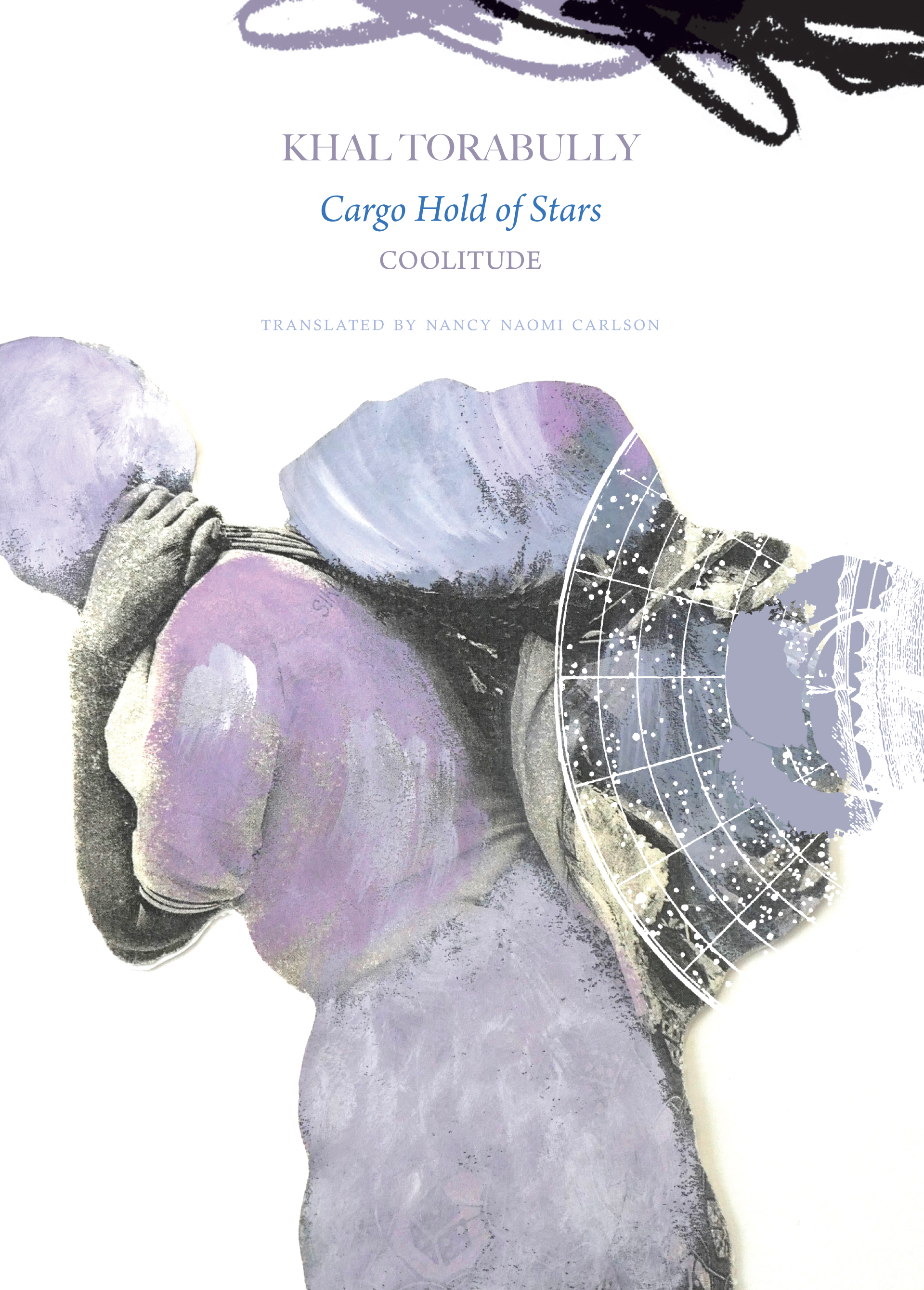
Absence is the only distance felt by the heart: Cargo Hold of Stars: Coolitude by Khal Torabully

Without a spurious memory,
the sole true blood, like salt
flowed around
every white seashell
wrenched from the belly of languages.

Speak so as not to forget—
isn’t this the true gift of tongues?  (p. 62)

The island nation of Mauritius, located in the Indian Ocean about 800 kilometres east of Madagascar, was uninhabited until the Dutch took possession of it in 1598. They named it after governor Maurice of Nassau, but despite two attempts to settle the island, they abandoned it to pirates. Mauritius was then occupied by the French East India Company in 1721 and renamed Ile de France. Over the next forty years settlement proceeded until the French Crown assumed control and established a thriving sugar cane industry, bring in African slaves to work the plantations. In 1810, the British captured the island. Four years later, their sovereignty was confirmed and the name Mauritius was restored but, in contrast to other British colonies, French customs, laws and language remained in place.

When abolition brought an end to slavery in Britain, pressure extended to the colonies and the replacement of slaves with indentured servants, primarily from India, began. Between 1849 and 1923, millions of men and women were brought to the island and beyond to other European colonies. Today, Mauritius, an independent Republic with administrative control of several nearby islands (including a still-disputed claim over the Chagos Archipelago), has a population reflecting its short history. Approximately two-thirds are of Indo-Pakistani origin, one-third Creole (French-African) and a small percentage of mixed Chinese heritage.[i]  A rich blend of cultures, traditions and religions have contributed to a diverse and growing economy in this small African country, but the wounds of a history of slavery and indentured servitude cannot be ignored. Countless people were torn from their homelands and transported in unsafe, sometimes deadly conditions to work in a harsh environment with little hope of ever seeing home again. Cargo Hold of Stars: Coolitude by Mauritian poet, essayist and filmmaker, Khal Torabully, is a poetic tribute to his own ancestors, and an attempt to give voice to those who made that fateful voyage, human cargo in the hold of ships, to the shores of Mauritius so many years ago.

I want to go to the grand bazaar
to seek at last the saffron of shadows
o refrain from your refrain
the hoist of spices clears the remains
o refrain from your refrain
for your bodies heaped on the wind:
cries of cumin: cries my journey’s route
cries of thyme: cries my future
cries of coriander corpses awaiting return.
And the bids of roots chased away
my terrified dreams all the way to hell.   (p. 37)

This collection moves backward, from the blended community of peoples forced into labour who not only held on to traditions carried in their memories, but, with the blending of cultures created a stronger community, through the horrors of the seabound journey, back to the point of departure from their distant motherland. Torabully’s mission is reflected in his reclamation and empowering of the word “coolie,” the pejorative term for primarily Indian and Chinese indentured workers once common throughout the colonies. Echoing Aimé Césaire’s term “Negritude,” he coins the idea of “Coolitude” to recognize the resilience, dignity and cultural and linguistic endurance of these forgotten men and women. By taking up their voices, he is at once giving them back their unique histories and setting them free:

Coolitude: because all humans have the right to a memory, all are entitled to know their first odyssey’s port. Not that this port is a refuge, but because in this place, forever unnameable, they raise those anchors that sometimes bind to their truth.

Yes indeed, all humans have the right to know the flames that ignite their dreams and silences. Even to be their own history’s moth.

By coolitude I mean that peculiar clashing of tongues which cracks the heart of hearts of millions of men for a history of crystals and spices, fabric and parcels of land.

Unsuspected music at the threshold of words from different horizons.

Within myself an encounter with those who invert the course of boats.

In a cargo hold of stars.  (p. 18)

Given the cultural diversity inherent among the population of the workers who were brought to Mauritius, honouring their experiences demands a language of its own. As translator Nancy Naomi Carlson explains in her Foreword, Torabully developed a “poetics of coolitude” by creating “a new French, peppered with Mauritian Creole, Old Scandinavian, old French, mariners’ language, Hindi, Bhojpuri, Urdu and neologisms.” The playfulness and musicality of his verse serves to accentuate the serious, even tragic themes that recur throughout this work, but provided a unique challenge for Carlson, whose wonderful translation of this work has been awarded the 2022 Oxford-Weidenfeld Translation Prize. She employed a “sound mapping” technique, identifying “salient patterns of assonance, alliteration and rhyme in the original, using a colour-coded system to help keep track within each poem, then tried to infuse this music into [her] translation without sacrificing the original meaning.” The results invite reading aloud—the resulting poems read like a cycle of songs—verses recited in the fields, on the ship, around the home fire. Songs of longing, songs of loss, songs of hope.

Cargo Hold of Stars: Coolitude by Khal Torabully is translated by Nancy Naomi Carlson and published by Seagull Books.

[i] Historical and population data from Britannica.com. https://www.britannica.com/place/Mauritius

And we’ve come full circle: Tractatus by Róbert Gál

1.103
Not every pearl of wisdom is necessarily true. Not every catharsis necessarily amounts to understanding.

The Latin title, Tractatus, is ominous, immediately conjuring images of Ludwig Wittgenstein’s famously difficult text, Tractatus Logico-Philosophicus, and indeed a quick glance inside reveals a sequence of numbered statements and passages with an epigram from the great Austrian philosopher himself: Philosophy ought really to be written only as poetry. Yet anyone who has struggled through the logical propositions and equations at the core of Wittgenstein’s critically important, if cool and austere, treatise, will be relieved to know that it is a later, less certain, more playful expression of the philosopher’s thinking that seems to be inspiring much of what unfolds in the latest work from Slovak-born writer and editor, Róbert Gál. But he is also forging his own idiosyncratic path.

Gál has, over the years, produced a collection of writings that have ranged from the fictional to the philosophical, highlighting a gift for aphorisms, a fondness for tautologies, neologisms and rhetorical questions, and a tendency to riff off ideas with the improvisational energy of a jazz stylist. Now, in what may be his shortest work (or a close tie with Naked Thoughts), he is, with a nod to Wittgenstein, engaged in surprisingly dense axiomatic exercise that endeavours to examine what we can know about our experience of truth and reality, and what that implies for our ethical and metaphysical existence in the twenty-first century. That is, of course, not to suggest that his is a rigidly structured systemic exposition—it is a much more fluid, free-flowing and varied engagement with ideas, beginning with a most unconventional approach to a first principle:

1.1
I don’t remember the day I died, but it was obviously before I’d had time to be born. And nothing had mattered more to me than that very business of getting myself born. Ideally getting myself born into the me that had been born already, discretely, corpuscle by corpuscle. Born into the ready and waiting, hence painlessly. Not being born, though born already. But what into? Shall we imagine it? Might it not play havoc with the seeming need to have one’s own outer shell, for all that it just keeps on cracking?

Ah, yes, a rather different game is afoot, and yet not so much as one might expect. Anecdotes, asides and aphorisms are woven into the exercise that follows, an investigation that begins with the self as an entity, the interface through which we interpret the experiences that shape our understanding of the world. By the second section, the discussion starts to open up to the question of what we can intuit about that which cannot be directly observed or proven, and the we are invited to slow down and work our way through the reasoning at hand. Logic, truths, reality, these are the problems that begin to surface, as they will again and again throughout. But buffered by aphorisms, reflections and anecdotes this is neither a dry nor an unduly taxing read. By contrast, this is a living philosophy. Gál is working with large concepts with his signature inventive wit and creative energy. He makes you think:

3.4
Sorrow is one of the joys. Its basis is a process of projecting. If this projecting collapses beneath the pressure of reality, joy is put to an end. However, the pressure of reality also means that our projecting is petrified—and that is the precondition for any further projecting to be possible. Reality becomes the back-up to its own power to bring pressure to bear on us. It is no less prone to being continually deformed as it is subject to being continually formed. The mind by which it is formed becomes a reflection of the mind that it itself is giving form to, and we’ve come full circle.

As we work our way through Tractatus, we are continually challenged to engage with our own assumptions about truth, thought, memory, emotion and much more. Existence becomes understood as a dance with the experience of reality, or that which we imagine reality to be:

7.11
If the truth is meant to be a possibility, then by some means it has to be imposed upon reality.

13.11
Anything is never anything. Anything is a sonorous option between nothing and something that carries weight.

16.3
Intelligence, unlike memory, selects from time only those truths, instants and items of knowledge that it finds worthwhile. Which is why memory is the more truthful.

22.12
Can interior actions have exterior manifestations if interior and exterior are but abstract notions invented by us? Or, conversely, are interior actions—and their exterior manifestations—the reason why these notions have been abstracted by us?

These scattered passages are offered simply to give a taste of the kind of musings that comprise this short volume. Some may seem self-evident, others may trigger a little dissonance. And that’s okay. As the work progresses, the axiomatic elements carry an increasing value. From an open and playful beginning, over less than sixty pages and twenty-seven brief sections of between one and twenty-four sub-sections, the material in Tractatus builds upon itself to create a loosely spiraling structure of statements, questions and extrapolations leading to, a final and important conclusion.

As with all of Gál’s previous publications, this book is small, almost pocket-sized, the kind of thoughtful companion you can easily tuck into a bag. I also want to suggest this is his most accessibly serious philosophical work to date—challenging but not heavy, wise but not dogmatic—and as ever, deceptively playful.

Tractatus by Róbert Gál is translated from the Slovak by David Short and published by Schism Press.

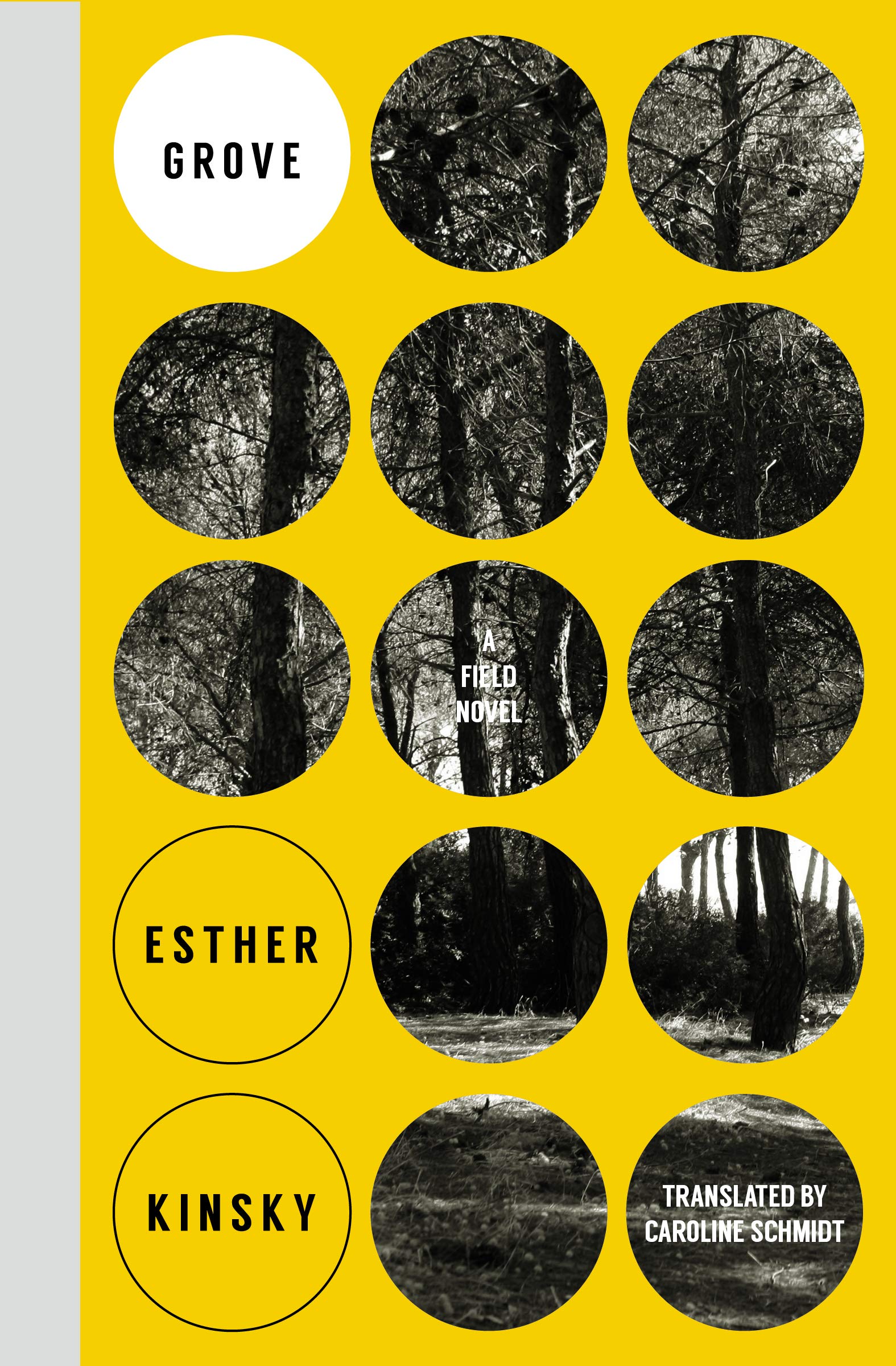
Give me better ghosts: Nekhau by Rico Craig

When we are one hundred and thirty
pages old and it is still night, you place your hand
on my shoulder and still the shovel I’ve been swinging

into darkness. This is place of many walls,
many arms, endless caverns where we are
always at work turning what was into what will be.

(from “Caverns”)

Nekhau is my second encounter with the work of Australian poet Rico Craig. It’s his third collection. I read and wrote about his debut collection, Bone Ink, back in 2017 when I was still building my confidence as an amateur reviewer of poetry. In the meantime I have published a few of my own poems and written about a variety of poetic collections, but I still see myself as someone who lacks the language to critically analyze poetry and am quite comfortable with simply allowing myself to respond or, as I suggested when I set out to review Bone Ink, write through the experience of reading a collection.

With this new work, the focus is love, that most essential and ancient poetic theme. Craig is, as he says, asking the reader to “sit with love, to share hopes and fears.” Swimming through the collection, offering a shimmering thread of connection, are fish—real and talismanic alike. The “nekhau” of the title are small metal fish-shaped amulets created by Ancient Egyptian craftsmen to be attached to a loved one’s hair as protection against drowning. These charms are echoed explicitly and implicitly throughout:

These nekhau-poems aim to preserve and shield: they are reminders of dangers near, distant, even imagined, that bear upon our experience of love. Their existence becomes a rehearsal of loss and an expression of hope.

The lyric “I,” then, carries the capacity to speak for any of us, our loved ones, friends and families, as the poet mines the intricate and intimate dynamics of our interrelationships with one another, in a world born of flesh and dreams.

Nekhau is divided into three sections—End, Nekhau, Future—and to move from one to another there is a sense of a change of environmental awareness. The first and longest section, “End,” seems to speak to an abstracted space in which corporeal and chimerical worlds meet; a dream-like quality infuses the poems. The central section which opens with the title poem, “Nekhau”, a piece that also appears in fragments sprinkled throughout the book, holds to a more immediate domesticity and familial themes, again with an otherworldly tint, while many of the poems in the final part, “Future,” are set in locations abroad or otherwise marked by an a away-from-homeness. Across the collection, in addition to the small fish glimmering through the verses, distinct motifs link poems directly and indirectly, erupting in a visceral language that transcends experience. I could quote endlessly from this delicious collection but this, a length of the closing passage of “Black Swans” speaks volumes, distilling the power of Craig’s poetic imagination:

The river is a misshapen question and we answer, waking,
white air, the love beneath an eyelid. Our molecules crush
against pale ether; our songs float on water, fill culverts,
push against the scarp. All night we protect the rocks,
hide them in our sleeves; and when sunrise wakes us,
we lift from earth. I’m floating above the bed,
beside you, in a half-dream light shines into. My ears are filled
with sounds—lungs expanding, the river expelling life.
There are shapes hidden below our skin and each morning
I remember you as clearly as blood remembers a vein.
Love is cellular, in the sky, and you are still beside me. We will rise
and move into the day, encased in the people we are; we will drift
from this place, there will be buses to catch, clouds to be;
and for a moment it is impossible to know what has become of me,
become of you, if there is an I. It’s possible the scientists
have been truthful and we are clouds of swirling

matter, and only our pact with vision keeps us solid.

With his debut collection, Bone Ink, Craig was engaged a form of storytelling, slipping into characters, taking a frustrated attempt at prose writing and turning it into fragments of stories of suburban youth and riffing on artistic and historical themes. Now, two collections later his canvas is broader, more ethereal, but not divorced from quotidian routines or harsh contemporary realities. As he carries his reader (listener?) along a current sparked by the magic and the mundane, summoning fear and hope, one sense that the nekhau he invokes as a theme are also guiding his own passage, and growth, as a poet.

We are home you say, and I recognise nothing

of this darkness, only artefacts we have collected,
on we have rubbed across our skin,
treasures you have polished from dust.

(from “Caverns”)

Nekhau by Rico Craig is published by Recent Work Press.

No one’s immune from miracles: Shadow of Things to Come by Kossi Efoui

The destiny that now draws me far away from here is still called life, but I have to admit it’s like a leap into the void. They say that before he hits the ground a man falling from a great height sees all the moments of his existence come together and drain from him in batches of images.

And for me, it’s in batches of mingled words—that the life that brought me here is melting away.

In what unfolds as one final personal war of words, echoing against the darkness that surrounds him, the speaker at the heart of Shadow of Things to Come explains what has brought him to the edge of an uncertain future. Piece by piece he pulls together the memories that comprise his twenty-one years of life, essentially setting down the details of his past and readying himself to let go of all he has ever been and known. As he recounts his story, he chooses his words carefully, holding onto them in the shifting moonlight, for his is a society in which language has been reduced to meaningless nicknames and slogans. Through a spare and cautious narrative, the image of an Orwellian nightmare slowly takes shape.

This novella by Togolese author and playwright, Kossi Efoui, is set in an unnamed African nation which has fallen under some kind of dictatorial rule in which, during the first stage—the “Time of Annexation”—people are disappeared and forced to work at a place known as the Plantation until relieved by death or madness. Once the “commodity” (oil) is discovered, everything shifts. The disappearances stop and a new future is imagined. Now, in the service of “Mother Rebirth,” an aggressive campaign begins to bring tribal forest dwelling peoples into the “modern” world—for their own good and to secure pipeline passage for the precious resource. Although Efoui has lived in self-imposed exile in France in opposition to the Gnassingbé regime, since 1992, it would be misleading to read this dystopic work as any kind of direct analogy for his homeland or any specific historical or political condition. The origin of the society his characters live in is never explored. As a result, this tale has an  amorphous quality that makes it widely applicable in space and time. And all the more disquieting for it.

The speaker, from the room in which he is hiding, recalls that he was five years old when his father, a saxophonist, was spirited away by two shadowy figures. The removals appeared random. Agents would arrive with the common incantation: On account of the circumstances, prepare yourself to be temporarily removed from your nearest and dearest, and forcibly take their chosen target or targets away. But before they left, they would take all photographic evidence of the human forms they had come to retrieve. At the time it was unknown where all these unfortunate souls had been taken, only that “temporary,” like so much of the language employed, was devoid of meaning. Appropriate language was but another regulated item in a society in which compliance to an ever changing set of rules and guidelines was inforced:

Words themselves seemed to suffer the same restrictions as the circulation of approved commodities. The word ‘annexation,’ for example, was not to be heard anywhere. The way things were in my childhood, we kept silent a lot.

That degradation…says the speaker.

The loss of the speaker’s father drove his mother mad, she was soon committed to an institution and he was left in the care of Mama Maize, an eccentric woman who cared for a large group of abandoned or orphaned children, supporting herself by whatever means possible. Her goal was to pass on to them the tools, practical and emotional, that they would need to survive. Her moto was: No one’s immune from miracles.

And one day a miracle does occur. The speaker’s father returns, one of a minority of those who managed to survive removal. The speaker is nine years old by this point, The End of the Times of Annexation has been marked by celebrations of Independence and Rebirth, and when he has long given up hope of a reunion, out of the dust and shadows a man emerges still holding a saxophone case, “barely a skeleton, almost membraneless, wholly incapable of embracing—and voiceless.” The occasion is immediately recorded by a photographer.

The condition of the speaker’s father affords him a pension and a place to live in this new world order. Father and son move into this unit along with Ikko, an abandoned boy from Mama Maize’s home who is mistakenly added to the family group and becomes the speaker’s “administrative brother.” Our hero is a bright boy and this leads to his acceptance into the Spearhead Institute several years later. He is on his way to a promising future within the country’s societal structure but the confrontational atmosphere of the school puts him off. In time he finds himself skipping classes to hang out at Antique Editions, a bookstore run by Axil Kemal, a man who becomes a big brother or surrogate father, and offers an introduction to a world that runs against the norms of the rigid dictates of the state. It will be a mind opening relationship:

That’s what he was for me, the guide for my curiosity. At an age when you learn to believe in ‘thinking masters’, Axis Kemal was my laughing master and, sheltered beneath that laughter, my mind was kept safe from the diseases of truth, he said—that acne of the soul, he said.

It will also be a vital connection when the speaker has to make a decision about his own commitment to the future that is being laid out for him in a duplicitous society where what is said cannot be trusted and what is not being said cannot be fully imagined.

Shadow of Things to Come is, above all, a story about language and communication. The narrative itself is one step removed from a straight first person account—the protagonist’s reflections are being reported by an unknown third person narrator, who is listening to him, occasionally referring to him as “the speaker.” This undefined relationship, given the circumstances, adds a layer of uncertainty and potential threat. Whether he aware of his audience or not, the speaker is attentive to the power of words. To their use and misuse. He regularly comments on his ability, learned at an early age, to read the hidden intentions of others by the slightest creases in their faces. This is a skill that allows him to decipher the truths behind words, those spoken and left unsaid. But lack of communication, as with his mute and damaged father, troubles him deeply, as do the strange markings his adopted brother Ikko makes after returning from his conscripted service in the so-called “Frontier Challenge.” The tendency of people to fall back on slogans and stock phrases undermines communication and blurs the truth, but, of course, that is the point. When you can no longer trust what anyone says, one either goes with the program or looks for a way out. And to escape you may have to leave even your words behind.

Shadow of Things to Come by Kossi Efoui is translated from the French by Chris Turner and published by Seagull Books.

At the back of the west wind: Rosa’s Very Own Personal Revolution by Eric Dupont

“Hegel remarks somewhere that all facts and personages of great importance  in world history occur, as it were, twice. He forgot to add: the first time as tragedy, the second as farce.”

These words of Marx occur twice in course of Eric Dupont’s Rosa’s Very Own Personal Revolution: early on, underlined in the book lying open on the lap of the protagonist’s recently deceased mother, and again as the story nears an end. But between the two occurrences it’s pure farce—even the tragic bits.

One has to wonder what goes on in the imagination of Dupont, the Quebec writer whose works have won awards and garnered impressive nominations in both the original French and in English translation. With his latest release from QC Fiction, he has defied the odds of conventional storytelling to pull folktale magic, Marxist idealism, sex work, the politics of language and culture, and a curse reaching back through the centuries into one oddly contemporary tale. From the outset it is probably best allow yourself plenty of rational wiggle room, accept the premise of the proposed wild goose chase or fool’s errand at the heart of Rosa’s grand adventure, assured that however unlikely, the novel’s internal logic will be disclosed before the last page is turned. And ten to one you won’t see it coming!

Our heroine here is Rosa, named after the famous revolutionary socialist, raised by her trade unionist mother, Terese Ost, and Aunt Zenaida, an anachronistic old woman, one hundred years behind the times, who literally emerged from a large block of ice Terese and her daughter found on the shore near their village and dragged back home to thaw before the stove. Home is Notre-Dame-de-Cachelot, a tiny hamlet “forgotten by God and all of humankind” out on the Gaspé Peninsula “where the wind can be a crutch to lean on.” Until it’s not. Little Rosa is raised on a healthy diet of Marxist ideology and regular rounds of Scrabble, but things are not good in Notre-Dame-de-Cachelot. The paper mill has closed down, and the local economy has been forced to rely on a mysterious gas called Boredom which is tapped and sold to foreign interests.

And then, one day, the wind suddenly stops just as a leak occurs in one of the pipes accessing the source of the precious, albeit poisonous, gaseous commodity. Soon, people start dying of Boredom, beginning with Rosa’s mother. Without the wind to disperse the fumes, the village is doomed. Rosa tries to find solace in her socialist texts but to no avail. Instead, the potential solution comes to her when she finds a giant winkle shell on the shore, places the massive mollusc to her ear, and hears her mother’s voice advise her that the wind comes from the west—from Montreal. Immediately Rosa, who is now twenty, knows what she must do.

So off she goes. Waiting for the bus to take her into the city she meets an international troop of strippers (as one does), and much to their collective surprise, a woman pulls up in a minivan and offers to give them all a lift. This savoir is Jeanne Joyal and it just so happens that she runs a boarding house for young women where Rosa is welcome to stay. All too perfect? All too perfectly weird, I’d say. Naive and trusting, Rosa arrives in Montreal dressed like someone from a distant era and immediately finds a job in a pay-by-the-hour motel, across from a club where her new friends perform Communist infused lurid acts for an audience containing more than a few national political figures . Of course, she has no idea what she has just walked into, but her simplicity and openly accepting character inspires the strippers and hookers in her work environment to look out for her and gently educate her about the less savoury aspects of the world.

What makes this most unlikely scenario work is the central character, the fabulously innocent Rosa Ost. She evolves and hardens as time goes on, but her trust and dedication to her seemingly impossible task is endearing. At her lodgings, she learns that her landlady is tough, set in her ways and determined to educate her young charges, Rosa and three others, in the intricacies of Quebec history whether they want it or not. Our protagonist is often the one to take a risk and stand up in defense of her roommates. Like a good socialist.

There is romance, there is betrayal and there is mystery against a backdrop of political realities true to the timing of the narrative—late 2000, following the death of Pierre Elliot Trudeau—and still valid today. Language and cultural tensions are growing, the climate is an increasing concern and attitudes toward women, especially those in the sex trade, are marked by double standards that still prevail. The weakest link in this wild tale is a running gag about dialects that doesn’t necessarily translate smoothly. For it to work one has to read the Gaspé and Acadian seasoned dialogue with the correct accent. In English it risks falling flat. But it’s not a huge element within the narrative overall. Playful and irreverent this improbable farce is a fun read with a strangely satisfying, if bizarre, ending that ties up the loose ends in the wildest of knots.

Rosa’s Very Own Personal Revolution by Eric Dupont in translated by Peter McCambridge and published by QC Fiction.

“I was a soldier and this is the nation’s soil!” No Windmills in Basra by Diaa Jubaili

Basra, in southeastern Iraq, is the country’s principle port city, best known to lovers of The Thousand and One Arabian Nights, as the site from which Sinbad set sail. But over the course of its long history, from the time it was first founded as a military camp in 635 CE to the present day, it has had a rich, diverse, and often troubled history. More recent times have been marked by the repeated onslaught of violence and destruction during the Iran-Iraq War, the Persian Gulf War and the Iraq War. Imagine, then, this grim reality as a back drop—sometimes distant, sometimes immediate—for whimsical, melancholy and magical flash fiction and you have an idea what Diaa Jubaili’s newly released collection No Windmills in Basra has in store. Of course, with seventy-five brief stories and one more expansive piece, many variations of joy and heartache play out across the pages of this lively, inventive volume.

Born in Basra in 1977, Jubaili has published eight novels and two earlier collections of short stories, but No Windmills in Basra is his first book to be translated into English and his first foray into the territory of flash fiction. In an interview with Chip Rossetti, the translator of his new book, he explained this move:

I chose this genre because there are ideas that can’t sustain elaboration or filling in gaps with things that don’t mean much to the reader. Getting an idea across with the least number of words is a difficult task, but just the challenge of doing it isn’t enough: the writer has to have an exceptional ability to create surprise. But I’ve loved this genre of concentrated narrative for a long time, and I read a lot about it before I tried writing the first text.

He goes on to talk about the importance of using vivid, poetic language to build a scene and provoke questions in the mind of the reader. Puns and play on meanings also appeal to him, an energy that charges his powerful, often surprising conclusions.

The stories in this collection are divided thematically—wars, love, mothers, women, children, poets and miscellaneous—but, as one might expect, key elements like war, love and family reappear throughout. Jubaili’s preparatory work serves him well—his tales are tightly woven, witty and affecting. Fantastical elements abound, a reflection of the importance of magic in Arabic folktales, often employed with humour, irony and black comedy. For instance, in one story, a man returning to his hometown after the end of the Iran-Iraq War finds his family plot of land has turned into a wasteland of salt. Tirelessly he and his sons work to rejuvenate the soil, hoping to restore it and once again harvest fruits and vegetables. But to their surprise they awaken the rotting corpses of soldiers, fallen there over the intervening years, who bitterly complain that with the salt gone they have been deprived of all they had left—the taste of death. In another, a woman suddenly loses her sense of taste after eating her first banana. As time goes on she loses her sense of smell, then she loses her colour. She grows weaker while everything else thrives around her. In the end she has become water. Elsewhere, we encounter a child who develops a plan to deal with dreaded stealth bombers, a young woman with sparrows in her ribcage and a blind woman searching for and finding a particular photo of her dead son by its scent. Ranging in length from a single paragraph to a few pages, this collection moves from the capricious to the tragic and back again.

At times Jubaili calls on traditional folklore and stories from the Quran (briefly explained in translator’s notes, as needed), but he also references and often invokes a wide range of western and international literary figures, sometimes even making them central characters as in the story “Death Stones” where Mrs. Woolf, collecting stones to fill her pockets for her fateful final walk, keeps setting her collection aside to pursue more, only to return and find her stash gone. Eventually she crosses the river, sets down a new collection, and watches from behind a tree as a young girl, also named Virginia, picks up the stones and skips them across the water’s surface. In another, Flaubert and Tolstoy meet and decide to exchange characters. And on it goes. It is impossible to offer more than the most minimal sampling of what this endlessly surprising collection contains, but across seventy-six brief stories, there is much to delight and entertain. At the same time, we are also granted a vision of Basra and life during wartime in a fashion that only flash fiction can deliver.

No Windmills in Basra by Diaa Jubaili is translated from the Arabic by Chip Rossetti and published by Deep Vellum.

There is always a coming storm: Disembodied by Christina Tudor-Sideri

(W)ere it not for the troubling discoloration of my skin, one could even think that I am merely sleeping out in the open; it is only September after all, and is not September the perfect month for resting under the bruised sky?

Novels narrated by the dead are not an entirely unique literary phenomenon, but typically the deceased speaker takes the reigns to unravel a mystery, look back on a life, or observe future happenings from beyond the grave. Disembodied by Christina Tudor-Sideri opens with the statement, “I died on the twelfth of September, at the height of happiness,” but proceeds as uncertain meditation on this strange state of being no more, yet continuing to be. It could be described as an exercise in imagining experience unguided by expectation that begins when a woman slips out of life while sitting in the garden beneath a chestnut tree and becomes, ultimately, a kind of existential post-mortem of the self.

Disembodied is a novel with only an intimation of plot. It is a speculative journey, reader with writer—one in which the destination is no more evident to the former than the latter. But that is not to imply that this is a ghostly narrative that wanders widely and recklessly, rather it is one in which that narrator is still bound somehow to her own corpse, neither really inside nor outside. It is not what she might have anticipated, to be consciousness still tethered to a body, immobile yet somehow sensible, slowly embarking on a new relationship with reality, tangible and intangible.

She is a woman becoming a memory. An unstable and fragmented one.

Memories visit, moments from childhood and from the most recent tasks left unfinished in her nearby house. But critical biographical details escape her—she can’t remember what she might have once done for a living and, although she can recall people from her past, she can bring no faces to mind. She can sketch out a pattern of decisions that led her to move to an isolated location, she can talk of illness and pain, but death has disconnected her from the compass of time:

There are moments in which it feels as if months have gone by, that it has been months, even years since I fell here, and there are others when I am certain that it happened mere seconds ago, moments when I think I will get back up and return to my day as if nothing had happened, and I wish I knew now a little something about brain activity after death, about how consciousness is connected to the physiological functioning of the brain and how death severs that connection—about the very process of death, if not something, then everything, in great detail.

Being dead is not, in itself, a problem for our narrator. It is as if its early arrival—she figures she is probably in her mid-thirties—is something she anticipated, a probable outcome of an illness she had accepted, even sought to meet in solitude. And yet to be incompletely disembodied was unforeseen. She feels, or imagines she feels rain and falling leaves touch her skin. At times her body seems to be preparing to return to nature, while at other times she longs to move, weighed down by the burden of the illusion of breathing, an embodied remembrance that feeds the sensation that she could simply arise and return to her day. It remains, then, for her to reflect on life and death, the abstracted joys and sorrows that don’t quite fit into a complete picture, unable to shut out a parade of fragmented memories—experienced or read in a book or caught in a dream. “At rest” there is no rest.

Here in the presence of no other human being, with eyes that burn like embers in my skull, eyes that I don’t even know whether they belong to me or how I would recognize them if someone were to hold a mirror above, under this chestnut tree that looks nothing like the one I once knew, in this garden that I have seen in my dreams over and over again, long before ever actually finding the house, I let words crawl out of my mind and out of my mouth, only to waste them on speaking of something I have not thought of in years, to waste words and to waste myself on suffocation one final time.

Her questions become increasingly existential, focused on the matter of what kind of matter might account for this continued consciousness. A soul? An awareness that does not depend on functioning senses? The philosophical expansiveness becomes a kind of freedom, a freedom without answers, only more questions, but even as she drifts she cannot escape the pull of the longing to be. Again and again she returns to anchor herself, under a tree, in the garden. The tangible remnants of recent life, her nearby house, her library, a cup of coffee, an unfinished letter call to her.

There are echoes here of Tudor-Sideri’s first book, Under the Sign of the Labyrinth, a memoir/meditation on embodied experience that draws on myths and traditions of the Romania of her childhood to explore what it means to exist in corporeal form, wounded, mortal. But this is a philosophical/fictional exercise that extends beyond what we can know, open-ended and unrestrained. As she explains in a collection of interview fragments gathered in Minor Literature[s]:

I felt an urge to allow myself more: to play with something different, more permissive, although permissive is not necessarily what I mean – I needed a larger playground, as simple as that. And the novel, a dash of fiction, allowed me to do so. I did not plan anything, I did not know where I would arrive, I had nothing in mind aside from the beginning, which I pulled from a dream, same as a few other scenes […]

This openness and resistance to any specific genre, allows her to entertain the kind of problems that rarely trouble the typical post-death narrator and present a most intriguing possibility—that dying might not be exactly the release we imagine. The narrative style—a single, unbroken paragraph—enhances the claustrophobia of the speaker, often troubled that her thoughts and memories won’t release her. I might have preferred an occasional line break here and there, but when I think about it that’s a question of my comfort. A dead narrator doesn’t need to stop to catch her breath.

Disembodied by Christina Tudor-Sideri is published by Sublunary Editions.