Dramatically, melodramatically, or obliquely: American Abductions by Mauro Javier Cárdenas

. . . no, Antonio says to his daughters during dinner, Americans can’t imagine the conditions, and if they can’t imagine the conditions, they can’t imagine themselves as refugees, and if they can’t imagine themselves as refugees, they will conclude that refugees are different from them, a different species, Eva says, they read in the news that a different species from Central America have to flee their homes and that they’re coming here, and that we’re abducting their children to teach them a lesson, life is hard and then we die, Ada says. . .

There is something distinctly unsettling about reading the latest novel by Ecuadorian-American writer  Mauro Javier Cárdenas on the eve of Trump’s second term—Racist in Chief, anyone?—especially with tech billionaire Elon Musk on his arm assuming they haven’t broken up by then. Projected into a future that now seems shockingly close, American Abductions envisions a US in which the mass deportation of Latin American migrants, not just those who are illegal but naturalized citizens and sometimes even their children, is a large scale, technologically advanced, industrialized, and profit motivated operation. It consumes the waking and sleeping hours of its unfortunate targets and tears their lives apart in distinct yet similar ways. Antonio, the divorced cubicle-bound data analyst hero of Cárdenas’s last novel, Aphasia, who was trying to write a novel while juggling  commitments to his ex, his daughters, his mother and sister, plus a couple of girlfriends, has, in this scenario, been abducted and deported to his native Colombia. He was driving the girls to school when immigration officials apprehended him, a scene recorded by Ada, his eldest, on a video that subsequently went viral. When we catch up with him, decades have passed and his health is failing (he will die but continues to appear in recollected scenes from the past or via recordings of the many interviews he conducted with fellow deportees over the years). His daughters are grown. His youngest, Eva, a conceptual artist, joined him in Bogota after finishing university and has been there for seven years, while Ada has remained in San Francisco where she works as an architect. Add to this a varied cast of Latin American exiles and their families connected through either Antonio’s ongoing interview project and /or the lucid dream workshops of an online doctor, and you have the basic sketch of this dynamic and original work.

Cárdenas is a passionate devotee of the long sentence, producing multi-page strings of thoughts, reflections, and dialogue that tend to shift mid-stream—watch those commas, those “he says,” or “she thinks”—demanding attention while providing ample room for humour, recurring themes, and often biting commentary. But he is not simply obsessed with word count, an objective that in itself can lead to the proliferation of hopelessly unnecessary, redundant clauses. Rather, his sentences seem to propel themselves with an intrinsic energy that never overstays its welcome. There was, he admits in an interview for Minor Literature[s], a method guiding the writing of this book:
I wrote every sentence in American Abductions the same way. I started each sentence with a human impulse that I attempted to exhaust within the same sentence. This attempt to exhaust could be called In Search of Unexpected Linkages, with the caveat that this doesn’t translate to anything goes since the human impulse at the beginning determines the radius of operations. This approach also doesn’t allow for me adding a reference or an image three months later because that would disturb the progression of the sentence, which is based on the linkages previously generated. I typically spend one week on a 1,000-word sentence. Every day during that one week I read the sentence from the beginning so that I can ground myself on the opening impulse and what has already been generated. During that one week I have to read widely and wildly but in the vicinity of the radius of operations, which is as vague as it sounds — more Ouija board than research — though obviously I also do primary research (you would be surprised by how many facts are included in the opening sentence, for instance).

If that sounds like a recipe for a forced and artificial exercise it is anything but. This is a serious, albeit futuristic, novel that is unafraid to tilt at uncomfortable truths. There are continuing and developing threads and characters, whose stories reflect the fear, isolation, and (quite literal) dreams of those directly impacted by the anti-Latin American agenda of the “Pale Americans.” Central to this are, of course, Eva and Ada who are not only deprived of their rather eccentric father at a young age, but are unable to be together when he is sick or after his death, as they decide to continue his work. But there are other strained or separated families as well.

The subject matter—especially in light of the increasing antipathy and hostility toward immigrants in the Global North—may be grim, but this is a playful, absurdist novel nonetheless. Curious data and scientific facts are woven in to the narrative and literary references abound, some direct, such as the discussion of texts by Leonora Carrington, Bernhard, Borges, and Sebald; others less so, such as the adoption of the names of authors, musicians, artists, and Bolaño characters as intentional pseudonyms or nicknames for intelligent technologies. Sentence by sentence, each chapter builds on those that proceed it to create an intelligent, entertaining and, dare we say it, unnervingly prophetic novel.

American Abductions by Mauro Javier Cárdenas is published by Dalkey Archive Press. An excerpt can be found at Minor Literature[s].

People can grow old anywhere: Man in the Holocene by Max Frisch

—only human beings can recognize catastrophe, provided they survive them; Nature recognizes no catastrophes.

—man emerged in the Holocene.

It has been raining for days now, no night passes without thunderstorms and cloudbursts. In fact, Geiser can catalogue more types of thunder than the Encyclopedia which, to be fair, is rather mute on the subject, preferring to describe lightening instead. But, when we meet him, the seventy-four year-old widower is passing yet another stormy night trying to build a pagoda out of crispbread. And worrying the possibility of landslides. The highway through the valley is blocked so the mail bus can’t get through. Periodically the power goes out. To get through, he is intent on keeping his mind active, reading, accumulating facts and endeavouring to remember those details—like mathematical formulas—that have slipped into the dust of his aging memory.

Man in the Holocene by Swiss writer Max Frisch is by turns the funny, unconventional, and bittersweet tale of a man who is waging his own little battle against the dying of the light, and attempting to construct a refuge in a gallery of facts while the storm rages outside his door.

Somewhere a tapping on metal.

He trains his field glasses on the mountainside watching for cracks, and reads up on the meteorological history of the valley he has lived in for the past fourteen years. He  delves into matters of rock formation, studies the measurement of geological time, and records details about dinosaurs. He begins by copying out information, but soon realizes that it is far more efficient to clip out passages of interest from the encyclopedia, the Bible, and other books, and then tape them to the walls of his home. Reproductions of his various cut and paste selections are embedded in the text.

Occasionally Geiser ventures out, umbrella in hand, to examine the state of his garden with its fallen dry stone wall, or once the power goes out for an extended period, to give away all the food in his deepfreeze—“the meat, usually hard as iron, is flabby, and the trout are repulsive to the touch, the sausages soft as slugs.” Only when he returns home, having foisted his thawed goods on his befuddled neighbours, does he remember that he could have at least roasted the meat over the fire in the wood stove.

One is becoming stupid—!

Through a fragmented text, repeated refrains, collected facts, and Geiser’s increasingly muddled meditations, Frisch brings us into the interior world of a truly memorable protagonist. He is a modest, somewhat eccentric figure who, at least since his wife’s death, has tended to keep to himself. Originally from Basel, where his daughter, son-in-law and grandchildren still live, he is an outsider, no matter how long he has lived in the valley. “A valley without through traffic,” as he describes it. A detailed description of the region, its industry, and social history is, if rather nonchalant in tone, not without moments of dry humour:

In the summer there are cranberries, also mushrooms. When it is not raining, the white trails of passenger planes can be seen high in the sky, though one does not hear them. The last murder in the valley—and that only rumored, since it never came to court—happened whole decades ago. Ever since the young men have owned motorcycles, incest has been dying out, and so has sodomy.

Women have had the vote since 1971.

What makes this novella work so well is that it is not simply an assemblage of fragmented passages, repeated refrains, and a collection of assorted facts. It is a well-paced and orchestrated, if crumbling, tragic comedy.  Geiser’s memory may be fading, but the narrative takes us into vivid accounts of the Icelandic landscape he once visited and a youthful attempt to climb the Matterhorn with his brother (a story he’s told so often that even his grandchildren are tired of it). And then there is his possibly ill-advised decision to, due to the blocked highway, head off early one morning with the goal of crossing the mountain pass so he can catch a train to the city. He changes his mind quite late into the adventure and returns home a weakened and diminished soul. A tired, confused man now determined to shut out the world once and for all, but still the reluctant hero of a story that is beautiful, sad, and quite unexpected.

Man in the Holocene by Max Frisch is translated from the German by Geoffrey Skelton and published by Dalkey Archive.

Out of the never-ending flow of stories: Journey to the South by Michal Ajvaz

“Little did he know—or maybe he refused to acknowledge—that there are no pure story streams; all stories are scary, all come from a single strange-smelling wellspring that seeps into the folds of things and collects in dirty corners of the spaces we inhabit, all trace patterns of desire and fear that aren’t even ours but those of a monster whose dream is our life.”

Here’s a story that starts innocently enough, like so many stories before it, with a murder—no, make that two. Of course, that’s too simple. No murder mystery, if you’re expecting a story that will attempt to reach some kind of conclusion, an explanation, starts with the act itself alone; it begins somewhere else, somewhere back where the story really begins… But here’s a warning: this is a murder mystery that will wind its way through more than a few wildly unlikely stories on the way from execution to explanation.

To be honest, I signed up for the adventure that is Michal Ajvaz’s Journey to the South without any clear expectation about what might lie in wait for me. If you come to this 2003 novel, newly translated by Andrew Oakland, with previous experience with the Czech author’s idiosyncratic approach to postmodern fiction, you will likely be prepared to simply strap yourself in for an improbable, endlessly discursive, multi-layered excursion into the heart of what it means tell stories at all. If you’re new to his work, consider this an invitation to dive into the deep end—about six hundred pages deep, give or take.

The novel opens in the isolated village of Loutro on the south shore of Crete, where an unnamed narrator chances upon a young man, a Czech it would seem, with an unusual assortment of reading material. Overcome with curiosity, he decides to eschew his typical tendency to avoid engaging with fellow countrymen when abroad, and comment on the books. Thus begins a lengthy conversation that will extend over several evenings and countless glasses of wine and ouzo as Martin, a philosophy student working on a PhD thesis on Kant, shares the strangely convoluted tale of the circumstances that have led him to travel from Prague to Crete.

One evening some four months earlier, on his way home from the library, Martin had chanced upon a poster advertising a ballet based on The Critique of Pure Reason by Emmanuel Kant. The show was playing every Wednesday for two months and, this being a Wednesday, he headed to the theatre that very night. According to the program, the composer Tomáš Kantor was a writer with little published work who had “died tragically in Turkey in July or August 2006”—the summer before. As the show began, the young Kant scholar endeavoured to interpret the meaning and roles of the dancers onstage. To his surprise it really did begin to make sense to him. Certain dancers were clearly portraying sensory matter, others pure form, with a violet clad figure to represent Transcendental Apperception, that which we call “I.” Standing in the back, was a veiled mysterious figure that could only be Ding an sich—“The Thing in Itself” or the true status of objects which we cannot know. All was going well until the end of the second act when suddenly The Thing In Itself emerged from the shadows and began to move about, throwing off the dancers. The figure advanced to centre stage where it stopped, pulled out a pistol and shot straight into the audience, killing a man seated in the front row.

Martin, like everyone else in the theatre, is now witness to a murder. But before long he is even more deeply involved. The victim, it turns out, was a wealthy businessman, Petr Quas, and the step brother of the ballet’s composer, Tomáš Kantor. However, what captures Martin’s interest is the lovely red-headed woman he sees, first at the police station and again at the university. Drawn to her, he discovers that she is Kristyna, Tomáš’s ex-girlfriend who is still holding an inextinguishable torch for him since he abruptly broke up with her two months before his mysterious death. Smitten, he arranges to meet with her daily so she can tell him all about Tomáš on the pretence of wanting to understand if and how the two brothers’ death may be linked.

So, now we have Martin reporting what Kristyna told him about the unhappy childhoods of Tomáš and Petr, the former’s multiple attempts at creative expression that ultimately ended in darkness and despair, and the latter’s brief success as a poet. But where one brother finds his way from poetry into business, the other settles into a post as a transportation dispatcher at the end of the tram line. Then, one day, while off sick, a novel suddenly starts to take shape before Tomáš’s eyes, first as an empty city, then as a coastal town in an imagined nation complete with characters and strange occurrences. A series of events ultimately leads to the injury of his protagonist, Marius, who is taken to recover at the home of his lover’s grandparents  where he is told a story, second-hand, which in turn contains a novel—science fiction this time—and by this point the depth of stories within stories is running very deep, taking us to cities and countries, real and imaginary, across oceans and continents. However, when he finally winds his way to the end of his composition, the author is unsatisfied. Tomáš feels that his book, which had arisen out of nothing, has failed to correspond to the nothingness he carries inside:

“There was nothing so rich that it could be expressed merely by an endless proliferation of stories, a never-ending cascade of events in which other events spurted forth from every object, space, and gesture, then yet more events from the spaces, objects, and gestures of these. Tomáš felt that even the entire cosmos would be too little for the expression of nothing; a cosmos that expressed emptiness would have to be endless.”

His overarching novel then starts to mutate and grow, sending out tendrils, so to speak that branch off and flower in unexpected ways forming part of a network of signs and rebuses that Martin and Kristyna will follow as they eventually travel from Prague to Crete in search of Tomáš’s killer.

If Journey to the South sounds like a baggy monster of a book, well, it would be if Ajvaz didn’t have both feet firmly planted in the tell-don’t-show school of storytelling. The ungainly nest of narratives he constructs has its own internal cohesion and propulsive energy—no matter how strange or how far reaching—because at the end of the day, Martin is reporting it all to his audience, the narrator who interjects when he wants to clarify something and reminds us that we are actually at a quiet resort in Crete. And, of course, Martin himself is an active participant in the story he is relaying, driven by his attraction to Krystina if nothing else. Their fanciful journey through Europe from one unlikely—and strangely unravelling—clue to another is marked by their own doubts about the reasonableness of the entire enterprise. At one point, Martin even wonders if he has gotten caught up in a cheap Dan Brown novel, his own private Da Vinci Code. But this is a murder mystery and our amateur detectives do manage to make their way to an oddly satisfying conclusion. If, in fact the story actually ends when this book does…

Journey to the South is, then, classic Ajvaz territory. Structurally he favours the mise-en-abîme, the story with a story framework (fittingly, “placed into the abyss”), and delights in cliché genre tropes like car chases, monsters, cartoon villains and more. Woven into this are philosophical, scientific and theoretical references, often in unexpected contexts. I suspect that one will either welcome the kind of world he creates and his exploration of the possibility of reaching some semblance of truth (reality) in the stories we read and tell, or find his work hopelessly restricted to a game of limited scope and value. However, although he likes to keep his fiction separate from his theoretical work, like fellow Czech postmodern novelist Daniela Hodrova, Ajvaz is a respected literary critic and it is unlikely that his critical principles have not seeped into his fantastic storyscapes to some degree. (For a discussion of his academic work see David Vichnar’s essay on the Equus site.) Nonetheless, some critics have accused Ajvaz of repeatedly playing in the same sandbox, hauling out the same tired toys. Vichnar also answers this complaint cleverly:

What this wide-spread, if also reductive and simplifying, viewpoint fails to acknowledge is that Ajvaz’s fictional world leaves unresolved, and thus in perpetual motion and fruitful exchange, the dynamics of opposing principles which his thought strove to bring to a stasis of resolution. His fiction is, thus, bound to repeat itself, again and again, in all of his attempted re-writes of the impossible accounts of all the other cities, all the other intimations of pre-articulated fields, approachable in fiction only through linguistic articulation, and thus always already pre-fabricated. If this be the failure of Ajvaz’s fiction—a simple formula repeated ad nauseam without conclusive progress—then its saving grace, like that of Beckett’s, is its continuous effort to “fail better” – imaginatively, challengingly, and ultimately, enjoyably.

At the end of the day, I am hard pressed to express how effectively Ajvaz manages to pull off such a multi-layered, wildly entertaining feat of storytelling making it intelligent and thought provoking at the same time. It’s easy to lose track just how deeply embedded you are in the stories within stories (or even now to unwrap them to remember just who was telling what when), but somehow it works. It’s serious and absurd, sad and funny, cheesy and moving. So, although it may have been my first Ajvaz adventure, it won’t be my last.

Journey to the South by Michal Ajvaz is translated from the Czech by Andrew Oakland and will be published by Dalkey Archive Press on March 28, 2023.

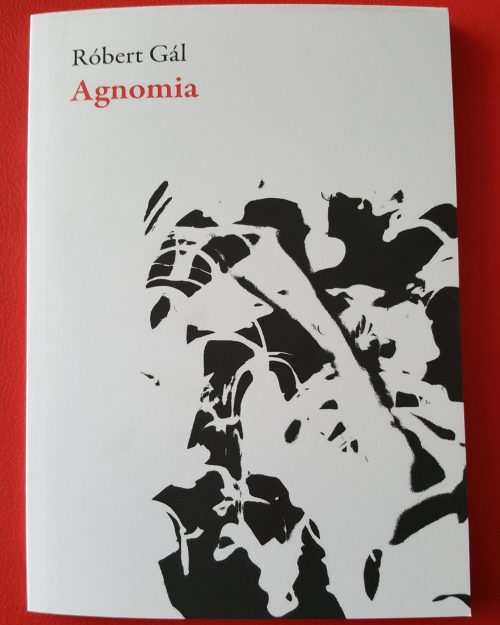
Lost in the endlessly circular experience of Agnomia by Róbert Gál

Stories that begin at the end don’t need beginnings that would convict them of making a point, that is, of committing a falsehood. A falsehood that loses its falsehood, being turned inside out by the truth, as if that were possible at first sight. But in any subculture there are other rules and privileges accorded to others that permit them to fire off viruses at everyone else, as if all that was at issue were the odd truth. As indeed is the case.

After what seems an impossible delay, and an unthinkable series of detours, Agnomia by Slovakian writer Róbert Gál is finally available in English, only a decade after its original release. I originally encountered Róbert’s writing in 2015 with what was, at the time, his first published work of fiction in English, On Wing (Dalkey Archive). After that I slipped back  to what was, at the time, his only other available translated book, 2003’s more explicitly philosophical Signs & Symptoms (Twisted Spoon Press). I have to confess that these two volumes served as important inspirational triggers for my own writing, and Róbert has become part of my far-flung circle of literary friends. He is, however, stubbornly reticent to talk about his own work, so I have no advantage in crafting my response to this text which fits, chronologically speaking, subsequent to Signs & Symptoms and On Wing, holding thematic ties to both, but standing uniquely as an attempt to offer a solid, singular prose piece, albeit one that disrupts the lines between fiction, memoir, and philosophy.

Unfolding in a single, unbroken paragraph, Agnomia runs to just under 80 pages. The narrator is, as one would expect, a Slovak writer named Róbert Gál. But where the enigmatic author and his fictional alter ego converge and diverge is unclear; it’s not even clear that they know:

For the author wants to tell his tale, but doesn’t know where to begin, and he doesn’t even know if there is a tale to be told at all. He tries to get inside it, as if any entrance on his part would automatically coordinate with the context in which the tale is being played out. Coordinate with what is being played out, whatever that might be, on a parasitical basis, though it’s erroneously taken to be symbiotic.

This metafictional segue that arises in the early pages of the book is not sustained, the narrative “I” soon takes centre stage, such as it is, but he is an impatient, introspective, and alternately obsessive and ambivalent participant/observer/chronicler, inclined to lapse into philosophical musings. If the story does, in fact, have a beginning and end, it seems to be in New York City, with plenty of Prague in between. But this tale is circular rather than linear. Our author appears to be piecing together his account as he goes, fueled by memories and dreams, however ambiguous and unformed. The result is an meandering prose poem, regularly folding back on itself as if to take stock of its own ability to write itself into being, a post-punk Bernhard monologue set to an erratic thrash jazz soundtrack, playing out inside the mind of a mildly neurotic writer.

And that mindscape is a busy place. Old friends and passing acquaintances, former girlfriends, fellow artists, even the author’s parents pop in and out, arising in fractured conversations, their off-hand gestures observed, their habits briefly dissected, their otherness serving as springboards for the narrator’s digressions. The men are analyzed and compared, while women are allowed a certain magical leeway, like L., a former lover whose diaphanous nudes he’d “used in another book of aphorisms” (see Signs & Symptoms). But between them all, the narrator, seems to be navigating ghosts, remembering encounters, propelled by his own recurrent personal and philosophical obsessions. Nothing is fixed fast in time, lines of thought spin off in all directions, always circular in motion with a relentlessly engaging force.

Driving the narrative are several persistent themes: an underlying bitterness about the futility of being involved in the creative process, especially as a purveyor of words, and more explicitly as the citizen of a small, insignificant country like Slovakia (where “a poet is dead before he’s even born”) ; a fascination with the curious dynamics of romantic and sexual involvement; and a penchant to wander down metaphysical and epistemological wormholes, get tangled up in tautologies, and play with words:

I’m gazing at a tree-shrub hastily planted in a demolished square. I want to tie the moon in with it so that the image I’m creating looks fully formed. It’s a full moon. Is it fulfilled? My room is inhuman. It isn’t accessed by a door, but by clockwork, with a key poking from outside in. A bit like a deep intake of breath whose exhalation and exhaustion are identical. Music has an instant effect. That’s something it shares with a drug or a telling aphorism. Circular self-relocation, each time a total gyration round one of a pair of aching legs. Oneness with pain like a fly with a wing torn off. The whirling of a whirligig beetle. Extirpation of redundancy by stretching it on the rack of a thing that at that instant is no longer a problem.

The flow of accounts, anecdotes, aphorisms, and anxieties continues unabated from end to end of this slender, philosophical fiction, inviting and rewarding rereading—as is typical of all of Gál’s other writing. The abiding presence of his holy trinity of influences is increasingly evident with each re-encounter: Thomas Bernhard, Georges Bataille, and the wildly prolific and ambitious avant-garde composer John Zorn. Readers familiar with the author’s aphorisms and other published work will recognize strong cross currents running throughout Agnomia, but the tone here is lighter, the logical challenges more accessible, and more of Gál’s spirit and humour comes through. The “truth” of fiction? Who knows?

The “stories” or memories that form the loose, fractured framework of this book support what is, in fact, its beating heart—the endlessly unanswerable questions about the nature of thought, truth, and the possibility of adequately representing reality. The balance of narrative—fiction or memoir, it matters not at all—against the narrator’s musings and meditations is pitch perfect. An account of an evening out with a woman, for example, leads to further considerations:

“We’re going now,” I say. I might have helped her break free from certain stereotypes, but she didn’t need my help. She might have helped me break free from certain stereotypes, but I didn’t need her help. Repetition is reminiscing ahead. Ineffectual dreams don’t exist, so the unconscious is more effectual than consciousness. And since my pain doesn’t follow from the findings of philosophy, the question is: In what respect can clarification of the cause of my pain be aided by the findings of philosophy? In being accountable for anything’s enduring, since for what else can one be held accountable? This raises more questions: To what extent can the consciousness’s accountability for something enduring be its consistent monitoring of it, and to what extent is the monitoring of what endures even conceivable and admissible? Is every story a manipulation? And so forth.

At the end of the story we have more questions than answers and that’s the point. After all, what truths lie in the thoughts we think we have?  And is it possible to express them, or is all creative process dependent on our own inherent ignorance?

Agnomia by Róbert Gál is translated from the Slovak by David Short, and published by Dalkey Archive.

Experimental road trip: Mobile by Michel Butor

Freedomland prospectus:
“Excitement! Adventure! Education!
Cross the centuries from Colonial New England to the pioneer West, from the Mexican border towns to the Great Lakes ports, from Cape Canaveral to the Northwest Passage! Chug the picturesque Old West on an early iron horse, explore the Northwest in a fur trapper’s canoe, soar 70 feet above the earth in a mine oar bucket . . . tour through America’s waterways and wilderness on the most thrilling new rides ever designed!
Over forty authentic themes to make history live again at Freedomland! . . .”

freedomland

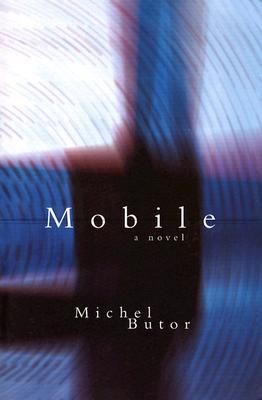
As I write this, the 45th President of the United States has been in office for just over two weeks. Watching the country of my birth from north of the 49th parallel where I have lived since I was three years old, it does feel as if one has wandered into the freak show tent at the Circus-at-the-End-of-the-World. Reading Michel Butor’s Mobile at this moment in American history, frames much of what we are currently watching unfold from an eerie perspective. When the French avant-garde writer was travelling the newly connected highways of America in 1959, he could not have known how very timely all the pieces of information he was gathering, fragmenting, and reconstructing into this ambitious experimental work would still seem more than half a century on. Or perhaps he did. In much of today’s rhetoric, it sounds as if there is a desire to return to some ideal USA, but if Mobile is any indication, that ideal never existed. It is a myth, like the many myths celebrated and reproduced at the grand, but very short-lived, Freedomland Amusement Park.

mobileSubtitled “A novel” in the Dalkey Archives edition I read, the original subtitle offers a more accurate indication of the project at hand: Study for a Representation of the United States. Butor draws from a wide range of materials to create, or allow for the creation of, a representational framework for looking at America. He incorporates substantial excerpts from the writings of Thomas Jefferson and Benjamin Franklin, reports from the Salem witch trials, traditional and treaty records from Native American history, newspaper accounts of the 1893 World’s Fair and more, but one cannot emerge from this journey without an appreciation of an expansive land, rich in history, natural beauty, and diversity.

As eclectic and idiosyncratic as the nation he is attempting to capture, Mobile reads more like a poem than any manner of traditional textual prose. Even the larger textual pieces are broken up and juxtaposed against other materials including an extensive collection of place names, signs, facts, ethnic newspaper and radio programming, travel boards, catalogue descriptions, Audubon bird portraits, and Howard Johnson ice cream flavours. There is a rhythm and an awareness of pattern that binds the work together within a strict overarching structure. He follows an alphabetic rather than geographic guideline from state to state, plays up the seemingly endless recurrence of place names, and links sections across time zones:

The sea,

                    oysters,

razor clams,

                    mussels,

littleneck clams,

                    Washington clams

A white Oldsmobile driven by a young, tanned white man in a pineapple-colored shirt with coffee polka dots (55 miles), “How much longer? Two hours?”—Dead Indian and China Hat Mountains.

The sparkling snow.

SPRINGFIELD. . . . and three o’clock in

SPRINGFIELD, Mountain Time, on the desert plain of the Snake River,
near the lava fields,

WELCOME TO ILLINOIS

                     already four in
SPRINGFIELD, Central Time, where you can order black-currant ice
cream in the Howard Johnson Restaurant.

The Chicago World’s Fair in 1893.
“The New York World,” April 9, 1893:
“Ward McAllister has given careful attention to the question of how New York society will be treated in Chicago during the World’s Fair. He is disposed to think that fashionable persons in this city need not fear anything but the best treatments at the hands of Chicagoans . . .”
Quoted by John Szarkowski: “The Idea of Louis Sullivan.”

The trains coming from New York.
The trains leaving for San Francisco.

Dedicated to Jackson Pollock, Mobile is often described as an unclassifiable work. It is clearly not a study in the formal sense of the word, though by standing back from the flow of fragments, a picture of the country emerges in the patchwork text. There is the sense that Butor harvested this wide range of sources and arranged them to allow the rhythm and flow of language paint a colourful portrait of the United States. It feels dynamic, natural, even when it is the intentional cleverness and humour that catches your eye. But then, it is this same playfulness that makes Mobile such a wonderfully fun read. I especialy enjoyed his use of catalogue listings, as in this pairing of an advertisement for paint-by-number kits with the description of a set of panties:

 “…With this set you receive two Rembrandt water-colors. Panels in pairs, 40 oil-colors in vacuum-sealed glass jars, four superior quality, washable brushes. Net weight: six pounds. . . .”

Or, through Sears, Roebuck & Co., and assortment of seven knitted nylon or rayon panites artistically embroidered with the days of the week:

                      “. . . Choose from

– white for Sunday,

                      – The Last Supper, with The Sermon on the Mount,

– yellow for Monday,

                     – Autumn Landscape, with The End of the Day,

– blue for Tuesday,

                      – Sunset at Sea, with Homecoming,

– pink for Wednesday,

                     – Thoroughbred, with The Foxhunt,

– white for Thursday,

                     – Scenes from Swan Lake, ballet,

– green for Friday,

                     – Venus and Adonis.”

– black for Saturday,
“please include hip measurements,”

This book is not, of course, all light and fun. There are deeply disturbing passages. Segregation is still a reality in many regions (“For whites only”), and the selections from Thomas Jefferson’s writing on the intrinsic inferiority of the black and red races are uncomfortable to read. In the light of the current concern about migrants, the ethnic and cultural diversity captured on Butor’s travels are telling (The Arabs who read “As-Sameer,” The Armenians who read Gochtnag,” The Chinese who read “China Tribune.”) Yet it is all bound together through the repetition of place names from state to state, and the famed ice cream selection at that classic highway stalwart of the era, Howard Johnsons. In the end, filtered through the lens of an outsider, Mobile succeeds in tracing a fractured songline across the heartland of America.

hojo

Mobile is translated by Richard Howard and published by Dalkey Archive Press with a fascinating introduction by John D’Agata.

Illogical bicycle logic: The Third Policeman by Flann O’Brien

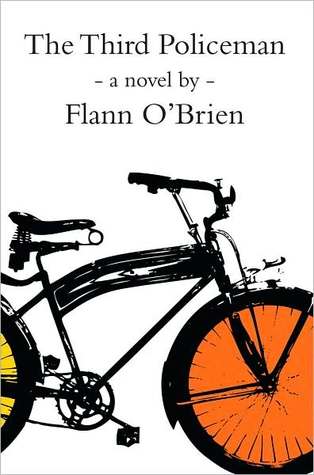
Flann O’Brien wrote to the American writer William Saroyan seventy-six years ago this Valentine’s Day – which is, as I write this, today’s tomorrow, today incidentally being, by equally timely reference, Hell’s Birthday according to Medieval scholars – to announce that he had completed a new novel. He briefly described the conceit of his inventive, unconventional, and, he hoped, humorous tale but, much to his dismay, his publisher declined to publish the work. He followed this rejection with an attempt to secure American interest, but despite the enthusiasm of a literary agent, a willing publisher could not be found. Rejected now on either side of the Atlantic, the Irish writer (whose real name was Brian Ó Nualláin) claimed that the manuscript had gone missing and let the matter lie. As a result The Third Policeman would not be published until 1967, a year after its author’s death.

policemanDelighting in a mischievous engagement with the English language, O’Brien’s dark comic novel sets out to tell the tale of a deeply self-focused young man who finds himself on a convoluted metaphysical journey through a strange land – one that seems to be a curiously stranger version than the one from which he originated, but, single minded as he is, he never fully realizes the true nature of this weird world of eccentric policemen, outlandish theories, and bicycle logic. Throughout it all our hero relies an even odder philosophical compass, the works of a scientific theorist named De Selby who posited a set of theorems about the nature of reality so outrageous that even his young acolyte and his most devoted commentators are frequently at a loss to explain them. The result is a brilliantly skewed meditation on the nature of existence: of life, death and the passage of time.

Quite simply, The Third Policeman begins with a murder and with our nameless narrator’s open admission of his full and active role in this brutal act. But, to put it in context, he will then step back in time to explain how he came to be on a rural road, spade in hand, smashing the skull of an old man. A mistake, he admits, but one for which he can never begin to accept moral responsibility. Our hero, likable as he is in his tribulations, is not a heroic man. Spooling back in time, we learn that the narrator was orphaned young. The farm and pub run by his parents is left to the care of a man named John Divney while the erstwhile heir is sent off to boarding school. It is at school that the protagonist first encounters the work of de Selby – the day he finds a tattered copy of the obscure wise man’s Golden Hours in the science master’s study is one that he remembers with more acuity than his own birthday. By the time he graduates a few years later, he has stolen the volume and packed it into his bags. Sourcing de Selby’s other works and those of his primary commentators occupies his immediate months and travels following his school years and on his journeys, he breaks his left leg in an accident (or as he famously puts it, has broken for him). Thus he arrives home to the farm with one wooden leg.

Divney, as it happens, stays on to work the farm and the manage the pub, taking to both tasks with little energy or honesty, while the narrator devotes himself to intense, obsessive study of de Selby. For him, the rest of the world holds little fascination, but Divney, who continually complains of a lack of funds, tires of the rural bachelor existence and fancies taking a wife. Ultimately he hatches a plan to rob and murder Mathers, a reclusive, retired cattleman who is known to carry a cashbox with him at all times. Playing into the narrator’s desire to be able to publish the results of his impassioned studies and, ultimately, make his name by elucidating hitherto misunderstood facets of the great man’s philosophy, Divney secures himself an accomplice.

In the aftermath of the murder, the stolen cash box disappears, Divney insisting that it has been secured in a safe place where it ought to remain until any fuss blows over. The narrator does not trust this explanation and for an entire year he adheres himself to his farmhand, barely letting him out of his sight for a minute. Finally he is assured that it would be safe to retrieve the box so, on Divney’s instructions, he sneaks into Mathers’ abandoned house, finds the loose floorboard that supposedly conceals the cashbox and no sooner does he grasp the box than it is pulled from his hand.

And that’s when things get weird.

Firstly our protagonist – who is now truly nameless, for even if asked he can no longer recall his name – becomes aware of the presence of the very man he helped dispatch from the world of the living, clearly alive if not especially well and sitting in the corner of the room. Then, as he tries to make sense of this ghostly gentleman, he suddenly encounters, from within himself, his own soul; an immediate and intimate companion he names “Joe”. From this point on, Joe takes on the often thankless task of playing the role of his host’s better angel and logical voice of reason.

Still intent on securing the whereabouts of the vanished cashbox, the narrator engages old man Mathers in an interrogation that, after a series of inquires that raise little more than a negative response, leads to an explication of colour and its relation to the length of an individual’s life. Hearing about a trio of intuitive policemen who are gifted with the ability to perceive the colour of the prevailing wind at the time of a person’s birth, our hero decides to seek out their assistance in his search for the cashbox. He spends the night in Mather’s house and the following morning he sets out down the road. Here the text, judiciously footnoted, turns to one of several interludes where the wisdom of de Selby is evoked:

“… de Selby makes the point that a good road will have character and a certain air of destiny, an indefinable intimation that it is going somewhere, be it east or west, and not coming back from there. If you go with such a road he thinks, it will give you a pleasant travelling, fine sights at every corner and a gentle ease of peregrination that will persuade you that you are walking forever on falling ground. But if you go east on a road that is on its way west, you will marvel at the unfailing bleakness of every prospect and the great number of sore-footed inclines that confront you to make you feel tired.”

When the narrator finally reaches his destination, he finds a building of the most peculiar dimensions, seemingly without depth. Inside this two dimensional barracks he encounters an odd looking fat man, Sergeant Pluck, who assumes that he has come about a missing bicycle. The officer expresses blatant disbelief that our hero is neither seeking a missing bicycle nor has he come by a similar mode of transport – a motorcycle, a tricycle, even. This simple truth will continue to be the most astounding point of fact for both Pluck and his fellow officer Policeman MacCruikseen, who busy themselves with montoring a bizarre and unbelievable assortment of realities. No bicycle! It is enough to make Pluck flustered and MacCruikseen apoplectic!

Over the few days that our narrator and his soul Joe spend in the company of the outlandish policemen (who include in their number a third officer, Policeman Fox, who apparently only comes by the station at night) he will witness a most unusual search for a missing bicycle and hear about the ravages of “Atomic Theory”, the principle which is causing the good people of the parish to absorb the atoms of their bicycles the more they utilize them, while the bicycles, in turn, become more human. To allow the trend to continue unchecked would be a travesty. Sergeant Pluck is so wary of his own bicycle that he keeps it, or rather “her”, locked in the lone jail cell.

With the discovery of another brutal murder during this time – our friend Mathers gets it again it seems – the narrator is named the guilty party, for no reason other than that he is handy. Never mind that he is not guilty, he is sentenced to hang for the crime. Our hero is devastated, even though he holds no guilt about the murder he actually did commit. Between his bouts of despair and dreams of escape, he endeavours to learn as much as he can about the mysteries behind the strange qualities of his surroundings including, as it happens, a visit to “eternity”, which is, he learns, just down the road. His curiosity vexes poor Joe:

You don’t mean to say that you believe in this eternity business?

What choice have I? It would be foolish to doubt anything after yesterday.

That is all very well but I think I can claim to be an authority on the subject of eternity. There must be a limit to this gentleman’s monkey-tricks.

I am certain there isn’t.

Nonsense. you are being demoralized.

I will be hung tomorrow.

That is doubtful but if it has to be faced we will make a brave show.

We?

Certainly. I will be there to the end. In the meantime let us make up our minds that eternity is not up a lane that is found by looking at the cracks in the ceiling of a country policeman’s bedroom.

Then what is up the lane?

I cannot say. If he said that eternity was up the lane and left it at that, I would not kick so hard. But when we are told that we are coming back from there in a lift – well I begin to think he is confusing night-clubs with heaven. A lift!

The Third Policeman is a comedy of absurd proportions with its extrapolations on physics and metaphysics; a fountain of fantastic ideas. Here the surreal layers of reality within which the policemen conduct their business begin to sound strangely sensible (a curious “pancake” indeed as the officers themselves would have it) when played out against the narrator’s own personal frame of reference – his beloved de Selby –  with his extremely idiosyncratic conceptions including his thoughts on the ideal house (either without a roof or without walls), his musings on the nature of darkness (due to the activity of volcanoes) and his conviction that life is an illusion. From beginning to end, the energy is high, the  language is wildly infectious, the imagery is wonderfully inventive, and our narrator is so stubbornly selfish and greedy for all his earnest soul’s attempts to intervene that he never even imagines where he has, in truth, found himself.

The Third Policeman by Flann O’Brien is published by Dalkey Archive Press.

Unanswerable questions: On Wing by Róbert Gál

“That which we let come in and that which we never allow to enter. The flood of words. The word, like smoke. Always too late. Always already different. The word as a question, not to be posed, the word as an answer, not even given. The word as the only possible testimony, always unquestioned. The fracture, unable to be prepared, always ready to speak out. The fracture of the heart that, cut out of itself, still feels.”

Billed as fiction, On Wing by the Slovak poet-philosopher Róbert Gál eschews all the common precepts of narrative story telling. You might say that this slim volume delights in turning language and ideas inside out, offering a parade of aphorisms, queries, dreams and anecdotes. It might sound disorienting, and if you are looking to impose your preconceptions or to demand an objective truth, you may well be frustrated. Or worse. But I would argue that you don’t want to enter this work as a blank slate. You want to enter it with an openness, and a willingness to be engaged.

gal_on-wingConsider this. The avant-garde musician and composer John Zorn makes a cameo in a dream segment within the first few pages of the book. Gál revisits Zorn at the end. On Wing reads like an improvisation, an exploration of recurring motifs and themes: memory, pain, death, love, identity, faith and all the idiosyncrasies of living. Grounded through stories and recollections he rolls over ideas with an immediacy and recognizable humanity. The aphorisms, the rhetorical questions, and creative reconstructions of language weave in and out of the text; holding their own at times like extended jazz solos.

The attentive reader has to pay close attention. Marvel at the inventive word play:

“Nirvanization.
Sorting out the sporadic.
Undeception.
The transparency of sorrow.
Unexbirthed.”

Wonderful. I want those words.

But you might wonder, does this work? I will confess that I am intrigued by experimental writing, I am interested in exploring the ways that ideas can be entertained outside the traditional narrative. But for a fragmentary exercise such as this one to work, there needs to be an intrinsic continuity, even if, on the surface, there seems to be certain randomness. Humanity and restraint are important, the work must say something about life; raising questions, but not pretending to have the answers. I don’t want a writer, even in more conventional literature, to give me answers. Life doesn’t work that way.

“He: A living question mark, a question mark so full of life as a question can be. The question of who could draw no breath, the question with each suppressed tendency to breathe out. The question to an answer which yields no answer to a question. The question to a question that doesn’t answer, even when it does.

Being asked what he was doing, he answered that he had no time.

Spontaneous obligation.

For everything he is grasping for (as a drowning man) constitutes a breakthrough in his life.

Prior to that which was and after that which shall be.

Empathology.”

Reading On Wing is a singular experience. And unique, I would imagine, to every reader. One reviewer I read seemed to make much of an apparent preoccupation with suffering, anguish, pain. I did not read that book. I was especially drawn to the questions about questions, the musings about memory. Gál presents a humble, somewhat neurotic contemplation of those unanswerable questions of life creating an intimacy with the reader. I thought he was being a little lyrical about death and my marginalia bear me out. But then, less than two months ago I very nearly died. With distance I may feel different.

Somehow words seem to fall short when I try to capture the experience of reading this book. The blurb on the back describes a “restless, searching, ‘improvisational‘ prose whose techniques reflect those of Bernhard, Nietzsche, and Kierkegaard”. But if that sounds heavy, fear not. This is a pocket sized book of 109 pages. 109 pages of of ideas, humour and wisdom.

Translated by Mark Kanak, I must make a comment about the translation. I don’t know anything about Slovak, but this is a work that frequently relies heavily on word play and tautological statements, not to mention the re-envisioned words that occur in the text. I could not help but wonder how much the process of translation may have altered the intent or effect of the original. One does not have the sense that this is a translated work, it flows so smoothly. Much of the subject matter is intended to strike a note of universality, presumably in the narrative pieces as well as in the more philosophical elements, and that may contribute to this effect. I don’t know. Maybe that is another one of those questions that is not meant to be answered.

Róbert Gál was born in Bratislava, Slovakia in 1968. He spent time in New York and Jerusalem before settling in Prague. On Wing is published by Dalkey Archive Press.

Ireland in the imperfect tense – Past Habitual: Stories by Alf MacLochlainn

A short story collection can be a curious beast, for the reader who may have a defined expectation about structure and form and for the reviewer who endeavours to capture the encounter with a writer who embraces and defies form as it pleases him. Having emerged from Past Habitual, the newly released collection of stories by Irish writer Alf MacLochlainn, the most helpful advice I can offer is: prepare to encounter narratives that will, at times, ramble and diverge into detailed accounts of practical matters: the treatment of scarlet fever, the options for constructing toilet facilities, the systemic way to approach the assessment of a corpse, the history and development of the stereoscope and more, but if one surrenders to the voices of the narrators, imagining a story recounted over a pint, such excursions prove remarkably compelling and, more often than not, fall imaginatively within the broader arc of the story unfolding around it.

pastThat is not to say that each of the twelve stories in Past Habitual follows the same formula – far from it. There are more traditional stories – “A stitch in time”, Demolition of a gnome-house”, “Why dd I volunteer to kill the kittens?” – that explore with a striking sensitivity, a budding love affair, a boy’s creation of a cardboard house in the garden as a symbolic retreat from the tensions inside his real house, a young man’s clumsy effort to impress his girlfriend and it’s disastrous outcome. His narratives are, however, frequently more complicated and sometimes very experimental in form and varied in style. Yet his keen ear and eye for the tenderness and brutality of human interaction surfaces throughout.

My preference often favoured the more unconventional narratives such as “Dot-and-carry-on” in which the segments of the story are offered as a series of linked dots connecting scenes like a child’s drawing activity as the narrator ties together key events in his personal and family history reaching back to the Easter Week rising and forward to a curious encounter with a Nazi spy living in the officially neutral Ireland during the Second World War. “Imagined monologues at a college function yield some explanation of the survival of the fittest” is, as the title suggests, a flow of conversational fragments that captures latent biases and prejudices that were not uncommon among mid-century intellectuals.

Born in Dublin in 1926, MacLochlainn was a career librarian. He has published a previous story collection and a novella. His stories extend a broad sweep across 20th century Ireland, from the Easter Rising, through the Second World War, to the political upheavals that have marked more recent times. Some stories are set against the backdrop of WWII, while others explore the role of memory in shaping and distorting the communal folklore within which pivotal events are recorded, remembered and passed on. As the sergeant instructing officers on the careful and appropriate use of a newly arrived shredder in one the most wonderfully inventive stories warns:

“without that evidential support, Guard, are we not entirely dependent on memory? And memory can be so fallible, can it not? – Or perhaps in some cases I should call it imagination…”

In Past Habitual, MacLochlainn skillfully blends remembrances, facts and imagination to offer a collection that surprises, challenges and delights. This recent release from Dalkey Archive Press is part of their Irish Literature Series.

We’re extras in our own stories: Atavisms by Raymond Bock

I am often at odds with the literature from my own country, in fact I’m increasingly at odds with my own country itself. When I heard about Atavisms, a newly released translation of Maxime Raymond Bock’s award winning collection of short stories it caught my attention immediately. I was keen to have a look at Canada through the lens of a contemporary Québécois writer. I don’t know what I expected, but I was hooked from the opening pages.

atavismsNot content with niceties, Bock catapults his reader into this collection with “Wolverine”, a story about a disaffected nationalist nursing his resentment long after the FLQ (Front de Libération du Québec – a separatist paramilitary organization) has fallen into decline in the years following the institution of the War Measures Act in October of 1970 in response to the hostilities that had risen to a crisis point. When he happens to encounter a former Liberal cabinet minister, aged and intoxicated, he enlists a couple of friends on an adventure of revenge that turns brutally violent. It is shocking even if you come to this tale from a distance, but as a Canadian who will never separate the October Crisis from his 10 year-old imagination, I met it with intoxicated horror. Suddenly I was thrown back to my prairie schoolyard where my friends and I re-enacted events we were in no way equipped to understand – but with kidnapped officials and bodies in trunks it was infinitely more exciting, and terrifying, than anything on TV.

The horror continues to unfold in the second story, “The Other World”, but this time the reader is thrown back hundreds of years, to the early Quebec settlers and the immediate aftermath of the surprise attack by of a band of Iroquois on a couple of traders and their Huron guides. As the lone survivor lies under a thicket of pine branches hoping to remain hidden as the attackers relieve their victims of goods and scalps, he muses that, no matter what happens, he has no regrets.

From there we move, in “Dauphin, Manitoba”, to look outside the borders of Quebec, with a man’s monologue directed at a girlfriend he left behind in a prairie town. They had moved out there together. While she found herself captivated by her work, he failed to get a foothold or feel at ease in the vast empty landscape and retreated to the familiar blanketing comfort of a Montreal winter.

“You could pace back and forth a hundred years without coming close to the boredom I felt on those prairies, once sifted by antediluvian oceans, sculpted by retreating glaciers, surveyed by rambling nomads – friendly spirits, even better warriors – plowed to-and-fro by combines kicking up the dust of buffalo skeletons. You could say I caught you off guard when I left you alone to follow your path; you could say it was a nice trip, the time of your life. Lies. We’re both free now. You can study law, become a pastry chef, take up curling, or stay out there and keep up the good work; I’ll stay here and the snow will keep coming down.”

I once made a move like that in the opposite direction, albeit no further than Ottawa; but in the end made my way back west, never really at home at either end of the equation. As the narrator frames his missive to his girlfriend in terms of the generic novels he is making his way through, he does not sound any more committed to his move as something intrinsically right than as an acknowledgement of where he does not belong.

As the stories in Atavisms unfold, stretching back and forward in time, common themes, from history to politics to parental anxiety, reoccur, reflecting off one another. It can be argued that these thirteen stories are interconnected although they do not explicitly share any repeating characters and range from historical to surrealist to speculative fiction. Some of the contemporary stories are deeply universal and could almost be set anywhere, like “The Bridge” in which a depressed history teacher muses about his fate should he give in to his suicidal whims; or “Room 103”, a son’s one sided conversation with his dying father:

“It’s the end, Antoine, there’s nothing left to be done. You’re so light you don’t even make a dent in the mattress. It’s just you all alone with your obsolete quarter-million dollar machines, your network of tubing, your probes and dreams.”

Like a fragmented block of glass, each story in Atavisms offers a view of the Québécois experience through a different prism until the final tale, “The Still Traveler”, pulls all the threads together into a time and place in a precolonial reality dating back to the legends of the earliest residents and visitors to the Americas. After all, atavism refers to the tendency to revert to an ancestral type and that, more than anything is the underpinning theme of this collection: fathers and sons, family histories, political legacies, the identities that contain and define us.

Outside of Quebec, a sense of identity is diluted. I was struck by the depth of the colonial commentary that runs through a number of these tales and how the early days of New France are revisited with a harsh measure of reality. This is a conversational point sadly under played in Canada as a whole. As a new level of racism and xenophobia directed at new Canadians grows across this country, we would do well to remember how recently white Europeans made their way onto these shores.

Newly released by Dalkey Archive Press under their Canadian Literature Series, Pablo Strauss’ translation very effectively maintains the distinctive flavour of Bock’s richly varied stories. Supplemental endnotes fill in some essential language and historical references to enhance the reading experience.

I would strongly recommend Atavisms to anyone interested in knowing more about the Quebec experience, whether inside or outside Canada. Not only because the perspective is not as widely known or understood as it should be, but because this is simply a collection of very good stories. Period.