It was the best of times, it was the worst of times: Call Me Stratos by Chrysoula Georgoula

I’m growing old. Where have all those beautiful years gone, when I hung out with my mates and we roamed the pool halls and sleazy bars on Paission or the cafes in Saint Andrew Square like cowboys, with a Marlboro hanging from our lips and a flat metal hip flask with whisky in the back pocket … There goes youth, there goes beauty, never to return.

When we meet Stratos Achtidis, he is trying to pinpoint where is life went off the rails, but he is not exactly in the mood for soul searching. Rather he recalls that weekend when, irritated and hungover, he got angry at the cats his wife had brought home for the children, and ended up tossing them off the balcony. A horrified neighbour saw them fall to the street. But then horrifying his neighbours, not to mention regularly and generally annoying them, was something Stratos had long perfected. And that incident alone is not the end of his marriage, not yet, but his long suffering wife , Sotiria, will not put up with much more. And it’s as good a place as any for Stratos to anchor the tale he has to tell.
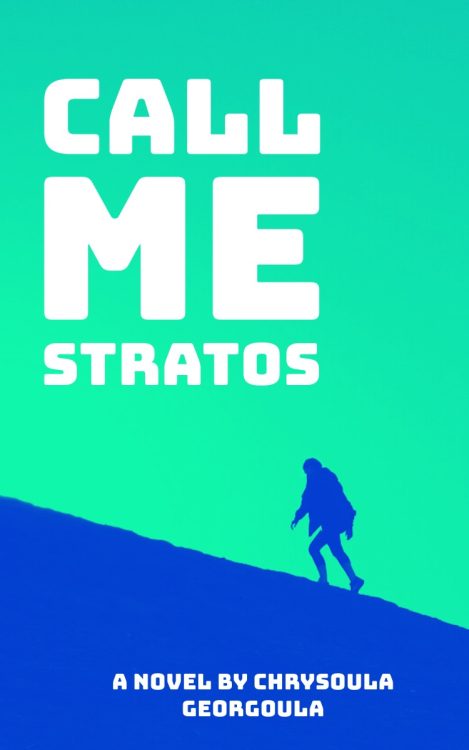
Call Me Stratos by Chrysoula Georgoula is the unflinching portrait of the social and economic dynamics and tensions that have impacted ordinary working-class Greek people  over the past two decades, from the heady run-up to the 2004 Summer Olympic Games, through the devastating years of the economic crisis, to the increased pressures of migration, and the rise of the Golden Dawn. It is a story at once specific to  Athens—defined and traced on the streets of one small area of the city—that is now echoing widely in communities and countries worldwide. However, this not an account relayed and assessed from afar. Rather, Georgoula entrusts the narrative to a man who is proud, stubborn, coarse, and self-destructive. And painfully human.

In his mid-40s at the time of his telling, Stratos is a man who has either lost or thrown away nearly everything positive that has come his way—a marriage and two children, a successful business, countless other job opportunities, and several chances to hold to his values, such as they are. The only person who never gives up on him, through joy and despair, is his mother whom he often refers to as Mrs. Nickie. She repeatedly bails him out, cleans up his messes, tries to reason with him, and, in the end, takes him back into his childhood home when his marriage ends.

Stratos narrates his story in short episodic chapters that read much like vignettes that are generally, but not entirely, chronological. The son of drinkers and bullies, he carries the family legacy on, even though he promises himself he will never hit his wife after the horrific physical abuse he witnessed his father unleash on his mother. Still, he is hot tempered, prone to obnoxious, sometimes violent, behaviour, and every time he manages to pull himself together long enough to achieve happiness and success, he is certain to undermine his gains. And when that happens, he is quick to blame everyone or everything else, typically retreating to his flat to drown his sorrows in alcohol and crank up the volume on his stereo so as to force his personal pity party on the entire neighbourhood.  As a man who whose existence is contained within a particular district of familiar streets and businesses,  and a circle of relatives and close friends, many of whom he has known since childhood, Stratos is both a legend and a victim in his own mind, unwinding an account (or is it a defense?) littered with crude language, sexist comments, and mildly racist remarks. He is not  inclined to poetics or deep introspection—he rarely acknowledges his own agency—but he is conscious of a sensation he describes as brightly coloured pinballs that seem to come alive inside him whenever he is aroused or agitated. Like when his buddy uncovers his wife’s stashed bills and suggests a night out on the town:

“Tap, tap, tap” the happy fuchsia ball started bobbing up and down inside me. As though starting afresh and in better spirits, I put on my faded jeans with the wide black belt, the black sweater and the crocodile boots with the pointed toes, I rinsed and then combed back my curly hair and saw my eyes glowing like coals in the bathroom mirror. “Tap, tap, tap” the happy ball kept bobbing up and down inside me as I walked up Traleon with Memos beside me.

Looking back on the events that have marked his life—entering into the construction trade at an early age, meeting and marrying Sotiria, the birth of his two children, his establishment of a car wash and detailing service—Stratos’s account incorporates, with a measure of nostalgia, the myriad conflicts, pranks, and reckless activities that have arisen along the way. There are run-ins with the police, physical injuries, an ill-advised affair, and an endless string of debilitating hangovers. Through it all everyone smokes so much you can almost smell it. But he is, within the culture of machismo that shaped him, a fairly easy going man, especially in the periods when he manages to curtail his drinking. He holds no hard-line convictions. He even employs an illegal Syrian migrant at his car wash, a man so hardworking and reliable that he is able to keep the shop going and take on a lucrative roofing contract on the side that will, for a brief time, make him a very financially comfortable family man. But when things fall apart, they fall apart quickly and alcohol is frequently both trigger and consolation.

The worsening economic conditions in Greece ultimately take their toll. Stratos’s response to changing dynamics are, at first, primarily localized, related to observed changes in his business prospects and personal grievances.  Then an old school friend roars into his life on his Harley, complaining about migrants taking all the jobs and soiling Greek culture and society, and boasting about his involvement with Golden Dawn. Stratos’s listless younger brother is easily seduced, but as his own marriage collapses and business dries up, he too will find himself looking for meaning and worth. Where he finds it is terrifying.

Call Me Stratos is a novel that offers no sense of closure. It hardly stops to catch its breath. The tone is relentless, and every situation and every character is filtered through Stratos’ biased, sometimes over-glorified, and often intoxicated perspective. He’s as reliable a narrator as he is honest with himself which makes him fascinating and tragic. And when he seems to have lost everything, he throws himself into an even more frightening world. In the end, Georgoula has created an unforgiving portrait that demonstrates how easy it is for one man, a certain type of man, to be drawn into a group he doesn’t really believe in, while indirectly taking into account, but not excusing, upbringing, social class, and shifting economic and political factors.

Call Me Stratos by Chrysoula Georgoula is translated from the Greek by Marianna Avouri and published by Istros Books.
A life lost in stories: My Kingdom is Dying by Evald Flisar

Evald Flisar (b. 1945) is one of Slovenia’s best known and most prolific writers. He has travelled extensively, his work has been translated into at least forty languages,  and his plays have been performed around the world. But, as is not uncommon for writers from his corner of Europe, it is one thing to be widely read, quite another to be a household name—at least beyond one’s native borders. This is, in fact, something that is a fate long understood by  the aging narrator of My Kingdom is Dying, subtitled Storytelling at the End of the World, a characteristically unusual tribute to the life of a writer, originally published in Slovene in 2020, and now available in David Limon’s English translation, just in time to honour the author’s eightieth birthday earlier this year.

This charming and slyly subversive novel is a celebration of the power of storytelling, formally and informally. The unnamed protagonist is a highly respected novelist and short story writer who, like Flisar himself, has travelled widely and lived and worked in both Slovenia and London. He is quite a quirky, at times even arrogant, character whose life story, as he tells it, has all the qualities of a sophisticated tall tale, one that is gleefully anachronistic, blending profound insights with absurd happenings, and blurring the line between possible fact and pure fantasy. The basic narrative unfolds as the narrator is recovering from a freak accident with the daily assistance of a live-in Carer with whom he shares accounts of his past, including his early development as a writer with the encouragement of his grandfather, the pleasures and pitfalls of his career, his life-long obsession to write a completely original story, and the mysterious figure of Scheherazade who, as if emerging from his youthful reimagining of the Arabian Nights, has followed him around the world, appearing when he least expects it.

His adventures are extraordinary and feature an diverse range of real life authors and literary figures—at times holding close to actual details, like the arc of a Borges story or the make-up of a real Booker Prize jury—but because it also leans toward the bizarre, Flisar is able to get away some pretty pointed observations about the literary world with all its pretensions. His narrator takes swipes at critics, fellow writers, editors, publishers, and prize juries. But one must assume that much of this is levelled with tongue firmly planted in cheek. After all, one of our hero’s regular targets is genre writers—in contrast to serious writers of literature such as himself—all in what is a clear genre hybrid blending memoir (fictitious and factual) with fairytale, horror, mystery, and fragments of travelogue. (Of note, several accounts take place in India, and, for the absurdity of events that unfold there, Flisar’s familiarity with the country and its cities, especially Kolkata, is evident.)

By the narrator’s own account, everything was proceeding smoothly, book deal followed book deal, until the sudden onset of writer’s block upended his world. One day, stories presented themselves to him as usual, rising out of a daily act so pedestrian as opening the newspaper over his morning coffee and the next day, the well had inexplicably run dry. No stories came. If storytelling gave him his meaning, not to mention a career,  what might be the fate of  a storyteller who could no longer tell stories?

It had never seemed possible that it would be storytelling that would bring me to the edge of a nervous breakdown and change me into the kind of person who I liked to write about. This time it happened, not within the framework of an imagined story, but in the reality in which I was forced to live, even if only because of loyalty to the activity that I saw as my “mission”, for I knew that withdrawal from the world, when we lack a way forward and begin to psychologically drown, is always possible and, with the abundance of chemical means available, can also be painless, even instant. But each such thought, that I might withdraw from the world before my natural end (thus showing that I was not a victim, but rather the master of my fate), automatically became transformed into a story that I simply had to write and share with others. With that, the wish for a leap into the next life lost its power and validity.

Now without this critical lifeline, would he be able to hold off his darkest thoughts? When he confessed his predicament to his editor, it was suggested that he seek treatment, all expenses paid, at an exclusive clinic in Switzerland where his writer’s block might be cured. The clinic, ominously named Berghof, turns out to be a dark, dank castle in the middle of a lake where, so far as he can tell, all of his fellow patients seem to be seriously mentally ill. The treatment is absurdly brutal, the doctors appear to be madmen, and it is not until he emerges from his solitary routine that he finds himself among the likes of Saul Bellow, Martin Amis,  J.M. Coetzee, Graham Greene, and others. And it just gets stranger from there.

Flisar has a fondness for exploring serious themes within environments that are by turns whimsical and grotesque (see my review of My Father’s Dreams). He is especially interested in the behaviour his characters exhibit under psychological pressures—and his protagonist here is subject to more than a few impulsive reactions when he feels threatened. But, at the same time, in narrating his story to his Carer, a woman he grows increasingly close to, he is able to maintain the storyteller’s objective distance, at least until boundaries between myth and reality finally dissolve. In the end, despite—or perhaps because of—its many spirited and unlikely detours, My Kingdom is Dying is a tribute to storytelling  so rich with literary illusions and intertextual elements  that it holds a depth its seemingly light, eccentric tone belies.

My Kingdom is Dying by Evald Flisar is translated from the Slovene by David Limon and published by Istros Books.
Looking back at a year of reading: 2024 edition

Each year when I review the list of books that I have read, I face the same challenge deciding what to include and what to leave out of a final accounting. As usual there are the books that I know, even as I am reading them, will be among my favourites for the year. Just as I know the ones I don’t like, the ones I won’t even mention or take the time to review. Basically, everything else that I have reviewed, was a good book.

This year, my count far exceeds a respectable “top ten” or “baker’s dozen” and there are some striking factors at play. One is that the ongoing  violence in Gaza has heightened my focus on Palestinian and Arabic language literature—long an area of interest and concern. Five of the Palestinian themed books I read made my year end list. As well, I have paired several titles, typically by the same author or otherwise connected, because the reading of one inspired and was enhanced by the reading of the other (not to mention that such pairings allow me to expand my list). Finally, as reflected by my top books, I read and loved more longer works of fiction this year than usual (for me). No 1000 page tomes yet, but perhaps I’m overcoming some of my long book anxiety.

And so on to the books.

Poetry:
I read far more poetry than I review, but this year I wanted to call attention to four titles.

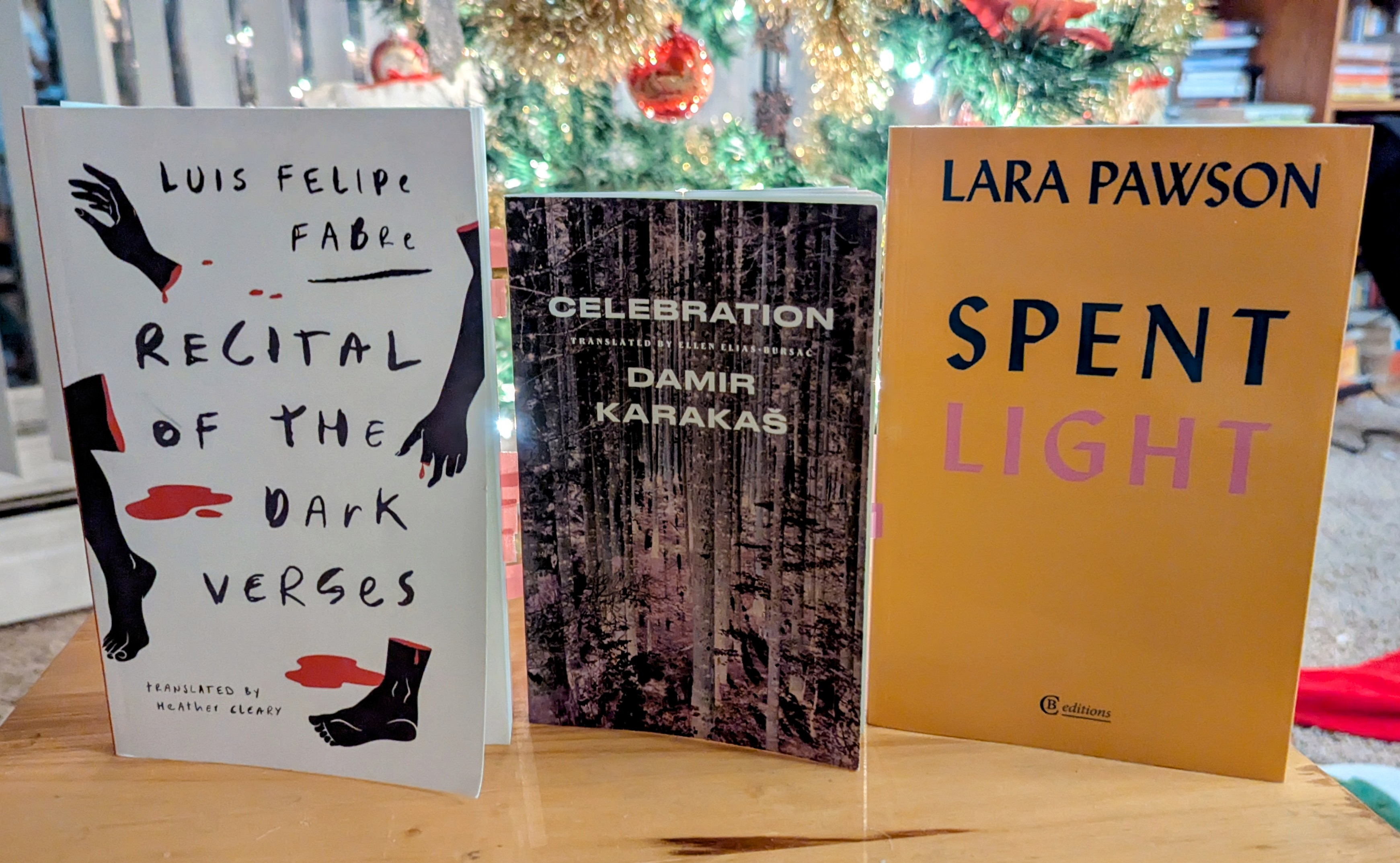
Strangers in Light Coatsevokes by Palestinian poet Ghassan Zaqtan (Arabic, translated by Robin Moger/Seagull Books) is, perhaps, a darker than his earlier collections. Comprised as it is, of poems from recent releases, it actively portrays a world shaped by the reality of decades of occupation and war.

My Rivers by Faruk Šehić (Bosnian, translated by S.D. Curtis/Istros Books) is a collection particularly powerful for its depiction of a legacy of wars in Bosnia/Herzegovina including the genocide in Srebrenica. His speakers carry the burden of history.

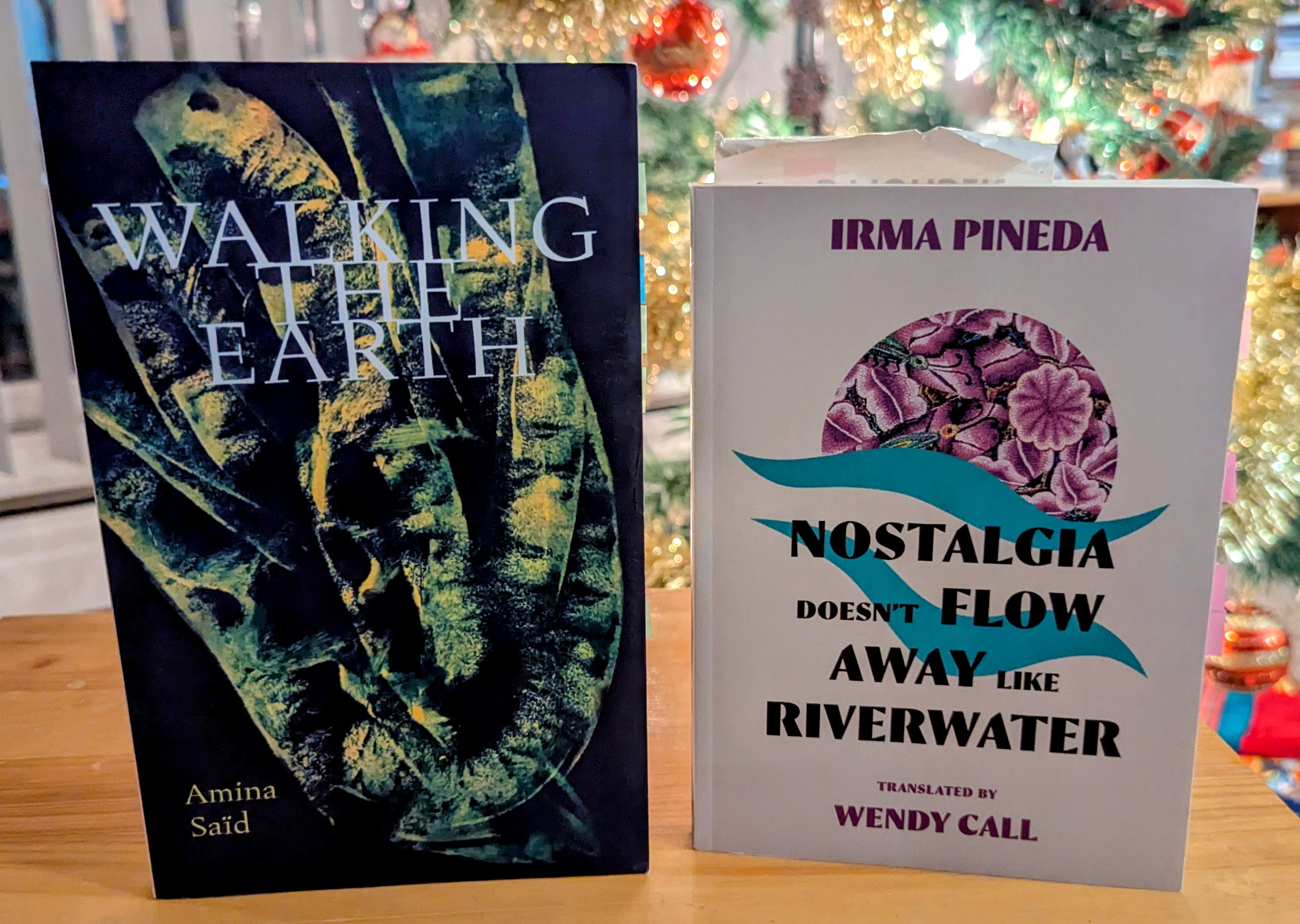
Walking the Earth by Tunisian-French poet Amina Saïd (French, translated by Peter Thompson/Contra Mundum) is such a haunting work of primal beauty that I can’t understand why more of her poetry has not been published in English. Perhaps that will change.

Nostalgia Doesn’t Flow Away Like Rainwater by Irma Pineda is one of a number of small Latin American poetry collection from poets and communities that have not been published in English before. This book, a trilingual collection in Didxazá (Isthmus Zapotec) and Spanish with English translations by Wendy Call (Deep Vellum & Phoneme Media) was particularly special.


Nonfiction:
This year, my favourites include a mix of memoir and essay and a couple of works that defy simple classification.

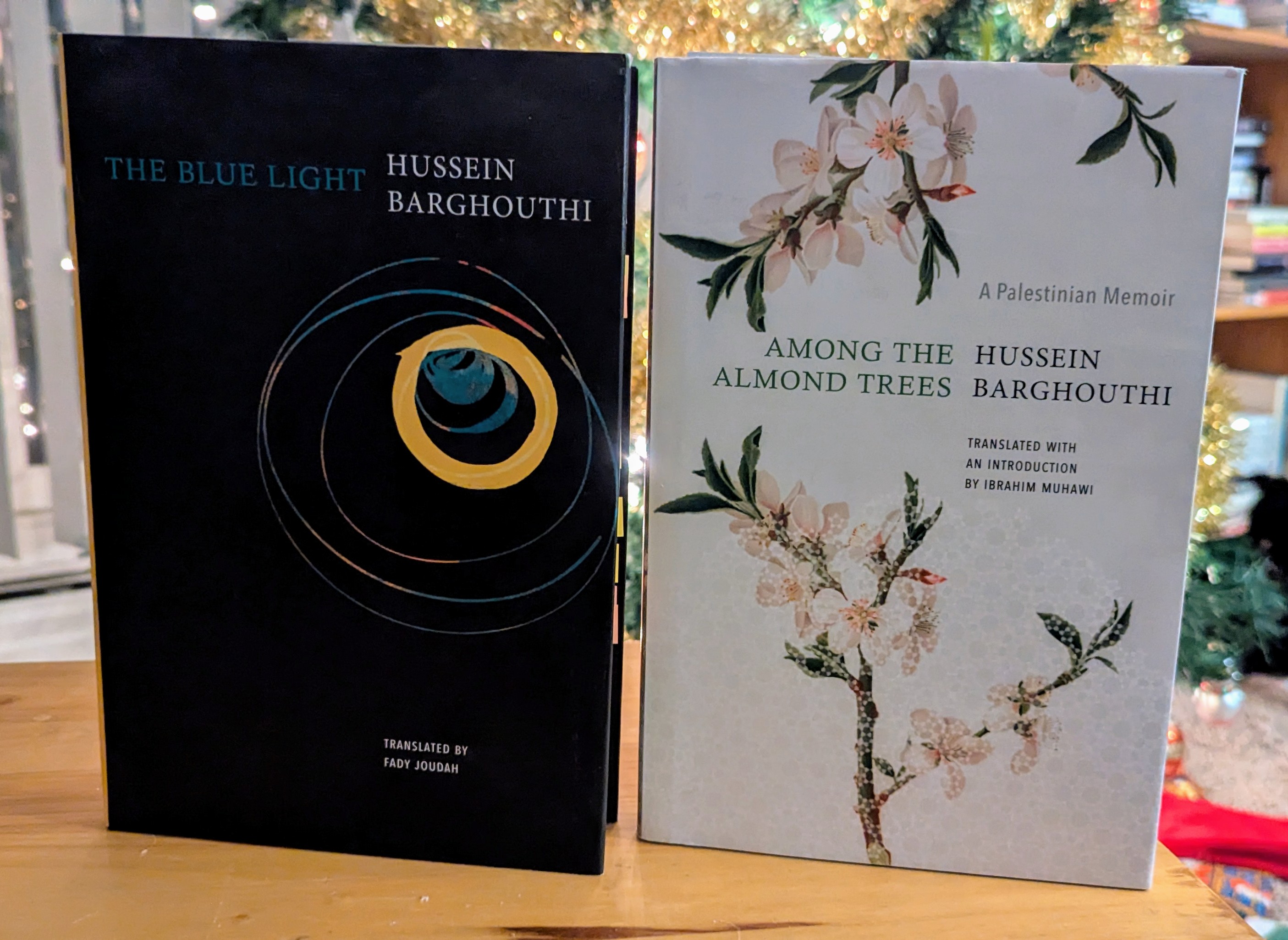
The Blue Light / Among the Almond Trees by Palestinian writer Hussein Barghouthi (Arabic, translated by Fady Joudah and Ibrahim Muhawi respectively/Seagull). Blue Light chronicles Barghouthi’s years in Seattle as a grad student and the eccentric circles he travelled in, whereas Among the Almond Trees is a much more sombre work written when he knew he was dying of cancer. The two books complement each other beautifully.

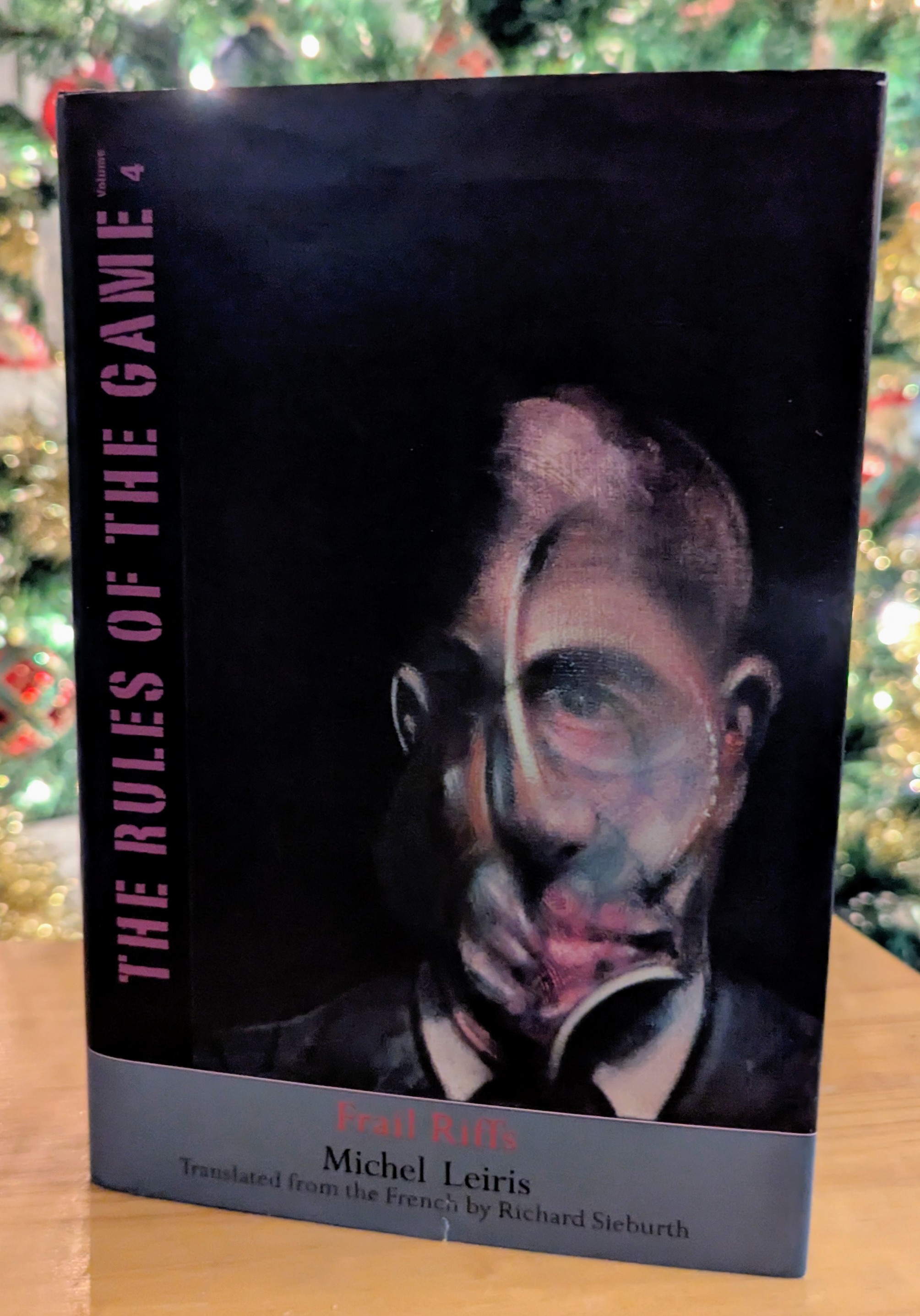
French intellectual, critic, ethnographer and autobiographical essayist Michel Leiris is a writer who means so much to me that the occasion of the release of Frail Riffs (Yale University), the fourth and final volume of his Rules of the Game in Richard Sieburth‘s translation, was not only an excuse to pitch a review but an invitation to revisit the earlier volumes. Definitely a highlight.

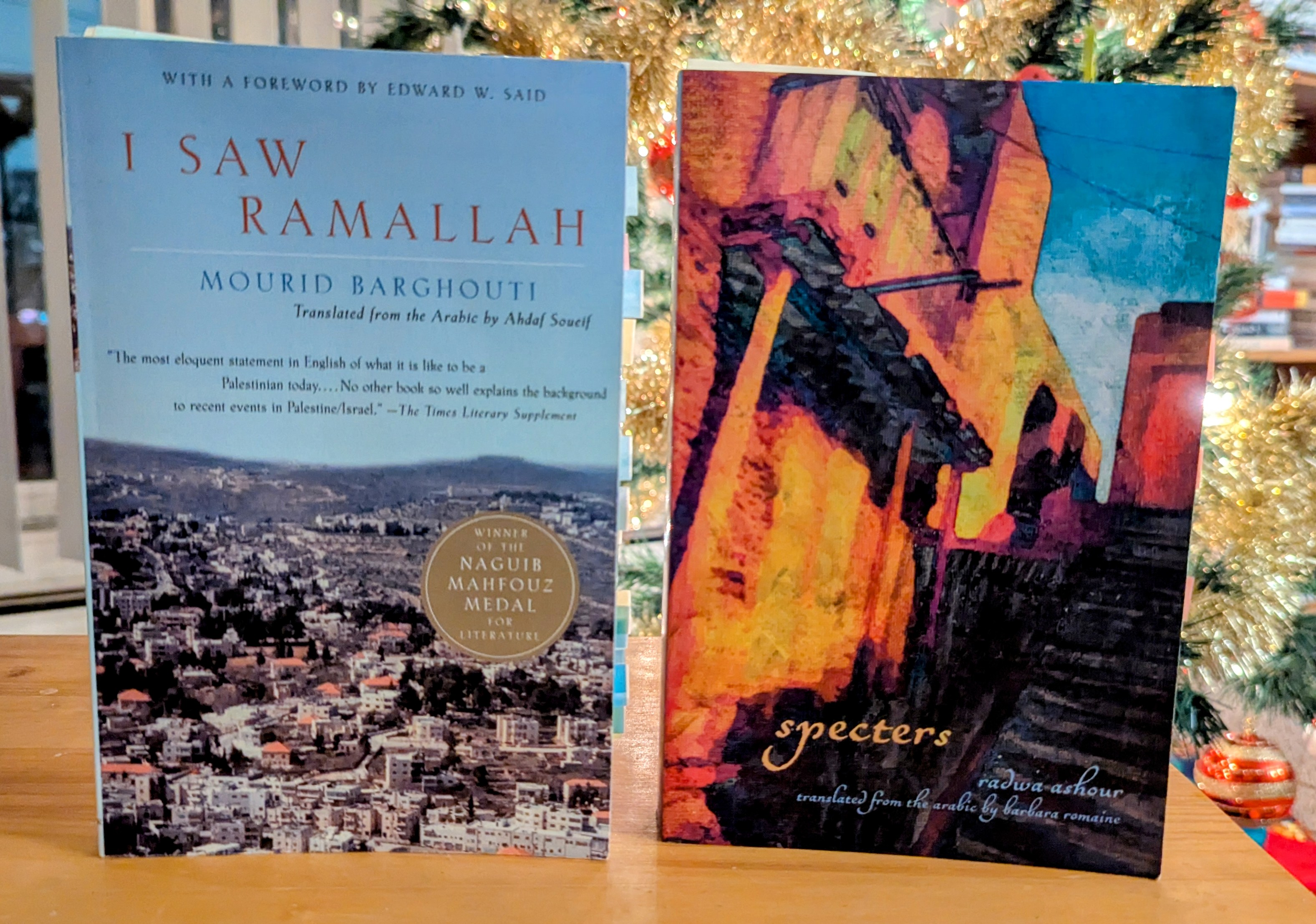
I Saw Ramallah by Mourid Barghouti (Palestinian/Arabic, translated by Ahdaf Soueif/Anchor Books) is a moving memoir detailing the author’s return to his homeland after thirty years of exile. Reading it reminded me that I had a copy of Scepters by his wife, Egyptian novelist Radwa Ashour (Arabic, translated by Barbara Romaine/Interlink Books). This ambitious work blends fiction, history, memoir, and metafiction and I absolutely loved it, but my decision to include it here, like this, rests on the memoir element which complements her husband’s in its account of the many years he was exiled from Egypt—a double exile for him—especially the years in which she travelled back and forth with their young son to visit him while he was living in Hungary.

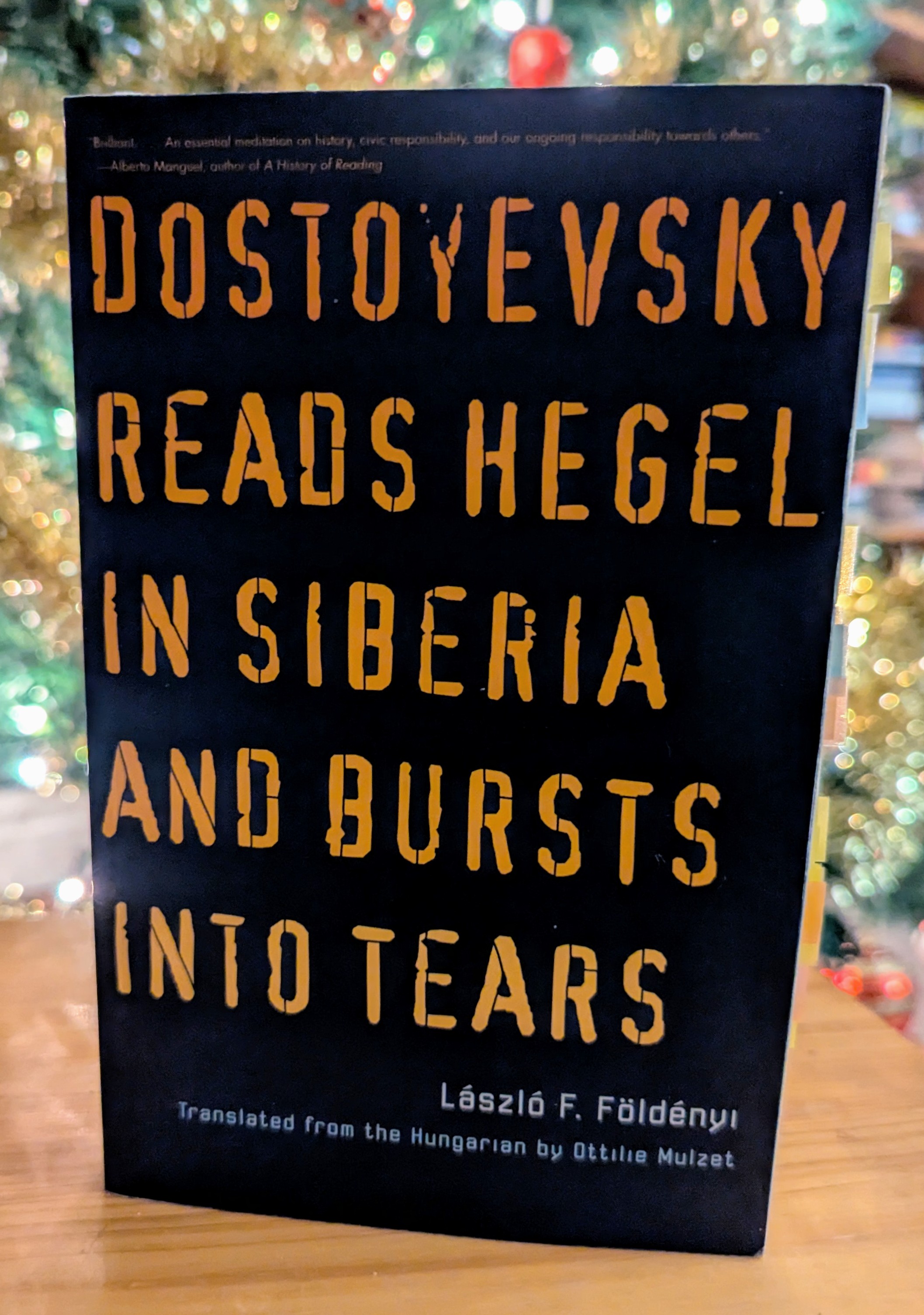
Candidate for the book with the best title, perhaps ever, Dostoyevsky Reads Hegel in Siberia and Bursts into Tears by Hungarian scholar  László Földényi (translated by Ottilie Mulzet/Yale University) was an endlessly fascinating collection of essays exploring the relationship between darkness and light (and similar dichotomies) through the ideas of a variety of writers, thinkers and artists.


Fiction:
As usual, fiction comprised the largest component of my reading and, as I’ve said, I read more relatively longer works than in the past. Normally I have a special fondness for the very spare novella and, of course, my list would not be complete without a few shorter works, including one more pair.

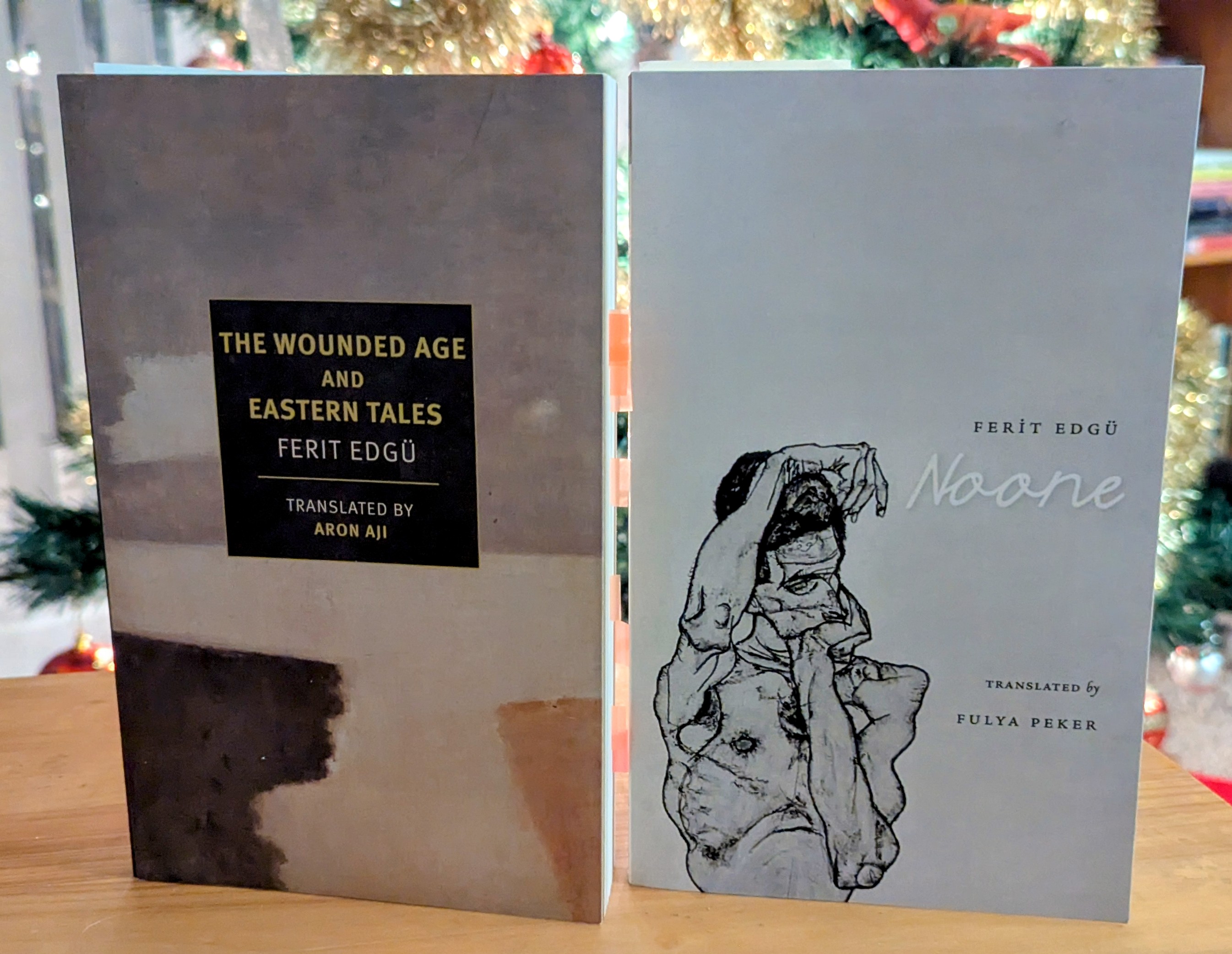
The Wounded Age and Eastern Tales  / Noone by Turkish writer Ferit Edgü—translated by Aron Aji (NYRB Classics) and Fulya Peker Cotra Mundum) respectively—who is sadly one of the writers we lost this year. His work, which draws on the time he spent teaching in the impoverished southeastern region of Turkey in lieu of military service, is filled with great compassion for the people of this troubled area. But his prose is stripped clean, bare, and remarkably powerful.

Recital of the Dark Verses by Luis Felipe Fabre (Mexico/Spanish, translated by Heather Cleary/Deep Vellum) is an award wining translation that seems to have garnered less attention than it deserves. This comic Golden Age road trip follows the misadventures of the body of John of the Cross on its clandestine voyage to Seville. Brilliant.

Celebration by Damir Karakaš (Croatian, translated by Ellen Elias-Bursać/ Two Lines Press) is an exceptionally spare, unsentimental novella about the historical forces that pulled the residents of Lika in central Croatia into World War II.

Spent Light by Lara Pawson (CB Editions) is a book I’d been anticipating since reading her This Is the Place to Be. Strange, at times disturbing, often hilarious and always thoughtful, this is one of those books that (thankfully) defies description.

If Celebration is historical fiction at its most spare, Winterberg’s Last Journey by Czech writer Jaroslav Rudiš (German, translated by Kris Best/Jantar Publishing) is the exact opposite. Ambitious, eccentric, and filled with detail, it follows a 99 year-old man and his male nurse as they travel the railways with the aid of 1913 railway guide. What could possibly go wrong?

Children of the Ghetto I: My Name is Adam by Lebanese author Elias Khoury who also died this year (translated by Humphrey Davies/Archipelago Books) is the final Palestinian themed work on my list. This is a challenging and rewarding novel about a man born in the ghetto of Lydda during the Nakba that examines complex questions of identity.

Star 111 by Lutz Seiler (German, translated by Tess Lewis/NYRB Imprints)is the autobiographically inspired story of a young East German would-be poet’s experiences among an eccentric group of idealists in Berlin in the immediate aftermath of the fall of the Wall. I was familiar with Seiler’s poetry before reading this, but I liked this novel so much that it lead me to follow up with his essays and the work of other poets important to him—the best kind of expanding reading experience.

Mauro Javier Cárdenas’ third novel American Abductions (Dalkey Archive) imagines the latest iteration of his hero Antonio in a future in which Latin American migrants are systematically sought out, separated from the children and deported. With a stream of single sentence chapters, he creates a tale that is both fun and uncomfortably too close for comfort. Quite an achievement!

Last but not least, my two favourite books this year are Hungarian:

In The End by Attila Bartis (translated by Judith Sollosy/Archipelago Books), a fifty-two year old photographer looks back on his life—his successes and his failures. He reflects on his relationship with his mother, his move to Budapest with his father in the early 1960s following her death, life under Communism and the secrets held by those around him, and the role the camera played in his life. Presented in short chapters, like photographs in prose each with its “punctum,” the 600+ pages of this book just fly by.

Like Attila Bartis, Andrea Tompa also comes from the ethnically Hungarian community of Romania’s Transylvania region and now lives in Budapest. Her novel Home (translated by Jozefina Komporaly/Istros Books) follows a woman travelling to a school reunion, but it is much more. It is a novel about language, about what it means to belong, to have a home and a mother tongue. It’s probably not surprising that my two favourite novels involve protagonists in mid-life, looking at where they are and how they got there. As to why they’re both Hungarian—I suppose I’ll have to read more Hungarian literature in the new year to answer that.

So that is my 2024 wrap up. I’d like to think 2025 will be better than I fear it will, but at least I know there are countless good books to look forward to.

Happy New Year!

That black night: Engagement by Çiler İlhan

Her hair was like her name. Dark as the night. Cloaking her to the waist. Bilal had been smitten by this hair while still a boy. This he told to Leyla many years later. When she reached the age of twenty, and continued to reject all her matches—including the son of an uncle a few weeks previously—her father Cemal had decided to give her in marriage to Tahsin, a relative from town, so she would not end up ‘stuck-at-home.’ The second he heard, Bilal jumped into his Renault and gulped down seventy kilometres of road quick as a pill. In this village, men know to stay away when the man of the house is gone.

Engagement by Çiler İlhan has all the qualities of a folktale. Set in a small Kurdish village in southeastern Turkey, known simply as “Our Village,” it unfolds over the course of sixteen hours. For one family it’s an auspicious day. The engagement of eldest daughter of Fatma and Cemal is to be celebrated that evening and the entire village is invited to join the festivities. But in the nearby “Other Village,” villainous plans are being made to upset the proceedings. And that’s putting it mildly.

These two villages—caught in a complicated nest of intermarriage, property disputes, and blood feuds—are at once timeless and yet very much part of the twenty-first century. Located in an area neglected by the state, life in these isolated, impoverished communities is simple. Traditional technologies and customs dominate the lives of most of the families, but there is also wealth in terms of land, mineral rights, and agricultural goods to be fought over and defended. Consequently, most of the men are required to participate in regular scheduled guard duty, a task for which they are heavily armed.

The playful, fable-like narrative, delivered by a mysterious omniscient narrator, carries an ominous tone. Reference is repeatedly made to the “incident” that lies just ahead. Complications are hinted at, assertions and accusations that will be made in its aftermath are alluded to, long before any description event itself. You know that something horrific and deadly is coming and that awareness fuels the growing tension. Meanwhile, at the home of Leyla, the bride-to-be, the women go about their preparations with excitement and dedication. Yet, there is a missing ingredient. Leyla’s younger sister Maral has forgotten to purchase the eau de cologne traditionally splashed on the hands of each guest as they arrive for the feast. Since she has other tasks to attend to that day, it falls to her cousin Halil  to secure the required scent.

On his way out to purchase the perfume, the young man is kicked when Chunky the cow is unexpectedly spooked. He hits the ground hard, causing a headache that will trouble him throughout the long hot day.

It is true that Halil’s mother saw him as clumsy fool, but he must have had a capable side too, for how else would he have been one of only three people to give the shroud the slip on that black night? The rest would be buried in the village graveyard he was nearing on his journey that day.

We learn that Halil had had a close call with death when he contracted meningitis as a child and, that he is now a distractable daydreamer with his teenage heart set on Maral. When he finds that he is unable to secure the necessary ten bottles of cologne locally, he is forced to walk all the way to Other Village. When he finally reaches the rival village, home of the evil, violent Osman and his band of brothers, Halil is surprised to find two dolls, representing a bride and a groom, hanging from the branches of the old sycamore in the town square. When he asks those he finds sitting there about the dolls he is treated as if he is seeing things, as if he is crazy. It is not the first time he will doubt his senses.

Throughout the day, a strange, unsettling atmosphere haunts Our Village—omens are witnessed and sudden dust storms blow up, but there is no consensus about any of these reported happenings. Both Maral and her mother Fatma feel anxious, their stomachs in knots. But the community is, of course, already a curious place, peopled by eccentric characters and home to “more than its fair share of crazies and cripples.” This is the inevitable result of the long standard practice of cousins marrying cousins. Residents are tightly connected by blood, but that is not sufficient to assuage long simmering conflicts between family groups. In fact, it may only make it worse. It certainly makes the events that will stain this dark night ever more tragic.

With this spare, haunting novella, Çiler İlhan has crafted a lyrical little tale that packs a devastating punch. No matter how many times the wily narrator refers to the coming “incident,” it is impossible to be prepared for the evil that descends on the engagement party. But the true depth of the horror portrayed in this folktale lies in the author’s Afterword where she puts her story into context.

Engagement by Çiler İlhan is translated from the Turkish by Kenneth Dakan and published by Istros Books.
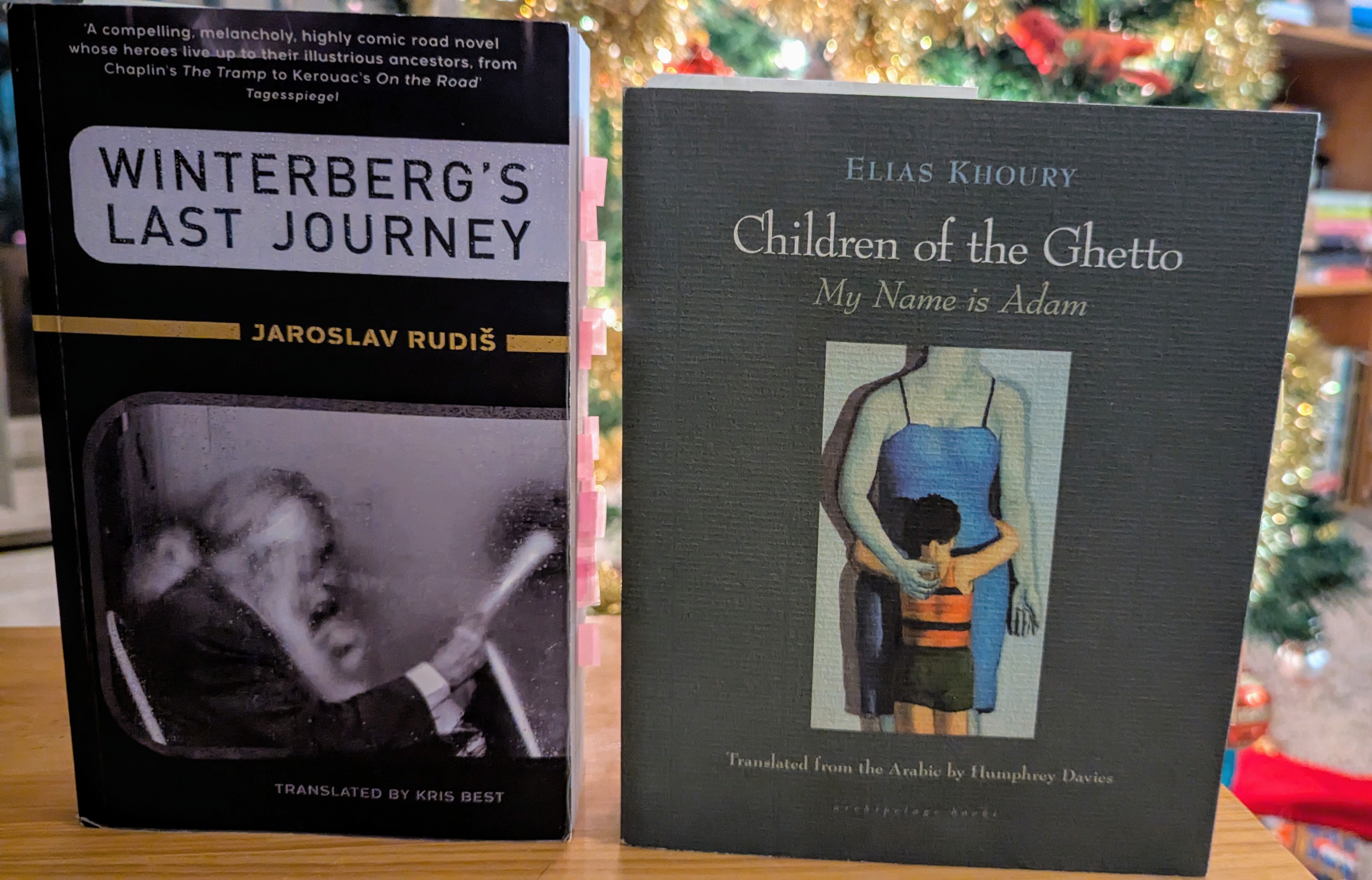
The only liveable space is language: Home by Andrea Tompa

On the surface, Andrea Tompa’s Home is, like its name implies, a story about home, or, rather, a journey from one home to another. Although it is never explicitly specified, her unnamed protagonist is, like the author, a writer born into an ethnically Hungarian community in Romania who moved to Hungary to study Russian literature. As the novel opens, its heroine, a successful novelist nearing fifty, is waiting at the airport to pick up a long-time friend and the adult daughter of one of their classmates who are both arriving on a flight from the US. Together they will make their way across the border to their hometown for a class reunion that has been years in the making. For the driver, still nervous at the wheel having acquired her license fairly recently, the journey will also be an opportunity to try to understand something about herself and where she truly belongs. As someone who makes magic with words for a living, she is aware that articulating truth is an act that often seems to escape the limitations of language, and that even a concept like “home” can be slippery:

Stuck between two worlds, no longer at home but not yet back at home either, overwhelmed with fear because something has definitely come to an end, at least temporarily, while something else cannot yet commence. In other words, this place called home and obtained at the cost of tremendous effort, has to be left behind in order to depart from home to (another) home, the latter without loved ones or  a house to call ones own, only with some sort of a shared past, yet still experiencing the sensation that there must be something there for the articulation of which she is unsuitable.

Over the thirty years since she first left her hometown to study, the protagonist has returned frequently, at first every summer and for holiday gatherings, and then more sporadically, but it will be the first time that all of her surviving classmates, at least those who agree to come, will be together for an entire weekend. Many will be coming from around the globe having found careers and a new lives abroad, others will have stayed close by, aging and changing along with the town. As she anticipates this reunion, she will think back on her own life experiences, in contrast with the varied paths others have happened upon, in this wide ranging meditation on the meaning of home. Three decades is, after all, a long time.

Intrinsic to the question of home is the matter of language. The main character does not have to give up her mother tongue when she leaves migrates, but she thinks often of the Russian writers who were forced into exile and the ways they adapted, or failed to adapt, to a new literary voice. When encountering friends who are living away from where their shared native language is spoken, questions often arise about how one might translate one word or another. During a six-month student residency in Saint Petersburg she gathers Russian vocabulary and expressions that appear and reappear within the text in Cyrillic script. Borders and, for better or worse, identities blur. And this groundlessness is not exclusively limited to language either. The paintings of an artist from her hometown whom she happens to meet and befriend toward the end of his life, has style that “balances the boundaries of different worlds, a sort of homeless landscape.” Her own life seems to navigate a similarly homeless landscape, one she wants to pass on to her son who is, for all intents and purposes far more grounded and unambiguous in his own identity and sense of belonging than she ever will be.

With the looming class reunion, Home is also very much a novel about the way our view of the world and our place in it changes as we age. Once excited with all the trappings of travel, the protagonist is now uncomfortable with the idea of flying and disenchanted after years of book tours, factors that likely enhance her uncertain appreciation of middle age existence:

In her, several ages coexist at once, she often scrutinizes her mirror image with some consternation because she feels so much younger within, as if she was glowing like a child, if not a little girl. This is what she sees.  Not the mature face, never, the fine yet clearly visible wrinkles, the creases and treacherous spots appearing on the skin. Countless ages coexist within her side by side, a multitude of figures are sitting on the barge of the past, trying to make peace with one another and the world, it seems as if the fifty springs, summers, hard-working autumns and increasingly faster-thawing winters had gathered together a proper crowd. Yet many more have sunk without a trace, people she would find it hard to remember.

Of course, once she and her classmates are finally together, all decidedly slower, heavier and more subdued than their younger selves, she is far from the only one with ambivalent feelings about what it means to be “home.”

The narrative traverses the distance between the airport and the reunion, and the space of at least thirty years, at a pace that is negotiated with confidence and skill. Tompa not only refers to her lead as “our protagonist”—especially in the early chapters—but other key figures are similarly unnamed. Her son is simply “the Son,” her father, whose police surveillance file is, she hopes, a key to his troubled life, is called “the Father” as distinct from the man who becomes her husband and the father of their child who is referred to at one point as “the Other.” Likewise, there is “the Professor,” “the Teacher,” and “the Painter.” By contrast, her peers from school and college, form a varied, distinctive, and named cast of characters. In the hands of a less experienced author, this could feel performative, but here it works very effectively. It is, in a sense, a means of keeping a level of anonymity and displacement in what is a story about identity and what it means to have a home, and a mother tongue. A third person perspective that is at once close, yet held at a certain distance from its subject, mirrors the privacy one senses the professional writer values in her public life, while permitting certain insights that she might not actually be able to find words for herself. We learn about her, and her life, gradually, in relation to those around her, while certain aspects—the details of her literary career and her marriage—remain largely in the shadows. Language conceals as much as it reveals.

First published in Hungarian in 2020, Home is not only a novel rich in literary references, from Homer to Shakespeare to Nabakov, but a very contemporary tale wherein characters often search desired quotes on their phones during conversations and the children who have accompanied their parents to the reunion try to teach the adults TikTok dance routines. With humour and intelligence, Tompa has crafted a compelling tale that explores the complicated question of the nature of belonging through and beyond language, while Jozefina Komporaly’s translation deftly carries the magic and wisdom into English.

Home by Andrea Tompa is translated from the Hungarian by Jozefina Komporaly and published by Istros Books.
Only in a poem can you bring back the dead: My Rivers by Faruk Šehić

On a windy August day, a poet walks a stretch of the French Atlantic shore. It’s Liberation Day and his thoughts turn to foreign troops landing on these beaches, in two World Wars, but he thinks especially of the frightened young American marines bound for Normandy:

Such men I would like to lead
into the ultimate battle, into the resurrection
of green grass beneath clear skies
without the salvos of heavy naval guns
without the screech of aeroplanes
or the confusion of anti-aircraft fire
without those shadowy submarines
like long Antarctic whales
seen from high flying planes
Fragile dandelion parachutes
would be all that would fall

This passage, from the long poem “Liberation Day” that opens Faruk Šehić’s four-part poetic cycle My Rivers, is more than one man’s musing on distant wars—Šehić has a much more immediate and lingering association with combat and its aftermath. He was born in Behić in 1970, and when war was declared in the newly independent Bosnia and Herzegovina in 1992, the then twenty-two year-old veterinary medicine student left his studies and volunteered for the army. He would end up leading a 130-man unit, an experience that has informed his novels and short stories, but in this collection of poetry Šehić turns his attention to the post-war condition, to the scars that don’t heal and the remembrances that are always incomplete.

The first two sections, “The Loire” and “The Spree,” find the poet/speaker in France and Germany. He seems to be looking to find—or perhaps lose—himself in the winds and the waves, in mythology and history, on the streets of Paris or Berlin, and in the arms of lovers. In France, Šehić often appeals to nature and to a larger cosmic sense of eternity, while in Berlin the mood is more claustrophobic and ultimately disheartening. He cannot find the escape he seeks, so his wandering takes him back home to Sarajevo, where the bones and ghosts of the dead cannot rest, where the long shadow of war is hard to avoid and must be confronted.

It is in the third part of My Rivers, “The Drina,” that any attempts at distraction or escape fall away. A sharp bitterness can no longer be hidden, as the poet admits that the bloody histories lurking within cannot be washed away by clinging to “literary reminiscences / with which  I stubbornly defend myself / with which we all stubbornly defend ourselves / from a non-metaphorical Bosnia / which gently murders us.” Gently murders us. The poems in this and the final section, “Beyond the Rivers,” are stark and powerful, shot through with flashes of anger and grief as the Šehić tries to find some understanding and relief from the burden he carries as a former soldier and survivor of war and genocide. Speaking for himself and his people, he recognizes the crippling human cost of conflict and dehumanization, but wonders how it can and should be remembered as evidence, even of a relatively recent past, seems to disappear under the façade of a return to “normal.” In several pieces he turns to the example of Buchenwald, questioning if it is even possible to honour the voices of the dead:

But yet again, nothing happens
The grass is worldly indifference
combed over their eyes
like holy green hair
A victim is a victim
with no language, forever
dead, the same body killed several times
with heavy machines, heavy
oblivion in primary, secondary, tertiary
mass graves and a dayless abyss

– from “A Glass Marble from Potočari”

Šehić’s verse is unadorned and direct. His message is not obtuse. In fact, in one piece, he openly questions the value of poetry and metaphor altogether. A weariness and despair is sometimes evident, as is a hope that in nature a certain redemption may be achieved, but the most powerful poems in this collection are fueled by honesty and anger. And, of course, it is impossible to read this work at this moment in time, when we are watching as the value of “Never Again” is once again being eroded, without remembering the many times that promise has been forsaken in the nearly eighty years since it was first proclaimed. 1995, as Šehić well knows, saw one of those incidents of genocide.

When I first went to Srebrenica
piercing  air thick as gelatine
I walked through a town that had moved
underground, with more stray dogs than people
on the streets, everything I saw
transformed into something else
A house here is not like other houses, here
the landlord is Death

This poem, “A Walk through Srebrenica,” chronicles the speaker’s encounters with a place silenced under the burden of history, yet offering some hope that it will not be forgotten:

The weight of my body carried here was a punishment
Yes, guilt is the air we exhale
No poem about Srebrenica will ever end, infinite
sadness is its subterranean hum
The heritage of our souls

First published in 2014 as Moje Rijeke, this is a profoundly moving and, so it would appear, timely collection. My Rivers by Faruk Šehić is translated from the Bosnian by S.D. Curtis and published by Istros Books.
An explosion of strong female voices. Balkan Bombshells: Contemporary Women’s Writing from Serbia and Montenegro compiled and translated by Will Firth

First we meet Marijana, the daughter of a farmer who imagines a fantasy encounter with “A Man Worth Waiting For,” someone to sweep her off her feet, knowing well that the first facsimile of a “hard-working young fellow with house, land and cattle”—be that a forester with a cabin in the woods—who asks for her father’s permission to marry her will be sufficient to send her packing. Dreams will be put aside. Then we find ourselves in the midst of a feminist folkloric horror tale, followed by excerpts from an emotionally charged diary. And these three pieces, by Bojana Babić, Marijana Čanak and Marjana Dolić respectively, simply mark the beginning of a journey through some of the rich fictional landscapes envisioned by contemporary Serbian and Montenegrin women writers.

Anthologies can have many points of origin. This collection, Balkan Bombshells is, as compiler and translator Will Firth admits, the “fruit of happenstance.” The idea of an anthology was first suggested during a month-long stay in Belgrade afforded by a travel scholarship. An initial selection of short prose pieces by women from Serbia was made with the support of the KROKODIL Centre for Contemporary Literature and the organizers of the Biber contest for socially engaged short fiction. However, to ensure he’d have sufficient material for a book-length project, the scope was expanded to include the neighbouring, historically linked, country of Montenegro where Firth had many connections. The resulting multi-generational anthology of Serbian-Montenegrin prose is a collection of seventeen powerful pieces from both established and newer authors, many of whom are appearing in English for the first time. All of the writers are working in the language formerly referred to as Serbo-Croat(ian) that is now often described with the acronym BCMS (Bosnian/Croatian/Montenegrin/Serbian).

The stories gathered here, several of which are excerpts from longer works, feature a variety of voices and styles, a diversity that is highlighted by the organization by alphabetical order rather than region or theme. Many of the pieces afford snapshots into the lives of women caught in difficult situations, facing the dismal options available to them in working class communities or chafing against the traditional values of their parents. There is humour, Jelena Lengold’s “Do You Remember Me?” being a notable example that also calls attention to the loneliness of middle-aged city dwellers, and tales that are disturbing, strange and sad. As one moves through the collection there is a welcome, often unexpected freshness to each piece, perhaps because most of the authors are, as yet, not widely known outside their home countries. Three, including Lengold have been published by this collection’s publisher, Istros Books, but there are many I would love to see more from.

There are so many strong entries, but I was especially impressed by the metafictional “Zhenya” and the two more explicitly political pieces. Lena Ruth Stefanović’s smart and funny “Zhenya” begins in a backward village in Russia (the author studied Russian literature in Belgrade, Sofia and Moscow) but becomes, in the end, as the narrator/author openly imagines a possible future for her protagonists, as the most decidedly Montenegrin:

First, I’ll send them to my motherland, Montenegro, to warm up after the Russian winter. I’ll ask my parents to welcome Zhenya and Vova and to treat them as guests in our hearty, homey way.

Then I’ll send them on an excursion to Bari to pay homage to the relics of St. Nicholas, and maybe I’ll go along myself.

Along the way, a Russian flavoured fable is transformed into a vibant commentary about the evolving identity and literature of the people of Montenegro.

The most political offering comes, unsurprisingly perhaps, from the most established of the authors, Svetlana Slapšak, a writer, editor, anthropologist and activist with over seventy books to her name. Her story, “I’m Writing to You from Belgrade” is set in Toronto, where an immigrant family learn of the death of Slobodan Milošević. The protagonist and her husband respond to the news:

‘There will be no relief,’ Milica said. ‘But I’m afraid there will be fear because he died without being brought to justice…’

‘What difference does that make to us?’ Goran said after a brief silence. ‘The country we once lived in no longer exists. We have to tend to our memories so they don’t disappear in a puff of smoke, and that’s very hard here. Do you sometimes feel we’ve sailed to a distant shore, from which there’s no return?’

Later, while her daughter and husband debate the news, Milica reads a long email from a friend and former lover who is passing through the altered remains of their former homeland, observing the immediate response to Milošević’s death on the ground. It’s an incredibly effective, well-written approach to the complex emotions of exile raised the distant tremors of history and politics.

Finally, my favourite piece in Balkan Bombshells is political in a smaller, infinitely human manner. “Smell” by Milica Rošić is a short poetic tale about memory, the pain of war and the spiritual bond between three generations of women, Alma, Almina and Ina, or as the narrator runs her name together with that of her mother and daughter—Almaalminina. Grandmother and granddaughter never knew each other, the former died enroute to the border during the war long before Ina was born. A sudden and natural death, but one that leaves Almina with no option but to ask the soldiers to abandon her mother’s body in the forest. It is an action perfectly aligned with the character of her pragmatic mother, but one with its own lingering pain. “I cried like the rain” is her sorrowful refrain. But there is an unspoken, innate thread binding Ina to Alma without her mother’s direct intervention. Such a beautiful, poignant little tale.

So often anthologies, with all the best intentions, run the risk of collapsing under their own weight. This collection, even with seventeen contributors, only runs to 143 pages, offering just enough to give a reader an entertaining and intriguing introduction to a wide range of Serbian and Montenegrin women writers who will, with luck, reach a broader audience in translation over the years to come.

Balkan Bombshells: Contemporary Women’s Writing from Serbia and Montenegro is compiled and translated by Will Firth and published by Istros Books. More information about the authors included, see the publisher’s website.

Reading Women in Translation: Looking back over the past twelve months

For myself at least, as Women in Translation Month rolls around each August, there is, along with the intention to focus all or part of my reading to this project, a curiosity to look back and see just how many female authors in translation I’ve read since the previous year’s edition. I’ve just gone through my archives and am pleasantly surprised to find twenty titles, the majority read in 2022. Within this number are several authors I’ve read and loved before and a number of new favourites that have inspired me to seek out more of their work.

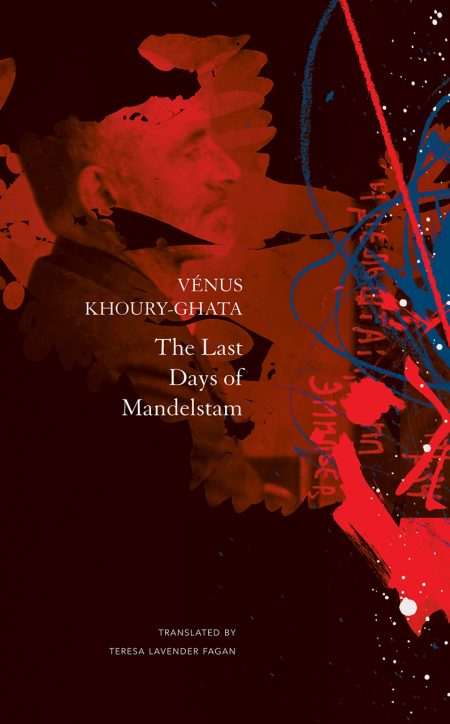
First among these is Lebanese-French writer Vénus Khoury-Ghata, whose The Last Days of Mandelstam (translated by Teresa Lavender Fagan) so thrilled me with its precision and economy that I bought another of her novellas and a collection of poetry, Alphabet of Sand (translated by Marilyn Hacker). I’ve just learned that another of her Russian poet inspired novels, Marina Tsvetaeva: To Die in Yelabuga, will be released by Seagull Books this fall. I can’t wait!


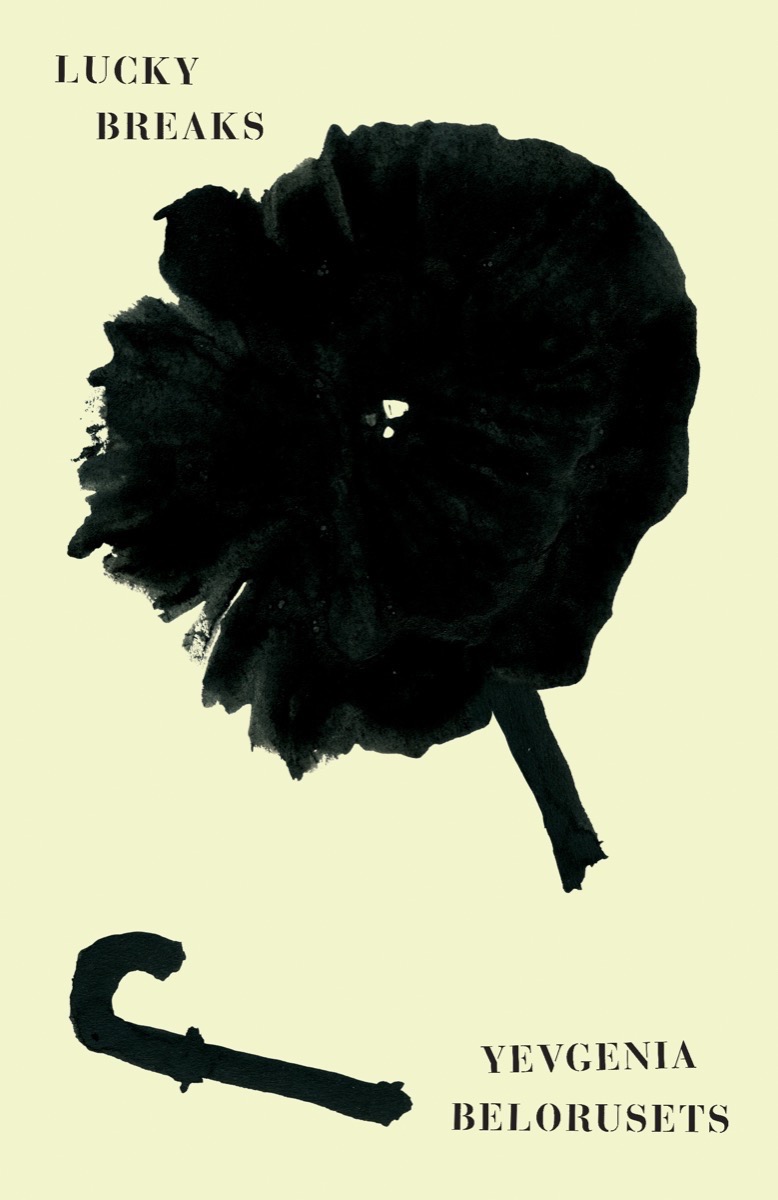
The advent of the war in Ukraine instantly drew my attention to a tiny book I had received from isolarii books. The name Yevgenia Belorusets became suddenly and tragically familiar as her daily diary entries from Kiev were published online. I read that small volume, Modern Animals (translated by Bela Shayevich), drawn from interviews with people she met in the Donbas region and as soon as it became available I bought and read her story collection Lucky Breaks (translated by Eugene Ostashevsky). Although both of these books reflect the impact of war in the east of the country, they could not be read without the context of the full scale invasion underway and still ongoing in her homeland.

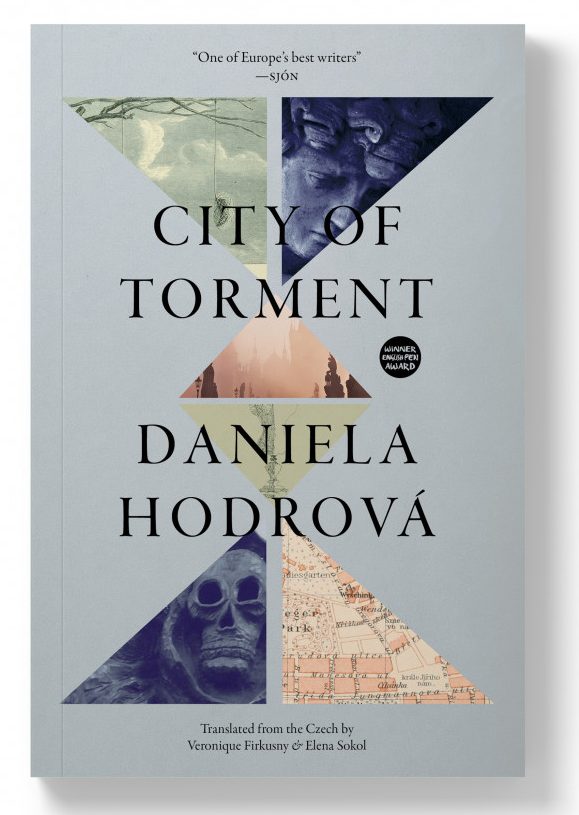
Another author I encountered for the first time that inspired me to read more of her work was Czech writer Daniela Hodrová whose monumental City of Torment (translated by Elena Sokol and others) is likely the most profoundly challenging work I’ve read in along time. Upon finishing this trilogy I turned to her Prague, I See A City… (translated by David Short and reviewed with the above) which I happened to have buried on my kindle. A perfect, possibly even necessary, companion.

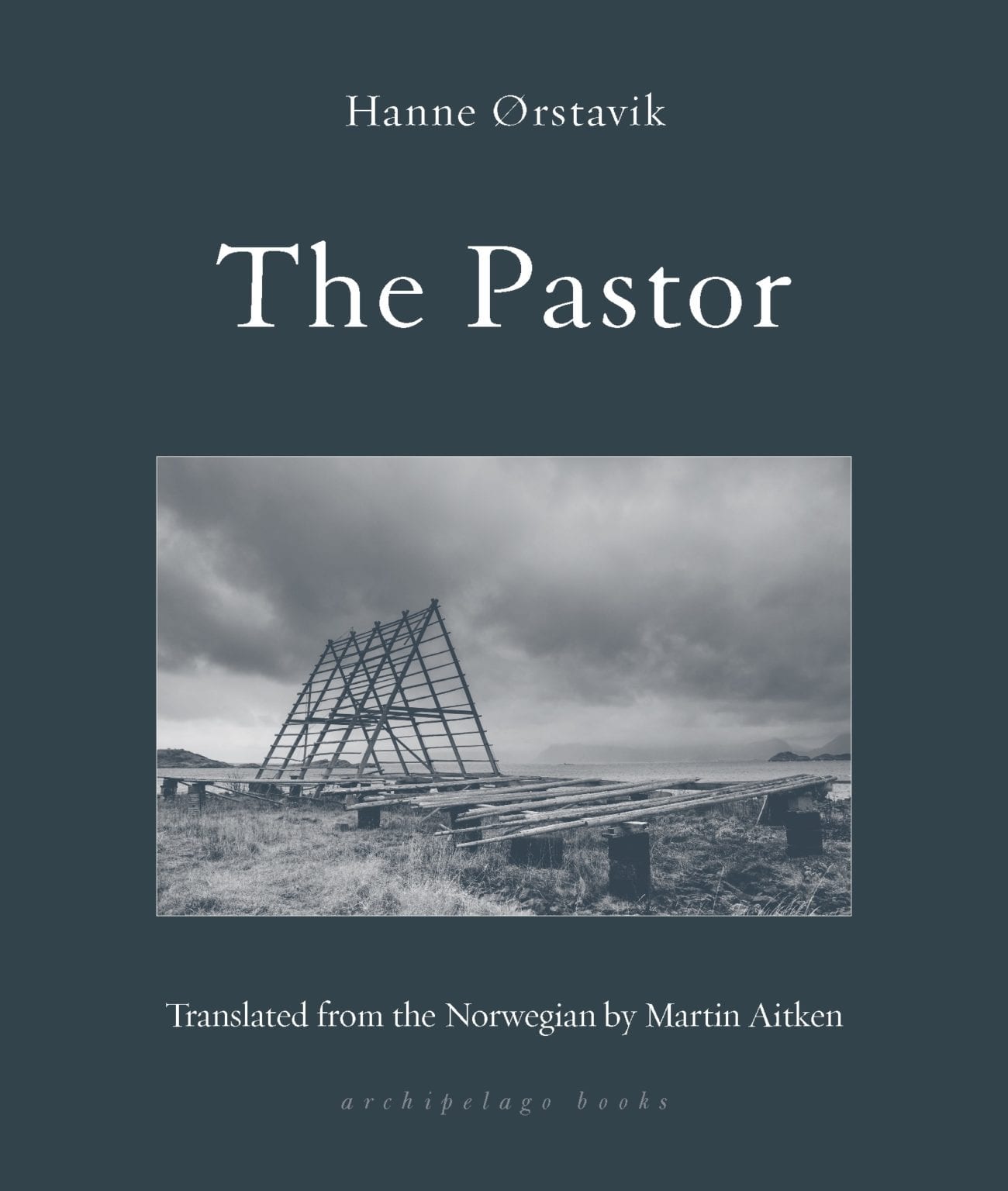
My personal Norwegian project introduced me to Hanne Örstavik, whom I had always meant to read. I loved her slow moving introspective novel, The Pastor (translated by Martin Aitken) and have since bought, but not read, her acclaimed novella, Love. However, lined up to read this month, I have her forthcoming release in translation, Ti Amo, a much more recent work based on her experience caring for her husband as he was dying of cancer. The only other female author I brought into this project was Ingvild H. Rishøi whose collection Winter Stories (translated by Diane Oatley) was a pure delight. I have been making note of other female Norwegian writers to fill in this imbalance in the future.

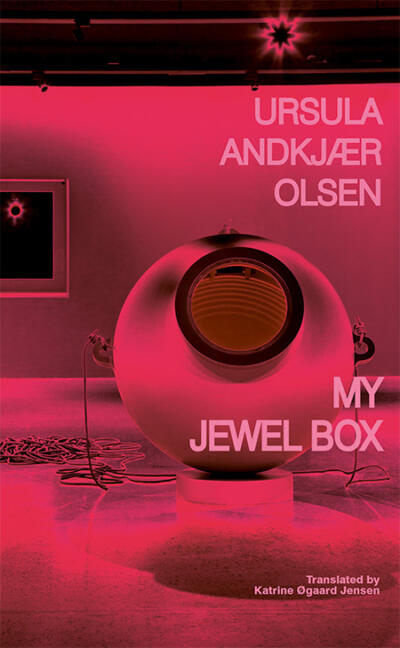
The past year also brought new work by two of my favourite poets: a book of prose pieces by Italian poet Franca Mancinelli, The Butterfly Cemetery (translated by John Taylor), and the conclusion to Danish poet Ursula Andkjær Olsen’s epic experimental trilogy, My Jewel Box (translated by Katrine Øgaard Jensen). In May I had the honour of speaking with Olsen and Jensen over Zoom for a special event—it was a fantastic opportunity I won’t soon forget. I also became acquainted with a new-to-me Austrian poet, Maja Haderlap, through her excellent collection distant transit (translated by Tess Lewis) and have since added her novel Angel of Oblivion to my shelves.

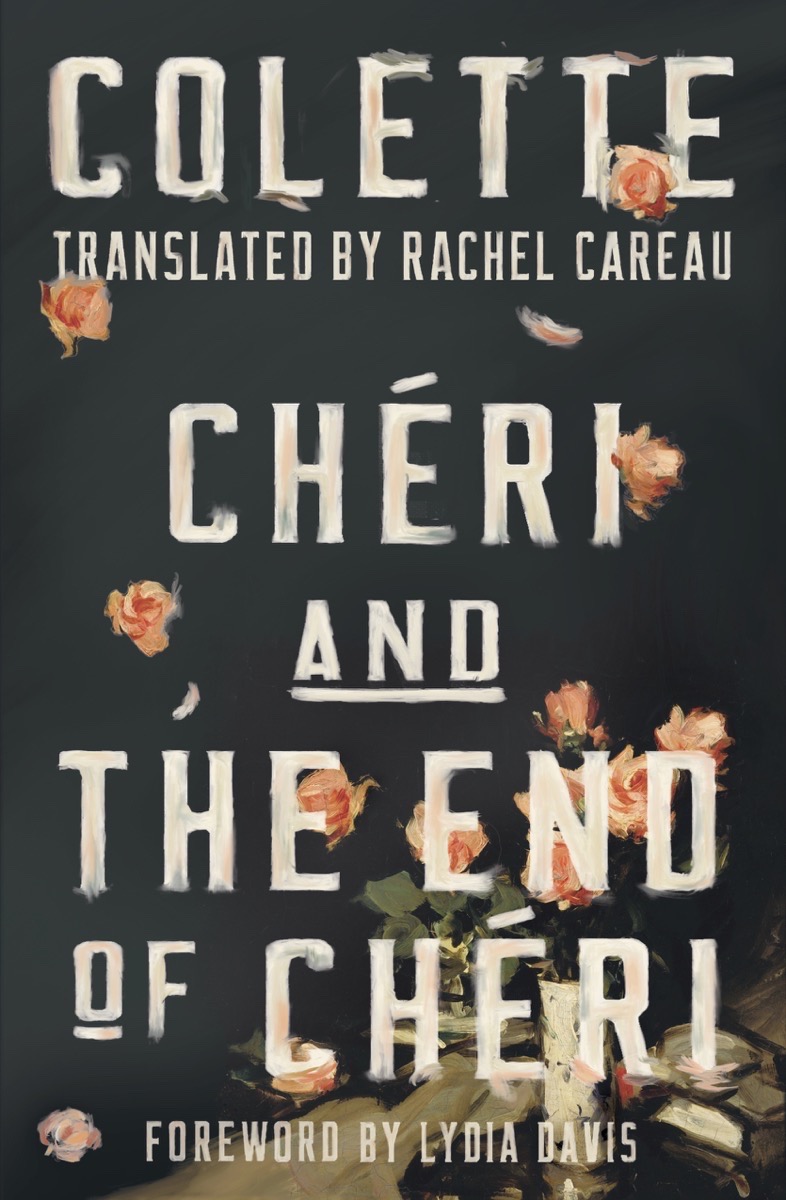
Among the many other wonderful women in translation I read over the past year, Geetanjali Shree’s International Booker winning Tomb of Sand (translated by Daisy Rockwell) needs no introduction—it is an exuberant, intelligent and wildly entertaining read. On an entirely different note, Rachel Careau’s brilliant new translation of Colette’s classic Cheri and the End of Cheri completely surprised me. I had no idea what a sharp and observant writer she was, in fact I didn’t know much about her at all and I discovered that she was quite the exceptional woman. Changing direction again, In the Eye of the Wild, French anthropologist Nastassja Martin’s account of her terrifying encounter with a bear in a remote region of Siberia (translated by Sophie R. Lewis) approaches the experience in an unexpected manner that I really appreciated.

Keeping with nonfiction for a moment, Grieving: Dispatches from a Wounded Country by Cristina Rivera Garza (translated by Sarah Booker), a collection of essays about contemporary Mexico, was a difficult, necessary read. Annmarie Schwarzenbach’s account of her overland journey to Afghanistan with Ella Maillart in 1939, All the Roads Are Open (translated by Isabel Fargo Cole) was another book I had long wanted to read that did not disappoint but which carries much more weight given the more recent history of that region. Finally, My Life in Trans Activism by A. Revathi (translated from Tamil dictation by Nandini Murali) offers vital insight into the lives of hijra and trans women and trans men in India from a widely respected activist. Tilted Axis in the UK will be releasing this book to an international audience later this year.

Rounding out the year, were three fine novels. First, I after owning it for years, I finally read Seeing Red by Chilean writer Lina Meruane (translated by Megan McDowell) and was very impressed. Last, but by no means least, I read two new releases from Istros Books who have an excellent selection of women writers in their catalogue. Special Needs by Lada Vukić (translated from the Croatian by Christina Pribichevich-Zorić) captures the slightly magical voice of child narrator with an undisclosed disability in a remarkably effective way, while Canzone di Guerra by the inimitable Daša Drndić (translated from the Croatian by Celia Hawkesworth) offers a fictionalized account of her years in Canada as a young single mother that was most enlightening for this Canadian reader.

I have, at this point, seven books selected for this year’s Women in Translation Month (#WITMonth) and we’ll see how I manage—and now I also have a goal to exceed for the eleven months before August 2023! I would, by the way, recommend any of the titles listed above if you are looking for something to read this month.

No promised lands: Canzone di Guerra by Daša Drndić

Each time I come back to Croatia, I see that it is not the Croatia I left, that I am not the person who left. Today, every lengthy departure from Croatia promises a still more difficult return, an ever more remote chance of establishing a firm, tenuously secure basis for living. Today, when I leave, I no longer know who I will find alive when I come back.

Croatian writer Daša Drndić was singular literary force, able to deftly weave facts—often gathered and presented in an unapologetic, even confrontational manner—with fiction to create compulsively readable, powerful works. Her novels incorporate lists, historical details, interview excerpts, documentary asides and lengthy footnotes into a character-driven story to achieve more than what either fiction or nonfiction could do alone. In Canzone di Guerra, recently released in English translation from Istros Books, we see an early form of this distinctive approach to storytelling, deeply political yet strikingly novelistic, echoing the author’s own experience in Toronto, Canada, as a single mother escaping conflict as the former Yugoslavia was falling apart in the early 1990s. Given this context, this work also stands as an increasingly relevant portrait of the immigrant experience—one in which my own country does not come out too well.

Originally published in 1998, Canzone di Guerra’s opening chapters zero in immediately on the narrator’s decision to leave Croatia and the varied circumstances immigrants and refugees face in Canada after the collapse of “Socialist Yugoslavia.” Framed by short digressions about the origin and fate of certain varieties of pigs—parables of culture, dislocation and loss—Drndić quickly shatters idealistic illusions and hints at the embedded inequalities and ethnic divisions that her superficially homogenous community carries with it to new shores. Imagined, in part, as the transcript of a radio documentary we hear the voices of an array of characters struggling to find work, dismayed at the lack of recognition for their professional credentials, and coping with loneliness and alienation:

Here we sleep peacefully, there’s no shelling, but we’re waging a different war. A war in the soul, a war in the head. Why did we come? We thought Canada was a country of great possibilities. I don’t know why no one told us the truth.

Beneath the dialogue, footnotes discuss the disappearance of trees in Sarajevo parks, coping strategies for stretching food or resources, even quote George Orwell. Throughout the text, such notes offer the opportunity for a multilayered discourse. There is always more going on beneath the surface.

Of the migrants, seeking a better life, some will thrive, some will not. The narrator, Tea Radan (“my name in this story” as she later says), has her young daughter Sara, to consider. She has to hope for the best. But what is she really hoping for? That is, at best, uncertain. Prior to moving to Canada, Tea and Sara had lived in Belgrade before moving to Rijeka in her native Croatia. Her sister lives in Slovenia, her brother is restless but goes nowhere. Those she knows want to leave but most don’t get far. However, the distance that her ability to migrate affords her seems to focus her attention back on her family, her parents and grandparents, and their actions and political associations during and after the Second World War. Her grandfather’s letters and mother’s diary entries help flesh out the story, but questions remain unresolved.

A romance with a fellow Croatian immigrant sets her off on an extensive, obsessive search through archives and records available in Canadian libraries, triggered by the notion that his family’s circumstances may have been connected to her own, most particularly to a betrayal of her mother during the war. It is not a healthy basis for a relationship, but it spurs a journey that leads Tea from one rabbit hole to another, as she delves into the history of Croatian communist and fascist movements, through the treatments of Jews in Canada, to tragic accounts of the concentration camps Theresienstadt near Prague and Jasenovac in Croatia. It is a gut-wrenching whirlwind tour, one that invites readers to slip down their own rabbit holes. Yet the intensity of her investigations, only trigger more questions:

The more I read, the less I knew. No one was entirely innocent, no one was entirely guilty: not the cardinals, nor the bishops, nor the popes, nor the churches, nor the Vatican. Nor the communists. As for the Ustasha ‘truths’, I read them too, but I didn’t believe them. They all had their version of history. Those who survived. The CIA had its truth as well. America and Great Britain their own.

Uncomfortably, for a Canadian reader, Drdnić, through her narrator, is unsparing in her critique of Canada’s failure to deal with a number of high profile war criminals who found their way here—something I was not unaware of but was chastened to review it all again.

This novel is, nonetheless, more than a vehicle to delve into past darkness. It is charged with a certain humour and warmth as Tea and her daughter navigate life in a new country. It is not easy. Along with other migrants they are forced to seek social supports, take degrading work under the table, and scour second hand shops for clothing and shoes. It sounds bleak, but Tea’s defiance and Sara’s spirit carry them through the endless bureaucratic mazes of the modern capitalist state.

Entertaining, intelligent and disturbing, to read Canzone di Guerra today, thirty years after the time when it was set, is enlightening. Immigrants still face the same frustrations finding support, resources, and work that recognizes their training. Yet, as refugees from the war in Ukraine flow into Canada and many other countries—often moving ahead of those waiting in line much longer—it is clear that all refugees and immigrants are not treated equally. The migrants arriving from the collapsing Yugoslavia note at one point that they are invisible compared to other more “obvious” newcomers. But visibility is not an asset, as long-time Canadians from visible minorities can attest. Racism and xenophobia has grown even more over the past few decades, buoyed by the same kind of nationalist sentiments that played such a key role in World War II and the Balkan Wars alike.   Daša Drndić’s work remains, as ever, clear-eyed, critical and timely.

Canzone di Guerra by Daša Drndić is translated from the Croatian by Celia Hawkesworth and published by Istros Books.
I want to be ordinary: Special Needs by Lada Vukić

On the surface, Special Needs by Croatian writer, Lada Vukić, appears to be a simple and straightforward story, told by a boy who does not engage with the world the way others do. He knows he is different. Special. And he does not like it. His classmates taunt him, his teacher barely tolerates him, and his aunt suffers him without affection. His single mother struggles to support the two of them by working as a seamstress for a manipulative, abusive boss, their nosy neighbour is alert to any sign of possible dysfunction, and a small-time drug dealer turns him into an unlikely accomplice. Lots of room for misunderstandings, the wisdom of the innocent, and maybe, if we’re lucky, a happy ending. Except that luck is in short supply for our hero and his mother, intimations of tragedy lie beneath the surface in an intriguing novel that succeeds on the uncommon strength of the perspective through which it unfolds.

I tend to be skeptical about child narrators who can veer too far toward the irritating or be exceptionally precocious. I am equally wary about narrators with some obvious emotional/cognitive impairment which often is imagined somewhere on the autism spectrum—which, in reality, is a very wide range. Put both together and the results can be a voice that is overly naive or unrealistically charmed. As the parent of two children with learning disabilities, one of whom also has mental health concerns, and as someone who has worked extensively with disabled populations from extreme physical and developmental disabilities to mental illness to a great variety of adult acquired brain injuries, I opened Special Needs with curious caution. And was immediately drawn to the narrative voice.

Born with an unspecified disability that others allude to but never name in his presence, ten year-old Emil is a selectively mute child with some deformation or inflexibility in his hands and feet. His reasoning is highly logical but on his own unique scale of understanding, to the point that he appears to others far less intelligent and intuitive than he is. The fact that words so often freeze in his mouth, adds to this perception. He believes he has problems with abstract thinking but rather he seems to lack a certain flexibility in some areas and an idiosyncratic frame of reference in others, often linked to his love of nature programing on television and an almost magical level of auditory acuity only his mother understands. He engages in some ritualistic behaviours and has an aversion to being touched. This cluster of qualities may or may not conform to any typical diagnosis but, if you work or live with disability, you know that there is no such thing as “typical,” or rather typically atypical. From Emil’s point of view, he is used to people failing to understand him, it’s a frustration he is quite capable of articulating if not verbally expressing. But what he really longs to do more than anything is shed the heavy corrective shoes he is forced to wear, get a pair of trainers, and run. That is the dream he holds to.

You can’t buy my shoes in a shop. They’re not displayed in the shop window like other shoes. And they don’t have the logo of a famous brand. I get them from Uncle Mario. So, no Nikes, no Adidas, just – Uncle Mario. Who wants shoes called Uncle Mario? I mean, nobody normal. And I’m normal, though sometimes they say I’m not. First, he makes an imprint of my feet, which are then used to make the shoes. I’ve seen that he does the same with others, so I’m not the only one. There are others like me, with special feet. But that doesn’t mean anything to me because I don’t like being special. I want to be ordinary.

Life is difficult for Emil and his mother. He is teased at school and unable to perform as expected by his teacher. The only subject he really enjoys and in which he demonstrates an uncanny, if pragmatic, understanding is religious studies—a class he is only allowed to attend as a viewer. His mother is a woman whose faith, if she ever had any, has been tried and found wanting. She colourfully expresses her anger at the school’s lack of patience and appreciation of her son, but she is unable to afford any supports for him, has lost the natural social network she once enjoyed, and gets no empathy from her bitter, intolerant sister:

Auntie Zrinka told mum that she had only herself to blame for the situation she found herself in. No, nobody else was to blame, just her! What was happening to her now was the consequences of past mistakes. What mistakes? Clearly, those when she should have gotten rid of me in time. (?!) Alright, she saw that the words “get rid of” were too strong, what she meant was some sort of institution for children like me. (?!) And yes, how many times did she have to tell her that she was stupid because she wasn’t even asking the boy’s father for child support. (!?)

Emil’s super hearing allows him to eavesdrop on conversations he is not meant to hear, nor fully equipped to understand. He tries to connect the nonsensical facts as best he can. The larger implications are apparent to us as readers, but many details are left out. An incompleteness is allowed. Emil draws his conclusions, we draw ours. He is also granted, by virtue of his hypersensitive ears, an ability to hear the hearts of others crashing around in their chests in times of fear or excitement, and when he confesses that he has detected a second faint heartbeat in both his mother and his teacher, he inadvertently tosses a wrench into several lives at once. Emil’s extra-special special needs add an important quality that enhances the appeal of the story without reducing the reality of challenging circumstances and disadvantages that he and his mother face. Nor will it help avert tragedy.

Special Needs’ true strength is the tightly controlled narrative, preserved beautifully in Christina Pribichevich-Zorić’s confident translation. Vukić never loses the voice of her young protagonist, maintaining the authenticity and appeal of Emil and his uniquely matter-of-fact worldview, while letting his self-awareness to begin to slowly evolve as the story turns in an unexpected direction. This work, her first, which won the V.B.Z. award as the best unpublished novel of 2016, is steady, strong, and a subtly different take on the exceptional child narrator, one that may be of particular interest to those who have spent time with the extraordinary ordinary people who see the world in a way that exposes truths we so often pretend to ignore.

Special Needs by Lada Vukić is translated from the Croatian by Christina Pribichevich-Zorić and published by Istros Books.