Beginning to find my voice: Reflections on publishing a piece of essay/memoir writing

We should only believe in our feelings, after the soul has been at rest from them; and express ourselves, not as we feel, but as we remember.
– Joseph Joubert, Pensées

Late last month I wrote about voice, about how I have recently been focusing more attention on voice; not only in literature, but as it pertains to meaning, sounds, and silences. I was, at that time, anticipating the publication of my first piece of non-review writing–not the first that I have written, there is a related piece, a parable, that will appear later this year–but rather the first to be published.

I was extremely anxious in advance of the release. I knew that I would be laying forth an aspect of my experience of being in the world that few people were aware of. I am not talking about my queer identity, that is something I have spoken of from time to time although it rarely impacts the books I chose to read and write about. I am referring to the fact that this short essay addresses my complicated relationship with my body in very bold terms.

It can be found here. (The journal that published my piece is under reconstruction so I have reproduced the essay below.)

Now that the piece is out there, granting me the necessary distance, I am extremely pleased with the results. It is raw and honest, but I feel comfortable that I have touched the heart of my experiences while maintaining a healthy and comfortable boundary. I am not a fan of confessional memoir/autobiographical fiction that tends to the revelation of excessive, unguarded intimate information. It is a delicate balance to measure vulnerability and self respect when writing about the personal details of one’s life. And, I would argue, it is essential to remember that there are limits to what we can ever really know about ourselves and if we remember that we can more honestly write from the heart.

Solitary daisyI have found that I am most comfortable leaning toward a more spare prose the closer I come to the self in my writing. I am hoping that it is a style, a voice if you like, that I can build on. But a detailed account of my life is not my goal in writing–my interest is more philosophical in nature.

I have to say that I am overwhelmed by the positive response to this piece. It is far beyond anything I could have hoped for. And I feel very excited about where I can go from here with further explorations. So much of my reading and the conversations that I’m having in the virtual sphere seem to be converging at this moment. Or perhaps I am simply in a fertile state of mind. It is not, however, an overnight phenomenon, these ideas have been growing for a long time, knocking around in awkward, unfinished form. I am grateful to everyone who has offered inspiration, support and encouragement to this point. I trust they know who they are.

May the conversations continue.

As published on Minor Literature[s], May 6, 2016.

Your Body Will Betray You — Joseph Schreiber

“From the inside out, but from which inside to which outside?”—Róbert Gál, On Wing

This is not the story of my life but the story of my living it, of my being in it.

And that’s a different story altogether.

I am, for lack of a better term, a differently gendered man. No, maybe there are better terms, more common terms—transgender, or queer, perhaps. I use these too. At least, when it’s expedient to do so or when I choose to take my place under a larger umbrella. But by their very inclusiveness, these terms are rendered senseless. Defining the self for one’s self requires an explicit ownership of the language employed. The words I embrace are mutable, evolving, even in the act of committing them to paper or speaking them aloud. Labels can only take us so far.

History is subjective. We can only know what we think we know.

And that isn’t very much at all.

This is what I do know:

I lived, for almost four decades, defined by the parameters of the body in which I was born. I recall the sensation of harbouring a fugitive being—an early social memory (at four? Five? Six?) This someone inside me was not with me, he was me. I saw him in my eyes and I wanted him gone. I wanted to be the girl my mother longed for—the one whose gender mattered solely because her first child, the sister I never knew, was stillborn.

I was not a tomboy. I did not wish to be a boy. I wanted to be the girl I confronted in the mirror, the one whose authenticity no one else questioned. I imagined that feeling female was something you learned, like tying your shoes or riding a bicycle. Yet, although I passed in the world of girls and women, this passing was a measured performance. The rules remained opaque.

The company of boys and men became a refuge—the space where my otherness was validated, where no one would ever question whether I was really female. Sexual attraction to men was a precious counterpoint to my persistent gender insecurity. Never mind that the romantic encounters between men in Mary Renault’s historical fiction held a far more desperate appeal that anything encountered in the pages of a typical boy-girl romance.  I reasoned that if I had a boyfriend, I must truly be female after all.

I married young and disappeared.

You have to understand, when I was growing up, in the 1960s and 70s in rural Canada, no one talked about ‘gender identity’ at all. And they certainly never suggested that it could differ from biological sex. Even now many choke on the concept, quote Bible and verse. My upbringing was liberal, neither fundamentalist nor homophobic, but still, my ‘out of placeness’ was my own, the faint light in the dark room. An old story, but I had no idea that there were others like me.

Self-defined gender insecurity continued to haunt me. It prescribed my path. Twice I walked away from graduate studies, turned down admission to law school, all because the more I exercised my intellect, the less energy I had to devote to maintaining the fragile equilibrium of being female in the world. I retreated to the most unequivocally female spaces I could imagine. Eventually, against my natural instincts, I decided to have children, and that was the beginning of the end—the beginning of the end of my ability to hang on to any reconciliation of my internal identity with the life I had constructed.

I fell apart.

Only in cobbling myself back together, in the aftermath of a breakdown, could I finally openly face the two fundamental notions that had driven me into mania—sexuality and gender. I realized that they were not going away, and that one could not make sense without the other.

Please note, in today’s world where trans* is appended to all manner of identities, where sexuality is no longer narrowly delineated and gender is something to defy, it may seem impossible to imagine that I could crack my head against the wall for so long before the light broke through. But mine was a different time.

I found myself in the library with a copy of Transgender Warriors and learned, for the very first time, what a few years of testosterone could do to transform the outside and fuel the inside of a female-born man. I understood, in that instant, that there was no other option. I finally had a name, a label for myself, and everything else started to fall into place.

I am not reckless. I knew there would be compromises. I knew what surgery could offer and what, at best, it could only approximate. I knew that the scalpel exacts more than its pound of flesh, that healing well is not the best revenge, and that there would be limits to the choices I would make. But none of that was on my mind as I waited for my first injection of the right hormones, the ones I had been craving, body and spirit, for so long.

That was fifteen years ago now. I was forty years old. And in puberty—even when you are old enough to know better—everything seems possible.

Today: 

On the street, I am invisible.

To see me, you would never suspect the truth of my history, the convoluted path to the dream of my genesis. Even those who do know, if they didn’t know me before, don’t ever think of me as any different from any other man.

I just am.

And yet I am not.

I am at once more, and less, than the sum of my parts.

Always have been. Always will be.

For a long time I believed that what I had rendered visible was the true me, the authentic self made flesh, but it’s not that simple. There is an inherent groundlessness, an embodied inauthenticity at play.

I am always in the process of coming into being.

The (meta)physicality of it all: 

I hold a life contained within a life—a life disjointed and hybridized, receding and resurfacing against the passage of time. That other life never leaves me, but with distance I can touch it less and less, as if it never was mine. Now it feels as if it belongs to someone else. It belongs to those who hold it in their memories—my parents, my siblings, my children—but what, if anything, does it mean to me?

It’s as if I own the inside, but not the outside, of the first forty years of my life.

So what do I have now? A more coherent existence, absolutely, but with the knowledge that a fully whole experience is not something I will ever have. My body is disfigured; not by choice or wilful design—it is simply the best I can achieve. And in the end as in the beginning, the body is only an echo of what I am, a reminder of what I have been.

You can change your face but your body will betray you.

The further I proceed, the more I realize that I will never arrive. Transition is an experience that is always in the reframing and redefining of boundaries.

Borderless, I am forever a migrant—endlessly coming into being.

Being cannot be measured.

Being cannot be reduced to the change of a marker on a passport.

On the street I am invisible.

And here lies the crux of the matter. Invisibility, once achieved, is deemed to be a mark of success. That’s what a person in transition means when they say: I pass. To pass is to be seen, without question, at one with a gender identity that feels true. And it is more than an ability to disappear in a crowd. There is an internal completeness that comes with the hormones and the pronouns and the new name—a levelling, a sense of peace.

But the body, the body is another matter. Only now, the axis of discord has shifted.

For those of us who traverse the visible lifeline from female to male, there is a sacrifice. The journey is forever written on the body, no matter how far one is able or chooses to travel. We are at once dramatically transformed and decidedly unfinished or differently designed. Scarred. I accepted that cost, assumed it would not matter.

Fifteen years on, it matters. At least, it does for me.

Don’t get me wrong. I made no mistake. This is the only path I could have taken once I found it on the map. I am infinitely happier, more settled than I might ever have imagined I could be. But if I long for anything, it’s the life I never had, the boy’s life—or any life, male or female—that might have been coherent, sex and gender, gender and sex. As much as the two are divided, the physical and the psychological, they are not separate in the living, in the experience of being. We exist as embodied minds, or if you prefer, embodied spirits, in the world.

Pre-transition, there was an internal fracturing of being. I struggled to align the outside world with the inside space I inhabited. I was an awkward misfit. Nothing made sense. Even the glam rock and punk of my teen years offered little more than a glimmer of hope before fading away. For years I fancied myself a Cartesian dualist. The ontological reality I experienced was akin to being tethered to a body that could never be a home. Over the years I began to talk about this body, to describe it as a distinct entity. I would catch myself at moments feeling like I was consciously moving my hips and propelling my legs forward, like an injured person re-learning how to walk. I floundered in pregnant form. By then I was at a complete loss.

Recognizing myself as transgender, that is, understanding that the real me was the male identity inside and learning that the outside could be modified to conform, was sufficient to see me through a divorce and launch me on my way into a new life. In the early years there was so much to look forward to, so many changes, and so much random strangeness. Puberty at forty is intense and wild and weird. For years I threw myself into work, measuring my worth by the title on my business cards, and finding validation in the sole corner of my life in which no one knew my past.

My transition was a textbook success. Or so it seemed.

I made no close friends, took no lovers, dared not risk the delicate balance of finally existing as a man in society. I sacrificed newfound authenticity for another superficial truth—one coherent with an implied history that would not threaten to expose me. The wall I had once constructed on the inside, I reconstructed on the outside.

Now I have dismantled and deconstructed it again.

But I still find myself troubled by a restless inauthenticity of being. It worries its way into the tension between my desire to blend and my need to be true to a life lived against the grain. It is looking for a voice.

On the street I am invisible.

I am. And I am not.

I am at once more, and less, than the sum of my parts.

Always have been. Always will be.

Here I am writing about my life, opening up the veins of the story without fleshing out the details. I have offered scraps and fragments, just enough to begin to frame a question, to try to begin to articulate my hybridized experience of living—then and now.

This is a sketch. That is all.

I am forever in the process of writing myself into being.

Postscript:

If the apex of manhood is to stand to pee, the nadir of manhood is to be gay and to understand that you will always arrive short-handed.

The bride stripped bare by his bachelors. Even.


The artist as outsider: The Lonely City by Olivia Laing

The lonely city is a pervasive phenomenon. The specific city of Olivia Laing’s new essay/memoir of the same name is New York City, but there is something about the modern city – be it the glass towered canyons of the central core or, I would argue, the uniform, ordered expanse of soulless suburbs that breeds a loneliness that can be suffocating. And surely some feel it more acutely than others, but most of us have probably, at least at some time or in some space, been troubled by the longing for contact, the need to share, and the sense that our aching neediness is conspicuous, writ large in awkward desperation. That is the experience Laing sets out to explore, by placing the inward focused isolation of being alone in a foreign city, against the works of a number of artists who, she argues, portray loneliness – capture the sensation, however bleak or beautiful – in a manner that speaks to her, during her sojourn and, in the end, perhaps help her find her way out of her darkness.

lonelyHer previous book, The Trip to Echo Spring, also set in America, was a road trip via the lives of five American authors who battled the bottle, framed against her own experiences growing up in an alcoholic household. I read it with an eye to understanding my adult son, a creative young man who is also an alcoholic. In her new work, the terrain she covers is confined, claustrophobic, but again informed by her own experience, this time of a period spent in New York following the emotionally devastating collapse of a relationship. I read The Lonely City in an urban centre less glamorous but with its own tendency to be unfriendly, at the apex, perhaps, of an extended period of crushing loneliness of my own.

Laing begins her journey through urban alienation with the suggestion, inspired by an entry in the diaries of Virginia Woolf, that there can be a transcendent quality to the experience of loneliness. She seeks to find this idea reflected in the lives and creations of a number of artists whose works draw her in and help her articulate and understand her own loneliness, in the moment, and as it exists within in the context of 21st century technology. She asks:

“What does it mean to be lonely? How do we live, if we’re not intimately engaged with another human being? How do we connect with other people, particularly if we don’t find speaking easy? Is sex a cure for loneliness, and if it is, what happens if our body or sexuality is considered deviant or damaged, if we are ill or unblessed with beauty? And is technology helping with these things? Does it draw us closer together, or trap us behind screens?”

As an essayist, Laing has the ability to balance just the right measure of personal exposition and vulnerability, with an uncanny talent for bringing the lives of the individuals that fascinate her into an immediate, sensitive focus. She writes with an honest compassion and curiosity. New York City – reflected through her months of moving between rented or borrowed accommodations, patrolling the streets with a sense of acute isolation, and digging through the archives of artists in search of meaning and treasure – is exposed and stripped bare through the emotionally disenfranchised creative eye. The eyes she choses to look through include Alfred Hitchcock, Valeries Solanas, Nan Goldin, Klaus Nomi, Peter Hujar, Billie Holiday and Jean-Michel Basquiat; but four artists in particular provide perspectives she finds deeply intriguing. They are the realist painter Edward Hopper whose stark images capture the solitary urban existence with an intensity that is poignant and uncomfortable; Andy Warhol, the socially awkward artist who virtually fabricated an identity protected by silkscreen frames, cameras and tape recorders; the unknown Chicago janitor, Henry Darger, who left an extensive, often disturbing, legacy of folk art and thousand of pages of imaginative prose; and, finally, photographer, artist, writer and activist David Wojnarowicz.

Laing weaves her personal reflections with a survey of some of the essential psychological studies of the causes and expressions of loneliness; expanding on these themes against the broad canvas of the lives and artworks of the artists she examines. Her subjects, the key players and the supporting characters alike, tend to be outsiders, typically survivors of troubled childhoods – victims of neglect, rejection, even outright physical abuse. Many are queer, individuals set apart by their sexuality, most find normal conversational communication difficult, and addiction is a common demon that recurs. The art, film and writings produced by these complex individuals is, in many instances, boundary breaking, frequently disturbing, and contain, at their core an attempt to articulate the aloneness of life in the city, to portray the isolated individual within stark interior spaces (as in the haunting paintings of Edward Hopper) or to record the desolate environments where the dispossessed seek to assuage their alienation through drugs and risky anonymous sexual encounters (as in the work of Warhol, Goldin, Wojnarowicz and others). Then there is the janitor/artist Darger, a loner who created a detailed alternate universe, illustrated with playfully coloured paintings that frequently contained elements of disturbing violence enacted on children, leaving an exhaustive wealth of works that no one saw until he was forced into hospital care at the end of his life.

Each of Laing’s outsider artists is treated with an empathetic respect and is understood within a society that is perceived as antagonistic to the those who by virtue of personality, mental illness, social anxiety, gender expression or sexuality are seen as divergent from the “norm”, whatever that is. The artists who seem to hold the greatest appeal for her, as a memoirist, are those who exploit their own differences to challenge the pressures that perpetuate a mainstream conformity. Regarding Wojnarowicz she says:

“All his work was an act of resistance against this dominating force, driven by a desire to contact and inhabit a deeper, wilder mode of being. The best way he’d found to fight was to make public the truths of his own life, to create work that resisted invisibility and silence; the loneliness that comes from having your existence denied, from being written out of history, which after all belongs to the normal and not to the stigmatised.”

As Laing unwraps the nuances of her own engagement with loneliness she finds in herself a profound identification with the gay artists who were navigating the city’s streets in the years before Stonewall, or even worse, during the height of the AIDS epidemic. As the daughter of a lesbian who was outed when homophobia was still legally enforced in the UK, she was especially sensitive to the gay taunts and jeers she heard in the school yard. But the knife cut deeper in an unexpected way:

“It wasn’t just about my mother. I can see myself then, skinny and pale, dressed as a boy, completely incapable of handling the social demands of being at a girl’s school, my own sexuality and sense of gender hopelessly out of kilter with the options then on offer. If I was anything, I was a gay boy; in the wrong place, in the wrong body, in the wrong life.”

These words struck a deep chord with me. Growing up in the 1960’s and 70’s, I found myself in the same space, only more completely if you like. I was haunted by an other-worldliness, a complete sense of my lack of ability to understand, let alone communicate, with those with who apparently shared the same gender. This feeling began to escalate as I reached my mid teens. That was, incidentally, a time when I sought a sense of self-identification with the world personified by Andy Warhol, The Velvet Underground and other denizens of the Factory scene. I was, without any language for myself, grasping at straws. But I would not find the words, or discover that there was a way to ameliorate the crushing sense that I was in the wrong body until I was well into my 30’s. Many years on now I would like to say that being able to exist in the world in a way that is at once socially and emotional right has rendered loneliness a less pervasive force, but, in truth, it just changes the parameters of one’s alienation. At best, I am a loner who appears outgoing, who can readily speak to a room of 100 people but stumbles awkwardly over small talk; at worst I am floored by waves of intense loneliness that break over me when I least expect it, most often when I am in public places.

I have introduced my own experience here because it leads into the curious question of the role of social media in the 21st century experience of isolation. Laing describes how, during her New York stay, she would open and close the day wandering the virtual streets and alleys of the city of Twitter. In between, even more hours could be lost to clicking, conversing, and cruising hashtags. In my loneliest periods I have fallen into the same pattern and asked myself the same questions she poses:

“What did I want? What was I looking for? What was I doing there, hour after hour? Contradictory things. I wanted to know what was going on. I wanted to be stimulated. I wanted to be in contact and I wanted to retain my privacy. I wanted to click and click and click until my synapses exploded, until I was flooded with superfluity.”

The migration of our social engagement to a virtual sphere is, she argues, reflected in the gentrification of our urban communities and in the gentrification of our emotions. Happiness is assumed to be the default; difficult feelings are to be avoided, corrected, numbed. The internet can be a comfort, a necessary connection, but it is important to understand its limitations. It cannot cure loneliness. The answer lies not in another person, but within ones self. After all, a period of loneliness can be positive experience, a time of personal growth. Longing, as Laing reminds us, is a vital part of the human experience, it “does not mean that one has failed, but simply that one is alive.” I am inclined to believe she is right.

The Lonely City: Adventures in the Art of Being Alone is published by Picador.
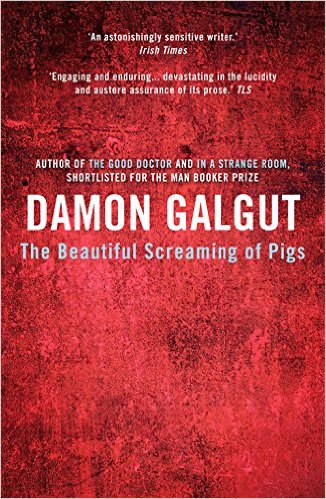
Other kinds of exile: The Beautiful Screaming of Pigs by Damon Galgut

“Lives are meant to be separate and apart; when the borders break and we overflow into one another, it only leads to trouble and sadness.”

Last month I had worried about easing back into reading following my recent unexpected cardiac arrest, but, in fact, August went well. September has proved much more difficult. I have picked up so many books I thought I wanted to read only to be unable to get beyond a few pages. So it is probably no surprise that I retreated to the comfort zone of re-reading a book by one of my favourite authors. I chose this book on the expectation that a new paper edition was due to be released today in Canada but from reports of the distributor being low or out of stock, the reality of actually seeing it on the shelves may be a long way out. Too bad because when you know a writer has many excellent books to his or her credit it is a shame to see only one, the latest or best known, in stock. Fortunately this title is readily available electronically.

pigsThe Beautiful Screaming of Pigs is the second full length novel by South African writer Damon Galgut. Originally released in 1991 it eventually dropped out of print and, when a new edition was issued in 2005 following the Booker shortlisting of The Good Doctor, Galgut took the opportunity to revise the book, wanting to address his longstanding feeling that the rhythms of the language sounded “discordant”. The result, for whatever it is worth, is a novel that embedded itself into my consciousness with the first reading, and proved to be even richer and more deeply affecting with the second.

Set against the backdrop of the first free elections in Namibia in 1989, 20 year-old Patrick Winter and his mother are heading to the land that he had, only a year before, been fighting for on behalf of the South African Army. That experience has clearly left him emotionally traumatized. He is dependent on Valium to sleep and cope with recurring panic attacks. For his mother the trip is an opportunity to visit her young black lover, the latest of a long string personal explorations she has flirted with since her divorce from Patrick’s father. As the story unfolds he will reflect on his childhood, the horror of his time in the army, his ambiguous feelings about his own politics, and the emerging recognition of the nature his sexuality.

The novel opens as Patrick and his mother arrive at the Afrikaner farm where she grew up and he spent many a summer vacation. His brittle grandmother fusses over his physical and mental health, cannot understand why they are heading north, and stubbornly insists on referring to Namibia as South West Africa, the name by which it was known going back to its years as a German colony. Here Patrick will begin to reveal his family background, his closeness to his mother and his alienation from his rugged, athletic, big game-hunting father and older brother.

When his brother Malcolm joins the army and is killed in a motor vehicle accident, the loss tears the fragile family apart. Patrick and his mother move out, unraveling the tightly wound expectations of marriage by which she had been bound. As she tries to reframe herself with a series of dramatic passions and obsessions, her son is placed in the awkward role of picking up the pieces behind her. So when his own obligation to the army arises, despite the sure knowledge that he is entirely unsuited for the task at hand, he enlists promptly hoping to get his two year commitment out of the way. He won’t last two years, nor will he be able to put the experience behind him.

As he awakes that first morning to a familiar noise on the farm he makes a striking observation about his state of well-being in an unforgettable passage. Outside a pig is being slaughtered:

“There is no sound on earth like the sound of a pig dying. It is a shriek that tears at the primal, unconscious mind. It is the noise of babies being abandoned, of women being taken by force, of the hinges of the world tearing loose. The screaming starts from the moment the pig is seized, as if it knows what is about to happen. The pig squeals and cries, it defecates in terror, but nothing will stop its life converging to a zero on the point of that thin metal stick.”

As a child, the spectacle of a pig being killed never failed to draw him with a fascinated horror. On this day his reaction takes on a different note:

“It was a sign of my state of mind or soul that on this particular morning the screaming of the pig sounded almost beautiful to me. It didn’t evoke violence or fear, but a train of gentle childhood memories.”

After the reverie of a walk around the farm and a hearty breakfast, Patrick and his mother head for Namibia. When they finally reach Windhoek and meet Godfrey in the township where he lives, Patrick is surprised to find that his mother’s lover is not quite what he had imagined and is, in reality, only a few years older than he is. They learn that a white activist who had been working with SWAPO (the South West African Peoples’ Organization) has just been assassinated and Godfrey must attend to details for his funeral and an election rally. This necessitates a further trip on to Swakopmund, a detour that places Patrick in a position to question his own political resolution and bravery, especially poignant in light of the fact that on the border he was engaged in fighting the very forces he is now helping Godfrey support. His mother’s enthusiasm soon wanes into boredom as, for her, the shine starts to come off her latest passion.

Woven into the account of their few days in Namibia, is Patrick’s chronicle of his experiences in the army, beginning with the early days of tedium as the young soldiers pass empty days in their tents “playing cards, writing letters, telling jokes. An old scene, as old as the first village.” Patrick is keenly aware that he does not quite fit into this world of testosterone charged energy. He is hopelessly reminded of the way he felt sidelined as his father and brother tossed a rugby ball on the lawn or boasted about their hunting conquests. He senses a brotherhood of men to which he will never belong. It is not until a young Afrikaner named Lappies arrives that he finds a kindred spirit, makes a friend, and maybe – although he doesn’t realize it at the time – falls in love. Once fighting descends on the camp and strikes with a vengeance; horror, fear and death take their toll. When Patrick’s friend is killed, his grasp on sanity begins to slip. Galgut pulls the reader right into his young narrator’s shattered mind in one of the most intense descriptions of a mental breakdown I have ever read. It happens in fits and starts. Patrick tries to hang on, stubbornly, foolishly until his condition deteriorates to the point that he finds himself hospitalized, first in Pretoria and then in Cape Town. He is discharged from the army.

In the hospital his parents visit. Their responses to their shocked and emotionally injured son are true to form. His father travels to see him Pretoria where he sits awkwardly, shifting from ”buttock to buttock” unable to find anything meaningful to say. His mother has been busy acting in a play and does not make her appearance at his bedside until he is back in Cape Town. She visits him daily and talks about herself. It is here that she will first tell him about Godfrey, hoping to impress or shock him. He has no answer but he remembers the small drama.

“At that moment a shaft of light, blued by the rain, fell on her face: like the actress she was, she turned towards it, finding her spot. Then she smiled, and the smile became a laugh: a round, silvery sound, like a coin, which fell from her throat and tinkled down onto the ground.”

Patrick’s few days in Namibia will not answer all the questions he carries into the shifting sands of the desert one year after his breakdown. But he will emerge from the visit with a sense that it is time for him to define his own sense of personal space and figure out who he is. Borders – those lines between countries defended by force, defined by politics, and blurred between people – feature throughout this novel. True to form, Galgut allows these spaces to exist for the reader to explore. He is a writer of remarkable restraint, a storyteller who matches spare tight prose with simple moments of vivid intensity. In The Beautiful Screaming of Pigs he has created a haunting, intelligent, unforgettable portrait of the relationships between people at a time of great upheaval and impending change in Southern Africa. As Namibians queue with excitement to mark their ballot toward the end of the novel, Godfrey tell Patrick that maybe someday his own country will see the same. That day will still be more than four years away.

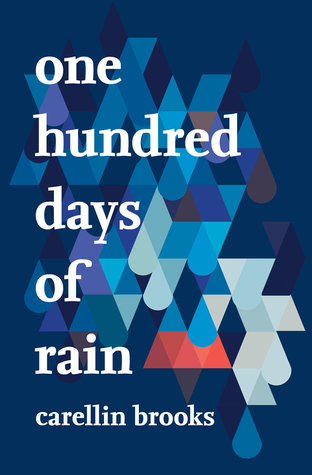
Nothing but grey skies? One Hundred Days of Rain by Carellin Brooks

It begins abruptly with a domestic dispute, loud enough to alert the neighbour. The police are called. Our unnamed heroine is led away and will soon face a restraining order. This is Vancouver. Rain starts as her marriage ends.

“She is not fallacious enough to connect this with her circumstances. She confines herself strictly to the facts. She leaves. It rains.”

rain100What we find in One Hundred Days of Rain, the spare, reflective novel by Canadian author Carellin Brooks, is a poetic meditation on the unraveling of a relationship and the displacement of a woman and her small child in a city famous for its wet face, soaked streets, and days – no, months – of rain. The moments are ordinary: work, finding a place to live, stretching meagre resources. The dissolution of the marriage is bitter, acrimonious and manipulative. But much of the time the protagonist is numb, detached, preoccupied. The rain, in its infinite guises, stubborn ubiquity, tireless assault on the bodies and minds of the city’s inhabitants, is the central character. It has the starring role.

Rain is both vital and villainous:

“Outside the big front windows the rain has begun in earnest. This is the rain the denizens of the city know best, the rain they have cause to know. In the days before the weather began to change there would be weeks of it at a stretch. It is said of this rain that it drives people to suicide, that the sodden winter tried the hardest.”

It defines clothing and footwear:

“The skies drip, that’s all, and the relentless drip soaks silently into the land. She walks to the café to pick up her son. It’s a long walk but she won’t take the bus. Once again she is thankful for her thick soled shoes. The misery of bad shoes, ones that let the weather in, so that your feet when you peel off your squishy socks have a pale, pinched look of reproach. She hopes her son will be wearing boots.”

It becomes a distant memory when the summer brings sunshine. And then with autumn it is back:

“Collective amnesiacs who stare each autumn in unfeigned dismay, faces blank. What, this again? It’s raining? Forgetting as an act of self preservation. Nonsense, they say. It doesn’t rain like that. It can’t. There’s no way. A hundred days of rain one after the other? Certainly not. And the thing is, nobody lies, not consciously.”

As the sloppy, damp, year slides by, our heroine will move several times, balance visitation for her poor confused son between her ex-wife and the child’s father. Her relationship with M, the ex, is roughly fleshed out in a series of bitter vignettes. Other regular female lovers come and go. She seems at times to direct more emotion to the grey, unforgiving skies than to the people around her. She is on autopilot. It is almost as if the incessant rain risks drowning out her ability to make sense of what she really feels, thinks and wants in life. Perhaps it is simply granting time to start to heal.

Played out in a chorus of 99 short chapters, this novel, as a rumination on rain and a sketch of the endless end of a relationship, draws to a close, as it begins, with the first drops of rain. However there is a sense of a new beginning, however faint. The restrained third person narration has an arms length quality that is surprisingly engaging. The observations are sharp, precise, and often very funny. We don’t ever learn too much about the characters, we learn what we need to know. The fact that it is a same sex marriage that is coming apart is of little significance. Divorce is divorce. But we are invited to endure the Vancouver rain, appreciate it’s kaleidoscopic nature and, for some of us, remember why we live on the other side of the Rocky Mountains.

One Hundred Days of Rain is published by Canadian indie publisher BookThug.

The only thing constant is change: Call Me By Your Name by André Aciman

“I look back to that summer and can’t believe that despite every one of my efforts to live with the “fire” and the “swoon”, life still granted wonderful moments. Italy. Summer. The noise of the cicadas in the early afternoon. My room. His room. Our balcony that shut the whole world out. The soft wind trailing exaltations from our garden up the stairs to my bedroom. The summer I learned to love fishing. Because he did. To love jogging. Because he did. To love octopus, Heraclitis, Tristan. The summer I’d hear a bird sing, smell a plant, or feel the mist rise from under my feet on warm sunny days and, because my senses were always on alert, would automatically find them rushing to him.”

When I find myself struggling to find the words to write a review, it is typically a situation where I feel lukewarm or worse about the book I have just read. This is not one of those situations. Quite the opposite. Wanting to read a few diverse offerings with LGBT themes in honour of the fact that it is, in my city, Pride Week, I wanted to begin with a novel I imagined would fall into a conventional coming of age/coming out tale, something I do tend to enjoy. André Aciman’s Call Me By Your Name is that, but as a beautiful, elegant, emotional, and intelligent piece of literature it offers much more for anyone who has ever been hopelessly infatuated, experienced a brief passionate affair, or lost a love that has left a hollow space in their heart and imagination.

call meThe setting is lush, a mansion on the Italian Riviera in the mid-1980s. Our narrator’s father, a distinguished academic, is in the practice of inviting a young scholar to spend six weeks with the family each summer – in return for assisting the professor, the chosen candidate has an opportunity to further his own studies and experience a taste of Italy. When Oliver, a handsome, carefree American post-doc who is working on a book about Heraclitis arrives for his stay, the entire household is captivated. For seventeen year-old Elio though, it marks an intimation of so much more; an instant, devastating attraction that will consume and obsess him for weeks to come.

The atmosphere is richly intellectual. Elio, an only child, is precocious and he knows it. But he is still a teenager. He is transcribing Haydn’s “Seven Last Words of Christ”, quotes Paul Celan and references Star Trek. His father is always encouraging him to get out, see friends. But once Oliver walks into his life his attention has a new focus – a focus he strains to hide under a guise of indifference while secretly noting every gesture, glance and inflection he perceives from this seemingly casual, self-assured houseguest. Their relationship seems to slide from hot to cold from day to day. Elio continues to see and sleep with a female friend, in part in reaction to Oliver’s tendency to disappear to town at night, but also to try to quell his own uncertainties about his sexuality and his complicated feelings for the 24 year-old man who is likely unattainable, unavailable and uninterested. Yet as much as he tries to push his feelings away, they continue to dominate his waking and sleeping hours.

“Let summer never end, let him never go away, let the music on perpetual replay play forever, I’m asking for very little, and I swear I’ll ask for nothing more.”

Awkwardly and uncertainly Oliver and Elio do eventually acknowledge their mutual attraction and move toward what will become a few scant weeks of deeply passionate, sexually explicit consummation. Their love represents a perfect, intense summer drenched affair. The frantic attempt to have and to hold as time slips away. Ultimately Oliver will have to leave to return to Columbia where he teaches, Elio will be heading back to boarding school. The space they have to share is defined but within those limitations they experience an intimacy that is timeless and create small, immutable memories that will endure. Like life, nothing is perfect, and it is inevitable that time and circumstance will soon take Oliver and Elio in different directions. For one man their affair will serve as a confirmation of where his attractions lie; for the other, the outcome will differ. But 15 years later when the two men meet again, they have to acknowledge that the experience was profound and has not been forgotten.

Given my rough, romantic précis it is difficult to appreciate the sheer beauty of Aciman’s prose. A memoirist, essayist and Proust scholar, Call Me By Your Name, was his first novel. It stands as a rich evocation of memory, youth, and the unquenchable desire to possess and be possessed by one’s beloved. He brings to life the sultry seaside beauty and character of the Italian Riviera in language that delights in nuance and detail, rich with allusions to literature, music and philosophy. Latin and Italian passages are seamlessly woven in to the text, adding atmosphere. Elio’s endlessly convoluted, adolescent passions contain a tension that pulls the reader in and the story forward until, looking back years later he wonders about the trajectory his life has taken against the alternate life have might have lived had someone other than Oliver turned up at his home at that fateful summer. We have probably all wondered about those potential parallel lives we carry inside us.

Desire, possession, loss, resolution. Time passes, and as Heraclitis would remind us, everything is constantly in flux.

Bohemian dreamer: A Gothic Soul by Jiří Karásek ze Lvovic

“Fiction is eternal; reality perishes” we are warned in the preface of A Gothic Soul, “Invented forms live, real ones vanish. Truth is ephemeral; illusion everlasting.” What follows in this classic of Czech Decadent literature, originally published in 1900, revived in a new translation by Kirsten Lodge and lovingly presented by Twisted Spoon Press, is a poetic account of the emotional and philosophical torments faced by a troubled young man who struggles to place his disaffected existence between real life as lived by others and the internal world of his dreams.

2015-05-19 19.33.24One can sense from the outset that this is not a happy story. The author has already made it clear that it will not be a “story” in the typical sense at all but rather a journey of internalized reflections. A romantic darkness and decay looms large, it is hard to imagine sunlight filtering through. The humour, the playful nods that the narrator directs to the great French Decadent writers, is very black indeed. And yet this work is permeated with a remarkable beauty.

The hero of A Gothic Soul is the last of his line, raised by maiden aunts after his parents’ death. His childhood is gloomy and oppressive, haunted by a fear of inheriting the religious mania that drove a cousin to take his own life. He responds to the external world with an affect of remote deadness while allowing to flourish, within his soul, an internal reality filled with light and magic. Each time he resolves to engage with world, to seek an end to his lonely isolation, he ends up retreating into his dreams to seek comfort. A deep conflict arises when his natural misanthropy clashes with his abiding desire for a true and perfect companion, a male friend and lover with whom he can meld body and soul. On the few occasions when he meets a potential friend, his fear and shyness drive him away.

“But everything was so distant. He was sick – he felt it. He could find no peace. It was as though all the atoms of his soul had been vapourized. He could no longer calm himself. He longed for a friend, a kindred soul. How beautiful to give himself to someone and to feel that he had given himself to someone. His life would immediately acquire meaning. What happiness! What charm!”

Early in his self-exploration he believes that the ultimate respite for his agonized soul lies in the Church, in monastic life. But his nihilistic temperament causes him to lose his grasp on his faith, to fall away from the idols and saints that once gave him comfort and to question what it means to believe in God. Spirits now begin to follow him through the streets and into his ancient family home. Fears of madness return.

His reflections then turn to the role that his Czech identity plays in this wretched existence to which he seems to be condemned. His Czechness, his city, become entwined with his struggle to make sense of his inability to live life fully. Is his nation seeking its own medieval traces, its own Gothic soul? Does the fate of his nation trying to define a space for itself in the Austro-Hungarian Empire mirror his own search? Some of the most stunning passages in this novella read like a heartbreaking ode to his native city.

“And now the evening bells rang out over Prague. A weight, darkly clanging and tragic, fell from their harmony. And unexpected numbness imbued the air. Stifling shadows hung drowsily over the rooftops. Not even a wing of a belated bird moved in this air. Everything suddenly seemed to be standing stock-still to listen to the conversing bells. Iron strokes broke through the windows of belfries and towers. The resonant sound cascaded down before dying out in the distance, flowing haltingly over the city’s rooftops.”

As the story progresses, our hero continues to overthink his dilemma as he wanders the streets of the city or takes refuge in his rooms. His reasoning pivots between optimism and despair. He realizes that he is losing his grip, that a life unlived is his likely destiny.

2015-05-19 19.38.39Jiří Karásek ze Lvovic (1871-1951) was an instrumental figure in the formation of the Czech Decadent movement. In a fascinating Afterword and author’s Biography, translator Kirsten Lodge describes the nature and development of this movement. In contrast with other strains of the same tradition, for the Czech Decadents the themes of despair and death are taken to the level of national obsession. For Karásek, his homosexuality also deeply informed his conception of Decadent thought. A desperate homoerotic longing runs throughout A Gothic Soul. This is complimented in this gorgeously presented publication by a series of illustrations by artist Sascha Schneider (1870-1927).

Twisted Spoon Press is a small independent publisher based in Prague. This is my first encounter with one of their publications. I was drawn in by the sheer beauty of this book. It is a joy to read and an important literary work that still resonates 115 years after it was first published. Trust me, an electronic copy would not be the same. You will want the hard cover version.

How do you see me, anyway? Sphinx by Anne Garréta

“What I was feeling for A*** needed its own embodiment; the pleasure I took in A***’s company demanded is own fulfillment. I wanted A***, it was true, and all my other desires, needs, and plans paled in comparison. Suddenly, the obsessive clamor for amorous possession took hold of me.
I was surprised to find myself desiring, painfully. In a sudden rush of vertigo, I was tantalized by the idea of contact with A***’s skin.”

What we have here is the impassioned confession of the unnamed narrator of Sphinx by Anne Garréta. A*** is the object of this sudden and intense desire. Neither are defined by sex or gender. This factor, acts as a constraint that places this French novel within the ranks of the works of the OuLiPo group of authors (though,written in 1986, it predates the author’s admission to this famed group). Yet in the end, Sphinx requires no such designation to work as a powerful literary, darkly existential meditation on memory, attraction and identity.

sphinxThe more I heard about this book, a new release from Deep Vellum Publishing, the more conflicted I felt about whether or not it was something I wanted to read. My reasons for that uncertainty are deep seated and will be discussed below, but let’s get one thing out of the way first… Sphinx is one stunning, dynamic and important novel. To finally have it available in English, and in a world in which the public understanding of sex and gender is evolving, serves as an invitation to approach this work as more than either a literary challenge in itself or a polemic of feminist/queer theory.

Oh, wait a minute. Is it a good story? One that stands on its own merits? At first blush, the set up sounds, and at points may even feel artificial, but that oddness passes quickly. The narrator is a young student of Catholic theology who is drifting without strong direction and, through a series of unusual, even disturbing, coincidences ends up working as a DJ at an after hours Paris nightclub. This serves as an introduction to a new world, an alternate reality that opens late at night, to unwind in the very early hours of the morning. Our narrator demonstrates a tangible ambivalence toward this radical change of lifestyle.

“I acquiesced to whatever presented itself without much arm-twisting, and I neither suffered from nor reveled in it: I was spared the exhaustion of searching and seizing. I was giving up a state of being that was in turn abandoning me and sliding into another that slowly, imperceptibly came to envelop me.”

In learning to navigate this world, an identity that may or may not be valid or true, is adopted to serve as a barrier, a means of mediating an alien environment. Within this identity a certain boundary, a sober vantage point is maintained until A***, an exotic dancer at a strip club, comes into the narrator’s life. At first their friendship is platonic, existing in a stylish public sphere. The narrator realizes it is not built on strong romantic or intellectual engagement. The attraction is one of opposites – race and personality – until sexual desire arises abruptly, throwing the narrator’s carefully constructed identity into a crisis which is heightened as A*** initially refuses to take their relationship to an intimate level.

When it is ultimately consummated, a highly charged sexual and romantic liaison develops, enduring several years marked by turns of passion, jealousy and domesticity. As might be anticipated in a union built on obsession rather than common interests, cracks and fissures begin to grow. This is heightened as the narrator seeks to revive abandoned theological pursuits, carving out time to focus on an essay, quite fittingly, on the apophatic tradition – the attempt to describe God only by negation. Later on, after the tragic end of this ill-fated love affair, the narrator will sink into a deeply existential rumination on love and loss. No sexual encounter, romance, intellectual or academic pursuit will fill the void left behind. A restless wandering overtakes our hero, driving a spiral into ever darker self exploration. Without the “other” as a frame of reference, it becomes increasingly evident that the self is isolated, disconnected.

“Had I confided more in A*** than in anybody else? What had I revealed? Had I unmasked myself? No, more likely I had exposed my own collapse, the ruin of the edifice I had so painfully constructed out of rhetoric and made to stand for an identity.”

At heart this is a novel of obsession, of memory, of mourning. The language is rich and sensual, with an intensity that is visceral and emotionally powerful. For that alone, Sphinx is a work worth attention.

But what about the matter of sex and gender?

I suppose it will come down to how important it is to have a fixed image of the protagonists in your mind as a reader and how fluid your conception of gender is in relation to sex and sexuality. Are they bound together, or three separate aspects of identity? For the majority of people, biological sex conforms to gender identity. They are experienced as one and the same. Sexuality hinges on the sex and gender of the persons to whom one is attracted. Transgender is an umbrella term for those for whom sex and gender do not fit exactly. The range of gender expressions, identities and bodies under that umbrella is wide and the intersection with sexuality can further complicate the issue. Queer theory aside, a novel like Sphinx opens up the potential for a completely free reading experience. One can choose gender, sex and sexuality as desired, play with alternatives in the reading, or re-encounter the work with repeatedly different contexts. Garréta has incorporated enough ambiguity to open up all possibilities. The decadence of club life is contrasted with the sober pursuits of the serious intellectual and blended with domestic engagement and the dynamics of extended family.

For a queer reader like myself it is a glorious opportunity, one I would have loved to encounter back in my isolated teenage years. Even into my 20’s and 30’s as I sought to make sense of a physically gendered space that felt fragile and ungrounded at its core, distorted and confused by my ostensible sexual orientation. Now in my 50’s, 15 years after transitioning, Sphinx speaks to me on yet another level. I can and have easily existed in the world as a gay transgender man without outing myself on either count unless I chose to (like I am at the moment). I am invisible not only online but in the real world. Yet the challenge arises in the building of close and honest relationships with others. I cannot talk about my past, my marriage, my subsequent affairs without resorting to a vagueness, to the construction of a gender neutral self-imposed witness protection program. If I am sexually attracted to someone an entirely different level of discussion is required. Coming out is a constant and continual process. Sometimes it is easier to retreat. And while English does not create as much difficulty for the moments in literature or life when genderlessness is preferred as French, a recent conversation with a young gay man from Mexico who is not out brought home to me the more profound challenges of a Spanish speaker who cannot even talk about a “partner” or “friend” without indicating gender!

I do not believe that the loneliness and ennui that seep into the narrator’s very marrow as Sphinx progresses are unique to queer experience. We all long for human contact and when you find yourself single when you had not expected to be alone, it becomes easy to imagine yourself undesirable, to berate yourself for not making the most of moments or opportunities that may be past, or seek fleeting satisfaction in meaningless encounters or distractions. However, the arrival of this novel at a moment when discussions and awareness of identity and sexuality have progressed well beyond where they were almost 30 years ago, is especially timely and exciting.

The anxiety with which I approached Sphinx was admittedly specific to my personal life history. I have been routinely disheartened by the way matters of sex and gender are presented in literature. I suspect that the author’s theoretical grounding would diverge from mine, but there is not, as I had feared, a perceivable political agenda that interfered in any way with my full enjoyment of this book. Thanks to a fellow blogger (Tony Malone) who challenged me in what was, in my time zone, a late night twitter conversation to give Sphinx a read – believe it or not it was his nod to Camus that sold me – I have become an enthusiastic supporter. I am writing this before I see his review but I am certain he will cover other angles.

Thank you to Deep Vellum for bringing this important work to an English language audience. Emma Ramadan’s translation is most wonderful. As she describes in her afterward, Garréta was forced to employ a great deal of ingenuity and creativity to avoid revealing the narrator’s gender. In English genderless narrators are not unique. A*** has to be presented with more care and less depth. But that is in keeping with the narrator’s own lack of understanding of A***. It all falls together beautifully with an intensity which is meditative, unsettling and, at times, deeply moving.

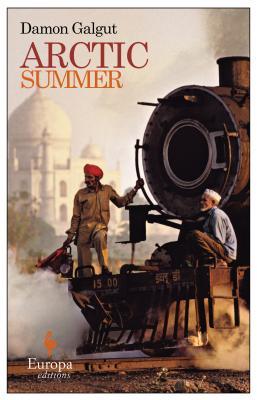
A love song for the loveless: Reflections on unrequited love – Arctic Summer by Damon Galgut

Copyright JM Schreiber, 2012

Valentines Day. It has been many years since I have had a true object of romantic affection. This annual occasion tends to come and go without my notice. Even my children are too old to warrant the heart shaped candies and chocolates I used to purchase. And yet I have to stop and wonder why I do not feel the absence.

I am not sure it is coincidental, but romance does not seem to figure highly in the work I tend to read. Lost love, dysfunctional relationships, misplaced attempts to find affection, yes; but it tends to be the underlying elements of discord that create dramatic tension and literary interest for me. Tolstoy’s unhappy families and all that. So in thinking about today’s exaltation of romantic love I decided to turn to a book I read last year but did not review, a novel that holds, at its heart, the account of a deeply felt but unrequited love: Damon Galgut’s Arctic Summer.

In this fictionalized biography of EM Forster, Galgut re-imagines the eleven years of frustrated creative blockage that spanned the time between Forster’s initial conception of his “Indian novel” and the final product, A Passage to India. Along the way we meet Syed Ross Masood, the Indian man with whom Forster will fall passionately in love – a love that will shape, define and haunt his romantic sensibilities – but which will remain one that the heterosexual Masood is unable to return in anything but platonic terms. During the World War I years in Alexandria, Forster finally loses his own virginity at the age of 37 but his meagre intimate relations will remain a sorry, even pathetic, attempt to achieve the emotional and physical comfort he longs to find in another man’s arms. Sexually repressed and closeted until his death, he is, nonetheless, able to channel his affections and experiences in India into one of the finest English novels of the early 20th century. It would be the last work of fiction Forster would produce though he would live and continue to write and engage actively in the literary world for another 45 years.

arctic summerIn my first encounter with Arctic Summer last fall my reactions were mixed. I was a great fan of Galgut’s more typical pared down, ambiguous and haunting novels and I was immediately struck by the more claustrophobic atmosphere he had created to evoke the sensibility of the world in which Forster lived and wrote. At times I felt it weighing on me as a reader. Having the good fortune to hear Damon speak in person and meet him when he passed through my home town with our writer’s festival while I was in the midst of my reading, I was aware that he had found the process of writing a historical novel rewarding but not one he would be anxious to repeat. That awareness may have been a factor but I suspect there was also something more at play. After all, as readers, we enter into any work with our own issues, histories and expectations.

At the timel I was still struggling to break down the barriers that I had constructed over the preceding decade or so to keep those around me from getting close. By that point I was painfully aware that I had re-closeted myself in the world to avoid emotional risk and vulnerability. At one point, despairing of ever experiencing desire in the way he longs, Galgut’s Forster reflects:

“His own sterility was apparent to him and would soon, he felt sure, be visible to others. Curiously, he didn’t feel depressed at the prospect. He was almost intrigued by the idea of giving in to his oddness, turning into one of those remote, ineffectual creatures so warped by their solitude that they became distasteful to normal people.”

I was struck by that passage, I remember where I was when I read it and the page number in my paperback American edition is burned into my memory. Although I had been, oddly enough, a single male parent for years, through my determined unwillingness to express romantic interest or engagement with anyone, female or male, I had stubbornly sought to neuter myself in the world. Unpeeling those layers of defense and reclaiming an identity, especially one that falls outside the default mainstream, is not easy. Forster’s dilemma was hitting too close to home.

As I have since learned to re-embrace my identity and sexuality, I did briefly imagine that I was ready to open myself again to the possibility of falling in love. The result was in influx of a emptiness and longing. I began to feel the absence and did not like the void. So I have decided to turn my focus to building an emotional support network based on common interest and experience. It is, I realize, a much better place to start. If, somewhere along the way, the potential for romance arises I would not necessarily reject it, but it cannot be the grounds for meaning and value in my life.

Now, four months after I first finished Arctic Summer, I have occasioned to revisit A Passage to India, and have found myself dipping back in and out of Galgut’s novel simply to savour the restrained beauty and sensitive recreation of the writer’s inner personal and creative journey against the lush landscape of India. The work has simmered in my consciousness and increased in the power that it holds for me as a reader. I cannot help but wonder what might have happened if Forster’s love for Masood had been reciprocated. I am not sure he would have ever been able to even crack open the closet doors and I suspect that he might have ended up even more deeply torn between his homosexuality and his attachment to his mother. For better or worse he was able to channel his energy into writing, friendship and a long life.

Well lived? For his sake I hope so.

Hard to remember when the world had colour

- Copyright JM Schreiber, 2012
– Copyright JM Schreiber, 2012

Granted midwinter in my part of the world is not the best place to find colour in nature. Branches are bare, grass is bunched and brown, snow is patchy and grey. But when I look back over the past year I can see how difficult it has been for me to register any enthusiasm to take my camera out. I walk a lot but I seem to want to stay in my head, maintain a fast pace, measure the rhythm of my boots against the ground. I circle the neighbourhood, walk with purpose on errands, but avoid the pathways and parks I have documented season after season these past few years.

Photography was a diversion, a relaxation and an isolated activity against a busy life at work and home. I would wander forest trails, across grassland parks or along the edges of rivers and lakes, framing and reframing the view and listening to recorded podcasts – discussions about books, philosophy, current events. It was a meandering, escapist pursuit. If I look back I have to wonder what I was escaping and where I had lost the capacity to dream.

Madness, mental illness if you prefer that term, brings back the capacity to dream because all the parameters are changed. For me it has brought words to the foreground but pushed the pictures to the background. Walking has become a means to expel restless energy, drive out the demons of anxiety and despair that keep reaching in. If I want to drown out the city noises I listen to music, the words in my head are my own.

Without being able to return to work at this time, I do feel a certain loneliness. But when I reflect on the years I devoted to a job that I believed validated and defined me, I realize that I was never more isolated than when I was working. Invisibility and an unwillingness to call attention to myself was not a measure of my successful transition. It was denial. To hide the fact that my past contained realities inconsistent with the man everyone knew, I believed I could not afford to allow anyone to get close. I captured colour in the outside world but painted myself with the blandest palatte possible.

A manic episode and all of the reckless behaviour and poor judgment it entails has left me with a professional legacy that I may never be able to salvage. I don’t even know if I want it back. Reclaiming my identity, being comfortable with my own history of sex and gender is a work in progress but I have to trust that it might lead me to a better more authentic place. It might even bring some colour back into my life.

Imagine: A church for those who don’t trust church

“Imagine”

Imagine there’s no heaven
It’s easy if you try
No hell below us
Above us only sky
Imagine all the people
Living for today…

Imagine there’s no countries
It isn’t hard to do
Nothing to kill or die for
And no religion too
Imagine all the people
Living life in peace…

You may say I’m a dreamer
But I’m not the only one
I hope someday you’ll join us
And the world will be as one

Imagine no possessions
I wonder if you can
No need for greed or hunger
A brotherhood of man
Imagine all the people
Sharing all the world…

Copyright JJM Schreiber, 2011
Copyright JM Schreiber, 2011

Church music? Apparently and rightly so. Last week I emerged from the church I have been attending, despairing that a deep ambivalence about my own ability to connect with faith may stand in the way of my search for community. This morning I remembered why, if there is a church that I can connect with, the one I have been attending may be as close as I can get. John Lennon’s Imagine, performed by a soloist set the framework for the reflections of the pastor.

Imagine? Yes, imagine hearing a pastor admit that in the 25 years since his ordination in the United Church of Canada, he never thought he would be looking at the works of Richard Dawkins and Sam Harris and think, maybe they have a point there. One does not have to look far to see how religion is perpetuating hatred, within families and communities, between ethic groups and countries. And it is not a new phenomenon. Is the problem religion? An atheist does not hesitate to answer, but what causes a pastor to ponder? And what does that mean for churches like Calgary’s Hillhurst United? My own anxieties about faith aside, it is a church that practices what it preaches: welcome and advocacy for the poor, the disadvantaged and the marginalized; outreach and full acceptance of everyone regardless of age, ability, sexuality or gender identity. Yet the pastor, John Pentland, is accustomed to meeting newcomers who share that they have no problem telling someone that they are gay, but don’t want anyone to know they go to church.

Is religion always at odds with all that could be positive and affirming about faith?

I am not sure yet. But I did spend Saturday at the church helping set up for a performance by Australian-Canadian queer trans artist, Sunny Drake. In the evening as the church hosted homeless families in the gymnasium, the pews of the Sanctuary were filled with a diverse audience treated to an outrageously funny performance about the trials and tribulations of a gay transgendered man trying to quit his addiction to romance. Honest in language and content that one would not generally not expect to find in a church, but together with the panel discussion that followed, this partnership with the city’s only queer theatre, Third Street Theatre, offers a vital opportunity to improve communication and understanding within and beyond the LGBTQ community. And yet another indication that at this church Affirming means much more than hanging a rainbow flag in the corner.

As someone who often feels as alienated within the LGBTQ community as within a larger community of faith, this weekend was an important indication of just what a church that seeks to embrace rather than exclude, can be.