Reading and writing my way through uncertain times

These are anxious times. It is easy, if you think too much, to wonder about the value of putting pen to paper with an atmosphere of doubt lingering so heavily in the air. But then, if you think a little further, wavering gives way to urgency. Reading and writing become acts of resistance, distraction, and revitalization. Or, that is what I remind myself.

I don’t want to venture too far into politics, but it would be naïve to pretend that we are not facing an unpredictable future. This uneasiness has been heightened for me over the past few weeks by an unproductive job search and increasing concern about my financial security as I’ve watched my cash buffer dwindle. The truth is though, with a will awaiting grant of probate, I stand to eventually find myself in a much better financial position than I had ever could have imagined. It doesn’t mean I won’t have to secure some outside income, hopefully some of that ultimately coming from writing related services, but I do dare to dream of finally having more freedom after years of struggling with identity, mental illness, and the challenges of a state of single parenthood that has extended far beyond my expectations.

2015-08-09 17.37.38So, world affairs aside, what right do I have to be anxious and insecure about writing? I suppose it’s enough that I am human, but I am also plagued by the unshakable feeling that I’m an impostor. All my life, the only thing I ever really wanted to be was a writer. And no matter how difficult writing is (and always has been), I still feel deliriously guilty to have been afforded, over the past two years of stress leave, the time and space to connect with writers, readers, translators, and publishers. It is a gift I am not ready to give up, rather I want to mould a life that will allow me to continue to read, write, edit, and grow.

And yet, every time I sit down with a pen and paper, or open a blank Word document the same fear that I will never write another solid review or creative essay sets in. Impostor.

I have two longer term projects—an extended personal essay/memoir and a constraint-driven experimental piece—in the early formative stages. Consequently, much of my present reading is directed towards exploring the ways ideas can be developed and stories can be told.  But every now and again I come up against a work that triggers my insecurity.

loiteringCase in point: I am slowly making my way through Loitering by American essayist and short story writer, Charles D’Ambrosio, and after each essay I feel temporarily overwhelmed. I can easily see why the friend who kindly sent me this book speaks of it so highly. Rather than attempting to review the entire collection at once, I want to pull out and look at some of the individual pieces along the way. They are that good.

First of all, D’Ambrosio notes in his Preface that, for him, the right to doubt is essential to the successful personal essay. “Loitering,” the title piece, is a perfect illustration of how and why this works. The setting: The middle of the night, outside a residential complex in the Belltown district of Seattle. Yellow police tape cordons off several blocks, while a large contingent of policemen and a cluster of journalists and TV news reporters wait in the rain. D’Ambrosio arrives at the scene around 2:00 AM, drawn by the reports of domestic violence and a possible hostage taking. With a Hollywood-tinged sarcastic romanticism, he imagines the scenario:

This guy—the Bad Guy—apparently thought he was just going to drink a few beers and bounce his girlfriend against the walls and go to sleep, but instead of a little quiet and intimate abuse before bed he’s now got major civic apparatus marshaling for a siege outside his window. No sleep for him tonight, and no more secrets, either, not at this unholy intersection of anomie and big-time news.

The clichés he arrived with quickly fall away as he joins the vigil. Quite frankly he is in rough shape himself. One of the key drawing cards for D’Ambrosio on this night is simple lack of human contact. A recent fishing trip has left him with severe atopic dermatitis due to contact with neoprene and he’s just spent a week isolated at home—his fingers, neck, feet, and legs swollen and covered with weeping sores.  Medication and the constant tingling sensation prevents him from sleeping, crackheads have stolen his duffle bag from his truck leaving him without a belt or a raincoat and now, armed with file cards and a pen lest he find a story, he is standing in the dark, soaking wet with his pants falling down. Nothing like setting a memorable scene.

As the night wears on he spots a man, angry, looking a reporter, someone to listen to his story. He makes his way through the crowd of journalists but no one wants to hear him out—a wretched resident displaced by the hostilities unfolding in his building, he is not on their agenda:

He’s now caught in between, trapped in some place I recognize as life itself. It’s obvious he hasn’t been sober in hours and maybe years. If it could be said that these big-deal journalists have control of the story… then this guy is the anti-journalist, because in his case the story is steering him, shoving him around and blowing him willy-nilly down the street. The truth is just fucking with him and he’s suffering narrative problems. He began the night with no intention of standing in this rain, and his exposure to it is pitiful. As he moves unheeded like the Ancient Mariner through the journalists I feel a certain brotherly sympathy for him, and I’m enamoured of his utter lack of dignity.

Our hapless would-be reporter knows the man will be back and knows that he alone will listen to him. And so he meets Dennis, a vet, and his friend Tom, a Native American man. Through them he will learn more, in so much as anyone knows anything about the armed man holed up inside in one of the sparse low-income units, and the story, through the eyes and words of this most astute and sensitive observer becomes one of the tragedy of the poor and dispossessed rather than a dramatic shootout and fodder for the six o’clock news. After years of working in human services, the tableau D’Ambrosio paints of the evacuated residents relocated to a city bus to wait out the proceedings rings true—a scene that could easily be played out in my city, or any other North American centre for that matter:

Inside this bus what you see is pretty much a jackpot of social and psychic collapse, a demographic of bad news. Everybody in there’s fucked up in some heavy way, dragged out of history by alcohol, drugs, mental illness, physical decrepitude, crime, old age, poverty, whatever. Riding this bus in your dreams would give you the heebie-jeebies big-time. There are maybe ten or fifteen people on the bus but between them if you counted you’d probably come up with only sixty teeth. In addition to dental trouble, there are people leaning on canes, people twitching and barefoot with yellow toenails curled like talons, gray-skinned people shivering in gauzy nightgowns, others who just tremble and stare. They’ve been ripped out of their bedrooms and are dressed mostly in nightwear, which is something to see—not because I have any fashion ideas or big thesis about nighties and pj’s, but rather because, this surreal dawn, the harsh, isolated privacy of these people is literally being paraded in public. The falling rain, the bus going nowhere, the wrecked up passengers dressed for sleep, the man with the gun—these are the wild and disparate components of a dream, and I haven’t slept, and it’s just weird.

This passage, in fact the entire essay, left me breathless. This is not beautiful. It is raw, honest and real. In telling the story D’Ambrosio allows himself to be vulnerable and despite flashes of humour, one senses he is defeated by the sheer sadness of the whole affair. The reporters will head off to other stories, but he will be left on hold, filled with doubt, open to questions. Upon first reading I felt a sense of writerly inadequacy descend on me; returning to write about it and copy out significant passages I feel re-invigorated, inspired even.

I don’t know when this essay was originally published but it doesn’t matter. It contains a certain urban timelessness that stretches back through the twentieth century, yet is especially relevant today, with the pending threats to affordable healthcare and Medicaid in the US under the new administration. And so, I’m back where I’m started… uncertain times…

Loitering by Charles D’Ambrosio is published by Tin House Books.

Looking ahead to 2017: Finding light in the darkness

It may be a reflection of the year we have just endured as a global community, or the uncertain variables that cause 2017 to look like such a grey zone, but many people I know seem to be afraid to make any resolutions or commitments moving forward. A month or so ago, when I was still buried under a black cloud of grief and depression, I could not even imagine the utility of existing into the new year. I was in a peculiar space. I was receiving enthusiastic feedback for my work as a writer and critic—even selling a few pieces—but I felt empty and hollow inside. I could stand back and observe my malaise, but I could not bring myself to find an essential light to believe in.

Then, as suddenly as it had settled in, the darkness lifted. My parents are still dead, my friend is still gone, and I have not yet found a job. However, the stubborn, stupid optimism I always cherished as part of my character has returned. Wiser and soberer perhaps, and not at all naïve about the very real threats that the coming year holds. But with good books and the comradery of the many people I have come to know and respect, at home and afar, over the past couple of years, I resolve to try to read and write and photograph my way through 2017, come what may.

31760687801_ea5acb48c8_b

I have been making piles around the house lately and considered photographing them but have decided against being that committed in a public way. Suffice to say there is a healthy stack of fiction including a fair number of recent releases or purchases to which I am adding other titles I feel most guilty about ignoring to date. I have also been reading a good deal of poetry lately, new and classic, so I keep those handy. And then there is a growing collection of essays and memoirs which reflects my own interest, as a writer, in the variety of ways that personal experience or observation can be addressed. As much as I flirt with ideas of writing fiction, I seem to fall back into essay, at least as a starting point. If I end up taking a piece in the direction of storytelling or prose poetry, all the better, but the process has to be dynamic. I am learning to let my writing follow its own course as much as my reading does.

And this leads me to what might be thought of as my resolutions:

Reading: Some surprises surfaced when I added up my completed reads from 2016. I discovered that I read more German literature, than I had expected—11 titles, not including some Sebald that I am presently dissecting or the Kafka that I am always reading. I read 12 English language works (more actually, I have several essay collections and other books in process) and 8 translated from French. As for the balance of the translated literature I read, Spanish, Catalan and Portuguese accounted for a total of 10 books with many more waiting, while I read three Slovene, two Czech, and one each from Dutch, Korean, Arabic, Bosnian, Italian, Icelandic, Hebrew, and Polish.

Contrary to my previous pattern, I only read one South African, title though I added more and still have an embarrassing number of books crammed on to my bookcase. I had also intended to read more Arabic and North African lit and, again, failed. There are also a few key independent publishers I did not read from this year. So, all of these considerations will, if nothing else, be reflected in the piles I build. As to what I read—well, I’ll see…

Writing: I want to continue writing critical reviews but I am being very selective. Looking ahead I am especially excited about writing about new releases from Can Xue and Fleur Jaeggy for Numéro Cinq, while I also have a couple of other interesting reviews booked or underway. I continually debate the value of critical writing (this month the “Top of the Page “at Numéro Cinq features seven reviews—including one of my own—that I selected to highlight some books and reviews that impressed and inspired me). So often critics seem to be held in disdain and yet to write about a book sensitively and intelligently is challenging and creative—but it can be draining. Nonetheless, I have learned so much from the writing and from being edited, all of which has helped make me a better writer. Now that I am also involved with The Scofield as an editor I have further opportunities to continue to grow and contribute to the vital community of online literary magazines.

On the other hand, I am hoping to shift the focus of my blog a little, away from attempting to “review” books that I read (unless it seems appropriate). Rather I would like adopt a more personal reflection on the reading experience—try to pinpoint why the writing works, what ideas are generated, or simply celebrate reading for reading’s sake. I don’t ever want to feel obligated to write about everything I read, but at the same time I am increasingly reading books written by writers who are becoming friends and mentors. I want to be able to write about this work, in an informal, yet valuable way.

Finally, with what I call my “creative work,” I have several projects in mind or in process. One is an experimental, constraint-based project in honour of my father which may or may not lead to anything of interest to others. Otherwise, as much as I thought I was done with writing about the body, it seems that there is still a lot of unfinished business or baggage. It is inextricable from either my interest in being and authenticity, or my now expanded and complicated grief work. I am fortunate to have been approached by several online journals/sites that have invited my contributions and I am very excited about being able explore some ideas in smaller creative spaces to see where they take me. At the same time, I have a few other topics that I want, or even need to examine within, shall we say, a more conventional personal essay format.

Photography: After a long hiatus, I am inspired and eager to return to photography. A dear friend has kindly suggested —insisted— that I should incorporate more images into my writing. This possibility excites me and offers not only a direction for myself as a photographer, but also provides an opportunity to repurpose older shots, cropping and radically reprocessing images that were average and turning them into an integral part of a larger project.

So, even though it is impossible to know what the new year holds, I want to aim to face 2017 ready to build on what I have learned over the last two years which have held, for me, some of the most difficult and most rewarding moments of my life. It is really the only way I can think of to navigate what is bound to be a most interesting and surreal time.

Another winter solstice is upon us: 2016 – The year in review

Winter solstice. The longest night of the year.

Moving forward, the days grow steadily longer and, in less than two weeks, we will leave a dark, disturbing year behind us.

But it would be reckless to imagine that 2017 will be brighter. However, with luck, we can be forewarned, forearmed, and determined not to relax our guard. We can stand together against the rising tides of hatred, and remember what is truly at stake.

11229294674_e5844929df_z1

Since I started this blog two and a half years ago, winter solstice has become my annual check-in point. Last December, I reflected on the key elements of a year that began with a move to writing seriously about books and culminated with my first review for Numéro Cinq. Against that trajectory, I wrote about my trip to South Africa, and the pulmonary embolism and cardiac arrest that followed within a few weeks of my return. I imagined that the eventful year I had experienced would not likely, for better or worse, be exceeded this year.

Cue 2016.

This has been a year of heartache, anger, and dismay. Around the world and close to home. I watched the violence in Syria, the outcome of the Brexit vote, and the spectacle of the American election, among the other tragic and unexpected events that have unfolded. And as economic uncertainty and anxiety has grown in my own hometown—a city that lives and dies with the price of oil—the crime and homicide rate has risen sharply this year. It does not feel like the same community any more.

Then there is the lengthy roll call of the writers, artists, and performers who have left us. But to be honest, I cannot say that I have felt these losses as acutely as many others… I’ve been distracted by the immediate, personal losses that marked this year. My mother, my father, and one of my closest friends, all gone within the span of two months. And my grief—that most fundamental human emotion—is complicated, inarticulate, and wearing.

It will take time.

11592010455_89917d80e3_z1

But, 2016 has also been a time of amazing growth and opportunity for me as a writer. I don’t know how often I resolved, with the dawn of a new year that: This year I will write. Last December, with that first critical review under my belt, I could not have imagined that I would have, in addition to regular contributions to Numéro Cinq, published reviews at 3:AM, Minor Literature[s], The Quarterly Conversation, and The Rusty Toque. And I would not have dared to dream that I would see my essays and prose pieces published on line and in print, or that I would be invited to join the editorial team of The Scofield. As 2017 approaches, I have a handful of reviews scheduled and several prose projects underway. I’m also feeling inspired to return to photography after a lengthy hiatus, and to see how I can incorporate photos into my written work.

I have much to look forward to, in spite of, or rather, against the new darkness that threatens.

Art and literature are more important than ever at times like this.

So, this seems to be an appropriate time to look back over this year’s reading, and highlight the books that stand out for me.

I’ve read about 50 books to date, a little more than half of what I read in 2015. I don’t even want to hazard a guess as to how many books I bought, received as review copies, or brought home from the library. I feel, as usual, like I fell short of my intentions. However, I have to remember that I was writing, working on critical reviews, and dealing with considerable life stresses over the past twelve months.

More than ever before, I read like a writer this year. That is, I was especially attuned to voice, structure and approach to storytelling. Consequently, the books that made my year-end list tend to reflect this focus. Of course, any “best-of list” leaves out many excellent books. I’ve managed a baker’s dozen here, and it’s probably a reflection of the increased number of off-blog reviews I wrote that this year’s list is predominately composed of new releases. I was surprised to see that once I’d made my selection.

In reverse chronological order, my top reads of 2016 include the following:

Story of Love in Solitude by Roger Lewinter (France), translated by Rachel Careau
I will write about this collection of three short stories once I have completed The Attraction of Things. My verdict is still out on that title, but this tiny book is simply wonderful.

The Inevitable Gift Shop by Will Eaves (UK)
Fragmentary, cross genre writing that works fascinates me. Billed as a “memoir by other means”, it is Eaves’ unique tone that makes this blend of memoir, literary criticism, and poetry so compelling. His thoughtful reflections on reading and writing made this an ideal meditation to turn to after a year of reading critically and exploring my own literary voice.

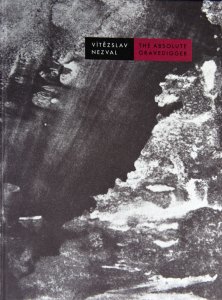
gravediggerThe Absolute Gravedigger by Vítěslav Nezval (Czech Republic), translated by Stephan Delbos & Tereza Novická)
I have found myself turning to poetry more and more as the world seems increasingly unstable and, well, surreal. This newly translated collection of poetry by one of the best known Czech Surrealists should be essential reading at this time. Originally published in 1937, the darkness he could see on the horizon are all too familiar once again.

The Country Road by Regina Ullmann (Swiss), translated by Kurt Beals
I read this collection of short stories when I was in a very low mood. But in the spare, sombre prose of these tales I found a beauty that, rather than deepening my depression, brought strange comfort. Admired, in her lifetime, by the likes of Rilke, Mann, and Musil, Ullmann’s work is mostly forgotten today. This volume, released in English translation in 2015, is a rare treasure—one that I encountered at just the right moment.

panorama-coverPanorama by Dušan Šarotar (Slovenia), translated by Rawley Grau
For me, as a reader and a writer, one of the most important books I read this year is this literary meditation on migration, language, landscape, and loss. This novel finally broke through my own stubborn determination to hold to a sharp delineation between fiction and nonfiction, and has made me re-evaluate potential approaches to themes I wish to examine. What Šarotar achieves here with his own unique take on what might be deemed a “Sebaldian” approach, is the creation of an atmospheric, captivating, and intelligent work.

The Passion According to G.H. by Clarice Lispector (Brazil), translated by Idra Novey
Oh wow! In a way, I am glad I didn’t read Lispector before writing and publishing my essay “Your Body Will Betray You,” because she is exploring the process of coming into being so beautifully that I might not have been able to write at all after reading this. Employing an unconventional narrative, Lispector’s G.H. experiences a vivid, metaphysical crisis triggered by the sight of a cockroach. The result is a remarkable, thoroughly engaging read. I have at least three more of her books waiting for the new year.

Proxies by Brian Blanchfield (US)
I bought a number of essay collections this year and currently have several on the go. This collection impressed me not only for the way the essays were composed—written without consulting outside sources—but for some of the ideas explored, and for reinforcing the value and possibilities of the personal essay/memoir form. I also greatly appreciated his guiding caveat: Permitting Shame, Error and Guilt, Myself the Single Source.

SergioSergio Y. by Alexandre Vidal Porto (Brazil), translated by Alex Ladd
This book is significant and important for dealing with gender identity and transition in a sensitive and original way. I am, as a transgender person, critical of much of what passes as literary writing on this subject. This is a most impressive work with a startling and unique approach. As I noted in my review, Sergio Y. is novel that approaches the transgender experience from the inside and the outside, allowing for the comfort with names and pronouns to vary, over time and from person to person, reflecting the complexities of relationships that others, even loving family members, can have when an accepted and assumed identity is challenged. That is the book’s greatest strength.

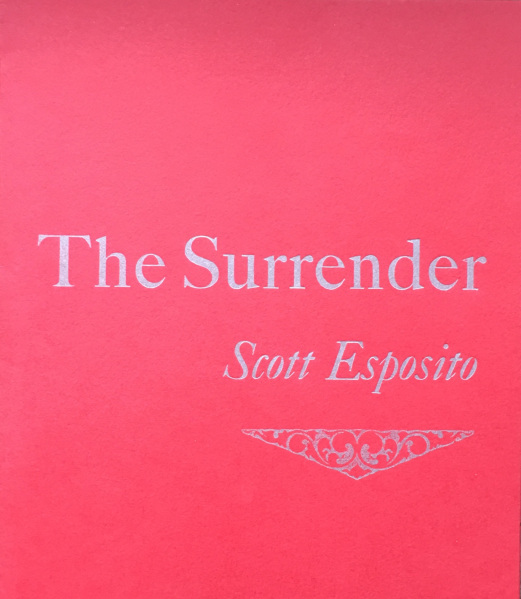
surrThe Surrender by Scott Esposito (US)
This book was on my radar from the moment I first heard of it. Again, despite my typical gender related skepticism, I was drawn to this transgender-themed memoir/film critique/literary diary. I wanted to know how Scott would present his story—one that is not commonly heard. Although his journey is very different than mine, we share a certain sensibility. This is a brave and most wonderful book by a man who has long been one of my heroes. He has since become one of the many literary friends I have come to know and cherish this year.

Layout 1

Atlas of an Anxious Man by Christoph Ransmayr (Austria), translated by Simon Pare
This book was a total surprise when it arrived courtesy of the good people at Seagull Books. This most unusual travelogue, a series of brief “encounters” across the globe, contains some of the most stunning descriptive language I have ever read. Each episode begins with the words “I saw…” and ends with a wise, evocative observation. From the North Pole, to South America, from deep inside the mountains of New Zealand, to a parking lot in San Diego, this is a journey that will not be easily forgotten. Highly recommended.

Quiet Creature on the Corner by João Gilberto Noll (Brazil), translated by Adam Morris
My third Brazilian book on this list is this enigmatic novella that led to one of the most entertaining literary discussions of the year. What is it about? Well that is the challenge. I had to read it three times before I could begin to get a handle on it. The narrator, a young man who finds himself in a strange situation that is rapidly growing stranger, is, in his oddly passive tone, almost more disturbing than whatever might be happening. Opaque and surreal, this book gets under your skin.

The Crocodiles by Youssef Rakha (Egypt), translated by Robin Moger
This novel still holds fast in my memory although I read it back in February. It is, as I described it in my review, a prose poem of simmering power, unwinding across 405 numbered paragraphs, tracing a torturous path from the first stirrings of poetic assurance within a trio of young men in the 1990s to the doomed protests of the Arab Spring. It is a dark, intense exploration of youthful political idealism, that builds on repeated images, themes and refrains to create a compelling narrative force as it moves toward its stunning conclusion. Again, this is another work that is increasingly relevant in today’s world.

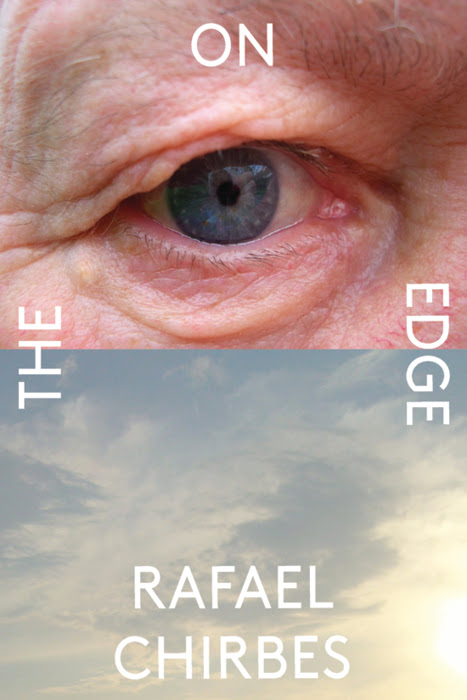
On-the-edgeOn the Edge by Rafael Chirbes (Spain), translated by Margaret Jull Costa
Finally, the very first book I read in 2016 is probably my favourite book of the year. I wrote about this novel at length for Numéro Cinq and I regret that it has not generated more discussion. In what is essentially an extended monologue with brief cameos from other characters, Chirbes creates a memorable, engaging, and tragic character in seventy-year-old Esteban, a man who has lost absolutely everything in the economic collapse of 2008.  Thoroughly human in his wisdom, his resolve, his shortcomings, and his despair; this is a powerful and important book that deals frankly with many of the critical issues—including migration, xenophobia, and economic decline—that are more vital than ever as we step into 2017.

Beginning to write through grief: A reflection & link to my poem at the Sultan’s Seal

I am, as many know, dealing with a multi-layered, complex grief—my mother, my father, and one of my closest friends—all lost within the last six months. When my parents died in July, I entertained an immediate grief project, my own mourning diary, an echo of Roland Barthes. I started with a subdued passion, an ache as intellectual as emotional. In truth, my emotions were, I can now see, constrained and intellectualized.

I was numb.

Others reached out to me in those early weeks, sharing their own stories. The terrain of grief is rocky, I was warned. The journey long. The pain uneven. But, although I am in mid-life, a loss of this nature—doubled and complicated—was something I had never faced.

Then my friend took her own life sometime on September 1st. Even though I knew, in my heart, that such an event was almost inevitable, the pain and anger tore me apart. I knew she had tried every available option she could afford to fight an erratic and devastating variation of bipolar disorder, and I fully respected her decision and her right to make it. But suddenly my world was a darker, lonelier place.

And she had lived half a world away.

Again, the first thing I thought of was to write. This time, my distance from her demanded and informed my need to write—and I knew exactly what I wanted to do. I wanted to gather words and sentences from her writing and our communications, and together with some photographs from my trip to visit her in South Africa, create an elegy.

An offering.beach

Drawing inspiration from a prose piece by Breyten Breytenbach, and the sound driven writings of my friend, Daniela Cascella, I set to work. And I knew exactly where I wanted to publish this memorial if I was able to realize my vision—The Sultan’s Seal, a most wonderful space created and curated by Egyptian writer, Youssef Rakha.

The result, “And I will Tell You Something,” was published this past weekend. Three hundred words, five images and almost three months shaping, reshaping, listening and accepting the silence that emerged. This is perhaps the most emotionally demanding piece I have ever written. Yet, now five days after my words were finally set free in the world, I feel a tremendous sense of rightness. An element of peace. I still ache, but, with this prose poem, I feel I can begin to heal.

And I hope that others may find something in it too.

Now and at the Hour of Our Death by Susan Moreira Marques, a reflection and review

We obsess over lasts as we do over firsts. Last days, last images, last words. We want signs.

Last month, my brothers and I made a most difficult decision about our father who was, at the time facing a cluster of serious complications resulting from a stroke and car accident. Four days earlier we had gathered around our mother’s bedside as the respirator that was barely keeping her breathing was removed. Within four hours she was gone. After agreeing to discontinue treatment of our father, he would continue to live, slowly dying, for another week. As I kept vigil day after day I tried to remind myself that there was a time when death was allowed to take its course, in the home, even as so-called “normal” life would begin to spin, a troubled satellite, around the dying person. Death was part of life, not something that happened elsewhere, surrounded by tubes and machinery. Although my dad remained in the hospital until the end, he was moved to a quiet, private room where he was kept comfortable, free of pain, and cared for by the nursing staff. As a family we were supported and respected. It wasn’t easy, and we’re all still numbed and distorted in our grieving, but if there is such a thing as a good death, I think that both of my parents had good deaths, if good means having a chance to say I love you, over and over and over until the end.

nowdeathWhen I first started to read Susana Moreira Marques’ Now and at the Hour of Our Death, I wondered if I was too raw, too plagued with second thoughts about the decisions we had made, to be able to surrender to a lyrical and experimental essay about death and dying. This book had been sitting on my shelves since it arrived last year with my And Other Stories subscription, several times I had opened it but somehow the time was not right. I suppose the book was waiting for me.

Over the course of five months in 2011, Marques made several visits to a palliative care project in rural north-east Portugal. She accompanied a team of health care professionals as they traveled from village to village to assist those on their final journeys, allowing them to be able die, as comfortably as possible, in their own homes; and along the way she recorded her own observations, collected anecdotes, and listened to the stories of the people she met. The result is powerful meditation dying, as a lived experience shared by a family, a community.

The first half of the book is fragmentary in style and form, blending facts and definitions, character sketches, brief stream-of-conscious like passages, pieces of wisdom—all presented with a quiet dignity in lucid, affecting prose:

The swallows have already built their nests above the back door; this is how they do it every year. They are useful birds, and beautiful, and have always been a favourite of his. But now he watches them as he never has before, because he might not see another spring.

*

AGONY: 1. The last struggle against death. 2. [Figurative] Anguish, affliction. 3. An imminent conclusion (preceded by a great disturbance).

‘Agony,’ the dictionary does not note, is a technical term.

*

Immortal in the morning. At night, the fear of never waking.

*

Lands, roads, people, time, time, people, roads, land. What matters here is different, very different.

The second half of the book, entitled “Portraits”, offers a closer look at three individual stories. Here Marques becomes a gentle presence as she describes each situation, then she steps back and lets those involved have their say. There is Paula, a woman with a young family, who is dying of cancer. She speaks with a brave spirit about how she and her husband had taken their time, waiting to have their second child, assuming they had “all the time in the world.” She will only have another year to live at the time that her thoughts are recorded. Then we meet João and Maria, a couple in their 80s who reminisce about their years in Angola. Both are ill, yet neither feels that they are ready to die, they live for visits from their children and grandchildren, and each one fears being the one left behind.

Finally, in the third portrait, the dying person is silent by the time Marques meets the family. While their father Rui lies on his death bed, his adult daughters, Elisa and Sara, each respond in their own way in his final months, the latter driving home from France every fortnight to spend time with him and her mother. Their own accounts follow his death, capturing the early weeks of grief, anger and regret. Very different in temperament, the sisters respond in their own ways to the loss, but for each of them it is the first time they have come up against the close experience with death and it is a leveling experience. Sara realizes she had never appreciated the magnitude of what others she had known would have been going through when they lost a parent, regretting that she had failed to say anything. I can’t help but feel that that is a common occurrence. Nothing but the death of a close friend or family member prepares you for the experience. Elisa, on the other hand, is surprised to find that she is unable to shriek and scream in anguish the way her sister and mother do when her father finally passes:

. . . I couldn’t react. It must have been two months before I cried. It’s really hard for me to cry. And now I’ve finally started crying, but only because I’ll get all worked up over something minor, and then I might cry a little out of frustration. But when it happened – and the atmosphere at our house was just so strange . . . It took me a long time to realize what was going on.

The final section, a single page long, is a guide for “When you come back from the journey no healthy person wants to take,” a list of the ways “you”, that is anyone who survives the death of a loved one, can be expected to act. . . paying attention to time, the things and people that are precious, the bridges that need to be mended and, simply, endeavouring to live well. I hope I can follow this wisdom even if, at the moment, I am inclined to relate to Elisa’s reaction, with grief coming in angry outbursts more than tears.

witm-logo

Now and at the Hour of Our Death is translated from the Portuguese by Julia Sanches and published by And Other Stories.


What we read: A reflection on gender, language and necessity

My astonishment – and what is really my anxiety (my indisposition) come from what, in fact, is not a lack (I can’t describe this as a lack, my life is not disarrayed), but a *wound*, something that has harmed love’s very source.
– Roland Barthes, Mourning Diary

A comment made this morning on a post I wrote just over a year and half ago, has made me stop to consider what I am reading at this moment and why. The original post is called Gendering my bookshelves, a look at the gender of the authors I tend to read which were, at the time, and continue to be, predominately male. In the meantime I have read more female writers than I might have anticipated, but I have read more in general. So the ratio is perhaps closer to 80/20 than the 90/10 I figured last year.

This is Women in Translation Month, a project I respect and support, but I am unlikely to contribute with the same intensity as before. Truth is, despite a nice selection of titles that I had collected with this month in mind, I am not certain I will manage to read many. In fact I am close to putting my first effort Now and At the Hour of Our Death by Susana Moreira Marques aside. Don’t get me wrong, this piece of experimental nonfiction about a traveling palliative care team in rural Portugal is quite wonderful. But not right now. These are portraits of death and dying. And to read it so soon after watching both of my parents die hurts like hell.

I am relatively new to the business of maintaining a book blog and, of late, much of my review focus has actually moved off of my blog to online magazines. But what is a literary blog if not an opportunity to write about what one is reading? Sometimes that includes review copies and new releases, but that type of reading comes with pressures and can cut into other reading that one is drawn to. Themes like Women In Translation, German Lit, Spanish Lit all offer opportunities to open up and encourage conversation about literatures that one may or may not otherwise consider.

But sometimes our reading is directed by the forces and idiosyncrasies and, of course, the tragedies of our own lives.

At the moment, I want to read two different types of books–those that offer total distraction, and those that say something about grief and loss. That is where I am at, pure and simple. July was absorbed by hospital vigils and then, once my father finally passed, the immediate business of beginning to organize paperwork, notify institutions and prepare to apply for Probate. We have not even managed to plan a memorial of any kind. Over and over others have commented about how well I seem to be holding up…

2016-08-07 19.03.15But I’m not. The other night, reading Barthes’ Mourning Diary I found myself thinking, but this is different, he is so focused on his mother, my mourning is different. Is it? My father was injured and his death was slow. In the midst of it, my mother took sick and was gone within three days. My mother’s death, is a loss of an entirely different order than that of my father. She was my best friend. I could talk to her about anything. Without her I have no one else, no partner, and no friend as close. Although I have two children, I cannot burden them as they are each bearing their own grief. I woke up yesterday to the harsh recognition that I was trying to roll these two events, these two losses, these two individuals, these two unique relationships into one experience to be grieved as whole. But I cannot. They are separate events and they are one. Suddenly the magnitude of the task ahead is overwhelming.

So I will read and I will write. I want to write and publish something before time has a chance to edit it… a task inspired by Barthes and by Peter Handke’s A Sorrow Beyond Dreams. Women in Translation may or may not figure in the equation. In fact translation may not fit into much of my reading at all this month. So be it. Aside from Barthes, I have a memoir called When It Rains by Maggie MacKellar, a memoir that deals with two intersecting deaths, and I have ordered Love’s Work by Gillian Rose and Simon Critchley’s Very Little… Almost Nothing. Each one of these titles was suggested by Twitter/blogging contacts. I am open to more.

Finally I must say that I have been deeply moved by those who have reached out by email or on Twitter, publicly or through Direct Message, to offer condolences, good wishes, suggested reading and writerly support.

I am in mourning.

There will be words.

Personal reflections on identity, for better or worse, on Canada Day

Today, July 1, is Canada Day.

Exactly one year ago I was in Cape Town. I arrived back in the city that day at 5:30 in the morning after seventeen hours on a bus from East London. Dragging my luggage with its maple leaf ID tags I encountered many who would note the flag and say “Ah, Canada, that’s just about the perfect country, isn’t it?” Invariably I was hearing this from black or coloured South Africans and, I have to confess, at that time in my country’s recent political history I was feeling most despondent, embarrassed even, to be Canadian. For the very first time in my life.

What a difference a year makes.

canada-159585_960_720Hard to measure the shifting sands in the glass but while our Federal election last year brought home to the ruling Conservative Party the cost of divisive politics, the limits of denial and disrespect, and the risk of stoking xenophobia to sway sympathies; we now seem more and more like an island in a sea of unrest. And, I don’t pretend that we are immune to hatred, or that we don’t have a legacy of shame four “our” treatment of the First Nations on this land, but this is a huge and vastly underpopulated place so there is greater room to breathe.

At least for now.

As Canadians we also have another advantage: an identity that is relatively amorphous, ambiguous, sometimes even apologetic. A contest held in 1972 on the CBC Radio program, This Country in Morning, famously invited listeners to finish the statement: As Canadian as ________. The winning entry?

As Canadian as possible under the circumstances. And proudly so, I say.

Which leads me to wonder about identity, a question that has been troubling me of late.

There is a series of advertisements running on the television for a company that, for a fee, will analyze your DNA and tell you what your ancestry is, in percentages, no doubt with colourful pie charts to justify the cost. Perhaps you’ve seen them or something similar. You know, there is, for example, a man who always believed he was of German heritage but thanks to a little DNA sleuthing he discovers he is Scottish. He promptly trades his lederhosen for a kilt. And there are other variations but you get the drift.

How can your DNA define your cultural and ethnic identity? It might and then again it might not. Peoples migrate, borders shift, cultures evolve. An aboriginal survivor of the 60’s Scoop that literally pulled First Nations youth out of their homes and communities and deposited them in white foster homes may justifiably have a need for healing and reconnection with their heritage, but a DNA test that simply reflects possible ancestral bloodlines going back centuries or longer does not tell you who you are. Cultural and ethnic identity are complex and cannot be understood divorced from lived experience.

As I find myself, midway upon my life’s journey, to paraphrase Dante, I carry two questions of identity that, to some degree, offer an understanding of myself that reaches back into childhood and adolescence. But even if they are grounded in some understanding of a genetic/epigenetic heritage I own, the degree to which they can and do form part of my identity is troublesome. Identity is, as far as I am concerned, a choice. That is not to say it is not grounded in fact and reality at some level, but what does it mean to say “I identify”? And how is that to be differentiated from “I am”?

I have bipolar disorder (I touch on this in some of my earliest blog posts) and I was born with a pervasive sense of a gendered self that was at odds with the sex/gender that I appeared to be (I address this most explicitly here). I did not begin to understand either of these facts until I was in my mid-30’s. But they are inextricable from my experience of myself in the world, they are formative and I have no idea what it would be like to have existed without either although I have learned, with greater or lesser success, to live with each one. Both are treated, neither is cured. I have written about both, but I would be hard pressed to say that I identify as either bipolar or transgender. Would someone identify as a diabetic? Would you say you identify as brown-eyed?

I know people who do hold a mental health diagnosis or a gender identity with pride. Perhaps I did too at one time. Perhaps I still do even though I don’t want to admit it.

Recently my psychiatrist suggested, having reviewed the only records she had from my past—the report of an inpatient stay during acute psychosis almost twenty years ago, the turning point at which I finally began to unravel the fractured and unhappy state against which I had raged for several years—that she did not believe I was bipolar. That cheerful announcement set off weeks of rumination in which I replayed all of the episodes of depression and hypomania I had surfed for so many years, blaming myself for a failure to commit to any single course of study or employment. I began to appreciate how my understanding of the place I find myself at this point is contingent on having an explanation, an illness to blame. Combined with acute gender dysphoria I can assuage the sense of failure that haunts me. Justify all the paths I took or did not take.

Or, as my therapist challenged me yesterday, have I been using bipolar as an excuse to avoid grieving the losses I have experienced?

I don’t even know how to begin to grieve and the thought terrifies me. And, if I find my way through it all, perhaps I will write about it. But I do believe it may be the one path I have not yet dared to take.

Finally, what of gender? That is a topic for many essays I’m afraid. My differently gendered existence is essential to who I am, but again, it is not my identity. If forced, I “identify” as male, but prefer to understand myself simply as a man, and every time I qualify myself by appending trans* I feel reduced, dehumanized. One only has to exist within the LGBTQ community, such as it is, as a man attracted to men, to feel the full force of transphobia from within. And to have transitioned when I did, before it was fashionable and trendy to be trans, other transgender men were often exceptionally homophobic toward anyone who identified as gay. For everyone who claims to defy gender binaries there is a whole cast of characters propping them back up. I’m probably in there myself.

pride-flag-meaningSo, although I tick three out of the five basic boxes in LGBTQ, I have no Pride. But then I have no shame either. And identify? Well, here I stand I can be no other. Even if I don’t feel I belong. June is always tough for me. This month with all the difficult emotions stirred by the Orlando shootings has been especially hard.

I actually do belong to an LGBTQ community and have good friends there. My very closest friends are all queer. And yet I always feel like I am on the outside looking in. An impostor. But in what way? And who decides who belongs and who does not? Even apparently marginalized groups seem to find a way to splinter and divide.

Which brings me full circle to the angry racist, xenophobic, sexist and homophobic aggression and violence that threatens us all, at a time and in a world in which we should know better.

At least, for now, and on this day, the one thing I can say is: I identify as a proud Canadian.

Reading into writing: Two years of roughghosts

Beyond the ear there is a sound, at the far end of sight there is a view, at the tips of the fingers an object—that’s where I’m going.

At the tip of the pencil the line.

Where a thought expires is an idea, at the final breath of joy another joy, at the point of the sword magic—that’s where I’m going.

– Clarice Lispector, “That’s Where I’m Going”

Today is the second anniversary of the rather haphazard and ill-defined birth of roughghosts. The evolution of this space that I tend has far exceeded my expectations. When I look back at my very first post, a quick note to self, I talk about having long put aside the desire to write so as to live a little first, acknowledging that life had given me more material than I was comfortable addressing–a theme I’ve revisited since. My first year of blogging saw a collection of random observations and occasional book related posts develop into increasingly structured book reviews interspersed with the occasional reflective essay. Looking ahead to my second year I had hoped to broaden my reading while privately I was more actively playing with ideas that I hoped would eventually lead to a serious creative effort of some measure. But as much as I had been filling notebooks, I was writing more about wanting to write as if wishing could make it so, rather than believing that I would ever offer something beyond the confines of this blog.

For me, my blog, no matter how seriously I consider every word I offer here, no matter how many hours I spend constructing essays or reviews, has always been a twilight place. It belongs to neither the day nor the night but sits at the intersection of the two: a place where I can imagine that I am not quite exposed to the full light of day, a place where the darkest truths remain unspoken. For that is the realm of real writing and what am I, editing my efforts and posting them myself, but pretending to the art?

I know, of course, that this is not true.

The past twelve months have changed everything, and in more ways than I might ever have imagined.

Writing is the conscious attempt by the human to participate in his fate, that ‘story’ written from birth to death. Casting spells, exorcising, whistling in the dark, inventing the textures and structures of consciousness, keeping a backdoor open to memory, getting to know who or what we are, both reflecting what is and shaping the new. Memory is nothing but dead time, but death seeds the soil: from forgetting new shapes sprout. . .

For writing is a means to transformation: using words and their interacting combinations—the meanings, the feel, the sounds and the shadows—to broaden our scope of apprehending and understanding ourselves and others, and in the process creating new spaces and references. Sometimes looking down into hell.

– Breyten Breytenbach, Intimate Stranger

Last year, on July 7 to be exact, with the majestic Table Mountain rising in the background, I started to write the essay I had been toying with for over a year. It was my last full day in South Africa and looking back over the preceding year I envisioned this grand narrative that would guide my writing, shape the story I wanted to tell. On July 27 a pulmonary embolism caused me to go into cardiac arrest. I stared into the abyss, metaphorically speaking, that is, because I have no memory of the event or of the days immediately before or after, but I do know that if my son had not been home that night I would not be here.

And I know that every idle word to page before that moment was precious more than wishful scribbling. To write, honestly and openly, was now critical.

My path from the confines of my blog to the publication of my first piece of essay/memoir writing earlier this month has been quite remarkable. Doors have opened, starting with Douglas Glover at Numéro Cinq where I am proud to be on the masthead. I have since published reviews for several other sites or publications and have more forthcoming, and I have another piece of creative writing that will be in the Seagull Books Catalogue this fall. It does mean that my attention is necessarily diverted from my blog at times but I will link to new pieces as they appear and have created a page of links to outside writing. I never would have dared to dream that I would need such a page at this time last year. Nor did I imagine that I would now call myself a writer.

I derive a great deal of satisfaction from the challenge of writing longer critical reviews. To read and engage with a text at a deeper level opens an entirely new appreciation of language and literature. It fuels and, I hope, enhances my own ability to write. And over the past year I have been fortunate to become acquainted with some truly gifted thinkers and writers who inspire and encourage me, as well as building stronger intellectual and readerly camaraderie with fellow bloggers.

Copyright JM Schreiber

I don’t know where fiction is born, but I am certain that the best essay/memoir writing does not have its roots on our brightest days. Rather, it emerges from the shadows, when we are wounded, grieving, shaken to the core. We write to make sense of pain, of confusion, of loss. We write out of the darkness toward the light. We write in the in-between spaces—daybreak, twilight—find the patterns, themes, edit, shape, refine and edit again, careful to leave room for tension, friction, the beating heart.

And, of course, we write because we have to.

Here’s to a new year, so to speak.

Beginning to find my voice: Reflections on publishing a piece of essay/memoir writing

We should only believe in our feelings, after the soul has been at rest from them; and express ourselves, not as we feel, but as we remember.
– Joseph Joubert, Pensées

Late last month I wrote about voice, about how I have recently been focusing more attention on voice; not only in literature, but as it pertains to meaning, sounds, and silences. I was, at that time, anticipating the publication of my first piece of non-review writing–not the first that I have written, there is a related piece, a parable, that will appear later this year–but rather the first to be published.

I was extremely anxious in advance of the release. I knew that I would be laying forth an aspect of my experience of being in the world that few people were aware of. I am not talking about my queer identity, that is something I have spoken of from time to time although it rarely impacts the books I chose to read and write about. I am referring to the fact that this short essay addresses my complicated relationship with my body in very bold terms.

It can be found here. (The journal that published my piece is under reconstruction so I have reproduced the essay below.)

Now that the piece is out there, granting me the necessary distance, I am extremely pleased with the results. It is raw and honest, but I feel comfortable that I have touched the heart of my experiences while maintaining a healthy and comfortable boundary. I am not a fan of confessional memoir/autobiographical fiction that tends to the revelation of excessive, unguarded intimate information. It is a delicate balance to measure vulnerability and self respect when writing about the personal details of one’s life. And, I would argue, it is essential to remember that there are limits to what we can ever really know about ourselves and if we remember that we can more honestly write from the heart.

Solitary daisyI have found that I am most comfortable leaning toward a more spare prose the closer I come to the self in my writing. I am hoping that it is a style, a voice if you like, that I can build on. But a detailed account of my life is not my goal in writing–my interest is more philosophical in nature.

I have to say that I am overwhelmed by the positive response to this piece. It is far beyond anything I could have hoped for. And I feel very excited about where I can go from here with further explorations. So much of my reading and the conversations that I’m having in the virtual sphere seem to be converging at this moment. Or perhaps I am simply in a fertile state of mind. It is not, however, an overnight phenomenon, these ideas have been growing for a long time, knocking around in awkward, unfinished form. I am grateful to everyone who has offered inspiration, support and encouragement to this point. I trust they know who they are.

May the conversations continue.

As published on Minor Literature[s], May 6, 2016.
Your Body Will Betray You — Joseph Schreiber

“From the inside out, but from which inside to which outside?”—Róbert Gál, On Wing

This is not the story of my life but the story of my living it, of my being in it.

And that’s a different story altogether.

I am, for lack of a better term, a differently gendered man. No, maybe there are better terms, more common terms—transgender, or queer, perhaps. I use these too. At least, when it’s expedient to do so or when I choose to take my place under a larger umbrella. But by their very inclusiveness, these terms are rendered senseless. Defining the self for one’s self requires an explicit ownership of the language employed. The words I embrace are mutable, evolving, even in the act of committing them to paper or speaking them aloud. Labels can only take us so far.

History is subjective. We can only know what we think we know.

And that isn’t very much at all.

This is what I do know:

I lived, for almost four decades, defined by the parameters of the body in which I was born. I recall the sensation of harbouring a fugitive being—an early social memory (at four? Five? Six?) This someone inside me was not with me, he was me. I saw him in my eyes and I wanted him gone. I wanted to be the girl my mother longed for—the one whose gender mattered solely because her first child, the sister I never knew, was stillborn.

I was not a tomboy. I did not wish to be a boy. I wanted to be the girl I confronted in the mirror, the one whose authenticity no one else questioned. I imagined that feeling female was something you learned, like tying your shoes or riding a bicycle. Yet, although I passed in the world of girls and women, this passing was a measured performance. The rules remained opaque.

The company of boys and men became a refuge—the space where my otherness was validated, where no one would ever question whether I was really female. Sexual attraction to men was a precious counterpoint to my persistent gender insecurity. Never mind that the romantic encounters between men in Mary Renault’s historical fiction held a far more desperate appeal that anything encountered in the pages of a typical boy-girl romance.  I reasoned that if I had a boyfriend, I must truly be female after all.

I married young and disappeared.

You have to understand, when I was growing up, in the 1960s and 70s in rural Canada, no one talked about ‘gender identity’ at all. And they certainly never suggested that it could differ from biological sex. Even now many choke on the concept, quote Bible and verse. My upbringing was liberal, neither fundamentalist nor homophobic, but still, my ‘out of placeness’ was my own, the faint light in the dark room. An old story, but I had no idea that there were others like me.

Self-defined gender insecurity continued to haunt me. It prescribed my path. Twice I walked away from graduate studies, turned down admission to law school, all because the more I exercised my intellect, the less energy I had to devote to maintaining the fragile equilibrium of being female in the world. I retreated to the most unequivocally female spaces I could imagine. Eventually, against my natural instincts, I decided to have children, and that was the beginning of the end—the beginning of the end of my ability to hang on to any reconciliation of my internal identity with the life I had constructed.

I fell apart.

Only in cobbling myself back together, in the aftermath of a breakdown, could I finally openly face the two fundamental notions that had driven me into mania—sexuality and gender. I realized that they were not going away, and that one could not make sense without the other.

Please note, in today’s world where trans* is appended to all manner of identities, where sexuality is no longer narrowly delineated and gender is something to defy, it may seem impossible to imagine that I could crack my head against the wall for so long before the light broke through. But mine was a different time.

I found myself in the library with a copy of Transgender Warriors and learned, for the very first time, what a few years of testosterone could do to transform the outside and fuel the inside of a female-born man. I understood, in that instant, that there was no other option. I finally had a name, a label for myself, and everything else started to fall into place.

I am not reckless. I knew there would be compromises. I knew what surgery could offer and what, at best, it could only approximate. I knew that the scalpel exacts more than its pound of flesh, that healing well is not the best revenge, and that there would be limits to the choices I would make. But none of that was on my mind as I waited for my first injection of the right hormones, the ones I had been craving, body and spirit, for so long.

That was fifteen years ago now. I was forty years old. And in puberty—even when you are old enough to know better—everything seems possible.

Today: 

On the street, I am invisible.

To see me, you would never suspect the truth of my history, the convoluted path to the dream of my genesis. Even those who do know, if they didn’t know me before, don’t ever think of me as any different from any other man.

I just am.

And yet I am not.

I am at once more, and less, than the sum of my parts.

Always have been. Always will be.

For a long time I believed that what I had rendered visible was the true me, the authentic self made flesh, but it’s not that simple. There is an inherent groundlessness, an embodied inauthenticity at play.

I am always in the process of coming into being.

The (meta)physicality of it all: 

I hold a life contained within a life—a life disjointed and hybridized, receding and resurfacing against the passage of time. That other life never leaves me, but with distance I can touch it less and less, as if it never was mine. Now it feels as if it belongs to someone else. It belongs to those who hold it in their memories—my parents, my siblings, my children—but what, if anything, does it mean to me?

It’s as if I own the inside, but not the outside, of the first forty years of my life.

So what do I have now? A more coherent existence, absolutely, but with the knowledge that a fully whole experience is not something I will ever have. My body is disfigured; not by choice or wilful design—it is simply the best I can achieve. And in the end as in the beginning, the body is only an echo of what I am, a reminder of what I have been.

You can change your face but your body will betray you.

The further I proceed, the more I realize that I will never arrive. Transition is an experience that is always in the reframing and redefining of boundaries.

Borderless, I am forever a migrant—endlessly coming into being.

Being cannot be measured.

Being cannot be reduced to the change of a marker on a passport.

On the street I am invisible.

And here lies the crux of the matter. Invisibility, once achieved, is deemed to be a mark of success. That’s what a person in transition means when they say: I pass. To pass is to be seen, without question, at one with a gender identity that feels true. And it is more than an ability to disappear in a crowd. There is an internal completeness that comes with the hormones and the pronouns and the new name—a levelling, a sense of peace.

But the body, the body is another matter. Only now, the axis of discord has shifted.

For those of us who traverse the visible lifeline from female to male, there is a sacrifice. The journey is forever written on the body, no matter how far one is able or chooses to travel. We are at once dramatically transformed and decidedly unfinished or differently designed. Scarred. I accepted that cost, assumed it would not matter.

Fifteen years on, it matters. At least, it does for me.

Don’t get me wrong. I made no mistake. This is the only path I could have taken once I found it on the map. I am infinitely happier, more settled than I might ever have imagined I could be. But if I long for anything, it’s the life I never had, the boy’s life—or any life, male or female—that might have been coherent, sex and gender, gender and sex. As much as the two are divided, the physical and the psychological, they are not separate in the living, in the experience of being. We exist as embodied minds, or if you prefer, embodied spirits, in the world.

Pre-transition, there was an internal fracturing of being. I struggled to align the outside world with the inside space I inhabited. I was an awkward misfit. Nothing made sense. Even the glam rock and punk of my teen years offered little more than a glimmer of hope before fading away. For years I fancied myself a Cartesian dualist. The ontological reality I experienced was akin to being tethered to a body that could never be a home. Over the years I began to talk about this body, to describe it as a distinct entity. I would catch myself at moments feeling like I was consciously moving my hips and propelling my legs forward, like an injured person re-learning how to walk. I floundered in pregnant form. By then I was at a complete loss.

Recognizing myself as transgender, that is, understanding that the real me was the male identity inside and learning that the outside could be modified to conform, was sufficient to see me through a divorce and launch me on my way into a new life. In the early years there was so much to look forward to, so many changes, and so much random strangeness. Puberty at forty is intense and wild and weird. For years I threw myself into work, measuring my worth by the title on my business cards, and finding validation in the sole corner of my life in which no one knew my past.

My transition was a textbook success. Or so it seemed.

I made no close friends, took no lovers, dared not risk the delicate balance of finally existing as a man in society. I sacrificed newfound authenticity for another superficial truth—one coherent with an implied history that would not threaten to expose me. The wall I had once constructed on the inside, I reconstructed on the outside.

Now I have dismantled and deconstructed it again.

But I still find myself troubled by a restless inauthenticity of being. It worries its way into the tension between my desire to blend and my need to be true to a life lived against the grain. It is looking for a voice.

On the street I am invisible.

I am. And I am not.

I am at once more, and less, than the sum of my parts.

Always have been. Always will be.

Here I am writing about my life, opening up the veins of the story without fleshing out the details. I have offered scraps and fragments, just enough to begin to frame a question, to try to begin to articulate my hybridized experience of living—then and now.

This is a sketch. That is all.

I am forever in the process of writing myself into being.

Postscript:

If the apex of manhood is to stand to pee, the nadir of manhood is to be gay and to understand that you will always arrive short-handed.

The bride stripped bare by his bachelors. Even.


January 2016: A slow start to my reading year (and why does that bother me?)

The first month of 2016 has almost slipped away and I am feeling overloaded. Too many stressors have collided to take a curious toll on my ability to read and blog. My reading continues to be fractured. Books are not the same refuge they were a few months ago. Not that they don’t keep arriving (or rather following me home) and haunting me as the stacks pile up, staring at me, daring me to read faster. But my reading is slow, and the books I had expected to venture into by month’s end have not yet been cracked.

And then there is life, the one that doesn’t exist in books, the one that can’t be shelved or put aside for a later date or, as much as I would love it sometimes, be tossed into a pile to go out to the next charity sale. It is hardly a surprise. Over the past month I have had to face some extraordinary challenges on the home front – some new, some long standing, and others simply arising from the financial reality of owning a car and a house, both of which are well past their prime. Some matters have been resolved – one mechanic and two plumbers later – I just have to figure out how to pay for them; others are less concrete, more emotionally corrosive and resolution is not in sight. If another well meaning person says, “This too shall pass,” my reaction may be less than generous.

Copyright JM Schreiber, 2013 The last time I had a month with two separate plumbing calls I took this shot to celebrate the joy of a clear drain that had been blocked for more than four weeks.
Copyright JM Schreiber, 2013
The last time I had a month with two separate plumbing calls I took this shot to celebrate the joy of a clear drain that had been blocked for more than four weeks.

Through it all I have been reading but by some weird twist of logic my attention has been drawn toward much more intensive review projects. Blogging is fine but for each review I write I spend 4-6 hours, so when I encounter an ambitious, complex, postmodern novel like Klaus Hoffer’s Among the Bieresch, forthcoming from Seagull Books; I can’t resist the desire to read into the varied subtextual materials, especially the works that I don’t know well and – with luck – explore the novel in a space with greater critical elbow room and a much wider audience than my blog commands. There’s a voice in my head that says “Are you out of your mind?” and, maybe I am but, at this moment, I seem to be most comfortable burying myself in demanding critical projects, losing myself I suppose. At the same time, I am also spending more time on my own writing: a personal essay I hope to enter in a contest and a piece of experimental prose.

Tell me then, what is with this book blogging pressure I feel? It’s not a numbers game. No one is going to disown me if I don’t read and review two books a week. Reading and writing about books is supposed to be fun. And, heaven knows, the spaces I that want to write for, on or off my blog, are literary acts of love and, as such, there’s typically no money involved.

So blog posts may be slower for a while. I am reading. I am writing. And I am dealing with all the messy business of living.