Souls in disarray: The Country Road by Regina Ullmann

It is no coincidence that the landscape of the earth is identical to that of the heart.

The work of Swiss poet and writer, Regina Ullmann, is permeated with an abiding sadness that seems to speak to the core of human existence. Her language, contemplative without moralizing, pierces the surface of the façades we present to the world. Encountering her work, one has the sense that she is drawing on a deep, dark well. But light filters through, creating a canvas that evokes rural and small town life in the early decades of the twentieth century—a world inhabited by farm labourers, young girls and women harbouring secrets, lonely old folk, circus performers, and hunchbacks.

2016-11-11-23-11-09Ullmann was born in Gallen, Switzerland, in 1884, into the family of a Jewish-Austrian businessman. Her father died when she was only a few years old. In 1902, she and her mother moved to Munich, where she would first read a number of the key poets of the day, including Rainer Maria Rilke who would become an important mentor and patron. However, Ullmann’s personal life was difficult. She had two daughters out of wedlock, the second with psychoanalyst Otto Gross, who left her emotionally wounded. Depression dogged her, worsening after her mother’s suicide in 1938. Her conversion to Catholicism in 1911, a move that greatly informed the tone of her work, was not sufficient to prevent her expulsion from the German Writers Association in 1935 on the basis of her Jewish heritage, so she left Germany, spending several years in Austria before relocating to her Swiss birthplace, where she would remain for over twenty years. She returned to Germany only a few months before her death in early 1961.

Throughout her career, Ullmann, won critical praise from the likes of Thomas Mann, Hermann Hesse and Robert Musil—in addition to her champion Rilke—but she remained largely unknown and often struggled to make ends meet. She was, perhaps a step out of time, a modernist trailing ghosts of the past, but with the release of her 1921 story collection, The Country Road, in English translation (by Kurt Beals, New Directions, 2015), her fragile, haunting work is offered a new lease on life.

And I, for one, was ready to meet her.

From the opening paragraphs of the title story, I was struck by the spare, unforgiving earnestness and sombre beauty of the prose:

Summer, but a younger summer than this one; the summer back then was no more than my equal in years. True, I still wasn’t happy, not happy to my core, but I had to be in the way that everyone is. The sun set me ablaze. It grazed on the green knoll where I sat, a knoll with almost sacred form, where I had taken refuge from the dust of the country road. Because I was weary. I was weary because I was alone. This long country road before and behind me… The bends that it made around this knoll, the poplars—even heaven itself could not relieve my bleakness. I was ill at ease, because just a short way into my walk, this road had already dragged me into its misery and squalor. It was an uncanny country road. An all-knowing road. A road reserved for those who had been, in some way, left alone.

In a sense, this opening sets the tone for the entire collection, evoking a landscape with its illusory freedom that will reappear again and again, balanced against the confined spaces—rented rooms, taverns, houses—occupied by people who often live alone or are drawn into shared solitude. Her narrators tend to affect a dispassionate distance, a non-judgemental piety, whether telling their own stories or imagining the thoughts and motivations of others; however, there is a persistent awareness of social stigmatization against which the most disadvantaged of her characters are regarded or disregarded. Ullmann’s world is one in which deeply burdened souls cross paths, rarely unveiling the true nature of the crosses that they bear.

It is difficult to convey the mood of these stories without implying that this is a catalogue of darkness and despair. There is rather a grounded and humane sadness, an awareness of loss that recurs. But there is more. Throughout the collection, an animated natural world—flowers, forests, gardens, vegetables, berries, stars and blue skies—regularly reminds the reader that an unquenchable beauty does exist against the odds. The story “Strawberries,” one of several tales narrated by a young girl who, like the author, has an older sister and a single mother, captures perfectly the summer magic of childhood:

Perhaps you will argue that the three of us had never learned to go without. But what does it mean to go without—assuming that we really couldn’t do it—if not to take pleasure in looking at things. We returned from our trips to the market feeling sated, and often we hadn’t bought a single bouquet, a single basket of early cherries. And the treasure chests of our minds was wide open. But the little mirror inside that chest had only to reflect the ground; it showed the stand piled high with fruits and vegetables. But we felt how that world, like jewelry and old music, was transformed and passed over into us.

Ullmann’s other worldliness that sees her writing suspended somewhere between modernism and an earlier form of gothic folk tale is best illustrated in “The Old Tavern Sign,” one of the strongest and most striking pieces in the entire collection. It begins with an old tavern “in a hidden corner of Styria,” that stood, “as if it had been left vacant, like an etching made by one soul to tell another just what a house really is.” The story follows the troubled emotions of a young farmhand who falls for a beautiful young girl—deaf-mute and simple-minded—who had been taken in and cared for by the old horsekeeper. The girl, as she grows, remains indifferent to all and everything around her, but her caregiver and the beasts, wild and domestic, protect her and keep her safe. The farmhand knows his affections are misdirected, and struggles to fight his persistent desire to go to the horse pasture:

But if he didn’t know this love, it surely knew him. It always recognized him. It knew if he lifted the pitchfork, how he lifted it, whether he took large steps or stood still, where he stood and dreamt. And when he slept, it took the power of its dreams for its own, and dreamt for him. He was climbing a fir tree, up to the top and then beyond. He didn’t even notice he was past its tip. And so he fell over it, down to the ground, and lay there with dream-shattered limbs, on the edge of the forest, and yet in his bed, and it was night, or morning. It didn’t matter, anyway.

In the end, as human desire meets the force of nature, with savage intensity, Ullmann maintains a measured poetic account that is as breathtaking as it is brutal.

This is a collection that is at once perfectly pitched my current state of sorrow, grief, and depression—and yet stunningly beautiful to read. Ullmann’s vivid imagery, her lost and lonely characters, and the gentle, thoughtful pace of her prose offers unexpected comfort for the weary soul. This is, in the end, an offering of small and tender joys.

Panorama by Dušan Šarotar—My Numéro Cinq review

My most recent review for Numéro Cinq is now live.

I have only been writing critical reviews for a year and this particular piece represents my most ambitious review to date. The ability to reach into a literary work, to tease out what makes it interesting, what makes it tick, or perhaps what does not quite gel, is a function of a certain chemistry. As a reviewer, when I find that hook— that angle—it is a wonderful feeling. But sometimes the surface is too smooth and I find it difficult to get a critical foothold, and it has nothing to do with how much I might have enjoyed a particular book. I can still write a review, but I wonder if I have done the book justice.

Panorama, by Slovenian writer Dušan Šarotar, is a book that, as a writer, I feel I was meant to read and write about. At the end of the day there was so much I wanted to explore that I wondered if I could pull it off. This is a work that owes an admitted debt to W.G. Sebald; it is a novel that straddles the sensibilities of what we, in English language literature, insist on dividing into fiction and nonfiction—as if one is more true or more valid than the other. This book has, for me, finally opened up and challenged my resistance to blurring those lines in my own writing.

When I think about it now, I am beginning to see this novel as a series of narratives (or if you like vignettes and short stories) recorded by an unnamed narrator. But the narratives function as meditations on a number of key themes, and the stories shared by the characters encountered are neither discrete nor chronological. The narrator’s journey provides an overarching framework, but his account closes, not at the end, but in the middle, and some threads are never fully resolved. Like life, they are left to be.

Here’s a taste of the review, please click through the link at the end to read the rest. A second link leads to an excerpt:

At the Crossing of Words, Landscape & Memory: Review of Dušan Šarotar’s Panorama — Joseph Schreiber

panorama-cover

Some literature defies simple description. Case in point, Panorama, by Slovenian poet and writer Dušan Šarotar. One might be inclined to define it as a meditation within a travelogue within a novel. Or perhaps you would prefer to rearrange those terms, it probably wouldn’t matter, because in spite of its subtitle: A Narrative about the Course of Events, Panorama stands at a curious angle to space and time. It is a novel of remembering, of telling and retelling, narratives within narratives, bound together by a coarse thread of repeating themes that are at once timeless and timely.

One of three Slovenian novels to be released this fall as part of the Peter Owen World Series, a new collaboration between Peter Owen Publishing and Istros Books, Panorama is Sarotar’s fourth novel, and his first to be translated into English. Born in Murska Sobota in northeastern Slovenia in 1968, he studied sociology and philosophy at the University of Ljubljana. In addition to his novels, he has published collections of short stories, poetry, and essays; and has written numerous screenplays. His prose, as exemplified in Panorama, has a poetic and richly cinematic feel.

Continue reading here:

Read an excerpt here:

Theatre on the page: 50 Drawings to Murder Magic by Antonin Artaud

They are 50 drawings

taken from exercise books

containing notes

       literary

       poetic

       psychological

       Physiological

       magical

especially magical

magical first and foremost.

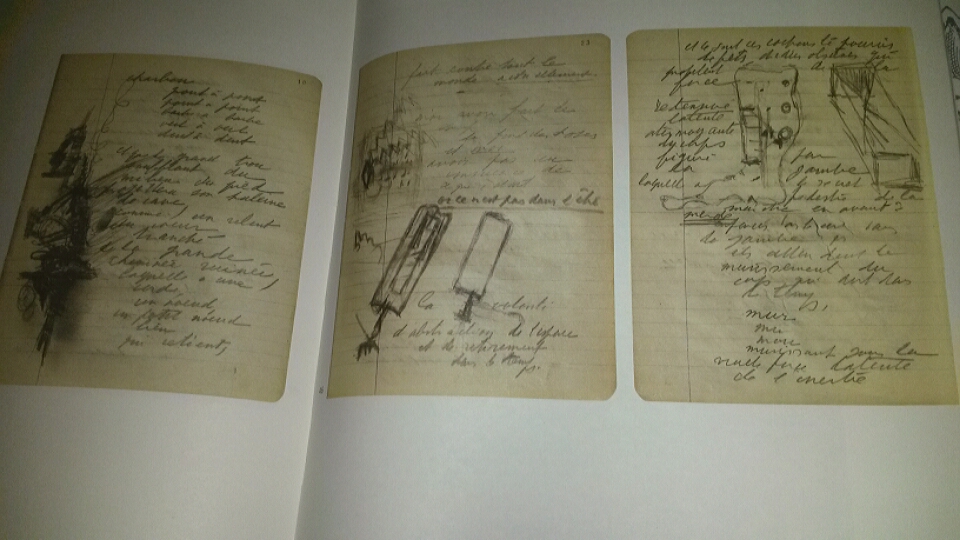
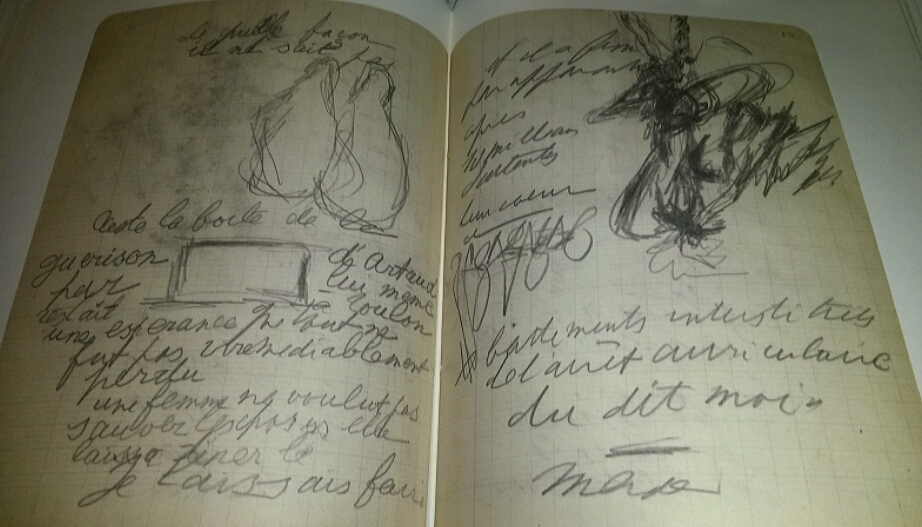
Thus ends the first page of Antonin Artaud’s last piece of writing, 50 Drawings to Murder Magic. Scrawled on notebook pages, this piece was written as a text to accompany a selection of sketches and fragmentary notations that he had been collecting for several years in small school exercise books. The sketches are frantic, the paper intentionally stabbed and tattered, the missives angry and disjointed. The ultimate design of this project, which was initiated at the request of art dealer Pierre Loeb, will never be known. It was interrupted by Artaud’s death in March 1948, two months after it was begun.

50drawingsArtaud was a poet, dramatist, actor and theoretician, best known for his notion of the “Theatre of Cruelty”—an approach to experimental theatre that envisioned the removal of the barrier of the stage between the audience and the performers, and the transformation of the theatrical experience into a primal, mythic spectacle involving groans, screams and verbal incantations. In her preface to the Seagull Books edition of 50 Drawings, the editor, Évelyne Grossman, suggests that his drawings reflect Artaud’s preference, in his later years, for the “restricted framework of the small format.” His feverish drawings of faces, torsos, hands, totems, spikes and other undefinable shapes and scratches may be seen as a form of dynamic performance on paper:

“This is not to say that his intention is to breach the frame of the page, to escape its confines; rather he is seeking to break out within the sheet: to raise the paper surface, to dig down into it, to lend it volume, to open up its unsuspected depths and thicknesses. The pages dimensions are thus exploded. Writing and drawing alike are set in motion.”

2016-10-25-02-39-30Originally associated with the Surrealist movement, Artaud had a deep interest in magic and the occult that extended far beyond that of his peers. He saw magic not only as a very powerful form of communication, but, he hoped, as a means to heal the deep rifts in his own troubled psyche. Plagued by mental health concerns, Artaud would spend much of his life in and out of asylums. Increasingly he was haunted by the demons of his own imagination and, as a result, it is intriguing to turn to his intense, often seemingly angry notebook drawings as an effort, as he puts it himself “to murder magic.”

2016-10-25-02-36-23In entering this gloriously reproduced edition of 50 Drawings to Murder Magic, I turned first to the facsimiles of the drawings themselves—selected from notebooks dating from 1946 to 1948, and presented in the order chosen by Artaud himself—before turning to the poetic introduction (also reproduced with the accompanying facsimile). That approach seemed to suit my mood at the moment and rendered an extra impact to his words. Even though I was only able to recognize and understand about half of the text accompanying the drawings, the intensity of the imagery is undeniable.

Artaud himself insists that his images:

…are not drawings

they figure nothing,

disfigure nothing,

are not there

to construct

build

institute

a world

even an abstract one.

He proposes an interactive engagement with the words he has captured and illuminated on the pages of these notebooks. In and of themselves, he claims that they have no meaning:

To understand these drawings

fully

       you must

       (1) leave the written page

             and enter

             the real

             but also

leave the real

             and enter

                         the surreal

                         the extra-real

                         the supernatural

                         the suprasensible

                         into which these drawings

                         continually

                         plunge

                         because they come from there

and because they are in fact

merely commentary

on action that

has really occurred…

There is, I sense, in this commentary created to accompany these sketches a prescription that applies to the dynamics between words or images on the page and the reader or viewer that also applies to the creator. There is something in this text that speaks to the creative process—especially to the degree to which so much of what the writer or artist commits to the page (or canvass) extends from a place beyond conscious attention, to be received actively but without specific intention.

When I write and a reader finds their own answer in the work, to a question I may not have even asked, that is when magic happens. Artaud may have imagined that is drawings murdered magic, but his accompanying text indicates that the magic he believed to be the mediation between artist and audience was alive right to the end.

50 Drawings to Murder Magic is published by Seagull Books and translated from the French by Donald Nicholson-Smith.

Passion and plague: Moonstone: The Boy Who Never Was by Sjón

He’d had no inkling that when the pestilence took hold Reykjavik would empty and convey the impression that nothing was happening at all; that the town would become an abandoned set that he, Máni Steinn, could envisage as the backdrop for whatever sensational plot he cared to devise, or more accurately, for the kind of sinister events that in a film would be staged in this sort of village of the damned–for those days the real stories are being acted out behind closed doors. And they are darker than a youthful mind can imagine.

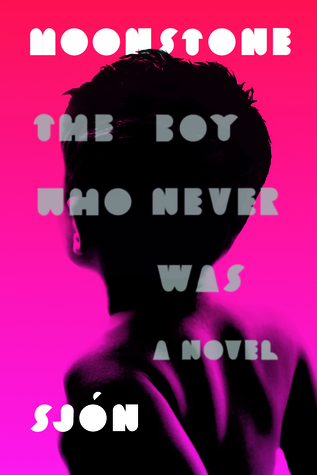
moonstoneMoonstone: The Boy Who Never Was, Icelandic writer Sjón’s fourth novel to be released in translation, is set in Reykjavik in late 1918. This is fortuitous timing. A number of critical events converge over the course of a few months: the volcano Katla erupts in a dazzling display of fire and ash, the First World War comes to an end, and the small Nordic country achieves sovereignty. But the most devastating impact arrives in the form of the plague that is presently sweeping the globe–the Spanish flu.

At the centre of the tale is sixteen year-old Máni Steinn, an orphan who lives with an old woman who is, as far as he knows, the sister of his great-grandmother. He is an independent spirit. He wanders around town, services “gentlemen” for money, and spends hours in the cinema. For a queer boy with no family history, illiterate, and alienated from his peers, silent films offer an opportunity to lose himself in fantasy, intrigue, and drama. A theatrical imagination dominates his dreams, at night and during the idle hours of the day.

In general, his encounters with men are dispassionate, hurried and impersonal. But there are a few exceptions, men who show him affection and kindness, like the foreigner who, in a play on his name, christens him Moonstone. And then there is Sóla G–, a young woman from a prominent family, who is known for ridingmusidora through town on her red Indian motorcycle. She is, for Máni, an embodiment of Musidora, the French actress who stars in one of his favouritefilms, Louis Feuillade’s crime serial, The Vampires. He worships her and, fortunately for him, she secretly knows and understands the kind of boy he is.

The Spanish flu will alter everything. Despite warnings from Copenhagen, Iceland is not prepared for the speed with which the coming epidemic will spread or the toll it will take on the people and resources of Reykjavik. Once it hits the shore though, it is all that anyone can talk about. Our protagonist however, absorbs the news with a deeply romantic response:

He has a butterfly in his stomach, similar to those he experiences when he picks up a gentleman, only this time it is larger, its wingspan greater, its colour as black as the velvet ribbons on a hearse.

An uncontrollable force has been unleashed in the country; something historic is taking place in Reykjavík at the same time as it is happening in the outside world.

The silver screen has torn and a draft is blowing between the worlds.

Very rapidly, Reykjavik begins to resemble a ghost town. The cinema still draws those seeking comfort, community, and warmth until the last available musician of any description collapses and the films, now unbearably silent, cease. But by this point Máni himself has fallen ill.

Sjón invites the reader right into his hero’s illness with little warning. The images are brutal, harsh, surreal. From the explosive fiery heat of his fever, through his horrific delusions to the subsequent pain and bleeding, Máni’s cinematic imagination colours the account of his fragmented and distorted days of suffering. He is left drained and delerious:

The boy no longer has need of blood or bone, muscle or gut. He dissolves his body, turning solid into liquid, beginning from within and rinsing it all out, until it gushes out of every orifice he can find. He is a shadow that passes from man to man, and no one is complete until he has cast him.

Upon recovery, Máni is recruited to accompany the doctor and his driver, the enigmatic Sóla G–, on the grim task of calling on the sick, the dying and the dead. Men, women and children fall indiscriminately. Within a few weeks though, the pestilence burns itself out and the survivors pull themselves together and drag themselves back to life and, soon, to the cinema. Over the course of one month, ten thousand citizens have endured the ravages of the illness, and almost every family has been directly touched by loss in some way. Attention now turns to the coming celebration of Iceland’s independence, but Máni will still have one major challenge ahead.

Sjón has a light touch–an ability to spin a tale that unfolds with the spirit of a fable and feels lighter than air. He works in miniature with a sensibility that is poetic, weaving the strands of his tale with a glimmer of magic. But that does not mean his novels fail to explore topics of substance or create characters that live and breathe. The lingering impression is ephemeral, lyrical, haunting.

Moonstone is dedicated to the author’s uncle Bósi, a gay man who died of AIDS in 1993. This novella sheds light on the clandestine and dangerous lives of homosexual men at a time when a country like Iceland, which fancied itself too robust to face threat from influenza, imagined itself to be a place where such aberrant behaviour could not possibly exist. For Máni, the “boy who never was”, it was a desolate place, save for the refuge of cinema. Placing the story in 1918, allusions to the plague that would devastate the gay community in the 1980s and 90s are unavoidable. And that much more powerful.

Moonstone: The Boy Who Never Was is translated by Victoria Cribb and published by Farrar, Straus and Giroux in North America and Sceptre in the UK. Originally published in 2013, the book won the Icelandic Literary Prize.

Dreams and Stones by Magdalena Tulli

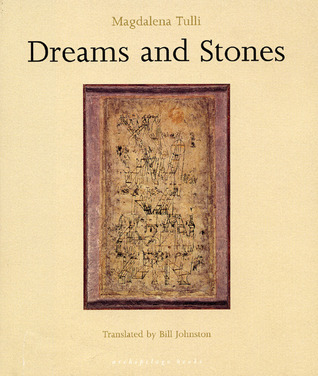
I am very pleased to have my first review published at The Quarterly Conversation. Dreams and Stones by Polish writer, Magdalena Tulli, is a poetic meditation on the city as an organic entity, essentially an urban cosmology. I read it through twice before writing my review and in my second encounter its nonlinear, cyclical quality was even more apparent. Thinking about it now, two months later, its fantastic, mythic qualities still have a strong hold on my imagination. But there is more that haunts me when I think about this book.

dreamsstones

I had been aiming to submit this review in mid-July, my first reading was in late June, but before I could put pen to paper, so to speak, my father had a stroke and car accident and my mother became ill and died. As one might imagine, I struggled to write, let alone read. During times like this words fail us. But, as my father’s death neared I returned to this short book, for distraction, comfort and, above all, to know that I could still write. The ability to sit down and pull together a critical review was an important turning point. In times of immediate crisis and grief when family members find themselves trudging back and forth to the hospital, the advice is to try to return to some measure of routine. The answer, for me, was to write.

Dreams and Stones is translated by Bill Johnston and published by Archipelago Books. My review, originally published at Quarterly Conversation is reproduced below:

“There are more things in heaven and earth,” Hamlet famously says to Horatio, “than are dreamt of in your philosophy.” So might Polish writer Magdalena Tulli be imagined to warn readers entering her enigmatic first novel, Dreams and Stones: to be prepared to open your minds to an urban cosmology that envisions the city—its evolution, destruction and rebirth—in the light of two seemingly opposite notions of the world. Paragraph by paragraph, Tulli’s images are startling and fresh, and they become the building blocks of a fanciful metropolitan vision that overflows with both magic and sorrow.

Born in 1955, Tulli is one of Poland’s most original contemporary writers. She has received three nominations for the prestigious Nike Prize, and four of her novels translated into English to date, including In Red which was longlisted for the 2012 Best Translated Book Award

Recently re-issued by Archipelago Books in paperback (they published a hardcover edition over a decade ago), Dreams and Stones truly defies simple classification. From the opening passages, the contemplative poetic imagery reads like a re-invented Book of Genesis, sketching out the life cycle of the metaphorical tree upon which a fruit ripens, falls to the ground, and germinates; it holds in its core the seeds of a great city and the parameters of the human system that surrounds it. This archetypal city is fundamental to the vision of the world that Tulli proposes, but herein lies the tension that motivates and propels the narrative: Tulli’s calmly disconnected narrator ponders, never committing to one conception over the other, how the world is to be understood: as a tree or as a machine? Is the city borne of the dreams of its citizens? Or is it grounded in the faith and certainty of its master builders?

Be it natural or mechanical, the city is created by an inextricable combination of thought and the appearance of objects. Necessity and a restless urgency drive this process onward. Tulli’s narrator describes the lines of the city as ordained to appear through the pens of the draftsmen, inspired by the builders’ unshakable belief in one possible truth.

Though it remains a supposition it is not hard to interpret. It proclaims that it is not the power of germinating seeds and not the pressure of juices circulating between the roots and the crown that give the world life, but that it is set in motion by motors, gears, and cogs, devices that keep the sun and stars rotating, pull the clouds across the horizon and drive water along the bed of the river. The clarity and simplicity of this notion may prove salutary. They will make it possible to dismantle, repair and reinstall every broken component—so long as the world is composed only of separate and removable parts . . .

However, as the narrator goes on to speculate, how can one be certain the world is a machine when it resembles a tree in so many respects? This continual pull between the two poles of this dichotomy suggests that the way one chooses to view the world influences, even governs, the way one attempts to exist in it. Both views, it is argued, are true. And both have their limitations.

Tulli spins webs of interconnected realities and counter-realities. As a tree has a network of roots that spread, like the branches of its crown, in the dark depths of the soil, the city and every object in it ideally has its counterpart. But as the inexorable progress of the mechanized world rushes forward, the city is easily separated from the counter-city and, like a tree cut off from its roots, everything begins to spiral out of control, break down, fall apart. The builders that once seemed so assured failed to leave room for fate, chance, and fatigue—not only of materials but of the legions of flesh and blood workers required to build, repair, and maintain the metroplis in its glory.

Eventually time begins to run short and the power required to hold the counter-city at bay outstrips demand. The city, and the framework of the world that surround it, enter a period of cosmic decline. Here the narrative registers a distinct shift in tone:

No one knows where sorrow comes from in a city. It has no foundations; it is not built of bricks or screwed together from threaded pipes; it does not flow through electric cables nor is it brought by cargo trains. Sorrow drifts amongst the apartment buildings like a fine mist that the wind blows unevenly across the streets, squares and courtyards. There are long streets and short ones, there are broad ones and narrow ones. The gray of some bears a trace of ochre while others are bluish from the sidewalks to the roof tiles. Each of them has its own peculiar shade of sorrow.

The city of thoughts is now precariously maintained in the dreams of its inhabitants, their memories. The city of sorrow grows increasingly disordered and fragile. When war threatens to level it forever, the survivors, like their forbearers who constructed the original city, attempt to reconstruct one of memories. For, as the narrator assures us, “nothing in the world—even imaginations—can be destroyed completely and finally.”

Although Tulli never names the city at the heart of her story, recent Polish history, the massive destruction of Warsaw during the Second World War, and the systematic rebuilding and redesign of that place all seem to be woven into Dreams and Stones; but, these threads need not be traced in a linear fashion. This is a fable, one that essentially folds back on itself, a poetic meditation on the soul and heart of a city built, rebuilt and kept alive in the imaginations of its people. A metropolis that is connected to the rest of the outside world, to those shifting, almost fantastic municipalities that exist elsewhere, and yet stands as a self-contained ideal. One has to be aware though, that such an ideal can become distorted over time. Warsaw was reconstructed, with great attention to detail on the one hand, but altered to accommodate the new pressures of a steadily increasing population on the other. Memories and the rebuilt reality do not always align:

It is possible to imagine a city perfect in its entirety, a city that is the sum of all possibilities. In it nothing is missing and nothing can perish, every china teacup comes from somewhere and is destined for somewhere. But precisely this absolute city is eaten away by the sickness of never-ending disasters. Change invariably brings confusion to the lives of the inhabitants. One has to pay attention so as not to drive accidentally onto a bridge that was demolished years ago, so as not to sit on the terraces of torn-down cafés once known for their unparalleled doughnuts.

An obvious counterpart to Dreams and Stones can be found in Italo Calvino’s Invisible Cities. Tulli has translated Calvino and admits to his influence. But in so far as this book can be understood as referencing Warsaw, it retains a sharply central European feel. I was especially reminded of Pavel Brycz’s  I, City.[1] Originally published in Czech in 1998, Brycz    honors the history and people of the industrial city of Most in northern Bohemia, by giving the narrative voice to that place, setting the stage for a melancholic meditation on an urban center widely understood, at the time, to be in a state of unemployment, decline, and despair. In Tulli’s urban landscape it is the city’s inhabitants who maintain, generation after generation, the idea of their home, even as its proud stone edifices are turned to rubble. In I, City, the concept is reversed. It is the city that retains the memories and affections for its people and its past—it dreams, keeping its spirit alive despite repeated historical destruction, occupations, and finally as its neighborhoods are leveled to mine resources and replaced, not by stones, but by prefabricated concrete slabs.

While Tulli regards Dreams and Stones as a novel, her translator, Bill Johnston, respectfully disagrees. He sees it as prose poem.[2] It is, essentially, a series of images and reflections, and there are no individual characters apart from the measured and detached narrator. Yet either way, novel or poem, the piece is endowed with an overwhelmingly orchestral quality. The dynamic life of the city, builds up speed, slows down, becomes erratic, falls into an abyss, and is reconstructed anew. Tulli is playful with her imagery, intentionally pushing her metaphors to the edge. Even the moods—pride, sorrow, nostalgia—that course through her streets are imbued with a mythic intensity. This motion and fluctuating energy, combined with the fundamental philosophical tension at its core, gives the work its flow, draws the reader in, and, in the end, offers a richly provocative experience that invites and rewards rereading.

[1] Brycz, Pavel. (2006) I, City. (J. Cohen & M. Hofmeisterová, Trans.) Prague: Twisted Spoon Press (Original work published 1998) – Link to publisher page for book: http://www.twistedspoon.com/city.html

[2] Interview with Bill Johnston on Magdalena Tulli. Polish Writing. Retreived from https://web.archive.org/web/20111106183056/http://www.polishwriting.net/index.php?id=125

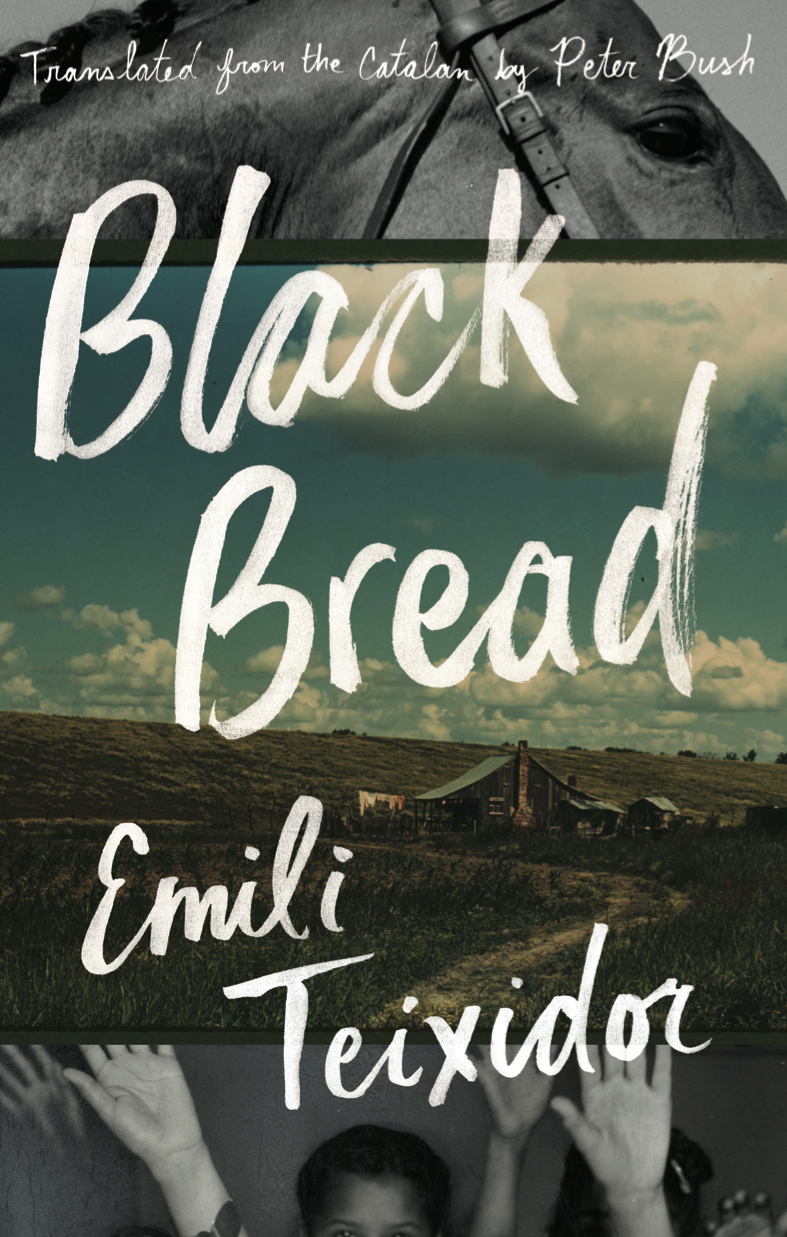
Black Bread by Emili Teixidor—My Numéro Cinq review

My latest review for Numéro Cinq is now live. When I read for these reviews, the question that guides me is “What is interesting about what the author is doing (or trying to do) in this book?” I am listening to the language, paying attention to the structure, the voice, the tone, and asking what makes this work come together? What sets it apart? I am reading as a writer–an intuitive writer–unaided and yet unburdened by a formal education in literary theory.

Coming of age themed novels such as Black Bread by Catalan writer Emili Teixidor present a particular challenge. When a first person narrator is recounting events and experiences from his or her own childhood, my attention is focused heavily on narrative voice. I am always trying to determine where the narrator is standing in time relative to the story being told. I had the sense with Black Bread that the protagonist Andreu was writing from his later teens–just far enough away to have some perspective on the limitations of his understanding of the precarious realities around him, but close enough to recreate the innocence and naivete of childhood. It works, but the more absorbing, and I suppose the more effective the voice, the more difficult it is to describe how and why it works.

Here’s a taste of the review, please click through the link at the end to read the rest. A second link leads to an excerpt:

In the Shadow of Civil War: Review of Black Bread by Emili Teixidor — Joseph Schreiber

black-bread

There is an interlude, just shy of a third of the way into Black Bread by the late Catalan writer Emili Teixidor, where the narrator steps back from his childhood reminisces to question the nature of memory. He asks why some things stay etched on his memory while he has forgotten others completely, and wonders, “how can I know I have forgotten what I can’t remember?” He recognizes that some places, people and incidents fade quickly whereas sometimes a word can come back unexpectedly and ignite a flood of distant memories. These reflections appear as a curious break in a narrative marked by a degree of youthful naiveté, but remind us that the journey from childlike to mature understanding is uneven and necessarily distorted in retrospect. So, although it is never entirely clear just how far removed the protagonist stands from the experiences he is sharing, as his account continues his ability to hold on to his own innocence will increasingly come into conflict with the harsh realities of life in post-war rural Catalonia.

In recent years, much revisionist debate has been dedicated to exhuming questions of the true impact of the civil war and the Franco dictatorship on Catalan culture and society; “true”, that is, depending on where one’s interests lie. Against this backdrop, a novel like Black Bread, originally published in 2003 when Teixidor was seventy years-old, could easily be construed as an attempt to reclaim history through lived memory. That may, in part, be a fair assessment, but this novel offers much more. It is, on one level, a tender and sensitive coming of age story, one that filters the joys, fears, mysteries, and discoveries of the fitful transition to adolescence through the unaffected lens of childhood memory. Our narrator, Andreu, an astute observer of his own confused emotions, must learn to navigate a world filled with dark dangers and even darker delights. He knows there is much going on around him that he doesn’t understand—truths that he isn’t certain he even wants to understand. However, his growing awareness and conflicted reactions open space for an indirect but honest commentary on the realities of Catalan existence during this time. In this respect, the work can be seen in line with that of writers like Josep Pla and Mercè Rodoreda.

Continue reading here:

Read an excerpt here:

I am a horror in the face of things: The Passion According to G.H. by Clarice Lispector

Take it as a warning. Clarice Lispector prefaces this metaphysically intense novel with a short address to her “possible readers” that states:

This is a book like any other book. But I would be happy if it were only read by people whose souls are already formed. Those who know that the approach, of whatever it may be, happens gradually and painstakingly—even passing through the opposite of what it approaches. They who, only they, will slowly come to understand that this book takes nothing from no one.

She does not want your existential “blood” on her hands, dear reader. You have to be willing to surrender it freely, to engage with G. H.’s passion on your own terms, experience her horror and joy as she struggles to make sense of, and give voice to, the “truth” that she has just come to understand. And, if you do, you may well find that the journey is unforgettable.

GHIt is clear from the stuttering opening sentence of The Passion According to G.H. that the narrator, a woman known only by the initials embossed on her suitcases, is uncertain, fragile, and disoriented. It is only by recounting the events of the previous day, by shaping them and giving them form, that she can make sense of the radical transformation she seems to have experienced. This is not a conventional narrative. In her retelling, addressed to the invisible owner of a disembodied hand that she imagines she is holding—the “you” who is at once the reader and, as the monologue progresses, a stand-in for an intimate from her past—she pieces together a superficially simple encounter that unleashes in her a torrent of thoughts, images, and emotions. She spirals into a very vivid personal hell, suffers a crisis of vast existential and spiritual dimensions, and emerges a decidedly changed being. But what of it? As the novel opens G. H. has no clear idea, she must start with who she was to discover who—or what—she has become.

One day earlier, she had arisen late with the intention of cleaning and tidying the room where her former maid had lived, a task she anticipated to be arduous yet satisfying. Assuming the room would be dirty, dank, and disordered, she would exercise her talent or, rather vocation, for “arranging.” G. H. is a wealthy sculptress living in Rio de Janeiro, who paints a portrait of herself as an independent woman, with no husband or child; she admits to a certain measure of vanity, but confesses that hers was a rather referential existence, one that in essence left her ripe for the events that would soon unfold:

My question, if there was one, was not: “Who am I,” but “Who is around me.” My cycle was complete: what I lived in the present was already getting ready so I could later understand myself. An eye watched over my life. This eye was what I would probably now call truth, now mortality, now human law, now God, now me. I lived mostly inside a mirror. Two minutes after my birth I had already lost my origins.

G. H.’s rapid descent to the brink of madness, begins when she enters the maid’s room and discovers a stark, nearly barren chamber. Most unsettling is the sight of three charcoal figures etched onto the whitewashed wall: a man, a woman and a dog. But the unexpected calm and order of the entire room catches our narrator completely off guard. The bed has been stripped, the curtains are gone from the window, three monogrammed suitcases are stacked along one wall and the narrow wardrobe, stands cracked and bleached by the harsh sunlight. She describes the room as “the portrait of an empty stomach.” And as she ventures into the room, she feels as if she has entered a nothingness, a formless space that cannot contain her. To gain some control she decides to wash down the wardrobe, and that is when her nightmare begins.

Cracking open the wardrobe, she confronts a cockroach, emerging through the door. The sight of the roach ignites a primal reaction, tied to memories of childhood poverty, but ultimately bound to a much deeper fear for G. H.—the cockroach is a prehistoric creature, durable and enduring, holding in its being the horror of unformed eternal existence. However, it is her response to the situation, her decision to kill the roach, that triggers what will escalate into an all-consuming metaphysical crisis.

To trace out G. H.’s tortured passion, one step removed through the limitations of a relatively brief review, one can only vaguely approximate the actual experience of revelling in Lispector’s haunting, sensual language. Through the agony and ecstasy of her protagonist’s journey of self-discovery we are invited to bear witness, to share her joy, to feel her pain, to taste the dawning strangeness of it all. And her awareness is startlingly acute. For instance, in her act of violence against the roach she instantly realizes that she has violated something in herself:

Because during those seconds, eyes shut, I was becoming aware of myself as one becomes aware of a taste: all of me tasted of steel and verdigris. I was all acid like metal on the tongue, like a crushed green plant, my whole taste rose to my mouth. What had I done to myself? With my heart thumping, my temples pulsing, this is what I had done to myself: I had killed. I had killed! But why such delight, and besides that a vital acceptance of that delight? For how long, then, had I been about to kill?

The terror that drives the narrator toward the breaking point is grounded in her acknowledgement of a kinship between herself as a human woman and the despised roach. As someone accustomed to defining the self only in the context of the other, it is conceivable that to see herself reflected in such a primitive, base creature could provoke a crisis of Biblical proportions. It shakes her admittedly superficial self-identity to the core. To recognize herself in the face of the roach is to acknowledge the potential annihilation of the self. “—Hold my hand” she implores her invisible listener, “because I feel that I’m going. I’m going once again toward the most divine primary life, I’m going toward a hell of raw life.”

During the hours that follow, G. H. will wrestle with questions of heaven, hell, morality, humanity and, most critically, the troubling reactions that these metaphysical problems provoke in her. She fears her own ambivalence, and discovers that the promise of hell is not a torture of pain but a torture of joy.  In what she will insist are not hallucinations but “visual meditations”, her awareness of being is stretched and exploded, extending back beyond the Cradle of Civilization across deserts and oceans to reach beyond the time of the dinosaurs. To encompass the humble origins of the primeval roach. Gradually, slowly, she will begin to fashion a reformed, redefined spiritual sense of self, to approach her own salvation, to embrace life in all of its uncertain terms.

From its opening passages, The Passion According to G. H. is propelled forward with a relentless intensity that builds as the narrative proceeds. The final sentence or phrase of each chapter is carried forward to open the next, as if with each chapter the narrator is reorienting herself, gathering her resources to move on with her story. The revelations advance in fits and starts, more noticeably as her questioning becomes increasingly obsessed with the nature of being. There seem to be things she can only come to terms with piece by piece, as she attempts to reconstruct and express an understanding of a world in which she can exist. In the end, she must come to an acceptance that being is a process, an act of trust in the unknowable, a continual active re-engagement. Her creator, Clarice Lispector, knows intimately that language—words—are essential to articulating, not just the emotional journey G. H. endures, they are essential to articulating the truths of human existence, once being has been stripped to its most fundamental elements.

Although I have read many of her short stories, this was my first encounter with one of Lispector’s novels. I had wanted to read this particular title for years, but had not realized how closely her theme ties into the existential questions that drive my own most personal writing project. And in a timely instance of serendipity, my finishing this work dovetailed nicely with joining the editorial team of The Scofield in time to copyedit and proofread 70 pages of the upcoming Lispector issue which will be out very soon. The opportunity for some very focused, close reading of some wonderful Lispector inspired writing, including a number of detailed critical essays, has left me eager to read the rest of her work. I can fully understand why she was (and is) so beloved in Brazil, and such a powerfully influential writer.

The Passion According to G.H. was originally published in 1964. This evocative translation from the Portuguese by Idra Novey (2012) is published by New Directions.

Update: The Scofield Issue 2.1 Clarice Lispector and the Act of Writing is now available and can be downloaded for free as a PDF. You’ll find it here. You will find a wealth of Lispector related and inspired reading, including two short stories and much, much more!

Now and at the Hour of Our Death by Susan Moreira Marques, a reflection and review

We obsess over lasts as we do over firsts. Last days, last images, last words. We want signs.

Last month, my brothers and I made a most difficult decision about our father who was, at the time facing a cluster of serious complications resulting from a stroke and car accident. Four days earlier we had gathered around our mother’s bedside as the respirator that was barely keeping her breathing was removed. Within four hours she was gone. After agreeing to discontinue treatment of our father, he would continue to live, slowly dying, for another week. As I kept vigil day after day I tried to remind myself that there was a time when death was allowed to take its course, in the home, even as so-called “normal” life would begin to spin, a troubled satellite, around the dying person. Death was part of life, not something that happened elsewhere, surrounded by tubes and machinery. Although my dad remained in the hospital until the end, he was moved to a quiet, private room where he was kept comfortable, free of pain, and cared for by the nursing staff. As a family we were supported and respected. It wasn’t easy, and we’re all still numbed and distorted in our grieving, but if there is such a thing as a good death, I think that both of my parents had good deaths, if good means having a chance to say I love you, over and over and over until the end.

nowdeathWhen I first started to read Susana Moreira Marques’ Now and at the Hour of Our Death, I wondered if I was too raw, too plagued with second thoughts about the decisions we had made, to be able to surrender to a lyrical and experimental essay about death and dying. This book had been sitting on my shelves since it arrived last year with my And Other Stories subscription, several times I had opened it but somehow the time was not right. I suppose the book was waiting for me.

Over the course of five months in 2011, Marques made several visits to a palliative care project in rural north-east Portugal. She accompanied a team of health care professionals as they traveled from village to village to assist those on their final journeys, allowing them to be able die, as comfortably as possible, in their own homes; and along the way she recorded her own observations, collected anecdotes, and listened to the stories of the people she met. The result is powerful meditation dying, as a lived experience shared by a family, a community.

The first half of the book is fragmentary in style and form, blending facts and definitions, character sketches, brief stream-of-conscious like passages, pieces of wisdom—all presented with a quiet dignity in lucid, affecting prose:

The swallows have already built their nests above the back door; this is how they do it every year. They are useful birds, and beautiful, and have always been a favourite of his. But now he watches them as he never has before, because he might not see another spring.

*

AGONY: 1. The last struggle against death. 2. [Figurative] Anguish, affliction. 3. An imminent conclusion (preceded by a great disturbance).

‘Agony,’ the dictionary does not note, is a technical term.

*

Immortal in the morning. At night, the fear of never waking.

*

Lands, roads, people, time, time, people, roads, land. What matters here is different, very different.

The second half of the book, entitled “Portraits”, offers a closer look at three individual stories. Here Marques becomes a gentle presence as she describes each situation, then she steps back and lets those involved have their say. There is Paula, a woman with a young family, who is dying of cancer. She speaks with a brave spirit about how she and her husband had taken their time, waiting to have their second child, assuming they had “all the time in the world.” She will only have another year to live at the time that her thoughts are recorded. Then we meet João and Maria, a couple in their 80s who reminisce about their years in Angola. Both are ill, yet neither feels that they are ready to die, they live for visits from their children and grandchildren, and each one fears being the one left behind.

Finally, in the third portrait, the dying person is silent by the time Marques meets the family. While their father Rui lies on his death bed, his adult daughters, Elisa and Sara, each respond in their own way in his final months, the latter driving home from France every fortnight to spend time with him and her mother. Their own accounts follow his death, capturing the early weeks of grief, anger and regret. Very different in temperament, the sisters respond in their own ways to the loss, but for each of them it is the first time they have come up against the close experience with death and it is a leveling experience. Sara realizes she had never appreciated the magnitude of what others she had known would have been going through when they lost a parent, regretting that she had failed to say anything. I can’t help but feel that that is a common occurrence. Nothing but the death of a close friend or family member prepares you for the experience. Elisa, on the other hand, is surprised to find that she is unable to shriek and scream in anguish the way her sister and mother do when her father finally passes:

. . . I couldn’t react. It must have been two months before I cried. It’s really hard for me to cry. And now I’ve finally started crying, but only because I’ll get all worked up over something minor, and then I might cry a little out of frustration. But when it happened – and the atmosphere at our house was just so strange . . . It took me a long time to realize what was going on.

The final section, a single page long, is a guide for “When you come back from the journey no healthy person wants to take,” a list of the ways “you”, that is anyone who survives the death of a loved one, can be expected to act. . . paying attention to time, the things and people that are precious, the bridges that need to be mended and, simply, endeavouring to live well. I hope I can follow this wisdom even if, at the moment, I am inclined to relate to Elisa’s reaction, with grief coming in angry outbursts more than tears.

witm-logo

Now and at the Hour of Our Death is translated from the Portuguese by Julia Sanches and published by And Other Stories.


What we read: A reflection on gender, language and necessity

My astonishment – and what is really my anxiety (my indisposition) come from what, in fact, is not a lack (I can’t describe this as a lack, my life is not disarrayed), but a *wound*, something that has harmed love’s very source.
– Roland Barthes, Mourning Diary

A comment made this morning on a post I wrote just over a year and half ago, has made me stop to consider what I am reading at this moment and why. The original post is called Gendering my bookshelves, a look at the gender of the authors I tend to read which were, at the time, and continue to be, predominately male. In the meantime I have read more female writers than I might have anticipated, but I have read more in general. So the ratio is perhaps closer to 80/20 than the 90/10 I figured last year.

This is Women in Translation Month, a project I respect and support, but I am unlikely to contribute with the same intensity as before. Truth is, despite a nice selection of titles that I had collected with this month in mind, I am not certain I will manage to read many. In fact I am close to putting my first effort Now and At the Hour of Our Death by Susana Moreira Marques aside. Don’t get me wrong, this piece of experimental nonfiction about a traveling palliative care team in rural Portugal is quite wonderful. But not right now. These are portraits of death and dying. And to read it so soon after watching both of my parents die hurts like hell.

I am relatively new to the business of maintaining a book blog and, of late, much of my review focus has actually moved off of my blog to online magazines. But what is a literary blog if not an opportunity to write about what one is reading? Sometimes that includes review copies and new releases, but that type of reading comes with pressures and can cut into other reading that one is drawn to. Themes like Women In Translation, German Lit, Spanish Lit all offer opportunities to open up and encourage conversation about literatures that one may or may not otherwise consider.

But sometimes our reading is directed by the forces and idiosyncrasies and, of course, the tragedies of our own lives.

At the moment, I want to read two different types of books–those that offer total distraction, and those that say something about grief and loss. That is where I am at, pure and simple. July was absorbed by hospital vigils and then, once my father finally passed, the immediate business of beginning to organize paperwork, notify institutions and prepare to apply for Probate. We have not even managed to plan a memorial of any kind. Over and over others have commented about how well I seem to be holding up…

2016-08-07 19.03.15But I’m not. The other night, reading Barthes’ Mourning Diary I found myself thinking, but this is different, he is so focused on his mother, my mourning is different. Is it? My father was injured and his death was slow. In the midst of it, my mother took sick and was gone within three days. My mother’s death, is a loss of an entirely different order than that of my father. She was my best friend. I could talk to her about anything. Without her I have no one else, no partner, and no friend as close. Although I have two children, I cannot burden them as they are each bearing their own grief. I woke up yesterday to the harsh recognition that I was trying to roll these two events, these two losses, these two individuals, these two unique relationships into one experience to be grieved as whole. But I cannot. They are separate events and they are one. Suddenly the magnitude of the task ahead is overwhelming.

So I will read and I will write. I want to write and publish something before time has a chance to edit it… a task inspired by Barthes and by Peter Handke’s A Sorrow Beyond Dreams. Women in Translation may or may not figure in the equation. In fact translation may not fit into much of my reading at all this month. So be it. Aside from Barthes, I have a memoir called When It Rains by Maggie MacKellar, a memoir that deals with two intersecting deaths, and I have ordered Love’s Work by Gillian Rose and Simon Critchley’s Very Little… Almost Nothing. Each one of these titles was suggested by Twitter/blogging contacts. I am open to more.

Finally I must say that I have been deeply moved by those who have reached out by email or on Twitter, publicly or through Direct Message, to offer condolences, good wishes, suggested reading and writerly support.

I am in mourning.

There will be words.

Homecoming – Revulsion: Thomas Bernhard in San Salvador by Horatio Castellanos Moya

In the note appended to the 2007 re-issue of Revulsion: Thomas Bernhard in San Salvador, author Horatio Costellanos Moya describes how a playful exercise in imitation led to very frightening death threats. Within a week of the book’s publication in 1997, his mother called to warn him against returning to El Salvador as he had planned. The immediate and hostile reaction indicates that not only was the element of satire missed, but the miserable misanthropic protagonist’s exaggerated rants were not entirely without grounds. But what angered some, impressed others, and the little book has endured, inspiring study, debate, and requests from citizens of other Central American countries for Castellanos Moya to similarly skewer their troubled nations. And now, at last, this incendiary novella is available in English from New Directions, in a no-holds-barred translation by Lee Klein.

RevulsionPresented with exuberant Bernhardian spirit, Revulsion is a relentless parody of the Austrian writer’s trademark style. The rhythms, repetition, and tone of Bernhard’s classic works are evoked along with a brutal, insistent ravaging of El Salvador and its capital city that is reminiscent, if not even more graphically emphatic, than the famous rants Bernhard routinely leveled against his own native country.

The eponymous narrator here, in a role common to many Bernhard novels, is on the receiving end of a breathless monologue recorded over the course of one single paragraph that stretches for more than 80 pages. The speaker is Edgardo Vega, a professor of art history who fled El Salvador for Montreal at the age of eighteen. Now, a further eighteen years later he has returned for the first time, to attend his mother’s funeral and ensure that her house is sold so that he can secure his claim on his share of her estate. To say there is no love lost between Vega and his native country would be an understatement.  His most prized possession is his Canadian passport, if he is proud of anything it is his successful escape from the pathetic aspirations of his middle class brother, the crime, the social decay, and the miserable dearth of anything resembling class or culture in San Salvador.

San Salvador is horrible, Moya, and the people who populate it are worse, they’re a putrid race, the war unhinged everyone, and if it was already dreadful before I took off, if it was unbearable for my first eighteen years, now it’s vomitous, Moya, a truly vomitous city where only truly sinister people can live, which is why I can’t explain why you’re here, how you can be around people who are so repulsive, around people whose greatest ambition in life is to be a sergeant; have you seen them walk, Moya?

No custom, institution or individual is left unscathed. Vega rails against his brother who owns a lock and key business, but shows no interest in books or art or anything beyond the most pedestrian popular music. He has less respect for his “ex-clothing store clerk” wife and his two “pernicious” boys who spend their time glued to the television set and have the audacity to call him Uncle Eddie. Even the old school friend with whom he is sharing a few hours at the local bar, a place he tolerates only in the quiet hours between 5:00 and 7:00 pm, is not entirely free from a measure of Vega’s contempt. The patient narrator’s literary ambitions are soundly ridiculed. In this way, Castellanos Moya is mocking himself, as he allows his ranting character to eviscerate his country.

The famished little stories about sex and violence aren’t worth it, I say this to you with affection, Moya, you’d be better off staying in journalism or another discipline; but at your age to be publishing these famished stories is a pity, said Vega, no matter how much sex and violence you put into them, there’s no way these famished little stories will transcend. Don’t waste your time, Moya, this isn’t a country of writers, it’s impossible for this country to produce writers of quality; it’s not possible for writers who are worth it to emerge in this country where no one is interested in literature, art, or any manifestation of the spirit.

As Vega’s account of the indignities to which he as thus far been subjected over the course of his return to his home town builds to a hilarious conclusion, one can feel the enthusiasm with which this exercise in imitation was created. Imagery is pushed to a vile extreme in places and, as much as humour slides through, the polemic unleashed against El Salvador is merciless. Castellanos Moya captures Bernhard’s tone and style with an almost pitch perfect delivery right down to the surprise ending. But with a protagonist who spits enough venomous spleen to make Bernhard’s most hyperbolic vitriol read like an afternoon at a Sunday school picnic, it is little wonder the satire was lost on some readers. All the same, for those who love the infectious wit and humour of the Austrian master, Revulsion: Thomas Bernhard in San Salvador is a wonderfully entertaining look at post-Communist El Salvador through a very dark lens.