Painting the world with words: Atlas of an Anxious Man by Christoph Ransmayr

“I saw a jet-black darkness tattooed with countless dots of light above me, an apparently boundless firmament stretching out to the deepest universe, while I lay on the bottom of a rowing boat that a Maori ferryman pushed through the night with the strokes of his oar.”

Layout 1Thus begins “In Space” one of the 70 episodes collected by Austrian writer Christoph Ransmayr in his unconventional and utterly captivating Atlas of an Anxious Man, newly released from Seagull Books in a translation by Simon Pare. Seemingly caught in a dreamscape somewhere between travelogue and memoir, he leads the reader on an unforgettable journey that stretches across the globe in a series of evocative vignettes. Such as the one quoted above which, we soon learn, is an account of a tour into a system of caves deep within mountains on New Zealand’s South Island. The night sky Ransmayr is lying beneath is an illusion created by the luminous larvae of a gnat species clinging to the cave ceiling. Insects that mistakenly fly up toward the false heavens are soon snared in a web of sticky silken threads and become nourishment for the growing larvae. Nestled securely within the bottom of the boat, the author goes on to recount a frightening experience from earlier that same day as he made his way through a high mountain pass to reach this site:

“After snow had begun to fall in large flakes just before the top of the pass, my rental car, not equipped for wintry conditions, began to slide backwards – backwards! – with churning wheels down an already snow swept rise towards the edge of the road and a rocky slope. The slope was so steep that my car seemed destined to somersault over and over down to a mountain stream far below, running black and silent towards the valley bottom.”

He is about to jump and let the car go on without him when it comes to a stop perilously close to the edge where passing trekkers find him and tow him to safety with their jeep. In four pages we are treated to both the wonders and the terrors of nature, narrated with the skill and confidence of a gifted storyteller.

Each episode begins with an observation: “I saw an open grave in the shade of a huge araucaria pine” or “I saw a fisherman cursing as he steered for Baltimore harbour in the south-west of Ireland” or “I saw a three-toed sloth on the veranda of blue wooden house on Costa Rica’s Pacific coast” or “I saw a naked man through binoculars from my cover behind dusty firethorn bushes.” Even a tale that seems to begin with a most ordinary descriptive passage becomes, before you know it, an engaging portrait of a place, an experience, a character. Ransmayr has an uncanny ability to focus his lens on the small details to bring a location, a time, an event to life.

The 70 entries follow neither chronological nor geographical order, and occasionally he even slips back in time to capture experiences from his own life in Austria, reaching as far as the age of three with the account of a storm that lifted the roof off his house when he was watching his mother hang wet laundry across the attic room. Whether he is observing a bird on a remote rock face, watching a man tee off at the North Pole, describing a bullfight in Spain, or trekking through the Himalayas; he is never a disinterested observer. His engagement with the people, creatures, and landscapes he encounters is always curious but respectful. In the waters of the Dominican Caribbean for example, he floats among the waves watching a humpback whale cow and her young sleeping far below. When the calf suddenly breaks free from its mother’s protective shadow and heads up for the surface, Ransmayr panics as the parent rushes up towards him in pursuit. She comes close enough that he can see the iris of her eye:

“The giant looked at me. No, she brushed me with her gaze and altered her course by a hair’s breadth, just enough that we didn’t touch each other. Yet although she avoided me with this hint of a deviation, and therefore recognized and acknowledged my existence, I discerned a complete indifference in her look – akin to the mountain’s toward someone climbing it, or the sky’s toward someone flying through it – that I was overcome by a feeling that I would dissolve into nothing before these eyes, disappear before them as though I had never lived. Maybe this Atlantic giant in black had actually swept up from its realm in the deep to convey to an Atlantic swimmer how rich and varied, unchanged and natural the world was without him.”

His travels typically take him to the far reaches, off the beaten track, to locations accessed on foot, or by bicycle, assorted boats, tour buses, rental vehicles and more. He explores history, lifts his telescope to the heavens, and encounters politically tense environments. No two entries are the same, few extend beyond 6 to 8 pages, some are only 2 or 3 pages long. I found it best to take my time with this book, reading a few entries a day and allowing the awe to linger. This is not an ordinary travelogue by any means, but it is a shimmering example of what makes the best travel writing sparkle. The theme, if there is one, that unites and drives the narrative from beginning to end is possibly simply wonder. Not that Ransmayr is blind to the poverty, suffering and threats he encounters. His immediate reactions are sometimes frustration, even fear, but he manages, remarkably to find a glimmer, an image, a thought that affirms life, no matter how small or seemingly insignificant.

However, what really makes this book such a joy to read is the sheer beauty of the language and the author’s ability to weave his experiences and observations into stories that are moving and original, time and again. I’ll leave you with end one of my favourites in which he tells of emerging from mangrove swamps in Sumatra to encounter, in a clearing, a building on stilts. On the patio a man is singing with a karaoke machine, but his only audience is composed of the geckos clinging to the roof. Ransmayr takes a seat and as he listens to the singer perform the Rolling Stones’ “Love in Vain” he is transported back to a snowy night in Austria, a wedding and corduroy suits. Suddenly a lightening strike from an approaching storm knocks the power out. Oddly, the singer fiddles with the controls, seemingly determined to try to turn the machine back on until a thin man in a sarong appears and calls to him:

“The singer laughed. And then the thin man was beside him, took him by the hand and led him carefully down the stage steps and between the empty chairs and tables to one of the walkways, and I realized that the singer, who was groping for obstacles with his free hand, could not have seen the lightening and could not have seen how the neon tubes and control lamps had gone out, nor how night had fallen so suddenly over the mangroves, swallowing up swarms of insects and a tin sky with hundreds of geckos stuck to it. Karaoke. A blind man had sung to me out of the mangroves of Sumatra back to the village of my birth.”

Thank you to Seagull Books for kindly sending me on this journey.

Inside the fragmenting mind: The Goalie’s Anxiety at the Penalty Kick by Peter Handke

‘Bloch got sleepy. He made a few tired gestures to make light of his sleepiness, but that made him even sleepier. Various things he said during the day came back to him; he tried to get rid of them by breathing out. Then he felt himself falling asleep; as before the end of a paragraph, he thought.’

One of the first things you need to know about Peter Handke’s The Goalie’s Anxiety at the Penalty Kick, is that here are no easy answers here. If you are inclined to believe that literature should purvey rational motivation, moral certainty, and a satisfying denouement, you might want to look elsewhere. This is a novel that dismantles everything that one expects a novel to be, but, because Handke engages in this process from within the mind of man whose own processes of perception and comprehension are unraveling, one can argue that for all its inherent strangeness, The Goalie’s Anxiety approaches a reality of experience that is startling.

goalieAfter all, how do we measure reality? The only measures we have are our thoughts and perceptions. Narrated with an almost clinical, documentary clarity from a limited third person perspective, the reader is presented with an opportunity to exist inside the mind of a dispassionate murderer and face the uncomfortable possibility that rational explanations for behaviour may not always exist–and that someone who may not be in their right mind can be disordered not only in their thinking, but in their emotional responses.

At the outset of the novel we meet Joseph Bloch, a construction worker who had formerly been a well-known soccer goalie. He arrives at work one day and interprets small insignificant signs from his coworkers to mean that he has lost his job and, taking the hint, he leaves. He goes to the movies, takes a hotel room and otherwise occupies himself with random activities. Strange moods and thoughts pass through his mind. One night he decides to wait for the cashier at the movie theatre to get off work and follows her home.

When he wakes after spending the night with her, he discovers, lying in bed with his eyes closed, that an odd inability to visualize things has come over him. He tries naming objects, then making up sentences about things, all in an effort to bring the images to mind. He becomes aware of the pressure of things, distressing when his eyes are open, magnified when they are closed. His thoughts and experiences are starting to fall out of synch with the world around him. As he spends time with the cashier, he notices his irritation increasing and then, with little provocation or self-reflection, he strangles the young woman.

An unearthly calm envelopes the narration as Bloch’s actions and thinking processes are recounted with a surreal, slow motion quality. Before long he leaves the city to head out to a small town where an ex-girlfriend runs a tavern. He shows no particular desire to hide from the authorities, but as he spends time in the town his thinking continues to fall apart. Talking and communicating begins to take on a disordered quality. Bloch starts analyzing and double checking his thoughts–the words and expressions that pass through his mind catch him up and he questions the meanings he attaches to the words of others, for example in this exchange with two cape-wearing (yes, cape wearing) bicycle policemen outside a closed pool where Bloch has found himself standing:

‘The policemen, who made the usual remarks, nevertheless seemed to mean something entirely different by them; at least they purposely mispronounced phrases like “got to remember” and “take off” as “goats you remember” and “take-off” and, just as purposely, let their tongues slide over others, saying “Whitewash?” instead of “why watch?” and “closed, or” instead of “close door”.’

Over time his interactions with others continue to grow increasingly surreal, at least from within Bloch’s increasingly distorted perceptions of the world. We are, after all, firmly ensconced in the head of a man whose emotional and cognitive functioning is unspooling. The story may be proceeding with detached and disconnected sequences, but the tightly controlled limited third person narrative is deeply affecting for the reader. We can only see the world as Bloch experiences it, but with just enough distance to watch the internal decline. We are told what he is doing and thinking, but everyone and everything he encounters is filtered through his distorted lens–he imagines that messages are being sent to him, even if he is not certain what they are trying to indicate, objects and events hold meaning. As his paranoia grows, his sense of prescience is also heightened and he observes that his thoughts seem to proceed the words or actions of others.

At the same time Bloch exhibits an enhanced awareness of the world in small, often insignificant details that impose themselves on his consciousness to the point that he is sometimes irritated by the sensory input and his own intrusive observations. His breakdown is skillfully orchestrated. Handke captures his hyper awareness in descriptive passages that reflect the odd acuity of his attention and his internal difficulties with his own fragmenting thoughts. At one point, as Bloch tries desperately to cling to individual words, images briefly replace the terms that have abandoned him. And although, like Camus’ Mersault to whom he is often compared, he never expresses any remorse for his violent act; as the police appear to be closing in on him, his thoughts betray more than he can or will admit to himself.

‘He took a second look: no, the light switches stayed light switches, and the garden chairs in the landscape behind the house stayed garden chairs.

He walked on because–
Did he have to give a reason for walking, so that–?

What did he have in mind when–? Did he have to justify the “when” by–? Did this go on until–? Had he reached the point where–?’

It is sometimes said that Handke’s protagonist stands as an allegory for the disintegration of modern man and society, but I could not help but recognize in Bloch a striking depiction of the internal irrational rationalizing of the psychotic mind. The supercharged sensitivity, the paranoia, and the ultimate inability to string together coherent thoughts all echo my own unfortunate experience with mania and the experiences of many of the schizophrenic clients I’ve worked with over the years.

As the book nears its conclusion, Bloch has a recurring memory that seems to indicate there is an incident that may have been a mitigating factor in the progress of mental decline that plays out in the novel. It is subtly drawn and reinforced with the closing scene, but even then, one would imagine there might well have been an inherent psychological weakness that was triggered by the event. The 1972 movie based on this novel which marked the first collaboration between Handke as screenwriter and director Wim Wenders is more explicit in this regard, but the film proceeds with effectively disconnected and disorienting scenes to maintain the surreal feel of the book.

The Goalie’s Anxiety at the Penalty Kick by Peter Handke is translated by Michael Roloff and published by Farrar, Straus and Giroux.

The longing to belong: The Moon and the Bonfires by Cesare Pavese

‘I don’t know where I was born. There isn’t a house or a piece of land or any bones in this part of the world about which I could say, “This is what I was before I was born.” I don’t know if I come from the hill or the valley, from the woods or from a house with balconies.’

A foundling raised in poverty in a rural community in northwest Italy, the narrator of The Moon and the Bonfires, has returned, after twenty years away, to the place where he grew up. He has made his fortune in America, but he has come back with mixed emotions and intentions. As he wanders along the roads, past the places where he lived and worked, he is retracing the footsteps of his younger self – barefooted or shod in wooden shoes – over fields, through vineyards, over the tiled floors of his master’s house. A self-made man, a success, he is now seeking to find traces of the world he knew, a world changed, not only by the ravages of time and the upheaval of war, but by something deep within himself. One of the saddest truths of this melancholic novel is that the idea of home and the reality of the place, any place, may never coincide.

BonfiresPavese’s protagonist is an inveterate outsider. His experience of exile is deeply internalized. Known only by his nickname Eel, he is nostalgic for a time when he was a nobody; he longs for a simpler place in the world. He may have been groundless in the place where he grew up, but he was equally groundless in America, unable to settle, continually on the move. Back in Italy now, his foil is Nuto, a childhood friend. Three years his senior, the narrator had idolized this confident, clarinet-playing boy who travelled the region with his band, had a way with the ladies, and was the first to go off to war. Twenty years on they are both grown men. Nuto, who had once seemed so worldly, has inherited his father’s house and carpentry business, and is married with a young family. It is the narrator who has navigated far horizons. One is bound to the destiny he was born to, while the other had to leave to search for his own.

The relationship between Eel and Nuto is complicated. There are currents of envy and resentment that course beneath the surface of their interactions and conversations. Much is left unsaid – the truth behind the protagonist’s decision to set sail and the shocking fate of the beautiful young daughter of the wealthy family with whom Eel spent his teenaged years – are only revealed as the latter’s visit is drawing to a close. Political tensions simmer between the two friends as a consequence of their very different experiences. As corpses surface in fields and streams, the narrator’s alienation from those who stayed and endured the years of Fascist rule and wartime devastation is heightened. After his many years in America, pictured in Pavese’s account as a rather idealized place with its own hard won set of rules, our hero is surprised to find that the superstitions borne of the old country – the power of bonfires to “fatten” the soil, the rule of the moon to govern activities on the farm – are still adhered to with a seriousness he can no longer imagine.

Yet, this is a book not only about returning to the past, it is also a lament for the lost innocence of youth. In an effort to reach into his past, almost in the way that we sometimes fantasize about going back to advise our younger selves, our protagonist becomes attached to Cinto, a crippled young boy who lives with his aunt, grandmother and explosively violent father in the hut where Eel spent his earliest years with the family that first adopted him. In this boy he sees himself and he is struck with a pained nostalgia mixed with a desire to offer Cinto hope of a future, an encouragement to look beyond the nearest horizon. The bond they forge is touching, and becomes central to one of the most intense episodes in the novel.

Moving back and forth between the past and the present, The Moon and the Bonfires unfolds over the course of 32 short chapters. The language is devastatingly spare, contemplative and measured. A wistful beauty plays out against recurring images of harsh brutality, while the rolling hills and the valleys of the regional landscape form a constant and abiding presence. What the narrator cannot find in buildings, towns or people – most of which are irrevocably changed or gone – still exists in the sights, scents and sounds of summer and, as he discovers, it has permeated his very being:

‘There’s a sun on these hills, a reflection from the dry soil and volcanic stone, that I’d forgotten. Instead of coming down from the sky our heat rises from below – from the ground, from the ditch between the vines where every trace of green seems to have been eaten up and turned to dry twigs. I like this heat, I like its smell: there’s something of me in the smell, too, many grape harvests and haymakings and cornhuskings in the autumn, many tastes and desires I didn’t know I still had.’

The persistent longing to belong to a place that underscores this slim, melancholic novel raises questions that are not easily answered. It is not clear that the narrator really knows what he expected to find in coming back. Although he could buy himself land or a house, he is no more capable of making that sort of commitment now than he was during the many years he spent in America. He still has business overseas, although the exact nature of that business is not revealed. If working for his keep from an early age gave him anything, it ingrained in him a deep resourcefulness and resilience that he has been able to exploit to his advantage. But without roots, without knowledge of the people he is connected to in his bones, as he likes to describe it, he has found himself incapable of building solid relationships. He had to leave to find himself, but in the process he may have sacrificed the possibility of ever having a home.

‘One night, under the moon and the black hills, Nuto asked me what it was like to ship out for America, whether I would do it again if I could have twenty years back and another chance. I told him it hadn’t been America so much as my rage at being nobody, a mania not so much to leave as, one fine day, to come home after everyone had given me up for dead.’

The themes of longing and loss that run through The Moon and the Bonfires are likely to reverberate with anyone who wonders what it would feel like to truly feel grounded, to know that you are in the place you are meant to be. I would argue that one can live in the same place for decades and still feel out of synch, groundless. It is less a question of space than of being. These same themes haunt all of Pavese’s work, and never more sharply than in this, the last work he published before taking his life in 1950 at the age of 41.

Cesare Pavese was an Italian poet, novelist and translator. He was, in his lifetime, the pre-eminent Italian translator of American literature, known especially for his translation of Moby Dick. His love of American literature and culture informed his work. This edition from NYRB Classics features the 2002 translation by R. W. Flint and an Introduction by Mark Rudman.

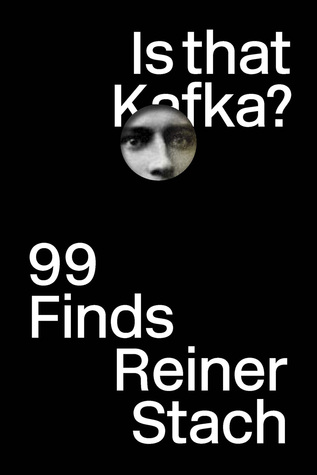
“That’s just who I am”: Is that Kafka? 99 Finds by Reiner Stach

“Now I’ve taken a closer look at my desk and realized that nothing good can be produced on it. There’s so much lying around here, it creates disorder without regularity, and with none of that agreeableness of disorderly things that otherwise makes every disorder bearable.”  (Find #29 Kafka’s Desk)

I have never understood those who feel inclined to disparage Franz Kafka. It should be sufficient to admit that a writer, especially one whose work has entertained and inspired so many and has clearly withstood the test of time, is simply not one who speaks to you. Admit, if you like, that you just don’t “get it”. But why, like Joseph Epstein in a 2013 Atlantic Monthly column, declare that Kaka’s apparent joyless, dark vision of the world reflects a personal defect that undermines his worth and proclaim: “Great writers are impressed by the mysteries of life; poor Franz Kafka was crushed by them.”

isthatkafkaOf course, there is no law that says that great literature and a delusory, ominous imagination are mutually exclusive, nor does a writer’s work necessarily represent their personal inclinations or moral character. Readers can, and have been, misled. And although Kafka, a German Jew living in Prague in the early part of the 20th century plagued by a persistent, crippling and ultimately fatal illness, would have more than ample reason to be every bit as morose as the tone of some of his most famous works suggest, Is That Kafka?, a collection of 99 fragments, letters, reminisces and insights offers an image of a man who was warm, friendly and well liked by those who knew him. He comes alive here as anything but a soul tortured and crushed by life.

Newly released from New Directions, this entertaining, illustrated compendium of facts and photographs, texts and testimonies represents a selection of fascinating finds uncovered by Reiner Stach in the course of researching his acclaimed three volume biography of Kafka. These are exactly the sort of glimpses into Kafka, the man, that rightfully inform a sensitive biographical study but can easily get lost in the retelling. An affectionately curated collection such as this volume offers a chance to slip back in time and glimpse the human, humorous man behind a body of work that has acquired mythic dimensions that would likely have embarrassed, if not horrified, its creator. Translated by Kurt Beals, this richly illustrated volume is ideal for anyone who has found themselves drawn to Kafka’s work, a book best enjoyed at leisure, a few entries at a time.

Divided into themes such as Idiosyncrasies, Reading and Writing, Illusions, Reflections and more; the entries are labelled and presented as exhibits, each offering an image, an excerpt, or an anecdote. We learn that Kafka was frightened of mice, fond of children, delighted in slapstick, and was skeptical towards doctors, medicines and vaccines – perhaps to the detriment of his own health. The floor plan of the apartment where he lived with his parents and sisters while writing The Metamorphosis is reproduced with the rooms marked as reassigned in the setting of his famous tale, while photographs of events at which Kafka is thought to have been present are scoured to pinpoint a tall, slim individual who might be the very man himself – the finds that give rise to the book’s title “Is that Kafka?” Some pieces will be known to even he most casual fan, such as the excerpts from two drafts of Kafka’s Will famously advising his friend Max Brod to collect and destroy all of his writings. Others may well surprise even the most dedicated enthusiast.

KafkaPersonally I was fascinated by Kafka’s reluctance to suffer doctors gladly (“Medicine knows only how to treat pain with pain, and then they say they have treated the disease,” he complained in a letter) and his attraction to what might be understood as alternative or holistic remedies. He was, like many with prolonged, serious illnesses, constantly on the alert for new treatment options, relocating as his symptoms demanded. He did seem to enjoy travel insofar as he was able to do so, fascinated by the experience of riding the Metro in Paris and even entertaining the creation of a series of guides for travelers on a budget. Women were drawn to him as evidenced by his numerous love affairs, his sisters adored him, and he was especially close to his youngest sister Ottla. Although he never did marry or have children of his own, he was deeply invested in his sisters’ children and appears to have taken great care selecting gifts and books for the youngsters he had a an opportunity to know.

However, one of my favourite finds is an extended account from a letter to Felice Bauer to whom he was twice engaged. Perhaps she had accused him of being too dour but he takes great pains to convince her that he is quite capable of falling into uncontrollable laughter by describing an incident during a ceremony at which he and a colleague are being honored with promotions at the Workers Accident Insurance Institute where he was employed. He starts to laugh during his colleague’s speech, a situation that is worsened when the president takes the stage:

“But as he began his speech–the sort of customary speech that you know long before you hear it, following the imperial formula and accompanied by heavy chest tones, altogether meaningless and unjustified–as my colleague cast sidelong glances my way, trying to warn me even as I fought for self-control, but in the process vividly reminding me of the pleasures of my earlier laughter–I couldn’t hold myself back. At first I only laughed at the harmless little jokes that the president scattered here and there; but whereas the law tells us to respond to these jokes only with a respectful smile, I was already letting out a full-throated laugh, I could see my colleagues give a start for fear of contagion, and I felt more sympathy for them than for myself, yet I didn’t try to turn away or cover my mouth with my hand, rather in my helplessness I kept staring into the president’s face, unable to turn away, probably feeling that it could only get worse, not better, and so it would be best to avoid any change at all.” (Find #51)

The portrait of Franz Kafka that takes shape over the course of these carefully edited and selected discoveries is one of an engaging, intelligent man – someone who could be shy and nervous at times, but hardly a man totally consumed and destroyed by hopelessness and despair. This makes the singular visions that haunt his work, that continue to speak to readers and are recognized all too frequently in a real world that turns, at times, on an axis that is rightly called Kafkaesque, even more profound because they did not define his life or relationships with others. He channeled them into his writing. Maybe that release even kept him sane.

Stach argues: look at his letters, his diaries, his sketches and unfinished drafts, and it becomes clear that Kafka’s whole life was literature. Thus to understand it fully, his stories and novels tell only part of the truth. He wrote, like all great writers, because he had to. As he says in the conclusion to the piece quoted at the outset of this review:

“Wretched, wretched, and yet well intended. It’s midnight after all, but considering that I’m very well rested, that can only serve as an excuse insofar as I wouldn’t have written anything at all during the day. The burning lightbulb, the quiet apartment, the darkness outside, the last waking moments entitle me to write, even if it’s the most wretched stuff. And I hastily make use of this right. That’s just who I am.”

Melancholy is what defines us: Quiet Flows the Una by Faruk Šehić

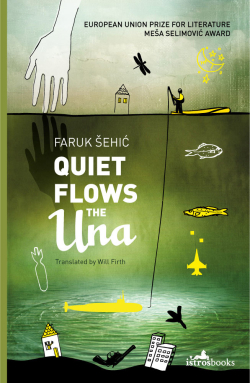
The Una is a 212 km long river that winds its way across Bosnia and Herzegovina, forming at times, a natural boundary between that country and Croatia. Bosnian writer Faruk Šehić’s EU Prize winning novel, Quiet Flows the Una, allows the passage of this river – gentle and violent as the seasons turn – to carry the narrative of his burdened protagonist as he seeks to heal his troubled past.

1024px-Una(Bih)

“Here at the beginning, it would make sense for me to go back to our origins: to the water we’re made of and the swirling currents of the underwater epic, where I’ll hearken to the anarchist trout and their fulsome chatter. You’ll find out later why the trout are anarchist. ‘Fulsome chatter’ is Rimbaud, I’ll be a hypnotized boat, and the rivers will carry me wherever I wish.”

UnaAlthough the term is frequently evoked, rightly or wrongly, this is a novel that can truly be called hypnotic in the absolute sense of the term. The narrator has surrendered to the direction and influence of a fakir during a sideshow hypnosis session, allowing his thoughts, reflections and memories to be pulled to the surface and recounted under the hypnotist’s guidance. Our Bosnian protagonist, Mustafa Husar, is a haunted man, his wounds run deep – the war and his role in it have sundered the continuity of his existence. To bridge the rift between the leisurely days of his youth and his new life amid the shattered remnants of a world where he is trying to find his adult footing, he knows that he must uncover and bring to light the dark memories that rest uneasily beneath the scars that mark his face and body. By revisiting the bleak, brutal years of the Balkan wars – facing the crimes he witnessed and those he perpetrated – he hopes to find some measure of redemption.

The progress of this novel is not chronological. The narrative, which reads like an extended prose poem, dips in and out of seasons; moves between scenes of idyllic childhood reverie, accounts of wartime brutality, and images of postwar destruction and loss. The river is a persistent presence, it carries the the story. Its relentless flow and the creatures, both natural and supernatural, that inhabit its green waters form the landscape and the mythology by which the young protagonist learns to understand himself. Along the way, his journey is accented with literary and pop culture references – he is a budding poet, he is an earthbound spaceman. And even when the war takes him away from his hometown and the river on which it is anchored, nature is never far from his imagination. Here, for example, his account captures the fragile coexistence of faint beauty and coarse ugliness:

“The sun shone through the leaves covered with transparent-green aphids. It rarely reached the ground, where brown leaves lay rotting in the mud and puddles. Imprints of soldiers’ boots plotted pastel labyrinths, with our lives and deaths in the centre. Our camp lay between wet, forested hills in two valleys connected by gravel paths like spilled intestines. . . . The wind brought whiffs of shit and piss from the latrines on the sides of the hills, where fat white maggots multiplied in the slush. Mosquitoes slept like brooches pinned to the boards of those outhouses, satiated with our blood. A cow with deformed hips hobbled around in the large clearing where we used to line up for the flag salute in the mornings. Its meat ended up in the goulash we had straight before one raid.”

Quiet Flows the Una is an unapologetic indictment against war. The complexities and atrocities that marked the violent dissolution of the former Yugoslavia are woven into the narrative, even if the narrator sometimes affects a stance of emotional remoteness when he recounts his own involvement and ambivalence. His emotions are messy and conflicted. In the end, war reduces action to a matter of survival. He is haunted by a phantom self, an evil force that lurks beneath his wounded skin that, when given voice, spews contempt for the past and a life now lying in ruin, leaving his host with a feeling he vividly describes “as if someone is tattooing you on the inside, on the walls of your internal organs.”

As he grapples with the demons he carries, our protagonist occasionally slips briefly in and out of his hypnotic trance. His persistent efforts to articulate the dark, chaotic details of his experiences during the years of the Balkan War are accompanied by dreamlike, fantastic threads that meander like tributaries off the main narrative flow and by the whimsical illustrations of Aleksandra Nina Knežević that offer a striking visual commentary. The result is an insistent, engaging tale – a celebration of the simple pleasures of childhood, a memorial to the many towns of the region that have been reduced to rubble twice over, and an intimate portrait of a war that pitted neighbour against neighbour, divided along ethnic and religious lines. If there is meaning to be found once the dust of the destroyed buildings has settled, if redemption is to be achieved, Mustafa realizes that it will be found through words:

“I secluded myself among books and other beloved fetishes, and dust collected on them to warn me of the fragility of matter. As soon as you make a world, a house or a hut of sticks, it is doomed to failure; it was already doomed back when it was a black and white sketch in your head. That’s why I began to believe in words. They cannot be destroyed. If you erase them, they come back. Words float in front of your eyes and won’t retreat from the front line. If you set fire to them, they will burn with even greater ardour in your memory, and no memory-wipers like alcohol or narcotics will get rid of them. Words are above destruction. If you erase them, they’re right back on the tip of your tongue again.”

Faruk Šehić was born in Bihac in 1970, and grew up in Bosanska Krupa, a town straddling the Una in what was, at the time, still part of the Socialist Federal Republic of Yugoslavia. He was studying veterinary medicine in Zagreb when war broke out in 1992. He voluntarily joined the army of Bosnia and Herzegovina in which he led a unit of 130 men. After the war, he turned his attention to the study of literature, publishing his first collection of poems in 2000. He has frequently drawn on his wartime experiences to inform his poetry and short fiction. Šehić lives and works in Sarajevo. His debut novel, Quiet Flows the Una (Knjiga o Uni), originally released in 2011, is now available from Istros Books in a crisp, lyrical translation by Will Firth.

An official launch featuring a discussion with the author will be held at the Headquarters of the European Bank for Reconstruction and Development in London, UK on March 31, 2016.

The unmaking of Man, the Maker: Homo Faber by Max Frisch

“We were leaving from La Guardia Airport New York, three hours late because of snow storms.”

Max Frisch’s 1957 novel Homo Faber begins with a matter of fact tone, an air of precision and efficiency. The narrator, Walter Faber, is a Swiss engineer traveling to Venezuela on behalf of UNESCO. Traveling is a way of life for him. But this trip, from the portentous delay on the runway onward, will mark the beginning of a systematic unraveling of a life bound to logic and technological certainty.

Faber’s account of his journey is spare and unromantic; he favours an exactness in his documentation, insisting that he is a practical, pragmatic man. He places, he tells us, no stock in “providence and fate”. Where others see chance, he relies on probability. Yet as a series of incidents appear to conspire against him, the laws and order of his heretofore measure of existence start to blur, to fall away in a stream of seemingly implausible circumstances. Even though he is obliged to admit that he has found himself caught in a flood of coincidences, he seems to hold to this as an excuse to absolve his part in the tragedy that ultimately unfolds. At least until that is no longer possible.

2016-03-09 18.31.00 During a brief stop over in Houston, Faber, feeling overwhelmingly ill and anxious, makes an attempt to miss his connection to Mexico City. He is located at the last moment and ushered aboard. Before long, the plane loses one and then two of its four engines and is forced to make an emergency landing in the desert where the passengers will remain for four days. During this time he will discover that his German seat mate is in fact the brother of his friend Joachim, a man he has not seen in 20 years. Even more surprising, he learns that this friend was, at one time married to Hanna, the woman he once loved.

This unexpected resurrection of ghosts from his past knocks Faber off balance but he still manages to describe the tedious and brutally hot days spent waiting for rescue in a manner so unaffected and matter-of-fact that some scenes take on an element of the absurd:

“Towards evening, just before dusk, the promised aircraft arrived, a sports plane; it circled around for a long time before it finally ventured to drop the parachute – three sacks and two boxes that had to be collected from a radius of three hundred yards – we were saved. CARTA BLANCA, CERVEZA MEXICANA, good beer, even Herbert, the German, had to admit as we stood around with our beer tins in the desert, a social gathering in brassières and underpants with another sunset, which I took on coloured film.”

Once they are finally on their way, Faber will opt to make a detour to seek out his friend and in the process learn of his unfortunate fate. After his intended stop in Venezuela he then returns home to New York where he finds that Ivy, his mistress, has ignored his attempt to break off their relationship. Dismayed at the prospect of a week in her company he makes the impulsive decision to travel to his next business engagement in Paris by ship, rather than plane. As the ship makes its way across the Atlantic he will meet and fall for the dynamic 20 year-old Sabeth, a young woman 30 years his junior. He has, he assures us repeatedly, no idea that she is his daughter.

“What difference does it make if I prove I had no idea, that I couldn’t possibly have known? I have destroyed the life of my child and I cannot make restitution. Why draw up a report? I wasn’t in love with the girl with the reddish ponytail, she attracted my attention, that was all, I couldn’t have suspected she was my own daughter, I didn’t even know I was a father. How does providence come into it? I wasn’t in love, on the contrary, she couldn’t have seemed more of a stranger once we got into conversation, and it was only through unlikely coincidence that we got into conversation at all, my daughter and I. We might just as well have passed one another by. What has providence to do with it? Everything might have turned out quite differently.”

Yet, from this point forward, he is on a collision course with a destiny of Oedipal and tragic dimensions.

With Walter Faber, Frisch has created a character who engenders empathy, in spite of the taboo circumstances in which he ultimately finds himself. He is defensive, he equivocates, and he expresses opinions that, especially to our more socially conscious ears, sound dated, racist, and chauvinistic. They are, of course, in keeping with a man of his times, especially one so inclined to black and white reasoning. However with respect to women, Frisch intentionally places very strong, independent women in his protagonist’s line of sight – and they are the women who hold the deepest attraction for him.

The prose is brilliantly tight and restrained. Repetition and rhythm combined with shifts forward and back in time create a remarkable tension. Faber, as a man making a report on these recent events in his life, a critical accounting as we learn at the end, hides from his narrative only that which is hidden to himself – the depth of his own personal, emotional engagement. The result is a book that resonates with the reader long after the final page is turned. As our hero realizes, far too late perhaps:

“To be eternal means to have existed.”

Originally published in English in 1959, Homo Faber: A Report by Max Frisch is translated by Michael Bullock.

2016-03-09 18.29.26As a postscript, it’s worth noting that this book has no North American rights and, in Canada at least it is as rare as hen’s teeth. I ordered a copy from the UK in early February which has yet to arrive. The ante was upped when I was asked to provide a short “trailer” about this book for the upcoming Spring issue of The Scofield Magazine (Max Frisch & Identity). I ordered a second back up copy for $1, also still missing in action, and placed an inter-library loan request for one of the two copies held in this entire province. Apparently that route has an expected 5-6 week turn around, so getting desperate I finally had to have a librarian from the central branch coax the U of Alberta to find it on their shelves and courier it (at my expense) so I could read it and get my requested piece off by the end of last week.

Ah, but some day I will own two copies of this book! Good thing it’s a keeper.

Thoughts on Among the Bieresch by Klaus Hoffer

Sometimes, when I am reading a book that I know I will want to write about, my thoughts about the work at hand take form in the process of reading in a manner that will later inform and direct my review. Other times, the route from reading to writing is more circuitous. I tend to take copious notes, underline and engage with my books, but, having said that, there is always the risk of failing to see the forest for the trees (or more explicitly, failing to appreciate the text for the words). Then, when I sit down to write, no matter how much I may love the work at hand, I look back over my notebook and face too many words to sift through.

BiereschAmong the Bieresch, the long-standing German cult classic by Austrian writer Klaus Hoffer is a book that threatened to undermine me, as a reviewer, with its words – words that are supercharged with meaning and reference to a broadly expanding literary and socio-economic landscape. The beauty of this book is that it works on so many levels and now, with its recent release from Seagull Books, in an animated translation by Isabel Fargo Cole, an English language audience has the opportunity to meet and explore the singular world of the Bieresch.

My review of Among the Bieresch has been published by 3:AM Magazine. I am most grateful to Tristan Foster for his wise and patient editorial guidance as I floundered, at times, in my own words.

Through my people you shall know me: I, City by Pavel Brycz

It could be argued that the celebrated cities of the world – Rome, Paris, Vienna and others – owe their mystique to words of the poets who have walked their streets. But what of the humble, disregarded metropolises, where are their voices to be found? For Czech writer Pavel Brycz, his own love/hate relationship with the city in which he grew up inspired him to wonder how he might access the beating heart of a place more associated with crime and unemployment than romance. He decided to give the voice to the city itself, allow the city to express its affection for the souls residing within its boundaries, and the result, I City, is a work of melancholy tenderness.

CityMost is a city with medieval roots in the northwest region of the Czech Republic. Situated in the middle of the lignite mining region of Northern Bohemia, this fated urban centre has, since the mid 20th century, been associated with industrial development, pollution, environmental degradation, and the social problems that often percolate in similar communities. During the 1960’s, under the Communist government of the day, the historical old town was demolished to allow greater access to the lignite deposits lying beneath its foundations. Remarkably to preserve the late Gothic Church of the Assumption of the Virgin Mary, dating from the 1500’s, the entire building was physically relocated 841 metres, a painstaking process involving 53 transport trucks set on special rails. Meanwhile, rows of uninspired housing constructed of prefabricated concrete panels were erected to house the relocated residents and the new workers who began to flood into the area. The personified city frames this event as indicative of its own nomadic spirit:

“Mine is a migratory soul. And one day you’ll wake up, and you’ll be somewhere totally different than you are today:
You’ve already experienced it once. Don’t you remember?
You looked on in astonishment as the church rode away.
Where does our faith ride? In which direction is our lack of faith headed?
To heaven or to hell, which is the destination of our future? Shhh…
Once before you watched the church slowly going, and the birds were off to the south.
You didn’t know what was behind it. Now, I’ll reveal it to you: I, city, unhappily, happy, hitched up invisible horses and dreamt of a promised land. And I dream about it still, incessantly.”

Through a series of “appearances” – short stories, fragments, prose poems – the city of Most tells its own history, through the stories of its children, young and old alike. And because it was leveled and rebuilt, these are timely, modern stories told with the magic of folktales. There are touching stories of love – kindled, sundered, missed by coincidence. There are the vagaries of youth – from the poetic angst of teenagers to the dreams of hockey glory in far off Canada. There are heartbreaking stories of the lost who return home, like that of the young woman who arrives on her parents’ doorstep after years of living rough in Prague and is welcomed without question; and of the lost who are lost for good, like the solemn lament for the young man whose mean life was cut short:

“He needed wings. He needed to wave at the world from high altitude. Now he’s gone. He sniffed Čikuli stain remover and flew off far away from me, though he lies dead on one of my streets. I, city, don’t know how to shed tears. Because of one boy, the rain won’t fall from the sky.”

The city, as narrator, loves its people, and, as such brings to life a place that is more than its industrial setting might reveal. Kafka, Pope John Paul II and other historical personages make fictional appearances, but it is the common person, the unadorned life, that gives the inanimate entity its pulse. Bohumil Hrabal, one of Brycz’s literary heroes comes to mind here, as his work likewise celebrated the lives of ordinary people.

For all the mixed emotions we often hold for the very places that shape us, Brycz has, in this unique novel, a created a city worth loving because it cares about its own, even if it is helpless to protect or change the fate of any one its citizens. It can only watch, listen and, at times, sit along side them:

“I am a city. I’m full of people. Nothing human is strange to me. I love people. But not because they are great.
I love them because they are small.
There are a lot of them, and they’re all lonesome.
Fettered, they yearn for freedom. They pray for immortality, and yet they don’t survive the touch of death, the Medusa jellyfish. They thought up money and they eternally lack it.
They explained their dreams and then they took sleeping pills.”

I, City, translated by Joshua Cohen and Markéta Hofmeisterová, is published by Twisted Spoon Press.

Weighing the power of words: The Crocodiles by Youssef Rakha

Lion that eats my mind now for a decade knowing only your hunger
Not the bliss of your satisfaction O roar of the Universe how am I chosen
In this life I have heard your promise I am ready to die I have served
Your starved and ancient Presence O Lord I wait in my room at your Mercy.
– Allen Ginsberg, The Lion for Real

A lion stalks the pages of Youssef Rakha’s intense, compelling novel, The Crocodiles. The fabled beast appears at the outset, waiting in Beat Poet Allen Ginsberg’s living room in the opening stanza of his magnificent poem, “The Lion for Real”, and wanders, in and out of the novel – a prose poem of simmering power – as it unwinds itself across 405 numbered paragraphs, tracing a torturous path from the first stirrings of poetic assurance within a trio of young men in the 1990s to the doomed protests of the Arab Spring.

crocodilesAs revolutionary fervor sweeps the the streets of Cairo in the first months of 2012, this ingenious work imagines an attempt to document the events that transformed the lives of the narrator and his two close friends, Paulo and Nayf, between 1997 and 2001 – more specifically, the years delineating the creation and eventual dissolution of The Crocodiles Group for Secret Poetry. The driving motivation is a desire to make sense of the forces that bound and ultimately destroyed the group, an attempt to place this “premature” endeavour within the broader context of the artistic and political currents of the Egyptian counterculture of the day, and draw connections, if any, to the events presently erupting in the streets. Obsessed with an apparent intersection of incidents and individuals, real and illusory, our narrator, the self-styled chronicler, now nearing 40, is intent on pulling together his recollections, to put ghosts to rest while, if possible, tapping into the emotional void he now carries inside.

His account begins with a startling image that has, over time, taken on mythological importance in his mind. As his poetic cohort, Nayf, celebrates his 21st birthday, just hours before birth of The Crocodiles is announced on June 20,1997; Radwa Adel, a poet and activist from an earlier generation, jumps to her death from the balcony of relative’s Cairo apartment. As the series of reflective paragraphs unfold, she and her life become a refrain, one of the pivot points around which the narrative turns, as it loops back and forth, weaving and winding its way through a tale of the disintegration of youthful intellectual ideals against a backdrop of sex, drugs, ill-fated love affairs, and translations and re-translations of the poets of the Beat Generation. At the heart of this relentlessly reflective exercise is the question of the power of literature to grasp at some truth, and its value, if any, in a world of in the throes of political upheaval.

In the years leading up to the official announcement of The Crocodiles Group, the core members are charged with reckless youthful enthusiasms. The fair-skinned photographer Paulo falls hopelessly in love with a manipulative married woman, handsome Nayf becomes enamoured with the poetry of Allen Ginsberg, and the narrator, known to his fellow Crocodiles by the appellation Gear Knob, is, if less ambitious in some ways, most dedicated to the spirit of Secret Poetry, and, as such, “most capable of following what was happening.”

Through the shifting lens of memory, infused with a bitter nostalgia, the narrator-poet, gathers his recollections, picking up threads with the benefit of hindsight or, as he describes it, his “hypothetical vantage point” – that perspective from which lines of confluence, elements of cause and effect, appear to crystallize. Looking back, he outlines probable connections but, rather than following them methodically from point A to point B, he brings up images, speculates, alludes to incidents and events, continually circling back in time to orchestrate a contextual panorama rich with writers, lovers, and friends. The fragmentary nature of the narrative creates a dreamy effect that can catch the reader off guard with moments of dark sensual ferocity and a tension that builds with increasing allusions to the event that will finally shatter the Crocodiles forever. And throughout it all, that lion – allegorical, symbolic and, in the end hauntingly, devastatingly real – is a persistent presence.

“It seems to me now – from my hypothetical vantage point in a future that dangled before us, unperceived, up until 2011 – that the lion was the supreme secret: the lion that appeared to Nayf. With a clarity unavailable at the time, it seems to me that its appearance was not the only mythical event to have occurred. And though it was for sure the only clearly supernatural event, I myself never for an instant doubted the reality of the lion. Just that, with distance, I’ve become convinced that it was not the only strange thing. Ghosts crouched atop our destinies all the while. At times they took the form of an idea or incident, just like the poem that comes from its author knows not where: vapors, risen from a vast number of life’s liquids mixed all together without rhyme or reason, and distilled into one rich drop.”

The Crocodiles is an exhortation on the power and legacy of words, the fragile volubility of meaning. As an extended prose poem it builds on repeated images, themes and refrains to create a rhythm and energy that is sustained and steadily heightened as it makes its way to an anguished, passionate close. Cairo – contemporary and vital, mystical and violent – comes alive on these pages even as a lion, the lion as revolution, roars in the streets. This a rewarding, remarkable read.

And, from my own western “hypothetical vantage point”, as Egyptian poets, writers and journalists increasingly fall under censorship, serious threat, charges and imprisonment, this novel seems ever more timely than when it was first published close on the heels of the Arab Spring. I can’t help wondering where the lion is, that is, the lion as God.

Youssef Rakha is a novelist, reporter, poet and photographer living in Cairo. He curates a website The Sultan’s Seal which features writing in both Arabic and English, along with photographic features. The Crocodiles is translated by Robin Moger and published by Seven Stories Press.

All the world’s a stage: On the Edge by Rafael Chirbes – My review for Numéro Cinq

My latest review for Numéro Cinq is now live. On the Edge by the late Rafael Chirbes has just been released in North America (New Directions) with a UK release forthcoming from Harvill Secker in July. This is an unforgiving portrait of Spain in the aftermath of the 2008 economic crisis, through the eyes of one man who has lost everything:

On-the-edge

For the Spanish writer, Rafael Chirbes, there was no room in the creative process for an aesthetic devoid of ethics. As a documentarian of his native country, from the post-war years through the transition to democracy in the 1970’s, and on into the opening decade of the 21st century, the late author offered a defiant chronicle of the point where social, economic, and political dynamics intersect with the harsh realities of the human condition. He argued that if the artistic endeavour aims to stand at that intersection, no perspective could remain neutral:

A point of view situates you somewhere, in a location where potentialities—ways of being—battle one another. When you write, or paint, as when you read or look at something, you have to be conscious of the fact that the author wants to invite you to look where he’s looking. Your mission is to protect yourself. Know that they want to seduce you.

This advice, from a brief interview segment in A Thousand Forests in One Acorn: An Anthology of Spanish-Language Fiction (Valerie Miles, Open Letter Books, 2014), should serve as fair warning before one enters into the emotional labyrinth that is Chirbes’ lauded ninth novel, On the Edge. Recently released by New Directions, in a measured yet lyrical translation by Margaret Jull Costa, this book will serve as highly anticipated introduction for English language readers, to a writer at the height of his powers: a writer who has chosen, in this instance, to stand on the rapidly shifting ground of a country in the throes of economic collapse.

Find the rest of the review here