Silence, silence! A Skeleton Plays Violin: Book Three of Our Trakl — Georg Trakl

Listen carefully, what do you see?

Clouds expose their unyielding breasts,
And bedecked by leaves and berries
You see grinning in the dark pines
A skeleton play violin.

When Book One of Our Trakl emerged two years ago, attentive readers and lovers of beautiful books sensed the beginning of a very special project dedicated to the work of the Austrian poet who continues to intrigue and enthrall us more than one hundred years after his untimely death in 1914, at the age of twenty-seven. Translator James Reidel was introduced to Georg Trakl in the late 1970s, when he was himself beginning to write poetry. Early on he was made aware of the difficulty and importance of translating Trakl’s work. As the years went on, he would make his way back to Trakl through reading, and translating, Thomas Bernhard, Ingeborg Bachman and Franz Werfel. In the meantime, new Trakl translations had emerged and so, with this series published by Seagull Books, he has added his own contribution—his own approach to this ever elusive and enigmatic writer.

The first two volumes of Our Trakl represent complete collections of poems, as selected and prepared by the poet: Poems (Gedichte, 1913) and Sebastian Dreaming (Sebastian im Traum, published posthumously in 1915). The third and final part, A Skeleton Plays Violin, gathers Trakl’s early and late published works, unpublished pieces, and significant variants and derivations, in yet another beautifully designed edition. Through the poems and prose collected here, presented chronologically and woven together with a sensitive biographical essay, we can trace his development as a poet, and see potential indications of where he might have gone had he survived the war and his own demons. With Poems and Sebastian Dreaming close at hand, reading can become a truly immersive experience.

Immediately one notices a strong youthful, romantic quality to Trakl’s earliest creative efforts which include prose, plays, and poetry. Religious and classical Greek themes recur, as do sombre images of suffering and neglect. Born in 1887, he began writing and publishing in his late teens when he was working as an apprentice pharmacist in Salzburg—a job that afforded him access to the drugs he had been sampling seriously from the age of fourteen and that would continue to play a significant role in his life. The intensity that is said to have marked his personal demeanour comes through in his early work, granting it an eerie maturity.

A move to Vienna to continue his pharmaceutical studies in 1908, led to periods of depression and anxiety. While his reputation as a poet grew, he was unsatisfied and critical of his work. His unhappiness in the capital, worsened in part by the complications of having his beloved sister present for a time, is reflected in his published poetry from this period. It is possible to feeling the aching in his words, as in the first two stanza of “Twilight”:

You are dishevelled, wracked by every pain
And shake from every jarring melody,
You a broken harp—a wretched heart,
From which blossom misery’s sick flowers.

Who bid your adversary, your killer,
The one who stole the last spark of your soul,
The way he degodded this barren world
Into a whore foul, sick, pale with decay!

In 1910, Trakl’s sister to whom he had always been close—perhaps too close—left Vienna to return to Salzburg. Two months later, in June, his father died, an event which had a major impact on the entire family, economically and functionally. However, his corpse and ghost would provide inspiration for his son’s poetry which, at this time, began to shake loose a nostalgia for the past, and the influence of the Symbolists and German Romantics, to find its own distinct voice. Sexual tension is increasingly sublimated and Trakl’s lines become “ever more discrete, simple and painterly.” His imagery also shifts:

Liminal beings begin to populate the poems—angels, demons, dead gods, nymphs, fawns and statues of dead nobles, hunted animals, skeletons, corpses and the ever-shape-shifting presence of the poet and the figure of the sister. And this figure may be more of a composite than we know, for Trakl adored his older sisters too.

A persistent presence in Trakl’s life and poetry is his younger sister Grete. The rumoured incestuous nature—or at least longings— that bound the two is a subject of measured discussion in the biographical segments, Reidel preferring, ultimately, to leave the poetry to speak for itself, as it will.

Toward the end of 1910, with a need to support himself, Trakl joined the army. He was assigned to the Garrison Hospital in Vienna where his commanding officer would later describe him as hardworking and friendly. Mid-1911 saw him return to Salzburg where he worked as a civilian pharmacist until the spring of 1912 when he was promoted to Garrison Hospital 10 in Innsbruck. Initially unimpressed with his new location in spite of its glorious forested and mountainous setting, he soon became involved with a new literary circle, and made connections that would prove critical to his career and lead to the publication of his first book. Thus he made peace with the surrounding landscape which also begins to make its way into his poetry. However, as his poetic soul flourishes, his work life suffers. Ultimately, unable to hold a job, he surrenders himself to writing, and the increasingly reckless life of a poet.

The extensive central sections of A Skeleton Plays Violin, which feature unpublished poems and versions of published pieces, offer a window into the refining of Trakl’s imagination and craft. We see him spinning, again and again, the phrases, imagery, and themes he wishes to perfect—the crimson mouth, the screaming faun, the turn of the season, the quality of light—and watch the tightening of his language as the final version is formed. Reidel’s selection covers a wide terrain, yet is careful to bring together those variants and completed works that highlight Trakl’s growth and maturity over time. It is impossible though, not to notice that his work only seems to grow darker.

For Trakl, periods of depression and panic attacks marked the second half of 1913. He continued to consume alcohol and drugs, cocaine and morphine, at a remarkable rate. He saw himself as a doomed soul, even as his star was steadily rising in German poetry. He held to his writing to see him through that winter. He continued to attract impressive admirers, including Ludwig Wittgenstein, and plans were made for a second volume of poetry. However, with the assassination of Archduke Ferdinand in June of 1914, Trakl’s world was upended. With the advent of what would become the First World War, he was assigned as a medic to a frontline infantry unit heading east. The conditions soon took a toll on his mental and emotional health. He was hospitalized in Krakow following a suicide threat, and was found, in his room, on November 3, dead from an apparent cocaine overdose.

His later published poems show that a deep melancholy had long settled into his work. “Evening Reel,” for instance, published in October of 1913 opens with playful natural imagery, albeit a little grim:

Fields of asters brown and blue,
Children play there by the grave vaults,
In the open skies of evening,
Blown into the clear skies,
Seagulls hover silver-grey.
Horns call in the flood meadow.

To end, even gloomier, three stanzas later:

The candles’ glow weaves dreamlike,
Paints this youthful flesh decaying,
Cling-clang! Hear in the fog,
Ring in time with the violins,
And bones dance along naked,
Long does the moon peer inside.

Trakl’s final published poems are stormy and dramatic. The wistful beauty is gone; the imagery is now steeped with darkness—war is at hand. “The Despair” captures the scene:

Then the black horses leap
On a pasture in fog.
You soldiers!
From the hill where the sun wheels dying
The laughing blood rushes
Amid oaks
Speechless! O the grumbling despair
Of the army, a steel helmet
Dropped clattering from a crimson brow.

Until the end, Trakl held fast to poetry. It has been suggested that the news that the publication of Sebastian Dreaming would have to be put off until the war ended played a pivotal role in his final desperation. We will never know exactly what finally tipped the scales for a man whose scales tipped so heavily to dark side so often in his short life. Nonetheless, his last creative efforts form a rousing crescendo to the third and closing volume of this ambitious poetic project.

Wisely and appropriately, the final words are perhaps best left to Trakl himself, from “Revelation and Perdition,” the grim, haunting prose piece which closes out this powerful testament to a troubled poet, lost too soon:

When I walked into the garden in twilight, and the black figure of evil had yielded to me, the hyacinthine stillness of the night surrounded me; and I sailed in a crescent-shaped boat across the stagnant pond and a sweet peace touched me on the brow turned to stone; and when I died in witness, fear and that pain deepest inside me died; and the blue shadow of the boy rose lightning the darkness, a soft singing; on lunar wings, above the greening treetops, crystal cliffs, rose the white face of the sister.

A Skeleton Plays Violin: The Early, Unpublished and Last Works of Georg Trakl is translated by James Reidel and published by Seagull Books.

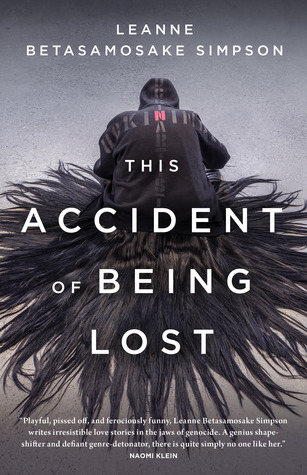
Listening to Indigenous Voices (part 2), Canada: This Accident of Being Lost by Leanne Betasamosake Simpson

Okay, so maybe I was looking the other way and missed the sheer force of poetic nature that is Leanne Betasamosake Simpson, but after reading her latest collection of stories and songs, This Accident of Being Lost, I can only sit here and think: Where have I been? To balance my review of the Australian anthology, This country anytime anywhere, I was hungry for something vital and exciting from my own country—not that I didn’t think I wouldn’t find it from an Indigenous writer here, but I didn’t know where to look. I wanted something different than the fine, but more conventional narrative novels I’ve read in the past. I wanted something passionate, something that would challenge, discomfit.

And here it is.

Simpson is an acclaimed writer, musician, academic, and activist of Michi Saagiig Nishnaabeg ancestry. She draws on the storytelling traditions of her people, merging them with elements of contemporary realism, speculative fiction, and spoken-word poetry. In turns introspective and political, her work is raw and uncompromising—shifting shape and stretching time—to bring the harsh realities of decolonization into focus through poems and stories that are vibrant, unexpected, and sometimes brutally funny.

Simpson’s writing erupts with an immediacy and intimacy that catches the reader off guard. The world she opens up is one where the uneasy ground between a self-centred, ego-driven contemporary culture, one with roots deep in the motivation and mentality of the colonial mindset that helped shape North American culture, meets an Indigenous worldview that values the dynamic interrelationships between family, community, ancestors, nature and the environment. This is the tension at the heart of the decolonial process. It is, at many levels, still a matter of paying lip-service, at best, to the legacy of the injustices endured by our Indigenous peoples. I may like to imagine myself “concerned” and “compassionate,” but reconciliation is meaningless unless otherwise unheard voices are truly heard.

This collection of short, often fragmented pieces does not endeavour to soft-peddle a message for easy consumption. Honest, frequently conflicted emotions—anger and bitterness, confusion and self-doubt, sadness and injury—come through; as does a deeply abiding respect and concern for the environment. As a storyteller and poet, Simpson’s power lies in the lyrical beauty of her language, and the vulnerability and sarcastic humour of her narrators. This is work that is at once engaging, entertaining, and thought-provoking.

An underlying theme in This Accident of Being Lost, is the reality of being an Indigenous woman today and the disorientation that can create. The protagonists are searching for connection, to others and to their heritage. The poetic pieces tend to feel more political in tone, either as direct protest songs, or in a more plaintive evocation of loss and pain such as “travel to me now” which begins:

the wind has worn my edges
the cold pricked away brittle skin
bones lying here in front of you
lost before they can begin

there’s red on the ice of the lake
there’s bruises that never heal
there’s past collapsing on present
she took things i didn’t know you could steal

As much as I enjoyed the poetry in this collection, it was the prose pieces, at least on this first reading, that made me fall in love (yes, love), with Simpson’s writing. She weaves a selection of original, often fragmentary, stories, that drop the reader into the imaginations, concerns, and anxieties of her narrators in a way that is abrupt and intimate.

We see attempts to reclaim Indigenous cultural practices in altered spaces. Stories delivered with pointed sarcasm. In “Plight,” a group of women engage in the guerilla-styled tapping of maple syrup from the trees in a Toronto park (albeit marking the trees before the leaves fall in the autumn to be certain they have the right ones), while in “Circles Upon Circles,” a family tries to revive the practice of harvesting wild rice from a lake now bordered with summer cottages. In both cases, white residents have to be appeased: “Listen to their paternalistic bullshit and feedback…. Let them bask in the plight of the Native people so they can feel self-righteous.” It is an emotionally exhausting process.

There are also a number of pieces that play with the way modern technology impacts communication. Online obsessions mediate relationships built around social media—intensifying insecurities and fragilities when texts don’t arrive, chat messages are ignored, and “real life” encounters are anticipated. But that is not where electronic interaction ends. The spirit world is also online. In the wonderful story “Big Water,” the narrator is engaged in text communication with Niibish, the surprisingly security-concerned spirit of Lake Ontario (Chi’Niibish to the Nishnaabeg people) as the lake waters rise, threatening the city of Toronto with extensive flooding. The lake is sending a message: “We’re in a mid-life crisis, out of shape and overcompensating because it’s too late to change any of that. Beaver’s doing push-ups on the soggy grass. Bear’s doing power squats and bragging about his seven-minute workout app and the option of having a hippie with a whistle to call out the next exercise.” It’s very funny, and yet it’s not. The message is serious.

Some of the narrators are delightfully sharp-witted, navigating settings—a firearms class or a daughter’s dance course—where they manage to hold their own. But it is in the more open, fluid pieces that explore the strained, breath- and bone-deep emotion of the search for connectedness with lovers, with the land, and even within the vagaries of modern society, that Simpson’s work speaks to me and to the “otherness” I struggle with. Her prose is exquisite, she handles longing and sadness so beautifully. In “Brown Against Blue,” a woman is heading out on a hunting trip with a man she loves, in the way that love is complicated and fragile. She doesn’t want to ruin the experience but fears she will. Her partner asks why things can’t just be “good” and she tells herself that one reason is because she is always “straddling the eroding edge of pathos.” But that’s not quite right:

I never teeter on the edge of things. I live there. I cheat on myself with Sad and she never abandons me. In a way that will sound awful to you, but not to me, she is the only one that loves me in the way I need to be loved. My constant lover, Sad, as muted, dysmorphic entrapment.

Another answer is that he lives in his own muted, dysmorphic entrapment that is slightly different than mine.

Songs and stories together, there are thirty pieces in this slim collection. They invite, and reward, re-reading. Leanne Betasamosake Simpson began collecting traditional narratives and essays in her earlier publications, before releasing her first collection of fiction, Islands of Decolonial Love, in 2013. That was where I had originally wanted to start, but I could not find it locally. I now want to explore her earlier writing, her music, and see what other writers and artists this leads me to.

This Accident of Being Lost is published by House of Anansi Press.

Listening to Indigenous Voices (part 1), Australia: This country anytime anywhere

Over the past decade, I’d like to think that my reading has broadened in scope. I used to scour and select books from mainstream literary reviews, major award longlists, and end-of-year round-ups. Reading works in translation, turning to smaller independent publishers, seeking more experimental writing, and allowing myself to follow my own idiosyncratic fancies have all served to expand the borders of my attentions (and the limits of my bookshelf real estate). But every now and then it doesn’t hurt to take stock and think: What are the gaps I might want to fill? What voices am I not listening to?

This year, when my friend Lisa of ANZ LitLovers announced her annual Indigenous Literature Week, I immediately thought of a book I picked up in Alice Springs this May: This country anytime anywhere: An Anthology of New Indigenous Writing from the Northern Territory. However, if I was going to read and write about an Australian publication, I promised myself that I would balance my efforts with the work of an Indigenous writer from Canada. That review will follow in a few days.

Published in 2010, This country anytime anywhere is a joint project of the NT Writer’s Centre and IAD Press. The initial phase involved workshops and consultations with over 100 Indigenous people—some established writers, but the majority beginners interested in telling their stories. The resulting collection of poems and stories is diverse, featuring writers who range from teenagers to elders and hail from urban, rural, and remote backgrounds. Critically, eight Indigenous languages and English are represented. There are several bilingual offerings and two submissions for which no comfortable English language translator could be found. This is an indication of the precarious state of some of these Indigenous languages.

The range of offerings in this slender volume is impressive—from family histories, to traditional folktales, to poetic expressions of anger, and narrative songs and stories. The variety of styles and subject matter is impressive. Many evoke a simple, unadorned voice. Magical, or more accurately, spiritual elements are often woven into the fabric of mundane, everyday life, speaking to the connection to a heritage and land that extends back centuries, millennia. But, as one might expect, these poems and stories echo sadness, loss and grief. Fallout from the Stolen Generation, the years (1910-1970) when many children were removed from their families, is still very present. The ravages of alcohol, mental illness, injury, and suicide are not ignored. But there are also stories of hope and survival.

One of the most widely known contributors, writer and poet Ali Cobby Eckermann, is represented with two bilingual (English/Pitjantjatjara) poems and two stories. “Spirit Gate,” which she describes as a “satirical work of fiction based on hope,” imagines the sudden disappearance of all the Aboriginal people from Alice Springs. The main character, Trevor, is awakened in his Melbourne home by the disembodied voice of his grandfather. The Song he hears is a summoning and he promptly leaves for Alice. Light-skinned, he arrives without attracting attention, to a community distraught by the disappearances. At a café, he listens to the clientele—“artists, social and youth workers, hippie-types and government ‘yuppie experts’”—debating the strange circumstances:

Snippets of conversation confirmed that all Aboriginal people had vacated the township region about a week ago. There had been no warning of the exile, no specific signs to the exodus, and most people had failed to notice the blackfellas had gone for several days. People had just assumed they’d gone for another funeral, or collecting royalty money somewhere.

Trevor learns that the non-Indigenous population feels “jilted and hurt.” Business and the tourist trade are threatened. Unruly behaviour on the streets and drinking on public lawns indicate that the Dry Town rules are being violated. It is a world turned upside down. Though the tone is tongue-in-cheek, Cobby Eckermann is taking a pointed stab at the industries that benefit from the Aborginal presence. In the end, the protagonist goes out to join his own people who have gathered beyond a spirit “Gate” to be renewed and regain the dignity they have lost.

Having just been out and spent time in Alice Springs and beyond (observing the town as an outsider but having an opportunity to engage with those who live and work there), this and a couple of the other pieces set in the community had an extra resonance. The desert imagery was also especially poignant for me—even after a short stay, the land gets into your system. The natural world is a common theme in much the poetry in this collection. For example, “Red Desert” by Maureen Nampijinpa O’Keefe opens:

See the thorny lizard walking along the red desert dunes.
See the snake slithering across the red desert sand.
See how high the eagle flies, hovering above the desert.

The spinifex glistens golden in the sun,
as the desert winds blow softly amongst the ghost gums.
See the leaves swaying to the desert wind.
Listen to the leaves rustle as the squawking of the white cuckatoos
breaks the desert’s silence.

This collection offers an interesting insight into contemporary writing from the Northern Territory. The poetry tends to have a plaintive, political undertone, while the prose pieces showcase the legacy of the long storytelling traditions of the Indigenous cultures. However, these are very much stories of the 21st century. And they are often brutal. Of note is “The Tree” (Gloria Daylight Corliss), a short piece that shifts between a third person narrative recounting a man’s memories of playing, camping and fishing beneath a large banyan tree, and a first person tale of personal loss and environmental degradation. What begins with a boy playing on the branches of the tree ends with the grown man hanging from the same tree. The urban-set “The Irony of that…” (Jessie Bonson) is a darkly playful tale of a teen-aged would-be writer who creates horrifying scenarios only to routinely erase them: “Edit – Select All – Delete.” But woven into the tapestry of her fantastic scenes are the very real domestic terrors that haunt her and her mother.

For the participants in this project, writing is healing. Since I traveled to central Australia to take part in a fundraising event in support of an Indigenous Women’s Council, this collection (which happens to feature female writers by a ratio of about 3 to 1) is a fitting complement to that incredible experience.

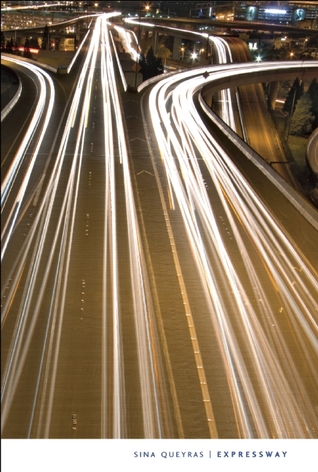
Multi-lane manifesto: Expressway by Sina Queyras

My hometown does not do expressways very well. In places where it would be obvious to have them, we are late to the game. And each one is a crap shoot, even if you know it well. The first time you have to exit and cross three lanes of traffic in very short order, your head swivelled 180 degrees, just to travel from the expressway to the road you were trying to access you have to wonder: did anyone try this out before they opened it to the public?

When I was still in university I had a summer job where I sat in a building the size of an outhouse, just off the Trans-Canada highway and tourists, just entering the city limits, could pull over and ask for directions. This was long before the era of google maps, GPS, even cell phones. We’re talking printed maps and a highlighter pen. I did my best to give instructions but, to be honest, there was—and still is—so little consistency I was often at a loss to say more than: Watch for the signs. I developed a theory that year that I still hold to. I reasoned that every civil engineering student at risk of a failing grade was given a chance to redeem themselves by designing a single interchange along one of the major thoroughfares. And that’s why no two are alike and some simply defy the imagination.

Canadian poet Sina Queyras completed her 2009 collection Expressways while here at the University of Calgary on a residency. I’m curious as to whether our ad hoc roadway system coloured this poetic critique of the social and ecological impact of the spreading network of asphalt arteries and veins that criss-cross our nations.  Her poems speak to the memory of a romanticized landscape of the past on a collision course with an increasingly isolated, technologically driven future. The opening piece “Solitary” sets the tone, with the call to consider what is a risk with the continued push to interconnect places, at the cost of connection to the land and to one another. The final stanzas read:

Wagon train, trail of tears, what aggregate composition,
What filleted history, what strata, what subplates,
What tectonic metaphor, what recoil, what never

Having to deal with the revulsion of self, only
The joy of forward, the joy of onward, then endless fuel:
The circles, the ramps, the fast lanes, the clover leaf,

Perspective of elevation, the royalty of those views,
The Schuylkill, the Hudson, the Niagara, the skylines,
The people in their houses, passing women, men

Dressing, men unearthing, smoke pluming, what
Future? What the apple tree remembered? Not
Even the sound of fruit. If a body is no longer a body,

Where is memory? If a text is no longer a text,
Where is body? If a city is no longer a city, what road?
If future no longer has future, where does it look?

She snaps her cellphone closed: no one. Alone.
The century is elsewhere. She turns her back.
Swallows her words. She will do anything for home.

As ever, I am not an effective critic of poetry. I like it, I read it. Sometimes, but entirely by accident, I write it. But I do know when poet’s work works for me. This collection is a strong, cohesive, and passionate manifesto evoking the poem as a means to challenge the ethics of the expressway—in its concrete and abstract context. A call to recognize what is at stake:

This poem resembles urban sprawl. This poem resembles the freedom to charge a fee. The fee occurs in the gaps. It is an event. It is not without precedent. It is a moment in which you pay money. It is a tribute to freedom of choice.
(from “Acceptable Dissociations”)

At times Queyras echoes of the Romantic poets, even borrows their words. The text of Dorothy Wordsworth’s Grasmere Journals provides the material for “Lines Written Many Miles from Grasmere” which, falling mid-way through the collection, casts a pastoral mood, a look back to the dream of a simpler time, closer to nature. But it is an ideal. The Industrial Revolution was, by 1800, set the groundwork for the technological and economic developments that would ultimately allow for the building of major roadways, and the vehicles to fill them. Other pieces are firmly bound to the present, most notably “Crash” which is assembled from fragments salvaged from google searches. Others stare directly at the future—here darkly, there with a vision of reclamation.

Expressway works as a rhythmic, lyrical cautionary tale. A call to undo harm. But, roads seem to be growing wider, interchanges multiplying. Especially here in North America where spaces are wide and the car is still king. That is, Queyras argues no reason not to strain to hear above the din of the traffic.

I am weary. I walk and walk and meanwhile the expressway hums . . .

What for weary? We all hum.

I am weary. I have so little hope.

Weary, maybe. But, no hope? For that there is never an appropriate time.

Sina Queyras lives in Montreal. Last fall I had the opportunity to hear her read from her latest work. This reflection/review was written in recognition of National Poetry Month in Canada and the US.

Expressway is published by Coach House Books.

Looking back in anger: A personal reflection on World Bipolar Day

You might as well haul up
This wave’s green peak on wire
To prevent fall, or anchor the fluent air
In quartz, as crack your skull to keep
These two most perishable lovers from the touch
That will kindle angels’ envy, scorch and drop
Their fond hearts charred as any match.

Seek no stony camera-eye to fix
The passing dazzle of each face
In black and white, or put on ice
Mouth’s instant flare for future looks;
Stars shoot their petals, and suns run to seed,
However you may sweat to hold such darling wrecks
Hived like honey in your head.

—from Sylvia Plath, “Epitaph for Flower and Fire”

I have known mania, and the imagery in this poem sparks with an intensity that excites and disturbs. When I encounter the words of one of the many poets known (or thought) to share (or have shared) the same affliction, I often find an undercurrent that causes me to flinch for just a second. Not that it diminishes the beauty or power of their words in any way—it is rather an echo in the dark, a faint recognition flashing by.

Image copyright Joseph Schreiber, 2012

It is World Bipolar Day, and this is the first time I have stopped to recognize the fact. I have spoken in, and around, my own bipolar diagnosis, but I have never addressed it formally in my writing. Even now I find myself uncomfortable discussing it. On the one hand, I am fortunate. I respond well to medication. I am, to use that distasteful term, “high-functioning.” But I do harbor a deep anger toward this condition that was part of my life many years before I finally careened through a brutal month of manic psychosis and found myself committed, and ultimately diagnosed, at the age of 36. I was, in classic bipolar fashion, the last person to suspect that I had a mental illness. Even though I, and those around me, knew something was terribly wrong, the stigma and lack of understanding around mood disorders—not to mention the radically impaired insight the sufferer has when they are ill—stands as a barrier to timely intervention. And then there is the matter of actually accessing care. One almost has to crash completely—by which time it can be too late.

Between my first manic episode in 1997 and the second in 2014, I experienced more than sixteen years of stability. I transitioned, became a single male parent, built a career out of nothing, and eventually became the Program Manager at an agency dedicated to working with survivors of acquired brain injury. I loved my job. Looking back, I can now see how the last few years of that period were marked by an increasing tendency toward hypomania. With my psychiatrist’s support I cut my medication back. And then things started to fall apart at work—things beyond my control, but it fell to me to try to pull things together. Then I started to fall apart at work, until I spiraled into full blown mania. Not psychotic, but it matters little. The damage was done.

The agency I worked for, dedicated as they are to supporting clients with disabilities including co-morbid mental illnesses, treated me with distrust bordering on contempt. My only contact with them has been conducted through a workplace advocate and my insurance worker. When return to work was discussed they refused to consider any possibility that I could work there again. Almost three years later with long term disability finally at an end, they still have my personal belongings.

Nine years of employment and dedication to that job now stand as a gaping hole in my life—a life already filled with gaping holes. And that is one of the reasons I hesitate to talk about mental illness (although I have never hidden my diagnosis). What can I say? Bipolar is not my identity any more than transgender is. Both fuck up your life. Leave wounds that do not heal. Find you fumbling through mid-life with little to show for your years but a lot of things you can’t talk about. And periods of time you cannot even remember.

So this is why I find it hard to write about my experience with mental illness. There was a time, following my diagnosis, that I devoured everything I could find, just as, a year later I hunted for books on gender identity. Two pieces of a puzzle I had inhabited—the periodic mood swings and the persistent, life-long feeling that I was not the female person everyone else knew me to be—had finally fallen into place. I had two, if you wish to be specific, explanations that come neatly labelled and defined within the covers of the DSM. It was, for a while, a source of relief.

Today I rarely read any literature that deals with mental illness or gender. But I am aware, more than ever, of being doubly stigmatized. And, most painfully, within the spaces where you would expect acceptance—in the human services profession and within the queer community. Thus the anger.

And what is this anger? Grief. The deep griefs I carry, layered now with more recent bereavements. It has become, for me, an existential bitterness that plagues me, an inauthenticity that defines the way I intersect with the world.

The legacy of mental illness is this: after diagnosis I was advised not to dwell on the disease, not to talk to others with bipolar; I was not deemed “sick” enough to warrant outpatient support or psychiatric follow up. I was left, like so many others, to flounder in the dark. It would take seventeen years and a spectacular career-destroying crash before I was able to access proper psychiatric and psychological support. I am still lucky. I am stabilized. And the forced detour into what may become an early semi-retirement has afforded me a space to write.

Now I need to find a way to write my way through this weight of grief. And begin to heal.

I’ll leave the last word to Sylvia Plath, with the final (fifth) stanza of the poem quoted above:

Dawn snuffs out star’s spent wick,
Even as love’s dear fools cry evergreen,
And a languor of wax congeals the vein
No matter how fiercely lit; staunch contracts break
And recoil in the altering light: the radiant limb
Blows ash in each lover’s eye; the ardent look
Blackens flesh to bone and devours them.

—You can find out more about the International Bipolar Foundation here, and a prose poem I wrote to honour a dear friend who lost her desperate and brave battle to bipolar last year can be found here.

For World Poetry Day, excerpts from a few books on my bedside table

In honour of World Poetry Day (which at the moment, in my time zone, is still happening), I thought I would take a moment to look at some of the poetry currently on my bedside table. I sometimes write about the poetry I read, but do not feel equipped to formally review it. That doesn’t keep me from enjoying it, of course.

I read a lot of poetry in translation. It can, perhaps, be a challenge to capture the spirit of a poem in another language, but that’s not a reason to deny its worth. Poetry opens up worlds of experience in a way prose typically cannot. And when competing (or rather, complementary) translations emerge, I like to think of that as an opportunity to re-experience a piece of literature reflected through a somewhat different prism.

I have a fondness for collections, complete or selected, that allow me to sample a poet’s work across their career, and delight in the magic of opening a book randomly, finding words that strike home. The following pieces are taken from the works I have been spending time with lately:

Water binds me to your name.
Nothings is left of me except you.
Nothing is left of you except me—
a stranger caressing the thighs of a stranger.
O stranger, what will we do with what is left
of the stillness and the brief sleep between two myths?
Nothing carries us: neither path nor home.
Was this the same path from the beginning?
Or did our dreams find a Mongolian horse on a hill
and exchange us for him?
What shall we do?
What shall we do without exile?

—Mahmoud Darwish, from “Who Am I, without Exile?”, translated from Arabic by Sinan Antoon, collected in Unfortunately, it was Paradise: Selected Poems (University of California Press)

* * *

I’m a Child of this Century

I’m a child of this dreary century
a child who never grew up
Doubts that set my tongue on fire
burned my wings
I learned to walk
then I unlearned it
I grew weary of oases
and camels eager for ruins
My head turned to the East
I lie in the middle of the road
And wait for the caravan of the mad

—Abdellatif Laâbi, from Beyond the Barbed Wire: Selected Poems, translated from French by André Naffi-Sahely (Caranet Press)

* * *

Every day wakes up to some abuse
in my monologue is
embedded the legend of my sorrow,
with thousand year-old grief
I prevailed over my dirty life,
but not over the rationality of the winter cold . . .

In taprooms you rip off
the tattered shreds of your tragedy,
no forest, no merit, no archangel . . .

Above your poetry a swarm of birds mows
mows and mows a life imploring . . .
nothing for anyone
in the proximity of this dream,
nothing for worldly lovers . . .

Fruit of rottenness,
a wicked sun . . .
Temple ruins, broken pieces gathering
on the rediscovered shore . . .
in gloomy courtyards books opening . . .
Verses on abandoned walls . . .

. . . not the perfect one,
not the dead man, who drove you into the cities . . .
Trust in your song.
You plough the earth with your fragments,
cold begot you . . .
You, left behind by your creators . . .

—Thomas Bernhard, from Collected Poems, translated from German by James Reidel (forthcoming from Seagull Books)

Another winter solstice is upon us: 2016 – The year in review

Winter solstice. The longest night of the year.

Moving forward, the days grow steadily longer and, in less than two weeks, we will leave a dark, disturbing year behind us.

But it would be reckless to imagine that 2017 will be brighter. However, with luck, we can be forewarned, forearmed, and determined not to relax our guard. We can stand together against the rising tides of hatred, and remember what is truly at stake.

11229294674_e5844929df_z1

Since I started this blog two and a half years ago, winter solstice has become my annual check-in point. Last December, I reflected on the key elements of a year that began with a move to writing seriously about books and culminated with my first review for Numéro Cinq. Against that trajectory, I wrote about my trip to South Africa, and the pulmonary embolism and cardiac arrest that followed within a few weeks of my return. I imagined that the eventful year I had experienced would not likely, for better or worse, be exceeded this year.

Cue 2016.

This has been a year of heartache, anger, and dismay. Around the world and close to home. I watched the violence in Syria, the outcome of the Brexit vote, and the spectacle of the American election, among the other tragic and unexpected events that have unfolded. And as economic uncertainty and anxiety has grown in my own hometown—a city that lives and dies with the price of oil—the crime and homicide rate has risen sharply this year. It does not feel like the same community any more.

Then there is the lengthy roll call of the writers, artists, and performers who have left us. But to be honest, I cannot say that I have felt these losses as acutely as many others… I’ve been distracted by the immediate, personal losses that marked this year. My mother, my father, and one of my closest friends, all gone within the span of two months. And my grief—that most fundamental human emotion—is complicated, inarticulate, and wearing.

It will take time.

11592010455_89917d80e3_z1

But, 2016 has also been a time of amazing growth and opportunity for me as a writer. I don’t know how often I resolved, with the dawn of a new year that: This year I will write. Last December, with that first critical review under my belt, I could not have imagined that I would have, in addition to regular contributions to Numéro Cinq, published reviews at 3:AM, Minor Literature[s], The Quarterly Conversation, and The Rusty Toque. And I would not have dared to dream that I would see my essays and prose pieces published on line and in print, or that I would be invited to join the editorial team of The Scofield. As 2017 approaches, I have a handful of reviews scheduled and several prose projects underway. I’m also feeling inspired to return to photography after a lengthy hiatus, and to see how I can incorporate photos into my written work.

I have much to look forward to, in spite of, or rather, against the new darkness that threatens.

Art and literature are more important than ever at times like this.

So, this seems to be an appropriate time to look back over this year’s reading, and highlight the books that stand out for me.

I’ve read about 50 books to date, a little more than half of what I read in 2015. I don’t even want to hazard a guess as to how many books I bought, received as review copies, or brought home from the library. I feel, as usual, like I fell short of my intentions. However, I have to remember that I was writing, working on critical reviews, and dealing with considerable life stresses over the past twelve months.

More than ever before, I read like a writer this year. That is, I was especially attuned to voice, structure and approach to storytelling. Consequently, the books that made my year-end list tend to reflect this focus. Of course, any “best-of list” leaves out many excellent books. I’ve managed a baker’s dozen here, and it’s probably a reflection of the increased number of off-blog reviews I wrote that this year’s list is predominately composed of new releases. I was surprised to see that once I’d made my selection.

In reverse chronological order, my top reads of 2016 include the following:

Story of Love in Solitude by Roger Lewinter (France), translated by Rachel Careau
I will write about this collection of three short stories once I have completed The Attraction of Things. My verdict is still out on that title, but this tiny book is simply wonderful.

The Inevitable Gift Shop by Will Eaves (UK)
Fragmentary, cross genre writing that works fascinates me. Billed as a “memoir by other means”, it is Eaves’ unique tone that makes this blend of memoir, literary criticism, and poetry so compelling. His thoughtful reflections on reading and writing made this an ideal meditation to turn to after a year of reading critically and exploring my own literary voice.

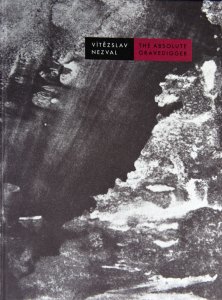
gravediggerThe Absolute Gravedigger by Vítěslav Nezval (Czech Republic), translated by Stephan Delbos & Tereza Novická)
I have found myself turning to poetry more and more as the world seems increasingly unstable and, well, surreal. This newly translated collection of poetry by one of the best known Czech Surrealists should be essential reading at this time. Originally published in 1937, the darkness he could see on the horizon are all too familiar once again.

The Country Road by Regina Ullmann (Swiss), translated by Kurt Beals
I read this collection of short stories when I was in a very low mood. But in the spare, sombre prose of these tales I found a beauty that, rather than deepening my depression, brought strange comfort. Admired, in her lifetime, by the likes of Rilke, Mann, and Musil, Ullmann’s work is mostly forgotten today. This volume, released in English translation in 2015, is a rare treasure—one that I encountered at just the right moment.

panorama-coverPanorama by Dušan Šarotar (Slovenia), translated by Rawley Grau
For me, as a reader and a writer, one of the most important books I read this year is this literary meditation on migration, language, landscape, and loss. This novel finally broke through my own stubborn determination to hold to a sharp delineation between fiction and nonfiction, and has made me re-evaluate potential approaches to themes I wish to examine. What Šarotar achieves here with his own unique take on what might be deemed a “Sebaldian” approach, is the creation of an atmospheric, captivating, and intelligent work.

The Passion According to G.H. by Clarice Lispector (Brazil), translated by Idra Novey
Oh wow! In a way, I am glad I didn’t read Lispector before writing and publishing my essay “Your Body Will Betray You,” because she is exploring the process of coming into being so beautifully that I might not have been able to write at all after reading this. Employing an unconventional narrative, Lispector’s G.H. experiences a vivid, metaphysical crisis triggered by the sight of a cockroach. The result is a remarkable, thoroughly engaging read. I have at least three more of her books waiting for the new year.

Proxies by Brian Blanchfield (US)
I bought a number of essay collections this year and currently have several on the go. This collection impressed me not only for the way the essays were composed—written without consulting outside sources—but for some of the ideas explored, and for reinforcing the value and possibilities of the personal essay/memoir form. I also greatly appreciated his guiding caveat: Permitting Shame, Error and Guilt, Myself the Single Source.

SergioSergio Y. by Alexandre Vidal Porto (Brazil), translated by Alex Ladd
This book is significant and important for dealing with gender identity and transition in a sensitive and original way. I am, as a transgender person, critical of much of what passes as literary writing on this subject. This is a most impressive work with a startling and unique approach. As I noted in my review, Sergio Y. is novel that approaches the transgender experience from the inside and the outside, allowing for the comfort with names and pronouns to vary, over time and from person to person, reflecting the complexities of relationships that others, even loving family members, can have when an accepted and assumed identity is challenged. That is the book’s greatest strength.

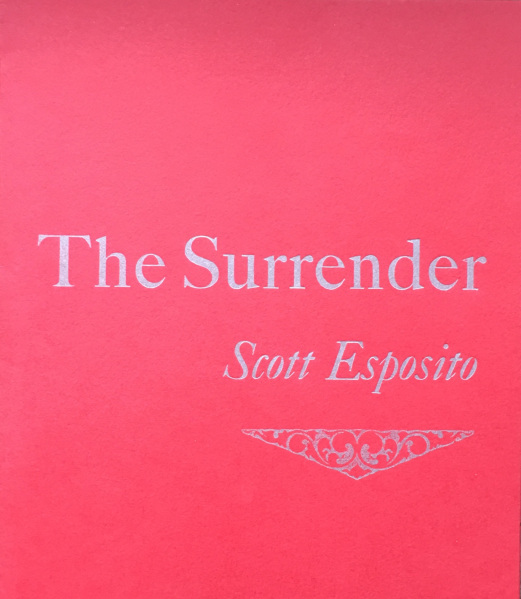
surrThe Surrender by Scott Esposito (US)
This book was on my radar from the moment I first heard of it. Again, despite my typical gender related skepticism, I was drawn to this transgender-themed memoir/film critique/literary diary. I wanted to know how Scott would present his story—one that is not commonly heard. Although his journey is very different than mine, we share a certain sensibility. This is a brave and most wonderful book by a man who has long been one of my heroes. He has since become one of the many literary friends I have come to know and cherish this year.

Layout 1

Atlas of an Anxious Man by Christoph Ransmayr (Austria), translated by Simon Pare
This book was a total surprise when it arrived courtesy of the good people at Seagull Books. This most unusual travelogue, a series of brief “encounters” across the globe, contains some of the most stunning descriptive language I have ever read. Each episode begins with the words “I saw…” and ends with a wise, evocative observation. From the North Pole, to South America, from deep inside the mountains of New Zealand, to a parking lot in San Diego, this is a journey that will not be easily forgotten. Highly recommended.

Quiet Creature on the Corner by João Gilberto Noll (Brazil), translated by Adam Morris
My third Brazilian book on this list is this enigmatic novella that led to one of the most entertaining literary discussions of the year. What is it about? Well that is the challenge. I had to read it three times before I could begin to get a handle on it. The narrator, a young man who finds himself in a strange situation that is rapidly growing stranger, is, in his oddly passive tone, almost more disturbing than whatever might be happening. Opaque and surreal, this book gets under your skin.

The Crocodiles by Youssef Rakha (Egypt), translated by Robin Moger
This novel still holds fast in my memory although I read it back in February. It is, as I described it in my review, a prose poem of simmering power, unwinding across 405 numbered paragraphs, tracing a torturous path from the first stirrings of poetic assurance within a trio of young men in the 1990s to the doomed protests of the Arab Spring. It is a dark, intense exploration of youthful political idealism, that builds on repeated images, themes and refrains to create a compelling narrative force as it moves toward its stunning conclusion. Again, this is another work that is increasingly relevant in today’s world.

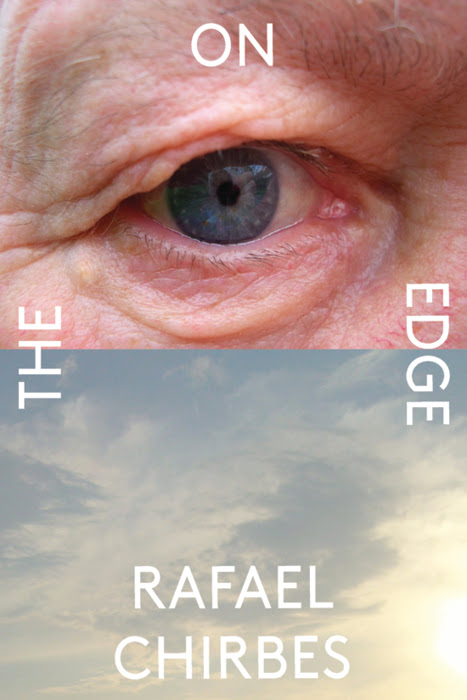
On-the-edgeOn the Edge by Rafael Chirbes (Spain), translated by Margaret Jull Costa
Finally, the very first book I read in 2016 is probably my favourite book of the year. I wrote about this novel at length for Numéro Cinq and I regret that it has not generated more discussion. In what is essentially an extended monologue with brief cameos from other characters, Chirbes creates a memorable, engaging, and tragic character in seventy-year-old Esteban, a man who has lost absolutely everything in the economic collapse of 2008.  Thoroughly human in his wisdom, his resolve, his shortcomings, and his despair; this is a powerful and important book that deals frankly with many of the critical issues—including migration, xenophobia, and economic decline—that are more vital than ever as we step into 2017.

Beginning to write through grief: A reflection & link to my poem at the Sultan’s Seal

I am, as many know, dealing with a multi-layered, complex grief—my mother, my father, and one of my closest friends—all lost within the last six months. When my parents died in July, I entertained an immediate grief project, my own mourning diary, an echo of Roland Barthes. I started with a subdued passion, an ache as intellectual as emotional. In truth, my emotions were, I can now see, constrained and intellectualized.

I was numb.

Others reached out to me in those early weeks, sharing their own stories. The terrain of grief is rocky, I was warned. The journey long. The pain uneven. But, although I am in mid-life, a loss of this nature—doubled and complicated—was something I had never faced.

Then my friend took her own life sometime on September 1st. Even though I knew, in my heart, that such an event was almost inevitable, the pain and anger tore me apart. I knew she had tried every available option she could afford to fight an erratic and devastating variation of bipolar disorder, and I fully respected her decision and her right to make it. But suddenly my world was a darker, lonelier place.

And she had lived half a world away.

Again, the first thing I thought of was to write. This time, my distance from her demanded and informed my need to write—and I knew exactly what I wanted to do. I wanted to gather words and sentences from her writing and our communications, and together with some photographs from my trip to visit her in South Africa, create an elegy.

An offering.beach

Drawing inspiration from a prose piece by Breyten Breytenbach, and the sound driven writings of my friend, Daniela Cascella, I set to work. And I knew exactly where I wanted to publish this memorial if I was able to realize my vision—The Sultan’s Seal, a most wonderful space created and curated by Egyptian writer, Youssef Rakha.

The result, “And I will Tell You Something,” was published this past weekend. Three hundred words, five images and almost three months shaping, reshaping, listening and accepting the silence that emerged. This is perhaps the most emotionally demanding piece I have ever written. Yet, now five days after my words were finally set free in the world, I feel a tremendous sense of rightness. An element of peace. I still ache, but, with this prose poem, I feel I can begin to heal.

And I hope that others may find something in it too.

Cold comfort: The Absolute Gravedigger by Vítěslav Nezval

That terrible fist swings the bell
The blasphemer
Is boxing
Hell-bent on knocking out the eye of heaven
That cynically floods desolate white-washed houses
With radial light
With an iron resolution to act
While the knuckles crack
This fist delivers bruises shaped like swallow nests to roofs
In the name of vengeance
(from “The Blacksmith”)

Upon my first read-through of this newly translated collection of poetry by prominent Czech Surrealist, Vítěslav Nezval, I was struck by an eerie sense that the poet was speaking to the present moment. Published in 1937, the poems gathered in The Absolute Gravedigger form a gallery of darkening, disturbing, and frequently grotesque images that capture the mood of the shifting landscape of the years leading up to the Second World War. Some are small, contained, and often bucolic scenes. But others depict expansive nightmarish vignettes of obsession, violence, corruption and decay—evoking imagery worthy of Bruegel, Arcimboldo or Bosch—and closely aligned with the spirit and sentiment associated with the more widely known French Surrealism.

Returning for a second reading, in the immediate aftermath of the election of Donald Trump, I cannot help but wonder how quickly the lessons of the last century have been forgotten—and shudder at the thought of what potentially lies ahead.

gravediggerBorn in 1900, Nezval began writing and publishing poetry in the 1920s, but by the early ’30s, he and a number of his fellow Czech writers and artists had fallen under the influence of the French avant-garde. He first met André Breton in Paris in 1933, and the following year he helped found the Surrealist Group of Czechoslovakia, the first such group to receive the Breton seal of approval, so to speak, outside of France. Yet, even though they made important contributions to the movement, the Czech Surrealists have remained relatively obscure, a situation further exacerbated by the artistic restrictions applied under the years of Communist occupation. The release of The Absolute Gravedigger from Twisted Spoon Press should help to ameliorate that situation, and spark further interest in the work of Nezval and his contemporaries.

In his poetry, as evidenced in this collection, Nezval was a stylist who drew widely from the Surrealist playbook. In an interview in The Bohemist, translators Stephan Delbos and Tereza Novická describe their decision to work together as follows:

Nezval was prolific and incredibly gifted, so the book is over 200 pages, and contains a range of styles from traditional rhymed quatrains to freewheeling litanies and dense, paranoiac prose. A challenge to translate, to say the least, so approaching it as a team seemed like a good idea.

The diversity of the poems in this collection is difficult to capture in the space of a short review. Suffice to say that they range from the relatively conventional to the decidedly bizarre. For example, “The Windmill” is a section comprised of a series of rural compositions featuring farm and small town scenes. However, the imagery is vivid, sometimes surprising in its unexpected shifts, and an unmistakable darkness seems to wait just over the horizon, as demonstrated in this portion of “The Reapers”:

The birds have flown off
Everything on the verge of tears
Huge carts haul off bales of straw
A cock crows
And wheels squeak
The landscape changes
Brown pitchers peak from under gladiolas
And confusion seized the horses
The mills clatter
From afar
As a signal
Like an imminent declaration of war
And suddenly the whole place is holiday empty

Similar bucolic settings return in the later “Shadowplays” section which features tightly rhyming, orderly quatrains which, to preserve the feel of the originals, the translators have chosen to carry into English with as much of the spirit and musicality intact as possible. Because these pieces stand out so sharply against the more open and, at times, unrestrained quality of the rest of the book, this seems to be a wise choice. Coming on the heels of the intense, fantastic and disturbing imagery of the poems in the “The Absolute Gravedigger” section— the title poem, “The Fetishist,” The Blacksmith,” “Milking,” and “The Plowman”—the sudden appearance of a traditional formality catches the reader off guard.

2016-10-27-16-12-40The author has also included several pieces of his own artwork and the poems they inspired framed by two prose pieces in which he talks about the process of decalomania (the creation of abstract images by laying a thick layer of paint on a surface and pressing a piece of paper or canvas against it) and its influence on, not only the directly referenced pieces but other key poems in the book. Nezval explains that the process gave rise to prototypes of “the hybrid creatures” that people his most surreal poems.

There is harsh brutality that runs through the most fantastic and, to put it simply, “surreal” of these Surrealist poems. The characters that are brought to life, resemble the denizens of an adult Grimm’s fairy tale—grotesquely featured, obscenely sexualized, dirty, decaying—and trapped, sentenced to their miserable fates. But the piece that is most profoundly political, and devastatingly timely once again is the final poem, “The Iberian Fly.” Here on the wings and body of a gigantic fly making its way through the skies, a terrifying spectacle is playing out, summoning imagery reaching back to the Spanish Inquisition, but zeroing in on the rising waves of fascist ideology sweeping Europe. Nezval’s original version was apparently more specific, naming names, but increasing censorship stayed his hand before the final version went to print. All the same, the message is clear:

[The Iberian fly’s] proboscis
Was gradually
Immersed
Into several drops of blood
Squeezed out
Of different races
And subjected these drops
To analytical chicanery
Whose fraudulent result manifested
As diagrams
Once these drops
Of blood
Hardened into a crust resembling sealing wax

As the drop
Of drying Aryan blood
Turned into a faux jewel
Spectrally depicting
Absolute nobility
In the form of Ionic columns
Under which reflected in miniature
The beguiling image of bathing women
On the sparkling left wing of the Iberian fly
The other drops
Drying
Transformed
Under the touch of the dirty finger
Of the little man with the Chaplin mustache
Into this pictorial relief

The relief that is depicted in the following stanzas incorporates African and Asian features—a chilling echo of the type of racist graffiti, propaganda and attacks that we have seen post Brexit and, now Trump. And these patterns know no borders. In Canada, where I live, the past week has seen a sharp upturn in the same trends. The immergence of this translation, at this time, is uncanny, there is a new chill to these words, almost eighty years after they were first published.

Plus ça change.

The Absolute Gravedigger is published, by Prague-based Twisted Spoon Press, in a handsome hardcover edition featuring Nezval’s own decalomania artwork on the cover.

In uncertain terms – Proxies: Essays Near Knowing by Brian Blanchfield

This is a book braver than I am.

I am not even certain where to begin to unravel my reaction to reading this collection of essays. Until recently I was resisting the dawning recognition that what I needed to say—the subjects I wanted to explore—would be best met through essay/memoir writing. Or to put it another way, I realized that I have neither the patience nor aptitude for fiction. But what of the essay and its personalized variant, the memoir? I wasn’t even sure I liked the form. So I have learned to approach reading essays with an eye to writing. I read not simply for the joy of encountering well-crafted, intellectually and emotionally engaging prose. A work that excites me, in style, content, or both, invariably sends me to my current notebook where I spin, inward and outward, a cascade of thoughts, images, and ideas… fuel for my own scribblings.

Proxies, by the American poet and essayist Brian Blanchfield, is one such work.

proxiesSubtitled Essays Near Knowing, the pieces that comprise this collection were composed under a particular creative constraint. Blanchfield decided to refrain from seeking any guidance from authoritative sources during the writing process. Thus these essays were written unplugged, if you like. Of course, adopting a learned tone without fact checking (and we all do it, especially in conversation), necessitates allowing for a margin of error. Consequently, pages of “Corrections” addressing many of the resultant inaccuracies and inconsistencies, close out the book. However, Blanchfield also gives himself a secondary challenge in this project:

Having determined that this would be unresearched essaying, analytic but nonacademic, I was almost immediately drawn to a second constraint—or better, invitation: to stay with the subject until it gives onto an area of personal uneasiness, a site of vulnerability, and keep unpacking from there.

As he hits these points of reflection that effectively bend the essay toward memoir, there is, he admits, a certain fumbling allowed, stimulating a transition that, in its sometimes sudden movement, creates an energy that is dynamic, emotionally raw. What begins as a focused consideration of a topic, a concept, or theme, seems to turn personal in a heartbeat, and works its way through to a resolution, however ambivalent that may be. No grand narrative arcs here, only furtive digging through the fragmented moments of life, each essay preceded by the same caveat: Permitting Shame, Error and Guilt, Myself the Single Source.

Blanchfield’s starting points are varied. As a poet, it is not surprising that many start with language and meaning: “On Propositionizing”, “On Confoundedness”, “On Abstraction”, “On the Ingénue”, “On the Near Term”. Some have more tangible contexts at the outset: “On Minutes”, “On the Leave” (as in the game of pool), “On Dossiers”. He often draws on specific images from his own life to set the stage, but those musings typically lead him much closer to the bone as the essay takes shape. Relationships with his parents, the tenuousness of his chosen profession, and his sexuality—his queerness of being—are common themes that regularly surface as he ventures into those areas of private anxiety and susceptibility.

As personal as he gets, and he can lay himself bare, these essays are rich with fascinating intellectual ideas, with references to philosophers, psychologists and, naturally, poets. Some essays are simple and relatively self-contained, while others seem to mutate, in the reading, as the author reaches for a subject that expands, like a pool of liquid, resisting the ordered shape one might anticipate. At best, at their most intriguing, these are essays meant to be experienced as much as read.

Take, for the sake of illustration, “On Minutes.” This piece begins, objectively, with a discussion of meeting minutes, the recorded, dispassionate account of the details of a meeting—no place for embellishment, dramatic flair. Expanding on this basic subject, Blanchfield recounts his own experience working as an executive assistant at a performing arts organization in Tuscon at a time when he and his partner were struggling to make ends meet on one salary. It was a job borne of necessity not desire to say the least. He slides from the drudgery of typing up minutes into memories of accompanying his mother to her office job on weekends as a young child, occupying himself creating stories while she worked, reading them aloud to her co-workers at the end of the day. These childhood creations are then parlayed into a link to the remembrance of his return to his mother’s home for his stepfather’s funeral. From there he passes into a reflection on “Paraphrase”, a poem by Hart Crane that, for Blanchfield, “gets the sudden, lights-out fact of death right.” At this point, what has become a quick dip into the territory of memoir, turns again and, as it shifts, the language of the essay slides into richly poetic territory with a meditation on the closing stanza of Crane’s poem in which the white head of the deceased is observed as a “paraphrase” among the roses on the wallpaper:

The word choice is inexplicable, querulous, oblique, just right. A paraphrase among the rows of roses—a relief receding there—renders their locked pattern a kind of language, but what can it say?; and the head in the place where the living being lay is nominated as this titular hermeneutic tool, useless as such without its objective genitive of. It cannot be said what original locution this paraphrase summarizes. A case, I think, for Crane, of Flesh Made Word again. A reversion. Revelation withdrawn.

The essay winds down with thoughts of Crane who, fittingly, worked an office typist; and the speculation that the imagined head on the bed might have been that of his lover’s father. Some strange, small circle, elegantly wrought from very humble beginnings. The essays in this book move like this, through memories, reflections, ideas and poetic contemplation.

One of the most profoundly moving pieces in the collection arises from Blanchfield’s attempt to address his relationship with his mother—once loving, now long strained by her inability to accept his sexuality. “On Peripersonal Space” begins with the notion that an individual’s concept of the self includes all the space within reach around his or her body. He hears a radio discussion with the authors of a book on the subject, a mother and son team, a collaboration that, within his own scope of experience, is unimaginable. Yet he finds it difficult to approach his desired subject, as much he feels it is essential that he make the attempt. This is a challenge I understand—writing about those with whom our relationships are close but complicated, is an uneasy task:

Since I began this project, I have tried a number of times to write about my mother and me, and have abandoned a few attempts already. If these essays are, in part, inroads to disinhibited autobiography, as I have come to claim they are, and demand they be, I feel the imperative to address the subject above all others. But ours is a relationship so deep and damaged and (still) so tenuous it has defied emergence.

So how to start? He takes the peripersonal space as a cue, beginning with an account of the closely bound emotional intimacy and playful games that he, as an only child, and his then divorced mother used to enjoy when he was young. His description and the psychological implications of their connection is startlingly frank and triggers a concern that I also share with respect to writing about close family members:

It is more than embarrassing to relate all of this. I come up against the inappropriateness of, for one thing, sharing what is only half mine to share. But is that partiality, expressed by that proportion—half of one—ethical, or healthy for a grown man? Roland Barthes has famously said that to be a writer is, essentially, to violate a primal taboo, to “play with the mother’s body.” No, I love Barthes and he is a signal influence on my conception of this very book; but the remark presumes a class and level of literacy I was not born into.

The resulting essay achieves a surrogate catharsis of sorts, but not between the author and his mother. The roots of their (as yet) unresolved divide lie deep in the American south where Blanchfield was raised in a Primitive Baptist family. He had to leave to live openly as a gay man, moving to New York City in his early twenties. The years that have passed, and the miles that have separated them have not healed the rift. Honestly sharing the pain of rejection, the frustration at his mother’s inability to come to any terms of respectful disapproval, and the sting of hearing her say “I shouldn’t have to choose between my God and my son” leaves a deep sorrow that lingers on the page.

Essayists are no strangers to the practice of blending intellectual and literary observations with autobiographical reflections. What Blanchfield seems to approach here is a means of allowing himself, as a writer, to push his way inward, passing from the factual (more or less), the abstract or the sentimental into the territory of the immediate, the raw, and the real. He touches nerves (his own) but avoids falling into two traps that can snare those who venture toward autobiographical writing: the artificial narrative and the open air confessional. At the most personal end of the spectrum, what he is sharing are unguarded moments of naked emotional vulnerability, decidedly queer, but recognizable and resonant to anyone who has lived, loved, won and lost.

For prospective or developing essayists, Proxies is, as a project, idiosyncratic, bold and illuminating. Barthes’ essays, as he admits, are an ever present influence and Blanchfield demonstrates a similar natural ease with the form. To be able to unfold ideas and follow their course without fact-checking is an interesting exercise in itself, useful at the very least in drafting an essay in its early stages. Lifewriting in this format offers ample reward for readers and some significant points of interest for those of us who struggle to achieve the balance between a story we want to explore and the open wounds that may not have quite healed—the truths that give a personal essay its soul.

For me, this book generated a series of provocations, flash points for my own writing, current and potential. I loved the way Blanchfield focuses in on ideas and uses them as pivot points to make his way from concept to experience and back to ideas. It took me, I confess, over a month to read this collection of twenty-four short essays. But in that time I lost both of my parents, the outcome of two intersecting, but unrelated series of events. I sat long at the bedsides of both my mother and father, witness to their final days. I want to attempt to capture the immediate experience, in its unfiltered rawness, before my memories begin to become distorted by time. I gleaned some possibilities, some instances of inspiration, some ideas to bring into my own project which will be, in its own way, necessarily imprecise, emotionally liable, and queer.

And that, to borrow from the title of the final essay, will suffice for the near term.

Proxies: Essays Near Knowing is published by Nightboat Books.