Another winter solstice is upon us: 2016 – The year in review

Winter solstice. The longest night of the year.

Moving forward, the days grow steadily longer and, in less than two weeks, we will leave a dark, disturbing year behind us.

But it would be reckless to imagine that 2017 will be brighter. However, with luck, we can be forewarned, forearmed, and determined not to relax our guard. We can stand together against the rising tides of hatred, and remember what is truly at stake.

11229294674_e5844929df_z1

Since I started this blog two and a half years ago, winter solstice has become my annual check-in point. Last December, I reflected on the key elements of a year that began with a move to writing seriously about books and culminated with my first review for Numéro Cinq. Against that trajectory, I wrote about my trip to South Africa, and the pulmonary embolism and cardiac arrest that followed within a few weeks of my return. I imagined that the eventful year I had experienced would not likely, for better or worse, be exceeded this year.

Cue 2016.

This has been a year of heartache, anger, and dismay. Around the world and close to home. I watched the violence in Syria, the outcome of the Brexit vote, and the spectacle of the American election, among the other tragic and unexpected events that have unfolded. And as economic uncertainty and anxiety has grown in my own hometown—a city that lives and dies with the price of oil—the crime and homicide rate has risen sharply this year. It does not feel like the same community any more.

Then there is the lengthy roll call of the writers, artists, and performers who have left us. But to be honest, I cannot say that I have felt these losses as acutely as many others… I’ve been distracted by the immediate, personal losses that marked this year. My mother, my father, and one of my closest friends, all gone within the span of two months. And my grief—that most fundamental human emotion—is complicated, inarticulate, and wearing.

It will take time.
11592010455_89917d80e3_z1

But, 2016 has also been a time of amazing growth and opportunity for me as a writer. I don’t know how often I resolved, with the dawn of a new year that: This year I will write. Last December, with that first critical review under my belt, I could not have imagined that I would have, in addition to regular contributions to Numéro Cinq, published reviews at 3:AM, Minor Literature[s], The Quarterly Conversation, and The Rusty Toque. And I would not have dared to dream that I would see my essays and prose pieces published on line and in print, or that I would be invited to join the editorial team of The Scofield. As 2017 approaches, I have a handful of reviews scheduled and several prose projects underway. I’m also feeling inspired to return to photography after a lengthy hiatus, and to see how I can incorporate photos into my written work.

I have much to look forward to, in spite of, or rather, against the new darkness that threatens.

Art and literature are more important than ever at times like this.

So, this seems to be an appropriate time to look back over this year’s reading, and highlight the books that stand out for me.

I’ve read about 50 books to date, a little more than half of what I read in 2015. I don’t even want to hazard a guess as to how many books I bought, received as review copies, or brought home from the library. I feel, as usual, like I fell short of my intentions. However, I have to remember that I was writing, working on critical reviews, and dealing with considerable life stresses over the past twelve months.

More than ever before, I read like a writer this year. That is, I was especially attuned to voice, structure and approach to storytelling. Consequently, the books that made my year-end list tend to reflect this focus. Of course, any “best-of list” leaves out many excellent books. I’ve managed a baker’s dozen here, and it’s probably a reflection of the increased number of off-blog reviews I wrote that this year’s list is predominately composed of new releases. I was surprised to see that once I’d made my selection.

In reverse chronological order, my top reads of 2016 include the following:

Story of Love in Solitude by Roger Lewinter (France), translated by Rachel Careau
I will write about this collection of three short stories once I have completed The Attraction of Things. My verdict is still out on that title, but this tiny book is simply wonderful.

The Inevitable Gift Shop by Will Eaves (UK)
Fragmentary, cross genre writing that works fascinates me. Billed as a “memoir by other means”, it is Eaves’ unique tone that makes this blend of memoir, literary criticism, and poetry so compelling. His thoughtful reflections on reading and writing made this an ideal meditation to turn to after a year of reading critically and exploring my own literary voice.
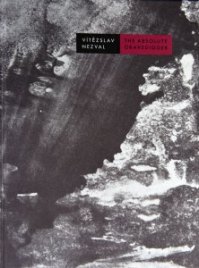
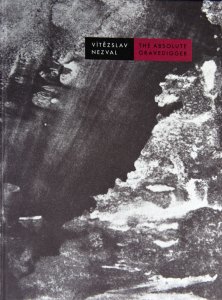
gravediggerThe Absolute Gravedigger by Vítěslav Nezval (Czech Republic), translated by Stephan Delbos & Tereza Novická)
I have found myself turning to poetry more and more as the world seems increasingly unstable and, well, surreal. This newly translated collection of poetry by one of the best known Czech Surrealists should be essential reading at this time. Originally published in 1937, the darkness he could see on the horizon are all too familiar once again.

The Country Road by Regina Ullmann (Swiss), translated by Kurt Beals
I read this collection of short stories when I was in a very low mood. But in the spare, sombre prose of these tales I found a beauty that, rather than deepening my depression, brought strange comfort. Admired, in her lifetime, by the likes of Rilke, Mann, and Musil, Ullmann’s work is mostly forgotten today. This volume, released in English translation in 2015, is a rare treasure—one that I encountered at just the right moment.
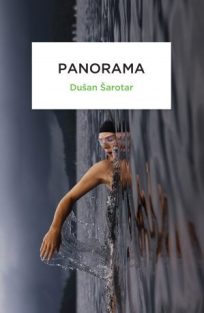
panorama-coverPanorama by Dušan Šarotar (Slovenia), translated by Rawley Grau
For me, as a reader and a writer, one of the most important books I read this year is this literary meditation on migration, language, landscape, and loss. This novel finally broke through my own stubborn determination to hold to a sharp delineation between fiction and nonfiction, and has made me re-evaluate potential approaches to themes I wish to examine. What Šarotar achieves here with his own unique take on what might be deemed a “Sebaldian” approach, is the creation of an atmospheric, captivating, and intelligent work.

The Passion According to G.H. by Clarice Lispector (Brazil), translated by Idra Novey
Oh wow! In a way, I am glad I didn’t read Lispector before writing and publishing my essay “Your Body Will Betray You,” because she is exploring the process of coming into being so beautifully that I might not have been able to write at all after reading this. Employing an unconventional narrative, Lispector’s G.H. experiences a vivid, metaphysical crisis triggered by the sight of a cockroach. The result is a remarkable, thoroughly engaging read. I have at least three more of her books waiting for the new year.

Proxies by Brian Blanchfield (US)
I bought a number of essay collections this year and currently have several on the go. This collection impressed me not only for the way the essays were composed—written without consulting outside sources—but for some of the ideas explored, and for reinforcing the value and possibilities of the personal essay/memoir form. I also greatly appreciated his guiding caveat: Permitting Shame, Error and Guilt, Myself the Single Source.
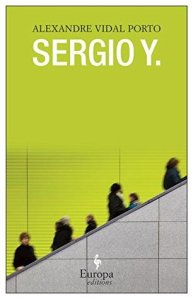
SergioSergio Y. by Alexandre Vidal Porto (Brazil), translated by Alex Ladd
This book is significant and important for dealing with gender identity and transition in a sensitive and original way. I am, as a transgender person, critical of much of what passes as literary writing on this subject. This is a most impressive work with a startling and unique approach. As I noted in my review, Sergio Y. is novel that approaches the transgender experience from the inside and the outside, allowing for the comfort with names and pronouns to vary, over time and from person to person, reflecting the complexities of relationships that others, even loving family members, can have when an accepted and assumed identity is challenged. That is the book’s greatest strength.
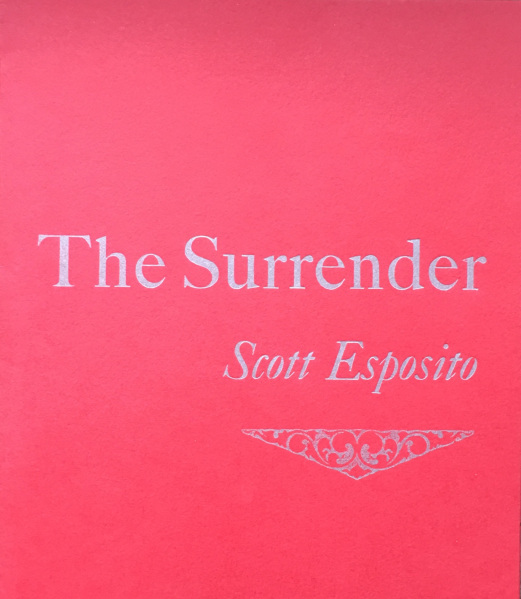
surrThe Surrender by Scott Esposito (US)
This book was on my radar from the moment I first heard of it. Again, despite my typical gender related skepticism, I was drawn to this transgender-themed memoir/film critique/literary diary. I wanted to know how Scott would present his story—one that is not commonly heard. Although his journey is very different than mine, we share a certain sensibility. This is a brave and most wonderful book by a man who has long been one of my heroes. He has since become one of the many literary friends I have come to know and cherish this year.
Layout 1

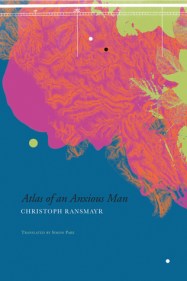
Atlas of an Anxious Man by Christoph Ransmayr (Austria), translated by Simon Pare
This book was a total surprise when it arrived courtesy of the good people at Seagull Books. This most unusual travelogue, a series of brief “encounters” across the globe, contains some of the most stunning descriptive language I have ever read. Each episode begins with the words “I saw…” and ends with a wise, evocative observation. From the North Pole, to South America, from deep inside the mountains of New Zealand, to a parking lot in San Diego, this is a journey that will not be easily forgotten. Highly recommended.

Quiet Creature on the Corner by João Gilberto Noll (Brazil), translated by Adam Morris
My third Brazilian book on this list is this enigmatic novella that led to one of the most entertaining literary discussions of the year. What is it about? Well that is the challenge. I had to read it three times before I could begin to get a handle on it. The narrator, a young man who finds himself in a strange situation that is rapidly growing stranger, is, in his oddly passive tone, almost more disturbing than whatever might be happening. Opaque and surreal, this book gets under your skin.

The Crocodiles by Youssef Rakha (Egypt), translated by Robin Moger
This novel still holds fast in my memory although I read it back in February. It is, as I described it in my review, a prose poem of simmering power, unwinding across 405 numbered paragraphs, tracing a torturous path from the first stirrings of poetic assurance within a trio of young men in the 1990s to the doomed protests of the Arab Spring. It is a dark, intense exploration of youthful political idealism, that builds on repeated images, themes and refrains to create a compelling narrative force as it moves toward its stunning conclusion. Again, this is another work that is increasingly relevant in today’s world.
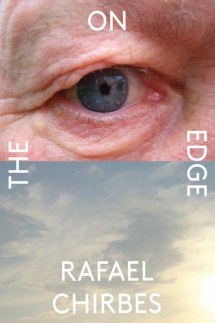
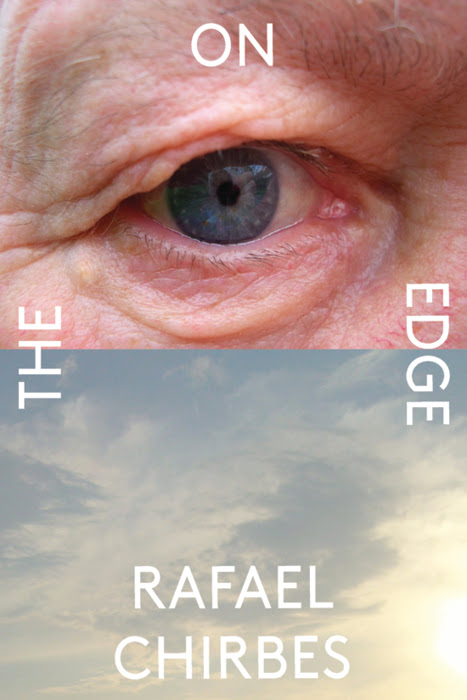
On-the-edgeOn the Edge by Rafael Chirbes (Spain), translated by Margaret Jull Costa
Finally, the very first book I read in 2016 is probably my favourite book of the year. I wrote about this novel at length for Numéro Cinq and I regret that it has not generated more discussion. In what is essentially an extended monologue with brief cameos from other characters, Chirbes creates a memorable, engaging, and tragic character in seventy-year-old Esteban, a man who has lost absolutely everything in the economic collapse of 2008.  Thoroughly human in his wisdom, his resolve, his shortcomings, and his despair; this is a powerful and important book that deals frankly with many of the critical issues—including migration, xenophobia, and economic decline—that are more vital than ever as we step into 2017.

Beginning to write through grief: A reflection & link to my poem at the Sultan’s Seal

I am, as many know, dealing with a multi-layered, complex grief—my mother, my father, and one of my closest friends—all lost within the last six months. When my parents died in July, I entertained an immediate grief project, my own mourning diary, an echo of Roland Barthes. I started with a subdued passion, an ache as intellectual as emotional. In truth, my emotions were, I can now see, constrained and intellectualized.

I was numb.

Others reached out to me in those early weeks, sharing their own stories. The terrain of grief is rocky, I was warned. The journey long. The pain uneven. But, although I am in mid-life, a loss of this nature—doubled and complicated—was something I had never faced.

Then my friend took her own life sometime on September 1st. Even though I knew, in my heart, that such an event was almost inevitable, the pain and anger tore me apart. I knew she had tried every available option she could afford to fight an erratic and devastating variation of bipolar disorder, and I fully respected her decision and her right to make it. But suddenly my world was a darker, lonelier place.

And she had lived half a world away.

Again, the first thing I thought of was to write. This time, my distance from her demanded and informed my need to write—and I knew exactly what I wanted to do. I wanted to gather words and sentences from her writing and our communications, and together with some photographs from my trip to visit her in South Africa, create an elegy.

An offering.beach

Drawing inspiration from a prose piece by Breyten Breytenbach, and the sound driven writings of my friend, Daniela Cascella, I set to work. And I knew exactly where I wanted to publish this memorial if I was able to realize my vision—The Sultan’s Seal, a most wonderful space created and curated by Egyptian writer, Youssef Rakha.

The result, “And I will Tell You Something,” was published this past weekend. Three hundred words, five images and almost three months shaping, reshaping, listening and accepting the silence that emerged. This is perhaps the most emotionally demanding piece I have ever written. Yet, now five days after my words were finally set free in the world, I feel a tremendous sense of rightness. An element of peace. I still ache, but, with this prose poem, I feel I can begin to heal.

And I hope that others may find something in it too.

Cold comfort: The Absolute Gravedigger by Vítěslav Nezval

That terrible fist swings the bell
The blasphemer
Is boxing
Hell-bent on knocking out the eye of heaven
That cynically floods desolate white-washed houses
With radial light
With an iron resolution to act
While the knuckles crack
This fist delivers bruises shaped like swallow nests to roofs
In the name of vengeance
(from “The Blacksmith”)

Upon my first read-through of this newly translated collection of poetry by prominent Czech Surrealist, Vítěslav Nezval, I was struck by an eerie sense that the poet was speaking to the present moment. Published in 1937, the poems gathered in The Absolute Gravedigger form a gallery of darkening, disturbing, and frequently grotesque images that capture the mood of the shifting landscape of the years leading up to the Second World War. Some are small, contained, and often bucolic scenes. But others depict expansive nightmarish vignettes of obsession, violence, corruption and decay—evoking imagery worthy of Bruegel, Arcimboldo or Bosch—and closely aligned with the spirit and sentiment associated with the more widely known French Surrealism.

Returning for a second reading, in the immediate aftermath of the election of Donald Trump, I cannot help but wonder how quickly the lessons of the last century have been forgotten—and shudder at the thought of what potentially lies ahead.

gravediggerBorn in 1900, Nezval began writing and publishing poetry in the 1920s, but by the early ’30s, he and a number of his fellow Czech writers and artists had fallen under the influence of the French avant-garde. He first met André Breton in Paris in 1933, and the following year he helped found the Surrealist Group of Czechoslovakia, the first such group to receive the Breton seal of approval, so to speak, outside of France. Yet, even though they made important contributions to the movement, the Czech Surrealists have remained relatively obscure, a situation further exacerbated by the artistic restrictions applied under the years of Communist occupation. The release of The Absolute Gravedigger from Twisted Spoon Press should help to ameliorate that situation, and spark further interest in the work of Nezval and his contemporaries.

In his poetry, as evidenced in this collection, Nezval was a stylist who drew widely from the Surrealist playbook. In an interview in The Bohemist, translators Stephan Delbos and Tereza Novická describe their decision to work together as follows:

Nezval was prolific and incredibly gifted, so the book is over 200 pages, and contains a range of styles from traditional rhymed quatrains to freewheeling litanies and dense, paranoiac prose. A challenge to translate, to say the least, so approaching it as a team seemed like a good idea.

The diversity of the poems in this collection is difficult to capture in the space of a short review. Suffice to say that they range from the relatively conventional to the decidedly bizarre. For example, “The Windmill” is a section comprised of a series of rural compositions featuring farm and small town scenes. However, the imagery is vivid, sometimes surprising in its unexpected shifts, and an unmistakable darkness seems to wait just over the horizon, as demonstrated in this portion of “The Reapers”:

The birds have flown off
Everything on the verge of tears
Huge carts haul off bales of straw
A cock crows
And wheels squeak
The landscape changes
Brown pitchers peak from under gladiolas
And confusion seized the horses
The mills clatter
From afar
As a signal
Like an imminent declaration of war
And suddenly the whole place is holiday empty

Similar bucolic settings return in the later “Shadowplays” section which features tightly rhyming, orderly quatrains which, to preserve the feel of the originals, the translators have chosen to carry into English with as much of the spirit and musicality intact as possible. Because these pieces stand out so sharply against the more open and, at times, unrestrained quality of the rest of the book, this seems to be a wise choice. Coming on the heels of the intense, fantastic and disturbing imagery of the poems in the “The Absolute Gravedigger” section— the title poem, “The Fetishist,” The Blacksmith,” “Milking,” and “The Plowman”—the sudden appearance of a traditional formality catches the reader off guard.

2016-10-27-16-12-40The author has also included several pieces of his own artwork and the poems they inspired framed by two prose pieces in which he talks about the process of decalomania (the creation of abstract images by laying a thick layer of paint on a surface and pressing a piece of paper or canvas against it) and its influence on, not only the directly referenced pieces but other key poems in the book. Nezval explains that the process gave rise to prototypes of “the hybrid creatures” that people his most surreal poems.

There is harsh brutality that runs through the most fantastic and, to put it simply, “surreal” of these Surrealist poems. The characters that are brought to life, resemble the denizens of an adult Grimm’s fairy tale—grotesquely featured, obscenely sexualized, dirty, decaying—and trapped, sentenced to their miserable fates. But the piece that is most profoundly political, and devastatingly timely once again is the final poem, “The Iberian Fly.” Here on the wings and body of a gigantic fly making its way through the skies, a terrifying spectacle is playing out, summoning imagery reaching back to the Spanish Inquisition, but zeroing in on the rising waves of fascist ideology sweeping Europe. Nezval’s original version was apparently more specific, naming names, but increasing censorship stayed his hand before the final version went to print. All the same, the message is clear:

[The Iberian fly’s] proboscis
Was gradually
Immersed
Into several drops of blood
Squeezed out
Of different races
And subjected these drops
To analytical chicanery
Whose fraudulent result manifested
As diagrams
Once these drops
Of blood
Hardened into a crust resembling sealing wax

As the drop
Of drying Aryan blood
Turned into a faux jewel
Spectrally depicting
Absolute nobility
In the form of Ionic columns
Under which reflected in miniature
The beguiling image of bathing women
On the sparkling left wing of the Iberian fly
The other drops
Drying
Transformed
Under the touch of the dirty finger
Of the little man with the Chaplin mustache
Into this pictorial relief

The relief that is depicted in the following stanzas incorporates African and Asian features—a chilling echo of the type of racist graffiti, propaganda and attacks that we have seen post Brexit and, now Trump. And these patterns know no borders. In Canada, where I live, the past week has seen a sharp upturn in the same trends. The immergence of this translation, at this time, is uncanny, there is a new chill to these words, almost eighty years after they were first published.

Plus ça change.

The Absolute Gravedigger is published, by Prague-based Twisted Spoon Press, in a handsome hardcover edition featuring Nezval’s own decalomania artwork on the cover.

In uncertain terms – Proxies: Essays Near Knowing by Brian Blanchfield

This is a book braver than I am.

I am not even certain where to begin to unravel my reaction to reading this collection of essays. Until recently I was resisting the dawning recognition that what I needed to say—the subjects I wanted to explore—would be best met through essay/memoir writing. Or to put it another way, I realized that I have neither the patience nor aptitude for fiction. But what of the essay and its personalized variant, the memoir? I wasn’t even sure I liked the form. So I have learned to approach reading essays with an eye to writing. I read not simply for the joy of encountering well-crafted, intellectually and emotionally engaging prose. A work that excites me, in style, content, or both, invariably sends me to my current notebook where I spin, inward and outward, a cascade of thoughts, images, and ideas… fuel for my own scribblings.

Proxies, by the American poet and essayist Brian Blanchfield, is one such work.

proxiesSubtitled Essays Near Knowing, the pieces that comprise this collection were composed under a particular creative constraint. Blanchfield decided to refrain from seeking any guidance from authoritative sources during the writing process. Thus these essays were written unplugged, if you like. Of course, adopting a learned tone without fact checking (and we all do it, especially in conversation), necessitates allowing for a margin of error. Consequently, pages of “Corrections” addressing many of the resultant inaccuracies and inconsistencies, close out the book. However, Blanchfield also gives himself a secondary challenge in this project:

Having determined that this would be unresearched essaying, analytic but nonacademic, I was almost immediately drawn to a second constraint—or better, invitation: to stay with the subject until it gives onto an area of personal uneasiness, a site of vulnerability, and keep unpacking from there.

As he hits these points of reflection that effectively bend the essay toward memoir, there is, he admits, a certain fumbling allowed, stimulating a transition that, in its sometimes sudden movement, creates an energy that is dynamic, emotionally raw. What begins as a focused consideration of a topic, a concept, or theme, seems to turn personal in a heartbeat, and works its way through to a resolution, however ambivalent that may be. No grand narrative arcs here, only furtive digging through the fragmented moments of life, each essay preceded by the same caveat: Permitting Shame, Error and Guilt, Myself the Single Source.

Blanchfield’s starting points are varied. As a poet, it is not surprising that many start with language and meaning: “On Propositionizing”, “On Confoundedness”, “On Abstraction”, “On the Ingénue”, “On the Near Term”. Some have more tangible contexts at the outset: “On Minutes”, “On the Leave” (as in the game of pool), “On Dossiers”. He often draws on specific images from his own life to set the stage, but those musings typically lead him much closer to the bone as the essay takes shape. Relationships with his parents, the tenuousness of his chosen profession, and his sexuality—his queerness of being—are common themes that regularly surface as he ventures into those areas of private anxiety and susceptibility.

As personal as he gets, and he can lay himself bare, these essays are rich with fascinating intellectual ideas, with references to philosophers, psychologists and, naturally, poets. Some essays are simple and relatively self-contained, while others seem to mutate, in the reading, as the author reaches for a subject that expands, like a pool of liquid, resisting the ordered shape one might anticipate. At best, at their most intriguing, these are essays meant to be experienced as much as read.

Take, for the sake of illustration, “On Minutes.” This piece begins, objectively, with a discussion of meeting minutes, the recorded, dispassionate account of the details of a meeting—no place for embellishment, dramatic flair. Expanding on this basic subject, Blanchfield recounts his own experience working as an executive assistant at a performing arts organization in Tuscon at a time when he and his partner were struggling to make ends meet on one salary. It was a job borne of necessity not desire to say the least. He slides from the drudgery of typing up minutes into memories of accompanying his mother to her office job on weekends as a young child, occupying himself creating stories while she worked, reading them aloud to her co-workers at the end of the day. These childhood creations are then parlayed into a link to the remembrance of his return to his mother’s home for his stepfather’s funeral. From there he passes into a reflection on “Paraphrase”, a poem by Hart Crane that, for Blanchfield, “gets the sudden, lights-out fact of death right.” At this point, what has become a quick dip into the territory of memoir, turns again and, as it shifts, the language of the essay slides into richly poetic territory with a meditation on the closing stanza of Crane’s poem in which the white head of the deceased is observed as a “paraphrase” among the roses on the wallpaper:

The word choice is inexplicable, querulous, oblique, just right. A paraphrase among the rows of roses—a relief receding there—renders their locked pattern a kind of language, but what can it say?; and the head in the place where the living being lay is nominated as this titular hermeneutic tool, useless as such without its objective genitive of. It cannot be said what original locution this paraphrase summarizes. A case, I think, for Crane, of Flesh Made Word again. A reversion. Revelation withdrawn.

The essay winds down with thoughts of Crane who, fittingly, worked an office typist; and the speculation that the imagined head on the bed might have been that of his lover’s father. Some strange, small circle, elegantly wrought from very humble beginnings. The essays in this book move like this, through memories, reflections, ideas and poetic contemplation.

One of the most profoundly moving pieces in the collection arises from Blanchfield’s attempt to address his relationship with his mother—once loving, now long strained by her inability to accept his sexuality. “On Peripersonal Space” begins with the notion that an individual’s concept of the self includes all the space within reach around his or her body. He hears a radio discussion with the authors of a book on the subject, a mother and son team, a collaboration that, within his own scope of experience, is unimaginable. Yet he finds it difficult to approach his desired subject, as much he feels it is essential that he make the attempt. This is a challenge I understand—writing about those with whom our relationships are close but complicated, is an uneasy task:

Since I began this project, I have tried a number of times to write about my mother and me, and have abandoned a few attempts already. If these essays are, in part, inroads to disinhibited autobiography, as I have come to claim they are, and demand they be, I feel the imperative to address the subject above all others. But ours is a relationship so deep and damaged and (still) so tenuous it has defied emergence.

So how to start? He takes the peripersonal space as a cue, beginning with an account of the closely bound emotional intimacy and playful games that he, as an only child, and his then divorced mother used to enjoy when he was young. His description and the psychological implications of their connection is startlingly frank and triggers a concern that I also share with respect to writing about close family members:

It is more than embarrassing to relate all of this. I come up against the inappropriateness of, for one thing, sharing what is only half mine to share. But is that partiality, expressed by that proportion—half of one—ethical, or healthy for a grown man? Roland Barthes has famously said that to be a writer is, essentially, to violate a primal taboo, to “play with the mother’s body.” No, I love Barthes and he is a signal influence on my conception of this very book; but the remark presumes a class and level of literacy I was not born into.

The resulting essay achieves a surrogate catharsis of sorts, but not between the author and his mother. The roots of their (as yet) unresolved divide lie deep in the American south where Blanchfield was raised in a Primitive Baptist family. He had to leave to live openly as a gay man, moving to New York City in his early twenties. The years that have passed, and the miles that have separated them have not healed the rift. Honestly sharing the pain of rejection, the frustration at his mother’s inability to come to any terms of respectful disapproval, and the sting of hearing her say “I shouldn’t have to choose between my God and my son” leaves a deep sorrow that lingers on the page.

Essayists are no strangers to the practice of blending intellectual and literary observations with autobiographical reflections. What Blanchfield seems to approach here is a means of allowing himself, as a writer, to push his way inward, passing from the factual (more or less), the abstract or the sentimental into the territory of the immediate, the raw, and the real. He touches nerves (his own) but avoids falling into two traps that can snare those who venture toward autobiographical writing: the artificial narrative and the open air confessional. At the most personal end of the spectrum, what he is sharing are unguarded moments of naked emotional vulnerability, decidedly queer, but recognizable and resonant to anyone who has lived, loved, won and lost.

For prospective or developing essayists, Proxies is, as a project, idiosyncratic, bold and illuminating. Barthes’ essays, as he admits, are an ever present influence and Blanchfield demonstrates a similar natural ease with the form. To be able to unfold ideas and follow their course without fact-checking is an interesting exercise in itself, useful at the very least in drafting an essay in its early stages. Lifewriting in this format offers ample reward for readers and some significant points of interest for those of us who struggle to achieve the balance between a story we want to explore and the open wounds that may not have quite healed—the truths that give a personal essay its soul.

For me, this book generated a series of provocations, flash points for my own writing, current and potential. I loved the way Blanchfield focuses in on ideas and uses them as pivot points to make his way from concept to experience and back to ideas. It took me, I confess, over a month to read this collection of twenty-four short essays. But in that time I lost both of my parents, the outcome of two intersecting, but unrelated series of events. I sat long at the bedsides of both my mother and father, witness to their final days. I want to attempt to capture the immediate experience, in its unfiltered rawness, before my memories begin to become distorted by time. I gleaned some possibilities, some instances of inspiration, some ideas to bring into my own project which will be, in its own way, necessarily imprecise, emotionally liable, and queer.

And that, to borrow from the title of the final essay, will suffice for the near term.

Proxies: Essays Near Knowing is published by Nightboat Books.

Peace for the soul: Sebastian Dreaming by Georg Trakl

Mother bore the babe in the white moon,
In the shadow of the walnuts, ancient elderberry,
Drunk on poppy juice, the lament of the thrush;
And silently
A bearded face bows with compassion over her

Quietly in the dark of the window; and the old chattel
Of ancestors
Lay broken up; love and autumn reverie.

Layout 1So begins “Sebastian Dreaming”, the centre piece of the second and final collection of poems prepared for publication by Georg Trakl during his lifetime. His first collection, Poems (Gedichte) had been published to warm reception in 1913, but, one year later as he was awaiting the release of this volume, he received word that the war would indefinitely delay all further publications. It is thought that this news, in conjunction with the mental and emotional stress he suffered working in the dire conditions of a wartime military hospital, contributed to his early demise. On November 3, 1914, he was found dead of a cocaine overdose. He was twenty-seven years old.

Sebastian Dreaming (Sebastian im Traum), represents the second book of Our Trakl, a three part series of new translations of Trakl’s complete works by American poet and translator James Reidel. Recently released by Seagull Books, this volume joins Poems, which was published in 2015. True to form it is finely crafted and beautifully presented. Although the poems here have appeared in other compilations, and editions of selected works, Reidel contends that this book deserves to be read, as Trakl intended, as a single volume. As with Poems, the reader is invited to spend time with the work as a whole, to engage with Trakl’s fractured, dream-like vision.

In an earlier review of the first volume of this series, I traced an overview of Trakl’s life and included links to Reidel’s essay about this project in the journal Mudlark. The elements of Trakl’s poetry, and the challenges facing the translator, are perhaps even more strikingly evident in this book. The motifs that dominate his first collection – rural landscape, nature, colour, signs of life, images of death and the abiding presence of his beloved sister Grete – are all here, but there is a more restrained and disjointed feel to many of the pieces. This reflects, according to Reidel, Trakl’s continuous efforts to try to pluck poems out of his experience, efforts that fall apart and lead him to return to the same images and motifs repeatedly:

“Indeed, translating him is like finding ones footing on the blue glass mountain of fairy tales—with Grete the princess within. The great irony, for me, is that the constant improvements, revisions, and corrections are in keeping with Trakl’s method, with all his obsessive autumns, black birds, neologisms—and in that same spirit—his Schwesterei, his sistering his poems, his madness, decay, and constant sense of downfall and sunset and the like. There is in Trakl a constant reworking, a constant revisit to the same forest, to see the same blue deer, and so on, to the same working poems to see them in the right light, or, more often, the right gloom.”

As a reader coming to this work, I am neither inclined nor qualified to enter into a critical assessment of Sebastian Dreaming or the translation at hand. Other translations of Trakl’s poetry are available and I do not believe that any one translation is superior to another, especially with poetry, although readers, with or without an ability to approach the work in the original, are bound to have preferences. The first version of a piece encountered? The one that sounds most pleasing in English? The translation that is most exacting in content and form to the German?

As noted in my earlier review of Poems, Reidel indicated in his introduction to that volume that his intention is to try to capture Trakl in a sense that would be as close as possible to the experience of the original reading, keeping in mind the time and the influences that would have shaped his work. As he explains, “I want to actually channel Trakl, his craft (with its implicit painterliness) and work ethic, to have him, so to speak, absorbed in the right dosages he – as a poet, pharmacist and addict – intended.” The care and sensitivity Reidel has brought to his work comes through, touching the reader across the century that has passed since the poet’s death.

Sebastian Dreaming is divided into five sections. The final part, consisting of one longer, magnificent prose poem, “Dream and Benightment” (previously translated as “Dream and Derangement”) stands as my personal favourite, given my current fondness and attraction to the form. It is an intense and powerful piece:

Hate scorched his heart, lust. Then he stepped into the green of the summer garden in the guise of a silent child, in whom he recognized his benighted face shining. Woe the evening at the window, when a grey skeleton emerged from crimson flowers, death. O, you towers and bells; and the shadows of the night fell upon him as a stone.

The poems in this book are charged, if possible, with a more sombre atmosphere than his earlier collection. The sadness comes through clearly and lingers. The recurring themes are visited from varying angles and directions. One can sense the poet trying to focus his vision while over it all hangs the eerie premonition of death that will soon be freed from the pages and realized by the increasingly discouraged and depressed writer.

I will leave you with a complete taste from this collection, in the form of this striking, spare poem:

Peace and Silence

Shepherds buried the sun in the leafless forest.
A fisherman pulled
The moon from the freezing pond in a net of hair.

In the blue crystal
Lives the pale man whose cheek rests against his stars;
Or he nods his head in crimson sleep.

Yet the black flight of the birds always stirs
The beholder, the saint of blue flowers,
The stillness near recalls forgotten things, extinguished angels.

Once more the brow nights over the lunar stone;
A shining boy
The sister appears in autumn and black corruption.

Georg Trakl’s Sebastian Dreaming: Book Two of Our Trakl, translated by James Reidel, is now available from Seagull Books.

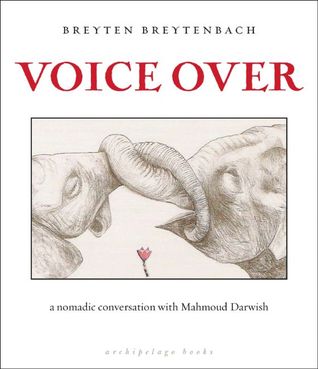
Conversing in verse: Voice Over by Breyten Breytenbach

when you die, Mahmoud
when your aorta thrashing
all sluggish and crinkled
like a purple snake bursts
because the lines can no longer
slither the perfect metaphor.

A selection of stunning new translations of the poems of Mahmoud Darwish posted today, March 13, on the blog Arabic Literature (in English) marking the late Palestinian poet’s birthday inspired me to take a little time to re-read Voice Over by Breyten Breytenbach. The South African writer and painter had last seen his friend and fellow poet in France only a few weeks prior to learning of Darwish’s death during open heart surgery in Houston, Texas, on August 9, 2008. He was on Gorée Island off the coast of Dakar in Senegal at the time and, as he travelled from there through Catalonia to Friesland to attend a literary festival, Breytenbach took the time to meditate on his friend’s passing and engage with his work reporting that it was “refreshing to be bathing in Mahmoud’s verses.” The twelve poems in this slender volume are a reflection on this time in the form of a poetic communion. As he notes in an afterword:

“MD had always been a prolific poet. One could interact with him forever. The present ‘collage’ touches upon transformed ‘variations’ of his work, at times plucked from different poems and then again by way of approaching a specific verse, with my own voice woven into the process. The images, and to an extent even the rhythms and the shaping, are his.”

voiceoverThe first poems play with images of death, burial and moving on, but the tone is not sombre. There is a distinct sense of a conversation not ended but continued beyond the grave, a call for a celebration of life – music, not weeping, and a glass raised high. Midway through the journey, the verses take a turn to the political with the plaintive call “we shall be a people” that echoes throughout the 6th piece and continues in the 7th where Breytenbach tells his friend:

identity is gospel talk. Mahmoud
when as in a dream you hear
what others tell
and imagine you understand/exist

to be is to move
through a spectrum of volcanoes
and the spectacle of wars
              and poetry in catastrophic times

blood
              and blood
                            and blood
in your homeland

Small but powerfully affecting, this collection of poetic engagements acts as a kindling of the spirit of a voice silenced too soon. My favourite piece in this collage, to use Breytenbach’s term, is the 8th and longest entry. Here the question of the possibility and validity of this communication across the boundaries of language, and of death itself, is explored. Here, for me, lies the heart of the grief and the expression of fellowship:

who is writing this poem face
by face      in black blood
neither raven’s ink nor voice
pressed from an errant tongue?
luck’s hand snatches everything from night

Mirage leads the wanderer through the wasting
so that he may continue hailing the holy crocodiles
Mirage seduces him with sweet words read
if you can       write if you can
read       water / water / water

and write this one line in the sand
that if it weren’t for Mirage
I’d long since have died    for it is
the traveler’s talisman that hope and despair
be twinned in the blood of poetry

Ah yes, twinned in the blood of poetry. A gift, verse to verse, this heartfelt collection is a treasure.

darwish1Voice Over: a nomadic conversation with Mahmoud Darwish by Breyten Breytenbach is published by Archipelago Books.


Mahmoud Darwish, March 13, 1941 – August 9, 2008

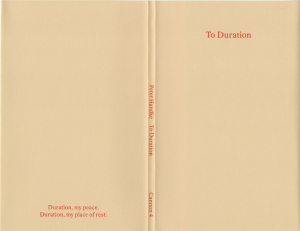
Meditation on a poetic meditation: To Duration by Peter Handke

In a month during which reading proved to be a slow, at times disjointed enterprise, I feel it would be shortsighted to let January come to a close without calling attention to one of the simplest, most precious reading experiences I enjoyed over the past 31 days. It arrived, courtesy of the translator, on a morning when I was rushing out of the house on my way to an appointment across town. A slender, pocket sized volume, it proved perfect company for a busy day. Only 40 pages long I read it several times before the week was out. I am speaking of Peter Handke’s poetic meditation To Duration, translated from the German by Scott Abbott.

The author tells us in the opening stanza, that he has long wished to engage in the following personal quest, the exploration of a topic that he feels is best suited to the poetic medium. Perhaps it is only with a poem that language can circle around and come close to touching on a subject that is, by its very nature, difficult to pin down and describe. Words are almost too solid to capture an experience that dissolves as quickly as it arrives:

Time and again I have experienced duration,
in early spring at Fontaine Sainte-Marie,
in the night wind at the Porte d’Auteuil,
in the summer sun of the Karst,
on the way home before dawn after love.

This duration, what was it?
Was it an interval of time?
Something measurable? A certitude?
No duration was a feeling, the most fleeting of all feelings,
more swiftly past than the blink of an eye,
unpredictable, uncontrollable,
impalpable, immeasurable.

Duration, Handke tells us, is not fixed or prescribed; it cannot be scheduled or delayed. It can be approached, but it cannot be forced or guaranteed. I would wager that as our lives grow more stretched, weary, and fraught with the disillusion of time, duration becomes ever more elusive. I also wonder if, when we try to grasp at it through our memory of those moments when it seems we once met duration in passing, the more impossible it seems. And then, one day, when we are not expecting it, the feeling taps us on the shoulder, washes over us and moves on but leaves its trace, like frost on a bare branch or the hint of dew on the grass. One of the true gifts of this book, is that it inspires the reader to explore his or her own experience of duration. What is it for me,when is it, when was it, where? These are the questions that the reader is encouraged to meditate upon, as Handke reflects back upon his relationship with duration in his own life. His calm, measured, and sensitive introspection invites you to engage in the same.

At one point he talks about travel and journey as opportunities to open oneself to encounters with this feeling. There was a time when I was able to regularly visit certain parks and pathways in my hometown, typically with my camera in hand, focused on nature framed through the lens – a dried leaf here, a glimpse of a meandering stream there, the shifting pattern of clouds in the wide blue sky. At home, processing the files, I could almost revisit the moment – it was not the photograph that fixed the moment, in and of itself, it was rather an ability of the image to contain, for me alone, the experience of being in the moment. Is that duration? A variation on the theme? And why don’t I visit local parks as much as I used to?

In truth, I need a greater distance, at least right now.

23823656024_da6c196a78_b
Sea Point Promenade at sunset, July 2015 – Copyright JM Schreiber

Last summer I spent three weeks in South Africa. After a visit with a close friend in the Eastern Cape, I returned to Cape Town for a week on my own. I traveled on foot and by city bus, eschewing most of the tourist sites. I wanted to be in the city. I stayed in a small B&B in Sea Point and every day I walked the Promenade along the Atlantic. A popular pathway, no doubt, but there was, for me, an essential necessity to be close to the ocean. Sometimes I would stand at the salt-corroded railings and look out over the waves and find a deep peace at being so far from home and all of the complications left behind there. I could turn around and ground myself with the unmistakable landmarks of Signal Hill and Lion’s Head. It was the moment experienced and re-experienced each day that became the fulcrum of my stay in the city. No day was complete without it. If I lived in Cape Town I don’t think I could have touched duration like that, so intentionally. The measure of seven short days, coloured by an intention to be less a tourist than a presence in a city, not having to actually attempt to fit in like I do at home, I touched a peace of place I rarely experience. Travel can do that.

But physical travel,
the annual journeying and pilgrimages
for the jolt of duration,
the thrilling supplement,
is that really still necessary for me?

Handke acknowledges increasingly finding more instances of duration closer to home, even in his own garden. Restless as I am in my house and home, I likely frighten off duration, so fragile and fleeting a guest. Yet just the other night it caught me unaware. My elderly father, still seriously weakened and disoriented following his stroke, insisted on returning home from the hospital on Thursday against the recommendations of his doctors and the wishes of his family. I quickly gathered some clothing and personal items in one bag and tossed a handful of books from my priority pile into another and headed out the door for the two hour drive to the remote location where they live. That first evening, once my exhausted parents were safely tucked into bed, I sat in the delicious silence with my collection of books. I wasn’t actually expecting to have time to even start reading any of them – I just wanted to spend time with these relatively new acquisitions. Get to know them a little. Read a few pages. This unexpected moment, borne of a collision of unwelcome circumstances, opened the door to duration, inviting that unpredictable, immeasurable sensation, to wash over me, leaving a sense of contentment I hardly imagined I would encounter when I had headed for the highway only a few short hours earlier.

Perhaps then, if you watch for it, open yourself to it, maybe duration is not quite as elusive as it may seem.

scan-2


To Duration, Cannon Magazine No. 4, is published by The Last Books.

With infinite thanks to Scott Abbot.

The dying gold of ruined stars – Poems: Book One of Our Trakl by Georg Trakl

“Sun, autumnal, thin and shy,
And the fruit falls from the trees.
Stillness dwells within its blue rooms
During a long afternoon.”

– from “Whispered during the Afternoon”, Georg Trakl, translation by James Reidel

Many years ago when I was in school, poetry, in so far as we were introduced to it, was almost exclusively the works of English language poets. In high school I fell under the spell of the English Romantic writers and that was the beginning. Over the years though, I would be inclined to think that most of the poets I have become obsessed with wrote in English, that is, until I began to read more translated fiction. With that my attention shifted, or to be more precise, my horizons became broader.

TraklThis year, a German book enthusiast I have come to know through the “internet of book discussions”, the corner of the web I inhabit, introduced me to Austrian poet Georg Trakl. Somehow he had escaped my attention before. Of course, when you come to read poetry in translation, the question of the translation itself becomes critical. Typically, when more than one translation of a poet’s work exists I try to access and compare a few. But when Seagull Books released the first installment of a three part series of Trakl’s poetry, I did not hesitate to order a copy, sight unseen.

Poems: Book One of Our Trakl is a new translation, by American poet and translator James Reidel, of the poet’s first collection, simply titled Poems (Gedichte), which was originally published in 1913. In his note at the opening of this volume, Reidel recounts that he has endeavoured to preserve the same concentrated mania that marks the works of the 19th century poets Trakl would have read: Baudelaire, Rimbaud, Verlaine, Hölderlin and Poe. He says:

“I want to actually channel Trakl, his craft (with its implicit painterliness) and work ethic, to have him, so to speak, absorbed in the right dosages he – as a poet, pharmacist and addict – intended.”

Reidel does go on to add that to emulate Trakl’s delivery in English, the rhyme scheme of the original poems is often necessarily sacrificed, but the contortions required to retain  rhyme can trivialize a poet’s spirit and tone.

In an essay in the online poetry journal Mudlark, Reidel expands on his Trakl translation project. He provides an overview of Trakl’s short and tragic life, as well a discussion of his approach to the translation, and a selection of his translations presented with the original German. A poet himself, Reidel brings a sensitivity and insight to his reading and approach that I, as reader, value:

“I have found that when you read Trakl in the original German, you get a snapshot of what is there. When you go back, you get another view. It may be sharper or less so, and with the feeling that it is intentionally less so. This can be frustrating for those who speak and think in English, that lawyer of languages. There is no fixed point to reading him or rendering him. This makes any book of translations simply a collection of snapshots of a particular reading at any point in time. Another way of rendering/reading a Trakl poem is through the barrel of a kaleidoscope, where one can only fix on a view when one stops or when the glass bits sometimes jam. I do this.”

Born in 1887, into a prosperous Salzburg family, Trakl was a precocious child, creative and intelligent – by his early teens he was experimenting with lyric verse that showed great promise. He could, however, be withdrawn and prone to depression. He was exceptionally close to his sister Margarete (Grete), a musical prodigy with whom he is thought to have engaged in an incestuous relationship. He began publishing poems in 1908, in Vienna where he had gone to study pharmacology, a tempting profession for one who already had a tendency towards addiction. As a budding poet, he enjoyed early success and mentorship during the following years, ultimately attracting the discreet patronage of Ludwig Wittgenstein. But the outbreak of war forced him into military service. Relying on his training as a pharmacist he hoped to avoid direct combat, but the trauma of trying to attend to desperately wounded troops without adequate supplies would drive him to attempt suicide. He was sent to a military hospital in Kraków for observation, but suffered a relapse and was found dead of a cocaine overdose on November 3, 1914. He was 27 years old.

                Patterns of Decay  (c) JM Schreiber, 2011
Patterns of Decay , Copyright JM Schreiber, 2011

This first volume of Trackl’s poetry, beautifully bound and presented by Seagull books, readily lends itself to an immersive reading from beginning to end. The autumnal themes that feature so strongly make it an even more evocative read for someone like myself at this time – that is, in November in the northern hemisphere – but autumn is rendered almost metaphorical in his verses. Nature figures in his work, rendered through rural and religious imagery; however nature, for Trakl, is one which couches death and decay as an intrinsic element of its stark beauty and haunting appeal:

In the evening, when the bells toll of peace,
I follow the birds in their glorious flights,
Long multitudes, like pious trains of pilgrims,
Disappearing into autumn’s clear breadths.

Wandering through the twilight-filled garden
I dream following their brighter destinies
And feel the sundials barely move any more.
So I follow their journeys above the clouds.

There a blast of decay makes me start to tremble.
The blackbird laments in the leafless branches.
The red vine totters on rusting trellises.

While like a dance of death of pale children
Around the dark weathered rim of the fountain
The blue asters toss shivering in the wind.

– “Decay”

These are quiet, brooding poems that show a clear obsession with decline. They speak to a young poet struggling to capture the gloom in his own soul, consequently the poems have a very immediate and personal feel. Are they depressing? As someone who has had his own lifelong challenges with mood dysregulation, I find his words oddly comforting. I am not equipped to offer a critique of poetry, I am afraid I can, in this case, only speak to what I feel. And I don’t believe I am alone in registering a profound personal response to Trackl’s poetry. In his short life he produced a small, but vital, body of work that would have an important influence on other German language poets including Paul Celan, Thomas Bernhard and Peter Handke; and draw the ongoing interest of poets, translators and readers outside of German speaking countries that continues to this day, just over one hundred years after his death.

For my part, I can only eagerly look forward to the upcoming additions to Our Trakl.

Listening to the voices of Afghan women: I am the Beggar of the World

“In my dream, I am the president,
When I awake, I am the beggar of the world.”

With a long history, passed down through generations, landays are traditional two line poems recited or sung by the mostly illiterate Pashtun people who live along the border region between Pakistan and Afghanistan. They are composed of twenty-two syllables – nine in the first line and thirteen in the second. For the women in this area who face social and cultural restraints that define and restrict their lives, these anonymous couplets have become an important medium for self expression. Sometimes they gather to share or perform the landays they have learned, updated or re-invented; but radio and the ubiquitous social media and cell phones have also been worked into a new modern network for sharing.

beggarI Am the Beggar of the World: Landays from Contemporary Afghanistan, a collaboration between translator and poet Eliza Griswold and photographer Seamus Murphy, is a sensitive and moving collection of landays, brief essays, and photographs. Upon hearing of the death of a teenaged poet who had been forbidden by her family to write poems and burned herself in protest, Griswold was inspired to journey to Afghanistan to explore the role of landays in the lives of Pashtun women. She returned to collect some of these poems, assisted by native speakers and a Pashta translator, Asma Safi, who sadly died of a heart condition before the project was complete. Arranging meetings as an American was not always easy – being under occupation is a difficult, deadly environment – but along the way she collected the words and stories of some very strong, fascinating women.

Divided into three sections, the first is dedicated to Love. Many of the couplets are brazenly racy, teasing and modern. Yet because landays are by their nature anonymous, no woman can be held responsible for sharing them or for the contemporary imagery has been worked into the more traditional versions:

“Embrace me in your suicide vest
but don’t say I won’t give you a kiss.”

“Your eyes aren’t eyes. They’re bees.
I can find no cure for their sting.”

“”How much simpler can love be?
Let’s get engaged. Text me.”

The second section is dedictated to the themes of Grief and Separation. Suffering and servitude are enduring features of the lives of Pashtun women. Marriage implies both. Curiously love also features throughout the poems in this section because romantic love is forbidden. If a young woman is discovered to be in love with a man she can be killed or driven to take her own life to preserve her family’s honour.

“Our secret love has been discovered.
You run one way and I’ll flee the other.”

Once married, having one’s husband take another wife is emotionally painful, but being passed over altogether or married off to an old man can be worse.

“Listen, friends, and share my despair
My cruel father is selling me to an old goat.”

The final section explores War and Homeland. Complex, mixed emotions, anger and sorrow rise up here in poems that are moving and, again, shockingly modern. A long legacy of occupation under British, Russian, and American forces has placed the women of Afghanistan in a difficult position, torn between the brutality of American protection and the combined threat and promise of the Taliban. The landays and the images in this section are especially powerful and represent sentiments that women would not be able to express so readily in any other forum:

“Be black with gunpowder or bloodred
but don’t come home whole and disgrace my bed.”

“Beneath her scarf, her honor was pure.
Now she flees Kabul bareheaded and poor.”

“May God destroy your tank and your drone,
you who’ve destroyed my village, my home.”

This slim volume is a testament to the resilience of the Pashtun women in the face of the violence, threats and restraints they live with every day. These traditional two-line poems provide a framework for illiterate women to express themselves and share their sorrows, joys and wisdom with their sisters. In Afghanistan they still face risks in committing their own poetry to paper when they are able, so this oral tradition remains important, even if modern devices like cell phones have expanded their network. This beautiful book which pairs the simple landays with muted black and white photographs documenting the people of Afghanistan, the sparse landscape and the violence of war, provides a rare opportunity to hear the intimate voices of women that might otherwise be silenced.

Releasing words from the page

In the opening pages of Teju Cole’s Open City, his narrator, the young medical resident Julius, introduces the reader to his own reading habits, setting perhaps the tone and frame of mind for the recollections and encounters that will unfold over the following pages. He explains his fondness for internet classical music stations, commercial free broadcasts from countries where the foreign languages of the announcers blend into, rather than distract from the musical tapestry. Settled with a book on the sofa he confesses that:

“Sometimes, I even spoke the words in the book out loud to myself, and doing so I noticed the odd way my voice mingled with the murmur of the French, German, or Dutch radio announcers, or with the thin texture of the violin strings of the orchestras, all of this intensified by the fact that whatever I was reading had likely been translated out of one of the European languages.”

Assuming I am not in a public space where others would likely look on in askance I am likewise inclined to read aloud to myself at times. Meditative, less conventional, writing forms itself especially to this practice, not only obvious writers like Cole or WG Sebald, but wonderfully spare and introspective works like Damon Galgut’s In a Strange Room or the experimental The Absent Therapist by Will Eaves. And Thomas Bernhard, even though I cannot read him in the original German, flows with energy and intensity against JS Bach. I often stop and read a few pages out loud when I feel that I may be losing my moorings in the book long paragraph structure of his novels. Similarly José Saramago and Javier Marías are authors that more people might be able to connect with by inhabiting the language through reading portions out loud.

I have also had the experience of coming to appreciate a piece of literature in an entirely new way through hearing an author’s reading. Last year I read All My Puny Sorrows by Canadian author Miriam Toews, the story of two sisters, one deeply depressed and suicidal, and the other faced with the dilemma of if and how to assist her beloved sister in achieving her goal. Being much closer to my own recent breakdown and knowing that Toews had drawn on the tragic history of suicidal depression in her own family, I read it seeking insight into the suicidal sister’s perspective. I was disappointed. But hearing Miriam read from her work and having the opportunity to meet her last fall, I suddenly realized that I was expecting something the story could not deliver and had, consequently, missed the self-deprecating black humour in this challenging, compassionate tale of unconditional sibling love.

Cliche shot of a favourite poem, WH Auden's "As I Walked Out One Evening"
Cliche shot of a favourite poem, WH Auden’s “As I Walked Out One Evening”

So if the experience of prose can, at times, be enriched by being read out loud, poetry would seem to be an obvious aural experience. Poetry readings have a long standing literary history, joined now with the likes of slam poetry and rap. What a surprise then to have someone on another readerly space I frequent declare that he is against reading poetry aloud. Assuming he was not typing with tongue in cheek, for who can tell, my immediate response was one of disbelief. Excuse me? I cannot imagine not reading poetry out loud. I even make an effort to commit the poems that I find especially powerful to memory, to recite them, to myself and, on occasion, to others. Hearing authors read their own work has a special value and impact. Listening to a poem shared aloud by a passionate reader can allow the words to be transformed and re-interpreted in a new and personal context.

Have you ever encountered a piece of prose or a poetry so breath taking that you had to stop and re-read it, mark or circle it in the text if you are so inclined, copy it into a journal or print it out to keep close at hand? Do you feel compelled to repeat the words out loud to yourself, inspired to share them with others? For me that is the beauty of being in love with language. Sometimes words just have to spill out beyond the confines of the printed page and be granted a full existence in the world.