“That’s how I remember it.” Postcard from London and Other Stories by Iván Mándy

Making the acquaintance of Iván Mándy, one of the most popular Hungarian writers of the post-war period, is one of the unexpected highlights of my reading year. Postcard from London and Other Stories, which gathers twenty-three stories and two novella excerpts, is the first comprehensive collection of his work to be published in English and, as with such larger volumes, there is always the risk of a certain sameness setting in. Yet, with Mándy, the appearance of the same characters and variations or extensions on related themes, is part of the appeal. His stories tend to tread the murky internal waters of his protagonists’ minds, so even when covering the same ground, one never really steps in the same stream twice.

Born in Budapest in 1918, Mándy’s parents divorced when he was young, leaving him in the care of his unconventional journalist father. He moved from school to school, but did not complete his formal education. Much of his writing draws on these early years of his life, channeled through his rather hapless alter ego János Zsámboky. He published his first work during the Second World War and, within a few years he was recognized with the Baumgarten Award. However, the advent of Communist rule in 1948 supressed his literary and editorial career until things started to loosen up in the mid-fifties. Through the sixties and seventies, his popularity grew as he published many novels and stories, often producing as much as a book a year. He died in 1995.

As a writer, Mándy focused his attention on life in the poorer communities of Budapest, on the eccentrics, the lonely and the misfits of society. But his stories often depend less on plot than on an ability to evoke mood, character and scene with a handful of words. Here, a room:

All around, the barren summer wasteland of the parquet floor. The carpets rolled up on the top shelf of the closet. Like defeated political dignitaries. Ousted statesmen.
“The Morning of the Journey” (1989)

This becomes especially apparent in his work from the 1970s onward. By employing techniques borrowed from radio plays and cinema, his narratives begin to explore the shifting textures of the narrator’s mindscape, as memories, desires and anxieties rise and fall away, carrying the voices of strange and familiar figures encountered in the past and present, sometimes leaving his protagonist treading an uneven border between daydreaming and waking states. Thus it is often less any question of getting from point A to B, than the uncertain effort of getting nowhere at all along a pathway strewn with ghosts and sly objects, as well as those surrounding individuals who are still negotiating the “real” world.

The stories collected in Postcard from London are drawn from Mándy’s writings published between 1972 and 1992, translated by John Batki. Along with a variety of assorted pieces, there are two main series of connected or related stories involving Mándy’s alter ego, János Zsámboky. The first set, mostly but not exclusively from the early 1970s, involve his parents—primarily his engagement with his memories of his erratic, unreliable father and his quieter mother. Their ghosts haunt him. In the opening story, “A Visit with Father,” as János is reluctantly preparing to visit his father in the hospital, he recalls his parents’ seemingly abrupt separation, his father’s second marriage, and more recently, his aging father’s decline into the delusional and suicidal behaviour that ultimately forced him to have the old man hospitalized. The second tale, “A Visit with Mother,” sees János once again preparing for a trip to the hospital, this time with a dress and stockings, for his final encounter with his proud and resilient mother who is lying in the morgue. These two stories are the perfect introduction to János’ somewhat anxious character, his parents, and the basic outline of their lives. Together they set the stage for “What Was Left,” the wonderful 50-page story that follows. Here our hero is sorting through documents, receipts, photographs and diary entries in an empty apartment, attempting to piece together gaps in his knowledge of his parents’ lives while Father and Mother engage him (and each other) from the beyond. Seamlessly slipping between, past and present, first and third person, Mándy weaves a portrait of a fractured family that is funny and bittersweet. This familial cast which also includes Olga, the second wife and her family, and Mother’s Aunt Vali (“with the balcony-sized bosom”) appears in a number of stories, but it is always Father who looms larger than life, determined to claim his space in his son’s imagination forever:

In my dreams, he still comes and goes, expostulates, protests. He lives his own life. Somehow, he gets wind of everything. Some old, netherworldly newspaperman must have told him that I got married after he died. In the corridor of dreams, he accosts me with a gentle reproach. ‘You didn’t even introduce me to your bride, kiddo . . .’ And he still stubbornly insists that I arrange for him to return home. ‘I’m fed up with prowling around.’
“The Original” (1974)

János’ wife Zsuzsi first appears, in this collection, in a story from 1974, “A Chapel, Afternoon” but it is in a later sequence of stories chronicling a trip to London (1989 and 1992) that Mándy’s alter ego reveals himself to have become an aging, distracted writer, unwilling traveller and obstinate companion to his sensible, patient partner. His mind is now even more prone to wandering. His dreams are fantastic, even horrific, channelling his waking fears; figures from his past—real or imagined—interrupt his conversations; and when left to his own devices he is inclined to turn the action of strangers into potential scenarios for future stories. He even encounters possible characters in his own visage as in this scene from “An Afternoon Sleeper” where he waits in a cold changing room in London:

Four mirrors around me, four mirrors and four faces. On one side, a sharp diplomat’s face. Not exactly glowing with confidence. And that deep, dark under the eyes. This diplomat is about to be relieved of his duties. Something is not quite right about him. His services are no longer needed. He’s being recalled. And God only knows what awaits him back home. . .

Facing me is a sly old greybeard. Winking. A dirty old man. Never did a stroke of work in his life. He chased little girls instead.

A superannuated actor. Face fallen apart. Eyes glazed. Forget about ever getting another part. Not even as an extra.

A haggard, leaden face. A night waiter. Not exactly seedy, but somehow unreliable. He has no steady customers. A very few strays, at the most.

The door of the booth opens.

A heather green jacket appears. Behind it, Zsuzsi and the silver-haired salesman.

Other protagonists make their way through various stories, but János continues to appear regularly, through to the end. As the above quote illustrates, Mándy can call a character into being with few brush strokes and create a situation within which he or she must respond to the everyday strangeness of life.

Finally, I would be remiss not to call attention to the way Mándy, influenced by his fondness for Buster Keaton, blurs the lines between material and human existence. Suitcases, articles of clothing and other objects are often animated, in passing, through the use of verbs or descriptions not typically applied to things. This is one of the many ways in which his prose echoes poetry, but in an excerpt from the novella “Furniture” he playfully takes this tendency one step further. Through a series of vignettes, with or without human co-stars, furniture—chairs, tables, living room suites—take centre stage. Unusual, perhaps, but not unexpected or out of place, in the literary universe Iván Mándy imagines into being. This welcome collection offers an excellent opportunity to explore that idiosyncratic space.

Postcard from London and Other Stories by Iván Mándy is translated from the Hungarian by John Batki and published by Seagull Books.

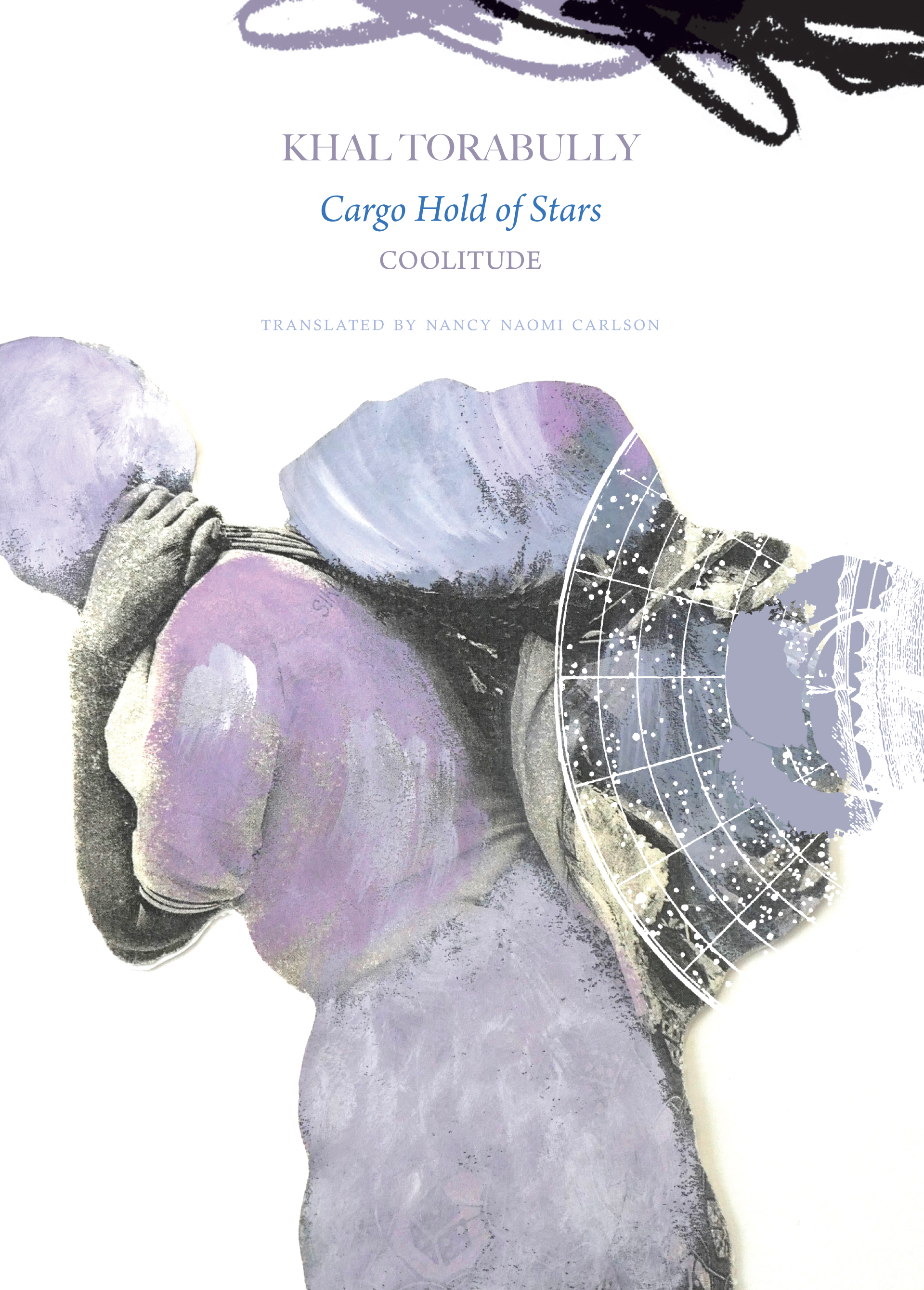
Absence is the only distance felt by the heart: Cargo Hold of Stars: Coolitude by Khal Torabully

Without a spurious memory,
the sole true blood, like salt
flowed around
every white seashell
wrenched from the belly of languages.

Speak so as not to forget—
isn’t this the true gift of tongues?  (p. 62)

The island nation of Mauritius, located in the Indian Ocean about 800 kilometres east of Madagascar, was uninhabited until the Dutch took possession of it in 1598. They named it after governor Maurice of Nassau, but despite two attempts to settle the island, they abandoned it to pirates. Mauritius was then occupied by the French East India Company in 1721 and renamed Ile de France. Over the next forty years settlement proceeded until the French Crown assumed control and established a thriving sugar cane industry, bring in African slaves to work the plantations. In 1810, the British captured the island. Four years later, their sovereignty was confirmed and the name Mauritius was restored but, in contrast to other British colonies, French customs, laws and language remained in place.

When abolition brought an end to slavery in Britain, pressure extended to the colonies and the replacement of slaves with indentured servants, primarily from India, began. Between 1849 and 1923, millions of men and women were brought to the island and beyond to other European colonies. Today, Mauritius, an independent Republic with administrative control of several nearby islands (including a still-disputed claim over the Chagos Archipelago), has a population reflecting its short history. Approximately two-thirds are of Indo-Pakistani origin, one-third Creole (French-African) and a small percentage of mixed Chinese heritage.[i]  A rich blend of cultures, traditions and religions have contributed to a diverse and growing economy in this small African country, but the wounds of a history of slavery and indentured servitude cannot be ignored. Countless people were torn from their homelands and transported in unsafe, sometimes deadly conditions to work in a harsh environment with little hope of ever seeing home again. Cargo Hold of Stars: Coolitude by Mauritian poet, essayist and filmmaker, Khal Torabully, is a poetic tribute to his own ancestors, and an attempt to give voice to those who made that fateful voyage, human cargo in the hold of ships, to the shores of Mauritius so many years ago.

I want to go to the grand bazaar
to seek at last the saffron of shadows
o refrain from your refrain
the hoist of spices clears the remains
o refrain from your refrain
for your bodies heaped on the wind:
cries of cumin: cries my journey’s route
cries of thyme: cries my future
cries of coriander corpses awaiting return.
And the bids of roots chased away
my terrified dreams all the way to hell.   (p. 37)

This collection moves backward, from the blended community of peoples forced into labour who not only held on to traditions carried in their memories, but, with the blending of cultures created a stronger community, through the horrors of the seabound journey, back to the point of departure from their distant motherland. Torabully’s mission is reflected in his reclamation and empowering of the word “coolie,” the pejorative term for primarily Indian and Chinese indentured workers once common throughout the colonies. Echoing Aimé Césaire’s term “Negritude,” he coins the idea of “Coolitude” to recognize the resilience, dignity and cultural and linguistic endurance of these forgotten men and women. By taking up their voices, he is at once giving them back their unique histories and setting them free:

Coolitude: because all humans have the right to a memory, all are entitled to know their first odyssey’s port. Not that this port is a refuge, but because in this place, forever unnameable, they raise those anchors that sometimes bind to their truth.

Yes indeed, all humans have the right to know the flames that ignite their dreams and silences. Even to be their own history’s moth.

By coolitude I mean that peculiar clashing of tongues which cracks the heart of hearts of millions of men for a history of crystals and spices, fabric and parcels of land.

Unsuspected music at the threshold of words from different horizons.

Within myself an encounter with those who invert the course of boats.

In a cargo hold of stars.  (p. 18)

Given the cultural diversity inherent among the population of the workers who were brought to Mauritius, honouring their experiences demands a language of its own. As translator Nancy Naomi Carlson explains in her Foreword, Torabully developed a “poetics of coolitude” by creating “a new French, peppered with Mauritian Creole, Old Scandinavian, old French, mariners’ language, Hindi, Bhojpuri, Urdu and neologisms.” The playfulness and musicality of his verse serves to accentuate the serious, even tragic themes that recur throughout this work, but provided a unique challenge for Carlson, whose wonderful translation of this work has been awarded the 2022 Oxford-Weidenfeld Translation Prize. She employed a “sound mapping” technique, identifying “salient patterns of assonance, alliteration and rhyme in the original, using a colour-coded system to help keep track within each poem, then tried to infuse this music into [her] translation without sacrificing the original meaning.” The results invite reading aloud—the resulting poems read like a cycle of songs—verses recited in the fields, on the ship, around the home fire. Songs of longing, songs of loss, songs of hope.

Cargo Hold of Stars: Coolitude by Khal Torabully is translated by Nancy Naomi Carlson and published by Seagull Books.

[i] Historical and population data from Britannica.com. https://www.britannica.com/place/Mauritius

No one’s immune from miracles: Shadow of Things to Come by Kossi Efoui

The destiny that now draws me far away from here is still called life, but I have to admit it’s like a leap into the void. They say that before he hits the ground a man falling from a great height sees all the moments of his existence come together and drain from him in batches of images.

And for me, it’s in batches of mingled words—that the life that brought me here is melting away.

In what unfolds as one final personal war of words, echoing against the darkness that surrounds him, the speaker at the heart of Shadow of Things to Come explains what has brought him to the edge of an uncertain future. Piece by piece he pulls together the memories that comprise his twenty-one years of life, essentially setting down the details of his past and readying himself to let go of all he has ever been and known. As he recounts his story, he chooses his words carefully, holding onto them in the shifting moonlight, for his is a society in which language has been reduced to meaningless nicknames and slogans. Through a spare and cautious narrative, the image of an Orwellian nightmare slowly takes shape.

This novella by Togolese author and playwright, Kossi Efoui, is set in an unnamed African nation which has fallen under some kind of dictatorial rule in which, during the first stage—the “Time of Annexation”—people are disappeared and forced to work at a place known as the Plantation until relieved by death or madness. Once the “commodity” (oil) is discovered, everything shifts. The disappearances stop and a new future is imagined. Now, in the service of “Mother Rebirth,” an aggressive campaign begins to bring tribal forest dwelling peoples into the “modern” world—for their own good and to secure pipeline passage for the precious resource. Although Efoui has lived in self-imposed exile in France in opposition to the Gnassingbé regime, since 1992, it would be misleading to read this dystopic work as any kind of direct analogy for his homeland or any specific historical or political condition. The origin of the society his characters live in is never explored. As a result, this tale has an  amorphous quality that makes it widely applicable in space and time. And all the more disquieting for it.

The speaker, from the room in which he is hiding, recalls that he was five years old when his father, a saxophonist, was spirited away by two shadowy figures. The removals appeared random. Agents would arrive with the common incantation: On account of the circumstances, prepare yourself to be temporarily removed from your nearest and dearest, and forcibly take their chosen target or targets away. But before they left, they would take all photographic evidence of the human forms they had come to retrieve. At the time it was unknown where all these unfortunate souls had been taken, only that “temporary,” like so much of the language employed, was devoid of meaning. Appropriate language was but another regulated item in a society in which compliance to an ever changing set of rules and guidelines was inforced:

Words themselves seemed to suffer the same restrictions as the circulation of approved commodities. The word ‘annexation,’ for example, was not to be heard anywhere. The way things were in my childhood, we kept silent a lot.

That degradation…says the speaker.

The loss of the speaker’s father drove his mother mad, she was soon committed to an institution and he was left in the care of Mama Maize, an eccentric woman who cared for a large group of abandoned or orphaned children, supporting herself by whatever means possible. Her goal was to pass on to them the tools, practical and emotional, that they would need to survive. Her moto was: No one’s immune from miracles.

And one day a miracle does occur. The speaker’s father returns, one of a minority of those who managed to survive removal. The speaker is nine years old by this point, The End of the Times of Annexation has been marked by celebrations of Independence and Rebirth, and when he has long given up hope of a reunion, out of the dust and shadows a man emerges still holding a saxophone case, “barely a skeleton, almost membraneless, wholly incapable of embracing—and voiceless.” The occasion is immediately recorded by a photographer.

The condition of the speaker’s father affords him a pension and a place to live in this new world order. Father and son move into this unit along with Ikko, an abandoned boy from Mama Maize’s home who is mistakenly added to the family group and becomes the speaker’s “administrative brother.” Our hero is a bright boy and this leads to his acceptance into the Spearhead Institute several years later. He is on his way to a promising future within the country’s societal structure but the confrontational atmosphere of the school puts him off. In time he finds himself skipping classes to hang out at Antique Editions, a bookstore run by Axil Kemal, a man who becomes a big brother or surrogate father, and offers an introduction to a world that runs against the norms of the rigid dictates of the state. It will be a mind opening relationship:

That’s what he was for me, the guide for my curiosity. At an age when you learn to believe in ‘thinking masters’, Axis Kemal was my laughing master and, sheltered beneath that laughter, my mind was kept safe from the diseases of truth, he said—that acne of the soul, he said.

It will also be a vital connection when the speaker has to make a decision about his own commitment to the future that is being laid out for him in a duplicitous society where what is said cannot be trusted and what is not being said cannot be fully imagined.

Shadow of Things to Come is, above all, a story about language and communication. The narrative itself is one step removed from a straight first person account—the protagonist’s reflections are being reported by an unknown third person narrator, who is listening to him, occasionally referring to him as “the speaker.” This undefined relationship, given the circumstances, adds a layer of uncertainty and potential threat. Whether he aware of his audience or not, the speaker is attentive to the power of words. To their use and misuse. He regularly comments on his ability, learned at an early age, to read the hidden intentions of others by the slightest creases in their faces. This is a skill that allows him to decipher the truths behind words, those spoken and left unsaid. But lack of communication, as with his mute and damaged father, troubles him deeply, as do the strange markings his adopted brother Ikko makes after returning from his conscripted service in the so-called “Frontier Challenge.” The tendency of people to fall back on slogans and stock phrases undermines communication and blurs the truth, but, of course, that is the point. When you can no longer trust what anyone says, one either goes with the program or looks for a way out. And to escape you may have to leave even your words behind.

Shadow of Things to Come by Kossi Efoui is translated from the French by Chris Turner and published by Seagull Books.

Celebrating forty years of Seagull Books

I’ve always maintained that I’m an accidental reviewer, writer and editor. These paths, almost exclusively volunteer, opened up when my professional life imploded in my mid-fifties. But I have always been a reader. The best part of this unexpected second-life has been the many enthusiastic readers, talented translators and dedicated small publishers I have come to know from around the world.  Many I’ve been lucky to meet in person as, for the first time in my life, I travelled beyond North America. To South Africa, Australia and India.

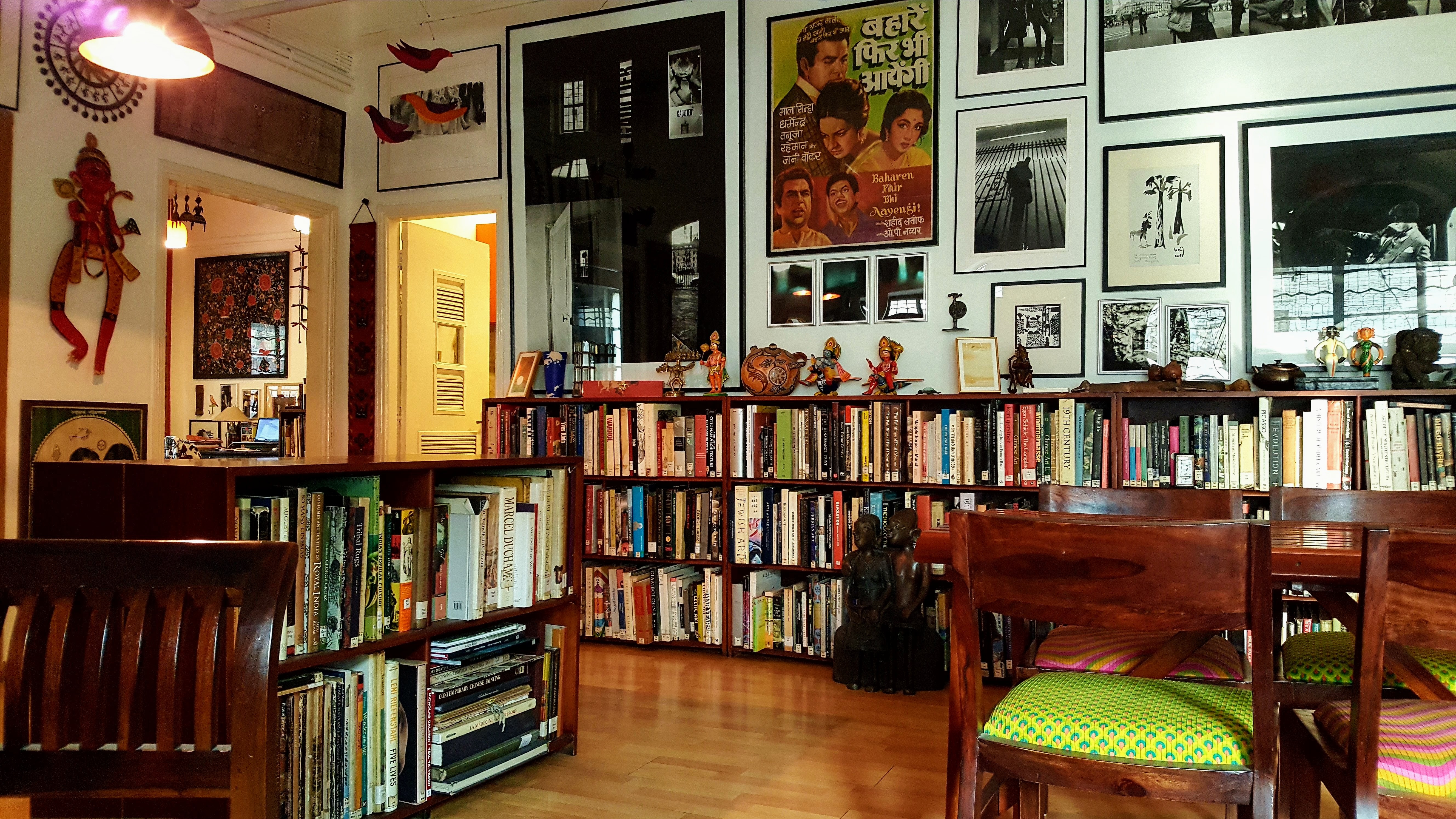
A common connection between many of the readers and translators I’ve come to know over the years is the inimitable Seagull Books in Calcutta. Thanks to an intriguing post on a blog I follow, I bought my first Seagull—The Loss Library by Ivan Vladislavić—sometime in 2015 and was instantly impressed by the presentation and the unique content. Before long I was a committed fan and in early 2018 I made my first “pilgrimage” to visit their office. At the time they were coming up on their thirty-sixth anniversary, celebrating a slow and steady climb from very humble beginnings to their present status as world-class publisher of international literature—all while maintaining their humility and remaining  close to their Calcutta roots. An interview I conducted with founding publisher, Naveen Kishore following my visit was published at 3:AM Magazine. One year later I was back and, had Covid not intervened, I would have been back again by now.

Now,in 2022, Seagull Books are celebrating forty years of producing beautiful books, many that would never have been picked up by other publishers, and supporting and encouraging writers, translators and independent publishers in India and around the world. The occasion has been marked by awards, interviews and articles like this recent one about their stunning office and bookstore in Architectural Digest India.

As an avid supporter of my friends at Seagull I also wanted to do something special to honour this milestone. I have, I confess, amassed a healthy collection of Seagull books over the years, many as kind gifts and many more with the assistance of my credit card, so I’ve set myself a reading goal for the balance of the year. Now, to read and review forty books would be ideal, but I’m not that fast a reader and it’s already September. However, I have read and reviewed nine of their books so far this year and I hope to add at least another eleven by year’s end. Twenty for forty. With this little side project I hope to call some attention to the range of books they publish. And enjoy plenty of good reading, of course!

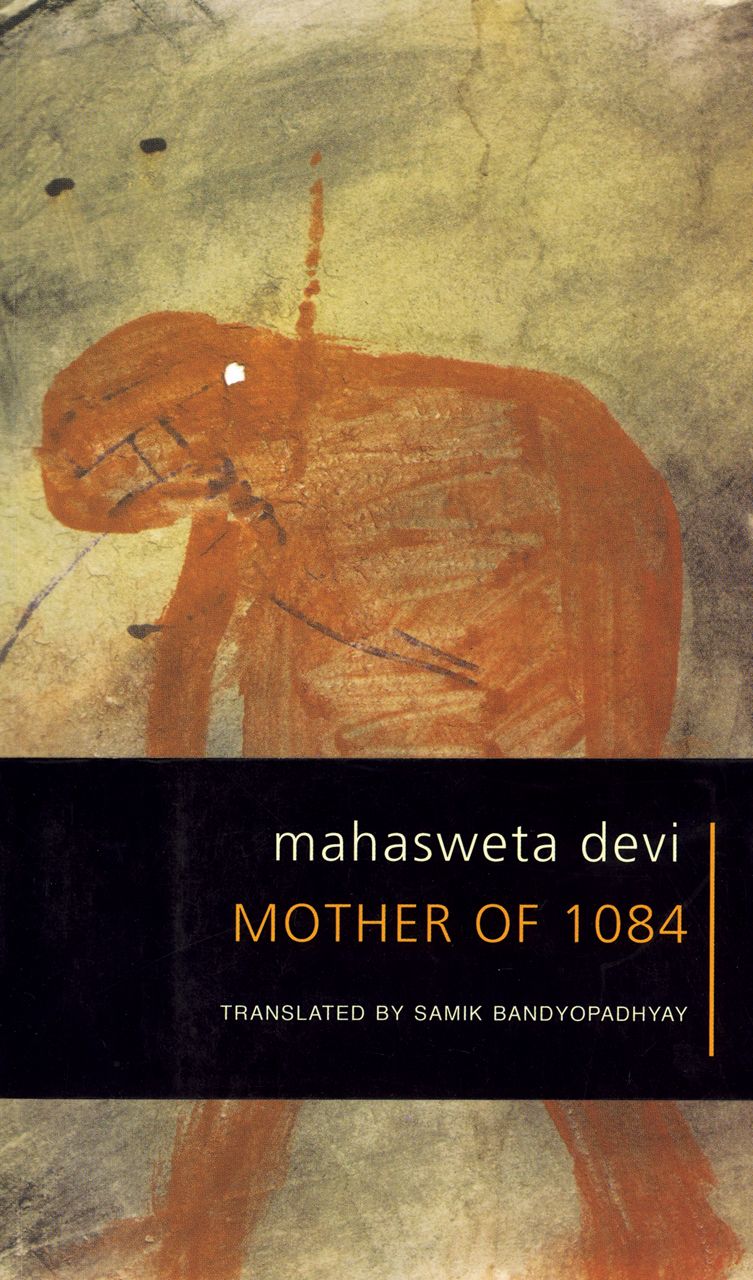
A chronicle of pain: Mother of 1084 by Mahasweta Devi

The pain had come at eight in the evening. Hem with all her experience had said, It won’t take time, Ma. The womb has started pushing it out. Hem held her hands and said, Let all be well. Let God bring you back, the two of you separate.

Sujata’s story is framed and defined by pain. As it opens she is asleep, her dreams have transported her back twenty-two years, to the morning following an agonizing night of labour and emergency surgery when she gave birth to her fourth child and second son, Brati. Now she is awoken by searing pain once more, on the same date, January seventeenth, but this time an inflamed appendix is to blame. Once her abdominal distress begins to settle, a glance at the calendar takes her back to the early hours of yet another January seventeenth, just two years earlier, when the telephone suddenly rang. At the other end of the line, a voice summoned her to the morgue. There she would find her beloved son reduced to a numbered corpse, 1084.

Set over the late sixties and early seventies, during the first phase of the Maoist-inspired Naxalite insurgency in West Bengal, Mother of 1084 by Indian writer and activist, Mahasweta Devi (1926–2016), is a focused examination of the impact of targeted violence on those left behind through the story of one woman stranded in her loss and grief. Sujata comes from a background of privilege, raised in a wealthy Calcutta family and afforded an education, but in marriage her life is constrained by the roles her social class expects of her. At the time of the critical events in this novel, she is in her early fifties. Her oldest son and daughter, Jyoti and Neepa, are both married and each have one child. Jyoti and his family, as custom would have it, lives in the family home. The younger daughter, Tuli, has a serious boyfriend. Her husband, Dibyananth—or as he is often described, “Jyoti’s father”—is a successful businessman with, once his wife decided she wanted no more children, a string of mistresses on the side. Sujata also has a job at a banking office, taken on her own initiative when her mother-in-law was still alive and commanding the daily affairs of the household. It is something she has refused to give up.

Brati, the youngest son, had always been unlike his other siblings. Imaginative and sensitive, he was easily frightened and deeply attached to his mother. From his earliest years on through adolescence, their bond was close while there was little love lost between Dibyananth and his second son. Naturally Sujata was blamed for spoiling him and making him weak. When Brati is killed with a group of young Naxalite revolutionaries, his father’s immediate concern is to assure that no one knows of his involvement. He pulls a few strings and Brati’s name is omitted from the news reports while at home all evidence of his existence is cleared away and locked in his bedroom on the uppermost floor. Sujata finds herself on the wrong side of her own family, on the side of the dead man who had failed to consider the shame and embarrassment he would cause. She is left alone to try to make sense of why her son had been drawn to such a radical movement and to understand the events of the night on the eve of his twentieth birthday that had cost him his life. It was a death that could not be classified in any of the usual ways—illness, accident, crime:

All that Brati could be charged with was that he had lost faith in the social system itself. Brati had decided for himself that freedom could not come from the path society and the state offered. Brati had not remained content with writing slogans on the wall, he had come to commit himself to the slogans. There lay his offence.

Extending from morning to evening over the course of a single day, exactly two years after his death, Mother of 1084 chronicles Sujata’s attempt to honour her son’s memory and perhaps find some sense of closure. At home, Tuli is preparing to hold her engagement party. Although it is her brother’s birth anniversary, the date has been determined by her future mother-in-law’s American guru—her own mother’s feelings be damned. Between attending to the necessary arrangements in the house, Sujata will make two excursions that will help fill in some of the missing information she craves, but not necessarily bring any peace.

In the afternoon she travels out from central Calcutta to the colony where the mother of Somu, one of Brati’s friends, lives. The young men killed had spent their last hours in her house. Sujata had first met Somu’s mother when she went to identify her son’s body and she had found in this poor woman a kind of a kindred spirit, another mother who understood the loss. But face to face with the graphic details of that fateful night and the absolutely devastating effect it has had on this impoverished family, she is reminded that her social status will forever be a barrier that cannot be wished away. The two women, brought together in shock and pain at the morgue and the crematorium, share an affinity that can never be more than temporary:

Time was stronger than grief. Grief is the bank. Time the flowing river, heaping earth upon earth upon grief.

Later that afternoon, Sujata makes another outing, this one closer in location and class, but again one with a divide that cannot be breached. For the first and last time, she visits Brati’s girlfriend Nandini who has recently been released from prison, bearing the injuries of torture and incarceration. In this encounter there is a bitter demonstration of the activist’s unshakable resolve, something the grieving mother will never fully appreciate. Upon returning home to where guests are gathered, Sujata is clearly affected by her experiences, and all of the memories and details that have come back to her over the course of that day. But even as pain rips through her abdomen, she must once more attempt to play her role as wife and mother. At least for the moment.

One of Devi’s most widely-read books, Mother of 1084 is not explicitly concerned with the broader political context of the Naxalite insurgency, rather it turns its attention to the intimate human experience—the appeal of the movement to individuals from different backgrounds, the reality of betrayal, the brutality of the violence, and the wide range of responses from the families and communities affected. That is not to suggest that this is not an intensely political work, but by centring an apolitical protagonist who finds herself navigating the space between the shocking indifference of her family and social class, the devastation of the bereaved who exist in the midst of conflict and destitution, and the anger of the activist committed to the cause at all costs, Devi crafts a powerful, unforgiving narrative. Sujata is the troubled conscience of this tightly woven novella but one is ever aware how very small she is against society’s pretense of normality in a time of upheaval.

Mother of 1084 by Mahasweta Devi is translated from the Bengali by Samik Bandyopadhyay and published by Seagull Books.

Everything is fine: Monsters Like Us by Ulrike Almut Sandig

Tolstoy’s famous adage about unhappy families might well apply to dysfunctional families, but as Ulrike Almut Sandig demonstrates in her starkly disarming debut novel, a harsh sameness can run through seemingly dissimilar families with equally tragic consequences. Sandig, a poet and writer born in Saxony in 1979, famously began her writing career as guerilla poet, posting poems on lampposts and handing them out on flyers. She has published four volumes of poetry and two collections of short stories and engaged in collaborative projects with composers, musicians and visual artists. Her poetry is at once politically charged and playful, as evidenced in her collection released in English translation in 2020, I Am A Field Full of Rapeseed, Give Cover to Deer and Shine Like Thirteen Oil Paintings Laid One on Top of the Other, which examines such subjects as the fate of migrants, the nature of modern warfare and the rise of nationalism through the revisiting of themes drawn from European folklore, in particular the tales of the Brothers Grimm which, in their unvarnished form provide ideal instruments to explore the barbarity of human nature. One could say that with Monsters Like Us, she is fashioning an elaborate, contemporary fairy tale that revolves around one of the most brutal realities haunting too many families. And like the original Brothers Grimm, the darkness runs deep.

So, off the top, let it be known that this is a story about families and it is a story about childhood sexual abuse. There is humour, there is affection and there is horror. The family as a microcosm of the world at its best and its worst, reimagined through a narrative that simmers with poetic intensity and suppressed rage.

Monsters Like Us is a coming of age story set in a rural village in East Germany during the final years of Communist rule. Ruth, like Sandig herself, is the daughter of a Lutheran pastor and a chemist’s assistant. She has an older brother called Fly, a reference to his love of being in the air whenever and however possible, and their lives revolve around their father’s profession, which, given the political context, makes him a bit of a reactionary. But their home contains a degree of tension, a feature not unknown in other homes in the community where a certain measure of negative physical interaction commonly marked the relationships of spouses, and parents and children. Ruth narrates the opening and closing sections of the novel, addressing a Voitto—a future lover, it turns out—with a matter-of-fact tone that increasingly appears to mask her emotion. Early on she describes overhearing a confrontation between her parents that ends with a slap:

That is the first slap in the story, Voitto. No idea whether it was Mother or Pap who delivered it and whether it was Pap or Mother on the receiving end. But after a few times round this haematoma of the sun, I can tell you this for one: it all starts with believing a slap can be the natural conclusion to a conversation. Fly and I turned over onto our sides and rolled in under our duvets. Then Fly turned off the light.

Soldiers on maneuvers were a frequent sight in the area due to the fact that barracks were located nearby. One day a new boy appears in Ruth’s kindergarten class, tall with white blond hair and a face that wrinkles when he smiles. Viktor’s father was a non-commissioned officer in the barracks of the People’s Army of the Republic, located next to the Soviet barracks, and his family had moved into a newly developed part of town. This all set him apart, earning a frequent “that Russian boy” epithet. Although he was not Russian, his mother spoke Ukrainian to him at home, a background she endeavoured to hide. Ruth is drawn to this strange new boy and they soon become fast friends. Unknown to one another at the time, it will turn out that they each harbour terrible secrets: Ruth’s maternal grandfather touches her inappropriately every chance he gets, a behaviour she does not understand but fuels a fascination with and fear of vampires; Viktor’s brother-in-law, his half-sister’s husband, enters his room whenever they visit or are invited to babysit, and forces him to engage in sex acts.

Neither family suspects a thing—after all, are these not trusted people in the children’s lives? And the children themselves? “If you don’t talk about it, then it hasn’t really happened,” Ruth says. “That’s right, isn’t it, Voitto? That’s how we learned it.” As the years pass, Ruth seeks to find escape in music. Naturally gifted she spends hours with her violin. It allows her to forget everything. She is aware that her playing seems to have an emotional affect on anyone else listening, even if she feels nothing. And that is fine. Viktor pours his energy into his body, building his muscles, protecting himself with a veneer of power, while at school he works his way into the local gang of tough kids, a group that will become small scale neo-Nazi styled punks as they get older.

The second half of Monsters Like Us, takes an unexpected turn. Unable to find work in the now united Germany and eager to put distance between himself and both his extended family and his rough riding friends, Viktor heads west to France where he has applied for a position as an au pair, feminizing his name on the application to aid his ability to secure an placement. As he gets off the train at the station in a town near Marseilles:

These were the last few metres during which the boy felt completely himself. That didn’t occur to him particularly at the time. But by the time he had left the platform, he was just another exhausted passenger arriving. Later he would be a salaud de Nazi. The stubborn boy with the inadequate vocabulary, the East German colossus in combat boots, Germanic giant-child, a case, a traumatized hobgoblin and other things besides. For his parents, he would simply be our successful son travelling abroad.

For the wealthy family in the expensive villa, he is an unwelcome surprise. But as he is the sixth au pair to be with the family, they have little leverage with the agency and have to give him at least a week or two. He will stay for months, gradually improving his French, preparing complicated recipes, ironing their laundry and walking the children to and from school. It is a most unlikely outcome. Yet behind the fancy façade, a very damaged family drama is playing out, one that daughter Maud is too young to understand, and Madame is either too naïve or too proud to acknowledge. Viktor recognizes his own agony magnified in the son, Lionel, who refuses to meet his eyes for the boy’s circumstances are an order of magnitude more terrifying than his own troubled history. As he keeps telling himself “everything is fine” he knows that it is not.

It may be hard to imagine, given this very rough outline, but this is a brave novel charged with a brutal beauty. The underlying subject matter is exceptionally difficult, but is dealt with with great care—openly as needed, but more often alluded to indirectly, echoing that unspoken awareness no one wants to address. The effect is all the more powerful for it allows the tension build within the reader. Where Ruth suppresses her pain, channelling her energy into her music, quiet, sensitive Viktor is potentially a ticking timebomb. Sandig’s lyric prose, captured brilliantly by translator Karen Leeder who has translated two volumes of her poetry, is tight and spare, directed into carefully crafted scenes that often end on an open note. Her narrative sensibility is well played. Ruth’s first person account, directed to an otherwise unknown adult contemporary captures a child’s spirit through a more mature perspective. Viktor’s time in France is a third person narration, from his perspective, with the regular insertion of Maud’s child’s eye observations and commentary. Although young, she is perhaps the most sensible member of her family, but one can only worry about the ultimate fate awaiting both of the unfortunate children of the wealthy Madame and Monsieur.

As her poetry clearly shows, Sandig does not resist shining a light on the darkness in our world. With Monsters Like Us she turns over another stone that many try to ignore, and shows that it would be easy to point to a troubled state that is falling apart to explain a level of domestic discontent and even violence, but this is far more than a fairy tale set in a crumbling landscape, it is a horror story that can just as easily unfold in the most ostensibly desirable settings of wealth and privilege. And if the “monsters” of the title refers, as it does, to those who have been hurt by time or circumstance, the true monsters too often go unnoticed and unpunished. This vital book is one of the most intense and moving works I have encountered in a long time.

Monsters Like Us by Ulrike Almut Sandig is translated by Karen Leeder and published by Seagull Books.
 

Reading Women in Translation: Looking back over the past twelve months

For myself at least, as Women in Translation Month rolls around each August, there is, along with the intention to focus all or part of my reading to this project, a curiosity to look back and see just how many female authors in translation I’ve read since the previous year’s edition. I’ve just gone through my archives and am pleasantly surprised to find twenty titles, the majority read in 2022. Within this number are several authors I’ve read and loved before and a number of new favourites that have inspired me to seek out more of their work.

First among these is Lebanese-French writer Vénus Khoury-Ghata, whose The Last Days of Mandelstam (translated by Teresa Lavender Fagan) so thrilled me with its precision and economy that I bought another of her novellas and a collection of poetry, Alphabet of Sand (translated by Marilyn Hacker). I’ve just learned that another of her Russian poet inspired novels, Marina Tsvetaeva: To Die in Yelabuga, will be released by Seagull Books this fall. I can’t wait!


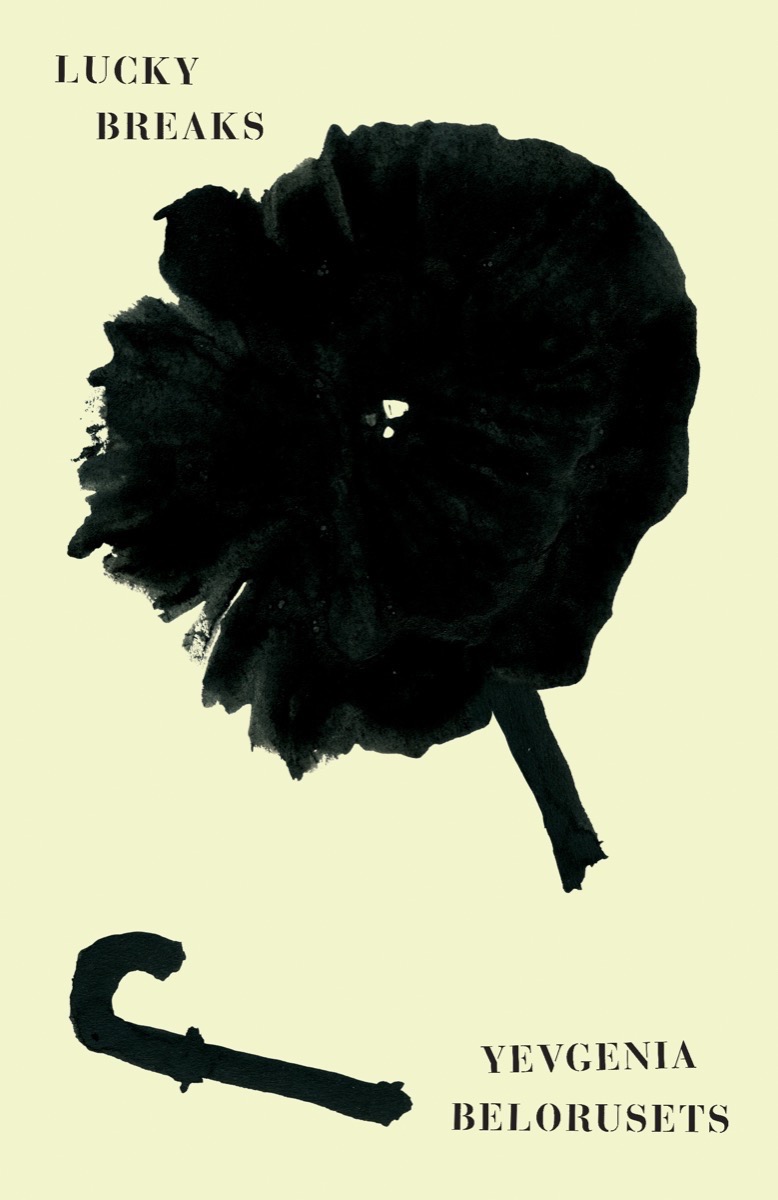
The advent of the war in Ukraine instantly drew my attention to a tiny book I had received from isolarii books. The name Yevgenia Belorusets became suddenly and tragically familiar as her daily diary entries from Kiev were published online. I read that small volume, Modern Animals (translated by Bela Shayevich), drawn from interviews with people she met in the Donbas region and as soon as it became available I bought and read her story collection Lucky Breaks (translated by Eugene Ostashevsky). Although both of these books reflect the impact of war in the east of the country, they could not be read without the context of the full scale invasion underway and still ongoing in her homeland.

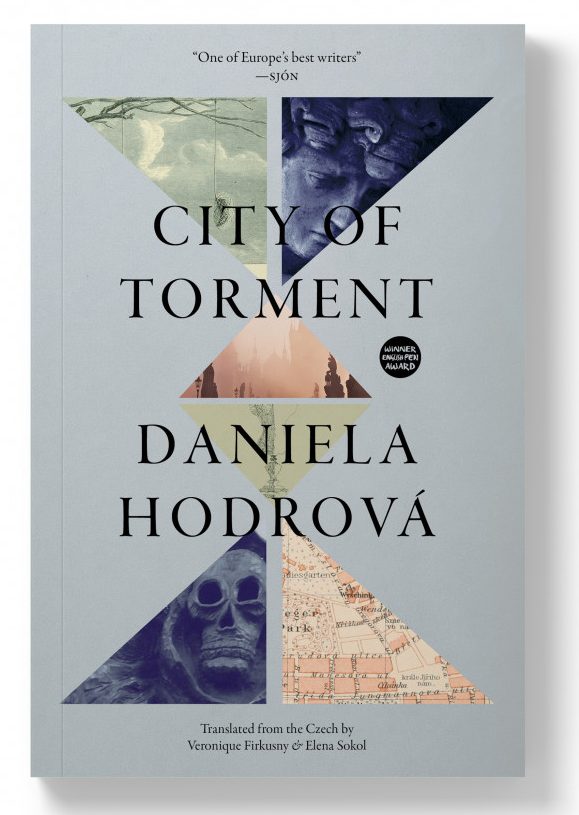
Another author I encountered for the first time that inspired me to read more of her work was Czech writer Daniela Hodrová whose monumental City of Torment (translated by Elena Sokol and others) is likely the most profoundly challenging work I’ve read in along time. Upon finishing this trilogy I turned to her Prague, I See A City… (translated by David Short and reviewed with the above) which I happened to have buried on my kindle. A perfect, possibly even necessary, companion.

My personal Norwegian project introduced me to Hanne Örstavik, whom I had always meant to read. I loved her slow moving introspective novel, The Pastor (translated by Martin Aitken) and have since bought, but not read, her acclaimed novella, Love. However, lined up to read this month, I have her forthcoming release in translation, Ti Amo, a much more recent work based on her experience caring for her husband as he was dying of cancer. The only other female author I brought into this project was Ingvild H. Rishøi whose collection Winter Stories (translated by Diane Oatley) was a pure delight. I have been making note of other female Norwegian writers to fill in this imbalance in the future.

The past year also brought new work by two of my favourite poets: a book of prose pieces by Italian poet Franca Mancinelli, The Butterfly Cemetery (translated by John Taylor), and the conclusion to Danish poet Ursula Andkjær Olsen’s epic experimental trilogy, My Jewel Box (translated by Katrine Øgaard Jensen). In May I had the honour of speaking with Olsen and Jensen over Zoom for a special event—it was a fantastic opportunity I won’t soon forget. I also became acquainted with a new-to-me Austrian poet, Maja Haderlap, through her excellent collection distant transit (translated by Tess Lewis) and have since added her novel Angel of Oblivion to my shelves.

Among the many other wonderful women in translation I read over the past year, Geetanjali Shree’s International Booker winning Tomb of Sand (translated by Daisy Rockwell) needs no introduction—it is an exuberant, intelligent and wildly entertaining read. On an entirely different note, Rachel Careau’s brilliant new translation of Colette’s classic Cheri and the End of Cheri completely surprised me. I had no idea what a sharp and observant writer she was, in fact I didn’t know much about her at all and I discovered that she was quite the exceptional woman. Changing direction again, In the Eye of the Wild, French anthropologist Nastassja Martin’s account of her terrifying encounter with a bear in a remote region of Siberia (translated by Sophie R. Lewis) approaches the experience in an unexpected manner that I really appreciated.

Keeping with nonfiction for a moment, Grieving: Dispatches from a Wounded Country by Cristina Rivera Garza (translated by Sarah Booker), a collection of essays about contemporary Mexico, was a difficult, necessary read. Annmarie Schwarzenbach’s account of her overland journey to Afghanistan with Ella Maillart in 1939, All the Roads Are Open (translated by Isabel Fargo Cole) was another book I had long wanted to read that did not disappoint but which carries much more weight given the more recent history of that region. Finally, My Life in Trans Activism by A. Revathi (translated from Tamil dictation by Nandini Murali) offers vital insight into the lives of hijra and trans women and trans men in India from a widely respected activist. Tilted Axis in the UK will be releasing this book to an international audience later this year.

Rounding out the year, were three fine novels. First, I after owning it for years, I finally read Seeing Red by Chilean writer Lina Meruane (translated by Megan McDowell) and was very impressed. Last, but by no means least, I read two new releases from Istros Books who have an excellent selection of women writers in their catalogue. Special Needs by Lada Vukić (translated from the Croatian by Christina Pribichevich-Zorić) captures the slightly magical voice of child narrator with an undisclosed disability in a remarkably effective way, while Canzone di Guerra by the inimitable Daša Drndić (translated from the Croatian by Celia Hawkesworth) offers a fictionalized account of her years in Canada as a young single mother that was most enlightening for this Canadian reader.

I have, at this point, seven books selected for this year’s Women in Translation Month (#WITMonth) and we’ll see how I manage—and now I also have a goal to exceed for the eleven months before August 2023! I would, by the way, recommend any of the titles listed above if you are looking for something to read this month.

Pride Reading—Three: Love and Reparation by Danish Sheikh

My first two Pride reads for June 2022 were works by trans women, from India and the US respectively. My third read returns my attention to the Subcontinent, and dramatizes the impact of two important legal milestones impacting the Indian LGBT community over the past few decades. Part of Seagull Books’ Pride List, Love and Reparation: A Theatrical Response to the Section 377 Litigation in India is playwright and activist lawyer Danish Sheikh’s professional and personal reckoning with the effort to overturn Section 377 of the Indian Penal Code, the colonial era prohibition against “carnal intercourse against the order of nature” which had long been used to target members of the LGBT community, and the strange emotions that can arise when a lengthy battle is finally won. If that sounds like dry subject matter for theatre it is anything but. Sheikh deftly weaves material drawn from court transcripts and witness affidavits, with his own experiences and those of others to create a multi-voiced, engaging response to a life-altering legal decision.

It was, of course, not an easy road to decriminalization. Love and Reparation gathers two plays into one volume, a pairing that reads as both complimentary and necessary. Section 377 was first overturned in 2009, following a long, ultimately successful challenge of its constitutionality, in Delhi High Court, by the NAZ Foundation, an NGO. This welcome release would prove to be short lived; a week later an astrologer filed an appeal to the Supreme Court. In 2012, the final arguments in the case were heard over a six-week period. The first play, Contempt, draws on the court proceedings to creatively stage the legal arguments and affidavits that were presented to the judges. It is grounded in reality, as the playwright puts it, but is allowed to wander into passionate and poetic musings as witnesses share their experiences. The play ends with the judges’ fateful decision. In December 2013, the Delhi High Court ruling was reversed and same sex activity was once again criminalized.

A series of petitions challenging the validity of the judgement followed and after much delay, a five-judge bench was finally assembled to hear the matter in 2018. In September of that year, the earlier ruling was overturned, effectually decriminalizing queer sexual relations, in privacy, between consenting adults. The second play Pride, dramatizes the state the community finds itself in once the battle is over—both joy and uncertainty arise once the unifying bonds of the battle are no longer holding people together or framing their engagements with one another. The what now? moment. As Sheikh says:

Pride was my attempt to come to terms with—what? This time around, the object of my dissent was less clear. All I knew was that I had to write my way through this tangle.

Or, perhaps, to wrought this tangle into shape.

The drama revolves around sessions between a gay man and his therapist. He is trying to figure out why love seems so elusive to him. A character chorus of voices spread through the audience, speak to the legal case and the post-ruling experiences and presence of LGBT persons in Indian society.

For each play the setting and stage directions are simple and clear. That makes them easy to read and imagine in performance. By incorporating a blend of history, legal argument, personal accounts, and literary references, Sheikh has created drama that is both moving and at times surprisingly funny. In Contempt, the judges unwittingly supply the humour, pushing the lawyer to the point of absurdity at times and taking a little too much interest in the exact nature of unnatural carnal knowledge. The playwright admits he didn’t need to alter their words as found in the transcripts. The dramatized witness statements from a gay man, two lesbians and a transgender woman bring to life the reality of forced psychiatric interventions, innocent love affairs and brutal treatment from the police.

Pride demonstrates that legalization is not the end. There are, of course, more battles to wage to level the playing field for LGBT people, but there is also an uncertainty about how to live and love in a decriminalized landscape. How to repair all the years of existence up against the fear of being arrested simply for loving, for being yourself. The dynamic between the older female therapist and the young gay man whose conversations form the core of the play is very effective, and gives the drama it immediate emotional energy. As A. recounts his multiple failed attempts to find someone to love, T. challenges his conclusions.

A.  How does it work? How can it just come and go without warning? How is this not the most terrifying thing in the world, how can I wake up one morning and realize I’m out of love with this man who is otherwise perfect for me? How could Socrates wake up one morning and realize he’s out of love with me?

T.  Maybe he wasn’t perfect for you?

A.  Maybe

T.  And you know you weren’t perfect for Socrates.

A.  Possibly

T.  And then there’s the other thing.

A.  That I’m terrible at this stuff?

T.  That nobody is actually perfect for anybody else. It’s never not work. Sometimes you choose to do the work. Sometimes you decide it isn’t worth the work. You can’t choose how you feel, you can’t choose when it comes and goes. But that other part—that you can choose.

Their sessions are broken up by interludes during which the chorus of voices/characters speak to the legal fight against Section 377, the ways their lives have or have not changed since it was ruled unconstitutional, and, as needed, taking on a role within the therapy sections.

As an non-Indian LGBT person, I was not aware of the exact status of queer people in the country until more recently, but the final decision on Section 377 did come down following my first visit to the country, so it was of great interest to me. No matter what concerns face LGBT folk in the west, especially with the increasing pressure of more extreme right-wing conservative political influence, we are still accustomed to much more freedom and access to resources than our brothers, sisters and peers in many countries. The interesting thing for me in this book, particularly with Pride, is the examination of the degree to which achieving a measure of freedom can lead to a confusion or loss of meaning. It occurs at the level of the “community” leading to splintering and divisions, but it also happens in a deeply private way. Given my own personal journey, I have always held that I feel no shame but cannot embrace the concept of Pride. Without disclosing the protagonist’s revelation, I will say that this play has really caused me to question my conviction.

I feel this pair of plays holds much to appeal to readers interested in contemporary drama, legal debate, social justice and the evolution of LGBT rights, in India and beyond. The playwright clearly frames his motivation and inspiration for the writing of these plays in his introduction, while a timeline and an extensive resource list round out the supporting material. But most critically, at the heart of both plays are very important recognizable, sometimes disturbing, human stories that deserve to be heard.

Love and Reparation: A Theatrical Response to the Section 377 Litigation in India by Danish Sheikh is published by Seagull Books as part of their Pride List series.

Among the immortals: The Beloved of the Dawn by Franz Fühmann

Franz Fühmann was a prolific and important East German poet and writer whose own life was fascinating. Born in 1922, in the predominantly German Sudetenland region of Czechoslovakia, he was the son of an apothecary who fostered the development of an ardent German nationalism. After the annexation of Sudetenland in 1938, he volunteered for the Wehrmacht but was deemed to be too young so he joined the Reich Labour Service which performed construction work for the military. He saw little direct action until the end of the war when, between 1941 and 1943, he was deployed to various areas of Ukraine. Then, as Germany’s final retreat began, he was transferred to Greece, an experience that would later have a significant influence on his writing. In the closing days of the war he was captured by Soviet forces and would spend the next four years in a POW camp in the Caucasus.

Fühmann emerged from captivity passionately converted to the tenets of Soviet Socialism; he had rejected the Nazi ideology on which he had been raised and was dedicated to the vision of a new world view. He chose to settle in the GDR where his mother and sister were living. He would remain there for the rest of his life, working solely as a freelance writer from the early 1950s until his death in 1984, but his conviction to the realist approach to poetry and literature favoured by the government soon wavered, as his writings grew increasingly confrontational and, to the Stasi, suspect. He would, however, go on to produce work in a wide variety of genres, for both adults and children, and became an important advocate for the translation and publication of authors previously banned in East Germany and a mentor for younger non-conforming writers like Wolfgang Hilbig and Uwe Kolbe.

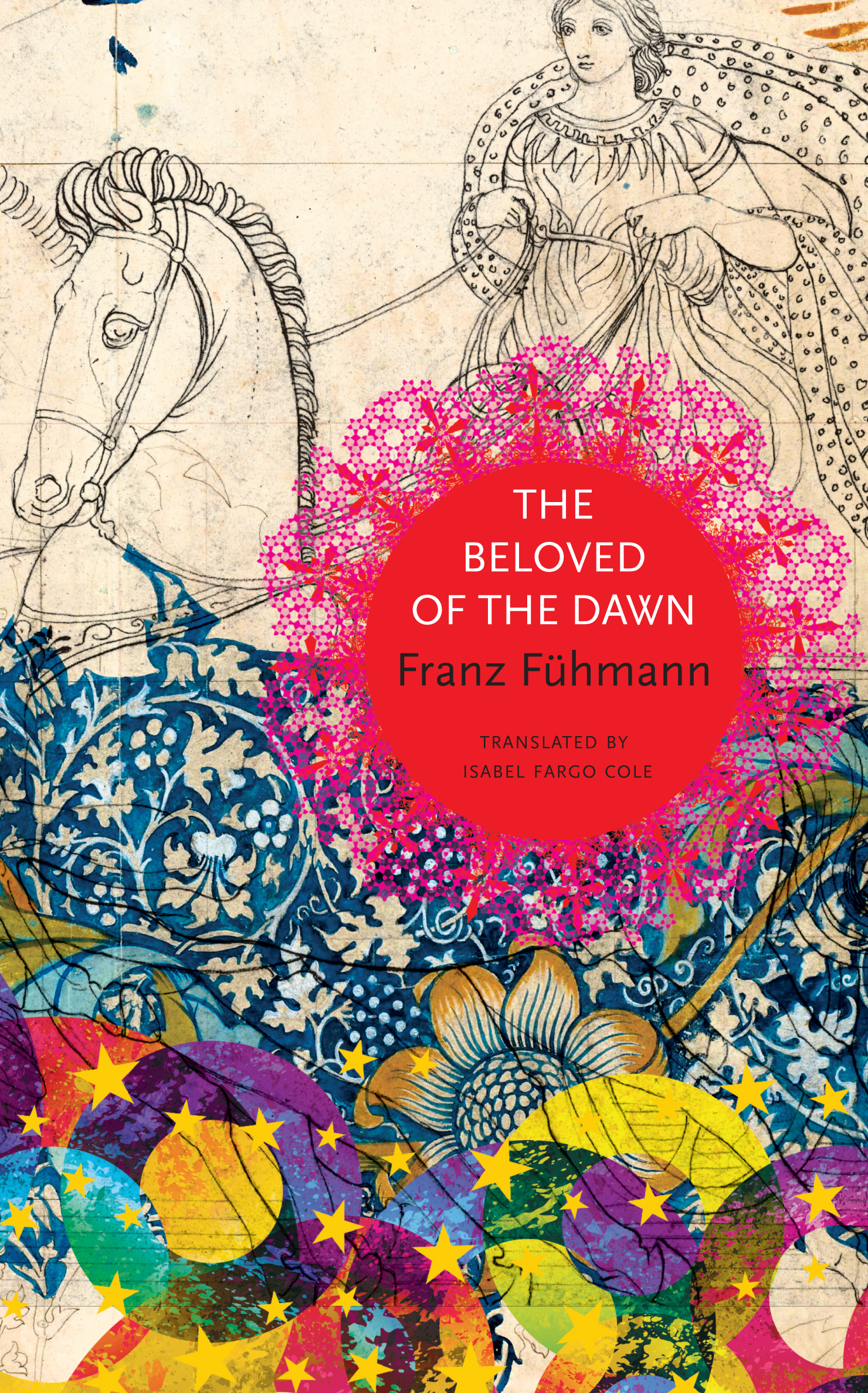
I have previously reviewed Fühmann’s story cycle The Jew Car, which offers a fictionalized account of his childhood and war years, and his magnificent final major work At the Burning Abyss, a meditation on poetry—in particular that of Georg Trakl—and its power to speak to what is fundamentally human. In this essay he reflects on the way Trakl’s poetry triggered a crisis of literary faith, so to speak, allowing him to heal and understand himself in a way no rigid doctrine could ever manage to do. Both books are translated by Isabel Fargo Cole and published by Seagull Books, as is the very different Fühmann title I am looking at here, The Beloved of the Dawn, a slender volume comprised of four retellings of Greek legends, beautifully presented alongside vivid digital collages by Sunandini Banerjee.

As mentioned, Fühmann spent time in Greece toward the end of the war. As translator Isabel Cole indicates in her note at the end of The Jew Car, this opportunity to spend time in the country was especially valuable: “Since childhood Greek mythology had fascinated him, and the confrontation with Greek reality, the juxtaposition of myth and war, would inspire much of his literary work.” This awareness charges his personal take on these stories—drawn from a collection originally published in 1978—with a certain tension that gives them a contemporary energy. Despite its colourful presentation, this is not a book for young children, rather he is speaking to young adult and adult readers, fleshing out well known incidents with a very human, somewhat subversive tone.

The first of the four legends to which Fühmann turns his imagination in this collection is Homer’s Hymn to Aphrodite (219-239) which chronicles the love of Eos, the goddess of the dawn, for the mortal Tithonus. She begs Zeus to grant him immortality so they can spend eternity together, but forgets to ask for eternal youth. The reality of life with an immortal mortal is vividly evoked. The second tale focuses on Hera’s magic-enabled seduction of her wandering husband as depicted in Homer’s Iliad, chapter XIV, portraying the great king of the gods, he of enormous appetites, in his moment of weakness and subsequent bitter revenge:

That night, three hundred years, he’d sworn fidelity: one night, but what a night!—He was Zeus, and he was who he was.—Then he’d deceived her ten thousand times: with her sister, with the Wanton One and her retinue, with all the nymphs, all the Muses, all the Horae, all the Charities, with all the wives of all the gods and all the daughters of all of the goddesses,  even with his own, not to mention countless mortals: she-humans, she-beasts, and even plants, and with boys, too, with monsters, with ghosts.—He was who he was, and now he was one who desired Hera and none other.

The third story—dedicated to Heinrich Boll— recounts the silenus Marsyas’ reckless challenge of Apollo to a musical duel with melodious pipe cursed by Athena. In its graphic depiction of agony, this version makes the hideously aging Tithonus’ fate seem mild. Marsyas’ grisly destiny is hinted at throughout, but he ignores the warnings of dreams and even fails to believe his opponent is serious in exercising his reward for winning as the blade slips beneath his hide. Fühmann makes visceral what no marble statue and few paintings can aspire to.

The final tale similarly breathes depth and life into another of the less fortunate characters in the Greek pantheon of major and minor deities, in this case Hephaistos the physically disabled god of fire, the eternal guardian of blacksmiths, craftsmen and artisans who was, in this role, worshipped and yet required to serve in Olympus. Fühmann portrays this conflicting position, its balance of strength and weakness clearly in his hero. The story at hand is, of course, the famous account of Hephaistos’ response to the news that his wife, Aphrodite, is having an affair with Ares, the god of war. The crafting of an invisible, infinitely strong web to capture a theoretically invincible foe is depicted with poetic, elemental detail:

He laid his hand on the pristine metal.

The beauty of its coldness and resiliency, and the force of the fire that conquers them both.

He melted off a handful of the material and once it had cooled began to rub it between the fingertips of his right hand while stretching it out with his left. When the hot metal had a ductility, when a cool hardness such as he had never encountered, such as could arise only here, as the solar plexus of all metal veins between the heart of the earth and its diaphragm.—Soul of matter: his medium.—What he need now was the finest of eyelets: a flake from a diamond, shot through by a sunbeam.

The net he weaves and the trap he sets succeeds, but only so far. Hephaistos is too bold, and too stigmatized to not be mocked even in his triumph. The resulting story is one of a bittersweet and complicated relationship between a gifted genius and his fellow gods and goddesses, even his beautiful wife.

The strength of each of the tales collected in The Beloved of the Dawn lies not in the overall arc of events which have been illustrated and revisited countless times, but in Fühmann’s ability to tell them anew. His distinctive prose style which employs poetic fragments and a frequent use of em-dashes, often to open new sentences, allows him to add colour, shadow and character to these archetypal figures and convey a relatable, recognizable agency to his portrayals of these familiar legends. His narrative acknowledges that many poems and artworks have come before, and openly claims to be more interested in some of the lesser known backstory, but he never abandons the mythic form. Witty and sharp, he is having fun with these timeless tales of Gods behaving badly.

The Beloved of the Dawn by Franz Fühmann is translated by Isabel Fargo Cole and published by Seagull Books with full colour illustrations by Sunandini Banerjee.

Knotted Grief by Naveen Kishore (and a few words about Seagull Books for World Book Day 2022)

As I write this, it is World Book Day, April 23, 2022 and it seems the perfect time to call attention to a man who has dedicated his life to making important, challenging books available to eager readers and celebrating the book itself as a work of art, an object as delightful to look at and hold as it is to read. And now, that man, Naveen Kishore, the founder of Seagull Books, has a book of his own, Knotted Grief—a collection of piercing, spare poems that turns its attention to sorrow and anguish as experienced in both national and intimate spaces.

Poetry is, for Kishore, as I understand it, the product of a daily practice of writing—of putting words to the page every day, regardless of available time or present situation. As a friend, it is a discipline he has recommended to me, rather insistently in fact, but I fear I fell off the page some time ago and am only just climbing back on. His poetry has also been shared with those around him, appearing online here and there, even arriving on occasion in my own email inbox. One could even say that poetry tends to inform and permeate his prose and his speech—as if it has become, not a vocation or an exercise so much as a way of being in the world.

Knotted Grief, coalesces around “Kashmiriyat,” an extended cycle inspired by the devastating events in Kashmir in recent years. Across 105 spare verses Kishore paints a pained portrait of violence, misery and loss. The flickering light of candles, personified shadows, cold winter winds, bloodied earth, strangled silence—images of war fold in on one another, frozen by the photographer-poet’s eye and trimmed to their bare essentials, then revisited again and again.

6
bird stripped
of sight
seeking
refuge
in a sky
full
of bullet wounds

Most of the verses are short, a handful of lines, but midway through the sequence—50, 52, 55—stretch out, with anger and desperation rising:

elsewhere the echoes
of a candle flame muffled
by fingers that knew no pain

the stone floor
beginning to feel the cold
as bare footsteps walked over its grave

like a whisper
the angel gliding past
its silhouette fighting shy of the firelight

on a clear and blue sky is heard
the song of the winter wind
utterly and completely silent

a child’s memory of the future? (from 55)

Sadly, armed conflict and occupation are not unique to any one place or time and to read this poem as war rages in Ukraine and elsewhere, the words are not in any way diluted. Rather they dig deeper, strike closer to the core. In the following sequence, “Street Full of Widows” the painful universality of the human cost of war strikes hard:

Go gather the flowers               for the wreaths
go                   from door to door
                      gathering
.                            sheets for the shrouds


there is no time to grieve

When, then, we might ask, is the time to grieve? Grief is a fundamental part of life and living, complex and compounded as we grow older, and this theme in its more intimate sense guides the balance of the poems in this collection. The weight of sorrow is, at times, heavy, and Kashmir still lingers in the shadows, while the interplay of memory, dreams and desires carry the later pieces in a more fanciful and uplifting direction. Throughout, an unmistakable energy lifts and carries the poetry, rising and falling in mood and intensity, the weight and balance of each line carefully measured. One might imagine that the poet’s background in stage lighting serves him well. Certainly Naveen Kishore’s deep association with theatre, literature and photography stretching back over more than four decades fuels this moving debut.

Writing about books these past few years has opened for me a network of independent publishers I might never have encountered had I continued to let the literary bestseller lists guide my fortunes. It is, I suppose, one of the small gifts of having to leave my profession earlier than planned. I bought my first Seagull Book in 2015 and made my first pilgrimage to Calcutta in 2018. I’ve been back to the city once but hope that, if all goes well—as the world conspires against us daily—I will be able to visit Naveen and the rest of the Seagull family on this, the fortieth anniversary year of operations for a publisher that believes in the power and beauty of literature.

Knotted Grief by Naveen Kishore is published in India by Speaking Tiger and in Australia by Gazebo Books