This taut novella opens in 1945. Above a little village, Mijo lies hidden in the woods, looking down at he house where his wife and sons live. In his yellow-brown uniform he must stay out of sight. The war is over and the soldiers of the Nazi-allied Ustaša force are now on the run or in hiding. He hopes against hope that he will someday be able to return to the little family he left behind when he was recruited into what would become an infamously brutal campaign:
He lay on the blanket that had over the last days soaked up the smell of rotten leaves and damp earth: under his thick brows he spent most of his time watching the village, then the mixed canopy above his head, noticing all the while how the colors were fading. Sometimes out of the corner of his eye he’d peek at the gleaming orb of the sun, gauging the time of day; never had time passed more slowly: he kept lying there in that one spot, sensing in his nose the sharp odor of melting resin, and all that was moving around him began to bother him: the sun, the wind, the birds that often flew low with their winged sounds over the forest.
Celebration, set in the mountainous region of Lika in central Croatia, explores the harsh realities that can lead poor, under educated individuals to embrace an ideology that appears to offer something they need and become involved in actions that they do not fully understand. There is no question that Mijo is hardened and isolated by his experiences, but in this, our initial encounter with him in the first chapter of this book, his emotions swing between anger and an idealized hope that he will be able to avoid the fate that seems almost all but inevitable.
Croatian author Damir Karakaš does not provide an elaborate historical context for the events reflected in the four short chapters that comprise Celebration, preferring to allow references to slip in through the thoughts, comments and actions of his characters. However, in an interview for Center for the Art of Translation, he describes the people of Lika as predominantly peasant farmers and herders who were historically expected to be ready to go to war at a moment’s notice for a series of occupying forces over the years:
Croatia has always been governed by powers who exploited it. In the First World War, Croats from Lika fought, wearing the uniform of the Austro-Hungarian army, on the side of the Central Powers, against the forces of the Entente. Serbia, on the other hand, was part of the Entente, so when the Central Powers lost the war, the Yugoslav peoples were organized in a new country that the Croats were not pleased about. Croats referred to the new country as a “dungeon of peoples.” And I have to say that the Serbs did dominate the new country. Most of the generals in the army were Serbs, the leaders in the cities were also Serbs, and the government treated Croats very poorly, especially in Lika, with constant harassment, steep taxes, villagers were not allowed to keep dogs, there were even times when women were required to pay for the bullet that the constables used to kill their husbands.
This environment proved to be ideal for fertilization of the seeds of the kind of extremism promoted by the ultranationalist organization the Ustaša. With the onset of the Second World War, under the patronage of Hitler, the independent state of Croatia was formed, while the Ustaša leadership embraced Nazi ideology with a murderous enthusiasm that even shocked the German dictator himself. In Lika, recruitment was conducted through celebrations held in rural communities with plenty of free food, a festive atmosphere, and simple promises that young men living in poverty without even a pair of decent shoes would see as a chance to secure a future for their families.
After introducing Mijo, so close but unable to return to the life he longs for, Karakaš takes us back in time to explore how it is that he came to find himself in this uncertain state. He does so in tight chapters that each read like a stand-alone story—intense, densely detailed scenes that follow the characters closely, through rural landscapes of farms, forests, meadows, and mountains, over the course of no more than a day or two. In “Dogs,” dated 1935, Mijo is still living with his parents on their small farm. When a constable is attacked by a dog, the officials announce that no one is allowed to own a dog any longer. It is Mijo’s responsibility to take their poor hound into the woods to meet his fate. “Celebration,” dated 1941, follows Mijo, his girlfriend Drenka, and her brother Rude, as they make their way to the nearest larger town where a celebration is being held. The walk takes hours as they make their way through forests, meadows, and over hills. Rude, already sporting army boots, impatiently hurries them along and fretting that they will be late. The final chapter, “Father,” dated 1928, focuses on Mijo’s impoverished father struggling to imagine how he can possibly provide for his wife, four children and aging father. There is a longstanding tradition that will at least relieve him of one of those mouths to feed. It plays out in this chapter, as Mijo tags along filled with all the joy that only a child can find in the wonders of nature, oblivious to what lies ahead.
This is a small, slender volume, easily read in an afternoon, and inviting a reread to open up the references woven into what is an intensely detailed, yet spare, text. Karakaš evokes a strong sense of place, the harshness of the environment, the vast distances regularly travelled, dense woods, howling wolves, and the grinding poverty of the people. But with his characters, he zeroes in on gestures, expressions, fragments of conversations. He says: “I am all for editing, I tighten my writing a lot, and maintain Chekhov’s principle that a writer should be frugal with words and generous in thoughts.” The multigenerational portrait he sketches in this powerful novella offers sharp insight into the formation of a soldier like Mijo from the perspective of the poor rural population he comes from—and naively imagines he might return to. It is a story applicable beyond this specific place and time, and one that only further heightens the tragedy of war.
Celebration by Damir Karakaš is translated from the Croatian by Ellen Elias-Bursać and published by Two Lines Press.
If 2020 was the year that my ability to read and write felt the numbing impact of a medicated mind, 2021 was the year I had to decide what was really important. My mind is still medicated, but with a drug that does not leave me mentally spongy like the one that I lived on for more than a year. There are pros and cons with any maintenance drug, but I realized that, all things considered, I was better off with the devil I know than the one that was pulling me under. So, by mid-September I began to feel a welcoming release from the haze I’d been struggling against and it became easier to engage fully with literature once again. My reading never stopped, of course, it only slowed, and as I gather my thoughts on my favourite books of 2021, I can see that half of the works I remember most fondly were read in the first two-thirds of the year. But I will admit that every review I wrote during that time was painful, as if pulling my own words together to talk about the words of others was a huge task. In the end, reading only feels like a complete activity if I can articulate a response to each book, regardless of whether it comes out in a “review” of some sort. It is only now that my capacity to read has been restored do I realize how truly impaired it was.
With 2021 and all its global and personal challenges slipping into the rear view mirror, I wanted to take a moment to consider my favourites of the books I read this year. I skipped this readerly ritual last year and, as ever, I am troubled by the fact that each such list necessarily leaves out so many excellent works because, quite honestly, if I am not enjoying a book I rarely feel inclined to finish it, let alone write about it here. So with that in mind, but sticking to a strict ten titles, here’s my contribution to the discussion.
First, my top three. One will be no surprise to anyone who follows my blog: The Last Days of Mandelstam by Vénus Khoury-Ghatta (tr. by Teresa Lavendar-Fagan). Probably the last book I read before transitioning off the troublesome medication, this imagining of the final moments of Osip Mandelstam against a tight, poetic flight back through his life thrilled me with its confident sense that sometimes less truly is more. In the reading I would regularly stop to think: How did she say so much with so few words? This is the work of an accomplished, mature writer. Apart from singing this book’s praises at every opportunity on Twitter, I spoke about it about on this video and recommended it in the December issue of The Bangalore Review.
The Book of Sleep by Haytham El Wardany (tr. by Robin Moger) is one of those books that defies classification—standing somewhere between fiction and nonfiction, it can best be considered an imaginative meditation on sleep and the sleeper that leans toward the philosophical in its grounding, but is unbound in its scope. Thoughtful, intelligent, inspiring.
Finally, I read some amazing poetry this year and as usual I found my limited formal understanding of the literary form a barrier to confident articulation of a response, but with Lost, Hurt, and in Transit Beautiful by Nepali-Indian Anglophone poet, Rohan Chhetri, I just wanted to scream READ THIS BOOK! It has disappointed me to see that this collection seems to have been under-appreciated in its US release (it was published simultaneously in India) because it is not only accessible, but gorgeous, and shockingly violent. Stunning.
The balance of my top ten (in the order that stacked best for the sake of a photograph) are:
If You Kept a Record of Sins by Andrea Bajani (tr. by Elizabeth Harris), is the story of a young Italian man who travels to Romania to attend to the affairs of his deceased mother from whom he has been long estranged. It presents a simmering, spare narrative—the kind of read that I responded to especially well with reduced focus and concentration—that resists the need for any tight resolution.
Outgoing Vessel by experimental Danish poet Ursula Andkjær Olsen (tr. Katrine Ogaard Jensen) is perhaps a little more brittle and restrained than Third-Millenium Heart but once again her work takes you on an operatic post-human, yet humane, adventure. Excellent.
Slipping by Mohamed Kheir (tr. by Robin Moger) offers a different kind of adventure into an otherworldly Egypt that is very much informed by a fragmented post-Arab Spring reality. Hard to follow at first, yet fun to read, with much uncertain resolution.
The Desert of Lop by Raoul Schrott (tr. by Karen Leeder). I had been saving this dreamy little volume, knowing that little of this Austrian poet’s work is available in English. The tale of one man’s relationships with three women, it is also a meditation on deserts and the search for home. Exactly the kind of undefinable book I treasure.
Wolfgang Hilbig’s The Interim (tr. by Isabel Fargo Cole) was an unexpected surprise. I’ve read almost all of his work available in translation, and was a little apprehensive about this novel, knowing that he is perhaps at his best in his meandering, surreal shorter works. But this much more conventional narrative featuring another iteration of the classic Hilbig protagonist felt somehow closer to the man himself—a hard drinking, socially awkward, reluctant literary “star” who cannot find a home on either side of the Wall.
With The Promise, South African writer Damon Galgut has finally won the Booker Prize after three nominations and somehow I fear that certain readers might eschew this book because he won this prize (yes we literary folk are a fickle lot). I have long been a fan, and although this book will never replace some of his smaller, quieter efforts in my heart, The Promise is a sweeping portrait of four decades of South African history through the lens of a mischievous high modernist narrator who is by turns, funny, caustic and clever.
And last, but not least, I was offered an opportunity to read a couple of fascinating MIT Press titles by virtue of ending up on a publicist list, and without that I would never have stumbled across Sandfuture by Justin Beal. This is one of those unlikely hybrid essays—a biography of Minoru Yamasaki, the Japanese-American architect who designed the World Trade Centre that is also a reflection on art, illness, urban planning and more—and it works remarkably well. I had so much fun reading and writing about this book that I can only hope that it comes to the attention of the audience it deserves.
For the New Year, I have no specific reading intentions, aside from a small winter project to read some Norwegian literature—no particular reason, I just have a few things piling up and it seems a suitable goal for the cold, dark months ahead. I’m also hoping to ease back into writing again after a dry spell. Ideas are starting to trickle to the surface, I’ll see if they lead me anywhere. And otherwise I will probably continue my idiosyncratic literary meanderings and savour the ability to read at a faster, yet deeper pace than I was at this time last year.
Oh yeah, and if travel feels feasible again, I hope I might be able to pack my bags and catch up with distant friends by the time this old earth makes its way around the sun once more. May you be warm, well, and have plenty of light to read by.
Alexandria’s aging buildings sagged into one another, yellowed and peeling. They were set back from the road on ether side, and between them lay a great network of streetcar lines, crossing and recrossing like a tracery of veins. Bahr picked up a path through the tracks, and cautiously I followed. I followed him over rail after rail, while he kept his gaze fixed on the ground as though trying to marry a memory to what he saw.
Suddenly, he stopped, whispered, “Here!” and tugged at me so that I was standing upright, directly behind him. Then I heard it, the distant but distinctive metallic tick of streetcar wheels approaching, and as that grew louder, an identical ticking, echoing the first, started to close in from somewhere behind us.
The most important thing you need to know before entering the slippery, shifting world of Mohamed Kheir’s novel Slipping—his second published but first translated into English—is that it is, in the words of translator Robin Moger, “a book about not knowing what’s going on.” If you are the type of reader who feels most comfortable when you have, or at least believe you have, a firm grasp on what is happening and where you are going beware that, in the world Kheir invites you into, reality is an uncertain quantity from the opening pages through to the final chapters where some threads are picked up in unexpected ways while others, even the ones that felt most secure, are loosened, untied, rewound. But if you are open to a book that, to quote Moger again, “teaches you how to read it,” Slipping is an exhilarating journey into a fragmented, dreamlike vision of Egypt in the wake of the Arab Spring.
The opening chapters unfold like a series of unfinished vignettes as new characters and scenarios are introduced only to disappear, not resurfacing until much later as the narrative is building toward a close. The overall effect is similar to a nested narrative, but with an amorphous, magical quality that burs the edges of the experience throughout. I was inclined to take careful notes at the beginning, like leaving a trail of bread crumbs, a practice I soon abandoned. Likewise I have noticed that other reviewers have taken pains to sketch the initial “unfinished” stories, only to slip ahead to the end to indicate how the thread is picked up. That creates a spoiler effect of sorts, in so much as one can “spoil” a book that leaves many questions unanswered even after the final page is finished. But for a novel filled with ghosts, disappearances, magic and mystery it is strangely fitting—especially because painfully real circumstances like protests that turn into riots, police brutality, mass migration and exile, ground this alternate-Egypt in the harsh realities of a recent past.
The core narrative driving Slipping is revealed gradually. The first chapter introduces Ahmed, a young man whose deceased father holds a commanding presence over his household from beyond the grave, informing his wife and son how he wants things done—even what he wants to have prepared for dinner. Other early chapters entertain the unusual predicaments of a waylaid bridegroom, a doctor, a singer and other individuals and communities. The only recurring figures are Bahr, an old, almost ageless man who has returned to Egypt after many years of exile with a mission to revisit a number of mysterious locations, and Seif, the journalist who has been assigned to accompany him and report on his observations. Their adventures, as narrated by Seif, first appear as alternate chapters before coming to carry the flow of the central portion of the book.
Together they visit spaces where reality intersects with the unexpected, such as the “safe point” in the railyard described above where two ancient streetcars pass within inches of where they are standing or a location where for a brief time each day the level of the Nile drops to a few inches, allowing transit from one side to another, or a neighbourhood in Cairo where the risk of falling corpse flowers keeps the streets quiet or an abandoned village emptied when the residents decided to travel north by boat in search of a better life on another continent. Seif’s account is not chronological or even entirely clear or consistent. Amid the details of the strange places his companion leads him to, he weaves memories of his lost lover, Alya, an enigmatic and gifted woman with an uncanny ability to sing any sound—the sea, the rain, the wind—and Bahr’s own stories of his life in Egypt and abroad.
Both men’s lives have been personally impacted by protests and political violence and their country is, as they piece their way through it, distorted in the aftermath of the Arab Spring. Likewise, the protagonists of the other various storylines also find themselves in a world at once peopled by ghosts and caught within an increasingly surreal bureaucratic nightmare. As the book’s final sections near, earlier stories approach apparent conclusions that seem to raise further possibilities, while what we think we understand of Seif and Bahr’s journey becomes less clear. Slipping, is a work that seamlessly slips between tales, weaving a mesmerizing blend of magic and mystery to craft a fable resting on a foundation of unpleasant truths that leaves much to ponder.
Slipping by Mohamed Kheir is translated from the Arabic by Robin Moger and published by Two Line Press.
Will we survive this century? asked the lonely reader in his train compartment. Yes, surely we will survive this one last century.
East German author Wolfgang Hilbig was not the kind of writer one associates with sunshine and bucolic scenery. His skies seem to be forever suffused with pale white winter sun, his landscapes marked by the residue of post-war industrial expansion, his urban streets draped in shadow lit only by dim pools of artificial light. His characters typically wander through this environment, never certain where they came from, where they are going and who they are meant to be—pulling and chafing against the constraints of a life they cannot fit into. Their situations and circumstances vary, but they are all lost in some kind of provisional existence.
The Interim, the most recent Hilbig release from Two Lines Press, takes, as the name implies, this sense of impermanence and makes it explicit. This novel, originally published in 2000, is, as with previous translations, rendered into fluid, incisive English by Isabel Fargo Cole. It follows the emotional and physical restlessness of C., an acclaimed writer from the GDR who is afforded the tenuous “freedom” of life in the West in the years immediately leading up to reunification. It is a time of shifting energies on both side of the Wall and C. finds himself completely adrift, caught between the crumbling social infrastructure of his homeland and the hollow promise of Western capitalism. He endeavours to perform the part of the celebrated author, often without either ease or grace, while he struggles with writer’s block and resists committing to the woman he genuinely feels he cannot live without. Trapped in a cycle of relentless anxiety, depression, and addiction, his only refuge is the train with its familiar chain of stations carrying him back and forth across the border, between an equally elusive past and future.
To be honest, I was apprehensive about this book, afraid somehow that it would be a 300-page pilgrimage through one man’s dark and decaying life, claustrophobic and bleak. And, in a way, it is most of those things except that Hilbig is an exceptional writer. Even if he is, as ever, narrating from the edge of his own existence, he has, in this novel, wisely stepped back into a more conventional third person perspective to examine his protagonist from the distance necessary to be honest—to his character and to himself. The result is an engaging narrative tracing loss, displacement, creative struggles and romantic failures washed down with too much alcohol and self-loathing. There are unpleasant moments—wandering about drunk in strange cities, taking in pay-per-view porn with an almost clinical sense of disconnect, mopping up vomit with a book from the “Holocaust & Gulag” section of his personal book collection—but the main thrust of the narrative is fueled by real human longing, stark humour, and much of the kind of mesmerizing existential questioning that drives the dreamlike, meandering narratives more typical of his work.
C. is, by the time we encounter him, living in Nuremberg. He has been in West Germany, for several years—how many, he is never sure—with an expired visa, living in a small apartment near that of his girlfriend Hedda who is losing patience with his constant insecurities and consistent unreliability. Back in Leipzig there is another girlfriend, Mona, whom he has avoided on visits home but has never properly broken off with. Both women are aware of and challenge his insistence on holding to a series of “interim solutions” as an excuse to never have to accept any tangible solution to the existential restlessness that haunts him. But there is a sense, for C. that his entire identity is false, lacking, provisional. Especially as a writer in the increasingly forced ecosystem of the literary world around him where authors use their miseries justify their writings:
in some convoluted way he believed in the creative power of tormenting experiences (while Hedda disputed it, claiming that pain merely silenced people), and he’d always suspected himself of lacking that experience. – In fact he’d always written offhandedly, looking away from his words, which had flowed from him effortlessly. In his life he’d never done a stroke of real work, he’d done everything in passing, for the interim, as it were. The real thing is yet to come, he’d always thought, as though he had infinite time at his disposal. Now he was pushing fifty—just three years left to go—it was high time for the “real thing”…and suddenly nothing was coming at all!
If The Interim never expanded its focus beyond C.’s self-recriminations, sodden or sober, it would run the risk of becoming weighed down by its own protagonist, spinning through a circuitous, non-chronological narrative that turns in on itself to travel wide but get nowhere. But C.’s inability to find himself reflected in his own country’s marginal, backward declining state, or the West’s flashy commercialized culture of consumption, allows Hilbig to make sharp, cynical observations on the state of the world as the twentieth century is nearing its end. A century of lies, as C. describes it. Technology has fostered progress and destruction, looking back to the horrors of the Holocaust and the Gulag, and ahead to the escalation of depersonalization and commercialism under the force of Capitalism. Is the latter a saviour from the godlessness of the former or simply a new God? C. is not so sure as, from the window of a West German train, he observes cars racing along the autobahn:
Disciplined and united in close-massed squadrons, united for one minute, identical lobotomized brows behind the windshields, bodies perching their death-packed asses on a power that wasn’t theirs, fused to a steering wheel that mastered their fists, they’d flee onward as if set in motion by the lash of a great herd-driver’s whip. And that great shepherd was Capital…he said to himself each time he looked out the window of the train at the intertwined chains of dimmed headlights, a light-suffused gas-cloud over them, a cloud of sweet Arabian perfumes as of burning pipelines, a cloud of colored miasmas that drifted along with them as they rushed down the course in formation, gigantic glittering automobile hives, and the shepherd whipped them on from one gas station to the next, where they filled themselves with their manna, tanked up on their divine gas. – Stick it to them! cried the shepherd, their God, who had long since grown weary of his flock.
If C. can never quite decide which side of the border he belongs to, within West Germany itself he is equally unsettled. He moves several times and travels for readings, tracing a network of cities through their train stations, their hotels and their seedy bars. He convinces himself that Hedda is the reason he stays at all, but he cannot understand why he seems destined to sabotage what they have. Whether it is a fear of failure or a fear of commitment, Hedda is certain that the problem, not only in their relationship but in his inability to write, lies in an unwillingness to address his childhood fears.
One of the later sections of The Interim takes C. back to memories of his childhood and youth, to an early secret love of writing through his lonely apprenticeship in a machine shop. His writing remains a hidden activity for many years, while conflicts between what he longs to be and what others expect him to be grows wider, more fraught, echoing themes that course through the pages of Hilbig’s strange and wonderful novellas. This book is essentially about becoming a writer and coming apart as a writer, while clinging to a transitional existence during a transitional time in history. In turning C.’s trauma into literature, Hilbig accomplishes the one thing the novel’s protagonist is presently unable to do.I have read, and written about, almost all of Hilbig’s work translated to date and have had the opportunity to discuss it at length with Isabel Fargo Cole who has done so much to help bring his writings to an English language audience. I loved this book. But I am not certain if I would recommend it as an introduction to his idiosyncratic writing. I feel somehow that if one has read and enjoyed other titles, especially Tidings of the Trees, Old Rendering Plant and his short story collection, Sleep of the Righteous, The Interim will feel like an opportunity to see the “Hilbig protagonist” and his creator in what might be his most true-to-life work—gritty at times, melancholy and dark, but filled with powerful language and insightful observations. Be warned, though, C. is an anti-hero unlikely to find redemption or accept it if offered.
The Interim by Wolfgang Hilbig is translated by Isabel Fargo Cole and published by Two Lines Press.
Nancy, the debut novella by Chilean writer, Bruno Lloret, is a curious read. Somewhere in northern Chile, a woman is dying of cancer. She is looking back over her adolescence and early adulthood—a rather unusual existence marked by poverty, encounters with gypsies, Mormon missionaries, and itinerant filmmakers. Some readers have imagined her an old woman, but even though time references are not reliable, it seems likely that she is only in her late twenties or thirties. At least that is what the nature of her aggressive cancer and the compressed quality of her adult experience would suggest. But I could be wrong. Hers is a tale filled with holes.These holes are made manifest in a most ingenious manner. The landscape of Nancy Cortez’s mind is framed within a sea of X’s. A flood of the symbols open and close her story, and mark sentences and spaces—gaps or silences—along the way. Between these X’s the language is notably stilted, there is little effort to set a scene, descriptive details are offered only as required to provide a basic context for the experience Nancy wishes to share, lending the text a spare, often awkward, quality. This is intentional. The author has claimed that his goal was to allow readers to engage with the work in different ways and to that end the X’s, and I would suspect, the embedded images of x-rays and other objects, are intended to break up the reading.
If this sounds cluttered and disruptive, at times it is, but the actual story reads easily and smoothly. Nancy is an eccentric narrator, with a voice that is sarcastic yet notably flattened in affect. Her account opens with her escape from life with her sad, troubled father at the age of seventeen. She arranges to be smuggled into Bolivia where she meets the gringo Tim, quickly gets married, and ultimately ends up back in Chile. The marriage is less than happy, and ends with Tim’s bizarrely tragic demise after Nancy’s cancer has already taken a toll on her body. She describes the ravages of the disease quite vividly, talking about the fear of dying, and the loneliness of waiting for nature to take its course.
And then she retreats into her past. The X’s retreat too, leaving more room for words to fill the page. Her mamá, she advises us, was erratic and abusive, her papá quiet and oppressed by life, her brother Pato a refuge. She reports on adolescent experiences with sex, social outings to the beach, and periods of isolation at home. Everything starts to shift when her brother disappears and her mother walks out, leaving her at home with her bereft father who, in his distress, soon falls prey to the advances of a pair of Mormon missionaries:
But the Brothers really had managed to get my papa interested X X The Word of God had done its work, and via those missionaries with their tanned necks and yellowing armpits it moved him, drawing him slowly into their embrace X Damn the Word and damn the sneaking Truth, taking advantage so cruelly, so mockingly of a man who up until a few minutes ago believed he had no soul X X
This conversion, the transformation of papá tonto into papá santo, will have a significant impact on Nancy’s teenage years—in strange and unexpected ways the missionaries and other local Latter Day Saints will feature in the adventures of our heroine and her hapless father moving forward. Until, of course, the story circles back on itself, completing its narrative loop in a thickening pool of Xs.
Throughout, this narrative has a certain unevenness. Details are sometimes mentioned out of place, and there is a conversational coarseness and odd tone that surfaces. Nancy is not well read or particularly engaged in school, so her account does not have a literary flourish. This is an appropriate quality, given the protagonist’s background and deteriorating health, but does it work? Clearly for many enthusiastic readers it does, but I confess that I found it difficult to care about Nancy or the characters who people her tale. No one, not even the narrator, feels real. The eccentricity of the overall story was not in itself a problem; the disconnect lies in the fact that very little emotion is registered. Nancy typically shows an odd detachment and lack of concern for anyone, even for herself. The veracity of her account cannot be taken for granted if her memory has gaps, but people who confabulate to compensate for memory loss tend to show engagement with their stories all the same. I respect the attempt to create a first person narrative that defies typical lyrical expectations that can feel artificial given the narrator’s life circumstances, but as X’s filled the final pages, I was left feeling somewhat unsatisfied.
Nancy by Bruno Lloret is translated by Ellen Jones and published by Giramondo in Australia and Two Lines Press in the US.
Over the past four years, five works by German author Wolfgang Hilbig have appeared in Isabel Fargo Cole’s lucid, evocative translations, each release bringing the late writer—always a literary outsider in life—an expanded following. The most recent offering, the fourth from Two Lines Press is the earliest, chronologically speaking. Originally published in 1987, The Females is an unrepentant portrait of a man burdened by a deeply and darkly distorted sense of shame and self-loathing. Classic Hilbig protagonist on one level, yet embryonic relative to the more abstract introspective narrators who move through many of his subsequent works.
This novella is set, like so much of Hilbig’s fiction, in a small industrial community in postwar East Germany. The narrator is, by his own description, a rather foul and socially inept misfit, a middle-aged man who still lives with his mother and harbours a troubled and seemingly stunted adolescent notion of women. He is not simply unnamed, but acutely aware of having been rendered nameless. Within the context of Hilbig’s shorter works this story is more explicit in its anger toward the state with its control of desire, creative and sexual. The recent history of his country, the ruins of war and the politics of the National Socialism, looms large. The imagery is gritty, coarse and vulgar, but the narrator’s desperate search for identity lends him a level of sympathy. He feels ashamed at his own corruption—especially a youthful turn at pornography, yet feels neutered and powerless. In the bluntness of its approach, The Females seems somewhat less refined than Old Rendering Plant and the Tidings of the Trees which follow several years later, but having this earlier work published in English at this point allows readers familiar with his oeuvre to see developmental themes at play.
True to form, this is an absorbing, compulsive read, one that slips regularly into a nausea-inducing, full-frontal assault on the senses. The opening passages are fair warning. The protagonist is working at a pressing shop in a former munitions factory. The shop floor is entirely staffed by women and, confined to a dank basement room, his task is to clean the molds. From his subterranean vantage point he watches the women work the machinery:
Through the grating above me, damp, smoldering heat flooded down with steady force. I sat on a chair beneath the grate amid this hot tide, hidden in semidarkness, several bottles of beer by my chair; when I drank the beer seemed to gush instantly from all my pores, lukewarm, not even changing temperature inside my body. It was ceaseless strain—my head constantly tilted back—to stare through the grate into the light, always hoping to see the women up there step across the bars.
He obsesses over every movement the women make, sexualizing the physical routine of the manufacturing activity, longing for a fleeting taste of femininity, and masturbating in his gloomy enclosure. Needless to say, he is employed on borrowed time. “I had gradually begun to transform into a sickness,” he tells us, one that is characteristically “utterly excessive; an agony not quite human, it was no longer that of an animal either.” Dismissed from his job, he takes to wandering the streets at night and notices, that something has suddenly been drained from the atmosphere. As an aspiring writer, the only vocation he has ever truly desired despite the disdain this ambition evoked in his family and society alike, he had once been able to look at the dismal world around him and, as he puts it, “make the filth glitter”. Now, either in reality or in his madness, his environment had been altered.
Much to his dismay, he becomes convinced of a most horrifying truth:
It was no help at all to sense I was possessed by an obsession, in my overpotent head a cascade of letters blazed: all the females had vanished from town, and with them had fled every trace of femininity.—Not only that, I felt that even feminine nouns had fallen out of use; I thought I suddenly noticed people in town referring to trash cans as der Kübel instead of die Tonne. When I saw those trash cans from afar, set up in long rows along the curbs that summer—something unlikely to change, as the trash collection service was still more dysfunctional then than in the winter—at first I’d think a line of unshapely females was loitering there, dully iridescent in the bluish streetlights, and I’d hurry toward them. I’d realize they were just the trash cans I saw every night, from their gaping orifices hung rubbish that looked hairy, that had an undefinable evil about it.
His desperate, guilt-ridden efforts to make sense of this situation, to set it right somehow, drives the nonlinear, obsessive, self-deprecating and bitter narrative of The Females. Some of the imagery is harsh, off-putting, and sexist. In his defence the protagonist blames the psychopathology of the state under which he was raised, one in which “the sex drive was declared to be abnormal…and sex to be capitalistic”. He clearly has had no real, substantial and healthy relationships with women. He wants to be loved, longs for normal human contact, but fears that his anxious desire will drive others away, that as his desperation becomes evident, he grows increasingly hideous—“A monster with putrefaction written in the crannies of its skin as hectic red blotches, with uric acid drying and itching on its pate, a madness no longer stoppable as damp tufts of hair began painlessly detaching themselves.” His frustration is redirected back at women—his mother included—and it his inability to conform to the expectations of those around him. To see the world as he is supposed to see it.
At the core of this novella lies a crisis of masculinity. Hilbig, like many of his generation grew up fatherless. His father had disappeared at Stalingrad and he was raised by his mother and maternal grandparents. His characters often struggle with the rigid expectations of manhood in their closed society. As men who are naturally drawn to creative pursuits, they react against the predetermined factory life by trying to find their missing role models among the social outcasts—garbage men or the workers at a rendering plant. In the world Hilbig presents in The Females, the State is the all-powerful progenitor, women are brutish and masculine, men are soft and delicate, psychologically castrated. His protagonist is criticized by his family for failing to live up to an ideal set by his father, though it is not clear that his father is more than a myth he has no real memory of. He is seeking an absolution through the women who have controlled, avoided and now eluded him, longing to heal a wound with roots, ultimately, deep in childhood memory and buried national history. He chooses to work in a factory staffed by females to try to be near their presence and feels cut off from a vital reality when he is cast out. In the shadowy depths of the town’s laneways he is searching for a feminine presence which he can only vaguely remember, distrusting his imagination and distorting reality into misplaced freakish phallic and vaginal imagery.
His is a strange, and strangely fascinating existential pursuit. “The world outside my window,” he is inclined to tell himself, “lacks the gaze that is mine”:
But I’d had to realize that I was no one.—I didn’t know whether I existed; the fact of my birth had been kept secret from me. They kept it secret to punish me, for I hadn’t turned out to be the thing they’d hope to bestow upon the world. Yes, I’d made the mistake of having myself be born, having myself be raised by the state and its pedagogy, by pedagogy and its state—I’d practically volunteered for it—but then I turned out differently. And so I had to be nullified, voided; there was neither a womb nor a pedagogy nor a state for the creature I’d become. I didn’t even have a name to lay claim to.
The Females is a challenging read in today’s climate of gender sensitivity. But emerging at a time when Germany was still divided (though Hilbig was by this time already living in west Berlin), its message’s bold, brutal delivery possibly reflects a more immediate frustration. Either way, it is a powerful short work that takes no prisoners.
Deftly translated by Isabel Fargo Cole, The Females by Wolfgang Hilbig is published by Two Lines Press.
With the end of July approaching, I am at a loss to know where the month has gone. To idle hours glued to my computer screen I’m afraid… it is amazing how the internet manages to suck away productivity when you are looking for something. And before you know it, deadlines loom, books are unread, words unwritten and summer is half over.
Earlier in the month I sold my house, “as is” fortunately, for the soil it stands on is worth more without it than otherwise. I am a little saddened to know the place I lived in for the past 24 years will be demolished, yet relieved that I don’t have to fix it up or worry about the aging furnace or sewer lines. I just have to get out by October 1. I will miss my yard with its defiant horde of Shasta daisies, army of saskatoon berries, gnarled old crab apple tree and row of prickly hawthorns. Not to mention, six towering spruce trees and one mostly dead mountain ash. But in return I am trading it for a two bed flat in a building that backs on to an escarpment lined with Douglas fir trees—a little piece of mountain wilderness cast off from the Rocky Mountains, and nestled here in this city of one million. And I don’t even have to move far; I am staying in the same neighbourhood.
However, in the few weeks between the time I accepted an offer on my house and the removal of conditions, I wasted so much time visiting and re-visiting real estate listings that precious little else got accomplished. I debated neighbourhoods, layouts, square metres and, of course, price, ad nauseum. Somehow, all the information we now have at our fingertips, when we are planning a trip or a purchase, fuels obsessive behaviour rather than actually saving time. That is, at least until a decision is made and done. By the time I was actually able to start my physical house search, I knew all the listings on my radar by heart. We happened to visit my favourite first and nothing else came close. Offer made, a little back and forth, and it was accepted. Now after reviewing the building documents there is a slight concern about pending remediation work (nothing unexpected in a fifty year-old structure, but the decisions will be made before I myself an owner), so by Monday we should have a finalized sale and I will have seven to nine weeks to radically downsize and relocate.
Although I will have a lot to get rid of—sell, donate, or throw out—the idea of streamlining my life is greatly liberating. (Don’t worry though, I was cognizant of bookshelf-suitable wall space in my apartment search, and even then I’m still guaranteed to have more books than I can possibly accommodate.)
My house hunting helped ease me past the difficult anniversaries that accompany this month and, although it has cut into my reading and writing efforts, an invitation to visit San Francisco this week offered a most wonderful literary opportunity—one I never imagined would come my way in this belated, informal writerly “career” of mine. I had a terrific time stopping by the office of The Center for the Art of Translation and Two Lines Press—it’s always so nice to see where the magic happens—and talking Hilbig with Isabel Fargo Cole at a book launch for The Tidings of the Trees. I have attended many author interview sessions over the years, for better or worse, but to be on the stage at the Goethe Institute with a translator I have so long admired at was a huge thrill. I’ll confess to being a little nervous. I reread the book in advance and made countless notes and outlines. But in the end, I sounded reasonably intelligent and Isabel’s answers were detailed and informative. Even better, the audience had many interesting questions and inquiries, a sure sign of a successful event.
I chose to stay on for an extra day in the city, about all I could afford in a city not light on the wallet, but the extended time allowed me to have coffee with Veronica Scott Esposito and spend time at the MoMA, enjoy dinner with two of my cousins and their spouses—our first get together in thirty-five years—have lots of time to visit with Isabel, and also make my way up through Chinatown for the requisite pilgrimage to City Lights Books. I came home from that excursion with books (go figure) and a gorgeous, sturdy canvas bag.
So, suffice to say, my books-read-and-reviewed account looks a little shallow for July. I have, as usual, a handful of titles in progress including one for a published review to come later and I’ve also been quite busy editing for 3:AM Magazine. I’ve been amazed at the range and quality of submissions recently, so many that I’ve had to turn away otherwise strong work due to limits of time, but the experience of working with interesting material and authors is always rewarding and satisfying. If I do my work right, I am invisible, and I like to remind myself how nice it is to be spared the inevitable panicked staring at the blank page that seems to come with every essay or critical review I write for publication. That’s someone else’s problem when I’m the editor.
It is, as ever, a complex flow of emotions that washes over me with all of the decisions, changes and promises that have come into play over the last month. When I was young, the summer, short as it is in this part of the world, seemed to pass so quickly I could never seem to grasp it, hold on to the moment. Now, many decades later, July has become a month associated with some of the most significant events of my life—marriage in 1983, the beginning of transition and end of the same marriage in 2001, a pulmonary embolism and cardiac arrest that nearly cost my life in 2015, the closely entwined deaths of my parents in 2016, the surprisingly swift sale of their house last year, and now, this year’s exciting events.
There are still many challenges and unknowns, significant ones at that, but such is living.
It was Wolfgang Hilbig’s story collection The Sleep of the Righteous, published in 2015 by Two Lines Press, that brought the late German author and his translator, Isabel Fargo Cole, to my attention. It might seem as if they arrived hand-in-hand, after all her translation of his novel I (Ich) appeared from Seagull Books around the same time, but of course, she has translated works by a variety of German language authors before and since those two titles emerged. But it would be fair to say that her efforts to champion Hilbig, her deep appreciation of his work, and her ability to be able to bring his convoluted sentences and filmic imagery to life in English continue to win him more admirers with each subsequent release. Most recently, she was awarded the Helen & Kurt Wolff Prize for her translation of Old Rendering Plant.
Photo credit: Emma Braslavsky
I have had the pleasure of interviewing this gifted translator twice now, and both times, when her generous responses to my questions arrived in my email, I read them with excitement and renewed appreciation. The latest interview was published at Splice this past week. In this piece, we talk about the most recent Hilbig release, The Tidings of the Trees, and the ways in which this work differs from last fall’s Old Rendering Plant. My questions were derived from my own reading of the book and were not sent until my review had been submitted for publication.
In the years since our first contact, I have read and reviewed Isabel’s translations of Klaus Hoffer and Franz Fühmann, and have added the works of several other authors she has translated to my library as well. But Hilbig remains central. So I am thrilled and honoured to be speaking with her in person in San Francisco on Tuesday night, July 24, as the Center for the Art of Translation celebrates her work, her recent award, and the release The Tidings of the Trees.
UPDATE:
The online journal Splice was hosting no longer appears to exist, so I have reproduced the original interview with Isabel as it first appeared below:
Wolfgang Hilbig, The Tidings of the Trees.
Translated by Isabel Fargo Cole.
Two Lines Press. $12.95. Buy direct from the publisher.
Isabel Fargo Cole grew up in New York City and studied at the University of Chicago, but she has lived in Berlin as a writer and translator since 1995. In 2013 she received a PEN/Heim Translation Fund Award to translate Franz Fühmann’s At the Burning Abyss for Seagull Books, and in 2014 her translation of Fühmann’s The Jew Car was shortlisted for the Oxford-Weidenfeld Translation Prize. More recently, she has published several translations of the works of Wolfgang Hilbig, and she won this year’s Wolff Translator’s Prize from the Goethe Institut for her translation of Hilbig’s Old Rendering Plant, published by Two Lines Press.
Her latest Hilbig translation is The Tidings of the Trees. Reviewing the book for Splice, Joseph Schreiber praised it as “a tale rich with fantastic imagery that openly explores the ability of fiction to preserve the past, mediate the present, and offer hope for the future.” Concurrent with the publication of Trees, Isabel Fargo Cole generously gave her time to correspond with Joseph via email and offer her take on working with Hilbig’s words.
TheTidings of the Trees, newly released from Two Line Press, is your fourth published Wolfgang Hilbig translation. Would you mind taking a moment to frame this novella within his body of work? When was it released and where does it fit?
The German edition (Die Kunde von den Bäumen) first appeared in 1992. It’s the last of a number of novella-length works Hilbig wrote in the 1980s and early 1990s. In terms of subject matter, it fits into a broader complex of works, culminating in the story collection The Sleep of the Righteous (2015), which explore Hilbig’s home town of Meuselwitz and the industrial wasteland around it. Hilbig returns time and again to the same landscape to explore different aspects and develop different metaphorical images.
.
This novella is described as one of his most accessible works. On the surface, perhaps, relative to the very close, internalised monologue of Old Rendering Plant(2017), it might appear to be a more straightforward, less claustrophobic tale. It’s a multi-level narrative wherein the main character, Waller, is telling his story to an unidentified narrator who records the account. We can place him in time, we know how old he is, and we have passing outside observations of his actions and behaviour as he is speaking. However, as much as time, space, reality, and fantasy are blurred in both novels, Waller is less able to follow and make sense of his own memories, and seems as concerned with touching abstract truths as he is with tracking down his own lost time. Consequently, much is left unresolved, unresolvable even.
Can you comment on the similarities and differences between these two novels with respect to the way reality is disrupted, and the challenges raised for yourself as translator?
Actually there’s just one narrator who sometimes refers to himself in the third person, as “Waller”. In many of Hilbig’s works — notably in ‘I’ (2015) — the author shifts between first and third person as a way of embodying how his narrators reflect on themselves or relate to their past, how writers observe and fictionalise themselves almost to the point of schizophrenia. In comparison with Old Rendering Plant, the landscape is more minimal, the language is a bit sparer; Hilbig is working with a more reduced and clear-cut palette of imagery and symbolism. This foregrounds the narrative structures, the interplay of perspectives and time frames. This is a story about storytelling, or rather its impossibility: the narrator tries to evoke the chopped-down cherry trees that once lined a road that led to a village that has vanished as well, swallowed by strip mines, and to describe the circumstances of these disappearances. This shifts to an effort to recall the taboo subject of Germany’s division and the disappearances it entailed.
On a number of levels, it’s about the difficulty of finding the right place to write from: “A place to sit! I’d lament, circling my empty chair.” Of course, the chair is just a metaphor or an alibi; the question is how to find the right perspective from which to reconstruct the memory or tell the story. And so the narrator shifts into the third person voice, as though that might help, or as though to watch himself writing; or he tries to adopt the perspective of the “garbagemen” who sift through the refuse of the past and seem to possess secret knowledge. Hilbig explores the question of adopting a persona or shifting personae to tell a story from, and the dangerous disorientation this can entail. And he explores how a writer devises and manipulates “figures” to act out his story: Figur in German is the standard word for a fictional character, but Hilbig exploits its literal sense of physical shapes that are seen from outside and remain rather alien, like puppets. Hilbig’s narrators find it difficult to relate to other people at all, and struggle with the sense that, in writing about them, they are producing mere simulations. In Trees, this takes physical form as the narrator arranges discarded store mannequins in tableaux in an attempt to communicate with the inscrutable garbagemen — an absurdist metaphor for storytelling.
These senses of simulation, unreality, dissociation, and an unstable “I” goes along with an unstable sense of time. Storytelling both asserts and complicates the notion of a linear timeline with a clear sequence of events bound by cause and effect — a story has to assume these things to some degree to have any coherence, but the very act of telling a story complicates the timeline and the causalities by situating a storyteller somewhere within or outside it. In Tidings of the Trees, Hilbig plays with the tension between the notion of a coherent “story” that exists out there, or within the memory, and simply needs to be recorded, and the teller’s actual struggle to grope toward this story and piece it together out of fragmented bits of time and space.
This is a struggle for the translator as well, as the often paradoxical-seeming tense shifts need to be attended to; the labyrinth of nested flashbacks and flashes of déja-vu is very much intended, and just as intentionally left without a resolution. In the end, the narrator comes to see the course of events as cyclical, narrated in “a language of return”, and he cedes the act of storytelling to the trees themselves: “storytelling without motive, a stream of story that followed only the slow rhythms at work in the place where the trees were.” The vanished trees write their story in their own ash upon the narrator’s empty page.
.
On a related note, I would like to ask you about the prose style in The Tidings of the Trees. In my reading, I sensed more variation in pace and tone than in some of Hilbig’s other stories and novels. There seems to be a more measured tone to much of Waller’s discourse; one finds more short sentences, less of the long, winding, stuttering flow of words. This is perhaps because the protagonist is trying to make himself understood to his audience. However, he has a hard time orienting himself within his own story and has an admitted disregard for reality. And there are many passages of exceptional urgency and poetic energy. How would you describe the differences in this narrative?
As you noted above, there is less of the intensely sensual, immediate, stream-of-consciousness style that you find in Old Rendering Plant or The Sleep of the Righteous. Perhaps the narrator of Trees is trying to access that more immediate mode of writing, but failing (at least until the very end, when he lets the trees speak). He has a greater detachment from the writing process; he’s reflecting on the act of writing, or rather his inability to perform that act: “But when storytelling reconstructs — or, in my case, manufactures — the problems of telling stories, it’s the pinnacle of self-circumscription. … I don’t know. Literature like that is unworthy of interest.” He’s ironising the postmodern irony of writing about writing — but taking it so far that irony turns into existential urgency. At the same time, Trees has more actual story, asserts more concrete, external goings-on (however fantastical and jumbled) than, say, Old Rendering Plant, which feels like a pure interior monologue.
.
Both Waller and the narrator of Old Rendering Plant are drawn to mysterious social outcasts, and, in each case, these elusive characters — the garbagemen who salvage goods from the ash heaps on the outskirts of town and the men who work in the depths of the rendering plant in the abandoned coal factory — are imagined in grotesque, surreal terms, and inspire some of the most exhilarating passages in each work. However, Waller’s identification with the garbagemen is more complicated, at once strange and enigmatic, and yet in their actions he sees a clear model for his intended act of preservation through storytelling. How do you see the roles, political and aesthetic, that these types of characters play in Hilbig’s work?
Hilbig was an outsider himself, as a self-taught non-conformist working-class writer in East Germany and as a working-class East German writer in West Germany. So it’s not surprising that he tended to write about outcasts — often his narrators are loners on the margins of society who become fascinated by people even more radically marginal than they are. Those marginal figures seem to represent, or have access to, things that society would prefer to forget, down to the crimes of the GDR and Nazi dictatorships. Interestingly, it’s hard to pin them down either as victims or perpetrators. In Old Rendering Plant, they might be war fugitives from Eastern Europe, or they might be old SS or Stasi men. In Trees, they seem to be in a state of exile from society, sifting through its detritus on the outskirts; on the other hand, they apparently act as an integral part of society’s digestive system, performing a function that remains constant across historical eras. They’re the people who quite literally do society’s dirty work.
.
Wolfgang Hilbig has a tendency to create narrators or protagonists who share basic biographical details very similar to his own, even if it is not made explicit. Their stories generally explore variations on a common theme — the search for identity in a society that enforces a rigid conformity of thought and action — and yet, each story or novel follows its own distinct path. Tidings is no exception, but this novel is also very explicitly about the responsibility of the writer and the enormity of his (or her) task. Waller’s twenty missing years form, in no small part, a severe case of writer’s block. Here he is, in mid-life, staring at the same sentence: “The cherry trees have vanished!” The question of the missing cherry trees that once lined the road to the nearby village, now also gone, represent a much larger, more vital story — about preserving memory, history, and hope. Would it be fair to say that this portrait of the writer’s task, if not his relative productivity, makes Waller an especially personal alter-ego for Hilbig?
I feel he’s actually a less personal and more abstract alter-ego: the Writer. There’s less of the texture of Hilbig’s own memories and biography, and he keeps stepping back from the narrator, referring to him in the third person, seeing him from the outside, actually spotting him in the distance, as a kind of doppelgänger. And he puts him in absurd situations that feel more consciously constructed, with more ironic detachment.
I think the cherry trees are in fact central: they are the story — or the storyteller, as the end hints. The cherry lane is one of Hilbig’s rare (but crucial) images of pure, innocent natural beauty, of a small paradise that existed within memory. It may have vanished, but it dominates the story, and in the end it prevails: the eternal, cyclical language of nature takes over the task of the writer.
.
Finally, you have recently been awarded the prestigious Helen & Kurt Wolff Prize for your translation of Old Rendering Plant. Congratulations! With another Hilbig translation, The Women, due later this year, the appetite for his work among Anglophone readers seems to be solid and growing stronger. There must be considerable satisfaction in this positive reception, and in being recognised for your intuitive and sensitive renderings. How do you feel about his reception? And more critically, in light of the disturbing political trends we’ve been witnessing in the West of late, do you think his message has a new relevance?
Thank you! I’m thrilled to see his work finally getting the English-language readership it deserves. I certainly think he has a lot to say to us about the cruel and unsavoury sides of social orders; about the way historical traumas are passed down and continue to do harm even (and especially) as they are denied and repressed; about the sheer mass of depression, anger, and hopelessness that can build up among people who feel alienated from their societies, from each other, and from their natural surroundings; about the (self-)destructiveness that results. I don’t think he has a “message” in the sense that he’s asking us to understand x so we can do y. But perhaps he asks us simply to recognise the dark shadows and the “garbage” on the outskirts of town as something integral to the human experience. Those strange sinister characters out there, whether they’re victims or perpetrators or both, aren’t “the other” — they’re alter-egos, reflections of ourselves and our own potentialities. Facing the darkness won’t perform some kind of therapeutic magic and automatically empower us to transcend it, but it could help us to proceed from a position of humility, a deeper understanding of our own and others’ limitations, absurdities, and burdens. At least that’s the best way I can think of to explain why I personally find his work moving and bracing, if not exactly comforting, at this particular time.
.
Joseph Schreiber is a writer based in Calgary, Canada. He is Criticism/Nonfiction editor at 3:AM Magazine. His reviews and essays have been published in a variety of literary sites and publications including Numéro Cinq, Quarterly Conversation, Minor Literature[s], and RIC Journal. He also maintains a literary site called Roughghosts and tweets @roughghosts.
He may confound some readers, but for my money, the enigmatic East German writer Wolfgang Hilbig is fine company. His landscapes are evocative, filmic spaces, obscured by the mists of a troubled history of secrets and shame. His narratives are restless. His characters are misfits, unable and unwilling to conform. Their tales explore the dynamics of loss from personal, social and political angles. And even within the scope of a novella, these stories expand far beyond the confines of the pages, haunting and reworking themselves within the reader’s mind long after the book is finished.
Or, at least, that has been my experience.
The most recent Hilbig release from Two Lines Press, The Tidings of the Trees, traverses a terrain at once familiar and yet quite distinct from the watery byways of Old Rendering Plant. This is a complex, magical tale that examines the importance of stories to hold onto and preserve the memories that the State is intent on erasing. As ever, translator Isabel Fargo Cole deftly captures the unique rhythms and energies of this text, and Hilbig fans will be pleased to know another work, The Women, is forthcoming in November.
I wrote about this book for an online journal run by the UK publisher Splice. It seems to no longer be online, so I’ve reproduced the original page and review below.
Wolfgang Hilbig, The Tidings of the Trees.
Translated by Isabel Fargo Cole.
Two Lines Press. $12.95. Buy direct from the publisher.
When the Berlin Wall was closed in August 1961, effectively sealing the final point of exit for East German citizens seeking asylum in the West, Wolfgang Hilbig was just shy of his twentieth birthday. With this action, the GDR became a completely contained state, isolated from the rest of the world. In The Tidings of the Trees (trans. Isabel Fargo Cole), the latest Hilbig translation to be released from Two Lines Press, this moment and its impact open a vortex around which the protagonist’s crisis of identity spins. Described as one of Hilbig’s most accessible works, Tidings proceeds on a somewhat different note than last year’s release, Old Rendering Plant, but ultimately it follows a route no less oblique or circuitous. Powerful and more overtly political perhaps, it is also a tale rich with fantastic imagery that openly explores the ability of fiction to preserve the past, mediate the present, and offer hope for the future.
Whereas Old Rendering Plant was a deeply immersive first-person monologue slipping at times into pure stream-of-consciousness, TheTidings of the Trees presents a multi-level narrative with an unidentified narrator who records the first-person account of the central character, Waller, occasionally breaking in to describe the actions and behaviours observed as the story is being related. It can be argued that Hilbig’s protagonists tend to be, to a greater or lesser extent, shadows of himself, and Waller is no exception. He is an aspiring writer of approximately the same age, who lives with his mother and grandmother in a small industrial town surrounded by forests and the physical legacy of strip mining. Like his cohorts he is apprenticed into work at a local factory after finishing school, but over time this work gradually loses its relevance as he becomes more deeply absorbed in a desperate effort to write — to secure his story on the page. At the time of this recorded account, one can assume the frustrated storyteller is about forty years old, an age by which Hilbig had already abandoned the factory for a writer’s life and relocated to East Berlin. Our hero in this novel is finding that transition much more agonising, and yet for Waller, as for his creator, writing is an act of defiance and self-preservation:
Write… write, I say to myself, or everything will whirl into forgetfulness. Write so the thread won’t be severed… a thousand stories are too few. So the flow won’t be broken, so the lamps over the desks won’t go out. Write or you’ll be without a past, without a future, nothing but a will-less plaything of bureaucracy.
However, no matter how long he sits hunched over a desk, the words fail to come. The empty pages and scratched-out lines drive the would-be writer out, night after night, in search of his own story.
Waller’s regular expeditions lead him to an area on the outskirts of town, where an expanding field of garbage and ash has encroached on a roadway once lined with cherry trees. It is an abiding groundlessness that draws him here; for twenty years he has felt he has had “no place to sit”, as he puts it, nowhere to belong. This desolate area holds an attraction and, he hopes, the key to his own nebulous history, now strangely distorted by his alienation from community engagement within a society where collective historical amnesia has long been encouraged. The expanse of refuse which had originated as a disused strip mine, filled in initially with the rubble of bombed-out buildings, then successive layers of garbage and ash, carries an aura of stagnation and weighted silence. In this Waller recognises the ghosts of the past, his own included. But more specifically he is fascinated by the garbagemen who scour the discarded remains to salvage whatever they can. First presented as wraith-like spectres moving over the landscape, they are depicted as outcasts, as scavengers who have formed their own inaccessible culture. Yet, as Waller’s account proceeds, he is pulled closer into their orbit.
The other focus of his habitual visits to this location at the edge of the ash heap is an ongoing search for the cherry trees that he remembers from an earlier time. He was searching for them, he advises us, even when they still existed, and he continues, having come to the conclusion that, in most instances, reality “has been debased to a worthless product of language.” It is as if Waller imagines his mission to find his own story — that is, to grasp sensible hold of his own memories — as part of a greater effort to preserve and capture the memories of a time and place nearly forgotten. To that end, the proud and beautiful cherry trees stand as symbols of everything he has lost — youth, promise, and hope in the future. They haunt him. And he is determined to attempt to write them back into existence:
And the story might tell of a time ten years ago, or might date back two or three decades; the sentence I set down at the top of the page — twenty years or two days ago — made no difference whatsoever: The trees of the cherry lane have vanished! There can exist, it seems to me, an infinite series of stories telling how this happened. … I can fit only a fraction of them beneath that opening sentence. Or perhaps a barely graspable shadow of ash, light as a breath… for the cherry trees to return, I’d have to tell all the stories about them.
This endeavour to tell even a handful of the possible stories of the trees, has, over time, become entwined in Waller’s memory and imagination with a series of possible stories about the garbagemen. His willingness to embrace uncertainty contributes to the magical and disorienting qualities of his tale. He is not simply laying out one story, unwinding one single thread, but rather telling multiple variations of his own stories to find, he hopes, some truth, and release the barrier that has blocked the flow of words onto the page.
The Tidings of the Trees is a tale of dislocation, in time and space. Waller struggles with temporal context, not only in writing, but in recounting his story. His account stalls several times. His interlocutor notes that it seems as if he is uncertain about what time frame he should follow. He frequently repeats his conviction that twenty years of his life seem to have lost their meaning, passing in a haze, one moment blurred into the next, leaving his memories and time confused. He continually attempts to re-enter the story at different points because his own internal chronology is unreliable. The only clear point of reference he can hold to is that fateful summer when the borders closed, the “summer of the Wall.” From that point, his life began to take on a fictional tone. His thoughts became confused as reality started to slip its moorings. While everyone else seemed to move forward and forget how life used to be, Waller found himself tangled in a grey zone. And it has continued to become greyer.
Once East Germany is firmly sealed off, he is struck with the disheartening sense that his future is fixed, pre-written. This is the initial trigger of his retreat from town and factory life. If one feels trapped in a rigid, scripted narrative, the only rebellion is to attempt to seize control of one’s own story. For Waller, the answer seems to lie in writing. Yet, as his fellow citizens settle into a pattern of State-dictated ideals, routines, and conventions, he realises that they defy his attempts to craft characters and build stories around them. Where can he take them? The GDR encouraged a form of worker’s literature, a celebration of Socialist norms and values, but for Waller, as for Hilbig, art cannot be thus constrained. “Normality was normal”, we are told, “because it had lost its stories… [and] only when the mask of normality was torn off did reasons for stories exist once again.”
Stories, then, in the context of this novella, serve multiple functions, individual and societal. In the garbagemen, our dispirited writer sees a metaphor for the process of the preservation and maintenance of the past. As these marginalised individuals dig through the ash to retrieve discarded objects — utensils, tools, clothing, and an unseemly number of mannequins — Waller imagines that they are essentially performing a communal act of remembering, of keeping alive a history that would otherwise be buried and lost. Afraid that he too is at a loss, that critical events have slipped from his memory’s grasp, he is drawn to these enigmatic characters who are, he believes, incapable of forgetting. He finds himself moving among them, slowly assuming a similar appearance, and ultimately taking refuge in their storage shed during a storm:
Here I was… I’d been here for a near-eternity, and already I was almost a ghost… a monster, shaped from the substance of eternity, a sculpture of ash muffled in ancient ghostly garments… and the garbagemen, who believed in mythical creatures, had long ago accepted me as their ghost, slinking around me breathlessly and on tiptoe; and they’d consigned the citizens from the shop windows to the garbage, for I was the true artwork of their time, I was the statue which alone fulfilled all their time’s aesthetic requirements, their time that was no time at all… the trees of the cherry lane have vanished; this single sentence, long since extinguished and grown cold, stood there upon the page, and they’d given me infinite time to write a second one.
In classic Hilbig fashion, the narrative regularly loops back on itself, images are revisited again and again, and a restless, searching energy courses through the prose. Yet unlike the fluid, meandering flow of Old Rendering Plant, there is a greater variation of pace and tone, and a distinctive urgency and poetic passion to Waller’s discourse. Place is also a vital presence, but with Tidings, an emptiness or absence dominates. The vast field of refuse, home to little more than coarse shrubs, is a denuded environment. However, as the resting ground of discarded objects with a link to the past, it contains an existential element. This is realised not only through the actions of the garbagemen, but in the accumulated ash that hangs in the air, and clings to Waller and his surroundings. And then, of course, there are the cherry trees, natural and spectral at once, imagined alive, destroyed, or gone wild, the lost messengers whose tidings our protagonist so anxiously pursues.
Finally, as the fourth Hilbig translation to be released in English, The Tidings of the Treesis a testament to translator Isabel Fargo Cole’s exceptional acuity to the nuances of the late German author’s idiosyncratic prose. Although Hilbig typically starts with a character in a setting that has roots in his own life experience, once set in motion, his narratives each follow their own unique course. Where a predictable sameness might be expected to settle in, Hilbig’s ability to create strangely engaging characters and evoke distinct environments of oppressive beauty, in concert with Cole’s sensitive translations, ensure that each encounter with his work feels fresh and vital.
.
Joseph Schreiber is a writer based in Calgary, Canada. He is Criticism/Nonfiction editor at 3:AM Magazine. His reviews and essays have been published in a variety of literary sites and publications including Numéro Cinq, Quarterly Conversation, Minor Literature[s], and RIC Journal. He also maintains a literary site called Roughghosts and tweets @roughghosts.
In advance of the announcement of this year’s BTBA finalists for fiction and poetry, I wanted to share a few thoughts about the nominated titles I have had a chance to read. I read almost half of the poetry long list and almost six of the 25 fiction titles—I say “almost” because there is a title on each side that I have not yet finished. I don’t have posted reviews for all, but I do have a few favourites going forward.
What I love about this award is that it invariably draws my attention to a few titles that I might never have encountered and, because it is based on titles released in the US, I can generally get my hands on the books that interest me. This year, because I turned my focus to poetry, the experience has been especially rewarding. Here are the books I’ve read, in whole or in part, with links to the reviews I wrote (where applicable) and some thoughts about the books read and not yet reviewed:
Fiction:
Bergeners by Tomas Espedal, translated from the Norwegian by James Anderson (Norway, Seagull Books)
I have not quite finished this book, and therefore cannot judge it fully. I am pleased to see it on the list; it’s an interesting blend of genre and so far I am enjoying it. However, as it is my first experience with Espedal, I have no context to place it against.
I Am the Brother of XXby Fleur Jaeggy, translated from the Italian by Gini Alhadeff (Switzerland, New Directions)
Ghachar Ghochar by Vivek Shanbhag, translated from the Kannada by Srinath Perur (India, Penguin)
The Iliac Crest by Cristina Rivera Garza, translated from the Spanish by Sarah Booker (Mexico, Feminist Press)
My Heart Hemmed In by Marie NDiaye, translated from the French by Jordan Stump (France, Two Lines Press)
Hands down this is my favourite title of all that I have read, a book that I absolutely adore. Above I have linked the argument in its favour that I wrote for the Three Percent site. I would have to say that this and My Heart Hemmed In are two books I really love and hope make the cut. Both, it happens, are from the same publisher, in this case Two Lines Press—a circumstance echoed on the poetry side of the equation.
*
Poetry:
Because this is where I spent most of my energies, this is where my attention will focus.
Paraguayan Sea by Wilson Bueno, translated from the Portunhol and Guarani to Frenglish and Guarani by Erin Moore (Brazil, Nightboat Books)
Raining. Winter wet pluries of southern hemispheric June in the beach town. Dense fog, tick, a sort of paste of days when the rains start to soak even gardens and streets. An evocation of fairies through the windows: all marrying winter, leurs sombreros s’embracent in an orgy of wet leaves. I swear.
I have not yet finished this most unusual book—an extended prose poem that employs a delicious blend of languages to tell a strange narrative tale. Very intriguing, it would be good to see it make the cut.
Hackers by Aase Berg, translated from the Swedish by Johannes Goransson (Sweden, Black Ocean Press)
I am
inside you
Where nobody expected
Looneysingapore
Hovered down through
The Phillipine
storm
cat-soft
toxoplasma
schizosex
Endorphoria
never kills
its host world
Of the poetry I read, this book was the least successful for me. The imagery—parasites, computer viruses, hackers, movie and pop culture references—did not resonate with me. I could admire it, the translation is slippery and solid, but I don’t feel I would be drawn back to it so readily. It is a quick read, so another visit is likely in order. But not yet.Before Lyricism by Eleni Vakalo, translated from the Greek by Karen Emmerich (Greece, Ugly Duckling)
The plants in the garden
Give a first impression
Of peace
Even more so than pets
But that impression changes
As evening falls
And the garden seems to have multiplied
In the movement
Of proportions of changes
You understand
At such times I try not to look
In case someone is hiding there
As it often seems
Though in morning the garden
Will be once more
Like the slanting line on the cheeks
Of very young girls
When the light strikes them from the side
—from “Plant Upbringing”
I did not have time to review this book, but probably will write more soon. This is a magnificent collection of six early book length poems by Eleni Vakalo, presented with great attention to placement and space on the page, and intended to be read as complete pieces. One of the exciting encounters of my recent BTBA poetry excursions.
Things That Happen by Bhaskar Chakrabarti, translated from the Bengali by Arunava Sinha (India, Seagull Books)
I am so pleased to see an Indian author in translation on each list. This collection strikes a melancholic tone and speaks to very human emotions—loneliness, loss and nostalgia. It speaks to the diversity represented by the BTBA selections.
Adrenalin by Ghayath Almadhoun, translated from the Arabic by Catherine Cobham (Syria, Action Books)
If it isn’t clear from my recent review, I love this book. It is a vital collection and so very timely. I would be quite happy to see this take the award. I certainly hope it makes the short list, along with my other favourite, also from the same publisher, Action Books (in this case a joint publication with Broken Dimache Press in Europe).
Third-Millennium Heart by Ursula Andkjær Olsen, translated from the Danish by Katrine Øgaard Jensen (Denmark, Action Books & Broken Dimanche Press)
You were inside me like I was a house; that does not
mean I know what’s going on inside you. A house
does not know the interior of its resident.
That is the other wall for loneliness.
To irradiate.
My x-ray/loneliness.
Your loneliness/grass.
If you are to be tortured, I must
teach you to sing: as I walked out one midsummer’s morning
it will keep them out.
You make me think, as I walked out, I must learn to sing
double with one voice,
whose song will fan in to seven voices
whose songs will each fan into seven voices
whose songs will each fan into seven voices, whose songs will
make the air solid and prevent any movement. No one can move.
No one can harm you.
I have read this book many times, my copy is exploding with marginalia and sticky notes, and in response, I wrote an experimental review that has been published at Minor Literature[s] . In the meantime, I will say it is at once spare and epic. A post-human vision that moves beyond patriarchal and matriarchal physical, social, and political dynamics—edgy, unnerving and ultimately inspiring. A challenging work, I love it as a piece of literature, and find it endlessly fascinating as a person with a bi-gendered life experience and a history of heart-stopping re-awakening (in literal terms).

 Croatian author Damir Karakaš does not provide an elaborate historical context for the events reflected in the four short chapters that comprise Celebration, preferring to allow references to slip in through the thoughts, comments and actions of his characters. However, in an interview for Center for the Art of Translation, he describes the people of Lika as predominantly peasant farmers and herders who were historically expected to be ready to go to war at a moment’s notice for a series of occupying forces over the years: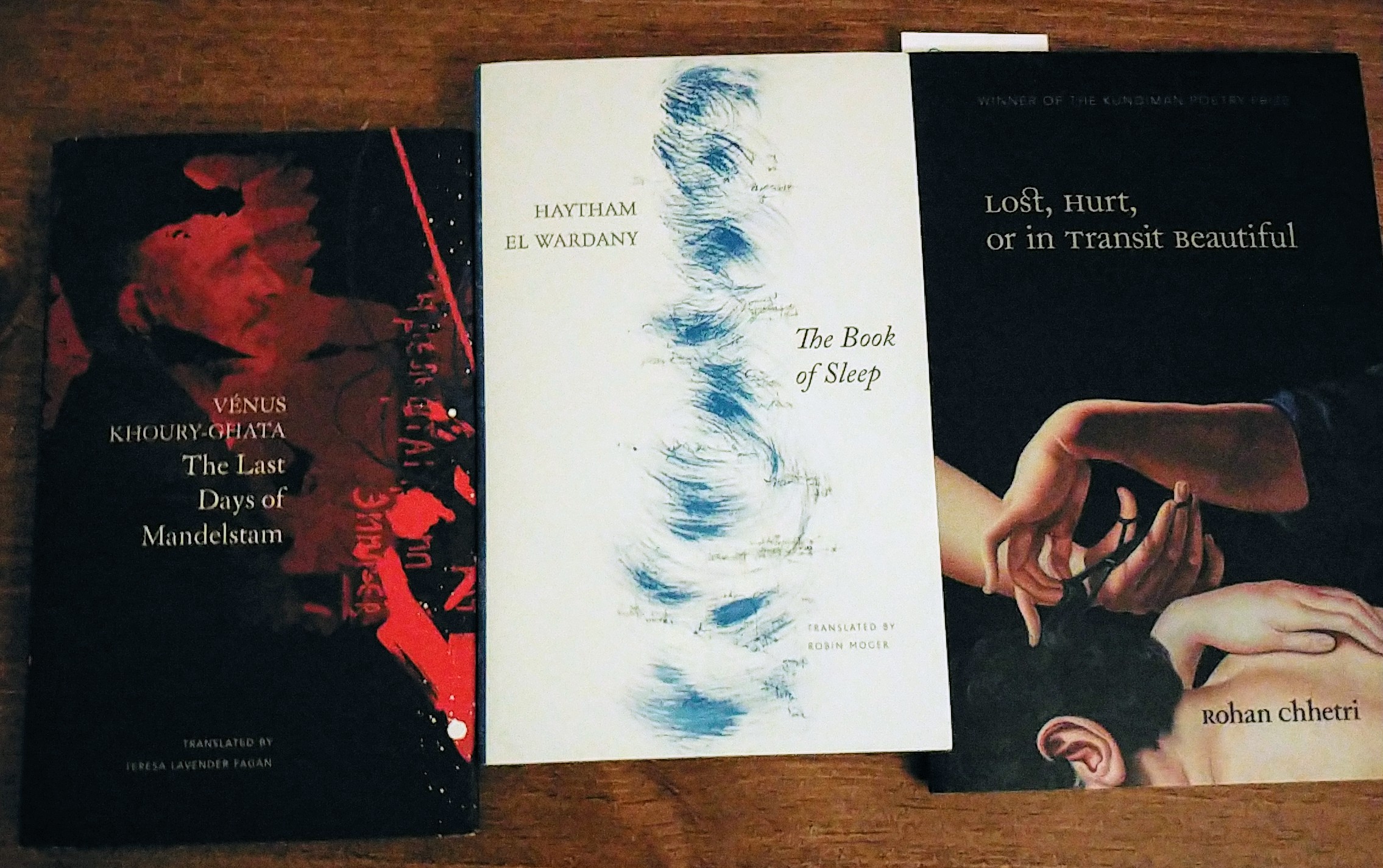
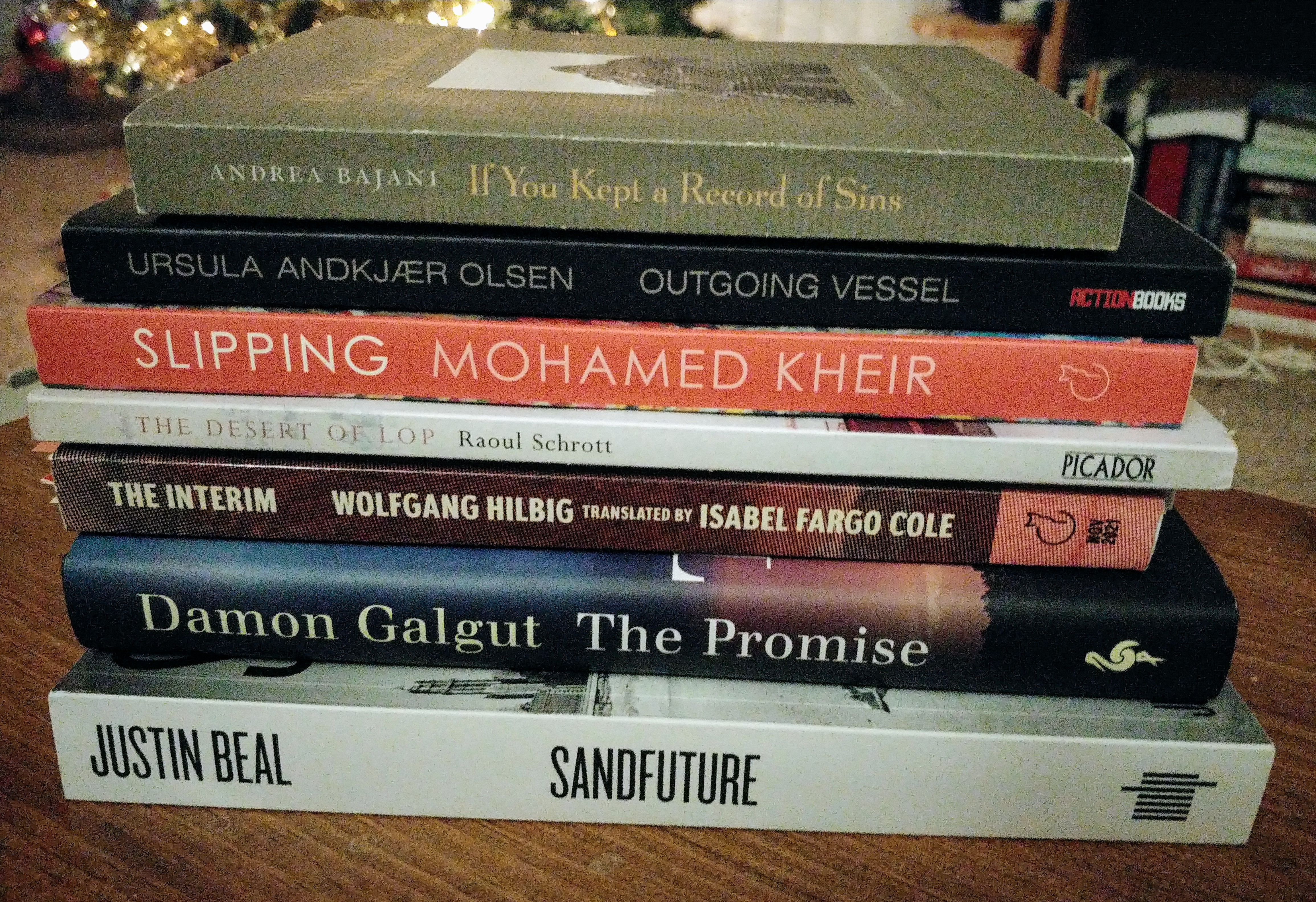


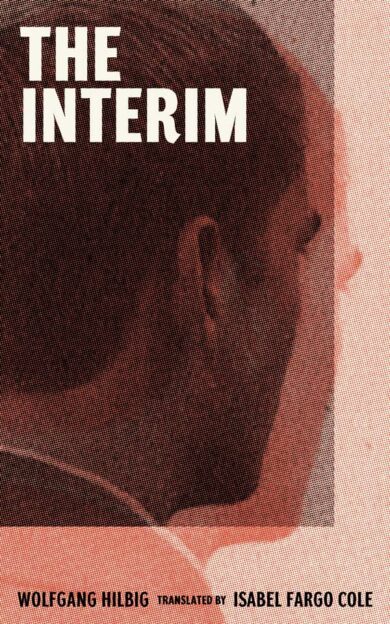

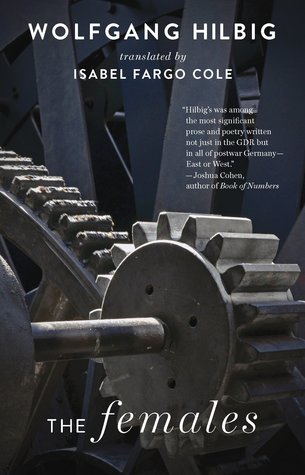

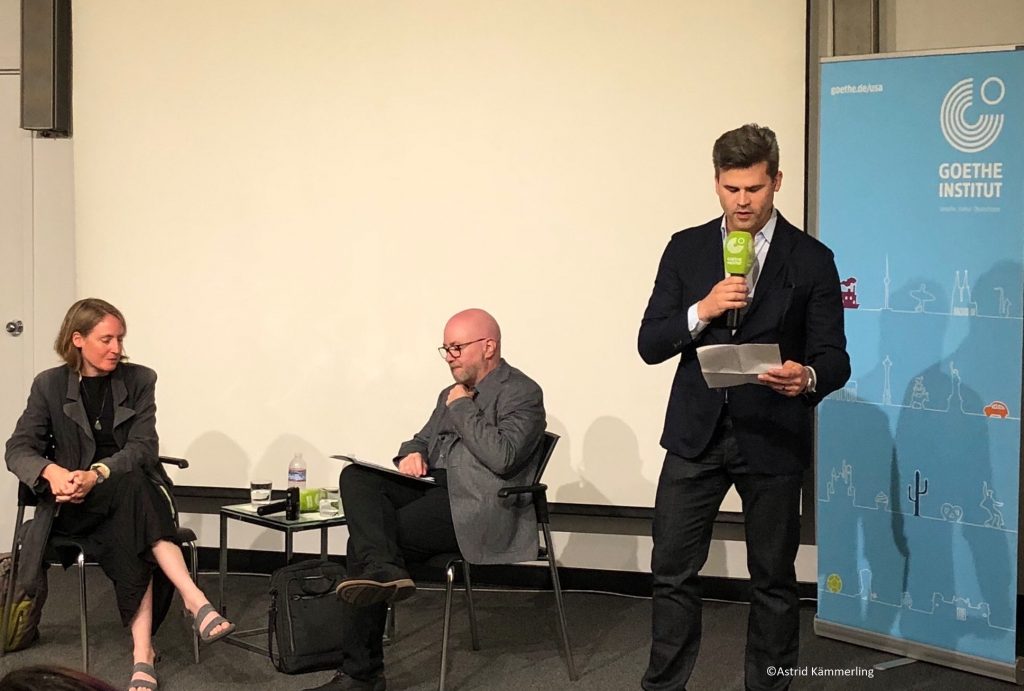





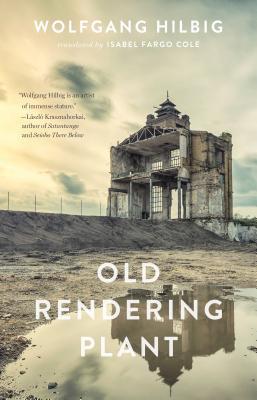
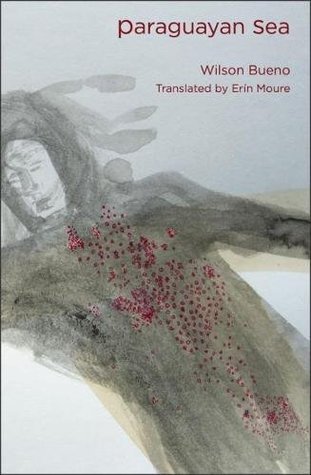


 roughghosts