Ah, yes, to enter Hilbig territory, be rural or urban, is to travel a terrain that is at once suffocating and strangely comforting. With each new work to emerge in English translation it is, for an admirer of his melancholy poetics, like coming home:
—Then comes the city of S., our destination almost, laagered on the valley floor, admitting no beam of spring sunlight; it resembles, in fact, a reservoir for all the wet the clouds cast down when they’ve finally gained the surrounding heights. I would have to continue further southward, continue further southwestward, until the actual sea, I think, if I wanted to breathe a sigh of relief . . . here in this valley you remain imprisoned, unarousable, and held to the earth here by an apparently stronger local gravitation, you walk stooped through the city with its churches, descend even lower, to where the empty markets stand, assembled against a yellow prefab administrative circus, such a scene has a sundial on its dome—, but there is no sun here.
From “Adieu”
No one creates an atmosphere quite Wolfgang Hilbig.
Territories of the Soul / On Intonation, pulls together short works from two collections published in the closing years of the GDR—eight stories and two poems—translated by Matthew Spencer and published by Sublunary Editions. Hilbig was born in Meuselwitz, Thuringia in 1941, and grew up in the industrial wilderness of postwar East Germany. He began writing poetry while working as a stoker, but his literary sensibilities were never going to fit with the socialist realism the GDR wanted its working-class poets to produce. Yet, although he migrated to West Germany in 1985, his spirit and his themes tended to remain anchored in the East.
The stories in this slim volume offer a classic cast of Hilbig characters—tloners, dreamers, misfits at odds with themselves and the world around them. They are also often writers, or aspiring writers, even if their literary endeavours take place after work, or in secret on the job if possible. And the workplaces many of them are bound to, like Hilbig himself in his early adult years in the GDR, are mines and factories in set grim, urban or rural wastelands. His work can evoke an atmosphere so heavy and gritty one can almost taste it; his protagonists wander landscapes marred by sludge, refuse, and discarded armaments, their restlessness fueled by anxiety, remorse, and regret. The narrator of “Adieu,” quoted above, has just walked out on his only child, knowing he is wrong, and wondering “how does love become just a thing I rob from another, become a thing I can feel only by denying it to another.” It’s an uncomfortable monologue, made more so by the weight of the speaker’s tortured conscience.
One of the strongest pieces here is the second title story, “On Intonation.” It opens with a chilling description of a stormy, wet night, viewed from the cockpit window of the nightwatchman’s station above an open-pit mining operation. The narrator is filling in for a missing watchman, a task he put himself up for thinking it would provide him the necessary space, away from the heat of the boiler room, to address a long pressing concern:
What I needed to work out—I had known this for years—was a kind of self-assessment, which would either certify me as a worker or as a true writer; however, since my presentiment was that I had insufficient reasons to properly continue writing, I had so far neglected this decisive memorandum; and yet I needed to fix these details in written memory, so I could exhibit them as proof against myself. —Meanwhile, I had come to a conclusion: I had to note down some urgent thoughts about the intonation of these modern lyrics . . . so I could implicate myself in evading duty.
And, yet, although he had been thinking about this question for some time, he finds himself, at his little makeshift desk, unable to find a word to replace intonation—his thoughts are frozen, he is unable to write the words he is convinced will prove he cannot write. But through this night, as he makes his rounds and struggles with his creative despair, his monologue turns on its own existential exploration of the lyric. The speaker, fearing that he lacks what he needs to be a writer, finds, in spite of himself, that he does.
This compilation, which includes work originally published in 1986 and 1990, is a particular treat for fans of Old Rendering Plant and The Tidings of the Trees—not only for its misanthropic souls, distinctive landscapes, and the occasional hint of gothic horror, but for those long winding and unwinding sentences that seem to pull the narrative into dark corners, resisting but unable to avoid a splash of milky light now and again. Even better, it may serve as the perfect introduction for those who have not yet encountered the addictive terrain of Wolfgang Hilbig.
Territories of the Soul / On Intonation by Wolfgang Hilbig is translated from the German by Matthew Spencer and published by Sublunary Editions.
Will we survive this century? asked the lonely reader in his train compartment. Yes, surely we will survive this one last century.
East German author Wolfgang Hilbig was not the kind of writer one associates with sunshine and bucolic scenery. His skies seem to be forever suffused with pale white winter sun, his landscapes marked by the residue of post-war industrial expansion, his urban streets draped in shadow lit only by dim pools of artificial light. His characters typically wander through this environment, never certain where they came from, where they are going and who they are meant to be—pulling and chafing against the constraints of a life they cannot fit into. Their situations and circumstances vary, but they are all lost in some kind of provisional existence.
The Interim, the most recent Hilbig release from Two Lines Press, takes, as the name implies, this sense of impermanence and makes it explicit. This novel, originally published in 2000, is, as with previous translations, rendered into fluid, incisive English by Isabel Fargo Cole. It follows the emotional and physical restlessness of C., an acclaimed writer from the GDR who is afforded the tenuous “freedom” of life in the West in the years immediately leading up to reunification. It is a time of shifting energies on both side of the Wall and C. finds himself completely adrift, caught between the crumbling social infrastructure of his homeland and the hollow promise of Western capitalism. He endeavours to perform the part of the celebrated author, often without either ease or grace, while he struggles with writer’s block and resists committing to the woman he genuinely feels he cannot live without. Trapped in a cycle of relentless anxiety, depression, and addiction, his only refuge is the train with its familiar chain of stations carrying him back and forth across the border, between an equally elusive past and future.
To be honest, I was apprehensive about this book, afraid somehow that it would be a 300-page pilgrimage through one man’s dark and decaying life, claustrophobic and bleak. And, in a way, it is most of those things except that Hilbig is an exceptional writer. Even if he is, as ever, narrating from the edge of his own existence, he has, in this novel, wisely stepped back into a more conventional third person perspective to examine his protagonist from the distance necessary to be honest—to his character and to himself. The result is an engaging narrative tracing loss, displacement, creative struggles and romantic failures washed down with too much alcohol and self-loathing. There are unpleasant moments—wandering about drunk in strange cities, taking in pay-per-view porn with an almost clinical sense of disconnect, mopping up vomit with a book from the “Holocaust & Gulag” section of his personal book collection—but the main thrust of the narrative is fueled by real human longing, stark humour, and much of the kind of mesmerizing existential questioning that drives the dreamlike, meandering narratives more typical of his work.
C. is, by the time we encounter him, living in Nuremberg. He has been in West Germany, for several years—how many, he is never sure—with an expired visa, living in a small apartment near that of his girlfriend Hedda who is losing patience with his constant insecurities and consistent unreliability. Back in Leipzig there is another girlfriend, Mona, whom he has avoided on visits home but has never properly broken off with. Both women are aware of and challenge his insistence on holding to a series of “interim solutions” as an excuse to never have to accept any tangible solution to the existential restlessness that haunts him. But there is a sense, for C. that his entire identity is false, lacking, provisional. Especially as a writer in the increasingly forced ecosystem of the literary world around him where authors use their miseries justify their writings:
in some convoluted way he believed in the creative power of tormenting experiences (while Hedda disputed it, claiming that pain merely silenced people), and he’d always suspected himself of lacking that experience. – In fact he’d always written offhandedly, looking away from his words, which had flowed from him effortlessly. In his life he’d never done a stroke of real work, he’d done everything in passing, for the interim, as it were. The real thing is yet to come, he’d always thought, as though he had infinite time at his disposal. Now he was pushing fifty—just three years left to go—it was high time for the “real thing”…and suddenly nothing was coming at all!
If The Interim never expanded its focus beyond C.’s self-recriminations, sodden or sober, it would run the risk of becoming weighed down by its own protagonist, spinning through a circuitous, non-chronological narrative that turns in on itself to travel wide but get nowhere. But C.’s inability to find himself reflected in his own country’s marginal, backward declining state, or the West’s flashy commercialized culture of consumption, allows Hilbig to make sharp, cynical observations on the state of the world as the twentieth century is nearing its end. A century of lies, as C. describes it. Technology has fostered progress and destruction, looking back to the horrors of the Holocaust and the Gulag, and ahead to the escalation of depersonalization and commercialism under the force of Capitalism. Is the latter a saviour from the godlessness of the former or simply a new God? C. is not so sure as, from the window of a West German train, he observes cars racing along the autobahn:
Disciplined and united in close-massed squadrons, united for one minute, identical lobotomized brows behind the windshields, bodies perching their death-packed asses on a power that wasn’t theirs, fused to a steering wheel that mastered their fists, they’d flee onward as if set in motion by the lash of a great herd-driver’s whip. And that great shepherd was Capital…he said to himself each time he looked out the window of the train at the intertwined chains of dimmed headlights, a light-suffused gas-cloud over them, a cloud of sweet Arabian perfumes as of burning pipelines, a cloud of colored miasmas that drifted along with them as they rushed down the course in formation, gigantic glittering automobile hives, and the shepherd whipped them on from one gas station to the next, where they filled themselves with their manna, tanked up on their divine gas. – Stick it to them! cried the shepherd, their God, who had long since grown weary of his flock.
If C. can never quite decide which side of the border he belongs to, within West Germany itself he is equally unsettled. He moves several times and travels for readings, tracing a network of cities through their train stations, their hotels and their seedy bars. He convinces himself that Hedda is the reason he stays at all, but he cannot understand why he seems destined to sabotage what they have. Whether it is a fear of failure or a fear of commitment, Hedda is certain that the problem, not only in their relationship but in his inability to write, lies in an unwillingness to address his childhood fears.
One of the later sections of The Interim takes C. back to memories of his childhood and youth, to an early secret love of writing through his lonely apprenticeship in a machine shop. His writing remains a hidden activity for many years, while conflicts between what he longs to be and what others expect him to be grows wider, more fraught, echoing themes that course through the pages of Hilbig’s strange and wonderful novellas. This book is essentially about becoming a writer and coming apart as a writer, while clinging to a transitional existence during a transitional time in history. In turning C.’s trauma into literature, Hilbig accomplishes the one thing the novel’s protagonist is presently unable to do.I have read, and written about, almost all of Hilbig’s work translated to date and have had the opportunity to discuss it at length with Isabel Fargo Cole who has done so much to help bring his writings to an English language audience. I loved this book. But I am not certain if I would recommend it as an introduction to his idiosyncratic writing. I feel somehow that if one has read and enjoyed other titles, especially Tidings of the Trees, Old Rendering Plant and his short story collection, Sleep of the Righteous, The Interim will feel like an opportunity to see the “Hilbig protagonist” and his creator in what might be his most true-to-life work—gritty at times, melancholy and dark, but filled with powerful language and insightful observations. Be warned, though, C. is an anti-hero unlikely to find redemption or accept it if offered.
The Interim by Wolfgang Hilbig is translated by Isabel Fargo Cole and published by Two Lines Press.
Over the past four years, five works by German author Wolfgang Hilbig have appeared in Isabel Fargo Cole’s lucid, evocative translations, each release bringing the late writer—always a literary outsider in life—an expanded following. The most recent offering, the fourth from Two Lines Press is the earliest, chronologically speaking. Originally published in 1987, The Females is an unrepentant portrait of a man burdened by a deeply and darkly distorted sense of shame and self-loathing. Classic Hilbig protagonist on one level, yet embryonic relative to the more abstract introspective narrators who move through many of his subsequent works.
This novella is set, like so much of Hilbig’s fiction, in a small industrial community in postwar East Germany. The narrator is, by his own description, a rather foul and socially inept misfit, a middle-aged man who still lives with his mother and harbours a troubled and seemingly stunted adolescent notion of women. He is not simply unnamed, but acutely aware of having been rendered nameless. Within the context of Hilbig’s shorter works this story is more explicit in its anger toward the state with its control of desire, creative and sexual. The recent history of his country, the ruins of war and the politics of the National Socialism, looms large. The imagery is gritty, coarse and vulgar, but the narrator’s desperate search for identity lends him a level of sympathy. He feels ashamed at his own corruption—especially a youthful turn at pornography, yet feels neutered and powerless. In the bluntness of its approach, The Females seems somewhat less refined than Old Rendering Plant and the Tidings of the Trees which follow several years later, but having this earlier work published in English at this point allows readers familiar with his oeuvre to see developmental themes at play.
True to form, this is an absorbing, compulsive read, one that slips regularly into a nausea-inducing, full-frontal assault on the senses. The opening passages are fair warning. The protagonist is working at a pressing shop in a former munitions factory. The shop floor is entirely staffed by women and, confined to a dank basement room, his task is to clean the molds. From his subterranean vantage point he watches the women work the machinery:
Through the grating above me, damp, smoldering heat flooded down with steady force. I sat on a chair beneath the grate amid this hot tide, hidden in semidarkness, several bottles of beer by my chair; when I drank the beer seemed to gush instantly from all my pores, lukewarm, not even changing temperature inside my body. It was ceaseless strain—my head constantly tilted back—to stare through the grate into the light, always hoping to see the women up there step across the bars.
He obsesses over every movement the women make, sexualizing the physical routine of the manufacturing activity, longing for a fleeting taste of femininity, and masturbating in his gloomy enclosure. Needless to say, he is employed on borrowed time. “I had gradually begun to transform into a sickness,” he tells us, one that is characteristically “utterly excessive; an agony not quite human, it was no longer that of an animal either.” Dismissed from his job, he takes to wandering the streets at night and notices, that something has suddenly been drained from the atmosphere. As an aspiring writer, the only vocation he has ever truly desired despite the disdain this ambition evoked in his family and society alike, he had once been able to look at the dismal world around him and, as he puts it, “make the filth glitter”. Now, either in reality or in his madness, his environment had been altered.
Much to his dismay, he becomes convinced of a most horrifying truth:
It was no help at all to sense I was possessed by an obsession, in my overpotent head a cascade of letters blazed: all the females had vanished from town, and with them had fled every trace of femininity.—Not only that, I felt that even feminine nouns had fallen out of use; I thought I suddenly noticed people in town referring to trash cans as der Kübel instead of die Tonne. When I saw those trash cans from afar, set up in long rows along the curbs that summer—something unlikely to change, as the trash collection service was still more dysfunctional then than in the winter—at first I’d think a line of unshapely females was loitering there, dully iridescent in the bluish streetlights, and I’d hurry toward them. I’d realize they were just the trash cans I saw every night, from their gaping orifices hung rubbish that looked hairy, that had an undefinable evil about it.
His desperate, guilt-ridden efforts to make sense of this situation, to set it right somehow, drives the nonlinear, obsessive, self-deprecating and bitter narrative of The Females. Some of the imagery is harsh, off-putting, and sexist. In his defence the protagonist blames the psychopathology of the state under which he was raised, one in which “the sex drive was declared to be abnormal…and sex to be capitalistic”. He clearly has had no real, substantial and healthy relationships with women. He wants to be loved, longs for normal human contact, but fears that his anxious desire will drive others away, that as his desperation becomes evident, he grows increasingly hideous—“A monster with putrefaction written in the crannies of its skin as hectic red blotches, with uric acid drying and itching on its pate, a madness no longer stoppable as damp tufts of hair began painlessly detaching themselves.” His frustration is redirected back at women—his mother included—and it his inability to conform to the expectations of those around him. To see the world as he is supposed to see it.
At the core of this novella lies a crisis of masculinity. Hilbig, like many of his generation grew up fatherless. His father had disappeared at Stalingrad and he was raised by his mother and maternal grandparents. His characters often struggle with the rigid expectations of manhood in their closed society. As men who are naturally drawn to creative pursuits, they react against the predetermined factory life by trying to find their missing role models among the social outcasts—garbage men or the workers at a rendering plant. In the world Hilbig presents in The Females, the State is the all-powerful progenitor, women are brutish and masculine, men are soft and delicate, psychologically castrated. His protagonist is criticized by his family for failing to live up to an ideal set by his father, though it is not clear that his father is more than a myth he has no real memory of. He is seeking an absolution through the women who have controlled, avoided and now eluded him, longing to heal a wound with roots, ultimately, deep in childhood memory and buried national history. He chooses to work in a factory staffed by females to try to be near their presence and feels cut off from a vital reality when he is cast out. In the shadowy depths of the town’s laneways he is searching for a feminine presence which he can only vaguely remember, distrusting his imagination and distorting reality into misplaced freakish phallic and vaginal imagery.
His is a strange, and strangely fascinating existential pursuit. “The world outside my window,” he is inclined to tell himself, “lacks the gaze that is mine”:
But I’d had to realize that I was no one.—I didn’t know whether I existed; the fact of my birth had been kept secret from me. They kept it secret to punish me, for I hadn’t turned out to be the thing they’d hope to bestow upon the world. Yes, I’d made the mistake of having myself be born, having myself be raised by the state and its pedagogy, by pedagogy and its state—I’d practically volunteered for it—but then I turned out differently. And so I had to be nullified, voided; there was neither a womb nor a pedagogy nor a state for the creature I’d become. I didn’t even have a name to lay claim to.
The Females is a challenging read in today’s climate of gender sensitivity. But emerging at a time when Germany was still divided (though Hilbig was by this time already living in west Berlin), its message’s bold, brutal delivery possibly reflects a more immediate frustration. Either way, it is a powerful short work that takes no prisoners.
Deftly translated by Isabel Fargo Cole, The Females by Wolfgang Hilbig is published by Two Lines Press.
It was Wolfgang Hilbig’s story collection The Sleep of the Righteous, published in 2015 by Two Lines Press, that brought the late German author and his translator, Isabel Fargo Cole, to my attention. It might seem as if they arrived hand-in-hand, after all her translation of his novel I (Ich) appeared from Seagull Books around the same time, but of course, she has translated works by a variety of German language authors before and since those two titles emerged. But it would be fair to say that her efforts to champion Hilbig, her deep appreciation of his work, and her ability to be able to bring his convoluted sentences and filmic imagery to life in English continue to win him more admirers with each subsequent release. Most recently, she was awarded the Helen & Kurt Wolff Prize for her translation of Old Rendering Plant.
Photo credit: Emma Braslavsky
I have had the pleasure of interviewing this gifted translator twice now, and both times, when her generous responses to my questions arrived in my email, I read them with excitement and renewed appreciation. The latest interview was published at Splice this past week. In this piece, we talk about the most recent Hilbig release, The Tidings of the Trees, and the ways in which this work differs from last fall’s Old Rendering Plant. My questions were derived from my own reading of the book and were not sent until my review had been submitted for publication.
In the years since our first contact, I have read and reviewed Isabel’s translations of Klaus Hoffer and Franz Fühmann, and have added the works of several other authors she has translated to my library as well. But Hilbig remains central. So I am thrilled and honoured to be speaking with her in person in San Francisco on Tuesday night, July 24, as the Center for the Art of Translation celebrates her work, her recent award, and the release The Tidings of the Trees.
UPDATE:
The online journal Splice was hosting no longer appears to exist, so I have reproduced the original interview with Isabel as it first appeared below:
Wolfgang Hilbig, The Tidings of the Trees.
Translated by Isabel Fargo Cole.
Two Lines Press. $12.95. Buy direct from the publisher.
Isabel Fargo Cole grew up in New York City and studied at the University of Chicago, but she has lived in Berlin as a writer and translator since 1995. In 2013 she received a PEN/Heim Translation Fund Award to translate Franz Fühmann’s At the Burning Abyss for Seagull Books, and in 2014 her translation of Fühmann’s The Jew Car was shortlisted for the Oxford-Weidenfeld Translation Prize. More recently, she has published several translations of the works of Wolfgang Hilbig, and she won this year’s Wolff Translator’s Prize from the Goethe Institut for her translation of Hilbig’s Old Rendering Plant, published by Two Lines Press.
Her latest Hilbig translation is The Tidings of the Trees. Reviewing the book for Splice, Joseph Schreiber praised it as “a tale rich with fantastic imagery that openly explores the ability of fiction to preserve the past, mediate the present, and offer hope for the future.” Concurrent with the publication of Trees, Isabel Fargo Cole generously gave her time to correspond with Joseph via email and offer her take on working with Hilbig’s words.
TheTidings of the Trees, newly released from Two Line Press, is your fourth published Wolfgang Hilbig translation. Would you mind taking a moment to frame this novella within his body of work? When was it released and where does it fit?
The German edition (Die Kunde von den Bäumen) first appeared in 1992. It’s the last of a number of novella-length works Hilbig wrote in the 1980s and early 1990s. In terms of subject matter, it fits into a broader complex of works, culminating in the story collection The Sleep of the Righteous (2015), which explore Hilbig’s home town of Meuselwitz and the industrial wasteland around it. Hilbig returns time and again to the same landscape to explore different aspects and develop different metaphorical images.
.
This novella is described as one of his most accessible works. On the surface, perhaps, relative to the very close, internalised monologue of Old Rendering Plant(2017), it might appear to be a more straightforward, less claustrophobic tale. It’s a multi-level narrative wherein the main character, Waller, is telling his story to an unidentified narrator who records the account. We can place him in time, we know how old he is, and we have passing outside observations of his actions and behaviour as he is speaking. However, as much as time, space, reality, and fantasy are blurred in both novels, Waller is less able to follow and make sense of his own memories, and seems as concerned with touching abstract truths as he is with tracking down his own lost time. Consequently, much is left unresolved, unresolvable even.
Can you comment on the similarities and differences between these two novels with respect to the way reality is disrupted, and the challenges raised for yourself as translator?
Actually there’s just one narrator who sometimes refers to himself in the third person, as “Waller”. In many of Hilbig’s works — notably in ‘I’ (2015) — the author shifts between first and third person as a way of embodying how his narrators reflect on themselves or relate to their past, how writers observe and fictionalise themselves almost to the point of schizophrenia. In comparison with Old Rendering Plant, the landscape is more minimal, the language is a bit sparer; Hilbig is working with a more reduced and clear-cut palette of imagery and symbolism. This foregrounds the narrative structures, the interplay of perspectives and time frames. This is a story about storytelling, or rather its impossibility: the narrator tries to evoke the chopped-down cherry trees that once lined a road that led to a village that has vanished as well, swallowed by strip mines, and to describe the circumstances of these disappearances. This shifts to an effort to recall the taboo subject of Germany’s division and the disappearances it entailed.
On a number of levels, it’s about the difficulty of finding the right place to write from: “A place to sit! I’d lament, circling my empty chair.” Of course, the chair is just a metaphor or an alibi; the question is how to find the right perspective from which to reconstruct the memory or tell the story. And so the narrator shifts into the third person voice, as though that might help, or as though to watch himself writing; or he tries to adopt the perspective of the “garbagemen” who sift through the refuse of the past and seem to possess secret knowledge. Hilbig explores the question of adopting a persona or shifting personae to tell a story from, and the dangerous disorientation this can entail. And he explores how a writer devises and manipulates “figures” to act out his story: Figur in German is the standard word for a fictional character, but Hilbig exploits its literal sense of physical shapes that are seen from outside and remain rather alien, like puppets. Hilbig’s narrators find it difficult to relate to other people at all, and struggle with the sense that, in writing about them, they are producing mere simulations. In Trees, this takes physical form as the narrator arranges discarded store mannequins in tableaux in an attempt to communicate with the inscrutable garbagemen — an absurdist metaphor for storytelling.
These senses of simulation, unreality, dissociation, and an unstable “I” goes along with an unstable sense of time. Storytelling both asserts and complicates the notion of a linear timeline with a clear sequence of events bound by cause and effect — a story has to assume these things to some degree to have any coherence, but the very act of telling a story complicates the timeline and the causalities by situating a storyteller somewhere within or outside it. In Tidings of the Trees, Hilbig plays with the tension between the notion of a coherent “story” that exists out there, or within the memory, and simply needs to be recorded, and the teller’s actual struggle to grope toward this story and piece it together out of fragmented bits of time and space.
This is a struggle for the translator as well, as the often paradoxical-seeming tense shifts need to be attended to; the labyrinth of nested flashbacks and flashes of déja-vu is very much intended, and just as intentionally left without a resolution. In the end, the narrator comes to see the course of events as cyclical, narrated in “a language of return”, and he cedes the act of storytelling to the trees themselves: “storytelling without motive, a stream of story that followed only the slow rhythms at work in the place where the trees were.” The vanished trees write their story in their own ash upon the narrator’s empty page.
.
On a related note, I would like to ask you about the prose style in The Tidings of the Trees. In my reading, I sensed more variation in pace and tone than in some of Hilbig’s other stories and novels. There seems to be a more measured tone to much of Waller’s discourse; one finds more short sentences, less of the long, winding, stuttering flow of words. This is perhaps because the protagonist is trying to make himself understood to his audience. However, he has a hard time orienting himself within his own story and has an admitted disregard for reality. And there are many passages of exceptional urgency and poetic energy. How would you describe the differences in this narrative?
As you noted above, there is less of the intensely sensual, immediate, stream-of-consciousness style that you find in Old Rendering Plant or The Sleep of the Righteous. Perhaps the narrator of Trees is trying to access that more immediate mode of writing, but failing (at least until the very end, when he lets the trees speak). He has a greater detachment from the writing process; he’s reflecting on the act of writing, or rather his inability to perform that act: “But when storytelling reconstructs — or, in my case, manufactures — the problems of telling stories, it’s the pinnacle of self-circumscription. … I don’t know. Literature like that is unworthy of interest.” He’s ironising the postmodern irony of writing about writing — but taking it so far that irony turns into existential urgency. At the same time, Trees has more actual story, asserts more concrete, external goings-on (however fantastical and jumbled) than, say, Old Rendering Plant, which feels like a pure interior monologue.
.
Both Waller and the narrator of Old Rendering Plant are drawn to mysterious social outcasts, and, in each case, these elusive characters — the garbagemen who salvage goods from the ash heaps on the outskirts of town and the men who work in the depths of the rendering plant in the abandoned coal factory — are imagined in grotesque, surreal terms, and inspire some of the most exhilarating passages in each work. However, Waller’s identification with the garbagemen is more complicated, at once strange and enigmatic, and yet in their actions he sees a clear model for his intended act of preservation through storytelling. How do you see the roles, political and aesthetic, that these types of characters play in Hilbig’s work?
Hilbig was an outsider himself, as a self-taught non-conformist working-class writer in East Germany and as a working-class East German writer in West Germany. So it’s not surprising that he tended to write about outcasts — often his narrators are loners on the margins of society who become fascinated by people even more radically marginal than they are. Those marginal figures seem to represent, or have access to, things that society would prefer to forget, down to the crimes of the GDR and Nazi dictatorships. Interestingly, it’s hard to pin them down either as victims or perpetrators. In Old Rendering Plant, they might be war fugitives from Eastern Europe, or they might be old SS or Stasi men. In Trees, they seem to be in a state of exile from society, sifting through its detritus on the outskirts; on the other hand, they apparently act as an integral part of society’s digestive system, performing a function that remains constant across historical eras. They’re the people who quite literally do society’s dirty work.
.
Wolfgang Hilbig has a tendency to create narrators or protagonists who share basic biographical details very similar to his own, even if it is not made explicit. Their stories generally explore variations on a common theme — the search for identity in a society that enforces a rigid conformity of thought and action — and yet, each story or novel follows its own distinct path. Tidings is no exception, but this novel is also very explicitly about the responsibility of the writer and the enormity of his (or her) task. Waller’s twenty missing years form, in no small part, a severe case of writer’s block. Here he is, in mid-life, staring at the same sentence: “The cherry trees have vanished!” The question of the missing cherry trees that once lined the road to the nearby village, now also gone, represent a much larger, more vital story — about preserving memory, history, and hope. Would it be fair to say that this portrait of the writer’s task, if not his relative productivity, makes Waller an especially personal alter-ego for Hilbig?
I feel he’s actually a less personal and more abstract alter-ego: the Writer. There’s less of the texture of Hilbig’s own memories and biography, and he keeps stepping back from the narrator, referring to him in the third person, seeing him from the outside, actually spotting him in the distance, as a kind of doppelgänger. And he puts him in absurd situations that feel more consciously constructed, with more ironic detachment.
I think the cherry trees are in fact central: they are the story — or the storyteller, as the end hints. The cherry lane is one of Hilbig’s rare (but crucial) images of pure, innocent natural beauty, of a small paradise that existed within memory. It may have vanished, but it dominates the story, and in the end it prevails: the eternal, cyclical language of nature takes over the task of the writer.
.
Finally, you have recently been awarded the prestigious Helen & Kurt Wolff Prize for your translation of Old Rendering Plant. Congratulations! With another Hilbig translation, The Women, due later this year, the appetite for his work among Anglophone readers seems to be solid and growing stronger. There must be considerable satisfaction in this positive reception, and in being recognised for your intuitive and sensitive renderings. How do you feel about his reception? And more critically, in light of the disturbing political trends we’ve been witnessing in the West of late, do you think his message has a new relevance?
Thank you! I’m thrilled to see his work finally getting the English-language readership it deserves. I certainly think he has a lot to say to us about the cruel and unsavoury sides of social orders; about the way historical traumas are passed down and continue to do harm even (and especially) as they are denied and repressed; about the sheer mass of depression, anger, and hopelessness that can build up among people who feel alienated from their societies, from each other, and from their natural surroundings; about the (self-)destructiveness that results. I don’t think he has a “message” in the sense that he’s asking us to understand x so we can do y. But perhaps he asks us simply to recognise the dark shadows and the “garbage” on the outskirts of town as something integral to the human experience. Those strange sinister characters out there, whether they’re victims or perpetrators or both, aren’t “the other” — they’re alter-egos, reflections of ourselves and our own potentialities. Facing the darkness won’t perform some kind of therapeutic magic and automatically empower us to transcend it, but it could help us to proceed from a position of humility, a deeper understanding of our own and others’ limitations, absurdities, and burdens. At least that’s the best way I can think of to explain why I personally find his work moving and bracing, if not exactly comforting, at this particular time.
.
Joseph Schreiber is a writer based in Calgary, Canada. He is Criticism/Nonfiction editor at 3:AM Magazine. His reviews and essays have been published in a variety of literary sites and publications including Numéro Cinq, Quarterly Conversation, Minor Literature[s], and RIC Journal. He also maintains a literary site called Roughghosts and tweets @roughghosts.
He may confound some readers, but for my money, the enigmatic East German writer Wolfgang Hilbig is fine company. His landscapes are evocative, filmic spaces, obscured by the mists of a troubled history of secrets and shame. His narratives are restless. His characters are misfits, unable and unwilling to conform. Their tales explore the dynamics of loss from personal, social and political angles. And even within the scope of a novella, these stories expand far beyond the confines of the pages, haunting and reworking themselves within the reader’s mind long after the book is finished.
Or, at least, that has been my experience.
The most recent Hilbig release from Two Lines Press, The Tidings of the Trees, traverses a terrain at once familiar and yet quite distinct from the watery byways of Old Rendering Plant. This is a complex, magical tale that examines the importance of stories to hold onto and preserve the memories that the State is intent on erasing. As ever, translator Isabel Fargo Cole deftly captures the unique rhythms and energies of this text, and Hilbig fans will be pleased to know another work, The Women, is forthcoming in November.
I wrote about this book for an online journal run by the UK publisher Splice. It seems to no longer be online, so I’ve reproduced the original page and review below.
Wolfgang Hilbig, The Tidings of the Trees.
Translated by Isabel Fargo Cole.
Two Lines Press. $12.95. Buy direct from the publisher.
When the Berlin Wall was closed in August 1961, effectively sealing the final point of exit for East German citizens seeking asylum in the West, Wolfgang Hilbig was just shy of his twentieth birthday. With this action, the GDR became a completely contained state, isolated from the rest of the world. In The Tidings of the Trees (trans. Isabel Fargo Cole), the latest Hilbig translation to be released from Two Lines Press, this moment and its impact open a vortex around which the protagonist’s crisis of identity spins. Described as one of Hilbig’s most accessible works, Tidings proceeds on a somewhat different note than last year’s release, Old Rendering Plant, but ultimately it follows a route no less oblique or circuitous. Powerful and more overtly political perhaps, it is also a tale rich with fantastic imagery that openly explores the ability of fiction to preserve the past, mediate the present, and offer hope for the future.
Whereas Old Rendering Plant was a deeply immersive first-person monologue slipping at times into pure stream-of-consciousness, TheTidings of the Trees presents a multi-level narrative with an unidentified narrator who records the first-person account of the central character, Waller, occasionally breaking in to describe the actions and behaviours observed as the story is being related. It can be argued that Hilbig’s protagonists tend to be, to a greater or lesser extent, shadows of himself, and Waller is no exception. He is an aspiring writer of approximately the same age, who lives with his mother and grandmother in a small industrial town surrounded by forests and the physical legacy of strip mining. Like his cohorts he is apprenticed into work at a local factory after finishing school, but over time this work gradually loses its relevance as he becomes more deeply absorbed in a desperate effort to write — to secure his story on the page. At the time of this recorded account, one can assume the frustrated storyteller is about forty years old, an age by which Hilbig had already abandoned the factory for a writer’s life and relocated to East Berlin. Our hero in this novel is finding that transition much more agonising, and yet for Waller, as for his creator, writing is an act of defiance and self-preservation:
Write… write, I say to myself, or everything will whirl into forgetfulness. Write so the thread won’t be severed… a thousand stories are too few. So the flow won’t be broken, so the lamps over the desks won’t go out. Write or you’ll be without a past, without a future, nothing but a will-less plaything of bureaucracy.
However, no matter how long he sits hunched over a desk, the words fail to come. The empty pages and scratched-out lines drive the would-be writer out, night after night, in search of his own story.
Waller’s regular expeditions lead him to an area on the outskirts of town, where an expanding field of garbage and ash has encroached on a roadway once lined with cherry trees. It is an abiding groundlessness that draws him here; for twenty years he has felt he has had “no place to sit”, as he puts it, nowhere to belong. This desolate area holds an attraction and, he hopes, the key to his own nebulous history, now strangely distorted by his alienation from community engagement within a society where collective historical amnesia has long been encouraged. The expanse of refuse which had originated as a disused strip mine, filled in initially with the rubble of bombed-out buildings, then successive layers of garbage and ash, carries an aura of stagnation and weighted silence. In this Waller recognises the ghosts of the past, his own included. But more specifically he is fascinated by the garbagemen who scour the discarded remains to salvage whatever they can. First presented as wraith-like spectres moving over the landscape, they are depicted as outcasts, as scavengers who have formed their own inaccessible culture. Yet, as Waller’s account proceeds, he is pulled closer into their orbit.
The other focus of his habitual visits to this location at the edge of the ash heap is an ongoing search for the cherry trees that he remembers from an earlier time. He was searching for them, he advises us, even when they still existed, and he continues, having come to the conclusion that, in most instances, reality “has been debased to a worthless product of language.” It is as if Waller imagines his mission to find his own story — that is, to grasp sensible hold of his own memories — as part of a greater effort to preserve and capture the memories of a time and place nearly forgotten. To that end, the proud and beautiful cherry trees stand as symbols of everything he has lost — youth, promise, and hope in the future. They haunt him. And he is determined to attempt to write them back into existence:
And the story might tell of a time ten years ago, or might date back two or three decades; the sentence I set down at the top of the page — twenty years or two days ago — made no difference whatsoever: The trees of the cherry lane have vanished! There can exist, it seems to me, an infinite series of stories telling how this happened. … I can fit only a fraction of them beneath that opening sentence. Or perhaps a barely graspable shadow of ash, light as a breath… for the cherry trees to return, I’d have to tell all the stories about them.
This endeavour to tell even a handful of the possible stories of the trees, has, over time, become entwined in Waller’s memory and imagination with a series of possible stories about the garbagemen. His willingness to embrace uncertainty contributes to the magical and disorienting qualities of his tale. He is not simply laying out one story, unwinding one single thread, but rather telling multiple variations of his own stories to find, he hopes, some truth, and release the barrier that has blocked the flow of words onto the page.
The Tidings of the Trees is a tale of dislocation, in time and space. Waller struggles with temporal context, not only in writing, but in recounting his story. His account stalls several times. His interlocutor notes that it seems as if he is uncertain about what time frame he should follow. He frequently repeats his conviction that twenty years of his life seem to have lost their meaning, passing in a haze, one moment blurred into the next, leaving his memories and time confused. He continually attempts to re-enter the story at different points because his own internal chronology is unreliable. The only clear point of reference he can hold to is that fateful summer when the borders closed, the “summer of the Wall.” From that point, his life began to take on a fictional tone. His thoughts became confused as reality started to slip its moorings. While everyone else seemed to move forward and forget how life used to be, Waller found himself tangled in a grey zone. And it has continued to become greyer.
Once East Germany is firmly sealed off, he is struck with the disheartening sense that his future is fixed, pre-written. This is the initial trigger of his retreat from town and factory life. If one feels trapped in a rigid, scripted narrative, the only rebellion is to attempt to seize control of one’s own story. For Waller, the answer seems to lie in writing. Yet, as his fellow citizens settle into a pattern of State-dictated ideals, routines, and conventions, he realises that they defy his attempts to craft characters and build stories around them. Where can he take them? The GDR encouraged a form of worker’s literature, a celebration of Socialist norms and values, but for Waller, as for Hilbig, art cannot be thus constrained. “Normality was normal”, we are told, “because it had lost its stories… [and] only when the mask of normality was torn off did reasons for stories exist once again.”
Stories, then, in the context of this novella, serve multiple functions, individual and societal. In the garbagemen, our dispirited writer sees a metaphor for the process of the preservation and maintenance of the past. As these marginalised individuals dig through the ash to retrieve discarded objects — utensils, tools, clothing, and an unseemly number of mannequins — Waller imagines that they are essentially performing a communal act of remembering, of keeping alive a history that would otherwise be buried and lost. Afraid that he too is at a loss, that critical events have slipped from his memory’s grasp, he is drawn to these enigmatic characters who are, he believes, incapable of forgetting. He finds himself moving among them, slowly assuming a similar appearance, and ultimately taking refuge in their storage shed during a storm:
Here I was… I’d been here for a near-eternity, and already I was almost a ghost… a monster, shaped from the substance of eternity, a sculpture of ash muffled in ancient ghostly garments… and the garbagemen, who believed in mythical creatures, had long ago accepted me as their ghost, slinking around me breathlessly and on tiptoe; and they’d consigned the citizens from the shop windows to the garbage, for I was the true artwork of their time, I was the statue which alone fulfilled all their time’s aesthetic requirements, their time that was no time at all… the trees of the cherry lane have vanished; this single sentence, long since extinguished and grown cold, stood there upon the page, and they’d given me infinite time to write a second one.
In classic Hilbig fashion, the narrative regularly loops back on itself, images are revisited again and again, and a restless, searching energy courses through the prose. Yet unlike the fluid, meandering flow of Old Rendering Plant, there is a greater variation of pace and tone, and a distinctive urgency and poetic passion to Waller’s discourse. Place is also a vital presence, but with Tidings, an emptiness or absence dominates. The vast field of refuse, home to little more than coarse shrubs, is a denuded environment. However, as the resting ground of discarded objects with a link to the past, it contains an existential element. This is realised not only through the actions of the garbagemen, but in the accumulated ash that hangs in the air, and clings to Waller and his surroundings. And then, of course, there are the cherry trees, natural and spectral at once, imagined alive, destroyed, or gone wild, the lost messengers whose tidings our protagonist so anxiously pursues.
Finally, as the fourth Hilbig translation to be released in English, The Tidings of the Treesis a testament to translator Isabel Fargo Cole’s exceptional acuity to the nuances of the late German author’s idiosyncratic prose. Although Hilbig typically starts with a character in a setting that has roots in his own life experience, once set in motion, his narratives each follow their own unique course. Where a predictable sameness might be expected to settle in, Hilbig’s ability to create strangely engaging characters and evoke distinct environments of oppressive beauty, in concert with Cole’s sensitive translations, ensure that each encounter with his work feels fresh and vital.
.
Joseph Schreiber is a writer based in Calgary, Canada. He is Criticism/Nonfiction editor at 3:AM Magazine. His reviews and essays have been published in a variety of literary sites and publications including Numéro Cinq, Quarterly Conversation, Minor Literature[s], and RIC Journal. He also maintains a literary site called Roughghosts and tweets @roughghosts.
In advance of the announcement of this year’s BTBA finalists for fiction and poetry, I wanted to share a few thoughts about the nominated titles I have had a chance to read. I read almost half of the poetry long list and almost six of the 25 fiction titles—I say “almost” because there is a title on each side that I have not yet finished. I don’t have posted reviews for all, but I do have a few favourites going forward.
What I love about this award is that it invariably draws my attention to a few titles that I might never have encountered and, because it is based on titles released in the US, I can generally get my hands on the books that interest me. This year, because I turned my focus to poetry, the experience has been especially rewarding. Here are the books I’ve read, in whole or in part, with links to the reviews I wrote (where applicable) and some thoughts about the books read and not yet reviewed:
Fiction:
Bergeners by Tomas Espedal, translated from the Norwegian by James Anderson (Norway, Seagull Books)
I have not quite finished this book, and therefore cannot judge it fully. I am pleased to see it on the list; it’s an interesting blend of genre and so far I am enjoying it. However, as it is my first experience with Espedal, I have no context to place it against.
I Am the Brother of XXby Fleur Jaeggy, translated from the Italian by Gini Alhadeff (Switzerland, New Directions)
Ghachar Ghochar by Vivek Shanbhag, translated from the Kannada by Srinath Perur (India, Penguin)
The Iliac Crest by Cristina Rivera Garza, translated from the Spanish by Sarah Booker (Mexico, Feminist Press)
My Heart Hemmed In by Marie NDiaye, translated from the French by Jordan Stump (France, Two Lines Press)
Hands down this is my favourite title of all that I have read, a book that I absolutely adore. Above I have linked the argument in its favour that I wrote for the Three Percent site. I would have to say that this and My Heart Hemmed In are two books I really love and hope make the cut. Both, it happens, are from the same publisher, in this case Two Lines Press—a circumstance echoed on the poetry side of the equation.
*
Poetry:
Because this is where I spent most of my energies, this is where my attention will focus.
Paraguayan Sea by Wilson Bueno, translated from the Portunhol and Guarani to Frenglish and Guarani by Erin Moore (Brazil, Nightboat Books)
Raining. Winter wet pluries of southern hemispheric June in the beach town. Dense fog, tick, a sort of paste of days when the rains start to soak even gardens and streets. An evocation of fairies through the windows: all marrying winter, leurs sombreros s’embracent in an orgy of wet leaves. I swear.
I have not yet finished this most unusual book—an extended prose poem that employs a delicious blend of languages to tell a strange narrative tale. Very intriguing, it would be good to see it make the cut.
Hackers by Aase Berg, translated from the Swedish by Johannes Goransson (Sweden, Black Ocean Press)
I am
inside you
Where nobody expected
Looneysingapore
Hovered down through
The Phillipine
storm
cat-soft
toxoplasma
schizosex
Endorphoria
never kills
its host world
Of the poetry I read, this book was the least successful for me. The imagery—parasites, computer viruses, hackers, movie and pop culture references—did not resonate with me. I could admire it, the translation is slippery and solid, but I don’t feel I would be drawn back to it so readily. It is a quick read, so another visit is likely in order. But not yet.Before Lyricism by Eleni Vakalo, translated from the Greek by Karen Emmerich (Greece, Ugly Duckling)
The plants in the garden
Give a first impression
Of peace
Even more so than pets
But that impression changes
As evening falls
And the garden seems to have multiplied
In the movement
Of proportions of changes
You understand
At such times I try not to look
In case someone is hiding there
As it often seems
Though in morning the garden
Will be once more
Like the slanting line on the cheeks
Of very young girls
When the light strikes them from the side
—from “Plant Upbringing”
I did not have time to review this book, but probably will write more soon. This is a magnificent collection of six early book length poems by Eleni Vakalo, presented with great attention to placement and space on the page, and intended to be read as complete pieces. One of the exciting encounters of my recent BTBA poetry excursions.
Things That Happen by Bhaskar Chakrabarti, translated from the Bengali by Arunava Sinha (India, Seagull Books)
I am so pleased to see an Indian author in translation on each list. This collection strikes a melancholic tone and speaks to very human emotions—loneliness, loss and nostalgia. It speaks to the diversity represented by the BTBA selections.
Adrenalin by Ghayath Almadhoun, translated from the Arabic by Catherine Cobham (Syria, Action Books)
If it isn’t clear from my recent review, I love this book. It is a vital collection and so very timely. I would be quite happy to see this take the award. I certainly hope it makes the short list, along with my other favourite, also from the same publisher, Action Books (in this case a joint publication with Broken Dimache Press in Europe).
Third-Millennium Heart by Ursula Andkjær Olsen, translated from the Danish by Katrine Øgaard Jensen (Denmark, Action Books & Broken Dimanche Press)
You were inside me like I was a house; that does not
mean I know what’s going on inside you. A house
does not know the interior of its resident.
That is the other wall for loneliness.
To irradiate.
My x-ray/loneliness.
Your loneliness/grass.
If you are to be tortured, I must
teach you to sing: as I walked out one midsummer’s morning
it will keep them out.
You make me think, as I walked out, I must learn to sing
double with one voice,
whose song will fan in to seven voices
whose songs will each fan into seven voices
whose songs will each fan into seven voices, whose songs will
make the air solid and prevent any movement. No one can move.
No one can harm you.
I have read this book many times, my copy is exploding with marginalia and sticky notes, and in response, I wrote an experimental review that has been published at Minor Literature[s] . In the meantime, I will say it is at once spare and epic. A post-human vision that moves beyond patriarchal and matriarchal physical, social, and political dynamics—edgy, unnerving and ultimately inspiring. A challenging work, I love it as a piece of literature, and find it endlessly fascinating as a person with a bi-gendered life experience and a history of heart-stopping re-awakening (in literal terms).
It is easy to become lost in the dense and convoluted narrative Wolfgang Hilbig unspools in Old Rendering Plant, the most recent translation of his work to reach English audiences. This slight novella invites the reader to wander, with the narrator, through the fields and along the pungent waterways that extend beyond his small East German town. As he rambles on, caught up in his memories of the past and hopes for the future, it’s easy to get swept up—and find oneself disoriented—amidst the industrial ruins where he is forced to confront the dark echoes of recent history and the expectations of the socialist state. It may be, especially for those unfamiliar with Hilbig’s idiosyncratic, stuttering prose, a little unsettling at first, but if one is willing to forego linear narrative expectations, an unforgettable, immersive, atmospheric reading experience awaits.
I read this book last summer to write a review for The Quarterly Conversation. In fact, I probably read it three times over to be able to read and articulate an opening into the narrative, but every time my appreciation of this moody, filmic text increased. As a critic, I derive the most satisfaction from writing about complex, unconventional narratives. My goal is not to give a definitive reading, but to explore the possibilities and questions offered by a piece of literature, while leaving a reader to find his or her own answers (or further questions, as the case may be). It was a sheer joy to write about this book.
My review from the Fall 2017 Issue of The Quarterly Conversation is reproduced below:
Old Rendering Plant by Wolfgang Hilbig (Two Lines Press)
Long after he escaped East Germany to settle in the West, where he continued to reside until his death in 2007, Wolfgang Hilbig remained bound to the darkened landscapes of the GDR. He was not one to downplay the bleak and oppressive qualities of life amid the abandoned mines and crumbling factories of his hometown, Meuselwitz, and his dense, swirling prose evokes a world of strange, suffocating beauty. But his emotional attachment to his birthplace and his complicated misgivings about the benefits of reunification, left him forever torn between East and West—a conflict captured clearly in the stories that comprise the second part of the collection The Sleep of the Righteous. By contrast, Old Rendering Plant, the latest Hilbig offering to be released in English, presents a narrative firmly planted in the GDR that does not travel far beyond the immediate environs of the narrator’s home; yet this tightly defined arena affords the perfect space for a multi-layered exploration of one man’s struggle to define himself against the restrictions and expectations imposed by family, class, history, and circumstance.
Wolfgang Hilbig was born in 1941 in Meuselwitz, near Leipzig. His father disappeared at Stalingrad, so he was raised by his mother and grandparents. His illiterate Polish-born grandfather served as an important father figure, encouraging his aptitude for sports. However, as translator Isabel Fargo Cole notes in her afterword to the novel I, his early obsession with reading and writing soon alienated him from his own family. The works of Poe and the German Romantics held a particular appeal for the budding poet. Following his military service he spent years working in local factories, where, at least on the surface, he epitomized the ideal of the worker-writer that the GDR actively encouraged. Yet, unwilling to follow accepted scripts, Hilbig’s writing was seen as too challenging and obscure, and it soon drew the unwelcome attention of the authorities. Ultimately the desire to write would win out, but the tension between duty to work and to literature became a central theme that he returned to again and again.
In Old Rendering Plant, an extended monologue that slips in and out of passages of pure stream of consciousness, this tension is implicit. Originally published as Alte Abdeckerei in 1991, this novella is a meditation on the formation of identity in an environment that contains a complex network of buried secrets. The narrator is looking back from a vague and indeterminate adult perspective at that point of transition from adolescence to maturity. His is a restless narrative; memories and waters sweep by as he traces and retraces a path along a brook that, bordered by stands of willows, carves a channel through the fields on the outskirts of his hometown. As a child he found refuge in this landscape filled with magic, possibility, and adventure, armed with a wooden sabre and an imaginary foe. It was a place to feel safe and protected.
One of his favorite playgrounds was, against all adult admonishments, found in the fragmented ruins of a coal plant. Here he waged countless fanciful battles until one evening he slipped and fell off a concrete platform. He was fortunate to land in the grass, but later that night he remembered hearing people staggering across the platform above him, and he awoke to find on his right leg evidence of the substance that had caused his fall: “a dried mire, a black-green slurry mixed with blood.” This incident marks the beginning of a loss of innocence, the first intimations of the existence of dreadful truths that, as the narrator ages, begin to take on a greater, more complicated and disturbing significance. As the narrative unfolds, his reminisces and reflections trace his movement toward a reckoning. Gradually, as layers of memory are stripped away, he approaches an clearer understanding of the forces that have driven him. It’s not a comfortable space he finds.
The narrator is a solitary personality, both as a child and as a man, given to wandering the pathways on the edge of town during the hours that mark the transition from late afternoon light to early darkness. He speaks of his family without affection, referring to them as “my relatives.” He passes from childhood into manhood almost imperceptibly, when the adults in his life no longer show interest or concern about his habitual lateness, his tendency to come home after dark. There is only one mention of an anecdote involving a friend, someone he visits on a brief, aborted attempt to break free of the house and town in which he grew up—during that visit, an encounter with the bloated corpse of a dead rat, which he is not even entirely certain is not an illusion or dream, sends him hurrying home. It is perhaps the thought that the horror he hopes to escape is bound to his being, rather than his environment, that frightens him so.
Central to the narrative is a rendering facility hidden among the ruins of the former coal plant. The narrator’s fall from the cement platform was his first direct indication that something nefarious existed there, but he had always been aware of the signs of its presence:
As a child I knew it was the smell of the milk-colored current that washed down the brook, bubbling and steaming like warm soapsuds in the evening. I knew that the smell soaked the banks and seeped under the fields; the mist over the river channel was this smell, and the mist that rose from the topsoil too, infecting everything that grew in the fields, and it rose from the meadows, the grass of the paddocks smelled of the river mist’s cloying essence, the bushes on the banks thrived amid this smell, a smell of flesh . . . old, useless flesh relinquished to the waters, washed its smell through the land to the east, I knew this as a child. Tallow sheathed the snarls of grass on the brook’s edge, ancient fat clung indelibly to the slopes of the embankment; it was a brew of rancid fatback, even covering the paths, boiled-out horns, bones cooked to the point of disintegration . . . the old river-willows luxuriated in this nourishment; countless bluebottles, ill from overfeeding, dripping like glossy shapes made of wax, skimmed sluggishly through the foam, and this shimmering foam, rapidly turning black spun lazily on the water by the willow’s dangling roots.
At a later point—he is at a loss to even specify exactly when, the experience was so intense that it remains trapped in a level of reality between dream and waking—he happened to witness cadavers and sick, terrified animals being unloaded at the site. This plant, nestled among the ruins, was named Germania II after the mine that had once supplied the old coal factory, and it becomes, for the narrator, the source of such complicated questions and emotions that he finds himself unable to pass beyond the bridge and railroad embankment he encounters on his regular sojourns. The smells, memories, and anxieties that arise at this location routinely force him to turn and wearily head for home.
The rendering plant was rumored to employ society’s discarded men. At a time when radio reports of missing persons, and rumors of dangerous foreigners hiding in abandoned buildings, were commonplace, the workers belonged to a stratum of mysterious characters, unnamed and unseen by the light of day. The particular autumn forays that form the pivotal thread of this monologue are motivated by the narrator’s concerns about what his own future holds. He is remembering his final year of school when, with graduation approaching, he has a critical decision to make. This is where his fanciful nature, his defiant poetic spirit, begins to stir as he briefly considers becoming a gardener, inspired by the end of Candide rather than by any fondness for the tilling the soil, and entertains an idyllic life as a miller. He seems oddly determined to disturb his family and his teachers, ultimately announcing his intention to work at Germania II. With a mix of horror and fascination he develops an obsession with the process of rendering carcasses to make soap, and attempts to seek out the elusive workmen. But there is something more complex at play.
This is, at its core, a search for identity and the expression of individuality. The question of where one is heading, is necessarily a question of where one has come from:
my strange interest in bad places was an unacknowledged, unclear interest in our origins . . . because I had not actually experienced the affronts that went with the soil we had sprung from.— On reflection, we were actually exiles. Of course, only in the indefinite way in which all our names were sheer hubris . . . all our names, titles, and nouns. So we were not exiles based on some neat solid idea, but exiles out of instability . . . out of ineptitude, ignorance, antisocial tendencies; we hadn’t been torn from our roots, we had lost our rights, we were in exile because we’d never had roots or rights; we’d never even sought to find them, perhaps we constantly sought the world’s most noxious regions in order to rest our rootlessness, like gray vegetation, feeding on the ground’s nutrients but giving nothing back, we settled in the desolate provinces that were the strongholds of evil, we settled between slag and scrap where we could run riot, rank and uncontested.
What, then, do those most reviled of workers say about him, and his people, who are similarly dispossessed? Is it a matter of degree that divides them? Is it destiny? As the narrator’s monologue continually circles back to this place of darkness and all of the memories that point in its direction, he rekindles the oppressive existential crisis that once drew him to fantasize about disappearing into its foul depths.
As the narrative progresses, Hilbig’s characteristic prose, which flows in fits and starts, like eddies in a stream, swirling, reversing, and moving on again, is hypnotic and disorienting. It is easy to get caught up in the beauty and rhythms of his language, momentarily losing one’s temporal bearings. As such, it is especially ideal for this type of lyrical reflective monologue. When, on occasion, he slides into passages incantatory stream of consciousness the effect is exhilarating. Translator Isabel Fargo Cole has a strong sensitivity and fondness for his idiosyncratic style that comes through in this, as in all of her Hilbig translations (including The Sleep of the Righteous and I).
Reading Hilbig, I often find myself stopping to reread a section before moving on. I revel in losing myself in his long, winding sentences and paragraphs that can stretch on for pages. This can, on the surface, draw allusions to Sebald, though, Hilbig’s prose is quite different in quality, and unlike a Sebaldian narrator, the protagonist of Old Rendering Plant, although he sets out again and again, finds it difficult to push beyond the boundaries his memories and fears have imposed. What is similar in the reading experience, however, is that both can stimulate a desire to distinguish points of departure—with Hilbig, to find those moments where reflections, memories, and memories of dreams diverge, reinforcing temporal dislocations.
The narrator’s troubled forays are rooted in his reluctance to bend to the fate that awaits him, choosing a practical apprenticeship and accepting the bonds of adulthood. He harbours a Romantic sensibility that can only find expression in defiance, in word if not in deed. This resistance continues until one evening when he wanders farther afield than intended. Disoriented, he attempts to make his way back to town, only to witness a dramatic event—an apocalyptic cataclysm resulting from the extensive economic hollowing of the land that tears a wound into the darkened recesses of the soul of his nation and ultimately frees one rootless exile whose lonely monologue culminates in a rousing Joycean climax.
I tend to run solstice to solstice, so this seems as good a time as any to pull together my thoughts about the year that was. I debated the conventional “best of” list affair, but somehow that is not reflective of the way I read or engaged with literature this year. I began the year still finding my footing as a book blogger, my earliest reviews tended to be less critical, more personal. By the end of the year I feel I have endeavoured to establish a more critical but, hopefully still accessible approach. Off my blog, it was an honour to cap off 2015 with my first review on Numéro Cinq where I have been invited to join the masthead. I am most thankful to Douglas Glover, the fine editor of this fine magazine, for having faith in my ability to write.
I read and write about books as a an effort to strengthen my own skills both as a reader and a writer, but behind it all is a writing project of my own that has been struggling its way into being, seemingly with an infinite number of forays down paths leading to dead ends. So the following is a review of the year and, along the way, a nod to some of the books, new and not so new, that kept me company.
Reading in translation: I have typically read widely, but I never stopped to focus specifically on literature in translation, or, for that matter, to even think of much that I did read as being translated – sounds odd, I know, I think I just thought of myself as someone who tended to read internationally. Joining a shadow jury for the IFFP and then devouring as much of the BTBA long list as I could manage was, for me, a significant turning point in the way that I saw and focused my reading. My books are now shelved (or stacked) by original language. Apart from English I read books in 20 languages over the past year; German, French, Afrikaans, Czech and Spanish topped the list.
Independent and not-for-profit publishers: This year I became more conscious about looking to and supporting independent publishers. I was already well aware of Istros Books, a small UK publishing house dedicated to bringing Balkan and Central European writers to an English speaking audience, but this year I had the pleasure of meeting with publisher Susan Curtis, and visiting her closet sized office in the heart of London. She has been a most supportive influence in my development as a reviewer, and because I believe in their books and trust her instincts as an editor, I always look forward to their new releases. I also became conscious of other publishers including And Other Stories, Twisted Spoon, and Two Lines Press, just to name a few. I would reckon I bought few books from major publishers over the course of the past year, and trust me, I bought a lot of books!
Seagull Books: Here I have to credit (or blame?) Anthony of Times Flow Stemmed for bringing Calcutta based Seagull Books to my attention in recent months. I may be late to the party as they seem to have a core of passionate devotees. A book from Seagull is, quite simply, a finely crafted treasure, a reminder why books will never be supplanted by their electronic versions. They are also willing to take on authors or works that other publishers often balk at as witnessed by their impressive German, Swiss, French and African literary offerings, but any publisher who can transform a child’s tale by Thomas Bernhard into a huge, gorgeous picture book for all ages is alright by me!
South Africa: I have had a significant interest in the literature of South Africa for a number of years but this spring, feeling especially isolated and unhappy in my present circumstances, I decided, rather suddenly, to visit the country for the first time. I aimed for the solstice, effectively trading what would have been summer solstice here in the north for winter solstice in the southern hemisphere. I spent time with a dear friend in the Eastern Cape, then kicked around Cape Town and dropped a small fortune on books.
An ending does not give a life meaning: On my last full day in Cape Town, I sat in the Company’s Gardens, took the notebook I had carried and scribbled in, back to front as is my habit, throughout my journey; opened it to the first page and began to write. I felt I had reached a point, perhaps of closure, a space in which to truly start to pull together my endless personal writing project. I was certain I could, from that vantage point, look back over the months to June of 2014 when I walked away from my job, wildly manic after a period of unbearable workplace stress, and finally begin to give shape to that story I had been trying to tell for so long. I was at an end, of sorts, so I thought, and now I could work back.
But I was wrong: Just over two weeks after I returned home, a pulmonary embolism I had unknowingly developed, a souvenir most likely of my recklessly long flight back, triggered cardiac arrest – in my sleep. The quick response of my son, who happened to be home, saved my life. I nearly reached that “end”, not the one that I imagined would be the point at which I could render my particular life experience and write some meaning into it, but an end final and complete. One that would have left me mute, distorted in the memories of those who have known me. The story would no longer be mine.
So what of writing? That is most critically the end to which I read, seeking ways into a story, or stories, I that need to be able to explore – to ultimately put behind me. I can write easily about other people’s words but I choke up on my own. And so the following list of books are those which spoke to me this year as a reader and a writer. I read over 90 books and enjoyed many including: the long overlooked Hansen’s Children by Ognjen Spahic, Ivan Vladislavić’s Double Negative, While the Gods Were Sleeping by Erwin Mortier, Can Xue’s The Last Lover, Marlene van Niekerk’s monumental Agaat, not to mention her wonderful Swan Whisperer from the Cahier series, and Primeval and Other Times by Olga Tokarczuk. I have, by the way, excluded from this accounting a host of writers I expect to like and therefore read regularly, often repeatedly, including Bernhard, Sebald, Borges, Coetzee, Damon Galgut, and, added to the group this year, Bohumil Hrabal.
But the following books were, for me, the most vital. The order is chronological, as read:
The Alphabet of Birds (And Other Stories) S J Naudé (Afrikaans/tr. SJ Naudé)
* This debut collection, of long, simmering, often disturbing, stories is simply some of the most sensuous work I have ever encountered. The characters are typically groundless, searching South African ex-pats, uncertain residents trying to find their place, and or those suspended somewhere in between.
Atavisms(Dalkey) – Maxime Raymond Bock (French/tr. Pablo Strauss)
* The thirteen stories that make up Atavisms reach back hundreds of years, stand in the present, and spin into the future to explore the Québécois experience – at the personal and the political level. Bock skillfully employs a variety of genres to create what reads, in the end, as a mulit-facetted yet cohesive whole. Most impressive.
The Elusive Moth (Open Letter) – Ingrid Winterbach (Afrikaans/tr. Iris Gouws & Ingrid Winterbach )
* This novel about an entomologist in search of some way to fill or heal an ache that even she is at pains to articulate becomes an evocative exploration of memory, loss and anxiety. The story unfolds through scenes that repeat motifs, imagery, and fragmented conversations; set against racial tensions building in the small town where she has come to conduct research. The result has an unforgettable cinematic, art film feel.
On Wing(Dalkey) / Signs & Symptoms (Twisted Spoon) – Róbert Gál (Slovak/tr. Mark Kanak/Madelaine Hron)
* As I have tossed my own writing goals between fiction and memoir, happy with neither, I had sensed that an experimental approach might be part of the mix. However I had been frustrated with many of the works I had encountered – at least in so far as they spoke to me in a meaningful constructive way. With On Wing and then Gal’s earlier Signs & Symptoms I finally encountered works that I could enter into with my own observations and begin to map out ways of talking about the essentially philosophical issues I want to address. Re-engaging with philosophy years after my formal studies in the field, has also been critical to framing the way I view the essentially ontological questions I wish to articulate. So I am most grateful to Róbert for both his writing and his encouragement.
A Sorrow Beyond Dreams(Farrar Straus and Giroux) – Peter Handke (German/tr. Ralph Manheim)
* This 69 page memoir, Handke’s finely wrought tribute to his mother written within months of her suicide at the age of 51, not only paints a careful and delicate portrait of a woman trapped by her circumstances, but offers reflections on the challenges of telling a true story – distilling an entire life to the essential elements – when it might be easier to simply make up stories, to, say, write a play. A whole life is messy to write about with elegance. Handke succeeds.
A Dream of Horses & Other Stories(Roundfire Books) – Aashish Kaul
* This is a collection of dreamscapes populated by seekers of truths, purveyors of words, storytellers and readers. Most of the protagonists are writers, negotiating the fine balance between truth and imagination, struggling to capture the point of intersection in words. At least in my own experiences as a writer, or would-be-writer, that is what spoke to me throughout this melancholy, impressionistic book. And that is why it has to be on my list.
Vertigo (Dorothy Project) – Joanna Walsh
* Short story collections dominate my favourite books this year. It was an intentional focus, again with an eye to becoming more confident with medium. To that end, I recognize that the stories I am drawn to tend to have narrative arcs that are less pronounced, or more subtle, than some may like. The writing is typically more evocative, more ambiguous, more difficult to define and pin down. Like Vertigo – brutally sharp, spare and gorgeous, cutting to the quick of everyday life – an exquisite piece of work.
Dry Season (Istros Books) – Gabriela Babnik (Slovene / tr. Rawley Grau)
* I read many fine and challenging works from Istros Books this year, but the most stunning and devastatingly original has to be the EU Prize winning novel Dry Season. This tale of a love affair between a 62 year-old Slovenian woman and a 27 year-old man from Burkina Faso breaks every expectation, weaving African magical realism into a layered metafictional narrative that culminates in an ending so unexpected that it suddenly throws everything into a new light. Or does it?
Sleep of the Righteous (Two Lines Press) – Wolfgang Hilbig (German/tr. Isabel Fargo Cole)
* 2015 saw the release, for the first time in English, of two works by the late German author Wolfgang Hilbig – both championed and translated by Isabel Cole (The other, I, from Seagull Books is waiting on my shelf.) The magic of this collection, set in East Germany before and after re-unification, lies in the atmosphere created by the long sentences that flow, like a stream, back and forward again. Starting grounded in a harsh reality the narratives slip into a subtly surreal, gray-toned, world where reality blurs at the edges and memory takes on a haunting, dark quality.
Adventures in Immediate Irreality (New Drections) – Max Blecher (Romanian/tr. Michael Henry Heim)
* It may well be that my most memorable read of the entire year is one of the last – an impulse buy if I can be honest. A prisoner of the plaster body casts that were the standard treatment of spinal tuberculosis, Blecher’s creative imagination penetrates the experience of being in the world at the level of minute, intimate detail and manages to capture with acute sensitivity those moments of reality in flux and flow. I don’t know how unique this way of interacting with the world is, but as someone who has always had a discordant, dysphoric relationship with his own body, there is more for me, personally, in this book than I can begin to express. A fine closure to a year of excellent reading experiences.
Finally I am most grateful for the conversation and company of the book bloggers and twitter literary folk with whom I have been so fortunate to engage over the past year. I have a dearth of book lovers in my real life. I was at a Christmas party the other night and a game was played in which we were each to share our three worst Christmas gifts – two true and one lie. I was saddened how many people included books among their worst gifts ever. Breaks my heart. Bless you all for keeping me (somewhat) sane.
The landscape haunting the seven intermeshed stories that make up The Sleep of the Righteous by the late German writer Wolfgang Hilbig, is decidedly bleak. The fulcrum around which these stories pivots is an industrial town south of Leipzig – run down, defined by its drabness, perpetually unfinished, bordered by mine pits, the ruins of munitions factories, a lake, marshes,and, beyond that, the forest. Before and after reunification, this town remains a place in which time exists on another plane of reality, at least as far as the narrators – all varying shades of the same man with more than a passing resemblance to Hilbig himself – experience or remember it:
“Time persisted here in dogged immutability; the autumnal fog banks that merged beneath an earth-colored sky appeared unlikely to pass for decades to come. And more and more smoke seemed to spill from the sodden lowlands into the flat clouds, which, even in the afternoon, were nocturnal.”
This powerful collection is divided into two parts. The first part focuses on childhood, coming of age or, as it often seems, waiting to come of age, to “rise at last from the state of useless, unfinished, in-between beings”. Set in the years immediately following the Second World War, the town is a place where men are in short supply. The majority of the children are fatherless, their mothers widowed, and few babies are born. Consequently, relationships and social dynamics are skewed. In the opening story, “The Place of Storms”, the young narrator endeavours to negotiate the murky waters between the realm of the “little children” and that of the “older children”. Rumours that his grandfather has a gun boost his status and potential for crossing the divide, while the horrific swim trunks his mother knits him complete with suspenders are a decided barrier. All of the awkward anxiety of youth is played out in the grimy pools of the abandoned mine pits at the end of the street where children wile away the summer hours divorced from the world of the suffering, lamenting adults in their lives.
The stories in the second part are set in the 1990’s, after the Wall has come down. The protagonists are all now grown men, writers, who have long since moved away from this small town, but find that they are unable to stay away. Restless, they regularly return to encounter ghosts, to visit an aging mother, or to escape a disintegrating relationship. No matter how long they may have been away, they never really leave the place behind. But they return to a town that is dying, industries and businesses that have been abandoned, and memories that cannot be escaped. In the final, and longest story, “The Dark Man”, the unnamed narrator is an established author who encounters, on the darkened streets of his old hometown, a stranger who has pursed him and now reveals that he was the Stasi agent responsible for intercepting and reading the writer’s correspondence. He claims to have a collection of letters originally intended for our hero’s former lover, a woman who presently lies near death. The narrator is disturbed, but determined not to let this curious relic of the GDR get the better of him – he denies any suggestion that he and his enemy have anything in common. Yet when he gets back to his mother’s apartment, the man in the bathroom mirror bears a haunting resemblance to what he could manage to make out of the stranger in the dark.
The Sleep of the Righteous is one of those books where you may well be inclined to stop and reread a paragraph several times before moving on, not because it is opaque or dense, but because the language is so captivating; the flow and rhythms, like eddies in a stream of water, swirling, reversing, and moving forward again. The brief title story is a sadly lyrical meditation on the cycle of guilt and recrimination that binds and defines the relationship between a boy and his grandfather who, in a reorganization of sleeping arrangements, end up sharing a bed following the death of the grandmother – a demise that one of them might have inadvertently caused. It opens:
“The dark divests us of our qualities. — Though we breathe more greedily, struggling for life, for some fleeting substance from the darkness… it is the darkness that forms a mute block above us: intangible matter our breaths cannot lighten… it seems to burst apart at each answer from the old man, each lament of breath, yet sinks in again swiftly to weigh down still closer, in the cohesive calm of myriad tiny black, gyrating viruses. And we rest one whole long night in this block of black viruses, we rest from the toils of the day: from the everyday toil of circling each other, still and hostile.”
Night after night, grandfather and grandson twist and turn to a nocturnal chorus of queries and accusations, in this poetic evocation of the tensions that underlie the fictions that families maintain to make sense of the very ordinary tragedies that strike close to home.
In his introduction to this volume, Hungarian writer László Krasznahorkai, writes that in focusing on the mundane, the everyday life in East Germany, Hilbig manages to heighten the oppressiveness of that existence, rendering it all the more horrific as a consequence: “He wrote his astounding novels about a world in which only the weak, the sensitive, those incapable of bargaining and in no way heroic, can sense the chaos and the surrealism.” However, the measured, heavily weighted quality that hangs over the stories in The Sleep of the Righteousness, is bouyed by the sheer beauty of the prose and the quiet resilience with which the protagonists respond to the circumstances that history has gifted them. This could be a depressing read but somehow it is not.
Translator Isabel Fargo Cole, in a recent interview in World Literature Today, indicates that this collection is one of Hilbig’s most autobiographical works. His narrators tend to share the same basic features of his background – his grandfather emigrated from Poland, his father disappeared at Stalingrad, and he grew up with his mother in a household dominated by women. The town he mythologizes in his tales is modeled after the same one where he was born and grew up. Yet, it does not feel liked these are connected as part of a continuous narrative so much as each protagonist seems to have a similar launching point from which he proceeds to tell his story. There are overlaps and divergences along the way.
The Sleep of the Righteous is published by Two Lines Press. Along with his earlier novel, I, which was also translated by Isabel Fargo Cole and released by Seagull Books this summer, English speaking readers finally have a chance to experience the sombre magic of Wolfgang Hilbig. And, hopefully, look forward to more.

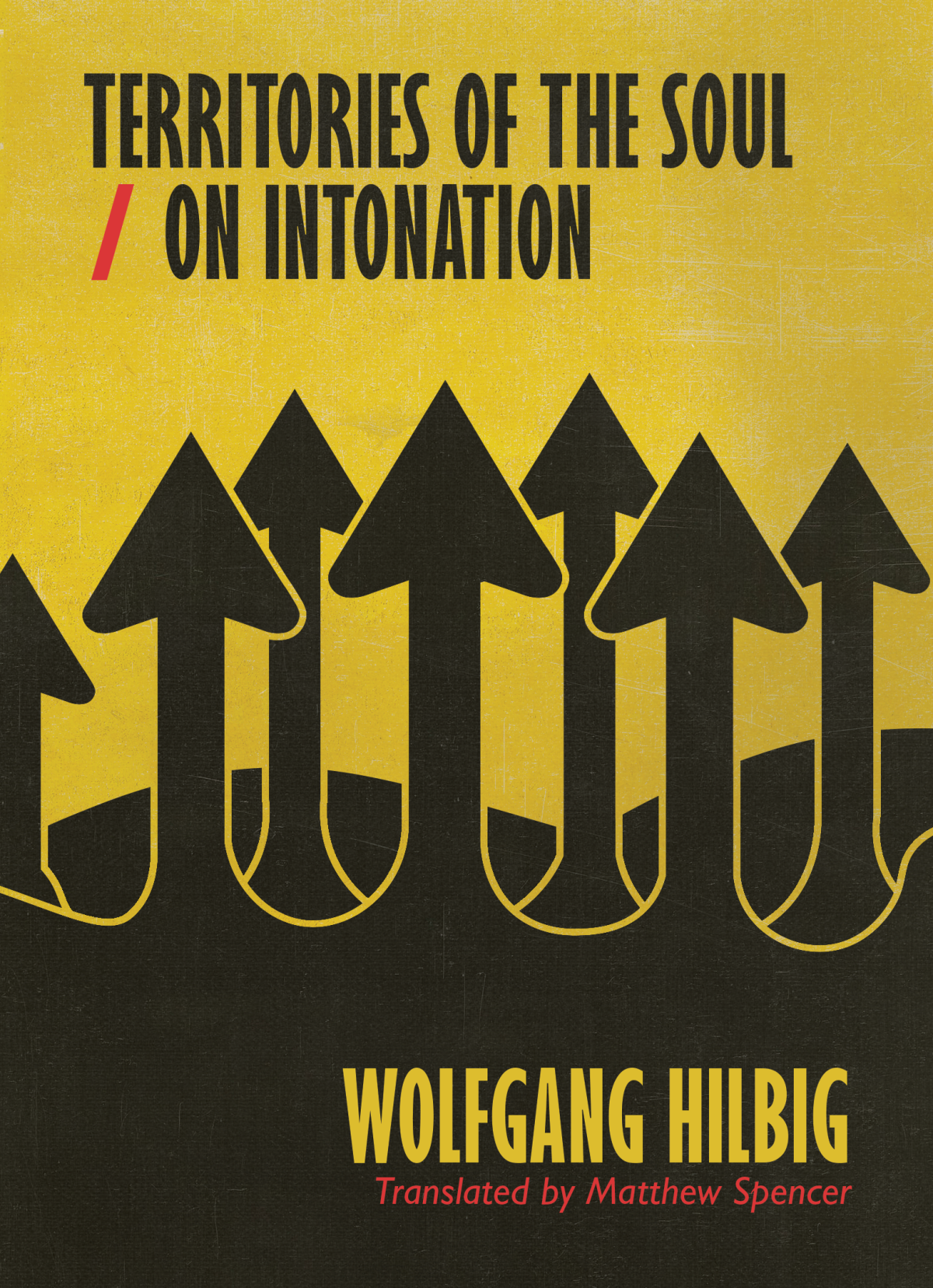 Territories of the Soul / On Intonation, pulls together short works from two collections published in the closing years of the GDR—eight stories and two poems—translated by Matthew Spencer and published by Sublunary Editions. Hilbig was born in Meuselwitz, Thuringia in 1941, and grew up in the industrial wilderness of postwar East Germany. He began writing poetry while working as a stoker, but his literary sensibilities were never going to fit with the socialist realism the GDR wanted its working-class poets to produce. Yet, although he migrated to West Germany in 1985, his spirit and his themes tended to remain anchored in the East.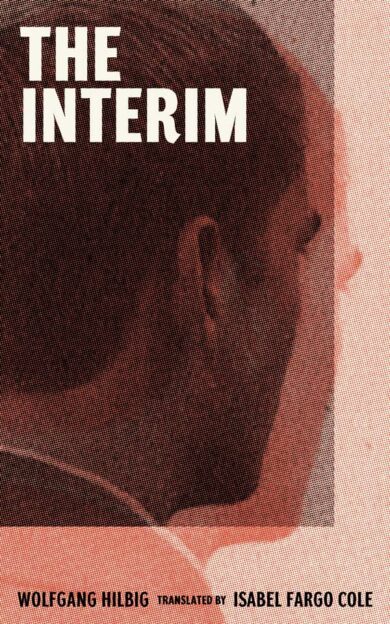



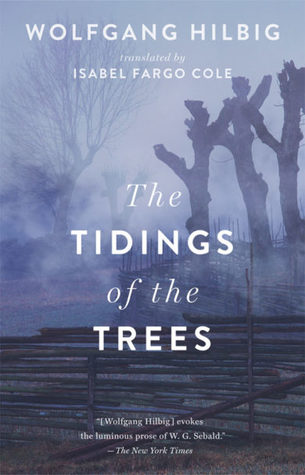
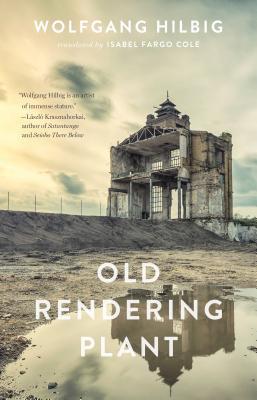
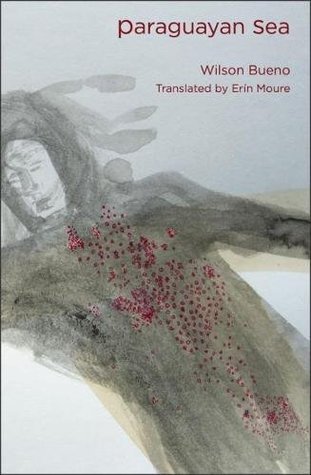
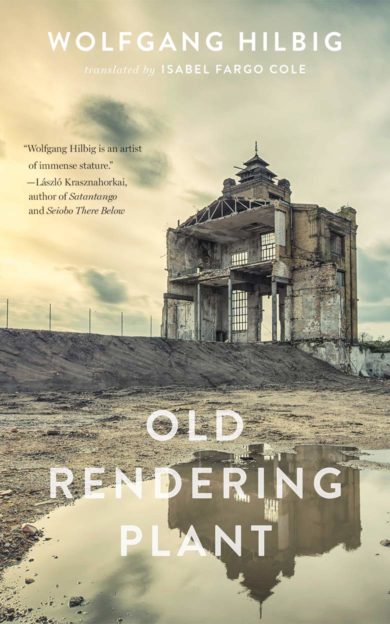




 roughghosts