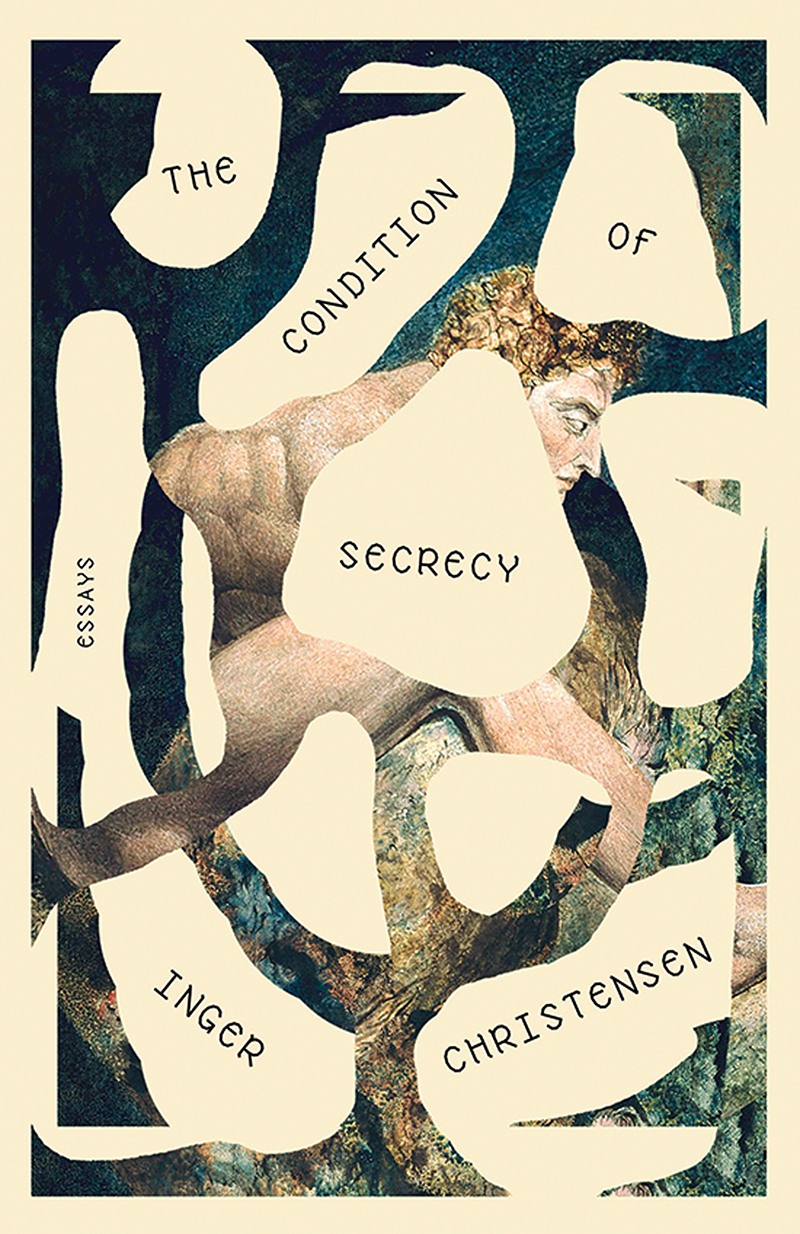
An inexhaustible landscape of words: The Condition of Secrecy by Inger Christensen

Writing poems is just as much a mysterious miracle. Not that there’s anything mystical or ceremonial about it. Or anything religious. It’s a neutral miracle, so to speak, granted in advance, because in the process of writing we need to use language in its whole, indissoluble connection with reality. It’s that connection with reality that’s a mysterious miracle. And that’s what poetry has to enter into.

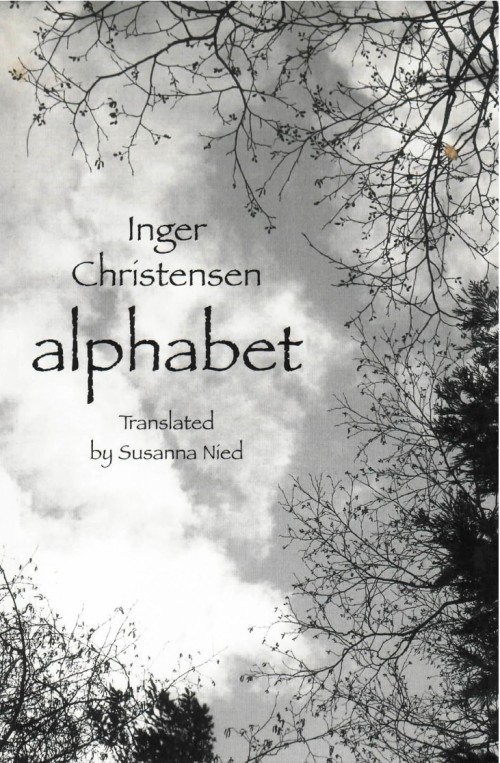
It is clear from the essays collected in The Condition of Secrecy, that Danish poet, novelist, and essayist Inger Christensen (1935–2009) was not only in love with words, but that she understood language—and the way we seek to give meaning to the world—as part of the dynamic process of nature. For those who are already familiar with the experimental writer’s poetry and fiction, this collection offers insight into her view of the world, which was heavily influenced by a lifelong interest in science, mathematics, and linguistic theory, and the questions she was inclined to ask about her own engagement with language. For those who are new to her work, myself included, her philosophical musings and poetic investigations are no less interesting, and may well serve as an invitation to explore her work further—and fortunately there is a good selection currently available in English translation with more forthcoming this year.

What is most immediate in this compilation of essays, originally published across four decades, from the 1960s through the 1990s, and arranged intentionally rather than chronologically, is the sheer force of Christensen’s intellectual curiosity. At its most basic, it is a book about writing and meaning, but a book by an original inventive poet trained in German, mathematics, and medicine, who read six modern and two ancient languages. And, as a child of the Second World War, social and political concerns are never far from her mind. The Cold War and the fear of nuclear annihilation casts a clear shadow on a number of pieces. So, although this volume only numbers 138 pages, Christensen encourages her reader’s close engagement with ideas as she herself works her way through her own questions about the world and the way we find meaning in it through language.

Words are, of course, essential and she has a wonderful way of employing them. Her opening sentences are often quite special. “Interplay,” an essay about coming to understand time and one’s place in history as a child in Denmark at the end of World War II, begins:

When I was nine years old, the world, too, was nine years old. At least, there was no difference between us, no opposition, no distance. We just tumbled around from sunrise to sunset, body and earth as alike as two pennies.

Another piece, one of several more explicitly about words, meaning, and form, especially in the art of poetry, “Silk, the Universe, Language, the Heart,” opens:

Silk is a noun. All nouns are very lonely. They’re like crystals, each enclosing its own little piece of our knowledge about the world.

This playful essay, in conversation with the Ars Poetica or Wen Fu of Chinese poet Lu Chi (261–303 AD), examines the personalities of nouns, adjectives, adverbs, and verbs, along with the ever important prepositions that hold them in relation to one another.

Another essay that explores the interconnectedness of words, meaning, and writing poems, “It’s All Words,” moves from an analysis of what it means to say: “The word creates what it names” with all its Biblical overtones, through an existential (and anthropological) notion of naming the world into existence, to try to answer the question of why poetry is not a common practice when it requires no special tools beyond a paper and pen.

As it is right now, when the world has existed for so long, words come from everywhere, and they’re never there for the first time. Not only that. Although there may not be an infinite number of them, nor an infinite number of combinations, nevertheless there is an inexhaustible landscape of words, there are more than any one individual could manage to travel through. This is where it ends and where it begins, if a person is going to write poems: in the imagined concept of this mysterious landscape. For poems are created exclusively from words.

What makes this piece especially intriguing is that it leads into a discussion of the creation of one Christensen’s most inventive book-length poems, Alphabet. She began collecting words and then, in her gathering, she happened to come across Fibonacci numbers, a formula of increasing numbers that describe a pattern present in the growth principles of many plants. By employing this structure, she had a framework upon which her poem could eventually grow and bloom.

Most of the essays in this volume are short, some are only a few pages long, but midway through, the longest piece, coming in just shy of 30 pages, marks a turn of focus to more philosophical and political themes—not without abandoning talk of writing poetry and fiction, mind you. “The Regulating Effect of Chance” is an extended discussion of the role that chance plays in the world—fundamental, as she sees it, in accord with Jacques Monod’s Chance & Necessity—and in our experience of the world, our tendency to assign a notion of fate or destiny, and our understanding of art, creativity, imagination and much more. The later essays turn their attention to subjects such as the nature of truth, the depiction of night and, in a futuristic and somewhat fatalistic effort, “Snow,” the idea of the inevitability of nuclear winter.

This collection is one that I have owned for a number of years, without any previous experience of Christensen’s poetry or prose. Several times I pulled it from the shelf, but it did not seem that the time was right. Now I am especially keen to read her poetry. There are four volumes available in English, all translated, like The Condition of Secrecy, by Susanna Nied who enjoyed a close collaborative relationship with Christensen when working on her poetry. So, all things in good time; the words will be waiting.

The Condition of Secrecy: Selected Essays by Inger Christensen is translated from the Danish by Susanna Nied and published by New Directions.

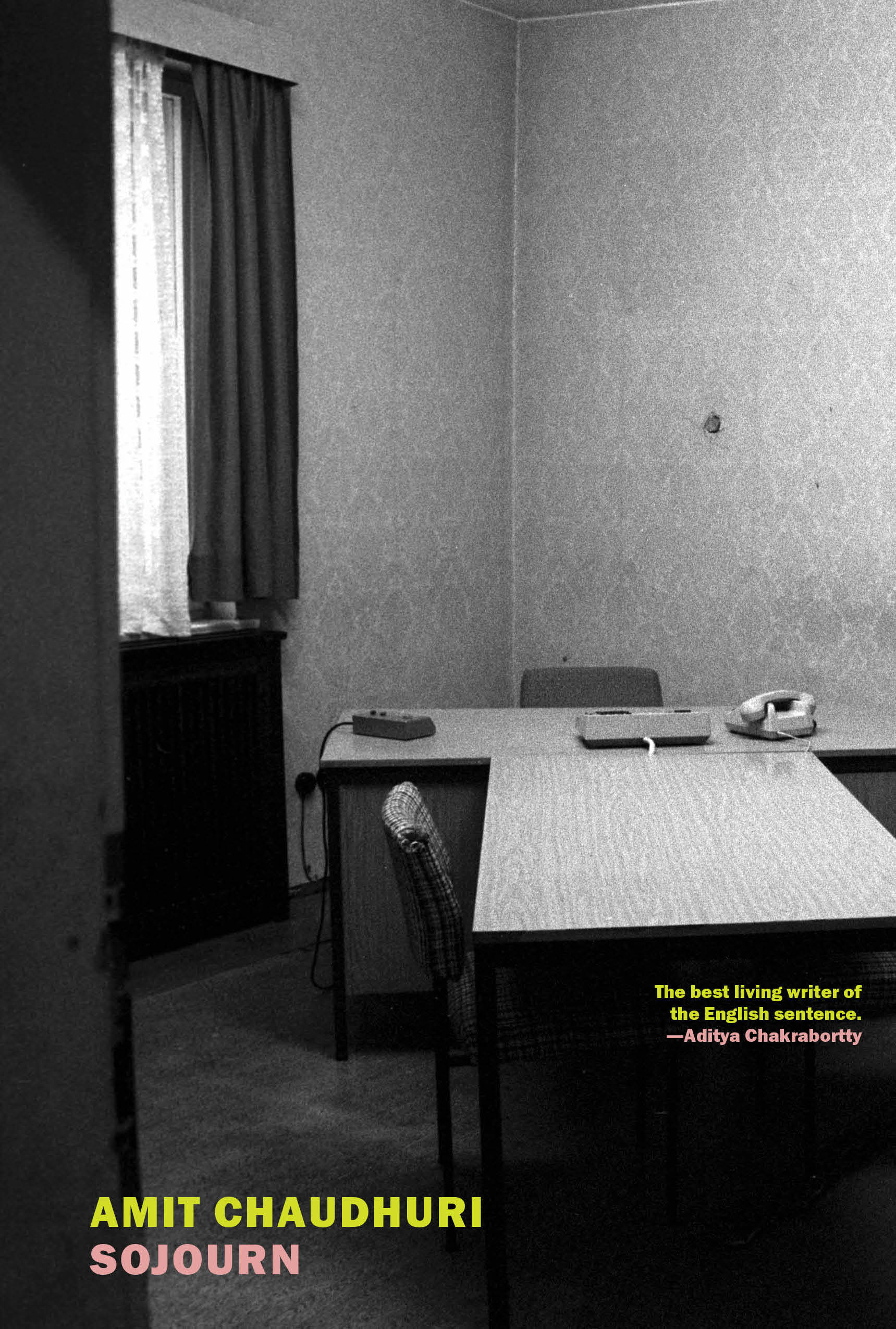
“Most of the things you ‘recognise’ you’ve never seen before” Sojourn by Amit Chaudhuri

From the opening passages of Amit Chaudhuri’s quiet, lugubrious novella Sojourn, one can already sense that his unnamed narrator, an Indian writer on a four month visiting professorship in Berlin, is slightly out of sync with the world around him, but it’s not clear if it’s simply the strangeness of his environment or some unease he carries with him. It’s not even his first visit to the city, but little seems familiar. He constantly requires directions and gets lost easily. There is, however, a subtle tension running through this lowkey narrative that gradually builds into something more disorienting in this portrait of a man’s shifting relationship to time and place as he enters mid-life.

The year is 2004, fifteen years after the fall of the Wall, but its shadow persists; former demarcation lines and vast areas not yet cleansed of their link to a dark past remain. Residents are inclined to point them out to visitors as if sharing the city’s history with a certain wistfulness, while the narrator tends to react to these spaces as if they hold a connection to an interruption of time in a city that now, after reunification, is still finding its footing.

At his first official function, just days after arriving, our protagonist meets Farqul, the self-styled Bangladeshi poet who appoints himself as his guide and guardian during the early weeks of his stay. Their conversations are peppered with snatches of Bangla. A journalist with Deutsche Welle, Farqul is an elusive yet ubiquitous figure—or perhaps, furtive, as the narrator speculates on their first encounter—who is a well-known exile and appears to be well-liked among members of Berlin’s immigrant community. He had emigrated to Germany in 1977, two years after being kicked out of Bangladesh for writing a blasphemous poem. Prior to leaving India he had spent a rather fractious interlude among the literati in Calcutta where he met and was apparently aided in his move to Berlin by none other than Gunther Grass. (The narrator simply conveys this information without question.) He is a generous, if eccentric, host. He not only shows the narrator around, but helps him get outfitted for the coming cold weather.

Farqul – in the excitement of being in your company – was a man who liked to share. He gave you food; he stood next to you in solidarity when you tried on jackets; he would have shared cigarettes and his flat if I’d been a smoker or needed a room; he might offer his woman. He didn’t create a boundary round himself, saying, ‘This is mine; not yours.’ As long as he was with you he was in a state of transport.

Yet when Farqul suddenly disappears without notice, the narrator flounders a little. Most of the acquaintances he makes through the university remain casual, but he does have the hint of an affair with a German woman who unexpectedly reaches out to him after having attended his inaugural lecture. She tells him she loves India (“I’m wary of Europeans who ‘love’ India – an old neurosis”) and their liaison, for what it’s worth, develops rather uncertainly. The narrator is often uneasy; he seems to be unwilling to exercise any agency. Rather, he tends to drift without commitment. As a result, those who come into his life with whom he may have grounds for connection—social, academic, romantic—have to be persistent if any kind of relationship is going to develop.

He also, for some reason, maintains a distance from the German language. His housekeeper speaks no English and the simple German phrases she uses with him he claims to understand only through her accompanying gestures. He seems content to exist in the city without being able to interpret the conversations around him—to revel in the meaning conveyed by the music of the language rather than its vocabulary or grammar:

They go on about the rebarbative sound German makes, but individual words and names have greater beauty – more history – than English can carry. I entered Hackescher Markt in my mind’s eye five or ten minutes before reaching there. ‘Friedrichstrasse’ had come up in a dream recently, as a port of arrival. Kristallnacht was transparent, broken. I woke up to words and didn’t bother with the language.

Certainly his sojourn in the city is necessarily brief, but his passivity is notable, as is his unwillingness to acknowledge how unmoored he is. That is, until he begins to become disoriented and experience blackouts. The narrative becomes more fragmented as he  loses himself navigating an unfolding layout of streets and network of train stations:

The trains emanate sorrow. Not like humans. The humans, in fact, are distracted and impatient. The trains aren’t alive in the way we understand the word. But they feel.

Domination of steel: steel smoke, steel sky.

This book has an intentionally unfinished feel owing to the fact that the narrator’s own mental state seems to be unravelling as his time in the city nears an end. We learn little about his earlier life because he admittedly feels disconnected from it himself, making for a mysterious, yet beautifully written tale of one man’s estranged sojourn in Berlin.

Sojourn by Amit Chaudhuri is published by New York Review Books.

Looking back at a year of reading: 2024 edition

Each year when I review the list of books that I have read, I face the same challenge deciding what to include and what to leave out of a final accounting. As usual there are the books that I know, even as I am reading them, will be among my favourites for the year. Just as I know the ones I don’t like, the ones I won’t even mention or take the time to review. Basically, everything else that I have reviewed, was a good book.

This year, my count far exceeds a respectable “top ten” or “baker’s dozen” and there are some striking factors at play. One is that the ongoing  violence in Gaza has heightened my focus on Palestinian and Arabic language literature—long an area of interest and concern. Five of the Palestinian themed books I read made my year end list. As well, I have paired several titles, typically by the same author or otherwise connected, because the reading of one inspired and was enhanced by the reading of the other (not to mention that such pairings allow me to expand my list). Finally, as reflected by my top books, I read and loved more longer works of fiction this year than usual (for me). No 1000 page tomes yet, but perhaps I’m overcoming some of my long book anxiety.

And so on to the books.

Poetry:
I read far more poetry than I review, but this year I wanted to call attention to four titles.

Strangers in Light Coatsevokes by Palestinian poet Ghassan Zaqtan (Arabic, translated by Robin Moger/Seagull Books) is, perhaps, a darker than his earlier collections. Comprised as it is, of poems from recent releases, it actively portrays a world shaped by the reality of decades of occupation and war.

My Rivers by Faruk Šehić (Bosnian, translated by S.D. Curtis/Istros Books) is a collection particularly powerful for its depiction of a legacy of wars in Bosnia/Herzegovina including the genocide in Srebrenica. His speakers carry the burden of history.

Walking the Earth by Tunisian-French poet Amina Saïd (French, translated by Peter Thompson/Contra Mundum) is such a haunting work of primal beauty that I can’t understand why more of her poetry has not been published in English. Perhaps that will change.

Nostalgia Doesn’t Flow Away Like Rainwater by Irma Pineda is one of a number of small Latin American poetry collection from poets and communities that have not been published in English before. This book, a trilingual collection in Didxazá (Isthmus Zapotec) and Spanish with English translations by Wendy Call (Deep Vellum & Phoneme Media) was particularly special.


Nonfiction:
This year, my favourites include a mix of memoir and essay and a couple of works that defy simple classification.

The Blue Light / Among the Almond Trees by Palestinian writer Hussein Barghouthi (Arabic, translated by Fady Joudah and Ibrahim Muhawi respectively/Seagull). Blue Light chronicles Barghouthi’s years in Seattle as a grad student and the eccentric circles he travelled in, whereas Among the Almond Trees is a much more sombre work written when he knew he was dying of cancer. The two books complement each other beautifully.

French intellectual, critic, ethnographer and autobiographical essayist Michel Leiris is a writer who means so much to me that the occasion of the release of Frail Riffs (Yale University), the fourth and final volume of his Rules of the Game in Richard Sieburth‘s translation, was not only an excuse to pitch a review but an invitation to revisit the earlier volumes. Definitely a highlight.

I Saw Ramallah by Mourid Barghouti (Palestinian/Arabic, translated by Ahdaf Soueif/Anchor Books) is a moving memoir detailing the author’s return to his homeland after thirty years of exile. Reading it reminded me that I had a copy of Scepters by his wife, Egyptian novelist Radwa Ashour (Arabic, translated by Barbara Romaine/Interlink Books). This ambitious work blends fiction, history, memoir, and metafiction and I absolutely loved it, but my decision to include it here, like this, rests on the memoir element which complements her husband’s in its account of the many years he was exiled from Egypt—a double exile for him—especially the years in which she travelled back and forth with their young son to visit him while he was living in Hungary.

Candidate for the book with the best title, perhaps ever, Dostoyevsky Reads Hegel in Siberia and Bursts into Tears by Hungarian scholar  László Földényi (translated by Ottilie Mulzet/Yale University) was an endlessly fascinating collection of essays exploring the relationship between darkness and light (and similar dichotomies) through the ideas of a variety of writers, thinkers and artists.


Fiction:
As usual, fiction comprised the largest component of my reading and, as I’ve said, I read more relatively longer works than in the past. Normally I have a special fondness for the very spare novella and, of course, my list would not be complete without a few shorter works, including one more pair.

The Wounded Age and Eastern Tales  / Noone by Turkish writer Ferit Edgü—translated by Aron Aji (NYRB Classics) and Fulya Peker Cotra Mundum) respectively—who is sadly one of the writers we lost this year. His work, which draws on the time he spent teaching in the impoverished southeastern region of Turkey in lieu of military service, is filled with great compassion for the people of this troubled area. But his prose is stripped clean, bare, and remarkably powerful.

Recital of the Dark Verses by Luis Felipe Fabre (Mexico/Spanish, translated by Heather Cleary/Deep Vellum) is an award wining translation that seems to have garnered less attention than it deserves. This comic Golden Age road trip follows the misadventures of the body of John of the Cross on its clandestine voyage to Seville. Brilliant.

Celebration by Damir Karakaš (Croatian, translated by Ellen Elias-Bursać/ Two Lines Press) is an exceptionally spare, unsentimental novella about the historical forces that pulled the residents of Lika in central Croatia into World War II.

Spent Light by Lara Pawson (CB Editions) is a book I’d been anticipating since reading her This Is the Place to Be. Strange, at times disturbing, often hilarious and always thoughtful, this is one of those books that (thankfully) defies description.

If Celebration is historical fiction at its most spare, Winterberg’s Last Journey by Czech writer Jaroslav Rudiš (German, translated by Kris Best/Jantar Publishing) is the exact opposite. Ambitious, eccentric, and filled with detail, it follows a 99 year-old man and his male nurse as they travel the railways with the aid of 1913 railway guide. What could possibly go wrong?

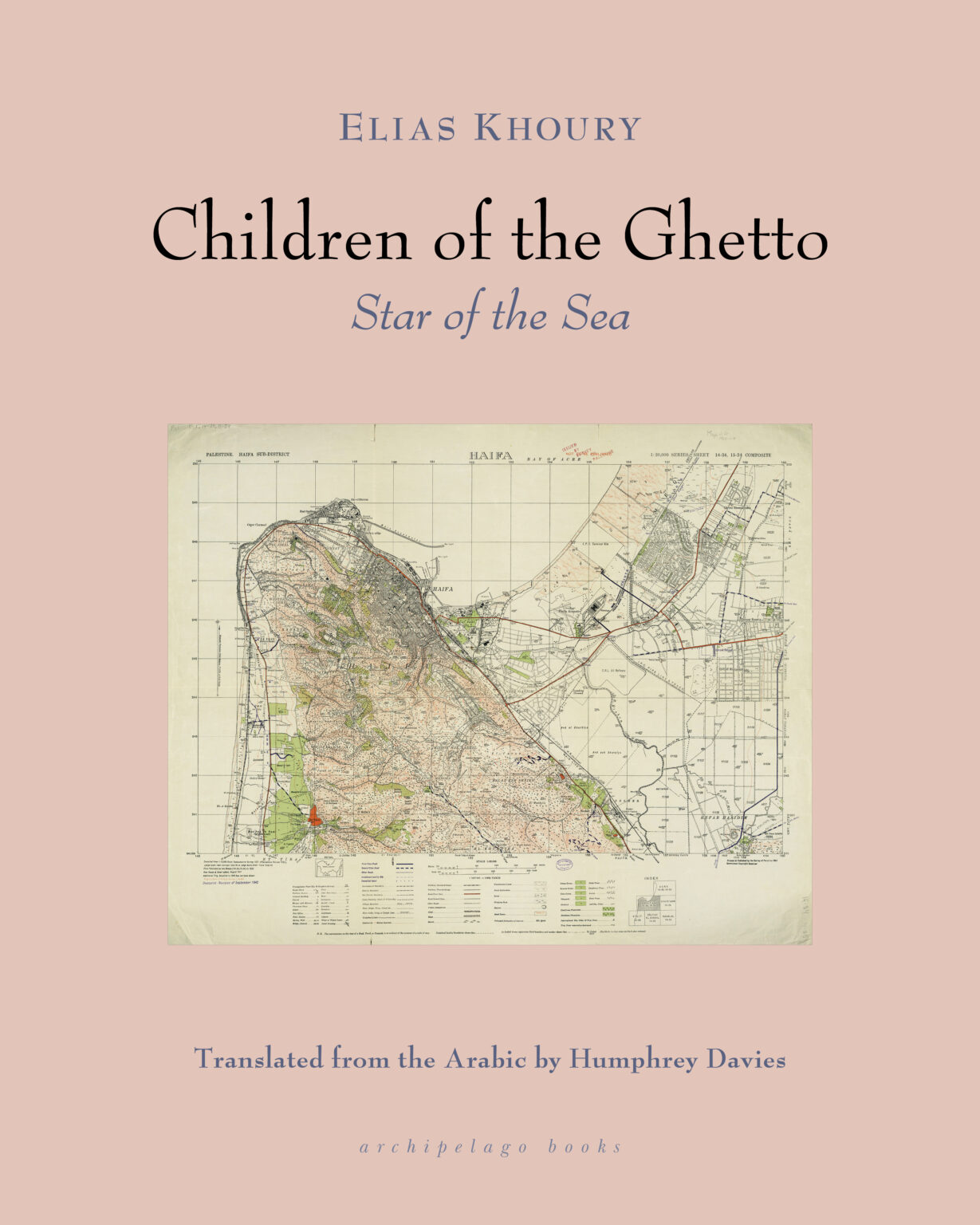
Children of the Ghetto I: My Name is Adam by Lebanese author Elias Khoury who also died this year (translated by Humphrey Davies/Archipelago Books) is the final Palestinian themed work on my list. This is a challenging and rewarding novel about a man born in the ghetto of Lydda during the Nakba that examines complex questions of identity.

Star 111 by Lutz Seiler (German, translated by Tess Lewis/NYRB Imprints)is the autobiographically inspired story of a young East German would-be poet’s experiences among an eccentric group of idealists in Berlin in the immediate aftermath of the fall of the Wall. I was familiar with Seiler’s poetry before reading this, but I liked this novel so much that it lead me to follow up with his essays and the work of other poets important to him—the best kind of expanding reading experience.

Mauro Javier Cárdenas’ third novel American Abductions (Dalkey Archive) imagines the latest iteration of his hero Antonio in a future in which Latin American migrants are systematically sought out, separated from the children and deported. With a stream of single sentence chapters, he creates a tale that is both fun and uncomfortably too close for comfort. Quite an achievement!

Last but not least, my two favourite books this year are Hungarian:

In The End by Attila Bartis (translated by Judith Sollosy/Archipelago Books), a fifty-two year old photographer looks back on his life—his successes and his failures. He reflects on his relationship with his mother, his move to Budapest with his father in the early 1960s following her death, life under Communism and the secrets held by those around him, and the role the camera played in his life. Presented in short chapters, like photographs in prose each with its “punctum,” the 600+ pages of this book just fly by.

Like Attila Bartis, Andrea Tompa also comes from the ethnically Hungarian community of Romania’s Transylvania region and now lives in Budapest. Her novel Home (translated by Jozefina Komporaly/Istros Books) follows a woman travelling to a school reunion, but it is much more. It is a novel about language, about what it means to belong, to have a home and a mother tongue. It’s probably not surprising that my two favourite novels involve protagonists in mid-life, looking at where they are and how they got there. As to why they’re both Hungarian—I suppose I’ll have to read more Hungarian literature in the new year to answer that.

So that is my 2024 wrap up. I’d like to think 2025 will be better than I fear it will, but at least I know there are countless good books to look forward to.

Happy New Year!

‘I thought femininity was something that could be learned’: Antiboy by Valentijn Hoogenkamp

The unique challenge that arises when one attempts to write about what it feels like when the experience of gender fails to conform with cultural and societal expectations is rooted in the problem of a lack of consensus about terminology. Whether language and meaning are defined by individuals with lived experience or those looking in from the outside, there is no one way to talk about gender identity. There are the absolutists who see male and female / woman and man as fixed black and white entities among both those who identify as transgender and those who deny our existence. And then there are those accept and relate to the notion of a spectrum or continuum in lived expression (reflecting but not necessarily mirroring the intricacies of genetic variation). But transpeople are, first and foremost, people, and our understanding of ourselves not only evolves and changes over time, it is typically measured against those we encounter in the world. And often that can involve many years of wondering where to find our own selves reflected. Just like other people who, for some reason or another, feel a persistent sense that they do not belong.

Antiboy, by Dutch poet and writer Valentijn Hoogenkamp, is an attempt to articulate the strangeness, the sorrow, and the satisfaction that can accompany the quest for a more natural way of being. This very spare memoir, translated in crisp, poetic prose by Michele Hutchison, chronicles the author’s lifelong inability to find himself within the female body and life into which he was born. When a genetic mutation for a rare form of cancer (one that will claim his mother’s life) necessitates that he undergo a bilateral mastectomy, he finds an unexpected opportunity to explore his identity. Much to the consternation of others, he rejects breast implants and opts for a flat chest:

‘When I got the diagnosis, I pictured my funeral and that nobody there would really know me because I’ve never spoken up. And, in the conversations I had at the hospital, they kept telling me what most women would do in my situation,’ I say. ‘I kept wanting to look over my shoulder and see if that woman was standing behind me.’

‘Because you don’t feel like a woman?’

‘I thought femininity was something that could be learned.’

This is a searching text. Unsentimental and questioning, not stubborn and defensive like some other memoirs that venture into this territory. Hoogenkamp speaks not so much of a boy inside, but an absence where a girl or woman should be. An emptiness. The surgery presents the means to open himself to physical transformation—breasts being such fundamental indication of womanhood—but his decision to forgo implants is not random, there is precedent reaching back much further. He describes the childhood of a social outcast. Set aside. “No one to walk hand in hand to the gym with, to go around to the classes with on my birthday.” Girls playing together in the schoolyard seem strangely alien.

I can do this. I have the same arms and legs as them, I am approximately the same size. I can be one of them.

It should be easy. Natural. But it is not.

Sexuality is another avenue for exploration. Sexuality and gender can easily be conflated, both can be subject to labelling by others or rejection of an individual’s right to define themselves. Hoogenkamp has boyfriends and a female friend she has sex with—a female friend who will, in time, transition to male and provide a little guidance along the way. But his intimate partners prove less flexible than he would hope once he comes out as non-binary. And he allows himself to be used:

My sexual orientation was being wanted. I was sick to death of feeling unwanted.

Although Hoogenkamp finds a space to exist between genders (but adopting male pronouns), there is so much in this short book that resonated deeply with my own experiences growing up without any context for my sense of otherness, my attempts to understand myself through questions of sexuality, and my ultimate decision to transition more than twenty years ago. There are many ways of feeling and talking about a gender anxiety or disconnect, just as there are many ways of trying to describe how one knows that their sex and gender are aligned. At one point Hoogenkamp puts that question to a number of non-trans-identified men and women and finds many hard pressed to articulate an answer. But at a time when differences in gender identity are increasingly being denied or weaponized, it is more important than ever to listen to the varied personal experiences of transgender people.

Antiboy by Valentijn Hoogenkamp is translated from the Dutch by Michele Hutchison and published by Seagull Books as part of their Pride List.

Dramatically, melodramatically, or obliquely: American Abductions by Mauro Javier Cárdenas

. . . no, Antonio says to his daughters during dinner, Americans can’t imagine the conditions, and if they can’t imagine the conditions, they can’t imagine themselves as refugees, and if they can’t imagine themselves as refugees, they will conclude that refugees are different from them, a different species, Eva says, they read in the news that a different species from Central America have to flee their homes and that they’re coming here, and that we’re abducting their children to teach them a lesson, life is hard and then we die, Ada says. . .

There is something distinctly unsettling about reading the latest novel by Ecuadorian-American writer  Mauro Javier Cárdenas on the eve of Trump’s second term—Racist in Chief, anyone?—especially with tech billionaire Elon Musk on his arm assuming they haven’t broken up by then. Projected into a future that now seems shockingly close, American Abductions envisions a US in which the mass deportation of Latin American migrants, not just those who are illegal but naturalized citizens and sometimes even their children, is a large scale, technologically advanced, industrialized, and profit motivated operation. It consumes the waking and sleeping hours of its unfortunate targets and tears their lives apart in distinct yet similar ways. Antonio, the divorced cubicle-bound data analyst hero of Cárdenas’s last novel, Aphasia, who was trying to write a novel while juggling  commitments to his ex, his daughters, his mother and sister, plus a couple of girlfriends, has, in this scenario, been abducted and deported to his native Colombia. He was driving the girls to school when immigration officials apprehended him, a scene recorded by Ada, his eldest, on a video that subsequently went viral. When we catch up with him, decades have passed and his health is failing (he will die but continues to appear in recollected scenes from the past or via recordings of the many interviews he conducted with fellow deportees over the years). His daughters are grown. His youngest, Eva, a conceptual artist, joined him in Bogota after finishing university and has been there for seven years, while Ada has remained in San Francisco where she works as an architect. Add to this a varied cast of Latin American exiles and their families connected through either Antonio’s ongoing interview project and /or the lucid dream workshops of an online doctor, and you have the basic sketch of this dynamic and original work.

Cárdenas is a passionate devotee of the long sentence, producing multi-page strings of thoughts, reflections, and dialogue that tend to shift mid-stream—watch those commas, those “he says,” or “she thinks”—demanding attention while providing ample room for humour, recurring themes, and often biting commentary. But he is not simply obsessed with word count, an objective that in itself can lead to the proliferation of hopelessly unnecessary, redundant clauses. Rather, his sentences seem to propel themselves with an intrinsic energy that never overstays its welcome. There was, he admits in an interview for Minor Literature[s], a method guiding the writing of this book:

I wrote every sentence in American Abductions the same way. I started each sentence with a human impulse that I attempted to exhaust within the same sentence. This attempt to exhaust could be called In Search of Unexpected Linkages, with the caveat that this doesn’t translate to anything goes since the human impulse at the beginning determines the radius of operations. This approach also doesn’t allow for me adding a reference or an image three months later because that would disturb the progression of the sentence, which is based on the linkages previously generated. I typically spend one week on a 1,000-word sentence. Every day during that one week I read the sentence from the beginning so that I can ground myself on the opening impulse and what has already been generated. During that one week I have to read widely and wildly but in the vicinity of the radius of operations, which is as vague as it sounds — more Ouija board than research — though obviously I also do primary research (you would be surprised by how many facts are included in the opening sentence, for instance).

If that sounds like a recipe for a forced and artificial exercise it is anything but. This is a serious, albeit futuristic, novel that is unafraid to tilt at uncomfortable truths. There are continuing and developing threads and characters, whose stories reflect the fear, isolation, and (quite literal) dreams of those directly impacted by the anti-Latin American agenda of the “Pale Americans.” Central to this are, of course, Eva and Ada who are not only deprived of their rather eccentric father at a young age, but are unable to be together when he is sick or after his death, as they decide to continue his work. But there are other strained or separated families as well.

The subject matter—especially in light of the increasing antipathy and hostility toward immigrants in the Global North—may be grim, but this is a playful, absurdist novel nonetheless. Curious data and scientific facts are woven in to the narrative and literary references abound, some direct, such as the discussion of texts by Leonora Carrington, Bernhard, Borges, and Sebald; others less so, such as the adoption of the names of authors, musicians, artists, and Bolaño characters as intentional pseudonyms or nicknames for intelligent technologies. Sentence by sentence, each chapter builds on those that proceed it to create an intelligent, entertaining and, dare we say it, unnervingly prophetic novel.

American Abductions by Mauro Javier Cárdenas is published by Dalkey Archive Press. An excerpt can be found at Minor Literature[s].

The strange and even stranger world of Nightjar Press: Fabrication by Imogen Reid and Old Tutor, New Tutor by Arthur Mandal

There is something very precious about the chapbook format. The presentation of a single short prose piece or sequence of poems in a single bound volume, often printed as a defined, numbered run, is a way of isolating and calling special attention to a writer and their work. Since 2009, UK based Nightjar Press has published limited edition single short-story chapbooks. Editor Nicholas Royle and designer John Oakley have a fondness for stories that lean toward the uncanny, darker, and stranger side, as the press’s namesake might imply:

The nightjar – corpse fowl, goatsucker – is a nocturnal bird with an uncanny, supernatural reputation that flies at dusk or dawn as it hunts. It is more often heard than seen, its song a series of ghostly clicks known as a churring. Sylvia Plath, in ‘Goatsucker’, wrote that the ‘Devil-bird’ flies ‘on wings of witch cloth’; David Morley, in ‘Beethoven’s Yellowhammer’, calls it simply ‘Satanic’.

Two releases from this past October offer two different examples of the kind of oddly unsettling offerings they specialize in.

Imogen Reid’s Fabrication is a piece of experimental fiction that draws on the author’s interest in the way techniques employed in film can transform narrative form and readability. This story builds on an observed/experienced scene—a room, a desk, a man, a faded “missing” notice—that echoes and repeats elements as it circles back on itself, creating and reinforcing the ambient quality of a dream or remembered moment within which the subject, addressed in the second person, is both protagonist and object, perhaps in more than one sense.

you can’t recall being there, but you can feel the frayed edges of an unwritten narrative slowly crystallise around the grainy image tacked to the wall, barely held in place by a steel pin, its fragile edges fluttering in the breeze like shackled butterfly wings. Beneath it, in front of the desk, partially illuminated by the eerie glow emanating from the computer screen, the chair turns and re-turns silently swivelling on its well-oiled axis, the monotonous rhythm neither surging nor subsiding.

Disorienting and intriguing, this very short story invites repeated rereading becoming in the process a longer, circular piece without beginning or end.

More conventional in form, but equally unnerving and ambiguously unresolved, is Arthur Mandal’s Old Tutor, New Tutor. As this story opens, the tutor Mrs Craig hired to help her daughters prepare for their A-levels is late. The girls took immediately to Mark  (“he just wants to be called MO”) and now, suddenly, after six weeks, he has failed to arrive at the usual time. When she is finally convinced to call the number he had provided, she reaches what sounds like a distant, distorted connection. The tutor apologizes and promises to be back the following week. But a few days later when Mrs Craig is in town with her daughters she spots the tutor—pictured on a leaflet attached to a lamppost. Wanted for assault. The girls are in denial (“It’s nothing like him”), but their mother is convinced it’s the same man. Calls to Mark’s number go unanswered.

Then, the following week, a new tutor arrives at the usual date and time. The family is surprised, no one had called to arrange a replacement, but here he is. He introduces himself as Alan.

The new tutor stood before them, unperturbed. He wore a long, grey overcoat which dropped vertically from his shoulders to his knees. His face was young, freckled, cheeky but handsome. Although in his late twenties, he had the demeanor of a small child. In one hand he carried a briefcase; in the other an old-fashioned umbrella with a crocodile-skin handle.

The girls quickly take to the new tutor, even their previously resistant father warms to Alan’s charms. But Mrs Craig is uneasy. The source of her discomfort is uncertain; even she is at a loss to explain it. As the tale unfolds, we only have her perspective, and it becomes increasingly unclear whether her paranoia has any basis or whether she is losing her grasp on reality.

My first purchase from Nightjar Press was a signed M. John Harrison story in 2013. With a print run of only 200 copies per title, their chapbooks tend to sell out quickly, so one cannot wait too long if an offering  sounds intriguing. As with these two recent purchases—one an author familiar to me, the other new—something weird and wonderful is almost certainly guaranteed.

Fabrication by Imogen Reid and Old Tutor, New Tutor by Arthur Mandal are published by Nightjar Press (October 2024).

And we turn toward the sun once again: Winter Solstice 2024

whoever has kept the night in suspense
for light or for a star

while we were stealing words
from joy and its opposite

in this way day is torn from night
and shadow from our eyes

they open yet again
renewing the pillaged
miracle

(– Amina Saïd, tr. Peter Thompson)

These are dark times. I know that almost sounds cliché at this point after years of widespread illness, growing polarization, rising right wing sympathies, increased intolerance of differences of any nature, profit motivated denial of climate change, and the clear demonstration of a shocking capacity to either justify or look away from horrific violence and injustice, but I don’t know of too many people who can continue to pretend that maybe next year will be better. It won’t, at least not on any global scale. It is far more likely to be worse in ways we can’t even imagine.

I’m not depressed, not at the moment anyhow, but I am fundamentally pragmatic going forward.

When I first started this blog in 2014, I used to mark the solstice—winter in particular—as a sort of touch point. It originated in relation to the date when a mental health crisis reached its zenith, on the job, effectively (although I did not know it at the time) ending my career. On June 20th I was at the height of a devastating manic episode; six months later in the darkness of December, I was in a state of despair. I channeled that into a post marking the shortest day of the year, a short piece of writing that looked back at the unresolved loss and shame of becoming seriously ill at work, something that would I carry to this day without any closure. Mental illness still faces an often unsurmountable stigma. And I even worked in the disability field.

Anyhow, that first winter I was looking forward to rebuilding. The following June I turned the solstice on its head and wrote a post from South Africa where, of course, it was winter. I believed I had come full circle, one trip around the sun, and I was ready to put pen to paper and tell a story I had kept supressed for much of my life. My story. But then, about two weeks after I got home I had a cardiac arrest secondary to a pulmonary embolism and suddenly I realized that my story was being rewritten for me. As it would continue to be revised and edited over the years and through the solstices that have since come and gone. My solstice reflections, regular for the first five years or so and occasional since then, have remained a winter inspired project (considering that two June posts being related to trips to South Africa and Australia respectively were technically winter solstice as well). Here in the Northern Hemisphere there is something about the long nights, the holiday season—which for my small family is quiet—and the approaching new year that encourages a little inward-looking self-assessment.

That spark that comes with the almost immediate shift in the quality of the light as the sun begins its migration northward once more.

Looking back over my past Solstice missives I was often wistful, looking ahead with quiet optimism that the next twelve months would finally see progress toward the goals I set for myself, more travel, more writing. But as the years have passed, the pandemic, a series of disasters, natural and manmade, war in Ukraine, ongoing genocide in Gaza, rising transphobia, and the steady erosion of democratic values and principles combined, perhaps, with getting older has tempered my expectations, if not extinguished them altogether. Close to home this past year has had its difficulties, with several serious medical issues arising with loved ones, and the stresses that come along with challenging diagnoses—or worse, the lack of a clear diagnosis. And there are stresses that continue without resolution. But I have good health and a roof over my head. I’m far from the uncertainty, violence and devastation that so many people face across the globe, and I have the sanctuary of a forested trail to retreat to.

I have yet to seriously recommit myself to writing, but I did pitch and publish a piece outside this site for the first time in years with a review of Frail Riffs, the fourth and final volume of Michel Leiris’ Rules of the Game which was finally released in English this spring. It was actually a wonderful excuse for me to go back and reread volumes 2 and 3 in preparation. I also returned to editing this past summer, taking on the role of Essays Editor for Minor Literature[s], a journal that has published some of my own writing over the years, including the recent Leiris review. It feels good to be editing again, something that I like to think of as having a measure of the satisfaction of writing without having to come up with all the words! And I made my editorial debut at Minor Lit[s] with what turned out to be one of our most popular essays of the year. And for good reason. It is Haytham el-Wardany’s devastating and powerful “Labour of Listening”. It was critical and timely when we published it, and sadly it is still critical and timely now.

Closer to New Year’s Eve I will gather a list of some of the best books I read this year. Until then, stay safe and Happy Solstice.

The only possible way: from In Case of Loss to Pitch & Glint by Lutz Seiler (and much more)

Some writers pass through your reading life and move on, perhaps appearing by chance now and then over the years, others ignite a clear desire to read more, if not all, that you can get hold of. That might be a small library of volumes to collect, but for those of us drawn to writers in translation—writers we often discover as a direct result of following a known or trusted translator—it can mean watching and waiting for more work to slowly emerge in English.

For me, one such writer is German poet, essayist and novelist Lutz Seiler. I first encountered his poetry about two and half years ago through Alexander Booth’s translation of his 2010 collection in field latin. At the time, the only other title available was his first novel Kruso which was, when I first checked, out of stock. Yet, when UK publisher And Other Stories announced they would be publishing Seiler’s debut poetry collection, Pitch & Glint, his second novel, Star 111, and a collection of essays, In Case of Loss, in late 2023, I took note. Then, when I had the opportunity to read Star 111 this year in advance of its North American release from NYRB in October, I quickly set about acquiring his other work. And, as these things go, while reading the poetry and the essays, I was inspired to add work by two of the poets Seiler writes about or honours—but more about that later.

Born in the Thuringia region of the GDR in 1963, Seiler’s poetry is rooted in the rural landscape of his childhood, scarred by years of uranium mining, sensitive to place and relationship to family, as child and as a parent. However, unlike many writers, he had no interest in books or literature when he himself was young. He did not start reading poetry until he was completing his mandatory military service in his early twenties, having already trained as a bricklayer and carpenter. He was certainly not writing, not even jotting the odd observation down, but something was brewing. As he says in his essay “Aurora: An Attempt to Answer the Question ‘Where is the Poem Going Today?’”:

Yet a good ten years later, I wrote poems that had been, in that earlier period, when poetry did not feature in my life, gathering and storing their subject matter, their materials. Doubly hidden from me at the time, clearly the poems had been, even then, making their way towards me. What is different these days is that I have become more conscious of the signs of a poem being on its way. I am aware of what situations, materials and substances it might respond to, what it is likely to ingest—for later use.

For a poet who came to literature somewhat unexpectedly, Seiler’s writing about writing, and about the poetic art and process is excellent, presumably of interest to other poets, but also, and perhaps more critically, for those of us who enjoy poetry but sometimes feel inadequate to examine a poem without a strong literary vocabulary and the requisite coursework (assumed to be) required to read and write it. In Case of Loss contains several essays about the work of other poets. One, Peter Huchel (1903–1981), was new to me. I was aware that Seiler is the custodian of the Huchel House in Wilhelmhorst near Berlin, but knew nothing of Huchel himself, one of the most an important German poets of the post-war era who ended up running afoul of the government of the GDR and was eventually allowed to migrate to the West. The title essay is an account of Seiler’s first impressions of the house itself after breaking in with Huchel’s widow’s blessing and his coming into possession of a notebook the poet kept all his life in which he recorded images, metaphors, lines, and tentative sketches, all categorized by theme. The manner in which Seiler traces some of the formative elements that will, often years later, appear as shadows or echoes in a finished piece is fascinating and a testament to the gestation period a poem can have. Of course, I wanted to read more, so I sought out These Numbered Days, Huchel’s 1972 collection, released in 2019 in an award winning English translation by Martin Crucefix (who is also the translator of In Case of Loss). His poetry often draws on the landscape of his youth for atmosphere frequently in concert with mythological, historical, and Biblical images to create crisp, even chilling poems. Although they are generally spare, one can sense that they have been carefully shaped and honed over time, each word or phrase carrying much weight, very often political—something confirmed by both Seiler’s insights, Crucefix’s notes, and Karen Leeder’s Introduction.

At the edge of the village the wind
flung its ton of frost
against the wall.
The moon lowered a fibrous gauze
on the wounds of the rooftops.

Slowly the emptiness of night descended,
filled with the howling of dogs.
Defeat sank
into the frozen veins of the country,
into the leather-upholstered seats
of old Kresmers in the coach sheds,
between the horse tack and grey straw
where children slept.

(Peter Huchel — from “Defeat”)

In addition to an unusual back to front reading of a book by Ernst Meister, the other poet Seiler devotes an essay to is Jürgen Becker. I had already read Becker’s fragmentary poetic novel, The Sea in the Radio, but a dedication to the poet (who very recently passed away) in Seiler’s collection Pitch & Glint, called to mind a collection of selected shorter poems, Blackbirds in September, which I was able to track down and read alongside the essay “’The Post-War Era Never Ends’: On Jürgen Becker.” Here Seiler takes a more personal approach acknowledging Becker’s influence and his own friendship with the older established poet. He traces his own process of learning to read and appreciate Becker’s poetry. Born in Cologne in 1932, Becker was a member of Group 47, the organization formed to promote young German writers after the war. He employed an experimental, open form of writing with an emphasis on landscape and the persistence of memories of the war in German land and history. His language tends to be spare and his poems have a calm, light feel, but that is only the surface.

But the landscape is rather quiet.
Invisible the destruction, if in fact
there is destruction.

And the time is passed
which the subsequent, the subsequent time produced.

But you never speak of Now.

Probably in the summer. At that time of year
we remember. Fence posts follow the paths,
or turned around, all of it belonging
to the landscape . . . who owns it? The landscape
leads into landscapes, from the visible ones
to the invisible ones which await us.

(Jürgen Becker — from “A Provisional Topography”/translated by Okla Elliott)

Other essays of particular interest in this collection (which gathers a selection of Seiler’s nonfiction from across twenty-five years) include “Illegal Exit, Gera (East),” a return in memory and in more recent years to a landscape that is being transformed and remediated, and “The Tired Territory” which begins as an exploration of the history of uranium mining in his home state, but turns into a meditation on the distinct poetic sensibilities that he had to define for himself after what he describes as the difficulties encountered in his “brief  career as a doctoral student in literary studies.” The categories that hold his fascination are intangible: heaviness, absence, tiredness. Understanding this for himself is essential:

Writing poetry: a difficult way to live and, at the same time, the only possible way.

One aspect of all this is that the poem engages specifically with what cannot be verbalised. The mute and non-paraphrasable and its unique, existential origin: the particular qualities of any poem arise from these two subtly interwoven elements. The poem travels towards the unsayable, yet this is a movement without an end.

It is not only the reading and writing of poetry that slips into Seiler’s essays—to a greater or lesser extent—but the final piece tackles his slow transition to prose. “The Soggy Hems of His Soviet Trousers: Image as a Way into the Narration of the Past” chronicles the year he moved with his wife and children to Rome for a period of dedicated novel writing. He dragged along boxes and boxes of books, research and paraphernalia he had gathered in preparation for the writing of his first novel. He’d planned to draw heavily on his own experiences moving to Berlin in the aftermath of the fall of the Wall and the more he describes his intentions, the more it sounds like what would eventually become his second novel, Star 111. But it’s only 2011 and our would-be novelist is staring at an empty page day after day. It is not until he finally gets out of his room, into the city, that everything changes. A suggestion that he write a short story set in a location he had not previously considered soon conjures forth an image so strong that ten pages become 500 and he has what will ultimately become his first novel Kruso.

Finally, if I return now to own Seiler’s poetry, in field latin and his debut collection from 2000, Pitch & Glint, more recently released in Stefan Tobler’s translation, many of the allusions in individual poems become clearer in light of having read his essays and the autobiographically influenced novel Star 111. But neither is necessary. Seiler’s poetry has a natural appeal. I wrote about in field latin here, and this earlier work (ten years separate the two volumes) is likewise rooted in the East Germany of the poet’s youth—the wildness, the strict schools, the land with its slag heaps and detritus of mining. Yet, for Seiler, the sound and rhythm are critical, as is the construction of images that move beyond the mere biographical. Darkness, frost, echoing footsteps recur. You can feel the chill:

wind came up the border
.   dogs were rising on
their delicate branching skeletons

whistled a bewitching witless
wanderlied. the snow came in
& tore the iron

curtain of their eyes, a
blunted gaze towards the hinterland
and made plain that we do.

(— from “in the east of the land”)

Seiler’s characteristic use of lower case letters and ampersands (especially striking in German where nouns are capitalized) adds to the mood and intensity of his poetry. One of the blurbs on the back of Pitch & Glint describes it as “a real-world Stalker with line breaks.” That captures the feel well.

The beauty of reading a number of works—nonfiction, fiction and poetry— that intersect like this is that each individual experience is heightened. Seiler’s poetry and fiction easily stand on their own, but the essays add an extra dimension. To be fair, one’s enjoyment of this collection may depend on whether one is a poet, or interested in poetry and the process of poetic inspiration/creation, or familiar with his other work. Nonetheless, his essays are thoughtful with a very strong personal flow and reflect the mind and experiences of a man for whom poetry is central to his very existence—in his memories, in his specific creative pursuits, and even in the everyday act of taking his daughter to dance lessons or son to football practice.

In Case of Loss and Pitch & Glint by Lutz Seiler are translated from the German by Martin Crucefix and Stefan Tobler respectively and published by And Other Stories. These Numbered Days by Peter Huchel is translated from the German by Martin Crucefix with and Introduction by Karen Leeder and published by Shearsman Books, and Blackbirds in September by Jürgen Becker is translated from the German by Okla Elliott and published by Black Lawrence Press.

Other titles mentioned and reviewed earlier on this site are Star 111 (And Other Stories/NYRB Imprints) and in field latin (Seagull Books), both by Lutz Seiler, translated from the German by Tess Lewis and Alexander Booth respectively.

“in the nostalgia of a world / from before this world”:  Walking the Earth by Amina Saïd

all paths
lead to the same place
journey is illusion’s horseback

the world’s embers
blacken its wanton footstep

they burn
our anxious tongues

within its form
the poem seeks itself

Poems for wanderers, or the poem as a series of wandering, emergent forces, Walking the Earth by Amina Saïd hums with an intoxicating, primal energy that speaks to something fundamentally vital and human, in a sense that is too easily buried in the noise and chaos of our constantly plugged-in contemporary reality. Born in Tunisia in 1953, to a French mother and Tunisian father, Saïd was raised in both Arabic and French. At the age of sixteen she moved to Paris with her family where, when she entered university, she decided to study English literature so not to have to choose between her two native languages. Her poetic vision, however, draws on French and Arabic sources and the sunlit Mediterranean landscapes of her birthplace.

Today, Saïd can be considered, according to Hédi Abdel Jaouad, the author of the Preface present text, as the “most potent—and prolific—poetic voice in Tunisia today, if not in the whole of Francophone Africa.” Yet, until this point, no complete, single volume of her work has been made available in English. Now, thirty years after its original 1994 release, Walking the Earth (Marche sur la terre), in Peter Thompson’s translation, finally corrects this oversight.

This haunting sequence of poems, untitled and distinguished only occasionally by dedications, or by shifts in format or theme, has a hushed meditative quality reinforced by the poet’s spare, concise language, subdued and mystical tone, and the recurrence of common motifs. The world her speakers evoke is shaped by primordial elements in concert with journeys across a vast unformed terrain:

earth is this round dream

in its heart
stones fusing

their fire tongues
gouge the pathways of blood
where another fire burns

In her prefatory Note, Saïd writes that this, her seventh book, can be understood as a search for “place”—one that moves from the intimate to the universal—her own journey and that of many who pass through spaces “as much geographical as mental.” She is thinking of the displaced, those driven to move by war or disaster, but also the wanderer and traveller. Wandering is a theme of particular importance in Maghrebi (Northwest African) literature, and one that touches the poet, as someone who writes to hold an intermediary space between the Orient and the Occident, deeply:

My belonging to these two worlds both legitimizes the quest for place and generates a proliferation of doubles: shadows, voices, witnesses, angels, those who keep vigil. . .

This quest for place is born of a profound feeling of exile. Isn’t any creative person “exiled,” a nomad, an eternal wanderer seeking a place—a utopia, a place imaginary, impossible, dreamed of—which poetry can, with a sudden flaring, show in an unforeseeable image?

The quest that stretches across the pages of Walking the Earth is rich in mythological and archetypal images. The recurrence of specific motifs—light, darkness, stones, deserts, shorelines, blood, fire, tongues, voices, screams, silence—contributes to the cyclical feel of the work. Walking is an existential act while language and words are formative elements:

a voice recites
a voice despairs
the choir takes heart

a hand inscribes
ancient alphabets

the light awakens

As the sequence progresses, it becomes clear that the search for “place” is ultimately a search for meaning. The poem itself is the journey, even if the end is but another beginning. It is a path a reader can walk over and over again, and arrive at a different “place” each time.

the poem scents itself
with deepest night

I inscribe myself with sand and dust
in the nostalgia of a world
from before this world

I’m absent
from the mirror of the tribe

Walking the Earth by Amina Saïd is translated from the French by Peter Thompson with a Preface by Hédi Abdel Jaouad and published by Contra Mundum Press.

People can grow old anywhere: Man in the Holocene by Max Frisch

—only human beings can recognize catastrophe, provided they survive them; Nature recognizes no catastrophes.

—man emerged in the Holocene.

It has been raining for days now, no night passes without thunderstorms and cloudbursts. In fact, Geiser can catalogue more types of thunder than the Encyclopedia which, to be fair, is rather mute on the subject, preferring to describe lightening instead. But, when we meet him, the seventy-four year-old widower is passing yet another stormy night trying to build a pagoda out of crispbread. And worrying the possibility of landslides. The highway through the valley is blocked so the mail bus can’t get through. Periodically the power goes out. To get through, he is intent on keeping his mind active, reading, accumulating facts and endeavouring to remember those details—like mathematical formulas—that have slipped into the dust of his aging memory.

Man in the Holocene by Swiss writer Max Frisch is by turns the funny, unconventional, and bittersweet tale of a man who is waging his own little battle against the dying of the light, and attempting to construct a refuge in a gallery of facts while the storm rages outside his door.

Somewhere a tapping on metal.

He trains his field glasses on the mountainside watching for cracks, and reads up on the meteorological history of the valley he has lived in for the past fourteen years. He  delves into matters of rock formation, studies the measurement of geological time, and records details about dinosaurs. He begins by copying out information, but soon realizes that it is far more efficient to clip out passages of interest from the encyclopedia, the Bible, and other books, and then tape them to the walls of his home. Reproductions of his various cut and paste selections are embedded in the text.

Occasionally Geiser ventures out, umbrella in hand, to examine the state of his garden with its fallen dry stone wall, or once the power goes out for an extended period, to give away all the food in his deepfreeze—“the meat, usually hard as iron, is flabby, and the trout are repulsive to the touch, the sausages soft as slugs.” Only when he returns home, having foisted his thawed goods on his befuddled neighbours, does he remember that he could have at least roasted the meat over the fire in the wood stove.

One is becoming stupid—!

Through a fragmented text, repeated refrains, collected facts, and Geiser’s increasingly muddled meditations, Frisch brings us into the interior world of a truly memorable protagonist. He is a modest, somewhat eccentric figure who, at least since his wife’s death, has tended to keep to himself. Originally from Basel, where his daughter, son-in-law and grandchildren still live, he is an outsider, no matter how long he has lived in the valley. “A valley without through traffic,” as he describes it. A detailed description of the region, its industry, and social history is, if rather nonchalant in tone, not without moments of dry humour:

In the summer there are cranberries, also mushrooms. When it is not raining, the white trails of passenger planes can be seen high in the sky, though one does not hear them. The last murder in the valley—and that only rumored, since it never came to court—happened whole decades ago. Ever since the young men have owned motorcycles, incest has been dying out, and so has sodomy.

Women have had the vote since 1971.

What makes this novella work so well is that it is not simply an assemblage of fragmented passages, repeated refrains, and a collection of assorted facts. It is a well-paced and orchestrated, if crumbling, tragic comedy.  Geiser’s memory may be fading, but the narrative takes us into vivid accounts of the Icelandic landscape he once visited and a youthful attempt to climb the Matterhorn with his brother (a story he’s told so often that even his grandchildren are tired of it). And then there is his possibly ill-advised decision to, due to the blocked highway, head off early one morning with the goal of crossing the mountain pass so he can catch a train to the city. He changes his mind quite late into the adventure and returns home a weakened and diminished soul. A tired, confused man now determined to shut out the world once and for all, but still the reluctant hero of a story that is beautiful, sad, and quite unexpected.

Man in the Holocene by Max Frisch is translated from the German by Geoffrey Skelton and published by Dalkey Archive.